Engenharia Civil

This work is licensed under Creative Commons Attribution 4.0 International.
Received: 10 February 2016
Accepted: 30 June 2016
DOI: https://doi.org/10.4025/actascitechnol.v40i1.30913
Abstract: Temperature in timber roof trusses structures can reach 60°C and significantly affect wood strength, compromising the structural mechanical performance. This study aimed at quantifying the influence of exposure time to the mentioned temperature in wood strength by monitoring shear parallel to grain (fv0) of Pinus taeda and Pinus elliottii from planted forests. Exposure times at 60°C, in controlled oven, consisted of zero, 168, 456 and 720 hours. ANOVA results indicated that temperature (60°C) influences significantly, in the four exposure times, fv0for both Pinus wood species. For Pinus taeda, slightly more resinous, strength in shear parallel to grain presented successive reductions, related to reference condition (zero hour) for exposure times 168 and 456 hours; and increase for 456 hours to 720 hours. Different behavior was observed for Pinus elliottii, where fv0 successively showed increases from reference condition for the other temperatures. Even with varied behavior of Pinus wood referring to the influence of exposure times at temperature 60°C, shear strength was significantly affected.
Keywords: exposure time, planted forests, temperature, truss structures.
Resumo: A temperatura em estruturas de cobertura em madeira pode atingir valores da ordem de 60°C, afetando de forma significativa a resistência da madeira. Este trabalho objetivou investigar a influência do tempo de exposição à temperatura citada na resistência ao cisalhamento na direção paralela às fibras de Pinus taeda e Pinus elliottii, provenientes de florestas plantadas. Os tempos de exposição da madeira à temperatura de 60°C controladas em estufa consistiram em 0, 168, 456 e 720h. Os resultados da ANOVA evidenciaram ser significativa a influência dessa temperatura (60°C), nos quatro tempos de exposição, nos valores da fv0 para ambas as variedades de madeira de Pinus. Para o Pinus taeda, pouco resinoso, a resistência ao cisalhamento na direção paralela sofreu reduções sucessivas da condição de referência (zero hora) para os tempos de exposição de 168 e 456h, e aumento de 456 para 720h. Comportamento diferente foi observado nos valores da fv0 das madeiras de Pinus elliottii, mais resinoso, em que aumentos sucessivos foram obtidos da condição de referência para as demais temperaturas. Mesmo sendo variado o comportamento das madeiras de Pinus com relação à influência dos tempos de exposição, ainda sim a resistência ao cisalhamento foi afetada de forma significativa.
Palavras-chave: tempo de exposição, florestas plantadas, temperatura, estruturas treliçadas.
Introduction
Timber is a renewable material, of expressive abundance, based on premises of reforestation policies and forest management adopted nowadays. It has considerable value as a raw material in building industry, applied in several components, as well as structural parts, due to its good relationship between strength and density (Kollmann & Côté, 1968; Icimoto, Ferro, Almeida, Christoforo, & Lahr, 2013; Almeida et al., 2015; Christoforo et al., 2016).
Using wood for structures requires knowledge of its physical and mechanical properties, as they interfere in design (Bodig & Jayne, 1982; Ferro, Icimoto, Almeida, Christoforo, & Lahr, 2013). Timber structures in Brazil are developed based on indications of Brazilian Code ABNT NBR 7190:1997 (ABNT, 1997), that establishes assumptions, calculations and tests methods, including some recommendations to roof construction (Calil Junior, Lahr, & Dias, 2003; Pfeil & Pfeil, 2003; Almeida et al., 2011).
Among mechanical timber requirements, it can be mentioned shear parallel to grain (whose rupture is fragile), present in the vast majority of structures, especially on connections by notches and/or metal pins (nails, screws and bolts) in roof trusses (Calil Junior et al., 2003; Pfeil & Pfeil, 2003; Molina, Calil Neto, & Christoforo, 2016).
Pinus woods have been widely used in roofing structures, because they come from planted forests, in addition to present consistent characteristics in strength, workability and treatability (in autoclaves) with chemicals against biological demand (Vidal, Evangelista, Silva, & Jankowsky, 2015; Almeida et al., 2014).
According to Lacerda (2003), resin production for Pinus elliottii wood can reach 1.5 to 1.7 kg tree-1 in a period of four seasons, much higher than the Pinus taeda, which production is less than half that amount.
In roof structures, timber usually is confined in the space between the tiles and a reinforced concrete slab. In this location, temperature often reaches up to 60°C, mainly when fiber cement or metal tiles are used. ABNT NBR 7190 (1997) points out, in its item 6.2.1, that the influence of temperature in the usual range of use from 10 to 60°C is indifferent.
Moreover, it is also well known that timber, as well as wood-based products, when subjected to the action of heat, is subjected to physical and chemical changes. In temperatures above 55°C, lignin structure begins to undergo some changes such as polyoses softening. For many species, glass transition of lignin, in fiber saturation point, occurs between 60 and 90°C (Schaffer, 1973; Irvine, 1984).
Several researches have been undertaken to evaluate mechanical properties of wood under the effect of temperature. Some of them are listed below:
Figueroa and Moraes (2009) presented a comprehensive literature review on wood behavior at high temperatures, addressing issues related to thermal degradation, carbonization rate and influence of temperature on mechanical properties.
Some researches on wood mechanical properties subjected to fire conditions have been carried out aiming at understanding material behavior in these circumstances (Moreno Junior, Molina, & Calil Junior, 2013).
Heat treatment (thermal rectification) was object of a study by Brito, Silva, Leão, and Almeida (2008) and also by Borges and Quirino (2004), based on pyrolysis, defined as a phenomenon that takes wood to degradation by the action of heat, in absence of oxidizing agents or catalysts and, therefore, without combustion. Thermal rectification is generally carried out at temperatures below 280°C. Those authors also point out that in some treatments, such as drying, heat does not cause significant changes in wood structural properties.
Moura, Brito, and Bortoletto Júnior (2012) cite that heat treatment increases wood natural durability and improve appearance of lower value species by changing the physical properties to make them similar to those hues of tropical timber with higher added value, improving their resistance to fungi and climate action, and giving them high dimensional stability and low hygroscopicity.
Silva et al. (2013) analyzed the behavior of Pinus taeda facing a thermal rectification program, considering changes in mechanical properties of treated wood compared to wood ‘in natura’. Overall, results in strength tests showed increase in all performed treatments, but the stiffness property in compression parallel to grain remained stable.
All research about influence of temperature on strength and stiffness properties of wood are essentially on thermal rectification or fire situations. This study evaluated strength in shear parallel to the grain of the species Pinus elliottii and Pinus taeda subject to heat treatment, time variation in kiln at 60oC (relatively low compared to thermal rectification), to assess if the influence of temperature and exposure time significantly affect wood strength.
Material and methods
Pieces of Pinus elliottii and Pinus taeda, from where specimens were taken in experimental procedures, were properly stored in the dependencies of LaMEM (Wood and Timber Structures Laboratory) of the Department of Structural Engineering (SET), São Carlos Engineering School (EESC), University of São Paulo (USP). Their moisture content was 12%. Species were chosen in order to permit studying two conifers with different incidences of resin in their macroscopic structures.
Strength in shear parallel to grain (fv0) for Pinus elliottii and Pinus taeda were obtained according to indications of test methods listed in Annex B, Brazilian ABNT NBR 7190 (1997).
The factor investigated in this research is residence time in kiln (exposure at controlled temperature 60oC) of specimens, Figure 1a: 0 (wood tested at room temperature and equilibrium moisture); 168 (one week); 456; and 720 hours (one month), simulating the reaction of the material in confined roof structures. Intermediate value refers to the estimated average time between the others. For each Pinus species, 18 specimens were made for 0 hours in kiln exposure (reference condition); 6 for 168 hours in kiln exposure; 6 for 456 hours in kiln exposure time; and 6 for 720 hours in kiln exposure, totaling a determination of 72 values to shear parallel to grain strength.
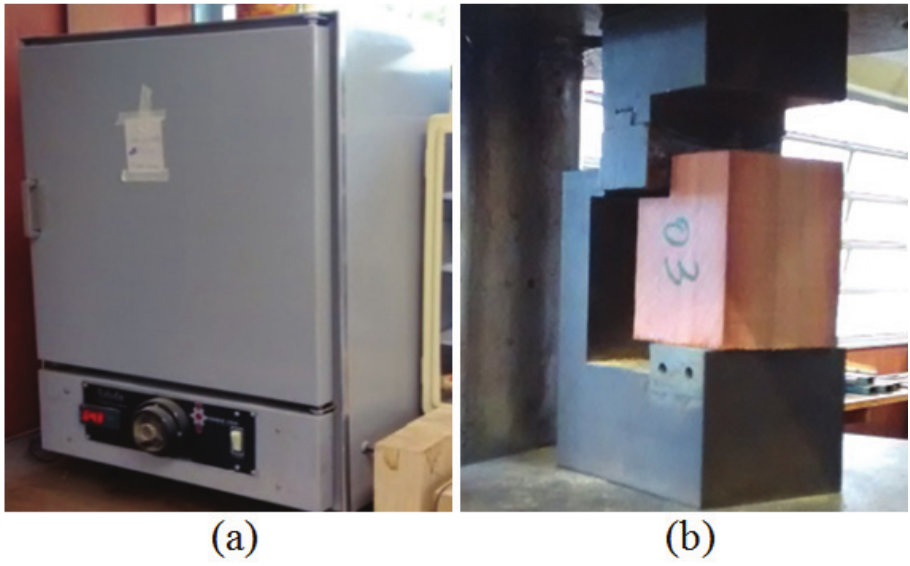
Figure 1.
Kiln (a) and specimen for shear test (b).
It is noteworthy that specimens (Figure 1b) for each experimental condition were made in pairs, implying that possible differences in results are explained mainly by wood exposure time, at 60°C, eliminating intrinsic variability of wood, which could also affect the results obtained. Figure 1 illustrates kiln and a fabricated sample for shear tests. Figure 2 shows manufacturing scheme of specimens.
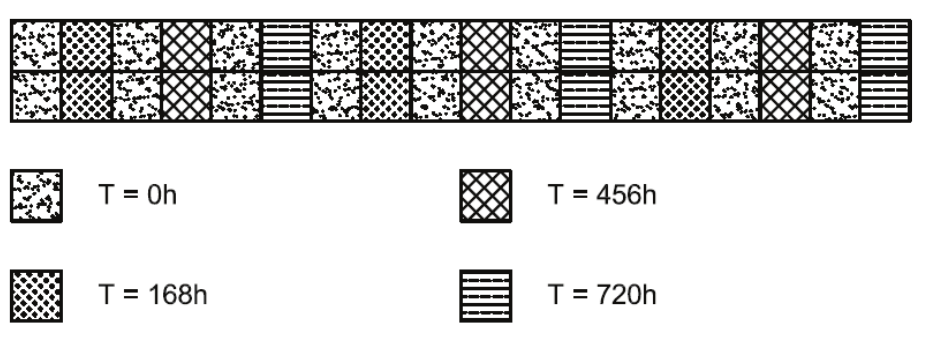
Figure 2.
Specimens obtaining scheme.
To investigate the effect of exposure time (0; 168; 456; 720 hours) of specimens in kiln in the shear strength values, an analysis of variance (ANOVA) was applied, using the software Minitab® 14, considering a 5% significance level (α), the null hypothesis consisting of means equivalence (H0) and their non-equivalence (at least two) as alternative hypothesis (H1).
By hypotheses formulation, P-value greater than the significance level implies in accepting H0 (means of the investigated treatments are equivalent) and lower values (P-value < 0.05), refute H0(at least one the means differs significantly).
For ANOVA’s validation, normal distributions of shear strength values and variance homogeneity of treatment using Anderson-Darling [AD] and Bartlett [Bt] tests, respectively, were investigated, both at 5% significance. To tests formulation, p-value exceeding 5% means that answers present normal distribution and variance of treatments are equivalent, thus validating ANOVA model.
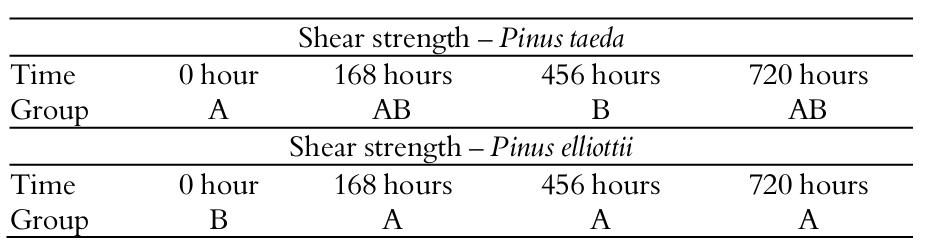
If considered significant the influence of exposure time at 60oC, by ANOVA, graphs of main effects (visual inspection) and, subsequently, the multiple comparison Tukey test (contrast test) to group the levels of factor investigated, were applied. In the Tukey test, means, in descending order, are labeled A and B, with A being the highest average. It is noteworthy that factor levels investigated with the same letters show statistically similar means.
Results and discussion
Table 1 and 2 show mean (); coefficient of variation (Cv); lowest (Min) and highest (Max) values of strength in shear parallel to grain, for all experimental conditions investigated.
Strength in shear parallel to grain for Pinus taeda as function of exposure time.

Strength in shear parallel to grain for Pinus elliottii as function of exposure time.
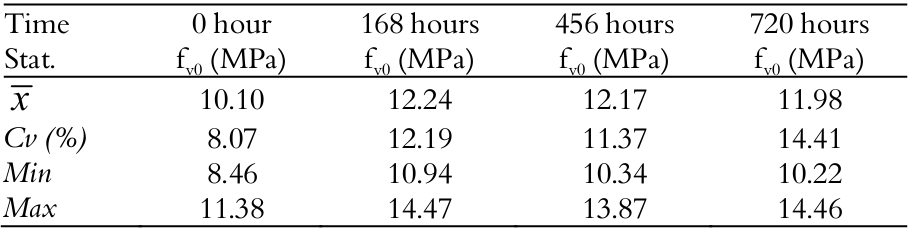
Figure 3 shows graphs with mean values for two Pinus species, as function of exposure time.
Santini, Haselein, and Gatto (2000) obtained mean values for strength in shear parallel to grain 8.53 and 8.33 MPa for Pinus taeda and Pinus elliottii, respectively. Annex E of Brazilian Code Presents a mean value for this property as 7.70 and 7.40 MPa, for the same species. These results are not consistent with those obtained here, at room temperature, which could be explained by anatomic differences in wood.
Any change in shear strength coming from anatomical characteristics was lessened in the sample (even in the specimens), as seen in Figures 3a and b. Therefore, it is possible to observe a considerable variation between the two results sets, much probably due to treatments. For Pinus taeda, shear strength decreased with treatment, but specimens with 720 hours exposure showed results close to those without treatment. This may be explained by the fact that Pinus taeda is a species with lower resin incidence. This constitutes an aspect that also explains the great variability of results displayed by this specie, as cited by Bortoletto Júnior and Lahr (2000). As consequence, ABNT NBR 7190 (1997) adopts coefficient of variation of 28% to describe fv0 dispersion for timber structures design.
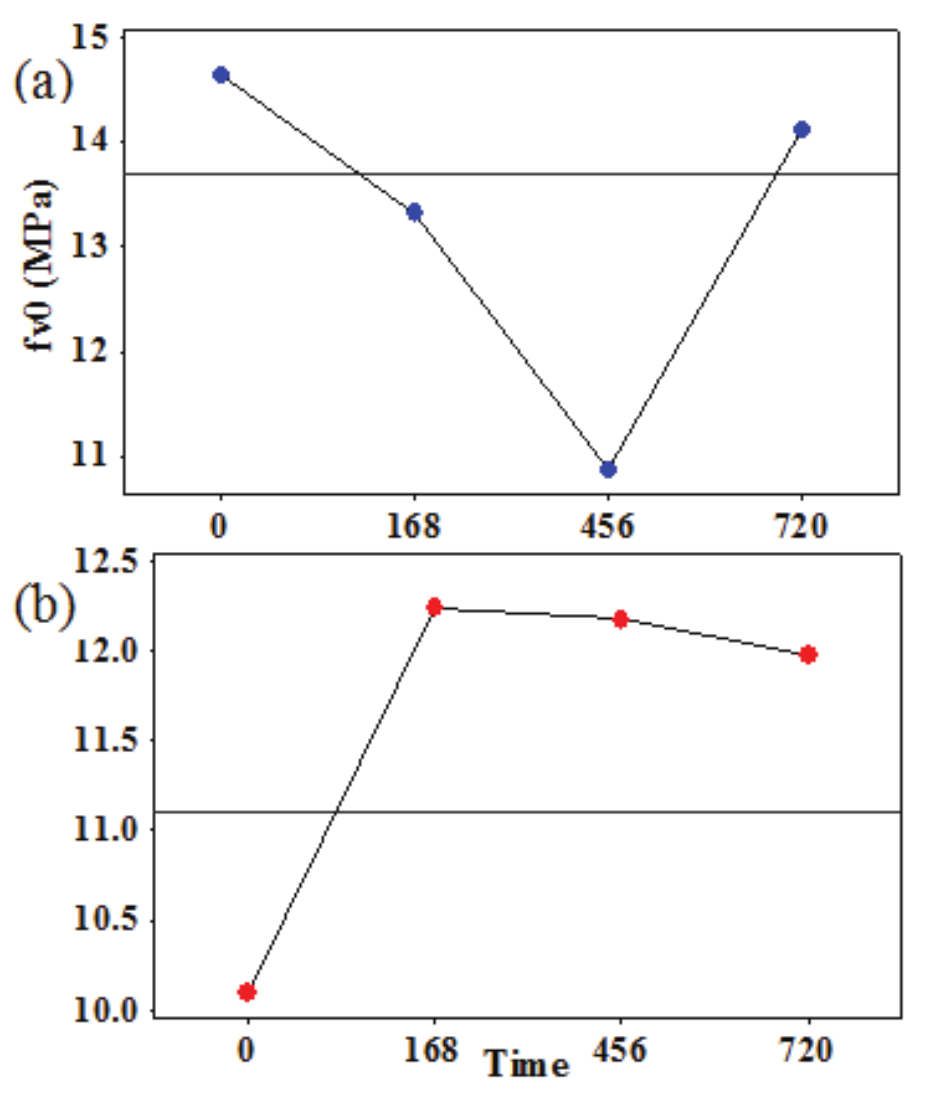
Figure 3.
Mean values of strength in shear parallel to grain (time in hours): Pinus taeda (a) and Pinus elliottii (b).
Pinus elliottii showed increase of 21% in strength reference (0 hour) compared to exposure time 168 hours. After this, a slight drop in performance over time was observed. It is clear that an influence of treatment occurred, indicated by the large variation in results between the different treatments, as well as the one cited by Irvine (1984), on glass transition temperature of lignin. This specie is known for high incidence of resinous regions in its anatomical structure, as pointed out by Bortoletto Júnior and Lahr (2000).
Figure 4 and 5 show tests results to validate ANOVA, both for Pinus taeda and Pinus elliottii.
From Figure 4 and 5, it is noted that P-values for ANOVA validation tests were higher than the significance level, implying that shear strength values present normal distribution and variances of groups are homogeneous (Bartlett’s test), validating the model. It is important to point out that Levene’s test is just applied when data do not present normal distribution.
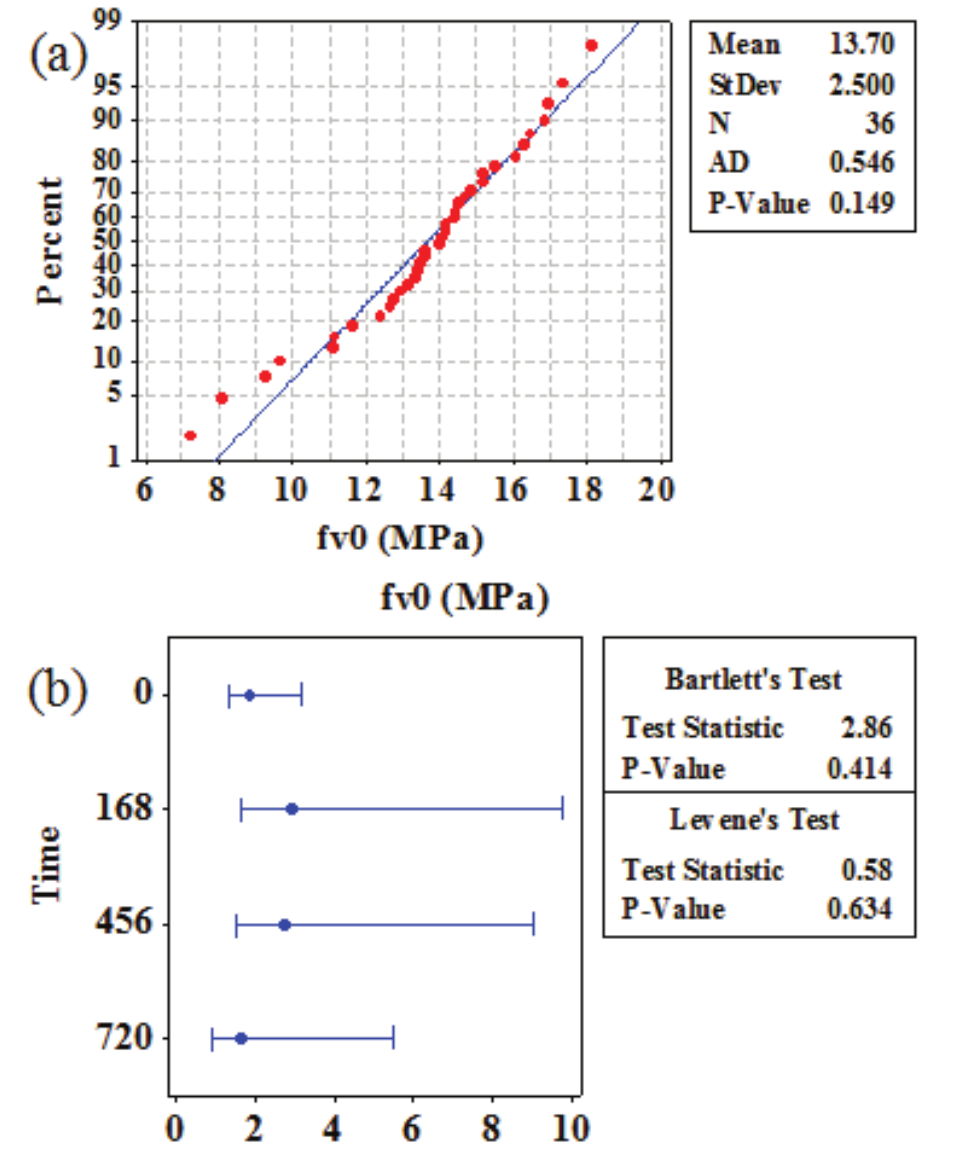
Figure 4.
Normality test (a) and variance homogeneity (b) for shear strength, Pinus taeda.
Table 3 and 4 show ANOVA results for Pinus taeda and Pinus elliottii, presenting DF (degrees of freedom), SQ (squares sum), MQ (mean square), F (Fisher statistic) and P-value.
Table 3 and 4 show that the P-values determined were less than the level of significance (P-value < 0.05), implying that both Pinus species are significantly affected by temperature (60oC) with the period of time that the specimen stayed in the kiln. This is in accordance with the indicated by Irvine (1984). Table 5 shows results of Tukey test (multiple comparisons).
Tukey test shows that there were performance changes in the samples studied here, subjected to heat treatment on two levels (A and B), confirming the influence of temperature on strength in shear parallel to grain for Pinus taeda. For Pinuselliottii, confirms the change between treatments and the reference value for the property studied, although nothing can be inferred in relation to the specimens from the heat treatment.

Figure 5.
Normality test (a) and variance homogeneity (b) for shear strength, Pinus elliottii.
ANOVA results for Pinus taeda.

ANOVA results for Pinus elliottii.

Results of Tukey Test.
Conclusion
Results of this research led to the following conclusions:
- Both woods suffered significant influence of heat treatment, though only Pinus taeda presented decrease of strength;
- Pinus taeda, compared to Pinus elliottii, showed higher coefficient of variation in values of strength in shear parallel to grain;
- Over time, temperature of 60ºC can influence strength in shear parallel to grain for the investigated species, a fact that opposes to the Brazilian Code assumption.
Further studies on this subject with other species of the genus Pinus are suggested for conclusions that are more comprehensive.
Acknowledgements
Authors are thankful to CNPq - Conselho Nacional de Desenvolvimento Científico e Tecnológico, for financial support (Proc: 130601/2014-4); to Fapesp for scholarship (Proc: 2012/14352-3) and to LaMEM (Wood and Timber Structures Laboratory), Department of Structural Engineering (SET), São Carlos Engineering School (EESC), University of São Paulo (USP), for providing facilities and inputs required for this study.
References
Almeida, D. H., Almeida, T. H., Molina, J. C., Ferro, F. S., Christoforo, A. L., & Lahr, F. A. R. (2014). Embedment strength of Pinus sp. wood to metal pins. Advanced Materials Research, 884/885(1), 653-656.
Almeida, D. H., Scaliante, R. M., Macedo, L. B., Molina, J. C., Christoforo, A. L., & Calil Junior, C. (2011). Resistência ao impacto na flexão de madeiras nativa e de reflorestamento. Madeira: Arquitetura e Engenharia, 12(4), 29-36.
Almeida, T. H., Almeida, D. H., Marcolin, L. A., Gonçalves, D., Christoforo, A. L., & Rocco, F. A. L. (2015). Correlation between dry density and volumetric shrinkage coefficient of three Brazilian tropical wood species. International Journal of Materials Engineering, 5(1), 1-4.
Associação Brasileira de Normas Técnicas [ABNT]. (1997). Norma NBR-7190: Projeto de Estruturas de Madeira. Rio de Janeiro, RJ: ABNT.
Bodig, J., & Jayne, B. A. (1982). Mechanics of wood and wood composites. New York City, NY: Van Nostrand Reinhold Company.
Borges, L. M., & Quirino, W. F. (2004). Higroscopicidade da madeira de Pinus caribaea var. hondurensis tratado termicamente. Revista Biomassa & Energia, 1(2), 173-182.
Bortoletto Júnior, G., & Lahr, F. A. R. (2000). Aplicação da madeira de Pinus na construção civil. Madeira, 1(2), 13-18.
Brito, J. O., Silva, F. G., Leão, M. M., & Almeida, G. (2008). Chemical composition changes in Eucalyptus and Pinus woods submitted to heat treatment. Bioresource Technology, 99(18), 8545-8548.
Calil Junior, C., Lahr, F. A. R., & Dias, A. A. (2003). Dimensionamento de elementos estruturais de madeira. Barueri, SP: Manole.
Christoforo, A. L., Almeida, T. H., Almeida, D. H., Santos, J. C., Panzera, T. H., & Lahr, F. A. R. (2016). Shrinkage for some wood species estimated by density. International Journal of Materials Engineering, 6(2), 23-27.
Ferro, F. S., Icimoto, F. H., Almeida, D. H., Christoforo, A. L., & Lahr, F. A. R. (2013). Verification of test conditions to determine the compression modulus of elasticity of wood. International Journal of Agriculture and Forestry, 3(2), 66-70.
Figueroa, M. J. M., & Moraes, P. D. (2009). Comportamento da madeira a temperaturas elevadas. Ambiente Construído, 9(4), 157-174.
Icimoto, F. H., Ferro, F. S., Almeida, D. H., Christoforo, A. L., & Lahr, F. A. R. (2013). Influence of the wood specimen position on calculus of the bending modulus of elasticity. International Journal of Materials Engineering, 3(3), 41-46.
Irvine, G. (1984). The glass transitions of lignin and hemicellulose and their measurement by differential thermal analysis. Journal Tappi, 67(5), 116-121.
Kollmann, F., & Côté, W. A. (1968). Principles of wood science and technology. Berlin, DE: Springer Verlag.
Lacerda, E. (2003). Gestão do abastecimento florestal: resinagem (2a ed.). Curitiba, PR: UFPR.
Molina, J. C., Calil Neto, C., & Christoforo, A. L. (2016). Resistência à tração de emendas dentadas de madeira de Manilkara huberi para o emprego em madeira laminada colada. Ambiente Construído, 16(1), 221-227.
Moreno Junior, A., Molina, J. C., & Calil Junior, C. (2013). Considerações sobre a concepção do primeiro forno brasileiro para avaliação de lajes e vigas, carregadas, em situação de incêndio. REM. Revista Escola de Minas, 66(1), 25-33.
Moura, L. F., Brito, J. O., & Bortoletto Júnior, G. (2012). Efeitos da termorretificação na perda de massa e propriedades mecânicas de Eucalyptus grandis e Pinus caribaea var. hondurensis. Floresta, 42(2), 305-314.
Pfeil, W., & Pfeil, M. (2003). Estruturas de madeira (6a ed.). Rio de Janeiro, RJ: LTC.
Santini, E. J., Haselein, C. R., & Gatto, D. A. (2000). Análise comparativa das propriedades físicas e mecânicas da madeira de três coníferas de florestas plantadas. Ciência Florestal, 1(10), 85-93.
Schaffer, E. L. (1973). Effect of pyrolytic temperatures on the longitudinal strength of dry Douglas Fir. Journal of Testing and Evaluation, 1(4), 319-329.
Silva, M. R., Machado, G. O., Christoforo, A. L., Brito, J. O., Govone, J. S., & Calil Junior, C. (2013). Resistência do Pinus taeda termorretificado. Revista Madeira: Arquitetura e Engenharia, 14(34), 55-62.
Vidal, J. M., Evangelista, W. V., Silva, J. C., & Jankowsky, I. P. (2015). Preservação de madeiras no Brasil: histórico, cenário atual e tendências. Ciência Florestal, 1(25), 257-271.
Notes
Author notes
tiago.hendrigo@gmail.com
