KINEMATICS AND VELOCITY ELLIPSOID OF THE SOLAR NEIGHBORHOOD WHITE DWARFS
KINEMATICS AND VELOCITY ELLIPSOID OF THE SOLAR NEIGHBORHOOD WHITE DWARFS
Revista Mexicana de Astronomía y Astrofísica, vol. 51, no. 2, 2015
Universidad Nacional Autónoma de México
Received: 10 January 2014
Accepted: 25 May 2015
Abstract: To determine the velocity ellipsoid of the solar neighborhood white dwarfs, we use the space velocity components of stars. Two samples of white dwarfs are used, the 20 pc and 25 pc samples. Beside the two main samples, the solar velocity and velocity dispersions are calculated for four subsamples, namely DA, non - DA, hot and cool white dwarfs. A comparison between the results of the 20 pc sample and those of the 25 pc sample gives good agreement, while the comparison between the other subsamples gives poor agreement. The dependence of the velocity dispersions and solar velocity on the chemical composition and effective temperatures is discussed.
Keywords: solar neighborhood, stars: kinematics and dynamics, stars: white dwarfs.
Resumen: Con el objeto de determinar la distribución de velocidades de las enanas blancas en el entorno solar utilizamos las componentes de la velocidad espacial. Utilizamos dos muestras, las más cercanas que 20 y 25 pc. Además, calculamos el movimiento solar y las dispersiones de velocidades para cuatro sub-muestras, a saber, DA, no-DA, enanas blancas calientes, y frías. La comparación de nuestros resultados para las muestras de 20 y 25 pc da como resultado una buena concordancia, mientras que los resultados de las comparaciones entre las otras sub-muestras no concuerdan. Se discute la dependencia de las dispersiones de velocidades y el movimiento solar de la composición química y la temperatura efectiva. 1. INTRODUCTION
1. INTRODUCTION
The majority of stars will eventually end their lives as white dwarfs. These faint stellar remnants can be used in many different investigations in astrophysics. White dwarf cooling processes have been used to date the globular star cluster M4 ( Hansen et al. 2004 ; Hansen et al. 2002 ) and to independently determine the age of the galactic halo. Also, white dwarfs were used to determine the mass function of the cluster above the main-sequence turn-off ( Richer et al. 2004 and Richer et al. 2002 ). Since all stars with a mass above 0.8 M⊙have evolved off the main-sequence in a 12 Gyr population, the white dwarfs represent our only link to the distribution of stars (i.e., the initial mass function) of intermediate and massive stars in such systems. White dwarfs are also astrophysically important when considering the chemical evolution of the Galaxy.
The velocity distribution of stars in the solar neighborhood has been characterized as an ellipsoid the centroid, size, and orientation of which vary systematically with the ages (and hence colors) of the stars under investigation ( Hogg et al. 2005 ; Dehnen & Binney 1998 ).
It has been known for a long time ( Ogorpdnikov 1965 ) that, in the neighborhood of the Sun, the character- istic feature of stellar motion is the fact that the peculiar velocities have an axis of greatest mobility and this characteristic is represented most conveniently on the basis of an ellipsoidal law of velocity distribution.
In the present paper, we shall determine the velocity ellipsoid of solar neighborhood white dwarfs. We shall investigate the dependence of the velocity ellipsoid parameters on the number of stars, their spectral type and effective temperatures. The structure of the paper is as follows: § 2 deals with the method of computation and the data used. § 3 is devoted to the results and discussion. The conclusion is outlined in § 4.
2. DATA AND METHOD OF COMPUTATION
2.1. Data
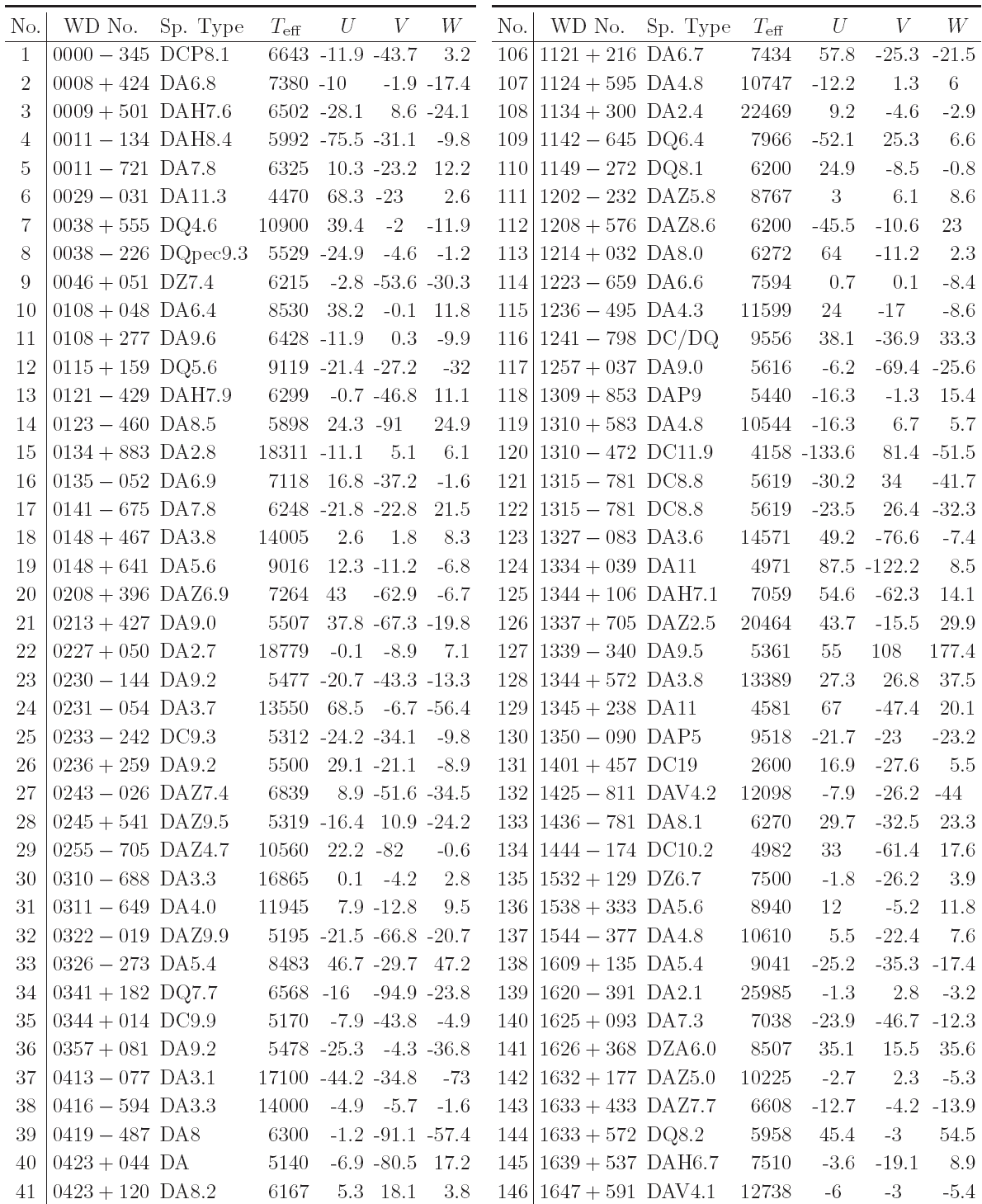
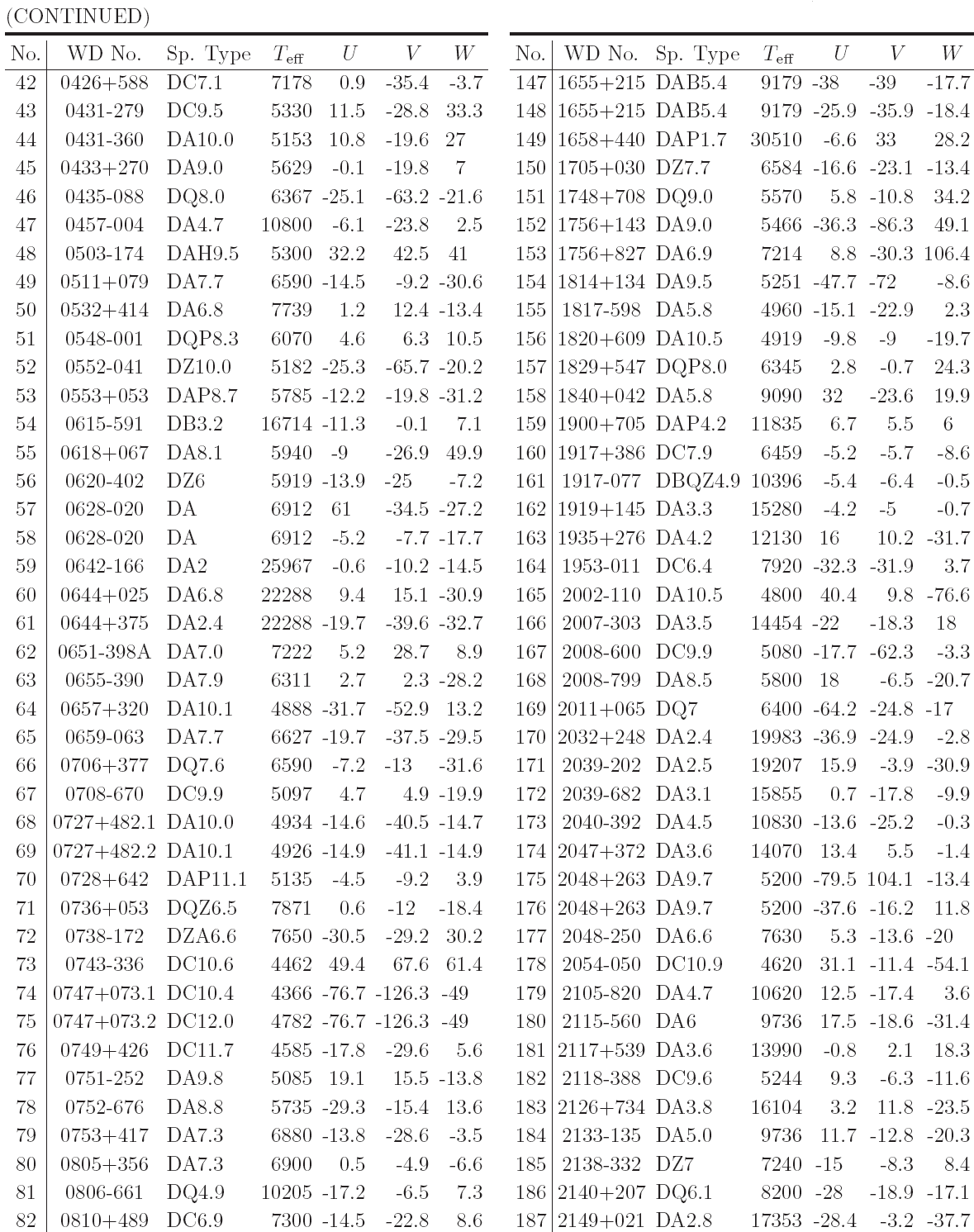
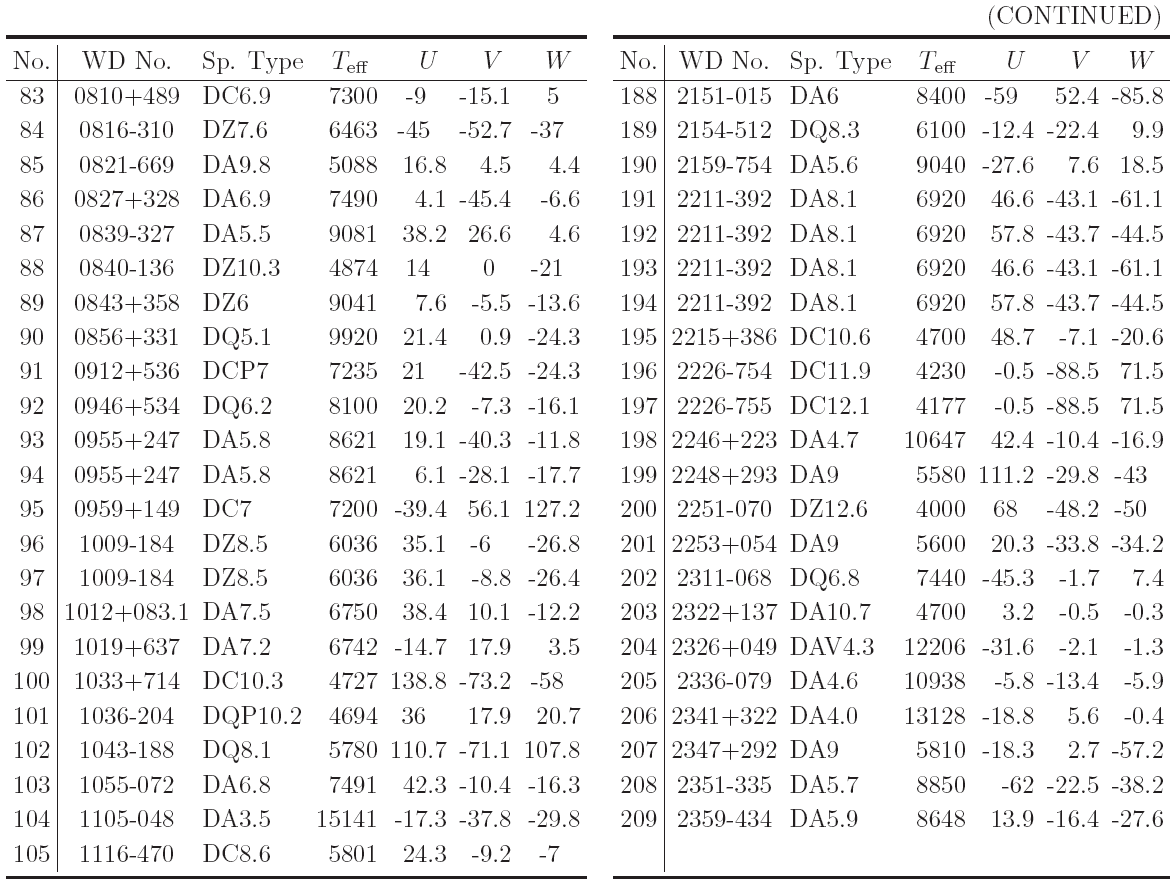
The data used in the present computations are those of Sion et al. (2009) and Sion et al. (2014) for white dwarf within 20 and 25 pc of the Sun. The 20 pc sample contains a total of 126 candidate white dwarfs of different spectral types.
The 25 pc sample contains 141 candidates of spectral type DA and 68 of non-DA. The effective temperatura ranges from 2600 K to 30510 K. The vector components of the space motions U, V and W are computed and tabulated.
The atmospheric parameters in the two samples were determined by different methods; i.e. photometric, spectroscopic and parallax observations.
In Table 1 we list the 25 pc white dwarfs list (209 candidate). The columns are labeled as follows: the WD number in Column 1, the spectral type in Column 2, the effective temperature in Column 3 and the space motions U , V and W in Columns 4, 5 and 6, respectively.
2.2. Model
To compute the velocity ellipsoid and its parameters for the solar neighborhood white dwarfs we follow the computational algorithm of Elsanhoury et al. (2013) . A brief explanation of the algorithm will be given here.
The coordinates of the ith. star with respect to axes parallel to the original axes, but shifted to the center of the distribution, i.e. to the point  ,
,  and
and  , will be ( Ui
–
, will be ( Ui
–  ); ( Vi
–
); ( Vi
–  ); ( Wi
–), where U , V and W are the components of the space velocities and
); ( Wi
–), where U , V and W are the components of the space velocities and  ,
,  and
and  are the mean velocities defined as:
 (01)
(01)N being the total number of the stars.
Let ξ be an arbitrary axis, its zero point coincident with the center of the distribution and let l,m and n be the direction cosines of the axis with respect to the shifted one; then the coordinates Qi of the point i , with respect to the ξ axis are given by:
 (02)
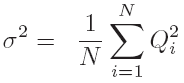
(02)Let us adopt, as the measure of the scatter components Qi , a generalization of the mean square deviation, defined by
 (3)
(3)From equations (1) , (2) and (3) we deduce after some calculations that
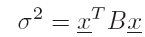 (4)
(4)where x is the (3 × 1) direction cosine vector and B is the (3 × 3) symmetric matrix μij , with elements μij :
 (5)
(5)The necessary conditions for an extremum are now
 (6)
(6)These are three homogenous equations in three unknowns, which have a nontrivial solution if and only if
 (7)
(7)where λ is the eigenvalue, and x and B are given as:
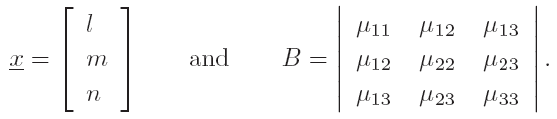
Equation (7) is characteristic equation for the matrix B . The required roots (i.e. eigenvalues) are
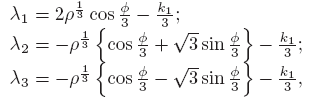 (8)
(8)where
 (9)
(9)
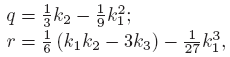 (10)
(10)
 (11)
(11)
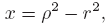 (12)
(12)and
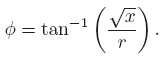 (13)
(13)Depending on the matrix that controls the eigenvalue problem [ equation (6) ] for the velocity ellipsoid, we establish analytical expressions of some parameters for the correlations studies in terms of the matrix elements μij of the eigenvalue problem for the velocity ellipsoid (the velocity ellipsoid parameters, VEPs).
-
The σi; i = 1, 2, 3 parameters
The σi; i = 1, 2, 3 parameters are defined as
 (15)
(15)
 (16)
(16)
 (17)
(17)where

3. RESULTS
Based on the model described in the previous section, a Mathematica routine has been developed to compute the kinematics and velocity ellipsoid parameters. Figures 1 , 2 , 3 , 4 show the distribution of the space velocities of 209 white dwarfs (25 pc sample). The routine was run for all data and for the following subsamples:
-
126 WD (20 pc list).
-
209 WD (25 pc list).
-
DA white dwarfs, with 141 candidates (from the 25 pc list).
-
Non- DA white dwarfs, with 68 candidates (from the 25 pc list).
-
Hot white dwarfs ( T eff≥ 12000 K ◦) with 32 candidates (from the 25 pc list).
-
Cool white dwarfs ( T eff< 12000 K ◦) with 177 candidates (from the 25 pc list).
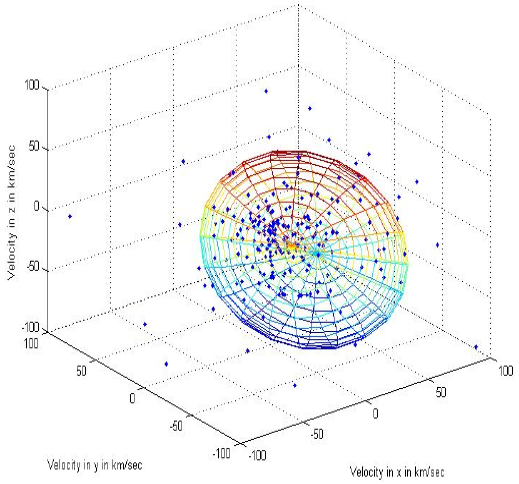
Fig. 1
Space velocity distribution of 209 WD (25 pc sample). The color figure can be viewed online.
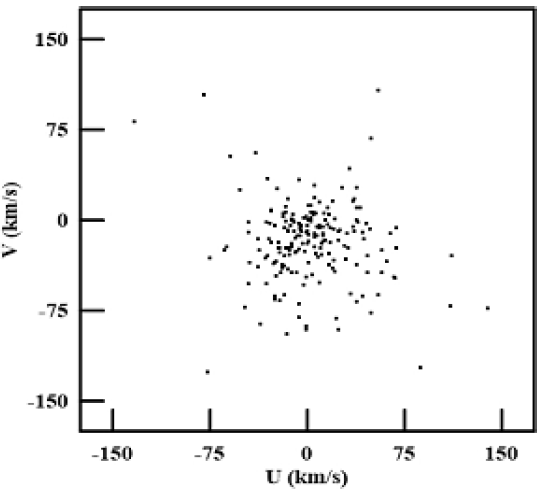
Fig. 2
U − V velocity distribution of 209 WD (25 pc sample).
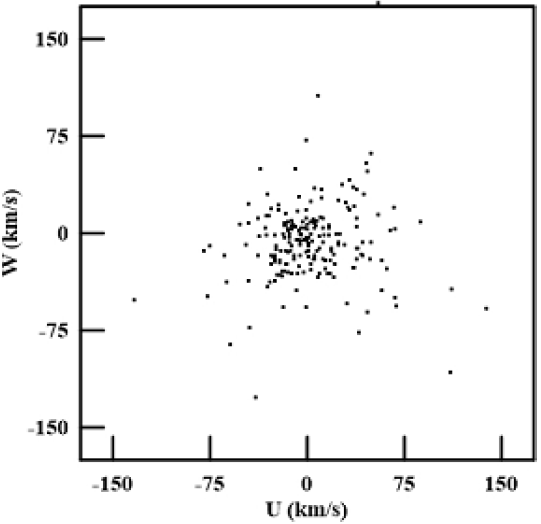
Fig. 3
U −W velocity distribution of 209 WD (25 pc sample).
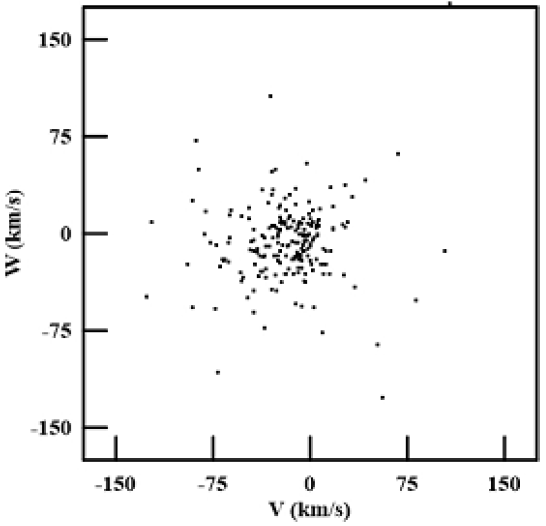
Fig. 4
V −W velocity distribution of 209 WD (25 pc sample).
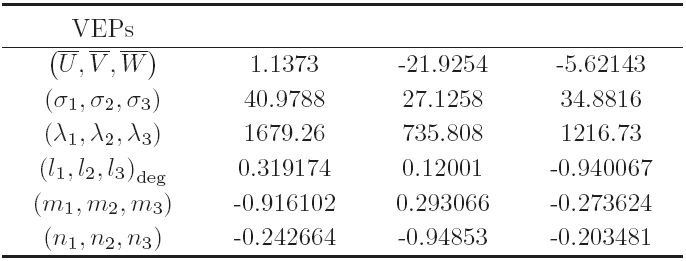
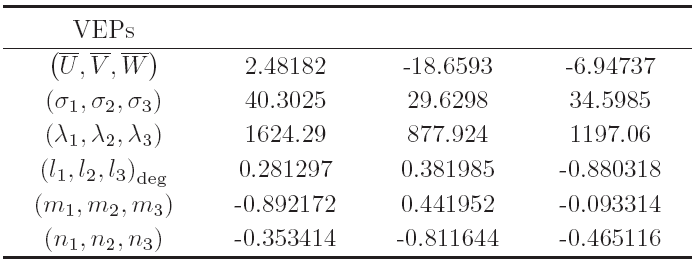
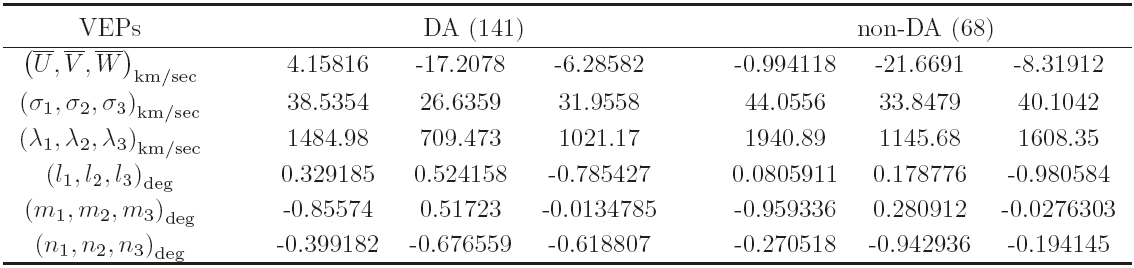
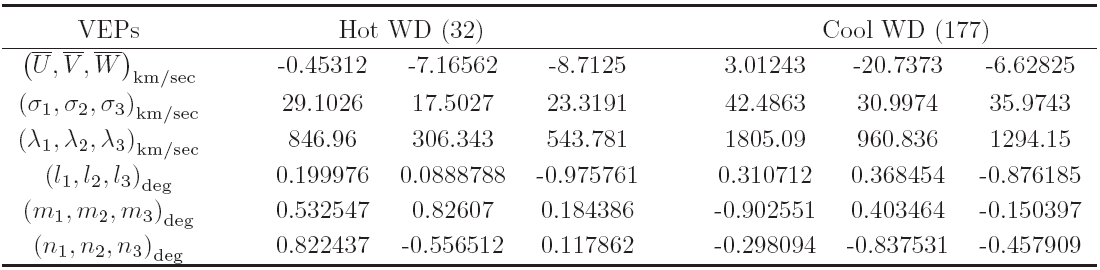
The results are listed in Tables 2 , 3 , 4 , 5 . Row 1 shows the mean space velocities, Row 2 the dispersion in velocities, Row 3 the eigenvalues, Rows 4, 5 and 6 the l, m and n parameters, respectively.
In Table 6 we compare our results with results from different authors. We also show our results for different sub-samples. We tabulate σ1, σ2, σ3, (σ2/σ1) and the solar velocity (S⊙) obtained from our calculations. We also list results by different authors.
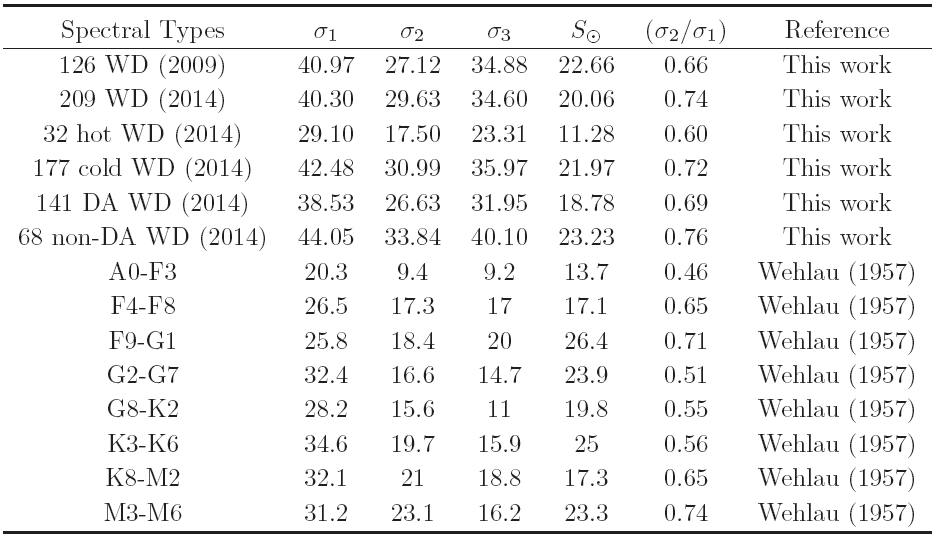
First we focused on the self-comparison between the two sets, the 20 pc ( Table 2 ) and 25 pc ( Table 3 ) samples. The velocity dispersions (σ1, σ2, σ3) are comparable for the two samples, while the solar velocity is quite different. The 25 pc list has 167 % more stars than the 20 pc list, and the solar velocity is reduced by 22%.
Another comparison possible with the present results is that between two white dwarf subsamples of different spectral types, namely DA (141 candidates) and non-DA (68 candidates), listed in Table 4 . Here the differences between the two results are significant for both the velocity ellipsoid and the solar velocity. The differences for the ratio of the velocity dispersion (σ2/σ1) reflect the differences in the initial formation conditions for DA (with rich hydrogen atmospheres and metal cores) and non-DA white dwarfs (atmospheres with different chemical compositions).
Finally, we compared results for hot white dwarfs (32 candidates) and cool white dwarfs (177 candidates), listed in Table 5 . Here again, the results for both the velocity ellipsoid parameters and the solar velocity are very discrepant. Perhaps this is due to the influence of the number of stars on the results; a conclusion about the variation of the velocity dispersions with the effective temperatures cannot be drawn.
Now we turn to the comparisons between our results and those of Wehlau (1957) for dwarfs within 25 pc of the Sun. As we see from Table 6 both velocity dispersions and solar velocity are spread over a large range.
This could be interpreted as due to the different method of calculations and the number of stars in samples studied.
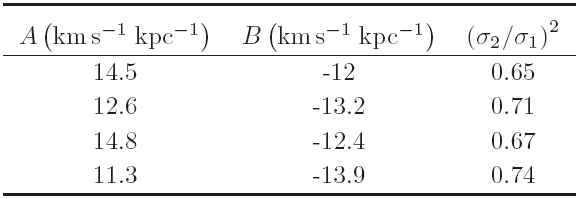
Important quantities in stellar kinematics are the Oort constants. The relation between these constants and the ratio (σ2/σ1) is given by (σ2/σ1)2= − B / ( A − B ). In Table 7 we list the values of the constants A and B according to Olling and Merrifield (1998) . Column 1 shows Oort constant A, Column 2 Oort constant B and Column 3 the ratio (σ2/σ1) calculated with A and B. As we see from the table, the ratio (σ2/σ1) has values in the range 0.65-0.74, in good agreement with our calculations.
4. SUMMARY AND CONCLUSION
In the present paper, the velocity dispersions and the solar velocity are calculated, using the white dwarfs within 20 pc and 25 pc. We have also performed calculations for four subsamples; DA, non-DA, hot and cool white dwarfs. The conclusions reached are the following:
-
Increasing the number of white dwarfs by a factor ≃ 2, results in a decrease of the derived parameters by about 22%.
-
The dependence of the derived values on the spectral type of the white dwarfs (DA and non-DA) is clear and reflects the dependence on the chemical composition and, consequently, on the age of the star.
-
We could not determine the effect of the effective temperature on the velocity dispersions and on the solar velocity, because of the large difference in the number of the two subsamples (hot and cool white dwarfs).
-
The comparison with published parameters for dwarfs within 25 pc of the Sun shows great discrepancies, which could be attributed to the type of stars used as well as to the method of calculations.
References
Dehnen, W. & Binney, J. J. 1998, MNRAS, 298, 387.
Elsanhoury, W. H, Sharaf, M. A, Nouh, M. I., & Saad, A. S. 2013, OAJ, 2013, 6, 1.
Hansen, B. M. S., Brewer, J. F., Fahlman, G. G., et al. 2002, ApJ, 574, L155.
Hansen, B. M. S., Richer H. B., Fahlman, G. G., et al. 2004, ApJS, 155, 551.
Hogg, D. W., Blanton, M. R., Roweis, S.T. & Johnson, K. V. 2005, ApJ, 629, 268.
Ogorodnikov KF. Dynamics of stellar systems. 1965 (Oxford: Pergamon).
Olling, R. P. & Merrifield, M. R. 1998, MNRAS, 297, 943.
Richer H. B., Brewer J., Fahlman, G. G., & Kalirai J. 2004, AJ, 127, 2904.
Richer H. B., Brewer J., Fahlman, G. G., Gibson . K., et al. 2002, AJ, 574, 151.
Sion, E. M.; Holberg, J. B.; Oswalt, T. D.; McCook, G. P.; & Wasatonic, R. 2009, AJ, 138, 1681.
Sion E. M., Holberg J. B., Oswalt T. D., McCook G. P., Wasatonic R. & Myszka J. 2014, AJ, 147, 129.
Wehlau, A. W. 1957, AJ, 62, 169