1. Introduction
Opportunities are central elements for entrepreneurship, which stems from the confluence between individuals and opportunities (Shane & Venkataraman, 2000). Business opportunities can be identified and explored, giving rise to new businesses. The cognitive approach on entrepreneurial opportunities considers that for an opportunity to be identified, alertness is important, that is, individuals that are more alert are keener to recognize and identify business opportunities (Kirzner, 1997).
Entrepreneurial alertness represents a constant state of attention in search of perceptions not identified by others. This is not a deliberate search, but something similar to an antenna, which allows you to recognize opportunities, even with limited clues. In a search process, the entrepreneur constantly assesses the environment, looking for new discoveries (Kirzner, 1997; Tang et al., 2012). It is precisely through this alertness that the entrepreneur envisions value in an opportunity or glimpses other opportunities (Lewin, 2015; Sharma, 2018). Alertness thus represents a vision, or an insight of what should be done in order to create value (Lewin, 2015).
It is noteworthy that entrepreneurial alertness favors not only the identification of opportunities and the creation of businesses, but also for business growth through the identification of market opportunities and innovative performance (Urban, 2019). Moreover, alertness is also associated with the level of success a new businesses and innovation has (Adomako et al., 2018; Jiaoa et al., 2014). However, the identification of opportunities itself is not enough to promote growth, as this depends on growth intentions (Doern, 2011). Growth intentions represent the entrepreneur’s goals or aspirations for the growth trajectory linked to the risk that the entrepreneur is willing to take (Dutta & Thornhill, 2008). These intentions are associated with the perception that the entrepreneur has on his or her competitive conditions (Delmar & Wiklund, 2008).
Sharma (2018), in a literature review about entrepreneurial alertness, identified 85 articles, classified according to the following themes: sensing and searching information, cognitive ability, knowledge and experience, personality factors, social networks, and entrepreneurial environment. A study of Mole and Adomako (2017) shows that alertness mediates the relationship between entrepreneurial orientation and performance, and Montiel-Campos (2018) identified the relationship between entrepreneurial alertness and passion. In Brazil, Faia et al. (2014) assessed the relationship between entrepreneurial alertness and entrepreneurial causation and effectuation, while Machado et al. (2016) focused on the relationship between alertness and other characteristics of the individual and the enterprise. Thus, we identified that the relationship between growth intentions and alertness has not been explored in previous studies. Such a relationship is important because entrepreneurs that present growth intentions can increase their chances of growing through the identification of opportunities stemming from alertness.
In the Brazilian context, a type of small business that has grown recently is the individual microenterprise, regulated in 2008. A search in the Portal do Empreendedor in January 2021 showed that the number of entrepreneurs in the country was 11,472,928, of which 11,411,186 were of Brazilian nationality (Brasil, 2021). Considering that these enterprises rely on fiscal and tax subsidies, these businesses must grow in order to avoid fiscal imbalance (Telles et al., 2016). The growth intentions for individual microentrepreneurs (abbreviated as MEIs) represent growth predictors and, if accompanied by entrepreneurial alertness, will increase the chances of identifying market opportunities.
However, it is noteworthy that alertness and growth intentions can vary according to the gender of the entrepreneur. Regarding alertness, Machado et al. (2016) identified differences between men and women with a 90% confidence interval, and Tang et al. (2012) found differences associated with gender in one of the models tested by them. Regarding growth intentions, the study accomplished by Byrne et al. (2018) indicated a greater propensity for growth intentions by men than by women.
In this sense, this study aims to answer the following research question: Are individual microentrepreneurs, who intend to grow, alert to opportunities? Are there differences related to gender? The purpose of this paper is to identify the relationship between growth intention and entrepreneurial alertness with individual microentrepreneurs. Concerning the specific objectives, we intend to test the construct entrepreneurial alertness with individual microentrepreneurs and, subsequently, to verify the existence of a relationship between growth intentions and entrepreneurial alertness. In addition, the influence of the control variable gender of the entrepreneur was investigated concerning the relationship between growth intention and entrepreneurial alertness.
This research was carried out with 134 MEIs and presents an original contribution to studies on the growth of individual microenterprises, which constitute a growing category of business in Brazil. Moreover, this article presents a theoretical contribution to studies focused on the growth of small businesses, as well as to studies on entrepreneurial opportunities by testing the relationship between growth intention and entrepreneurial alertness.
2. Literature review
In this section, we will first contextualize growth intentions, and then entrepreneurial alertness.
2.1. Growth intentions
Growth depends on growth intentions (GI) (Douglas, 2013; Stenholm, 2011). According to Dutta and Thornhill, (2008, p. 308), growth intentions are “the entrepreneur’s goals or aspirations for the growth trajectory she or he would like the venture to follow”. Thus, growth can occur if the growth intention (GI) is present, as it needs to be desirable (Doern, 2011). GI represents the “individual’s intention to start a new venture that will be substantially larger in subsequent time periods” (Douglas, 2013, p. 9). Hermans et al. (2012) established the time period of five years to assess growth intentions. This in other words, means the “difference between present size and ideal size of the venture five years ahead” (Hermans et al., 2012, p. 09).
Growth intentions will exist if entrepreneurs believe they can define the positive performance of their ventures (Edelman et al., 2010), in other words, if they envision opportunities and feasibility (Stenholm, 2011). Such assessment depends on the entrepreneurial self-efficacy and perceived consequences of growth (Venugopal, 2016).
Indeed, intentionality (Rennemo et al., 2017) arises from the evaluation of the effects of growth on the venture, on oneself and on others (Stenholm, 2011). In addition, studies show that such evaluation depends on the perception of competition and the return on invested capital (Ali, 2018; Hermans et al., 2012).
Research has shown that the context and the type of activity influence growth intentions. In this sense, Muñoz-Bullón et al. (2020) claimed that emerging family businesses oriented towards research and development presented greater growth intentions than those not oriented towards research and development. Li et al. (2019) mentioned that the institutional context influences growth intention as the entrepreneur perceives fewer barriers in the institutional environment in which he or she tends to present growth intentions.
Another relevant aspect refers to gender differences. Byrne et al. (2018), compared growth intentions among French entrepreneurs, finding that men presented higher intentions than women and, amongst women, single women presented higher growth intentions than married women with children. By analyzing panel data in the United States, Davis and Shaver (2012) identified similar outcomes.
There are different ways to assess growth intentions. Davis and Shaver (2012), Zampetakis et al. (2016), Doern (2011), and Knockaert et al. (2015) utilized as parameters the intentionality of entrepreneurs in increasing sales or hiring more employees. These two variables - increase in sales and number of employees - are the most commonly used to assess growth and growth intentions (Machado, 2016).
2.2. Entrepreneurial alertness
The approach on opportunities is related to entrepreneurial alertness (Shane & Venkataraman, 2000). The focus on opportunities has its origin in the Austrian School of Economics, according to Kirzner’s approach (1979, 1997, 1999, 2000). The market process consists of, “a process of discovery driven by dynamic competition”, which allows the access to new and old markets (Kirzner, 2000, p. 31). According to the author, some individuals tend to notice or be alert to profitable opportunities in price, quantity, and quality (Foss & Klein, 2010). So, the term “alert”, according to Kirzner (1979), refers to the state of attention experienced by some individuals to changes and events that occur in the environment. It represents “a propensity to notice and be sensitive to information about objects, incidents, and patterns of behavior in the environment, with special sensitivity to maker and user problems, unmet needs and interests and novel combinations of resources” (Ardichvili et al., 2003, p.113). Alertness implies sensitivity to changes and information about everyday facts and a high capacity to connect different information (Ray & Cardozo, 1996).
Alertness derives from a cognitive process, whose basis is the assimilation of information and the construction of connection, the act of “connecting the dots” (Baron, 2006). Valliere (2013b) considers that individuals have a wealth of distinct information and can make use of several ways to identify and build schemes and associations (to connect the dots). Thus, apparently disconnected information relates to the prior knowledge of the agent, triggering the entrepreneurial alertness, which involves actors’ perception and cognition (Sharma, 2018). Creativity and imagination, as well as the stock of tacit and explicit knowledge and of experiences are important (Kirzner, 1999; Sharma, 2018). According to Kirzner (2000), the future involves uncertainty and alertness is a creative act of discovery that requires aggressiveness, boldness, creativity, and leadership. It can be influenced by the environment and by social networks (Sharma, 2018).
Kirzner (1999) considers alertness as a mode of arbitration and a capacity that can be developed. It derives from vision and from the insight into what must be done (Sharma, 2018). As a casual discovery, alertness helps some individuals be more aware of neglected changes, opportunities, and possibilities (Tang et al., 2012).
For Valliere (2013a), alertness focuses on the search for opportunities through corridors of knowledge. Moreover, Valliere (2013a, p. 430) affirms that, “the schematic differences that alert individuals have are not innate endowments nor are they static”. According to the author, identifying opportunities is a process that can be improved through observation and scanning, as changes occur constantly in the market, and keeping up with them and identifying gaps indicate the ability to detect opportunities.
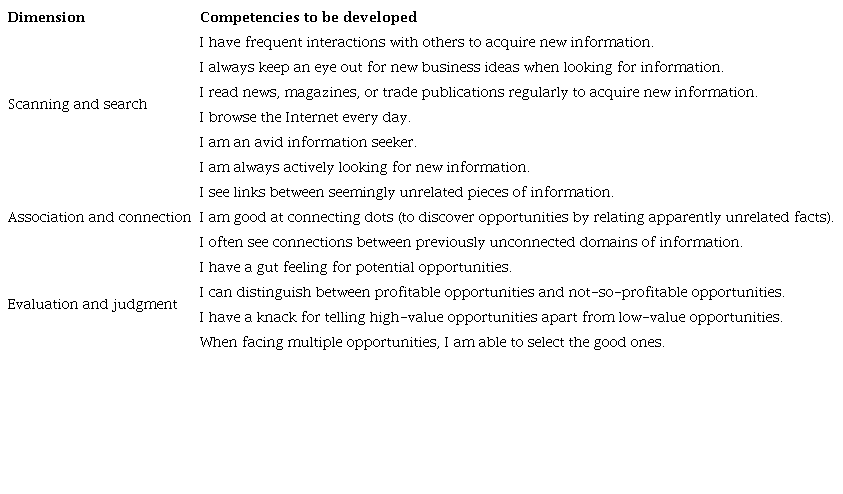
Alertness, when analyzed as a process (Gaglio & Katz, 2001; Urban, 2019), presents multiple dimensions. In this aspect, Tang et al. (2012) suggested a scale to quantify alertness, composed of three groups of elements: a) scanning, a systematic and non-systematic search for information in the environment; b) association and connection between information obtained; c) evaluation and judgment about the commercial viability of the idea. For the authors, these dimensions are complementary. The scale is composed of thirteen items, as presented in Table 1.
2.3. Research Hypotheses
Valliere (2013b) comments on the importance of involving the perception of external environmental conditions and the internal cognitive process in the construction of meanings to evaluate alertness. The model of alertness of Tang et al. (2012) comprises these aspects. Moreover, the model considers that alertness can be initially developed by the scanning and search mechanism. After the searching and scanning of information, the individual must create an association between the information obtained and its respective possibilities of use. In order to identify such associations, the individual must classify and evaluate the information, discarding what is redundant, in order to subsequently interpret the information, which will help him or her to establish the necessary connections to configure alertness. The scale proposed by Tang et al. (2012) is multidimensional and has been tested in Brazil by Faia et al. (2014), however not with individual microentrepreneurs. In this sense, the following research hypothesis was developed.
H1: Entrepreneurial alertness is a multidimensional construct capable of measuring the alertness of individual microentrepreneurs.
To evaluate growth intentions, Edelman et al. (2010) used the expectancy theory of Gatewood et al. (2002), which advocates those actions will only be taken when individuals believe that their efforts will lead to a successful performance, which, in turn, will bring some outcomes with direct positive value or will lead to other valued outcomes. This is associated with three types of relationships: a) expectancy, when the efforts lead to outcomes or performance; b) valence, importance, or desire; and c) instrumentality, the relationship between one outcome and another outcome. On the other hand, Davis and Shaver (2012) evaluated growth intentions based on the doubled increase in sales and employment over four years. Davis and Shaver (2012), Zampetakis et al. (2016), and Knockaert et al. (2015) measured growth intention through two affirmations: I want my business to be as big as possible, or I want my business at a size that I can manage alone or with the help of a few employees. Considering that intentions stem from the expectancy of outcomes or performance and desire (Edelman et al., 2010), this expectancy can move along with entrepreneurial alertness. Thus, the second hypothesis was developed.
H2: Individual microentrepreneurs that present growth intentions are more alert to opportunities, thus increasing the possibility for them to identify market opportunities.
However, considering the multidimensionality of the construct alertness (scanning and search, association or connection between the information obtained and the evaluation of application possibilities), maybe not all these dimensions are related to growth intention, thus suggesting another hypothesis.
H2a: The relationship between the growth intentions of MEIs varies according to the dimensions of entrepreneurial alertness.
Considering still that alertness and growth intentions may vary according to gender (Byrne et al., 2018; Davis & Shaver, 2012; Machado et al., 2016; Tang et al., 2012), the gender of the entrepreneur may imply variations in the relationship between growth intentions and entrepreneurial alertness, thus leading to another hypothesis.
H2b: The relationship between growth intentions of MEIs varies according to the gender of the individual microentrepreneur.
2.4. Methodological Procedures
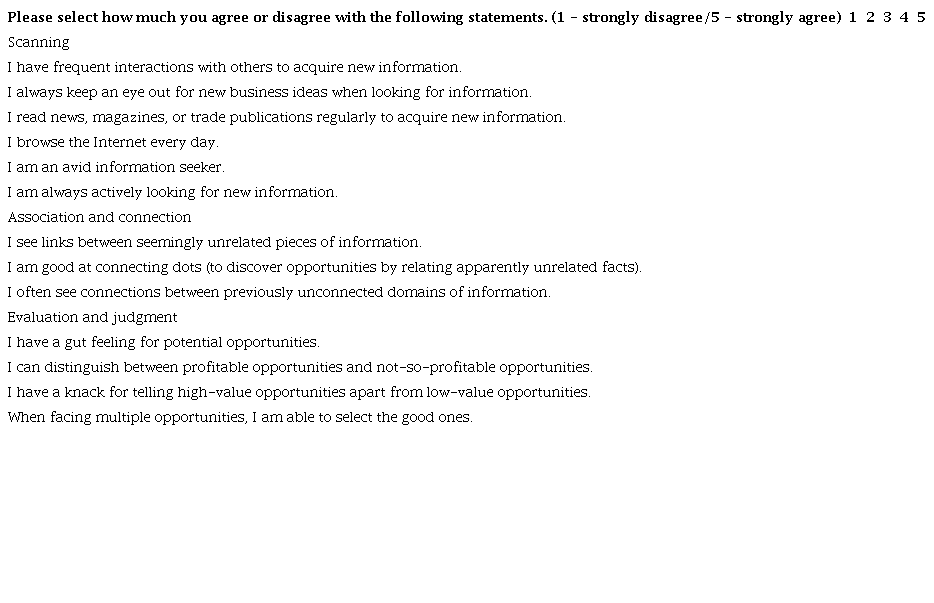
We present herein a descriptive and cross-sectional study, whose quantitative method chosen was the survey. The sample is constituted of a group of MEIs operating in two cities located in southern Brazil. Before sending them the questionnaires, the entrepreneurs were contacted and only those who worked in their ventures were selected. The data collection instrument was a structured questionnaire, sent out to 380 MEIs. After the accomplishment of a pretest with 15 participants, the questionnaire was forwarded online. 134 completed questionnaires were received, which represents 34% of the sample. The questionnaire is composed of three sets of questions; the first one refers to general information of the entrepreneur (age, gender, educational level) and the company (age and sector), the second was destined to measure entrepreneurial alertness through a five-point Likert scale (ranging from 1 - strongly disagree - to 5 - strongly agree), according to the model of Tang et al. (2012), which was validated by Faia et al. (2014) and Machado et al. (2016), as shown in Table 2. The scale consists of thirteen items divided in three dimensions: scanning and search (six items), association and connection (three), and evaluation and judgment (four). The aim of the third set is to identify growth intention.
In order to measure growth intentions, according to Davis and Shaver (2012), Zampetakis et al. (2016), and Knockaert et al. (2015), a multiple-choice question was used, in which the respondent could choose one option regarding his or her desire as entrepreneur for the next five years: a) to increase sales; b) to hire more employees; and c) to remain the same size. For respondents choosing the last option, we considered that he or she did not present any growth intention, as options “a” and “b” are the ones that indicate and characterize growth intention.
The data obtained were imported into SPSS software. In order to treat and analyze the data, the items of the scale Alertness were initially tested for normality. Asymmetry and kurtosis were analyzed, and both were shown to be acceptable according to Finney and Distefanno (2006), as they signaled quasi-normal data, subject to parametric analysis. These data are presented in Table 6.
Subsequently, the data underwent a descriptive analysis, in which the affirmatives of the construct “entrepreneurial alertness” had their measures of central tendency and dispersion analyzed; for the variable “growth intention”, the frequency distribution was analyzed. The first hypothesis was tested through exploratory factor analysis. According to Hair et al. (2009), factor analysis is a multivariate technique that aims to provide tools to analyze the structure of interrelations between several variables and to define those that are strongly related, also known as factors. As pointed out by Raykov and Marcoulides (2006), this technique is relevant to study unobservable - yet theoretically existing - variables. By reducing the number of variables into factors, the measurement of latent constructs is made possible.
The second hypothesis was tested according to the Student’s t-distribution (Hair et al., 2009). Afterwards, the relationship among variables was investigated to analyze the relationship between growth intention and alertness and, more specifically, which dimensions of entrepreneurial alertness were related to growth intention, as well as the influence of the variable gender in such relation. This test was carried out through Student’s t-test, a statistical technique usually utilized to compare the means between groups; in this case, to compare the means related to alertness among the groups of microentrepreneurs who wish to grow and those who do not present any growth intention.
3. Presentation and Analysis of Results
3.1. Participants’ profile
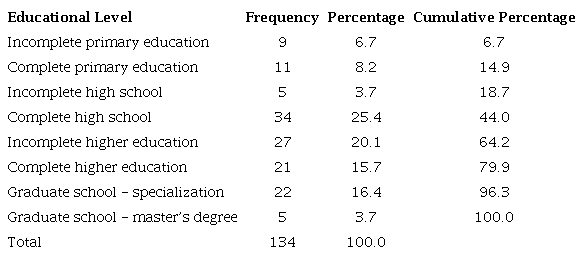
Table 3, 4, and 5 summarize a few aspects related to the profile of the sample, such as educational level, gender, and age. The educational level is detailed in Table 3.
Table 3
Educational level of the research participants
 Source: Research data.
The data in Table 3 show that 44% of all participants have completed up to high school education. The remaining 56% have higher levels of education, with 3.7% having completed a master’s degree. Table 4 presents the information on the age of participants, which ranged from 20 to 61 years, with an average of 34 years.
Table 4
Age of research participants
 Source: Research data.
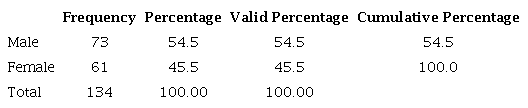
Table 5 presents the data referring to the gender of participants; the sample was characterized by 73 men and 61 women.
Table 5
Gender of research participants
 Source: Research data.
It is noteworthy that most of the MEIs addressed by this research operate in the service sector (61.9%). Regarding growth intentions, 76.1% of the participants present growth intentions and 23.9% present no intention to expand their businesses.
3.2. Entrepreneurial Alertness
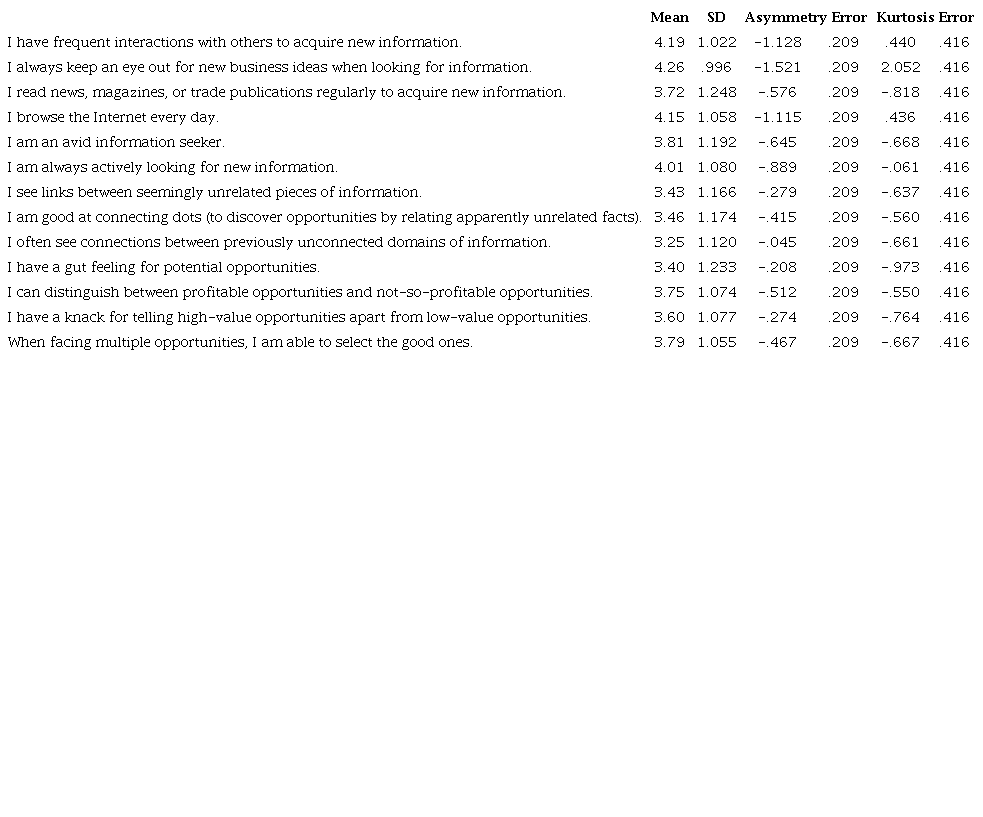
The outcomes of the measurement of alertness based on the scale of Tang et al. (2012), including all three dimensions, are presented in Table 6.
Table 6
Outcomes of Entrepreneurial Alertness
 Source: Research data.
The values presented in Table 6 show a mean score between 3.25 and 4.26 for the indicators related to entrepreneurial alertness, with acceptable asymmetry and kurtosis values according to the criteria of Finney and Distefanno (2006), who suggest that kurtosis values lower than 7 and asymmetry lower than 2 signal quasi-normal data that can undergo parametric analysis.
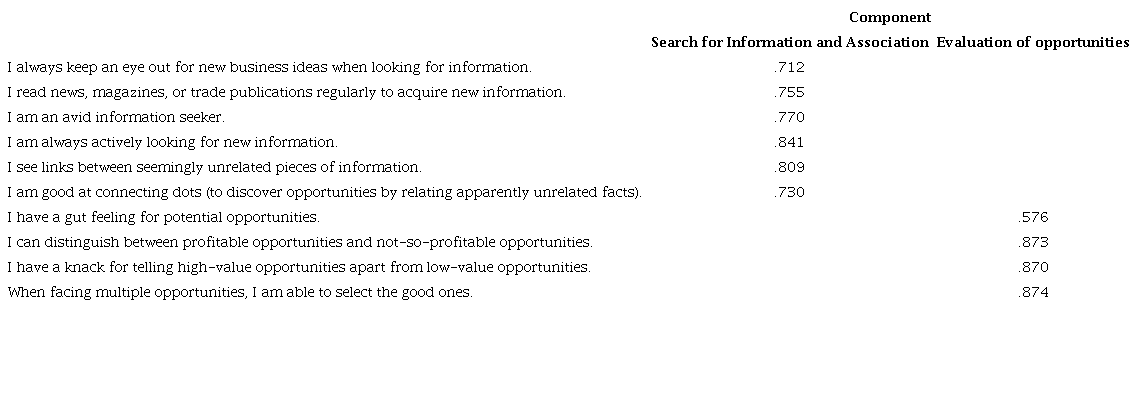
In the sequence, we proceeded with the hypothesis testing. The first technique utilized was the exploratory factor analysis (EFA) through the principal components analysis of the thirteen indicators used to measure entrepreneurial alertness. In the EFA, three indicators were removed for presenting a low communality, which generated a solution composed of two factors that explain 70% of the variance; the Kaiser-Meyer-Olkin Measure of Sampling Adequacy was 0.865 and the Bartlett’s Test for Sphericity had a significance level of p = 0.000, indicating that the sample is viable for analysis. The communalities found ranged from 0.543 to 0.843, which meets the assumption of Hair et al. (2009), who affirm that communalities equal to or above 0.500 are ideal. Table 7 presents the factors obtained through the principal components analysis, except for those three with low communality that had to be removed, and the outcomes of the varimax rotation. The analysis resulted in two dimensions, and not three like the scale of Tang et al. (2012) originally suggested.
Table 7
Factors of Entrepreneurial Alertness
 Source: Research data.
As shown in Table 7, the analysis grouped the variables into two factors. The following indicators were removed: a) “I have frequent interactions with others to acquire new information” and “I browse the Internet everyday”. Both were part of the scanning and search dimension of the scale proposed by Tang et al. (2012). Even after removing them, four other indicators of this dimensions remained in the analysis; and b) “I see links between seemingly unrelated pieces of information”, which composed the dimension association and connection according to the model of Tang et al. (2012). All indicators of the dimension evaluation and judgement were maintained in the factor analysis. However, the factors were not grouped in three as the model proposed by Tang et al. (2012) originally indicated, but in two groups. Thus, these two groups were a) Search for information and association, and b) Evaluation of opportunities, according to the logic presented by Tang et al. (2012).
This outcome enables us to identify that entrepreneurial alertness is a construct capable of measuring the alertness of individual microentrepreneurs, thus supporting Hypothesis 1, as this is a multidimensional construct formed by the dimensions “search for information and association” and “evaluation of opportunities”. The first dimension identified is measured by six indicators, the second by four indicators. The outcomes have showed a grouping of factors different from the scale of Tang et al. (2012). One of the explanations for this can be associated with the fact that MEIs do not participate in networks, as the indicator “I have frequent interactions with others to acquire new information” was removed from the factor analysis. MEIs work practically alone in all activities related to their business and may not have the available time to engage in networks, which constitutes and important antecedent to the construction of alertness (Sharma et al., 2018).
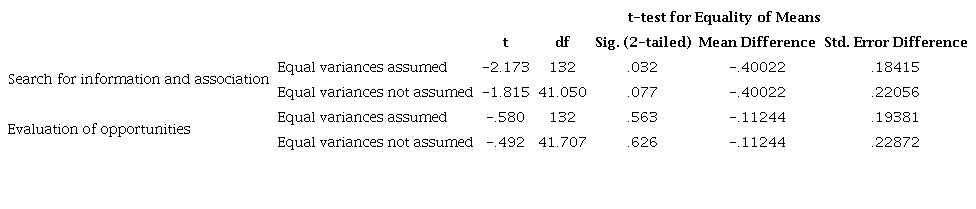
After the factor analysis, we tested the difference of the means of each factor in relation to the categories of the variable growth intention. Through the Student’s t-test, the means of entrepreneurial alertness were compared between the groups of entrepreneurs that presented growth intention and those who did not, as shown in Table 8 and in Table 9.
Table 8
Group statistics
 Source: Research data.
Table 9
Independent samples t-test
 Source: Research data.
The outcome of the Student’s t-test shows that there are significant differences in the dimension search for information and association of entrepreneurial alertness for the entrepreneurs who presented growth intentions. The significance level (p 0.10) demonstrates that there is a significant difference in the dimension search for information, in other words, when the entrepreneur presents growth intention, he or she develops the skills of alertness in the search for information. Regarding the other dimension of entrepreneurial alertness - evaluation of opportunities - there are no significant differences, that is, even though the means are higher in the group of entrepreneurs who have the intention to grow, the test did not capture statistical significance in this difference. Thus, H2 is partially supported, as the MEI that presents growth intentions are more alert to the search for information and association between this information and the knowledge they already have. This can help them identify, but not explore, opportunities. The evaluation of opportunity requires decision making and choosing a potential opportunity (Sassetti et al., 2021). Thus, the evaluation of opportunity by MEI is influenced by factors other than growth intention.
In this sense, H2a is supported, i.e., there is a relationship between MEI growth intentions and alertness for only one of the two dimensions of entrepreneurial alertness identified in this research.
The Hypothesis H2b refers to the influence of the variable gender in the relationship between growth intentions and entrepreneurial alertness of MEI. Table 10 and 11 present the results of the t-test.
Table 10
Group statistics
 Source: Research data.
Table 11
Independent samples t-test
 *Not significant. Source: Research data.
According to the data provided by Table 10 and Table 11, the gender of the microentrepreneur did not influence the relationship between growth intention and entrepreneurial alertness.
3.3. Analysis of Results
Entrepreneurial alertness, as a cognitive process, results from the assimilation of information and the construction of connections by individuals (Baron, 2006). The data presented in Table 6 indicate that the lowest level of alertness for the microentrepreneur was 3.25 and is associated with the indicator “I often see connections between previously unconnected domains of information”. The highest level - 4.26 - was associated with the indicator “I always keep an eye out for new business ideas when looking for information”. This indicates that the focus of the MEI is on the search and assimilation of information.
The scale used in this research to measure entrepreneurial alertness, developed by Tang et al. (2012), is composed of three dimensions: a) scanning and search, a systematic and non-systematic search for information in the environment; b) association and connection between information obtained; c) evaluation and judgment about the commercial viability of the idea. In this research, the factor analysis led to the grouping of only two dimensions, here called “search for information and association” and “evaluation of opportunities”. Only in the first two dimensions of the construct by Tang et al. (2012) we observed the grouping of different factors - two indicators of the dimension scanning and search and one of the dimension association and connection. Due to their low factor loadings, they were removed from the construct. This outcome does not compromise the concept of alertness and highlights that MEI are aware of environmental events and are looking to build associations and new combinations (Ardichvili et al., 2003; Kirzner, 1979).
Despite the removal of the three indicators with low factor loading, entrepreneurial alertness proved to be a multidimensional construct to measure the alertness of individual microentrepreneurs, thus supporting Hypothesis 1 through the two dimensions “search for information and association” and “evaluation of opportunities”. The removal of the indicator “I have frequent interactions with others to acquire new information” can be related to the fact that MEIs do not take part in networks, as they work practically alone in all activities of the company and may not have the available time to participate in networks, which already indicates an important antecedent for the construction of alertness (Sharma et al., 2018).
Thus, the validation of the entrepreneurial alertness scale showed variations when applied to MEI, which differs from other studies whose object of study were not MEI, such as Faia et al. (2014) and Machado et al. (2016), who have validated all dimensions of the scale by Tang et al. (2012): scanning and search; association and connection; and evaluation and judgment.
In the second hypothesis, the relationship between growth intentions and entrepreneurial alertness was tested; based on the two dimensions of the scale, this hypothesis was only partially supported. Only the dimension “search for information and association” presented a significant relationship. That is, entrepreneurs that presented growth intentions developed their alertness skills in the search for information. On the other hand, the dimension “evaluation of opportunity”, which represents the evaluation of information by the entrepreneur for a business opportunity, presented no association with growth intention. According to Sassetti et al. (2021), the dimension evaluation and judgment (which corresponds to the dimension evaluation of opportunities in the present research) comprises the decision to choose a potential opportunity. In this sense, the research conducted with the MEI showed that intention is a predictor of growth and that the entrepreneurs who want to grow, search for, and evaluate information, but not the opportunity. The decision to explore an opportunity also depends on other factors, such as the environment (Chavoushi et al., 2020; Sharma, 2018) and cognitive styles (Sassetti et al., 2021). Even so, this research has showed that growth intentions are important to keep the entrepreneur alert to changes in the market, which can help him or her to prepare to changes and contingencies (Tang et al., 2012).
In addition, this outcome, even if only for one of the dimensions of the construct, indicates that alertness can influence not only opportunities (Kirzner, 1997), but also growth through growth intention, and that there may be feedback between the two positive stimuli. Nevertheless, for this to materialize effectively as growth and seizing market opportunities, it is necessary that the dimensions “evaluation of opportunity” also presents an association with growth intention. Alertness focuses on the search for opportunities through corridors of knowledge and the identification of opportunities is a process that can be improved from observation and scanning. Changes occur constantly in the market and keeping up with them, and identifying gaps, demonstrates an ability to detect opportunities (Valliere, 2013b). Considering that alertness is a capability that can be developed (Tang et al., 2012; Valliere, 2013a), MEIs can be prepared to improve their ability to evaluate opportunities through specific programs and policies, covering not only search and association, but also the analysis of information. This is because alertness is considered by some individuals as a state of attention to changes and events that occur in the environment (Kirzner, 1979), evidencing the active nature of the entrepreneur (McCaffrey, 2014). It is worth noting the importance of other factors to alertness, such as previous knowledge - tacit and explicit - creativity, imagination (Kirzner, 1999; Sharma, 2018; Valliere, 2013b), self-efficacy, and optimism (Tang et al., 2021).
As previously described, we considered in this research only active MEIs. For these, the research showed that growth intentions are important because they are associated with the search for and evaluation of information, thus favoring the development of cognitive abilities, which, in turn, influence the identification of opportunities (Shane & Venkataraman, 2000). On the other hand, intentions must be accompanied by resources and strategies in order to influence growth (Delmar & Wiklund, 2008), and the environment must create mechanisms that contribute to increasing alertness (Sharma, 2018), consequently favoring the evaluation and exploration of opportunities. These mechanisms become necessary for entrepreneurs to promote the growth of their own ventures so that this category represents a transitory form of business, considering the risks of fiscal imbalance, as pointed out by Telles et al. (2016). At the same time, it is important that these businesses survive and consolidate in another modality.
Finally, the results of the research show that the control variable gender does not influence the relationship between growth intention and entrepreneurial alertness. Even though growth intentions are lower for women than for men (Byrne et al., 2018; Davis & Shaver, 2012), when they are present, they are accompanied by alertness, that is, whoever wants to grow is alert to information, regardless of the gender of the entrepreneur.
It is noteworthy that alertness is not the only way to explain the identification and exploration of opportunities. Other ways, like the development of opportunities and heuristic methods, explain how ideas can turn into opportunities (Sanz-Velasco, 2006; Vaghely & Julien, 2010).
4. Final Considerations
The general objective of this paper was to analyze the relationship between growth intentions and entrepreneurial alertness for individual microentrepreneurs. Through a survey, carried out with 124 active MEIs, several hypotheses were tested. The first hypothesis of the research predicts that entrepreneurial alertness is a multidimensional construct capable of measuring the alertness of individual microentrepreneurs, which was empirically supported in the present study, however with two and not three dimensions as suggested by Tang et al. (2012); these two dimensions were named “search for information and association” and “evaluation of opportunities”. The second hypothesis refers to the relationship between growth intentions and entrepreneurial alertness. The outcomes have showed that growth intentions for MEI are associated with only one of the dimensions of alertness, namely, search for information and association.
As scientific contribution, we initially highlighted the use of the entrepreneurial alertness scale with the MEI segment. Previous studies have demonstrated the importance of alertness for the creation (Kirzner, 1997) and performance of new businesses (Adomako et al., 2018), as well as for innovation (Jiaoa et al., 2014). The validation of the scale with MEI shows that the dimensions of the scale by Tang et al. (2012) were grouped differently, with three indicators having been removed: two from the first dimension of the scale and one from the second dimension. This already shows some specificities, such as the fact that MEI have difficulty in building networks, considering that this activity, i.e., individual microenterprise, was restricted at the time to only one employee.
Another contribution of the present research was the demonstration of the relationship between growth intention and entrepreneurial alertness. The outcomes have showed that individual microentrepreneurs with growth intention are alert to business opportunities through the search for and evaluation of information. Growth intentions are predictors of growth (Douglas, 2013) and, together with alertness, contribute to the desire and intention to grow (Rennemo et al., 2017), thus reinforcing the individual dimension in promoting the growth of ventures (Machado, 2016). In the Brazilian context, which presents a growing number of MEI, it is important that these entrepreneurs have the intention to grow, are alert to opportunities in the environment, and that they effectively transform growth intention and alertness into identification and exploration of new market opportunities. This will help them move to other categories, creating more jobs and contributing to economic and fiscal development.
Another contribution of this research is the emphasis on growth intentions, as they are not only predictors of growth, but also stimulate alertness regarding the search for and evaluation of information. This contributes to a better understanding of how alertness can influence business growth.
Thus, this research contributes to the debate on the growth of microenterprises, showing the integration of the construct entrepreneurial alertness and growth intentions. Considering the context of resource scarcity in which a MEI operates, strategies focused on the growth of these ventures represent a path to transform these subsidized ventures into companies that can collaborate with local development.
The outcomes of this research present a few implications for entrepreneurs and public and entrepreneurship policy makers. For entrepreneurs, the outcomes show the importance of boosting growth intentions, which can reinforce the levels of entrepreneurial alertness, thus better preparing them to envision market opportunities. In terms of public policy, the outcomes have indicated the need for entrepreneurial education focused on MEI, emphasizing the value of searching, connecting, and evaluating information to identify and explore entrepreneurial opportunities.
Considering that alertness can be influenced by the positive feedback received (Kadile & Biraglia, 2020), future studies can explore the relationship between this positive feedback and entrepreneurial alertness considering MEI. We also suggest future studies to further develop the relationship between networks and MEI, considering that networks contribute to the increase of alertness (Sharma, 2018).
As research limitation, we mention the fact that most part of the companies surveyed (approximately 64%) operate in the service sector. In addition, the data were collected only from two cities. It is important to replicate this study in different parts of the country, which can lead to the identification of different profiles of microentrepreneurs and, consequently, different results regarding entrepreneurial alertness and growth intention.
 Jaci José Cenci jaci_cenci@yahoo.com.br