Artigos
Local Context of Human Security: methodological approach to the development and validation of a concept scale
Local Context of Human Security: methodological approach to the development and validation of a concept scale
Gestão & Regionalidade, vol. 39, e20238322, 2023
Universidade Municipal de São Caetano do Sul
Recepción: 25 Enero 2022
Aprobación: 24 Febrero 2022
Abstract: The Human Security (HS) is a useful element to identify contemporary challenges of promoting well-being, a human measurement tool, generally, the national context. This study aims to: a) identify a structure for measuring HS, in everyday urban life at the local sphere; b) describe a methodological alternative for this structuring from a replicable perspective. Its relevance for integration consists of making instruments available for everyday conditions of HS, such as making the opportunity to present a methodological process of replication to other studies. The methodological alternative presented an initial reference of 819 articles, 56 which were more adherent to the specificity of the study and six directly contributory to the inventory with 103 HS items. Sequentially, this alternative was consolidated as dimensions of the HS, its indexes, the review by specialists and the pre-test of the instrument. The final result identified 40 indicators, operationalizers of dimensions, locally interpretable and ordered of public policy principles from a micro scale HS.
Keywords: human security, urban life, local context of human security, human security measurement scale.
Resumo: A Segurança Humana (SH) representa ferramenta útil para identificar desafios contemporâneos de promoção do bem-estar, cujos modelos de mensuração consideram, geralmente, o contexto nacional. Este estudo objetivou: a) identificar uma estrutura de mensuração da SH no cotidiano de vida urbana em âmbito local; b) descrever uma alternativa metodológica dessa estruturação sob uma ótica replicável. Sua relevância consisteem disponibilizar instrumento para acompanhamento das condições cotidianas da SH, bem como tornar aparente a íntegra do processo metodológico, oportunizando replicação a outros estudos. A alternativa metodológica apresentou referência teórica inicial de 819 artigos, sendo 56 mais aderentes à especificidade doestudo e seis diretamente contributivos do inventário com 103 itens de SH. Sequencialmente, essa alternativa consolidou as dimensões da SH, seus indicadores, a revisão por especialistas e o pré-teste do instrumento. O resultado final identificou 40 indicadores, operacionalizadores das dimensões, interpretáveis localmente e ordenadores de princípios de políticas públicas de SH microescalar.
Palavras-chave: segurança humana, vida urbana, contexto local da segurança humana, escala de mensuração da segurança humana.
1 Introduction
The debates on Human Security (HS) presented by Atienza (2015), Stoett (2016) Walton and Akimoto (2016), among others, have presented the broad approach as a theoretical alternative capable of promoting greater effectiveness in the execution of research projects or in the formulation of government policies related to the topic (Breslin & Christou, 2015; Buzan, 2004; Deudney, 1991; Carr et al, 2020; Nobre, Bezerra, & Kuhlmann, 2016), encompassingissues relating to state security, which are characteristic of the narrow approach (Rodrigues,2012).
This approach to HS focus on addressing human problems in a general sense, through the analysis of their vulnerabilities, involving aspects such as: hunger; disease; natural disasters; economic recession; unemployment, among others This approach appears to have the capacity to ensure improvements in the operationalization of the concept, advancing in the identification of various threats related to the individuals and their living conditions. In this sense, measuring HS is a useful tool for understanding the contemporary challenges in promoting well-being for people in urban contexts, especially in terms of interventions to improve people's lives (Graham& Poku, 2000), considered multifaceted and exercised through various areas of intervention, namely: economic, food, sanitary, environmental, personal, community, and political security (UNDP, 1994).
Thus, HS is realized when all the domains of daily life that constitute it are considered, which encourages the search for universal measures of various items (Tadjbaksh & Chenoy,2007).
Commonly, HS is evaluated from a top-down, macro-scale perspective. On the other hand, studies that address its instrumentalization on a local, bottom-up scale are rare (Koonings& Kruijt, 2007). Lemanski (2015) notes that the HS agenda would need to incorporate the micro-scale to understand how HS affects people's daily lives in cities and, thus, contribute to the formulation of government interventions at the local level.
The literature on HS reinforces the importance of its discussion (Kuhlmann; Faro, 2012), involving its operationalization indicated by a variety of methodologies (NOBRE, Bezerra, & Kuhlmann, 2016). The measurement of HS guides its application as a public policy and as a guiding principle in policy formulation (Carr et.al., 2020).
Therefore, an analysis framework for HS at the local level, according to Boyce and Katz (2021), tends to provide more effective responses to meeting human needs, contributing to the contemporary debate about the necessary emphasis on micro-scale HS interventions, making it visible at this level (Sotlar & Tominc, 2019).
In this regard, this research aimed to a) identify and validate a measurement framework for HS in the context of its content and face, within a local and everyday life context of individuals; and b) describe the methodological process of constructing this measurement framework, in order to enable reflection within the scope of the study and its replication.
It should be noted that, for the purposes of this study, the local environment of people's everyday lives is situated in an urban, industrialized area with a diversity of economic and age strata.
It is recognized that public managers and other municipal authorities have strived to fill the gaps left by some higher levels of governance, seeking consistent and decisive public sector leadership from the bottom up. From this perspective, the results of this study can contribute to measuring the dimensions of HS and thus serve as alternatives for planning actions aimed at improving the well-being of the population (Anderson & De Jong, 2020).
For this purpose, this study utilized a methodological approach that prioritized theoretical-empirical studies generated through bibliometric procedures, which allowed for the 3review of theoretical content as well as any items in operationalizing instruments for the HS construct. This exploratory design aimed at the development and content validation of a data collection instrument, considering the local level of intervention, utilizing expert opinions, and assessing its reliability through a pilot test with respondents characteristic of the target audience of interest, using the data collection instrument resulting from its content and form validation with experts.
2 Brief historical overview and conceptualization of HS
The debate on HS emerges in the context of discussions about society's developmental processes and the improvement of human conditions after the Cold War, which redefined the concept of security, linking its conception to individuals as opposed to the state, as the point of reference (De Almeida Rocha, 2017). This shift resulted from the attempt to broaden the definition of human development, extending beyond issues related to state security (Rodrigues, 2012). Thus, HS began to consider the basic needs of individuals beyond their physical integrity (Dalby, 2009; Evans, 2008; Hoffmann, 2010), taking into account their vulnerabilities, from narrower aspects to various other threats that encompass life in society (Fukuda-Parr & Messineo, 2012).
The concept of HS became formally articulated in 1994 with the publication of the United Nations Human Development Report, which formalized the concept of HS as a milestone in the approach to security at the individual level. It was seen as a useful tool for understanding contemporary challenges in promoting people's well-being, initially grounded in two aspects: freedom from want and freedom from fear. These aspects respectively mean keeping people safe from serious threats such as disease, hunger, and crime, and safeguarding them from harmful disruptions in their daily lives, such as wars and genocides (Hoffmann, 2010).
Later, in order to ensure greater relevance to the concept, the motto "freedom to live in dignity” began to be emphasized, gaining more prominence with the institutionalization of the Human Security Unit [HSU] of the United Nations, responsible for strategic plans of HS in partnership with governments, institutions, and civil society (Oliveira, 2020).
3 Dimensions and approaches to intervention in HS
Considering the breadth and certain subjectivity that the themes freedom from want, freedom from fear, and freedom to live in dignity encompass, consequently, the emergence of critical perspectives on these topics (Buzan, 2004; Hansen, 2012; Paris, 2001), the UN, in an effort of synthesis and direction, presented seven different core components of HS, also referred to as dimensions, namely: economic security; food security; sanitary security; environmental security; personal security; community security; and political security (UNDP, 1994).
This subdivision reinforces the idea that HS, instead of being understood as homogeneous, is perceived as multifaceted or multidimensional (Bambals, 2015). Thus, these dimensions emphasize the need for greater focus on "the human citizen and the ability of people to live without dramatic obstacles to their well-being, whatever the cause" (Owen & Liotta, 2006, p. 46) and in the long term (De Almeida Rocha, 2017; Oliveira, 2018). Table 1 describes the synthetic notion of the seven dimensions of HS, in line with Oliveira (2020).
| Economic Security | With opportunities for goods and services for work, employment, and income. |
| Economic Security | With poverty alleviation, given the lack of hygiene, housing and education in needy regions. |
| Sanitary Security | With health care, well-being, and life preservation plans. |
| Environmental Security | With practices to protect the ecosystem and conserve biodiversity in a healthy environment. |
| Citizen Security | Within the framework of trustworthiness in the policy structure and the assurance of justice, these should serve as paradigms for the values upheld by the State in the prevention of crime, the control of violence, and the rehabilitation of criminal punishment. |
| Community Security | With successful stability in overcoming prejudice, intolerance, inequality, discrimination, exclusion, manipulation, and vulnerability. |
| Political Security | Under democratic governance and public policies geared towards the collective welfare, within the framework of norms and principles of Human Rights and Humanitarian Law, which underpin the values of harmonious relations in society between the State and citizens, even in situations of crisis, conflict, or post-conflict, political security is intricately linked with legal security. |
The interventions associated with each dimension follow a multidisciplinary perspective, in two forms: one of a more personal nature and the other of an interpersonal and collective nature.
The first one takes place in response to the recurring violence stemming from civil conflicts against populations, self-inflicted harm related to drug use and suicide (personal security); unstable living conditions, material deprivation, inadequate daily food intake (economic and food security); and challenges in accessing healthcare services and medical attention (health security) (Rodrigues, 2012).
The first one takes place in response to the recurring violence stemming from civil conflicts against populations, self-inflicted harm related to drug use and suicide (personal security); unstable living conditions, material deprivation, inadequate daily food intake (economic and food security); and challenges in accessing healthcare services and medical attention (health security) (Rodrigues, 2012).
The second occurs in the face of precarious environmental conditions, which compromise the protection and conservation of biodiversity and ecosystems (environmental security); human rights violations, resulting from the absence of democratic processes and unreliability in political and justice structures (political and citizen security); and violence between population groups in situations of vulnerability, such as intolerance, inequality, prejudice, exclusion and manipulation (community security) (Oliveira, 2020; Rodrigues, 2012).
These conceptual approaches aimed at Human Security (HS) appeared to encompass two types of interventions. The first type involves macro-scale top-down interventions, addressing security in terms of civil conflict, with practices stemming from the strategies of national, global, and international actors and institutions, as found in Bolton (2011), Iqbal (2006), Kumssa, Jones, and Williams (2009). The second type comprises bottom-up micro-scale of the everyday interventions, with a focus on poverty and violence, based on experiences conducted by citizens, local organizations, and subnational institutions, as discussed by Koonings and Kruijt (2007) and Lemanski (2015). This latter type underscores the relevance of locality for potential adaptations of HS measurement indicators.
4 Ways of measuring HS and the local agenda
Taking into account the ways to measure HS, Owen (2008) and Tadjbakhsh (2008) already emphasized the importance of its measurement, which aims to gather reliable and interpretable data to assist governments and intergovernmental agencies in protecting and promoting HS in people's everyday lives.
In this direction, analyzing HS constitutes a relevant discussion on the topic and provides a significant methodological framework by revisiting alternatives previously used for its measurement, contributing to a more accurate operationalization (Kuhlmann & Faro, 2012; Perez De Armiño, 2013), given the opportunity to combine objective, subjective and mixed assessments (Thomas, 2004).
This tends to promote a more effective understanding of how HS affects people's everyday lives in communities and, consequently, brings successful responses to meeting the population's needs (Boyce & Katz, 2021; Sotlar & Tominc, 2019; Graham & Poku, 2000).
A similar rationale is presented by Carret et al. (2020, p. 15), reinforcing that the "perspective of being able to quantify HS needs on any locally defined security spectrum that covers all major security issues is appealing to policymakers and agencies," which can be of great value for policy related to the Sustainable Development Goals (United Nations, 2019).
5 Methodological procedures
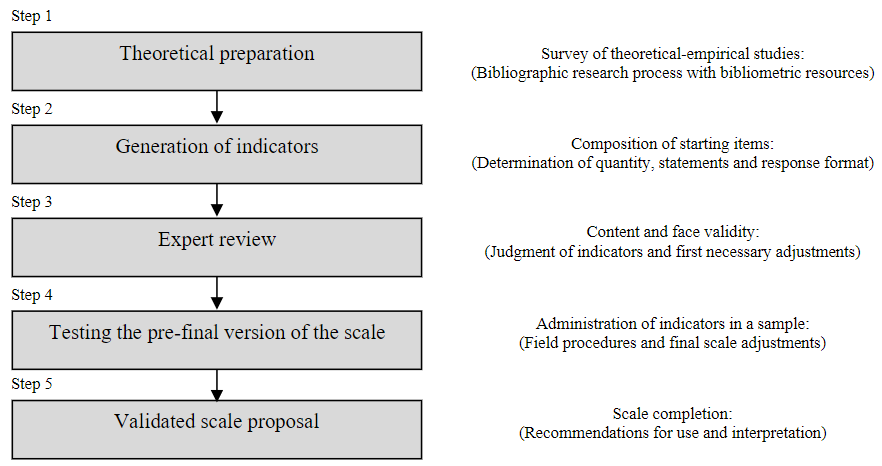
The procedures used for content and face validation (Haynes, Richard, & Kubany, 1995; Schilleret.al.,2021) involved four stages, namely: theoretical preparation using bibliometric procedures to gather theoretical-empirical studies; development of indicators, based on the content gathered from the examined theoretical-empirical material; review by experts of the proposed indicators to verify their validity, considering content, form, domain representativeness, and suitability for measurement purposes; testing the pre-final version of the indicator scale for empirical verification of its consistency among individuals residing in a typical area of the local environment in people's everyday lives, as proposed in the study. Thus, the Greater ABC Region in the State of São Paulo, Brazil, was selected, as its indicators align with the attributes of the intended local context in this study. Figure 1 presents the stages conducted in the research and their respective activities.
Stage 1, referred to as Theoretical Preparation, aimed to gather theoretical-empirical studies through a literature search related to HS to identify studies considered relevant for this research. These studies provided measurement models, allowing a review of HS approaches and context, as well as variables present in measurement, techniques, and scales used to aggregate and analyze data related to the primary findings and author's considerations. Most importantly, it helped identify indicators that generally corresponded to the HS taxonomy proposed by the UNDP/UN. Maria
Thus, the Web of Science was used as the database, accessed through the Coordination for the Improvement of Higher Education Personnel (CAPES) Periodicals Portal. The eligibility and exclusion criteria for the studies followed the parameters of an advanced search using eight topic terms or keywords in the English language, filtering articles published from 2017 to 2021, and combining results as described in Table 2.
| Advanced Search | Allows you to form and combine different results |
| TS | Search for topic terms in the following record fields: title, abstract, keywords, and author |
| Topic terms | "human security" and the following variations: "economic security", "food security", "health security", "environmental security", "citizen security", "community security" and "political security" |
| Restriction by language | English |
| Stipulated time | Last 5 years |
| Combination of results | AND |
| Citation log | Descending order |
The studies were filtered by title and scanning type reading, identifying those directed to the scope of this research. Subsequently, the skimming reading was implemented (DE SORDI, 2013) and the relevant information was recorded, steps that reduced the set of articles to a reduced number of cases in which the HS measurement metrics involved indicators with different applications and used one or more dimensions. This procedure sought to highlight both unstructured content and content already formatted as an indicator associated with the HS concept, as well as highlighting the methodological approach used in each study. The outcome of this phase is elucidated in the Results and Discussion section.
Phase 2, here referred to as "Generation of Indicators," took the set of contents gathered from the theoretical-empirical material examined in the previous stage and aimed to: identify attributes present in discussions involving local specificity issues about HS, as well as contents represented in different assertions, which required an effort to aggregate and/or adapt them into a single statement (indicators), or the creation of new statements when existing ones did not reflect local specificity. This process occurred through an analytical comparison of attributes and indicators, revealing theoretically similar contents. As a result, dimensions and indicators were defined to compose the initial instrument for measuring the HS construct, as described in the results.
Next, Phase 3 comprised the Expert Review of the indicators generated in the previous stage, which encompassed content and format validity. In this regard, experts' judgment expressed this validation through four criteria: is the item representative of the dimension to be assessed? Is the item suitable for the purposes of the measurement? Is the item expressed in a clear and understandable manner for the research's target audience? Would you make any changes to the content of this item?
Each of these criteria was assessed using dichotomous options (Yes or No) that considered the condition under evaluation for each indicator from both a theoretical and semantic standpoint, as well as proposing different textual constructions if deemed relevant. Each dimension was operationalized with five indicators. Furthermore, after presenting the set of indicators, experts were allowed to provide additional comments on the need for inclusion or exclusion of indicators or any other aspects they considered necessary when evaluating the dimension and proposed indicators. Upon completion of this stage, the initial data collection instrument to be used in the next phase was developed.
Thus, a validation instrument for the HS construct was sent, via email, to ten experts with proven academic experience on the subject and a doctorate degree, three of which are linked to state universities, two to a municipal university and five federal universities. In this context, Google forms resources were utilized for the creation and formatting of the questionnaire, as well as for data collection through self-completion
Phase 4 then involved the pilot application of the initial instrument, utilizing face-to-face interviews. This aimed to assess the understanding of both content and format of the indicators and dimensions. The intentional sample comprised 30 respondents, ranging in age from 18 to 60 years, with diverse income and education levels. This sample included individuals from both the economically active and non-active populations, through personal interviews.
The interview initially involved responding to the data collection instrument, followed by requesting feedback, questions, and any difficulties regarding the wording of the indicators and the measurement scale for each indicator. This feedback guided the implementation of adjustments to the instrument. This process also allowed for estimating the average time required for questionnaire completion and refining it for self-completion.
Two pilot rounds were conducted, as adjustments were made based on the results of the first round, including a new arrangement of the dimensions and their respective indicators. However, the second application was conducted with a different set of participants who matched the same profile, in order to assess the validity of the instrument with the new adjustments.
Finally, in Phase 5, the formatting of the measurement instrument for the HS construct was consolidated, adopting the order of arrangement of the dimensions and respective indicators evaluated in the second round.
6 Results and discussions
The bibliometric resources applied in Stage 1 allowed for the initial identification of 819 (eight hundred and nineteen) articles in the Web of Science database, using the previously described topic terms or keywords (Table 2). These articles were organized in descending order based on the number of citations, and the refinement of results for each keyword set was carried out according to the following eligibility criteria: the study should present at least one of the dimensions of HS in accordance with the taxonomy proposed by UNDP/UN, and it should reference the application of the HS concept in a local context.
All the articles were examined through scanning reading of titles, keywords, and abstracts. As a result, 56 articles were saved for analysis, with relevant information being summarized through skimming or pre-reading. The overall view obtained from each article facilitated the selection of six articles based on their relevance, as they met the proposed criteria for inclusion in this research. These contents revealed 103 indicators, as described in Table 4.
Among the studies gathered, Santos et al. (2014) proposed a shortened version of the Brazilian Scale of Food Insecurity (EBIA), focusing on food security. They tested two models: one containing seven questions and another containing five questions, which were subjected to a agreement analysis involving 230 families in Pelotas/RS. The latter was considered more pertinent and adopted as the short version of EBIA, as it yielded similar results to the original scale with fewer questions.
On the other hand, Bambals (2015) examined the benefits resulting from the application of the seven dimensions proposed by UNDP (1994) for HS, analyzing the impacts of floods in the Ogre River region in Latvia. This case study highlighted the perceived threats to all seven dimensions of HS by the local population and evaluated the population's trust in different actors regarding their effectiveness in ensuring security. The results contributed to the research's value as an instrument for exploring specific disaster environments in the context of microregional analysis.
Furthermore, Atienza (2015) investigated how people in risk-prone environments define HS using the framework of the Preliminary Human Security Index from the Center for Integrative and Development Studies at the University of the Philippines. The study focused on examining five municipalities in the Philippines and used the seven HS dimensions identified by UNDP (1994) to formulate indicators applicable to the Filipino context. The study centered on assessing people's concerns.
This study raised the subjects' perception based on an extensive series of phenomena related to security, based on the question: how worried are you about? [...]. It reinforces the importance of residents' perception of security phenomena to ensure support for both policymakers and agencies and services responsible for providing protection and security. For these authors, taking public opinion into account increases the legitimacy of the policies to be implemented. The study they carried out discussed six dimensions of UNDP/UN HS, with the exception of food security (Sotlar & Tominc, 2019).
Pereirinha and Pereira (2019) addressed issues related to economic security as the sole dimension of HS, based on existing social deficits in Portuguese society, specifically focusing on the available income that families have to meet their needs. For the study, they constructed five indicators aimed at a subjective dimension of economic insecurity in families and two indicators aimed at an objective dimension.
Carret et al. (2020) operationalized a model in New Zealand with the goal of creating a simple and useful measure for HS in contemporary situations. In this perspective, they used the dimensions of the HS concept defined by the UNDP/UN as indicators, i.e., variables directly observed for measuring HS, along with the dimensions of cybersecurity and national security, which were measured based on "how secure people felt they currently were in a specific place and time regarding each of these dimensions, in order to assess HS on a scalable basis (Carr et.al., 2020)." Additionally, they grouped the nine dimensions into three conceptual categories, based on the difficulty of meeting human needs, namely: proximal (personal, health, food); social (cyber, community, economic, environmental); and distal (national, political).
The examination of these six articles highlights the diversity of HS (Human Security) measurement proposals, in terms of their dimensions and indicators, serving different applications ranging from the measurement of only one dimension of HS, through the seven domains (UNDP, 1994), and expanding them to nine with the inclusion of traditional themes (such as national security), as well as a more contemporary one like cybersecurity. The latter is justified due to its emerging discussion in current times, due to the increasing use of the Internet and the resulting problems from unauthorized third-party use of personal data, in addition to issues related to the personal privacy of its users (Carret.al., 2020).
Table 3 displays the main results of the survey of theoretical-empirical studies, particularly the content of 103 items identified in the studies and their respective linked dimensions: economic security (18); food or nutritional security (12); health or sanitary security (9); environmental or ecological security (11); personal or citizen security (15); community security (20); political security (14); cyber security (4).
From the dimensions and items present in the selected approaches, the specific indicator generation stage was carried out. This process was based on the analysis of content and potential indicators, leading to the creation of a unique set of indicators to establish the initial measurement instrument for the construct. These indicators were obtained through adaptations of original items or content addressed by the authors regarding human security, as well as the development of our own indicators – especially those created from evidence extracted from these approaches and contextualized to the environment of interest, namely, the daily life of urban areas, industrialized settings, and a diversity of economic and age strata. Consequently, the main question was formulated, resulting in the generation of 40 indicators, with five for each of the eight proposed dimensions (Santos et.al., 2014; Bambals, 2015; Atienza, 2015; Sotlar & Tominc, 2019; Pereirinha & Pereira, 2019; Carr et.al., 2020).
Santos et. al., (2014) emphasize that for research with very large samples, it is recommended, when possible, to use a reduced number of questions for each dimension of HS, as a high number of indicators increases response time. Thus, the shorter version of the instrument could facilitate its application. Based on this understanding, eight dimensions of HS and 40 indicators were considered, as mentioned earlier, opting to shorten the wording of the indicators as a viable alternative to reduce response time.
| Advanced Search | Allows you to form and combine different results |
| TS | Search for topic terms in the following record fields: title, abstract, keywords, and author |
| Topic terms | "human security" and the following variations: "economic security", "food security", "health security", "environmental security", "citizen security", "community security" and "political security" |
| Restriction by language | English |
| Stipulated time | Last 5 years |
| Combination of results | AND |
| Citation log | Descending order |
| Dimensions | Items/Indicators raised in the literature |
| Economic Security | Employment loss; financial losses; Financial crisis; poverty; income risk; loss of home; access to public education; regular source of income; Employment Opportunities; access to credit; inability to bear unexpected expenses; financial dissatisfaction; inability to meet expenses; weight of charges and delay in payments. |
| Food Security | In the last 3 months, have you: been worried that the food in your home would run out before you were able to buy, receive or produce more food?; Availability of food at affordable prices; [...] the food ran out before you had money to buy more?; [...] ran out of money to have a healthy and varied diet?; [...] or has an adult in your home ever reduced the amount of food in their meals, or skipped meals, because there was not enough money to buy the food?; Frequency of food consumption; [...] Have you ever eaten less than you thought you should because there wasn't enough money to buy food? Food was in insufficient quantity; Experience of involuntary hunger; Experience food shortages. |
| Health Security | Deterioration of health; availability of health facilities; emergency; timely service; health insurance member; infectious diseases; alcoholism; use of drugs. |
| Environmental Security | Increased pollution in the neighborhood; source of drinking water; experience of natural disasters; inundation; drug needles discarded in public places; accumulation of garbage in public places; destruction of the environment. |
| Citizen Security | Excessive speed and traffic accidents; technological disaster; organized crime; criminal act; physical aggression; land ownership; suicides; street violence; attacks/rapes; thefts, home robberies; domestic violence. |
| Community Security | The increase in inequality in society; perceived security; improving security levels; experience and frequency of violent conflict; level of security that leads residents to leave the community; civilians carrying weapons; reduction in births; drug trafficking; properties in ruins; presence of people of different ethnic origins; foreign workers; tourists; refugees, illegal immigrants; Loud music; outdoor events at night; illegal parking; prostitution and vandalism. |
| Political Security | Political rights; diminished freedom; trust in government officials; corruption; extreme nationalism; terrorism; military threats posed by other states; disputes with neighboring countries; sale of national assets; political instability; energy dependence; scientific and technological delay. |
| Cybersecurity | Confidentiality; integrity; availability; cyber attacks. |
In this present study, the theoretical reflection regarding the minimum content to be included in each dimension of HS converged towards the adoption of five indicators under the assumption that the included contents would reliably operationalize each dimension, leading to a feasible minimum sample. It should be noted that, on the one hand, large samples result in greater non-sampling error and higher costs, while, on the other hand, the sample size needs to meet the requirements of multivariate statistical analysis techniques outlined in the study, such as exploratory and confirmatory factor analysis, both of which are essential in the analytical process for structuring concept scales and, therefore, subsequent statistical procedures following the stages presented in this study. Hil & Hil (2006) and Maroco (2014), among others, are authors who emphasize the need for at least 5 (five) cases and ideally 20 cases, or sometimes 50 cases, for each indicator proposed in the operationalization of a construct. With these considerations in mind, Table 4 presents the proposed set of indicators for each dimension of HS, preceded by a contextualized approach to presenting the indicators.
To carry out the measurement of HS, based on the assessment of each indicator included in the operationalizing scale of this construct by the target audience, in sampling processes, some of the presently selected studies used various instruments. These instruments ranged from binary options, with choices of Yes/No (Santos et.al., 2014; Carret.al., 2020), to Likert-type scales with three points regarding the feeling of concern (very, somewhat, not at all) (Sotlar & Tominc, 2019), with four points concerning agreement opinions (strongly agree; tend to agree; tend to disagree; strongly disagree) (Bambals, 2015), and even extending to five points concerning opinions about the representation of security issues, expressed only at the ends of the scale (not considered a problem and considered a major problem) (Sotlar & Tominc, 2019).
Specifically, the study by Pereirinha and Pereira (2019) considered the average value of items collected over a period of time as a measurement method, while the study by Atienza (2015) analyzed the Human Security construct using open-ended questions.
The central recommendation in the development of measurement scales is that basic properties related to reliability, validity, and sensitivity should be considered (Cummins & Gullone, 2000). Increasing the number of gradations on the interval-scale metric tends to contribute to this. Therefore, the present study opted to use a measurement instrument for the level of concern about human security situations with 11 points, ranging from 0 (zero) to 10 (ten), as illustrated in Table 4, aiming to enhance the instrument's sensitivity to the variability of the target audience and promote internal consistency of the instrument.
Regarding the measurement scale of the indicators, it is pertinent to emphasize that the literature considered in the development of the instrument emphasized the word "concern" as a guiding term for the assessments of HS. This would facilitate the understanding of the respondents since the term "human security" is not common in people's everyday lives.
The decisions made in this study regarding the structuring of the measurement process of the HS construct, embodied in the data collection instrument, were then submitted to experts who evaluated the content and form of the instrument, in accordance with the validation requirements mentioned earlier (Elliotet.al., 2012; Costa, 2011).
| Thinking about living conditions in your daily life or the daily life of families residing in this city, what is your level of concern for each situation presented in the sentences? To respond, you will indicate a score between "0" (zero) and "10" (ten). Zero represents the feeling of No Concern and Ten represents the feeling of Great Concern. | ||
| Food Security | 1. [...] running out of food before being able to buy more. | |
| 2. [...] having to buy low-quality food to be able to eat. | ||
| 3. [...] reducing the amount of food in meals due to lack of money. | ||
| 4. [...] reducing the number of meals per day due to lack of money. | ||
| 5. [...] missing food for a whole day due to not having money to buy. | ||
| Economic Security | 6. [...] the total family income not being enough to meet needs. | |
| 7. [...] not being able to pay unexpected expenses or increases in family expenses. | ||
| 8. [...] delaying payment of a installment or a bill. | ||
| 9. [...] reducing the family income if someone loses their job. | ||
| 10. [...] not having access to loans in case of any need. | ||
| Health Security | 11. [...] not having access to health service units in the city. | |
| 12. [...] not having medical assistance in case of emergency. | ||
| 13. [...] not having adequate medical care in case of infectious disease. | ||
| 14. [...] receiving medical care by phone or computer, via the internet. | ||
| 15. [...] not having guidance or access to health care in case of drug use or mental health problems. | ||
| Citizen Security | 16. [...] experiencing threats or physical aggression from another person or groups of people. | |
| 17. [...] experiencing some type of accident (work or traffic). | ||
| 18. [...] experiencing threats from organized groups (e.g., gangs, militias, drug trafficking). | ||
| 19. [...] experiencing some type of urban violence (e.g., robbery, theft, kidnapping). | ||
| 20. [...] not having confidence in the work performed by the police. | ||
| Cybersecurity | 21. [...] finding out that some important information searched on the Internet is not true. | |
| 22. [...] having your personal data used illegally. | ||
| 23. [...] having your privacy invaded by the disclosure of personal data. | ||
| 24. [...] being afraid of being scammed online. | ||
| 25. [...] experiencing some type of defamation or aggression on social networks. | ||
| Community Security | 26. [...] being discriminated against because of religion, sexual orientation, racism, or any other type of prejudice. | |
| 27. [...] occurrence of vandalism in the area where you live. | ||
| 28. [...] various noises in the area where you live (e.g., loud music, disturbances, fights or other events of this type). | ||
| 29. [...] possibility of violent conflicts occurring in the area where you live. | ||
| 30. [...] having to move due to lack of security in the area where you live. | ||
| Environmental Security | 31. [...] quality of the water that reaches your home. | |
| 32. [...] air pollution in the area where you live. | ||
| 33. [...] flood or landslides that may affect your residence. | ||
| 34. [...] accumulation of garbage in public places in the area where you live. | ||
| 35. [...] presence of open sewage in the area where you live. | ||
| Political Security | 36. [...] loss of rights and freedoms as a citizen. | |
| 37. [...] not having access to express opinions on projects or actions of the local government. | ||
| 38. [...] not having your needs as a resident met by public agencies. | ||
| 39. [...] behavior or performance of local politicians. | ||
| 40. [...] performance of justice. | ||
The result of the evaluation by the experts indicated the exclusion of one indicator and the respective inclusion of another, as well as the need for semantic adjustment in the text regarding some indicators, in addition to adjusting the temporal reference of the situation to be evaluated by the respondents, which was linked to the perspective of the possible occurrence of the type of event over time. Although HS is an abstract concept and not used in everyday language (Atienza, 2015), which initially suggested asking people about their main concerns, among the experts there is a predominance of the suggestion to replace the measurement of feeling of concern with the measurement of agreement/disagreement opinion regarding the presented indicators. Table 5 summarizes the suggestions of the experts as well as other adjustments made by the researchers necessary to align with the changes from the group of experts.
| I will mention some situations that may or may not represent your living conditions. To respond to each situation I will present, you will use the X CARD. "0" (zero) indicates that you "Totally Disagree" with the situation presented and "10" (ten) indicates that you "Totally Agree" with the situation presented. So, the less you agree, the lower the score should be, and the more you agree, the higher the score should be. | |
| Food Security | Inclusion: "in the last three months" in statements 1 to 5. |
| Economic Security | Inclusion: "in the last three months"; Reversal of statements 6 and 7, for a favorable connotation regarding the identification of the dimension. |
| Health Security | Inclusion in statement 13 "infectious disease", covering the item for "hospitalization and surgery". |
| Personal Security | Inclusion: "in the last three months" in all indicators. Statement 18 referring to threats from gangs, militias, or drug trafficking was replaced by an indicator related to "security around the house". |
| Cybersecurity | Adjustments to the texts of indicators 21 to 25, with the inclusion of words such as: "needed", "had", "suffered". Item 22 - replacement of the term "used illegally" by "used without authorization". |
| Community Security | Inclusion: "in the last three months"; Statement 27 - replacement of the term "area where I live" by "in my neighborhood". Statement 28 changed from "noise in the area where I live (loud music, fights or other events of this type)" to "...had difficulty resting, sleeping, or working because of noises near my house". |
| Environmental Security | Inclusion: "in the last three months", Statement 32 - replacement of "air pollution" by "severe pollution". |
| Political Security | Inclusion: "in the last two years"; Statement 38 - replacement of the term "citizen" and replacement of the term "local government" with "public agencies". |
| Measurement Instrument Change | Totally Disagree - Totally Agree0 1 2 3 4 5 6 7 8 9 10 |
For the pre-final version test of the scale, 30 subjects were interviewed in the first pilot study in the fortnight of November 2021, through face-to-face application. This activity brought refinements to the text and adjustments in the order of arrangement of some proposed indicators. Due to these changes in the writing order, punctuation, and word substitution in the statement structure representing the indicator, the second pilot study, an additional field activity, was conducted, with the instrument applied to an equal intentional sample size. After this supplementary activity, no need for changes in the wording or content of the indicators was observed. Therefore, the final proposal of the data collection instrument for measuring the HSconstruct at the local level was established, as described in Appendix A.
7 Final considerations
From the composition of the indicator scale to operationalize the dimensions of the HSconstruct and the measurement scale of these indicators generated by the implemented methodological process, some considerations can be pointed out.
The first of these concerns the development of bibliographic research activities, as well as the resources and bibliometric procedures to be employed. Thus, it is emphasized the relevance of theoretical exploration that ensures a comprehensive survey of theoretical-empirical studies, based on one or more reliable databases. Furthermore, it is necessary to establish a clear definition of the criteria for inclusion and exclusion of studies in order to select only the approaches relevant to the scope of the work, as well as to the measurement purposes sought.
Furthermore, it becomes relevant to define observable requirements in the studies, in addition to identifying the content and items that will serve as the basis for the composition of the scale indicators: the context of approach to the construct present in the study; the sample and techniques used; the instruments employed; the way the results are disseminated; the reported limitations and proposed suggestions for future studies.
The second consideration focuses on planning the stages to be executed and detailing the activities. Therefore, it is important to highlight the recording of the step-by-step methodological procedures performed, which can be included as an appendix to facilitate the replication of the work by other researchers.
Although not part of the activities in this study, to assess the scale's reliability through Exploratory Factor Analysis (EFA) and, subsequently, Confirmatory Factor Analysis (CFA) procedures, is recommended.
Please note that the proposed indicators refer to respondents' perception of aspects of their life, depending on their own assessment, i.e., the socially constructed perception of security, thus constituting a subjective evaluation. To measure the actual state of security objectively, it is important to consider other objective indicators for each dimension of HS, to be applied in addition to the developed scale.
Important attention to be considered in conducting studies, given that HS is abstract and not commonly used in everyday language, so that the content of the indicators addresses the concerns of the subjects. Words like threats, fear, worry, apprehension, or crisis, for example, can be used. Nonetheless, it is crucial to evaluate their appropriateness for the target audience and the nuances of the content being assessed, considering their significance within the local and temporal context, and customizing the indicators accordingly.
One limitation of this study is that the analysis is predominantly restricted to the Web of Science, with occasional reference to Google Scholar. Future research should expand the sample from national repositories. However, the indicators and their relevance in the local and temporal context must be reviewed, customizing the items and content into themes that operationalize HS, reafirming the need to include new insights into human needs. Such insightscan be investigated using the scale developed here, considering the sociodemographic characteristics of the target audience and local specificities, as well as the evolving context of society.
In this context, cybersecurity, for example, appears to be a prominent dimension among the set of basic human needs. This is due to the variety of threats to personal security faced by the population across different age groups and social strata who use the internet, as well as the advancements in technological resources, legal norms for citizen protection, and their effective enforcement. These factors justify its inclusion among the dimensions of HS.
Finally, it should be noted that the intention of this study was to develop a scale for use in urban contexts to assess HS. The generated results aim to contribute to the planning of government actions and policies, particularly regarding the need to prioritize interventions based on observable variables at the local or micro-scale of HS.
References
Atienza, M. E. L. (2015). People’s views about human security in five Philippine municipalities. Disaster Prevention and Management.
Bambals, R. (2015). Human security: an analytical tool for disaster perception research. Disaster Prevention and Management.
Bolton, M. B. (2011). Human security after state collapse: global governance in post-earthquake Haiti. LSE Global Governance Working Paper Series, (RP 01/2011).
Boyce, M., & Katz, R. (2021). The health secure city: cities as conquerors of disease. In Inoculating Cities (pp. 227-233). Academic Press.
Breslin, S., & Christou, G. (2015). Has the human security agenda come of age? Definitions, discourses and debates. Contemporary Politics, 21(1), 1-10.
Buzan, B. (2004). Implications for the Study of International Relations. In Global Responses to Terrorism (pp. 314-327). Routledge.
Buzan, B., & Hansen, L. (2012). A evolução dos estudos de segurança internacional. São Paulo: UNESP.
Carr, S. C., Hopner, V., Hakim, M. A., Hodgetts, D. J., Chamberlain, K., Nelson, N., & Jones, H. (2021). Scaling the Security Staircase. Political Psychology, 42(4), 575-595.
Costa, F. J. D. (2011). Mensuração e desenvolvimento de escalas: aplicações em administração. Rio de Janeiro: Editora Ciência Moderna Ltda.
Cummins, R. A., & Gullone, E. (2000). Why we should not use 5-point Likert scales: the case for subjective quality of life measurement. In International Conference on Quality of Life in Cities, 2. Proceedings Singapore.
Dalby, S. (2009). Security and environmental change. Polity.
De Almeida Rocha, R. M. (2017). O histórico da segurança humana e o (des) encontro das agendas de desenvolvimento e segurança. Carta Internacional, 12(3), 104-129.
De Sordi, J. O. (2013). Elaboração de pesquisa científica: seleção, leitura e redação. 1. Ed, São Paulo: Saraiva.
Elliot, L. G., et al. (2012). Instrumento de avaliação e pesquisa: caminhos para construção e validação. Rio de Janeiro: Wak Editora.
Evans, P. M. (2008). Human security in extremis: East Asian reactions to the responsibility to protect. In Human Security in East Asia (pp. 91-105). Routledge.
Field, A. (2009). Descobrindo a estatística usando o SPSS. 2. ed. Porto Alegre: Artmed.
Fukuda-Parr, S., & Messineo, C. (2012). Human Security: A critical review of the literature. Centre for Research on Peace and Development (CRPD) Working Paper, 11, 1-19.
Graham, D. T., & Poku, N. (2000). Migration, globalisation and human security. Londres, Nova York: Routledge.
Haynes, S. N., et al. (1995). Content validity in psychological assessment: a functional approach to concepts and methods. Psychol Assess, 7(3), 238-247.
Hoffmann, L. (2009). The universality of human rights. Judicial Studies Board Annual Lecture, 19, 22-3.
Iqbal, Z. (2006). Health and human security: the public health impact of violent conflict. International Studies Quarterly, 50(3), 631-649.
Koonings, K., & Kruijt, D. (2007). Fractured cities, second-class citizenship. In Fractured cities: Social exclusion, urban violence and contested spaces in Latin America (p. 7).
Kronemberger, D. M. P. (2019). Os desafios da construção dos indicadores ODS globais. Ciência e cultura, 71(1), 40-45.
Kuhlmann, P., & Faro, F. (2012). Human Security and Emancipation: Measurements and issues. Global Movements, National Grievances, 293.
Kumssa, A., Jones, J. F., & Williams, J. H. (2009). Conflict and human security in the North Rift and North Eastern Kenya. International Journal of social economics.
Lemanski, C. (2012). Everyday human (in)security: Rescaling for the Southern city. Security Dialogue, 43(1), 61-78.
Liotta, P. H., & Owen, T. (2006). Why human security. Whitehead J. Dipl. & Int'l Rel., 7, 37.
Magalhães, F. N. C. (2015). Produção do espaço na cidade do neoliberalismo e novas aberturas no espaço digital. In Teorias e práticas urbanas – condições para a sociedade urbana.
Marôco, J. (2021). Análise estatística com o SPSS statistics: 8. ed. Pêro Pinheiro: ReportNumber.
Nobre, F. R. F., Bezerra, C., & Kuhlmann, P. (2016). Índices de geração de segurança humana: uma aplicação ao caso peruano. Revista de Estudos Internacionais, 7(2), 44-64.
Oliveira, A. B. de. (2009). O Fim da Guerra Fria e os Estudos de Segurança Internacional: O Conceito de Segurança Humana. Revista Eletrônica Aurora. Ano III, 5, 68 -79.
Oliveira, E. (2020). O Universo da Segurança Humana. Coplad-Ilanud Publication. San José–Costa Rica.
Owen, T. (2008). Measuring human security. In Environmental change and human security: Recognizing and acting on hazard impacts (pp. 35-64). Springer, Dordrecht.
Paris, R. (2001). Human security: paradigm shift or hot air?. International security, 26(2), 87-102.
Pereirinha, J. A., & Pereira, E. (2019). Défice Social e Pobreza Relativa: uma análise da adequação do bem-estar e da segurança económica em Portugal.
Pérez de Armiño, K. (2013). La gobernanza global de laseguridad alimentaria: debilidades, disparidades e iniciativas de reforma. Alimentación y derecho internacional : armas, instituciones y procesos, 83-118.
Rodrigues, T. (2012). Segurança planetária: entre o climático e o humano. Ecopolítica, n. 3.
Santos, L. P. D., et al. (2014). Proposta de versão curta da Escala Brasileira de Insegurança Alimentar. Revista de Saúde Pública, 48, 783-789.
Schiller, C. D. O. A., et al. (2021). Validação de face e construto do Instrumento de Avaliação de Redes de Atenção Materno-infantil (IARAMI). Ciência & Saúde Coletiva, 26, 3657-3670.
Sotlar, A., & Tominc, B. (2019). Perceptionof Security Phenomena in Local Communities in Slovenia. Revija za kriminalistiko in kriminologijo, 70(5), 439-454.
Stoett, P. (2016). Human and Global Security. University of Toronto Press.
Tadjbakhsh, S. (2013). In defense of the broad view of human security. In Routledge handbook of human security (pp. 63-77).
Tadjbakhsh, S., & Chenoy, A. (2007). Human Security: concepts and implications. Routledge.
Thomas, C. (2001). Global governance, development and human security: exploring the links. Third World Quarterly, 22(2), 159-175.
United Nations Development Programme (UNDP) (1994). Human Development Report 1994. Oxford: Oxford University Press.
Walton, D., & Akimoto, D. (2016). The human security agenda: Australia and Japan. In New Approaches to Human Security in the Asia-Pacific, 153-175.