Artigos
Gourmetization as a social practice in the tourist complex in Barra Grande - Piaui - Brazil
Gourmetization as a social practice in the tourist complex in Barra Grande - Piaui - Brazil
Gestão & Regionalidade, vol. 39, e20237938, 2023
Universidade Municipal de São Caetano do Sul
Recepción: 15 Junio 2021
Aprobación: 16 Diciembre 2021
Abstract:
Based on the study of the relationships established between society and gastronomic organizations, this work aims to contribute in an epistemological and methodological way, providing a scientific framework that talks about the affects that occurred in the field of gourmet and organizational practice studies. And give readers the opportunity to reflect on social, economic, environmental and administrative issues, for example. Therefore, this research carries out a scientific debate based on theories of practice in order to understand how the practice of Gourmetization affects the social organization in the tourist complex of Barra Grande, Piauí. This is a qualitative research, based on Theories of Practice, conducted through sensory ethnography and a socio-material approach, with the support of organizational aesthetics. Furthermore, the research shows that gourmetization is constituted in the relationship between human and non-human elements, pointing out as a result the affections promoted in gourmet practice. Therefore, the practice under study is an organizational element, judging by its power to affect places, people and objects. Presenting itself as a bias to be used in overcoming and/or resignifying paradigms and dichotomies in the field. It is therefore concluded that gourmet practice affects gastronomic organizations and the inserted field, since it generates affects with potency that can be positive or negative. Contributing to include and/or exclude people, objects, cultures, among others, both in gastronomic organizations and in society.
Palavra-chave:iheories of practice; Gourmetization; gastronomic organizations; Tourism; Barra Grande - Piauí – Brazil.
Resumo:
A partir do estudo sobre as relações estabelecidas entre a sociedade e as organizações gastronômicas, este trabalho visa contribuir de forma epistemológica e metodológica, disponibilizando um arcabouço científico que fale sobre os afetos ocorridos no campo dos estudos da prática gourmet e organizacional e oportunizar aosleitores refletirem sobre questões sociais, econômicas, ambientais e administrativas, por exemplo. Para tanto, esta pesquisa realiza um debate científico a partir das teorias da prática com o objetivo de compreender como a prática da Gourmetização afeta a organização social no complexo turístico de Barra Grande, Piauí. Trata-se de uma pesquisa qualitativa, fundamentada nas Teorias da Prática, conduzida por meio da etnografia sensorial e da abordagem sociomaterial, com o apoio da estética organizacional. Ademais, a pesquisa evidencia que a gourmetização se constitui na relação entre os elementos humanos e não humanos, apontando como resultado os afetos promovidos na prática gourmet. Assim sendo, a prática em estudo é um elemento organizativo, a julgar pela sua potência de afetar lugares, pessoas e objetos. Apresentandose como um viés a ser utilizado na superação e/ou ressignificação de paradigmas e dicotomias no campo. Conclui-se então que a prática gourmet afeta as organizações gastronômicas e o campo inserida, uma vez que gera afetos com potência que pode ser positiva ou negativa, contribuindo para incluir e/ou excluir pessoas, objetos, culturas, entre outros, tanto nas organizações gastronômicas quanto na sociedade.
Palavra-chave:teorias da prática; gourmetização; organizações gastronômica; turismo; Barra Grande - Piauí – Brasil.
1 Introduction
The current study was encouraged by the theoretical and empirical concern about approaches adopted by studies focused on investigating practices adopted in the organizational context. It aims at investigating the social practice of gourmetization in the gastronomic organizations’ context. Therefore, social practice is herein understood as relationships established between human and non-human elements in the social studies field (WARDE, 2016; GHERARDI, 2019), whereas gourmetization is understood as a set of activities developed in the gourmet practice established in human and non-human relationships (DOMANESCHI, 2019), whose main features comprise luxury, refinement and glamor (PALMIERI JR. 2017;). Gastronomy became the very core of organizational studies and of research about the theory of practices taking place from the 1980s onwards, after the scientific turn towards studies about practice – SP – (GHERARDI, 2006). It also happened due to its growing importance for social studies conducted both in international and national contexts, such as the ones by ROSA (2016), who addressed the material turn by giving voice to materials, such as artifacts and objects, observed in this field, as well as by Reckwitz (2012), who associated affections to materiality with the “affective turn”, which was substantiated by scientific efforts made by Moura and Bispo (2019), who reflected about and instigated the act of thinking about sociomateriality in scientific studies based on Gherardi (2019), who addressed the connection between sociomateriality and affections.
Therefore, the aim of the current research was to carry out a scientific debate to help better understanding how the Gourmetization practice affects social organization in the tourist complex of Barra Grande County, Piauí State, in order to contribute to the field of practice and organizational studies. The study was structured over the epistemology of social practices such as that advocated by Gherardi (2006), Strati (2007a,2007b) and Bispo (2016). Furthermore, in methodological terms, it was a qualitative research guided by Pink’s (2006, 2015) sensory ethnography, which used semi-structured to-the-double and shadowing interviews as data collection strategy; the collected information were subjected to Strati’s (2007a) evocative and interpretive analysis.
The term “Gourmet” emerged in France in the mid-18th century (BIANCHI, 2015). At that time, it was used to differentiate individuals in society based on their eating habits. Gourmet food was considered a product for refined people with financial purchasing power who had access to food or drinks considered exquisite, luxurious and glamorous (BRAUNE, 2017). Doers and eaters used human senses such as sight, smell, touch, hearing and taste (STRATI, 2007A) as sources to access the quality of food. Gourmet practitioners were considered distinguished people in society because they used their refined taste to enjoy food and wine (BRAUNE, 2017).
The gourmet practice does not only involve differences in food presentation and ingredients; it also comprises a set of expectations generated by consumers, since they want to experience sensations and to have different experiences added with beauty, glamour, status, satisfaction, luxury and the unique elaboration offered to agents who appreciate good food, along with refinement, innovation, experience and specific style. This process is called gourmetization (COLLAÇO, 2013); this practice was formed over time by different activities carried out in time and space; yet, it has maintained the essence of refinement and luxury.
Based on the organizational perspective, gourmetization is an element capable of adding value to businesses (SILVA, 2019). From the economic viewpoint, it is a potential asset that generates revenue, since it adds value to products. From the social perspective, gourmetization can be seen from two different angles, namely: the positive one, which refers to its relationship with the community in order to promote local development; and the negative one, which is associated with social division (CAVALCANTI, 2017; PALMIERI JÚNIOR, 2017; SILVIA, 2019).
Thus, the gourmet practice becomes an important element to be understood within the tourist context, since it is adopted by such a context worldwide. The relationship among tourism, gourmetization and organizations is intertwined in the global, national and local scenarios. Thus, it is possible stating that tourism (I) accounts for promoting geographic locations so that connections between gourmetization and organizational studies can happen; (II) can be understood as differentiated social practice in each tourist destination, as practice adopted by individuals who are part of organizations, either in a direct or indirect manner; and (III) is the link between making and consuming food.
Furthermore, the current study contributes to both Organizational and Practice-Based Studies (PBS), as well as helps better understanding gourmetization as social practice.
Besides the current introduction, which addressed the overall research context and aims, the present article was structured as follows: section 2 presents the epistemology of social practices, as well as concepts such as sociomateriality, organizational aesthetics, organization and gourmetization. Section 3 presents the herein adopted methodological approach. Section 4 presents and discusses the results. Finally, section 5 presents the final considerations.
2 Theoretical Background
2.1 Theories of Practice
Theories of practice comprise a set of approaches that take social practice as the very core of their studies. According to the concept used in the current article, theories of practice are a set of theoretical approaches focused on social practices (BISPO, 2016b) assessed by some individuals to reflect about realities experienced in different contexts worldwide. If one takes into consideration the evolution of theories of practice in the last two decades, it is possible stating that the literature about this topic has been advancing in a regular and even manner. In 1998, researchers David, Nicolini and Dvora Yanow suggested the creation of a research community to use these practices to help better understanding social relationships established in different contexts, since these studies would evidence learning and knowledge elements in different organizations (BISPO, 2013a).
There is a complex literature focused on investigating what such a practice is and how it enables reflecting about the herein addressed topic from many perspectives. According to Bourdieu (2005), practice is an action; Turner (1994) described it as structure-language, symbols and tools capable of interacting with each other; Engeström, Miettinen and Punamäki (1998) defined practice as system of activities; and the current study adopted Gherardi’s (2006) perspective, according to whom, practice is a network of connected actions, although it can also be understood within social, knowledge and aesthetics-related contexts (GHERARDI, 2006; STRATI, 2014; NICOLINI, 2013).
Therefore, social practices are featured as a set of human and non-human elements (GHERARDI, 2006) involved in an existence process that encompasses different cultures, individuals, activities, actions and habits – this learning process has been revisited by scientific currents that have adopted not one, but several theories associated with each other in order to explain a certain phenomenon; the “practical turn” movement, in this field, emerged from there.
This movement enabled the evolution of scientific studies in several fields, such as organizational studies. Given the strength of the practice movement, several researchers have joined this field and they brought along a contemporary perspective different from consolidated research habits. Thus, it was, and still is, a paradigm shift in research “doing” processes (GHERARDI; STRATI, 2014). Therefore, the use of practice-related perspectives by authors such as Gherardi, Strati and Bispo has started an important era, for both national and international organizational studies, since it enabled other theoretical and methodological perspectives to help better understanding events taking place in the scope of organizational studies.
However, there is still a long way to go, since the theoretical construction of studies about practice is based on theoretical and empirical articulation. Therefore, any research conducted in the field of organizational studies, which is substantiated by theories of practice opens room for other academic perspectives associated with social phenomena. Therefore, the present study adopted the socio-material and organizational aesthetic approaches to help better understanding human and non-human relationships, both in everyday life and in organizational environment. On the one hand, one finds sociomateriality aspects used to investigate social and material relationships (MOURA, BISPO, 2019); on the other hand, one finds the foundations of organizational aesthetics associated with human habits, such asthe use of senses (taste, smell, touch, vision and hearing), as well as the aesthetic judgment adopted by individuals to carry out their activities and to make choices during gourmet practice (STRATI, 2007a, 2007b). Therefore, both approaches play essential and complementary role in the herein conducted study of gourmet practice, as well as in other studies aimed at investigating this topic from the sociomaterial perspective.
Accordingly, the current study adopted a post-qualitative approach, since reflecting about socio-material relations goes beyond simply analyzing human aspects (ORLIKOWSKI, 2007). Non-human (material) aspects have been gaining room in this field, as well as highlighted in studies conducted in recent years, which used theories of practice as epistemological guidelines and took ownership of sociomateriality, such as studies based on practice. Given this academic interest, the movement called “practical turn” had impact on this field, since it launched some approaches, such as those in studies whose main aim was to help better understanding issues concerning the non-human agency – i.e., artifacts, objects, environment, cultural aspects capable of affecting individual and community practices (MOURA; BISPO, 2019; GHERARDI, 2012; ORLIKOWSKI, 2007). Therefore, it is important conducting further studies focused on investigating the people/objects relationship in daily life.
With respect to sociomateriality, Gherardi (2006) advocated that the concept of “social” is understood from the sociomaterial perspective, according to which, human and non-human elements form a set of activities that can support materiality performance in the essence of practice. On the other hand, the concept of sociomateriality adopted by Orlikowski (2007) refers to the relationship between what is “social” and “material”, as well as highlights the important role played by the scientific perspective in studies about social practices substantiated by the sociomaterial and aesthetic approach.
Thus, what is sociomateriality and what role does it play? It is an approach that enables theories of practice and whose role is to promote ways to better understand the reality experienced through the material agency over the human element, and vice versa. It also concerns the association between concepts and principles of social and materiality (BISPO, 2016b); moreover, it may be the theory aimed at assessing the relationship between “social” and “material” in daily life, within a simultaneous and interdependent manner (ROPO; SALOVAARA, 2019). In other words, sociomateriality aims at understanding how human (social) and non-human (material) interactions can help better understanding the production of everyday life (LEONARDI, 2013; SVABO, 2009). All these processes are possible because “practice” can be described and analyzed as network of connections between actions, a fact that enables interdisciplinary contents and theories to interact to each other (GHERARDI, 2006).
Thus, the current study adopted two approaches – i.e., sociomateriality and organizational aesthetics - to help better understanding findings in this field, as well as to enable theorization processes based on more than one theory; both approaches must be able to substantiate discussions about the herein analyzed practice. The option made to use them is associated with the fact that each approach represents issues, such as the social/object and people/learning relationships that, assumingly, play fundamental role in building one’s understanding about a given practice. It happens because the process to understand a given practice depends on understanding the organization of the social world it is inserted in, rather than just on perceiving this practice as action promoted by people.
Therefore, adding aesthetic theory to studies opens room for a broader perspective on both the investigated field and the developed actions. The influence of aesthetics on studies about gourmet practice is rooted in the learning process that takes place in ‘practice’ through human senses (sight, hearing, taste, smell and touch); it is done by focusing on sensory perception, as well as on the development of sensitive knowledge and aesthetic judgment. Therefore, theory involvement in studies is essential to enable further reflections (STRATI, 2007a; SOARES; BISPO, 2014), since organizations and communities are featured by person/person and person/objects relationships that are capable of building knowledge in a collective manner.
Aesthetics enables deepening the way the senses influence the organizational process of what is done in ‘practice’; thus, learning becomes an element capable of generating and transmitting tacit knowledge, of creating collective identity and of giving meaning to the act of doing (STRATI, 1990, 2007a, 2019) – it can also help promoting this practice in the community. Therefore, essential senses such as smell, taste, touch, hearing and vision play key role in interactions between human and non-human elements, since they act as means to generate understandings about how the social organization of a given community takes place through the affections of ‘practice’. Therefore, it is necessary understanding how the current study perceives gourmetization and organizations in order to better understand this field. In order to so do, considerations about both concepts will be presented below.
2.2 Gourmetization and Organizations
Cohen and Avieli (2004) have addressed the globalization of eating habits; according to them, gastronomy became part of a world market, although it became a barrier to meet the needs of consumers that had not been identified, so far, in gastronomic organizations. It happened because individuals learned to behave based on market interference, rather than on their own “nature” (DARDOT; LAVAL, 2017), a fact that reinforced the theory that man results from the environment; consequently, it is influenced by it. Thus, the current study herein presents some important points about gastronomy, gourmetization and organizations.
The globalization of the food culture was one of the main food-related movements observed over the years. According to this movement, food turned into object of mass production; however, it was at risk of losing one of its greatest features, namely: personality (POULAIN, 2013; COHEN; AVIELI, 2004; PALMIERI JÚNIOR, 2017). Eating habits have changed, a fact that also changed all elements encompassed by this scenario, such as kitchens, objects, habits, routines, the way people act, as well as the way they choose what to eat (DÓRIA, 2009).
Societies were driven to change people’s eating habits and preferences, and it generated two opposing movements in the food globalization process, namely: mass industrialization and food personalization. In both cases, one can find the term gourmetization; however, the essence of the gourmetization practice lies on producing a product that is as personalized as possible. According to Poulain (2013, p. 17), “eating plays structuring role in the social organization of a given human group”; it is simultaneously structured, dynamic, capable of structuring contexts, as well as vulnerable to social, political and cultural interferences over time.
Thus, accepting gastronomy as differentiated element in the organizational context means accepting the rules already established in the gastronomic and tourist market (POULAIN, 2013; ROBINSON; GETZ, 2016; SCHLÜTER, 2003). Thus, from an organizational viewpoint, understanding relationships established between the practice of gourmetization and gastronomic organizations can help promoting both the inclusion and exclusion of possibilities for the tourism sector, as well as for other sectors in society.
Human history has shown that everything is changeable: habits, tastes, way of dressing, physiological structure, in short, everything, including food - before the discovery of fire, everything was consumed in natura (HARARI, 2019). Human beings are influenced by different perspectives at the time to make their dietary decisions, which, nowadays, are influenced by a world cuisine, whose subjectivism gives room to social pluralism. Certain food items typical of a particular country or region in the past are nowadays available to the whole world through the gourmetization practice, which is influenced by social networks interconnected in the world through the internet. Nowadays, people’s choices are shared worldwide, and it enables regional cuisines to be adapted to international tastes (GAMBATO; GONÇALVES, 2017). Likewise, different communities can experience cuisines other than the local one.
Cooking became one of the most investigated phenomena in the academic context worldwide, mainly in studies focused on investigating service market, retail, development, innovation, culture, health, philosophy, sociology and anthropology (GOODY, 1982; BRILLAT-SAVARIN, 1995; COHEN; AVIELI, 2004; COLLAÇO, 2013; POULAIN, 2013; SOARES; BISPO, 2014; WARDE, 2016; MAURER, 2019; LAVANDOSKI; BRAMBILLA; VANZELLA, 2019) in the environment of small- and medium-sized organizations. This aspect corroborates the idea that small- and medium-sized companies can work as barriers to immoralities introduced by capitalism (DARDOT; LAVAL, 2017); in other words, people result from socio-material relationships (human and non-human) established throughout their lives within the experienced context, where they develop unnatural habits, such as eating with knife and fork, wearing clothes and using social networks. Therefore, the gourmetization practice is described as capable of including people and of promoting local identity through practitioners’ interaction in the ‘practice’ environment.
Gourmetization is the practice of refinement, luxury and innovation (PALMIERI JR., 2017); however, it is also the practice of agents who value knowledge, culture, as well as human and non-human elements (MONTANARI, 2013; GHERARDI, 2019). Gourmetization triggers people’s senses (such as taste, smell, sight, hearing and touch), as well as feelings (like well-being and self-esteem), through objects capable of providing them with unique experiences, from the viewpoint of those who experience them. The appreciation of aesthetic elements and socio-materiality in the gourmetization practice is an important factor to acknowledge both ‘practice’ and people (STRATI, 2010; ORLIKOWSKI, 2007).
According to the organizational perspective, gourmetization is an element capable of adding value to businesses (SILVA, 2019). From the economic viewpoint, it is a potential asset capable of generating revenue, since it adds value to products. From the social viewpoint, gourmetization can be seen as a way to promote local development, as long as it is practiced from the inclusion perspective. Social food practices can be an important device used to socially and materially investigate the gastronomic sector by taking into consideration the relationship between human and non-human elements, as well as the management of different agents and resources (both sides of the same empirical phenomenon) (DOMANESCHI, 2019).
3 METHODOLOGICAL APPROACH
The current study adopted a qualitative approach based on Theories of Practice. It was substantiated by sensory ethnography, as well as by sociomaterial and organizational aesthetic approaches; both approaches completed each other in the investigated field to help meeting the aims of the current study. With respect to data collection techniques, this study has primarily used non-participant observation - zoom in and out style - (NICOLINI, 2013b), as well as photos, videos and audio in line with ‘to-the-double’ and ‘shadowing’ interview techniques (MOURA; BISPO, 2019). Interpretive and evocative techniques were used for analysis purposes (STRATI, 2007a).
Researchers who carry out ethnographic studies can experience practice in order to simultaneously live it internally (insiders) and to get to know it externally (outsiders) (BISPO, 2015; GHERARDI, 2000). According to Pink (2009), sensory ethnography enables researchers to come closer to individuals’ senses, a fact that is extremely important for research taking experience as empirical basis of study. It happens because perceiving sensoriality is essential to better understand issues such as the way we learn, understand and represent life (Pink, 2015). Thus, sensoriality plays essential role in the process to understand the gourmet practice. Furthermore, sensory ethnography is increasingly used in academic practices, as well as in practices applied to social and human sciences (PINK, 2009; 2015; BISPO, 2015).
Given their proximity to the investigated practice, which is enabled by ethnography, the adopted collection techniques must be aligned with the adopted methodology. According to Pink (2009), the most appropriate observation techniques are the ones that take into consideration the multisensory nature of the investigated field. Thus, explaining social relationships requires understanding, at certain degree, how people interact in society, based on sociomateriality (MOURA; BISPO, 2019; GHERARDI, 2012; ORLIKOWSKI, 2007). Hence, it is necessary highlighting the use of ‘to-the-double’ and ‘shadowing’ interview techniques in observation processes, since they allow researchers to have contact with participants’ routine in order to better understand the investigated practice. Based on the aforementioned techniques, it is necessary and important for researchers to live and experience the ‘practice’ in a situated fashion. In other words, they should participate in practitioners’ daily lives, since observation-based investigations focus on individuals’ daily life, based on social actors’ practices (BISPO; GODOY, 2014).
Other techniques were used whenever non-participant observation was not capable of generating enough information to solve doubts and concerns. Besides the shadowing and tothe-double observation technique, the current study has also used notebooks, conversations, photos and videos for data collection purposes. All collected data were properly stored and subsequently reviewed and analyzed. Semi-structured interview was conducted when doubts persisted, even after the aforementioned process. The current research carried out seven semi-structured interviews to clarify specific points of ‘practice’. According to Bispo (2015), interviews have limitations in capturing dynamic aspects; thus, the current study has also used other data collection methods, such as the shadowing technique, which allows researchers to see the field from the observed practitioner’s perspective. In this case, one of the researchers experienced the ‘practice’ by acting as temporary kitchen assistant within the investigated environment, without letting other practitioners know that she was also playing the role of researcher at that time.
The methodological framework presented above is relevant to the current study in two different aspects. The first aspect refers to researchers’ concern to, firstly, getting to know the research field and, later, defining the most appropriate methodological approach to be adopted in the study. The second aspect refers to concern with collecting data based on multiple techniques in order to ensure greater rigor, both in data veracity and in maintaining the experienced reality.
Therefore, the present research focused on preserving the narratives, cultures and identity during the observations, as much as possible. Hence, given the variety of interviews, videos and photos collected in the field, the collected data were subjected to interpretive and evocative analysis. Interpretive and evocative analysis takes place when researchers carry it out during the observation process (STRATI, 2007a). These actions require researchers to ensure maximum alignment between methodological strategies, and data collection and analysis techniques. They also collaborate to the theoretical, methodological and empirical framework of the research.
In summary, the current research has followed a scientific approach focused on the reality experienced in the daily lives of gastronomic organizations in Barra Grande County - PI. It was done from the epistemological and ontological perspective that has analyzed the nature and structure of both social life and phenomena (SCHATZKI, 2006), in association with the epistemology of practices aimed at answering questions about “how” social practices are happening and being built (GHERARDI, 2009). According to Bispo (2015), the aforementioned method is a means, rather than the purpose, of scientific research; thus, there is still a lot to learn about ‘practice’. Therefore, it is essential understanding the concepts guiding the methodological approach in the empirical research process in order to guide researchers’ behavior in the field (BISPO; GODOY, 2014).
All collected information, as well as participants’ identity, were treated with great respect and confidentiality during the daily observations of the experienced realities, since the current study was mainly committed to high-quality science carried out with ethics, respect for participants, impartiality and rigor during, and after, the research process.
4. DISCUSSION
It is important pointing out that the herein presented data do not exhaust the understanding about the gourmet practice, since we understand that it is dynamic, collectively built and in constant transformation. According to Gherardi (2017), ‘practice’ is both part and the entirety of a given event; it is a lifestyle, an action, rather than just a model to be followed. The current chapter was structured as follows – below, it presents the research field in order to place readers in the geographic space where the research took place -; subsequently, it will present both the data analysis and interpretation processes.
4.1 Presenting the research field
The research universe comprises gourmetization practices developed in the gastronomic field in the tourist complex of Barra Grande County, Piauí State - Figure 1. The complex is part of the global sun and sea tourism scenario, which is integrated to the so-called “Rota das Emoções” [Route of Emotions] located on Piauí axis; this route is known for its natural beauty and gastronomy, worldwide. “Rota das Emoções” is an integrated route comprising 14 municipalities in three different states: 4 in Piauí State (Cajueiro da Praia, Ilha Grande, Luís Correia and Parnaíba), 5 in Ceará State (Barroquinha, Camocim, Chaval, Cruz and Jijoca de Jericoacoara) and 5 in Maranhão State (Araioses, Barreirinhas, Paulinho Neves, Santo Amaro and Tutóia).
Barra Grande County is located 70 km from Parnaíba County-PI, which is the gateway to Parnaíba Delta, in Piauí State’s coastline (it is the shortest coastline in Brazil, since it has only 66 km, in length); it is 386 km away from the state capital, Teresina. Until the late 1990s, Barra Grande County was acknowledged in the tourist context, by its residents and visitors, as a place enabling quality of life from the perspective of social well-being, number of inhabitants and violence rate. For a long time, this fishing village was known for its “beautiful” and “calm” beach and for its welcoming, polite and hardworking people (REGISTRO DE CAMPO, 2019). People from neighboring cities such as Parnaíba and Luís Correia were the ones who used to go to the beach at that time; they overall knew, or were relatives to, local dwellers or to people from Teresina City who spent summer vacations in the village.
Figure 1 -Location of Piauí Coastline
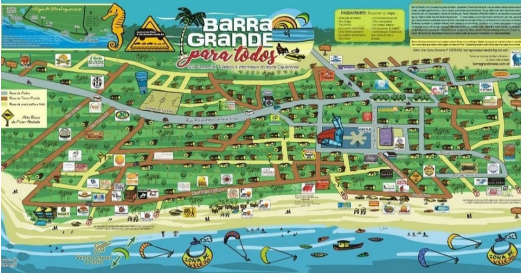
Figure 1
Location of Piauí Coastline
Source: Barra Grande News - pictures (2019)
The environment surrounding Barra Grande village was built to instigate visitors/tourists’ curiosity, good taste, satisfaction and sophistication. It uses their senses (sight, hearing, smell, touch and taste) to encourage them, and to awake their desire, to be in, and to return to, the village, as shown in Figure 2. The relationship established between human and non-human elements observed in the gourmetization practice is evident throughout the tourist complex of Barra Grande. Nowadays, the village of Barra Grande, known as BG (Begê), has great tourist and gastronomic potential in Piaui State.
Figure 2 –Environments in Barra Grande
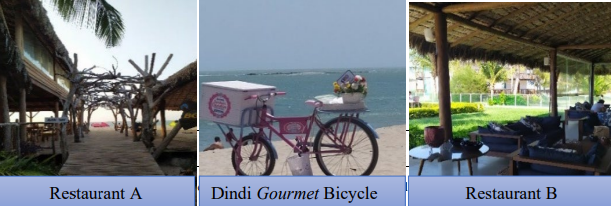
Figure 2
–Environments in Barra Grande
Source: Research data (2019)
This movement has increased the number of companies in the village, as well as collaborated to money circulation, a fact that added value to the tourism and economic sectors (SILVA; PERINOTTO, 2016). Begê, as it is known by local dwellers, hosts several tourist options such as different handicraft communities, as well as the local gastronomic community, which is strongly supported by local authorities (SEBRAE, 2019). This locality presents gastronomic variety ranging from an empanada produced by a very friendly Argentinean to dishes signed by world-renowned chefs (Registro de campo, 2019).
4.2 Understanding the influence of the gourmetization practice
Understanding the gourmetization practice goes beyond understanding a set of activities comprising actions performed by people. It means understanding the “reasons why”, “purpose of”, “who” and “where” everything will lead humanity to. Who the subjects are, what elements are fundamental, how they interact, how the body reacts and how the physical environment presents itself are factors that trouble researchers studying ‘practices’ around the world. Thus, the current article presents studies based on social practices whose approach broadly encompasses concerns emerging from this topic.
The present study is not saying that theories of practice are in an omniscient position, but that their multifocal feature enables them to broadly contribute to theorization processes due to the likelihood of integrating more than one theory in the same study. Accordingly, the present research used two elements composing the theories of practice to support its analysis, namely: sociomateriality and organizational aesthetics.
Therefore, the aesthetic theory and sociomateriality were herein approached to add multiple perspectives to the analyzed data – i.e., to help better understanding what is, and what is not, human and how this relationship influences life. Thus, praxeology was herein applied to help better understanding human action and practice.
Collected data enabled understanding human existence from two different viewpoints, namely: the socio-material and the aesthetic perspective. Human and material relationship in practice is shown in Figure 3. During the observations, it was possible noticing that the existence of rules, standards and habits, as well as that everything follows a previously weighed and designed process. In other words, after the dish/service is idealized, the creation/innovation process is interrupted to give room to the production, repetition and standardization processes, i.e., innovation in the gourmetization practice takes place at specific time.
Overall, chefs do not stay in the restaurants; they live in other cities and are called Executive Chefs, since they produce the menu, but leave it to restaurant practitioners - such as cooks, kitchen assistants, waiters, attendants and shoppers - the responsibility for both purchasing the necessary inputs and making the dishes; the entire process is mediated by a technical file developed by the Executive Chef. This feature was observed in the gourmetization practice analyzed within the investigated context and it may not reflect the reality of other environments.
Figure 3 –From Traditional to Gourmet
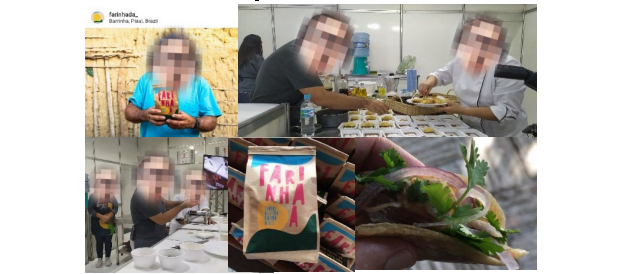
Figure 3
–From Traditional to Gourmet
Source:Research data, Instagram (2019)
Gourmet influence on the local way of acting was herein identified in extreme contexts. Both the most exquisite restaurant in the complex and independent acarajé vendors ‘gourmetize’ their products and environments. In other words, the gourmet practice influence is not only observed, but it is also encouraged by competition in the complex to captivate tourists’ preference. If it was not for the influence of the “material” on the place, tourists would not know how to differentiate companies’ structure based on the served product - Figure 4.
Figure 4 –Ceviche produced by the visiting Chef / Acarajé produced by the native practitioner
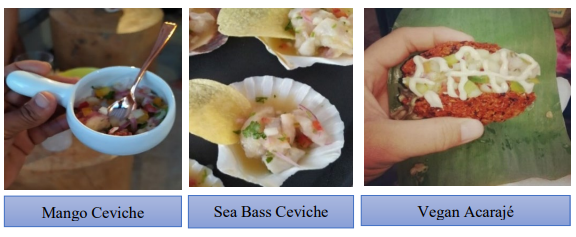
Figure 4
–Ceviche produced by the visiting Chef Acarajé produced by the native practitioner
Source:Research data (2019)
This situation is explained by one’s understanding that the environment determines how people carry out their practices (GHERARDI, 2009). Social agents participating in the gourmetization practice context have realized that such a practice enables them to add value to products. Some national chefs add the recovery of local cultural roots to their practice in order to promote and include the local community in the ‘practice’. They offer to tourists not only what to eat but, above all, the likelihood of experiencing a collectively built historical and cultural context.
A chef was asked about how they can contribute to the gourmetization practice; according to him:
I think serenity is one of the main things chefs need to have to understand the ingredient, the people, and the place they are in. Because there is no point in having a preconceived idea about a place they do not understand. So, serenity is very important, I think it is one of the main things (CHEFOR, 2019).
The chef’s speech highlights three essential points in the gourmet practice observed in Barra Grande County. The first point is the ‘serenity’ highlighted by him, from the perspective that practitioners can only exercise practice when they know what they are doing and when they feel confident. The second point lies on the need of acknowledging and valuing the local identity of the ‘practice’. Finally, the third point refers to the importance of each practitioner, since they must incorporate the activities inherent to the ‘practice’ in their daily lives in order to value the local identity.
The first point is based on the aesthetic ability each person must learn to carry out its activities, since aesthetics contributes to deepen one’s understanding on how human senses influence tacit knowledge sharing, learning, generating and transmission processes, as well as strengthen collective identity development processes (BISPO, 2016b; STRATI, 2007).
The second point refers to the material and social relationship of gourmet practice. It happens because, according to Poulain (2005), social space is defined by two restrictions that set the relationship between human (people) and gourmet (objects, environment, sounds) elements.
When tourists/visitors/natives are able to see that the product/service consumed in the place has its raw material produced by local residents and that all the work done by the community will return to the village, their engagement in the ‘practice’ and in everything it produces, increases. This process promotes an economic, social and organizational movement, besides strengthening both the local and ‘practice’ communities.
The current research has shown that activities related to socio-materiality and aesthetics were perceived at almost all times in gourmet practice; from details about the environment, to sounds, clothes, utensils, cultural elements, characters, corporeality, language, smells, colors, knowledge exchange, in short, an infinite variety of details. Some ‘practice’ theorists, such as Reckwitz (2002), Domaneschi (2012), Soares and Bispo (2014), defined cooking as one of the most integrative practices; this concept was reinforced by Schatzki (1996), according to whom, cooking is one of the most complex practices in social life.
The analyzed data have evidenced that the gourmetization practice does not only involve differences in presentation and ingredients, but it also generates social status for those involved in it, mainly if they are consumers. A perspective that goes beyond competition conventions emerges from this field. Practice turns out to be something more; it is a current that not only seeks to satisfy hunger, but above all, it seeks to satisfy the desire to experience sensations capable of triggering feelings, such as satisfaction, based on beauty, glamour, status; it enables people to experience luxury without undervaluing the taste of this audience, which is demanding, just like the ones in past centuries – i.e., the quality of eating food with refinement and glamor (COLLAÇO, 2013).
Assumingly, artifacts, symbolism and decorative objects are so valued at the time to serve meals because of such status and glamour factors (SOARES; BISPO, 2014). Regarding this element of practice, materials have evidenced that both utensils used in the internal kitchen practice and those used by customers are essential elements valued by practitioners, given the image printed in ‘practice’ by each of these elements. Social and material relationships go together in gourmetization practice - Figure 5.
If a given restaurant makes dishes with poor quality materials, it receives poor reviews from customers. It is necessary looking beyond the merely human or material conventions at the time to investigate the sociomaterial relationship in association with aesthetics. It happens because practitioners imprint their personality in practice. Whether they are agents acting alone or organizations, both represent the organization’s aesthetic design depending on what is resented by society (STRATI, 2007a). Thus, based on a set of elements, ‘practice’ values and generates reference capable of influencing the local identity (LATOUR, 1992b).
Figure 5 -Utensils associated with the Gourmetization Practice
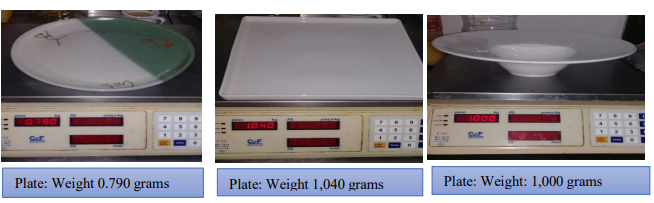
Figure 5
Utensils associated with the Gourmetization Practice
Source: Research data (2019)
Each plate has a different shape, depending on their purpose in the gourmet practice. The first one, which weighs seven hundred and ninety grams, is used to serve the simplest dishes on the menu. The second one, which weighs more than one kilogram, is used to serve individual dishes; it is large and heavy in order to give the impression of grace and plenty. The third one is specifically used to serve pasta; it weighs one kilogram.
At this point in the current research, it is possible to clearly see the action of the “material” over the “social”, with regards to how it is received by people. The structure established in this practice, in this place, is that the glamour of the used materials must be valued in order to guarantee their influence on people.
Accordingly, Figure 6 further shows to what extent the material influence is observed in the gourmetization practice in Barra Grande County. According to Östrup Backe (2020), meals do not have to be the main goal of one’s destination, but it can be one of the many cultural activities visitors can get involved in. If one takes into consideration that eating is the first activity performed by most tourists when they arrive at their destination, it is important for the venue to invest in how it presents its cuisine.
Figure 6 –Gourmet Services
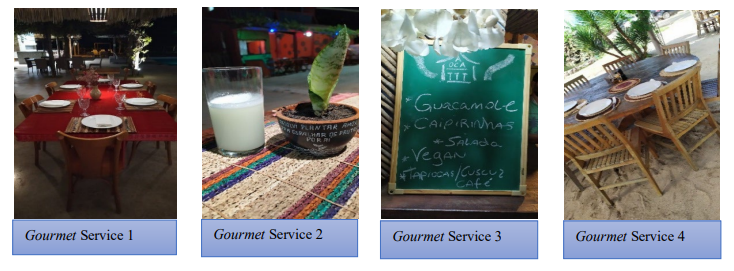
Figure 6
–Gourmet Services
Source: Research data (2019)
Gourmetization practice is carried out both through the corporeality and intervention of the “material”, “social” and human senses. Therefore, integrating the analyses by taking into consideration sociomateriality means accepting that social relationships can emerge from the way people relate to spaces, bodies and materials (BISPO, 2015; MOURA; BISPO, 2019). The association between sociomateriality and organizational aesthetics helps better understanding the existing harmony among the senses, the “social” and the “material”.
Figure 7–Chef OR - Cooks - Training
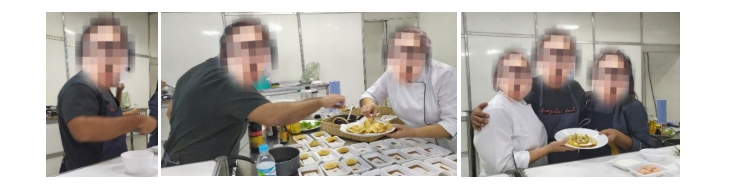
Figure 7–Chef
OR Cooks Training
Source: Research data (2019)
Relationships established among practitioners are valued by each one of them, regardless of the role played by them (Figure 8). The value attributed to people is linked to the degree of knowledge they add to practice; besides, no one can take from another person what he/she knows, since knowledge is only acquired through what one lives and experiences (GHERARDI; STRATI, 2014). This knowledge type is acquired by living, experiencing, exchanging and sharing things in life; it is what Strati (2007) has called aesthetic knowledge.
Figure 8- Social Agents of Gourmet Practice
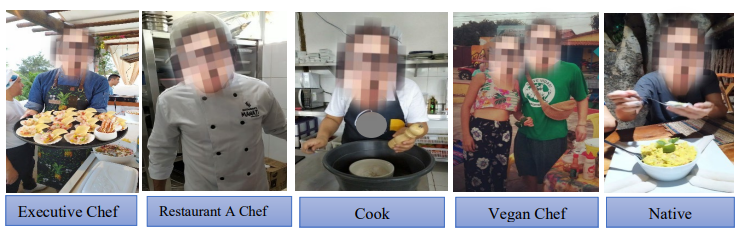
Figure 8
Social Agents of Gourmet Practice
Source: Research data (2019)
All individuals directly involved in the gourmetization practice in Barra Grande County – PI – were ‘practice’ agents investigated in the current study. The role of executive chef stood out at this first moment among all agents who emerged from this field. However, the aforementioned field comprises several participants, such as tourists, natives, employees, organizations and local community, among others.
People in the organizational environment act and learn based on their aesthetic learning experiences and on the need of giving meaning to activities, materials and places (LATOUR, 1992a). However, it is worth mentioning that, from the humanistic movement viewpoint, only humans can exercise the power of agency / action, because they are the only ones able to intend their actions (MOURA; BISPO, 2019). Nevertheless, the view of neomaterialism followers influenced by the post-structuralist thinking is clear in the study, since they understand that the “material” is not only a passive element because it has its own means of directing and influencing individuals (Moura, Bishop, 2019). Thus, there is dichotomy between the humanist and neomaterialist movements that complete each other in the field; consequently, it is necessary strongly reflecting about their influences in order to enable a perspective that goes beyond the conventions of one, or other, movement.
All reflections presented, so far, raise essential questions about the relationship between organizations and society. Some concerns stood out during observations performed in the research field. Among them, one finds the social inequality deriving from the aesthetic category emerging from the “social gourmet status”, from power relations exerted in the financial and intellectual fields, as well as from material and social relations, and from their consequences.
However, the clash between “social” and “economic” was the most frequent correlation observed in the gourmetization practice, since people, as well as organizations, live the dilemma between what the most important thing is ‘living to work or working to live’. Relationships are also built under this paradigm. Thus, the pursuit of profit and status gets increasingly noticeable and, once again, the global debate about how organizations position themselves towards the needs and inequalities of life emerges. Consequently, the movement through which society demands companies to show more social accountability is reborn.
5 FINAL CONSIDERATIONS
The aim of the current study was to investigate how the gourmetization practice affects the social organization in the tourist complex of Barra Grande County, Piauí State, based on concepts of elements such as sociomateriality (MOURA; BISPO, 2019; ORLIKOWKI, 2007; DOMANESCHI, 2019) and organizational aesthetics (STRATI, 2007a; STRATI, 2007b). In order to do so, the epistemology of theories of practice (GHERARDI, 2006; GHERARDI,2019) was herein used by adopting a methodological approach wherein sensory ethnography (PINK, 2009; PINK, 2015) played key role.
This research enabled theorizing gourmetization practice as social practice by evidencing the elements of ‘practice’ from the perspective of human and non-human elements. Tourists, locals, businessmen, chefs, cookers, kitchen assistants, suppliers and autonomous workers were the human elements observed during the study. On the other hand, the non-human elements comprised scenarios produced by people such as colors, paintings, decoration, but also nature, sounds, smells, sand texture, sea color, and utensils used in internal practice like pans, plates and cutlery. These elements have evidenced affections promoted by the gourmet practice.
Therefore, the herein investigated practice is an organizational element if one takes into consideration its power to affect places, people and objects. It can be used to help overcoming and/or reframing paradigms and dichotomies observed in this field. Thus, it is possible concluding that the gourmet practice affects gastronomic organizations and the field it is inserted in, since it generates affections that can be either positive or negative. Consequently, it contributes to include and/or exclude people, objects, cultures, among others, both in/from gastronomic organizations and society.
The gourmet practice introduction in the tourist complex of Begê was motivated by a differentiation process in the field, according to which, practitioners were induced to develop new habits, skills and competences that could be incorporated to their daily lives. The new activities performed in the complex, which emerged from the gourmet practice, gained room in the national and international tourist market, a fact that enabled Barra Grande County to be acknowledged as gastronomic hub, with emphasis on gourmetization. Thus, gourmetization was introduced in the daily lives of gastronomic organizations and in the daily routine of the investigated village, where it opened room for people, inputs and local culture. However, it also promoted social, environmental and cultural exclusion, since those who are stuck in outdated activities -based on Gourmet practitioners’ opinion – do not benefit from outcomes promoted in the complex by the gourmetization practice.
From the theoretical viewpoint, the contribution of the current study lies on its potential to be used as research source for studies conducted in the applied social sciences field, since it presents reflections linking theories such as Sociomateriality and Organizational Aesthetics. As for its contributions in the social context, it brings the fundamental debate about matters aimed at evidencing topics such as respect for local identity, valuation of initiatives and local knowledge through social relationship among practitioners to encourage both the “knowing” and the “doing”. Finally, with regards to its practical contribution, the present study presented empirical reflections aimed at strengthening the relationship between organizations and society, in order to enable them to develop and implement managerial actions capable of covering both economic and social matters.
Accordingly, the current study understands that affections, promoted through gourmet practice, can both include and exclude people and actions. In addition, it also works as organizational element when it dictates rules, strategies, cultures and habits in the organizational and local contexts. Therefore, it is worth emphasizing that activities to be put in practice depend on the management profile established in each organization. In other words, organizational culture affects both the local culture and habits established in the field.
References
Bianchi, J. Até onde vai a onda da “gourmetização”. Caderno Luxo–Alta Gastronomia. Portal iG, 2013. Disponível em: http://luxo.ig.com.br/altagastronomia/2013-12-30/ate-ondevai-a-onda-da-gourmetizacao.html. Acesso em:
Bispo, Marcelo de Souza. Estudos Baseados em Prática: Conceitos, História e Perspectivas. Revista Interdisciplinar em Gestão Social. v. 2, n.1, p. 13-33, jan./abr. 2013a. ISSN: 2317- 2428. Disponível em www.rigs.ufba.br.
Bispo, Marcelo de Souza. O Turismo como Prática Cultural Organizativa, Sociomaterial e Estética. RIGS revista interdisciplinar de gestão social v.5 n. 2 maio / ago. 2016b.
BOURDIEU, Pierre. Habitus. Habitus: A sense of place, v. 2, p. 43-49, 2005.
DARDOT, Pierre; LAVAL, Christian. A nova razão do mundo. Boitempo editorial, 2017.
DOMANESCHI, Lorenzo. The sociomateriality of cooking. The practice turn in contemporary food studies. Sociologica, v. 13, n. 3, p. 119-133, 2019.
ENGESTRÖM, Y.; MIETTINEN, R.; PUNAMÄKI R. Perspectives on activity theory. Cambridge: Cambridge University Press, 1998. doi:10.1017/cbo9780511812774.002.
GHERARDI, Silvia. Practice as a collective and knowledgeable doing. Siegen: Universitätsbibliothek der Universität Siegen, 2019a.
GHERARDI, Silvia. How to conduct a practice-based study: problems and methods. Cheltenham: Edward Elgar Publishing, 2019b.
GHERARDI, Silvia. Practice-based theorizing on learning and knowing in organizations: An introduction. Organization, v.7, n.2, p. 211–223, 2006.
GHERARDI, Silvia. Sociomateriality in posthuman practice theory. In: The nexus of practices. Routledge, 2017. p. 50-63.
GHERARDI, Silvia; STRATI, Antonio. Administração e aprendizagem na prática. Elsevier ed. Rio de Janeiro: 2014.
HARARI, Yuval Noah. Sapiens: Uma breve história da humanidade. 48, ed. Porto Alegre: L&PM Editores S. A., 2019.
LEONARDI, Paul M. Theoretical foundations for the study of sociomateriality. Information and organization, v. 23, n. 2, p. 59-76, 2013.
MOURA, Elton Oliveira de; BISPO, Marcelo de Souza. Sociomateriality: Theories, methodology, and practice. Canadian Journal of Administrative Sciences/Revue Canadienne des Sciences de l'Administration, 2019. set. 2019. Disponível em: https://onlinelibrary.wiley.com/doi/abs/10.1002/cjas.1548. Acesso em: 19 abr. 2020.
NICOLINI, D. Practice as the site of knowing: Insights from the field of telemedicine. Organization Science, v. 22, n. 3, p. 602-620, 2011.
NICOLINI, D. Practice Theory, Work, and Organization: an introduction. Oxônia: Oxford University Press, 2013a.
NICOLINI, Alexandre Mendes. Podem Indivíduos e Suas Práticas Promoverem Aprendizagem Social? Teoria e Prática em Administração (TPA), v. 3, n. 1, p. 19-38, 2013b.
ORLIKOWSKI, Wanda J. Sociomaterial practices: Exploring technology at work. Organization studies, v. 28, n. 9, p. 1435-1448, 2007.
ROPO, Arja; SALOVAARA, Perttu. Spacing leadership as an embodied and performative process. Leadership, v. 15, n. 4, p. 461-479, 2019.
SCHATZKI, T. R. On organizations as they happen. Organization Studies, v. 27, n. 12, p.1863-1873, 2006.
SCHATZKI, Theodore R.; SCHATZKI, Theodore R. Social practices: A Wittgensteinian approach to human activity and the social. Cambridge: Cambridge University Press, 1996.
SOARES, Lídia Cunha; BISPO, Marcelo de Souza. Contribuições da estética organizacional para a pesquisa em organizações gastronômicas. Revista Brasileira de Pesquisa em Turismo, v. 8, n. 3, p. 476-493, 2014.
STRATI, Antonio. Aesthetics and organizational skill. Organizational symbolism, v. 208, 1990.
STRATI, Antonio. Beauty of responsible management: The lens and methodology of organizational aesthetics. In: Research Handbook of Responsible Management. Edward Elgar Publishing, 2020.
STRATI, Antonio. Organização e Estética. Rio de Janeiro: Editora FGV, 2007a.
STRATI, Antonio. Sensible knowledge and practice-based learning. Management Learning, v. 38, n. 1, p. 61-77, 2007b.
SVABO, Connie. Materiality in a practice‐based approach. The Learning Organization, 2009.
TURNER, Stephen. The social theory of practices. Chicago: University of Chicago Press, 1994.
WARDE, A. The Practice of Eating. 1. Ed. [S. l.: s. n.], 2016.