Artigos
Creation and deinstitutionalization of productive practices: institutional work in the cachaça field from Minas Gerais
Creation and deinstitutionalization of productive practices: institutional work in the cachaça field from Minas Gerais
Gestão & Regionalidade, vol. 39, e20237949, 2023
Universidade Municipal de São Caetano do Sul
Recepción: 18 Junio 2021
Aprobación: 03 Agosto 2022
Abstract: The forms of production present themselves as a differential factor in quality cachaça. The state of Minas Gerais has become a reference in value-added drinks. Carried from the perspective of Institutional Work, the objective of the article was to understand how the practices that changed it, leaving a low quality drink, until the 1980s, for national leadership. In methodological terms, a qualitative study of four decades of institutional work was used. It was found that the creation of a network of actors, the pressure for legal changes and the elaboration of scientific investigations favored changes in the field. In addition, the rupture with the rudimentary productive techniques, accompanied by a rigid inspection process, facilitated the discontinuity with the old practices. The research results contribute with empirical elements that reinforce the creation and deinstitutionalization in a theoretical context little explored in the literature.
Keywords: cachaça, institutional practices, institutional work.
Resumo: As formas de produção se apresentam como um fator diferencial na cachaça de qualidade, sendo o estado de Minas Gerais uma referência em seu valor agregado. Portado sob a ótica do Trabalho Institucional, o objetivo do artigo foi compreender como se deram as práticas que modificaram a cachaça mineira, saindo de uma bebida de baixa qualidade, até a década de 1980, para a liderança nacional. Em termos metodológicos recorreu-se a um estudo qualitativo sobre quatro décadas de trabalho institucional. Constatou-se que a criação de uma rede de atores, a pressão por mudanças legais e o avanço de investigações científicas favoreceram as mudanças institucionais. Somado a isso, a ruptura com as rudimentares técnicas produtivas, acompanhada de um rígido processo de fiscalização, facilitou a descontinuidade com as antigas práticas. Os resultados da pesquisa contribuem com elementos que explicam a criação e desinstitucionalização em um contexto teórico ainda pouco explorado na literatura.
Palavras-chave: cachaça, práticas institucionais, trabalho institucional.
1 Introduction
Characterized as a Brazilian product, whose trajectory spans the historical context since colonial times, cachaça, in the last decade, came to be recognized as a drink consumed by the elite, conquering the palates of high added value (SOUZA, 2018; MORAIS et al. ., 2020).
Nowadays, cachaça stands out as a relevant export product in the trade balance. In 2018, 21 states exported the beverage to 67 countries, which generated 15.8 million dollars expressed in a volume of 8.41 million liters (IBRAC, 2019). In addition, among the variety of distilled beverages, it is the most consumed in the country with 87% of the Market Share, which moves 7.5 billion reais per year, employing 600 thousand workers, with an estimated growth of 5.1% for the coming years (SEBRAE, 2019).
Its production is geographically distributed throughout the Brazilian territory, with emphasis on the State of Minas Gerais, which leads as the largest producer of alembic cachaça in the country, with 200 million liters per year (50% of the national production in this segment), and has the largest number of brands, consisting of 1,400 records out of a total of 3,648 in Brazil (MAPA, 2019).
In order for the product to achieve such recognition and lose its image of being inferior, institutional changes were necessary. Among them, the institutional work in its production process stands out. If before, it carried the reputation of a low quality drink, with low technological use and limited standards of control and inspection, from the 1980s onwards, actors in the field began institutional work, in order to change production practices.
This institutionalized space, defined by Zvolska et al. (2019) as a set of norms that are constituted through social interaction, had the participation of different agents, with emphasis on state agencies and researchers who actively participate with the first association of cachaça producers in the country.
In view of the particularities inserted in the cachaça from Minas Gerais, or Mineira, field, the central question that guides the study aims to understand: how did the institutional work of the actors, over four decades, change the production practices of cachaça from Minas Gerais?
In this direction, as a new perspective of study, institutional work emerges. Formulated by Lawrence and Suddaby (2006), Zietsma and Mcknight (2009) and Lawrence, Leca and Zilber (2013). The theory concerns the action of individuals and organizations aimed at the creation, maintenance, and rupture of institutions. Research involving this theoretical framework can explore the way in which individuals change institutions and refer to social changes. From this perspective, the focus is on the relationship between institutions and actors, that is, between structure and agency.
The contributions of this study vary in two axes, the first being theoretical, which chooses institutional work as a current of recent thought. Research is concentrated in North America and Europe, with few studies developed in Brazil (TURETA; JÚLIO, 2016; ZARPELON et al., 2019; BERTO; LAVARDA; ERDMANN, 2020; MORAIS et al., 2020).
The second concerns the empirical dimension, in which one of the most traditional drinks in Brazil is discussed. To date, no study has been recorded that supports the context of changes in cachaça production practices, which illustrates a contribution to institutional work and to the field of the beverage production chain.
2 Theoretical References
2.1 Theoretical conceptions about the Institutional Work
Faced with a new scope arising from institutional theory and neo-institutionalism, Lawrence, Leca and Zilber (2013) emphasize that institutional work directs its efforts to understand the objectives of agents in their work to impact institutions.
Bruning, Marra, and Godri (2015) report that institutional work is inspired by the sociology of practice, aiming to describe the activities of agents and organizations in achieving the desired results. In this sense, changes are more favorable to occur throughout the process of actions, rupturing the conception of rational organizations conceived by structural determinism (ZVOLSKA et al., 2019).
Institutional work has been considered one of the main orientations of institutionalism. The impetus for novel studies came from the publication of Lawrence and Suddaby, in 2006, with the work “Institutions and Institutional Work” (ZARPELON et al., 2019).
This perspective makes it possible to analyze the “purposeful action of individuals aimed at the creation, maintenance and rupture of institutions” (LAWRENCE; SUDDABY, 2006, p. 215). By assuming the action as situated, the role of human agency and the actions developed by agents, capable of exerting influences on social structures and the organizational field, stand out.
For Lawrence, Leca and Zilber (2013), institutional work can be understood as the relationship between actions and institutions in a recursive way, where both are in interaction and affect each other. Therefore, there is a double movement when it is verified that the institution, while being shaped by human agency, influences the actions developed by the agents (TURETA; JÚLIO, 2016).
Regarding studies on institutional work, Lammers and Garcia (2017) argue that agents can and do make efforts to affect institutions. As a result, research is engaged in understanding the sets of practices in which institutional agents are organized, consisting of a variety of investigations (LAWRENCE; LECA; ZILBER, 2013).
In view of the process foreseen by the institutional work, an investigation can be conducted in the field of cachaça, highlighting the institutional work of creation and deinstitutionalization of production practices, with the processes consistent with these works carried out by the different agents identified in the research field. For this, it is necessary to know these forms, addressed by Lawrence and Suddaby (2006), Zietsma, and Mcknight (2009) and Lawrence et al. (2006; 2013), as will be seen below.
2.2 The institutional work of institutional creation and deinstitutionalization (rupture)
The creation process is linked to institutional entrepreneurship, in which agents promote arrangements within organizations to meet their interests (ZIETSMA; MCKNIGHT, 2009). To this end, there is a need to create institutions that can enter the organizations where these agents are located (ZARPELON et al., 2019).
The role of institutional entrepreneurs is relevant for the creation of institutions, however, according to Lawrence and Suddaby (2006), they are not sufficient for the analysis of institutional work. When creating institutions, it is necessary to engage several agents, who act in a coordinated manner. In this tension, the need arises to constitute a normative network of agents, which gives legitimacy to the institutionalization of the new rules proposed by institutional entrepreneurs (ZIETSMA; MCKNIGHT, 2009).
For Lawrence, Leca, and Zilber (2013), the process of institutional creation is related to the defense of rights, which involves establishing new rules to be followed by organizations, promoting their legitimacy. This legitimacy is linked to the cognition of the agents involved in the cause and to working in their defense. Agents can influence when and how institutional norms are perceived, through the mobilization of political support and deliberate techniques of persuasion.
It is also necessary to define the normative set that gives identity and limits to the new institution, constituting the institutional rules and practices that are seen as categories of institutional strategy. The definition is central in the process of creating institutions, as it describes the relationship between actor and field.
It is also worth mentioning the acquisition, which will constitute the structures of rules in the field, granting property rights to the actors. It which will guarantee, through the legal apparatus, the laws, and norms that will give legitimacy to the actors (LAWRENCE; SUDDABY, 2006).
From the perspective of institutional work, actions can also cause institutional interruptions. For Zvolska, Palgan, and Mont (2019, p. 672) “actors interrupt institutions when the existing institutional order does not provide enough support for them to carry out their activities”.
Deinstitutionalization or institutional disruption can occur when the agents involved in the institutional field are dissatisfied and when they want to interrupt rules and symbolism perpetuated in an organization (YAN et al., 2018).
Lawrence and Suddaby (2006) classify the process of interruption of institutions through three analytical categories, namely: the disconnection of sanctions and rewards; the dissociation of moral foundations; and undermining assumptions and beliefs.
The disconnection of sanctions and rewards usually occurs through central actors of change in partnerships with state entities. By allying with the State, they legitimize actions to change rules in the organizational field, aiming to oppose sanctions and benefits that are applied in case of non-compliance by a certain institution (LAWRENCE; SUDDABY, 2006; MORAIS et al., 2020).
The dissociation of moral and symbolic foundations occurs when institutional work can disturb institutions and interrupting them from the possibility of dissociating the practices and rules that a particular institution will carry. The foundations of a lasting institution are interrupted through a set of indirect practices that will surround and weaken these institutions (LAWRENCE; SUDDABY, 2006; MORAIS et al., 2020).
The category of undermining assumptions considers that institutions are maintained based on beliefs associated with actors who maintain a certain practice and follow rules imposed by such an institution. Thus, institutional work is successful when it eliminates beliefs, opening space for new ways of acting that replace existing patterns within organizations (MORAIS et al., 2020).
To investigate institutional work in the field of cachaça, directing its efforts towards creation and deinstitutionalization, we will assume the respective theoretical categories to answer the research question:
Table 1 - Theoretical proposal for the analysis of institutional creation and disruption
| Defense of rights | Mobilizes political and regulatory support through direct and deliberates techniques of social persuasion. |
| Definition | Builds systems of rules that grant status or identity, defines membership boundaries, or creates status hierarchies within a field. |
| Acquisition | Creates rule structures that give property rights. |
| Disconnect sanctions | Uses the state apparatus to disconnect rewards and sanctions from some set of practices, technologies, or rules. |
| Dissociation from moral foundations | Dissociates the practice, rule, or technology from its moral basis, as appropriate, within a specific cultural context. |
| Undermining assumptions and beliefs | Decreases perceived risks of innovation and differentiation by undermining key assumptions and beliefs. |
Source: Prepared by the authors from Lawrence and Suddaby (2006)
3 Methodology
In line with the proposed objective, a qualitative approach was adopted, justified by the reading and understanding of elements and phenomena limited to the research topic. The intention of this type of research is to describe a certain phenomenon through the perceptions of agents who are inserted in the field, as predicted by Godoy (1995).
In this way, the study was conducted with the actors who worked in the cachaça field, namely: producers, researchers from Minas Gerais, technicians in charge and servants of organs inserted in the field. The proposal to recount the historical process of institutionalization of the drink, the old and current production practices, aimed to understand how the institutional work contributed to the institutionalization of new practices of cachaça production.
Data collection was conducted in two stages. The first, documentary research, which started with information available from documents, such as news, legislation, scientific articles, books, booklets, producer websites, and newsletters on the cachaça field. This research enabled the construction of the discussion around cachaça, as well as the understanding of its institutionalization as a Brazilian drink and its production practices. Data collection took place from March 2019 to January 2020.
The second stage consisted of field procedures for data collection, conducted between June and September 2020, when qualitative interview techniques were used with the agents involved in the field, the collection of audiovisual materials and files provided by them, such as personal files (Table 2).
Table 2 - List of interviewees and documentary research
| Interviewee 1 | Technician at INDI-MG (Institute for Integrated Development of Minas Gerais) | 1, 5 |
| Interviewee 2 | Researcher at the Federal University of Lavras | 2, 11 |
| Interviewee 3 | Director of ANPAQ (National Association of Quality Cachaça Producers) | 4, 20 |
| Interviewee 4 | Director of ANPAQ | 8, 21 |
| Interviewee 5 | Cachaça producer | 9 |
| Interviewee 6 | Researcher at the Federal University of Ouro Preto | 10 |
| Interviewee 7 | Cachaça producer | 12 |
| Interviewee 8 | Cachaça producer | 13 |
| Interviewee 9 | MAPA Technician (Ministry of Agriculture, Livestock and Supply) | 14, 17 |
| Interviewee 10 | Technician of the IMA (Mineiro Institute of Agriculture) | 15 |
| Interviewee 11 | Cachaça producer | 16 |
| Interviewee 12 | Technical manager | 18 |
| Interviewee 13 | Cachaça producer | 19 |
| Interviewee 14 | Researcher at the Federal University of Lavras | 22 |
| Book Research | SEBRAE Technical book (Brazilian Support Service for Micro and Small Enterprises) | 7 |
| Material from the Media | Online newspaper and magazine platforms | 3, 6 |
To analyze the data, the thematic content analysis technique was used, based on Clark and Braun (2013). Thematic analysis makes it possible to report the participants' experiences, meanings, and reality, identifying the various emerging speeches.
Based on the thematic analysis, four stages were elaborated. In the first one, the database was read using documentary and interview methods, to understand the research environment and gather descriptions of the institutional context, over the years from 1980 to 2020.
In step two, we sought to understand the conditions that led to the perception of low quality in its production process until the 1980s. The results revealed inherited historical, cultural, and symbolic elements, which were illustrated in excerpts 1 and 2 of the research.
In step three, the Institutional Work studies by Lawrence and Suddaby (2006), Zietsma and Mcknight (2009) and Lawrence, Leca, and Zilber (2013), guided the categories referring to the processes. The incidences of responses to the demands were sought, resulting in a set of institutional practices gathered in the creation and deinstitutionalization work (Table 1), presenting their respective practices in fragments 3 to 18 of the results.
Finally, in step four, the crossing of empirical data with theory made it possible to point out, in excerpts 19 to 22, the changes that corroborated the new production practices of cachaça from Minas Gerais. For the presentation of the results, we sought to incorporate them in such a way as to illustrate the narrative of the research in the consequent chronological changes of its conquests. It is just a didactic resource, once we understand that the forms of institutional work intertwined over the four decades.
4 Results
4.1 Historical context of the cachaça production practices
Cachaça is a product that was produced during the 16th century, around 1530. From the beginning of its production, authorities were engaged in the regulation of its production, such as the Portuguese crown, which banned it when it saw Portuguese wine losing space because of its competition (ALMEIDA; DIAS; 2018).
During the first three centuries of colonial Brazil, regulations were directed to the drink as a form of prohibition of production and consumption, as the Portuguese crown did in 1635. However, even with the discontinuities in the forms of control, the drink had the rise of largescale consumption by the population, mainly because it was considered a cheap drink (MORAIS et al., 2020).
In the imperial period, the first agencies were created to take care of agriculture and livestock in the country. Under the command of Emperor Dom Pedro II, in 1860, it constituted the State Bureau for Agriculture, Commerce, and Public Works, which, after the Proclamation of the Republic, was transformed into the “Ministry of Industry, Transport, and Public Works”. In 1930, there was the creation of the “Ministry of Agriculture”, which name lasted until 1992, when it underwent further changes and was renamed “Ministry of Agriculture, Supply, and Land Reform”.
Cachaça, as a beverage produced from vegetable origin whose main input is sugar cane, is subject to the legal framework of the Ministry of Agriculture. However, the first national law that established the technical standards of its production took place from Law No. 6,305 of December 15, 1975. Technical supervision and inspection of products of plant origin were attributed to the Ministry of Agriculture, as well as other attributions related to the classification of plant products (BRASIL, 2001).
In the specific context of Minas Gerais, until the beginning of the 1980s, cachaça was seen as an inferior product and forgotten by the fiscal and political authorities. Its production was conducted by rural producers who mostly lived in informality and did not care well for the product hygiene and health care, as the interviewees report.:
Viewing the past, when factories had access to several types of animals, both domestic and wild, where some enjoyed the fermented sugarcane juice in an environment where dirt reigned, they mark these times as the “Possum Era (1- Articles in file, Cana Brasil, 2019).
[...] it was very... very rudimentary you would even find PVC pipes to pass the distilled product, you would find fermentation vats, like... of bad plastic masonry, product fermented in plastic barrels, cachaça stored in dirty plastic barrels, you know?! The stills were all open, the fermentation room was all open, whoever wanted to come in and out, even dead animals we found in the fermentation chamber [...] (2- Personal Interview, 2020)
Production practices did not undergo control, inspections, and quality standards. Each producer used their criteria for production, not paying attention to the still infrastructure, solid and liquid waste produced. The reflexes were the low quality, from the sugarcane, its fermentation and distillation processes directly influence the quality of the cachaça.
Over the years, the production of the drink has grown, with production practices diversified among producers, without adequate infrastructure and hygiene practices. With this scenario, influential players in the beverage sector began activities to recognize cachaça and the State began to see the need to regulate the sector.
4.2 Institutional work of the creation of production practices
1982 can be defined as a landmark year for the beginning of changes in the cachaça production process in Minas Gerais. The initiatives emerged from the Industrial Development Institute (INDI), a state agency, when they diagnosed, through a register of brandy producers, that the market consisted of 1,500 brandy factories and only fifteen with industrial technology. Thus, they developed a market research project, verifying the potential of investing in artisanal cachaça, if they modified production practices:
It was necessary to change the technology and the concept, from “the dirtier the better, to the cleaner the better”. At that time, people already had in mind that the factories could be opened for visitors and that the market had immense potential. [...] So I started talking to young entrepreneurs encouraging them to bet on this business. [...] Engineers, Doctors, lawyers, judges, daring young, educated, and high-level people, became interested in the business (3- Articles on file, Cachaciê, 2017).
According to the report, there is a set of practices for the defense of rights that consists of mobilizing political and regulatory support through social persuasion (LAWRENCE; SUDDABY, 2006). In the field of cachaça, one can illustrate the practice conducted through negotiation of state agents (INDI) and the strong action of strengthening the articulation with entrepreneurs of a new profile (engineers, judges, young people). By including innovative actions, pressures began to be exerted for changes, influencing, including the constitution of the market.
What happens is, we started looking for still suppliers, barrel suppliers, right? And boiler suppliers and this group, with the increase in demand, they also grew. So, at that moment, the still factories were really getting stronger. Today, for you to have an idea, the four are in Minas Gerais. And this equipment crew, they greatly improved the quality of the stills (4- Personal Interview, 2020).
Political mobilization among agents illustrates what Zvolska et al. (2019) indicate from the institutional work that exerts influences to establish new agendas. This was evident in the mobilization of the State Bank of Minas Gerais, in the mid-1980s, to finance products from units producing brandy (5- Personal interview, 2020).
In the perception of one of the technicians who participated in the financing, “the resources, destined in the following years, made possible a policy of formalization and quality control, based on new stills” (6-Articles in archive, Cachaciê, 2017). Between 1983 and 1997, INDI's internal data indicated that two hundred businessmen were advised, leading to the implementation of 100 stills. Within a modern technological conception, what Lawrence et al. (2013) define the effectiveness of work, by granting privileges to the actors involved in an institutional field.
In the same period, definition practices were observed, which include the systems of rules that define the limits of participation, enabling the attribution of status or construction of the identity of a new institution or of belonging of the agents within the field (LAWRENCE; SUDDABY, 2006). In Belo Horizonte (MG), the creation of the first association of cachaça producers in the country stands out. The proposal emerged from the efforts of INDI in the search for producers who were willing to take on the leadership of an association. Thus, in 1988, through the articulation of thirty producers, the Minas Gerais Association of Quality Brandy Producers (AMPAQ) was founded (7- Articles on file, SEBRAE, 2019).
With the new institution, the mobilization of practices that acted in the construction of rules that established the borders in the adhesion of the members was observed. They stand out in the Certificate of Conformity and the Quality Seal for affiliated cachaças from Minas Gerais, based on a set of practices:
ANPAQ, now national, in its 31 years of existence, has always pressed the quality of cachaça, including creating the quality seal that is a World reference. It is made by a careful analysis with aroma map. And the person who sent the cachaça for analysis only receives a seal after being chemically and sensorially certified (8 – Personal Interview, 2020).
It is worth mentioning the participation of the Mineiro Institute of Agriculture (IMA) in the certifications, instituting a seal that distinguishes the beverage produced, in order to occupy a market niche. The IMA is the body responsible for the audit led at the producing establishment for the issuance of the Certifica Minas seal.
According to one of the cachaça producers, in 2007, when the first certifications began, 240 brands of cachaça were certified. In addition to the Certifica Minas program, in 2009, Ordinance nº 276 was published by Inmetro, in which the IMA became a certification body linked to Inmetro (9- Personal Interview, 2019).
Another practice adopted was the guarantee, referring to the institutional work related to the creation of structural rules that concern property rights (LAWRENCE; SUDDABY, 2006, p. 222). Based on interviews and documental research, it was observed that laws, decrees, and normative instructions underwent alterations and revocations that caused considerable changes, the main ones being adopted from the elaboration of State Law n° 10.853 of ProCachaça, of 1992.
Through a gathering between AMPAQ and representatives of the legislature of the State of Minas Gerais, the first state initiative was elaborated, in the form of a law, for the valorization of the Mineiro product, through the modernization of the structure of the stills. In the following decade, Law nº 13.949 of July 2001 was guaranteed, which established the identity pattern and the characteristics of the process and elaboration of “Cachaça de Minas” and Law nº 16.688/2007, in which Silva (2009) underlines as ways to standardize cachaça as a regional product.
Another central actor in the process of changes in the production of cachaça was the role of researchers from Minas Gerais universities. Until the end of the 1980s, the study of cachaça was secondary since the subject was not present in the leading universities in the state. However, based on a demand from producers and the consequent incentive of public notice policies for cachaça themes, conditions were created for the foundation of a regime of scientific knowledge.:
My reading is that it was only in 1992, with that law recognizing cachaça as a typically Brazilian drink, I think it was at the time of Fernando Henrique Cardoso… I think it was around there… the development of cachaça. So from there, I think there is this thing, movement that should obviously be credited to the producers, who put pressure on government agencies and such (10- Personal Interview, 2020).
The institutional changes reflect the evolution of the numbers of dissertations and theses on cachaça in Minas Gerais universities, between the years 1982 to 2019. While the 1980s did not register studies, the first works began, timidly, in 1993, with its gradual advance, doubling publications from 2004 and totaling 150 researches on its several areas of knowledge.
The legitimation of technical knowledge was based on research that began to guide, based on empirical evidence, the ways of cutting cane, cleaning the still, the milling and distilling process, storage, and aging of the beverage. In addition, the studies of cachaça were objects of investigation in most federal universities in the state, with emphasis on those that presented in their history the largest studies in the areas of Agrarian and Biological Sciences, such as the Federal University of Lavras, Federal University of Viçosa, Federal University of Minas Gerais, and Federal University of Ouro Preto.
The master's and doctoral guidelines on the subject fulfilled the central role of training new researchers, specialists in the study of cachaça, as well as in the advancement of technological improvements, as reported by one of the researchers.:
This laboratory was created in 1998, with the aim of supporting producers in terms of the quality of our drink, cachaça, and also as a research laboratory, to investigate the origin of contaminants, how to control and understand where they come from. A work group was then created at the university to research the entire production chain. So, we have professors who are experts in the area of fermentation, in the area of sugarcane planting, in the area of commercialization, in the area of physiochemistry analysis, in the area of aging, and others (11- Personal Interview, 2020).
This is also observed in the numerous areas of knowledge in which the production of cachaça has become an object of scientific research (Agrarian, Biological, Earth, Applied, Health Sciences), as well as in the wide range of courses (Food, Agronomy, Chemistry, Biology, Administration, Biotechnology) (Figure 1), offered by federal universities in the State.
Figure 1 -Evolution of research at Federal Universities of the State of MG
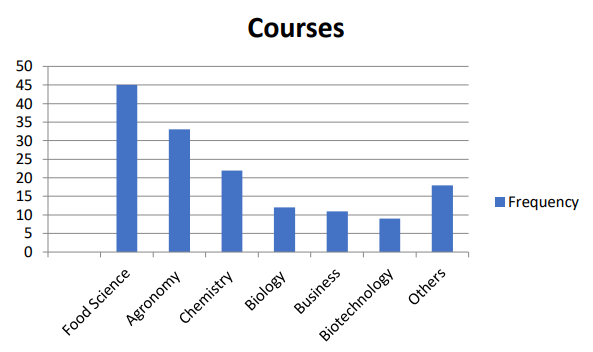
Figure 1
Evolution of research at Federal Universities of the State of MG
Source: Prepared by the authors, 2021.
Thus, if in the 1990s, AMPAQ and INDI were already working together to delimit the quality standards for the drink, with advances in studies in the academy it was possible to consolidate the analysis methodologies for the evaluation of cachaça, and its conditions. scientific evidence to distinguish it from the others.
It is no wonder that Law nº 13,949 of July 2001 established the identity standard and the characteristics of the process and elaboration of “Cachaça de Minas”, as well as Law nº 16,688/2007 of 01/11/2007, which described the ways to produce the traditional cachaça from Minas, and declared it cultural heritage.
The work of these agents is also a fundamental analytical category for the creation of an institution, as proposed by Lawrence and Suddaby (2006), as the agents involved need knowledge to support and sustain the new institution. Thus, courses and training were carried out, so that the producers started to have contact with the new forms of production of the drink.
4.3 Institutional work deinstitutionalization of production practices
The requirement for stainless steel production materials is an institutional work created, aiming at better production hygiene. The practice was legitimized, so that the industry started to manufacture the production items, such as storage boxes and fermentation vats in steel material. These practices, however, established a rupture with the old forms of production, as reported by the producers:
[...] The fermentation started in the wooden trough, very rustic. If you have bad yeast, it gets into the wood, in a few days it is contaminated. Today it is stainless steel. It is a requirement for being more hygienic (12- Personal Interview, 2019).
[...] the requirements increased in relation to what was demanded before, it increased more in the sense of production, like before we could use fermentation in plastic vats, then it became asbestos coated with fiber, now it is stainless steel [... ] (13- Personal Interview, 2010).
The example illustrates a form of disruption defined by the dissociation of moral foundations, since it seeks to remove the practice, rule, or technology from its moral basis, within a specific cultural context (LAWRENCE; SUDDABY, 2006).
If, before, producers used wood materials and polyethylene and fiber boxes during the production stages, these practices were extinguished, and new forms of production in better quality materials were given way, which facilitate cleaning and production control.
Amid disruptive borders, there is also an effort to disconnect sanctions, from a field that is strongly institutionalized by informality and little supervision of production practices. Until the beginning of the 1980s, 99% of the producers were family members and made the drink another source of income in their subsistence options (MORAIS et al., 2020). However, with the speech of the production of a new cachaça, the adoption of “rigid” legal protocols became central to the justification of a so-called quality drink.
The institutional norms directed to the sector included a series of changes in production practices that had already been institutionalized in the field and that needed to be modified. One of them, and which impacted many producers, was the requirement to regularize production with the supervisory and responsible body, the Ministry of Agriculture, Livestock, and Supply (MAPA).
According to one of the MAPA technicians, the partnership was established to reduce the number of informal establishments in the state of Minas Gerais, since they represent a proportionately much higher number compared to registered establishments (14- Personal Interview, 2019).
In the case of an organizational restructuring of inspection and inspection services, a new action in the field came into force in 2019, through a partnership between MAPA and IMA. In 2018, through Ordinance nº 1 of June 26 (MAPA, 2018), IMA became accredited to carry out the inspection and inspection of production practices and the minimum legal standards required, with actions aimed at the production and trade of cachaça.
Its performance in the field of inspection began only in January 2019, but before that period, when the function was delegated in 2018, IMA began its role as a guide for the sector, participating in events and representative entities of the sector in order to disseminate information (15 – Personal Interview, 2019).
This practice was led by AMPAQ, which managed to transfer, from the ordinance nº 1, of June 26, 2018, from MAPA to the Instituto Mineiro de Agropecuária (IMA), the inspection of the production and trade of beverages. By relocating inspection to an agency with a greater number of employees, the change in the scope of inspection also began to operate on traders who sold informal cachaça. As a result, there were 265 inspections in 202 producer and 63 commercial establishments, which generated 76 subpoenas, 53 terms of apprehension, 25 terms of closure and 63 notices of infractions (IMA, 2019). The impacts of inspection are in line with formal producers:
[...] I stopped production for two years to adapt everything according to the Ministry's requirements. Investment was high, so we did it little by little (16- Personal Interview, 2019).
In case of non-compliance with the requirements in infrastructure, hygiene, good production practices, and care for the beverage, inspectors, both from IMA and MAPA, can issue warnings, infractions, or even close the establishment, based on the Law No. 8.918/94, Decree No. 6.871/2009 and IN13/2005. When the establishment operates illegally, without registration in MAPA, even though the structure and hygienic-sanitary conditions are in agreement, the inspectors are obliged to close the establishment, seize all the stored beverage and equipment, and forward samples of the beverage for analysis.
The seized product remains at the place of seizure, and removal without authorization from MAPA is not allowed, thus, it is under the responsibility of the producer, known as the depositary. The product becomes the property of the government, but the producer was appointed to watch over what was seized. If there is an obstruction of any seized item, the depositary is unfaithful, and thus, it is fined by the Ministry, as it is a violation of the laws (17 – Personal Interview, 2019).
One of the interviewed producers also points out that it is not good to disobey the requirements of MAPA and IMA, not only because of the value of the fine imposed, but also because after such an infraction, the rigor of inspection tends to increase. The interviewee also reports that he encounters difficulties and restrictions when implementing the requirements demanded by MAPA, and if the producer does not follow the instructions given, he and the technician in charge are punished for such noncompliance (18 – Personal Interview, 2019).
It is worth mentioning that this set of practices was based on a work of undermining assumptions and beliefs, in an attempt to reduce the perceived risks in the processes of change in the production of cachaça. This was done by associating informality with consumer health risks, reinforcing the quality matter. The Minas Gerais research centers legitimized the speech by bringing evidence of the harm caused by cachaça consumption without the minimum standards of quality control.
The narrative was supported by the mainstream media, which reproduced scientific studies, such as on the Uol website in 2012, “clandestine drinks have methanol, copper, and carcinogenic substance, says a study by Unifesp (CRUZ, 2012)”, in Estadão in 2016 “Good cachaça is legal cachaça: the importance of consuming registered drinks (MAIA, 2016)”, and in Veja Magazine in 2018 “Ingesting illegal alcohol can carry health risks (VIDALE, 2018)”.
4.4 The results of Institutional Work in the field of cachaça production from Minas Gerais
“Yes, there is no way around it: Minas Gerais is tradition when it comes to cachaça” (SOU BH, 2015).
“Cachaça found its best expression in Minas Gerais. There are the traditional spirits of notorious excellence” (ENCONTRO MAGAZINE, 2013).
“Best Cachaça is from Minas Gerais, but less traditional states emerge in the Ranking” (GAZETA DO POVO, 2018).
The phrases exposed illustrate, in the media, the consolidation of the image of cachaça from Minas Gerais as a differentiated product in the market. The role of the actors was central to changing the norms and rules of the field, especially for cachaça producers, modifying the ways of producing it:
Here we use three varieties of sugarcane, 18/16; 75/15; 32/80; this 75/15 was even developed by the UFV, today what we mostly have here is the 32/80, it's the one that work out the best for us here... Very productive sugarcane. [...] it's been 19 years since we've burned the cane, we only work with raw cane, when you burn the cane you kill the micro-organisms that are beneficial in the cane, the undesirables don't die... ( 19- Personal Interview, Souza,2018).
It is possible to notice in fragment 19 what Lawrence et al. (2013) define the institution's influence on the agency. Based on technical-scientific contributions, cachaça producers changed their actions, for example, no longer burning the sugarcane crop, since this action “killed the microorganisms” that had benefits for the quality of the drink. Simultaneously, technological changes favored the break with the image of a low quality drink:
Things are really evolving, okay? Much. Because we... you can't say “Ah, the cachaça used to be good”, right? That's a lie, okay? There was a lot of bad cachaça, the cachaça had a smell, it had a bad smell. Sometimes, the person even sweated something smelly, right? and then, we were introducing the cutting, head, and tail technology. We were introducing the question of fermentation control, we were introducing pits to monitor acetic acidity, yeast control, right? So, all this has been generating an exceptionally large universe of innovations, technology and, consequently, increasing quality, right? (20- Personal Interview, 2020)
The impacts of changes in the production process have even contributed to achievements in international awards and the added value of the drink, as the interviewees report:
About 15 years ago we decided to manufacture cachaça in a professional way. We set up a structure with equipment aimed at producing a quality cachaça following the standards and with a competent technician. Today, we have a computer program that allows tracking from sugarcane planting to bottling. Our “Silver cachaça”, I don't know if you know, it was considered the best cachaça in the world. It was awarded a double gold in Brussels in 2017, and this year, in that contest at Estadão that competed against three thousand labels, it was awarded a second place... (21 – Personal Interview, 2020).
Yeah, well, it's changed a lot. If you visit some stills… there are some stills that I can tell you, that you will visit and they are… like, fermentation models, when people really invested, they have stainless steel doses, all surrounded with glass, nobody enters in the brew house, served it a lot. And today, these produc
In this way, it is possible to identify, through empirical elements, how the institutional practices adopted have modified the field, from the adhesion to new technologies and production mechanisms, thus causing the alteration of the beverage's image in the market, over the last four decades of institutional work.
5. Final consideration
The paper aimed to understand how the institutional work of the actors, over four decades, changed the production practices of cachaça from Minas Gerais. To this end, we sought to investigate the practices of actors in the cachaça sector, from the perspective of creation and deinstitutionalization, based on the theory of institutional work by Lawrence and Suddaby (2006).
Historical aspects of cachaça production in its antiquity and its current context were portrayed, based on institutional changes. Cachaça proved to be a product that, during its production process, went through a number of production restrictions, but managed to transform itself from a simple and marginalized sugar cane by-product into a sophisticated and elite product. By exploring the nature of the work developed in organizations that produce cachaça, it is possible to conceive that the phenomena that unfold in social reality happened through practices and intertwined material arrangements.
The institutionalization work related to creation was evidenced from the articulation of new entrepreneurs, in the financing via public resources for the productive units, in the foundation of an association of producers, in the elaboration of quality certificates, as well as in the construction of public policies. This set of practices shaped the field, providing support for the adoption of new institutions.
At the same time, the deinstitutionalization of practices was evidenced by dissociating the moral foundations from the old forms of production that were discontinued by changes in legislation. Similarly, the effort to disconnect the rewards of informality and low oversight of the sector was conducted by joining a partnership between IMA and MAPA, in 2017, which culminated in strict supervision of the sector. It is also worth mentioning the role of the media, which, by disseminating scientific studies, began to undermine beliefs in old forms of production with risks to consumer health.
It can be seen, therefore, that the institutional work involved a network of actors that permeated not only the protagonism of AMPAQ producers, but also the State Government, inspection agencies, researchers from centers and universities, and the mainstream media, in the articulation to modify the forms of production of the drink, over the last four decades.
As limits of the study, it is emphasized that if, on the one hand, the work achieved positive results by modifying the practices of the field, on the other hand, this work is not finished. The mineiro sector still has, for the most part, producers who live in informality, and do not follow all the norms of production practices regulated by the sector.
Likewise, when presenting the relationships between changes in production practices and their results for the added value of the market, on the reading of institutional work, it is understood that this is not an isolated variable. Other theoretical interpretations, such as marketing strategies, which, despite not being explored in this article, also allow us to understand the change in the image of cachaça in the market.
Despite the limitations, it is noteworthy that the article contributed to the understanding of the theory of institutional work, providing elements that explain the forms of creation and interruption of institutions. At the same time, by signaling institutional changes in the scope of cachaça production in Minas Gerais, the results open possibilities for novel studies that can explore the influences of institutional work on other empirical fields, since the theory is still under construction in the field.
References
ALMEIDA, J; DIAS, L. Os segredos da Cachaça: tudo o que você precisa saber sobre a bebida mais popular do Brasil. São Paulo: Alaúde Editorial, 2018.
BERTO, A; LAVARDA, A; ERDMANN, R. Strategizing e o trabalho institucional: o caso das organizações hospitalares. Gestão e Regionalidade, v.35, n.106, p.197-215, 2019.
BRASIL. Decreto nº 4062, de 21 de dezembro de 2001. Define as expressões “cachaça”, “Brasil e “cachaça do Brasil” como indicações geográficas e dá outras providências. Diário Oficial da República Federativa do Brasil, Brasília, DF, 22 de dez.2001.
BRUNING, C; MARRA, L; GODRI, L. Institutional Work: Uma Ponte Entre Estudos Críticos e Institucionais? Revista Pensamento Contemporâneo em Administração, v.9, n.4, p. 144-156, 2015.
CACHACIÊ. Idealismo, trabalho duro e visão empreendedora, 2017. Recuperado de http://cachacie.com.br/ultimas-noticias/idealismo-trabalho-duro-e-visao-empreendedora-estee-o-blend-da-cachaca-mineira/. Acesso em: 18 mai. 2021.
CANA BRASIL. Interpretação do avanço Mineiro da cachaça artesanal de alambique, 2019. Disponível em: https://canabrasil.com.br/2019/12/04/modelo-de-projeto-da-cachacaartesanal/. Acesso em: 18 mai. 2021.
CLARKE, V; BRAUN, V. Teaching thematic analysis: Overcoming challenges and developing strategies for effective learning. The psychologist, v. 26, n. 2, p. 120-123, 2013.
CRUZ, F. Bebidas clandestinas têm metanol, cobre e substância cancerígena diz estudo da Unifesp. UOL Notícias, 2012. Recuperado de https://noticias.uol.com.br/saude/ultimasnoticias/redacao/2012/10/30/bebidas-clandestinas-tem-metanol-cobre-e-susbtanciacancerigena-diz-estudo-da-unifesp.htm. Acesso em: 18 mai. 2021.
GAZETA DO POVO. Melhor cachaça é mineira, mas estados menos tradicionais despontam em ranking, 2018. Disponível em: https://www.gazetadopovo.com.br/bomgourmet/bebidas/melhores-cachacas-do-brasilterceiro-ranking-cupula/. Acesso em: 18 mai. 2021.
GODOY, A. Pesquisa Qualitativa: Tipos Fundamentais. Revista de Administração de Empresas, v.35, n3, p.20-29, 1995.
INSTITUTO BRASILEIRO DA CACHAÇA (IBRAC). Autocontrole de bebidas, envelhecimento de bebidas. Case da Cachaça. Brasília: Câmara Setorial, 2019.
INSTITUTO MINEIRO DE AGROPECUÁRIA. Resultados das ações do IMA na inspeção/fiscalização da cachaça e aguardente de cana no Estado de Minas Gerais, 2019. Recuperado em 29 de janeiro, 2020, de https://www.gov.br/agricultura/pt-br/assuntos/camarassetoriais-tematicas/documentos/camaras-setoriais/cachaca/2019/57degro/apresentacao_ima_2019_07_10-convertido.pdf.
LAMMERS, J. C; GARCIA, M. A. Institutional Theory Approaches. The International Encyclopedia of Organizational Communication, p.1-10, 2017.
LAWRENCE, T. B; SUDDABY, R. Institutions and Institutional Work. In S. Clegg, C. Hardy, T. B. Lawrence & W. R. Nord (Eds.), The SAGE handbook of organization studies (2nd ed., pp. 215-254). London: Sage. 2006.
LAWRENCE, T. B; LECA, B; ZILBER, T. B. Institutional work: Current research, new directions and overlooked issues. Organization Studies, v. 34, n. 8, p. 1023-1033, 2013.
MAIA, M. Cachaça boa é cachaça legal: a importância de consumir bebidas registradas. Estadão, Paladar, 2016. Disponível em: https://paladar.estadao.com.br/blogs/ocachacier/cachaca-boa-e-cachaca-legal-entenda-aimportancia-de-consumir-cachacas-registradas/. Acesso em: 18 mai. 2021.
MINISTÉRIO DA AGRICULTURA, PECUÁRIA E ABASTECIMENTO (MAPA). A Cachaça no Brasil. Dados de registro de Cachaças e Aguardentes. (Anuário da cachaça) Ministério da Agricultura, Pecuária e Abastecimento. Brasília, 2019.
MORAIS, R; BRITO, V; BRITO, M; PINHEIRO, D. Interrupção da informalidade na cachaça artesanal: uma análise sob a ótica do trabalho institucional. Contextus – Revista Contemporânea de Economia e Gestão, v.18, n.9, p.107-122, 2020.
OLIVER, C. The antecedents of deinstitutionalization. Organization studies, v. 13, n. 4, p. 563-588, 1992.
REVISTA ENCONTRO. Conheça a pinga mineira, 2013. Disponível em: http://sites.correioweb.com.br/app/noticia/encontro/atualidades/2013/02/06/interna_atualidades,409/conheca-a-pinga-mineira.shtml. Acesso em: 18 mai. 2021.
SERVIÇO BRASILEIRO DE APOIO ÀS MICRO E PEQUENAS EMPRESAS (SEBRAE). A cachaça de Alambique: um estudo sobre hábitos de consumo em Goiânia. SEBRAE/GOIÁS, 2019.
SILVA, F. R. Na embriaguez da cachaça: produção, imaginário e marketing. Tese de Doutorado. Dissertação (Mestrado em História)-Universidade Federal de Uberlândia, Uberlândia, 2009.
Sou BH. A cachaça mineira é a melhor do país? Gastronomia, 2015. Recuperado de: https://www.soubh.com.br/noticias/gastronomia/a-cachaca-mineira-melhor-do-pais
SOUZA, B. Padronização e certificação da cachaça de alambique mineira: um estudo sob a perspectiva da análise de discurso crítica (Tese de Doutorado). Universidade Federal de Lavras, Lavras, MG, Brasil, 2018.
TURETA, C; JULIO, A. Estratégia Como Prática Social E Trabalho Institucional: Uma Proposta De Articulação Teórica. Teoria e Prática em Administração, v.6, n.2, 2016.
VIDALE, G. Ingerir álcool ilegal pode trazer riscos à saúde. Veja Saúde, 2018. Recuperado de https://veja.abril.com.br/saude/ingerir-alcool-ilegal-pode-trazer-riscos-a-saude/.
YAN, Z; ZHU, J; FAN, D; KALFADELLIS, P. An institutional work view toward the internationalization of emerging market firms. Journal of World Business, v.53, 2018.
ZARPELON, F; BITTENCOURT, A; FACCIN, K; BALESTRIN, A. Uma década de trabalho institucional: contexto e oportunidades de pesquisa. Organizações & Sociedade, v.26, n.91, 750-775, 2019.
ZIETSMA, C; MCKNIGHT, B. Building the iron cage: institutional creation work in the context of. In: LAWRENCE, T. B; SUDDABY, R.; LECA, B. Institucional Work: Actors and Agency in Institutional Studies of Organizations. New York: Cambridge University Press, 2009.
ZVOLSKA, L; PALGAN, V; MONT, O. How do sharing organizations create and disrupt institutions? Towards a framework for institutional work in the sharing economy. Journal of Cleaner Production, v.5, n.10, p. 667-676, 2019.