Artigos
Sustainable Development Goals (SDGs) in social responsibility (SR) projects for the meat and meat products industry
Sustainable Development Goals (SDGs) in social responsibility (SR) projects for the meat and meat products industry
Gestão & Regionalidade, vol. 39, e20238506, 2023
Universidade Municipal de São Caetano do Sul
Recepción: 19 Abril 2020
Aprobación: 30 Octubre 2022
Abstract: This research addresses Corporate Social Responsibility (CSR) in the Meat Industry by analyzing the reflexes of the Sustainable Development Goals (SDGs) and the stakeholder demands in projects of a socio-environmental nature. It is, therefore, an exploratory research and with a qualitative approach. The four food industries that were classified in the Novo Mercado, by Bolsa Brasil Balcão (B3), the São Paulo stock exchange, were analyzed. Content analysis of the documentary stage was performed and, subsequently, also of the answers obtained from the participating managers. It can be concluded that there are several social responsibility actions of these industries in the observed period (2016 to 2020) related to the SDGs, with some of the stakeholders identified by them. Through this research it was possible to see that the SDGs are being partially considered by the companies studied and can be more emphasized, as well as the strengthening of the relationship with stakeholders.
Keywords: management for development and regionality, corporate social responsibility, stakeholders, ODS, food industry.
Resumo: A presente pesquisa aborda a Responsabilidade Social Corporativa (RSC) na Indústria Alimentícia de Carnes e Derivados por meio de análise sobre os reflexos dos Objetivos de Desenvolvimento Sustentáveis (ODS) e das demandas dos stakeholders em projetos de natureza socioambiental. A pesquisa é classificada como exploratória e de abordagem qualitativa. Foram analisadas as quatro indústrias alimentícias que se encontravam classificadas no Novo Mercado, pela Bolsa Brasil Balcão (B3), a bolsa de valores de São Paulo. Foi realizada análise de conteúdo da etapa documental da pesquisa e das respostas obtidas dos gestores participantes. Pode-se concluir a existência de diversas ações de responsabilidade social dessas indústrias no período observado (2016 a 2020), muitas delas relacionadas aos ODS, sendo contemplados alguns dos stakeholders por elas identificados. Constata-se que os ODS estão sendo parcialmente considerados pelas empresas estudadas, podendo ser mais enfatizados, assim como o fortalecimento no relacionamento com os stakeholders.
Palavras-chave: gestão para o desenvolvimento e regionalidade, responsabilidade social corporativa, stakeholders, ODS, indústria alimentícia.
1 Introduction
Increasingly, organizations need to develop a responsible and dynamic profile for their activities. As they lead they also suffer changes in at least three dimensions of sustainable development: economic, social, and environmental. A responsible performance of companies will elevate their positioning in the regional, national, and even international markets.
To meet social demands and remain in the globalized competition, companies invest in Corporate Social Responsibility - CSR and, for that purpose, they consider the three dimensions mentioned above, which are part of the Triple Bottom Line of sustainability, (ALMEIDA; NEUNAN; SANCHES, 2018).
Recently, this strategic positioning has been reinforced by the Sustainable Development Goals of the United Nations - SDGs, recommended by the 2030 Agenda of the United Nations - UN (2015). It is a call to all segments of society: public, private, and the third sector; so that they act in favour of a development way that is more rational and sustainable. The SDGs are accompanied by 169 goals and 231 indicators that aim to encourage governments and companies to establish their goals and indicators, aiming to improve the quality of life of current and future generations.
Hence, discussion with all stakeholders regarding strategic planning is essential in understanding and strengthening the relationship between stakeholders, which can lead to more effective decision making and better outcomes for all, as it has been advocated for decades by the Stakeholder Theory (FREEMAN, 1984). This theory aims to understand the relationships between the organization and its stakeholders, including understanding its ability to influence them (PARMAR et al., 2010).
Corroborating Freeman (1984), in the perception of several authors such as Donalson and Preston (1995), Freeman (1999), Mitchell, Agle and Wood (1997), Pereira (2002), Godfrey and Hatch (2007), Bundy, Shropshire, and Buchholtz (2013), this theory considers all the groups involved and emphasizes the search for legitimacy on the part of companies in the fact that the parties involved are considered and participate in the discussions about the establishment of strategies, aiming to obtain benefits in the aforementioned dimensions, or at least not be adversely affected by the actions of the companies.
Bonnafous-Boucher and Rendtorff (2016) argue that in the Stakeholder Theory, individuals seek to satisfy their needs. Thus, individual interest must coexist with collective interest, occurring through the institutionalization of interests or the formation of interest groups that are guided by internal rules and legality.
For Weber and Marley (2012), as well as for Akremi et al. (2018), CSR programs, projects, and actions help companies determine which policies contribute to the greatest value creation. One of the initiatives indicated by these authors is the schematization of actions, identifying the demands of stakeholders (CORRÊA et al., 2010). Thus, with the integration of efforts, senior management, and other professionals are included in the preparation of planning that makes it possible to combine strategies on socio-environmental issues, realizing the external factors that can decisively imply organizational policies (SILVA et al., 2020).
A search was made, in CAPES Journal Portal, for scientific texts that contained the terms "DSG" AND "CSR" AND "Stakeholders Theory", both in Portuguese and in English, and found only 10 articles. However, none of them dealt with the triangulation of these terms. The same search was also carried out in the repositories from São Paulo University (USP), Getúlio Vargas Foundation (FGV), Campinas State University (UNICAMP), and Federal University of São Paulo (UNIFESP), and in all searches the same descriptors, but no publications on the triangulation of these constructs were found. Considering what was mentioned above, this research seeks to contribute to filling this gap concerning studies that consider triangulation, which gives an unprecedented aspect and, therefore, advances in science.
The general objective of this research is to analyze how the Food Industry of Meat and its Derivatives reflects the proposals of the SDGs and the demands of the stakeholders in its CSR programs. The following specific objectives were established: to identify and classify the types of stakeholders in the Food Industry; analyze and compare CSR programs in the Food Industry; to identify the perception of the managers of the Food Industry concerning the SDGs and the stakeholders to be reflected in the CSR projects.
For the delimitation and selection of companies, it was decided to investigate those listed in Brasil Bolsa Balcão (B3, 2019), framed in the so-called Novo Mercado for "Implementing transparent management aligned with shareholders, measures that value a company to its investors". Four companies were found that, for this research, received the fictitious names of ALFA, GAMA, BETA, and OMEGA, as no authorization was obtained to identify them. These companies are part of the "Food Industry for processing beef, poultry, and pork", being among the largest Brazilian multinationals.
The interest in the CSR area is justified to diagnose the involvement of the food industrial sector and its contributions to sustainable development, highlighting the need to understand the emergence of the existence of a balance between the obligation to make a profit being linked to the need to socio-environmentally responsible action, so that there is economic development, also considering the needs of global, regional and local stakeholders and understanding this context as effectively beneficial to the interested parties.
The Food Industry segment occupies third place in terms of participation in the Gross Domestic Product - GDP of Brazil and second place in both the Brazilian Midwest region (22.3%) and the state of Goiás (22.9%) (IMB, 2020). This segment was chosen because it is understood that food is essential to human beings and that the sector needs to be, by nature, responsible, as it involves food safety issues.
The merit of the research lies in the contribution it brings to the public and private management of the food sector, so that, based on this study, they can carry out a strategic analysis that considers the management of stakeholders, and adapted to the peculiarities of the sector and the region, also contemplating the SDGs. It may even assist organizational managers in mitigating socio-environmental risks. It is worth noting that, in the academic realm, the discussion needs to be expanded and the present study has this purpose.
For this research, it started with the model by Lopes (2015), entitled "The Influence of Stakeholders on Strategic Corporate Social Responsibility”, which is now specifically adapted to the peculiarities of the Meat and its Derivate Food Industry in Brazil, updated and expanded in the light of the SDGs.
2 Theoretical Reference
2.1 Corporate Social Responsibility (CSR)
There are several concepts about CSR. It is highlighted, from a philosophical understanding, that social responsibility is the moral expression of the conscious and free personality, and the individual and the companies must be held accountable for their actions and the consequences that result regardless if it is positive or negative (REIS, 2009).
For Carroll (2015) CSR must be understood by the association of motivations (responsibility), actions (responsiveness), and results (performance), reaching other interrelated terms, such as business ethics, corporate citizenship, business sustainability, stakeholder management, and creation of shared value.
Table 1 presents a synthesis of definitions related to CSR - one per decade - allowing the verification of the evolution of the theme in a temporal perspective, starting in the 1950s with Bowen pointing out the obligations of businessmen to the values of society, until broader concepts currently used.
Table 1- Definitions of Social Responsibility
| Bowen (1953) | Entrepreneur must adopt policies, make decisions or follow course of action that are compatible with the ends and values of our society. |
| Davis (1960) | Social responsibility refers to the decisions and actions that businesspeople take for reasons, at least partially, that go beyond the economic and technical interests of companies. |
| Davis (1973) | Corporate Social Responsibility begins where the law ends. A firm is not socially responsible if it merely complies with the requirements of the law because that is what any good citizen would do. |
| Jones (1980) | It is the notion that companies have obligations to existing groups in society that are not shareholders beyond what is prescribed by law and employment contracts. |
| Wood (1991) | CSR is the configuration of a business organization in social responsibility principles; social responsiveness processes; observable policies, programs, and results; and how they relate to the company's social relationships. |
| Kotler and Lee (2005) | A commitment to improving the well-being of society through discretionary business practices with the contribution of corporate resources. |
| ISO 26000 (2010) | It is an organization's responsibility for the impacts of its decisions and activities on society and the environment, through ethical and transparent conduct that contributes to SD, including the health and well-being of society; considering stakeholder expectations; complying with applicable law, and is consistent with international standards of conduct; is integrated throughout the organization and is practiced in its relationships. |
| Ethos Institut (2018) | It is a form of management defined by the company's ethical and transparent relationship with the public to which it relates and by the establishment of business goals compatible with the SD of society, preserving environmental and cultural resources for future generations, respecting diversity, and promoting the reduction of social inequalities. |
Source: Adapted from Lopes (2015)
Considering the CSR models most present in the literature - Carroll (1991), Wood (1991), and Porter and Kramer (2006) - associated with the 17 SDGs (UN, 2015), in addition to giving this research a contemporary character of realignment of the CSR to the needs of stakeholders, allows us to understand CSR as a process of interaction in which those involved integrate economic, social, environmental and legal concerns among the interested parties, demanding the recognition of the multiple interests of the stakeholders included in it; the companies, their owners, workers, suppliers, local communities, competitors, other local institutions, the State, the environment, among others.
2.2 Stakeholder Theory
The Stakeholder Theory (FREEMAN, 1984) argues that all stakeholders within an organization must be considered when formulating its strategies.
The ability to affect or be affected by the organization's objectives is a way of defining a stakeholder. Freeman (1984) discusses that the relationships between the company and the stakeholders are independent of each other, while Rowley (1997), in his research, contests this theory and defends the idea that the stakeholders establish relationships with each other. Over time, stakeholders tend to develop networks of mutual relationships (SVENDSEN, 1998), and the company may not be the center of these networks, which may have a life of their own (DOBELE et al., 2014).
Table 2 presents some of the approaches to stakeholders, in the view of several authors.
Table 2– Different Stakeholders' Approaches
| Freeman (1984) | Suppliers, government, local community, owners, consumer protection, customers, competitors, media, employees, environmental protection, and specific groups. |
| Carroll (1991) | Shareholders, consumers, employees, suppliers, community, and social activist groups. |
| Clarkson (1995) | Primary: shareholders, investors, customers, employees, and suppliers. Secondary: local communities, banks, insurers, and the public in general. |
| Donaldson and Preston (1995) | Broader definitions consider stakeholders as diverse actors, whether people, groups, or entities, which have direct or indirect relationships or interests with or in the company. |
| Luoma and Godstein (1999) | Private stakeholders are customers, suppliers, or creditors. Public stakeholders are government, academic entities, or the community. |
| Kochan and Rubinstein (2000) | The first group includes stakeholders that provide critical resources; the second group includes those who take some type of risk; the third is those who have enough power to affect the organization. |
| Oliveria (2008) | Interest groups with a certain legitimacy and importance to the companies that pressure owners, shareholders, and managers, interfering, in a certain way, in the company's direction. |
| Fassin (2010) | It maintains the same previous definitions with the integration of stakeholders who intend to have an active voice in the organization as activists or NGOs. It also clarifies the concept of non-stakeholders as groups that have no relationship with the company and do not affect it. |
| Hult et al. (2011) | Primary stakeholders – customers, employees, suppliers, shareholders, and the public (including government and community) and secondary stakeholders; competitors, media, trade associations, and special interest groups (e.g., lawyers). |
| Harrison, Bosse, and Phillips (2013) | They propose an analysis model for allocating value to stakeholders, through how a company can determine how much value can be distributed among stakeholders: Little value allocated to stakeholders – stakeholder opportunity cost can be used as a minimum distribution of value, but if the value exceeds the perceived opportunity cost, the stakeholder may act in a way that generates more value for the company or if there is too much allocation of value to certain stakeholders at the expense of others, there may be a destruction of value aggregate generated by negative reciprocity). Too much value allocated to stakeholders – By allocating too much value, you may be sacrificing the company's profitability. When the company gives high priority to the shareholder and its dividends, to the detriment of the low remuneration that is given to its employees, being below the market. |
| Boucher and Rendtorff (2016) | Individuals primarily seek their well-being under the satisfaction of their vital needs. The individual interest must coexist with the collective interest. The way this happens is through the institutionalization of interests or through the formation of (interest) groups that are guided by internal rules and legality. |
| Rowley, Yang, and Bentley (2017) | They claim that corporations are not always the nexus of interactions, instead, internal and external social networks between stakeholders can affect organizations' behaviors. |
| Maschio et al. (2022) | The animal population at risk in a given location is considered a claimant stakeholder class, as they are directly affected by the actions of a particular association, even though they do not have a direct influence on the decisions and/or directions of that given organization. |
Source: Prepared by the authors (2022)
Table 2 presents a timeline that allows defining stakeholders, from this perspective, as those who influence the organization or are influenced by it in the pursuit of its objectives (FREEMAN, 1984; DONALDSON; PRESTON, 1995; CLARKSON, 1995).
It should be noted that Maschio et al. (2022) mention, in an innovative line of reasoning, that the animal population is at risk as a class of stakeholders, even though they are represented by entities that protect them. This new vision places animals as stakeholders in the Food Industry.
Considering the relationships of influence between stakeholders, the theoretical model of Mitchell, Agle, and Wood (1997), expands the discussion and suggests that the organization of stakeholders occurs through the mediation of three attributes: Power; Legitimacy; and Urgency. Once stakeholders have been identified and classified based on these attributes, the organization must know their demands and their power and, from then on, insert them into its CSR strategies.
3 Methodological Approach
For the objectives, this research is classified as exploratory because it seeks approximation and familiarity with the problem on a particular topic (GIL, 2019). For the approach, it is classified as qualitative (BOGDAN; BIKLEN, 2003), involving five characteristics: natural environment; descriptive data; concern with the process; preoccupation with meaning; and inductive analysis process.
It is worth noting that the SDGs were published in the second half of 2015, which explains the initial time frame in 2016, going until August 2020.
This research used primary and secondary data collection. Secondary data were obtained from the companies’ official documents, collected from their websites. The documentation analyzed includes the Ethics and Conduct Codes and the Sustainability Reports of the last five years. The selection proved to be relevant since companies have a high number of CSR publications.
Regarding the primary data, these would be collected through interviews, however, due to the social isolation imposed by the COVID-19 pandemic, many attempts to carry them out were not successful, even though they were proposed to take place by video conference as it would not have been possible to carry out in person. The interviews were scheduled to be held in April 2020, when industries closed and working from home was implemented in most Brazilian companies, due to this pandemic. Thus, a questionnaire with open questions was used, prepared in Google Forms, and sent electronically to the managers of the four companies.
Next, an elaboration of the questions applied to the research subjects’ systematization is presented (Figure 1), considering that the questions were elaborated from the model of Lopes (2015), innovating by inserting the SDGs for a better understanding of the relationship of CSR today. The investigative model sought answers through the following guidelines: identifying and classifying stakeholders; knowing the companies' CSR policies; identifying the dimensions of CSR; determining the impact of CSR on stakeholder relations; understand the extent to which CSR activities are strategic.
Figure 1– Lopes (2015) Model –Stakeholder Influence on CSR
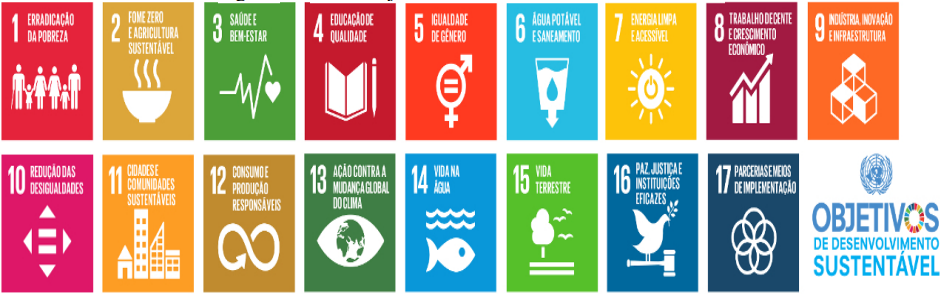
Figure 1–
Lopes 2015 Model –Stakeholder Influence on CSR
Source: Lopes (2015)
Stakeholders identification CSR impact on stakeholder relations strategic CSR Stakeholders classification CSR dimension
A questionnaire with open questions was prepared from the Theoretical Framework and divided into blocks, based on the model of Lopes (2015) and adapted to include CSR, stakeholders, and the SDGs (Table 3).
Table 3Division of Questions to Participants by Blocks
| Participant Identification | - | - | 7 |
| Block I | Stakeholders Identification | Freeman (1984) – author of the Stakeholder Theory | 5 |
| Block II | Stakeholders Classification | Mitchell, Agle, and Wood (1997) | 7 |
| Block III | Corporate Social Responsibility | Wood (1991) | 3 |
| Block IV | Impact on Stakeholder Management | Post, Preston, and Sachs (2002); | 7 |
| Block V | CSR Dimensions | Carroll (1979, 1991) and Schwartz e Carroll (2003) | 11 |
| Block VI | Strategic Corporate Social Responsibility | Porter Kramer (2006, 2011) | 7 |
| Block VII | Corporate Social Responsibility and SDGs | ONU (2015) | 1 |
Source: Prepared by the authors from the model of Lopes (2015)
The questionnaire was also sent by e-mail to ten external stakeholders from each of the companies, obtaining only 1 return, coded as R8. It is a stakeholder supplier of raw materials to OMEGA, holding the position of Manager of Agriculture for 12 years, and who reported to be reporting directly to the owner of the supplying farm (OMEGA – R8). Not having obtained quantitatively adequate feedback, the questionnaires were later sent to the entities and bodies that could represent them: Instituto ALFA; Germinare Institute; GAMA Institute; Non-profit organization (AGIR); Association of Nelore Breeders of Brazil (ACNB); Brazilian Association of Animal Recycling (ABRA); Brazilian Association of Exporting Industries (ABIEC); Union of the Meat and Derivatives Industry of the State of Goiás (Sindicarne); Union of workers in the food industry of Rio Verde. There was no response from these bodies either, which denotes the seriousness of the pandemic issue the world was going through and, to a certain extent, the fear of people contributing to the research, fear of getting involved with the themes in question.
Thus, it was possible to collect primary data from 7 managers from the 4 companies. In all, there were 8 participations in the research, being 1 manager of ALFA (R1), 2 managers of GAMA (R2 and R3), 4 managers of BETA (R4, R5, R6, and R7), and no manager of OMEGA. From this last company, it was only possible to obtain answers from 1 supplier (R8), in an attempt to cross-reference their answers with the data collected through documents, since there was no collaboration from any OMEGA manager. In establishing the criteria for choosing the participants, it was identified that they should be managers involved with the decision-making processes, with knowledge or participation in CSR practices, as well as external stakeholders.
Based on the above, three assumptions were established: 1) Primary and secondary stakeholders influence CSR policies in the Food Industry; 2) Food Industry CSR policies and programs are in line with the SDGs; 3) CSR in the Food Industry is strategically based on the SDGs, in the perception of managers.
4 Analysis and discussion
In the stage of the obtained answers content analysis, after the presentation of the individual case, a comparative analysis was carried out to identify patterns and divergences that evidence new ideas and concepts and to confirm (or not) the initial assumptions (EISENHART, 1989; MILES; HUBERMAN, 1984; EISENHART; GRAEBER, 2007).
The categories analyzed were previously defined based on the Theoretical Framework used.
The first stage of the analysis was carried out on the collected and classified documentation, highlighting the relevant information from the investigation, related to the CSR projects of the companies under study and the identification of the relationships of these actions with the SDGs and stakeholders. The second stage consisted of analyzing the questionnaire responses. The third step consisted of comparing the data collected from the documentation and the responses received, as suggested by Miles and Huberman (1984).
Clarkson's (1995) perspective was chosen, which divides stakeholders into primary and secondary. The primary stakeholders are those that organizations maintain direct contact with and needed them for their survival, namely: employees, suppliers, customers, the community, and shareholders (PARMAR et al., 2010). The secondary stakeholders were characterized by not maintaining formal contact and not being essential to its survival, but that can be affected by the organization, characterized by influencing or being affected: media, government, competitors, consumer protection, and interest groups (PARMAR et al. al., 2010). There is also the category of stakeholders without theoretical references, which were mentioned by the companies, but do not have theoretical references. The combination of the three attributes can be defined through management priorities, determining their salience, and verified by observing the level of priority given to requests coming from different stakeholders that compete with each other (BUNDY et al., 2013). In the study, salient stakeholders were considered those classified under the following conditions: 1) cited by at least one participant considered an important stakeholder; 2) the stakeholders identified as relevant in the company's official documents.
The difficulty found was noticed by the research participants in identifying the stakeholders who have the three attributes: Power, Urgency, and Legitimacy. Employees were highlighted as a competitive advantage and are included in the CSR programs that organizations promote, being related to the three aforementioned attributes.
For the analysis of CSR, we opted for the concept given by Maon, Lindgreen, and Swaen (2010), considering that CSR is: a) a stakeholder-oriented construct centered on the voluntary commitments of an organization; b) having a magnification within and outside its limits; c) is driven by the organization's acceptance and recognition of moral responsibilities on the impacts caused by related activities and processes on society.
Through Wood's approach (1991, 2010), insofar as they try to respond to society's needs, the concentration of initiatives in areas of interest to the organization is notorious. This finding is reinforced when strategic CSR is analyzed, that is when it supports projects on topics that can enhance CSR actions (HUSTED; ALLEN, 2001; HUSTED; SALAZAR, 2006; PORTER; KRAMER, 2006, 2011).
The intention of companies to produce and launch new products and services with the purpose of expansion and job creation was evident. For example, the tax incentive programs offered in the legislation for the pursuit of transparent and collaborative action, with a contribution to the socio-economic development of communities, through the generation of direct and indirect jobs and offering quality products at affordable prices, and with aggregation of values for stakeholders, and respecting the environment and the community where it operates (ALFA, document 28/2020). The company GAMA seeks to build ties of relationships with communities and provides benefits such as well-being and social growth, in addition to job creation and tax collection (GAMA - document 04/2020).
The company ALFA informs more than 30 thousand partners, who are responsible for the supply of inputs for production. The work of these partners is evaluated using sustainability criteria such as human rights, labor rights, compliance with environmental legislation, and ethical issues (ALFA - document 10/2020).
GAMA has a corporate governance structure and is committed to adopting practices that go beyond what corporate law requires. The company periodically examines investment and financing plans, and their impacts on the capital structure (GAMA - document 04/2020).
OMEGA has control and management of environmental and occupational health and safety indicators in all industrial units, through corporate management programs for these aspects to ensure the efficiency of production processes, compliance with current legislation, and avoiding negative impacts on communities’ locations (OMEGA - document 19/2020).
Regarding the CSR programs and projects of the investigated companies, the manager of the ALFA company mentions that: "The Operational Excellence Program was created so that there was a standardization in all units" (R1). And the ALFA Academy, to promote the development and training of all employees and educational incentives, aims to the qualification of top management. Regarding the reasons that lead ALFA to invest in CSR and its benefits, it was mentioned that it occurs to “mature its culture by providing a link with the Co’s business” (R1). Workers are invited to participate in internal voluntary committees, which involve actions with the community, citing that all partnerships for the development of CSR actions are defined by the Compliance Committee.
In the main CSR programs and projects carried out by GAMA, managers mentioned “Purchase of raw material only from areas that do not originate from illegal deforestation; meat donation to the Hospital do Amor from Barretos; gel alcohol donations” (R2), and “Donations in general, including donations aimed at COVID-19” (R3). The GAMA Institute provides social, cultural, education, health, and food security assistance, along with sports. Workers are encouraged to participate in CSR actions through social campaigns in actions such as donations to philanthropic entities, but the manager (R3) mentions that GAMA does not have local CSR partnerships. "Food and clothing donation campaigns" (R3) were also mentioned for donations and distribution between institutions and the local community. According to the information obtained by the managers of GAMA, differences were observed in the existence of local partnerships.
The managers of BETA cited as the main CSR programs and projects the "Doing Good is Good" Program – Feeding the world with solidarity; the Social Program for Donation of Resources to fight COVID-19 in Brazil; Environmental BETA: Group company, responsible for waste management, environmental impact reduction, donations to social institutions, creation of environmental leaders, and Health and Safety, with daily, weekly, and monthly monitoring of indicators. Frequency and severity rates, segregation, and recycling of industrial waste generated by the environmental company BETA project, which collects material from the company's units and recycles them, regional donations, in the municipalities, as in the unit, with a monthly donation of meat to daycare centers and nursing homes. Young apprentice; Project for inclusion of PWD. “The benefits are related to getting closer to the community and strengthening the company's image” (R6). and “Social responsibility, visibility and the company's commitment to the community” (R7). All claim to know BETA's code of ethics and conduct, which is disseminated throughout 100% of the company. When the subject is about the incentives to participate in CSR actions, the answer was partial in that three managers said yes (R4, R6, and R7), but one manager stated that there is no volunteering practice (R5). The external stakeholder (R8) stated that he believes that OMEGA benefits from carrying out CSR policies with the “fidelity of the company's good image”. But he mentions that he is not familiar with OMEGA's code of conduct, that he is unaware of the CSR actions that involve the company with the community, and that he is unaware of OMEGA's partnership with local organizations.
It was possible to identify that the companies surveyed mentioned materiality as an alignment of the SDGs and with the sustainability report in the model of the Global Reporting Initiative - GRI. ALFA has mentioned the SDGs since 2015 in the Integrated Report in its sustainability reports. The companies GAMA and OMEGA only mention being aligned with the GRI indicators and the SDGs but do not mention which they are.
According to data obtained from the managers of the investigated companies, there were discrepancies in the information regarding strategic CSR, where a manager states that "through the committees of the CEO, HR Directors, Executive Managers" (ALFA) and that they are the ones who decide the allocation of CSR resources. The GAMA manager states that CSR strategies take place "through meetings of senior management. I have no knowledge about CSR resource determination." "They are defined through Corporate Governance" (BETA) and the determination of resources and through diagnostics, "meetings with shareholders, directors, presidents" (BETA), and that the determination of resources is made by "Corporate and regional" specialists and states that the determination of resources is according to the demands and needs.
When verifying the existence of a relationship between the GRI indicators and the SDGs, it can be seen that the projects of these companies are being directed toward social and environmental issues. The SDGs referenced by the companies were: ALFA (2; 3; 6; 8; 9; 12; 13; 16 and 17), and BETA (2; 3; 6; 7; 8; 12; 13 and 15). In the companies GAMA and OMEGA, the SDGs are mentioned, but they are not defined according to the strategic areas of the companies.
In the analysis of the managers' answers, when asked about the existence of a relationship between CSR and the SDGs, and how they relate to their programs, the ALFA-R1 manager answers affirmatively, and that they are inserted in the principles that guide the interaction. The managers GAMA-R2 and GAMA-R3 state positively, because “Social responsibility and sustainable development go hand in hand, considering that a company that does not pay attention to social responsibility actions ends up not remaining in the market or suffering serious setbacks in its image, an important item for those who have shares in the market", And, about BETA managers, respondent R4 says "I have no knowledge because they are not disclosed", as well as R5 "I don't know how to comment", and the respondents R6 and R7 declared so through indicators that help in the visualization and evolution of CSR, and sustainability, through social programs and strict control of environmental impacts. In turn, the external stakeholder respondent OMEGA-R8 claims not to know what the SDGs are and does not know how the company relates to CSR programs with the SDGs.
According to document analysis, the four companies corroborate Maon, Lindgreen, and Swaen (2010) and Wood (1991, 2010) since the development of CSR policies was observed. They seek to respond to society's needs and external pressures to be socially responsible (PHILLIPS, 2003; GARRIGA; MELÉ, 2004; BOESSO; KUMAR; MICHELON, 2013).
In the economic dimension, considering that companies are responsible for bringing return on investment for owners and shareholders; producing goods and services for society and selling them at a profit; generating jobs with fair remuneration; promoting research and development; and launching innovative products and services, it is inferred that the investigated companies corroborate with Carroll's (1979) statements, given the percentages of participation in the GDP, mentioned in the introduction of this article.
It was observed, through document analysis, that the companies CSR actions contemplate the three dimensions of sustainability (economic, social, and environmental) simultaneously, making it difficult to fit them into a specific dimension, that is, they are not exclusive (CLARKSON, 1995), which denotes true sustainability (ELKINGTON, 2012).
Even because they work in the food sector, the investigated organizations demonstrate in their documents CSR and sustainability projects, observed through the alignment of their policies and programs. Only the participating external stakeholder (OMEGA-R8) stated that they were unaware of the company's policies, although they are published on the respective websites of these companies. In this sense, the data collected and analyzed agree that strategic CSR occurs when the company and one or more stakeholder’s benefit (LANTOS, 2011), which results in benefits for society and creates competitive advantages through its capabilities. (HUSTED; ALLEN, 2001).
Because of the document analysis and the managers' perception, it can be seen the documents state that the company partially has a relationship between CSR and the ODS, and partially corroborated in the managers' reports. In this sense, such actions and their respective dissemination need to improve, as many are unaware of them.
The companies under study belong to the food sector and, due to its essence, CSR is mentioned in company reports, with strong reference to the concept of sustainability. Organizations cause impacts on the environment, and the companies under study report that they care about protecting the environment and present projects that prove such performances.
Data were analysed to confirm (or not) the assumptions initially established for this research. Concerning the theory of Parmar et al. (2010), it can be verified in this investigation that the primary and secondary stakeholders influence the CSR policy, and only OMEGA did not mention the shareholders as the organization's stakeholders, but given the analysis, Assumptions 1 and 2 can be partially confirmed. The primary and secondary stakeholders influence the CSR policies of the Food Industry and that the CSR policies and programs of the Food Industry are partially aligned with the SDGs. However, in the perception of managers, CSR relationships do not happen strategically from the SDGs, as they do not understand the relationship of stakeholders with the SDGs. Therefore, Assumption 3, that the CSR of the Food Industry is strategically based on the SDGs, in the perception of managers, is not confirmed.
5 Final Considerations
The research addressed the triangulation between the stakeholder constructs, CSR, and ODS in the Food Industry of Meat and Derivatives listed on B3 in the Novo Mercado category, bringing a scientific contribution to the Stakeholder Theory. This research also helps managers to get to know contemporary realities and reflect on their CSR programs.
The originality of the research sought to analyze the importance of the SDGs and the stakeholders, aimed to study the relationship between the documents published through the sustainability reports and the policies disclosed with the reality experienced by the managers of these organizations.
The four organizations surveyed have complex challenges with CSR, making them seek interaction between the demands of stakeholders and a look at practices for sustainable development, in the light of the SDGs proposed by the UN (2015).
The four companies understood that they affect and are affected by stakeholders, but it was observed that they favor the primary stakeholders more strongly (CLARKSON, 1995; PARMAR et al., 2010), namely: employees, customers, suppliers, community, shareholders, prioritizing policies that can generate greater visibility of CSR.
In the classification of stakeholders with the attributes of Power, Urgency, and Legitimacy, there was some difficulty in understanding the participants, inferring that this fact occurs due to the complexity of the relationships that are established between them and the stakeholders, but it was possible to identify that the more salient were employees, shareholders, customers, the community, and regulatory bodies.
When analyzing the strategic CSR in the light of the SDGs, it was found that the GRI report model itself informs the relationship between the indicators and the SDGs, facilitating this work for companies, but not always mentioned as information well assimilated by the participating managers.
Thus, this empirical study advances scientific knowledge and demonstrates the following important points: The stakeholders with greater relevance in CSR even after the publication of the SDGs continue to be the primary ones. Secondary stakeholders continue to be of little consideration in CSR actions.
In response to the research question, how does the Meat and Meat Food Industry relate CSR to the SDGs and what importance stakeholders have in establishing these strategies, the research presents the results of the four companies in this study, concluding that: (i) Employees influence strategic CSR by participating and proposing the operationalization of CSR actions to respond to social problems, having an involvement with stakeholders to create strong relationships and meet needs; (ii) Shareholders have influence in strategic CSR, which is delegated to the execution of their internal collaborators, with the creation of value for the organization; (iii) The communities are served by the Institutes of these companies, which are created to meet the needs of CSR actions and meet the development of specific programs. Only OMEGA does not have an Institute aimed at meeting the needs of communities; (iv) The regulator influences CSR through legislation, inspection and punishment, regardless of whether its CSR actions are strategic or not; (v) Customers are mentioned at various times, because through CSR they indirectly have a communication channel to the constant needs for improvements and innovations of the products and services, being mentioned in the sustainability reports; (vi) The environment is mentioned in the programs of the aforementioned reports, following the environmental legislation in force and under the internal rules of the companies, being one of the most referenced areas, although always based on the legislation that requires this service.
Although the questionnaires were given in advance, only BETA has four managers who participated. The Other companies seem to be afraid of exposure. Thus, it is inferred that they were not comfortable answering about the relationship with their stakeholders and the SDGs, at least at that moment.
One of the main critiques of the companies that participated in this research is the fact that there was no mention in their sustainability reports on how the dialogue with their stakeholders took place. The managers that participated in this study were not able to explain how they would listen to the stakeholders or meet their demands, which revealed how unfamiliar they were with this process.
As a limitation of the research, it is considered, above all, the fact that it took place in a time of world pandemic, quarantine, and even at a time when the industries in the region present high levels of contamination, as widely publicized in the media, making it extremely difficult to collect data. The investigation was relatively limited in the collection of responses from the research subjects and, as it consists of a small number of cases, generalizations would not be appropriate. Another limitation is due to the fact that the participation of the manager of OMEGA company was not obtained. On the other hand, the participation of an external stakeholder, the Administrative Manager of an agricultural and livestock supplier (raw material) to OMEGA was registered.
It is recommended for future studies that explanatory research be conducted carried out on why CSR is not meeting the SDG targets. In addition, a new research instrument can be developed with stakeholders in quantitative research to seek to identify their relationship with CSR practices. Furthermore, to elucidate practices associated with the SDGs and how they are incorporated, one can try to obtain interviews with the managers after the pandemic.
References
AKREMI, A. et al. How do Employees Perceive Corporate Responsability? Development and Validation of a Multidimensional Corporate Stakeholders Responsability Scale. Journal of Management, v. 44, n. 2, p. 619-657, 2018. Disponível em: https://journals.sagepub.com/doi/pdf/10.1177/0149206315569311?casa_token=AkVXupLtxoAAAAA:b1_8TY97ZtdeP77cFbFMcdQGhfbI872_8iMFCBx2zsJhVV10jc5RXqMk3K433_Rz3RwYIwzXhkwf. Acesso em: 23 abr. 2020.
ALMEIDA, R. G. de; NEUMAN, M.; SANCHES, S. L. R.. O que é evidenciado no Brasil sobre a Responsabilidade Social Corporativa advinda da Política Nacional de Resíduos Sólidos (PNRS) nos Formulários de Referência e Relatos Integrados? Revista Sociedade, Contabilidade e Gestão, Rio de Janeiro, v. 13, n. 3, set/dez, 2018.
BOGDAN, R. S.; BIKEN, S. Investigação qualitativa em educação: uma introdução à teoria e aos métodos. 12. ed. Porto: Editora Porto, 2003.
BONNAFOUS-BOUCHER, M.; RENDTORFF, J. D. Stakeholder theory: A model for strategic management. Springer International Publishing, 2016. DOI https://doi.org/10.1007/978-3-319-44356-0.
BUNDY, J.; SHROPSHIRE, C.; BUCHHOLTZ, A. Strategic cognition and issue salience: Toward an explanation of firm responsiveness to stakeholder concerns. Academy of Management Review, v. 38, n. 3, p. 352-376, 2013. Disponível em: https://www.jstor.org/stable/43700495. Acesso em: 06 abr. 2020.
CARROLL, A. A three-dimensional conceptual model of corporate performance. Academy of Management Review, v. 4, n. 4, p. 497-505, 1979. Disponível em: https://www.jstor.org/stable/257850?seq=1. Acesso em: 17 mar. 2019.
CARROLL, A. The pyramid of corporate social responsibility: Toward the moral management of organizational stakeholders. Business Horizons, v. 34, n. 4, p. 39-48, 1991. Disponível em: https://econpapers.repec.org/article/eeebushor/v_3a34_3ay_3a1991_3ai_3a4_3ap_3a39-48.htm. Acesso em: 17 mar. 2019.
CLARKSON, M. A stakeholder framework for analyzing and evaluating corporate social performance. The Academy of Management Review, v. 20, n. 1, p. 92-117, 1995.
CORRÊA, D. A. et al. Inovação, sustentabilidade e responsabilidade social: análise da experiência de uma empresa e equipamentos pesados. Revista de Gestão Social e Ambiental, v. 4, n. 3, p. 90-105, 2010. Disponível em: https://rgsa.emnuvens.com.br/rgsa/article/view/330. Acesso em: 13 maio 2020.
DAVIS K. Can Business Afford to Ignore Social Responsibilities? California Management Review. V. 2, n. 3, p. 70-76 1960.
DAVIS, K. The Case for and against Business Assumption of Social Responsibilities. Academy of Management Journal, v. 16, n. 2, p. 312-322, 1973.
DOBELE, A. R; WESTBERG, K.; STELL, M.; FLOWERS, K.. An Examination of Corporate Social Responsibility Implementation and Stakeholder Engagement: A Case Study in the Australian Mining Industry. Business Strategy and the Environment. v. 23, n. 3, mar. 2014.
DONALDSON, T.; PRESTON, L. E. The stakeholder theory of the corporation: Concepts, evidence, and implications. Academy of Management Review, v. 20, n. 1, p. 65-91, 1995.
EISENHART, K. M. Building Theories from Case Study Research. Academy of Management Review, v. 14, n. 4, p. 532-550, 1989.
EISENHART, K. M.; GRAEBNER, M. Theory Building from Cases: Opportunities and Challenges. Academy of Management Journal, v. 50, n. 1, p. 25-32, 2007.
ELKINGTON, J. Canibais com garfo e faca. São Paulo: M. Books do Brasil, 2012.
FASSIN, Y. A dynamic perspective in Freeman’s stakeholder model. Journal of Business Ethics, v. 96, n. 1, p. 39-49, 2010. Disponível em: https://www.jstor.org/stable/29789754. Acesso em: jun. 2020.
FREEMAN, R, E. Strategic management: a stakeholder approach. Boston: Pitman, 1984.
FREEMAN, R, E. Divergent stakeholder theory. Academy of Management Review, v. 4, n. 2, p. 233-236, 1999.
GARRIGA, E.; MELÉ, D. Corporate Social Responsability Theories: Mapping the Territory. Journal of Business Ethics, v. 5, n. 2, p. 51-71, 2004. Disponível em: https://www.jstor.org/stable/25123282. Acesso em: 25 mar. 2020.
GIL, A. C. Métodos e Técnicas de Pesquisa Social. 7. ed. São Paulo: Atlas, 2019.
GODFREY, P. C.; HATCH, N. W. Researching corporate social responsibility: An agenda for the 21st century. Journal of Business Ethics, v. 70, n. 1, p. 87-98, 2007.
HUSTED, B. W.; ALLEN, D. B. Toward a model of corporate social strategy formulation. In: Proceedings of the Social Issues in Management Division at Academy of Management Conference. Washington, United States of America, 2001.
HUSTED, B. W.; SALAZAR, J. J. Taking Friedman seriously: Maximizing profits and social performance. Journal of Management Studies, v. 43, n. 1, p. 75-91, 2006.
IMB – INSTITUTO MAURO BORGES DE ESTATÍSTICA E ESTUDOS SOCIOECONÔMICOS. Goiás. 2020. Disponível em: http://imb.go.gov.br/index.php?option=com_content&view=article&id=79&Itemid=145. Acesso em:
LANTOS, G. P. The boundaries of strategic corporate social responsibility. Journal of Consumer Marketing, v. 18, n. 7, p. 595-630, 2011.
LOPES, M. M. C. A Importância dos Stakeholders na Responsabilidade Social Empresarial Estratégica. Tese (Doutorado em Marketing) – Instituto Universitário de Lisboa. ISCTE – IUL, Departamento de Marketing, Operações e Gestão Geral. Lisboa, 2015. Disponível em: https://repositorio.iscteiul.pt/bitstream/10071/10038/1/Tese_Out_2015_Final_Juri.pdf. Acesso em: 18 fev. 2019.
MAON, F.; LINDGREEN, A.; SWAEN, V. Organizational stages and cultural phases: A critical review and a consolidative model of corporate social responsibility development. International Journal of Management Reviews, v. 12, n. 1, p. 20-38, 2010.
MASCHIO, C. de S. R. .; AGOSTINI, G. .; ORSO, T. .; VIEIRA, C. G. . Análise de stakeholders no grupo bem-estar animal de xanxerê: Stakeholder analysis in the xanxerê animal welfare group. Studies In Social Sciences Review, [S. l.], v. 3, n. 1, p. 282–303, 2022. DOI: 10.54018/sssrv3n1-016. Disponível em: https://studiespublicacoes.com.br/ojs/index.php/sssr/article/view/365. Acesso em: 16 abr. 2022.
MILES, M. B.; HUBERMAN, A. M. Qualitative Data Analysis: A Sourcebook of New Methods. California; SAGE publications Inc. London, 1984.
MITCHELL, R. K.; AGLE, B. R.; WOOD, D. J. Toward a theory of stakeholder identification and salience: defining the principle of who and what really counts. The Academy of Management Review, v. 43, n. 4, p. 853-886, 1997.
ONU – ORGANIZAÇÃO DAS NAÇÕES UNIDAS. Transforming our world: the 2030 Agenda for Sustainable Development. Resolução adotada na Assembleia Geral de 25 de setembro de 2015. Disponível em: https://www.un.org/en/development/desa/population/migration/generalassembly/docs/globalc ompact/A_RES_70_1_E.pdf. Acesso em: 14 fev. 2019.
PARMAR, B.; FREEMAN, R. E.; HARRISON, J. W. A.; PURNELLL, L.; COLLE, S. Stakeholder theory: The state of the art. Nova York: Cambridge University Press. 2010.
PEREIRA, R. S. Desenvolvimento sustentável como responsabilidade social das empresas: um enfoque ambiental. São Paulo: Lorosae, 2002.
PORTER, M. E.; KRAMER, M. R. Strategy and society: the link between competitive advantage and corporate social responsibility. Harvard Business Review, v. 84, n. 12, p. 78-92, 2006. Disponível em: https://hbr.org/2006/12/strategy-and-society-the-link-betweencompetitive-advantage-and-corporate-social-responsibility. Acesso em: 29 jan. 2020.
PORTER, M. E.; KRAMER, M. R. Creating shared value. Harvard Business Review, v. 89, n. 2, p. 62-77, 2011.Disponível em: https://hbr.org/2011/01/the-big-idea-creating-sharedvalue. Acesso em: 29 jan. 2020.
POST, J.; PRESTON, L.; SACHS, S. Managing the extended enterprise: The new stakeholder view. California Management Review, v. 45, n. 1, p. 6-28, 2002. Disponível em: https://journals.sagepub.com/doi/pdf/10.2307/41166151?casa_token=k390wU02gggAAAAA:LdYgaMTsT4sXpUNUVqS6Au0d7l98B390xlR926M5Rwd9HaNvBjW_Gmbzqt0BtjdSsRg205X5-12.
SCHWARTZ, M. S.; CARROLL, A. B. Corporate Social Responsibility: A Three-Domain Approach. Business Ethics Quarterly, v. 13, n. 4, p. 503-530, 2003. Disponível em: https://www.jstor.org/stable/3857969. Acesso em: 16 abr. 2020.
SILVA, P. M. M.; CASTRO, A. B. C.; ROCHA, H. K. L. F.; EL-AOUAR, W. A. E.; CÂMARA JÚNIOR, S. L. Responsabilidade ambiental corporativa: um panorama das publicações internacionais para a identificação de temáticas emergentes. Gestão & Regionalidade, v. 36, n. 109, p. 176-194, 2020. Disponível em: https://seer.uscs.edu.br/index.php/revista_gestao/article/view/5820. Acesso em: 13 abr. 2022.
SVENDSEN, A. The stakeholder strategy: profiting from collaborative business relationships. EUA, São Francisco: Berrett-Koehler Publishers, Inc., 1998.
WEBER, J.; MARLEY, K. A. In search of stakeholder salience: exploring corporate social and sustainability reports. Business & Society, v. 51, n. 4, p. 626- 649, 2012. Disponível em: https://journals.sagepub.com/doi/pdf/10.1177/0007650309353061?casa_token=gCqPY7_PewUAAAAA:jpKPp5AwiP1HrVOfh-wBtt9rYPa9tDqNK0dE_OZBqzsFVjIdHVQtFWwrV3kufpwlAxCKWVpL0Hb. Acesso em: 08 jun. 2020.
WOOD, D. J. Corporate social performance revisited. Academy of Management Review, v. 6, n. 4, p. 691-718, 1991. Disponível em: https://www.jstor.org/stable/258977?seq=1. Acesso em: 11 fev. 2020.
WOOD, D. J. Measuring corporate social performance: A review. International Journal of Management Reviews, v. 12, n. 1, p. 50-84, 2010. Disponível em: https://journals.sagepub.com/doi/pdf/10.1177/0007650315585761?casa_token=f_aNRw0jW7IAAAAA:qMXcxrhmbTgR5j2DSRdmS8iUtJ0zGxW6HQnfo4MzXnJH9d7-PMjaziOn1cztzmHJUleY4wkvecXe. Acesso em: 09 fev. 2020.