Carátula del artículo
NINA RIBEIRO: THE BRAZILIAN RALPH NADER - THE COLONIALITY OF BEING OF A CONSUMER ACTIVIST IN BRAZIL
Nina ribeiro: o ralph nader brasileiro – a colonialidade do ser de um ativista do movimento consumerista no brasil
Nina Ribeiro: El Ralph Nader brasileño, la colonialidad del ser de una activista del consumerismo brasileño
 Laís Rodrigues lrdossa@gmail.com; marcus.hemais@iag.puc-rio.br
Pontifícia Universidade Católica do Rio de Janeiro, Brazil
Universidade de Coimbra, Portugal
Marcus Wilcox Hemais lrdossa@gmail.com
Pontifícia Universidade Católica do Rio de Janeiro, Brazil
Revista de Administração de Empresas, vol. 62, no. 6, pp. 1-20, 2022
Fundação Getulio Vargas, Escola de Administração de Empresas de S.Paulo
Received: 11 September 2021
Accepted: 12 February 2022
INTRODUCTION
In March 1962, the United States (US) President John F. Kennedy delivered a speech to his country’s National Congress, announcing the Consumer Bill of Rights, which became the formal normative and conceptual basis for regulating consumerism around the world based on market principles (Hilton, 2007a). The speech also helped define the dominant narrative regarding “consumers” and their “basic” rights (United States of America, 1962), influencing consumerist policies of international consumer protection organizations, such as Consumers International, the European Union, and the United Nations Guidelines for Consumer Protection (Hilton, 2008). In turn, such organizations advanced consumerism based on these principles on a global scale, arguing in favor of its universal adoption in countries in the Global North and the Global South
The support of these organizations for this model led to greater acceptance of market practices globally (Harland, 1987). As Gisela Taschner, one of the first business and administration researchers to discuss consumerism in Brazil, explains: “the development of consumer protection is linked with the consolidation of capitalist mass production and consumption” (Taschner, 2000, p. 9). Throughout the 20th century, the adoption of market orientations paved the way for multinationals from the Global North to expand to countries in the Global South. This dynamic was legitimized by a hegemonic discourse promising that these corporations would bring progress and improve the consumers’ quality of life (Durand, 2003). However, the promise was not fulfilled and corporations were found exploiting local workers (Escobar, 2004) and disrespecting consumers (Nader, 1977), especially marginalized groups.
Due to business negligence in the mid-1970s, during the Brazilian civil-military dictatorship, the Comissão Parlamentar de Inquérito - CPI (Parliamentary Inquiry Commission) was implemented to investigate multinationals from the Global North that were operating in Brazil (Ribeiro, 1977). This commission was a milestone in local consumerist discussions because it helped to create space for the consumer movement, which had just begun in the country (Começa hoje a CPI, 1976; CPI constata abusos, 1976) and was inspired by the consumerism under development in the US (Glickman, 2009). During this period, congressman Emilio Antônio Sousa Aguiar Nina Ribeiro - popularly known as Nina Ribeiro - acting according to consumerist precepts based on modern capitalism, became a leading figure (Aventuras etimológicas, 1976; CPI constata abusos, 1976; Ribeiro, 1977).
Like other Brazilian activists, Ribeiro mirrored the activist and lawyer Ralph Nader (Beting, 1974; Cautela em demasia, 1977) - a leader of the US consumer movement. By mirroring Nader, Ribeiro defended the adoption of consumer protection principles based on the capitalist discourse Nader put forward. It was a discourse seeking to reduce asymmetries between consumers and corporations through markets (Boddewyn, 1985; Glickman, 2009), consequently excluding other possible forms and constructions of meanings for consumerism (Hemais & Faria, 2018). This capitalist consumerist discourse had as its backdrop geopolitical aspirations and the need for the US and Europe to strengthen capitalism during the Cold War. Therefore, Eurocentric consumerism attempted to align countries with modernist free-market principles, especially in the Global South (Hilton, 2009).
Consumerism literature has generally been silent regarding such geopolitical aspects behind the consumer movement (Faria & Hemais, 2018). Instead, it has historically framed such activism as a dispute between consumers and companies, which should be resolved by government interventions over markets to guarantee more consumer-centered orientations from businesses (Kotler, 1972, 2020). The silence about these important geopolitical aspects led to a widespread notion that there is only one global form of consumer protection, which homogenizes the concept of consumerism (Hemais, 2019; Santos, 2009).
From a decolonial perspective, it is possible to see that universal approaches from the Global North, such as the consumer movement model that was expanded globally, are problematic. They claim to be capable of explaining all global phenomena even though they are originated in particular contexts and therefore have their explanatory ability limited to that particular reality (Castro-Goméz, 2010). The adoption of US consumerism in Brazil is an example. The US model had its glory days in that post-war liberal society (Hilton, 2009), whereas Brazil was going through a civil-military dictatorship - a context very different from the US.
During the 1960s and 1970s, Brazil was still marked by rural traditions and, different from the reality in the US, the population had scarce access to communication outlets. However, the desire to consume products and services of all nature was as present as ever, much in the same way as it was in the US; the difference being that Brazilians had limited knowledge of their consumer rights (Zülzke, 1991), while US consumers had a consumerist structure that counted on organizations focused on defending them through legal actions, and informing them - through magazines, for instance, with articles about (good and bad) market practices of US corporations (Hilton, 2009). Only as of the 1990s did Brazilians count on significant consumerist organizations to defend them, such as Procon and the Instituto Brasileiro de Defesa do Consumidor (Idec) (Hemais, 2018), and a solid consumer defense code (Hemais, 2019). Therefore, it was hard to fully adopt the US-type of consumerism in Brazil.
These universalistic approaches legitimize the interests of ruling classes at the expense of violent imposition of Eurocentric values over colonized societies (Mignolo, 2011). This process is part of a larger narrative related to “progress,” created by imperialist nations (Castro-Gómez, 2005). The narrative naturalizes the importation of foreign models to nations with plural and distinct realities, even when such models do not meet their local needs (Mignolo, 2011). Therefore, different interpretations for phenomena such as consumerism are ignored. The only valid understanding of what is consumerism is the Eurocentric one (Hemais & Faria, 2018).
Based on the decolonial perspective, with a special focus on the theory of coloniality of being (Quijano, 1992), this study analyzes the behavior of Nina Ribeiro mirroring Ralph Nader, and how this influenced the Brazilian consumer movement. The decolonial theorizing on coloniality of being was developed by the Peruvian author Anibal Quijano (1992) and continued by Colombian researcher Nelson Maldonado-Torres (2008). It explains that the social and cultural control of the colonized, along with the imposition of a mystified image of the colonizers, results in the de-localization of the ‘colonized being’ and their dehumanization, leading the colonized being to adopt ethnocentric standards as the main (only) way to access power and be heard. When applying this theory to the case of Nina Ribeiro and the Brazilian consumer movement, it is possible to problematize Ribeiro’s dominant consumerist narrative, showing how Eurocentric influences materialized during the development of Brazilian consumerism with the primary objective of the Global North maintaining control over the Global South (Hemais, 2019).
This article is divided into seven sections including this introduction. The next section analyzes the decolonial perspective, in particular, the coloniality of being. The third section presents the methodology. The fourth describes a brief history of Ralph Nader’s performance between the late 1960s and the 1970s The fifth section discusses the behavior of Nina Ribeiro mirroring Ralph Nader. In the sixth section, Nina Ribeiro’s activism is analyzed from a decolonial perspective, particularly adopting dimensions present in the theory of coloniality of being. The seventh section presents the final considerations.
THE DECOLONIAL PERSPECTIVE AND THE COLONIALITY OF BEING
While the term “colonialism” refers to a relationship involving formal political, territorial and economic domination (Quijano, 1992), coloniality “refers to old patterns of power that emerged as a result of colonialism, but which define culture, work, inter-subjective relations and knowledge production far beyond the strict limits of colonial administrations” (Maldonado-Torres, 2007, p. 243). Coloniality survived colonialism - and continues to be the primary way in which the colonizers of the Global North maintain control over the colonized in the Global South - and was adapted throughout history until it was appropriated by the USA, especially after the Second World War (Mignolo, 2011).
Coloniality helped to create the Eurocentric “rational” classification between the evolved (Europeans) and the savages (non-Europeans) as part of the logic of racial classification and hierarchization established by those who see themselves as superior beings (Mignolo, 2011). Based on this rational and racial classification, European societies consolidated their position of domination over those outside their territory (Escobar, 2004), justifying their modernist imposition on the idea that they had superior knowledge and more advanced societies (Quijano, 2005).
This domination was possible because modernity was advanced as the only path for societal development. Industrial liberal society is the current universal metanarrative representing the convergence of all cultures and societies. Therefore, evolution necessarily leads to certain dominant ideals, such as free market, Eurocentric forms of democracy, and neoliberal economic paradigms. Since there is a “natural” standard to what development, knowledge, and evolution mean, cultures that do not follow such ideologies are also “naturally” inferior (Lander, 2005). This leads to the legitimation of dualistic thinking, the simplification of complex cultural dynamics (traditional vs. modern, primitive vs. civilized, etc.), and the temporal distortion of cultural differences (Quijano, 2005).
However, it is not true that there is a natural standard and that cultures different from it are inferior. Modernity’s rational concept of emancipation is, from the start, a justification that seeks the legitimacy of violence and genocide - thus, coloniality (Dussel, 1993). When modernity is considered a hegemonic type of knowledge superior to others - rather than a way of knowing typical of a particular time or following a specific perspective of rationality - a local reality becomes universal, and the coloniality of power is established (Quijano, 2005).
The concept of coloniality of power created by Quijano (1992) entails three elements: power, knowledge, and being. Coloniality of power focuses on the dominant power relationships that have been created - and legitimized - by modernity. Coloniality of knowledge focuses on colonial processes that produce knowledge that is supposedly superior, neutral, and universal. Coloniality of being, for its part, specifically addresses the experience of colonization by the colonized. Hence, the coloniality of knowledge is understood as the epistemic dimension of the coloniality of power, whereas the coloniality of being is its ontological dimension (Lander, 2005; Maldonado-Torres, 2007; Quijano, 1992).
Through coloniality of knowledge, the Global North universalizes Eurocentric knowledge (Lander, 2005) and imposes it on the Global South (Quijano, 2005). Such imposition is possible because this knowledge is expanded globally, as if it were universal, transforming knowledge into something superficial and falsely homogeneous (Santos, 2009). Western knowledge becomes an abyssal knowledge since, by elevating the knowledge produced by the colonizer as superior and universal, it makes knowledge produced by the colonized nonexistent (Santos, 2007).
Modernity has thus used the coloniality of knowledge to render local knowledge inferior, resulting in the loss of singularities and the imposition of new social identities and European paradigms (Escobar, 2004). The premise of European economic-intellectual-cultural superiority legitimized the colonization of “savages” and “primitives,” especially in Africa and Latin America (Quijano, 1992). The marginalization of knowledge and non-dominant groups from the Global South underpinned hierarchized knowledge according to racial classifications (Quijano, 2005).
The idea of the coloniality of being is comprised of three main aspects, all related to human classification: first, there is the idea of classification according to the locus of enunciation, placing peoples from the Global North in a position of superiority and marginalizing those who are not part of that group (Quijano, 1992); second, there are classifications of peoples according to other characteristics, such as race, gender, sexual orientation, and social and financial conditions, placing white, heterosexual men from wealthier classes at the top (Maldonado-Torres, 2007). Finally, there is the self-imposition of coloniality, which happens when colonized groups or individuals adopt colonial knowledge and practices because they believe it is the only way to achieve recognition and be heard (Quijano, 1992).
Consequently, as explained by Maldonado-Torres (2017), the universality of certain rights regarding human beings, such as the universality of “consumer” rights, is:
delimited by what is considered to effectively constitute the state of being human in the first place. In addition to a secular-line that separated the divine from the human, the hegemonic modern Western concept of the human emerged in relation to an onto-Manichean colonial line that often makes human rights discourse inefficient for addressing modern colonialism, or complicit with it (p. 117).
The legitimation of ideas produced by the Global North and of the being comprised of the elitist groups of the Global North has led to the Eurocentric paradigmatic seduction of non-dominant groups, who see the adoption of such paradigms as a means to access power (Quijano, 1992). Consequently, Latin American scholars have adopted ethnocentric standards in a process of self-imposed coloniality (Ibarra-Colado, 2008) because they see such standards as the only way to have “more humanity” (Maldonado-Torres, 2007) and, as a result, more recognition.
METHODOLOGY
Dominant studies in consumerism favor the production of knowledge from Anglo-American “circles,” with the subalternization of knowledge originated in other loci (Hemais, 2019). Therefore, to produce knowledge from a non-hegemonic perspective, one must consider the difficulty in this process since it means promoting the construction of “a world in which many worlds and knowledge can coexist” (Faria, 2014, p. 279). Thus, the choice of using the decolonial approach is appropriate for this work since such a perspective does not seek to impose itself ontologically/epistemologically; rather, it aims to reduce the asymmetries between the knowledge of the colonizers and that of the colonized by encouraging the creation of plural and racially non-hierarchized knowledge (Maldonado-Torres, 2008).
A historical research was developed using the decolonial perspective. The study questions the legitimacy of applying models created by the Global North (and designed to meet its interests) to the Global South, understanding that the decolonial approach reveals a colonialist side to certain phenomena, which is ignored and underestimated by modernity (Mignolo, 2011). The Global South has its own needs and particularities, based on a critical analysis of the modern historical construction of Western superiority and mainstream studies on consumerism (Faria & Hemais, 2018).
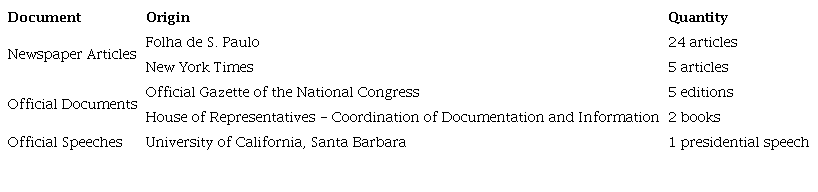
A broad narrative was created and then divided into sub-narratives, problematizing dominant discourses of the phenomenon under analysis. Various sources of secondary data were used to generate complementary information including documentary sources, press sources, oral sources, and bibliographic sources. Exhibit 1 lists the main sources of research and their respective sources.
Exhibit 1
Principal research sources
The themes addressed when analyzing Ralph Nader’s history in the dominant US consumer movement and Nina Ribeiro’s history in the dominant Brazilian consumer movement were similar, seeking to compare them better. Their history was divided into (1) Nader’s and Ribeiro’s origins as activists; and (2) the themes they addressed.
The collected data were analyzed in two steps, considering the intention to develop the mainstream narrative and alternative narratives under the decolonial perspective. First, the data were organized to establish historical events associated with Nader’s and Ribeiro’s histories as consumer activists. This process was also adopted to analyze colonial aspects related to mainstream consumer movements in a more general way, as shown in Exhibit 2.
Exhibit 2
The three colonialities and colonial consumerism

This organization helped map the missing information and guided the search for further data from different sources to better understand the phenomena under analysis.
The second stage consisted of interpreting the organized information, which started by establishing similarities and differences among the data to group them into categories of analysis. Two main categories were established in this process (“Ralph Nader and the dominant American consumerism” and “The Brazilian Ralph Nader: Nina Ribeiro’s consumer activism”), which were subdivided into two subcategories (“Ralph Nader’s (Nina Ribeiro’s) Origins as an Activist” and “Themes Addressed by Ralph Nader (Nina Ribeiro)”). The findings were then analyzed based on the decolonial perspective of the coloniality of being and are presented in the section entitled “Colonial Consumerism and Nina Ribeiro.”
RALPH NADER AND DOMINANT AMERICAN CONSUMERISM
Amid a dispute between capitalist and communist nations to see which would rise as the ultimate global power, relating the concept of well-being to consumption rather than labor was essential (Hilton, 2007b). The export and internationalization of consumerism occurred with this objective to help consolidate the US’s socioeconomic and cultural hegemony in the world. In this sense, Ralph Nader’s work was part and parcel of this process.
We do not intend to deny the relevance of Ralph Nader’s activism for the advance of global consumerism. We acknowledge that he fought to reduce asymmetries between consumers and corporations - even though his work did not fully reach these objectives (Glickman, 2009). However, we seek to critically analyze how his beliefs were imposed globally as if they were the only form of consumerism, overshadowing alternative takes on such activism to arise.
Ralph Nader’s origins as an activist
Considered one of the US consumer movement leaders in the 1960s and 1970s, Ralph Nader began his activism a few years after President Kennedy’s Consumer Bill of Rights, with the liberal discourse that marked consumerism from then on (Glickman, 2009). At the time, consumerism (or consumer movements) emerged along with other social movements, such as the feminist movement, the workers’ movements, and the civil rights movements. These widespread phenomena made activists like Nader (Hilton, 2007b) prominent figures (Hilton, 2008).
Nader became known by the US public for his role on behalf of consumers with his 1965 book Unsafe at Any Speed (Hilton, 2009). He made harsh criticisms of General Motors (GM), which made him very popular among Americans (Glickman, 2009) and noticed by mainstream media sources (Lawyer charges autos, 1965).
The book’s release coincided with a vehicle safety investigation in the US Senate. Fearing it would lose profits because of the accusations made in the book (Klebanow & Jonas, 2003), GM delved into Nader’s life. The company’s reaction was criticized by the media and the population, and transformed Nader into a national hero (Glickman, 2009; Hilton, 2009). The company ended up publicly apologizing to Nader (Rugaber, 1966).
The activist sued (and won) GM for violating his privacy, and his book became a milestone for the 1960s consumer movement (Glickman, 2009; The Nader Settlement, 1970). The money received from the suit was invested in a law firm that investigated products harmful to consumers (Hilton, 2009). Nader’s work is considered fundamental for the international adoption of seat belts and airbags (Klebanow & Jonas, 2003).
Themes Ralph Nader addressed
Nader’s popularity increased over the years, generating invitations to attend events even at the White House (Klebanow & Jonas, 2003). Contrary to what the company had planned, GM’s investigation of the activist’s life ended up promoting him, revealing that Nader lived a modest life, did not consume excessively, and was dedicated to working in defense of consumers (Hilton, 2009). A few years after the publication of Unsafe at Any Speed, several consumer-oriented laws were introduced, in addition to the strengthening of institutions that protected and regulated consumption (Hilton, 2008).
Ralph Nader expanded his debates and criticisms to areas other than the automotive industry, such as the environment (Jovens denunciam poluidoes do ar, 1970), food (Kucinski & Ledogar, 1977), corporate well-being, freedom of information, pensions, and nuclear energy. However, his main focus in the following years was fighting for consumer protection against large industries (Klebanow & Jonas, 2003), criticizing their power and lack of responsibility regarding their customers (Hilton, 2009). Nonetheless, he continued to maintain a liberal discourse (Glickman, 2009), which limited the understanding of consumerism and reduced consumers to privileged groups (Hemais, 2018), omitting traditionally marginalized groups such as African Americans, Hispanics, and Native Americans (Quijano, 1992).
Nader’s influence was not limited to the US. It expanded to other countries (Kucinski & Ledogar, 1977) and “Naderism” became a “brand” for activists and consumer movements in other regions (Hilton, 2007b). In the 1970s, he began to criticize the role of US multinationals in the so-called “developing countries” (Ralph Nader critica, 1973), including those in Latin America (Nader, 1977) and, more specifically, Brazil (Câmara dos Deputados, 1976; Ribeiro, 1977).
In 1970, the Brazilian newspaper A Folha de S. Paulo made its first report on Ralph Nader (Jovens denunciam poluidores do ar, 1970). From then on, he became a symbol for the consumer movement in Brazil (Beting, 1973; Em defesa dos consumidores, 1975; IstoÉ, 1976). His critics imported the opinions of the US New Right movement (Beting, 1973; Cavaleiro para os consumidores, 1972), just as Brazilian activists imported his arguments (Ribeiro, 1977; Zülzke, 1991). Such was the case, for example, with the bill regarding information concerning the use of medicines. Its author, Nina Ribeiro, justified the bill’s drafting based on a book by Ralph Nader, which addressed the exploitation of pharmaceutical multinationals in Latin America (Ribeiro, 1978). This was one of many times Ribeiro “used” Nader to justify his consumerist approach.
THE BRAZILIAN RALPH NADER: THE CONSUMERIST ACTIVISM OF NINA RIBEIRO
The topic of consumerism surfaced in Brazil in the 1970s due to external influences (Cavalcanti, 2008) - given the growth of the movement led by Ralph Nader in both the US and abroad (Hilton, 2008) - and internal changes involving the development of the consumer goods industry in the country (Durand, 2008). One can also add to this the problems observed in the relationship between consumers and foreign multinationals in the country (Kucinski & Ledogar, 1977).
Between the 1960s and the 1970s, there was an increase in discussions related to consumer protection in Brazil in newspapers, conferences (Zülzke, 1991), and in the National Congress. The themes and discussions were guided and encouraged by what was happening in the US consumer movement led by Nader (Jovens denunciam poluidores do ar, 1970). However, this generated a reaction by conservative corporate elites, in the same way as was observed in the US (Beting, 1971; Pereira, 1976), where the New Right fought against Nader’s consumerism (Glickman, 2009).
In Brazil, privileged groups shaped the consumerist debate, silencing marginalized populations. As in the US, the 1970s Brazilian consumer movement had a capitalist economic model as its constitutive base, and was dominated by the Brazilian white (political and business) elite, especially in light of problems faced by the performance - when considered inadequate - of multinational companies in the country (Kucinski & Ledogar, 1977; Ribeiro, 1978; Zülzke, 1991). Although the dominant consumerist discussion was limited by the US capitalist agenda, Brazilian consumer movement activists received criticism from the media, business groups, and politicians (Perigos da CPI, 1976; Ribeiro, 1977).
In the early 1970s, Nader started to be mentioned in reports in Brazil (Jovens denunciam poluidores do ar, 1970; Para ser do sindicato, 1970). Before long, the national press imported the term “Naderism” (Naderism) (Beting, 1973), and viewed the activist with a mixture of distrust and interest (Beting, 1974). Despite the controversies surrounding him, consumer initiatives similar to those developed in the US began to spread in Brazil (Lei de proteção, 1973; Leis que defendam, 1973; Ribeiro, 1977).
Soon, Brazilian consumer advocates began to appear and seek a position of leadership (IstoÉ, 1976), with ideals that mirrored US consumerism (Ribeiro, 1978). The colonial and geopolitical aspect of consumerism underpinned the movement (Hemais, 2018) and its leadership. The naturalization of the tendency to import knowledge from dominant groups led to the adoption of neoliberal values as a synonym for progress (Lander, 2005) and, with this, the importation of a reductionist idea of consumerism that only covered elitist consumption issues in line with the modernist capitalist logic (Hemais & Faria, 2018).
Origins of Nina Ribeiro as an activist
In the same way that the US consumer movement’s principles became consolidated in Brazil, models of US leadership were also mirrored in the country. One of the most prominent Brazilian activists in the 1970s was Congressman Emilio Antônio Sousa Aguiar Nina Ribeiro - Nina Ribeiro - known as the “Brazilian Ralph Nader” (Cautela em demasia, 1977). Inspired by a trip he had made to the US, Ribeiro collected material related to the investigations of multinational companies carried out by Nader and used them as inspiration to pursue a similar course in Brazil (Ribeiro, 1978).
The congressman introduced a bill into the House of Representatives that focused on increasing vehicle safety, incorporating US and European legislation (Ribeiro, 1978). The bill was designed to compel companies to include safety equipment in vehicles (Projeto pede maior segurança em veículos, 1976). That same year, the creation of a Parliamentary Inquiry Commission (Comissão Parlamentar de Inquérito - CPI) was requested to investigate the safety of vehicles manufactured in Brazil. The justification for the bill was that “…the automotive vehicles manufactured in Brazil are, in comparison with similar foreign vehicles, markedly less qualified, reflecting much inferiority in the smallest details, from tires to body” (Câmara dos Deputados, 1976, p. 3279, our translation).
The topic was one of the most-discussed in the CPI of the Brazilian Consumer Defense Code. During his testimony, Ribeiro decried the fact that he needed to carry out such an extensive campaign to demand, for the Brazilian consumer, safety features that automobile manufacturers had already implemented in the US and Europe. The CPI president, Rep. Sebastião Rodrigues, expressed concern about Ribeiro’s statement. According to Rodrigues, increasing the safety features of automobiles and creating requirements in Brazil similar to those of the Global North might prevent foreign car manufacturers from producing vehicles in Brazil (Ribeiro, 1977). His statement was in line with the idea of “progress” related to the US economic model (Hemais & Faria, 2018), which related the “advance” of underdeveloped nations with investments by such foreign companies (Kucinski & Ledogar, 1977).
Themes addressed by Nina Ribeiro
Nina Ribeiro built his activism based on the results of the US consumer movement and Ralph Nader’s activities (Ribeiro, 1977). For example, the Brazilian activist complained about the lack of a publication equivalent to the Consumer’s Guide, published by Consumers Union - an important US consumer defense organization - which aimed to inform consumers about products and services through quality tests. He also imported one of Nader’s criticisms aimed at lightbulb companies’ use of planned obsolescence and introduced a bill addressing the standard of quality and durability of lightbulbs (Ribeiro, 1978).
The topics raised by Ribeiro, which mirrored complaints made by US consumers, particularly those by Nader, included several industries that had political-economic influence, such as pharmaceutical, automobile, and food and beverage companies (Ribeiro, 1978). Just as Ralph Nader had become a symbol of threat to corporations and market defenders (Glickman, 2009), Ribeiro was considered a threat to multinationals operating in Brazil, especially when he started criticizing companies like GM, Standard Oil, and Coca-Cola (Ribeiro, 1977).
Despite the support of business people in the downfall of the Brazilian president João Goulart (Spohr, 2016) and their continued support of the civil-military dictatorship (Cartoce, 2017), political authorities did not always tend to their side. At times, such officials showed pro-market attitudes, while at others they defended pro-consumerist cries. In 1976, for instance, Rep. José Bonifácio supported Ribeiro’s proposal to create a CPI to investigate abusive pricing practices. However, unlike Ribeiro, who wanted to investigate corporations, Bonifácio defended verifying prices set by merchants, grocers, and storekeepers (Bonifácio apoia CPI, 1976). Like the New Right in the US, Bonifácio deconstructed the consumer movement’s dominant discourse without directly criticizing the rights proposed on behalf of consumers (Glickman, 2009).
Around the same time, Ribeiro submitted a request to establish a CPI to investigate Coca-Cola, a company that was also the target of criticism by Nader (Nader, 1977). There were suspicions that the company had stopped police investigations into the deaths of two employees in the syrup tank at one of its factories. The reaction of pro-market congressional representatives was to postpone voting on the request several times without openly opposing the initiative (Será requerida CPI, 1976). Despite not necessarily being successful, Ribeiro’s mirroring of US Naderism was constant.
COLONIAL CONSUMERISM AND NINA RIBEIRO
In this section, we discuss the colonial processes present in the history of Nina Ribeiro, especially that which compares to the trajectory of Ralph Nader. In the next subsection, we analyze the coloniality of Being in the “construction” of the Brazilian consumerist activist Nina Ribeiro, while in the second subsection, we discuss how imperialist processes that led to the coloniality of Nina Ribeiro’s activism are also present in mainstream discussions of consumerism as a whole.
Nader, Ribeiro, and the Coloniality of Being
By importing a foreign model of consumerism, which was developed by dominant and elitist groups (led by Ralph Nader), Nina Ribeiro’s activism did not cover several issues related to local realities or complex issues of marginalized groups. A few points in the trajectory of Nina Ribeiro were found that indicate classifications present in the Coloniality of Being.
Ralph Nader, being a consumerist from a dominant nation, was transformed into an activist superior to those from the Global South (Maldonado-Torres, 2007). Nader’s legitimacy to impose his ethnocentric thoughts on the rest of the world is also “natural” since only the Being of the Global North is rational and, therefore, capable of producing true knowledge (Lander, 2005).
The consumer protection structure defended by Nader and the dominant consumer movement in the 1970s focused their efforts on reducing asymmetries between companies and consumers (Hilton, 2009). However, such efforts did not cover the needs of marginalized groups since the idea defended by mainstream consumerists only took into consideration the protection of a consumer who was of an elitist, white, privileged, male background (Hemais, 2019; Maldonado-Torres, 2007).
Ralph Nader became a resonant voice in the US consumer movement (Glickman, 2009; Lawyer charges autos, 1965) because he was part of such an elitist group (Maldonado-Torres, 2007). Thus, his narrative reflects a reality he is accustomed to, i.e., it focuses on protecting consumers in situations similar to his. Consumer discussions regarding the reality of African Americans, Native Americans, low-income people, and immigrants are not on his radar (Faria & Hemais, 2018; Hilton, 2009; Maldonado-Torres, 2007).
On the other hand, Ribeiro comes from an “underdeveloped” and savage nation. Therefore, he was considered not capable enough to produce valid and universal knowledge (Castro-Gómez, 2007), even though he was part of a Brazilian elite, given his background as a lawyer, law professor, and Congressman (Ribeiro, 1977). Ribeiro had to adopt knowledge from dominant nations, the “true” producers of valid knowledge (Lander, 2005), and such knowledge and activism was distant from the needs of marginalized groups, replicating the idea of race and consolidating the position of hegemony by nations from the Global North (Mignolo, 2011; Quijano, 2005).
By adopting the US consumerist narrative, which ended up becoming the dominant narrative of consumerism in Brazil in the 1970s (Beting, 1971, 1974; Ralph, 1973), the consumerist discussion was limited to relations between companies and consumers, and to the very understanding of what a consumer is (Hemais, 2019; Ribeiro, 1977; Zülzke, 1991).
Nina Ribeiro was an “activist being” that imitated an activist from the Global North, and adopted a narrative based on a consumer movement with ethnocentric paradigms (Faria & Hemais, 2018). He self-imposed coloniality, and his activism consolidated colonial processes in the belief that this was the only way to be recognized as a legitimate voice of such a movement (Ibarra-Colado, 2008).
The self-imposition of coloniality, as occurred with Nina Ribeiro, is the way that non-dominant or colonized groups find their non-dominant narrative recognized as legitimate by the dominant narrative, thus giving them access to power and the possibility of obtaining some degree of relevance in light of national and international contexts (Quijano, 1992). If one comes from a marginalized country (the exterior side of the border), and wishes to have a voice within a dominant country, one should act, argue, and behave according to principles established by those on the interior side of the border (Faria, 2014).
Nader’s (and Ribeiro’s) consumerism and its colonial processes
The construction of modernity converges with the emergence and advance of capitalism as the only option for a civilizing economic system. According to capitalist narratives, development and evolution necessarily lead to capitalism, as happened in Europe and the US. The advance of civilizations were established solely from an economic model that favored certain nations (Dussel, 1993; Quijano, 2005). The experiences of colonialism and coloniality merged with the needs of capitalism (Escobar, 2004), and the same happened with consumerism, forging universal consumerism and a universal consumerist activist according to the paradigms established by the US (Rodrigues & Hemais, 2021).
Even before the influence of US-Eurocentric consumerism, Latin American consumers were already dependent on the Global North (Durand, 2003) since most multinational companies in the region were controlled by either European or US companies (Kucinski & Ledogar, 1977). Therefore, when Latin American consumerist activists used arguments to protect consumers, which were reproductions of those from the Global North (e.g.: Ferrari, 1981), they were unable to reduce inequality between consumers and companies since colonialist consumerism had the opposite effect, given it aligns itself with the interests of large corporations in the Global North, thus increasing consumption (Hemais, 2019).
Ribeiro conducted his activism according to the only path he saw possible: consumerism based on modernist capitalism, inspired by a foreign activist (Ribeiro, 1977). In doing so, he ignored the fact that the paradigms that inspired him were not adequate for all Brazilian realities, responding mainly to the needs of elitists groups (Hemais, 2019). Latin American peoples indeed need systems to protect them from irregular conduct by foreign (and local) corporations. However, they need a system according to their own realities, not a supposedly “universal” and colonialist system that is a reflection of a local socio-political-economic context (Hemais, 2018).
The presence of foreign corporations in the Brazilian social-political-economic context, whose activities are defended as essential to the country’s progress (Kucinski & Ledogar, 1977), brings with it problems similar to those observed in the US. It also encourages Brazilian consumers to import the “solutions” proposed in the US (Ribeiro, 1978). Therefore, just as Latin America imported the problems brought by multinational companies, the region also imported foreign solutions which were forged according to the interests and needs of the Global North, considering the white male consumer of the Global North (Ribeiro, 1977; Rodrigues & Hemais, 2021).
Based on colonial processes, a supposedly universal idea of consumerism was consolidated, both from an epistemological and ontological perspective (Faria & Hemais, 2018), preventing the possibility of building pluralistic consumerist knowledge suitable for its respective locales of enunciation (Quijano, 1992). Specifically, from an ontological dimension, US-Eurocentric activists advocate that there is a universal consumer, represented by the white man from the Global North, which follows the racial classification of the world logic (Faria & Hemais, 2018; Quijano, 2005).
Instead of searching, discussing, and adopting transdisciplinary themes and topics to find diversified solutions to complex and distinct realities, logic is built according to one perspective - that of dominant groups in the Global North, overlapping all other viewpoints (Castro-Gómez, 2005). The narrative of consumer protection becomes part of a universal narrative that historicizes consumerism itself (Faria & Hemais, 2018). Consumerist history is limited by one country’s imposition and the themes that shall be discussed within consumer movements (e.g., Ribeiro, 1978). Through the selection of the themes that are considered relevant to its “universal” theory (Castro-Gómez, 2007), mainstream consumerism discusses and seeks to deal with fragments of consumerist realities, which correspond to the interests of elitist groups, silencing marginalized realities and their respective connections (Hemais & Faria, 2018).
Exhibit 3 summarizes the main problems found in the dominant consumerism narratives in light of a decolonial perspective.
Exhibit 3
The colonialities of consumerism

FINAL CONSIDERATIONS
This study analyzed the behavior of Nina Ribeiro mirroring Ralph Nader, from a decolonial perspective, based particularly on the theory of coloniality of being, and how this behavior influenced the Brazilian consumer movement. The historical research helped to understand that Ribeiro contributed to consolidate in Brazil a US-type of consumerism developed by Nader, limiting the possibilities of what such activism in the country could be. By adopting a view of consumerism only related to consumer needs and their material progress - in line with capitalist principles - Ribeiro excluded issues related to marginalized groups, which should also be constitutive of such debates. He thus reinforced a view of the “consumer” that only considers those who are, in essence, from elitist groups of the Global North. The real needs of individuals from non-elitist groups of the Global South were left outside the scope of consumerism; they were apparently not considered needy of attention by organizations and structures that constitute such a system.
Therefore, by adopting a decolonial perspective, it is possible to see that there is a need to question mainstream/dominant concepts of marketing and consumerism, thus recognizing the colonial-modern paradigms present in them, which depend more on the area being open to critical perspectives, especially those coming from the margins (Lander, 2005). This means accepting that these disciplines are subject to Eurocentric dominance (Rodrigues & Hemais, 2021), and that theoretical discussions (even critical ones) are only inclusive when they do not intend to be self-universalizing. Decolonialism is both an inclusive and plural perspective since it does not aim to impose itself on peoples and societies. At the same time, it includes realities, groups, and contexts that are marginalized and silenced by dominant theories (Maldonado-Torres, 2008).
To be better suited to respond to the varied and complex needs of elites and marginalized groups, marketing and consumerism should be open to transdisciplinarity. Through such an approach, the modernist/colonialist view that simplistically analyzes the world can be replaced by a new way of thinking about paradigms (Castro-Gómez, 2007), allowing the promotion of different and complementary perspectives far beyond the excluding essence of Western science. Thus, it would be possible for marketing academia to expose itself to plural discussions, such as the decolonial one we present here, permitting the area to understand that it is also part of coloniality (Varman, 2019). However, for this to occur, more marketing researchers need to engage in decolonial discussions, especially those from the Global South, for the area to acknowledge its limitations, so marketing can truly move forward in becoming more inclusive of subalternized minorities and their epistemologies.
Therefore, we suggest that future studies in consumerism, in particular, and marketing, in general, question historical colonial processes that helped to control types of knowledge and concepts, and advance coloniality. One possible future contribution would be to analyze, in greater detail, non-dominant movements that occurred in Brazil during the period studied here, to provide further contributions to a pluralistic understanding of consumerism. It would also be important to explore other key Brazilian figures that have helped to shape consumerism and marketing, and analyze if they also perpetuate coloniality through a process of self-colonization of Eurocentric knowledge and ways of being. In a broader sense, future studies could focus on important marketing and consumerist actors from other Global South contexts to analyze if the coloniality of being discussed here is also present in these realities.
REFERENCES
Aventuras etimológicas. (1976, April 21). Folha de S. Paulo, Opinião 02.
Beting, J. (1971, July 18). A culpa de todos. Folha de S. Paulo, 3º Caderno 24.
Beting, J. (1973 September 18). O “naderismo” hoje. Folha de S. Paulo, Economia 19.
Beting, J. (1974, April 13). O pão nosso... Folha de S. Paulo, Economia 13.
Boddewyn, J. (1985). Advertising self-regulation: Private government and agent of public policy. Journal of Public Policy & Marketing, 4(1), 129-141. doi: 10.1177/074391568500400110
Bonifácio apoia CPI sobre preços. (1976, March 23). Folha de S. Paulo, Política 3.
Câmara dos Deputados. (1976, October 6). Projeto de Lei n. 2.961. Dispõe sobre a propaganda e a publicidade nas entidades executantes dos serviços de radiodifusão, e determina outras providências. Diário do Congresso Nacional, Brasília, DF, Section I, 10010-10012.
Castro-Gómez, S. (2005). Ciências sociais, violência epistêmica e o problema da invenção do outro. In E. Lander (Org.), A colonialidade do saber: Eurocentrismo e ciências sociais (pp. 169-186,S. Duarte & J. da Silva., Trans.). Buenos Aires, Argentina: Clacso.
Castro-Gómez, S. (2007). Decolonizar la universidad: La hybris del punto cero y el diálogo de saberes. In S. Castro-Gómez, & R. Grosfoguel (Org.), El giro decolonial: Reflexiones para una diversidad epistémica más allá del capitalismo global (pp. 79-92). Bogotá, Colombia: Instituto Pensar.
Castro-Gómez, S. (2010). La hybris del punto cero: Ciencia, raza e ilustración en la Nueva Granada (1750-1816). Bogotá, Colombia: Editorial Pontificia Universidad Javeriana.
Cautela em demasia. (1977, March 18). Folha de S. Paulo, Opinião 03.
Cavaleiro para os consumidores. (1972, November 25). Folha de S. Paulo, Folha Ilustrada 35.
Começa hoje a CPI do consumidor. (1976, May 5). Folha de S. Paulo, Economia 23.
CPI constata abusos contra consumidores. (1976, May 19), Folha de S. Paulo, Economia 14.
CPI do consumidor pode ter repercussão política. (1976, May 2). Folha de S. Paulo, Nacional 14.
Durand, J. (2003). Formação e internacionalização da sociedade de consumo norte-americana 1870-1930. São Paulo, SP: FGV EAESP Pesquisa.
Durand, J. (2008). Formação do campo publicitário brasileiro 1930-1970. São Paulo, SP: FGV EAESP Pesquisa.
Dussel, E. (1993). Eurocentrism and modernity (introduction to the Frankfurt Lectures). Boundary 2, 20(3), 65-76. doi: 10.2307/303341
Em defesa do consumidor. (1975, December 30). Folha de S. Paulo, Economia 18.
Escobar, A. (2004). Beyond the Third World: Imperial globality, global coloniality and anti-globalisation social movements. Third World Quarterly, 25(1), 207-230. doi: 10.1080/0143659042000185417
Faria, A. (2014, August). Border thinking in action: Should critical management studies get anything done? In: V. Maplin, J. Murphy & M. Siltaoja, (Eds.), Getting Things Done (Dialogues in Critical Management Studies) (pp. 277-300). London UK: Emerald.
Faria, A., & Hemais, M. (2018). Historicizando o novo consumerismo global sob uma perspectiva de mundos emergentes. RAC, 22(4), 577-599. doi: 10.1590/1982-7849rac2018170257
Ferrari, Z. (1981). Defesa do consumidor (Série Comunicação). São Paulo, SP: Edições Loyola.
Glickman, L. (2009). Buying power: A history of consumer activism in America. Chicago, USA, and London, UK: University of Chicago Press.
Harland, D. (1987). The United Nations guidelines for consumer protection. Journal of Consumer Policy, 10(3), 245-266. doi: 10.1007/BF00411533
Hemais, M. (2018). Uma perspectiva pós-colonial sobre organizações consumeristas no Brasil. Caderno EBAPE.BR, 16(4), 594-609. doi: 10.1590/1679-395172972
Hemais, M. (2019). Eurocentric Influence on the Brazilian Consumer Defense Code. Journal of Historical Research in Marketing, 11(2), 203-226. doi: 10.1108/JHRM-12-2017-0073
Hemais, M., & Faria, A. (2018). Highlighting the darker side of liberal internationalism for a counter-colonizing consumerism. Latin American Business Review, 19(3-4), 349-373. doi: 10.1080/10978526.2018.1547643
Hilton, M. (2007a). Social activism in an age of consumption: The organized consumer movement. Social History, 32(2), 121-143. doi:10.1080/03071020701245751
Hilton, M. (2007b). Consumers and the State since the Second World War. Annals of the American Academy of Political and Social Science, 611(1), 66-81. doi: 10.1177/0002716206298532
Hilton, M. (2008). The death of a consumer society. Transactions of the Royal Historical Society, 18, 211-236. doi:10.1017/S0080440108000716
Hilton, M. (2009). Prosperity for all: Consumer activism in an Era of Globalization. Ithaca, USA: Cornell University Press.
Ibarra-Colado, E. (2008). Is there any future for critical management studies in Latin America? Moving from epistemic coloniality to “trans-discipline”. Organization: Speaking Out, 15(6), 932-935. doi: 10.1177/1350508408095822
IstoÉ: chegou uma revista que dá o que pensar. (1976, May 18). Folha de S. Paulo, 9.
Jovens denunciam poluidores do ar. (1970, May 18). Folha de S. Paulo, Primeiro Caderno 16.
Klebanow, D., & Jonas, F. L. (2003). People’s lawyers: Crusaders for justice in American history. Armonk, USA: M. E. Sharpe.
Kotler, P. (1972). What consumerism means for marketers. Harvard Business Review, 50(3), 48-57.
Kotler, P. (2020). Where does consumerism stand today? Journal of Creating Value, 6(2), 144-148. doi: 10.1177/2394964320962868
Kucinski, B., & Ledogar R. (1977). Fome de lucros. São Paulo, SP: Editora Brasiliense.
Lander, E. (2005). Ciências sociais: Saberes coloniais e eurocêntricos. In E. Lander (Org.), A colonialidade do saber: Eurocentrismo e ciências sociais (pp. 21-53). Buenos Aires, Argentina: Clacso.
Lawyer charges autos safety lag. (1965, November 30). New York Times, Business Financial 68.
Lei de proteção para consumidor. (1973, September 23). Folha de S. Paulo, 2º Caderno 25.
Leis que defendam mais o consumidor. (1973, September 21). Folha de S. Paulo, Local 8.
Maldonado-Torres, N. (2007). On the coloniality of being. Cultural Studies, 21(2), 240-270.
Maldonado-Torres, N. (2008). A topologia do ser e a geopolítica do conhecimento: Modernidade, império e colonialidade. Revista Crítica de Ciências Sociais, 80, 71-114.
Maldonado-Torres, N. (2017). On the coloniality of human rights. Revista Crítica de Ciências Sociais, 114, 117-136. doi: 10.4000/rccs.6793
Mignolo, W. (2011). The darker side of western modernity: Global futures, decolonial options. Durham, USA: Duke University Press Books.
Nader, R. (1977). Introdução. In B. Kucinski, & R. J. Ledogar (ed.), Fome de lucros (pp. 9-13). São Paulo, SP: Editora Brasiliense.
Para ser do sindicato basta consumir. (1970, May 29). Folha de S. Paulo, Primeiro Caderno 6.
Pereira, O. (1976, January 12). A defesa do consumidor. Folha de S. Paulo, Opinião 2.
Perigos da CPI de defesa do consumidor. (1976, May 30). Folha de S. Paulo, 8.
Projeto pede maior segurança em veículos. (1976, May 21). Folha de S. Paulo, Economia 13.
Quijano, A. (2005). Colonialidade do poder, eurocentrismo e América Latina. In E. Lander (Org.), A colonialidade do saber: Eurocentrismo e ciências sociais: Perspectivas latino-americanas (pp. 227-278). Rio de Janeiro, RJ: Clacso.
Ralph Nader critica as multinacionais. (1973, September 14). Folha de S. Paulo, 25.
Ribeiro, E. (1977). Meu depoimento perante a CPI do Consumidor. Brasília, DF: Câmara dos Deputados - Coordenação de Documentação e Informação.
Ribeiro, E. (1978). O que podemos fazer: Guia prático do consumidor. Brasília, DF: Câmara dos Deputados - Coordenação de Documentação e Informação.
Rodrigues, L., & Hemais, M. W. (2021). The colonial side of advertising self-regulation: Imperialist consumerism in Latin America. Latin American Business Review, 23(2), 167-198. doi: 10.1080/10978526.2021.1942026
Santos, B. S. (2007). Beyond abyssal thinking: From global lines to ecologies of knowledges. Review, 30(1), 45-89. doi: 10.4324/9781315634876-9
Santos, B. S. (2009). Um discurso sobre as ciências. São Paulo, SP: Cortez.
Será requerida CPI para o caso Coca-Cola. (1976, March 26). Folha de S. Paulo, Nacional 6.
SPHOR, M. G. (2016) American Way of Business: empresariado brasileiro e norte-americano no caminho do golpe empresarial-militar de 1964. (doctoral dissertation). Universidade Federal do Rio de Janeiro (UFRJ), Rio de Janeiro.
Taschner, G. (2000). Consumerism and consumers in Brazil. RAE Light, 7(2), 8-11. doi: 10.1590/S0034-75902000000200015
Varman, R. (2019). Postcolonialism, subalternity and critical marketing. In M. Tadajewski, M. Higgins, J. Denegri-Knott, & R. Varman (Eds.), The Routledge Companion to critical marketing (pp.49-63). New York, USA: Routledge.
Zülzke, M. L. (1991). Abrindo a empresa para o consumidor: A importância de um canal de atendimento. Rio de Janeiro, RJ: Qualitymark.
Notes
Author notes
AUHTOR’S CONTRIBUTIONS
Laís Rodrigues and Marcus Wilcox Hemais worked on the conceptualization and theoretical-methodological approach. The theoretical review was conducted by Laís Rodrigues and Marcus Wilcox Hemais. Data collection was coordinated by Laís Rodrigues. Data analysis included Laís Rodrigues and Marcus Wilcox Hemais. Laís Rodrigues and Marcus Wilcox Hemais worked together in the writing and final revision of the manuscript.
