Artigos
THE PARADIGM OF CIRCULAR ECONOMY IN HERITAGE PRESERVATION OF SOUTHERN CHILE
O PARADIGMA DA ECONOMIA CIRCULAR NA CONSERVAÇÃO PATRIMONIAL DO SUL DO CHILE
 Galo Valdebenito gvaldebe@uach.cl
Virginia Vásquez vvasquez@uach.cl
Andrés J. Prieto andres.prieto@uach.cl
Jorge Alvial jorgealvial@uach.cl
Galo Valdebenito gvaldebe@uach.cl
Virginia Vásquez vvasquez@uach.cl
Andrés J. Prieto andres.prieto@uach.cl
Jorge Alvial jorgealvial@uach.cl
THE PARADIGM OF CIRCULAR ECONOMY IN HERITAGE PRESERVATION OF SOUTHERN CHILE
Arquitetura Revista, vol. 17, no. 1, pp. 73-89, 2021
UNISINOS - Universidade do Vale do Rio Dos Sinos
Received: 31 May 2020
Accepted: 26 November 2020
Abstract: The change to a circular economy paradigm should be established by the implementation of different actions of knowledge, decision-making strategies, stakeholders’ engagement, which are usually supported by the overlapping of the sustainable dynamics created through the encounter of the natural, economic, human, and cultural approaches. This new approach to the management of cultural heritage requires scientific knowledge and expertise from multiple disciplines in order to decide on a specific action. This study considers 26 variables relating to heritage, physical vulnerability of buildings, and external hazards, and develops a functional degradation index for the buildings studied. This information helps to broaden existing knowledge on the preservation of buildings and to streamline the decision-making process in the management of set of heritage buildings in South America. A set of 20 timber buildings located in the city of Valdivia (southern Chile) through in-situ visual inspection were examined. The buildings are ranked in terms of priority based its intrinsic functionality. This kind of approaches are new contributions to the area of the sustainability in the management of cultural heritage, which includes a balanced integration of technological, environmental, economic, social, governmental and behavioural performance.
Keywords: Circular economy, management, functional degradation, heritage timber, Chile.
Resumo: A mudança para um paradigma de economia circular deve ser estabelecida mediante a implementação de diferentes ações e estratégias de tomada de decisão que geralmente são apoiadas pela sobreposição de dinâmicas sustentáveis criadas pelo encontro das abordagens natural, econômica, humana e cultural. Esta nova abordagem para a gestão do patrimônio cultural requer conhecimento científico de múltiplas disciplinas para decidir sobre uma ação específica. O estudo considera um total de 26 variáveis relacionadas com o patrimônio construído, a vulnerabilidade física dos edifícios e os riscos exteriores ao qual estão submetidos. Além disso, desenvolve um índice de degradação funcional para os edifícios estudados. Essas informações ajudam a ampliar o conhecimento existente sobre o processo de tomada de decisão na gestão de um conjunto de edifícios patrimoniais na América do Sul. Um total de 20 edifícios de madeira, localizados em Valdivia (sul do Chile), foram examinados por inspeção visual no local. Os edifícios foram classificados em termos de prioridade segundo sua funcionalidade intrínseca. Esses tipos de abordagens são novas contribuições para a área da sustentabilidade na gestão do patrimônio cultural, que inclui uma integração equilibrada de desempenho tecnológico, ambiental, econômico, social, governamental e comportamental.
Palavras chave: Economia circular, gestão, degradação funcional, patrimonio, Chile.
Introduction
The McKinsey Global Institute stated in 2011 that human population continues to use more and more material resources as the population increases around the World ( 1 ). In 90s construction sector was responsible for 40% of the use of raw material and a third of the energy consumed globally ( 2 ). Between 2010 to 2020, this sector is still the world's largest consumer of raw materials, and accounts between 25% to 40% of the global carbon dioxide (CO2) emissions ( 3 ). In this sense, the built environment puts one of the highest pressures in relation to natural environment. This kind of roles is directly oriented to to a circular economy (CE) approach. Moving towards a circular economy system will provide a significant chance to address this through the reduction and protecting material resources and reducing the carbon dioxide emissions ( 4 ). As is stated by Eurostat in 2020 ( 5 ), “ the built environment is an important sector economically, with the construction industry contributing, on average, 5-13% of the total gross added value”. In a European level, polices have been developed for improving significantly the sustainability of the area, but what is happening in other regions around the world such as South America? Concerning this question, this study contribution tried to analyze and to develop a new approach focused on the heritage timber buildings preventive maintenance methodology avoiding enormous budget and consumption on resources, with the idea of a sustainable approximation towards circular economy in the South of Chile.
The concept of circular economy in the heritage-built environment
The ‘circular economy’ term is becoming progressively commonplace ( 4 ). During the 2002 World Summit Conference, the circular economy was defined as the balanced integration of economic, environmental, and social performance ( 6 ). The idea of circular economy is focused on minimizing the use of natural resources and the production of waste. Chamberlin et al ( 7 ) remarked that some tendencies interpret circular economy as another initiative related to recycling or sustainability. In order to verify the specific dimensions, which involves the concept of circular economy (CE) some references have been particularly analyzed ( 8 ). Regarding the evolution of the dimensions of building research focused on circular economy is possible to identify some factors: (i) environmental, (ii) technological, (iii) economic, (iv) societal, (v) governmental and (vi) behavioral. This set of dimensions conform in different concepts that are related to green buildings, sustainable buildings and circular buildings ( Figure 1 ).
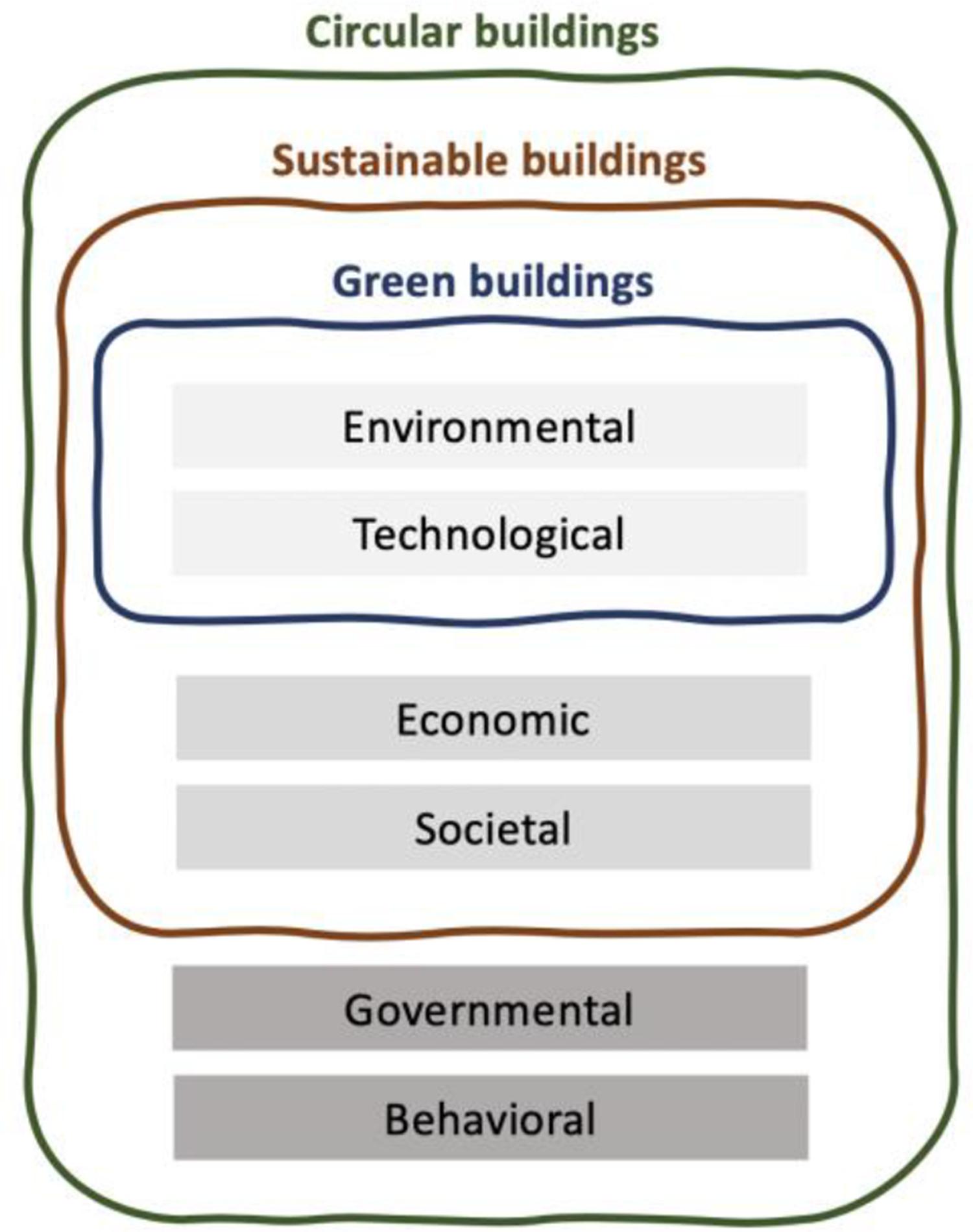
Figure 1
Circular economy and built environment dimensions.
Circular economy and built environment dimensions
The technological dimension allows to connect the last innovations in the area of construction management ( 9 ) to the service of the heritage-built environment. This factor is significant due to new technological procedures will allow new application to the built environment of cities and neighborhoods. Concerning the environmental dimension, Pomponi and Moncaster in 2017 ( 3 ) commented about the environmental aspects stressed the lower environmental influences that reuse has over new products, new materials and new constructions, such as in the cases of wood ( 10 ).
The economic factor is focused in minimized the resources used in the management of set of architectural heritage. The paradigm is renewable the construction itself with the smallest affections over the environment. In 2015, Daly ( 11 ) commented that circular economy is usually stated to as ‘sharing economy’, emphasizing its strong social aspects. This normally includes collaboration and partnerships in building projects (new and existing) and a wider engagement with stakeholders involved.
The governmental actions are paramount in the importance of preserving and maintain cultural value linked with heritage buildings emplaced in a local context ( 12 ). National and regional government should have the integrity to develop standard focused on the preservation of the identity of a particular and specific building, neighborhood, city, place and context. The behavioral factor in circular economy literature, emerged as a breakthrough in built environment ( 3 ). “There is clearly a strong need to accelerate behavioral research in heritage-built environment sustainability; it is apparent that it is people, rather than technologies, who are the key to embracing circularity” (3, p. 715).
Public policies in the preservation of heritage-built environment in Chile
The integral management of architectural heritage is one of the main challenges of the 21st century. In this sense, international organizations and national governments are recognizing the need to generate new tools to support an integral planning of the heritage-built environment ( 13 ) and incorporating the set of stakeholders involved in the process (users, owners, professional experts, public administrations and private sector) ( 14 ) thus promoting an integral approach ( Figure 2 ).
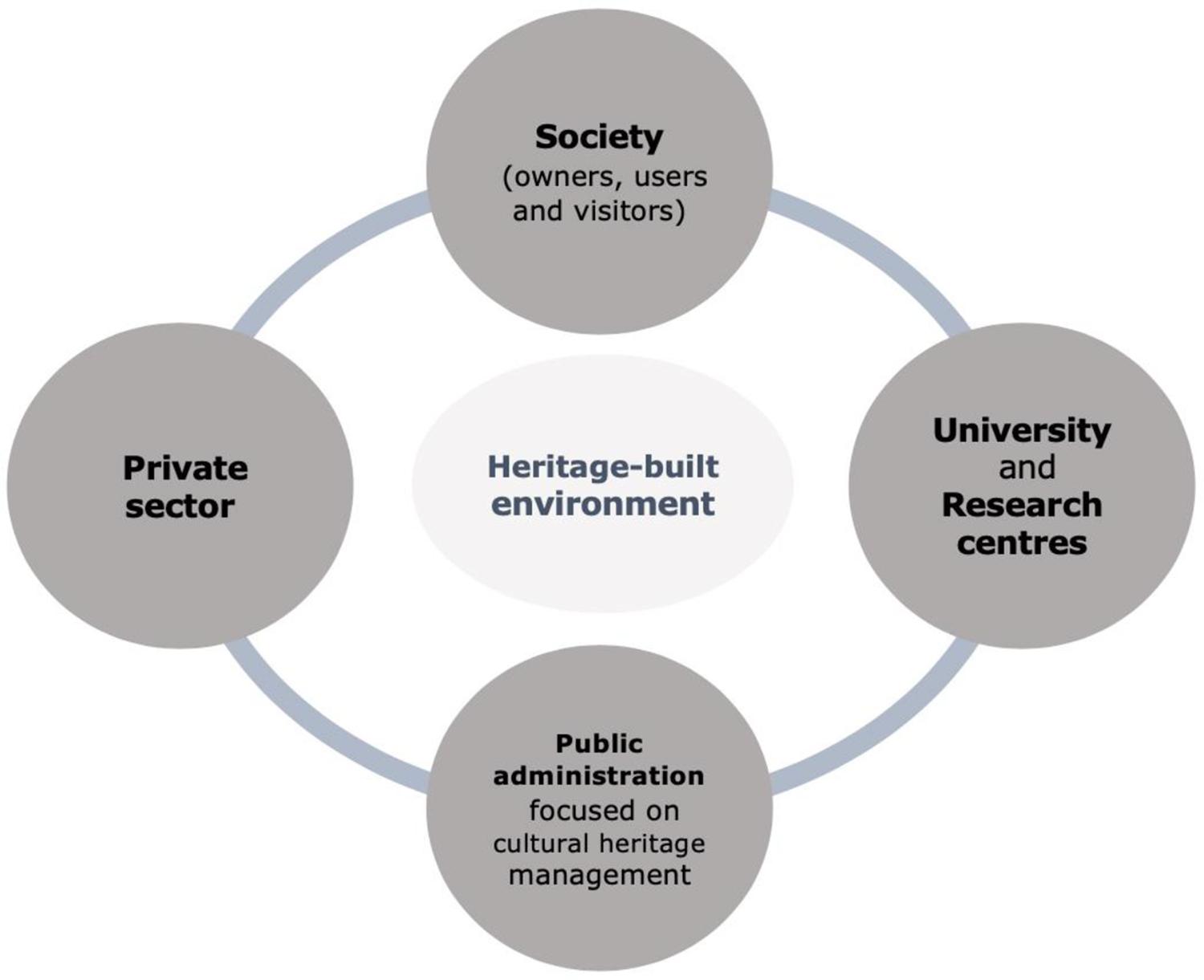
Figure 2
Stakeholders involved in the heritage-built environment management.
In the Chilean context, the Ministry of Housing and Urbanism (MINVU in Spanish) is the organism in charge of carrying out urban planning and regulatory actions. In addition, it considers the general dispositions contemplated in the Urban Planning and Construction Regulations (General Law of Urban Planning and Construction -LUPC- and its General Ordinance -GOPC-) which empowers the Communal Regulatory Plans (CRP) to designate Heritage Building Conservation (HBC) and Zones of Historical Conservation (ZHC), in relation to the conditions and characteristics established in the article 2.1.43 of the General Ordinance of Urban Planning and Construction. These heritage buildings are protected under the provisions of article 60 of the LGUC. Management at the national level is carried out through the Urban Development Division (UDD) of MINVU.
In this sense, within the framework of the Urban and Housing Policy, a special emphasis is being placed on the city and neighborhoods, as focal points of urban integration policies ( 15 ). Concerning the dimensions covered, social integration, environmental balance, economic development and incorporating the protection and enhancement of heritage as the foundational axis of the identity of the communities and regions of Chile ( 15 ). Based on these principles, the Government of Chile assumes the responsibility of recovering and preserving what is known as urban heritage ( 15 ).
This Urban Heritage is framed by buildings (HBC) and public spaces (ZHC) whose constitutive form is an expression of collective memory, rooted and transmitted over time, which individually or together reveal cultural typologies, environmental and social that express and promote the culture and social roots of the city and the region in which the constructions are emplaced ( 15 ). Urban heritage recovery and protection policies aim to revalue the cities of Chile ( 15 ), creating vibrant cities and more attractive to citizens, through urban planning that safeguards the identity of neighborhoods ( 16 ), promoting the protection of quality urban heritage. This kind of policies are also framed within the objectives of the National Center for Conservation and Restoration of Chile (NCCR): (i) organize and execute policies on heritage conservation and restoration at the national level.
Potential impact and scientific novelty of the approach
The potential impact of this study is its contribution to the development of a public policy focused on a circular economy focus towards an integral management and protection of local cultural heritage (Historical Conservation Buildings - HCB) ( 15 ) defined through the General Law of Urbanism and Construction (LGUC in Spanish), the Communal Regulatory Plans (PRC in Spanish) and the Ministry of Housing and Urbanism (MINVU in Spanish) of Chile. The scientific novelty of this research is its multi-scale analysis, from the heritage building itself (HCB), to the scale of the neighborhood or commune in which the buildings are emplaced and to the socio-cultural context of southern Chile.
Research objectives
This research proposes the preventive conservation of a set of 20 heritage timber buildings located in the city of Valdivia, capital of Los Ríos region, South of Chile. These constructions are under protection by the Ministry of Housing and Urbanism – Government of Chile, which seeks to preserve the environmental, cultural, architectural, economic and social value of heritage buildings, promoting the use of technology in the assessment of constructions. To address these concerns, this paper proposes a new approach to decision-making for the development of preventive maintenance strategies, taking into account vulnerability, external hazards, and architectural characteristics of timber heritage buildings with a focused on the particular context of the city of Valdivia. The purpose is to develop a diagnostic tool taking into account consideration concerns related to circular economy (environmental, technological, economic, social, governmental and behavioral features) and the real local conditions of heritage timber buildings in South America, ensuring that the preservation strategies that are chosen are appropriate for the specific buildings. This kind of approaches can help to policymakers in the use of technical criteria to establish a maintenance schedule in local contexts. This work is crucial for controlling the functional degradation of buildings, thus reducing damage from external hazards and overhead for owners and users.
Materials and method
Case studies emplaced in southern Chile
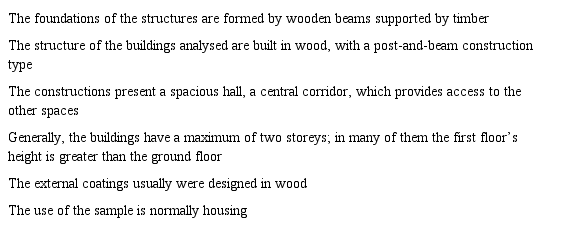
Valdivia is situated in the south of Chile ( Figure 3 ), the city presents a population around 160,000 inhabitants (last census conducted in 2017). During the 19th and 20th the Chilean government supported German immigration to Chile, so that German culture overlaps with prior Spanish colonization ( 17 ). The Valdivia Germans adopted architectural and stylistic characteristic, albeit with some modifications in the use of wood ( 18 ) ( 19 ). In 2009, Montenegro et al. ( 20 ) state that wood was established as the primary building material in southern Chile. The case studies ( 20 historical buildings) were selected randomly from the set of Historical Conservation Buildings (HCB) ( 15 ). Figure 4 shows the 20 heritage buildings analyzed. All the buildings have two stories and little ornamentation. The sample examined present the next constructive characteristics ( 19 ) ( 21 ) ( Table 1 ).
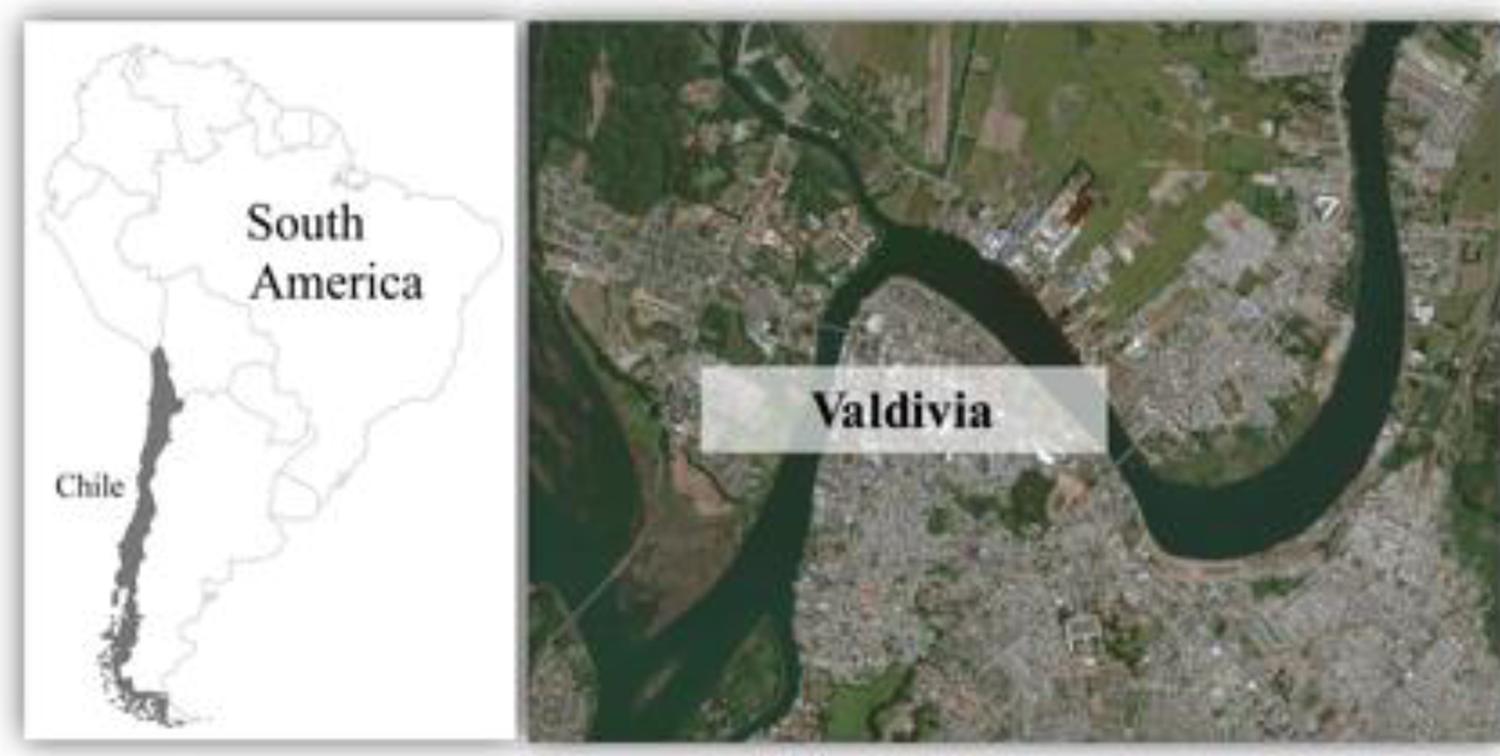
Figure 3
Location of the 20 case studies in Valdivia (Chile).
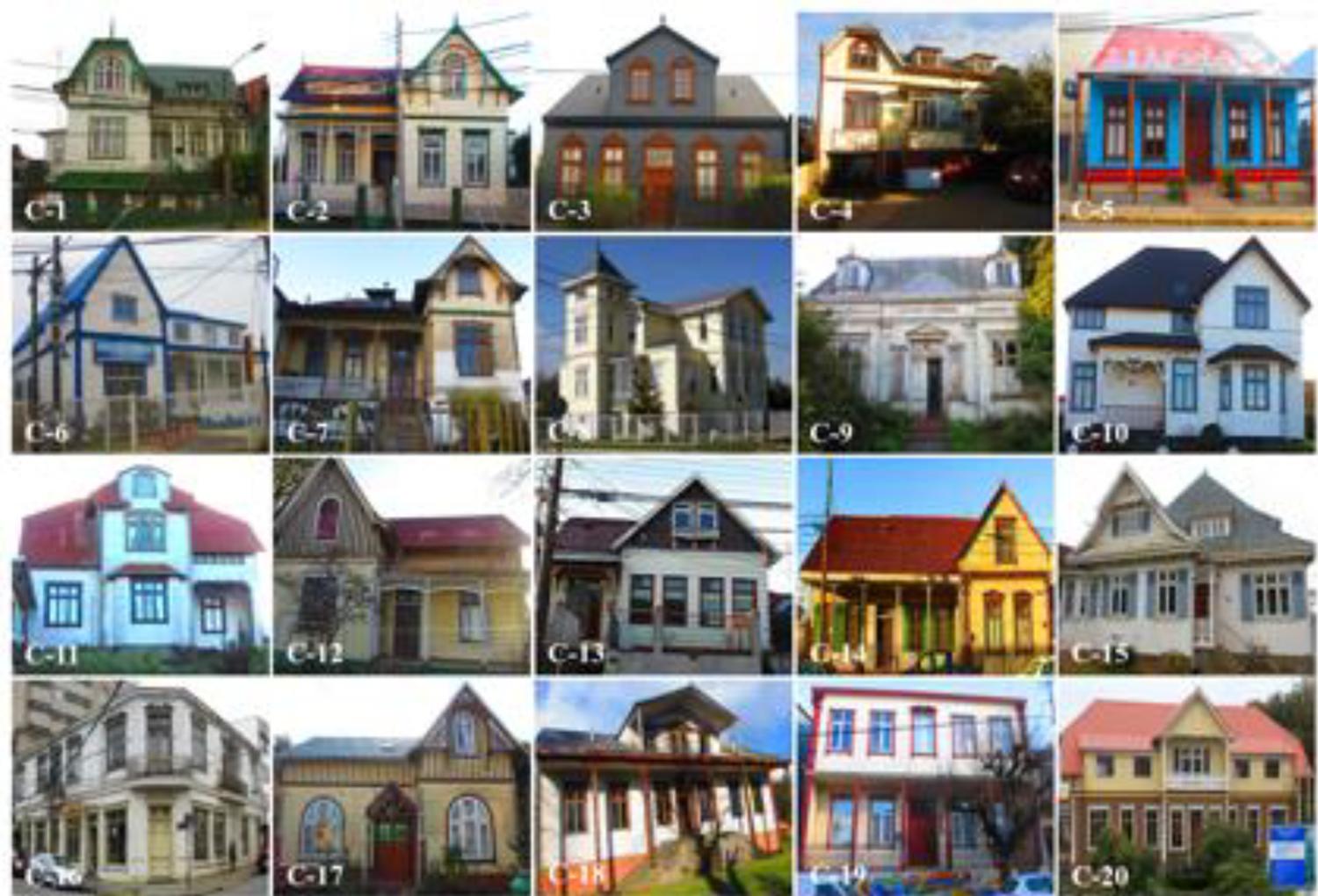
Figure 4
Set of case studies located in Valdivia city.
The heritage timber buildings considered in this study are mainly private buildings. The buildings’ owners are directly responsible for their conservation, which normally requires a high budget that they cannot afford and cannot easily recuperate ( 22 ). The deterioration of this kind of structure is directly related to mechanical, chemical, or even biological causes ( 23 ), and of course environmental factors (temperature, wind and rain action) and external natural hazards (earthquakes, floods).
“Preserving historic ensemble constitutes an attractive case study in terms of both the methodological challenge it poses (due to the diverse nature of the assets examined) and the potential application when evaluating the viability of preventive conservation plans or assessing a cultural heritage-restoration policy” (24, p. 570). This is especially significant in developing countries, as conservation policies tend to have fewer tax benefits for owners of historic buildings (24, p. 570).
The city of Valdivia is emplaced in Los Ríos region in southern Chile is one of the most important biodiversity conservation areas in South America. The weather conditions in Valdivia are as follows: (i) the weather is normally warm, with significant average annual rainfall; (ii) the temperature is usually above 11-12°C; (iii) the average relative humidity is around 85% (relative humidity is always above 75%); (iv) the annual thermal amplitude is around 9° C; (v) rainfall is more than 2000 mm per year, reaching higher levels during the winter compared with lower rainfall during summer; in the driest months (January, February) rainfall still exceeds 60 mm ( 25 ). This information helps in the definition of the environmental exposure conditions in which the case studies are emplaced and therefore helps in understanding the affections of the weather conditions in the performance of the state of conservation of the heritage-built environment under study.
Functional degradation methodology
The analysis of functional degradation affections in terms of heritage buildings needs to consider the safety and conservation of cultural heritage assets. The functional degradation method, which is designed RIPAT1.0, was initially developed by Alvayai ( 26 ), Valdebenito et al. ( 27 ) and Pintor ( 28 ) at the Universidad Austral de Chile, and was then used on timber buildings in Nueva Imperial, in the Araucanía region in Chile, by Valdebenito et al. ( 27 ). The functionality method (RIPAT1.0) consists of the quantification of a total of 26 variables established by means of a professional expert survey on consultation with seven professional experts with skills in civil engineering, building management, and architecture ( 26 , 27 ). This methodology can quickly and easily order, compile, and quantify the evaluation of architectural value (A) (equation 1), vulnerability (V) (equation 2) and hazards (H) (equation 3) ( 28 , 29 ).
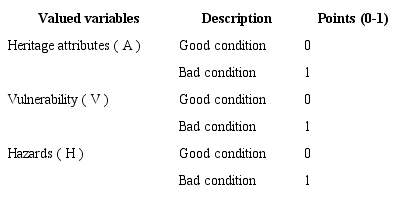
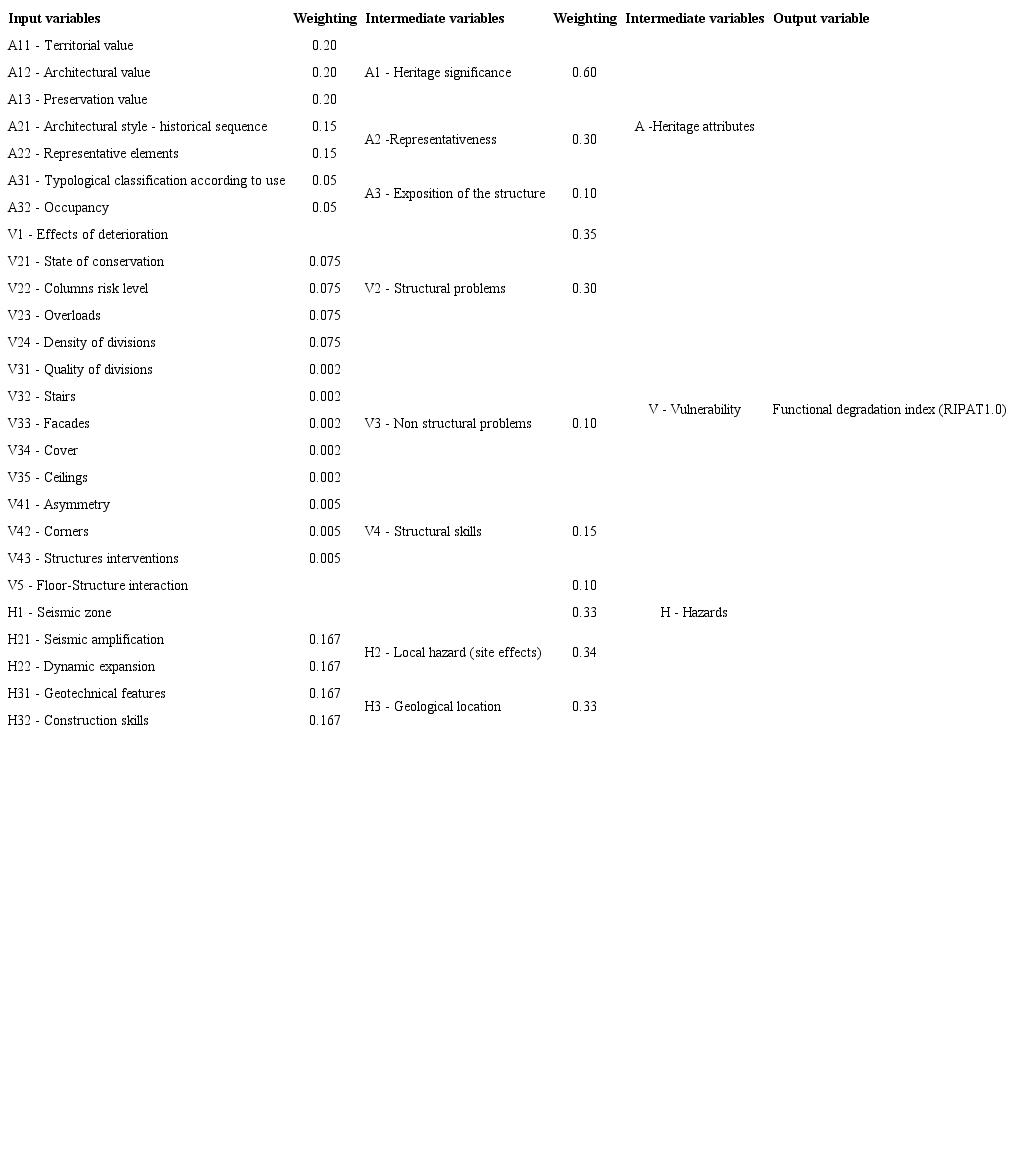
Heritage attributes (A) of buildings, as defined by Ibrahim et al. ( 12 ), correspond to the visible part of a country or region’s history, concerning the complexity of cultural and stylistic development, conveyed over time. Vulnerability (V) of buildings is defined as the degree of loss of performance as a consequence of a natural phenomenon ( 30 ). Hazards (H) correspond to the influence of external affections that may impair a building’s performance ( 31 ). Table 2 shows the description evaluations of the input variables (from 0 to 1). Table 3 outlines the input variables and the hierarchical structure of the system and the weighting of the input variables and intermediate variables involved.
Microsoft Excel was used to run the system. Excel is widely used for calculation by all stakeholders in the construction sector (engineers, architects, managers, and planners) and is currently available for use online, free of charge. Functional degradation model (RIPAT1.0) (equation 4) is calculated by multiplying the factors A, V, H.



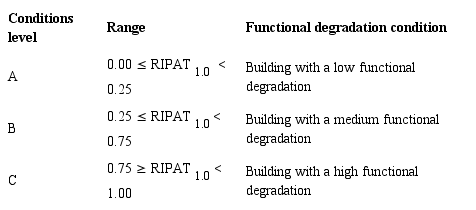
The output of the model (RIPAT1.0) varied between 0 and 1. Table 4 shows the qualitative and quantitative valuation of the output model ( 29 ) ( 32 ). Considering the classification of Table 4: (i) condition A (0.00 ≤ RIPAT1.0 < 0.25) is referred to buildings with a low functional degradation; (ii) condition B (0.25 ≤ RIPAT1.0 < 0.75) concerns buildings with a medium functional degradation; (iii) the worst possible scenario is condition C (0.75 ≥ RIPAT1.0 < 1.00), corresponding to buildings with a high functional degradation.

Results and discussions
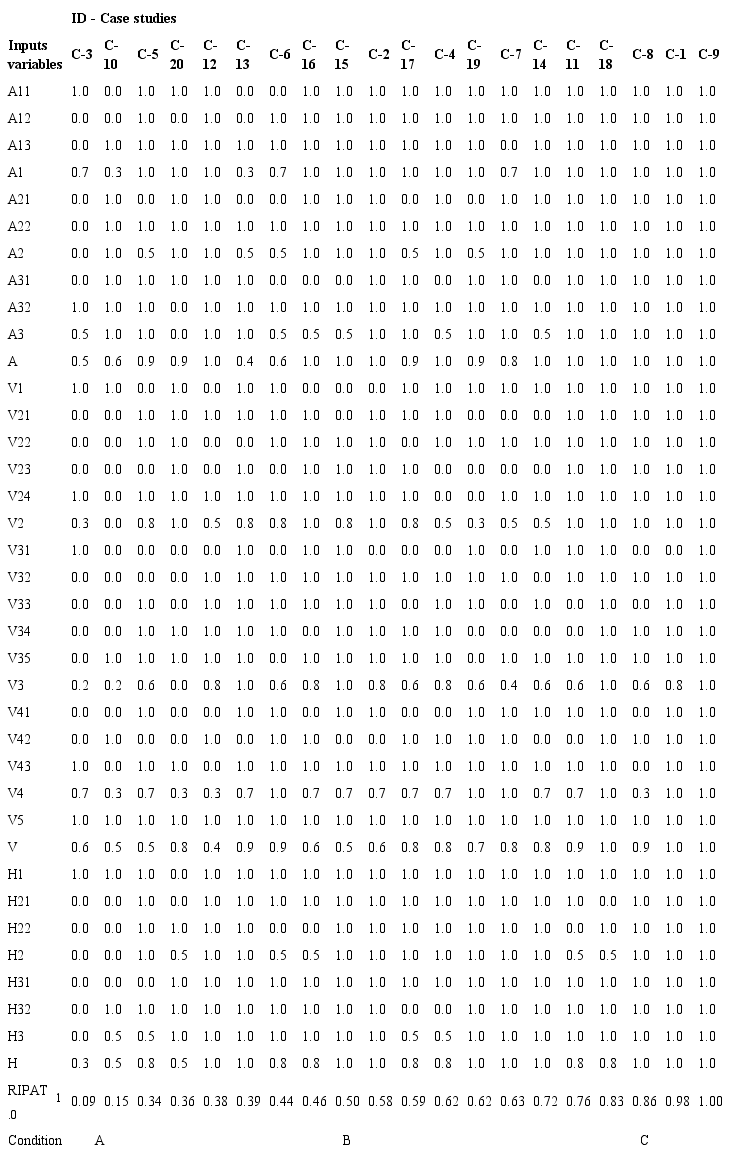
This study develops an approach for estimating the functional degradation conditions of a total 20 case studies, emplaced in the South of Chile, city of Valdivia. Concerning the methodology application, Table 5 specifies the information related to the set of input variables and functional degradation condition (output model) of the 20 heritage timber buildings analyzed. The buildings examined in this study are defined as heritage building by the Communal Regulatory Plan, Ministry of Housing and Urbanism of Chile ( 33 ). Analyzing the case studies the next results are achieved: (i) 10% of the sample (2 buildings) have reached the lowest structural vulnerability affection, i.e.: Condition A (0.00 ≤ RIPAT1.0 < 0.25 - building with a low structural vulnerability affection); (ii) a total of 13 buildings (65% of the sample) are classified in condition B, buildings with a medium structural vulnerability affection (0.25 ≤ RIPAT1.0 < 0.75); (iii) the remaining 25% of the sample (5 buildings) present the highest structural vulnerability affection - Condition C (0.75 ≥ RIPAT1.0 < 1.00) ( Table 5 ).
A descriptive functional degradation condition of three case studies is shown in Fig. 3 . The case study (C-9) presents a high functional degradation condition - Condition C. The methodology proposed an intervention in a short period of time, before than 5 years from the in-situ visual inspection, in terms of guaranteeing the structural stability of the building. The functional degradation index was 0.98 points < 1.00 (maximum). It is due to the affection of next inputs variables: (i) (A) heritage attributes (A11 - territorial value, A12 - architectural value, A13 - preservation value, A1 - heritage significance, A21 - architectural style, A22 - representative elements, A2 - representativeness, A31 - typological classification, A32 - occupancy and A3 - exposition of the structure); (ii) (V) vulnerability (V1 - effects of deterioration, V21 - state of conservation, V22 - columns risk level, V23 - overloads, V24 - density of divisions, V2 - structural problems, V31 - quality of divisions, V32 - stairs, V33 - facades, V34 - cover, V35 - ceilings, V3 - non-structural problems, V41 - asymmetry, V42 - corners, V43 - structures interventions, V4 - structural skills, V5 - floor-structure interaction) and (H) external hazards affections (H1 - seismic zone, H21 - seismic amplification, H22 - dynamic expansion, H2 - local hazard, H31 - geotechnical features, H32 - construction skills, H3 - geological location). These set of variables were evaluated in the worst possible situation ( Table 6 ).
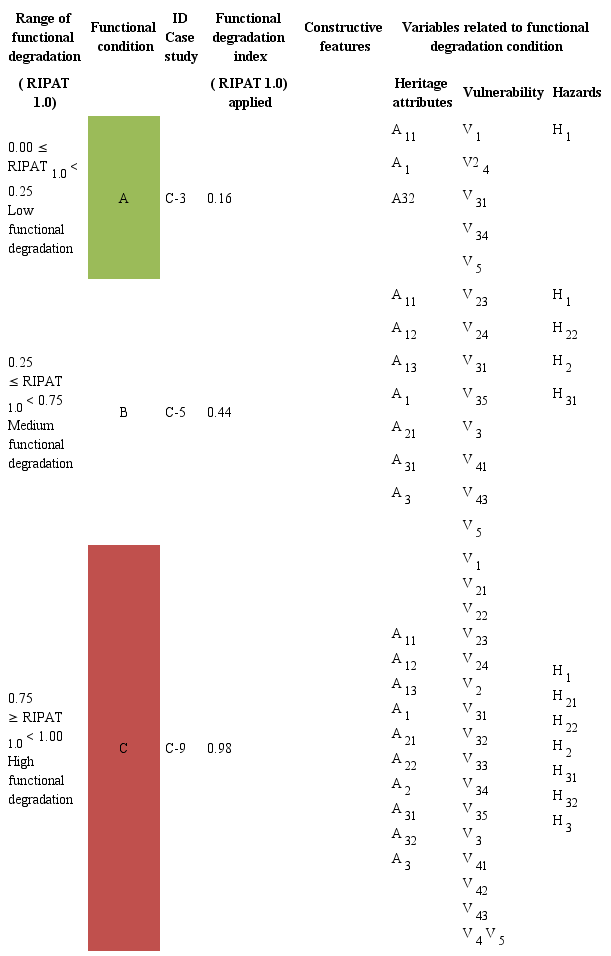
The C-5 case is shown as an example of the condition B - medium functional degradation (0.62 points). The building presents affection mainly related to these inputs parameters: (i) (A) heritage attributes (A11 - territorial value, A12 - architectural value, A13 - preservation value, A1 - heritage significance, A21 - architectural style, A31 - typological classification and A3 - exposition of the structure); (V) vulnerability variables (V23 - overloads, V24 - density of divisions, V31 - quality of divisions, V35 - ceilings, V41 - asymmetry, V43 - structures interventions, V5 - floor-structure interaction) and some (H) external hazards affection (H1 - seismic zone, H22 - seismic amplification, H22 - dynamic expansion, H2 - local hazard, H31 - geotechnical features, H32 - constructions skills, H3 - geological location) ( Table 6 ).
The case study C-3 is classified in condition A (0.16 points), it is in a low functional degradation index. The timber structure presents the next affections related to: (i) (A) heritage attributes (A11 - territorial value, A1 - heritage significance, A32 - occupancy); (ii) (V) vulnerability (V1 - effect of deterioration, V24 - density of divisions, V31 - quality of divisions, V34 - cover, V5 - floor-structure interaction); (iii) (H) external hazards affection (H1 - seismic zone) ( Table 6 ).
This kind of approaches goes from the construction itself, concerning the neighborhood and the extension of the city in which the set of constructions are emplaced in the regional context of South Chile. The model proposed and applied is able to rank heritage buildings based on their functional degradation condition. After the RIPAT1.0 methodology was used in the city of Valdivia, a priority of intervention map was generated ( Figure 5 ).
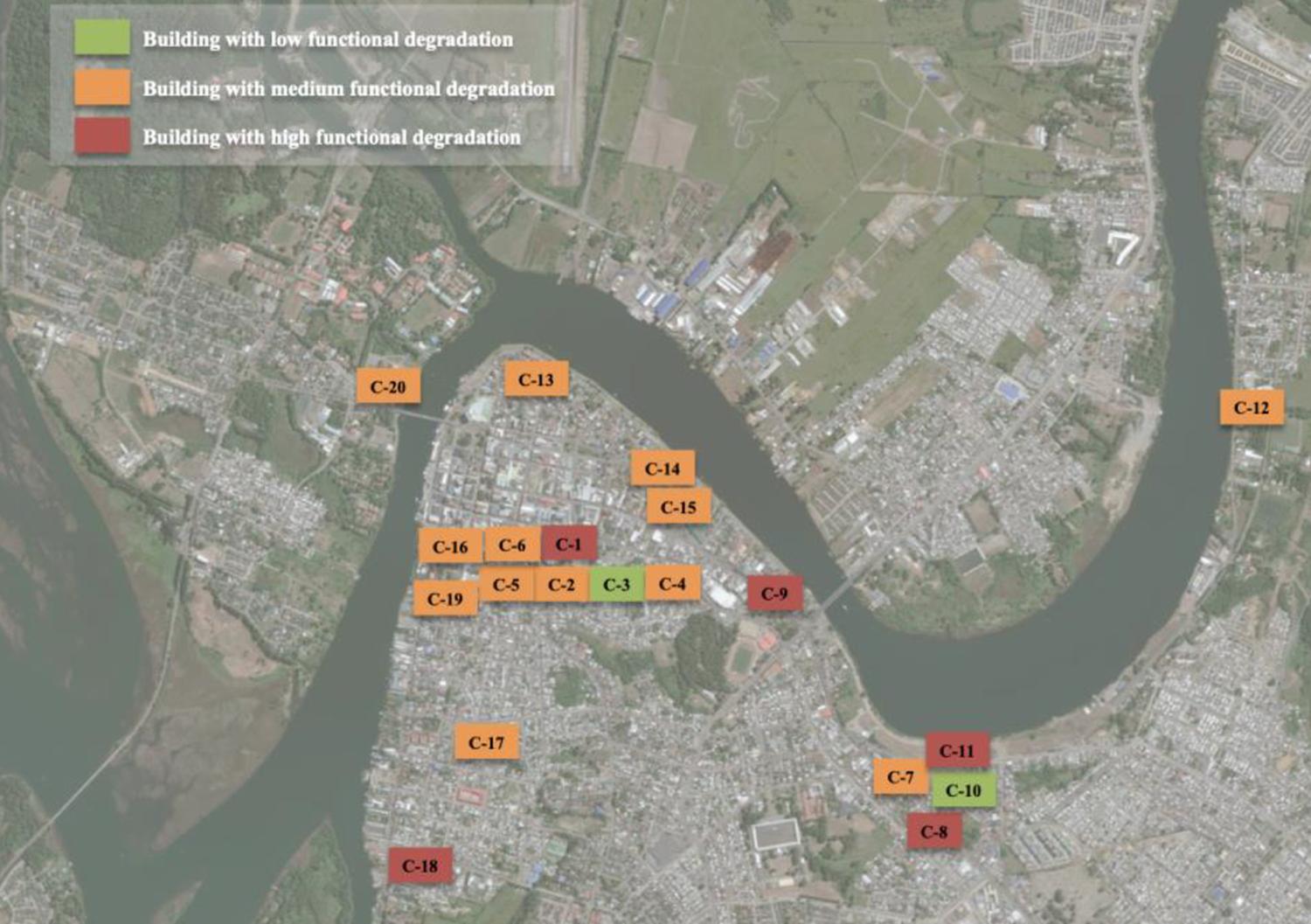
Figure 5
Map illustrating the functional degradation conditions, based on heritage attributes, vulnerability and external risks affection of the sample, Valdivia (Chile).
The great advantage of this kind of technique is that it is a quick and simple way of systematizing and computerizing data, and it provides a knowledge framework for professionals and researchers for the sustainable assessment and conservation of heritage timber structures ( 34 ) in southern Chile.
Chile, like other South American countries, is located on the Ring of Fire, the Pacific Ocean coastline that is considered the greatest subduction zone, known for intense volcanic and seismic activity ( 35 ). However, the Latin American countries situated in this high-risk area ( 27 ) ( 36 ) do not usually use methodologies for assessing and managing the heritage functional degradation ( 37 ). In Chile, ( 15 ), there have been some efforts to incorporate sustainability criteria into policies and plans of institutions and to implement instruments of integral use planning, but these efforts are currently only performed at the sectorial level.
The use of new technologies for protecting cultural heritage from external hazard affections has prompted important sustainable methodological changes in the preservation of heritage structures ( 38 ). Despite a substantial amount of scientific studies and discussions on this topic, few policies are based on a holistic understanding and real application of a sustainable approach ( 39 ).
This study aims to provide recommendations for the definition of functional degradation in heritage timber houses in Valdivia (South Chile) (Figure 6), developing a sustainable and innovative tool for quickly and easily organizing, compiling, and quantifying the preventive evaluation of architectural heritage ( 40 ), in order to develop public policies in an urban scale of conservation strategies and preventive maintenance plans to minimize damage to cultural heritage and reduce the cost of expensive interventions. This set of variables are involved in the focus of circular economy (CE including factors related to: (i) technology (ii) environment; (iii) economy; (iv) social; (v) government and (vi) behavior.
These approaches help in the implementation of a more effective decision-making process, contributing to the sustainability of resources and minimizing waste generation and unnecessary overhead. This information is paramount for identifying efficient and sustainable future steps for preserving the heritage features of similar buildings in South America.
Conclusions
This study represents one of the first attempts to assess functional degradation, taking into account the inherent heritage attributes of heritage buildings, their intrinsic vulnerability, and the impact of external hazards. The methodology (RIPAT1.0) was applied in a total of 20 heritage timber houses in the city of Valdivia, Chile. Information on strategies for managing heritage buildings in South America is currently scarce; hence, this type of methodology is a significant contribution to the development of holistic preventive conservation strategies for timber structures in southern Chile. A functional degradation scale was established, ranging from Condition C (red color - high functional degradation) to Condition A (green color - low functional degradation). The heritage buildings analyzed are inside of a public policy focused on an integral management and protection of local cultural heritage (Historical Conservation Buildings - HCB) defined through the General Law of Urbanism and Construction and the Ministry of Housing and Urbanism of the Chilean government. In this sense, this approach is a new contribution to the current public policies in a circular economy paradigm focus on the preventive preservation of the heritage-built environment in South America (Chile). The approach tries to optimize the consumption of resources (economical and environmental dimension). It also concerns the cultural value of architectural heritage (social and behavioral value) emplaced in a particular context (South Chile). The Valdivia population adopted architectural and stylistic characteristic in the use of wood state that wood was established as the primary building material in southern Chile. This study marks a new step in the management and optimization of maintenance work in heritage buildings, enabling experts to select the best moment to intervene to prolong the functionality of buildings in the most cost-effective manner. In future, this model may be adapted to other contexts. The current model could be improved to make the system more versatile and applicable to other situations with other types of buildings and sets of buildings; for example, those located in different climatic, social, environmental, and economic contexts.
References
.MCKINSEY, G. Resource Revolution: Meeting the world’s energy, materials, food, and water needs. Global Institute and Sustainability & Resource Productivity Practice, 2011. Available from: https://www.mckinsey.com/~/media/McKinsey/Business%20Functions/Sustainability/Our%20Insights/Resource%20revolution/MGI_Resource_revolution_full_report.ashx.
.REES, William E. The built environment and the ecosphere: a global perspective. Building Research & Information. 1999. Vol. 27, no 4-5, p. 206-220. https://doi.org/10.1080/096132199369336
.POMPONI, Francesco; MONCASTER, Alice. Circular economy for the built environment: A research framework. Journal of cleaner production. 2017. Vol. 143, p. 710-718. https://doi.org/10.1016/j.jclepro.2016.12.055
.ADAMS, Katherine Tebbatt, et al. Circular economy in construction: current awareness, challenges and enablers. En Proceedings of the Institution of Civil Engineers-Waste and Resource Management. Thomas Telford Ltd, 2017. p. 15-24. https://doi.org/10.1680/jwarm.16.00011
.EUROSTAT (2020) Construction Statistics – NACE Rev.2. Eurostat, Luxembourg, Luxembourg. Available from: https://ec.europa.eu/eurostat/statistics-explained/index.php/Construction_of_buildings_statistics_-_NACE_Rev._2 [Accessed 18 April 2020].
.GEISSDOERFER, Martin, et al. The Circular Economy–A new sustainability paradigm?. Journal of cleaner production. 2017. Vol. 143, p. 757-768. https://doi.org/10.1016/j.jclepro.2016.12.048
.CHAMBERLIN, L.; JASMIN, E.; RASKIT, A. Wales and the circular economy: favourable system conditions and economic opportunities. Ellen MacArthur Foundation on Behalf of the Waste and Resources Action Programme (WRAP) and the Welsh Government, 2013. Available from: http://www.wrap.org.uk/node/17570
.HART, Jim, et al. Barriers and drivers in a circular economy: the case of the built environment. Procedia Cirp. 2019. Vol. 80, p. 619-624. https://doi.org/10.1016/j.procir.2018.12.015
.SILVA, Ana; DE BRITO, Jorge; GASPAR, Pedro Lima. Methodologies for service life prediction of buildings: with a focus on façade claddings. Springer, 2016. ISBN 978-3-319-33288-8.
.Ormazabal, M., Prieto-Sandoval, V., Puga-Leal, R., Jaca, C. (2018). Circular economy in Spanish SMEs: challenges and opportunities. Journal of Cleaner Production, 185, 157-167. https://doi.org/10.1016/j.jclepro.2018.03.031
.Barreiro‐Gen, M., Lozano, R. (2020). How circular is the circular economy? Analysing the implementation of circular economy in organisations. Business Strategy and the Environment, 29(8), 3484-3494. https://doi.org/10.1002/bse.2590
.IBRAHIM, Fuziah, et al. 2nd INTERNATIONAL CONFERENCE ON BUILT ENVIRONMENT IN DEVELOPING COUNTRIES 2008 [ICBED 2008]. Available from: https://core.ac.uk/download/pdf/11948364.pdf.
.TWEED, Christopher; SUTHERLAND, Margaret. Built cultural heritage and sustainable urban development. Landscape and urban planning, 2007, vol. 83, no 1, p. 62-69. https://doi.org/10.1016/j.landurbplan.2007.05.008
.GÜNLÜ, Ebru; PIRNAR, I.; YAĞCI, Kamil. Preserving cultural heritage and possible impacts on regional development: Case of İzmir. International Journal of Emerging and Transition Economies, 2009, vol. 2, no 2, p. 213-229. Available from: https://www.academia.edu/34565640/PRESERVING_CULTURAL_HERITAGE_AND_POSSIBLE_IMPACTS_ON_REGIONAL_DEVELOPMENT_CASE_OF_%C4%B0ZM%C4%B0R_Research_Assist_Kamil_Ya%C4%9Fc%C4%B1.
.MINVU. Plan Reconstrucción MINVU – Chile Unido Reconstruye Mejor. Chile: Ministerio de Vivienda y Urbanismo, 2014. Available from: https://www.minvu.cl/.
.GRAHAM, Brian J.; HOWARD, Peter (ed.). The Ashgate research companion to heritage and identity. Ashgate Publishing, Ltd., 2008. ISBN 978-0-7546-4922-9.
.ROVIRA, Adriano. Appraising territorial heritage in the region of Valdivia. Territorial heritage and development, 2012, p. 215-230. ISBN 978-0-203-10797-3.
.VÁSQUEZ, Virginia, VALDEBENITO, Galo; ROSALES, N. Caracterización de la Vulnerabilidad Patrimonial. Valdivia: Un Caso en Estudio en La Evaluación del Riesgo Sísmico a Escala Urbana, Revista Síntesis Tecnológica, Facultad de Ciencias de la Ingeniería, Universidad Austral de Chile, 2015. Available from: http://www.ingenieria.uach.cl/268-investigacion/revista-sintesis-tecnologica.html.
.PRADO, F.; D'ALENÇON, Renato; KRAMM, Felipe. Arquitectura alemana en el sur de Chile: Importación y desarrollo de patrones tipológicos, espaciales y constructivos. Revista de la construcción, 2011, vol. 10, no 2, p. 104-121. http://dx.doi.org/10.4067/S0718-915X2011000200010
.MONTENEGRO, Andrea Báez; HUAQUIN, Mario Niklitschek; HERRERO PRIETO, Luis Cesar. The valuation of historical sites: a case study of Valdivia, Chile. Journal of Environmental Planning and Management, 2009, vol. 52, no 1, p. 97-109. https://doi.org/10.1080/09640560802504696
.GUARDA, Gabriel. Nueva historia de Valdivia. Ediciones Universidad Católica de Chile, 2001. ISSN 0717-3202.
.PRIETO, Andrés José; VERICHEV, Konstantin; CARPIO, Manuel. Heritage, resilience and climate change: A fuzzy logic application in timber-framed masonry buildings in Valparaíso, Chile. Building and Environment, 2020, p. 106657. https://doi.org/10.1016/j.buildenv.2020.106657
.BRISCHKE, Christian; BAYERBACH, Rolf; OTTO RAPP, Andreas. Decay-influencing factors: A basis for service life prediction of wood and wood-based products. Wood Material Science and Engineering, 2006, vol. 1, no 3-4, p. 91-107. https://doi.org/10.1080/17480270601019658
.PRIETO, A. J., et al. Protection value and functional service life of heritage timber buildings. Building research & information, 2019, vol. 47, no 5, p. 567-584. https://doi.org/10.1080/09613218.2017.1404827
.SUBIABRE, A.; ROJAS, C. Geografía física de la Región de Los Lagos. Ediciones Universidad Austral de Chile, Valdivia, Chile, 1994. ISBN 978-956-7105-06-9.
.ALVAYAI, D. A. Evaluación de la vulnerabilidad sísmica del casco urbano de la ciudad de Valdivia, empleando índices de vulnerabilidad. Bachelor thesis in Civil engineering (structures), The Universidad Austral de Chile, Valdivia, Chile [in Spanish], 2013. Available from: http://cybertesis.uach.cl/sdx/uach/resultats-filtree.xsp?liste1=ecole&reponse1=Obras*&op_2=or&liste2=texte&reponse2=&op_3=or&liste3=texte&reponse3=&op_4=or&liste4=texte&reponse4=&op_5=or&liste5=texte&reponse5=&base=documents&position=1.
.VALDEBENITO, G., ALVARADO, D., PINTOR, P. Estudio diagnóstico de zonas urbanas de interés patrimonial, Nueva Imperial (Región de la Araucanía). Ministerio de Vivienda y Urbanismo y Universidad Austral de Chile, Chile, 2015. Available from: https://www.nuevaimperial.cl/?p=32769.
.PINTOR, P. A. Una propuesta para la evaluación del riesgo sísmico en estructuras de madera con interés patrimonial basado en índices de vulnerabilidad. Aplicación a la ciudad de Valdivia, Chile. Bachelor thesis in Civil engineering, The Universidad Austral de Chile, Valdivia, Chile [in Spanish], 2014. Available from: http://cybertesis.uach.cl/sdx/uach/resultats-filtree.xsp?liste1=ecole&reponse1=Obras*&op_2=or&liste2=texte&reponse2=&op_3=or&liste3=texte&reponse3=&op_4=or&liste4=texte&reponse4=&op_5=or&liste5=texte&reponse5=&base=documents&position=1.
.VALDEBENITO, G., VÁSQUEZ, V. Una propuesta simple para la evaluación del riesgo sísmico de estructuras patrimoniales de madera en Chile. Euro-American Congress – REHABEND 2018. Cáceres, Spain, 15-18 May 2018. ISBN 978-84-608-7941-1.
.ORTIZ, Rocío; ORTIZ, Pilar. Vulnerability index: A new approach for preventive conservation of monuments. International Journal of Architectural Heritage, 2016, vol. 10, no 8, p. 1078-1100. https://doi.org/10.1080/15583058.2016.1186758
.IBÁÑEZ, Andrés José Prieto, et al. Expert system for predicting buildings service life under ISO 31000 standard. Application in architectural heritage. Journal of Cultural Heritage, 2016, vol. 18, p. 209-218. https://dx.doi.org/10.1016/j.culher.2015.10.006
.RISK-UE PROJECT. An advanced approach to earthquake RISK scenarios with applications to different European towns. European Commission 5FP - City of Tomorrow and Cultural Heritage. CEC Contract Number: EVK4-CT-2000-00014. Duration: 44 Months (15/01/2001-30/09/2004), 2003. Available from: https://cordis.europa.eu/project/id/EVK4-CT-2000-00014/es.
.CONSEJO DE MONUMENTOS NACIONALES (CMN). Ley N° 17.288 de Monumentos Nacionales y Normas Relacionadas, 2009. Available from: https://www.monumentos.gob.cl/publicaciones/libros/ley-monumentos-nacionales-normas-relacionadas-ano-2019.
.RIGGIO, Mariapaola, et al. Assessment of heritage timber structures: Review of standards, guidelines and procedures. Journal of Cultural Heritage, 2018, vol. 31, p. 220-235. https://dx.doi.org/10.1016/j.culher.2017.11.007
.DÍAZ FUENTES, Daniela Andrea. Un método simplificado para evaluar el riesgo sísmico y priorizar la atención de los bienes culturales inmuebles: el caso de Chile. Intervención (México DF), 2017, vol. 8, no 15, p. 46-62. ISSN 2007-249X.
.ALVARADO, D., VALDEBENITO, G., BURGOSs, M. Evaluación de características dinámicas de los suelos de Valdivia empleando métodos sísmicos de prospección geofísica. XII Congreso Chile de Sismología e Ingeniería Sísmica 2019. Valdivia, Chile, 03-05 April 2019. [in Spanish]. Available from: http://www.achisina.cl/.
.CASTORI, Giulio, et al. Seismic vulnerability assessment of a monumental masonry building. Engineering Structures, 2017, vol. 136, p. 454-465. https://doi.org/10.1016/j.engstruct.2017.01.035
.PENIĆA, Milja; SVETLANA, Golovina; MURGUL, Vera. Revitalization of historic buildings as an approach to preserve cultural and historical heritage. Procedia engineering, 2015, vol. 117, p. 883-890. https://doi.org/10.1016/j.proeng.2015.08.165
.FERREIRA, Tiago Miguel; MAIO, Rui; VICENTE, Romeu. Seismic vulnerability assessment of the old city centre of Horta, Azores: calibration and application of a seismic vulnerability index method. Bulletin of Earthquake Engineering, 2017, vol. 15, no 7, p. 2879-2899. https://doi.org/10.1007/s10518-016-0071-9
.CRUZ, A.; COFFEY, V.; CHAN, T. H. T. Planning to live longer: A model for the maintenance-focused conservation plan of heritage building. En Struct. Anal. Hist. Constr. Anamn. Diagnosis, Ther. Control. Proc. 10th Int. Conf. Struct. Anal. Hist. Constr.(SAHC, Leuven, Belgium, 13-15 Sept. 2016), CRC Press, Leuven. 2016. p. 173-180. ISBN 978-1-138-02951-4.