Article of Scientific and Technological Research
Knowledge management and alliance management capacity: A literature review from June to December 2021
Gestión del conocimiento y capacidad de gestión de alianzas: Revisión de literatura de junio a diciembre 2021
 Ledy Gómez-Bayona ledy.gomez@usbmed.edu.co
Sorely García Gutiérrez contaduria.publica@tdea.edu.co
Luis Fernando Montes Gómez lfmontes@udemedellin.edu
Olga- Vélez Bernal Olga.velez@iumafis.edu.co
Ledy Gómez-Bayona ledy.gomez@usbmed.edu.co
Sorely García Gutiérrez contaduria.publica@tdea.edu.co
Luis Fernando Montes Gómez lfmontes@udemedellin.edu
Olga- Vélez Bernal Olga.velez@iumafis.edu.co
Knowledge management and alliance management capacity: A literature review from June to December 2021
Cuadernos de Administración (Universidad del Valle), vol. 39, no. 75, e2012101, 2023
Universidad del Valle
Received: 13 July 2022
Revised document received: 22 March 2023
Accepted: 14 February 2023
Abstract: Individual and organizational knowledge has generated an important change in the development of business and institutional processes. Knowledge Management (KM) has played an important role in the development of new methodologies and the implementation of good corporate practices. The objective of this research is to describe the concepts of knowledge management and the capacity to manage alliances according to the scientific literature as well as the guidelines of the Ministry of Science, Technology, and Innovation. A literature review in the main scientific databases, such as Scopus, Redalyc, and SciELO, among others, is used as a methodology. Concluding that it is giving way to the ability to manage strategic alliances that talk about key factors that contribute to administrative models that promote the development of the intellectual capital of individuals and organizations, as well as these issues being of vital importance for the development of business knowledge management and making better use of the talents of individuals.
Keywords: Knowledge management, Alliance management capacity, Strategy, Organization.
Resumen: El conocimiento individual y organizacional ha generado un cambio importante en el desarrollo de los procesos empresariales e institucionales, la Gestión del Conocimiento (GC) ha desempeñado un papel importante en el desarrollo de nuevas metodologías y la implementación de buenas prácticas corporativas. El objetivo de esta investigación es describir los conceptos de gestión de conocimiento y la capacidad de gestión de alianzas según la literatura científica, así como los lineamientos del Ministerio de ciencia, tecnología e innovación. Se utiliza como método de estudio un mapeo sistemático que se caracteriza en proporcionar la exploración de las principales bases de datos científicas como Scopus, Redalyc, SciELO. Concluyendo que existen nuevas estrategias para comprender la gestión de conocimiento y la capacidad de alianzas que articulen los factores claves que contribuyan en modelos administrativos que promulguen el desarrollo del capital intelectual de los individuos y de las organizaciones, así mismo que estos temas son de vital importancia para desarrollar la gestión del conocimiento empresarial y fortalecer los talentos con los que cuentan los individuos.
Palabras Clave: Gestión del conocimiento, Capacidad de gestión de alianzas, Estrategia, Organización.
1. Introduction
In the last three decades, knowledge management has been considered a fundamental element in organizations (Cardona et al., 2021). It has become a key factor to explore how human capital and knowledge are related to business development, intending to make feasible exchanges through the management capacity of alliances, seeking strategies to identify the best practices used in the firms, and making these, in turn, available to generate the articulation of knowledge.
The authors, Meisel et al. (2006), state that 21st-century companies face new market trends, are proactive firms capable of generating synergies with competitive advantages, and use knowledge management as a key tool to respond to the demands of commercial activities. This provides some of the essential elements that entities must have to respond to customer needs, such as innovation, management of ICT tools, and being sustainable and environmentally friendly companies. Add to this, ensure the development and continuous improvement of the organization by applying benchmarking based on knowledge management as reference points for future strategies (Hussain et al., 2021).
Thus, in recent decades, scientific production in different areas of knowledge has increased, as evidenced by the increase in the number of journals indexed in databases, the increase in research projects, the development of patents and new technologies, as well as collaborative work between entities through the formation of networks that have allowed the generation of new knowledge (Gomez and Orlando, 2021).
Higher education institutions concentrate their efforts on solving scientific, social, and technical problems that provide solutions to social demands through teaching, research, and extension, which generates a strong link between the university and society in its role of contributing to the transformation and changes that the country needs (Alvarez et al., 2021). Currently, knowledge is a valuable and inexhaustible intangible asset that provides a competitive advantage for organizations. These types of assets aim at innovation, incorporating new values and contexts that allow processes to be energized (Jurado and Valencia, 2021).
Companies face very competitive challenges to sustain themselves in the market; they must manage tactics to be productive and effective and thus increase their profitability. Valbuena et al. (2012) indicate that it is necessary to develop mechanisms that point towards the good performance of administrative functions: planning, organizing, directing, and controlling, which in turn become maneuvers of good managerial performance and lead to the application of optimal results in organizational development.
Based on the foregoing, the objective of this research is to show the evolution in production and journey in years of knowledge management issues and the capacity to manage alliances, and in turn, consult about the most relevant economic sectors where these are investigated. themes; Finally, examine which strategies have been applied to both issues. Finally, the structure of the article consists of an introduction where the generality of the topics consulted is explained, supported by a literature review of some databases in which some questions raised about knowledge management and capacity for alliances are addressed. Later, the development of materials and methods necessary for the development of the investigation will be shown.
2. Theoretical framework
2.1 Dynamic capabilities of the organization
The dynamic capacities have been studied in different fields, one of them is the reconfiguration capacity that integrates the processes of aggregation, recombination, redistribution, and disinvestment of the organization’s resources (Karim and Capron, 2016), also in terms of the capacity adaptation that allows the diagnosis and use of emerging opportunities in the market (Hofer et al., 2015), or monitoring indicators such as performance and agility in learning (Akgün et al., 2012; Kaur and Mehta, 2017), certainly the importance of innovation capacity, which is a way to impact the absorption and adaptive capacities of companies (Teece, 2007), and a determining aspect is the behavior of human resources, to identify the indicators and behavioral foundations of dynamic capacities (Gheitarani et al., 2023).
In the literature, it has been expressed that business capabilities help to detect, choose, accommodate, and synchronize organizational opportunities. Each of the previous phases is decisive, beginning in the detection phase with some aspects studied, such as markets, emerging technologies, global alerts, and experiments that have been carried out (Klein, 2008; Tang et al., 2012; Dyer et al., 2009). And ends with the synchronization stage, where the exploitation and exploration processes manage to articulate to simultaneously obtain positive results by harmonizing the organization’s actions with market requirements and at the speed of the environment (Felin and Foss, 2009).
Within the research methods used, literature reviews have been developed in terms of their dynamic capacities. One of the plans is that dynamic capabilities (integration, reconfiguration, and adaptation), as well as innovation capabilities (products, processes, and marketing), and business capabilities, foster and promote the financial development and strategic performance of organizations (Vu, 2020). On the other hand, the strategic direction processes that impact the growth of the organization’s tangible and intangible assets have been identified (Granados, 2021). However, based on these reviews and meta-analyses, not only are the mechanisms, antecedents, and dimensions specified, but also gaps and tensions in dynamic capacities have been detected (Schilke et al., 2018).
2.2. knowledge management
Knowledge is something essential in the human being; this develops as the individual receives information and develops their skills. Over time, there is a cognitive development in mental abilities, which, in turn, become necessary for work, education, research, understanding, reasoning, and learning. This knowledge leads us to analyze the environment that surrounds us. Based on the above, the authors Jácome-Lara et al. (2018) express the following about knowledge:
Knowledge is the accumulated knowledge and skills that human beings possess, which are used in a systemic way to correct problems that arise. Knowledge covers the theoretical and practical parts of the individual, which, in turn, conforms to the usual rules that must be met. Knowledge is based on figures and information, which are closely linked to the subjects of intellectual development and personal relationships with society (Hinojosa, 2021). Once oriented towards what knowledge means, the concept of management is defined as those processes where planning, the organization of the processes, and the way of leading and controlling the use of resources to achieve the objectives in the management models become representative of modern organizations (Chiavenato 2004).
Another concept about knowledge management is that it is determined as a set of occupations that inquire towards the search, development, and control of all archetypes aimed at knowledge in companies, with the sole purpose of obtaining the common objectives of the entity (Moresi, 2001). Knowledge management is appreciated as a distinction that is given through understanding and generating other characters or definitions that can represent structures and concepts that generate new spaces for knowledge.
Cooperation is one of the main elements of knowledge management because it promotes learning through practices that encourage the exchange of knowledge and teaching (Bettencourt and Cianconi, 2012).
In line with the authors Drewniak and Karaszewski (2020), knowledge management lies in the progress of the present circumstances for the good development of companies; based on this, a better potential is acquired to be competent in the industry. The products present life cycles according to the needs of the market; in addition, there is a high turnover of personnel; all this leads to a significant change in the number of clients who are willing to buy the merchandise offered by the firms; in addition, there is the implementation of new technologies that cause development in the most efficient production methods.
For Zack et al. (2009), they mention that the praxis of knowledge management is essential to obtaining benefits based on innovation because these provoke the procreation of new knowledge, and in this way, organizational teaching is developed; while Lin et al. (2006) affirm that the exchange of knowledge and the management in a supply chain provoke the unification and management of knowledge through the elaboration of a management map, which points to efficient knowledge for the exchange of knowledge such as intellectual capital and knowledge to spread added value in the company.
Knowledge management has evolved ostensibly; it has diversified through methodologies and strategies, generating criteria for the measurement of knowledge, which is why it has become a key component for business development. The Organization for Economic Cooperation and Development (OECD) (2003) indicates that, at the beginning of the 21st century, the need to analyze and evaluate the knowledge management activity in companies has been explored and that these, in turn, carry out the implementation of good practices, which lead to executing a good administrative performance based on policies that contribute to continuous improvement.
Several studies of knowledge management have been carried out using the literature review and meta-analysis methods. Some studies have shown that knowledge management effectively is considered a critical element for the organization, where a sustainable competitive advantage can be achieved, and is a tool to improve organizational performance and indicators of survival, profitability, and competitiveness (Omotayo, 2015). This topic has been studied from different angles; one of them has been to explore the development of technologies and their constant change (Liao, 2003); others have studied it, showing an opportunity for sustainability in small and medium-sized companies; also, research strategies, approaches.
2.3. Alliance management capacity
Alliance management has been studied in the literature as a dynamic capacity, with various names such as cooperation, strategic alliances, clusters, or others, all of them showing the importance of the relationship between organizations, whether with national or international companies, vertical or horizontal, analyzing the strategies, the actors involved, the role played by each actor, the participation or contributions of each company in the alliance, the mediators, moderators, background, and the results of the alliances, among others (Zahoor et al., 2023).
All kinds of studies have been carried out, including meta-analyses and literature reviews, where organizational performance (market, innovation, and financial) and the conditions of the organizations studied when alliances are formed and managed have been examined (Bernal and Toro-Jaramillo, 2019; Xie et al., 2023). Some aspects analyzed in these studies have been regarding the type of sector to which the organizations belong, their size, their organizational structures, the organizational culture of each one of them, the environment in which they develop, and the benefit of correct management of alliances for the sustainable development of organizations (Cotilla, 2023). All these studies have obtained findings such as the relationship between internal frameworks in organizations and improving their performance when there is a partnership (Meena et al., 2023).
3. Methodology
To achieve the objective of this article, the systematic mapping tool is used, which is characterized by providing the exploration and categorization of studies, which are presented in summaries. For its development and taking into account the orientations of Petersen et al. (2008), the PRISMA parameter was used as a technique for this systematic mapping to preserve an adequate order in the search (Nawijn et al., 2019). Since two approaches are taken into account to refine the study, the first is screening in the separation of studies due to a lack of coherence in the objective, and the second is the separation of studies due to a lack of methodological argumentation. The bibliographic exploration was carried out from June to December 2021, and the following research questions were clarified:
3.1. Research questions
What has been the evolution of production over the years in terms of knowledge management and the capacity to manage alliances?
What are the economic sectors where these issues are investigated?
In what strategic areas have knowledge management and the capacity of alliance management been investigated?
The methodological path to address this research focuses on the identification of the documents in the different databases, which were 76 documents.
Classification of the screening of the 76 documents to understand the dynamics of the methodology and approach to the proposed objectives and thus identify the contribution of these studies to this research. Thus arriving at the eligibility of 51 documents that supported this work scheme.
Search development: The exploration in the SCOPUS, Google Scholar, Redalyc, and SciELO databases begins between June and December 2021, based on the keywords and taking into account the objective of the study. The search criteria were knowledge management and alliance management capacity.
Initial selection of the study: a total of 83 documents were found in the SCOPUS database. Without taking into account the publication time limit, since part of the importance of this study lies in the identification of the academic production of the study topics.
Final selection of the study: The inclusion criteria to select the final documents were 1) the relationship with the evolution of knowledge management and 2) the capacity to manage alliances. 2) the recognition of the topic in administrative management 3) the affinity with the main characteristics that are part of knowledge management and alliance management capacity. From there, 65 studies were finally classified, which is the basis for the classification of mapping information. Little by little, some were excluded due to relevance and impact, and finally, there were 51 articles.
4. Results
Taking into account the research objective, the results were classified according to the evolution of the theme of management capacity and accounting, financial, and marketing strategies where greater organizational value has been generated. Finally, the analysis was carried out using the explored scientific databases.
4.1. Evolution in production and, over the years, in the areas of knowledge management and the capacity to manage alliances
The intellectual capital of a company is directed toward an organizational culture focused on employees who can contribute knowledge, skills, and information, and this in turn will be reflected in a competitive advantage. In addition, there is a transfer of knowledge to the organizational environment, which provides the use of technological tools that contribute to the formation of the organizational environment.
For Ashish et al. (2017), they indicate the need to create strategic alliances based on good practices, which leads to implementing management capacity supported by learning and knowledge exchange. Apolinario and Guevara (2021) say that the management capacity in companies is focused on knowledge management, executive capacity, and innovation as key processes in competitiveness for the business and social growth of companies, all of which point to innovation and sustainability in the sector to which they belong.
There is another factor that has gained strength to promote management capacity in decision-making. The authors, Maskrey et al. (2020), identify learning and action alliances (LAA) as a key element when making decisions and highlight the challenges associated with administration. The LAA provides a component of corporate exchange through which the participants in the process can come together to communicate knowledge, transform and innovate, and seek solutions together that help provide key elements in the development business for the sake of good performance in the development of management capacity.
Based on the above, Porter and Birdi (2018) identify that the most relevant LAA is the possibility that entities have when acting on learning to expand management capabilities to carry out actions that involve positive changes in the organization and thus achieve collective goals. The management capacity is also identified through alliances with the academy; for this, note that the challenge lies in taking an institution that is accustomed to doing something (academic research) and in turn asking you to create something different (marketing of knowledge and ideas). The entity must start operating under these parameters to be called a new company, and it is through this management that the business factor is added to it so that it begins to become a knowledge-generating institution.
For the writers Anand and Khanna (2000), they emphasize that the academy develops a fundamental role in the management capacity to obtain strong technology transfers between the university and the real productive sector in the industry, in such a way that they seek to emphasize that the alliances have an important management capacity to achieve methods of reciprocity in knowledge.
Schilke and Goerzen (2010) indicate that management capacity is essential to transfer information, technology is essential to carry out knowledge transfer processes, and these in turn help to improve interorganizational recommendations, which are identified as enduring transactions and constants, which serve as the basis for obtaining the expected results within the company. That is why Table 1 describes the evolution of the concept of knowledge management.

Source: Authors’ own elaboration
Table 2 describes the evolution of the concept of alliance management, showing some relevant definitions.
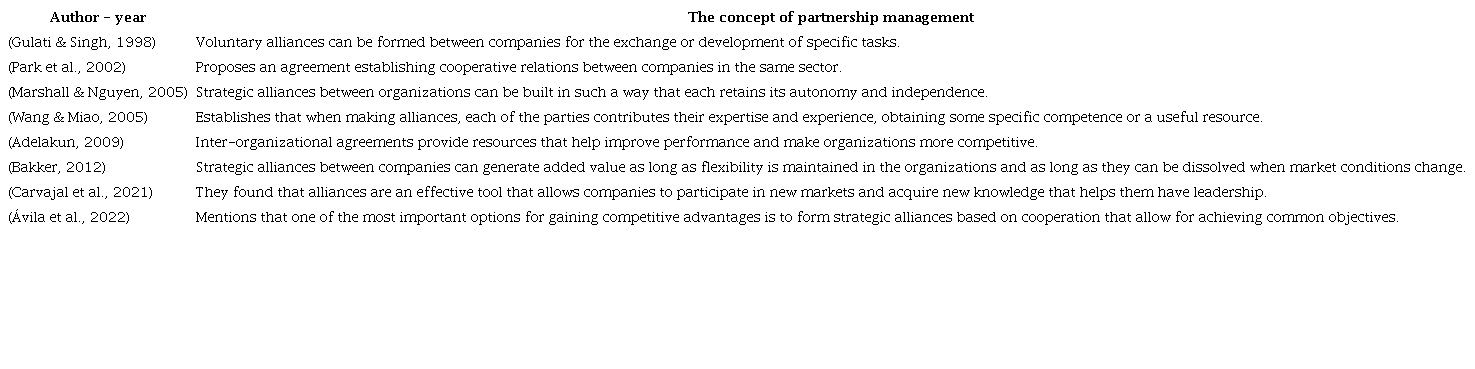
Source: Authors’ own elaboration
4.2. Bibliometric analysis from the SCOPUS database
Then we will socialize the main aspects that have generated transcendence to the topics of knowledge management and capacity to manage alliances in one of the databases of greater academic recognition identified from the Scopus database, the production of literature, and how many management components have been incorporated into academia and business life. In the Figure 1 is evidenced from the disciplinary areas, it is evident that the greatest production capacity in these topics of knowledge management and partnership is in business and organizational management (56%), followed by social and engineering areas (96% and 9.5%, respectively).
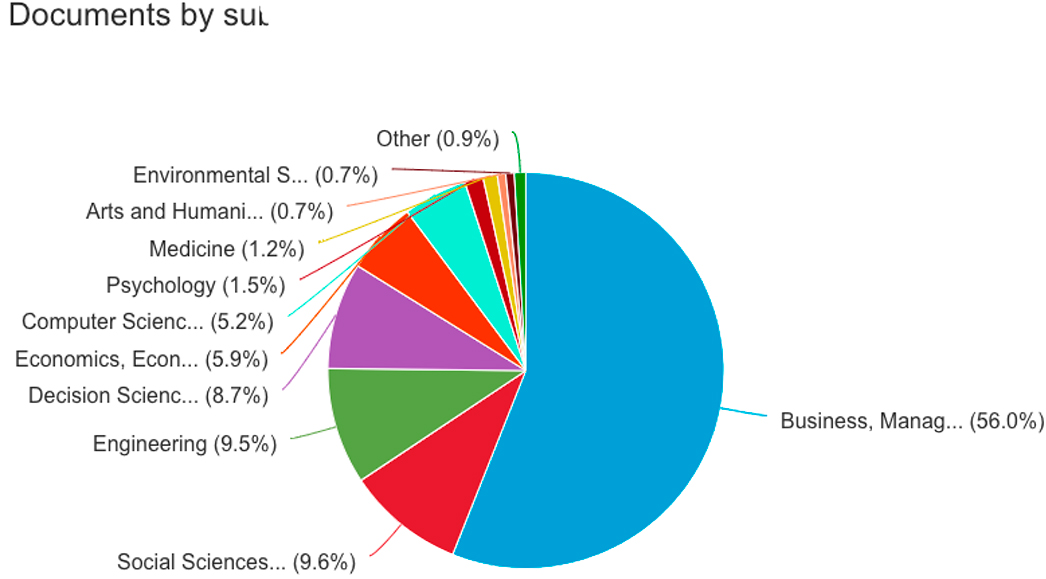
Figure 1
Areas of academic depth
Source: Taken from Scopus (2021).
The countries with the highest academic production in the areas of knowledge management and partnership management capacity are the United States, the United Kingdom, and Australia, as shown in Figure 2.
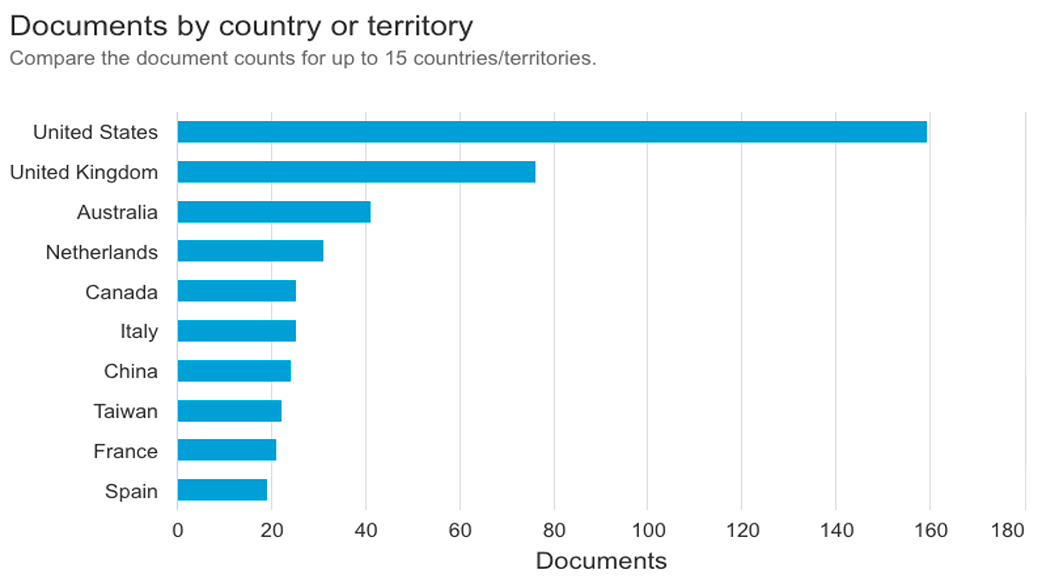
Figure 2
Countries with higher academic output
Source: Taken from Scopus (2021).
As for the most representative authors in these two analyzed disciplines of knowledge management and partnership management capacity, it is evidenced in the Scopus database that Reuer JJ, Baden-Fuller C, and Duysters G are those who have led research projects and have given greater meaning to these issues that impact from the academic to companies and society, as shown in Figure 3.
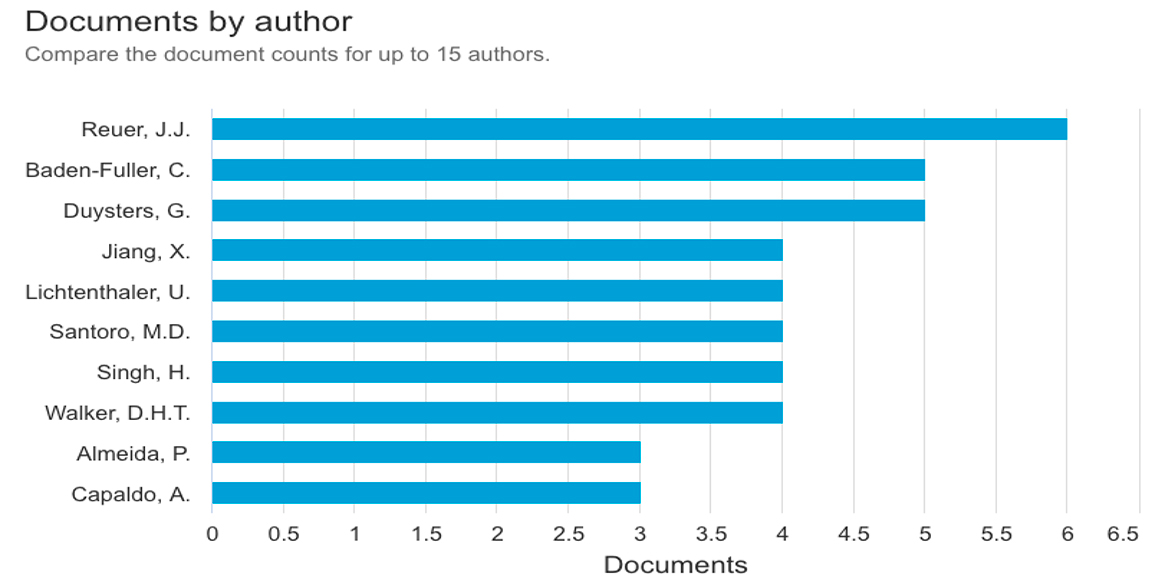
Figure 3
Representative researchers
Source: Taken from Scopus, October 2021.
Figure 4. It shows that the topics of knowledge management and alliance management capacity are better recognized in the journals of strategy, business, and administration, as they are the areas of best academic and business representation.
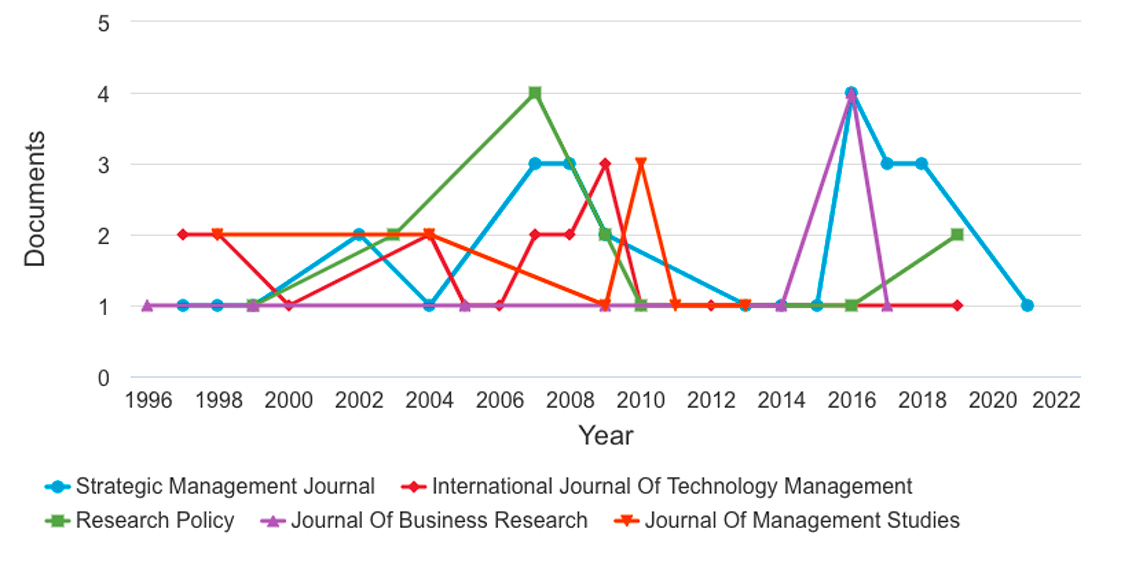
Figure 4
Journals of greater representativeness in the topic
Source: Taken from Scopus, October 2021
Academic scientific production has been the way that researchers have socialized their experiences and the impact that this has had on the economic, social, cultural, and academic development of society; therefore, from the analyzed topics of knowledge management and partnership management capacity, in the Figure 5 it is evident that since 1993, when this type of information began to be produced to support academia, it has been observed that in 2008, the increase in academic production was significant, the same as in 2017, but which identifies a significant decline from 2018 to 2020.
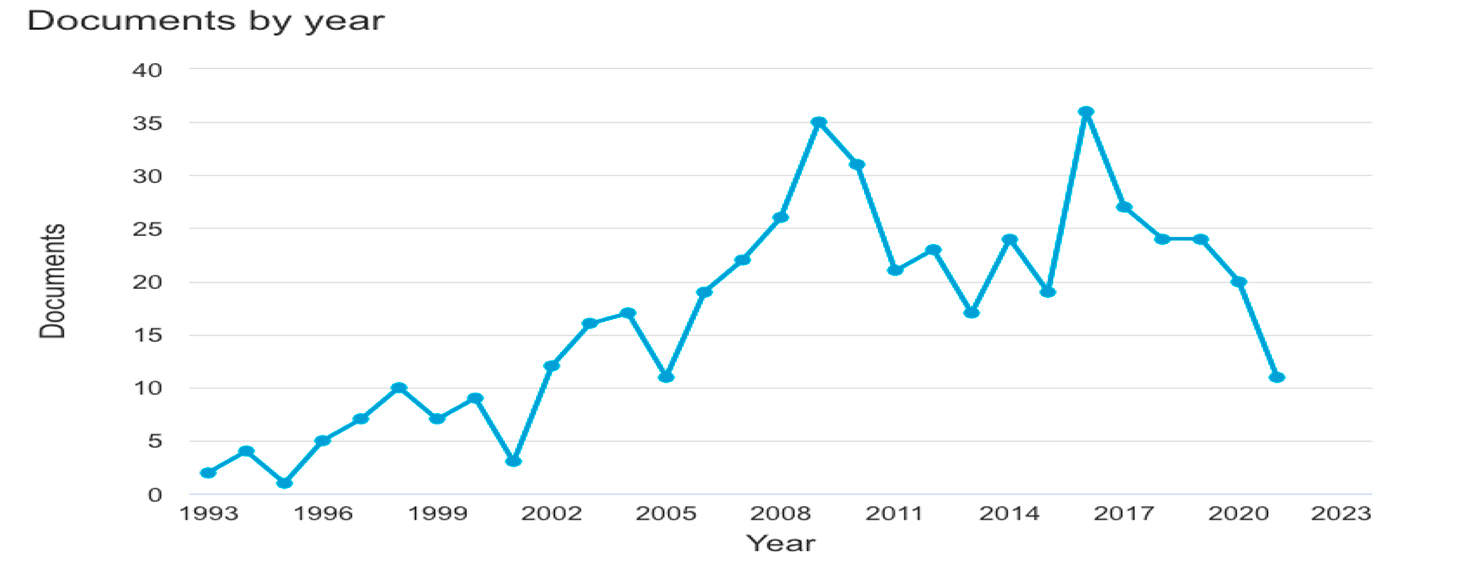
Figure 5
Production path in years
Source. Taken from Scopus (2021).
4.3. Economic sectors with the greatest impact on intangible issues: financial sector, educational sector, health sector, and energy sector
Educational institutions assume knowledge management as a process that guarantees the development and application of different knowledge to improve their performance and obtain better results in the training and research processes of their students, supported both by good technological infrastructure and the integration of this into the process of building knowledge. This process has been developed in the educational field both in basic secondary education and in higher education through the preparation of questionnaires to evaluate the use of technologies and validate their influence on academic results. (Valdivia et al., 2020), as well as to measure the investigative competencies of students at the postgraduate level, where a low level was evidenced both in investigative competencies and in the dissemination of results (Cardoso, et al., 2011).
One of the main challenges facing higher education institutions is research training, which is considered one of the most important factors in accreditation processes, obtaining qualified records, and the generation and dissemination of new knowledge. This is a strategy based on knowledge management that allows the generation, organization, and access to new knowledge to have competitive advantages and become knowledge organizations with a high impact on society and the state. At present, research is not only carried out for academic purposes; in addition, the solution to specific problems is also sought within a specific social context, an aspect that has been called innovation, which is the result of learning processes aimed at producing changes and transformations. The accreditation processes require evidence of high-quality standards and a process of continuous improvement. Competency-based learning, research training, and learning management are fundamental elements to achieving quality by facilitating future accreditations (González-Campo et al., 2021).
The business world is increasingly uncertain, and for this reason, knowledge is one of the intangible assets that have the greatest value within companies, which has led them to promote the development of knowledge as a daily activity within the organization to achieve a level of sustained growth and a competitive advantage over its competition. To achieve this objective, the most important asset within the organization is human capital, which is the generator of new knowledge. There must also be communication channels that allow the sharing of knowledge in an environment where you can freely express your opinions (Maldonado et al., 2012).
In the medical area, research focuses on improving the quality of human capital training to promote the generation of new knowledge and new technologies to improve the quality of patient care. In this field, knowledge management is transcendental due to that intangible element that has been present but to which due importance has not been given: knowledge. The investigative process feeds the need for knowledge, and this translates into improvements that lead to the development of new equipment, technologies, procedures, and innovative processes that provide new solutions to existing problems (Murillo, 2021).
In the business sector, one of the main challenges is the sustainability and growth of the company in the medium and long term, hence the importance of carrying out studies that allow for managing knowledge and enhancing the capacity for innovation. SMEs, unlike large companies, face several challenges to staying in the market due to various situations such as economic difficulties, competition, and high indebtedness, among others. Sales levels directly affect their profits, affecting their competitiveness. Added to this is ignorance of the importance of knowledge management as a strategy for innovation that prevents investments in the development of marketing strategies, customer retention, improvement of products, and permanent updating (Apolinario and Guevara, 2021).
4.4. Main strategies evidenced from knowledge management and management capacity in accounting, financial, and marketing issues where greater organizational value has been generated
Since the crisis the world is experiencing through COVID 19, knowledge management has also been a key factor for the implementation of GC in organizations. According to Klein and Todesco (2021), it speaks of a new term of organizational resilience that contextualizes the ability to adapt to the phenomena that this problem brought with it. Because of this, there is a need to change the habits of living, working, and communicating. Based on the above, the digital transformation is developed consistently in several countries; in Japan, it is called “society 5.0, in Germany, industry 4.0,” or the fourth industrial revolution, and currently, big data, artificial intelligence, and others are used as strategies for improving the methods of commercial activities.
The authors Barreto and Todesco (2020) indicate that globalization, economic openness, and the internet are strategies that have been used to communicate to customers the good practices used in companies; this information highlights the good name of the company through consumer feedback. The writers Krogh et al. (2000) highlight that the establishment of knowledge is a very important mechanism to use as a strategy in societies because strategic alliances are formed, which lead to developing the innovative capacity of the associates. Walsh et al. (2016) point out that knowledge management intends to improve the strategic particularities of a firm through the intellectual capacity or competitive advantage that it possesses. Knowledge management involves obtaining knowledge that is not available to the competition and, in turn, retaining the knowledge learned, which will later be key to becoming a competitive advantage against new competitors in the market. Drewniak and Karaszewski (2020) state that knowledge management is used by societies as a strategy to establish, collect, and transfer knowledge to highlight efficiency in the company, which will later be key to becoming a competitive advantage over the new contenders in the market. For Drewniak and Karaszewski (2020) they state that knowledge management is used by societies as a strategy to establish, collect, and transfer knowledge, to highlight efficiency in the company. which will later be key to becoming a competitive advantage over the new contenders in the market. Drewniak and Karaszewski (2020)state that knowledge management is used by societies as a strategy to establish, collect, and transfer knowledge to highlight efficiency in the company.
The authors Hao et al. (2019) indicate that the performance of companies is important for the advancement of strategies in the exchange of knowledge between the firms. The components that intervene in the establishment of a union are considered important for knowledge exchange.
5. Conclusions and discussion
The COVID-19 pandemic allowed for the search for learning strategies based on virtual environments, where technology became an important ally in knowledge management (Ruiz González and Jiménez Guerra, 2022) In addition, the need to strengthen pedagogical and teaching strategies supported by the use of digital platforms and the need to transform the educational environment were shown (Ruiz González and Jiménez Guerra, 2022). It is also evident that the lack of financial resources to purchase technological tools and the difficulties of accessing the Internet are essential elements of education (Díaz, 2021). For the reasons stated, it is necessary to implement new methodological strategies that allow for strengthening and improving the use of technologies as an essential element in knowledge management.
It is important to build and adapt teaching-learning processes for today’s generations, who know that skills and knowledge can be achieved virtually. Hence, the emergence of perspectives on knowledge work based on personal learning environments, personal knowledge management, and learning ontologies allows the development and in-depth understanding of various areas of knowledge supported by technology for the training process (Cosgrave, 2023).
Within the conclusions of the investigative work carried out, it is synthesized that these topics have been taking an important development from the academy due to their evolution in the construction of investigations that seek to deepen these topics; likewise, important working relationships between each one of them are identified. to analyze how they can contribute to the management of both the knowledge that is built in organizations and how the capacities and strategies that generate value are related to business models.
In the same way, it is concluded that the areas of greatest interest in these topics of study of knowledge management and alliance management capacity are those from the point of view of business, economics, engineering, and social sciences, where the different economic sectors allow an important advance to the economy, thus sensitizing the human fabric to the importance that studies like these bring to building organizational culture and learning that supports administrative processes and that are promoted from the academy with scientific support and substantiation.
However, it is observed that although these issues are being explored by the academy, greater awareness is needed to propose high-impact research in Latin America and continue contributing to building better awareness through the planning and execution of processes that allow organizations to transmit adequate knowledge and adequately store information for assertive and proactive decision-making that generates an important articulation capacity for administrative models at the local, national, and international levels.
The intellectual capital that companies have has become an essential element for sustained growth and their positioning in the market, impacting the economy and society. This translates into continuous improvement of processes, quality in products, innovation, and the creation of new technologies.
6. References
Adelakun, A. (2009). Enhancing Nigerian competitiveness in the global economy through strategic alliances. Economics & Management, 6(14):649-654. https://www.ecoman.ktu.lt/index.php/Ekv/article/view/9452
Alvarez, G. A., Viteri, J. R., y Viteri Intriago, D. A. (2021). Integración de los procesos sustantivos para la mejora de la calidad del aprendizaje. Conrado, 17(80), 21-27. https://revistas.ult.edu.cu/index.php/didascalia/article/view/1289
Akgün, A. E., Keskin, H., & Byrne, J. (2012). Antecedents and contingent effects of organizational adaptive capability on firm product innovativeness. Journal of Product Innovation Management, 29(s1), 171-189. https://doi.org/10.1111/j.1540-5885.2012.00949.x
Anand, B. N., Khanna, T. (2000). Do firms learn to create value? The case of alliances. Strategic Management Journal, 21(3), 295-315. https://doi.org/10.1002/(SICI)1097-0266(200003)21:3%3C295::AID-SMJ91%3E3.0.CO;2-O
Apolinario, R., Guevara, D. (2021). El efecto mediador de la capacidad ejecutiva para la innovación entre la gestión del conocimiento y el rendimiento de la cadena de suministros. Información Tecnológica, 32(1), 151-168. http://dx.doi.org/10.4067/S0718-07642021000100151
Ashish, A., Belenzon, S., & Patacconi, A. (2017). Knowledge Sharing in Alliances and Alliance Portfolios. SSRN. http://dx.doi.org/10.2139/ssrn.2719747
Ávila-Hernández, J. R., Cruz-Aguilera, N., Díaz-Pompa, F 2022. Behavior of scientific production on strategic alliances in the Strategic Management Journal between 2010-2020. Bibliotecas. Anales de Investigacion;18(1), 1-18. http://revistas.bnjm.cu/index.php/BAI/article/view/468/446
Barreto Klein, V., Leomar Todesco, J. (2020). Transformação digital: desafios e oportunidades para PMEs. Anais Do Congresso Internacional De Conhecimento E Inovação - Ciki, 1(1). https://doi.org/10.48090/ciki.v1i1.922
Bakker, R. (2012). Built to last versus meant to end: Time bounds specification in strategic alliances. Academy of Management Proceedings, 6. https://doi.org/10.5465/AMBPP.2012.15
Bettencourt, M. P., Cianconi, R. d. B. (Octibre, 2012). Gestão do conhecimento: um olhar sob a perspectiva da ciência da informação. XIII Encontro Nacional de Pesquisa em Ciência da Informação. XIII ENANCIB, Brasil. http://enancib.ibict.br/index.php/enancib/xiiienancib/paper/viewFile/3746/2869
Bernal, O. V., Toro-Jaramilo, I. D. (2019). Organizational ambidexterity: Exploration and exploitation. International Journal of Innovation and Technology Management, 16(05), 1950033. https://doi.org/10.1142/S0219877019500330
Cardona, R., Cuartas, D., y Guillermo, L. (2021). Propuesta metodológica para identificar el estado de avance del proceso de gestión de conocimiento en el área de Investigación y Desarrollo de Cementos Argos. Revista gestión de las personas y tecnología, 14(41):15. http://dx.doi.org/10.35588/gpt.v14i41.5068
Cardoso Espinosa, E. O., Cerecedo Mercado, M. T., y Ramos Mendoza, J. R. (2011). Evaluación diagnóstica sobre las actitudes hacia las Matemáticas de los alumnos que inician sus estudios de Posgrado en administración. Investigación Administrativa, 40(108):56-68. https://www.scielo.org.mx/pdf/ia/v40n108/2448-7678-ia-40-108-56.pdf
Carvajal, C. M., Almodóvar, P., y Vassol, R. (2021). Análisis del concepto y alcance de las alianzas estratégicas: un enfoque longitudinal (1972-2020). Revista Venezolana de Gerencia, 26(5): 290-314. https://doi.org/10.52080/rvgluz.26.e5.20
Chiavenato, A. (2004). Introducción a la teoría general de la administración. McGraw Hill.
Cotilla, M. R. (2023). Trazando nuevas rutas en común: un estado del arte de las alianzas para el desarrollo sostenible. Innovar, 33(88):37-50. https://doi.org/10.15446/innovar.v33n88.106255
Cosgrave, M. (2023). Converging Lenses: PLE diagrams, PKM Workflows and Scholarly Ontologies. Revista de Educación a Distancia, 27(71):11. https://doi.org/10.6018/red.526001
Díaz Fernández, A. (2021). Tiempo de pandemia: la gestión del conocimiento y la tecnología en el aprendizaje en el servicio. Revista Virtual Universidad Católica Del Norte, (63), 1-4. https://doi.org/10.35575/rvucn.n63a1
Drewniak, R., Karazewski, R. (2020). Diffusion of knowledge in strategic alliance: empirical evidence. International Entrepreneurship and Management Journal, 16, 387-416. https://doi.org/10.1007/s11365-019-00589-2
Dyer, J. R., Johansson, A., Helbing, D., Couzin, I. D., & Krause, J. (2009). Leadership, consensus decision making and collective behaviour in humans. Philosophical Transactions of the Royal Society B, 364(1518), 781-789. https://doi.org/10.1098/rstb.2008.0233
Felin, T., Foss, N. (2009). Organizational routines and capabilities: Historical drift and course-correction toward microfoundations. Scandinavian Journal Management, 25(2), 157-167 https://doi.org/10.1016/j.scaman.2009.02.003
Gheitarani, F., Nawaser, K., Hanifah, H., & Vafaei-Zadeh, A. (2023). Human-behavioural micro-foundations of dynamic capabilities: a systematic review of the last two decades of research. International Journal of Management and Decision Making, 22(1), 1-26. https://doi.org/10.1504/IJMDM.2023.127685
Gomez, N., Orlando, C. G. (2021). Dinámicas de la producción científica colombiana en economía: un estudio bibliométrico en Scopus 2007 - 2019. Lecturas de Economía, (95): 277-309. https://doi.org/10.17533/udea.le.n95a344139
González-Campo, C. H., Murillo-Vargas, G., y García-Solarte, M. (2021). Efecto de la acreditación institucional de alta calidad sobre la gestión del conocimiento. Formación Universitaria, 14(2):155-164. http://dx.doi.org/10.4067/S0718-50062021000200155
Granados Niebles, M. A. (2021). Un acercamiento bibliográfico a las capacidades dinámicas y su aporte a las organizaciones. https://hdl.handle.net/20.500.12442/7930
Gulati, R., Singh, H. (1998). The architecture of cooperation: Managing coordination costs and appropriation concerns in strategic alliances. Administrative Science Quarterly, 43(4), 781-814. http://dx.doi.org/10.2307/2393616
Hao, C., Du, Q., Huang, Y., Shao, L., & Yan, Y. (2019). Evolutionary Game Analysis on Knowledge-Sharing Behavior in the Construction Supply Chain. Sostenibilidad, 11(19), 5319. https://doi.org/10.3390/su11195319
Hinojosa, T. (2021). Cultura organizacional y la gestión del conocimiento en instituciones educativas del distrito José María Quimper. https://hdl.handle.net/20.500.12692/58064
Hofer, K. M., Niehoff, L. M., & Wuehrer, G.A. (2015). The Effects of Dynamic Capabilities on Value-Based Pricing and Export Performance in Entrepreneurship in International Marketing (Vol. 25, pp. 109-127). Emerald Group Publishing Limited. https://doi.org/10.1108/S1474-797920140000025005
Hussain, I., Nazir, M., Hashmi, S. B., Shaheen, I., Akram, S., Waseem, M. A., & Arshad, A. (2021). Linking Green and Sustainable Entrepreneurial Intentions and Social Networking Sites; The Mediating Role of Self-Efficacy and Risk Propensity. Sustainability, 13(13), 7050. http://dx.doi.org/10.3390/su13137050
Jurado-Zambrano, D. A., Valencia Upegui, S. M. (2021). Gestión del conocimiento: caso de una entidad del sector público colombiano. Tendencias, 22(2), 130-156. https://doi.org/10.22267/rtend.212202.171
Karim, S., Capron, L. (2016). Reconfiguration: Adding, redeploying, recombining, and divesting resources and business units. Strategic Management Journal, 37(13), E54-E62. https://doi.org/10.1002/smj.2537
Kaur, V., Mehta, V. (2017). Dynamic Capabilities for Competitive Advantage: A Comparative Study of IT Multinationals in India. Paradigm, 21(1), 31-51. https://doi.org/10.1177/0971890717701781
Klein, P. G. (2008). Opportunity discovery, entrepreneurial action, and economic organization. Strategic Entrepreneurship Journal, 2(3), 175-190. https://doi.org/10.1002/sej.50
Klein, V., Todesco, J. (2021). COVID‐19 crisis and SMEs responses: The role of digital transformation. Knowledge and Process Management28(2), 117-133. https://doi.org/10.1002/kpm.1660
Krogh von, G., Ichijo, K., y Nonaka, I. (2000). Habilitar la creación de conocimiento: cómo desentrañar el misterio del conocimiento tácito y liberar el poder de innovación. Oxford University Press.
Lavenport, T., Klahr, P. (1998). Managing customer support knowledge. California Management Review, 40(3). https://doi.org/10.2307/41165950
Liao, S. H. (2003). Knowledge management technologies and applications-literature review from 1995 to 2002. Expert Systems With Applications, 25(2), 155-164. https://doi.org/10.1016/S0957-4174(03)00043-5
Lin, Y., Wang, L.., & Tserng, H. (2006). Enhancing knowledge exchange through web map-based knowledge management system in construction: Lessons learned in Taiwan. Automation in Construction, 15(6), 693-705. https://www.sciencedirect.com/science/article/abs/pii/S0926580505001317?via%
Maldonado Guzmán, G., Martínez Serna, M. D. C., y García Ramírez, R. (2012). Gestión del conocimiento y crecimiento en la Pyme manufacturera de Aguascalientes (México). Cuadernos de Administración, 28(47), 25-36. https://doi.org/10.25100/cdea.v28i47.71
Marshall, R. S., Nguyen, T. V., & Bryant, S. E. (2005). A dynamic model of trust development and knowledge sharing in strategic alliances. Journal of General Management, 31(1), 41-57. https://doi.org/10.1177/030630700503100103
Maskrey, S., Vilcan, T., O’Donnell, E., & Lamond, J. (2020). Using Learning and Action Alliances to build capacity for local flood risk managements. Environmental Science & Policy, 107, 198-205. https://www.sciencedirect.com/science/article/pii/S1462901119306653
Meena, A., Dhir, S., & Sushil, S. (2023). A review of coopetition and future research agenda. Journal of Business & Industrial Marketing, 38(1), 118-136. https://doi.org/10.1108/JBIM-09-2021-0414
Meisel, S., Bermeo, H., & Oviedo, L. (2006). Generación de valor a través de la gestión estratégica del conocimiento, innovación y la mejor continua. Scientia et Technica, 2(31) 165-170. https://doi.org/10.22517/23447214.6419
Moresi, E. (2001). Inteligência organizacional: um referencial integrado, Brasilia, 30(2), 35-46. https://doi.org/10.1590/S0100-19652001000200006
Murillo, Z. (2021). Aplicabilidad de la innovación en la nutrición clínica. Nutrición Hospitalaria, 38(1):34-40. https://www.nutricionhospitalaria.org/articles/03559/show#!
Nawijn, F., Ham, W. H., Houwert, R. M., Groenwold, R. H., Hietbrink, F., & Smeeing, D. P. (2019). Quality of reporting of systematic reviews and meta-analyses in emergency medicine based on the PRISMA statement. BMC Emergency Medicine, 19(1), 1-8 https://doi.org/10.1186/s12873-019-0233-6
Omotayo, F.O. (2015). Knowledge Management as an important tool in Organisational Management: A Review of Literature. Library Philosophy and Practice (e-journal). (1238). http://digitalcommons.unl.edu/libphilprac/1238
Park, S. H., Chen, R., & Gallagher, S. (2002). Firm Resources as Moderators of the Relationship between Market Growth and Strategic Alliances in Semiconductor Start-ups. The Academy of Management Journal, 45(3), 527-545. https://doi.org/10.2307/3069379
Petersen, K., Feldt, R., Mujtaba, S., & Mattsson, M. (2008). Systematic Mapping Studies in Software Engineering. https://doi.org/10.14236/ewic/EASE2008.8
Porter, J., Birdi, J. (2018). 22 reasons why collaborations fail: Lessons from water innovation research. Environmental Science & Policy, 89, 100-108. https://doi.org/10.1016/j.envsci.2018.07.004
Jácome-Lara, I. M., Tinajero-Jiménez, M. R., Suárez-Guevara, I. M. (2018). La nueva administración del siglo XXI. Polo del Conocimiento, 3(7), 612-625. http://dx.doi.org/10.23857/pc.v3i7.576
Review, H. B. (2003). Gestión del Conocimiento. Harvard Business Review. https://es.scribd.com/document/555719429/Libro-Digital-Gestion-Del-Conocimiento#
Ruiz González, M. d., Jiménez Guerra, Y. (2022). Las tecnologías en los contextos educativos universitarios: una experiencia práctica en respuesta a la COVID-19. Revista internacional de gestión del conocimiento y la tecnología, 10(1):36-51. https://doi.org/10.5281/zenodo.6785530
Saint‐Onge, H. (1996). Tacit knowledge the key to the strategic alignment of intellectual capital. Planning Review, 24(2), 10-16. https://doi.org/10.1108/eb054547
Santos, P. L. V. A. C.; Santana, R. C. G. (2002). Transferência da informação: análise para valoração de unidades de conhecimento. DataGramaZero, 3(2). http://hdl.handle.net/20.500.11959/brapci/5349
Sarvary, M. (1999). Knowledge management and competition in the consulting industry. California Management Review, 41(2), 95-107. https://doi.org/10.2307/41165988
Schilke, O., Goerzen, A. N. (2010). Alliance Management Capability: An Investigation of the Construct and Its Measurement. Journal of Management, 36(5), 1192-1219. https://doi.org/10.1177/0149206310362102
Schilke, O., Hu, S., & Helfat, C. E. (2018). Quo vadis, dynamic capabilities? A content-analytic review of the current state of knowledge and recommendations for future research. Academy of Management Annals, 12(1), 390-439. https://doi.org/10.5465/annals.2016.0014
Tang, Z., Hull, C. E., & Rothenberg, S. (2012). How corporate social responsibility engagement strategy moderates the CSR-financial performance relationship. Journal of Management Studies, 49(7), 1274-1303. https://doi.org/10.1111/j.1467-6486.2012.01068.x
Teece, D. J. (2007). Explicating dynamic capabilities: the nature and microfoundations of (sustainable) enterprise performance. Strategic Management Journal, 28(13), 1319-1350. https://doi.org/10.1002/smj.640
Valbuena, M., Morillo, R., Montiel, M., y Hernández, J. (2012). Gerencia estratégica y conflictos organizacionales. Multiciencias12, 270-276. https://www.redalyc.org/pdf/904/90431109044.pdf
Valdivia, A., González, R., Romero, G., y S, G. (2020). Competencia para el diseño y la ejecución del proceso de enseñanza-aprendizaje en la Facultad de Ciencias Administrativas y Económicas, Universidad Técnica del Norte de Ecuador. Formación Universitaria, 13(4): 153-164. http://dx.doi.org/10.4067/S0718-50062020000400153
Vázquez González, G. C., Jiménez-Macías, I. U., y Juárez Hernández, L. G. (2022). Clasificación de Estrategias de Gestión del Conocimiento para impulsar la innovación educativa en Instituciones de Educación Superior Revista Internacional de Gestión del Conocimiento y la Tecnología, 10(1), 18-35. https://doi.org/10.5281/zenodo.6785484
Vu, H. M. (2020). A review of dynamic capabilities, innovation capabilities, entrepreneurial capabilities and their consequences. Journal of Asian Finance, Economics and Business, 7(8): 485-494. https://doi.org/10.13106/jafeb.2020.vol7.no8.485
Walsh, J., Lee, Y., & Nagaoka, S. (2016). Openness and innovation in the US: Collaboration form, idea generation and implementation . Research Policy45(8), 1660-1671. https://doi.org/10.1016/j.respol.2016.04.013
Wang, Y., Miao, D. (2005). Using strategic alliances to make decisions about investingin technological innovations. International Journal of Management, 22(4): 626-634. https://www.proquest.com/openview/defe977acf5eb881c86e79bec6ed721c/1?pq-origsite=gscholar&cbl=5
Xie, Q., Gao, Y., Xia, N., Zhang, S., & Tao, G. (2023). Coopetition and organizational performance outcomes: A meta-analysis of the main and moderator effects. Journal of Business Research, 154, 113363. https://doi.org/10.1016/j.jbusres.2022.113363
Zack, M., McKeen, J., & Singh, S. (2009). Gestión del conocimiento y desempeño organizacional: una encuesta exploratoria. Journal of Knowledge Management13(6), 392-409. https://doi.org/10.1108/13673270910997088
Zahoor, N., Khan, Z., & Shenkar, O. (2023). International vertical alliances within the international business field: A systematic literature review and future research agenda. Journal of World Business, 58(1), 101385. https://doi.org/10.1016/j.jwb.2022.101385
Financiamiento
Conflict of interest declaration