Research Article
Effect of potassium fertilization on sweet potato cultivation
Efeito de fertilização potássica no cultivo de batata-doce
 Fábio Satoshi Higashikawa fabiohigashikawa@epagri.sc.gov.br
Claudinei Kurtz kurtz@epagri.sc.gov.br
Daniel Pedrosa Alves danielalves@epagri.sc.gov.br
Gerson Henrique Wamser gwamser@epagri.sc.gov.br
Candida Elisa Manfio candidamanfio@epagri.sc.gov.br
Fábio Satoshi Higashikawa fabiohigashikawa@epagri.sc.gov.br
Claudinei Kurtz kurtz@epagri.sc.gov.br
Daniel Pedrosa Alves danielalves@epagri.sc.gov.br
Gerson Henrique Wamser gwamser@epagri.sc.gov.br
Candida Elisa Manfio candidamanfio@epagri.sc.gov.br
Effect of potassium fertilization on sweet potato cultivation
Pesquisa Agropecuária Tropical, vol. 54, e78455, 2024
Escola de Agronomia/UFG
Received: 11 February 2024
Accepted: 12 March 2024
Published: 09 April 2024
ABSTRACT: The sweet potato yield in Brazil remains significantly below the crop potential, primarily due to either the absence or inadequate application of fertilizers. This study aimed to assess the sweet potato yield, soil potassium availability, nutrient uptake in shoots, storage roots and whole plant, as well as the correlation between nutrients, with increasing rates (0, 50, 100, 200 and 350 kg ha−1) of K2O, in Humic Cambisol. After harvesting, the total and marketable yield of storage roots, soil available K levels, and nutrient contents in shoots, storage roots and whole plant were assessed. The maximum efficiency was achieved at 229 kg ha−1 of K2O, while the economically optimum rate was observed at 171 kg ha−1 of K2O. The sweet potato’s response to the potassium fertilizer application in Humic Cambisol tends to diminish if the available K content exceeds 146 mg dm−13. The use of KCl as a K source may induce a reduced sulfur absorption, probably due to the antagonistic effect between Cl−1 and SO42−.
KEYWORDS: Ipomoea batatas (L.) Lam, teor crítico de potássio no solo, raízes tuberosas.
RESUMO: O rendimento de batata-doce no Brasil está bem abaixo do potencial da cultura, sendo uma das razões a ausência ou adubação inadequada. Objetivou-se avaliar o rendimento de batata-doce, disponibilidade de potássio no solo, absorção de nutrientes pela parte aérea, raiz tuberosa e planta inteira, e a correlação entre nutrientes, em função de doses crescentes (0, 50, 100, 200 e 350 kg ha−1) de K2O, em Cambissolo Húmico. Após a colheita, foram avaliados o rendimento total e comercial das raízes tuberosas, o teor de K disponível no solo e os teores de nutrientes na parte aérea, raízes tuberosas e planta inteira. A máxima eficiência foi obtida com a dose de 229 kg ha−1 de K2O, e a máxima eficiência econômica com a dose de 171 kg ha−1 de K2O. A resposta da batata-doce à aplicação de adubação potássica em Cambissolo Húmico tende a diminuir se o teor de K disponível for superior a 146 mg dm−13. O uso de KCl como fonte de K pode induzir menor absorção de enxofre, provavelmente em função do efeito antagônico entre o Cl−1 e o SO42−.
PALAVRAS-CHAVE: Ipomoea batatas (L.) Lam, critical potassium content in the soil, storage roots.
INTRODUCTION
Sweet potato [Ipomoea batatas (L.) Lam.] originates from low-altitude tropical regions in South America and has been cultivated for centuries by indigenous people (Filgueira 2007).
It is a crop prevalent in many areas of Brazil, serving as a significant source of energy, minerals and vitamins, and enjoys a wide consumer acceptance (Miranda et al. 1995, Filgueira 2007). The storage roots boast a high nutritional quality and a low glycemic index, while the leaves and stems also offer a commendable nutritional value suitable for human and animal consumption (Vargas et al. 2022).
In 2021, the average yield of sweet potato storage roots in Brazil stood at 14.5 t ha−1. Although the Santa Catarina state surpassed the national average, with 19.2 t ha−1, it ranked only sixth among the producing states (IBGE 2022). This disparity in yield can be attributed to limited technological investments in sweet potato cultivation (Rós et al. 2015).
One contributing factor to the nation’s low yield in sweet potato crops is the cultivation in areas with low fertility and inadequate or absent fertilization (Colombo et al. 2023), resulting in yields significantly below the crop’s potential (Fernandes & Ribeiro 2020). Sweet potatoes efficiently absorb nutrients owing to their branched root system; however, their response to fertilization is contingent upon soil conditions (Mota et al. 2016). This crop actively extracts nutrients from the soil, especially under conditions of high yield (Rós et al. 2015). Hence, soil correction and balanced fertilization practices are imperative to enhance sweet potato yield (Fernandes & Ribeiro 2020). Fertilization guided by technical criteria plays a crucial role in increasing the crop yield while mitigating the risk of excessive fertilizer use, which could lead to adverse environmental and economic consequences.
Brazil’s heavy reliance on external inputs is evident, with over 80 % of the mineral fertilizers consumed in the country being imported in 2022 (ANDA 2023). Following phosphorus, potassium (K) ranks as the most extensively used fertilizer in Brazilian agriculture (Raij 2011). Thus, a judicious approach to sweet potato fertilization is indispensable from environmental, economic and productive standpoints. Consequently, the national sweet potato production has experienced growth since the mid-2010s, in response to escalating demand (Vargas et al. 2022).
Potassium stands out as the most vital nutrient for sweet potato (Miranda et al. 1995), being highly extracted (Fernandes & Ribeiro 2020) by the plant. Its heightened extraction by sweet potato can be attributed to the plant’s carbohydrate-producing nature (Faquin 2005), which necessitates substantial potassium for the formation and flavor enhancement of storage roots (Filgueira 2007). Potassium plays important roles in enzyme activation, protein synthesis, photosynthesis, osmoregulation, stomatal regulation, phloem transport, cation-anion balance, energy transfer and resilience to biotic and abiotic stresses (Hawkesford et al. 2012).
Despite existing studies on the influence of potassium on sweet potato development and production, comprehensive research spanning all regions where the crop is cultivated remains insufficient. Soil composition, sweet potato cultivars and environmental conditions exert significant influence on potassium availability in the soil. Consequently, it is essential to assess how potassium influences the crop performance in production environments (Cecílio Filho et al. 2016).
In light of the foregoing, this study aimed to evaluate the sweet potato yield, potassium availability in the soil, nutrient uptake in shoots, storage roots and whole plants, as well as the correlation between nutrients in response to increasing rates of K2O.
MATERIAL AND METHODS
A field experiment was conducted to assess the impact of five rates (0, 50, 100, 200 and 350 kg ha−1) of K2O on sweet potato yield, in areas with Humic Cambisol (Santos et al. 2013) or Humic Dystrudept (USDA 2022), across three harvest seasons (2020/2021, 2021/2022 and 2022/2023), at the Ituporanga Experimental Station, in the Santa Catarina state, Brazil (27°25’S, 49°30’W and altitude of 475 m). The region’s climate falls under the Cfa classification, according to Köppen (Alvares et al. 2013). Figure 1 illustrates the maximum and minimum temperatures and rainfall recorded during the three cultivation periods.
The soil analysis conducted before planting the sweet potato seedlings in the 0-0.20 m depth layer revealed the characteristics presented in the respective years and areas in Table 1.
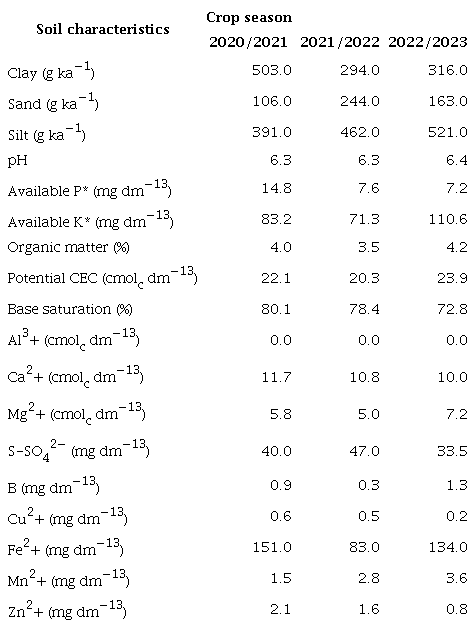
* Mehlich-1 soil test. CEC: cation exchange capacity.
All the three areas (Table 1) exhibited low potassium levels (CQFS-RS/SC 2016), and seedlings of the SCS372 Marina cultivar were planted in the three harvest seasons.
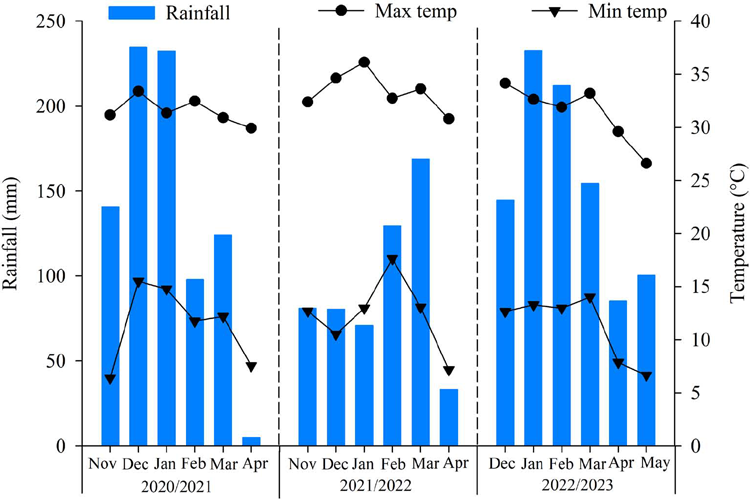
Figure 1
Climatic data of three cropping seasons in the Santa Catarina state, Brazil.
Each experiment followed a randomized block design, with four replications. The experimental areas were divided into 20 plots (5 plots block−1), with 5 rates of K2O randomly assigned to each block. Each plot contained 48 plants (Brito et al. 2006) spaced 1.10 m between rows and 0.30 m between plants (12 plants row−1). The sweet potato crops received 100 kg ha−1 of P2O5 and 40 kg ha−1 of N (CQFS-RS/SC 2016). Simple superphosphate served as the source of P2O5, ammonium nitrate as the source of N, and potassium chloride (KCl) as the source of K2O. Regarding fertilization, only P2O5 was applied during planting. N was split, with 50 % applied at planting and the remaining 50 % at 30 days after planting (DAP). The K2O rates were split, with 50 % applied at planting and the remaining 50 % divided equally at 30 and 60 DAP, along with N. Eight plants from two central rows, excluding borders, constituted the experimental plot for assessing the total and marketable storage root yield. Post-harvest, total and marketable storage root yields were evaluated at 145 DAP.
Soil subsamples were collected from six points (0-0.20 m) within each experimental plot to compose samples per plot for assessing the soil fertility and determining the potassium content (CQFS-RS/SC 2016).
Marketable storage roots were defined as those weighing at least 120 g, following regional producers’ criteria. In each plot, shoot samples from four plants and two storage roots were collected at harvest, washed with deionized water and dried in a forced-air circulation oven at 65 °C, until a constant weight was achieved for dry matter determination. Subsequently, dried tissue samples were analyzed in the laboratory to determine the N, P, K, Ca, Mg, S, B, Cu, Fe, Zn and Mn contents after dry digestion (Embrapa 2009).
Following the nutrient content determination, the nutrient uptake by shoot, storage root and whole plant (shoot + storage root) were calculated based on the dry matter. The collected data underwent assumption and regression analysis in the R environment (R Core Team 2023). The fitted second-degree equations proved statistically significant (p < 0.05). The economic optimum rate of K2O for marketable sweet potato storage root yield was determined using the methodology outlined by Natale et al. (1996). An equivalence ratio of 4.4 was obtained by dividing the value of $ 1.85 kg−1 of K2O (Conab 2023) by the value of $ 0.42 kg−1 of sweet potato (Ceasa/SC 2022). To calculate the economic optimum K2O rate, the equivalence ratio was equated with the first derivative of the regression model adjusted for the average marketable sweet potato yield (across three agronomic years), as a function of K2O rates.
RESULTS AND DISCUSSION
The relationship between the increasing rates of K2O applied to the soil and the average available K content in the 0-0.20 m soil layer over the three harvest seasons is shown in Figure 2. A linear increase in the K availability is observed with the increasing rate of K2O applied to the soil. This linear trend in increasing the K availability was also noted by Brito et al. (2006) and Cecílio Filho et al. (2016), with the escalating application of K2O rates.
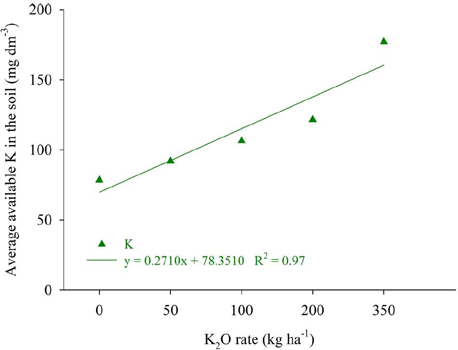
Figure 2
Relationship between K2O rates (0, 50, 100, 200 and 350 kg ha−1) and average available K in the soil after harvesting over three harvest seasons.
Figure 3 shows the sweet potato total and marketable yields over the three harvest seasons, depending on the evaluated K2O rates. The lower total yield (Figure 3A) and marketable yield (Figure 3B) in the 2021/2022 crop are attributed to reduced rainfall (Figure 1). Diminished water availability in the soil curtails the root activity, thereby reducing the nutrient absorption and potentially leading to lower plant yields (Raij 2011). Rainfall amounted to 546 mm in 2021/2022, 834 mm in 2020/2021 and 929 mm in 2022/2023. The maximum total yields were 51 t ha−1 (2020/2021), 42 t ha−1 (2021/2022) and 46 t ha−1 (2022/2023), while the maximum marketable yields were 43 t ha−1 (2020/2021), 37 t ha−1 (2021/2022) and 42 t ha−1 (2022/2023).
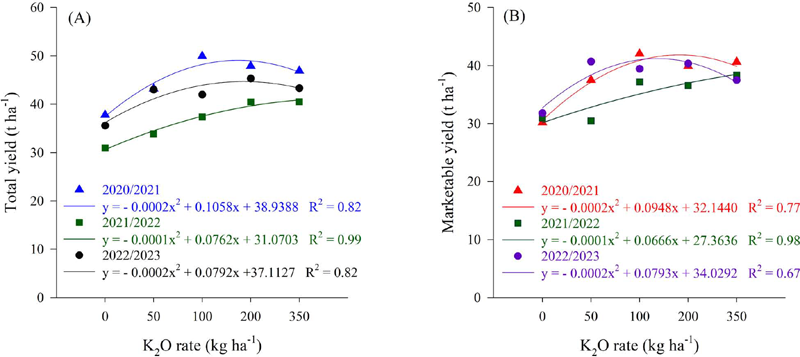
Figure 3
Total (A) and marketable (B) yield of sweet potato storage root as a function of K2O rates over three harvest seasons.
Figure 4 shows the relationship between the K2O rates and the average marketable yield (Figure 4A), as well as the relationship between the available K levels in the soil and the average marketable yield (Figure 4B).
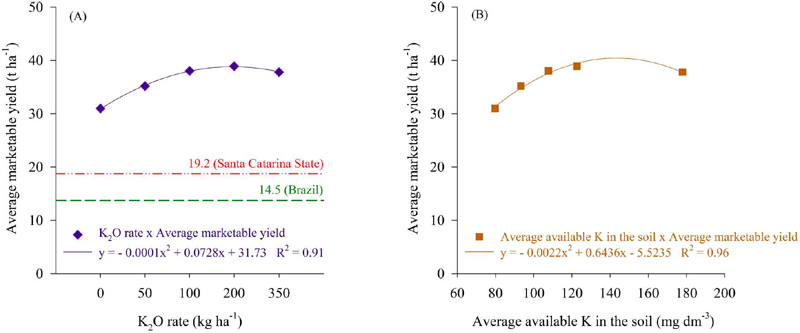
Figure 4
Relationship between K2O rates (0, 50, 100, 200 and 350 kg ha−1) and average marketable yield of sweet potato over three harvest seasons (A), and relationship between the average K contents in the soil and the average marketable yield over three agricultural years (B). The reference lines represent the average yield data (IBGE 2022).
The maximum average marketable yield (Figure 4A) or maximum technical efficiency was 40 t ha−1, achieved with a rate of 229 kg ha−1 of K2O. This yield surpasses the national average of 14.5 t ha−1 and exceeds the Santa Catarina state average of 19.2 t ha−1 (IBGE 2022). For instance, in an Entisol with sandy texture, the maximum marketable yield of sweet potato storage roots reached 8.4 t ha−1, with a rate of 173 kg of K2O (Brito et al. 2006). Additionally, with the application of 250 kg ha−1 of NPK 4-30-10 at planting and combined with 2 kg ha−1 of B and 200 kg ha−1 of K2O, the maximum marketable yield was 27.7 t ha−1 in Ultisol with sandy texture (Echer et al. 2009b). In Dystrophic Ultisol of medium texture, the application of 250 kg ha−1 of NPK 4-3020 at planting, along with 102 kg ha−1 of N and 120 kg ha−1 of K2O, led to a maximum marketable yield of 24.9 t ha−1 (Foloni et al. 2013). Similarly, the maximum marketable yield of sweet potato in Ultisol with sandy texture reached 24.3 t ha−1, with a rate of 85 kg ha−1 of K2O (Cecílio Filho et al. 2016). The highest marketable sweet potato yield in the Mississippi region was 26.8 t ha−1, achieved at 135 kg ha−1 of K2O (Harvey et al. 2022).
The economic optimum rate in Figure 4A was determined to be 171 kg ha−1 of K2O, representing 77 % of the rate associated with the maximum technical efficiency. Brito et al. (2006) reported an economic optimum rate of 163 kg ha−1 of K2O, while Cecílio Filho et al. (2016) found 71 kg ha−1 of K2O for economic optimum rate. In this sense, Harvey et al. (2022) reported a value close to that observed in the present study, with an economic optimum rate of 174 kg ha−1 of K2O.
According to the equation in Figure 4B, the maximum marketable yield of sweet potato storage root was attained when the available K content in the soil reached 146 mg dm−13. Consequently, for a Humic Cambisol, the response of sweet potato yield to potassium fertilization is expected to decrease or be absent if the available K content in the soil exceeds 146 mg dm−13. Referring to the equation in Figure 2, at the rate of 229 kg ha−1 of K2O representing the maximum technical efficiency in the present study, the corresponding available K value was 140 mg dm−13. Similarly, for the rate of 171 kg ha−1 of K2O corresponding to the economic optimum rate in the present study (Figure 4B), the associated available K value was 126 mg dm−13. These values of 126 mg dm−13 (economic optimum rate) and 140 mg dm−13 (maximum technical efficiency) are in line with or slightly above the values reported by Brito et al. (2006) for economic optimum rate and maximum technical efficiency, which were 121 and 125 mg dm−13, respectively. The value of 126 mg dm−13 of available K in the soil, representing the economic optimum rate in the present study, falls below the critical content specified in the liming and fertilization manual, which is 180 mg dm−13 (CQFSRS/SC 2016). However, the rate of 171 kg ha−1 of K2O associated with the economic optimum rate (Figure 4B) is close to the recommendation in the manual, which suggests 170 kg ha−1 of K2O for soils with low K levels.
Figure 5 shows the relationships between the K2O rates and the average levels of macronutrient uptake by shoot, storage root and whole plant after the sweet potato harvest across the three harvest seasons. The nitrogen (N) uptake by storage root (Figure 5A) and phosphorus (P) uptake (Figure 5C) exhibited a quadratic behavior. The maximum amounts of N and P uptake by the storage root were 93.72 and 32.34 kg ha−1, respectively, in response to the applied K2O rates. Conversely, the calcium (Ca) uptake (Figure 5B) also displayed a quadratic behavior, concerning the uptake by the whole plant, reaching a maximum of 117.59 kg ha−1 in response to the applied K2O rates. The storage root sulfur (S) uptake (Figure 5F) exhibited a negative linear relationship with increasing rates of K2O applied to the soil, indicating a reduction of 4.4 g ha−1 of S uptake for each kg of K2O applied. The magnesium (Mg) uptake (Figure 5D) did not exhibit a significant curve fit for any part of the sweet potato plant. The potassium (K) uptake by the shoot, storage root and whole plant (Figure 5E) displayed a quadratic response, with the maximum K uptake by the shoot, storage root and whole plant being 74.87, 90.27 and 165.16 kg ha−1, respectively. These values fall within the ranges reported by Byju & George (2005), which ranged 30-126 kg ha−1 for shoot, 60-250 kg ha−1 for storage root and 90-376 kg ha−1 for the whole plant. The values observed in the present study, except for storage root, were lower than those reported by Echer et al. (2009a), which were 139 (shoot), 81.0 (storage root) and 225.6 kg ha−1 (whole plant). Additionally, Cecílio Filho et al. (2016) reported lower values of K uptake by the storage root (57 kg ha−1), when compared to the present study. However, their reported values of K uptake by the shoot (150 kg ha−1) and whole plant (207 kg ha−1) were higher than those observed in the present study. The values of K uptake by the whole plant in our study fall within the range of 158-194 kg ha−1 reported by Fernandes et al. (2020), but are below the range of 107-122 kg ha−1 reported for storage root by these authors. Nonetheless, the values of K uptake by the shoot and storage root in the present study fall within the ranges of 120-240 kg ha−1 and 60-120 kg ha−1, respectively (Feltran et al. 2022).
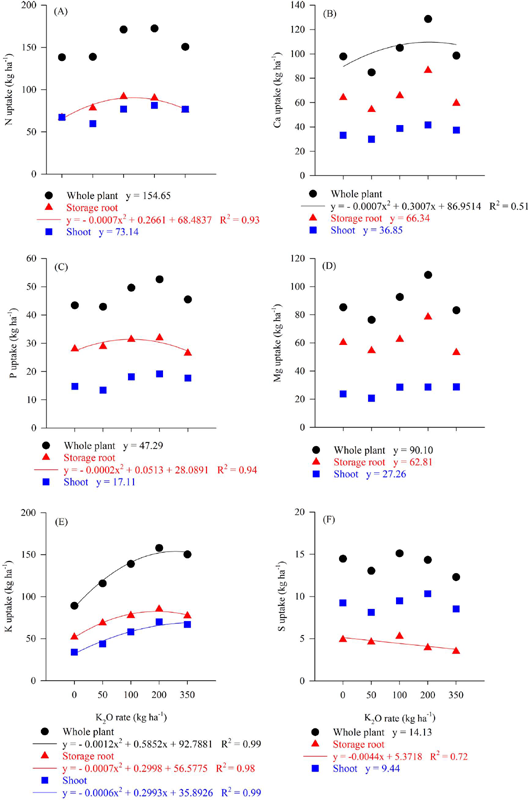
Figure 5
Relationship between K2O rates (0, 50, 100, 200 and 350 kg ha−1) and the average nutrient uptake (across three harvest seasons) by the shoot, storage root and whole plant.
The differences in the K uptake by sweet potato observed in the literature likely stem from factors such as cultivar, soil type, climatic conditions and fertilizer management. Potassium serves numerous vital functions in plants (Byju & George 2005), including promoting root growth, enhancing drought resistance, activating enzymes, maintaining cell turgor, reducing wilting and water loss, aiding in photosynthesis and minimizing respiration to prevent energy loss. K is also essential for the accumulation and translocation of carbohydrates within the plant (Jones Junior 2012).
Figure 6 shows the relationships between the rate of K2O and the average levels (across three harvest seasons) of micronutrient uptake by the shoot, storage root and whole plant after the sweet potato harvest. Boron (B) (Figure 6A) and manganese (Mn) (Figure 6B) did not exhibit a significant response to the increase in the K2O rate. However, the copper (Cu) (Figure 6C) and zinc (Zn) (Figure 6D) uptake by the storage root displayed a quadratic response to the increase in the K2O rate. The maximum amounts of Cu and Zn uptake by the storage root were 85.51 and 96.43 g ha−1, respectively. The iron (Fe) uptake by the storage root showed a linear response, with an increase of 0.33 g ha−1 of iron uptake by the storage root for each kg ha−1 of K2O added to the soil.
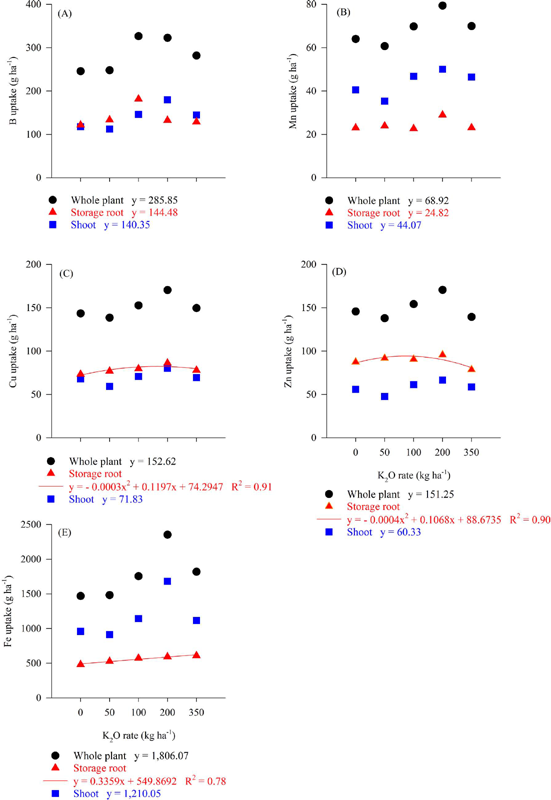
Figure 6
Relationship between K2O rates (0, 50, 100, 200 and 350 kg ha−1) and average nutrient uptake (three harvest seasons) by the shoot, storage root and whole plant.
Figure 7 shows the Pearson’s correlation between nutrient uptake by shoot (Figure 7A), storage root (Figure 7B) and whole plant (Figure 7C). It is noteworthy that there was no negative correlation observed between the nutrient uptake by the shoot (Figure 7A). The highest positive correlations were found between calcium (Ca) and magnesium (Mg), as well as between Ca and zinc (Zn) (Figure 7A). Manganese (Mn) exhibited a negative correlation with phosphorus (P), zinc (Zn) and boron (B), while sulfur (S) showed a negative correlation with Mn, potassium (K), copper (Cu) and Fe (Figure 7B). Similarly to the shoot, Ca and Mg also displayed a high positive correlation in the storage root (Figure 7B). The negative correlation between S and K is evident from Figure 5F, while the positive correlation between Fe and K is apparent from Figure 6E. The negative correlation between K and S (Figures 7B and 7C) may be attributed to the antagonistic effect between the chloride (Cl−1) from KCl and sulfate (SO42−) (Ortega & Malavolta 2012, Carmeis Filho et al. 2017). Moreover, the positive correlation between Ca and Mg remained high when considering the whole plant (Figure 7C). The negative correlations between Mn and P (Figures 7B and 7C) could be due to noncompetitive inhibition, while the negative correlations between Mn and Ca, and between Mn and Mg, may result from competitive inhibition (Malavolta 2006). Apart from ion interactions, various factors may influence the nutrient absorption in the form of ions by plant roots, such as ion influx into the apoplasm, pH external solution, metabolic activity, external ion concentration and plant nutritional status (White 2012).
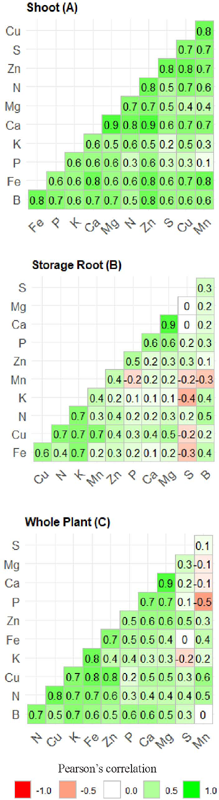
Figure 7
Pearson’s correlation between average nutrient uptake (across three harvest seasons) in the shoot (A), storage root (B) and whole plant (C).
CONCLUSIONS
1. The maximum technical efficiency concerning the average marketable yield of three harvests was achieved at 229 kg ha−1 of K2O;
2. The economic optimum rate concerning the average marketable yield of three sweet potato harvests was attained at 171 kg ha−1 of K2O;
3. The response of sweet potato to the application of potassium fertilizer in Humic Cambisol tends to diminish or become absent if the available K content exceeds 146 mg dm−13;
4. When using KCl as a source of K, it may induce a reduced sulfur absorption, likely due to the antagonistic effect between Cl−1 and SO42−.
ACKNOWLEDGMENTS
To the entire team at the Ituporanga Agricultural Experiment Station for their commitment and daily dedication to carrying out the activities.
REFERENCES
ALVARES, C. A.; STAPE, J. L.; SENTELHAS, P. C.; GONÇALVES, J. L. M.; SPAROVEK, G. Köppen’s climate classification map for Brazil. Meteorologische Zeitschrift, v. 22, n. 6, p. 711-728, 2013.
ASSOCIAÇÃO NACIONAL PARA DIFUSÃO DE ADUBOS (ANDA). Principais indicadores do setor de fertilizantes. 2023. Available at: https://anda.org.br/wp-content/uploads/2023/03/Principais_Indicadores_2022.pdf. Access on: Nov. 28, 2023.
BRITO, C. H.; OLIVEIRA, A. P.; ALVES, A. U.; DORNELES, C. S. M.; SANTOS, J. F.; NÓBREGA, J. P. R. Produtividade da batata-doce em função de doses de K2O em solo arenoso. Horticultura Brasileira, v. 24, n. 3, p. 320-323, 2006.
BYJU, G.; GEORGE, J. Potassium nutrition of sweet potato. Advances in Horticultural Science, v. 19, n. 4, p. 221-239, 2005.
CARMEIS FILHO, A. C. A.; CRUSCIOL, C. A. C.; NASCENTE, A. S.; MAUAD, M.; GARCIA, R. A. Influence of potassium levels on root growth and nutrient uptake of upland rice cultivars. Revista Caatinga, v. 30, n. 1, p. 32-44, 2017.
CECÍLIO FILHO, A. B.; NASCIMENTO, S. M.; SILVA, A. S.; VARGAS, P. F. Agronomic performance of sweet potato with different potassium fertilization rates. Horticultura Brasileira, v. 34, n. 4, p. 588-592, 2016.
CENTRAIS DE ABASTECIMENTO DO ESTADO DE SANTA CATARINA (Ceasa/SC). Relatório de cotações do dia 30/12/2022. 2022. Available at: https://www.ceasa.sc.gov.br/index.php/cotacao-de-precos/2022/12-dezembro-10. Access on: Aug. 18, 2023.
COLOMBO, J.; SORDI, A.; KLEIN, C.; BATISTON, J.; LENHARDT, C. G.; BIEGELMEIER, D.; LIPPERT, G. Desempenho agronômico de batatas-doces submetidas a doses de fertilizante mineral. Agropecuária Catarinense, v. 36, n. 1, p. 21-24, 2023.
COMISSÃO DE QUÍMICA E FERTILIDADE DO SOLO RS/SC (CQFS-RS/SC). Manual de calagem e adubação para os estados do Rio Grande do Sul e de Santa Catarina. 11. ed. Santa Maria: Sociedade Brasileira de Ciência do Solo, 2016.
COMPANHIA NACIONAL DE ABASTECIMENTO (Conab). Relatório de insumos agropecuários. 2023. Available at: https://consultaweb.conab.gov.br/consultas/consultaInsumo.do;jsessionid=F6F91E2EA6BB0E7D543281C3D17DEC36?method=acaoListarConsulta. Access on: Aug. 18, 2023.
ECHER, F. R.; DOMINATO, J. C.; CRESTE, J. E. Absorção de nutrientes e distribuição da massa fresca e seca entre órgãos de batata-doce. Horticultura Brasileira, v. 27, n. 2, p. 176-182, 2009a.
ECHER, F. R.; DOMINATO, J. C.; CRESTE, J. E.; SANTOS, D. H. Fertilização de cobertura com boro e potássio na nutrição e produtividade da batata-doce. Horticultura Brasileira, v. 27, n. 2, p. 171-175, 2009b.
EMPRESA BRASILEIRA DE PESQUISA AGROPECUÁRIA (Embrapa). Manual de análises químicas de solos, plantas e fertilizantes. 2. ed. Brasília, DF: Embrapa Informação Tecnológica, 2009.
FAQUIN, V. Nutrição mineral de plantas. Lavras: Ed. UFLa, 2005.
FELTRAN, J. C.; PERESSIN, V. A.; GRANJA, N. P.; SILVA FILHO, H. M.; LORENZI, J. O.; FERNANDES, A. M.; SORATTO, R. P.; FACTOR, T. L.; RÓS, A. B.; AGUIAR, E. B. Raízes e tubérculos. In: CANTARELLA, H.; QUAGGIO, J.; MATOS JUNIOR, D.; BOARETTO, R. M.; RAIJ, B. V. (org.). Recomendações de adubação e calagem para o estado de São Paulo. Campinas: Instituto Agronômico, 2022. p. 314-338.
FERNANDES, A. M.; ASSUNÇÃO, N. S.; RIBEIRO, N. P.; GAZOLA, B.; SILVA, R. M. da. Nutrient uptake and removal by sweet potato fertilized with green manure and nitrogen on sandy soil. Revista Brasileira de Ciência do Solo, v. 44, e0190127, 2020.
FERNANDES, A. M.; RIBEIRO, N. P. Mineral nutrition and fertilization of sweet potato. Científica, v. 48, n. 4, p. 325-338, 2020.
FILGUEIRA, F. A. R. Convolvuláceas: batata-doce, a batata de clima quente. In: FILGUEIRA, F. A. R. Novo manual de olericultura: agrotecnologia moderna na produção e comercialização de hortaliças. 3. ed. Viçosa: Ed. UFV, 2007. p. 371-377.
FOLONI, J. S. S.; CORTE, A. J.; CORTE, J. R. N.; ECHER, F. R.; TIRITAN, C. S. Adubação de cobertura na batata-doce com doses combinadas de nitrogênio e potássio. Semina: Ciências Agrárias, v. 34, n. 1, p. 117-126, 2013.
HARVEY, L. M.; SHANKLE, M. W.; MORRIS, C. J.; HALL, M. A.; CHATTERJEE, A.; HARVEY, K. M. Sweet potato (Ipomoea batatas L.) response to incremental application rates of potassium fertilizer in Mississippi. Horticulturae, v. 8, n. 9, e831, 2022.
HAWKESFORD, M.; HORST, W.; KICKEY, T.; LAMBERS, H.; SCHJOERRING, J.; MOLLER, S. I.; WHITE, P. Functions of macronutrients. In: MARSCHNER, P. (org.). Marschner’s mineral nutrition of higher plants. 3. ed. San Diego: Elsevier, 2012. p. 135-189.
INSTITUTO BRASILEIRO DE GEOGRAFIA E ESTATÍSTICA (IBGE). Lavouras temporárias. 2022. Available at: https://www.ibge.gov.br/estatisticas/economicas/agricultura-e-pecuaria/9117-producao-agricola-municipal-culturas-temporarias-e-permanentes.html?edicao=34923&t=resultados. Access on: Sep. 7, 2023.
JONES JUNIOR, J. B. Plant nutrition and soil fertility manual. 2. ed. Boca Raton: CRC Press, 2012.
MALAVOLTA, E. Manual de nutrição mineral de plantas. São Paulo: Agronômica Ceres, 2006.
MIRANDA, J. E. C.; FRANÇA, F. H.; CARRIJO, O. A.; SOUZA, A. F.; PEREIRA, W.; LOPES, C. A.; SILVA, J. B. C. A cultura da batata-doce. Brasília, DF: Embrapa Informação Tecnológica, 1995.
MOTA, J. H.; RESENDE, G. M.; YURI, J. E.; SOUZA, R. J. Nutrição e adubação da cultura da batata-doce. In: PRADO, R. M.; CECÍLIO FILHO, A. B. (org.). Nutrição e adubação de hortaliças. Jaboticabal: FCAV/Capes, 2016. p. 541-558.
NATALE, W.; COUTINHO, E. L. M.; BOARETTO, A. E.; PEREIRA, F. M. Dose mais econômica de adubo nitrogenado para goiabeira em formação. Horticultura Brasileira, v. 14, n. 2, p. 196-199, 1996.
ORTEGA, A. E.; MALAVOLTA, E. Los más recientes micronutrientes vegetales. Informaciones Agronómicas de Hispanoamérica, v. 7, n. 1, p. 16-25, 2012.
R CORE TEAM. R: a language and environment for statistical computing. Vienna: R Foundation for Statistical Computing, 2023.
RAIJ, B. V. Fertilidade do solo e manejo de nutrientes. Piracicaba: International Plant Nutrition Institute, 2011.
RÓS, A. B.; FERNANDES, A. M.; MONTES, S. M. N. M.; FISCHER, I. H.; LEONEL, M.; FRANCO, C. M. L. Batata-doce (Ipomea batatas). In: LEONEL, M.; FERNANDES, A. M.; FRANCO, C. M. L. (org.). Culturas amiláceas: batata-doce, inhame, mandioca e mandioquinha-salsa. Botucatu: Edunesp, 2015. p. 15-120.
SANTOS, H. G.; JACOMINE, P. K. T.; ANJOS, L. H. C.; OLIVEIRA, V. A.; LUMBRERAS, J. F.; COELHO, M. R.; ALMEIDA, J. A.; CUNHA, T. J. F.; OLIVEIRA, J. B. Sistema brasileiro de classificação de solos. 3. ed. Brasília, DF: Embrapa, 2013.
UNITED STATES DEPARTMENT OF AGRICULTURE (USDA). Soil Survey Staff. Keys to soil taxonomy. 13. ed. Washington, DC: USDA, 2022.
VARGAS, P. F.; FERNANDES, A. M.; DANGO, F. J. U.; ANDRADE, M. I.; VENDRAME, L. P. C.; PEREIRA, G. S. Batata-doce: produção, consumo e formas de propagação. Informe Agropecuário, v. 43, n. 318, p. 40-50, 2022.
WHITE, P. J. Ion uptake mechanisms of individual cells and roots: short-distance transport. In: MARSCHNER, P. (org.). Marschner’s mineral nutrition of higher plants. 3. ed. San Diego: Academic Press, 2012. p. 7-47.