Research Article
Received: 06 April 2025
Accepted: 20 May 2025
Published: 30 June 2025
DOI: https://doi.org/10.1590/1983-40632025v5582248
ABSTRACT: The production of gerbera (Gerbera jamesonii) under greenhouse conditions often involves shading techniques to control micrometeorological conditions and fertigation to optimize plant nutrition. This study aimed to evaluate the chlorophyll index, leaf area and yield characteristics of potted gerbera (‘Red with Eye’ cultivar). A randomized complete block design was adopted, in a 4 × 3 factorial arrangement, with four concentrations of the fertigation nutrient solution (50, 75, 100 and 125 %) and three shading net colors (red, blue and black). The chlorophyll indices, leaf area and dry masses of the flower capitula, stem and leaves were evaluated. The highest chlorophyll indices were observed under red and black nets at the highest nutrient concentration. The leaf area followed a quadratic response to the nutrient concentration, with a maximum value of 82.9 %. For the dry masses, there was a significant interaction between the factors. Under the blue net, the greatest dry masses were obtained at nutrient concentrations of 93-98 %, whereas, under the red net, the highest values occurred at the 50 % concentration and was recommended as the most efficient treatment.
KEYWORDS: Gerbera jamesonii, photoselective netting, plant nutrition, chlorophyll indexes.
RESUMO: A produção de gérbera (Gerbera jamesonii) em ambiente protegido é associada a técnicas de sombreamento para o controle de variáveis micrometeorológicas e de fertirrigação para a nutrição das plantas. Objetivou-se avaliar os índices de clorofila, área foliar e características produtivas de gérbera (cultivar ‘Red with Eye’), em vasos. O delineamento experimental foi o de blocos casualizados, em esquema fatorial 4 x 3, sendo quatro níveis de concentração da solução nutritiva de fertirrigação (50, 75, 100 e 125 %) e três cores de malha de sombreamento (vermelha, azul e preta). Foram avaliados os índices de clorofila, a área foliar e as massas secas dos capítulos florais, das hastes e das folhas. Os maiores índices de clorofila foram obtidos com as malhas vermelha e preta, na maior concentração de nutrientes. A área foliar apresentou ajuste quadrático para as concentrações de nutrientes, com valor máximo de 82,9 %. Para as massas secas, houve interação significativa entre os fatores. Na malha azul, as maiores massas foram observadas entre as concentrações de 93 e 98 %, enquanto, na malha vermelha, a concentração de 50 % proporcionou as maiores massas e foi o tratamento recomendado.
PALAVRAS-CHAVE: Gerbera jamesonii, telas fotoseletivas, nutrição de plantas, índices de clorofila.
INTRODUCTION
Gerbera (Gerbera jamesonii L.), a member of the Asteraceae family, is one of the most commercially important flowers worldwide, cultivated both as potted plant and as cut flower. Its popularity is largely due to the wide variety of colors, sizes and shapes of its inflorescences (Guerrero et al. 2013, Huang et al. 2018).
Under greenhouse cultivation, shading techniques are commonly used to reduce solar radiation, allowing the regulation of micrometeorological variables to create optimal environmental conditions for plant growth and increased yield (Ahemd et al. 2016, Araújo et al. 2021, Aied et al. 2023). Shading in greenhouses enables the effective control of light and temperature, providing favorable conditions for crop development (Trypanagnostopoulos et al. 2017).
Various colored shade nets are employed in greenhouses to enhance yield. Black nets reduce the light intensity without altering its spectrum (Arthurs et al. 2013, Silva et al. 2023). In contrast, red and blue nets are of greater economic interest due to their ability to modify the light quality. Red nets transmit more light in the red and far-red regions (wavelengths > 590 nm) while reducing transmission in the blue, green and yellow ranges. Blue nets filter red and far-red wavelengths while allowing transmission in the blue-green region (400-540 nm) (Shahak et al. 2004, Gondim et al. 2018, Araújo et al. 2021).
Some studies have examined the gerbera growth and yield under fertigation with varying salt concentrations, indicating that salinity tolerance differs among cultivars (Syros et al. 2004, Ludwig 2007, Carmassi et al. 2013). According to Cavins et al. (2000), the substrate solution for gerbera cultivation should have an electrical conductivity of 1.0-2.6 dS m-1 using the “pour-through” method, and 0.76-2.0 dS m-1 using the saturated paste method.
This study aimed to evaluate the effects of colored shade nets and nutrient concentrations in fertigation solutions on chlorophyll content, leaf area and productive characteristics of potted gerbera.
MATERIAL AND METHODS
The experiment was conducted at the Escola Superior de Agricultura “Luiz de Queiroz” (ESALQ), in Piracicaba, São Paulo state, Brazil (22º42’40”S, 47º37’30”W and altitude of 546 m). The region’s climate is classified as Cwa, according to the Köppen climate classification.
Seedlings of the ‘Red with Eye’ gerbera cultivar were grown in a greenhouse measuring 6.4 m in width and 36 m in length, divided into three equal sections of 12 m. Each section was covered with transparent plastic above the arch and equipped with colored shade nets installed at the side height and below the arch.
The seedlings were transplanted and cultivated for 99 days. In each of the three colored shade net treatments, 16 pots with capacity of 1.10 dm3 were used, totaling 48 pots, which were filled with a commercial substrate composed of pine bark, coconut fiber, fibrous peat and vermiculite, with electrical conductivity of 1.5 ± 0.3 mS cm-1 and pH of 5.8 ± 0.5.
The treatments combined two factors: shade net color (qualitative factor) and nutrient concentration of the fertigation solution (quantitative factor). Three ChromatiNET® shade nets were used - red, blue and black photoselective nets - with a shading index of 50 % (Arthurs et al. 2013, Ilić et al. 2017). The fertigation solutions included three dilutions (S1 = 50 %; S2 = 75 %; S3 = 100 %) and one concentration (S4 = 125 %) of the standard Hoagland & Arnon (1950) nutrient solution.
Three experimental groups were established based on shade net color (red, blue and black) and, within each group, the experimental design was a randomized complete block design, with four fertigation concentrations.
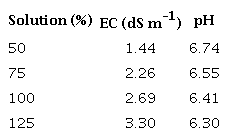
Fertigation was performed daily to maintain a maximum substrate water retention, monitored using the gravimetric method. The electrical conductivity and pH of the substrate solutions were measured before seedling transplanting and monitored throughout the experiment using PVC extractors with porous ceramic capsules, following the application of the fertigation treatments (Table 1).
Electrical conductivity (EC) and pH of the nutrient solutions used for fertigation during the experiment.
Micrometeorological data inside the greenhouse were collected using temperature, humidity, global radiation (LI-200R, LI-COR, Lincoln, Nebraska, USA) and photosynthetically active radiation (PAR) sensors (LI-190R, LI-COR, Lincoln, Nebraska, USA), positioned at the center of each colored shade net section. Data from the sensors were recorded using an automated data acquisition system (CR1000, Campbell Scientific, Logan, Utah, USA).
Internal greenhouse micrometeorological variables were compared with external data obtained from the ESALQ meteorological station located at approximately 350 m from the experimental site.
At the end of the cultivation cycle, the total dry mass of the gerbera plants was measured by summing the shoot dry mass. Floral capitula, stems and leaves were weighed separately using an analytical scale with precision of 0.01 g, after drying in a forced-air oven at 60 ºC until constant weight was reached.
The leaf area was determined for all 48 experimental units using a destructive sampling method. The readings were taken with a leaf area integrator (LI-3100, LI-COR, Lincoln, Nebraska, USA), and results were expressed in cm2.
Chlorophyll a, b and total indices were measured using a portable chlorophyll meter (ClorofiLOG CFL1030, Falker, Porto Alegre, Brazil). Three measurements were taken throughout the gerbera cycle, at 38, 59 and 99 days after transplanting (DAT), on a fully developed intermediate leaf.
The gerbera growth and production data were analyzed using analysis of variance (Anova) in the R software (version 3.5.1), with a significance level of 5 % (p ≤ 0.05). The colored shade nets were considered fixed factors and fertigation nutrient concentrations treated as random factors in a randomized block design. Linear and/or quadratic regression analyses were performed to evaluate the isolated effects of the fertigation concentration. The Tukey test was applied to compare the effects of the different colored shade nets.
RESULTS AND DISCUSSION
Figure 1 shows the maximum (Tmax) and minimum (Tmin) air temperatures recorded under each colored shade net treatment. Higher Tmax values were observed under the red and black nets, when compared to the other environments, ranging 21.6-40.5 ºC and 21.3-39.1 ºC, respectively. Under the blue net, Tmax values ranged 20.6-37.3 ºC. In all shaded environments, Tmax values were higher than those recorded in the external environment, where temperatures ranged 18.4-32.6 ºC.
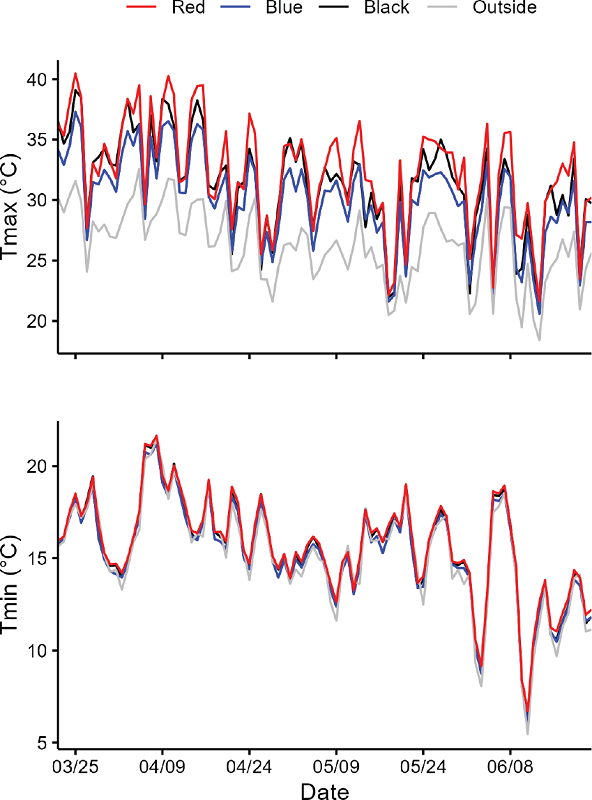
Figure 1
Daily variation in maximum and minimum air temperatures recorded inside the greenhouse under photoselective (red and blue) and neutral (black) shade nets, and in the external environment.
In contrast, Tmin values were similar across all environments, both under the colored shade nets and in the external area, with maximum Tmin values around 21.5 ºC and minimum values near 6.0 ºC. These temperature ranges fall within the optimal limits for gerbera development (Leffring 1975).
Figure 2 presents the values of global radiation (Qg) and photosynthetically active radiation (PAR) measured under the colored shade nets. Among the shaded environments, the highest average Qg was recorded under the black net (5.4 MJ m-2 d-1), followed by the red (5.0 MJ m-2 d-1) and blue nets (4.3 MJ m-2 d-1).
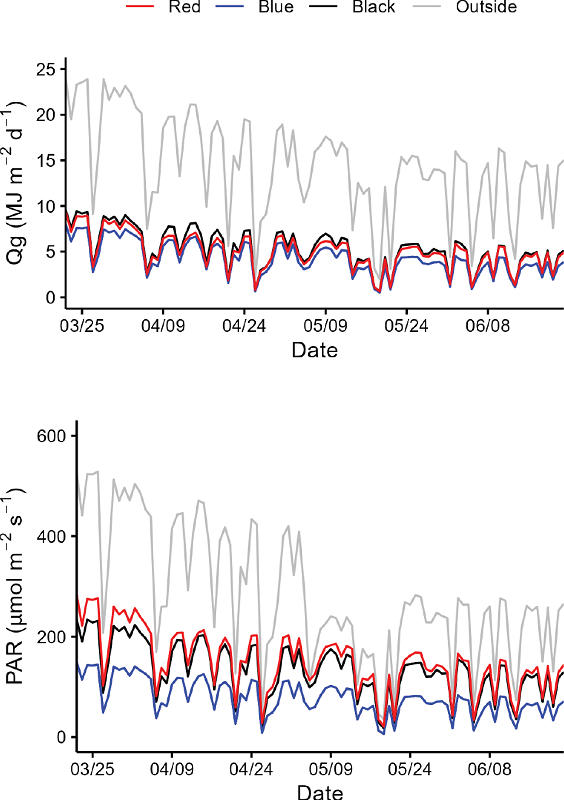
Figure 2
Average daily course of global solar radiation (A) and photosynthetically active radiation (B) recorded inside the greenhouse under photoselective (red and blue) and neutral (black) shade nets, and in the external environment.
Figure 2 also shows that all shade nets attenuated the Qg relative to the external environment, where the average Qg was 14.5 MJ m-2 d-1. The greatest reduction in radiation intensity occurred under the blue net, with a 70.3 % decrease. The black and red nets reduced the Qg by 62.7 and 65.5 %, respectively.
Shading alters the light environment by reducing both the radiation intensity and thermal properties of the microclimate (Ilić et al. 2017). The attenuation of solar radiation transmitted to the crop environment creates a microclimate that prevents thermal stress and still meets the light requirements for plant growth (Ahemd et al. 2016). For gerbera, it is recommended that direct solar radiation during cultivation remains below approximately 20.3-24.3 MJ m-2 d-1 (Ilić et al. 2015).
A reduction in PAR was observed under all shade nets, when compared to the external environment, where the average was 283.4 µmol m-2 s-1. The red net recorded the highest average among the shaded environments (151.4 µmol m-2 s-1), followed by the black (135.1 µmol m-2 s-1) and blue nets (78.8 µmol m-2 s-1). In addition to reducing the Qg, the colored shade nets also alter the light spectrum (Colollaro et al. 2015, Ilić & Fallik 2017).
The chlorophyll a, b and total indices varied throughout the gerbera growth cycle, responding differently to the treatments. The nutrient solution concentrations significantly affected the chlorophyll indices at 38 and 59 days after transplanting (DAT), while the colored shade nets had a significant effect at 59 and 99 DAT (Table 2).
Summary of the analysis of variance (Anova) and the Tukey test results for the chlorophyll content (Falker units) in gerbera leaves subjected to nutrient solution concentrations and colored shade net treatments at 38, 59 and 99 days after transplanting (DAT).
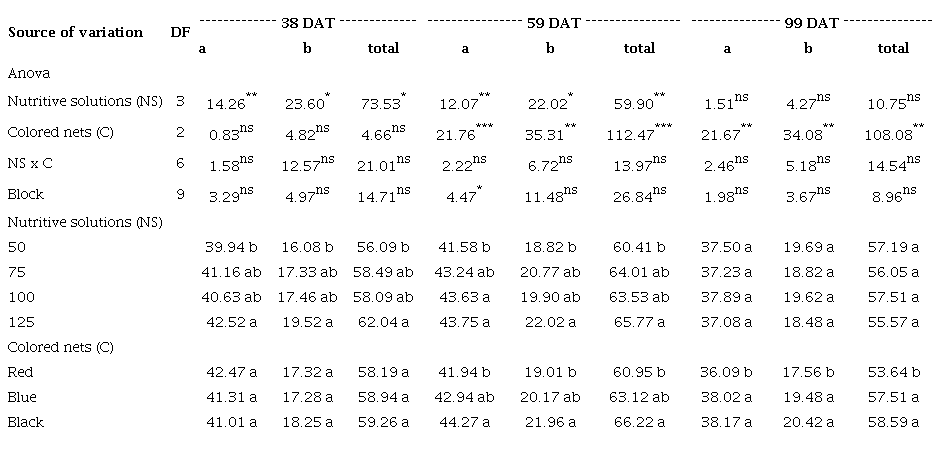
ns not significant;* significant at p ≤ 0.05;** significant at p ≤ 0.01;*** significant at p ≤ 0.001, by the Tukey test.
The gerbera chlorophyll indices were higher in plants receiving nutrient solutions with greater nutrient concentrations, indicating that an increased nutrient availability enhanced the physiological activity, thereby promoting photosynthesis. Syros et al. (2004) reported similar findings and observed reduced carbon dioxide (CO₂) assimilation, transpiration rate and stomatal conductance in two gerbera cultivars under nutrient-deficient conditions in open hydroponic systems.
Regarding shading, plants grown under the black and blue shade nets exhibited higher chlorophyll a, b and total indices (Figure 3), when compared to those grown under the red net. Comparable results were observed by Ilić et al. (2017) in Solanum lycopersicum ‘Vedetta’ and by Ilić et al. (2015) in lettuce (Lactuca sativa L. cv. Tizian).
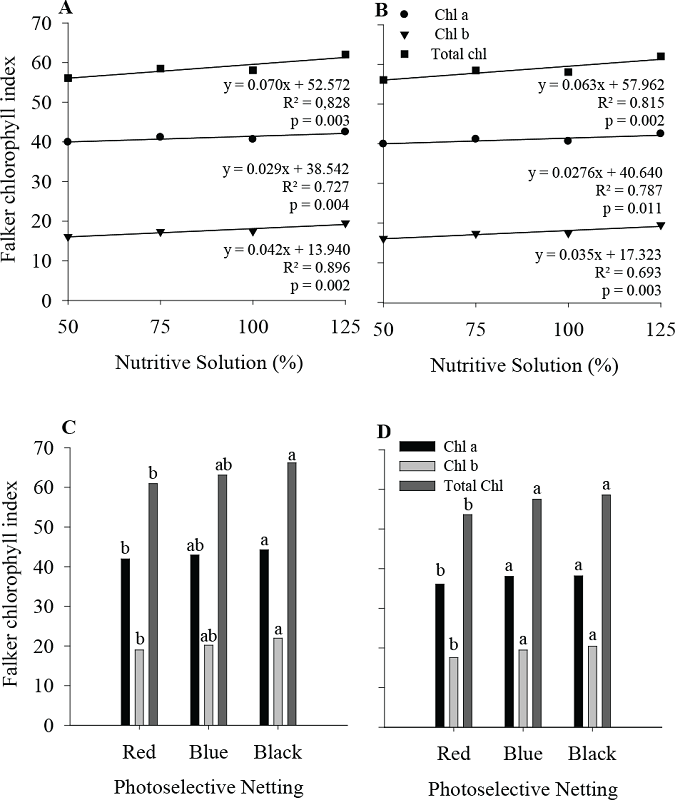
Figure 3
Falker chlorophyll index in gerbera leaves under nutrient solution concentrations at 38 (A) and 59 (B) days after transplanting (DAT), and under colored shade nets at 59 (C) and 99 DAT (D). Means followed by the same letter within each variable do not differ significantly according to the Tukey test at 5 % of probability.
Chlorophylls are the primary photosynthetic pigments in higher plants and have greater light absorption capacity in the blue and red regions of the spectrum (Rajapakse & Shahak 2007, Taiz & Zeiger 2013). The chlorophyll a is the principal pigment responsible for photosynthesis, absorbing light primarily between 430 and 660 nm, whereas the chlorophyll b acts as an accessory pigment, with absorption peaks near 460 and 630 nm (Taiz & Zeiger 2013, Mendes et al. 2024).
The main radiometric property of photoselective shade nets is their influence on photosynthetically active radiation (PAR, 400-700 nm), which is essential for photosynthesis and plant development (Manja & Aoun 2019). Red nets exhibit higher transmittance in the red and far-red regions (wavelengths > 590 nm) and lower transmittance in the blue, green and yellow ranges. Blue nets, on the other hand, filter red and far-red wavelengths and transmit light primarily in the blue-green region (400-540 nm) (Shahak et al. 2004). Black nets reduce the overall intensity of transmitted light without significantly altering its spectral quality (Arthurs et al. 2013). Bastías et al. (2015) reported that black nets did not affect red/far-red or blue/red light ratios, whereas blue nets increased the blue/red ratio by 30 %, and red nets reduced it by 20 %.
The analysis of variance revealed a significant interaction between nutrient solution concentration and colored shade net treatments for the dry mass of the floral structures, stems, leaves and total shoot biomass (Table 3). Statistically significant interactions were observed for stem, leaf and total dry mass. The nutrient solution concentration showed an isolated effect only on the leaf area of the plants.
Summary of the analysis of variance (Anova) for leaf area and dry mass of floral capitula, floral stems, leaves and total shoot biomass of gerbera plants grown under nutrient solution concentrations and colored shade net treatments.
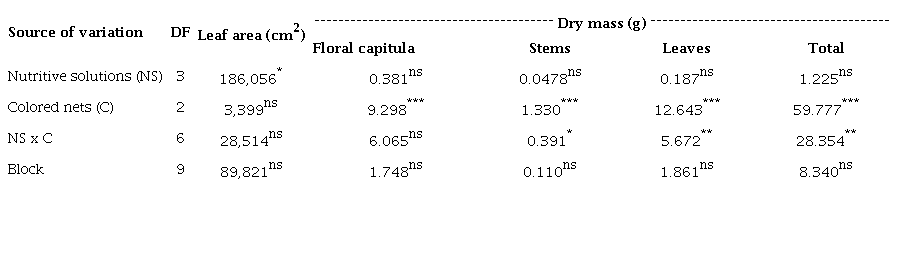
ns not significant;* significant at p ≤ 0.05;** significant at p ≤ 0.01;*** significant at p ≤ 0.001, by the Tukey test. DF: degrees of freedom.
The highest leaf area (992 cm2) was observed at the nutrient solution concentration of 82.9 % of the standard Hoagland & Arnon (1950) solution, corresponding to an electrical conductivity (EC) of 2.33 dS m-1 (Figure 4). Supporting these findings, Carmassi et al. (2013) reported a reduction in leaf area in gerbera grown in substrate under a semi-closed hydroponic system, when the nutrient solution EC ranged between 3.0 and 4.0 dS m-1. Parabolic response in leaf area due to increasing nutritive solution concentration is a well-documented result to osmotic stress (García-Caparrós & Lao 2018).
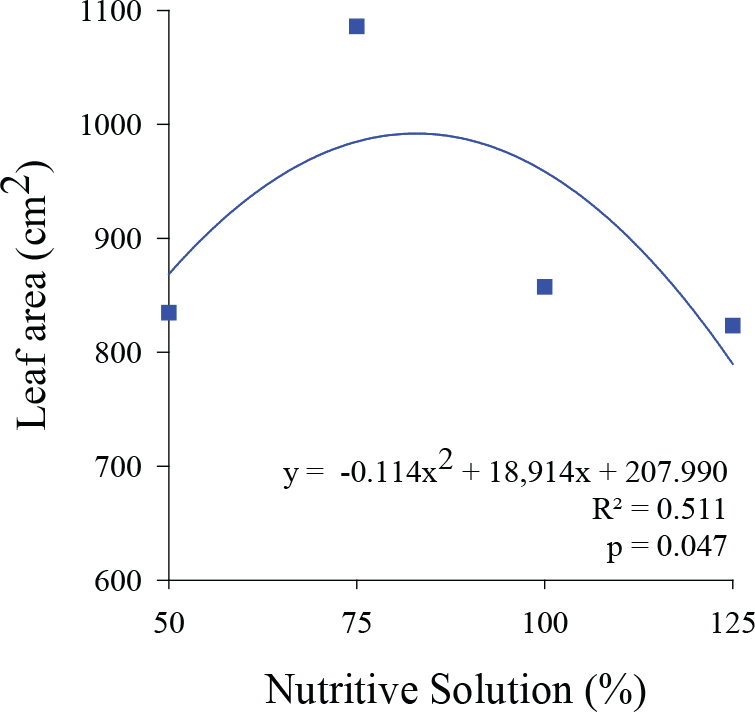
Figure 4
Leaf area of gerbera plants under nutrient solution concentrations, expressed as percentages of the Hoagland & Arnon (1950) standard solution.
Santos et al. (2015), studying potted gerbera fertilized with liquid organic fertilizers, also found that nutrient availability in the solution influenced the leaf area, and that treatments with a greater balance between nutrients provided the largest area. According to Munz et al. (2018), the leaf area exerts an influence on the vegetative growth and yield of the crops.
The combination of red and black shade nets with the nutrient solution at 50 % of the standard Hoagland & Arnon (1950) concentration resulted in higher mean dry weights of stems, leaves and total shoot biomass, when compared to the blue net (Table 4). Under red net shading, the fertigation with 75 % of the standard nutrient concentration led to a higher average leaf dry mass than that observed under the blue net. Additionally, the application of the 125 % nutrient concentration under the black net produced a greater mean stem dry weight, in relation to the blue net.
Results of the Tukey test for the dry weight of floral stems, leaves and total shoot biomass of gerbera plants under nutrient solution concentrations and colored shade net treatments.
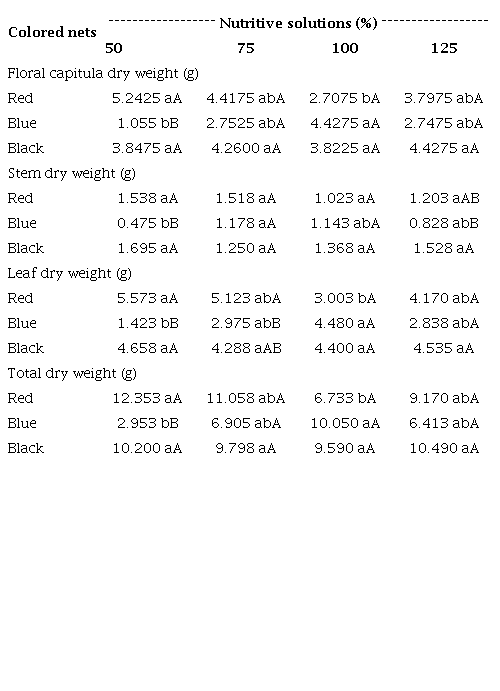
In the analysis where the shade nets were held constant to evaluate the effect of the fertigation concentrations on dry weight production, a negative linear relationship was observed under the red net between increasing nutrient concentration and the mean dry weights of floral capitula, leaves and total shoot biomass (Figures 5A, 5B and 5C). Under the blue net, the nutrient solution concentrations exhibited a quadratic relationship with dry weight, with the highest values observed at concentrations between 93 and 98 % of the standard nutrient solution (Figure 4).
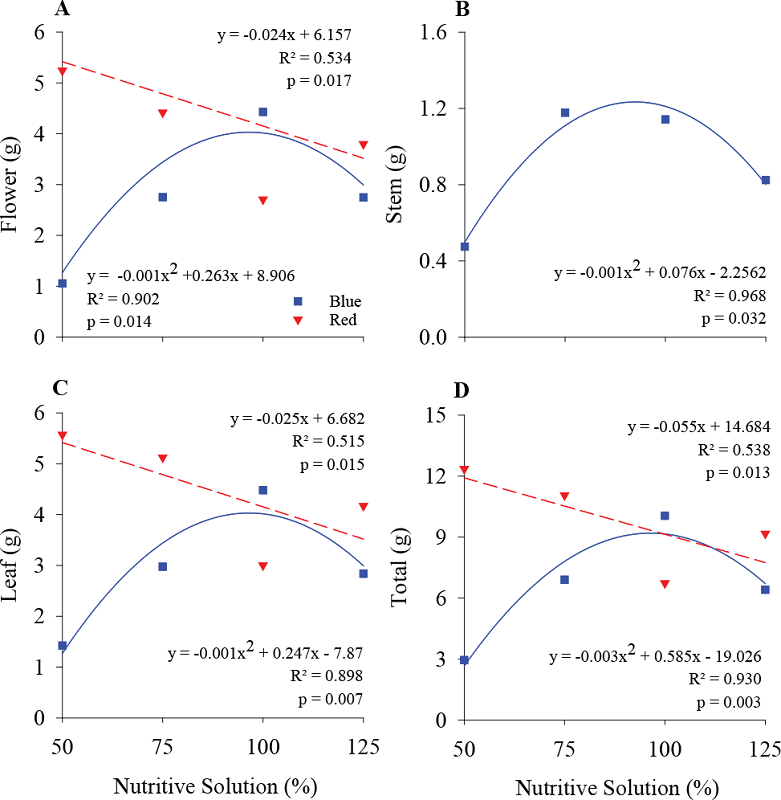
Figure 5
Dry weight of the floral capitula (A), stems (B), leaves (C) and total biomass (D) of gerbera plants shaded with colored nets and under nutrient solution concentrations.
The red shade net enhanced the photosynthetic efficiency of gerbera plants. Although fertigation with 50 % of the standard nutrient solution resulted in the lowest chlorophyll indices (Figures 2A and 2B), it also led to the highest dry weight accumulation (Figures 4A, 4B and 4C). This outcome is attributed to the higher availability of photosynthetically active radiation (PAR) in the red net environment (Figure 1B), which allowed for improved plant development even under reduced nutrient input, contributing to greater fertilizer savings.
According to Silber & Bar-Tal (2019), biomass accumulation is driven by the formation of new plant tissues and reproductive organs, such as flowers, which alter the plant’s nutritional requirements. Ludwig et al. (2010), evaluating the growth and yield of Orange gerbera cultivars during the reproductive phase under fertigation with two nutrient solutions (1.07 and 2.04 dS m-1), reported a higher dry mass accumulation with the more concentrated solution.
The light spectrum in the growth environment significantly influences plant physiology and development. Although the underlying mechanisms are not yet fully understood, photoreceptors have been shown to mediate various crop responses to different light spectra (Nascimento et al. 2016). In this context, changes in light quality provided by colored shade nets have been investigated for their effects on physiological responses in trees, fruit quality and ornamental plant development (Tinyane et al. 2013, Bastías et al. 2015, Corollaro et al. 2015, Mashabela et al. 2015, Zoratti et al. 2015, Ilić & Fallik 2017).
Different crops respond variably to changes in the light spectrum and microclimatic conditions provided by photoselective shade nets (Gondim et al. 2018). Nascimento et al. (2016) reported no significant differences in dry weight for ornamental sunflower (Sunflower Pollenless Sunbright) grown under ChromatiNet® red and blue shade nets. In contrast, Costa et al. (2010) observed a greater dry weight for Ocimum selloi cultivated under red nets, if compared to blue, attributing the reduced biomass under the blue net to a lower CO₂ assimilation rate.
The present study supports these findings, as the higher energy availability in environments shaded by red and black nets likely enhanced the photosynthetic activity, promoting plant development and resulting in increased dry mass accumulation.
According to Ilić et al. (2015), biomass accumulation is generally associated with increases in leaf area and chlorophyll content. However, in the current study, although a lower chlorophyll content was recorded under the red net, the highest mean germination dry weight was observed in this environment, even with reduced nutrient concentration. These results reinforce the greater photosynthetic efficiency of plants under red shade netting.
CONCLUSIONS
-
1. Chlorophyll a, b and total indices increased with higher nutrient solution concentrations and were higher under shading by blue and black nets. The greatest leaf area was observed at a nutrient concentration of 82.9 %; however, the shade net color had no significant effect on this parameter;
-
2. The dry weights of floral capitula, stems, leaves and total biomass were influenced by the interaction between shade net color and nutrient solution concentration. The blue net produced the highest dry weights with nutrient concentrations between 93 and 98 %, whereas, under the red net, the 50 % nutrient concentration resulted in the greatest shoot biomass;
-
3. Cultivating gerbera in greenhouses under red photoselective shade nets combined with fertigation using 50 % of the nutrient concentration proposed by Hoagland & Arnon (1950) is recommended for an efficient and productive potted gerbera cultivation.
REFERENCES
AHEMD, H. A.; AL-FARAJ, A. A.; ABDEL-GHANY, A. M. Shading greenhouses to improve the microclimate, energy and water saving in hot regions: a review. Scientific Horticulture, v. 201, n. 1, p. 36-45, 2016.
AIED, K. Y.; ZAIDAN, G. J.; ABDULRAHMAN, H. B. A. Using plastic house shading in the summer improves eggplant and sweet pepper yield. Pesquisa Agropecuária Tropical, v. 53, e74478, 2023.
ARAÚJO, H. S.; CARMO, S. A.; SANTOS, N. C. B.; FREITAS, P. G. N.; PURQUERIO, L. F. V. Effect of shading screens on the production and quality of ‘Smooth Cayenne’ pineapple. Pesquisa Agropecuária Tropical, v. 51, e69594, 2021.
ARTHURS, S. P.; STAMPS, R. H.; GIGLIA, F. F. Environmental modification inside photoselective shadehouses. HortScience, v. 48, n. 8, p. 975-979, 2013.
BASTíAS, R. M.; MANFRINI, L.; GRAPPADELLI, L. C. Exploring the potential use of photo-selective nets for fruit growth regulation in apple. Chilean Journal of Agricultural Research, v. 72, n. 2, p. 224-231, 2015.
CARMASSI, G.; BACCI, L.; BRONZINI, M.; INCROCCI, L.; MAGGINI, R.; BELLOCCHI, G.; MASSA, D.; PARDOSSI, A. Modelling transpiration of greenhouse gerbera (Gerbera jamesonii H. Bolus) grown in substrate with saline water in a Mediterranean climate. Scientific Horticulture, v. 156, n. 1, p. 9-18, 2013.
CAVINS, T. J.; WHIPKER, B. E.; FONTENO, W. C.; HARDEN, B.; MCCALL, I.; GIBSON, J. L. Monitoring and managing pH and EC using the PourThru extraction method. Horticultural Information Leaflet, v. 590, n. 1, p. 1-17, 2000.
COROLLARO, M. L.; MANFRINI, L.; ENDRIZZI, I.; APREA, E.; DEMATTè, M. L.; CHARLES, M.; BERGAMASCHI, M.; BIASOLI, F.; ZIBORDI, M.; GRAPPADELLI, L. C.; GASPERI, F. The effect of two orchard light management practices on the sensory quality of apple: fruit thinning by shading or photo-selective nets. Journal of Horticultural Science and Biotechnology, v. 90, n. 1, p. 99-108, 2015.
COSTA, L. C. D. B.; PINTO, J. E. B. P.; CASTRO, E. M. D.; ALVES, E.; BERTOLUCCI, S. K. V.; ROSAL, L. F. Effects of coloured shade netting on the vegetative development and leaf structure of Ocimum selloi. Bragantia, v. 69, n. 2, p. 349-359, 2010.
GARCíA-CAPARRóS, P.; LAO, M. T. The effects of salt stress on ornamental plants and integrative cultivation practices. Science Horticultural, v. 240, n. 10, p. 430-439, 2018.
GONDIM, A. R. O.; PUIATTI, M.; FINGER, F. L.; CECON, P. R. Artificial shading promotes growth of taro plants. Pesquisa Agropecuária Tropical, v. 48, n. 2, p. 83-89, 2018.
GUERRERO, A. C.; FERNANDES, D. M.; LUDWIG, F.; OLIVEIRA L. D. Produção e qualidade em gérbera de vaso cultivada com cloreto e silicato de potássio. Bioscience Journal, v. 29, n. 4, p. 903-909, 2013.
HOAGLAND, D. R.; ARNON, D. I. The water culture method for growing plants without soils. Berkeley: California Agricultural Experimental Station, 1950.
HUANG, X.; LIN, S.; HE, S.; LIN, X.; LIU, J.; CHEN, R.; LI, H. Characterization of stomata on floral organs and scapes of cut ‘Real’ gerberas and their involvement in postharvest water loss. Postharvest Biological Technology, v. 142, n. 1, p. 39-45, 2018.
ILIć, S. Z.; MILENKOVIć, L.; DIMITRIJEVIć, A.; STANOJEVIć, L.; CVETKOVIć, D.; KEVREšAN, Ž.; FALLLIK, E.; MASTILOVIć, J. Light modification by color nets improve quality of lettuce from summer production. Scientific Horticulture, v. 226, n. 1, p. 389-397, 2017.
ILIć, Z. S.; FALLIK, E. Light quality manipulation improves vegetable quality at harvest and postharvest: a review. Environment Experimental Botanic, v. 139, n. 1, p. 79-90, 2017.
ILIć, Z. S.; MILENKOVIć, L.; ŠUNIć, L.; FALLIK, E. Effect of coloured shade-nets on plant leaf parameters and tomato fruit quality. Journal of Science Food and Agriculture, v. 95, n. 13, p. 2660-2667, 2015.
LEFFRING, L. Effects of daylength and temperature on shoot and flower production of gerbera. Acta Horticulture, v. 51, n. 7, p. 263-265, 1975.
LUDWIG, F. Cultivares de gérbera (Gerbera jamesonii L.), em vaso, sob dois níveis de fertirrigação. 2007. Dissertação (Mestrado em Fitotecnia) - Universidade Estadual Paulista, Faculdade de Ciências Agrárias, Jaboticabal, 2007.
LUDWIG, F.; FERNANDES, D. M.; MOTA, P. R.; VILAS BOAS, R. L. Crescimento e produção de gérbera fertirrigada com solução nutritiva. Horticultura Brasileira, v. 28, n. 4, p. 424-429, 2010.
MANJA, K.; AOUN, M. The use of nets for tree fruit crops and their impact on the production: a review. Scientific Horticulture, v. 246, n. 1, p. 110-122, 2019.
MASHABELA, M. N.; SELAHLE, K. M.; SOUNDY, P.; CROSBY, K. M.; SIVAKUMAR, D. Bioactive compounds and fruit quality of green sweet pepper grown under different colored shade netting during postharvest storage. Journal of Food Science, v. 80, n. 11, p. 2612-2618, 2015.
MENDES, F. Q.; PURQUERIO, L. F. V.; CARVALHO, F. C.; CECÍLIO FILHO, A. B. White light intensities for maximum yield and quality of arugula microgreens. Pesquisa Agropecuária Tropical, v. 54, e79951, 2024.
MUNZ, S.; PRäGER, A.; MERKT, N.; CLAUPEIN, W.; GRAEFF-HöNNINGER, S. Leaf area index, light interception, growth and steviol glycoside formation of Stevia rebaudiana Bertoni under field conditions in southwestern Germany. Indian Crops Production, v. 111, n. 19, p. 520-528, 2018.
NASCIMENTO, Â. M. P.; REIS, S. N.; NERY, F. C.; CURVELO, I. C. S.; TAQUES, T. C.; ALMEIDA, E. F. A. Influence of color shading nets on ornamental sunflower development. Ornamental Horticulture, v. 22, n. 1, p. 101-106, 2016.
RAJAPAKSE, N. C.; SHAHAK, Y. Light-quality manipulation by horticulture industry. In: WHITELAM, G. C.; HALLIDAY, K. J. (ed.). Annual plant reviews: light and plant development. Clemson: Blackwell, 2007. p. 290-312.
SANTOS, F. T.; LUDWIG, F.; COSTA, L. A. M.; COSTA, M. S. S. M. Nutrition and growth of potted gerbera according to mineral and organic fertilizer. Ornamental Horticulture, v. 21, n. 2, p. 251-258, 2015.
SHAHAK, Y.; GUSSAKOVSKY, E. E.; GAL, E.; GAELEVIN, R. Colornets: crop protection and light-quality manipulation in one technology. Acta Horticultural, v. 659, n. 1, p. 143-161, 2004.
SILBER, A.; BAR-TAL, A. Nutrition of substrate-grown plants. In: RAVIV, M.; LIETH, J. H.; BAR-TAL, A. (ed.). Soilless culture: theory and practice. Amsterdam: Elsevier, 2019. p. 197-257.
SILVA, A. O.; BARRAL, D. S.; ROSÁRIO, I. C. B.; GOMES, L. S. S. Effect of shading and growing season on the agronomic performance of jambu. Pesquisa Agropecuária Tropical, v. 53, e77257, 2023.
SYROS, T.; YUPSANIS, T.; OMIROU, M.; ECONOMOU, A. Photosynthetic response and peroxidases in relation to water and nutrient deficiency in gerbera. Environmental and Experimental Botany, v. 52, n. 1, p. 23-31, 2004.
TAIZ, L.; ZEIGER, E. Fisiologia vegetal. 5. ed. Porto Alegre: Artmed, 2013.
TINYANE, P. P.; SIVAKUMAR, D.; SOUNDY, P. Influence of photo-selective netting on fruit quality parameters and bioactive compounds in selected tomato cultivars. Science Horticultural, v. 161, n. 9, p. 340-349, 2013.
TRYPANAGNOSTOPOULOS, G.; KAVGA, A.; SOULIOTIS, Μ.; TRIPANAGNOSTOPOULOS, Y. Greenhouse performance results for roof installed photovoltaics. Renewable Energy, v. 111, n. 10, p. 724-731, 2017.
ZORATTI, L.; JAAKOLA, L.; HäGGMAN, H.; GIONGO, L. Modification of sunlight radiation through colored photo-selective nets affects anthocyanin profile in Vaccinium spp. berries. PloS One, v. 10, n. 8, e0135935, 2015.
Author notes
