Research Article
Effects of biochar on corn yield1
Efeitos de biocarvão na produtividade de milho
 Yessika Biasney Serna Mosquera d-yessika.serna@utch.edu.co
Jhon Jerley Torres-Torres i-jhon.torres@utch.edu.co
Rosalina González Forero rogonzalez@unisalle.edu.co
Franklin Barrios Maturana d-franklin.barrios@utch.edu.co
Yessika Biasney Serna Mosquera d-yessika.serna@utch.edu.co
Jhon Jerley Torres-Torres i-jhon.torres@utch.edu.co
Rosalina González Forero rogonzalez@unisalle.edu.co
Franklin Barrios Maturana d-franklin.barrios@utch.edu.co
Effects of biochar on corn yield1
Pesquisa Agropecuária Tropical, vol. 56, e83417, 2026
Escola de Agronomia/UFG
Received: 16 July 2025
Accepted: 19 November 2025
Published: 12 December 2025
ABSTRACT: Biochar has been widely used as a soil conditioner to enhance the growth and yield of short-cycle crops; however, its effects on soils degraded by mining and logging remain insufficiently studied. This study aimed to evaluate the impact of seven biochar formulations on maize (Zea mays L.) yield in two localities characterized by highly degraded soils. Residues of branches, coastal slabs, leaves, and stumps were pyrolyzed and applied at doses of 1 and 2 kg m-2, in a randomized complete block factorial design. Germination, growth, biomass, and ear production were analyzed using linear mixed models. The biochar significantly increased germination, with values exceeding 79 % in all active treatments, when compared to 41.7 % in the control. Consistent increases in plant height and total dry biomass were also observed, especially in treatments derived from mixed residue formulations, which exhibited greater water-holding capacity, higher pH, and increased nutrient contents. Although stem diameter did not exhibit overall statistical differences, higher doses indicated a positive trend. Ear production increased with biochar application, although absolute yields remained below the national average, due to the severe soil degradation and high rainfall of the region. Biochar, particularly when applied in mixed formulations, has a strong potential to improve maize yield in degraded tropical soils, although its effectiveness depends on edaphoclimatic conditions and duration of soil incorporation.
KEYWORDS: Zea mays L., degraded soils, soil conditioner.
RESUMO: O biocarvão tem sido amplamente utilizado como condicionador de solo para melhorar o crescimento e a produtividade de culturas de ciclo curto; entretanto, seus efeitos em solos degradados por mineração e exploração madeireira permanecem pouco estudados. Objetivou-se avaliar o impacto de sete formulações de biocarvão sobre a produtividade de milho (Zea mays L.) em duas localidades caracterizadas por solos altamente degradados. Resíduos de galhos, costaneiras, folhas e tocos foram pirolisados e aplicados em doses de 1 e 2 kg m-2, utilizando-se delineamento fatorial em blocos ao acaso. A germinação, crescimento, biomassa e produção de espigas foram analisados por modelos lineares mistos. O biocarvão aumentou significativamente a germinação, com valores superiores a 79 % em todos os tratamentos ativos, em comparação a 41,7 % no controle. Também foram observados aumentos consistentes na altura das plantas e na biomassa seca total, especialmente nos tratamentos derivados de misturas de resíduos, que apresentaram maior capacidade de retenção de água, pH mais alto e maiores teores de nutrientes. Embora o crescimento em diâmetro não tenha apresentado diferenças estatísticas globais, doses mais elevadas indicaram tendência positiva. A produção de espigas aumentou com o uso de biocarvão, embora os rendimentos absolutos tenham permanecido inferiores à média nacional, devido à forte degradação do solo e à elevada pluviosidade da região. O biocarvão (particularmente em formulações mistas) tem elevado potencial para melhorar a produtividade de milho em solos tropicais degradados, embora sua eficácia dependa das condições edafoclimáticas e do tempo de incorporação.
PALAVRAS-CHAVE: Zea mays L., solos degradados, condicionador de solo.
INTRODUCTION
Logging and gold mining are two of the dominant economic activities in the Colombian Pacific region, providing livelihoods for local and migrant populations (Ramírez et al. 2019, Torres-Torres et al. 2019). However, these activities have generated extensive deforestation, severe soil disturbance, and long-term degradation of ecosystem functioning (Hallaj et al. 2024). Mining-derived substrates, in particular, are characterized by coarse texture, low organic matter, reduced cation exchange capacity, and high aluminum saturation, all of which drastically diminish soil fertility (Quinto et al. 2022, Torres-Torres et al. 2023). As a consequence, agricultural production (especially of staple crops) is often limited by poor seedling establishment, reduced nutrient availability, and overall low yields (Cong et al. 2023).
Maize (Zea mays L.), one of the grains most widely cultivated worldwide, is highly sensitive to nutrient-poor or structurally degraded soils (Erenstein et al. 2022, Yan et al. 2022). Under such conditions, soil amendments are required to restore fertility and support crop development.
Biochar, a carbon-rich material produced by pyrolysis of organic residues, has been widely recognized for its ability to improve soil physical, chemical, and biological properties (Kammann et al. 2015, Lehmann & Joseph 2015, Hussain et al. 2017). Several studies have demonstrated that biochar can enhance soil structure, increase water-holding capacity, reduce bulk density, and retain nutrients against leaching, a key advantage in high-rainfall tropical environments (Kapoor et al. 2022, Kabir et al. 2023, Ighalo et al. 2025).
In agronomic systems, biochar has shown variable but often positive effects on plant metabolic activity, chlorophyll content, nutrient uptake, root development, and yield components (Minhas et al. 2020, Khan et al. 2024). However, biochar responses are highly context-dependent and influenced by pyrolysis conditions, feedstock type, soil properties, and climatic regime (Jeffery et al. 2016, Agegnehu et al. 2017). This leads to inconsistent findings across studies, especially under tropical conditions where excessive rainfall accelerates nutrient leaching and alters soil-plant interactions.
Despite the global interest in biochar, research evaluating its effects on soils degraded by long-term mining and logging remains limited, particularly in highly weathered tropical environments (Ighalo et al. 2025). Moreover, the physiological mechanisms underlying maize growth responses to biochar in hyper-humid tropical environments remain poorly understood, particularly regarding germination dynamics, early vegetative growth, and biomass partitioning.
Given that degraded soils in the Colombian Pacific exhibit extremely low nutrient availability (Quinto et al. 2022), and that biochar is rich in stable carbon, basic cations, and functional groups capable of enhancing soil fertility (Kammann et al. 2015, Hussain et al. 2017), we hypothesized that incorporating biochar into degraded soils would enhance overall maize yield by improving germination, stimulating vegetative growth, increasing biomass accumulation, and boosting ear production. Therefore, this study aimed to evaluate the effect of eight treatments (seven biochar formulations derived from mixed forest residues and one untreated control) on maize yield in two localities strongly affected by mining and logging activities.
MATERIAL AND METHODS
The study was carried out in April 2023, in the municipality of Quibdó, Colombia, specifically in the villages of Tutunendo (5º48’N and 76º35’W) and San Francisco de Ichó (5º46’N and 76º30’W; Figure 1), which are located in the tropical rainforest (bp-T) life zone, characterized by average temperature of 28 ºC and annual rainfall of more than 7,000 mm (IIAP 2001). The main economic activities in the area include agriculture, gold mining, and timber extraction, with agriculture being the predominant activity.
Forest residues were collected from a timber harvest area in San Francisco de Ichó and air-dried for one month. Eight active treatments were formulated from these residues: branch biochar (B); coastal/butt plate biochar (BT); leaf + stump biochar (LT); branch + coastal biochar (BBP); branch + leaf + stump biochar (BLS); coastal + leaf + stump biochar (BTS); branch + coastal + leaf + stump biochar (MIX); and control (additional treatment without biochar, managed with the traditional practice of slash-and-burn).
Pyrolysis was performed in a double-chamber retort furnace. The internal chamber consisted of a 15-kg metallic tank hermetically sealed with high-temperature silicone, whereas the external chamber corresponded to a 55-gallon drum with an upper chimney. Combustion took place in the lower part of the equipment, using firewood, and was monitored through a thermocouple (Zcebox) that registered temperature during the 3-hour pyrolysis process.
Representative samples of 500 g were collected from each formulation, stored in hermetically sealed plastic bags and sent to the laboratory for physical-chemical characterization. Analyses included pH, electrical conductivity, nutrient content (N, P, K, Ca, Mg, S, B, Cu, Mn, Fe, Zn, Na), organic matter, and organic carbon.
Composite soil samples were taken (15 cm depth) before planting and after harvest, at five points per location. The samples were sent to the same laboratory to evaluate physical-chemical properties: texture (Bouyoucos); pH (potentiometer; 1:2 ratio); organic matter (Walkley & Black); available phosphorus (L-ascorbic acid; UV-VIS spectrophotometry); total nitrogen (micro-Kjeldahl); aluminum (KCl 1M; volumetry); and nutrients (Ca, Mg, K) by atomic absorption. The procedures recommended by Osorio (2018) were followed.
A randomized complete block factorial design, with two fixed factors, was used: biochar type, with eight levels corresponding to the treatments (B, BT, LT, BBP, BLS, BTS, MIX, and control); and application rate (1 and 2 kg m-2). Because local edaphoclimatic conditions were expected to differ substantially (notably rainfall, soil texture, and nutrient availability), location was modeled as a random effect. Each combination of biochar type x dose was replicated twice in each location, resulting in 64 experimental plots (8 treatments x 2 doses x 2 replicates x 2 sites). Plots measured 2 m2 and contained six Z. mays plants. Biochar was incorporated at one week before planting at 15 cm depth. The evaluated variables included germination percentage, plant height, stem diameter, total dry biomass, and ear yield.
Data were analyzed using linear mixed-effects models to account for the factorial structure and the random effect of location. For each response variable (germination, height, diameter, biomass, and ear yield), the following model was fitted: Yijkl = µ + Ti + Dj + (T x D)ij + Lk + ɛijkl, where: Yijkl is the observed value of the response variable; µ the overall mean; Ti the fixed effect of the i-th biochar treatment (8 levels); Dj the fixed effect of the dose (1 or 2 kg m-2); (T x D)ij the interaction; Lk the random effect of location [Lk ~ N (0, σ2L)]; and ɛijkl the residual error [~ N (0, σ2)].
The models were fitted by restricted maximum likelihood, using the lmer() function of the lme4 package (Bates et al. 2015) in R (R Core Team 2023). Normality of residuals was evaluated using Shapiro-Wilk tests and skewness/kurtosis inspection. Homogeneity of residual variances was assessed using Bartlett and Levene tests (Hoshmand 1998). No variable required transformation. Significance of treatment, dose, and their interaction was assessed using Type-III Anova, with Satterthwaite’s approximation for degrees of freedom (lmerTest package).
The comparisons were adjusted using the Tukey method to control the family-wise error rate. In addition, compact letter displays were generated to group treatment-by-dose combinations according to statistical similarity (Lenth 2025). These groupings were used to summarize differences among factor levels in tables.
RESULTS AND DISCUSSION
The physical-chemical characterization of the seven biochar formulations demonstrated marked differences associated with the type of feedstock used (Table 1). All biochars showed alkaline pH values (8.04-10.07), which is consistent with the literature on wood-derived biochars produced at moderate-high pyrolysis temperatures. The highest pH was recorded in LT (leaf + stump; pH 10.07), suggesting a greater concentration of basic cations and ash-forming minerals.
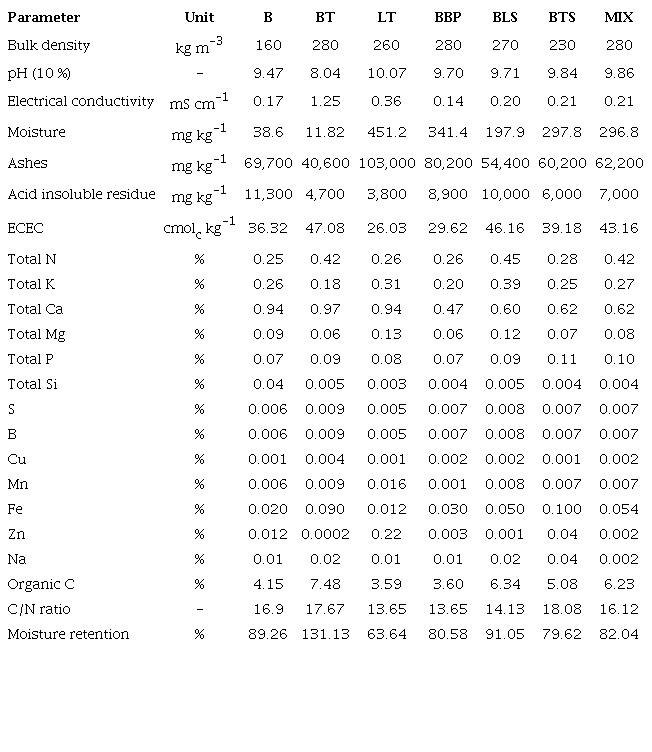
* B: branch biochar; BT: coastal/butt plate biochar; LT: leaf + stump biochar; BBP: branch + coastal biochar; BLS: branch + leaf + stump biochar; BTS: coastal + leaf + stump biochar; MIX: branch + coastal + leaf + stump biochar. ECEC: effective cation exchange capacity.
Bulk density ranged from 160 to 280 kg m-3, values typical of porous carbonized materials. Electrical conductivity (EC) showed a strong variation among formulations, with BT (coastal/butt plate biochar) presenting the highest EC (1.25 mS cm-1), being consistent with its elevated concentrations of Ca, Fe, Mn, and Na. This suggests a higher ionic load and exchangeable cation availability, which may partially explain the stronger effects of BT-based treatments on maize germination and early growth.
Nutrient content followed distinct patterns depending on feedstock. BLS (branches + leaves + stump) and BT displayed the highest total N values (0.45 and 0.42 %, respectively), whereas LT had the highest K (0.31 %) and ash (103,000 mg kg-1) contents. Effective cation exchange capacity (ECEC) ranged from 26.03 to 47.08 cmolc kg-1, with BT and BLS showing the highest values, indicating a greater cation retention capacity and potential to improve soil nutrient-holding properties.
The organic carbon content varied between 3.59 and 7.48 %, with BT again ranking highest. The C/N ratio (13.6-18.1) suggests a moderate recalcitrance and a balance between structural carbon and more labile components. The moisture retention capacity was particularly high in BT (131 %), reflecting its greater porosity and surface area.
Overall, the combined formulation (MIX: branch + coastal + leaf + stump biochar) integrated the favorable attributes of individual feedstocks, including high pH, moderate EC, balanced nutrient concentration, and high ECEC. These properties help to explain the strong agronomic response of maize in treatments where mixtures of residues were applied.
The treatments B (branch biochar) and MIX (leaf and stump biochar) presented improvements in soil physical-chemical parameters, showing a positive effect on potential fertility. However, only some nutrients, such as nitrogen (N), potassium (K), sulfur (S) and boron (B), increased after the biochar application (Table 2). This behavior has been previously described by Chan et al. (2007), who pointed out that biochar can improve the availability of mobile nutrients in the short term, but that other nutrients, such as phosphorus or calcium, require more time to express significant changes.
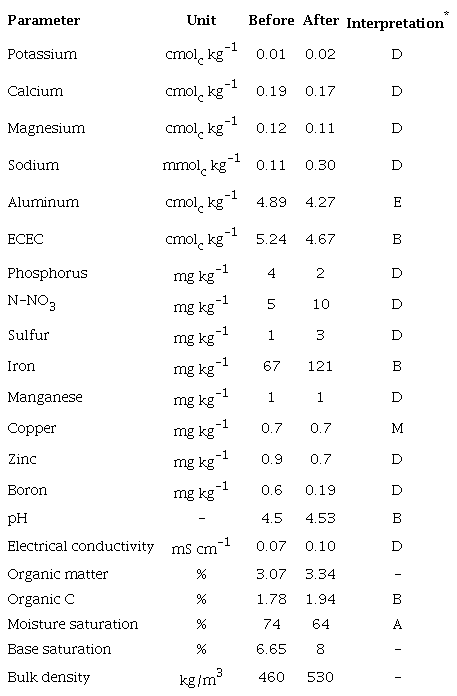
* D: deficient; B: low; M: medium; A: high. ECEC: effective cation exchange capacity.
The few responses in some soil nutrients to the addition of biochar may be related to two reasons, the first with the short period of biochar addition, since it has been observed that, after supplying the soil with plant amendments, significant changes tend to be reflected in the medium and long term (Osorio 2018), and more in soils with mining background (Tutunendo case), in which ecosystems are deforested, soil is removed and mounds are formed with notable characteristics: coarse texture, low moisture retention capacity and limited proportions of silt, clay and organic matter (Ramírez et al. 2019). The second explanation is related to the recalcitrant nature of biochar and the need for humification processes to release retained nutrients (Ighalo et al. 2025). In addition, the climatic conditions of Quibdó, characterized by rainfall in excess of 7,000 mm year-1, can cause nutrient leaching, especially in soils with loose structure and low cation exchange capacity, as in areas of recent mining (Quinto et al. 2022, Torres-Torres et al. 2024).
The mixed model showed that the treatment factor had a highly significant effect on maize seed germination (p < 0.001), whereas dose showed a marginal trend (p = 0.090), and the treatment x dose interaction was not significant (p = 0.743; Table 3). This indicates that the germination response was primarily driven by the type of biochar used rather than the amount applied.
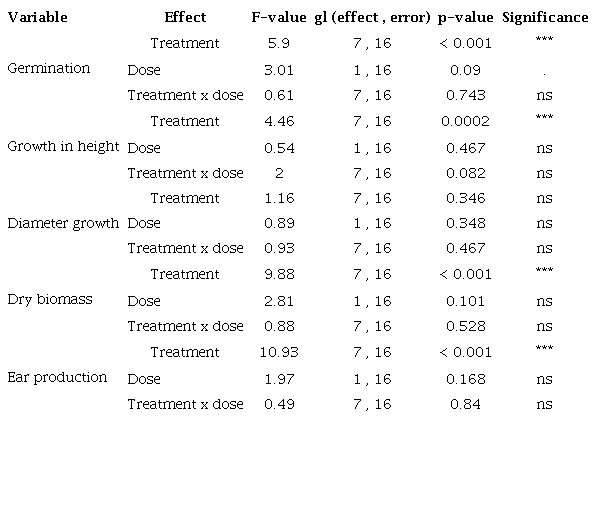
* ** p < 0.001; .: trend; ns: not significant. N = 32; df_error = 16; df_total = 31.
Adjusted means revealed that all active biochar treatments achieved markedly higher germination percentages (79.2-100 %), when compared with the control (41.7 %), which exhibited a statistically significant reduction in germination capacity (p < 0.05; Table 4). Although some active treatments shared statistical groupings, they all consistently outperformed the untreated soil, confirming the positive effect of biochar on early seed development.
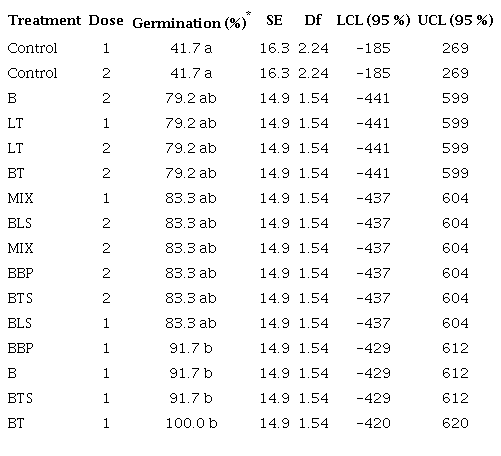
* Different letters within the same dose indicate significant differences (Tukey; p < 0.05). B: branch biochar; BT: coastal/butt plate biochar; LT: leaf + stump biochar; BBP: branch + coastal biochar; BLS: branch + leaf + stump biochar; BTS: coastal + leaf + stump biochar; MIX: branch + coastal + leaf + stump biochar; LCL: lower control limit; UCL: upper control limit; SE: standard error.
Biochar influences germination through several soil-plant mechanisms. First, biochar improves the soil physical structure, reducing bulk density, increasing porosity, and enhancing aeration, key conditions for radicle emergence and oxygen diffusion (Murtaza et al. 2023). These structural changes also promote water retention in the germination zone, preventing seed desiccation and supporting uniform imbibition (Hussain et al. 2017, Bo et al. 2023). In the context of the Quibdó’s high rainfall (> 7,000 mm year-1), increased porosity may further facilitate infiltration and reduce waterlogging stress, which is known to inhibit germination by limiting oxygen availability (Xuan et al. 2023). This suggests that biochar may buffer both extremes (drought and excess moisture), what is particularly important in tropical climates with intense rainfall variability. Second, biochar can enhance early rhizospheric biochemical activity, including increases in soil enzyme activity (β-glucosidase, urease) and shifts in microbial populations that support the early metabolic activation of seeds (Khan et al. 2022). These processes facilitate nutrient mobilization during the early stages of seedling establishment and may contribute to the higher germination rates observed. Finally, the increased germination observed with all biochar treatments may be partially attributed to increases in nutrient availability, particularly N and K (Table 2), which are essential for early metabolic activation and radicle elongation.
The treatment BT (coastal/butt plate biochar) showed the highest germination percentage (100 %). This may be due to the fact that coastal residues often contain bark, twigs, and cambial tissues, which are known to accumulate higher concentrations of nutrients such as K, Ca, Mg, and micronutrients (Briedis et al. 2011). The carbonization of these tissues produces biochar with higher ash content and electrical conductivity, properties associated with increased nutrient availability and improved soil chemical environment during germination.
Mixtures of residues (e.g., MIX, BTS, BBP) tended to perform better than single-source biochars, supporting the hypothesis that biochar derived from heterogeneous feedstocks may deliver a broader spectrum of nutrients and functional groups, enhancing both soil cation exchange capacity and early availability of mobile nutrients (Freitas et al. 2020, Kapoor et al. 2022). Although these effects were not statistically distinguishable among active treatments, the trend suggests potential synergistic interactions that merit future investigation.
In regions with extreme rainfall, such as the study area, germination may be negatively affected by nutrient dilution and leaching (Quinto et al. 2022). Biochar’s high surface area and charge density help to retain nitrate, ammonium, and potassium through electrostatic interactions and micropore entrapment, reducing nutrient loss during heavy rainfall events (Zhang et al. 2021). This buffering capacity likely contributed to the superior germination observed in biochar-amended plots.
The moisture retention capacity was especially high in BT (131 %), B (89 %), and BLS (91 %). These properties help to maintain adequate matric potential around seeds, supporting the hydration process that activates the metabolic pathways required for germination (Gholami et al. 2019, Ali et al. 2021).
The higher water retention capacity of BT biochar may explain why this treatment reached the highest germination (100 %), as hydrated seeds experience faster enzyme activation, mobilization of starch reserves, and radicle protrusion (Nonogaki 2019).
These results are consistent with Hussain et al. (2017) and Minhas et al. (2020), who found that biochar enhances germination by improving soil aggregation, lowering bulk density, and stabilizing moisture availability during the early developmental stages.
The mixed-model analysis showed that biochar treatments significantly affected maize height (p < 0.05), whereas the dose factor did not (p = 0.467). The treatment x dose interaction exhibited a marginal trend (p = 0.082) (Table 3), suggesting that the height response was largely consistent across doses, but certain treatment and dose combinations produced slightly stronger effects. The control treatment achieved the lowest height values, highlighting the limitations imposed by the unamended soil, a typical constraint in post-mining substrates characterized by low organic matter, limited moisture retention, and poor nutrient availability (Ramírez et al. 2019, Quinto et al. 2024).
In contrast, all active biochar treatments improved plant height, with the greatest adjusted mean observed for branch biochar (B) at the dose 1 (176.7 cm). Other treatments, such as LT, BT, BLS and BTS, consistently formed part of the top statistical groups, reflecting their strong contribution to early vegetative growth. Multiple comparisons indicated that coastal-derived biochar (BT) and mixed formulations containing leaf and stump residues (BLS and BTS) exhibited robust effects even at the dose 1, whereas the dose 2 tended to enhance height marginally for some treatments (e.g., BT and BTS), although not significantly (Table 5).
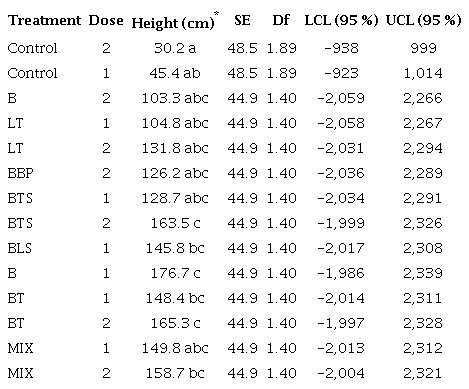
* Different letters within the same dose indicate significant differences (Tukey; p < 0.05). B: branch biochar; BT: coastal/butt plate biochar; LT: leaf + stump biochar; BBP: branch + coastal biochar; BLS: branch + leaf + stump biochar; BTS: coastal + leaf + stump biochar; MIX: branch + coastal + leaf + stump biochar; LCL: lower control limit; UCL: upper control limit; SE: standard error.
These improvements in plant height reflect several mechanistic pathways supported by the characterization of the used biochar. First, biochar displayed a high pH (8.0-10.1), which can partially neutralize soil acidity and reduce soluble aluminum (Table 2), improving root elongation and nutrient uptake (Agegnehu et al. 2016). Second, their effective cation exchange capacity (ECEC) was markedly elevated (26-47 cmolc kg-1), particularly in BT and BLS biochars, favoring nutrient retention and reducing losses through leaching, an important aspect in the Quibdó’s extremely high rainfall environment (~7,000 mm year-1). Enhanced ECEC is a well-documented mechanism through which biochar improves nutrient availability and promotes shoot growth (Agegnehu et al. 2017).
The moisture retention capacity of the biochars was generally high (63-131 %), particularly in BT, BLS and MIX, supporting a better water availability in this coarse-textured post-mining soil. Improved water retention and soil physical structure promote faster shoot expansion by reducing hydric stress during early vegetative development (Kammann et al. 2015, Hussain et al. 2017).
Beyond physical improvements, nutrient contents of biochar also explain the observed differences. Coastal biochar residue (BT) and mixed biochar residue (BLS, BTS, MIX) presented high concentrations of N, Ca, K and micronutrients such as Fe and Mn, and organic carbon levels above 5 % (Table 1). After soil incorporation, increases in N, K and S were observed (Table 2), reinforcing the role of biochar in enhancing the nutrient environment of the rhizosphere. Nitrogen, in particular, is a critical driver of plant height, because it supports high rates of photosynthesis, leaf area expansion and biomass allocation to structural tissues (Li et al. 2019, Yan et al. 2019). This aligns with the strong performance of BT and BTS biochar, which contained the highest N concentrations (0.42-0.45 %).
The slight but consistent height increment at the dose 2 for several treatments may reflect increased nutrient availability and higher water retention at greater biochar rates, although the non-significant dose effect suggests that even the lower dose was sufficient to trigger substantial physiological responses. Similar findings were reported by Cong et al. (2023), who observed, beyond a certain threshold, the effect of biochar on height growth plateaus, particularly in soils with initially low fertility.
Overall, the combined evidence indicates that biochar enhances plant height through synergistic improvements in soil fertility, water retention, and nutrient dynamics, with coastal-derived and mixed-residue biochar providing the most pronounced benefits under the edaphoclimatic conditions of post-mining soils in Quibdó.
The mixed-model analysis indicated no significant main effects of treatment (p = 0.346), dose (p = 0.348), or their interaction (p = 0.467) on stem-diameter growth (Table 3). However, the adjusted means reveal notable patterns that provide biological insight. In particular, a comparatively high mean diameter was observed in the treatment B under the dose 2 (29.77 mm), whose confidence interval remained above zero (3.66-55.90 mm), suggesting a potential positive response to higher biochar application rates.
Although these differences were not statistically significant across all treatments (Table 6), the pattern suggests that stem diameter may be more responsive to the quantity of biochar applied rather than to biochar type. This aligns with previous findings indicating that increased biochar doses can enhance stem thickness by improving soil water retention, increasing nutrient availability and reducing mechanical resistance of the soil matrix (Dai et al. 2020).
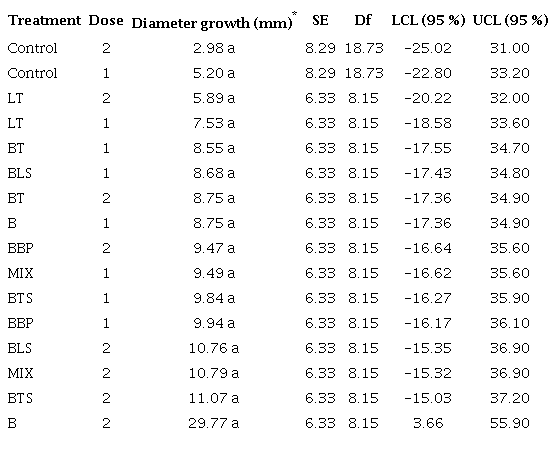
* Different letters within the same dose indicate significant differences (Tukey; p < 0.05). B: branch biochar; BT: coastal/butt plate biochar; LT: leaf + stump biochar; BBP: branch + coastal biochar; BLS: branch + leaf + stump biochar; BTS: coastal + leaf + stump biochar; MIX: branch + coastal + leaf + stump biochar; LCL: lower control limit; UCL: upper control limit; SE: standard error.
Biochar with higher moisture-retention capacity [particularly B (89.26 %), BLS (91.05 %), and BT (131.13 %)] likely contributed to sustained water availability during early stem thickening. Stem diameter is highly sensitive to soil water status because turgor-mediated cell expansion depends on adequate hydration (Gallardo et al. 2006). This is consistent with the observations of Dai et al. (2020), who demonstrated that biochar increases stem diameter by improving water retention and reducing soil compaction.
Moreover, the measured increase in soil organic carbon after biochar addition (from 1.78 to 1.94 %; Table 2) may have improved soil structure and aeration, reducing mechanical resistance to root growth. A better root proliferation enhances water uptake and supports secondary growth in stems (Strock & Lynch 2020).
Recent studies have demonstrated that biochar amendments can strengthen stem tissue, increasing stem-breaking force by up to 52 %, which reflects improved mechanical support and potential tolerance to stress (Zwart & Kim 2012, Chi et al. 2024, Zhou et al. 2024). These structural effects are agronomically relevant, because thicker stems are associated with improved drought tolerance, greater mechanical stability, and enhanced translocation of water and nutrients (Hazman & Kabil 2022).
Therefore, while no strong statistical evidence was detected in the present experiment, the observed diameter responses under higher doses (particularly in the B treatment) indicate a possible positive trend. This suggests that biochar additions, especially at higher application rates, may contribute to stem thickening in maize. Nevertheless, these findings should be interpreted cautiously, and further experiments with larger sample sizes or refined dose levels are necessary to confirm these effects.
The mixed-effects model showed a highly significant effect of the biochar treatment on total dry biomass (p < 0.001), whereas the dose (p = 0.101) and the treatment x dose interaction (p = 0.528) were not statistically significant (Table 3). This indicates that biomass accumulation in maize was primarily driven by the type of biochar applied rather than by the amount used.
The combined branch + coastal biochar (BBP) produced one of the strongest responses, significantly increasing the total dry biomass, when compared to the control (p = 0.0028), with an adjusted mean of 481 g plant-1, representing a gain of more than 330 g relative to untreated soil. Similarly, the treatments composed of branch + coastal + leaf + stump biochar (BLS; p = 0.019) and coastal + leaf + stump biochar (BTS; p = 0.037) also significantly outperformed the control (Table 7). These increases align with previous studies reporting substantial biomass improvements in maize when biochar is applied at moderate rates (2-4 t ha-1), attributed to enhanced nutrient retention, greater aeration, and improved soil moisture dynamics (Hussain et al. 2017, Minhas et al. 2020).
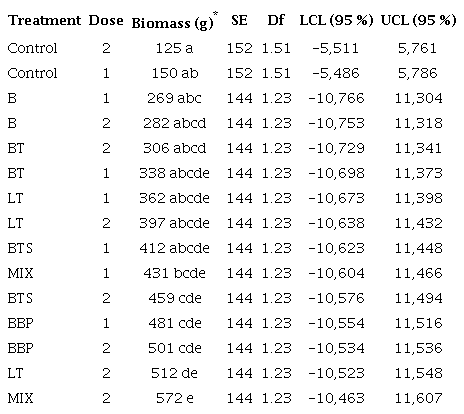
* Different letters within the same dose indicate significant differences (Tukey; p < 0.05). B: branch biochar; BT: coastal/butt plate biochar; LT: leaf + stump biochar; BBP: branch + coastal biochar; BLS: branch + leaf + stump biochar; BTS: coastal + leaf + stump biochar; MIX: branch + coastal + leaf + stump biochar; LCL: lower control limit; UCL: upper control limit; SE: standard error.
A higher biomass production is commonly associated with improved nutrient use efficiency, enhanced photosynthetic capacity, and greater vegetative vigor (Semida et al. 2019). In particular, biochar-rich in base cations and surface functional groups can enhance nutrient availability and microbial activity, promoting root expansion and plant productivity (Lehmann & Joseph 2024, Oke et al. 2025).
Random-effects estimates also revealed substantial variability associated with locality (σ2 = 37,194), indicating that site-specific conditions strongly influenced biomass outcomes. This is consistent with the findings of Jeffery et al. (2016), who emphasized that biochar performance is context-dependent, particularly under contrasting edaphoclimatic conditions. Such variability reinforces the importance of locally adapted management approaches in tropical high-rainfall environments like the Chocó region.
Biomass responses in maize can also interact with rainfall dynamics. Park et al. (2023) documented higher biomass accumulation when biochar was applied during rainy periods, likely due to increased nutrient mobility and reduced water stress. Given the extremely high rainfall in the study area (~7,000 mm year-1), biochar may enhance biomass production by improving soil structure and reducing nutrient leaching. However, excessive rainfall may also limit final crop yield through impaired pollination or prolonged waterlogging (Kumar et al. 2024). Therefore, future research should investigate maize-biochar interactions under controlled water-stress conditions to develop more precise agronomic recommendations.
In general, these results indicate that biochar derived from mixed woody residues (particularly those including coastal material) has strong potential to enhance biomass accumulation and carbon storage in maize systems in hyper-humid tropical regions.
The mixed-effects model revealed a highly significant effect of biochar treatments on ear weight (p < 0.001), whereas neither dose (p = 0.168) nor the treatment x dose interaction (p = 0.840) influenced this variable (Table 3). As expected, the control treatment exhibited the lowest cob weight (0.070 kg plant-1) (Table 8), reflecting the severe soil fertility limitations documented for the study site: very low base saturation, low P concentration (2 mg kg-1 after planting), high Al saturation, low cation exchange capacity (ECEC), and acidic pH (4.5) (Table 2). These conditions are known to restrict maize reproductive development due to impaired nutrient uptake, root growth inhibition, and reduced transport of assimilates toward developing kernels (Fageria 2009).
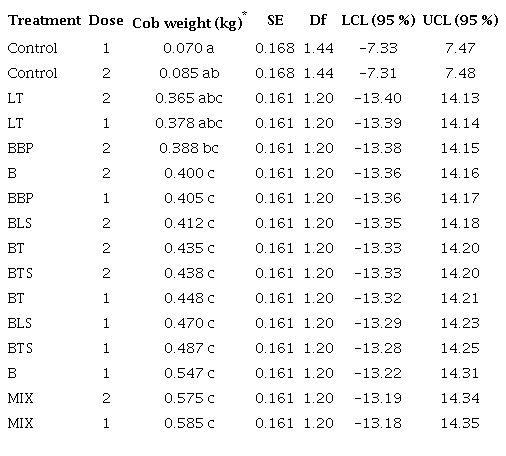
* Different letters within the same dose indicate significant differences (Tukey; p < 0.05). B: branch biochar; BT: coastal/butt plate biochar; LT: leaf + stump biochar; BBP: branch + coastal biochar; BLS: branch + leaf + stump biochar; BTS: coastal + leaf + stump biochar; MIX: branch + coastal + leaf + stump biochar; LCL: lower control limit; UCL: upper control limit; SE: standard error.
Among the active treatments, branch + coastal biochar (BBP) produced a significantly lower cob weight, when compared to the control (p = 0.046). This unexpected reduction may be associated with the lower nutrient availability or possible immobilization effects observed in mixed woody feedstocks when pyrolysis conditions do not fully stabilize organic fractions, an effect already reported in a study using heterogeneous residues (Laird et al. 2009).
Conversely, the highest cob weight was achieved in the treatment combining branch, coastal, leaf, and stump residues (MIX), with an adjusted mean of 0.585 kg plant-1 (Table 8). Although these differences were not statistically significant, if compared to other active treatments, the trend suggests a potential synergistic effect among diverse feedstocks, likely resulting in a broader supply of nutrients, higher cation exchange capacity, and improved moisture retention. Similar patterns have been reported in biochar derived from mixed biomass inputs, which tend to enhance translocation of photoassimilates to reproductive organs, thereby increasing cob formation and grain filling (Zhang et al. 2024).
The positive response of ear weight to most biochar treatments highlights the role of biochar as a soil amendment capable of enhancing reproductive performance, particularly in degraded tropical soils. Several mechanisms may explain this improvement: enhanced nutrient availability: biochar increases soil pH, reduces Al toxicity, and improves P accessibility, key factors for reproductive processes in maize. Long-term studies report marked increases in P uptake and grain yield when biochar is applied repeatedly (Cao et al. 2020); improved soil water regulation: the study area receives > 7,000 mm year-1 of rainfall, which can promote leaching of essential nutrients. Biochar’s porous structure helps to retain nutrients and water, moderating extreme moisture fluctuations. Park et al. (2023) showed that biochar enhanced maize yield under heavy rainfall conditions due to increased water-holding capacity and reduced N losses; stimulation of carbon metabolism: biochar can stimulate root function, increase photosynthesis, and improve the partitioning of carbon toward reproductive tissues (Zhang et al. 2024).
Despite these improvements, cob weights remained well below the Colombia’s national average yield for maize (≈1.8 t ha-1; MADR 2021). Several factors may explain these reduced values: legacy of soil degradation: the study site had a long history of extraction and burning cycles, which likely reduced soil biological activity and organic matter, limiting the short-term impact of biochar; short time frame of application: biochar effects on yield often increase over time as the material ages and interacts with soil biota. Hu et al. (2021) demonstrated that a single biochar application can enhance maize and wheat yields for up to four years due to gradual improvements in soil structure and nutrient dynamics; excess rainfall and pollination constraints: extremely high rainfall may disrupt tassel formation, pollen viability, and grain filling. Carr et al. (2016) observed a reduced maize yield in high-rainfall environments due to impaired pollination, corroborated by Novak et al. (2019), who reported that prolonged rainfall reduces kernel set by limiting pollen dispersal and silk receptivity.
Taken together, the results indicate that, while biochar substantially improves cob weight, when compared to unamended soil, yields are constrained by environmental and historical soil factors beyond the scope of the amendment. Longer-term studies and complementary agronomic practices (e.g., mulching, drainage improvement) may help to fully realize the potential of biochar for maize production in these hyper-humid tropical regions.
CONCLUSIONS
-
1. The seven biochar formulations exhibited clear physical-chemical differences determined by feedstock type, with coastal/butt plate biochar (BT) and branch + leaf + stump biochar (BLS) showing the highest nutrient concentrations, effective cation exchange capacity (ECEC), moisture retention, and organic carbon, indicating their superior potential to improve degraded soils;
-
2. Biochar application produced short-term improvements in selected soil parameters, particularly N, K, S, and B, whereas limited changes in other nutrients reflected the short evaluation period and the inherent recalcitrance of biochar in recently mined, coarse-textured soils;
-
3. All biochar treatments significantly increased maize seed germination, when compared with the control, demonstrating that biochar effectively improves early seed establishment under high-rainfall tropical conditions through enhanced structure, moisture retention, and nutrient availability;
-
4. The BT treatment produced the highest germination rate (100 %), likely due to its elevated ash content, electrical conductivity, and nutrient concentration, confirming its greater capacity to enhance early soil-seed conditions;
-
5. Mixed-residue biochars [branch + coastal + leaf + stump biochar; BLS; coastal + leaf + stump biochar (BTS); branch + coastal biochar] performed consistently well across variables, supporting the hypothesis that heterogeneous feedstock combinations provide more balanced nutrient profiles and improved functional properties relative to single-source biochars;
-
6. Biochar significantly increased plant height across treatments, with branch biochar, BTS, BT, and BLS showing the greatest improvements. This response was linked to increases in nutrient retention (higher ECEC), reduced aluminum toxicity, and enhanced water availability in the amended soil;
-
7. Dose did not significantly affect any measured variable, indicating that even the lower biochar rate was sufficient to improve germination and early growth in this post-mining soil.
-
8. Biochar derived from forestry residues, particularly BT and mixed formulations, is a promising amendment for restoring nutrient-poor, acidic, and highly leached post-mining soils in tropical high-rainfall environments.
ACKNOWLEDGMENTS
The authors would like to express their special gratitude to the Universidad Tecnológica del Chocó “Diego Luis Córdoba” and the Madera Project for funding the lead author’s doctoral studies, within which this research was developed.
REFERENCES
AGEGNEHU, G.; BASS, A. M.; NELSON, P. N.; BIRD, M. I. Benefits of biochar, compost and biochar-compost for soil quality, maize yield and greenhouse gas emissions in a tropical agricultural soil. Science of the Total Environment, v. 543, n. 1, p. 295-306, 2016.
AGEGNEHU, G.; SRIVASTAVA, A. K.; BIRD, M. I. The role of biochar and biochar-compost in improving soil quality and crop performance: a review. Applied Soil Ecology, v. 119, n. 1, p. 156-170, 2017.
ALI, L.; XIUKANG, W.; NAVEED, M.; ASHRAF, S.; NADEEM, S. M.; HAIDER, F.; MUSTAFA, A. Impact of biochar application on germination behavior and early growth of maize seedlings: insights from a growth room experiment. Applied Sciences, v. 11, n. 24, e11666, 2021.
BATES, D.; MAECHLER, M.; BOLKER, B.; WALKER, S. Fitting linear mixed-effects models using lme4. Journal of Statistical Software, v. 67, n. 1, p. 1-48, 2015.
BO, X.; ZHANG, Z.; WANG, J.; GUO, Z.; LI, Z.; LIN, H.; HUANG, Y.; HAN, Z.; KUZYAKOV, Y.; ZOU, J. Benefits and limitations of biochar for climate-smart agriculture: a review and case study from China. Biochar, v. 5, e77, 2023.
BRIEDIS, J. I.; WILSON, J. S.; BENJAMIN, J. G.; WAGNER, R. G. Logging residue volumes and characteristics following integrated roundwood and energy-wood whole-tree harvesting in central Maine. Northern Journal of Applied Forestry, v. 28, n. 2, p. 66-71, 2011.
CAO, D.; CHEN, W.; YANG, P.; LAN, Y.; SUN, D. Spatio-temporal variabilities of soil phosphorus pool and phosphorus uptake with maize stover biochar amendment for 5 years of maize. Environmental Science and Pollution Research, v. 27, n. 2, p. 6350-36361, 2020.
CARR, T.; YANG, H.; RAY, C. Temporal variations of water productivity in irrigated corn: an analysis of factors influencing yield and water use across central Nebraska. Plos One, v. 11, e0161944, 2016.
CHAN, K. Y.; VAN ZWIETEN, L.; MESZAROS, I.; DOWIE, D.; JOSEPH, S. Agronomic values of greenwaste biochar as a soil amendment. Australian Journal of Soil Research, v. 45, n. 8, p. 629-634, 2007.
CHI, W.; NAN, Q.; LIU, Y.; DONG, D.; QIN, Y.; LI, S.; WU, W. Stress resistance enhancing with biochar application and promotion on crop growth. Biochar, v. 6, e43, 2024.
CONG, M.; HU, Y.; SUN, X.; YAN, H.; YU, G.; TANG, G.; CHEN, S.; XU, W.; JIA, H. Long-term effects of biochar application on the growth and physiological characteristics of maize. Frontiers in Plant Science, v. 14, e1172425, 2023.
DAI, Y.; ZHENG, H.; JIANG, Z.; XING, B. Combined effects of biochar properties and soil conditions on plant growth: a meta-analysis. Science of the Total Environment, v. 713, e136635, 2020.
ERENSTEIN, O.; JALETA, M.; SONDER, K.; MOTTALEB, K.; PRASANNA, B. M. Global maize production, consumption and trade: trends and R&D implications. Food Security, v. 14, n. 5, p. 1295-1319, 2022.
FAGERIA, N. K. The use of nutrients in crop plants. Boca Raton: CRC Press, 2009.
FREITAS, A. M.; NAIR, V. D.; HARRIS, W. G. Biochar as influenced by feedstock variability: implications and opportunities for phosphorus management. Frontiers in Sustainable Food Systems, v. 4, e510982, 2020.
GALLARDO, M.; THOMPSON, R. B.; VALDEZ, L. C.; PÉREZ, C. Response of stem diameter to water stress in greenhouse-grown vegetable crops. The Journal of Horticultural Science and Biotechnology, v. 81, n. 3, p. 483-495, 2006.
GHOLAMI, L.; KARIMI, N.; KAVIAN, A. Soil and water conservation using biochar and various soil moisture in laboratory conditions. Catena, v. 182, e104151, 2019.
HALLAJ, Z.; BIJANI, M.; KARAMIDEHKORDI, E.; YOUSEFPOUR, R.; YOUSEFZADEH, H. Forest land use change effects on biodiversity ecosystem services and human well-being: a systematic analysis. Environmental and Sustainability Indicators, v. 23, e100445, 2024.
HAZMAN, M. Y.; KABIL, F. F. Maize root responses to drought stress depend on root class and axial position. Journal of Plant Research, v. 135, n. 1, p. 105-120, 2022.
HOSHMAND, A. R. Statistical methods for environmental & agricultural sciences. San José: LLC, 1998.
HU, Y.; SUN, B.; WU, S.; FENG, H.; GAO, M.; ZHANG, B.; LIU, Y. After-effects of straw and straw-derived biochar application on crop growth, yield, and soil properties in wheat (Triticum aestivum L.)-maize (Zea mays L.) rotations: a four-year field experiment. Science of the Total Environment, v. 780, e146560, 2021.
HUSSAIN, M.; FAROOQ, M.; NAWAZ, A.; AL-SADI, A.; SOLAIMAN, Z. M.; ALGHAMDI, S. S.; AMMARA, U.; OK, Y. S.; SIDDIQUE, K. H. M. Biochar for crop production: potential benefits and risks. Journal of Soils and Sediments, v. 17, n. 3, p. 685-716, 2017.
IGHALO, J. O.; OHORO, C. R.; OJUKWU, V. E.; ONIYE, M.; SHAIKH, W. A.; BISWAS, J. K.; SETH, C. S.; MOHAN, G. B. M.; CHANDRAN, S. A.; SELVASEMBIANO, R. Biocarbón para mejorar la fertilidad del suelo y la diversidad microbiana: de la producción a la acción del oro negro. Science, v. 28, n. 1, e111524, 2025.
INSTITUTO DE INVESTIGACIONES AMBIENTALES DEL PACÍFICO (IIAP). Caracterización de la estación ambiental de Tutunendo, Chocó. Quibdó: IIAP, 2001.
JEFFERY, S.; VERHEIJEN, F. G. A.; KAMMANN, C.; ABALOS, D. Biochar effects on methane emissions from soils: a meta-analysis. Soil Biology and Biochemistry, v. 101, n. 1, p. 251-258, 2016.
KABIR, E.; KIM, K.; KNOW, E. E. Biochar as a tool for the improvement of soil and environment. Frontiers in Environmental Science, v. 11, n. 1, e324533, 2023.
KAMMANN, C. I.; SCHMIDT, H. P.; MESSERSCHMIDT, N.; LINSEL, S.; STEFFENS, D.; MÜLLER, C.; KOYRO, H.; CONTE, P.; JOSEPH, S. Plant growth improvement mediated by nitrate capture in co-composted biochar. Nature, v. 5, e11080, 2015.
KAPOOR, A.; SHARMA, R.; KUMAR, A.; SEPEHYA, S. Biochar as a means to improve soil fertility and crop productivity: a review. Journal of Plant Nutrition, v. 45, n. 15, p. 2380-2388, 2022.
KHAN, I.; LUAN, C.; QI, W.; WANG, X.; YU, B.; REHMAN, A.; KHAN, A. A.; KHAN, J.; LI-XUEET, W. The residual impact of straw mulch and biochar amendments on grain quality and amino acid contents of rainfed maize crop. Journal of Plant Nutrition, v. 46, n. 3, p. 1283-1295, 2022.
KHAN, S.; IRSHAD, S.; MEHMOOD; K.; HASNAIN, Z.; NAWAZ, M.; RAIS, A.; GUL, S.; ASHFAQ, M.; HASHEM, A.; ABD, A. F.; IBRAR, D. Biochar production and characteristics, its impacts on soil health, crop production, and yield enhancement: a review. Plants, v. 13, n. 2, e166, 2024.
KUMAR, A.; RAJWAR, N.; TONK, T. Climate change effects on plant-pollinator interactions, reproductive biology and ecosystem services. In: SINGH, H. (ed.). Forests and climate change. Singapore: Springer, 2024. p. 97-117.
LAIRD, D. A.; BROWN, R. C.; AMONETTE, J. E.; LEHMANN, J. Review of the pyrolysis platform for coproducing bio-oil and biochar. Biofuels, Bioproducts & Biorefining, v. 3, n. 5, p. 547-562, 2009.
LEHMANN, J.; JOSEPH, S. Biochar for environmental management: science, technology and implementation. 2. ed. London: Routledge, 2015.
LEHMANN, J.; JOSEPH, S. Biochar for environmental management: science, technology and implementation. 3. ed. London: Routledge, 2024.
LENTH, R. V. Emmeans: estimated marginal means, aka least-squares means. 2025. Available at: https://cran.r-project.org/web/packages/emmeans/index.html. Access in: June 2025.
LI, C.; ZHENG, Z.; PENG, Y.; NIE, X.; YANG, L.; XIAO, Y.; ZHOU, Q. Precipitation and nitrogen addition enhance biomass allocation to aboveground in an alpine steppe. Ecology and Evolution, v. 9, n. 21, p. 12193-12201, 2019.
MINHAS, W. A.; HUSSAIN, M.; MEHBOOB, N.; NAWAZ, A.; UL-ALLAH, S.; RIZWAN, M. S.; HASSAN, Z. Synergetic use of biochar and synthetic nitrogen and phosphorus fertilizers to improves maize productivity and nutrient retention in loamy soil. Journal of Plant Nutrition, v. 43, n. 9, p. 1356-1368, 2020.
MINISTERIO DE AGRICULTURA Y DESARROLLO RURAL DE COLOMBIA (MADR). Maíz: composición y caracterización de la cadena. Bogotá: Minagricultura, 2021.
MURTAZA, G.; AHMED, Z.; ELDIN, S. M.; ALI, B.; BAWAZEER, S.; USMAN, M.; IQBAL, R.; NEUPANE, D.; ULLAH, A.; KHAN, A.; HASSAN, M. U.; ALI, I.; TARIQ, A. Biochar-soil-plant interactions: a cross talk for sustainable agriculture under changing climate. Frontiers in Environmental Science, v. 11, e1059449, 2023.
NONOGAKI, H. Seed germination and dormancy: the classic story, new puzzles, and evolution. Plant & Cell Physiology, v. 60, n. 5, p. 1409-1418, 2019.
NOVAK, J. M.; SIGUA, G. C.; DUCEY, T. F.; WATTS, D. W.; STONE, K. C. Designer biochars impact on corn grain yields, biomass production, and fertility properties of a highly-weathered Ultisol. Environments, v. 6, n. 6, e64, 2019.
OKE, G.; PAVLOVICH, K.; SIMIYU, Z.; ALLAN, A.; GODSWILL, O.; SHADRACK, O. Biochar for sustainable soil management: enhancing soil fertility, plant growth and climate resilience. Farming System, v. 3, n. 4, e100167, 2025.
OSORIO, N. W. Manejo de nutrientes en suelos del trópico. 3 ed. Medellín: LEO digital Ediciones & Publicaciones, 2018.
PARK, J. H.; YUN, J. J.; KIM, S. H.; PARK, J. H.; ACHARYA, B. S.; CHO, J. S.; KANG, Z. W. Biochar improves soil properties and corn productivity under drought conditions in South Korea. Biochar, v. 5, e66, 2023.
QUINTO, H.; AYALA, G.; GUTIÉRREZ, H. Contenido de nutrientes, acidez y textura del suelo en áreas degradadas por la minería en el Chocó Biogeográfico. Revista de la Academia Colombiana de Ciencias Exactas, Físicas y Naturales, v. 46, n. 179, p. 514-528, 2022.
QUINTO, H.; TORRES-TORRES, J. J.; PÉREZ-ABADÍA, D. Influence of mining on nutrient cycling in the tropical rain forests of the Colombian Pacific. Forests, v. 15, e1222, 2024.
R CORE TEAM. R: a language and environment for statistical computing. Vienna: R Foundation for Statistical Computing, 2023.
RAMÍREZ, G.; QUINTO, H.; VARGAS, L.; RANGEL, O. J. Temporary effect of mining on breathing and on the physicochemical conditions of soil. Modern Environmental Science and Engineering, v. 5, n. 9, p. 837-848, 2019.
SEMIDA, W. M.; BEHEIRY, H. R.; SÉTAMOU, M.; SIMPSON, C. R.; ABD, T. A.; RADY, M. M.; NELSON, S. D. Biochar implications for sustainable agriculture and environment: a review. South African Journal of Botany, v. 127, n. 80, p. 333-347, 2019.
STROCK, C. F.; LYNCH, J. P. Root secondary growth: an unexplored component of soil resource acquisition. Annals of Botany, v. 126, n. 2, p. 205-218, 2020.
TORRES-TORRES, J. J.; QUINTO, H.; GUERRERO-MACHADO, M. Aboveground biomass in a post-mining forest succession in the Colombian Pacific. Revista de Biología Tropical, v. 72, e55276, 2024.
TORRES-TORRES, J. J.; MEDINA, H. H.; MARTÍNEZ, M. Caracterización del aprovechamiento forestal como herramienta para el manejo del bosque natural en el Medio Atrato. Revista Biodiversidad Neotropical, v. 9, n. 4, e650, 2019.
TORRES-TORRES, J. J.; QUINTO, H.; MEDINA, H. H. Diversidad de especies leñosas y su relación con variables ambientales en bosques post-minería del Chocó Biogeográfico. Boletín Científico Museo Historia Natural Universidad de Caldas, v. 27, n. 2, p. 13-29, 2023.
XUAN, K.; LI, X.; ZHANG, J.; JIANG, Y.; MA, B.; LIU, J. Effects of organic amendments on soil pore structure under waterlogging stress. Agronomy, v. 13, n. 2, e289, 2023.
YAN, H.; CONG, M.; HU, Y.; QIU, C.; YANG, Z.; TANG, G.; XU, W.; ZHU, X.; SUN, X.; JIA, H. Biochar-mediated changes in the microbial communities of rhizosphere soil alter the architecture of maize roots. Frontiers in Microbiology, v. 13, e3389, 2022.
YAN, Z.; EZIZ, A.; TIAN, D.; LI, X.; HOU, X.; PENG, H.; HAN, W.; GUO, Y.; FANG, J. Biomass allocation in response to nitrogen and phosphorus availability: insight from experimental manipulations of Arabidopsis thaliana. Frontiers in Plant Science, v. 10, e598, 2019.
ZHANG, Z.; QIAO, Y.; XIE, D.; HAN, J.; LIU, Z.; ZHAO, Y.; YANG, F. Artificial humic acid promotes carbon sequestration in rice-soil system. Pedosphere, v. 6, n. 1, p. 1-24, 2024.
ZHANG, Y.; WANG, J.; FENG, Y. The effects of biochar addition on soil physicochemical properties: a review. Catena, v. 202, e105284, 2021.
ZHOU, Z.; CUI, E.; ALI, A.; ZHU, L.; XU, J.; CHEN, H. Evaluating the impact of biochar amendment on antibiotic resistance genes and microbiome dynamics in soil, rhizosphere, and endosphere at field scale. Journal of Hazardous Materials, v. 477, e35440, 2024.
ZWART, D. C.; KIM, S. Biochar amendment increases resistance to stem lesions caused by Phytophthora spp. in tree seedlings. HortScience, v. 47, n. 12, p. 1736-1740, 2012.
Author notes