Dossier
Received: 02 June 2021
Accepted: 19 October 2021
Abstract: In the context of the financialization of housing and everyday life, mortgage credits and other forms of indebtedness have become key factors. Recent studies have explored the idea of debt as power relations mainly in the Global North. Through mixed methods, this article examines the notion of debt systems in emerging capitalist economies, and illustrates how housing movements and people without access to formal credits are organising themselves. A thematic analysis from both in-depth interviews with representatives of three housing movements, and data from Chilean national financial surveys, reveals three main results: the interplay of different forms of debt to form a ‘peripheral debt system’; the need to explore the formation of gender and racial inequalities under financialization; and how individual struggles are replaced by collective responses and solidarity from both financial and emotional dimensions. The authors call for a more grounded analysis of debt in order to examine marginalised groups and heterogeneous types of indebtedness on the periphery and to trace further comparisons with other housing movements globally in the context of financialization.
Keywords: debt, financialization of housing, housing movements, peripheral debt systems, peripheral financialization.
Resumen: En el contexto de la financiarización de la vivienda y de la vida cotidiana, los créditos hipotecarios y otras formas de endeudamiento son factores clave. Estudios recientes han explorado la idea de deuda como relación de poder, principalmente en el norte global. A través de métodos mixtos, este artículo examina la noción de sistemas de deuda en las economías capitalistas emergentes, e ilustra cómo los movimientos sociales de vivienda y personas sin acceso a créditos formales se están organizando. A través de un análisis temático tanto de entrevistas en profundidad con representantes de tres movimientos de vivienda en Santiago de Chile, como de datos secundarios de la Encuesta Financiera de Hogares, tres aspectos son revelados: la interacción de diferentes formas de deuda para formar ‘sistemas periféricos deuda’; la necesidad de explorar la formación de desigualdades de género y raciales bajo la financiarización; y cómo los problemas individuales son reemplazados por respuestas colectivas y solidarias desde dimensiones financieras y emocionales. Finalmente, se hace un llamado a realizar más investigaciones empíricas de la deuda para examinar tanto a grupos marginados como a los distintos tipos de deuda en la periferia económica, y a trazar más comparaciones con otros movimientos de vivienda globalmente.
Palabras clave: deuda, financiarización de la vivienda, movimientos de vivienda, sistemas periféricos de deuda, financiarización periférica.
Introduction
Financialization has deeply affected people’s lives. The transition to a finance-led economic system in Europe, North America and beyond has produced negative social outcomes. In the last 40 years, i.e., since Western economies began to implement measures conducive to the consolidation of the neoliberal project (Harvey, 2005), not only has social inequality grown (Palma, 2009), but household indebtedness has also sharply increased (Aalbers, 2008). The strict austerity measures imposed by governments and the ready availability of domestic credit to assist with living costs have widened the gap between wealthy and poor. The current production of capital through financial mechanisms and its extraction and distribution have been partly sustained by higher levels of household debt (Dos Santos, 2013). These mechanisms have impacted not only core capitalist economies, but also those on the periphery (Becker et al., 2010). Chile, as one of the latter, is a prime example of a financialised regime within Latin America, with its high level of household and company debt as a percentage of GDP (Miotti, 2018). In fact, Chile has the largest household debt-to-GDP ratio of all South American countries (Institute of International Finance, 2020).
From the perspective of political economy, subordinated financialization as a theoretical concept is relatively novel and refers to the integration of peripheral economies or emerging capitalist economies (ECEs) into global financial markets (Kaltenbrunner & Painceira, 2016). The process has not only led to new forms of dependency on the global economy (Levy-Orlik, 2013), but has also driven the financialization of households through mortgage debt, promoted by internal banking market logics associated with foreign exchange accumulation (Lapavitsas, 2013). These studies have tended to address broad macroeconomic and quantitative dimensions. By contrast, sociological and anthropological approaches to the financialization of everyday life have focused on the domestic level and the changes in subjectivities and narratives generated by these new financial logics. Some authors have pointed to the role of debt as a biopolitical technology in the process of financialization (García-Lamarca & Kaika, 2016; Karacimen, 2016; Pellandini-Simanyi et al., 2015), viewing it not only as an economic concept, but as a social and political one as well. Both lines of study, however, have tended to focus on formal access to credit in core economies. In terms of financialization of housing, the case of marginalised groups with no access to formal debt in relation to financialization in peripheral economies remains largely unexplored (For some exceptions see: Reyes, 2020; Silvia, 2020; Socoloff, 2020). This is a core component of the present work.
At the same time, following Fields’ (2017) and Wijburg’s (2020) suggestions, not only individuals, but social movements are fundamental in a process of de-financialization of housing. Both authors have highlighted the role of urban struggles and, especially, the emergence of movements that resist financialization in moments of crisis using more radical tactics (Fields, 2017). As a contribution to the debate concerning the role of popular movements in the context of financialization, we employed mixed methods to understand the outcomes produced by financialization in a country considered a peripheral economy such as Chile. Our analysis of debt systems, housing movements and lowest-income groups, revealed one main contribution and two dimensions that require further attention in future research. Firstly, although the most vulnerable members of these groups do not generally have access to formal mortgage credit, different non-traditional types of debt are combined to form a debt system in which bank and retail credit, credit cards and informal loans are used to pay off other debts, renting a place and to purchase basic goods. Secondly, although not an initial objective of the paper, intersectional components emerged, requiring further research regarding the financialization of housing and everyday life, especially in economies where marginalized groups-such as women and immigrants-have a considerable disadvantage in access to formal credit. Finally, individual debt problems are collectively contested through community organisation and self-management, and solidarity contributes to reliving both psychosocial and economic struggles related to debt.
The article is organised as follows. The next section describes the theoretical framework of financialization by analysing the role of household debt in the context of subordinated financialization, reviewing the different lines of study regarding everyday life, and proposing a collective perspective from which understand the inequalities that emerge from the social and power relations of debt. The third section describes the methodology applied to quantitative secondary data taken from a national survey and qualitative primary data obtained by means of in-depth interviews. The fourth and final section begins with a contextualisation of the main macro- and microeconomic debt trends in Chile, after which we present the study findings, namely that ‘peripheral debt systems’ form as a consequence of marginalisation, that there is a need for an intersectional understanding of financialization, and that resistance by the most vulnerable groups and housing movements occurs through insurgent practices and emancipatory political projects.
Theoretical Framework
The Role of Household Debt in Subordinated Financialization
The financialization of housing has mainly been defined and analysed in the Global North. The structural transformations and social consequences of this phenomenon have been addressed by academic research and multilateral documents. While the mainstream literature defines it as ‘the increasing dominance of financial actors, markets, practices, measurements and narratives, at various scales, resulting in a structural transformation of economies, firms (including financial institutions), states and households’ (Aalbers, 2016), international organisations such as the United Nations point to ‘the way capital investment in housing increasingly disconnects housing from its social function of providing a place to live in security and dignity and hence undermines the realisation of housing as a human right’ (Farha, 2017). This process has been partly related to increases in house prices (Wetzstein, 2017), homelessness (Rolnik, 2019), evictions (August & Walks, 2018; Soederberg, 2018), indebtedness (Kohl, 2018) and large numbers of empty properties (Aalbers, 2016; European Action Coalition, 2018). In theoretical terms, this has also led to further steps towards the consolidation of housing commodification (Farha, 2017; Marcuse & Madden, 2016), and, in practical terms, the violation of housing provision as a human right (Farha, 2017; Rolnik, 2013). Although these ideas critically refer to the process by which housing production has moved towards a more financial logic, the literature on peripheral economies, ECEs and the Global South is still in its infancy (Allami & Cibils, 2017), in particular that which analyses the grounded effects of housing financialization. In fact, authors have called to expand researches in these contexts (Steel et al., 2017), where ideas such as ‘speculative urbanism’ in India (Goldman, 2021) have contributed to understand this phenomenon and build bridges between the North-South divide.
Financialization has also increased the participation of households in the financial economy, giving them a structural relevance in the process of capital accumulation. From a macroeconomic and political perspective, a relatively recent line of study that discusses the integration of peripheral economies (Allami & Cibils, 2017; Becker et al., 2010) or ECEs (Bonizzi, 2013) into global financial markets terms this ‘subordinated financialization’ (Abeles et al., 2018; Bonizzi et al., 2019; Kaltenbrunner & Painceira, 2016; Powell, 2013). The literature defines financially subordinated regions based on levels of foreign direct investment and accumulation of currency reserves, especially the US Dollar. Kaltenbrunner and Painceira (2018) characterise the latter in terms of the accumulation of foreign currency and the expansion of balance sheets in order to acquire new foreign reserves, partly driving the financialization of household through debt (Lapavitsas, 2013), leading to dependency on the global economy (Levy-Orlik, 2013). As Kaltenbrunner and Painceira (2016) explain, foreign currency is traded for government bonds that are then used by domestic banks to borrow in the internal banking market in order to extend loans to households. Through this process, households have been acquiring increasing debt in order to pay for education, housing (Fernández & Aalbers, 2019), consumption and so on. Research on how this affects the most vulnerable ECE groups and produces uneven international development is ongoing (Bortz & Kaltenbrunner, 2017).
From household debt to ‘peripheral debt systems’: The everyday life of debt within peripheral financialization
The literature on financialization covers a number of disciplines and approaches, ranging from the purely economic to the anthropological. Both qualitative and quantitative approaches have been employed, associating financialization of housing with rising income inequality, indebtedness, and the broader impact of these in everyday life. As mentioned previously, credit-mainly in the form of mortgages and consumer loans-has transformed everyday life in a variety of ways (see Lai, 2018; Langley, 2008; Martin, 2002). One of the grounded consequences described by Lapavitsas (2013) is the ‘financial expropriation’ and subsidisation of private capital accumulation by household debt, especially in the case of housing, where mortgage debt becomes a structural component of the whole capital production and accumulation process. Although the literature on the financialization of the everyday life of households is mainly dominated by studies conducted in the core economies, in particular the UK (Coppock, 2013; Hillig, 2019; Roberts, 2016) and the US (Langley, 2006), more recent contributions have expanded knowledge in the semi-periphery of Europe (García-Lamarca & Kaika, 2016; Karacimen, 2016; Pellandini-Simanyi et al., 2015). Furthermore, few contributions on everyday life in peripheral economies (Bond & Tshimomola, 2019; Sanchís & Rodriguez, 2019) have acknowledged different forms of debt, especially in relation to informal housing markets and the most vulnerable groups.
In Latin America, a peripheral region mainly composed of ECEs, the majority of low-income groups do not have access to formal credit. As indicated by Wilkis (2015), the region’s popular classes have changed dramatically-both symbolically and materially-in recent decades given large-scale access to different types of credit. According to the author, lending practices constitute semi-formal or informal operations involving higher interest rates and a lack of regulation. These non-traditional channels mainly take the form of loans from relatives, neighbours, or even informal financial organisations that lend money at very high interest rates (Pérez-Roa & Donoso-Bravo, 2018). From another perspective, this poses the question of how financialization of housing and everyday life interconnects in the case of the most vulnerable groups located in peripheral contexts. More grounded research on peripheral economies and groups with no access to formal banking systems are needed. In order to better describe this phenomenon, we coin the idea of peripheral debt systems to describe different types of debt -both formal and informal- merged, creating alternative mechanisms, channels and responses for and against debt relations.
Collective Action to combat Peripheral Debt Systems
Housing movements and community organisations are central to dealing with the struggle caused by the financialization of housing (Fields, 2017). Wijburg (2020) notes that the question of how ‘urban social movements shape and reshape urban housing markets from the ground up’ (Wijburg, 2020, p. 13) may be fundamental to mitigate the negative effects of post-crisis financialization. For example, Fields (2015) explores community organisations in New York, looking at the struggles that they face and how they organise themselves to combat speculation, especially in the form of rental housing. This research highlights the tactics employed by organisations in their everyday narratives and practices. Similarly, García-Lamarca (2017) studies insurgent practices in the aftermath of the subprime crisis in Spain and describes different housing alternatives that emerged as a result of social movements. O’Callaghan et al. (2018) analysed the case of Dublin, showing how alternative social projects aimed to re-use vacant spaces in the Irish capital in the post-financial crisis context. Although these contributions have opened up new research paths, they mainly address alternative ways of contesting financialization through the activation of spaces and houses in core and semi-peripheral economies.
Some studies have addressed the need to understand how urban struggles contested financialization in southern economies (Fields, 2017). A contemporary example of collective action in relation to housing is described by Vidal (2018). His research presents the case of the Uruguayan Federation of Mutual-Aid Housing Cooperatives and reveals the debtor-creditor power relations that emerged from conflict between owners and non-owners. Although this case represents a rich example of how debtors can be organised to collectively challenge creditors, further research is required in order to describe the diverse forms of non-mortgage debt and explore specific types of formal organisation, such as cooperatives. In the present article, we analyze two key dimensions: First, we explore how social movements address the outcomes of financialization of housing-especially debt-. Second, we examine how both financial and emotional dimensions interact to build newer understanding of financialization and debt in the periphery, leading to the emergence of formal political claims to resist and contest it through collective action.
Methodology
In terms of the methodology, mixed methods were employed to analyse quantitative and qualitative data from primary and secondary sources, mainly during 2019 and 2020. This mixed approach allowed us to gain a general understanding of economic and housing financialization, and how these affect collective daily practices. Main data was obtained from semi-structured in-depth interviews with leaders of the housing movements in Santiago, Chile, and then complemented with data obtained from a national-level survey. Firstly, a brief analysis of household indebtedness (including total household and mortgage debt) in Chile was carried out based on data from the Household Financial Survey (HFS) conducted by the Central Bank in the years 2007, 2011, 2014 and 2017. The charts and tables in the following sections present data gathered by the survey, reporting the levels and types of household indebtedness, along with the reasons for debt acquisition, broken down by household income level. Secondly, due to the COVID pandemic, interviews were conducted remotely between 2019 and 2020 with 15 women1 feminists leaders of three housing movements and comités de vivienda2 based in Santiago, during which recordings were made and notes taken. A snowball sampling strategy was then used to reach other representatives from these organisations, namely the Movimiento de Pobladoras y Pobladores Vivienda Digna (MPVD), the Comité de Vivienda por un Santiago Multicolor (CVSM), and the Movimiento de Pobladoras y Pobladores en Lucha (MPL). The interview guide was developed according to the main findings of previous research on housing financialization and everyday life, and a number of additional inputs were included, namely definition of debt types, subjectivities, organisational structure, gender inequalities, social demands, and collective strategies against indebtedness. The results were obtained through a thematic analysis (Attride-Stirling, 2001) and organised according to three main topics that emerged from the semi-structured in-depth interviews: debt understood as a system of debts, the intersectional components of indebtedness, and collective over individual action. Instead of focusing on each movement sequentially, results outlined our findings through these topics.
In the present article, we seek to go beyond the dominant focus on macroeconomic trends in the financialization of housing and formal debt subjectivities in everyday life in core and semi-peripheral economies. Rather, we aim to complement the existing literature by exploring collective responses to peripheral housing financialization, addressing the idea of peripheral debt systems and its contestation through radical collective action and alternative mechanisms. To the best of our knowledge, this is the first research to do this in the context of the financialization of housing and, specifically, debt.
The case and context: Financialization, Indebtedness and housing movements in Chile
Chile has a long history of implementing policies of financial deregulation in line with the Washington Consensus (Gilbert, 2004; Harvey, 2005). During the civil-military dictatorship (1973-1990), Chile established the basic economic and political conditions to liberalise and financialise the market. One of the most important policies in this process was the reform of the pension system in 1980, which saw a move from industry-run provident funds to an individually funded system managed by Administradoras de Fondos de Pensiones (AFP) or Pension Fund Managers. In this new system, people’s savings become part of the capital market and the non-banking financial market. The capital market has also been repeatedly reformed in efforts to increase individual savings and thus boost the capital market (2001, 2007 and 2010). This has partly meant that Chile has one of the most developed financial markets in the emerging world (Berstein & Marcel, 2019).
In terms of housing in particular, some of the economic reforms that have promoted the development of the financial system have facilitated access to credit for housing. In general, Chile’s housing policy has featured two types of subsidy. The first is aimed at lowest-income groups that are usually excluded from the financial system and consists of a voucher covering 100 percent of the value of the house. The other is intended for the middle sectors of the population and takes the form of a voucher to cover the difference between the value of the property and the personal contribution made and mortgage taken on by the buyer. As such, the Central Bank has been the entity that has granted mortgages to households who would previously not have been able to buy a home (Alarcón et al., 2014).
These statistics have been expressed by both historical and emerging housing struggles and social movements in Chile (Han, 2012). As analysed by Vergara-Perucich and Aguirre (2019), household income and housing prices have become increasingly divergent in the past decade. While incomes grew by 20 percent during the period, housing prices have increased by 70 percent. Moreover, according to González (2018), the relationship between average debt and income grew from 35.4 percent to 59 percent between 2000 and 2009. The author asserts that ‘Chilean governmentality’ is supported by the fact that the urban poor have been transformed into new social subjects with access to credit, in particular as consumers, students and owners through retail, education and housing, respectively. In fact, for González (2018), government through credit in Chile has created the conditions for the proliferation of social movements. This is echoed by Paez (2020), who suggests that the popular uprising that began in October 2019-known in Chile as 18O-is fundamentally a consequence of both: income stagnation and increasing debt. As described by Pérez (2019) and illustrated by the protests of 18O, housing movements in Chile are fighting for the right to a ‘vida digna’ or dignified life.
Over the past decade, both neoliberalism and financialization have become increasingly profound, transforming the way in which housing movements approach the right to housing in a broader sense. Three such organisations, each of different sizes and with different characteristics, are included in the present study. MPVD is a national movement that began in 2016 as a housing committee called Esperanza Popular (popular hope) located in the district of Maipú in Santiago. The movement now involves multiple committees around the country and has a membership of two to three thousand people. According to their data, approximately 80 percent of members are women. CVSM is a housing committee formed in 2017 in Santiago city centre. It involves around 120 families who are organised formally in order to apply for housing. The committee’s leaders and most of its members are women, and it includes a relatively high number of migrants and members of the LGBTIQ+ community. Finally, MPL has been around for 13 years and is one of the country’s main housing movements. The organisation follows four principles -fight, popular education, self-management and de-patriarchisation-. Their objective is to dispute the distribution of power: against, with and without the state. All three movements advocate for the right to housing and the city in general.
Results & Discussions: Debt as system with Intersectional and Collective components in the Periphery
In order to provide a detailed analysis of the levels of household debt in Chile, a summary of the results of the HFS is presented. Household debt covered included consumer, mortgage, educational, automotive and other forms of credit, accessed mainly through banks, retail firms and the informal sector. At the macro level, the national accounts report published by the institutional sector reported household debt at 50.3 percent of GDP (Banco Central de Chile, 2020).
A specific analysis of mortgage debt reveals that a higher percentage of households have been able to access mortgage credit in recent years. As shown in Figure 1, in Chile in 2007 only 13 percent of households had mortgage debt, while ten years later this had increased to 21 percent, corroborating their growing participation in the system. This increase in access to mortgage debt is common to all economic strata. Nevertheless, there is a particularly notable increase in the two highest income deciles, where the percentage rose from 30 percent to 47 percent over the same period. This contrasts with the lowest income groups (deciles 1 to 5), which increased by only 3.5 percent. Although access to formal financial instruments has increased over the last decade, informal channels remain crucial for most vulnerable populations, while richest deciles might be potentially using mortgage credit as investment.
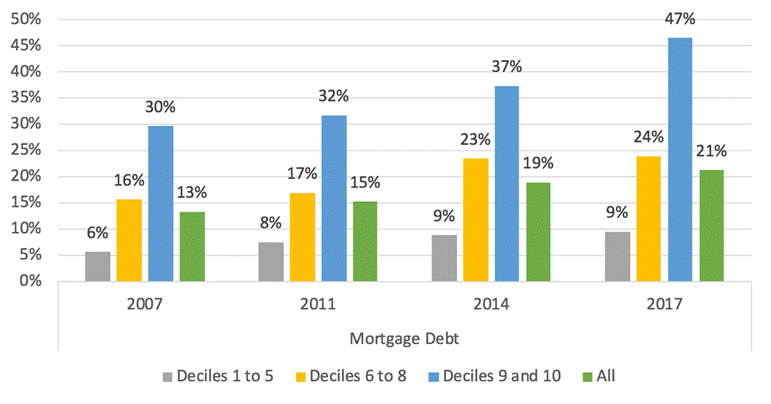
Figure 1
Percentage of mortgage debt holders by income decile.
Source: Prepared by the authors based on the HFS (Banco Central de Chile, 2007, 2011, 2014, 2017).
The reasons for household debt acquisition in -lowest income- deciles 1 to 5 are presented in Table 1. The main reason for debt acquisition is to fund education, which represents 37 percent of total debt. Prior to reforms to the Chilean educational system in 2015, higher education was extremely expensive, and access was only achievable by the majority of students through loans. After 2015, higher education progressively became free to the lowest income deciles (1 to 5). The second most common reason for debt acquisition is in order to pay off other pre-existing debts, such as renting. This is important, as it increases the overall cost of debt due to the higher interest rates that must be paid. It should be noted that the purchase of durable and essential goods at home occurs mainly through easily obtainable store credit cards. Loans in the fourth column are smaller and used by fewer households but illustrate the way in which people turn to informal credit mainly to pay off pre-existing debt. Of these other debt types, 42 percent are used for this purpose. As explained below, rental expenses are covered mainly by ‘payment of pre-existing debt’ or ‘other reasons’ in the three columns.
Reasons for debt by instrument in the lowest income deciles (1 to 5), percentage of total debt value. Prepared by the authors based on the 2017 HFS (Banco Central de Chile, 2017).

(*) Family loans, informal lenders, pawnbrokers, etc.
Analysis of the interviews revealed three ideas relevant to current debates on housing financialization and everyday life, particularly in relation to peripheral contexts and resistance on the part of housing movements. Firstly, by comparison with core capitalist economies, a relatively high percentage of the lowest income groups in ECEs do not have access to formal banking credit, a situation which leads to increase its access through precarious channels, usually involving higher interest rates. Furthermore, debt tends to be merged into what we call peripheral debt systems, where renting a house and paying for education constitute the main motivations; in fact, HFS shows that 12 percent of the half lowest-income population’s debt goes to pay other debts such as renting. Secondly, through this lens, debt is experienced differently by different social groups. Women, migrants and LGBTIQ+ groups are particularly socially and economically vulnerable in debt situations, where threats can include violence and domination. Thirdly, community housing organisations tend to assume a fundamental role in the support of households and individuals faced with indebtedness. Although these groups initially formed to support households in applications to public social housing programmes, they have become a popular space for collective resistance to individual or household struggles, access to community loans, provision of psychological assistance, and organisation of community action to raise money when needed. The above serves to redefine the notion of collective organisation as a mere instrument within a more formal political organisation and agenda. These findings are explained as follows.
Debt as a System: Merging Education, Consumption and Rent
“Although social housing in Chile does not involve mortgage credit, there is debt associated with it. In particular, women’s levels of indebtedness have increased in a variety of dimensions, not only financially. The savings required for social housing applications, for example: one gets into debt with retail companies in the form of consumer loans that are more easily accessible, or informally with neighbours or relatives.” (MPL-1).
Combining different forms of debt emerged as a key practice among lower-income groups in Chile. In some cases, for example, rent is paid through consumer credit from retail companies. This creates what is known as a bicicleta or ‘bicycle’, that is, the use of credit to pay off another form of debt, thus generating a vicious circle in which households commonly face abusive contractual terms from companies (Ruidíaz, 2012).
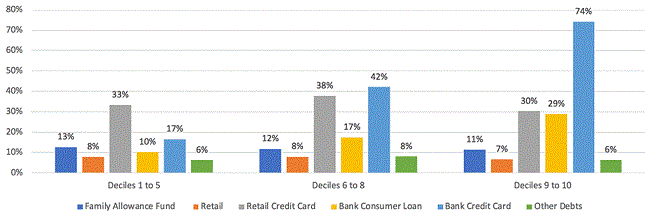
Figure 2
Form of debt by income decile.
Prepared by the authors based on the 2017 HFS (Banco Central de Chile, 2017).
Although there are public social housing programmes that do not require credit, MPVD-3, a member of MPVD explains that
“there are people in the housing committee who are forced to take on debt; they have to request credit from retail firms in order to both pay their rent and save the amount of money required by the public housing programme. If not, it is impossible”3.
Similarly, MPL-2, reports that ‘the saving system implemented by the government for applications to these housing programmes fails because people still become indebted in the form of consumer credit in order to fulfil the subsidy requirements’. Far from the idea that the lowest income groups do not or cannot participate in the financial system, analysis of renting and saving for housing programmes reveals that this in fact takes place through other intermediaries and not exclusively through mortgage credit. These less explored channels tend to combine different types of debt into a debt system whose constituent parts are difficult to analyse individually. This could also explain why debt from retail credit cards is relatively higher in the lowest income deciles, while bank credit card debt is relatively low when compared to the highest income households from deciles 9 and 10 (see Figure 2).
In this context, new practices by which people relate to debt have also arisen. According to the survey and as corroborated by conversations with housing movements and committee leaders, informal debt channels have increased. Moreover, new sophisticated mechanisms have emerged for the most vulnerable people to get into debt in the absence of access to formal credit. As highlighted by CVSM-3 from CVSM, “many neighbours get into debt through informal lending. Recently, one couple from the committee who needed to pay for their room were threatened by their lender due to late payments, and the interest rates are enormous”. Although this mechanism does not involve digital intermediation, it is a clear example of what Tooker and Clarke (2018) have called ‘relational finance’, where social -and usually informal- alternatives to financial markets contest but internalise market logics, constituting an example of peripheral ‘social lending’. In fact, it is possible to conclude from HFS 2017 that, as shown in Table 1, 42 percent of the total debt acquired to pay off other debt- in the lowest decile, representing the most vulnerable groups- does not come from traditional mechanisms such as banking or retail, but is provided by the informal sector, family members or neighbours.
In the context of housing financialization, debt is traditionally associated with mortgage credit. However, in the case of the least creditworthy groups, private renting constitutes the most significant form of debt. At this point, in these peripheral economies, rent could-and should-be considered a form of debt. For example, as MPVD-3 declares, ‘I have three debts: school for my daughter, who is studying English; four months of rent for my house; and savings for the housing committee which I was unable to continue depositing’. As shown in Figure 3, monthly rental costs constitute around 40 percent of total income for the lowest income deciles, while mortgage repayments account for 27 percent. As such, rent represents a chronic form of debt for the most vulnerable groups, who turn to informal loans and retail credit in order to temporarily plug the gap. However, this ultimately results in a higher overall amount paid due to the interest charged. According to MPL-1, almost 40 percent of households involved in the housing movement rent a space to live while applying to the public housing programme.
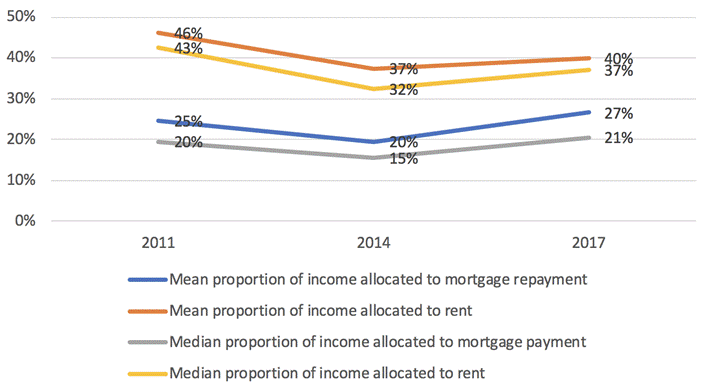
Figure 3
Percentage of income allocated to rent and mortgage repayment in Chile.
Prepared by the authors based on the 2011, 2014 and 2017 HFS (Banco Central de Chile 2011, 2014, 2017).
Debt as Intersectional: Towards Gender and Racial Perspectives
Although not the main objective of this paper, we explored another fundamental yet barely addressed dimension of housing financialization in peripheral economies: the analysis of its outcomes through an intersectional lens, especially in terms of gender. All three of the feminist committees and movements studied revealed that migrant women suffer the worst consequences of the reach of financialization within these peripheries. For MPL-1, there is a more significant type of debt that has been neither acknowledged nor explored:
“from the very foundation of a housing committee, people-especially women-spend hours organising the people through asambleas4, looking for a plot, managing savings fees and co-designing the housing projects. The state and the private sector do not reimburse pobladores for this investment of time, so the former are effectively making a saving.”
In MPL-1’s opinion, the state is somehow indebted to these women who have dedicated their lives to acquiring a place in which to live with dignity, assuming different roles, not only as workers and caregivers, but also community organizers (Moraga et al., 2021). In MPL, women account for around 80 percent of the people who deal with and represent households throughout the housing subsidy application process. Aside from this demanding work, they are expected to continue with their regular employment and to take care of their families, often as single mothers. In the context of increasing indebtedness, taking over these multiple roles leads to multidimensional and systematic exploitation, violence and oppression.
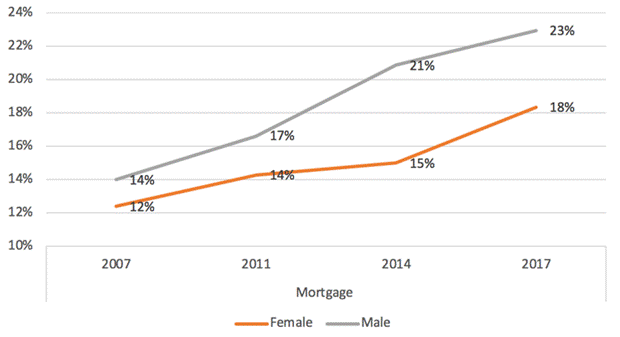
Figure 4
Percentage of mortgage debt by gender in Chile.
Prepared by the authors based on the 2007, 2011, 2014 and 2017 HFS (Banco Central de Chile, 2007, 2011, 2014, 2017).
When analysing the reach of financialization through the lens of intersectionality, the creditworthiness of a subject is directly related to marginalisation based on the different social identities, especially in peripheral contexts. As reported by various interviewees, the disadvantages and poorer financial opportunities available to migrant women and LGBTIQ+ groups are usually related to the difficulty of acquiring formal work, which determines their access to formal loans. As Figure 4 shows, although men and women present similar trends in terms of mortgage debt over the last ten years, the gap between them remains considerable. As CVSM-3 describes, the ‘majority of migrants in our committee work in cleaning services, gardening, car watching and other areas. High levels of informality and the lack of networks prohibit their access to better opportunities in terms of finance and the level of informal debt tends to increase in these groups’. As pointed out by MPVD-1, ‘violence increases in indebted households, and financial dependency is an important factor in women’s decisions to not separate from men who are abusing them’. Similarly, CVSM-3 describes the reality of being an immigrant woman in these contexts: ‘A Colombian neighbour could not afford to pay for her utilities such as electricity and gas, and the building-owned by an investment fund-cut her off. We had to organise ourselves and put money aside for her and her children. She was alone in Santiago. We organise lots of campaigns to help women, especially migrants. They have a hard time with it’.
The subjectivities that arise when exploring feelings and meanings associated with indebtedness constitute another important finding. Echoing the religious interpretation of debt made by Stimilli (2019), the normalisation of feelings of guilt associated with indebtedness as a way of life reminds us of Cavallero and Gago’s (2019) concept of terror financiero (financial terror), where living is only sustainable through debt. MPL-1 clearly points to this when describing the phenomenon:
“Mental health problems such as anxiety increase sharply. Female neighbours suffer constantly from headaches and stress, and that generates tensions within the family and the community. This also affects their personal life. Guilt is an issue as well because they cannot afford to take care of their children, work and participate in the asambleas. Doing the bicicleta also generates depression; it is constant exploitation. Beyond the subjectivities that arise from debt, illness is real and represents an even higher cost to their lives.” (MPL-1).
Debt as Collective: From Individual Concern to Communitarian Action
“Women participating in the Movement look not only for alternatives in terms of economic solidarity, but also psychosocial company.” (MPVD-1).
Analysis of movements and committees rather than individual households helps to reveal the emerging collective and insurgent action taken against increasing debt. Although most committees are created in order to apply for housing through public subsidies, the three cases explored go beyond the idea of individual property, illustrating the process of collective organisation that builds a broader sense of communitarian economic solidarity and political action. In terms of economic solidarity, there are several ways in which the three groups have designed and managed supporting mechanisms for those affected by debt. Firstly, some of them have created formal protocols for lending money to those who are struggling with debt. These deals are based on trust and do not involve the charging of interest. Secondly, some groups have created fair systems of collective food purchase through cooperatives in order to save money and reduce expenditure on those items. Thirdly, urban vegetable gardens have also been designed, managed and maintained in order to produce fresh food and share with the community when needed. These activities usually take place on their own plots within recent housing projects. In fact, MPL-2 from MPL explains that “when a family joins the productive unit of the movement, their expenses decrease by around $200,000 Chilean Pesos monthly [around USD280], which not only saves them money but helps the movement to grow”. MPVD-1 remarks that the objective of implementation of economic alternatives “is to turn the pobladores and pobladoras into managers, producers and owners of both the means of production and the labour force, where resources become collective and for everyone”.
Aside from the economic dimension of debt, psychological support is equally important when dealing with financial challenges. Psychosocial programmes are offered by both movements and committees, providing mental health support to those households faced with economic problems. While some programmes are organised with the assistance of universities, others involve their own professionals dedicated to providing assistance in these issues. It is important to mention that this support goes beyond the exclusive economic perspective, extending to broader issues such as gender violence, drug addiction and education.
An analysis of the collective responses to individual struggles revealed how this organisation, founded originally with a focus on housing, gradually became more politicised, with clear political demands with regard to social rights becoming their main activity. As CVSM-3 comments, ‘the 120 families involved in the committee understand that they must participate in the demonstrations and be politically organised. That is part of our identity, to secure our future houses through mobilisation on the streets’. This is especially important in the case of MPL. As one of the members declares:
“Building a political project through housing means not only the delivery of a house, but also organised neighbourhoods in which the pobladores and pobladoras become the central players, seeking to co-produce and maintain the development of their habitat.” (MPVD-1).
Conclusions: From the subordination to insubordination in the peripheries of the periphery
As highlighted by a number of authors, one of the fundamental challenges in relation to financialization is to understand the phenomenon from a geographical perspective. Although exemplary efforts have been made in this line of study, more grounded research on financialization in peripheral economies is needed, and such work must go beyond the traditional exclusive focus on mortgage credits. To position ourselves between peripheral urbanisation (see Caldeira, 2017) and peripheral financialization could enable us to comprehend popular, collective and informal channels, strategies and organisations through which the outcomes of financialization are resisted not only on the peripheries -such as in highly unequal and heterogeneous cities- but, more importantly, through self-managed organisations. The invitation here is to elaborate conceptualisations that allow us to better describe resistance to peripheral financialization as part of peripheral urbanisation.
As we have shown in the present paper, financialization is not only an economic and measurable phenomenon but, more importantly, a deeply political and social issue. New debt-based power relations and domination strategies are emerging in the context of financialization, finding specific forms of insubordination within subordinated contexts. In these contexts, it is not only the most vulnerable groups that are marginalised from the formal financial system by denial of access to credit; identities and subjectivities also play an essential role in broader intersectional comprehension of financial struggles. When Cavallero and Gago (2019) criticise the universalisation of debt, inviting us to talk about terror financiero and to put the issue of debt in the spotlight, they are saying that greater efforts are needed to understand and problematise financialization from a multidisciplinary and structural perspective in the Global South. Here we propose the concept of ‘Peripheral Debt System’ to point out that indebtedness in the Global North is not the same as it is in the Global South in the context of financialization, either from a gender perspective or in terms of different types of debts as a merged system. To think on Peripheral Debt Systems is firstly an invitation to give voice to those marginalised and unbanked groups that, although indirectly, are part of the process of financialization, not only from the macroeconomic and everyday life dimensions, but also from a geographical one, especially in the ECE located in the Global South, where informal and communitarian relations emerge as part of the urban landscape. This concept also opens new questions on the relation between the financialization of housing and the imbalances from an intersectional perspective, where gender characteristics, migration status and socioeconomic situations converge, creating oppressive conditions and different struggles to those of their counterparts in core or semi-peripheral economies, requiring new definitions and conceptualisations. Finally, this idea also criticizes that the theory on financialisation of housing has been giving an exclusive focus to formal mortgage credit, instead of expanding its scope to understand how diverse types of debt merge, beyond the formal financial institutions and the idea of housing as mere property.
As an answer, the advent of collective action has not only served to contest the financialization of housing and the different types of debt, but also to provide the conditions in which to creatively design and manage new forms of communitarian organisation through which to resist the outcomes of this financialization. Economic alternatives such as urban vegetable gardens, centralised food management, psychosocial programmes and solidarity loans have meant a step forward in economic autonomy as formal and revolutionary political practices, supporting the notion of rights to the city in which housing is a component of broader political concerns. The struggles and insurgency that have emerged as a result of financialization constitute fertile ground from which spaces of hope spring up. In fact, a constituent space for structural reforms during 2021 and 2022 is one of the main outcomes of the 18O social revolt of 2019.
Although the present research has shown how financialization and debt are experienced by housing movements in a specific peripheral context, further research could serve to build bridges between ‘North’ and ‘South’, via which to examine more global power relations. This, however, will require further grounded, integrated and comparative research.
Acknowledgements
The authors would like to extend their heartfelt thanks to Natalie, Carmen, Lorena and Jenny from Movimiento de Pobladoras y Pobladores Vivienda Digna (MPVD), Comité de Vivienda por un Santiago Multicolor (CVSM), and Movimiento de Pobladoras y Pobladores en Lucha (MPL), and to all of the women we interviewed who are fighting to resist and contest contemporary housing struggles in Chile. Last, but by no means least, we would like to thank Ozlem Celik and Melissa García-Lamarca for their wise, pertinent and constructive comments on the early drafts of this article, with whose help we were able to improve the argumentation and increase overall quality.
References
Aalbers, M. B. (2008). The financialization of home and the mortgage market crisis. Competition & Change, 12(2), pp. 148-166. https://doi.org/10.1179/102452908X289802
______ (2016). The financialization of housing: A political economy approach. Routledge.
Abeles, M., Caldentey, E. P., & Valdecantos, S. (Eds). (2018). Estudios sobre financierización en América Latina. CEPAL.
Alarcón, A., Demaestri, E., & Piedrabuena, B. (2014). Financiamiento de la vivienda en Chile. Banco Interamericano de Desarrollo.
Allami, C. & Cibils, A. (2017). Financiarización en la periferia latinoamericana: Deuda, commodities y acumulación de reservas. Revista Estado y Políticas Públicas, (8), 81-101.
Attride-Stirling, J. (2001). Thematic networks: an analytic tool for qualitative research. Qualitative Research, 1(3), 385-405. https://doi.org/10.1177/146879410100100307
August, M. & Walks, A. (2018). Gentrification, suburban decline, and the financialization of multi-family rental housing: The case of Toronto. Geoforum, 89, 124-136. https://doi.org/10.1016/j.geoforum.2017.04.011
Becker, J., Jäger, J., Leubolt, B., & Weissenbacher, R. (2010). Peripheral financialization and vulnerability to crisis: A regulationist perspective. Competition & Change , 14(3-4), 225-47. https://doi.org/10.1179/102452910X12837703615337
Banco Central de Chile. (2007). Encuesta financiera de hogares 2007. Autor. https://www.efhweb.cl/ES/EFH/EncuestaAnterior/2007
______ (2012). Encuesta financiera de hogares 2012. Autor. https://www.efhweb.cl/ES/EFH/EncuestaAnterior/2011
______ (2014). Encuesta financiera de hogares 2014. Autor. https://www.efhweb.cl/ES/EFH/EncuestaAnterior/2014
______ (2017). Encuesta financiera de hogares 2017. Autor. https://www.efhweb.cl/ES/EFH/
______ (2020). Informe de cuentas nacionales de Chile primer trimestre de 2020. Autor. https://www.bcentral.cl/en/web/banco-central/content/-/detalle/informe-de-cuentas-nacionales-de-chile-primer-trimestre-de-2020
Berstein, S. & Marcel, M. (2019). Sistema financiero en Chile: lecciones de la historia reciente. Banco Central de Chile.
Bond, P. & Tshimomola, G. (2019). Dialectics of neoliberal monetary management and social resistance in Zimbabwe [Conference presentation]. Financialization and Development in the Global South, Buenos Aires, Argentina.
Bonizzi, B. (2013). Financialization in developing and emerging countries. International Journal of Political Economy, 42(4), 83-107. https://doi.org/10.2753/IJP0891-1916420405
Bonizzi, B., Kaltenbrunner, A., & Powell, J. (2019). Subordinate financialization in emerging capitalist economies. University of Greenwich. https://core.ac.uk/download/pdf/189394133.pdf
Bortz, P. & Kaltenbrunner, A. (2017). The international dimension of financialization in developing and emerging economies. Development and Change, 49(2), 375-393. https://doi.org/10.1111/dech.12371
Caldeira, T. P. (2017). Peripheral urbanization: Autoconstruction, transversal logics, and politics in cities of the global south. Environment and Planning D: Society and Space, 35(1), 3-20. https://doi.org/10.1177/0263775816658479
Cavallero, L. & Gago, V. (2019). Una lectura feminista de la deuda. Fundación Rosa Luxemburgo.
Coppock, S. (2013). The everyday geographies of financialisation: impacts, subjects and alternatives. Cambridge Journal of Regions, Economy and Society, 6(3), 479-500. https://doi.org/10.1093/cjres/rst012
Deere, C. D. & Leon, M. (2014). The importance of gender and property. In C. D. Deere & M. Leon, (Eds.) Empowering women: Land and property rights in Latin America, (pp. 1-31). University of Pittsburgh Press.
Dos Santos, P. L. (2013). A cause for policy concern: The expansion of household credit in middle-income economies. International Review of Applied Economics, 27(3), 316- 338. https://doi.org/10.1080/02692171.2012.721755
Ducci, M. E. (1994). Políticas de vivienda y mujer. EURE, 20(59), 73-91.
European Action Coalition. (2018). Housing financialization: Trends, actors and processes. Rosa Luxemburg Stiftung.
Farha, L. (2017). Report of the Special Rapporteur on adequate housing as a component of the right to an adequate standard of living, and on the right to non-discrimination in this context. United Nations Office of the High Commissioner on Human Rights. https://undocs.org/en/A/HRC/34/51
Fernández, R. & Aalbers, M. B. (2019). Housing financialization in the global south: In search of a comparative framework. Housing Policy Debate, 30(4), 680-701. https://doi.org/10.1080/10511482.2019.1681491
Fields, D. (2015). Contesting the financialization of urban space: Community organizations and the struggle to preserve affordable rental housing in New York city. Journal of Urban Affairs, 37(2), 144-165. https://doi.org/10.1111/juaf.12098
______ (2017). Urban struggles with financialization. Geography Compass, 11(11). https://doi.org/10.1111/gec3.12334
García-Lamarca, M. (2017). Housing dispossession and (re)surging rents in Barcelona: Financialised housing 2.0? [Conference presentation]. Finance, Crisis and the City: Global Urbanism and the Great Recession Conference, Villa La Pietra, NYU Florence, Italy.
García-Lamarca, M. & Kaika, M. (2016). Mortgaged lives: the biopolitics of debt and housing financialisation. Transactions, 41(3), 313-327. https://doi.org/10.1111/tran.12126
Gilbert, A. (2004). Helping the poor through housing subsidies: lessons from Chile, Colombia and South Africa. Habitat International, 28(1), 3-40. https://doi.org/10.1016/S0197-3975(02)00070-X
Goldman, M. (2021). Speculative urbanism and the urban-financial conjuncture: interrogating the afterlives of the financial crisis. Environment and Planning A: Economy and Space. https://doi.org/10.1177/0308518X211016003
González, F. (2018). Crédito, deuda y gubernamentalidad financiera en Chile. Revista Mexicana de Sociología, 80(4), 881-908.
Harvey, D. (2005). A brief history of Neoliberalism. Oxford University Press.
Hillig, A. (2019). Everyday financialization: The case of UK households. Environment and Planning A: Economy and Space , 51(7), 1460-1478. https://doi.org/10.1177/0308518X19843920
Institute of International Finance. (2020). Global debt monitor sharp spike in debt ratios. Author.
Kaltenbrunner, A. & Painceira, J. P. (2016). International and domestic financialisation in middle income countries: The Brazilian case. FESSUD Working Paper 146.
______ (2018). Financierización en América Latina: implicancias de la integración financiera subordinada. In M. Abeles, E. P. Caldentey, & S. Valdecantos (Eds.), Estudios sobre finenciarización en América Latina (pp. 33-61). CEPAL.
Karacimen, E. (2016). Consumer credit as an aspect of everyday life of workers in developing countries: Evidence from Turkey. Review of Radical Political Economics, 48(2), 252-268. https://doi.org/10.1177/0486613415591806
Kohl, S. (2018). More mortgages, more homes? The effect of housing financialization on homeownership in historical perspective. Politics & Society, 46(2), 177-203. https://doi.org/10.1177/0032329218755750
Lai, K. P. Y. (2018). Financialisation of everyday life. In G. L. Clark, M. P. Feldmann, M. S. Gertler, & D. Wojcik, (Eds.), The New Oxford Handbook of Economic Geography (pp. 611- 627). Oxford University Press. https://doi.org/10.1093/oxfordhb/9780198755609.001.0001
Langley, P. (2006). The making of investor subjects in Anglo-American Pensions. Environment and Planning D: Society and Space , 24(6), 919-934. https://doi.org/10.1068/d405t
______ (2008). The everyday life of global finance: Saving and borrowing in anglo-America. Oxford University Press.
Lapavitsas, C. (2013). The financialization of capitalism: ‘Profiting without producing’. City, 17(6), 792-805. https://doi.org/10.1080/13604813.2013.853865
Levy-Orlik, N. (2013). Financialization and economic growth in developing countries. International Journal of Political Economy , 42(4), 108-127. https://doi.org/10.2753/IJP0891-1916420406
Marcuse, P. & Madden, D. J. (2016). In defense of housing: The politics of crisis. Verso Books.
Martin, R. (2002). Financialization of daily life. Temple University Press.
Miotti, L. E. (2018). ¿Existe un régimen de acumulación financiarizado en América Latina? Un análisis desde la escuela de la regulación. In: M. Abeles , E. Pérez Caldentey & S. Valdecantos (Eds.), Estudios sobre financierizacion en America Latina (pp. 69-93). CEPAL.
Moraga, F., A. Sepúlveda, K., Zenteno-Torres, E., Luneke, A., & Ruiz-Tagle, J. (2021, June 19). Cuidadoras, trabajadoras y dirigentes: El creciente rol de las mujeres en las poblaciones emblemáticas. CIPER. https://www.ciperchile.cl/2021/06/19/cuidadoras-trabajadoras-y-dirigentes-el-creciente-rol-de-las-mujeres-en-las-poblaciones-emblematicas/
O’Callaghan, C., Di Feliciantonio, C., & Byrne, M. (2018). Governing urban vacancy in post-crash Dublin: Contested property and alternative social projects. Urban Geography, 39(6), 868-891. https://doi.org/10.1080/02723638.2017.1405688
Paez, A. (2020, August 3). La resistencia de un pueblo endeudado. La diaria. https://ladiaria.com.uy/chile/articulo/2020/8/la-resistencia-de-un-pueblo-endeudado
Palma, J. G. (2009). The revenge of the market on the rentiers. Why neo-liberal reports of the end of history turn out to be premature. Cambridge Journal of Economics, 33(4), 829- 69. https://doi.org/10.1093/cje/bep037
Pellandini-Simanyi, L., Hammer, F., & Vargha, Z. (2015). The financialization of everyday life or the domestication of finance? Cultural Studies, 29(5-6), 733-759. https://doi.org/10.1080/09502386.2015.1017142
Pérez, M. (2019). El derecho a la vida digna: luchas por la vivienda y vida cotidiana en Santiago de Chile, Chungara Revista de Antropología Chilena, 51(3), 497-508. https://doi.org/10.4067/S0717-73562019005001304
Pérez-Roa, L. & Donoso-Bravo, J. (2018). Redes sociales de intercambio y de pago de deudas en parejas jóvenes profesionales endeudadas de Santiago de Chile. Intervención, 8(2), 23-38.
Powell, J. (2013). Subordinate financialisation: a study of Mexico and its non- financial corporations. (PhD dissertation, SOAS, University of London).
Reyes, A. (2020). Mexico’s housing paradox: Tensions between financialization and access. Housing Policy Debate , 30(40), 486-511. https://doi.org/10.1080/10511482.2019.1709879
Roberts, A. (2016). Household debt and the financialization of social reproduction: Theorizing the UK housing and hunger crises. Research in Political Economy, 31, 135-164. https://doi.org/10.1108/S0161-723020160000031009
Rodó, A. (1991). Reflexiones en torno a los procesos formativos con mujeres urbano populares. Programa de la Mujer. SUR.
Rolnik, R. (2013). Late neoliberalism: the financialization of homeownership and housing rights. International Journal of Urban and Regional Research, 37(3), 1058-1066. https://doi.org/10.1111/1468-2427.12062
______ (2019). Urban warfare. Verso Books.
Ruidíaz, J. (2012). Contratos por adhesión: cláusulas abusivas en los contratos del retail. Fundación Fernando Fueyo, Universidad Diego Portales.
Sanchís, N. & Rodriguez, G. (2019). Financiarización de la vida cotidiana. Un estudio de caso en Argentina y Brasil [Conference presentation]. Financialization and Development in the Global South, Buenos Aires, Argentina.
Silvia, J. (2020). The financialization of the margins of Maputo, Mozambique. Housing Policy Debate , 30(4), 606-622. https://doi.org/10.1080/10511482.2020.1714690
Socoloff, I. (2020). Subordinate financialization and housing finance: The case of indexed mortgage loans’ coalition in Argentina. Housing Policy Debate , 30(4), 585-605. https://doi.org/10.1080/10511482.2019.1676810
Soederberg, S. (2018). The rental housing question: Exploitation, eviction and erasures. Geoforum , 89, 114-123. https://doi.org/10.1016/j.geoforum.2017.01.007
Steel, G., Van Noorloos, F., & Klaufus, C. (2017). The urban land debate in the global south: new avenues for research. Geoforum , 83, 133-141. https://doi.org/10.1016/j.geoforum.2017.03.006
Stimilli, E. (2019). Debt and guilt: A political philosophy. Bloomsbury.
Tooker, L. & Clarke, C. (2018). Experiments in relational finance: Harnessing the social in everyday debt and credit. Theory, Culture and Society, 35(3), 57-76. https://doi.org/10.1177/0263276417746465
Valdés, T. & Weinstein, M. (1993). Mujeres que sueñan: las organizaciones de pobladoras 1973-1989. FLACSO.
Vergara-Perucich, F. & Aguirre, C. (2019, July 12). Viviendas a precios demenciales: causas y responsables. CIPER. https://ciperchile.cl/2019/07/12/viviendas-a-precios-demenciales-causas-y-responsables/
Vidal, L. (2018). The politics of creditor-debtor relations and mortgage payment strikes: The case of the Uruguayan federation of mutual-aid housing cooperatives. Environment and Planning A: Economy and Space , 50(6), 1189-1208. https://doi.org/10.1177/0308518X18775107
Wetzstein, S. (2017). The global urban housing affordability crisis. Urban Studies, 54(4), 3159-3177. https://doi.org/10.1177/0042098017711649
Wijburg, G. (2020). The de-financialization of housing: towards a research agenda. Housing Studies, 36(8). https://doi.org/10.1080/02673037.2020.1762847
Wilkis, A. (2015). Sociología moral del dinero en el mundo popular. Estudios Sociológicos, 33(99), 553-578. https://doi.org/10.24201/es.2015v33n99.1388
Notes
