Artículos
Architectural features of the outdoor spaces of non-gated residential communities for increasing children’s physical activity
Características arquitectónicas de los espacios exteriores de comunidades residenciales no cerradas para el incremento de la actividad física de niños y niñas
 Saba Hejazi ss.hejazi@aui.ac.ir
Minoo Shafaei m.shafaei@aui.ac.ir
Niloufar Malek n.malek@aui.ac.ir
Thomas H.-K. Kang tkang@snu.ac.kr
Jin Baek jub34@snu.ac.kr
Saba Hejazi ss.hejazi@aui.ac.ir
Minoo Shafaei m.shafaei@aui.ac.ir
Niloufar Malek n.malek@aui.ac.ir
Thomas H.-K. Kang tkang@snu.ac.kr
Jin Baek jub34@snu.ac.kr
Architectural features of the outdoor spaces of non-gated residential communities for increasing children’s physical activity
Revista INVI, vol. 39, no. 112, pp. 1-66, 2024
Universidad de Chile. Facultad de Arquitectura y Urbanismo. Instituto de la Vivienda
Received: 26 October 2023
Accepted: 25 September 2024
Abstract: As the health of children is important for the next generation, a lack of physical activity can be considered a critical health challenge. One major factor influencing children's physical activity is the built environment, particularly their home area, where they spend most of their lives. The main objective of this research is to identify the architectural features that increase non-organised physical activity among children aged seven to 13 in the outdoor spaces of residential communities. The current research method is a field research type with a qualitative approach, and data is analysed through a descriptive-analytical method. Data collection tools include observation and interviews. In this study, 11 residential communities in four metropolises in Iran were observed, and interviews were conducted with the resident children. The results indicate that spatial diversity significantly influences children's physical activity. Specifically, the study identifies the physical and functional characteristics of spatial diversity within the outdoor spaces of non-gated residential communities that impact children's physical activity.
Keywords: Built environment, non-gated residential communities, non-organised physical activity, health, outdoor space, housing.
Resumen: Dado que la salud de niños y niñas es importante para la generación siguiente, la falta de actividad física puede ser considerada como un problema crucial de salud. Uno de los principales factores que afecta la actividad física en niños y niñas es el entorno construido, particularmente las áreas en torno a sus hogares, donde permanecen la mayor parte de sus vidas. El objetivo principal de esta investigación es identificar las características arquitectónicas que hacen que se incremente la actividad física no organizada de niños y niñas entre las edades de siete y 13 años en espacios exteriores de comunidades residenciales. La metodología de investigación es del tipo estudio de campo con una aproximación cualitativa, y la información es analizada a través de un método descriptivo-analítico. Las herramientas de recolección de información incluyen observaciones y entrevistas. Para este estudio, se realizaron observaciones en once comunidades residenciales en cuatro metrópolis en Irán; las entrevistas fueron realizadas con niños y niñas residentes. Los resultados indican que la diversidad espacial incide significativamente en la actividad física de niños y niñas. Específicamente, el estudio identifica las características físicas y funcionales de diversidad espacial en los espacios exteriores de comunidades residenciales no cerradas que puedan incidir en la actividad física de niños y niñas.
Palabras clave: Entorno construido, comunidades residenciales no cerradas, actividad física no organizada, salud, espacio exterior, vivienda.
Introduction
PA is a major concern in the 21st century (Sallis et al., 2020). The trend towards a sedentary lifestyle is diminishing the health of both children and adults (Hunter et al., 2023; Nathan et al., 2023). Since PA habits formed in childhood often persist into adulthood (Fernandez et al., 2023), addressing children's inactivity today can have long-term health benefits (Bourke et al., 2023; Mah, 2021).
Children's PA can be classified as either organised or non-organised. Organised PA describes structured activities, including after-school programs, sports teams, or school teams, that are usually supervised by adults and take place in formal settings (Mosoi et al., 2020). On the other hand, the non-organised PA takes place in informal settings and is characterised as self-directed, unstructured, and spontaneous in youngsters. Informal ball games, active free play, neighbourhood cycling, and playground activities are a few examples (Kemp et al., 2022; Suominen et al., 2024). Recent studies have indicated a significant decrease in certain domains of PA, with non-organised forms being particularly affected (Kemp et al., 2019, 2020).
Children's PA is influenced by a range of factors, particularly environmental elements (Cetken-Aktas & Sevimli-Celik, 2023). The built environment, especially the characteristics of outdoor spaces in residential areas, plays a pivotal role in shaping PA levels among children and also has a significant impact on their overall health (Armstrong et al., 2019; Fomenko, 2020). This link has been the subject of numerous studies.
For instance, Ergler et al. (2017) examine the connection between children's well-being and environmental conditions, focusing on interactions with elements such as air pollution, green spaces, healthcare accessibility, and traffic. Christensen et al. (2017) highlight the importance of high-quality design in new residential developments, particularly open and green spaces, play facilities, and areas for social interaction. Sarmiento et al. (2021) analyse built environment factors like park accessibility, school proximity, and safety, offering policy recommendations to improve PA. Similarly, Christian et al. (2021) emphasise the necessity of street connectivity, parks, and recreational facilities, advocating for policy reforms to support children's PA. Further supporting this, Carver et al. (2023) found that children living in neighbourhoods with accessible parks, playgrounds, and high levels of perceived safety are more active. The Committee on Environmental Health (2009) also highlights the role of residential design in PA, noting the importance of proximity to parks, playgrounds, safety, mixed land use, and connected street grids.
This issue is particularly relevant in low and middle-income countries like Iran, where physical inactivity contributes significantly to mortality rates (Hakimian, 2016) and where there is a notable lack of research on this topic. This highlights the importance of researching children's PA in residential communities in Iran.
A review of the literature indicates that "spatial diversity" is one of the built environmental characteristics that can influence children's PA. While many studies explore this topic, they often do not explicitly label it as "spatial diversity." For example, research highlights the impact of factors such as yard size and the number of types of play equipment (Armstrong et al., 2019), the number and variety of parks and playgrounds (Molina-García et al., 2021), park activities (Terrón-Pérez et al., 2021), the diversity of destinations within a neighbourhood (Smith et al., 2022), and land use mix (Dixon et al., 2021; Yin et al., 2023) on children's PA. In this research, spatial diversity is defined as an environmental characteristic that enhances children's PA in the outdoor spaces of non-gated residential communities, categorised into physical and functional aspects. Physical factors include variations in scale, differences in floor levels, diversity of greenery, geometric diversity and the integration of open and closed spaces. Functional factors encompass diversity of uses, variety of equipment, flexibility and multi-functionality.
This research aims to build on previous studies by identifying the behavioural settings associated with children’s non-organised PA in the outdoor spaces of non-gated residential communities in Iran. Specifically, it seeks to recognise the "spatial diversity" factors that could influence the PA of children aged seven to 13. The findings will provide valuable insights for architects, urban planners, and policymakers on creating child-friendly environments that support healthy lifestyles through increased PA opportunities. For this purpose, we examined children through observation and interviews in 11 non-gated residential communities across four cities in Iran -Tehran, Isfahan, Shiraz, and Mashhad- between January and May 2023. We specifically selected non-gated communities for their ability to offer more accessible data on both architectural and social behaviors, facilitating more accurate analysis. Furthermore, the integrated design of these communities, combined with diverse resident demographics and frequent social interactions, provides valuable insights into how architecture influences residents' quality of life.
This paper is organised into three sections. The first section examines eleven residential communities using a field study with a qualitative approach, employing observation and informal interviews as data collection tools. The second section analyses the data in three stages: a) identifying the behavioural settings present in each community and the types of physical activities children engage within these settings; b) categorising all behavioural settings; and c) determining the functional and physical characteristics that contribute to spatial diversity in these behavioural settings. The final section discusses the architectural factors related to spatial diversity that influence children's PA in the outdoor spaces of non-gated residential communities.
Methodology
The current research employs a field study with a qualitative approach. Data collection tools include observation and informal interviews. Data analysis is conducted using a descriptive-analytical method. The sample consists of eleven non-gated residential communities in four Iranian metropolises, with data collected on clement days between January and May 2023. The data collection utilizes the System for Observing Parks and Recreation in Communities (SOPARC), designed to gather observational data on the number of participants and their non-organised PA levels during recreational and leisure opportunities in community environments (McKenzie et al., 2006). This system is combined with a validated observational tool for studying public life, developed by Gehl and Svarre (2013), which includes eight steps: counting, mapping, tracing, tracking, looking for traces, photographing, keeping a diary, and test walks.
The ethical approval for this study was secured before data collection. Observations were conducted in public spaces within residential environments, explicit consent for observation was not required in accordance with governmental cultural regulations. However, unstructured interviews were conducted with willing participants, and informed consent, including parental consent for children, was obtained for these interactions. All data were anonymized and treated with strict confidentiality, adhering to ethical guidelines throughout the research process.
Introduction of Case Studies
In order to select case study samples, eight major cities in Iran, namely Tehran, Mashhad, Isfahan, Shiraz, Tabriz, Ahvaz, Babol, and Booshehr, were investigated to identify non-gated residential communities that met the study's criteria. These communities were chosen due to easier access to architectural and social data, integrated design of open and enclosed spaces, diverse resident backgrounds for broader impact analysis, and frequent and complex resident interactions. The investigation revealed that Tehran, Isfahan, Mashhad, and Shiraz had several non-gated residential communities with the necessary facilities for the study. Consequently, eleven case studies were conducted in these four cities. Figure 1 illustrates the four metropolises under study in orange, while the other four cities are shown in grey on the map of Iran.
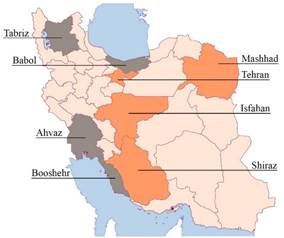
Figure 1
The investigated cities on the map of Iran.
Source: Elaborated by the authors.
Tehran
Tehran, the capital of Iran, features a diverse architectural landscape, from high-rise towers to traditional housing. Rapid urbanization and evolving architecture have significantly influenced residents' living conditions (Ghazaie et al., 2022). As the largest urban center with modern infrastructure and a diverse population, Tehran's neighbourhoods range from affluent northern areas to modest southern districts. This environment accommodates various socio-economic groups (Shokouhibidhendi & Kalmarzi, 2022). In this study, three non-gated residential communities in Tehran were investigated, which are Ekbatan, Sadra, and Shahid Bagheri.
The Ekbatan residential community, situated in District 5 of Tehran's municipality, is one of the city's oldest (Rafieian et al., 2010). Comprising 33 blocks, it houses approximately 70,000 residents across 15,593 units (Rajabi et al., 2021). While Ekbatan's buildings are tall, their ground floors are open, creating pedestrian shortcuts through the complex. Furthermore, a broad north-south pedestrian road lined with small shops cuts through the complex (Jalili et al., 2021) (Figure 2).
The Sadra residential community, another of Tehran's older communities, is situated in District 22 and was constructed in 2008. It comprises three zones: Zone A with thirteen six-storey blocks, each housing 22 units; Zone B with twenty six-storey blocks, each housing 24 units; and Zone C with 24 blocks containing 14 units of varying sizes (Figure 2).
The Shahid Bagheri residential community, built in 2011, occupies the northernmost part of District 22. It consists of approximate 500 blocks, each with four to six storeys (Figure 2).
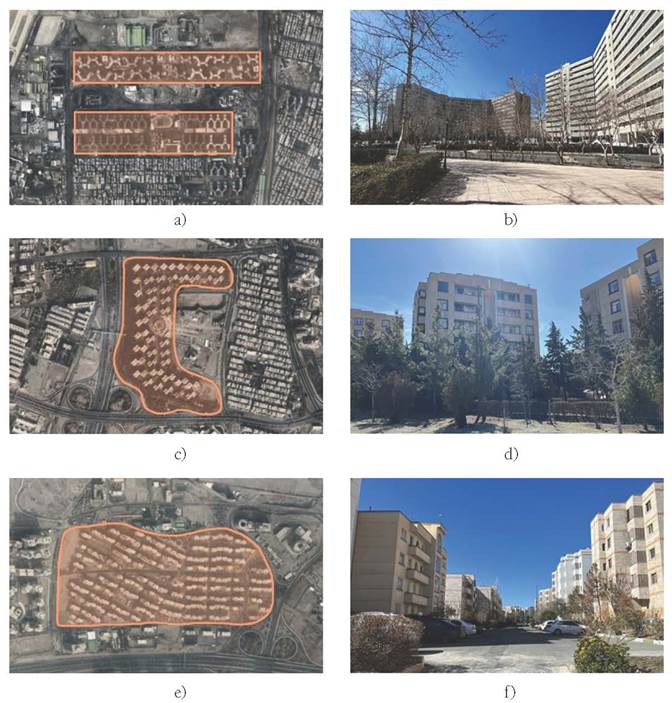
Figure 2
Residential communities of Tehran: a) Ekbatan’s site plan; b) Ekbatan’s view; c) Sadra’s site plan; d) Sadra’s view; e) Shahid Bagheri’s site plan; f) Shahid Bagheri’s view.
Source: Elaborated by the authors.
Isfahan
Isfahan, renowned for its rich Islamic architecture and cultural heritage, exhibits a mix of historical and modern housing designs that significantly affect residents' living conditions (Misra, 2022). Economically, Isfahan thrives through industries like steel, petrochemicals, textiles, and its renowned handicrafts sector (Maghsoodi & Nadalian, 2018). Isfahan, the third-most populous city in Iran, accommodates a diverse range of socio-economic groups with various housing options, from traditional courtyard houses to modern apartment buildings, reflecting its multifaceted housing landscape (Ashrafi et al., 2020). This study examined three non-gated residential communities in Isfahan: Bagh Ghadir, Kooye Bahar, and Zeitoon.
The Bagh Ghadir residential community, located in the eastern part of Isfahan within District 4, was constructed in the 1990s. It consists of approximately 50 blocks, ranging from five to seven stories (Figure 3).
The Kooye Bahar residential community, situated in the southern part of Isfahan near the bus terminal, was built in the 2000s. Covering an area of about 200,000 square meters, it comprises 40 residential blocks, typically five stories each (Figure 3).
The Zeitoon residential community, also located in the southern part of Isfahan near the bus terminal, is relatively new. It consists of 10 residential blocks, each with six stories. Designed on a slope, Zeitoon features numerous stairs (Figure 3).
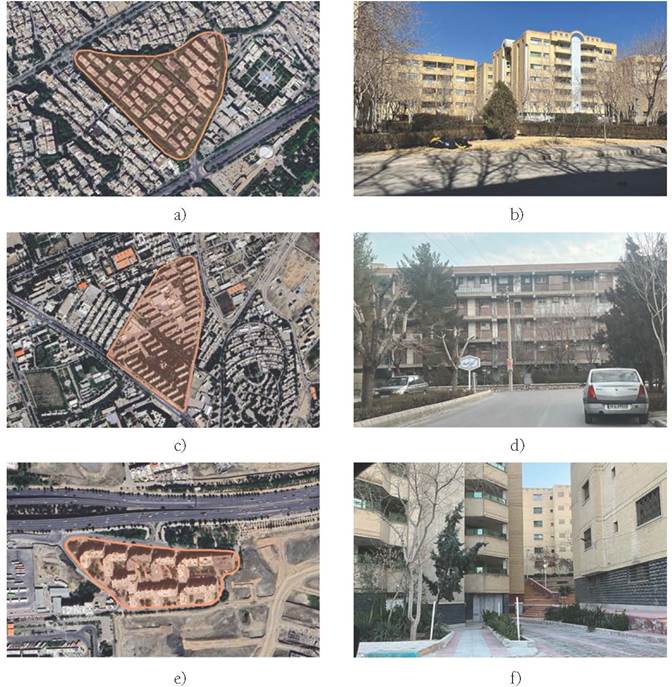
Figure 3
Residential communities of Isfahan: a) Bagh Ghadir’s site plan; b) Bagh Ghadir’s view; c) Kooye Bahar’s site plan; d) Kooye Bahar’s view; e) Zeitoon’s site plan; f) Zeitoon’s view.
Source: Elaborated by the authors.
Mashhad
Mashhad, the second-largest city in Iran, features a mix of traditional and modern residential architecture (Shirazi, 2018). Mashhad is a major religious center in Iran, and its economy is driven by religious tourism. The city's housing developments, influenced by the influx of pilgrims, often prioritise high-density living spaces. Housing in Mashhad exhibits diverse architectural styles and living options that reflect the cultural and socio-economic dynamics of Mashhad's population (Irankhah et al., 2024). This study examined two non-gated residential communities in Mashhad: 512 Dastgah and 600 Dastgah.
The 512 Dastgah residential community is situated on Dehkhoda Boulevard and covers an area of approximately 15,000 square meters. It is located in a high-density area primarily composed of residential properties (Figure 4).
The 600 Dastgah residential community, also on Dehkhoda Boulevard and near the 512 Dastgah community, consists of 19 blocks and 600 residential units. The buildings in this community are five stories high, housing over 2000 residents (Figure 4).
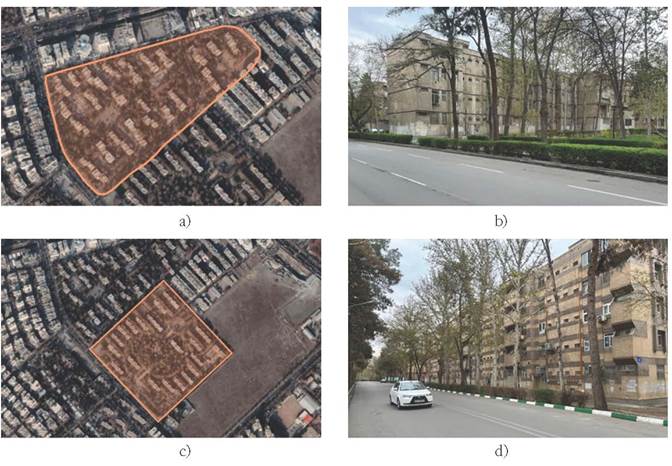
Figure 4
Residential communities of Mashhad: a) 512 Dastgah’s site plan; b) 512 Dastgah’s view; c) 600 Dastgah’s site plan; d) 600 Dastgah’s view.
Source: Elaborated by the authors.
Shiraz
Shiraz, known as the cultural capital of Iran, showcases a unique blend of historical and modern housing architecture that significantly impacts residents' well-being (Dehghani et al., 2022). Economically, Shiraz benefits from cultural tourism and agriculture, particularly its vineyards and citrus fruits (Torabi Farsani et al., 2018). Housing options in Shiraz vary widely, encompassing traditional houses alongside modern apartment complexes, catering to a diverse range of socio-economic groups, and reflecting the city's cultural heritage and evolving urban development (Dehghani et al., 2022). This study examined three non-gated residential communities in Shiraz: Faransaviha, Derak, and Janet.
The Faransaviha residential community, located in the northwest of Shiraz within District 6, was built in 2004. It is one of the older residential communities in the city, consisting of eight-storey blocks (Figure 5).
The Derak residential community is also situated in the northwest of Shiraz within District 6. It comprises eight blocks, each with nine storeys (Figure 5).
The Janet residential community, located on Amir Kabir Boulevard and built in 2004, covers an area of about 26,000 square meters. It consists of four-storey buildings with a total of 368 residential units (Figure 5).
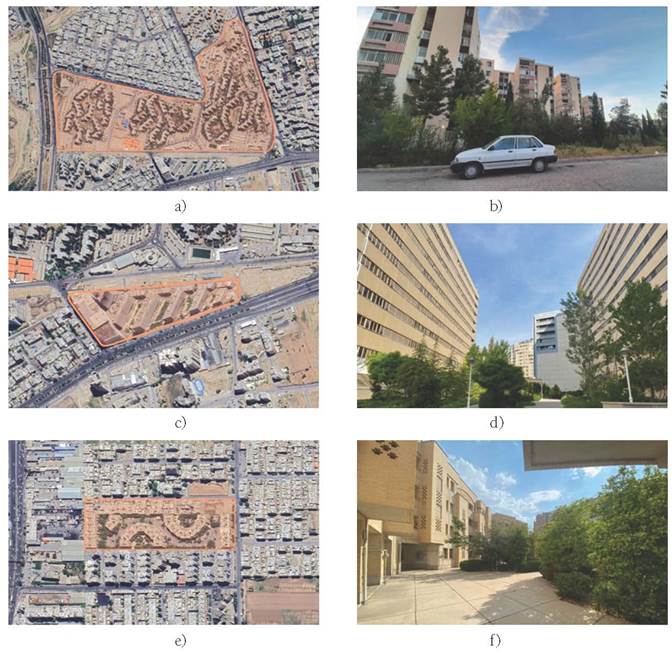
Figure 5
Residential communities of Shiraz: a) Faransaviha’s site plan; b) Faransaviha’s view; c) Derak’s site plan; d) Derak’s view; e) Janet’s site plan; f) Janet’s view.
Source: Elaborated by the authors.
Observation and Informal Interview
Eleven case studies across four major Iranian cities were investigated, with children in these locations informally interviewed. The observation process was carried out by a team of three trained assessors, whose training commenced with a comprehensive one-day workshop facilitated by the primary investigators. This workshop included classroom lectures aimed at equipping the assessors with the necessary skills to observe the case studies accurately, conduct interviews with children, and complete evaluation forms.
During the observations, the assessors systematically photographed all areas of the outdoor spaces within non-gated residential communities and checked out children’s non-organised PA to identify areas with a high presence of children. The assessors also engaged in informal interviews with the children present to determine the specific locations within the communities where they were most active. Data collection was conducted in each non-gated residential community during two distinct two-hour observation periods: one from 12 p.m. to 2 p.m., coinciding with the time children finished school, and another from 4 p.m. to 6 p.m. Observations were made over four days each week in every residential community (Figure 6).
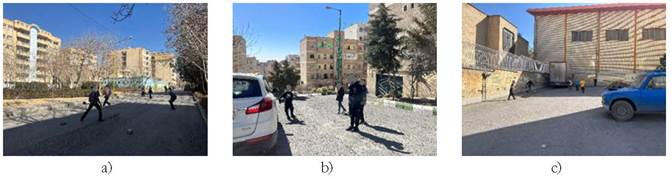
Figure 6
Places with PA: playing football in: a) front of a school (Bagh Ghadir, Isfahan); b) an impass (Shahid Bagheri, Tehran); c) a parking lot in front of blocks (Kooye Bahar, Isfahan).
Source: Elaborated by the authors.
Evaluation Forms
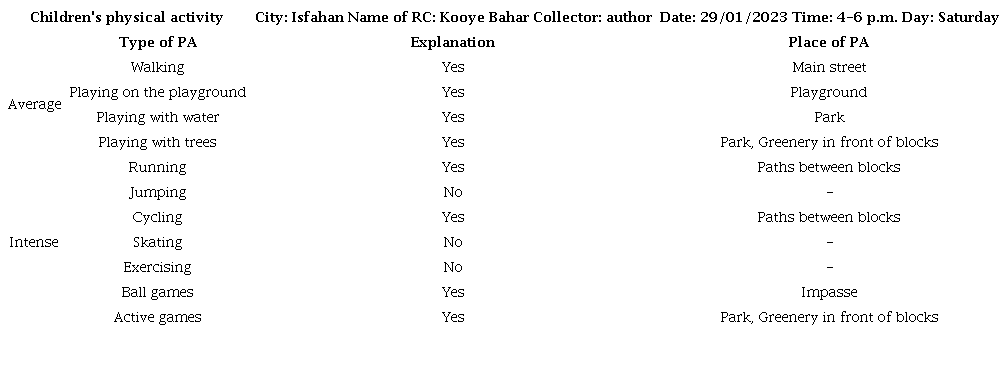
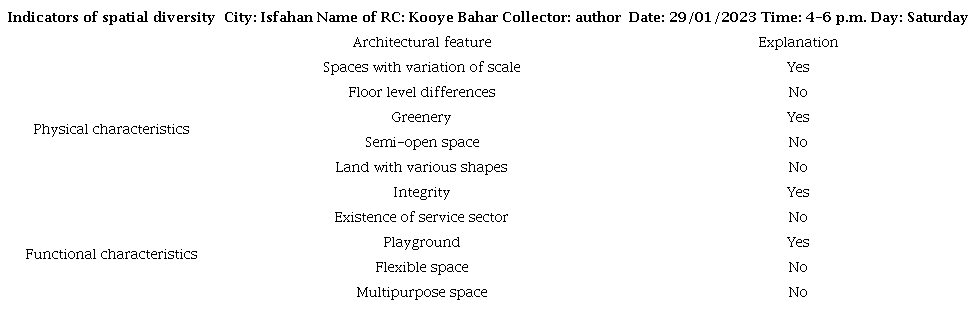
While observing the case studies, trained assessors filled out two evaluation forms, one focusing on spatial diversity and the other on children's non-organised PA, as shown in Tables 1 and 2. They first filled out the evaluation form that focused on spatial diversity to determine the physical and functional architectural characteristics of the case study. Then, they filled out the evaluation form that focused on children's non-organised PA to determine the types of activities that occurred in each place of each case study.
Source: Elaborated by the authors.
Source: Elaborated by the authors.
Mapping the Residential Communities
Based on the data collected in the previous steps, the researchers mapped each case study to identify children's behavioural settings (Barker, 1968) in relation to PA. Behavioural settings are identifiable units within an environmental system (Scott, 2005) characterised by a stable integration of a behaviour and an environment (Lang, 1987). These settings encompass repeatable activities or behavioural patterns and a specific environmental design, maintaining a harmonious relationship over a given period (Blanchard, 2004). The researchers subsequently investigated the type of PA happening in these behavioural settings. Figure 7 illustrates an example of the mapping of residential communities. The orange spots show the children's behavioural settings with PA, and the arrows indicate the paths where children frequently engage in PA. Mappings for all residential communities are available in Table 3.
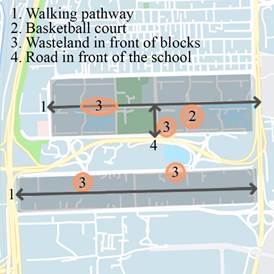
Figure 7
A sample of mapping residential community, Sadra residential community, Tehran.
Source: Elaborated by the authors.
Data Analysis and results
In each case study, behavioral settings related to PA and the types of PA engaged in by children were meticulously documented. This data was then used to create a comprehensive classification of the behavioral settings within the outdoor spaces of non-gated residential communities. The subsequent analysis focused on these behavioral settings to identify the physical and functional architectural characteristics associated with spatial diversity. By coding and evaluating the data from all examined samples, the study determined which physical and functional architectural factors, related to spatial diversity, significantly influenced the enhancement of children's PA.
Identifying behavioural settings and type of PA
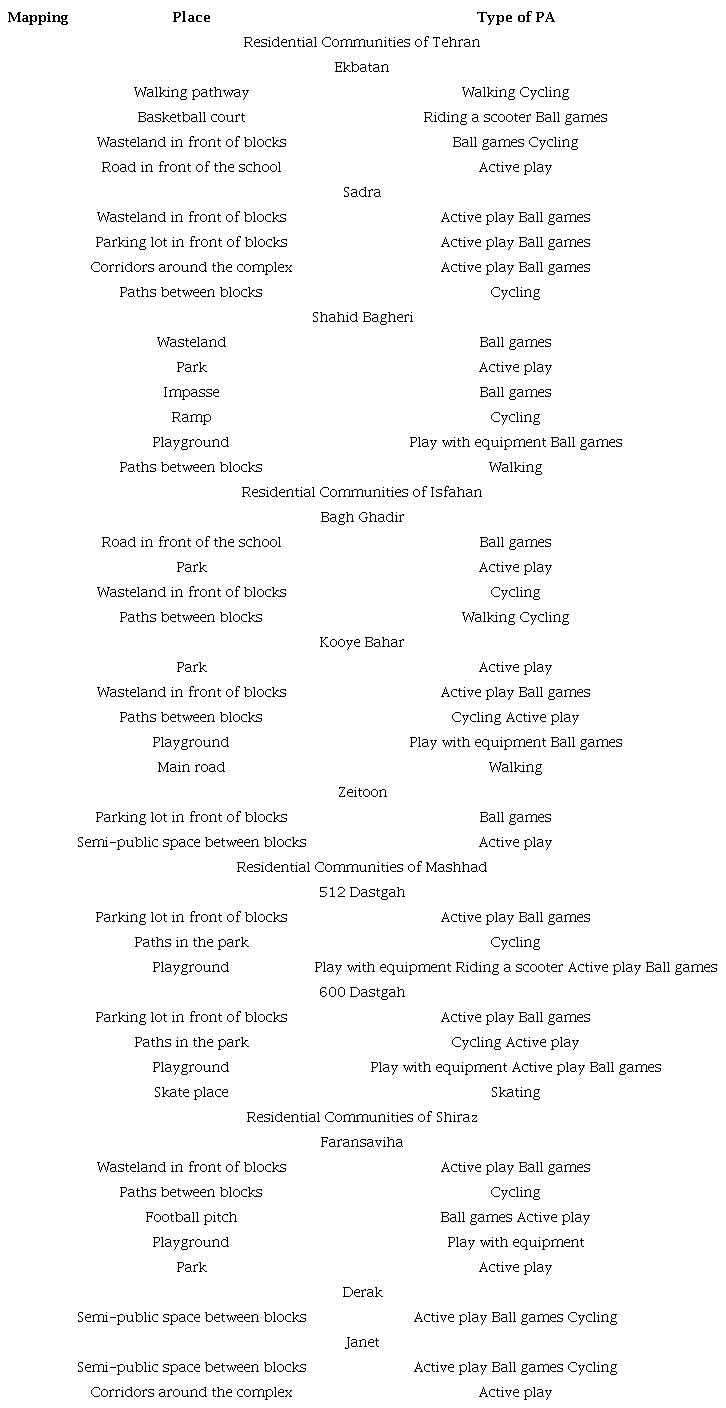
First, the locations and types of physical activities children engaged in were identified. The spatial distribution of these activities within each residential community is illustrated in Table 3. This table presents a detailed mapping of the residential communities of Tehran, Isfahan, Mashhad, and Shiraz and their active zones for children's physical activities.
In Tehran's residential communities, certain behavioural settings serve as central hubs for children's physical activities. One prominent example is the walking pathway of the Ekbatan residential community, which runs from east to west. This pathway's integrity and the presence of diverse uses, such as supermarkets and stores, attract children and encourage activities like walking and cycling. Additionally, the presence of greenery along the path provides thermal comfort and spatial diversity, enhancing its appeal for children's activities. Another significant area is the wasteland in front of the Sadra residential community blocks. These undefined spaces allow children to engage in various games and activities, adapting the area according to their activity needs. Similarly, the impasses in the Shahid Bagheri residential community, located between every few blocks, serve as flexible, multi-functional spaces for children's physical activities, including ball games.
In Isfahan's residential communities, various behavioural settings with unique architectural features serve as key areas for children's PA. In the Bagh Ghadir residential community, the road in front of the school becomes a primary behavioural setting for football right after school hours. Despite being intended for cars, its suitable dimensions and lack of alternative spaces make it an ideal spot for children's activities. In the Kooye Bahar residential community, children exhibit versatility in their physical activities, moving between different behavioural settings during active play sessions. For instance, while playing games like cops and robbers, they transition from paths between blocks to the main road and eventually to the park. Another significant area is the parking lot in front of blocks in the Zeitoon residential community. Children use this space for football, taking advantage of its flexibility to adapt the area to their needs.
In Mashhad's residential communities, the playground of the 512 Dastgah residential community stands out as a unique behavior setting. Its distinctiveness stems from the surrounding wasteland, which, along with designated play areas, supports many types of PA. This behavior setting allows children to engage in a wide range of active play. Similarly, the parking lot in front of the blocks of the 600 Dastgah residential community offers an ideal space for active games due to its flexibility and cohesive design. Additionally, the geometrically diverse paths in the park of this community spark children's curiosity and encourage them to ride bicycles.
In the residential communities of Shiraz, the most prominent behavioural setting is the semi-public space, as exemplified in the Derak and Janet residential communities. These communities are designed with semi-public spaces between every few blocks. The integrity of the environment and the presence of greenery in these areas create an ideal environment for children's activities. Additionally, these spaces are divided into various sections, accommodating different types of physical activities due to the variety of scales provided.
Source: Elaborated by the authors.
Categorising behavioural settings
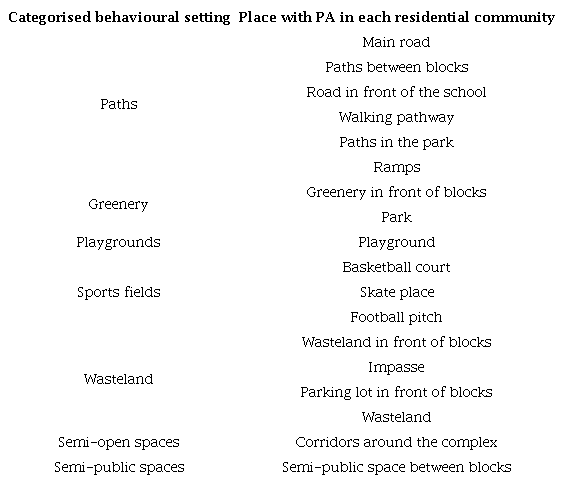
After identifying the behavioural settings of children's PA in each case study and analysing the types of PA within those behavioural settings, the behavioural settings were categorised. As it is observed from Table 4, in general, children's behavioural settings with PA in the outdoor spaces of non-gated residential communities can be classified into paths, greenery, playgrounds, sports fields, wasteland, semi-open spaces, and semi-public spaces.
Source: Elaborated by the authors.
Determine spatial diversity characteristics
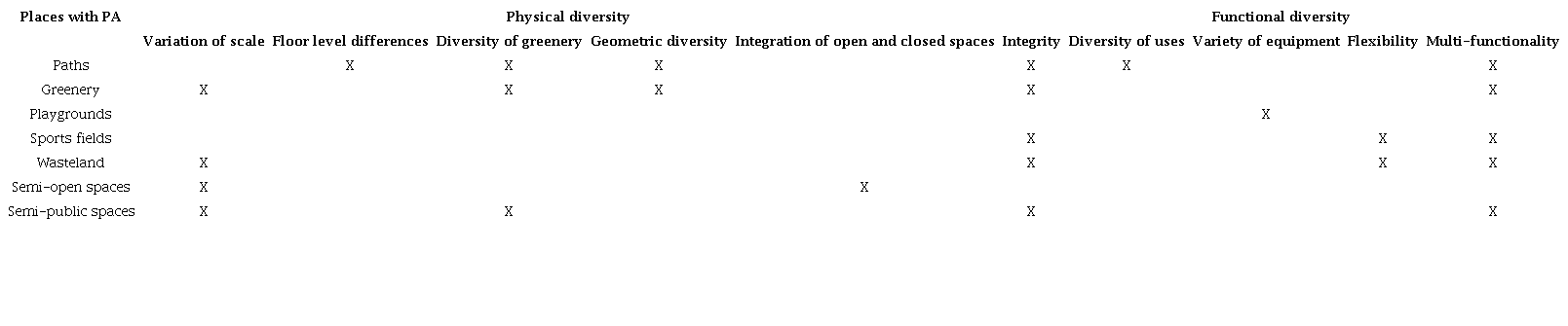
By identifying the behavioural settings of children's PA and the types of PA occurring in these locations, researchers were able to determine which behavioural settings exhibited characteristics of spatial diversity. Table 5 presents an overview of the behavioural settings with PA in non-gated residential communities, along with their associated physical and functional diversity features. The examined factors of spatial diversity include variation of scale, floor level differences, diversity of greenery, geometric diversity, integration of open and closed spaces, integrity, diversity of uses, variety of equipment, flexibility, and multi-functionality.
As evident from Table 5, behavioural settings associated with children’s PA exhibited a wide array of diversity. Among these factors, integrity and multi-functionality emerged as primary architectural elements across most behavioural settings, significantly impacting children's PA. The second important architectural factor was the variation of scale. Other architectural factors depicted in Table 5 also impact children's PA to a lesser extent.
Source: Elaborated by the authors.
In the following, the spatial diversity features of each behavioural setting and their effects on children’s PA are explained (Figure 8).
Paths. Paths exhibit various spatial diversity factors, such as floor level differences, greenery diversity, geometric variety, integrity, diversity of uses, and multi-functionality. Based on the analysis of observations, interviews, and mappings, it is determined that children often engage in physical activities on paths without level differences or on slopes. The presence of long and complex paths, which create geometric diversity, stimulates children's curiosity and provides opportunities for adventure and exploration, thereby creating new spaces for children's PA. In this context, children typically prefer routes spread throughout the residential community over direct routes for cycling. The existence of a diversity of uses, particularly in the main paths of the community, encourages children to walk in these areas. Additionally, the multi-functionality of these spaces and the lack of designated areas for specific activities allow children to define these places according to their desired physical activities.
Greenery. These spaces exhibit factors of spatial diversity, such as diversity of greenery, variation of scale, geometric variety, integrity, and multi-functionality. Observations show that the diversity of greenery creates diverse environmental capabilities suitable for play and various physical activities, allowing children to adapt the space according to their needs. For example, children use different types of trees as cover in the game of cops and robbers. The variation of scale and integrity of green spaces allows children to choose specific areas based on their activity type. For instance, children choose the main park of the residential community, which has larger dimensions, for active play. Geometric diversity stimulates curiosity and creates new spaces for children's activities. For example, children prefer curved paths in the green space for cycling.
Playgrounds. The playgrounds in the residential communities consistently serve as spaces where children engage in PA. Analysis of the observed samples reveals that children initially interact with the available equipment and subsequently participate in ball games and scooter riding. The primary factor contributing to spatial diversity in playgrounds is the variety of game equipment.
Sports Fields. Sports fields exhibit spatial diversity factors such as flexibility, multi-functionality, and integrity. Beyond the PA directly associated with these fields, children also participate in various other forms of PA, such as active play. The integrated design of these spaces enables them to be adapted for various types of PA.
Wasteland: In the studied cases, there are empty and commonly undefined areas, such as the wasteland in front of blocks, impasses, and parking lot in front of blocks. These spaces exhibit factors of spatial diversity, including variation of scale, flexibility, multi-functionality, and integrity. Children frequently adapt these undefined spaces to their needs and engage in PA within them. For example, children play football in the impasses within the residential communities and participate in active play in the wasteland areas of parking spaces.
Semi-Open Spaces: Semi-open spaces are among the areas where children’s PA is observed in some of the studied samples. These spaces are typically corridors surrounding residential communities or semi-open parking lots. In these areas, children engage in various forms of PA, such as active play and ball games. These spaces feature spatial diversity factors, including variation of scale and the integration of open and closed spaces.
Semi-Public Spaces: The semi-public spaces in residential communities are among the areas where children engage in PA such as active play, ball games, and cycling. These spaces have spatial diversity factors such as variation of scale, diversity of greenery, integrity, and multi-functionality.
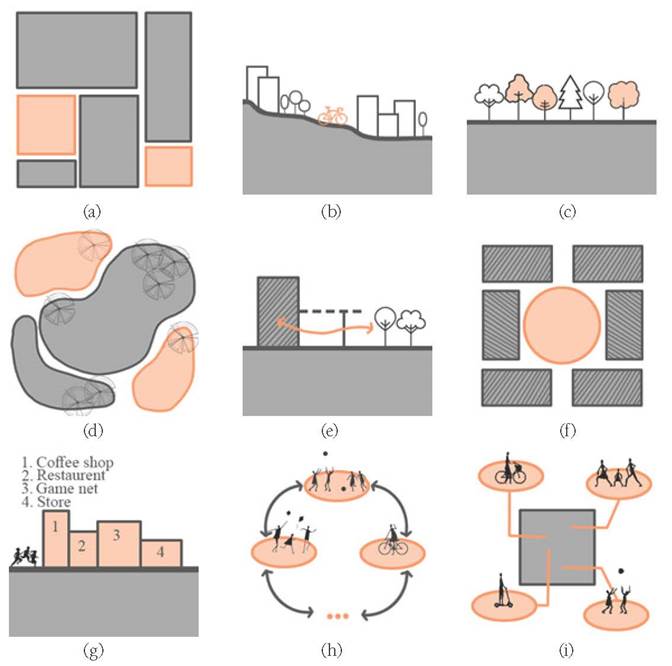
Figure 8
Diagrams of physical and functional diversity in behavioural settings: a) variation of scale; b) floor level differences; c) diversity of greenery; d) geometric diversity; e) integration of open and closed spaces; f) integrity; g) diversity of uses; h) flexibility; i) multi-functionality.
Source: Elaborated by the authors.
Discussion
Through observations, interviews, and mapping, the effective architectural factors in increasing the PA of children in the outdoor spaces of non-gated residential communities can be categorised as follows:
Existence of empty, integrated, and undefined spaces
The existence of empty, integrated, and undefined spaces creates multi-purpose and flexible spaces. This architectural feature in children’s environments makes it possible for them to change the environment to respond to their needs. So children can utilize these empty, integrated, and undefined spaces according to their needs and behaviours, leading to increased PA. For example, they can define the land for group activity or individual activity.
Existence of long and intricate paths
The existence of long and intricate paths that create geometric diversity is effective in increasing children's PA level. These paths arouse the children's curiosity and provide an environment for children to explore and gain new experience, which increases the children's PA.
Existence of ramps
The presence of ramps in some parts of the residential communities creates floor level differences, a key component of spatial diversity. This attracts children to engage in activities like running and cycling, as ramps offer a novel spatial experience. Ramps can be designed to encourage recreational use. Ramps can become versatile play elements, prompting activities such as running, climbing, rolling, or sliding. Ramped areas facilitate social interaction through games involving upward and downward movement.
Existence of semi-open spaces
Semi-open spaces, which lie at the border between closed and open spaces, affect children’s PA. Firstly, in semi-open spaces, a combination of indoor and outdoor PA can take place. Secondly, in semi-open spaces, because of more moderate weather conditions than outdoors, children can engage in PA in different climates and for longer periods of time.
Existence of diversity of uses
The existence of a diversity of uses like residential, commercial, and recreational buildings in the home area can affect children’s PA because it brings security and surveillance. It should also be considered that the existence of a diversity of uses is not only about the type of buildings but also about the design of the area, which can offer opportunities for play and movement for children.
Existence of greenery
The existence and diversity of greenery are effective in promoting children’s PA. The diversity of greenery creates attractiveness in the environment, which itself causes children to create new activities suitable for that space. The diversity of greenery provides numerous opportunities for children’s PA. For example, children use different vegetation as a bunker in the game of cops and robbers, climb trees, and play hide-and-seek between vegetation.
Variation of scale
The variation in scale, meaning the presence of lands with different sizes in the environment, affects the PA level of children. The existence of lands with different scales creates diverse opportunities for different activities, allowing children to select specific places based on their desired activity.
Conclusions
The trend towards a sedentary lifestyle is diminishing the health of children. Therefore, promoting PA among children remains a critical public health priority. One of the factors that can influence children's PA is the built environment, especially the environmental characteristics of residential communities’ outdoor spaces.
In this study, the current situations of children’s PA in the outdoor spaces of non-gated residential communities were examined to identify the relation between children’s non-organised PA and environmental design. The focus of the study was children aged seven to 13 living in the non-gated residential communities in four cities in Iran, which are Tehran, Isfahan, Mashhad, and Shiraz. The results obtained through observations, interviews, and mapping show that spatial diversity has a significant role in promoting children’s non-organised PA in non-gated residential communities in Iran in different ways.
Among the factors contributing to spatial diversity, integrity and multi-functionality are the main architectural elements significantly influencing children's PA. Following closely, the variation in scale emerged as another important architectural element. While other characteristics related to spatial diversity also matter, they have a somewhat less significant effect on children's PA. In this regard, the existence of certain features within residential communities can enhance children's PA, including: 1) empty, integrated, and undefined spaces; 2) long and intricate paths; 3) ramps; 4) semi-open spaces; 5) diverse uses; 6) greenery and its diversity; and 7) variations of scale.
More specifically, one of the key outcomes of the study is the identification of specific behavioural settings where children’s non-organised PA occurs. It was found that spaces such as paths, greenery, playgrounds, sports fields, wastelands, semi-open spaces, and semi-public spaces offer opportunities for children to engage in physical activities. Flexible and undefined areas, like wastelands and impasses, allow children to adapt their environment for various activities, while complex paths with geometric diversity encourage PA and exploration. Ramps and floor-level differences enhance activities like cycling. Semi-open spaces offer adaptable locations for a variety of weather situations. Greenery offers functional opportunities for PA like hide-and-seek and climbing, making the environment more engaging for children. A diversity of uses, such as residential, commercial, and recreational functions, further promotes PA by offering more opportunities for movement. The variation in scale across different spaces also enables children to choose specific areas for different types of activities, which supports a variety of PA experiences.
The findings of this research can be translated into urban planning and public policy recommendations. In particular, the design of new residential communities or the renovation of existing ones should pay attention to the creation and development of outdoor spaces for children's play and PA, respecting the environmental features identified in this study. To achieve this, the following measures can be considered: 1) develop incentive policies for housing developers to include appropriate play and PA areas for children in their projects; 2) provide financial and technical support for projects aimed at enhancing children's PA and improving public health; 3) revise and optimise play spaces in residential communities based on the research findings; 4) implement public policy recommendations such as setting minimum standards for creating suitable outdoor spaces for children's physical activities and allocating resources for the improvement and maintenance of these spaces.
Considering the significant impact of environmental architectural features on children's PA, especially in residential areas, there is an urgent need for more research. Future investigations should examine the relationship between various architectural elements in the built environment and their effects on children's PA. An increased sample size and a broader geographic focus to include more nations might be advantageous for this study.
In the end, the results of this research highlight how crucial it is to include deliberate architectural and urban design principles into residential planning in order to create environments that encourage children to lead healthier, more active lives.
Acknowledgement
This research was supported by Seoul National University (SNU) in the scope of SNU’s support for Global Visiting Fellow in BK21 programme for academic year 2022/2023.
References
Armstrong, G. P., Maitland, C., Lester, L., Trost, S. G., Trapp, G., Boruff, B., Al Marzooqi, M. K., & Christian, H. E. (2019). Associations between the home yard and preschoolers’ outdoor play and physical activity. Public Health Research and Practice, 29(1). https://doi.org/10.17061/phrp2911907
Ashrafi, P., Ostad-Ali-Askari, K., Ashrafi, A., Jabal-Ameli, A. & Eslamian, S. (2020). Investigation of changes in the structure of Isfahan city in ancient texture, Iran. American Journal of Engineering and Applied Sciences, 13(2), 204-223. https://doi.org/10.3844/ajeassp.2020.204.223
Barker, R. G. (1968). Ecological psychology: concepts and methods for studying the environment of human behavior. Stanford University Press.
Blanchard, A. (2004). Virtual behavior settings: An application of behavior setting theories to virtual communities. Journal of Computer-Mediated Communication, 9(2), JCMC924. https://doi.org/10.1111/j.1083-6101.2004.tb00285.x
Bourke, M., Haddara, A., Loh, A., Carson, V., Breau, B., & Tucker, P. (2023). Adherence to the World Health Organization’s physical activity recommendation in preschool-aged children: a systematic review and meta-analysis of accelerometer studies. International Journal of Behavioral Nutrition and Physical Activity, 20(1), 1-15. https://doi.org/10.1186/s12966-023-01450-0
Carver, A., Cerin, E., Akram, M., Sallis, J. F., Cain, K. L., Frank, L. D., Geremia, C. M., Conway, T. L., Glanz, K., & Saelens, B. E. (2023). Associations of home and neighborhood environments with children’s physical activity in the US-based Neighborhood Impact on Kids (NIK) longitudinal cohort study. International Journal of Behavioral Nutrition and Physical Activity, 20(1),1-12. https://doi.org/10.1186/s12966-023-01415-3
Cetken-Aktas, S. & Sevimli-Celik, S. (2023). Play preferences of preschoolers according to the design of outdoor play areas. Early Childhood Education Journal, 51(5), 955-970. https://doi.org/10.1007/s10643-022-01358-7
Christensen, P., Hadfield-Hill, S., Horton, J., & Kraftl, P. (2017). Children living in sustainable built environments: new urbanisms, new citizens. Routledge. https://doi.org/10.4324/9781315750019
Christian, H., Fried, L., Dhamrait, G., Nathan, A., Beck, B., Boruff, B., Cross, D., Gething, P., Schipperijn, J., Trost, S., & Villanueva, K. (2021). Built environments and child health: A policy review. Life Course Centre. https://doi.org/10.2139/ssrn.3956957
Committee on Environmental Health. (2009). The built environment: Designing communities to promote physical activity in children. Pediatrics, 123(6), 1591-1598. https://doi.org/10.1542/peds.2009-0750
Dehghani, E., Izadi, M. S., & Karimi, B. (2022). Investigating the impact of the contextual developments on the concept of house in contemporary era. Haft Hesar Journal of Environmental Studies, 10(39), 39-56. https://doi.org/10.52547/hafthesar.11.39.5
Dixon, B. N., Ugwoaba, U. A., Brockmann, A. N., & Ross, K. M. (2021). Associations between the built environment and dietary intake, physical activity, and obesity: a scoping review of reviews. Obesity Reviews, 22(4), e13171. https://doi.org/10.1111/obr.13171
Ergler, C. R., Kearns, R. A., & Witten, K. (Eds.). (2017). Children's health and wellbeing in urban environments. Routledge.
Fernandez, C. C., Patalay, P., Vaughan, L., Church, D., Hamer, M., & Maddock, J. (2023). Subjective and objective indicators of neighbourhood safety and physical activity among UK adolescents. Health & Place, 83, 103050. https://doi.org/10.1016/j.healthplace.2023.103050
Fomenko, E. (2020). The role of parental and built environment factors to explain physical activity in 10-12 year old children in Portugal [Master's dissertation, Ghent University].
Gehl, J. & Svarre, B. (2013). How to study public life. Island Press.
Ghazaie, M., Rafieian, M., & Dadashpoor, H. (2022). Making the invisible segregation of diverse neighbourhoods visible. Journal of Housing and the Built Environment, 37(1), 459-482. https://doi.org/10.1007/s10901-021-09850-z
Hakimian, P. (2016). Naqsh-e keyfiyat-haye tarahi-ye shahri-ye edrak-shode ba fa'aliyat-e badani-ye sakenan-e mahale, nemoone-ye moredi: mahalat-e Sa'adat Abad va Shahrak-e Qods Tehran [Cognitive urban qualities and physical activities a comparison of two neighborhoods]. Soffeh, 26(1), 87-108. https://dorl.net/dor/20.1001.1.1683870.1395.26.1.5.8
Hunter, S., Battista, K., Leatherdale, S. T., Spence, J. C., & Carson, V. (2023). Longitudinal associations between the school built environment and adolescents’ physical activity: Evidence from the COMPASS study. Journal of Transport & Health, 29, 101565. https://doi.org/10.1016/j.jth.2023.101565
Irankhah, K., Asadimehr, S., Kiani, B., Jamali, J., Rezvani, R., & Sobhani, S. R. (2024). Investigating the role of the built environment, socio-economic status, and lifestyle factors in the prevalence of chronic diseases in Mashhad: PLS-SEM model. Frontiers in Public Health, 12, 1358423. https://doi.org/10.3389/fpubh.2024.1358423
Jalili, M., Einifar, A., Madani, R., & Judd, B. (2021). Ta'sir-e mahdoude-ye kalbodi-ye majmou'e-haye maskouni bar tars az jorm-e sakenan, motale'e-ye moredi: moghayese-ye majmou'e-haye maskouni-ye mahsour, mahsour-e namadin va gheyr-mahsour dar Shahrak-e Ekbatan [The effects of residential communities’ physical boundaries on residents’ perception of fear of crime: a comparison between gated, perceived gated, and non-gated communities in Ekbatan neighborhood, Tehran]. Journal of Iranian Architecture & Urbanism (JIAU), 12(2), 189-204. https://doi.org/10.30475/isau.2021.196767.1273
Kemp, B. J., Cliff, D. P., Chong, K. H., & Parrish, A. M. (2019). Longitudinal changes in domains of physical activity during childhood and adolescence: a systematic review. Journal of Science and Medicine in Sport, 22(6), 695-701. https://doi.org/10.1016/j.jsams.2018.12.012
Kemp, B. J., Parrish, A. M., Batterham, M., & Cliff, D. P. (2020). Participation in domains of physical activity among Australian youth during the transition from childhood to adolescence: a longitudinal study. Journal of Physical Activity and Health, 17(3), 278-286. https://doi.org/10.1123/jpah.2018-0705
______ (2022). Changes in subdomains of non-organized physical activity between childhood and adolescence in Australia: A longitudinal study. International Journal of Behavioral Nutrition and Physical Activity, 19(1), 73. https://doi.org/10.1186/s12966-022-01311-2
Lang, J. (1987). Creating architectural theory. The role of the behavioral sciences in environmental. design. Van Nostrand Reinhold.
Maghsoodi, S. & Nadalian, A. (2018). The interaction of “globalization” and persian “handicrafts”: An analytical investigation. Journal of History Culture and Art Research, 7(5), 123-132. https://doi.org/10.7596/taksad.v7i5.1629
Mah, S. M. (2021). Active living environments, physical activity, and population health [Doctoral dissertation, McGill University]. https://escholarship.mcgill.ca/concern/theses/fj236730c
McKenzie, T. L., Cohen, D. A., Sehgal, A., Williamson, S., & Golinelli, D. (2006). System for Observing Parks and Recreation in Communities (SOPARC): Reliability and feasibility measures. Journal of Physical Activity and Health, 3(s1) S208-S222. https://doi.org/10.1123/jpah.3.s1.s208
Misra, M. (2022). Traditional architecture in Iran. International Journal of Environmental Studies, 79(2), 181-186. https://doi.org/10.1080/00207233.2022.2031061
Molina-García, J., Menescardi, C., Estevan, I., & Queralt, A. (2021). Associations between park and playground availability and proximity and children’s physical activity and body mass index: the BEACH study. International Journal of Environmental Research and Public Health, 19(1), 250. https://doi.org/10.3390/ijerph19010250
Mosoi, A. A., Beckmann, J., Mirifar, A., Martinent, G., & Balint, L. (2020). Influence of organized vs non organized physical activity on school adaptation behavior. Frontiers in Psychology, 11. https://doi.org/10.3389/fpsyg.2020.550952
Nathan, A., Schipperijn, J., Robinson, T., George, P., Boruff, B., Trost, S. G., & Christian, H. (2023). The moderating role of parent perceptions in relationships between objectively measured neighbourhood environment attributes and pre-schooler’s physical activity: Findings from the PLAYCE study. Health & Place, 81. https://doi.org/10.1016/j.healthplace.2023.103030
Rafieian, M., Aminisalehi, F., & Taghvayi, A. A. (2010). Sanjesh-e keyfiyat-e mohit-e sokounat dar Shahrak-e Ekbatan Tehran [Residential environment quality assessment in Ekbatan town of Tehran]. Spatial Planning (Modares Human Sciences), 4(68), 63-85.
Rajabi, F., Zare, L., & Hosseini, S. B. (2021). Sanjesh-e asar-gozari-ye ghalamro-haye se-gane-ye faza-ye kalbodi bar sarmaye-ye ejtemaei (motale'e-ye moredi: Shahrak-e Ekbatan Tehran) [Measuring the Effect of the Three Realms of Physical Space on Social Capital (Case Study: Ekbatan Town of Tehran)]. Physical Social Planning, 8(3), 91-110. https://doi.org/10.30473/psp.2021.58141.2451
Sallis, J. F., Cerin, E., Kerr, J., Adams, M. A., Sugiyama, T., Christiansen, L. B., Schipperijn, J., Davey, R., Salvo, D., Frank, L. D., De Bourdeaudhuij, I., & Owen, N. (2020). Built environment, physical activity, and obesity: findings from the international physical activity and environment network (IPEN) adult study. Annual Review of Public Health, 41, 119-139. https://doi.org/10.1146/annurev-publhealth-040218-043657
Sarmiento, O. L., Rubio, M. A., King, A. C., Serrano, N., Hino, A. A. F., Hunter, R. F., Aguilar-Farias, N., Parra, D. C., Salvo, D., Jáuregui, A., Lee, R. E., & Kohl, B. (2021). El entorno construido en los programas diseñados para promover la actividad física entre las niñas, niños y jóvenes latinos que viven en Estados Unidos y América Latina [The built environment in programs designed to promote physical activity among Latino children and youth living in the United States and Latin America]. Obesity Reviews, 22(S5), e13345. https://doi.org/10.1111/obr.13345
Scott, M. M. (2005). A powerful theory and a paradox: Ecological psychologists after Barker. Environment and Behavior, 37(3), 295-329. https://doi.org/10.1177/0013916504270696
Shirazi, M. R. (2018). Contemporary architecture and urbanism in Iran. Tradition, modernity, and the production of 'space-in-between'. Springer. https://doi.org/10.1007/978-3-319-72185-9
Shokouhibidhendi, M. & Kalmarzi, M. A. (2022). Spatial justice perceptions in high-income and low-income quarters of Tehran, Iran: Case study of niavaran and nematabad quarters. Journal of Urban Planning and Development, 148(1), 05021059. https://doi.org/10.1061/(ASCE)UP.1943-5444.0000741
Smith, M., Mavoa, S., Ikeda, E., Hasanzadeh, K., Zhao, J., Rinne, T. E., Donnellan, N., Kyttä, M., & Cui, J. (2022). Associations between children’s physical activity and neighborhood environments using GIS: A secondary analysis from a systematic scoping review. International Journal of Environmental Research and Public Health, 19(3), 1033. https://doi.org/10.3390/ijerph19031033
Suominen, T. H., Kukko, T., Pahkala, K., Rovio, S., Yang, X., Kulmala, J., Lounassalo, I., Hirvensalo, M., Raitakari, O. T., Tammelin, T. H., & Salin, K. (2024). Longitudinal associations of participation in organized and unorganized sports in youth with physical activity in mid-adulthood: The young Finns study. Journal of Sports Sciences, 42(15), 1-9. https://doi.org/10.1080/02640414.2024.2386490
Terrón-Pérez, M., Molina-García, J., Martínez-Bello, V. E., & Queralt, A. (2021). Relationship between the physical environment and physical activity levels in preschool children: a systematic review. Current Environmental Health Reports, 8(2), 177-195. https://doi.org/10.1007/s40572-021-00318-4
Torabi Farsani, N., Saffari, B., Shafiei, Z., & Shafieian, A. (2018). Persian literary heritage tourism: travel agents’ perspectives in Shiraz, Iran. Journal of Heritage Tourism, 13(5), 381-394. https://doi.org/10.1080/1743873X.2017.1371182
Yin, C., Liu, J., & Sun, B. (2023). Effects of built and natural environments on leisure physical activity in residential and workplace neighborhoods. Health & Place, 81. https://doi.org/10.1016/j.healthplace.2023.103018
Data availability statement
Author notes
Conflict of interest declaration