ARTICULO CIENTIFICO
MEANINGS OF LEISURE AND ITS IMPACTS ON THE EXPERIENCE OF ESCAPISM, PERSONAL FULFILLMENT, AND USE OF SPACES
SIGNIFICADOS DO LAZER E SEUS IMPACTOS NA EXPERIÊNCIA DE ESCAPISMO, REALIZAÇÃO PESSOAL E USO DOS ESPAÇOS
SIGNIFICADOS DEL OCIO Y SUS IMPACTOS EN LA EXPERIENCIA DE ESCAPISMO, REALIZACIÓN PERSONAL Y USO DE ESPACIOS
 Venilton Reinert venilton.reinert@hh.se
 Cynthia Boos de Quadros cynthiadequadros@gmail.com
Giovanni Augusto Patrício giovanniapatricio@gmail.com
Paulo Sérgio Reinert Paulo.sreinert@gmail.com
Thaynara Letícia Kuhn thayleticii@gmail.com
Cynthia Boos de Quadros cynthiadequadros@gmail.com
Giovanni Augusto Patrício giovanniapatricio@gmail.com
Paulo Sérgio Reinert Paulo.sreinert@gmail.com
Thaynara Letícia Kuhn thayleticii@gmail.com
MEANINGS OF LEISURE AND ITS IMPACTS ON THE EXPERIENCE OF ESCAPISM, PERSONAL FULFILLMENT, AND USE OF SPACES
Turismo - Visão e Ação, vol. 27, e20841, 2025
Universidade do Vale do Itajaí
Recepción: 17 Febrero 2025
Aprobación: 21 Agosto 2025
Abstract:
Purpose – The aim of this study is to analyze how the meanings of leisure are related to leisure choices and habits in a community.
Design/methodology/approach – The research is quantitative and descriptive, using secondary data from the Focus Project. The sample included 3,959 respondents, stratified by age, sex, level of education, and income. The analysis was based on the leisure dimensions of Schulz and Watkins (2007): Escaping Pressure and Achieving Fulfillment.
Findings – The results show that leisure is used both to relieve everyday pressures and to achieve personal fulfillment. Public spaces are associated with a greater sense of freedom and emotional satisfaction, while private environments tend to limit these experiences. Behavioral patterns highlight the connection between well-being and recreational choices.
Practical implication - The study highlights the need for inclusive public policies and infrastructure investments to democratize access to leisure spaces and activities, ensuring stress relief, personal fulfillment, and social well-being—especially in socioeconomically unequal contexts like Brazil.
Originality/value – The study integrates subjective meanings of leisure with practical habits, using a representative sample. Its multidimensional approach provides insights for promoting well-being, emphasizing the importance of public spaces and the emotional dimensions of leisure.
Research limitations - The findings of this study are limited by the geographically restricted sample (affecting generalizability) and the cross-sectional design (preventing causal inferences), highlighting the need for more diverse and longitudinal research.
Keywords: Leisure, Impacts of Leisure, Escapism, Personal Fulfillment, Use of Spaces.
Resumo:
Objetivo – O estudo visa a analisar como os significados de lazer relacionam-se com as escolhas e hábitos de lazer em uma comunidade.
Desenho/metodologia/abordagem – A pesquisa é quantitativa e descritiva, utilizando dados secundários do Projeto Focus. A amostra inclui 3.959 respondentes, estratificados por idade, gênero, escolaridade e renda. A análise baseia-se nas dimensões do lazer de Schulz e Watkins (2007): Escapar da Pressão e Alcançar a Realização.
Resultados – Os resultados mostram que o lazer é utilizado tanto para aliviar as pressões cotidianas quanto para alcançar a realização pessoal. Espaços públicos estão associados a uma maior sensação de liberdade e satisfação emocional, enquanto ambientes privados tendem a limitar essas experiências. Padrões comportamentais destacam a conexão entre bem-estar e escolhas recreativas.
Implicação prática – O estudo destaca a necessidade de políticas públicas inclusivas e investimentos em infraestrutura para democratizar o acesso a espaços e atividades de lazer, garantindo alívio do estresse, realização pessoal e bem-estar social — especialmente em contextos socioeconomicamente desiguais, como o Brasil.
Originalidade/valor – O estudo integra significados subjetivos de lazer com hábitos práticos, utilizando uma amostra representativa. Sua abordagem multidimensional fornece insights para a promoção do bem-estar, enfatizando a importância dos espaços públicos e as dimensões emocionais do lazer.
Limitações da pesquisa – Os resultados do estudo são limitados por uma amostra geograficamente restrita (afetando a generalização) e um desenho transversal (impedindo inferências causais), destacando a necessidade de pesquisas mais diversificadas e longitudinais.
Palavras-chave: Lazer, Impactos do Lazer, Escapismo, Realização Pessoal, Uso de Espaços.
Resumen:
Propósito: El estudio busca analizar cómo se relacionan los significados del ocio con las elecciones y los hábitos de ocio en una comunidad.
Diseño/metodología/enfoque – La investigación es cuantitativa y descriptiva, utilizando datos secundarios del Proyecto Focus. La muestra incluye 3959 participantes, estratificados por edad, género, educación e ingresos. El análisis se basa en las dimensiones del ocio de Schulz y Watkins (2007): Escapar de la Presión y Lograr la Realización.
Hallazgos: Los resultados muestran que el ocio se utiliza tanto para aliviar las presiones cotidianas como para alcanzar la realización personal. Los espacios públicos se asocian con una mayor sensación de libertad y satisfacción emocional, mientras que los entornos privados tienden a limitar estas experiencias. Los patrones de comportamiento resaltan la conexión entre el bienestar y las elecciones recreativas.
Implicación práctica - El estudio destaca la necesidad de políticas públicas inclusivas e inversiones en infraestructura para democratizar el acceso a espacios y actividades de ocio, garantizando el alivio del estrés, la realización personal y el bienestar social, especialmente en contextos socioeconómicamente desiguales como el de Brasil.
Originalidad/valor: El estudio integra los significados subjetivos del ocio con los hábitos prácticos, utilizando una muestra representativa. Su enfoque multidimensional proporciona perspectivas para promover el bienestar, enfatizando la importancia de los espacios públicos y las dimensiones emocionales del ocio.
Limitaciones de la investigación: Los hallazgos del estudio están limitados por una muestra geográficamente restringida (lo que afecta la generalización) y un diseño transversal (que impide inferencias causales), lo que resalta la necesidad de una investigación más diversa y longitudinal.
Palabras clave: Ocio, Impactos del Ocio, Escapismo, Realización Personal, Utilización de Espacios.
INTRODUCTION
Leisure, as a central aspect in promoting well-being and quality of life, is significant not only for disconnecting from daily obligations but also for fostering meaningful personal and collective experiences. As the pursuit of relaxation and self-development intensifies, leisure transcends mere recreational activity to function as a coping mechanism for daily pressures and a means of achieving personal fulfillment (Alanazi, 2024; Topaçoğlu & Uygur, 2024; Zhao et al., 2024). Studies indicate that engagement in leisure activities can contribute to intellectual flexibility and overall well-being, regardless of life stage (Schooler & Mulatu, 2001; Porter, Iwasaki & Shank, 2013; Gomez-Baya et al., 2025).
Within the theoretical framework of leisure, various approaches seek to understand its functions and impacts. Schulz & Watkins (2007) proposed a multidimensional categorization of leisure that includes, among other aspects, the dimensions of Escaping Pressure and Achieving Fulfillment. The former refers to the use of leisure as a strategy to alleviate stress and anxiety, while the latter emphasizes activities that promote self-development, creativity, and identity expression. These aspects are essential for understanding how individuals structure their leisure habits and how these meanings influence their experiences.
The Escaping Pressure dimension reflects the use of leisure as a strategy to mitigate stress and anxiety through recreational or cultural activities that provide emotional relief (Schulz & Watkins, 2007; Watkins & Bond, 2007; McQuoid, 2017; Topaçoğlu & Uygur, 2024). Meanwhile, Achieving Fulfillment highlights the pursuit of activities that foster self-development, creativity, and identity expression, contributing to a sense of personal accomplishment (Porter, Iwasaki & Shank, 2013; Alanazi, 2024; Stebbins, 2018).
Furthermore, the influence of the environments in which leisure activities take place—whether public or private—cannot be overlooked. The literature suggests that public spaces, such as urban parks, tend to facilitate social interactions and provide a greater sense of freedom and emotional satisfaction, whereas private environments, while offering comfort and control, may impose certain limitations on such experiences (Watkins, 2008; Huang, Chan & Li, 2025; Ravenscroft, 1995; Šikić-Mićanović, Zdravković & Anić, 2021).
This study is part of a broader research effort conducted within the framework of the Focus Project, an extension initiative aimed at investigating community dynamics related to leisure, tourism, and well-being. Despite theoretical advancements, leisure studies still lack an integrated approach that connects the subjective meanings attributed to these practices with the actual behaviors adopted by individuals. In this regard, the model proposed by Schulz & Watkins (2007) provides a relevant contribution by presenting a multidimensional categorization of leisure, encompassing aspects such as Escaping Pressure and Achieving Fulfillment. The justification for this research lies in the need to understand how individual perceptions of leisure meanings shape everyday practices and influence broader community patterns. Given the increasing recognition of leisure as a vector for social integration, public health, and sustainable development, this study responds to the demand for empirical evidence capable of supporting policies and strategies aimed at improving quality of life through leisure experiences.
Given this context, the present study aims to analyze how the meanings of leisure relate to leisure choices and habits within a community. Specifically, it focuses on examining: (1) the use of leisure as a strategy for escaping daily pressures; (2) the association of leisure with the pursuit of personal fulfillment; and (3) the impact of the environment - public or private - on individuals’ perceptions of freedom and emotional satisfaction.
The methodological approach is quantitative and descriptive, based on secondary data from the Focus Project, an extension activity developed by the Regional University of Blumenau (FURB) in partnership with the Municipality of Blumenau and the Government of the State of Santa Catarina. The sample, consisting of 3,959 respondents stratified according to population representativeness criteria (age, sex, level of education, and income), allows for the identification of behavioral patterns and the validation of formulated hypotheses.
The analysis reveals how different perceptions of leisure influence individuals’ activity choices, identifying patterns that connect well-being with recreational experiences. Additionally, the findings indicate a relationship between the use of public spaces and the perception of freedom and emotional satisfaction. These results highlight the importance of considering the subjective dimensions of leisure in the development of policies and strategies aimed at promoting sustainable tourism through leisure activities.
This article is divided into six sections, including this introduction. In the second section, the theoretical foundation was constructed, in this stage we addressed the meanings of leisure; including: Meaning of Leisure as an Escape from Daily Pressures; The meaning of leisure as a path to fulfillment; and Leisure Spaces. In the third section, we address the methodology, in this stage we presented the framework and the hypotheses and the sample profile. We then present results of the research, with tables showing the methods adopted. In the following section, we present the discussions of the results, linking the analysis of the results with the bibliography, including the implications of the study. And, finally, we present the conclusions and research limitations and offer some suggestions for future research.
THEORETICAL BACKGROUND
Meanings of Leisure
Leisure can be understood as activities carried out during free time, which may not be related to work or daily obligations (Taylor et al., 1978). However, leisure habits, according to Francken, Van Raaij, and Verhallen (1981), are practices that individuals engage in and can be influenced by internal factors, such as habit formation and lack of self-control, leading to the maintenance of undesirable behaviors, such as spending too much time on specific activities. The significance of leisure habits is evidenced in studies such as that of Schooler and Mulatu (2001), who investigated the relationship between complex leisure activities and intellectual functioning in older adults, highlighting that participation in substantially complex tasks, both at work and in leisure, is associated with significant improvements in intellectual flexibility, even in old age.
Indeed, leisure can act as a mechanism for escaping daily pressures, offering individuals a means of relieving stress and anxiety (Schulz & Watkins, 2007; Watkins & Bond, 2007). The pursuit of recreational or cultural activities, such as reading, watching movies, or engaging in outdoor activities, reflects the need for emotional balance and well-being, which strengthens leisure as a means of coping with daily pressures (McQuoid, 2017; Topaçoğlu & Uygur, 2024). On the other hand, leisure is also associated with achieving personal fulfillment, with individuals seeking activities that promote self-development and emotional satisfaction, such as creative hobbies and educational experiences (Porter, Iwasaki & Shank, 2013; Alanazi, 2024). Such practices not only stimulate personal growth but also strengthen self-expression and identity construction, essential elements for subjective well-being (Porter, Iwasaki & Shank, 2013; Gomez-Baya et al., 2025). In this context, public spaces such as urban parks are significant in providing an environment conducive to relaxation and socialization, which can enhance the sense of freedom and emotional satisfaction (Watkins, 2008; Huang, Chan & Li, 2025).
Recent studies on leisure in Brazil have explored several aspects of this field. Maciel et al. (2023) focus on the relationship between leisure studies and Protestantism, highlighting criticisms of Protestant values that influence leisure practices, while noting the need for theological considerations in such analyses. Gender disparities in leisure experiences have been investigated, revealing barriers that women face to enjoying free time, due to cultural expectations and financial constraints (Reinert et al, 2022; Bonalume et al., 2023). Cavalcante et al. (2023) compared leisure-related disciplines in public and private physical education courses, finding that public institutions focus more on education, while private institutions emphasize recreation. Additionally, Silva (2022) evaluates federal physical activity policies in Brazilian federal universities, noting the limited scope of leisure-related programs and the need for more comprehensive policies to promote human development and social justice.
Meaning of Leisure as an Escape from Daily Pressures
The concept of Escaping Pressure refers to a strategy or mechanism through which individuals seek relief or escape from sources of stress, anxiety or emotional pressure. In the context of leisure, this involves engaging in recreational or cultural activities that divert the attention from daily concerns and bring relaxation or pleasure (Schulz & Watkins, 2007; Watkins & Bond, 2007). Furthermore, individuals who perceive leisure as a means of alleviating daily pressures tend to engage more frequently in experiences such as reading, watching movies, and outdoor activities (McQuoid, 2017). This behavior reflects the need for emotional balance and well-being, reinforcing the relevance of leisure as a strategy for coping with life’s daily pressures (Topaçoğlu & Uygur, 2024; Zhao et al., 2024). For example, urban parks can promote relaxation and recovery from mental and physical stress, helping to alleviate these pressures (Lin, Lin & Wang, 2025). Thus, those who value leisure from this perspective demonstrate more consistent participation in relaxing and cultural activities (Iso-Ahola & Allen, 1982; Watkins & Bond, 2007; Topaçoğlu & Uygur, 2024; Lin, Lin & Wang, 2025; Sun et al., 2025).
Leisure in Brazil has been the focus of several aspects of public policy and participation. Research has examined professional training in social sports programs, highlighting the importance of addressing gaps in early education (Silva et al., 2024). Mazer et al. (2024) conducted a study on the participation of Brazilian older adults in Advanced Activities of Daily Living and revealed low engagement, with demographic, socioeconomic, and clinical factors influencing participation. In addition, innovative approaches to leisure experiences have been explored, such as the use of fantasy football apps in university settings, which promote both entertainment and leisure education (Duarte et al., 2024; Silva et al., 2024). Therefore, the relationship between attributing meaning to leisure as "Escaping Pressure" and participation in relaxing and cultural activities is based on the premise that the pursuit of stress relief and emotional well-being drives leisure choices focused on relaxation and cultural enrichment, reinforcing the proposed hypothesis:
Hypothesis 1 (H1): Individuals who attribute greater significance to leisure as a form of "Escaping Pressure" exhibit a higher frequency of participation in relaxing and cultural activities.
The Meaning of Leisure as a Pathway to Achievement
The concept of leisure associated with Achieving Fulfillment refers to the notion that leisure activities contribute to the experience of personal achievement and satisfaction that individuals seek through their leisure pursuits, engaging in activities that promote personal development, creativity, and a sense of identity and competence (Porter, Iwasaki & Shank, 2013; Alanazi, 2024; Gomez-Baya et al., 2025). In this regard, individuals who associate leisure with "Achieving Fulfillment" seek activities that foster self-development and emotional satisfaction, such as creative hobbies and educational experiences (Stebbins, 2018; Kuykendall, Boemerman & Zhu, 2018). These activities not only stimulate personal growth but also strengthen self-expression and identity construction, elements fundamental to subjective well-being (Porter, Iwasaki & Shank, 2013; Alanazi, 2024). By engaging in practices that involve mental and creative skills, these individuals tend to experience a deeper sense of accomplishment and enduring pleasure (Liu & Yu, 2015; Gomez-Baya et al., 2025).
Research suggests that leisure activities, particularly physical activities, can contribute to well-being and quality of life among adolescents (Marcino et al., 2022). However, in Brazil, engagement in such activities is often influenced by socioeconomic factors and inequalities in Brazil, making them a privilege rather than a choice for many (Knuth & Antunes, 2021; Reis et l, 2024). In the context of higher education, federal programs to promote physical activity and leisure have been implemented, but remain limited in scope and reach (Silva, 2022; Limberger et al, 2025). The Second Time University Program has shown promise in fostering human development through leisure activities (Silva, 2022). Factors that influence participation in university leisure programs include financial resources, time management, and scheduling conflicts (Silva & Reverdito, 2023). To face these challenges and promote leisure activities as a path to self-fulfillment, comprehensive public policies are needed that reduce inequalities and create dignified living conditions for all (Knuth & Antunes, 2021). This behavior reflects the idea that leisure, when perceived as a means of personal fulfillment, is directly associated with the pursuit of experiences that provide continuous growth and satisfaction, thus influencing leisure choices and habits within a community. This supports the following hypothesis:
Hypothesis 2 (H2): Individuals who associate leisure with "Achieving Fulfillment" are more likely to engage in mental, educational, and creative hobby activities.
Leisure Spaces
Access to planned spaces, whether public or private, that facilitate activities, can enhance quality of life, emotional satisfaction, and the perception of freedom in leisure (Kuboshima & McIntosh, 2020). In this context, studies indicate that individuals who engage in leisure activities in public spaces report higher perceptions of freedom and emotional satisfaction, as these environments provide opportunities for socialization, relaxation, and escape from daily pressures, all of which promote psychological well-being (Watkins, 2008; Huang, Chan & Li, 2025). Lloyd and Auld's (2003) research further supports this idea by emphasizing the significance of social experiences and engagement in public spaces, which contribute substantially to individuals' quality of life, fostering a sense of community and enhancing emotional satisfaction. Consequently, spaces such as parks serve as venues for social interactions, providing an area for people to connect and relax, thereby intensifying the sense of freedom (Peters, 2010; Johnson & Glover, 2013; McQuoid, 2017; Hu & Luo, 2025). In contrast, leisure in private locations offers amenities and a controlled environment, but it may result in a diminished sense of freedom and emotional satisfaction when compared to the leisure experience in public settings (Ravenscroft, 1995; Šikić-Mićanović, Zdravković & Anić, 2021; Iwińska et al., 2023; Klot & Zahn, 2025).
Research suggests that engaging in leisure activities, particularly in public spaces, can have positive effects on well-being and physical activity. Individuals who engage in leisure activities report higher levels of creative actions, self-perceptions of creative performance, and emotional creativity (Elisondo et al., 2022). Public open spaces allow for diverse leisure activities and are associated with a higher likelihood of walking and moderate-to-vigorous physical activity among adults in primary health care (Mello et al., 2022). Leisure engagement positively influences leisure satisfaction and voluntary simplicity, which in turn affects experiential consumption (Matte et al., 2021). In the context of physical education curricula, public institutions tend to focus more on leisure-related subjects compared to private institutions, with public institutions emphasizing education while private institutions lean toward recreation (Cavalcante et al., 2023). Thus, the use of public spaces for leisure activities not only contributes to emotional well-being but also reinforces the perception of freedom, supporting the hypothesis that these spaces promote greater emotional satisfaction in leisure, thus reinforcing the following hypothesis:
Hypothesis 3 (H3): Individuals who engage in their primary leisure activities in public spaces exhibit higher perceptions of freedom and emotional satisfaction in leisure.
METHODOLOGY
This study is characterized as basic research, with a quantitative approach and descriptive nature. It aims to analyze how the meanings of leisure, identified through the adaptation of the theoretical and methodological model by Schulz & Watkins (2007), are related to leisure choices and habits within a community. The quantitative approach is justified by the need to identify patterns of behavior and perception in a representative sample of the population, enabling the analysis of relationships between variables and the validation of hypotheses based on objective data (Richardson, 2014).
The data analyzed is secondary, originating from the Focus Project database, developed by the Regional University of Blumenau (FURB) in partnership with the City of Blumenau and the State Government of Santa Catarina. The selection of participants was based on geographical location, focusing on residents of Blumenau, in the state of Santa Catarina. The database consists of 3,959 respondents, stratified according to population representativeness criteria (age, sex, level of education, and income), based on the 2022 IBGE Census. However, the sample was obtained using a non-probabilistic snowball technique, therefore it is not representative of the entire population. The field data was collected between November 9 and December 10, 2024. The data collection instrument was an online form developed using Google Forms, which included closed-ended questions adapted from the Schulz & Watkins (2007) model. For the data analysis, statistical techniques were employed, including hypothesis testing using linear regression and t-tests, aiming to examine the relationships between the dimensions of leisure and the respondents' behavioral patterns.
The research strictly followed Brazilian ethical guidelines for studies involving human subjects, as established by Resolutions No. 466/2012 and No. 510/2016 of the Brazilian National Health Council (CNS). It was a survey-based study conducted through a structured questionnaire applied to adult participants, without the collection of sensitive or biomedical data and involving minimal risk. Respondents were not identified, ensuring anonymity, and at the beginning of the instrument, they were informed about the study’s objectives and the voluntary nature of their participation. Given these characteristics, and in accordance with Official Letter No. 17/2022/CONEP/SECNS/MS, the research is exempt from review by the CEP/CONEP system.
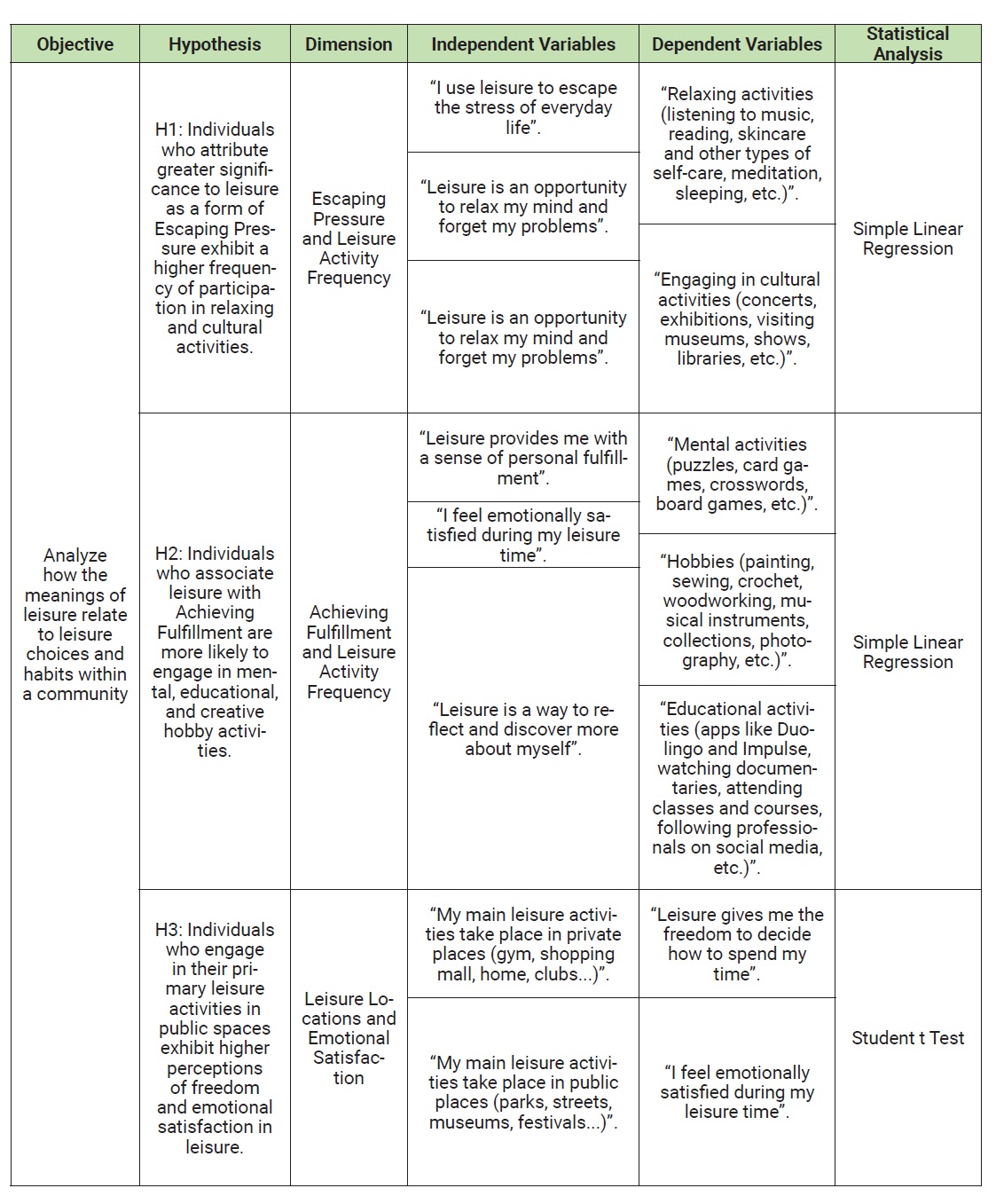
To meet the objectives of this study, specific questions from the report were selected, investigating individuals' perceptions of the meaning of leisure in their lives, the time dedicated to these activities, and the context in which they occur. The analyzed questions address leisure as a means of stress relief, personal fulfillment, and emotional satisfaction, as well as identifying whether activities are carried out individually or collectively and in public or private spaces, as presented in Table 1. This selection allowed for a targeted approach to understanding the meanings attributed to leisure and its impacts on individuals.
Framework 1 -
Integrated Synthesis of the Research Methodology
Source: authors (2025).
In this context, Hypothesis 1 used the dependent dimension "Leisure Activity Frequency," which consists of the following variables: "Relaxing activities (listening to music, reading, skincare and other self-care activities, meditation, sleeping, etc.)" and "Engaging in cultural activities (concerts, exhibitions, museum visits, shows, library, etc.)". The independent dimension considered was "Leisure Meanings," which, in turn, includes: "I use leisure to escape from the stress of daily life," "Leisure is an opportunity to relax my mind and forget about my problems," and "Leisure provides me with a sense of personal fulfillment".
For Hypothesis 2, the dependent dimension "Personal Fulfillment in Leisure" was used, consisting of the variables: "Mental activities (puzzles, card games, crosswords, board games, etc.)," "Hobbies (painting, sewing, crochet, woodworking, musical instruments, collections, photography, etc.)," and "Educational activities (apps like Duolingo and Impulse, watching documentaries, attending classes and courses, following professionals on social media, etc.)". The independent dimension was "Achieving Fulfillment," composed of: "I feel emotionally satisfied during my leisure time," "Leisure is something I only do when all my obligations are completed," and "Leisure is a way to reflect and discover more about myself".
In Hypothesis 3, an independent sample t-test was used, with the comparison variables being: "Leisure gives me the freedom to decide how to spend my time" and "Leisure is something I only do when all my obligations are completed". Two comparison groups were considered, based on whether the participants' primary leisure activities take place in private or public spaces, with Group 1 being private spaces and Group 2 being public spaces.
Sample Profile
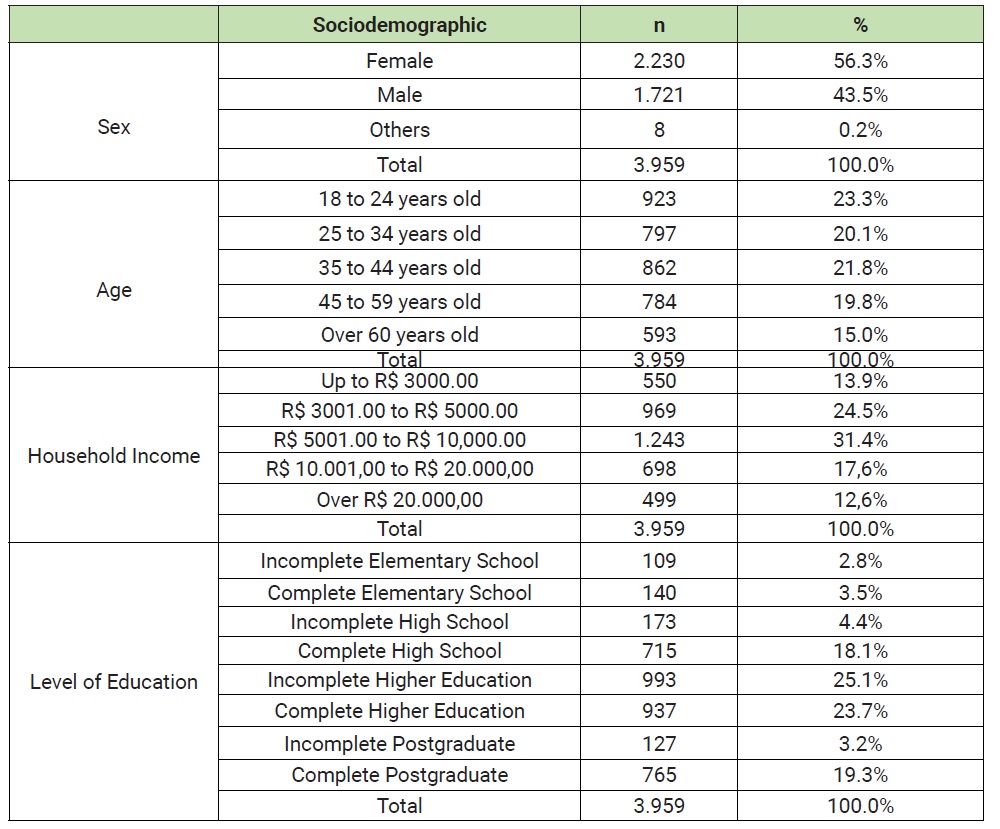
Table 1 presents the sociodemographic data of the stratified sample, highlighting a predominantly female profile (56.33%). Regarding the age distribution, the largest concentration of respondents is found in the age groups 18 to 24 years (23.3%) and 35 to 44 years (21.8%).
Source: authors (2025).
Regarding education, the sample shows significant diversity, ranging from elementary education to postgraduate studies. This heterogeneity is relevant as it reflects different educational backgrounds and experiences, potentially influencing the participants' perspectives and opinions on the topics addressed in the research. The analysis of household income revealed that the majority of respondents (31.4%) have a household income of between R$5001.00 and R$10,000.00, which may indicate greater availability of resources for engaging in recreational and leisure activities.
RESULTS
Escaping Pressure
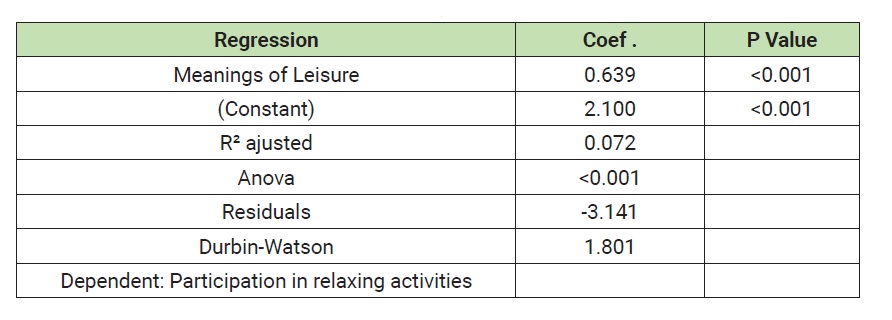
The results of the regression analyses and the Student t test provide robust empirical evidence to support the theoretical premises of the Leisure Meaning Inventory model (Schulz & Watkins, 2007), reinforcing the centrality of leisure in promoting individual and collective well-being. The dimension "Escaping Pressure" (Table 2) proved to be a determining factor in predicting participation in relaxing activities, which aligns with the literature emphasizing leisure as an effective means of stress relief and emotional regulation (McQuoid, 2017; Topaçoğlu & Uygur, 2024; Zhao et al., 2024; Lin, Lin & Wang, 2025). The statistical significance of this relationship highlights that individuals who perceive leisure as a means of escape tend to engage more frequently in activities that promote relaxation and psychological well-being, validating the theory proposed by Schulz and Watkins (2007), which suggests that structured leisure can act as a mechanism for coping with stress.
Source: authors (2025).
Table 2 presents the results of the linear regression, demonstrating that the meanings attributed to leisure have a positive and significant influence on participation in relaxing activities (coef. = 0.639, p < 0.001), supporting Hypothesis 1. This finding reinforces the conclusions of Iso-Ahola and Allen (1982), who argue that the motivation for leisure is directly related to the psychological need for emotional recovery. McQuoid (2017) and Topaçoğlu and Uygur (2024) further corroborate this idea by showing that activities such as reading, watching movies, and outdoor practices significantly reduce levels of anxiety and stress.
The ANOVA test presented a p-value < 0.001, indicating that the regression model is statistically significant. The residual analysis showed normal distribution, with values close to zero, reinforcing the adequacy of the model. The Durbin-Watson coefficient (1.801) suggests low autocorrelation of errors, ensuring the validity of the statistical inference.
Achieving Fulfillment
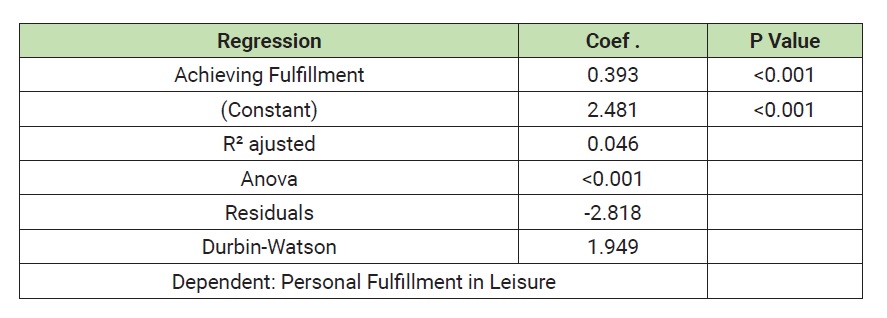
Similarly, Table 3 shows that the "Achieving Fulfillment" (Table 3) dimension has a coefficient of 0.393 (p < 0.001) in predicting personal fulfillment in leisure. This result supports Hypothesis 2 and reinforces the perspective of Porter, Iwasaki, and Shank (2013) concerning the relationship between leisure and personal development.
ource: authors (2025).
The evidence aligns with the ideas of Stebbins (2018), who introduced the concept of "serious leisure," suggesting that activities requiring commitment and enhanced skills are fundamental for long-term psychological satisfaction. Liu and Yu (2015) and Gomez-Baya et al. (2025) also reinforce that leisure activities promoting knowledge acquisition and self-expression are positively related to increased self-esteem and subjective well-being. Additionally, the results indicated a good model fit, with a significant ANOVA (p < 0.001), well-distributed residuals, and a Durbin-Watson value of 1.949.
Characteristics of the location where leisure is practiced
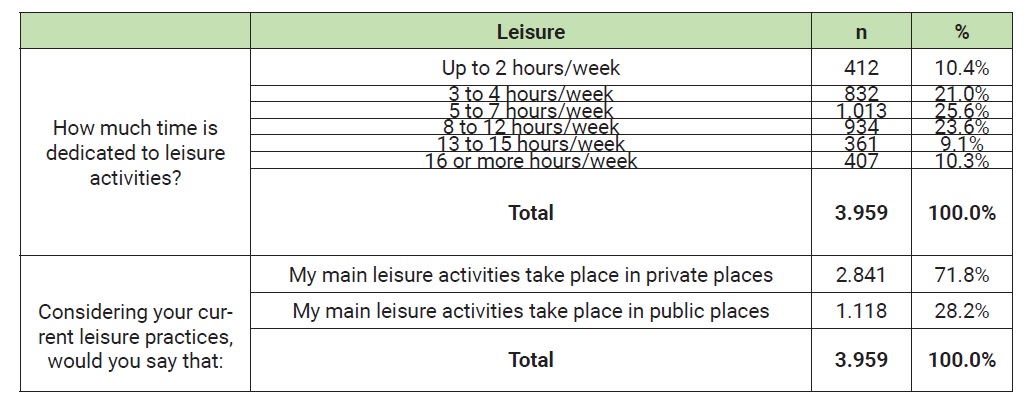
Table 4 presents the time allocation patterns for leisure activities among the study participants. It is observed that the majority of respondents (25.6%) dedicate between 5 and 7 hours per week to leisure, followed by those who allocate between 8 and 12 hours (23.6%). This result suggests a balanced distribution of leisure time, although a considerable portion (10.4%) spends only up to 2 hours per week on these activities, which may indicate limitations imposed by work routines or personal responsibilities. On the other hand, 10.3% of respondents invest 16 or more hours per week in leisure, which may be related to greater flexibility in time usage or individual preferences for more frequent recreational experiences.
Source: authors (2025).
Source: authors (2025).
Table 4 also shows that the majority of participants (62.2%) engage in their leisure activities collectively, suggesting that leisure is important for socialization and social interaction. This finding aligns with an emphasis on the relational dimension of leisure and its impact on strengthening social bonds (Lloyd & Auld, 2003; Peters, 2010). However, a significant proportion (37.8%) prefer individual activities, which may reflect the need for spaces for introspection and self-realization (Stebbins, 2018; Kuykendall, Boemerman & Zhu, 2018).
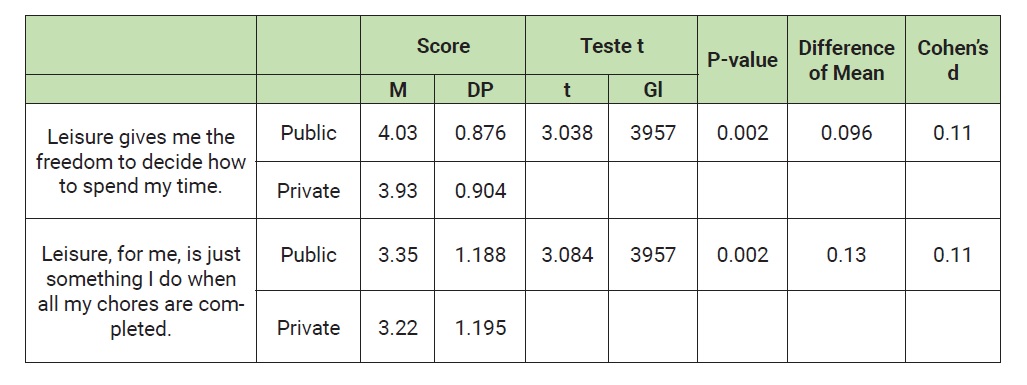
Another aspect of note is the preference for private spaces for leisure activities, with 71.8% of respondents opting for environments such as in their homes or indoor locations. This trend contrasts with the findings of Huang, Chan, and Li (2025), who highlight the relevance of public spaces for collective well-being. However, only 28.2% of respondents claim to use these spaces, suggesting challenges related to their availability and accessibility. This reinforces the need for investments in urban infrastructure to encourage leisure in public spaces. Table 5 below presents emotional satisfaction in leisure activities practiced in public and private spaces.
Source: authors (2025).
However, Table 5 presents the results of the T-test, comparing the perception of freedom and emotional satisfaction between individuals who engage in leisure activities in public and private spaces. The results showed that the perception of freedom in leisure was significantly higher among those who engage in activities in public spaces (M = 4.03, SD = 0.876) compared to those who prefer private spaces (M = 3.93, SD = 0.904), with p = 0.002.
This finding supports Hypothesis 3 and reinforces the literature of Watkins (2008) and Huang, Chan, and Li (2025), who argue that public spaces promote social interaction and a broader sense of belonging. The authors Lloyd and Auld (2003) and Peters (2010) indicate that open spaces are catalysts for community interaction and social cohesion, suggesting that public policies should prioritize the expansion and preservation of accessible leisure environments.
DISCUSSION
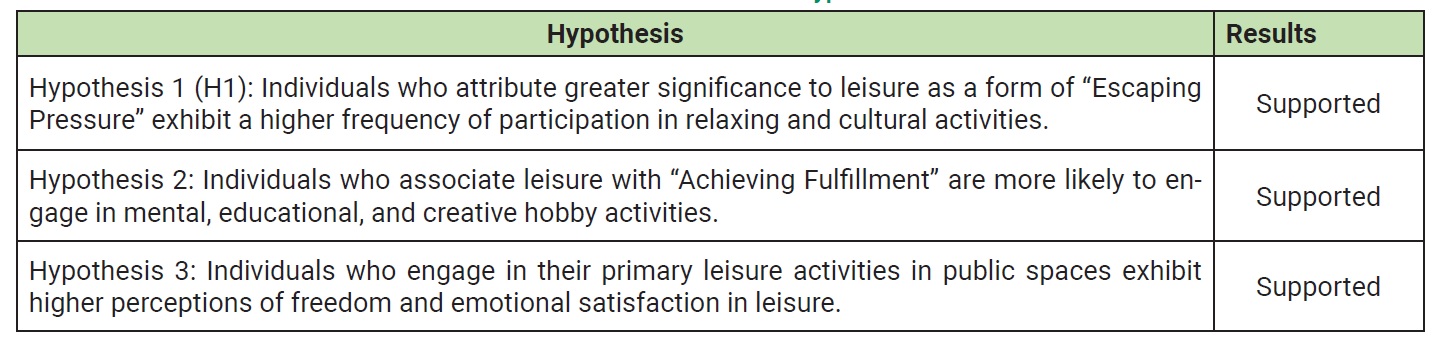
In the present study, three central hypotheses were formulated; these were then subjected to structured statistical analyses. Below, we present a table summarizing the results obtained for each hypothesis, highlighting which hypotheses were supported. See Framework 2.
Framework 2 -
Results of hypothesis
Source: authors (2025).
The Framework 2 presents the results of the three tested hypotheses, all of which are corroborated by the data. Hypothesis 1 confirms that individuals who view leisure as a form of "escaping pressure" tend to participate more in relaxing and cultural activities. Hypothesis 2 supports that those who associate leisure with the "achievement of personal fulfillment" engage more in mental, educational, and creative hobby activities. Finally, Hypothesis 3 shows that engaging in leisure activities in public spaces is associated with a greater perception of freedom and emotional satisfaction. These results highlight the importance of motivations and context in leisure engagement and experience.
The results of the regression analyses and t-test provide robust empirical evidence supporting the theoretical premises of the Leisure Meaning Inventory model (Schulz & Watkins, 2007), reinforcing the centrality of leisure in promoting individual and collective well-being. The dimension "Escaping Pressure" proved to be a determining factor in predicting participation in relaxing activities, which aligns with literature emphasizing leisure as an effective means of stress relief and emotional regulation (McQuoid, 2017; Topaçoğlu & Uygur, 2024). In the Brazilian context, however, socioeconomic inequalities often transform leisure into a privilege rather than a choice, particularly for marginalized groups (Knuth & Antunes, 2021; Reis et al., 2024). This structural limitation underscores the need for policies that democratize access to leisure as a tool for stress reduction, especially for women who face cultural and financial barriers to free time (Reinert et al., 2022; Bonalume et al., 2023).
The statistical significance of this relationship highlights that individuals who view leisure as an escape tend to engage more frequently in activities that promote relaxation and psychological well-being. These findings align with studies highlighting the relationship between stress management and the pursuit of structured recreational spaces (Watkins & Bond, 2007; Zhao et al., 2024). However, Brazilian research reveals that there are gaps in federal policies for physical activity and leisure, particularly in universities, where programs remain limited in scope and fail to fully address human development and social justice (Silva, 2022; Limberger et al., 2025).
On the other hand, the "Achieving Fulfillment" dimension showed a statistically significant association with the pursuit of personal fulfillment in leisure, reinforcing the idea that engaging in activities that stimulate personal development and creative expression directly impacts satisfaction and identity construction (Porter, Iwasaki & Shank, 2013; Gomez-Baya et al., 2025). In Brazil, initiatives like the Second Time University Program demonstrate the potential of leisure to foster human development, yet challenges such as financial constraints and time management persist (Silva, 2022; Silva & Reverdito, 2023). The positive and significant coefficient indicates that individuals who perceive leisure as a means of personal growth are more likely to engage in activities that require cognitive and expressive skills, such as practicing hobbies and cultural activities. These results dialogue with studies arguing that active participation in enriching experiences strengthens the sense of self-efficacy and subjective well-being (Stebbins, 2018; Kuykendall, Boemerman & Zhu, 2018). Brazilian studies further highlight that leisure activities, especially in educational settings, can enhance creative performance and emotional creativity, yet disparities in access between public and private institutions persist (Elisondo et al., 2022; Cavalcante et al., 2023).
The analysis of leisure spaces demonstrated that individuals who engage in leisure activities in public spaces have a significantly greater perception of freedom and emotional satisfaction compared to those who engage in activities in private spaces. This finding corroborates the reduced sense of freedom and emotional satisfaction in private locations compared to the leisure experience in public spaces (Ravenscroft, 1995; Šikić-Mićanović, Zdravković & Anić, 2021; Iwińska et al., 2023; Klot & Zahn, 2025). In Brazil, public spaces like parks are critical for promoting physical activity and social interaction, yet their use is unevenly distributed due to socioeconomic factors (Mello et al., 2022). Research also emphasizes the role of public policies, such as the PELC and PST programs, in training professionals to address leisure inequalities, though civil society participation in decision-making remains limited (Silva et al., 2024; Duarte et al., 2024; Zucco et al., 2024).
Thus, the findings indicate that social interaction and the dynamics of open spaces play a significant role in leisure experience, providing opportunities for belonging and well-being (Watkins, 2008; Huang, Chan & Li, 2025). Studies suggest that public spaces, such as urban parks, not only promote relaxation but also play a crucial role in structuring social networks and spontaneous interactions, which contributes to the strengthening of social capital and community cohesion (Lloyd & Auld, 2003; Peters, 2010). However, Brazilian studies reveal that older adults, for example, face low engagement in advanced leisure activities due to demographic and socioeconomic barriers (Mazer et al., 2024), highlighting the need for targeted interventions.
The results of this work emphasize and reinforce the need for the formulation of public policies to encourage the expansion and maintenance of accessible leisure spaces, ensuring equity in access to places that foster emotional satisfaction and social interaction. This is particularly urgent in Brazil, where comprehensive policies are needed to reduce inequalities and create dignified living conditions for all (Knuth & Antunes, 2021). Additionally, they suggest that investments in public infrastructure could enhance leisure experiences that meet the needs of different population profiles, promoting well-being through the revitalization of urban spaces (Hu & Luo, 2025; Jin et al., 2024). Innovative approaches, such as fantasy football apps in universities, demonstrate the potential for leisure education and entertainment, but these require broader systemic support (Silva et al., 2024).
In concrete terms, the findings of this study reinforce the importance of considering the subjective dimensions of leisure in the formulation of policies and practices aimed at quality of life. Recognizing leisure as a tool for stress relief, personal fulfillment, and strengthening social interactions highlights its relevance in promoting individual and collective well-being. The Brazilian context underscores the intersection of leisure with cultural, gendered, and socioeconomic factors, calling for policies that address these complexities (Maciel et al., 2023; Reinert et al., 2022). Thus, this study contributes to the academic debate by providing quantitative evidence on the meanings attributed to leisure and its impacts, while also suggesting directions for future interventions aimed at democratizing access to leisure spaces and experiences.
CONCLUSIONS
The importance of leisure stands out as an element for individual and collective well-being, providing moments of relief from daily pressures and promoting personal fulfillment. In this context, the present study aimed to analyze how the meanings of leisure, identified through the Leisure Meaning Inventory model, are related to leisure choices and habits within a community.
The results show that individuals who attribute the meaning of stress relief to leisure (Escaping Pressure) participate more frequently in relaxing and cultural activities, while those who associate leisure with personal fulfillment (Achieving Fulfillment) tend to engage more in mental, educational, and creative hobbies. Furthermore, it was found that engaging in leisure activities in public spaces is significantly associated with a greater perception of freedom and emotional satisfaction than activities in private spaces. However, in Brazil, these benefits are unevenly distributed due to structural inequalities. For instance, women and marginalized groups often face cultural and financial barriers to leisure participation, while older adults experience limited engagement due to socioeconomic and demographic factors.
These findings have relevant managerial and academic implications. For managers, expanding and maintaining well-structured public spaces can encourage participation in activities that promote well-being and local tourism. However, Brazilian research highlights critical gaps in leisure policies, such as the limited reach of federal programs in universities and disparities between public and private institutions in leisure education. To address these challenges, policymakers must prioritize equitable access to leisure infrastructure, particularly in underserved communities, and strengthen initiatives like the PELC and PST programs, which aim to train professionals for inclusive leisure promotion.
For the academic community, the results open avenues for further research. In Brazil, future studies could explore how intersectional factors (e.g., sex, class, and age) shape leisure inequalities, as well as the potential of digital tools (e.g., fantasy football apps) to democratize leisure education. In this sense, the results not only reinforce the theoretical framework but also contribute to the understanding of the interrelationships between leisure meanings, leisure activity frequency, and satisfaction within the context of social cohesion, promoting the development of new methodological approaches in the field of leisure and tourism studies. Ultimately, this study underscores the urgent need for leisure policies in Brazil to transcend symbolic measures and address systemic barriers, ensuring that leisure is seen as a right, and not a privilege, for all citizens.
Study Limitations
Although this study makes a significant contribution to understanding the relationship between the meanings of leisure and recreational practices, it presents certain limitations that should be considered when interpreting the results. One of the main constraints concerns the sample scope, which may not encompass the sociocultural diversity of other populations, as the data were collected within a specific geographic and demographic context. This limits the generalizability of the findings, given that cultural norms, access to leisure infrastructure, and socioeconomic conditions vary widely across regions and groups. Therefore, future research should seek more heterogeneous samples to validate the robustness of the identified associations.
Additionally, the methodological design adopted requires caution in making causal inferences. As a cross-sectional study, it was not possible to examine temporal changes in leisure patterns or to establish cause-and-effect relationships between motivations and well-being. Uncontrolled variables, such as seasonal fluctuations in the availability of public spaces or contextual events (e.g., economic crises), may have influenced the results in ways that cannot be measured. A longitudinal approach could capture these dynamics and test the stability of the hypotheses over time.
Suggestions for Future Research
To further advance the understanding of the meanings of leisure and its impacts, future studies could adopt more complex methodological approaches. Longitudinal research, for example, would enable analysis of how changes in leisure motivations (e.g., shifting from “escaping pressure” to “pursuing fulfillment”) relate to indicators of mental health or social cohesion. This approach would not only strengthen causal inferences but also reveal adaptation patterns across different stages of life. Combining these data with contextual variables (e.g., urban policy) could inform more targeted interventions.
Another promising avenue involves investigating mediating and moderating effects in the relationship between leisure and well-being. Factors such as unequal access to public spaces, social capital, or personality traits may amplify or mitigate the observed effects. Mixed methods (e.g., interviews and surveys) would be particularly useful in exploring, for instance, how perceived barriers (e.g., safety in parks) moderate emotional satisfaction across different groups. These insights could support the development of public policies tailored to local realities, promoting greater equity of access to leisure.
Acknowledgments
We would like to thank everyone who contributed to the construction of this article, especially Professor Fabricia Durieux Zucco, who, in addition to all her knowledge in tourism studies and making time available for discussion, kept us motivated and united. This work was carried out with the support of the Coordination for the Improvement of Higher Education Personnel – Brazil (CAPES), through the Support Program for Postgraduate Studies in Community Education Institutions (PROSUC), in accordance with CAPES Ordinance No. 149/2017. The authors would also like to thank CNPq – National Council for Scientific and Technological Development for the support provided throughout this work.
REFERENCES
Alanazi, H. M. N. (2024). The role of leisure activities in enhancing well-being in Saudi’s retired community: a mixed methods study. Humanities and Social Sciences Communications, 11(1), 1-17. https://doi.org/10.1057/s41599-024-03126-x
Bonalume, C. R., Tavares, M. L., Isayama, H. F., & Stoppa, E. A. (2023). Mulheres, trabalho e lazer no Brasil: entre tempos, gostos, desejos e a fruição de um direito. Revista estudos feministas, 31(2), e83799. https://doi.org/10.1590/1806-9584-2023v31n283799
Cavalcante, F. R., Nascimento, O. A. D. S., & Lazzarotti Filho, A. (2023). Nas privadas recreação, nas públicas educação: as características das disciplinas relacionadas ao lazer nos cursos de Educação Física. Movimento, 29, e29026. https://doi.org/10.22456/1982-8918.127561
de Magalhães Silva, F. R., Miranda, C. M. S., Reinert, P. S., Patricio, G. A., & Rodrigues, N. C. (2025). O greenwashing e a preservação da identidade corporativa: um estudo das ações de esg na moda de luxo: UM ESTUDO DAS AÇÕES DE ESG NA MODA DE LUXO. ReMark-Revista Brasileira de Marketing, 24(1), 237-304. https://doi.org/10.5585/2025.26399
Duarte, S. L., Silvestre, B. M., de Paiva, A. V., & Silva, D. S. (2024). Canais de participação da sociedade civil nas políticas públicas de esporte e lazer: o caso de Campo Grandeno Brasil. Retos: nuevas tendencias en educación física, deporte y recreación, (58), 205-213. https://doi.org/10.47197/retos.v58.106479
Elisondo, R. C., Soroa, G., & Flores, B. (2022). Leisure activities, creative actions and emotional creativity. Thinking skills and Creativity, 45, 101060. https://doi.org/10.1016/j.tsc.2022.101060
Genova, C., & Tolonen, T. (2024). Leisure in Space: Adaptation and Challenge Among Youth and Youth Cultures. International Journal of the Sociology of Leisure, 1-10. https://doi.org/10.1007/s41978-024-00174-0
Gomez-Baya, D., Martin-Barrado, A. D., Grasmeijer, A. J., Martin-Gomez, C., Palacios-Galvez, M. S., & Morales-Marente, E. (2025). The Developmental Assets Model for Positive Youth Development and Social Contribution: A Qualitative Study of Spanish Undergraduates. New Directions for Child and Adolescent Development, 2025(1), 8882255. https://doi.org/10.1155/cad/8882255
Hanel, P. H., Tunç, H., Bhasin, D., Litzellachner, L. F., & Maio, G. R. (2024). Value fulfillment and well‐being: Clarifying directions over time. Journal of Personality, 92(4), 1037-1049. https://doi.org/10.1111/jopy.12869
Hu, Z., & Luo, J. M. (2025). Understanding residents' motivation, psychological involvement, and psychological well-being in urban parks. Cities, 157, 105598. https://doi.org/10.1016/j.cities.2024.105598
Huang, W. J., Chan, J., & Li, M. (2025). “A Room of One’s Own”: Transnational Leisure in Public Spaces—The Case of Migrant Domestic Workers in Hong Kong. Leisure Sciences, 1-22. https://doi.org/10.1080/01490400.2024.2449046
Iso-Ahola, S. E., & Allen, J. R. (1982). The dynamics of leisure motivation: The effects of outcome on leisure needs. Research Quarterly for Exercise and Sport, 53(2), 141-149. https://doi.org/10.1080/02701367.1982.10605240
Iwińska, K., Bieliński, J., Calheiros, C. S. C., Koutsouris, A., Kraszewska, M., & Mikusiński, G. (2023). The primary drivers of private-sphere pro-environmental behaviour in five European countries during the Covid-19 pandemic. Journal of cleaner production, 393, 136330. https://doi.org/10.1016/j.jclepro.2023.136330
Jin, H. Y., Cho, J., Kim, Y., & Lim, L. (2024). Can Residents Access Leisure Spaces in Our City: Investigating the Leisure Space Distribution in Seoul, South Korea. Leisure Sciences, 1-25. https://doi.org/10.1080/01490400.2024.2305661
Johnson, A. J., & Glover, T. D. (2013). Understanding urban public space in a leisure context. Leisure Sciences, 35(2), 190-197. https://doi.org/10.1080/01490400.2013.761922
Klot, S., & Zahn, A. (2025). Youth and Publicness. Architecture, 5(1), 11. https://doi.org/10.3390/architecture5010011
Kuboshima, Y., & McIntosh, J. (2020). Understanding the Spatial Requirements that Facilitate Personal Leisure Activities of the High-Needs Elderly. Journal of Geriatric Medicine, 2(1), 20-31. https://doi.org/10.30564/jgm.v2i1.2256
Knuth, A. G., & Antunes, P. D. C. (2021). Práticas corporais/atividades físicas demarcadas como privilégio e não escolha: análise à luz das desigualdades brasileiras. Saúde e sociedade, 30, e200363. https://doi.org/10.1590/s0104-12902021200363
Kuykendall, L., Boemerman, L., & Zhu, Z. (2018). The importance of leisure for subjective well-being. In: Diener, E., Oishi, S., & Tay, L. (Eds.), Handbook of well-being. Salt Lake City, UT: DEF Publishers.
Limberger, P. F., Amorim, B., Reinert, P. S., Pereira, T., & Behling, G. (2025). The Effect of Digital Distraction on the Quality of Experience in Restaurants. In: ENTER e-Tourism Conference (pp. 399-409). Springer, Cham. https://doi.org/10.1007/978-3-031-83705-0_33
Lin, M., Lin, X., & Wang, Y. (2025). How sensory stimuli and barrier-free environments through restorative environmental perception influence visually impaired Individuals’ satisfaction with urban parks. Landscape and Urban Planning, 256, 105293. https://doi.org/10.1016/j.landurbplan.2024.105293
Liu, H., & Yu, B. (2015). Serious leisure, leisure satisfaction and subjective well-being of Chinese university students. Social Indicators Research, 122, 159-174. https://doi.org/10.1007/s11205-014-0687-6
Lloyd, K., & Auld, C. (2003). Leisure, public space and quality of life in the urban environment. Urban policy and research, 21(4), 339-356. https://doi.org/10.1080/0811114032000147395
Maciel, M. G., de Oliveira Martins, J. C., & Uvinha, R. R. (2024). Dialética entre os Estudos do Lazer no Brasil e Protestantismo. Retos: nuevas tendencias en educación física, deporte y recreación, (51), 543-550. https://doi.org/10.47197/retos.v51.100839
Marcino, L. F., Giacon-Arruda, B. C. C., Teston, E. F., Souza, A. S. D., Marcheti, P. M., Lima, H. D. P., ... & Aratani, N. (2022). Prática de lazer em adolescentes e fatores associados: implicações para o cuidado. Acta Paulista de Enfermagem, 35, eAPE02041. https://doi.org/10.37689/acta-ape/2022ao02041
Matte, J., Fachinelli, A. C., Toni, D. D., Milan, G. S., & Olea, P. M. (2024). Relationship between leisure involvement, voluntary simplicity, leisure satisfaction, and experiential consumption. Leisure Sciences, 46(4), 512-531. https://doi.org/10.1080/01490400.2021.2001703
Mazer, V. D. B., Moreira, R. D. S., Lima, K. C. D., Coriolano, M. D. G. W. D. S., & Silva, V. D. L. (2024). Prevalência da participação de pessoas idosas brasileiras em Atividades Avançadas da Vida Diária e fatores associados. Revista Brasileira de Epidemiologia, 27, e240070. https://doi.org/10.1590/1980-549720240070.2
McQuoid, J. (2017). Finding joy in poor health: The leisure-scapes of chronic illness. Social Science & Medicine, 183, 88-96. https://doi.org/10.1016/j.socscimed.2017.04.044
Mello, R. L. D., Lopes, A. A. D. S., & Fermino, R. C. (2022). Exposure to public open spaces and leisure-time physical activity: an analysis of adults in primary health care in Brazil. International Journal of Environmental Research and Public Health, 19(14), 8355. https://doi.org/10.3390/ijerph19148355
Peters, K. (2010). Being together in urban parks: Connecting public space, leisure, and diversity. Leisure Sciences, 32(5), 418-433. https://doi.org/10.1080/01490400.2010.510987
Porter, H., Iwasaki, Y., & Shank, J. (2010). Conceptualizing meaning-making through leisure experiences. Loisir et Société/Society and Leisure, 33(2), 167-194. https://doi.org/10.1080/07053436.2010.10707808
Ravenscroft, N. (1995). Recreational access to the countryside of England and Wales: Popular leisure as the legitimation of private property. Journal of Property Research, 12(1), 63-74. https://doi.org/10.1080/09599919508724129
Reinert, P. S., Patrício, G. A., Kroenke, A., Zucco, F. D., Bona, R. J., & Busnello, V. E. I. (2022). Motivações para o Trabalho Voluntário e sua Influência no Bem-estar Subjetivo Durante a Pandemia COVID-19. Revista de Negócios, 27(4), 19-35. https://doi.org/10.7867/1980-4431.2022v27n4p19-35
Reis, C., de Novaes, A. C. C. A., Coirolo, D., Brandão, L., & Reinert, P. S. (2024). Ciclismo recreacional e mobilidade urbana: análise das motivações dos ciclistas de Blumenau/SC. LICERE-Revista do Programa de Pós-graduação Interdisciplinar em Estudos do Lazer, 27(1), 45-66. https://doi.org/10.35699/2447-6218.2024.52142
Richardson, R. J., Peres, J., Wanderley, J., Correia, L., & Peres, M. (2014). Pesquisa social: métodos e técnicas (334 pp.). São Paulo: Editora Atlas, 3rd ed., 909.
Šikić-Mićanović, L., Zdravković, Ž., & Anić, J. R. (2021). Leisure time: Gender and regional inequalities in Croatia. World leisure journal, 63(4), 355-373. https://doi.org/10.1080/16078055.2021.1879926
Silva, J. V. P. D. (2022). Programas nacionais de atividades físicas em universidades federais brasileiras e relações com o lazer. Movimento, 28, e28044. https://doi.org/10.22456/1982-8918.122918
Silva, J. V. P., & Reverdito, R. S. (2023). Ensino Superior e fatores influenciadores à permanência e evasão no Programa Segundo Tempo Universitário. Retos: nuevas tendencias en educación física, deporte y recreación, (49), 105-114. https://doi.org/10.47197/retos.v49.98218
Stebbins, R. A. (2018). Leisure and the positive psychological states. The Journal of Positive Psychology, 13(1), 8-17.
Sun, W., Kim, J., Park, J., & Lee, C. (2025). “I Felt Warm, Familiar and Comfortable”: A Case Study of Western Exchange Students Seek Nostalgic Leisure Experiences in South Korea. Leisure Sciences, 1-17. https://doi.org/10.1080/01490400.2025.2454534
Tiberius, V. (2018). Well-being as value fulfillment: How we can help each other to live well. Oxford University Press, USA. https://doi.org/10.1086/712571
Topaçoğlu, O., & Uygur, A. (2024). A Conceptual Perspective on Unmanageable Leisure Time. Journal of Tourism Intelligence and Smartness, 7(1), 25-35. https://doi.org/10.58636/jtis.1457409
Watkins, M. (2008). A Follow‐up Study into Different Ways of Experiencing Leisure. Annals of Leisure Research, 11(1-2), 205-224. https://doi.org/10.1080/11745398.2008.9686793
Watkins, M., & Bond, C. (2007). Ways of experiencing leisure. Leisure sciences, 29(3), 287-307. https://doi.org/10.1080/01490400701259985
Zhao, C., Du, M., Yu, Y., Chen, J. H., Wu, A. M. S., Du, D., ... & Zhang, G. (2024). The roles of classmate support, smartphone addiction, and leisure time in the longitudinal relationship between academic pressure and social anxiety among Chinese adolescents in the context of the “double reduction” policy. Children and Youth Services Review, 160, 107542. https://doi.org/10.1016/j.childyouth.2024.107542
Zucco, F. D., Ardigó, C. M., Patricio, G. A., Reinert, P. S., & Miranda, C. M. S. (2024). Segmentação de Mercado em Festivais Turísticos: Perspectivas de Identidade Social e Cultural. Turismo: Visão e Ação, 26, e19968. https://doi.org/10.14210/tva.v26.19968
Notes
Cynthia Boos de Quadros: Conceitualização; Administração do projeto; Supervisão; Redação – revisão e edição.
Giovanni Augusto Patrício: Pesquisa; Redação do manuscrito original; Redação – revisão e edição.
Paulo Sérgio Reinert: Análise de dados; Metodologia; Software; Validação de dados e experimentos; Redação do manuscrito original; Redação – revisão e edição.
Thaynara Letícia Kuhn: Análise de dados; Software; Validação de dados e experimentos; Redação do manuscrito original; Redação – revisão e edição.
Información adicional
redalyc-journal-id: 2610