TABLE OF CONTENTS
Reverse logistics in retail: barriers and motivation to products and packaging return
LOGISTICA REVERSA NO VAREJO: BARREIRAS E MOTIVAÇÕES PARA RETORNO DE PRODUTOS E EMBALAGENS
Reverse logistics in retail: barriers and motivation to products and packaging return
Revista de Administração da Universidade Federal de Santa Maria, vol. 12, no. Esp.5, pp. 911-930, 2019
Universidade Federal de Santa Maria

This work is licensed under Creative Commons Attribution-NonCommercial-ShareAlike 3.0 International.
Abstract: The objective of this research is to analyze the development of the relationships between the internal areas of a retail company, its suppliers and customers involved in the management of reverse logistics (RL) in two contexts: product return and return packaging used in moving product logistics. A single case study with two units of analysis was conducted in one of the leading supermarket retailers in Brazil to answer the research questions. The results show that there are conflicts between the external actors, i.e. suppliers, producers and partners, and within the focal firms, between the commercial and logistics departments. The lack of objective alignment between the actors and the perception that RL is a cost-generating process undermines the effectiveness of the reverse flows of products and packaging in retail. It was observed; however, that a more collaborative relationship, driven by voluntary action and not by legislation, resulted in economic and environmental benefits for the retailer, indicating the potential intra and interdepartmental has to enable the management of reverse logistics in retail.
Keywords: reverse logistics, relationship, product returns, packaging recycling.
Resumo: Esta pesquisa tem como objetivo analisar a construção das relações entre as áreas internas da empresa, fornecedores e clientes envolvidos na gestão da LR no contexto do varejo em duas modalidades: devolução de produtos e retorno de embalagens utilizadas na movimentação logística de produto. A metodologia escolhida foi o estudo de caso único com duas unidades de análise, sendo o caso analisado um dos principais varejistas supermercadista do Brasil. Os resultados mostram conflitos nas duas modalidades estudadas e barreiras para a colaboração intra e inter-organizacional. Eles estão presentes nas áreas externas, ou seja, fornecedores, produtores e parceiros; e internas, principalmente nas áreas comercial e logística. Em ambas as modalidades, a falta de alinhamento de objetivos entre as áreas e os parceiros de negócio e a visão da logística reversa como uma área geradora de custos prejudica a eficácia dos fluxos reversos de produtos e embalagens no varejista. Observou-se, no entanto, que uma relação mais colaborativa, impulsionada por ação voluntária e não por legislação, com um dos parceiros de negócio, trouxe benefícios econômicos e ambientais para o varejista, indicando o potencial positivo da integração intra e interdepartamental para a gestão da logística reversa no varejo.
Palavras-chave: logística reversa, relacionamento, devolução de produtos, reciclagem de embalagens.
1 INTRODUCTION
Retail occupies a strategic position in the value chain due to its capillarity. The retail sector is the intermediate point between producers, customers and consumers. In addition to this traditional role, retail can also contribute to the proper disposal of defective or post-consumer products and their packaging by enabling the return of these materials to their manufacturers (LAU; WANG, 2009; SCHEFFER et al., 2013). The literature addresses the issue of RL in retail homogeneously. However, a more refined view of the theme points to the presence of two main modalities related to the return of products and their packaging in the retail sector. The first modality includes return of defective products, recall and seasonal products, driven by advancing consumer rights legislation (BALLOU, 2006; HSU; ALEXANDER; ZHU, 2008). The second modality is linked to changes in the population's consumption pattern and lifestyle, which favor greater consumption of disposable products, increasing the disposal of products and packaging (SLUISVELD; WORRELL, 2013). The expansion of the market of disposables, associated with social and environmental issues, makes most retail-generated packaging a product that can be sold to other companies for the purpose of composing some of the inputs, generating its reuse during the production cycle to make a new product also favoring the competitiveness issue (BRAGA JUNIOR; COSTA; MERLO, 2006; BRAGA JUNIOR; MERLO; NAGAN, 2009; SCHEFFER et al., 2013). Demajorovic, Augusto and Souza (2016) reinforce this argument from several advantages expected from the RL process: gain competitive advantage, reduce cost and environmental impact, perpetuate natural resources and enhance corporate image.
This path, however, is not trivial as RL implementation in the current scenario faces increasing complexity. The reuse of products and packaging is often hampered by the very pattern development of new materials. This is because the concern about physical and chemical improvements aimed at greater product conservation and weight reduction may compromise packaging recyclability (BÜSSER; JUNGBLUTH, 2009). The study by Sluisveld and Worrell (2013), following the packaging changes identified in the Netherlands from 2005 to 2010, showed an emphasis on innovations aimed at reducing the weight of packaging, in order to generate expressive competitiveness gains in the logistics activity in detriment of innovations focused on the greater recyclability of materials or the reuse by the use of refills. In addition, product or packaging return requires the development of a broad operation involving retail companies, their suppliers and customers, better coordination between all parties involved in this process is essential.
Supply chain management literature points out that a central way to improve material flow is through greater integration between the parties involved in their management and coordination. Specifically regarding the importance of cooperative relationships between two or more departments working on an organizational interface, Santos and D´Antone (2014) support from having conducted a systematic review of the literature that higher levels of integration between functional areas can increase the sharing of information between areas, the coordination of their activities and the performance of these processes. Similarly, Flynn, Huo and Zhao (2010), show that further integration of the company with its suppliers and customers can yield similar benefits. It follows that cooperative relationships between departments and with other external reverse chain stakeholders also play a central role in improving the performance of retail reverse logistics activity.
However, little is yet known about how these relationships occur in the context of RL in Brazilian retail for the return of products and the return of packaging used in product handling. In this scenario, the following research question is proposed: How do we build the internal retail relations, and this chain link with its suppliers and customers in order to enable the return of products and packaging? In this context, the objective of this research is to analyze the construction of relationships between the internal areas of the company, suppliers and customers involved in managing RL in the retail context in two ways: product return and packaging return used in product logistics handling. To answer the research problem, a unique case study was carried out in one of the main supermarket retailers in Brazil.
2 LITERATURE REVIEW
2.1 Reverse logistics for product returns
In the definition by Rogers and Tibben-Lembke (1998), RL is the cost effective planning, implementation and control process, efficient flow of raw materials, inventory processes, finished products and related information from point of consumption to point of origin, in order to recapture value or environmentally sound disposal, and remanufacturing and reconditioning activities may be included in its process. Advances in legislation in the fields of consumer law and post-consumer responsibility, and greater consumer awareness on these issues have broadened the interest of academics and managers in the RL issue (JAYARAMAN; LUO, 2007; LAU; WANG, 2009; ATASU; WASSENHOVE, 2012).
The survey conducted with US consumers by Hsu, Alexander and Zhu (2008) shows that there is a concern of the customers with the policy of the companies as to the product return process at the time of purchase decision. Thus, those companies with very strict product return acceptance policies end up losing competitive advantage over their competitors. In addition, studies by Jack, Powers and Skinner (2010), and Rogers and Tibben-Lembke (2001), with US retailers show consumers are concerned about return policy at time of purchase. For some companies, maintaining more flexible return policies for their products can provide benefits, such as customer retention and increased sales to new stakeholders (DE BRITO; DEKKER, 2003). Thus, the product return policy within companies must be designed at strategic levels to strike a balance between customer satisfaction and company costs to manage this process (BERNON; ROSSI; CULLEN, 2011).
Customers return products for a variety of reasons: defective, unwanted products, out of warranty, recalls, offline, regret for purchase, lack of knowledge to operationalize the product, purchase of quantity greater than necessary, lack of quality in the purchased product, or even, for changing the concept in relation to the product for not previously knowing its characteristics (ROGERS; TIBBEN-LEMBKE, 2001; DE BRITO; DEKKER, 2003; BALLOU, 2006; HSU; ALEXANDER; ZHU, 2008; LEITE, 2009; BERNON; ROSSI; CULLEN, 2011). Even with so many reasons, companies evaluated by Bernon, Rossi and Cullen (2011) in the study of RL in British retail, it showed that most companies do not evaluate the real importance of RL and few have actions to reduce the effects of product returns. This behavior creates dissatisfaction in the industry, which in turn points out that retailers return products even without defects for accepting the customer’s claim (ROGERS; TIBBEN-LEMBKE, 2001).
Regardless of the reason for the return, the reverse logistics process for these products can be described as follows. Reverse flow begins when customers take their products to stores or demand collection at points of interest. This is then directed to a distribution center. Products taken from the store or customer must then be screened and integrity assessed at the specific distribution center or not, to determine the best deal with the product and the best place for their destination (HSU; ALEXANDER; ZHU, 2008). In some cases, the product returns to the original stock of whole products for sale. For end-of-life or seasonal products, the difficult task of identifying the best destination for the item begins, which involves negotiations and/or trade agreements with suppliers (HSU; ALEXANDER; ZHU, 2008). Returning products from customers need to be treated with priority, as they often need to comply with legal provisions, guarantees and contractual negotiations (THIERRY et al., 1995; BARBIERI; DIAS, 2010). The retail product flow discussed above is presented in Figure 1. This flow involves every moment of product movement, both in its delivery and return flow.
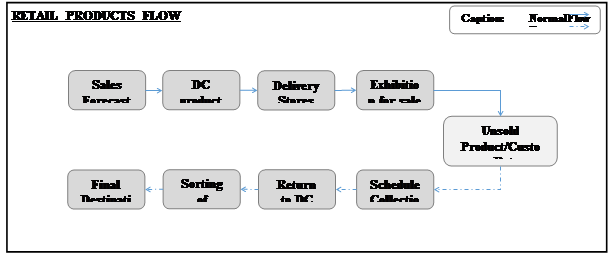
Figure 1
Retail Product Flow
Elaborated by authors based in Rogers and Tibben-Lembke, 2001, p. 273.
The implementation of RL should include accuracy, availability and timeliness of information (JACK; POWERS; SKINNER, 2010). These efforts make it easier to manage activities related to reducing logistics costs, improving revenues from sales of these products (BERNON; ROSSI; CULLEN, 2011).
The difficulties pointed out in the process are related to the lack of quality and integrity of the delivered product or when packaging and product are damaged. Manufacturers spend time identifying the best destination, whereas for retail the time factor is important because of the focus on productivity (LEITE, 2009). The wide variety of products with different shapes and sizes and the presence of small quantities (ROGERS; TIBBEN-LEMBKE, 2001) also hamper the process of forming pallets for shipping. This makes it difficult to organize goods, leaving them more vulnerable to damage, and may lead to its disposal to promote vehicle load optimization.
To minimize cost impacts on return process, the customer service sector has two important roles, highlighted in studies by Bernon, Rossi and Cullen (2011). One of them is the customer orientation regarding the purchase of the correct product, its operation and installation, eliminating questions at the time of purchase. The other role is in the after sales process; the customer service area should incorporate the identification of the reasons for returns to help determine the opportunities for process improvement (BERNON; ROSSI; CULLEN, 2011). The less efficient this process, the higher the cost of reverse logistics-related transportation. Importantly, in retail, delivery flow is handled from one point of origin to multiple destinations, while, reverse flow is handled from multiple source points to only one destination. This makes the process of collecting the goods more expensive than the delivery.
Retailers typically make negotiations to lower their shipping costs for this activity through agreements with their suppliers to return unsold seasonal damaged products (DE BRITO; DEKKER, 2003; BERNON; ROSSI; CULLEN, 2011). One of the deals is the payment by manufacturers for retail to be responsible for the final destination of the product, sharing risks and costs of unsold products, termed by Tibben-Lembke and Rogers (2002, p. 274) as “zero return policy”. It is common in North American reality when manufacturers do not allow their product to be sold in discount markets, known as outlets or secondary markets, opting to extend credit to the retailer to take responsibility for the decharacterization and destruction of these products (HSU; ALEXANDER; ZHU, 2008).
Thus, it is possible to verify that the reverse flow of products is quite complex and requires interaction between several areas within the retailer such as, as the relationship between stores and distribution centers or between distribution centers and transportation area. In addition, the retailer needs to have processes and policies in place with its suppliers that enable customer return of products to the industry, when necessary. The issue of retail reverse logistics, however, is not limited to products. Driven by the greater importance of social and environmental issues in society and the pursuit of greater profitability, packaging improvement and return plays an increasingly important role in retail operations.
2.2 Reverse logistics for packaging return
Packaging is essential in retail logistics processes because it brings together product units into larger units, facilitating its movement, transportation and logistic distribution. In addition, to achieve this goal, it must provide product protection through physical resistance or chemical barriers along the supply chain to their consumption phase (BÜSSER; JUNGBLUTH, 2009; WILLIAMS; WIKSTRÖM, 2011).
Retail has been working intensively on logistics packaging innovation processes in search of competitive advantage, focusing on product containment, protection, conservation, and movement (VERNUCCIO; COZZOLINO; MICHELINI, 2010). One of the trends pointed out is the development of new systems for reverse flow management, minimizing impacts and maximizing recycling opportunities (FERNIE; SPARKS; MCKINNON, 2010; VERNUCCIO; COZZOLINO; MICHELINI, 2010). These returnable packaging and equipment are wooden or plastic pallets, transport containers, boxes for packing products and special logistic racks (DE BRITO; DEKKER, 2003; LEITE, 2009), which can also be used for product exhibition. If these packages are damaged and need to be discarded, they can be reprocessed and used as raw material, at a lower cost than directly available from the source (SCHEFFER et al., 2013).
These returnable packaging can also be used by manufacturers and retailers (ADLMAIER; SELLITTO, 2007). The basic premise for its use is the management of an efficient return system so that these packages are available for use at the time of need, performing the journey from customer to retail and from retail to manufacturer. Figure 2 presents the normal and reverse flows of the product packaging and the logistic handling discussed above.
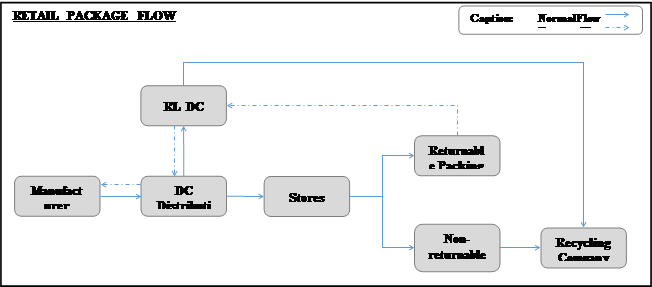
Figure 2
Retail Packaging Flow
Authors Note: Elaborated based on De Brito and Dekker, 2003; Adlmaier and Sellitto, 2007; Leite, 2009; Fernie, Sparks and Mckinnon, 2010; Vernuccio, Cozzolino and Michelini, 2010).
With the growing demand for packaging, the Brazilian market is already seeing the emergence of companies providing logistics packaging leasing services (LEITE, 2009). These service providers are responsible for the development, maintenance, and packaging availability at the right time and place, according to customer needs (retail), providing reduced transportation and process control costs.
A prime example of packaging return excellence is the British experience. Faced with the strong European tradition regarding the concern with packaging and its waste (BARBIERI; DIAS, 2010), the British model focused on supermarket chains has been identified as the most efficient RL in the world (FERNIE; SPARKS; MCKINNON, 2010). For the authors, the good results achieved in the British model should be credited to the collaborative relationship within the supply chain, favoring better packaging management from production to consumption. The benefits from using retail packaging have also been the focus of some research in the Brazilian context. Research conducted by Braga Junior, Costa and Merlo (2006), Braga Junior, Merlo and Nagan (2009) and Scheffer et al. (2013) with retail supermarkets point out the opportunities and economic gains associated with the use of recyclable and returnable packaging. The earnings shown were: the financial, linked to the reduction in waste disposal, and the environmental, resulting from the reduction of packaging disposal in the environment. Social gains were also identified, because the amount received from sales of packaging was invested in the qualification of employees through the cost of course expenses, purchasing equipment for training, developing environmental awareness, in addition to creating new direct and indirect job opportunities in the region where these stores are located (BRAGA JUNIOR; COSTA; MERLO, 2006; BRAGA JUNIOR; MERLO; NAGAN, 2009).
The RL of cardboard packaging was studied by Nunes and Jesus (2011) in two Brazilian supermarkets and identified that the main reason for the adoption of reverse packaging flows is not limited to the financial return of the process. According to the authors, RL reduces the visual pollution generated by the volume of cardboard boxes and store space, freeing up room for product display for sales.
From these studies, it is possible to identify that packaging RL can bring retail economic, social and environmental benefits. However, as with products, there are a number of cost-related challenges, such as more effective reverse route management and especially, the integration between everyone involved in this process (ADLMAIER; SELLITTO, 2007).
2.3 Intra and inter-organizational integration
Integration is a term widely used in the general management literature. In this article, the concept of integration derives from the classical organizational design literature. Thus, integration is understood as the set of actions performed by the different areas in order to ensure the execution of the process for which the areas are effectively responsible (LAWRENCE; LORSCH, 1967). Although this concept was developed for the relationship between two functional areas, it also applies to areas located in different companies (GULATI; LAWRENCE; PURANAM, 2005).
According to traditional organizational design literature (e.g. GALBRAITH; 1973, THOMPSON, 1967), human beings have limited physical and cognitive ability, which prevents them from performing all tasks within a company and this necessitates the division of labor. However, this division of labor creates independent work units that perform their tasks in their own way. Thus, whenever there is division of labor between different areas within a single process, it is necessary to coordinate the activity of the different areas (GALBRAITH, 1973).
Each area has its own identity, working time, goals and objectives (LAWRENCE; LORSCH, 1967). Thus, for areas to align their processes, they must also take actions to align their interests and ways of acting (GULATI; LAWRENCE; PURANAM, 2005).
The integration between functional areas of the same company or different companies involves actions of: 1) coordination, to promote the synchronization of processes performed by different areas to promote the continuous flow of material and information; and of 2) cooperation, to promote greater alignment between the interests, goals, culture and language of the different areas, thus creating a greater commitment among them (SANTOS; D´ANTONE, 2014).
Some actions that promote process coordination are the implementation of standardized processes, the use of agendas and work plans and the holding of work meetings to allow the alignment of understandings and ways of acting (ADLER, 1995). Cooperative actions may involve the creation of informal employee relationship systems, the alignment of goals and rewards between areas and the establishment of formal conflict resolution processes (GRIFFIN; HAUSER, 1996; RUEKERT; WALKER, 1987).
Several studies show that cross-departmental integration can promote better organizational outcomes (BARRATT, M.; BARRATT, R., 2011), for the relationship between the departments (RAINBIRD, 2004) and even for companies that invest more heavily in reducing barriers between their departments (SONG; MONTOYA-WEISS; SCHMIDT, 1997). Similarly, Flynn, Huo and Zhao (2010) show that further integration of the company with its suppliers and customers can also yield similar benefits. Santos and D´Antone (2014) analyzed 75 studies that addressed the theme of integration between areas, highlighting the benefits associated with greater integration between.
Thus, it is hoped that mechanisms that promote the integration of retail and retail areas with their suppliers can promote a better return flow of products and packaging. However, little is known yet about how these relationships occur in the context of RL in Brazilian retail for the return of products and the return of packaging used in product handling. Thus, we conducted a case study in a large Brazilian retailer to evaluate the factors that limit or stimulate the integration of the areas and companies involved in these reverse flows.
3 METHODOLOGY
This qualitative research uses as strategy a case study containing two units of analysis. To explain present, everyday situations and answer questions that require a broad and deep description based on practice, the best strategy for the research is case study (EISENHARDT, 1989; YIN, 2010; GODOI; BALSINI, 2010; GODOY, 2010). For Yin (2010, p. 32), “[...] case study is preferred in exams of contemporary events, but when the relevant behaviors cannot be manipulated [...]”, mainly, when subjects involving organizational studies are treated, requiring from the researcher a deep observation of the facts through sources of evidence (GODOI; BALSINI, 2010).
A key element that justifies choosing the organization, according to Eisenhardt (1989), is its exemplarity, since the results are linked to empirical evidence. The chosen company is one of the largest supermarket retail companies in Brazil, acting in 65% of the Brazilian states, representing about 30% of total supermarket retail revenues (ABRAS, 2014). In addition, and most importantly, the chosen company adapts to the study performed by acting and contemplating broad actions in the two modalities of RL identified in the literature review (products and packaging), these being the two analysis units studied. The need to return products is linked to several factors, this is why the company has a product return policy, with an exclusive area to release it, scheduling the collection, receipt and treatment of returned products according to their reasons.
The company has an established RL program throughout the supply chain to perform the return of its handling packages, reusable containers or equipment for packaging the products, to protect them and carry out proper logistic movement.
For the present study, we chose to use three sources of evidence: documents, interviews and direct observations, which, according to Godoy (2010), represent the main evidence group. The use of multiple evidence sources allows a broader approach, providing the chain of evidence from multiple perspectives, increasing the likelihood of achieving a more accurate and reliable theory (EISENHARDT, 1989), and promoting greater validity in data collection (GODOI; BALSINI, 2010). The visits for the interviews were conducted in the workplace of the managers of each of the defined categories. The main subjects addressed in the interviews were: reasons for return, recall, technical assistance, auction, waste management, return to supplier, relationships between areas; destination of product packaging and how the use of reusable containers and handling equipment is retail operated and developed by partners; and relationships between areas. The following managers were interviewed: distribution center manager (PRO-1); technical assistance coordinator (PRO-2), reverse logistics coordinator (PRO-3) store manager (EMB-1), reverse logistics coordinator/handling packaging (EMB-2), commercial coordinator/logistics demountable boxes (EMB-3), Store manager (EMB-4); sustainability manager (EMB-5).
Interviewing in this environment also allowed direct observations, which served as an additional source of evidence for chaining and increased study reliability (YIN, 2010). The focus of the observation was the product and packaging return RL process, which involved the following steps: authorization, receipt, sorting, treatment and final destination. The internal relations between the commercial, operations, marketing, stores and sustainability areas were also evaluated; and external relations with suppliers, partners and cooperatives.
After data collection, we proceeded to the analysis. For Eisenhardt (1989), one of the tactics for obtaining the expected result in data analysis is to select categories, dimensions or units of analysis in order to evaluate their similarities and differences, enabling a structured and diverse view of the collected data. Figure 3 presents the categories of analysis selected based on the theory.
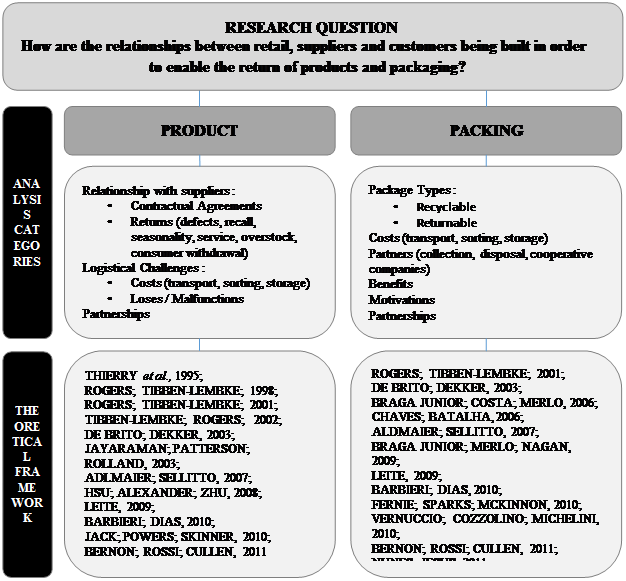
Figure 3
Analysis Categories
Authors
4 RESULTS PRESENTATION
4.1 Product Return
From the data collected in the interviews, it is possible to identify that the retailer has a defined return flow for all types of products sold. For the electronics, the returns flow has been properly designed and standardized since the late 1990s and motivated by the signing of the Consumer Protection Code (BRASIL, 1990), In other words, it was the advances in Brazilian consumer law that provided better service and therefore, greater consumer protection. It was also identified agreement among respondents that customers are more concerned about prompt service and are looking for retail companies with more flexible return policies. On the other hand, consumers are also confusing the obligations of manufacturers and retailers, making the relationship between retail and consumer difficult (EMB-1). For food and perishable products, the return flow is also designed and standardized, however, it is evaluated by the interviewees as bureaucratic and time consuming (PRO-1; PRO--3).
To comply with the law, the retailer centralized its service operations at a distribution center in the city of São Paulo in late 1998 (PRO-2), relying on multi-brand authorized networks to improve the timeframe for repairs on returned products and improve customer service. Also considering the evolution of the process of returning electronic products in 2009, the retailer has partnered with a company to service and test products at the time of purchase, significantly reducing return rates (PRO-2). Even with positive results, the partnership was interrupted after four years by strategic decisions of the retailer's top management. The Technical Assistance Manager (PRO-2) believes that in a short time the retailer will have difficulty identifying the reasons for returns, as it was in the past. This question was also commented by two of the interviewees who expressed their opinion about the retailer's visible concern and prioritization for direct logistics, without priority for RL processes, which makes it difficult to understand the benefits of adopting this strategy for the organization (EMB-2; EMB-4).
However, although the retailer’s main concern is direct logistics (EMB-4), the company has an exclusive DC for product and equipment RL processes, which has generated positive results for the organization. In the case studied, some of the advances observed were the reduction of labor and gains in scale, because returned products are directed to a single location for proper screening and destination. Thus, it is possible to obtain more specialized manpower, besides obtaining bigger gains at the moment of negotiation due to the larger volume.
Despite advances, a number of challenges remain. When talking about the difficulties in returning products sold by the retailer, several respondents (PRO-1; EMB-1; EMB-3) highlighted the slowness in the approval flow for performing RL, impacting the operation of the process time. The high cost for operationalizing the return of products was also highlighted by respondents in stores (EMB-1; EMB-4), with them including in the account not only transportation costs, but the costs involved in the whole operation. Responsibility for costs also creates friction for the RL operator (PRO-3).
One of the processes, however, in which RL is carried out without conflict is food donation. In order to avoid waste and collaborate with social responsibility, products without conditions of sale, but that present conditions of consumption are donated. Most respondents (PRO-1; PRO-2; EMB-2; EMB-3, EMB-5) know this donation process and participate in the process.
The company has an area of sustainability responsible for updating the register of non-profit institutions and food banks to make donations (EMB-5), but both logistics (EMB-2) as the stores (EMB-1; EMB-4) may also nominate institutions for registration. In the view of respondent EMB-5, the donation process has no financial return, since the company pays taxes for invoice issuance of these products. The initiative, however, is considered by the company as a benefit to the most vulnerable population, emphasizing the company’s image regarding its social and environmental responsibility (EMB-5). On the other hand, this view does not consider possible costs that the company could incur in having to dispose of food to landfills or to be charged for having expired products in stock, in case of supervision. Depending on these costs, giving could be a less costly alternative for the company.
In order to recover part of the returned products without conditions of sale and that, by restriction of the retailer’s internal policy, cannot be donated, the auction process is performed. CD and RL operations managers cited this process (PRO-3) (EMB-2).
Nevertheless, conflicting situations around RL processes are far more common than cooperation between the areas. Internal conflicts can be identified in relationships between retailer areas such as quality, logistics, retail and store; and external conflicts, for example with manufacturers. Each actor wants to be responsible only for their processes and manifests itself in their own interests. As an example, it is possible to mention the relationship of the commercial area with logistics (PRO-2): problems with returned products occur when inventory is too high and has an impact on the purchase of other products, since the company limits inventory value by product category. In the relationship with certain manufacturers of consumer electronics and retail, there is a contract - even if informal - for product exchange. In the case of other manufacturers, there are difficulties in understanding the exchange policy as they prefer to follow what consumer law says (PRO-2).
Thus, we found that in the case analyzed, the internal areas responsible for direct and reverse logistics do not have common objectives and the reverse logistics activities are seen as a cost generating operation, which does not add business and customer value. There are no incentives to improve the efficiency of processes associated with reverse logistics or the adoption of specific mechanisms to promote stakeholder coordination. The same misalignment of objectives can be seen in the relationships between the retailer and its suppliers (the manufacturers) and with that each company focuses only on its process.
4.2 Return of packaging used for logistics handling
On a voluntary basis, the company modified its logistics handling packaging (EMB-3) and has been working on packaging innovation with partner suppliers, seeking competitive advantage. One of the main innovations occurred in containers for food packaging and handling of grocery products. Previously, products were delivered in wooden cases, later they used plastic containers and now plastic containers are used, returnable and collapsible that realize the full flow of the logistics chain, from the producer to the delivery of the product to the store, with an efficient package return management system (PRO-1; PRO-3; EMB-1; EMB-2; EMB-3; EMB-4; EMB-5).
The current model of plastic and folding containers was presented by a European supplier (EMB-5) and has gains as: quality and hygiene standards of containers, saving on the return of these equipment because they are foldable, and reduction of virgin raw material, as containers have an average utilization of up to 300 cycles (EMB-5) and can be reprocessed at end of life.
In the previous model, there were some conflicts of interest that impacted the lease payment of plastic containers, because the contract was signed between the vegetable grower and the retailer, and often this producer claimed difficulties in fulfilling the payment. In the current model, the contract is signed between the vegetable producer and the company that owns the returnable and folding plastic containers, that is, the vendor is required to bear the rent costs to guarantee its deliveries to the retailer.
Also all the equipment used in handling logistics, which facilitate the movement of products and collaborate with product safety, are reusable, these are: pallets PBR, carts and cages, mobile refrigerators, unit containers (EMB-4). Economic gains are identified by lowering waste and waste collection costs from stores and DCs. Service provider withdraws and calculates revenue from sale of recyclables. In this way, it makes a deduction from the sale value over the collection expenses (PRO-3; EMB-5). Another action to reduce waste shipment to landfills is the treatment of organic waste through composting carried out at the store itself. The objective of the initiative is to increase the number of stores in partnership with a solid waste company and to contribute to the environment by reducing the shipment of materials to landfills.
Although significant use of returnable and reusable packaging has been identified and gains associated with its use, several respondents (PRO-1; EMB-1; EMB-2; EMB-5) indicated that a significant amount of cardboard and plastic is still generated in the operations. In addition, difficulties were also identified in this process. One of the internal conflicts appears in the return of logistics handling equipment, because stores are charged for withholding this equipment, but RL is not perceived as efficient by the store managers interviewed (EMB-1; EMB-4). In fact, the same vehicle that delivers the product also withdraws the equipment, but because they need to finalize the deliveries of products from DCs to other company stores, they end up not meeting the agreed, which is to return to make the requested collection.
Another internal conflict identified between the RL area and the stores concerns the handling of equipment. The logistics area cannot make its internal customers aware – the stores, regarding the correct handling and care with the equipment that, which are part or not of the company’s fixed assets, periodically require high investments for acquisition and maintenance (EMB-1). Retention of equipment in stores is also a problem for the RL manager (PRO-3) and to the person responsible for the company that owns the plastic containers (EMB-3), the problem is in stores that hold equipment for indoor use. Store managers, in turn, argue that the problem is store infrastructure (EMB-1) and cite the difficulty regarding the transportation of the company (EMB-1; EMB-4). For them, transportation, coordinated by the logistics area, cannot enable dedicated routes for trucks to collect efficiently.
Another conflict between the commercial and logistics areas is related to the use of returnable and recyclable plastic containers. There is a requirement for this equipment to operationalize the logistics of horticultural products, but the commercial area, even knowing the correct flow, still negotiates with suppliers non-standard deliveries, impacting the company's logistics processes (PRO-1; EMB-5).
The development of new equipment is another source of difficulties, because there is an area responsible for the development of logistics equipment that does not meet the necessary demand of the operating sector in a timely manner. Operations need to make individual efforts, losing synergy in the development of new equipment, both in standardization and in cost (PRO-1).
The results show that the conflicts in this modality are mainly in the internal environment. We found that the greater interaction of the company with its current handling packaging supplier generated positive results for the business. However, the difficulty of aligning interests of different departments results in individualized process views weakening departmental collaboration and limiting gains in this RL modality.
4.3 Summary of Results
In summary, data analysis revealed that in the relationship between the RL area and other retailer internal areas, such as stores and retail, there are different types of conflicts. There are also conflicts with actors outside the retailer, such as suppliers and industry. Conflicts were observed in the two RL modalities analyzed: packaging and product return. Table 1 summarizes the internal and external conflicts observed in the case, indicating the difficulties and barriers related to intra and inter-organizational collaboration for reverse logistics.
| CATEGORIES | INTERNAL CONFLICTS | EXTERNAL CONFLICTS | |
| Product | Each area acts to suit its own interests Discussion of costs involved in RL operations Lack of concern with RL | Elaboration of the electronics exchange policy | |
| Packaging | Difficulty in returning logistics handling equipment Lack of care when handling equipment The area responsible for the development of logistics equipment does not meet the necessary demand for timely operations | Supplier Difficulty to Fit Standardized Packaging Partner limitation to increase packaging types required for logistics |
5 DISCUSSION
The case study showed that the two modalities of RL identified in the literature review are present in the analyzed company. The first unit of analysis was the return of products. For all types of marketed products, the retailer has a properly defined return flow. The return of electro-electronic products was centralized in the late 90's in a specific DC in the city of São Paulo and works with authorized multi-brand technical assistance networks. The program was motivated by advances in the Consumer Protection Code (BRASIL, 1990) to ensure agility and improved control of defective products that need to be repaired or replaced, since retail is seen by public agencies as co-solidarity with the manufacturer. In addition, the interviews corroborate the increased pressure from clients, who are increasingly concerned about prompt service (JAYARAMAN; PATTERSON; ROLLAND, 2003) and retailers looking for companies with more flexible return policies (HSU; ALEXANDER; ZHU, 2008; JACK; POWERS; SKINNER, 2010).
The centralization of technical assistance enabled the development of a more strategic view of the activity, corroborating the research by Hsu, Alexander and Zhu (2008) and Rogers and Tibben-Lembke (2001), which emphasizes that centralizing products in a specific distribution center increases opportunities to process larger quantities of products, generating synergy in activities.
First of all, the focus is shifted from simply guaranteeing the return of defective electronics, for a tool that differentiates the quality of products offered by suppliers. By mapping the reasons for return it was possible to demand from the industry better quality and shorter time to return the repaired product. Another offshoot of this more strategic view of product returns was hiring a partner company to conduct product testing and guide consumers through purchasing, which resulted in significant reduction in product returns. This reinforces studies by Jack, Powers and Skinner (2010) and by Bernon, Rossi and Cullen (2011) about the importance of customer orientation at the time of purchase, answering their questions and reducing efforts with product RL, while increasing labor training costs.
Despite the economic benefits of this innovation, acknowledged by respondents, the decision to eliminate the program showed that the strategic vision for the product return is not shared across the organization. In this sense, the arguments by Bernon, Rossi and Cullen (2011) that in retail companies do not identify the real contribution of RL to the business can also be found in the case analyzed. Prioritizing short-term cost reduction, the decision made reduced its bargaining power with suppliers. This process enriched the mapping problems, strengthening retail in assigning responsibility for any product issues. One of the reasons given for the low appreciation of possible benefits of RL in the case analyzed is that the company continues to focus on product delivery, that is, in direct logistics and not in reverse flow operationalization – aspect also identified in the study by Berson, Rossi and Cullen (2011). Therefore, as RL brings benefits to organizations, companies need to assess how much it is worth to reduce RL investments to reduce costs.
For other non-perishable and perishable products, the defined flow for return authorization was pointed by most respondents as slow and inefficient, not meeting the needs of the stores, and incurring high costs on the process. It is inferred that, as the return flow is quoted by Rogers and Tibben-Lembke (2001) as an important strategic tool, slowness can impact competitiveness relative to competitors. In addition, the low process efficiency may also be linked to the difficulty in managing product withdrawal routes, because, if inadequate, they hinder RL activities, as claimed by Adlmaier and Sellitto (2007).
The retailer has identified two opportunities to prevent lost products that cannot be sold or cannot be marketed: donation and auction. The donation is made to non-profit entities and institutions located in regions near the retailer's DCs and stores to facilitate donation withdrawal, as the retailer is not responsible for product withdrawal, which would be an additional cost. With donations, the retailer also affirms the social and environmental responsibility linked to its brand. During the visits, it was observed that this is a routine and collaborative process for the entities and institutions. For products that cannot be donated due to the retailer's internal policies, auctions are held. Retail seeks specialized companies to carry out this process in order to recover part of the investment made in the merchandise and obtain economic benefit. In this case, even if the interviewees reinforced the social responsibility aspect, donation and auction would avoid landfill costs. It should also be considered that as stated by Leite (2009) even a partial product recovery can guarantee economic return for the company.
The second unit of analysis identified was the return of packaging for logistics handling, process adopted by the retailer long ago using returnable handling equipment. The replacement of wooden crates with returnable and folding plastic containers, inserted in the Brazilian market by a European company, was something positive for the company. This finding corroborates the arguments by Vernuccio, Cozzolino and Michelini (2010) and Leite (2009), who argue that innovation in products as processes is an essential element to ensure competitive advantage in packaging management. This change has advantages such as: better container hygiene, lower contamination risks, financial savings in product storage and transportation processes, and transportation of empty and dismantled containers. Also because it is material that at the end of its useful life can be totally reprocessed, generating raw material for the manufacture of new containers by the supplier himself, enables cost reduction opportunities in the production process in relation to virgin materials and environmental gains, as advocated by Scheffer et al. (2013). In addition, the strategy of renting the plastic container and not buying it reinforces a trend pointed to by Leite (2009), prioritization by companies of the use of logistics packaging leasing service providers as a substitute for the traditional packaging purchasing model.
Research reinforces results from other research (BRAGA JUNIOR; MERLO; NAGAN, 2009; SCHEFFER et al., 2013, DEMAJOROVIC; AUGUSTO; SOUZA, 2016) which show various economic and environmental opportunities for the reuse of recyclable materials from logistics operations and generated during retail store activities. In the case analyzed, even using returnable handling packages, they are still generated, within logistics operations and in stores, packaging that can be recycled. They are withdrawn by a contracted company and the amounts resulting from the sales of recycled products are reverted to the payment of collection expenses, presenting a partnership relationship. This modality analyzed showed the greatest advance in terms of economy and environmental gains, and more collaborative relationships between the company and suppliers. Driven by technological innovations and the valorization of packaging in the recycling market, the analyzed company transformed cost-only activities into more efficient processes and resource generators.
Although the analysis of RL shows benefits for the organization in both studied modalities, the difficulty of aligning interests between different departments reinforces the arguments by Gullati, Lawrence and Puranam (2005). According to these authors, individualized process views weaken departmental collaboration by limiting, in this case, organizational gains of RL. Thus, returning to the main question that this paper proposes to answer, about the relations that have been building for the operationalization of RL, conflicts were identified in both modalities studied and barriers to intra and inter-organizational collaboration. They are present in external areas, i.e. suppliers, producers and partners; mainly in the commercial and logistics areas, as well as in stores.
In the case of the electronics exchange policy, it is possible to notice conflict in the relationship between industry and retail. In fact, retailers can make their own policies as long as the requirements of the Consumer Protection Code law are met (BRASIL, 1990), proposing some benefits such as reduced time to change a product. Some industries do not agree, causing difficulties in trading. With the horticultural producer there was also difficulty in the relationship with retail, in the case of leasing of plastic containers. The problem has been reversed by changing the container supplier and changing the rental agreement, today signed between the producer and the owner of the returnable and folding plastic containers.
In the relationship between the internal areas, it is observed that they work independently, acting to meet their own interests. Return activities are not perceived with priority by some areas. Concern about direct logistics and not RL is clear in the interviews: the RL manager mentioned that supply chain indicators are tied to the level of supply service, but there is no responsibility for product return indicators. Although there is an area responsible for this activity, it does not meet the demands of timely operations, and thus each operation develops its own process.
Lack of internal integration ultimately also generates external conflicts. Currently, the supplier pays a certain amount to carry out RL, but the contract is negotiated by the commercial area, without interference from the internal area responsible for the activity and aware of all costs involved in the process, not limited to the cost of return shipping. Another conflict between logistics and the commercial area focuses on returnable and recyclable plastic containers. Although aware of the obligation to use this equipment, the commercial area still negotiates with suppliers non-standard deliveries.
Finally, it can be concluded that in the two modalities studied, RL is not yet understood as a strategic tool that collaborates to obtain competitive advantage. It is seen as an obligation of the retailer's operation to comply with internal needs and legislation, generating conflicting intra and interorganizational relationships. Therefore, it is concluded that the advantages pointed to organizational competitiveness due to departmental collaboration (MONTOYA-WEISS; SCHMIDT, 1997; RAINBIRD, 2004; SONG BARRATT, M.; BARRATT, R., 2011) and greater integration with customers and suppliers (FLYNN; HUO; ZHAO, 2010; SANTOS; D´ANTONE, 2014) are harmed by the uncooperative and conflicting relationships identified in the context, mainly because RL is not considered a strategic process within the company.
6 FINAL CONSIDERATIONS
RL is increasingly present in academic debates and management practices. In retail, the existence of expired products, returned products for repair and the use of large quantities of logistics packaging makes RL enhancement a necessity to reduce costs. Retail also has a prominent position by brokering relationships between industry and consumers. Thus, motivated by the advancement of different types of legislation, concern with their image with consumers and cost reduction, companies have invested in improving the collection, reuse or proper disposal of their waste. The case study shows innovations in processes and products that result in economic and environmental benefits for the organization. In both types of returns, the company achieved cost reduction and reduction of waste generated in this activity. However, the case study also shows that if RL is viewed as an operating activity and a cost source, a coordinated action to collect and return products becomes difficult. Without the proper support of senior management and the understanding that RL can be a competitive advantage, Conflicts can undermine inter and intra-organizational relationships, making RL less effective than it could be.
This study opens new avenues for research. First, a more comprehensive view of the RL practices adopted by different retailers and the difficulties they face in coordinated execution of RL activities is needed. This could be done through a questionnaire survey. In addition, it is necessary to understand further how, and to what extent, the reduction of intra and interorganizational conflicts would improve RL processes. Finally, it would be interesting to assess whether retailers with more robust RL processes actually have a better consumer image, fewer environmental processes, and reduced costs.
How much work limitations are typical of choosing a single case study that prevents generalization to other companies. However, the work may contribute as a reference for future work considering the fact that it analyzes two modalities in a complementary way. It is also clear from this study that, more than technological challenges and innovations in the management process of RL, relationships between multiple internal and external stakeholders emerge as the main challenge for building a shared strategic vision on the importance of RL complying with and even anticipating legislation, in addition to generating economic, environmental and social benefits.
REFERENCES
ABRAS – ASSOCIAÇÃO BRASILEIRA DE SUPERMERCADOS. Ranking ABRAS / SuperHiper – As 500 maiores. 2014. Available in: . Accessed on: 16 nov. 2014.
ADLER, P. S. Interdepartmental interdependence and coordination: the case of the design/manufacturing interface. Organization Science, U.S.A., v. 6, n. 2, p. 147-167, 1995.
ADLMAIER, D.; SELLITTO, M. A. Embalagens retornáveis para transporte de bens manufaturados: um estudo de caso em logística reversa. Produção, São Paulo, v. 17, n. 2, p. 395-406, maio/ago. 2007.
ATASU, A.;WASSENHOVE, L. Operations perspective on product take-back legislation for e-waste: Theory, Practice and Research Needs. Production and Operations Management, USA, v.21, n.3, p. 407-422, 2012.
BALLOU, R. H. Gerenciamento da cadeia de suprimentos / logística empresarial. 5. ed. Porto Alegre: Bookman, 2006.
BARBIERI, J. C.; DIAS, M. Logística Reversa como Instrumento de Programas de Produção e Consumo Sustentáveis. In: ENCONTRO INTERNACIONAL SOBRE GESTÃO E MEIO AMBIENTE, 12., 2010, São Paulo. Anais... São Paulo: ENGEMA, 2010.
BARRATT, M.; BARRATT, R. Exploring internal and external supply chain linkages: Evidence from the field. Journal of Operations Management, [S.l.], v. 29, n. 5, p. 514-528, 2011.
BERNON, M.; ROSSI, S.; CULLEN, J. Retail reverse logistics: a call and grounding framework for research. International Journal of Physical Distribution & Logistics anagement, [S.l.], v. 41, n. 5, p. 484-510, 2011.
BRAGA JUNIOR, S. S.; COSTA, P. R.; MERLO, E. Logística Reversa como Alternativa de Ganho para o Varejo: um estudo de caso em um supermercado de médio porte. In: SIMPÓSIO DE ADMINISTRAÇÃO DA PRODUÇÃO, LOGISTICA E OPERAÇÕES INTERNACIONAIS, 9., 2006, São Paulo. Anais... São Paulo: SIMPOI, 2006.
BRAGA JUNIOR, S. S.; MERLO, E.; NAGAN, M. S. Um Estudo Comparativo das Práticas de Logística Reversa no Varejo de Médio porte. Revista da Micro e Pequena Empresa, Campo Limpo Paulista, v. 3, n. 1, p. 64-81, 2009.
BRASIL. Presidência da República. Casa Civil. Código de defesa do consumidor. Lei nº 8.078, de 11 de setembro de 1990. Dispõe sobre a proteção do consumidor e dá outras providências. Brasília, 1990. Available in: . Access on: 21 Feb. 2015
BÜSSER, S.; JUNGBLUTH, N. The role of flexible packaging in the life cycle of coffee and butter. International Journal of Life Cycle Assessment, [S.l.], v.14, p. 80-91, 2019.
DE BRITO, M. P.; DEKKER, R. A Framework for Reverse Logistics. Erasmus Research Institute of Management, Rotterdam, p. 1-29, apr. 2003.
DEMAJOROVIC, J.; AUGUSTO, E. E. F.; SOUZA, M. T. S. Reverse logistics of e-waste in developing countries: challenges and prospects for the Brazilian model. Revista Ambiente e Sociedade, [S.l.], v. 19, n. 2, p.117-136, 2016.
EISENHARDT, K. M. Building theories from case study research. Academy of Management Review, [S.l.], v. 14, n. 4, p. 532-550, Oct. 1989.
FERNIE, J.; SPARKS, L.; MCKINNON, A. C. Retail logistics in the UK: past, present and future. International Journal of Retail & Distribution Management, [S.l.], v. 38, n. 11/12, p. 894-914, 2010.
FLYNN, B. B.; HUO, B.; ZHAO, X. The impact of supply chain integration on performance: A contingency and configuration approach. Journal of operations management, [S.l.], v. 28, n. 1, p. 58-71, 2010.
GALBRAITH, J. R. Designing complex organizations. Boston: Addison-Wesley Longman Publishing Co., 1973.
GODOI, C. K.; BALSINI, C. P. V. A pesquisa qualitativa nos estudos organizacionais brasileiros: uma análise bibliométrica. In: _____; BANDEIRA-DE-MELLO, Rodrigo;
SILVA, Anielson Barbosa da (Orgs.). Pesquisa qualitativa em estudos organizacionais: paradigmas, estratégias e métodos. 2. ed. São Paulo: Saraiva, 2010. p. 89-112.
GODOY, A. S. O estudo de caso qualitativo. In:____; BANDEIRA-DE-MELLO, Rodrigo; SILVA, Anielson Barbosa da (Orgs.). Pesquisa qualitativa em estudos organizacionais: paradigmas, estratégias e métodos. 2. ed. São Paulo: Saraiva, 2010. p. 115-143
GRIFFIN, A.; HAUSER, J. R. Integrating R&D and marketing: a review and analysis of the literature. Journal of product innovation management, [S.l.], v. 13, n. 3, p. 191-215, 1996.
GULATI, R.; LAWRENCE, P. R.; PURANAM, P. Adaptation in vertical relationships: Beyond incentive conflict. Strategic Management Journal, [S.l.], v. 26, n. 5, p. 415-440, 2005.
HSU, Hy S.; ALEXANDER, C. A.; ZHU, Z. Understanding the reverse logistics operations of a retailer: a pilot study. Industrial Management & Data Systems, [S.l.], v. 109, n. 4, p. 515-531, Dec. 2008.
JACK, E. P.; POWERS, T. L.; SKINNER, L. Reverse logistics capabilities: antecedents and cost savings. International Journal of Physical Distribution & Logistics Management, [S.l.], v. 40, n. 3, p. 228-246, 2010.
JAYARAMAN, V. LUO, Y. Creating competitive advantages through new value creation: a reverse logistics perspectives. Academy of Management Perspectives. [S.l.], n 1, v. 2, p. 56-73, 2007.
JAYARAMAN, V.; PATTERSON, R. A.; ROLLAND, E. The design of reverse distribution networks: models and solution procedures. European Journal of Operational Research, [S.l.], n. 150, p. 128-49, 2003.
LAU, K. H.; WANG, Y. Reverse Logistics in the electronic industry of China: a case study. Supply Chain Management, [S.l.], v. 14, n. 6, p. 447-465, 2009.
LAURENCE, P. R.; LORSCH, J. W. "Differentiation and Integration in Complex Organizations". Administrative Science Quarterly, [S.l.], v.12, p. 1-30, 1967.
LEITE, Paulo R. Logística Reversa. meio ambiente e competitividade. 2. ed. São Paulo: Pearson Prentice Hall, 2009.
NUNES, C. H. dos S.; JESUS, L. F. N. de. Logística reversa das embalagens de papelão em dois supermercados de portes diferentes em Itabira/MG. In: ENCONTRO NACIONAL DE ENGENHARIA DE PRODUÇÃO, 31., 2011, Minas Gerais. Anais... Minas Gerais: ENEGEP, 2011.
RAINBIRD, M. Demand and supply chains: the value catalyst. International Journal of Physical Distribution & Logistics Management, [S.l.], v. 34, n. 3/4, p. 230-250, 2004.
ROGERS, Dale S.; TIBBEN-LEMBKE, Ronald S. Going backwards: reverse logistics trends and practices. Reno: University of Nevada e Reverse Logistics Executive Council, 1998.
_____; ______. An Examination of Reverse Logistics Practices. Journal of Business Logistics, [S.l.], v. 22, n. 2, p. 129-148, 2001.
RUEKERT, R. W.; WALKER JR, O. C. Marketing's interaction with other functional units: A conceptual framework and empirical evidence. The Journal of Marketing, [S.l.], v. 51, n.1, p. 1-19, jan. 1987.
SANTOS, J. B.; D'ANTONE, S. Reinventing the wheel? A critical view of demand-chain management. Industrial Marketing Management, [S.l.], n. 43, p. 1012–1025, 2014.
SCHEFFER, D. et al. Logística Reversa: ganho econômico e ambiental de uma rede de varejo – RS. In: CONGRESSO BRASILEIRO DE GESTÃO AMBIENTAL, 4., 2013, Bahia. Anais... Bahia: CONGEA, 2013.
SLUISVELD, M. V.; WORRELL, E. The paradox of packaging optimization - a characterization of packaging source reduction in the Netherlands. Resources, Conservation and Recycling, [S.l.], v. 73, p. 133-142, 2013.
SONG, X. M.; MONTOYA‐WEISS, M. M.; SCHMIDT, J. B. Antecedents and consequences of cross‐functional cooperation: a comparison of R&D, manufacturing, and marketing perspectives. Journal of Product Innovation Management, [S.l.], v. 14, n. 1, p. 35-47, 1997.
THIERRY, M. et al. Strategic issues in product recovery management. California Management Review, [S.l.], v. 37, n. 2, p. 114-135, 1995.
THOMPSON, J. D. Organizations in action: Social science bases of administrative theory. Nova Jersey: Transaction Publishers, 1967.
TIBBEN-LEMBKE, R.; ROGERS, D. S. Differences between forward and reverse logistics in a retail environment. Supply Chain Management, [S.l.], v. 7, n. 5, p. 271-282, 2002.
VERNUCCIO, M.; COZZOLINO, A.; MICHELINI, L. An exploratory study of marketing, logistics, and ethics in packaging innovation. European Journal of Innovation Management, [S.l.], v. 13, n. 3, p. 333-354, 2010
WILLIAMS, H.; WIKSTRÖM, F. Environmental impact of packaging and food losses in a life cycle perspective: a comparative analysis of five food items. Journal of Cleaner Production, [S.l.], v.19, p. 43-48, 2011.
YIN, R. K. Estudo de caso: planejamento e métodos. 4. ed. Porto Alegre: Bookman, 2010.