Artículos
Didactic communications in scope of information technologies as a consistent habit pattern
Comunicaciones didácticas en el ámbito de las tecnologías de la información como patrón de hábito consistente
 E. NEUPOKOEVA elena_neupokoeva@rambler.ru
N. CHAPAEV chapaevnk11@mail.ru
E. CHUBARKOVA lena_chubarkastw@gmail.com
O. AKIMOVA oliakimova77@gmail.com
A. TOKAR tokatokar.nastia19@mail.ru
E. NEUPOKOEVA elena_neupokoeva@rambler.ru
N. CHAPAEV chapaevnk11@mail.ru
E. CHUBARKOVA lena_chubarkastw@gmail.com
O. AKIMOVA oliakimova77@gmail.com
A. TOKAR tokatokar.nastia19@mail.ru
Didactic communications in scope of information technologies as a consistent habit pattern
Utopía y Praxis Latinoamericana, vol. 24, núm. Esp.5, pp. 189-198, 2019
Universidad del Zulia

Esta obra está bajo una Licencia Creative Commons Atribución-NoComercial-CompartirIgual 3.0 Internacional.
Recepción: 01 Octubre 2019
Aprobación: 06 Noviembre 2019
Abstract: The goal of this study is to reveal the problems preparing vocational education teachers for interpersonal interactions in the IT scope, which are solved by teaching consistent habits of didactic communications in this sphere. In addition, at the same time, to show that the formation of consistent habits of didactic communications should be realized entirely and systematically. Observation, interrogation, testing, measuring, and comparing performance results were methods applied in the process of the empiric part of the study. In addition, there are questions related to the formation of consistent habits of didactic communications in the IT sphere.
Keywords: Didactic, Empiric, Interpersonal, IT.
Resumen: El objetivo de este estudio es revelar los problemas que preparan a los maestros de educación vocacional para las interacciones interpersonales en el ámbito de las IT, que se resuelven enseñando hábitos consistentes de comunicaciones didácticas en esta esfera. Además, al mismo tiempo, para mostrar que la formación de hábitos consistentes de comunicaciones didácticas debe realizarse de manera completa y sistemática. La observación, el interrogatorio, las pruebas, la medición y la comparación de los resultados de desempeño fueron métodos aplicados en el proceso de la parte empírica del estudio. Además, hay preguntas relacionadas con la formación de hábitos consistentes de comunicaciones didácticas en la esfera de IT.
Palabras clave: Didáctica, empírica, informática, interpersonal.
INTRODUCTION
In the context of the reformation of the higher education system, the shift of academic education towards the practical sphere of future professional activity brings into focus the quest for new, more objective methods and means of assessing the results of educational and professional activities of students (Zeer & Stepanova: 2018). Professional training of the people possessing a wide range of entrepreneurial competencies is becoming imperative in the conditions of post-industrial society development. Universities are charged to play a crucial role in developing highly qualified specialists with a vastly creative and intellectual potential capable of implementing various business projects and becoming a driving force of sustainable economic growth in their countries. Therefore, there is a significant interest in practices of developing graduates' digital culture and literacy established in universities of developed countries (Pluzhnik et al.: 2018). Nowadays, people with disabilities (PWDs) and special educational needs must be empowered with high-quality university education for successful social integration in life. However, the currently restricted access to inclusive higher education makes it hard to enhance their professional fulfillment and to find their role and place in modern society. This can be drastically improved through the introduction of digital technology (Zorina: 2018). The process of informatization causes especially profound changes in the content of disciplines, which earlier were but just in an insignificant touch with information technologies (IТ).
The importance of interactive processes in professional-pedagogical is emphasized, in particular, in work by N.K. Chapaev (2005) Pedagogical integration: methodology, theory, technology. Processes of digitalization pass with some difficulties not only in Russia but abroad as well. For example, European authors state the problems emerging at the joint of digital literacy and digital services and causing problems of digitalization (Huvila: 2012). Californian scientists (Florea et al.: 2010) note that implementation of information- communicative technologies (ICT) influences changes of didactic approaches, which causes appearing of new competences.
A. Baldiņš (2016) considers issues of development of the electronic pedagogy of Latvia. In addition, it is connected to those amendments in the system of requirements to competences, and the ever-strengthening social role of this branch.
For instance, we observe the common concern about the digitization of the education process and readiness of the pedagogical community. According to our observations, the process of digitalization in our country touches mostly just the technical and technological sides but concern little about the issues of systemic training of vocational education teachers such as their readiness to participate in didactic communications, their ability to be active participants of the educational process wherein ICT are used.
Despite intensive penetration of IT into all spheres in professional activity, in teachers’ and students’ media the attitude to a personal computer is seen, to a large extent (according to our observations and conducted conversations), as to a purely technical innovation the professional mastering whereof is correlated not with professional and humanitarian knowledge but with the programming sphere. We often hear from our students "we are not programmers, after all, to master a PC well". Here we mean the attitude to IT, including the internal equalizing of a computer with the technical progress and innovations and implying no contacts with means of automation in routine activity or with the humanitarian sphere. Thus, cardinal steps are needed toward a rethinking of issues related to studying IT. First of all, it is connected with the necessity to perform didactic communications. For instance, in the process of studying this sphere, a question is arisen about applying the hermeneutic approach, and we have already made efforts in cross-lighting this issue (Neupokoeva: 2017).
Thus, the primary purpose of the research is examining the totality of pedagogic conditions contributing to the formation of didactic communications in IT scope as a systemic habit. This problem is junctural somehow. Such fields of knowledge as pedagogy, psychology, linguistics, and philosophy are integrated and united in a single system. The integrative nature, in this case, is manifested in the organization of meta-activity.
A vocational education teacher examines his activity in various planes, presenting his interaction with people around him within didactic communications of different kinds depending on reasonable goals.
1.METHODS
In this study, we examine the process of training of future vocational education teachers in line 44.03.04 “Vocational training (per branches)” too didactic communications in the IT field. As it is needed to organize all components of pedagogic conditions for forming consistent habits of didactic communications, organization- pedagogical, psychological-pedagogical, and didactic, you have to focus your attention on examining the bases for selecting these factors in more detail. Thus, the major goal of this work was singling-out factors influencing the successfulness of the technology of the formation of the required consistent habit and their logical substantiation. 84 students took part in the study at the stage of the primary ascertaining experiment (2010-2013); 223 persons were participants of the second stage wherein only a part of approaches (systemic- activity, integrative, project-based, competency-based, and person-centered) were realized; and 179 persons took part at the stage of realization of the combination of these approaches and the hermeneutic approach. We exposed a combination of the approaches and their interdependence in previous publications (Neupokoeva et al.: 2016). Thus, in the process of working on a selection of pedagogic conditions, a complex of factors was determined, which influenced the enhancement of efficiency of training in didactic communications in the IT field.
A number of approaches were singled out, which determined a totality of factors influencing the enhancement of efficiency of training to didactic communications in the field of information technologies. Such approaches are, in particular: systemic-activity, integrative, hermeneutic, competency-based, and project- based. A combination of these approaches and inter-conditionalities was revealed by us in previous publications.At present, the conceptualistic base of the system of training of vocational education teachers is being revised, which is reflected in publications (Dorozhkin et al.: 2017; Dorozhkin et al.: 2018; Zyrianova et al.: 2018). At the same time, trends of the digital economy development affix a stamp on the general vector of the training system as a whole.
Formally, there are several obstacles in front of assimilating IT by teachers and popularization of their use in the education system:
-
High prices of a PC hard- and software and the maintenance thereof (the SW and maintenance even higher);
-
The necessity to continually upgrade the software and hardware base;
-
The necessity to continually raising skills of the personnel that is quite expensive in most cases).
Therefore, as we think, the university training of future teachers in the field of using IT in professional activity is of a special significance. However, the total informatization of the vocational education system is impossible without the psychological adaptation of future teachers to using IT in subject fields, pedagogy included. We also understand that vocational education teachers shall master the IT thesaurus on quite a high level, practically on the level of a confident or experienced user.
2.RESULTS
Thanks to the use of a combination of approaches, it became possible to significantly improve the development of consistent habits of didactic communications in the IT field. Systemically developing this consistent habit, we receive, as a result, improvement of consistent habits of independent work with a personalcomputer and lower the level of students’ anxiety in front of performing of didactic communications in this sphere.
Project-based activities of students run not only within the creation of the unique product, specifically a fragment of the discipline academic and methodological complex, but are also accompanied with activity- based components that follow the pedagogic activity – didactic communications, peer assessment, review and assessment of the experience obtained, and self-reflection. For instance, taking the theme “Retouch in Adobe Photoshop raster-type graphics editor”, a student thinks out the narration plan in accordance with preceding themes, not only in framework of studying of this editor, analyses the thesaurus together with a teacher, presents the material and makes correction of errors, teaches course-mates in play mode, receives and gives feedback, and creates a fragment of the academic and methodological complex devoted to his theme: an electronic teaching aid (textual-graphical, hypertextual or multimedia), a computerised test and a movie tutorial.
To examine the experimental part more conveniently, let us introduce the following rate scale of the project presented here in the table below.
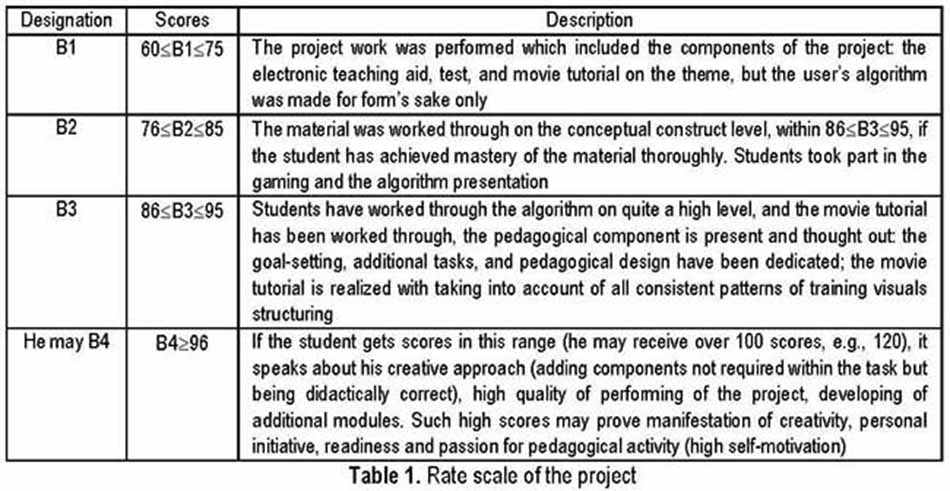
Below we will examine methods of the empiric study part. We applied the following methods:
-
Observation method – in the process of the gaming, the assurance of students during communications was increasing pro-rata to several contacts. After four swaps of partners, the students forgot about presence of a teacher in the classroom; they began to flourish arms more intensely (which speaks about higher relaxedness) at the prima
-
Measurement method – on results of the project-based activity with a typical project (an ascertaining experiment), only 3% of students performed the project; their scores were within B3; the rating of the remaining 97% of students was not above 65 scores. When untypical projects were introduced into work, a stratum of scores on the B3 level appeared. The educational experiment yielded values on В4 level and a higher quality of demonstrating consistent habits of didactic communications in the IT field (observance of arrangement in levels, knowing the thesaurus, categories, concepts).
-
To study the dynamic pattern of the development level of consistent habits, in the field of didactic communications, a rating system of assessment and the procedure of description of the formed competences, according to the Dublin system of competences descriptors, were applied. Basing on the results of academic years 2017-18 and 2018-19, 2% of students possess the index B4, 20% - B3, 30% - B2, and 48% - B1. We would like to emphasize that the preparation stage became more elaborated during the last year of work, which was reflected in a wish of students (about ten persons) missing the gaming before to play with other groups (such a thing was not observed earlier);
-
Based on the obtained data, an analysis was conducted; pedagogic conditions were excluded, which negatively affect the consistent habit to be formed, and those were selected and added which, to our mind, were laid in the base of the system of training in didactic communications in the IT field.
3.DISCUSSIONS
Both, for a higher schoolteacher and a secondary level teacher, the methodological competence is necessary. Addressing this question, for example, are such authors as S.L. Loginova, O.B. Akimova, E.M. Dorozhkin, & E.V. Zaitseva (2018). At the same time, mastering of a personal computer is obligatorily included in aspects of methodological competence. However, it is not enough to implement IT into the educational process; here, it is essential to master consistent habits of didactic communications in the IT field.
Also, when examining the IT thesaurus, the user’s language and that of a software (SW) developer are not divided; hence, there is a widely spread disbelief than only programmers are masters of the IT thesaurus. However, as the practice shows, programmers often are not good even at office programs on the level of experienced users. What is it – the experienced user level? In Fig. 1 the level of mastering of IT thesaurus is presented (on the base of materials obtained by the observation method). The right sector shows separate cases of using speech habits in the IT field. This scheme shows the level of the split between beginners and experienced users. Unfortunately, if you teach fresh users basing on the level of their mastering IT, you will not see any “increment” of the knowledge.
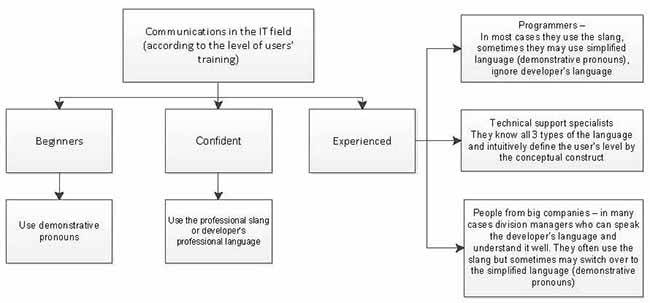
Figure 1. Levels of speech habit development
Basing on this model, let us try to define the place of a vocational training teacher. Judging by the tasks, his place should be in the left sector. However, we understand that shifting into this sector is performed through productive work and in interactions. Among these interactions, we may call interpersonal interactions, game forms, etc
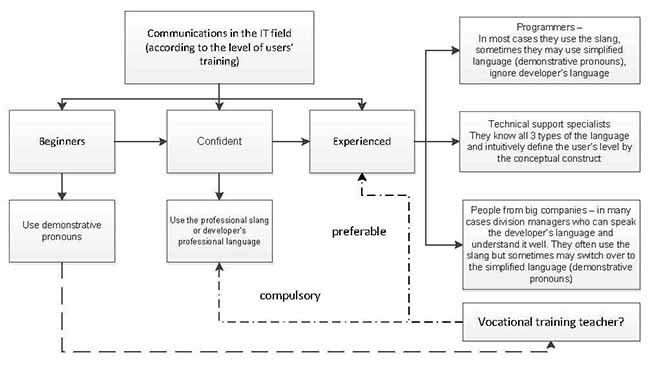
Figure 2. The level of consistent habits of future vocational education teachers – real and preferable
Speaking about preparing of vocational education teachers for didactic communications, we mean the development in them as in users of the ability to think according to the SW logics (the logics of users’ algorithms), and the ability to use the IT thesaurus for explaining of methods of realization of users algorithms.
This work cannot be conducted in a non-systemic way. In this case, we speak about a stage-by-stage preparation for a qualitative transition to a new level of mastering the IT language.
Training of vocational education teachers in using a personal computer in the educational process and ways of measuring the quality of such training were examined by us (Neupokoeva et al.: 2017). At the same time, the issue of the rationality of training teachers in the scope of didactic communications in IT was on the foreground. To substantiate the necessity to create pedagogical conditions at studying the IT thesaurus, development of written and oral speech habits, Dublin competences descriptors were used as an example (Bologna: 2009). However, as studies of other authors show (Abakumova & Fomenko: 2000), the issue of the formation of didactic communications is essential and has to be researched.
M.R. Arpentieva (Minigalieva) (2014) presents the comparative analysis of approaches to the formation of didactic communications while singling out traditional problem-oriented teaching, which is focused on the development of experience, practice-oriented educating, and psychotherapeutically oriented interaction. In our opinion, when training vocational education teachers for last years of teaching, including when training in the discipline “Information technologies in education”, it is necessary to use all approaches which comprehensively reflect stages of immersion in a position of a competent specialist. Such training shall be possible thanks to the combination of the project-based approach when realizing a quasi-professional subject- based activity. The efficiency of the teaching technology as a quasi-professional activity, which not just includes cases therein but also implies psychological immersion into a professional set of problems, which, by the way, can help in researching of professional aptitude (a matter of the notorious readiness for activity), was studied by Verbitsky & Larionova (2009).
Following such authors as N.I. Zyrianova, E.M. Dorozhkin, Y.V. Zaitseva, I.S. Korotayev & M.D. Shcherbin (2018), we are ready to see the system of developing didactic communications as a type of meta-activity in developing consistent habits of which a system-based approach is needed. Only the integration of various factors will make it possible to draw an integral picture of handling the thesaurus of information technologiesin the conscience of a future vocational education teacher. The understanding of how a student’s academic speech is formed and what influence it exercises upon communicative competence is disclosed by O.B. Akimova (2014). Leaning on this study, we can affirm the importance of a vocational education teacher’s propaedeutic role in the process of formation of students’ speech.
The deep inter-disciplinary integration can make it possible for didactic communications to be formed aa a consistent systemic habit. Actually, if you need that didactic communications in the IT field would become real, deep exteriorization of knowledge is necessary first. This process, as a rule, passes via the frustration mechanism, when the student revises his thesaurus completely. To support this process, information technologies are used, in particular, computer testing with adjustment of the self-control mode. Systematically, students revise the thesaurus available gradually mastering peculiarities of IT slang.
After the deep immersion, we initiate students towards the interiorization of the obtained knowledge. As a rule, this happens through a quasi-professional activity (an academic project wherein the student plays the role of a teacher who imparts knowledge about IT) and through a game-based process (students introduce a chosen theme and present it to his course-mates in the framework of a game). In the process of the knowledge interiorization, the students also pass through the frustration process, which is needed for the revision of available ideas about one's thesaurus. We speak here about the purposeful controllable process of reflection of future teachers aimed at re-thinking of the available knowledge (Chupina et al.: 2018).
At present many researchers regard the process of development of the vocational education system as continuous, systemic, inseparable from general trends of modern society development (Davydova et al.: 2016; Kislov: 2018; Zakirova & Volodina: 2018). Information technologies may act both as a subject of studying and means of transfer of information. The use of a computer allows transferring not only textual or graphical but also multimedia information. The spectrum of these abilities is continually widening. So, it is necessary to give to a vocational education teacher a reliable set of tools not only for mastering knowledge for a current moment but also for revealing the potential for self-teaching in the IT field.
It is necessary to form an understanding of patterns of onset of innovations and linguistic constructionsor concepts, the structure, and mechanisms of consistency in the IT field to solve this task. Furthermore, this is quite essential to give a chance to believe in one’s forces in the mastering of technologies of work with new application software products.
We want to note as well that measuring of results of the educational activity in this field is possible only at using the Dublin decreeing system (as this very system provides the communicative component is compulsory). The importance of the methodology of the formation of the evaluative means fund for the vocational pedagogy system was considered as a separate block in the publication of E.D. Kolegova et al. (2018).
CONCLUSION
We believe that the consistent habit of didactic communications in the IT field may not develop spontaneously. Unfortunately, it is a shared opinion nowadays that this habit can appear as a result of acquiring a user's habits of work with a personal computer. However, while understanding that there are the professional thesaurus and the forum thesaurus in the IT field, which also have become ingrained in the professional media, we may speak about a conflict in the scope of understanding of beginners, confident and experienced users, about a conflict between programmers and users. We understand that contact with various groups of people working with IT is crucial for vocational education teachers. Training of students to communications with any of these groups is one of the essential tasks of training vocational education teachers for the use of IT in professional activities. Thus, solving the matter of systemic approach to the formation of consistent habits of didactic communications in the IT field needs to have methodological and methodic solutions developed. This publication may be of use for managers and teachers who are involved in developingand realization of educational programs on training and re-training of vocational education teachers, as it contains data about the specificity of training to didactic communications in the IT field.
BIODATA
ELENA NEUPOKOEVA: Lives in Ekaterinburg, Russian Federation. Elena works as a senior lecturer at the Department of Information Systems and Technology of Russian state vocational pedagogical university. The research interests of the author are development of technological and methodological support for the distance learning system in professional and pedagogical education. A recent study of the author is “Peculiarities of Preparation of a Vocational Teacher for Use of Application Software Taking into Account the Requirements of the Federal State Education Standard”
NIKOLAY CHAPAEV: Lives in Ekaterinburg, Russian Federation. Nikolay has a PhD in pedagogical sciences. He works as a professor at the Department of Information Systems and Technology of Russian state vocational pedagogical university. The research interests of the author are pedagogical integration, the historyof pedagogy and the philosophy of education. A recent study of the author is “Spiritual and moral foundations of craft profession training”.
OLGA AKIMOVA: Lives in Ekaterinburg, Russian Federation. Olga has a PhD in pedagogical sciences. She works as a professor at the Department of Information Systems and Technology of Russian state vocational pedagogical university. The research interests of the author are grammar of the modern Russian language, psycholinguistics; linguoculturology; rhetoric. A recent study of the author is “Methodical competency as a basis of methodical activities of a teacher of the higher school in modern conditions”.
ELENA CHUBARKOVA: Lives in Ekaterinburg, Russian Federation. Elena is a candidate of pedagogical sciences. She works as an associate professor at the Department of Information Systems and Technology of Russian state vocational pedagogical university. The research interests of the author are information technologies in education, new information technologies in the educational process, pedagogical software. A recent study of the author is “Readiness of high school teachers to use distance education technologies”
ANASTASIYA TOKAR: Lives in Ekaterinburg, Russian Federation. Anastasiya is an undergraduate at the Department of Information Systems and Technology of Russian state vocational pedagogical university. The research interests of the author are the basics and practice of the implementation of concentrates in school historical education. Anastasiya’s personal interests and hobbies are climbing, dancing and movies.
BIBLIOGRAPHY
ABAKUMOVA, IV & FOMENKO, VT (2000). “Didactic models of the educational process”, in: Integration of Education, 3, pp.9-13.
AKIMOVA, OB (2014). “Notes on students’ academic speech”, in: Scientific dialogue, 3 (27), pp.133–139
. ARPENTIEVA (MINIGALIEVA) MR (2015). “Modes of didactic communication and understanding”, in: Bulleting of Kostroma State University. Series: Pedagogy. Psychology. Socio-kinetics, 1, pp.28-32.
BALDIŅŠ, A (2016). “Insights into e-pedagogy”, in: Concept Development Procedia - Social and Behavioral, 231, pp.251-255.
BOLOGNA PROCESS (2009). European and national qualification frameworks (book-application 2). Moscow: Research Center for the problems of quality training, p.220.
CHAPAEV, NK (2005). Pedagogic Integration: Methodology, theory, technology. Ekaterinburg: Publishers of Russian State Vocational Pedagogical University; Kemerovo: Publishers of Kemerovo State Vocational Pedagogical College, p.325.
CHUPINA, VA, FEDORENKO, OA & PLESHAKOVA, AYU (2018). “Methodology of professional self-reflection development (on the example of management activity)”, in: International Journal of Engineering & Technology, 7 (2.13), pp.183-188.
DAVYDOVA, NN, DOROZHKIN, EM, & POLYANSKOVA, NV (2016). “Formation of a Cluster Integration System of Educational Institutions within the Region”, in: International Journal of Environmental and Science Education, 11(16), pp.9206-9221.
DOROZHKIN, EM, SHCHERBINA, EYU & KISLOV, AG (2018). “The role of the target magistracy of the Russian State Vocational Pedagogical University in advanced training of vocational educational organizations”, in: Vocational education and labor market, 2, pp.37-51.
DOROZHKIN, EM, ZEER, EF & SHCHERBINA, EY (2017). “Training Modernization Strategy of the Teachers of Vocational Education”, in: Journal of Engineering and Applied Sciences, 12(11), pp.9061-9067.
FLOREA, C, DAVID, D & POP, A (2010). “An approach to the didactic activity involving the use of new information and communication technology”, in: Procedia - Social and Behavioral Sciences, 2(2), pp.1699- 1702.
HUVILA, I (2012). “As boundary objects Information Services and Digital Literacy In Search of the Boundaries of Knowing”, in: Information services and digital literacy. Chandos Information Professional Series, pp.129- 145
KISLOV, AG (2018). “From advance to trans-professional education”, in: The Education and science journal, 20(1), pp.54-74.
KOLEGOVA, ED, AKIMOVA, OB, DOROZHKIN, EM, MALYGIN, AA & CHEKALEVA, NV (2018). “Revisitingdevelopment of evaluation tools fund during realization of competence-oriented educational programs”, in:Astra Salvensis, 2, pp.286-311
LOGINOVA, SL, AKIMOVA, OB, DOROZHKIN, EM & ZAITSEVA, EV (2018). “Methodical competency as abasis of methodical activities of a teacher of the higher school in modern conditions”, in: Espacios, 39 (17), p.20.
NEUPOKOEVA, EE (2017). “Hermeneutic approach as a condition of preparing of the vocational education for use of application software”, in: Scientific dialogue, 8, pp.371-384.
NEUPOKOEVA, EE, CHAPAEV, NK, AKIMOVA, OB, SHCHERBIN, MD & BOROVIKOV, EA (2016). “UsingEducational Technology in Applications as Element of Teaching for Special Disciplines”, in: International Journal of Environmental and Science Education, 11, pp.8858-8872.
NEUPOKOEVA, EE, CHAPAEV, NK, CHUBARKOVA, EV, TOLSTOVA, NS, FEDULOVA, KA & TOKAR, AV(2017). “Peculiarities of Preparation of a Vocational Teacher for Use of Application Software Taking into Account the Requirements of the Federal State Education Standard”, in: Eurasian Journal of Analytical Chemistry, 12(7b), pp.1383–1398.
PLUZHNIK, IL, ILNITSKAYA, TO, & LUCCI, F (2018). “Are Entrepreneurs Born Or Made? Effective Academic Models To Foster Entrepreneurial Graduates”, in: The Education and science journal, 20(5), pp.56-78.
VERBITSKY, AA, & LARIONOVA, OG (2009). Personalistic and competence-based approaches in education: Problems of integration. Moscow: Logos, p.336.
ZAKIROVA, AF & VOLODINA, YN (2018). “Trends and prospects in educational modernisation: a hermeneutic approach”, in: The Education and science journal, 20(9), pp.9-34.
ZEER, EF, & STEPANOVA, LN (2018). “Portfolio As An Instrumental Means Of Self-Evaluation Of Educational And Professional Achievements Of Students”, in: The Education and science journal, 20(6), pp.139-157.
ZORINA, EE (2018). “Eradicating The Barriers To Inclusive Higher Education”, in: The Education and science journal, 20(5), pp.165-184.
ZYRIANOVA, NI, DOROZHKIN, EM, ZAITSEVA, YV, KOROTAYEV, IS & SHCHERBIN, MD (2018). “Trendsin and principles of training vocational teachers”, in: International Journal of Engineering & Technology, 7 (2- 13), pp.200-204.