Artículos
Character education in the era of industrial revolution 4.0 and its relevance to the high school learning transformation process
La educación del carácter en la era de la revolución industrial 4.0 y su relevancia en el proceso de transformación del aprendizaje en la escuela secundaria
 HERIYANTO heriyantobdg@student.upi.edu
D. SATORI djaman@upi.edu
A. KOMARIAH aan_komariah@upi.edu
A. SURYANA doef@upi.edu
HERIYANTO heriyantobdg@student.upi.edu
D. SATORI djaman@upi.edu
A. KOMARIAH aan_komariah@upi.edu
A. SURYANA doef@upi.edu
Character education in the era of industrial revolution 4.0 and its relevance to the high school learning transformation process
Utopía y Praxis Latinoamericana, vol. 24, núm. Esp.5, pp. 327-340, 2019
Universidad del Zulia

Esta obra está bajo una Licencia Creative Commons Atribución-NoComercial-CompartirIgual 3.0 Internacional.
Recepción: 01 Octubre 2019
Aprobación: 07 Noviembre 2019
Abstract: This study aims to discuss the approach to the implementation of character education management in the era of industrial revolution 4.0 (IR 4.0) and its impact on student learning transformation. The research method in the process of data collection is done through literature studies and interviews of character-building teachers and high school students. The results of this study showed that the teacher’s lack of understanding of IR 4.0 had an impact on the use of the character education approach used by teachers.
Keywords: Character Education, Industrial Revolution 40, Learning Transformation, Literature Studies.
Resumen: Este estudio tiene como objetivo discutir el enfoque para la implementación de la gestión de la educación del carácter en la era de la revolución industrial 4.0 (IR 4.0) y su impacto en la transformación del aprendizaje de los estudiantes. El método de investigación en el proceso de recopilación de datos se realiza a través de estudios de literatura y entrevistas con maestros de formación de carácter y estudiantes de secundaria. Los resultados de este estudio mostraron que la falta de comprensión del maestro de IR 4.0 tuvo un impacto en el uso del enfoque de educación del carácter utilizado por los maestros.
Palabras clave: educación del carácter, estudios de literature, revolución industrial 40, transformación del aprendizaje.
1.INTRODUCTION
The industrial revolution 4.0 not only “shakes” the existence of management education but also challenges the progress of better education in the future (OECD: 2018). As the presence of the industrial revolution 4.0, managers must be aware of being able to prepare graduates who are mentally prepared to create knowledge-based and character-based jobs. They must have new expertise, adapt, manage, and utilize IR 4.0 by becoming critical thinkers, problem solvers, innovators, communicators and providing value-based leadership. All of these criteria cannot be separated from character education (Gray: 2016).
The study of the character education approach is overgrowing. The implementation of character education is inseparable from the learning method, Auster & Wylie (2006), Watson & Sutton (2012). Auster & Wylie (2006) states that there are at least four dimensions of the learning process: setting the context, preparation, delivery, and continuous improvement. Another study by Begley et al. (2007), Russell III & Waters (2010), Berkovich & Eyal (2018), Pourrajab & Ghani (2017). Russell III & Waters (2010) used a character education approach by watching films and discussions. Another approach, dividing students into three categories: pre- conventional reasoning, conventional reasoning, and post-conventional reasoning (Kohlberg: 1964). There is also an approach in four stages: the initial stage, the formal stage, the transition stage, and the stage of meaning (Lockheed & Verspoor: 1991). In the Indonesian context, character education uses a class-based approach, school culture, and society (Hendarman et al.: 2018). The approaches to character education in school prioritize the formation of the intact personality of students (Mak: 2014). The whole personality reflects harmony and harmony in mind/intelligence, heart/honesty and responsibility, sports/health and hygiene, and initiative/expertise and creativity (Vincent et al.: 2002).
Referring to some of these studies, the character education approach has not had a national agreement. As time goes by, its implementation cannot rely on hold pattern, which regards teachers as the only source of knowledge, having absolute authority over students, while students are only considered spectators. The openness of access to information for students requires learning teachers and students to be productive and have character (Good: 2008). Teachers must be friends, value filters, and even live role models for students (Bashir et al.: 2014).
Compared to others' approaches, this study is the use of a holistic and practical approach. This means that the implementation of character education in the IR 4.0 era must not only be conceptual, but it must also be holistic, involving all parties, actual, supported by facilities and infrastructure, and designed with measurable standards.
2.METHODS
This research was conducted from September 2017 to December 2018 in a Bandung Christian High School. This study involved ten teachers, 30 students, and 20 parents using qualitative methods. The research was carried out with the procedure of collecting qualitative data, namely identifying participants and places, obtaining permission to access research, determining the type of information, determining instruments, and administering data collection (Creswell: 2012). The type of data used consists of 2 types, namely: 1. Primary data includes the distribution of questionnaires. 2. Secondary data is supporting data from the literature and references regarding obstacles to character education programs. Data analysis was conducted in six stages: data collection, transcribing, reading, coding, interpretation, and validation of data accuracy (Creswell: 2012).

Figure 1. Analytical Process of Qualitative Data (Creswell: 2012
3.RESULTS
Based on data analysis, it was found that there was a gap between ideal conception and actual conception in the implementation of character education. Ideally, teachers should understand the meaning of character education and actively participate in the implementation program. 65% of teachers still do not understand the concept of character education. As a result, teacher involvement is shallow because they think it is not their responsibility to teach.
While 87% of students felt that character education had been boring. They expect the practice outside of the classroom about the character education program. However, many as 95% of parents did not even understand their responsibilities in character education programs. This due to several reasons: school does not yet have a holistic concept in the implementation of character education, lack of supporting infrastructure, lack of communication and coordination, even the absence of indicators of program success. Regarding the digital character education module, teachers, students, and parents agreed to be provided immediately. Based on the results of the questionnaire respondents, 97% of parents need a digital module with reasons for business, lack of understanding of character values that must be taught, and their desire to know the child's character development. While 95% of students need digital modules to make it easier for them to access and discuss.
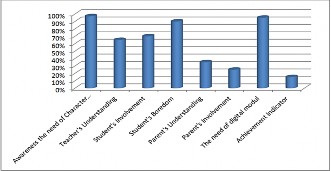
Figure 2. The problem of character education implementation in school
Referring to the results of the respondents above, high school students need the implementation of character education. The results of the questionnaire also indicate the need for improved approaches in character education programs. The approach is that the teacher must involve students more in the learning process. For the sake of program optimization, the involvement of all parties is needed, and the use of digital modules that can be easily accessed by both students and parents. Besides, indicators of achievement also need to be emphasized. As a result of the research, the researcher recommends a digital module that can be accessed at www.cekristal.com.
Based on the above problems, a conception of shared understanding is needed on character education both for private school (teacher and students) and external schools (parents). So, in its implementation, it requires a carefully designed character education program.
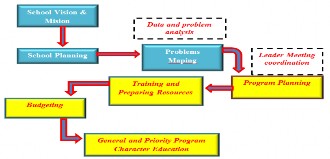
Figure 3. Character Education Planning Scheme
Referring to the issue of understanding the concept of character education, a discussion of this matter is needed. The following discussion will explain the concept of character education in the era of IR.40.
Based on research, the implementation of character education still does not involve many students. The teacher method dominates the class and makes students as listeners become one of the obstacles to the effectiveness of the character education program. This condition is inversely proportional to the learning theory and expectations of students, especially in this digital era. This involvement of students using digital technology and computers significantly helps increase students’ understanding of learning in this digital era (Akcay et al.: 2006). Learning psychology theory mentions four basic needs of students: the need for competence, the need for autonomy, the need for relatedness, and sustainable learning (Niemiec & Ryan: 2009). Education in the IR 4.0 era emphasizes the expertise of students known as 4 Cs (creativity, critical thinking, communication, and collaboration). Critical thinking is a feature of education that needs to be developed digitally, and this requires student involvement (Facione: 2011). Based on this learning theory, character education must actively involve students in the learning process.
Character education is a genuine deliberate effort to help someone understand, care, and act on the corefoundation of ethical values (Lickona: 2009). Based on this concept, character education is a deliberate and planned effort to instill, grow even as a step to restore increasingly massive character degradation in the lives of students. Efforts to produce good characters are not things that can happen automatically (Lickona: 2001). In the context of schools, true character education requires the cooperation of various parties and even the development of the right system. Character education is a national movement creating schools that foster ethical, responsible, and caring young people by modeling and teaching good character through an emphasis on universal values that we all share (Pala: 2011). In other words, efforts to actively engage students to become a culture that must be developed in character education.
Concrete actions in adopting learning methods that involve students actively can be done by blended learning. The blended learning method is the incorporation of face-to-face learning in the classroom with online learning (Wilson: 2015). The new literacy movement that focuses on three main literacies: digital literacy, technology literacy, and a human literacy, emphasizes changes in learning methods (Aoun: 2017). In other words, the teacher must be aware that the key to learning success now is learning with the student-centered learning and modeling method. The teacher must be the model that students follow (Gough: 1998). All of these concepts support the “cekristal” digital module that researchers recommend in character education.
The history of the industrial revolution starts from industry 1.0, 2.0, 3.0, to industry 4.0. Industry 1.0 is characterized by the mechanization of production to support the effectiveness and efficiency of human activities. Industry 2.0 is characterized by mass production and quality standardization. Industry 3.0 is characterized by mass adjustments and the flexibility of automation-based manufacturing and robots. Then Industry 4.0 is present to replace industry 3.0, which is characterized by cyber-physical and manufacturing collaboration (Irianto: 2017).

Figure 4. The History of the Industrial Revolution, https://cdn.sindonews.net
Some sources say the term industrial revolution 4.0 originated from a project initiated by the German government in promoting the computerization of manufacturing. Industrial Revolution 4.0 (IR4.0) was first published in Davos in 2016. The IR4.0 terminology itself was widely accepted after German Chancellor Angela Merkel highlighted it at the Hanover Fair in 2011, which made the German industry increasingly known and competitive. The era of industrial revolution took place around 2010 through engineering intelligence and the internet of things as the backbone of the movement and connectivity of humans and machines, (Prasetyo & Trisyanti: 2018).
The industrial revolution in each era had an impact on social change in society (More: 2002). For example, industrial revolution 4.0 changes socio-economic societies in Russia, while changing more individual social behavior (Popkova et al.: 2019). The industrial revolution was also referred to as the digital era and disruption. Disruption is defined as a fundamental or fundamental innovation change (Kasali: 2018). In the era of disruption, there were fundamental and massive changes in society in the field of technology in every aspect of life. The characteristic of the disruption era is known as the VUCA expression, which is massive, rapid change, with unpredictable patterns (Volatility), causes uncertainty (Uncertainty), the occurrence of the complexity of relationships between factors (Complexity), ambiguity (Ambiguity), Reeves & Reeves (2015).
In the socio-economic aspects, the challenges of industry 4.0 are; (1) industry readiness; (2) trusted workforce; (3) ease of socio-cultural arrangements; and (4) diversification and job creation (Irianto: 2017). All these aspects are not only related to economic factors but social behavior. Indonesia's demographic bonus in 2040 has 195 million people of productive age.
Problems arise when the industry prefers the use of technology to replace human power. The inability of the industrial sector to absorb labor is sure to bring about social turmoil. The role of education is not only to prepare a skilled and ready-to-use generation in the industry but to give birth to a generation of creative, innovative, resilient, and independent. The role of character education is expected to be the accelerator of mental revolution and forming dignified mental competitiveness. Students must be trained to become creative entrepreneurs. The right response to the challenges of industry 4.0 is needed so that it can be managed as an opportunity for dignity. Planting strong character concepts will help responsive and resilient students as independent individuals and characters.
The preparation of Indonesian human resources in the era of IR 4.0 is very important. In era IR 4.0, 75% of jobs involve the ability of science, technology, internet, and lifelong learning (Pannen: 2018). Indonesian education needs to improve the quality of workforce skills, digital talent, and social skills. Besides that, it is also necessary to think about 3 new literacies, namely: digital, technology, and human. That is, amid the flow of technological development, the development of human identity and dignity is the main element.
Technological advances open a new paradigm in learning methods. Now the learning method requires networks that are open, social, personal, multidimensional, and visual (Bílek: 2009). Learning can no longer only be limited in classrooms. The reality of the technological revolution and the use of digital information will automatically change the "traditional" learning method. The use of film and media as a means of learning is an urgent need in the digital generation (Harwood & McMahon: 1997).
Educational institutions in the industrial revolution 4.0 era must be aware of the emergence of learning style trends in students. There are at least 9 trends: first, learning can be done anywhere and anytime; second, education is personal and individual for students; third, students feel entitled to choose the field of learning they want; fourth, students prefer project-based learning; fifth, students prefer learning through experience; sixth, students prefer their data and findings; seventh, students do not like material that is not relevant to them; eighth, students want their opinions to be valued; nine, students are more independent and happy with their own learning methods, (Fisk: 2017). In this context, upholding character values is very important so that students are not cultured individually, and appreciation for humanity is not valued only as a function. Multi- dimensional functional character education is the introduction of human values, appreciation, potential development, and remembering the ultimate goal of life that is God-glorifying.
In the current era of disruption, the world of education is required to be able to equip students with 21st- century skills. These skills include leadership, digital literacy, communication, emotional intelligence, problem- solving, entrepreneurship, global citizenship, and teamwork (Wibawa: 2018). Then the teachers are required to have strong competency cores, namely: critical thinking, creative, adaptive to technology, communicative, and collaborative. Besides, teachers must be able to build an atmosphere that meets the psychological needs of students, which includes: needs for competence, needs for autonomy, and trust.
Today’s digital kids think of ICT as something akin to oxygen; they expect it, it is what they breathe, and it is how they live (Brown: 2001). Some characteristics that accompany this generation according to him are: They like to be in control, like choice, they are group-oriented and social, inclusive, practiced users of digital technology, think differently, they are more likely to take the risk, and they value time off because they view life as uncertain.
The digital revolution changes our work, our organization, and our routines (Lonka et al.: 2015). Furthermore, this condition changes the way children and adolescents play, access information, communicate with each other, and learn. Lonka added that the presence of students in the digital era with the emergence of information technology development requires a different learning approach. Today's students are active learners rather than spectators. So, they need an open dialogue not only to understand what, or how, but to be able to answer why and attract meaning. This is where dialogue and interaction between students and teachers are needed in deciding the true value of life.
Radical changes in the assessment and application of character values have occurred since the adventof baby boomers (1946 - 1964), generation X (1965-1980), and Generation Z or I generation (1995-2010).
The common characteristics of generation Z are users of technology and applications. They are very familiar with smartphones or social media, creating communities through social networks: FB, twitter, line, WhatsApp, Instagram. His behavior became freer to express what he felt and thought spontaneously. Finally, they tend to lack verbal communication, egocentricity, individualism, want to be instantaneous, and change their ethical behavior (Josephson: 2006). The generation Z challenge is characterized: a reasonably high distraction potential in each individual, information overload, dominant in virtual interactions and a shift from the presence of learning to distance learning. These characteristics reaffirm the change in character values they hold along with access to information that is sweeping globally. These are the present high school student's characteristics. That is, the teacher must be the answer to changes in the behavior of generation Z.
The next challenge is related to information overload. Ease of access to information allows high school students to see, download, and even imitate whatever they think is good. Teachers are now challenged not only to hear and become students' friends but also to filter information and values believed by students. The teacher must be able to confirm the concept of true value in the middle of the relativism flow.
The main initiator of the theory of relativism is said to be Protagoras. Ethical relativism holds that judgment is good and right depends on the person. The theory of religious relativism in the end also has the right to determine whether God exists or not. In short, they believe that there is no absolute truth. If this belief does not get the right explanation, then students will always question the wrong as they wish. Filtering information and values by teachers is a guide to re-establishing the meaning of truth.
Permissive is an act of omission. The permissive society begins in a family upbringing. This pattern is characterized by the characteristics of not guiding children, approving all children's behavior, the absence of clear sanctions. This upbringing results in the child doing maladaptive behavior: promiscuity, free sex, rule rebellion, and other bad actions.
Adolescence is a period that is vulnerable to the crisis of psychosocial aspects (Cook: 2015). Without right and wrong affirmation, teens will be confused with the value of life. They will only follow what is usually done in society without thinking about values. The crisis of psychosocial aspects of adolescents demands an active role from parents. In adolescence, the values and moral standards of parents are considered important by adolescents and proper parental control is needed (Brown: 2016). The four dimensions of parenting are parental control, clarity of parental communication with children, demands maturity and affection, (Huver et al.: 2010). The role of parents really cannot be represented. In fact, many parents do not understand or even do not care about their responsibilities. Permissive upbringing produces aggressive children uncontrollably. Eventually, it will also create a permissive society.
There are 5 industry challenges IR 4.0: 1) information technology security issues; 2) reliability and stabilityof the production machine; 3) lack of adequate skills; 4) reluctance to change by stakeholders; 5) a lot of work is lost because it turns into automation, (Sung: 2018, pp.40-45). All indicators of this challenge cannot be separated from law enforcement and value learning played by the media. Focusing on the first and fourth challenges, the act of breaking through technology security is impossible for machines. The reluctance of law enforcement exacerbates conflict and social problems in this era of the industrial revolution. The omission of enforcement of character values by the media adds complexity to the character problem. Media can actually be used by humans as a justification for their crimes.
The term approach in the context of learning is how to manage learning activities and student behavior.The goal is to be able to actively carry out learning tasks so that they can obtain optimal learning outcomes and experience the expected life transformation. The teacher as a facilitator must be able to accommodate, inspire and explain learning with theoretical coverage and concrete examples.
The era of globalization and digitalization has impacted on the opening of the transculturization era, transnationalisation even more severe transreligiosity (changes in service or loyalty to religious values). Adopting these values often results in lifestyle exchanges. Many high school students are prouder of outside culture than their own culture. In turn, this condition will create acculturation and assimilation of lifestyle. If thishappens, it is difficult to affirm the national identity rooted in local wisdom. Real steps are needed from education policymakers to respond to this increasingly complex reality. The character education approach that can be proposed uses 3RT principles namely rethinking, reframing, rebuilding and transforming:
Rethinking is an effort to detect various misconceptions that have been built up in connection with character education. The history of character education programs in Indonesia, which was used as a means of "propaganda" of power in the New Order era, has become part of history. The momentum of awakening awareness to restore character education to its original goal through the national education system law marks new hope for this program. The presence of government regulations on strengthening character education adds to the basis that reinforces the implementation of character education in schools. Citizenship education is needed to develop the political competence of citizens who are democratic and responsible (Gainous & Martens: 2012, pp.232-266). Rethinking steps are needed to avoid counter-productive impacts that might arise. That is, character education programs must not stop only at a mere conceptual level; it must also be considered concrete policies and their accompanying impacts.
Reframing, this step is an effort to reshape the framework of the implementation of character education that is only segmental and local in nature to a new frame of reference that is holistic and integrative. This step confirms that the implementation of character education is no longer sufficient as part of school education. This program must also involve the contribution of external schools such as parents, religious institutions, social friends, and even the community. Reframing will result in real collaborative efforts of all parties in realizing the goal of character education, namely forming the character and behavior of students based on the noble values of humanity. Reframing will also result in technology integration within the scope of learning. This means that the use of technology in character education is a necessity. Digitizing material means of communication and evaluation makes character education contextual in the lives of students or millennials.
Rebuilding, character education which from the beginning become an educational pulse must be turned on in a real way. The complexity of the lifestyle of the global and digital era today demands the emergence of life role models. Character education should be able to build a pilot community in the midst of an increasingly stinging lifestyle flow. Pilot communities can be built starting from teacher exemplary, rewarding exemplary students, disseminating news of high achieving students, and value filtering. All of this will certainly produce an educational building that includes all components of the school as a learning community capable of upholding national identity.
Transforming (manifest change) at the school level, there need to be clear standards related to behavioral changes that are expected to occur during the learning process. More than that, changes that occur should not only take place because of threats or sanctions by school rules. Changes in student behavior are expected to be born from awareness of dignified behavioral needs. Habituation and establishment of a dignified lifestyle must be part of the lives of students (Agung: 2011). Transforming gave birth to students who contributed positively to his era. Students with all technological fluency and the media consciously disseminate achievement, innovation, optimism, and integrity of life born of conscience. At the school level, there must be clear indicators of achievement for this program. These achievement indicators are also useful to measure the effectiveness of the program modules used and the involvement of all parties to realize social transformation.
The description of the steps in the character education approach confirms the importance of changes in the education system. This is clearly illustrated by Wardani (2018):

Figure 5. The Industrial Revolution 4.0 Implication in Education (Wardani: 2018)
Changes in time require the sensitivity and creativity of education practitioners to change the educational framework. In the midst of global competition, education must emphasize character strengthening. Skill ability without being offset by fighting power will only produce generations that are easily broken up. As a follow up to the steps in the character education approach, a revitalization movement is needed on various elements of education. The term revitalization is a process or act of reviving, reviving various programs of any activity. In order to realize the concept of 3RT, it requires a revitalization movement in various aspects. The concrete revitalization movement in the era of industrial revolution 4.0 in the field of character education includes:
The quality of teachers in Indonesia is still low. This is evident from the results of the teacher competency test (UKG) in 2012: the average value of high school teachers in West Java Province is only 55.35, while the minimum UKG value for 2017 is 70 (Fajar et al.: 2017). Other data shows: 62.15% of high school teachers rarely use Information and Communication Technology (ICT) in learning, 34.95% of teachers lack mastery of ICT (Syukur: 2014). This condition shows the importance of the hard work of the education office in improving teacher competencies related to ICT in order to improve the quality of education in this digital era.
Referring to the Regulation of the Minister of National Education Number 16 of 2007, ICT competencies for teachers have at least two functions, namely ICT as self-development and ICT, as supporting the learning process.
Character education affects the way of thinking and behavior of students. Therefore character education must not claim to be impartial or neutral in enforcing values. Character education must fulfill the goal of arousing the mental revolution of students. The transformation of students should be born of conscience and encouragement. The fact is that many students do the right thing but for the wrong reasons. For example, they do not cheat not because they realize it is wrong but are afraid of being found out or sanctioned. The mental revitalization of students results in an understanding that character education should not be a threat, fear or pressure. Character education must build a culture of character awareness.
The era of digitalization within ASEAN has given rise to a positive response from the government. According to Coordinating Minister for Economic Affairs Darmin Nasution, stressed: "Indonesia has great potential for capital development in the digital economy. In 2016, the potential of information technology infrastructure covers 90% of the population with more than 62% of mobile phone penetration, with 52% of mobile users from Indonesia's total population. "
The great potential in utilizing digital technology will be a boomerang if educational institutions do notprovide adequate infrastructure for training and developing the potential of ICT for teachers and students. The reality shows that there are gaps in ICT facilities in urban areas, especially in rural areas. Revitalizing educational facilities cannot be delayed considering the time and unstoppable technological developments.
A holistic approach to deeply redesign the curriculum by offering a complete framework across the four Dimensions of education: knowledge, skills, character, and metacognition (Bialik et al.: 2015, pp.23-180). A quality character describes how someone is involved with and behaves in the world. Metacognition fosters a process of self-reflection and how to learn, as well as building the other three dimensions.
Government policy on Penguatan Pendidikan Karakter (character education strengthening) and 2013 Curriculum is a positive step. The focus of this approach in the 2013 curriculum is on class-based character education. That is, character education is the overall interaction between educators and students in the learning process. Therefore, teachers must understand how to prepare and integrate the learning process through the selection of learning methodologies, classroom management, and how to make evaluations. Based on the report, in 2016-2017, the Indonesian Ministry of Education and Culture has held training in various schools:
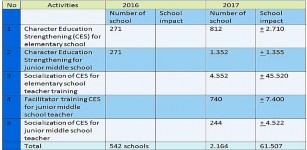
Figure 6. Teacher’s Training (http://www. cerdasberkarakter. kemdikbud.go.id)
Strengthening Character Education uses three basic approaches: class-based character education, school culture, and society. Conceptually, this program provides space for teachers to create local policy learning materials. All material should be designed by involving students to explore study and draw lessons on character values from various sources including the internet.
In the mid of the digitalization era, character education in schools is demanded to make a change of approach. The system approach in question is holistic: starting from materials, strategies, methods, utilization of digital technology, to indicators of program evaluation. Teachers must be sensitive to students' negative assumptions about character education. The importance of changing the learning system is very apparent, as explained by Wardani (2018):
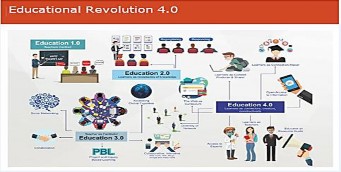
Figure 7. Industrial Revolution’s Impact on education (Wardani: 2018)
The description of education in each period of the industrial revolution proves that the learning system experiences metamorphosis along with the demands of its context. Character education must be adapted to the learning approach. For students, the rigor and monologue of teacher teaching must be replaced by dialogue. The teacher must create a holistic learning method that is creative, communicative and relevant to them. Therefore, a collaborative learning system is needed, both students and teachers, field practice, involving parents, and even presented in digital form. The use of digital technology will help overcome the limitations of space and time between teacher students and parents. All these elements are closely related to character. So, a 3RT approach that is holistic is highly needed: fresh, directed, contextual and relevant in the character education approach.
4.CONCLUSION
Character education is still needed and relevant. The contextualization of praxis requires the renewal of approaches and strategies. It takes hard effort from educators to instill, grow, and build a character culture. The presence of relativism and alternative values that try to obscure the standard is a challenge as well as proof of educators instilling dignity in the younger generation.
The vision for the transformation of character education consists of: education educates, makes it better, and individuals as historical actors. Then the ultimate goal of character education is the ongoing process of social transformation: getting better, fairer and more humane by involving all parties.
The holistic approach of 3RT character education includes the importance of revitalizing education, being fresh, creative and communicative, utilizing technology and involving parents. The balance between the use of technology and character will give birth to a generation that is both competitive and dignified. The involvement of all parties is the key to student transformation. Education readiness in facing the industrial revolution era 4.0 is characterized by improving the ability of human resources in mastering technology. Education system management policies in Indonesia include curriculum suitability, HR competencies (teachers and students), ICT utilization, and development of character values and improvement of technological facilities.
BIODATA
HERIYANTO: Heriyanto was born on 23 Jan 1975. He is a lecturer at Bandung School of Theology. He got his bachelor's, master's, and Ph.D. degrees from Sekolah Tinggi Teknologi Bandung, Sekolah Tinggi Teknologi Bandung, and UPI in 2000, 2005, and 2019, respectively. He was the Coordinator of Youth ministry from 1999-2003. He is currently a lecturer at STT Bandung (2003-2005, 2007-Now).
DJAMAN SATOR: Djaman was born on 02 August 1950. His current positions are Head of Provincial Accreditation Board for School and Madrasah, West Java, Professor in Educational Administration for both Undergraduate and Graduate Consultant for Education Quality Assurance, Trainer, Facilitator, and Resource Person for areas related to Educational Administration. He got his bachelor's, master's, and Ph.D. degrees is in Educational Administration from IKIP Bandung, Macquarie University and IKIP Bandung in 1974, 1983, and 1989, respectively.
AAN KOMARIAH: Aan was born on 24 May 1970. She is currently a professor in the Administration of Education at Universitas Pendidikan Indonesia. She got her bachelor's, master's, and Ph.D. degrees is in Educational Administration from IKIP Bandung, IKIP Bandung, and UPI in 1993, 1999, and 2005, respectively. Her most recent conducted academic research was the Development of an Authentic Leadership Model for Value Planting in Madrasa Change Management (2015-2017). She also published five books from 2006 to 2010.
ASEP SURYANA: Asep is currently an associate professor in educational administration at Universitas Pendidikan Indonesia: Bandung. He got his bachelor's, master's, and Ph.D. degrees is in Educational Administration from IKIP Bandung, UPI, and UPI in 1995, 2004, and 2010, respectively. His most recent conducted academic research was the Development of Value-Based Leadership Models in Bandung Elementary Schools (Trial Models in SD Lab-School and SDN Sukawarna 3). He also published six books from 2007 to 2013.
BIBLIOGRAPHY
AGUNG, L (2011). Character education integration in social studies learning. Historia: Jurnal Pendidik dan Peneliti Sejarah, 12(2), pp.392-403.
AKCAY, H, DURMAZ, A, TUYSUZ, C, & FEYZIOGLU, B (2006). Effects of Computer Based Learning on Students' Attitudes and Achievements towards Analytical Chemistry. Online Submission, 5(1).
AOUN, JE (2017). Robot-proof: higher education in the age of artificial intelligence. MIT Press.
AUSTER, ER, & WYLIE, KK (2006). “Creating active learning in the classroom: A systematic approach”, in:Journal of Management Education, 30(2), pp.333-353
BASHIR, S, BAJWA, M, & RANA, S (2014). “Teacher as a role model and its impact on the life of female students”, in: International Journal of Research-Granthaalayah, 1(1), pp.9-20
BEGLEY, P, ZDENEK, B, & SCHOCHOR, D (2007). “Developing moral literacy in the classroom”, in: Journal of Educational Administration.
BERKOVICH, I, & EYAL, O (2018). Ethics education in leadership development: Adopting multiple ethical paradigms. Educational Management Administration & Leadership.
BIALIK, M, BOGAN, M, FADEL, C, & HORVATHOVA, M (2015). Character education for the 21st century: What should students learn. Center for curriculum redesign. Boston: Massachusetts, pp.23-180.
BÍLEK, M (2009). Interaction of real and virtual environment in early science education: tradition and challenges. Hradec Králové: Gaudeamus.
BROWN, JS (2001). Learning in the digital age. In The Internet and the university: Forum (pp. 71-72). Washington, DC: Educause.
BROWN, N.D (2016). Ending the Parent-Teen Control Battle: Resolve the Power Struggle and Build Trust, Responsibility, and Respect. New Harbinger Publications.
COOK, MN (2015). Transforming Teen Behavior: Parent Teen Protocols for Psychosocial Skills Training. Academic Press.
CRESWELL, JW (2012). Educational research: planning. Conducting, and Evaluating.
FACIONE PETER A (2011). Critical Thinking: What It Is and Why It Counts. Measured Reasons and The California Academic Press, Millbrae, CA.
FAJAR, MY, ROHAENI, O, PERMANASARI, Y, ISWANI, A, & MULKIYA, K (2017). Meningkatkan KompetensiGuru SMA dan Sederajat Melalui Pelatihan Pembelajaran berbasis TIK. ETHOS: Jurnal Penelitian dan Pengabdian, 5(2), pp.175-181.
FISK, P (2017). “Education 4.0… the future of learning will be dramatically different, in school and throughout life”. URL: http://www. thegeniusworks. com/2017/01/future-education-youngeveryone-taught-together.
GAINOUS, J, & MARTENS, AM (2012). “The effectiveness of civic education: Are “good” teachers actually good for “all” students?”, in: American Politics Research, 40(2), pp.232-266.
GOOD, TL ED (2008). 21st century education: A reference handbook (Vol. 1). Sage.
GOUGH, RW (1998). “A practical strategy for emphasizing chaacter development in sport and physical education”, in: Journal of physical education, recreation & dance, 69(2), pp.18-20.
GRAY, A (2016). January. The 10 skills you need to thrive in the Fourth Industrial Revolution. In World Economic Forum (Vol. 19).
HARWOOD, WS, & MCMAHON, MM (1997). Effects of integrated video media on student achievement and attitudes in high school chemistry. Journal of Research in Science Teaching: The Official Journal of the National Association for Research in Science Teaching, 34(6), pp.617-631.
HENDARMAN, H, SARYONO, D, SUPRIYONO, S, KAMDI, W, SUNARYO, S, LATIPUN, L, WINARSUNU, T, CHAMISIJATIN, L, KOESOEMA, D, INDRIYANTO, B, & HIDAYATI, S (2018). Konsep dan pedomanpenguatan pendidikan karakter tingkat sekolah dasar dan sekolah menengah pertama.
HUVER, RM, OTTEN, R, DE VRIES, H, & ENGELS, RC (2010). “Personality and parenting style in parents of adolescents”, in: Journal of Adolescence, 33(3), pp.395-402.
IRIANTO, D (2017). Industry 4.0; The Challenges of Tomorrow. In Disampaikan pada Seminar Nasional Teknik Industri, Batu-Malang.
JOSEPHSON INSTITUTE OF ETHICS (2006). The ethics of American youth.
KASALI, R (2018). Disruption (9th ed.). Jakarta. Gramedia.
KOHLBERG, L (1964). Development of moral character and moral ideology. Review of child development research, 1, pp.381-431.
LICKONA, T (2001). “What is effective character education”. Tersedia secara online juga di: http://www. mtsm. org/pdf/What% 20is% 20Effective% 20Character% 20Education. pdf [diakses di Bandung, Indonesia: 16 September 2015].
LICKONA, T (2009). Educating for character: How our schools can teach respect and responsibility. Bantam.
LOCKHEED, ME, & VERSPOOR, AM (1991). Improving primary education in developing countries. OxfordUniversity Press for World Bank.
LONKA, K, HIETAJÄRVI, L, MOISALA, M, & VAARA, L (2015). Innovative schools: Teaching and learning in the digital era. European Parliament.
MAK, WS (2014). “Evaluation of a moral and character education group for primary school students”, in:Discovery–SS Student E-Journal, 3, pp.142-164.
MORE, C (2002). Understanding the industrial revolution. Routledge.
NIEMIEC, CP, & RYAN, RM (2009). Autonomy, competence, and relatedness in the classroom: Applying self- determination theory to educational practice. Theory and research in Education, 7(2), pp.133-144.
OECD (2018) Tranformative Technologies and Jobs of the Future, Canada
PALA, A (2011). “The need for character education”, in: International Journal of Social Sciences and Humanity Studies, 3(2), pp.23-32.
PANNEN, P (2018). Mempersiapkan SDM Indonesia di Era Industri 4.0, Kementerian Riset.
POPKOVA, EG, RAGULINA, YV, & BOGOVIZ, AV EDS (2019). Industry 4.0: Industrial revolution of the 21st Century. Springer International Publishing
POURRAJAB, M, & GHANI, MFA (2017). “THE RELATIONSHIP BETWEEN SCHOOL ORGANIZATIONAL CULTURE AND CHARACTERS OF SCHOOL STAKEHOLDERS: STUDENTS’PERCEPTIONS”, in: MOJEM:Malaysian Online Journal of Educational Management, 3(2), pp.18-31.
PRASETYO, B, & TRISYANTI, U (2018). “Revolusi Industri 4.0 dan Tantangan Perubahan Sosial”, in: IPTEK Journal of Proceedings Series, (5), pp.22-27.
REEVES, TC, & REEVES, PM (2015). Educational technology research in a VUCA world. Educational Technology, pp.26-30.
RUSSELl III, WB, & Waters, S (2010). Reel character education: A cinematic approach to character development. IAP.
SUNG, TK (2018). Industry 4.0: a Korea perspective. Technological forecasting and social change, 132, pp.40-45.
SYUKUR, IA (2014). Profesionalisme Guru dalam Mengimplementasikan Teknologi Informasi dan Komunikasi di Kabupaten Nganjuk. Jurnal Pendidikan dan Kebudayaan, 20(2), pp.200-210.
VINCENT, AS, DECKER, BP, & MUMFORD, MD (2002). “Divergent thinking, intelligence, and expertise: A test of alternative models”, in: Creativity research journal, 14(2), pp.163-178.
WARDANI, R (2018). 21st Century Educator: Menyongsong Transformasi Pendidikan 4.0. In Disampaikan pada seminar nasional dinamika informatika senadi UPY.
WATSON, S, & SUTTON, JM (2012). “An examination of the effectiveness of case method teaching online: Does the technology matter?”, in: Journal of management education, 36(6), pp.802-821.
WIBAWA, S (2018). Pendidikan dalam Era Revolusi Industri 4.0.
WILSON, C (2015). 6 Blended Learning Models & Platforms. Retrieved from https: //www. teachthought.com/learning/6-blended-learning-models-platforms/