Artículos
Risk management of the implementation of work health safety in radiology
Gestión de riesgos de la aplicación de la seguridad de la salud en el trabajo en radiología
 Q SHOLIHAH qoqom_kuncoro@yahoo.co.nz
W KUNCORO wahyudikuncoro@gmail.com
R.P LUKODONO rio_pl@ub.ac.id
R.A SARI rath.ardia@gmail.com
S.E SWARA suluh.elmans@ub.ac.id
Q SHOLIHAH qoqom_kuncoro@yahoo.co.nz
W KUNCORO wahyudikuncoro@gmail.com
R.P LUKODONO rio_pl@ub.ac.id
R.A SARI rath.ardia@gmail.com
S.E SWARA suluh.elmans@ub.ac.id
Risk management of the implementation of work health safety in radiology
Utopía y Praxis Latinoamericana, vol. 24, núm. Esp.6, pp. 142-152, 2019
Universidad del Zulia

Esta obra está bajo una Licencia Creative Commons Atribución-NoComercial-CompartirIgual 3.0 Internacional.
Recepción: 18 Septiembre 2019
Aprobación: 11 Noviembre 2019
Abstract: The high use of radiation for medical activities is the second largest contribution the radiation source that we receive, which in addition to providing benefits, can also cause harm for radiation workers, the community, and the surrounding environment. The purpose of this study was to analyze the application and implementation of radiation safety at the Installation Radiology of UNISMA Hospital in Malang. Descriptive research was conducted with a qualitative approach. It is known that 20% of hazards are in a low category; 30 % of hazards are in the moderate category, 50% are in the high category.
Keywords: Qualitative Approach, Radiation Source, Radiology Installation, UNISMA Hospital.
Resumen: El alto uso de radiación para actividades médicas es la segunda contribución más importante de la fuente de radiación que recibimos, que además de proporcionar beneficios, también puede causar daños a los trabajadores de radiación, la comunidad y el entorno circundante. El propósito de este estudio fue analizar la aplicación e implementación de la seguridad radiológica en la Instalación de Radiología del Hospital UNISMA en Malang. La investigación descriptiva se realizó con un enfoque cualitativo. Se sabe que el 20% de los peligros están en una categoría baja; El 30% de los peligros están en la categoría moderada y el 50% están en la categoría alta.
Palabras clave: Enfoque cualitativo, Fuente de radiación, Instalación de radiología, Hospital UNISMA.
1.INTRODUCTION
According to the Republic of Indonesia Minister of Health Regulation (PERMENKES) No. 340 / MENKES/ PER / 111/2010 concerning the definition of hospitals related to, hospitals are health service organizations that provide individual health services, plenary which provides inpatient, outpatient, and emergency services (Pinem et al.: 2015, pp. 807-817). Paying attention to patient safety is a crucial aspect of healthcare provision delivery. Nowadays, in advanced countries, measuring this indicator is of high interest for healthcare providers to make evidence-based decisions and implement adequate plans and programs (Behzadifar et al.: 2019). Patient safety is an essential component of health care quality. Properly integrating and coordinating thedifferent parts of the health system can ensure a safe, efficient, and high-quality healthcare. Patient safety isan important component of health care quality. Patient safety, including the measurement of patient safetyculture, is a top priority in developed countries today (Erickson et al.: 2019). Patient safety is one of the essential tenets of patient care (Chakravarty et al.: 2015, pp.152-157) and is considered a critical component of healthcare quality (Nicolaides & Dimova: 2016, pp.21-27).
These occupational safety and health efforts must be saved to realize optimal work productivity in allworkplaces, especially places that have health hazards and are prone to contracting diseases. Therefore, hospitals are included in the criteria for workplaces with various potential hazards that can cause health problems such as potential radiation hazards (Republic of Indonesia Ministry of Health: 2010). The patient's implications for poor health in health problems from public health puzzles indicate the need to develop errors and improvements related to patient safety (Dias et al.: 2012, pp.719-729), This cultural safety organization is a product of individual and group values, attitudes, perceptions, competencies, and behavioral alternatives in terms of commitment, and the style and skills of organizational health and safety management. There is increasing interest in studying the patient safety culture in health and research organizations (Australian/New Zeland Standard: 2004).
Patient safety culture is a crucial aspect and a crucial issue in health service management (Ebrahimzadeh et al.: 2017, pp.1765-1767). Moreover, this concept is imperative for every organization aiming to realign the objectives of health professionals toward patient welfare and quality outcomes. Indeed, healthcare organizations must prioritize patient safety culture and make decisive changes resulting from their assessments (El-Jardali et al.: 2014, p.122). Furthermore, advancements in patient safety require the development of a patient safety culture that would support healthcare institutions (Stavrianopoulos: 2012, p.201).
iology. The use of this X-ray is used for radiological purposes, which are also used interventional radiology (Nuclear Power Supervisory Agency, Head of BAPETEN Regulation: 2011). Occupational Health and Safety Efforts must be held to realize optimal work productivity in all places work, especially places that have risks health hazards easily contracted diseases. In line with that, the hospital is included in the criteria of the workplace with various potential hazards that can have impact health, such as potential radiation hazards (Alahmadi: 2010, pp.e17-e17). Consequences of decline in patient safety events means increase in AEs which include patient losses (disabilities and physical and psychological traumas, increase in length of hospitalization, and social withdrawal), ethical and moral losses for healthcare professionals (Classen et al.: 2011, pp.581-589) and hospital losses (increase in costs, loss of trust (The National Safety Council (NSC): 2015)
The 2015 National Safety Council (NSC) report notes that the health service sector has a higher risk ofwork accidents than other sectors. In 2013 alone, there were 666,300 cases of Occupational Accidents and Occupational Diseases in health care workers, with a ratio of 4.4 cases per 100 health workers, which caused the loss of workdays, work shifts, or work restrictions (The Republic of Indonesia: 2009). Therefore efforts must be made to prevent potential hazards that can cause occupational diseases to the environment in the hospital.Knowledge about K3 must be implanted and owned by everyone who is in the vicinity of the hospital,especially officers/workers who have the task of providing services to patients and visitors by providing a sense of security and comfort while in the hospital. The potential dangers of officers/hospital workers are more at risk when compared to workers in general. This is supported by the Israeli state report that the highest prevalence of back injury is nurses with a percentage of 16.8% compared to other industrial sector workers. Besides Israel, in Australia, among 813 nurses, 87% had low back pain (RI: 2007).
Law of the Republic of Indonesia Number 10 of 1997 concerning nuclear power, the use of nuclear power must be carefully supervised always to follow all provisions in the field of nuclear power safety, which does not pose a radiation hazard to radiation workers, society, and the environment. Republic of Indonesia Government Regulation Number 33 of 2007 concerning the safety of ionizing radiation and the security of radioactive sources, which aim to ensure the safety of workers and community members, protection of the environment, and Security of Radioactive Sources (BAPETEN: 2011). Regulation of the Head of the Nuclear Energy Supervisory Agency Number 8 of 2011 concerning radiation safety in the use of diagnostic and interventional radiology X-ray aircraft, that the safety of ionizing radiation in the medical field is an action taken to protect patients, workers, community members, and the environment from the danger of Radiation (Sexton et al.: 2006, p.44). These provisions do not require curative or corrective nature of workplace accidents, but workplace accidents must be prevented from occurring, and the work environment must meet health requirements clearly protecting radiation workers.
UNISMA Hospital RSI, which has a National-level Radiology Unit, is classified into a newly establishedHospital, makes the Safety Management System plays an important role in preventing and minimizing radiation hazards. A radiation safety management system for radiation workers is needed, because radiation does not smell, does not appear but it is harmful to the safety and health of workers, if continuous radiat ion on workers can cause illness to death in radiation workers. Patient safety culture (PSC) is a broad, complex, and multi-dimensional conceptual framework (Ronald: 2005, pp.7-8) which enables to assess the behavior of individuals and organizations based on shared beliefs and values. The ultimate goal of PSC is to reduce injuries and increase patient safety (Thamhain: 2014, pp.3-12). This is evidenced by the results of preliminary observations that some radiology workers who did not use radiation protection equipment when entering the examination room, in addition to the newly established UNISMA RSI, had never been conducted research to analyze the implementation of safety in the radiology.
UNISMA RSI Malang Because radiation workers represent one group that also has a risk of the dangers of exposure, radiation, and occupational safety-related to chronic diseases to death.
2.METHODS
The type of research used in this study is a descriptive-quantitative method sampling uses total sampling. Total sampling is a sampling technique where the number of samples is the same as the population (Sholihah: 2013).
Information in this study was obtained from 3 electro-medical staff, one doctor specialist, 1 K3 officer, sixradiographer officers. Data collection research was conducted by observation and interview. The data obtained is then compared with the provisions contained in PP No. 29 of 2009 concerning Licensing for the Use of Ionizing and Material Radiation Sources Nuclear, PP No. 33 of 2007 Safety Ionizing Radiation and Radioactive Source Security, and Perka Bapeten Number 8 of 2011 Radiation Safety in the Use of X-Ray Plane Diagnostic and Interventional Radiology. This research was conducted in the year 2019.
3.RESULTS
The results are explained about data analysis and discussion of research conducted to solve problems in order to provide a proposed improvement based on the results of calculations and analysis of the data produced. The factors that influence the occurrence of risk are in RSI UNISMA
Risk Management:
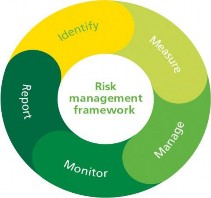
Risk management, according to the Joint Commission on the Accreditation of Healthcare Organizations, is clinical and administrative activities carried out by the Hospital to identify, evaluate and reduce the risk of injury or loss in patients, visitors, and hospital institutions.
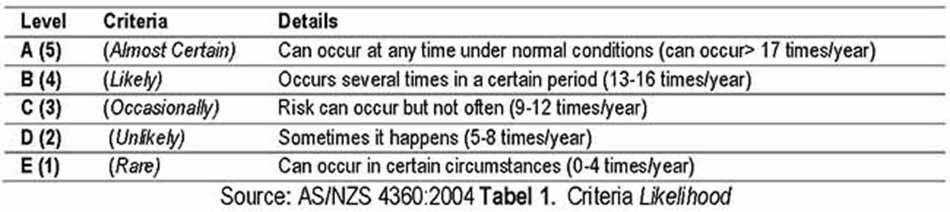
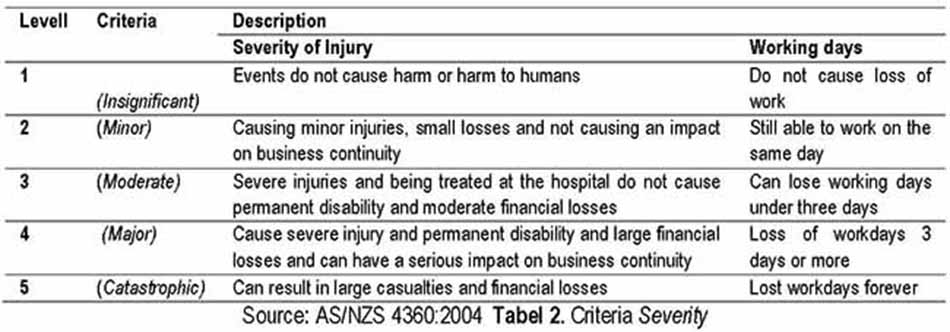
After determining the likelihood and consequences values of each hazard source, then the next is multiplying the likelihood and severity values so that the risk level will be obtained on the risk matrix which will be used to rank the source of the hazard that will be used as a reference for making recommendations for improvement. what is good in accordance with existing problems
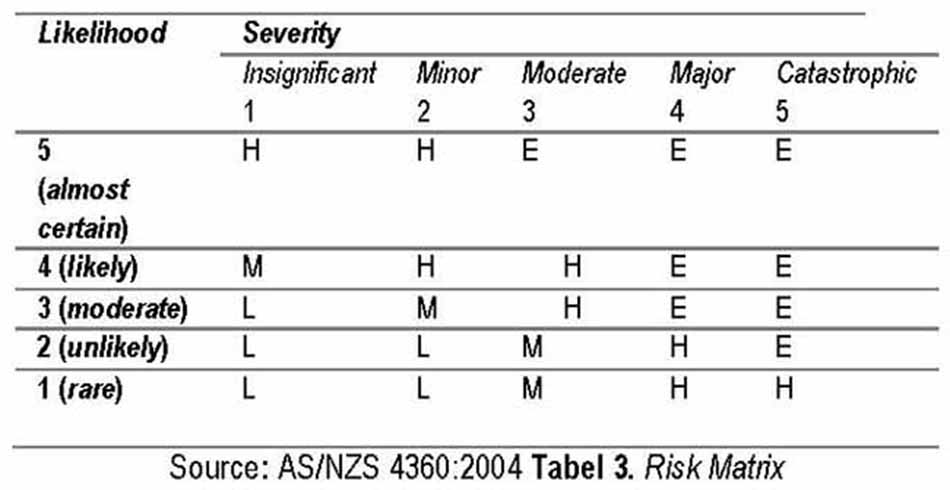
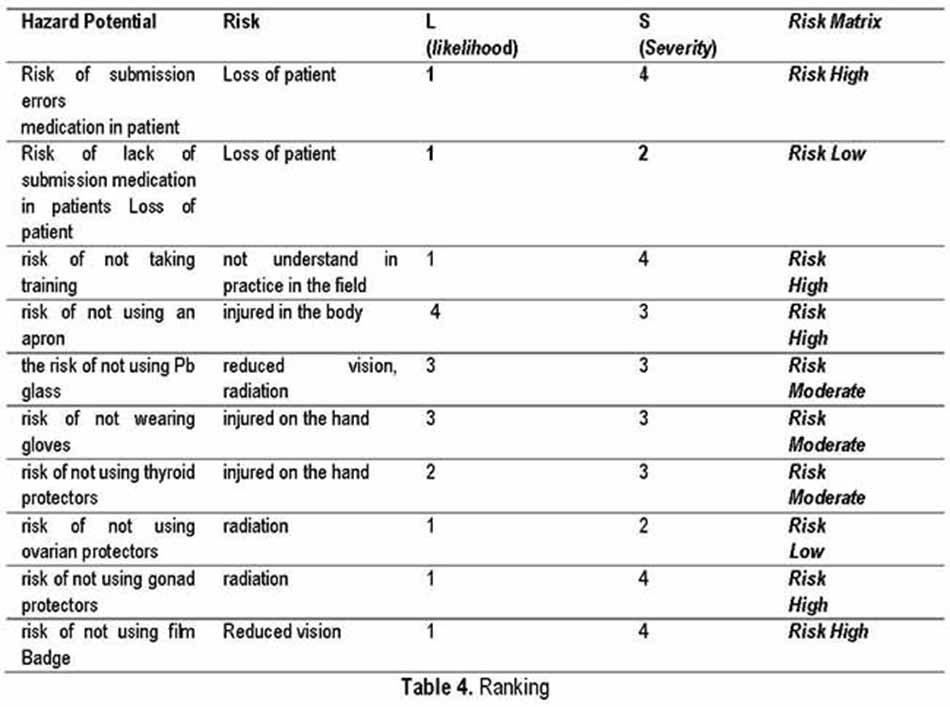
After getting the value of each hazard of each job that has been identified, then the danger is grouped according to the rating from the highest risk to the lowest risk. Figure 2 is a hazard rating classification on the working part of the plate. Based on the results of data processing, ten potential hazards and risks have been obtained from the UNISMA Hospital.
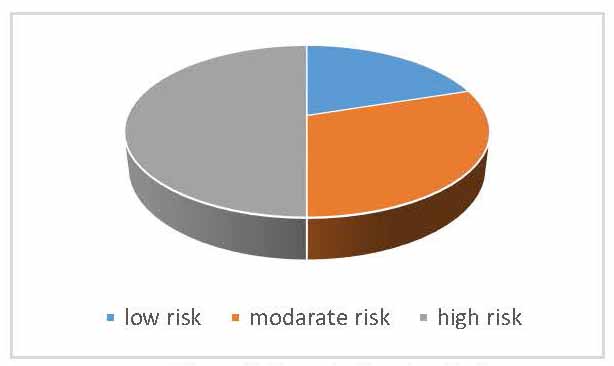
Figure 2. Hazard rating classification
RCA (Root Cause Analysis):
According to James J. Rooney and Lee N Vanden Heuvel (2004), RCA is a process designed to investigate and categorize the root causes of an event that has an impact on safety, health, environment, quality, reliability, and production. According to Anthony (2004), the implementation of RCA will improve and reduce the root causes that minimize the recurrence of failure.

Steps to minimize risk
-
Increasing the role of the hospital and management in preventing errors by developing a system that also aims to improve the quality of health services ensures that every effort, procedure, and service system carried out is safe for patients, officers, and the environment. This was presented in the form of SPO, clinical practice guidelines, clinical pathways, etc.
-
Increasing the role of RSI UNISMA staff so that they are directly or indirectly involved in health services in hospitals to be able to recognize, identify and analyze the incidence of medical errors and make adequate efforts to overcome errors that have already occurred.
-
Every staff must realize that they are part of a team that works in one system. Good teamwork.
Management Requirements
The description of the application of management requirements in the radiology installation of the UNISMA RSI Malang is: based on observations, interviews conducted by researchers at the radiology installation at UNISMA RSI Malang were obtained by management, namely the Head of Hospital as the head of the Radiology Installation Room. According to Permana, ten people responsible for radiation safety are permit holders and parties related to the implementation of a nuclear use, namely Radiation Protection Officers (PPR), and radiation workers. Permit holders must provide personnel as stated in BAPETEN Regulation No.8 Year 2011 Article 11b, following the type of X-ray aircraft used and the intended use. The permit holder in radiation safety at UNISMA RSI Malang is the UNISMA RSI itself with the Head of the Hospital as the person in charge, and the personnel who are directly involved in the implementation of the radiology are the Head of the Room / PPR. Observations were made on members, radiation protection training, radiation detection doses, and recordings available.
The results of the assessment of human resources at the UNISMA Malang Hospital have one radiology specialist according to the Decree of the Minister of Health of the Republic of Indonesia Number 1014 / MENKES / SK / XI / 2008 regarding radiological diagnostic administration standards for medical safety radiology installations at UNISMA Malang Hospital. UNISMA Malang Hospital has six people based on the decision of the Minister of Health of the Republic of Indonesia Number 1014 / MENKES / SK / XI / 2008 for radiology installations that must have two radiogenic. Observation Results Regarding radiation doses for radiation workers use Termo Luminescence Dosimeter (TLD), the results of observations about recordings/documents but for reports of accidental actions and actions taken for handling accidents have not been carried out and there are no records
Personel
Researchers analyzed radiology installations where there was 1 radiology specialist who worked in the radiology work unit of 1 person, the radiologist who served to operate the X-ray fluoroscopy aircraft, set diagnostic procedures and provide criteria for examining pregnant women, children, adults, and examinations health of patients using doses/drugs against radiation exposure. Based on the results of in-depth interviews with personnel, namely radiology specialists. The researcher analyzed that in the radiology installation, the main task of the function of the radiology specialist was to carry out contrast and fluoroscopy examinations together with the radiographer. Special examinations that require intravenous injection are carried out by a radiology specialist or another doctor/health worker who is delegated. However, there is no explanation/statement that the radiology specialist guarantees the implementation of all aspects of radiation protection to patients. Evaluating radiation accidents from a clinical point of view and this has not been in accordance with the Decree of the Minister of Health of the Republic of Indonesia Number 1014 / MENKES / SK / XI / 2008 Diagnostics in Health Service Facilities regarding the main tasks of the radiology specialist's function.
RSI UNISMA Malang has a number of radiology specialists. This is in accordance with the decision of the Minister of Republic of Indonesia Number 1014 / MENKES / SK / XI / 2008 concerning diagnostic radiology service standards in which the minimum health services of hospitals have at least 1 specialist BAPETEN (Nuclear Energy Supervisory Agency) No. 8 of 2011 which requires having specialist doctors who have competence in the field of radiology.
-
Examination and Monitoring of Facilities
The results of the study by conducting interviews, obtained facilities, and facilities at the UNISMA Malang Hospital always check regularly. The examination was carried out by re-examining the radiology unit equipped with complete protection; always using badge films every time they would do irradiation, buildings, and facilities in the radiology unit met the standards Sarfas manager always monitors activities in radiology installations, which have complete radiation protection equipment (PPE). This has been aligned and complies with the regulation of the head of the Nuclear Energy Supervisory Agency Number 8 of 2011.
-
Radiation Protection Training
UNISMA Malang Hospital has held training for workers of all six radiographers who become radiation protection officers, but the training carried out by the hospital has not run optimally and optimally because many officers still violate their work. The training function is held as additional knowledge, skill, which will be useful in implementing work safety against radiation. This condition is not in accordance with the Regulation of BAPETEN No.8 of 2011 which states that permit holders are required to conduct radiation protection training as a condition in radiation safety management systems. Radiation protection training includes material on nuclear legislation, radiation sources in the use of nuclear power, radiation biological effects, unit and amount of radiation, radiation protection and safety principles, radiation measuring instruments, emergency actions.
-
Radiation protection equipment
Researchers Analyze In carrying out radiation activities, workers are required to use personal protective equipment when the radiation exposure produced by X-ray aircraft is quite high. One of the examinations that interviewed workers using personal protective equipment was a special examination; here, radiographers were dependent on radiation sources. For this reason, the radiology unit must provide complete personal protective equipment for its workers, as one way to minimize the effects of radiation received by workers.
Personal protective equipment owned by UNISMA Hospital, namely apron, Pb type, Pb glove, Pb thyroid protector, ovarian protector, gonad protector, film badge. In the case of personal protection, the hospital must have all the equipment needed but requires treatment such as Pb glasses, Pb gloves, Pb thyroid protection, ovarian protection, gonadal protection. According to the Republic of Indonesia Government Regulation number 33 of 2007 concerning the safety of ionizing radiation and the security of radioactive sources article 31 states that the permit must provide radiation protection equipment and each worker, patient, companion patient and/or other person related to radiation must use radiation protection equipment. If each room has at least one apron, the workers working in the radiation field will not change in use, substitute workers are comfortable working and avoid radiation that can work for themselves, radiation will support the potential exploitation of each protective material. For electromagnetic radiation, the most effective material for protection is lead.
-
Monitoring of Radiation Doses
UNISMA Malang Hospital uses survey meters in radiology work units that are useful for increasing radiation, ensuring radiation on aircraft radiation, x-not or can cause radiation, to be used, increase radiation produced, and improve radiation quality. or more as a protected protection effort. Radiographers know recovery through TLD that is used by radiographers when conducting patient examinations, it is known thatvery high radiation from a radiology installation reports to hospital management for testing and finds reporting of repairs and then repairs to the room. Radiation dose monitoring for radiographers is carried out using an individual dose conversion tool and in accordance with Perka BAPETEN No. 8 of 2011.
4.CONCLUSION
- 1. A risk assessment carried out with UNISMA RSI workers produced 3 rating categories, namely low, moderate, and high. It is known that 20% of hazards are in a low category; 30 % of hazards are in the moderate category, 50% are in the high category.
- 2. Increasing the role of the hospital and management, Increasing the role of RSI UNISMA staff so that theyare directly or indirectly, and Every staff must realize that they are part of a team that works in one system.
- 3. Personnel in the work unit of UNISMA Hospital RSI have 1 (doctor) Radiology Specialist, three electro- medical staff, 1 K3 officer, six radiographers at RSI UNISMA. Radiology in UNISMA Hospital must look at factors and complement such personnel, Examination, and Monitoring of Facilities, Radiation Protection Training, Radiation protection equipment, and Monitoring of Radiation Doses
BIODATA
QOMARIYATUS SHOLIHAH: Prof. Dr. Ir. Qomariyatus Sholihah is a Professor at the Faculty of Engineering, Brawijaya University. She is an author, co-author, and journal reviewer. She has published more than 50 scientific papers and 23 books on Occupational Safety and Health. Research interests focus on the field of Occupational Safety and Health, Safety Industry, and Public Health.
WAHYUDI KUNCORO: Dr. Wahyudi Kuncoro is a Doctor at RSI Unisma Malang. He is also a Postgraduate student in the Faculty of Medicine, Universitas Brawijaya. He has published one book entitled Occupational Safety and Health.
RATIH ARDIA SARI: Ratih Ardia Sari, ST., MT is a lecturer in the Faculty of Engineering, Brawijaya University. She is an author, co-author, and journal reviewer. She has published more than 50 scientific papers. Research interests focus on the field of Logistics and Supply Chain Management, Operations Research, Project Management, and Inventory Management.
RIO PRASETYO LUKODONO: Rio Prasetyo Luikodono, ST., MT is a lecturer in the Faculty of Engineering, Brawijaya University. He is an author, co-author, and journal reviewer. He has published more than 14 scientific papers. Research interests focus on the field of Ergonomy, Work Measurement, and Experimental Design
SULUH ELMAN SWARA: Suluh Elman Swara, ST., MT is a lecturer in the Faculty of Engineering, Brawijaya University. He is an author, co-author, and journal reviewer. He has published more than 19 scientific papers. Research interests focus on the field of Maintenance.
BIBLIOGRAPHY
ABEDI, R, AND AZMA, F (2019). “Relationship between the Brand Identity with Brand Loyalty due to the Mediating Role of Perceived Value”, in: Dutch Journal of Finance and Management, 3(1), em0059.
ALAHMADI, HA (2010). Assessment of patient safety culture in Saudi Arabian hospitals. Qual Saf Health Care, 19(5), pp.e17-e17.
AUSTRALIAN/NEW ZELAND STANDARD (2004). AS/NZS 4360, Risk Managemant Standard, Australia.
AZEVEDO, F, & REIS, JL (2019). “Big Data Analysis in Supply Chain Management in Portuguese SMEs“Leader Excellence””, in: Journal of Information Systems Engineering & Management, 4(3), em0096.
BAPETEN (2011). Regulation of the Head of the Nuclear Energy Supervisory Agency Number 8 of 2011 concerning Radiation Safety in the Use of X-Ray Plane Diagnostic and Interventional Radiology. Jakarta: Nuclear Energy Supervisory Agency.
BEHZADIFAR, M, BEHZADIFAR, M, JAHANPANAH, F AND BRAGAZZI, NL (2019). “Patient safety cultureassessment in Iran using the “Hospital survey on patient safety culture” tool: A systematic review and meta- analysis”, in: Clinical Epidemiology and Global Health
CHAKRAVARTY, A, SAHU, A, BISWAS, M, CHATTERJEE, K AND RATH, S (2015). “A study of assessmentof patient safety climate in tertiary care hospitals”, in: Medical journal armed forces india, 71(2), pp.152-157.
CLASSEN, DC, RESAR, R, GRIFFIN, F, FEDERICO, F, FRANKEL, T, KIMMEL, N, WHITTINGTON, JC,FRANKEL, A, SEGER, A AND JAMES, BC (2011). “Global trigger tool shows that adverse events in hospitals may be ten times greater than previously measured”, in: Health affairs, 30(4), pp.581-589.
DEHDAR, M, SAYEGANI, L, ARBAB, E, ARZHANDEH, M, ROSHANRAY, M, RAEISI, A & KUHI, L (2019).“Role of schools in educating the active citizen”, in: UCT Journal of Social Sciences and Humanities Research, 7(02), pp.31-36.
DIAS, MAE, MARTINS, M AND NAVARRO, N (2012). “Rastreamento de resultados adversos nas internações do Sistema Único de Saúde”, in: Revista de Saúde Pública, 46, pp.719-729.
EBRAHIMZADEH, N, SARAVANI, S, SOLTANI, A AND BAZZI, M (2017). “Hospital survey on patient safety culture in Iran”, in: Journal of Pharmaceutical Sciences and Research, 9(10), pp.1765-1767.
EL-JARDALI, F, SHEIKH, F, GARCIA, NA, JAMAL, D AND ABDO, A (2014). “Patient safety culture in a large teaching hospital in Riyadh: baseline assessment, comparative analysis and opportunities for improvement”, in: BMC health services research, 14(1), p.122.
ERICKSON, SM, WOLCOTT, J, CORRIGAN, JM AND ASPDEN, P EDS (2003). Patient safety: achieving anew standard for care. National Academies Press
MOWAHED, AK, SONG, N, XINRONG, Y, & CHANGGEN, P (2020). “The Influence of Proof Understanding Strategies and Negative Self-concept on Undergraduate Afghan Students’ Achievement in Modern Algebra”, in: International Electronic Journal of Mathematics Education, 15(1), em0550
NICOLAIDES, C AND DIMOVA, AS (2016). “Assessment of patient safety climate in accident and emergency departments in Cyprus”, in: Scripta Scientifica Salutis Publicae, 1(2), pp.21-27.
NUCLEAR POWER SUPERVISORY AGENCY, HEAD OF BAPETEN REGULATION (2011). Number 8 onRadiation Safety in the Use of X-Ray Radiology Diagnostic and Interventional Radiology.
PINEM, AA, FAJRINA, HR, SHANDYADUHITA, PI, HANDAYANI, PW AND HIDAYANTO, AN (2015). Barriersfor Integration Between Hospitals and the Ministry Of Health in Indonesia. In Managing Intellectual Capital and Innovation for Sustainable and Inclusive Society: Managing Intellectual Capital and Innovation; Proceedings of the MakeLearn and TIIM Joint International Conference 2015 (pp. 807-817). ToKnowPress.
REPUBLIC OF INDONESIA MINISTRY OF HEALTH (2010). Republic of Indonesia Minister of Health Regulation Number 340. Concerning Classification of Hospitals, Jakarta.
RI (2007). Government Regulation No. 33 of 2007. Safety of Ionizing Radiation and Security of Radioactive Sources. Jakarta.
RONALD, GS (2005). “Developing and operationalizing a culture of safety”, in: Chinese Hospitals, 9(12), pp.7- 8.
SEXTON, JB, HELMREICH, RL, NEILANDS, TB, ROWAN, K, VELLA, K, BOYDEN, J, ROBERTS, PR ANDTHOMAS, EJ (2006). “The Safety Attitudes Questionnaire: psychometric properties, benchmarking data, and emerging research”, in: BMC health services research, 6(1), p.44.
SHOLIHAH, Q (2013). Dasar-dasar Keselamatan dan Kesehatan Kerja (Penerapan dan Implementasi). Jakarta: AVICENA Pustaka.
STAVRIANOPOULOS, T (2012). “The development of patient safety culture”, in: Health Science Journal, 6(2), p.201.
THAMHAIN, HJ (2014). “Assessing the effectiveness of quantitative and qualitative methods for R&D project proposal evaluations”, in: Engineering Management Journal, 26(3), pp.3-12.
THE NATIONAL SAFETY COUNCIL (NSC) (2015). Injury Facts 2015 Edition. U.S.A.
THE REPUBLIC OF INDONESIA (2009). Republic of Indonesia Law Number 44 of 2009 concerning Hospitals.