Artículos
Integration into university life among students residing in dorms
Integración en la vida universitaria entre los estudiantes que residen en dormitorios.
Integration into university life among students residing in dorms
Utopía y Praxis Latinoamericana, vol. 25, no. Esp.2, pp. 280-296, 2020
Universidad del Zulia

This work is licensed under Creative Commons Attribution-NonCommercial-ShareAlike 3.0 International.
Received: 22 March 2020
Accepted: 30 April 2020
Abstract: The aim of this study is to measure the level of integration of students residing in dorms at the University of Sharjah in the United Arab Emirates. The sample of the study comprised a total of (1215) male and female students. Student Integration into University Life questionnaire (SIULQ) were distributed to the sample of the study during the second semester of the academic year 2017-18. The results show that there are statistically significant differences in three subscales (participation in activities and events, social bonding and compatibility, and attachment) among students of different colleges in favour of students of humanities.
Keywords: Integration, UAE, university, youth..
Resumen: El objetivo de este estudio es medir el nivel de integración de los estudiantes que residen en dormitorios en la Universidad de Sharjah en los Emiratos Árabes Unidos. La muestra del estudio comprendió un total de (1215) estudiantes varones y mujeres. El cuestionario de integración estudiantil en la vida universitaria (SIULQ) se distribuyó a la muestra del estudio durante el segundo semestre del año académico 2017-18. Los resultados muestran que existen diferencias estadísticamente significativas en tres subescalas (participación en actividades y eventos, vinculación social y compatibilidad, y apego) entre estudiantes de diferentes universidades a favor de estudiantes de humanidades.
Palabras clave: EAU, integración, juventud, universidad..
INTRODUCTION
The United Arab Emirates (UAE) is a member of the Gulf Cooperation Council (GCC), which includes the Kingdom of Saudi Arabia, Oman, Bahrain, and Qatar. The GCC is in a strategic location in Asia, the Middle East, and the Arabian Gulf. It has experienced significant social, economic, and demographic changes over the last 40 years since the discovery of oil (Al Gharaibeh: 2015).
The United Nations defines youth as people aged 15–24 (United Nations Educational, Scientific andCultural Organization (Etcuban et al.: 2019). The global youth population currently stands at slightly less thanbillion in a world population of 7.3 billion. The Arab world – comprising the 22 members of the League of Arab States– has the second highest share of young people in their population, slightly less than that of sub- Saharan Africa (United Nations Development Program (Al Gharaibeh: 2017).
Investing in youth to enable them to meet their economic, political, social, educational and health needs and to fulfil their aspirations should be a strategic priority (Al Gharaibeh: 2017). Integration into university life is central to students’ personal growth and academic performance. However, at this transitional stage of their lives, students naturally face several challenges such as losing contact with old friends or becoming more independent from their families in dealing with day-to-day needs. Integration means the process of getting people of different races to live and work together instead of separately and are accepted by each other (Spencer-Oatey et al.: 2014).
Furthermore, the rapid developments and broader global exchanges in industry, communication and education that the world has recently witnessed have resulted in similarly accelerated social changes. Value systems are undergoing such transformations that both official and non-official institutions are experiencing great pressure to modify their practices to avoid a potential cultural gap. Both the family and institutions of higher education have a vital role to play in shaping the characters of young people and enhancing their capabilities. Indeed, this would in turn have a positive effect on society. Consequently, this study aims to measure the level of integration of students living in university residences at the UoS, and design plans and programmes to further the integration of these students. This study aimed to measure the level of integration into university life among dorm students at the University of Sharjah, specifically this study attempted to answer the following questions:
- 1. To what extent do students in dorms integrate into university life?
- 2. Does the level of integration among students living in dorms vary according to their year of study?
- 3. Does a student’s performance on each of the dimensions included in the Integration into University Scale vary according to which college he/she attends?
Background
The issue of integration has received a lot of scholarly attention and there are many theories dealt with this issue (Tinto’s model, behaviourism, Humanistic Psychology, and Social Theory). Tinto’s Student Integration Model (Tinto: 1987; Shahbakhsh et al.: 2019; Wichmann: 2020, pp. 823-831) highlights the significant effect of student engagement on their academic performance, retention and integration in university life. According to this model, there is a strong correlation between student learning and retention. Furthermore, student engagement with peers and tutors inside and outside lecture halls is positively correlated to their perseverance and effort. This is the result of the interconnectedness between student engagement and the quality of the efforts they exert. The model also posits two components:
Social integration mechanisms that include student communities, extracurricular activities, social integration, and engagement with lecturers and administrators.
Academic integration (participation) is an indicator of students’ high academic performance and achievement, their perception of their courses as being of value (they prepare them for the job market), and their satisfaction with their majors etc.
On the other hand, behaviourism theory proposes that adaptive and maladaptive types of behaviour are learned and acquired through the experiences that an individual undergoes. Adaptive behaviour involves experiences that indicate the right responses to life challenges, which are then reinforced. Both Watson and Skinner believed that personal adaptation could not be the result of conscious effort; rather it is a mechanical process influenced by clues and reinforcements received from the surrounding environment. However, cognitive behaviourists, such as Bandura and Mahoney, rejected the hypothesis that human nature is shaped through mechanical processes (Almutairi: 2005). This new school of psychology postulates that cognitive processes have greater influence on the formation and adjustment of human behaviour.
With regard of Humanistic Psychology Theory, Carl Rogers (2001), the prominent humanistic psychologist, claimed that incongruent, or malfunctioning, individuals express their dissatisfaction with the incongruence between their behaviour and their ideal selves. This state of incongruence can linger, if the individual supresses some of his/her emotional experiences by keeping them out of the workings of their consciousness. Consequently, these experiences become impossible to organize and embrace as part of the self. In this case, the individual finds it difficult to maintain a positive self-concept and the self is said to be ‘malfunctioning,’ which results in further stress and incongruence (Aljamo'ey: 2013; Guzmán et al.: 2018).
Proponents of social theory, such as Fraser, Dunham, Hollingshead and Redlich, suggest that there is alink between the dominant culture and patterns of adaptation. Social classes affect an individual’s adaptation. In this study, we took in our consideration these theories to deal with the integration of students in university life especially in building the questionnaire of this study.
Bennett’s concept of integration: an individual-level perspective
Milton Bennett (1986), a specialist in intercultural communication, put forward his Developmental Model of Intercultural Sensitivity (DMIS) in the mid 1980s. He asserted that people move through different phases as they become more interculturally sensitive, and that there are two broad stages: ethnocentrism and ethnorelativism. The person in this state, which Bennett refers to as integration, creates a self in the process of shifting between different cultural perspectives (Shaules: 2007). However, Berry’s structural model of “mutual adjustment” shows that integration is a process of mutual accommodation where the students and staff from the host culture have to be as open to engaging with difference and ultimately to change as the international students at that institution. (Spencer-Oatey et al.: 2014). For best understanding of integration and interaction, Contact Theory by the social psychologist, (Allport: 1954), in the 1950s, . The theory argues that generally speaking, contact has a positive effect, especially in terms of reducing intolerance.
With regard of the previous studies, the issue of student adaptation and integration received global scholarly attention because of the significant role members of the target age group play in the development of their societies. Numerous studies attempted to explore the various factors that determine the level of integration into university life whether social, academic or environmental. For example, in her study conducted in Casablanca, Morocco, Almabrook (2016) aimed to identify the strategies adopted by female students living in dorms to manage the stresses of university life. It was found that there were significant differences among students, which were attributed to the students’ college of study in favour of students of humanities in all strategies, except for positive interaction where students of science scored higher.
Other studies explored other factors that influence student integration into university life. Scientists sought to identify the academic, social and psychological challenges faced by female dorm students in Saudi Arabia. The sample of the study consisted of 227 students who had lived in the dorms for a minimum of two academic semesters. The study found that these students faced a number of social problems linked to their relationships with the social workers in the dorms, their fellow students living in the dorms and with other colleagues. They found it particularly difficult to consult their dorm mates, form strong friendships with their fellow students and rely on them in challenging situations. These students also exhibited forms of psychological stress. They missed a sense of family atmosphere in the dorms, experienced mood swings, felts anxious about the future, and tended to be socially isolated. The subjects of this study also expressed their concerns about theiracademic experience as they perceived that academic support in the dorms was lacking, text books were difficult to get, academic advising was inadequate, and that weekly homework and assignments were too many.
A study conducted in Utah Valley University in the USA highlighted the significant effects of student skill development, family and peer support, appropriate academic role models, financial support, awareness, and cultural environment on forming a student’s character and personality (Mosholder et al.: 2011). The study recommended that academic institutions and the family should be aware of the effects of these factors on students. In another study conducted in the USA, Scientists studied the relationship between self-affirmation and academic self-efficacy, and the social and psychological integration among 67 international students. They found a strong correlation (0.49) between the two groups of variables.
Other variables that determine the level of student integration into university life include personality traits such as emotional intelligence. This is because it is the type of response to daily challenges that differentiates those who are emotionally capable from those who are not. The ability to effectively deal with life challenges without losing self-confidence or emotional equilibrium is what is referred to as emotional intelligence (Alkhalaf: 2007). This has been the focus of many studies in the field. For example, a study conducted in Yemen found that freshman students at the Faculty of Education had low levels of emotional intelligence, which was positively correlated to their levels of integration into university life (Alqadi: 2012). Furthermore, failure to integrate fully into university life was found to be the main cause for students’ inability to finish their first degree (40%) and dropping out (57%) among students in American universities (Tinto: 1987; Alqadomi & Salama: 2011).
In a study that explored the effect of a number of variables related to the physical environment of student dorms on academic achievement, it was indicated that the availability of a private room, study area and a library had a positive effect on student achievement as opposed to the availability of a television. In addition, students themselves identified further positive factors as the availability of good lighting, computers and a garden (Alatoom et al.: 2001). Another factor that received wide attention was the effect of extracurricular activities on student integration. Providing children and youth with the necessary life skills to cope with and manage risks are achieved in a number of ways; for example, children can participate in recreational and sport activities to learn group interaction skills (Al Gharaibeh & Gibson: 2019).
Qamar (2008) explored the role these activities play in combating behavioural problems among secondary school students. It was found that the most effective were social, sports and scout, cultural, and art activities. Examining the link between extracurricular activities and developing a sense of social responsibility, Alkharashi (2004) conducted a field study on sample of students at King Saud University in Riyadh. He found that these activities have a significant effect on the acquisition and development of social responsibility among these students and their integration into university life. In addition, some studies highlighted the importance of engaging students in out-of-class activities and their positive effect on their university experience and academic development. For example, one study conducted in Singapore concluded that students who plan their time so that they can engage in personal activities with faculty and classmates, spend time with study groups and take initiative in their studies are the ones who benefit the most from their college experience and develop the most, academically (Jacobs: 2013).
Alshamani (2014) explored the role universities play in developing students’ personalities from the pointof view of a sample of students of the Faculty of Education, Taibah University. It was found that students with higher GPA and in higher years of study perceived that universities have a great effect on building their personalities. The researcher also recommended that more attention be paid to helping students acquire certain skills like learning English, computing skills, and communication skills. Heiba (2017) studied the causal relationship between some personal and demographic variables and integration-based confrontation, and first year students’ adaptation to university life. This study established that their self-esteem had a direct effect on the academic, emotional-personal and social adaptation of students. It also found that there were significantdifferences between male and female students in their ability to adapt on the emotional-personal, social and overall dimensions in favour of male students. There were also differences among science and arts students in academic, social and overall adaptation to university life in favour of students of the arts section.
In light of the findings of the aforementioned studies and how they highlighted the dangers of failing to integrate into university life, it is essential to design a model that identifies the different symptoms of students’ lack of integration such as volunteering, it facilitates solutions to shared challenges the world over so that students can live together in healthy and sustainable communities (Al Gharaibeh: 2010).
It has also become apparent that it is possible to counter these problems through providing students withspecially designed programmes and activities based on the findings of this study and many others in the field (Tinto: 1987; George: 1994; Mosholder et al.: 2011; Alqadi: 2012).
Shaikh and Deschamps (2006) study aims at collecting information on health and related problems of the students in university residences and to identify the solutions to ameliorate the prevailing situation. students living in university residences experience frail living conditions, being away from their homes and families, the stress of studies, a bizarre routine, and absence of readily available guidance. A qualitative study conducted in five university residences of Nancy, Metz and Strasbourg, France. The majority of students have complaints about the living conditions in the residences. They mention that they are not in sound health. Stress, depression, fatigue, insomnia, and problems with diet are common. Foreign students suffer more due to culture shock, language, and nostalgia. A tendency for suicides has been observed, especially in girls. Financial problems, too much to study, and relationship break-up are important factors. For their health problems, they generally seek advice from a peer and consume medicines without prescription. Many do not use the "students' health service" because of lack of information or difficult access from certain universities or university residences.
Spencer-Oatey et al. (2016) investigates Chinese students’ social integration into the university community; they focus on one of key risks that of student dissatisfaction (including from PRC students themselves) using a sequential mixed-method study, it addresses two research questions: (a) Chinese students’ level of satisfaction with their social integration into the university community and (b) the barriers that Chinese students’ perceive in becoming more socially integrated into the university student community. The research finds that many Chinese students are dissatisfied with their range of friendships and that they find it more challenging to socialise with students of other nationalities than other students do. They point out a number of barriers to integration, with cultural distance playing a major role, but also argue for the impact of individual factors.
Our review of the literature also reveals the importance of extracurricular activities and the proper use of free time to university students. Integration could be achieved through engaging students in non-academic activities that enable them to acquire life experiences and numerous skills and enhance their sense of wellbeing and vitality. These activities can protect students from falling into numerous problems, an aspect that has been neglected in previous studies on the subject. This study focuses on important factors such as student participation in events and activities, social environment, social bonding, and compatibility and attachment.
Significance of the study
True development occurs when educational institutes, especially universities, fulfil their role by developing the life and professional skills of their students. The creative, professional and technical skills as well as the deep sense of responsibility of these young members of society are strongly tied to the institute’s progress. Therefore, the findings of this study will be invaluable to decision makers at the University as they will inform future plans to effectively deal with any problems that this study may reveal. This will ensure that students integrate better into university (Chiknaverova et al.: 2019, pp. 10-30).
This study will also be of great significance to the Deanship of Student Affairs. The data collected for thisstudy will reflect the reality of students’ experiences in the dorms and may expose some of the negativeaspects of that experience. This is essential information that will help improve the conditions of the dorms and eradicate any problems that may hinder students’ integration into university life, and their development and growth.
METHODS
Study population
Students at the University of Sharjah represent over 207 nationalities including Emirati nationals from all the seven emirates of the country. The population of this study comprised over 3600 students from all study years and who lived in student dorms during the academic year 2016-17.
Sample of the study
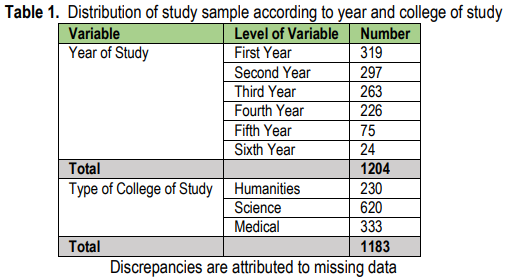
A sample of 1215 students, or 33.8% of those living in dorms, agreed to participate in this study. This is an acceptable size that enables the researchers to generalize the findings of the study. Table 1 below shows the distribution of members of the study sample according to year and college of study.
Study tools
Student Integration into University Life Questionnaire
A measurement tool was specifically designed for the purpose of data collection for this study depend on the literature review mentioned before. The researchers attempted to include a comprehensive list of items in this scale, the responses to which would answer the study questions. In addition, the long experience of the first researchers in handling student affairs informed the design of many items in this scale. The scale consists of the following five subscales:
- 1. Participation in events and activities (6 items)
- 2. Social environment (22 items)
- 3. Social bonding and compatibility (16 items)
- 4. Attachment (18 items)
- 5. Difficulties in participating (12 items)
The questionnaire uses the Likert scale to measure participant responses which were worded as follows: Completely agree = 5; Strongly agree = 4; Moderately agree = 3; Slightly agree = 2; Utterly disagree = 1
The values assigned to each response remain as shown if the questionnaire item is a positive statement, but these values are reversed in case the item is phrased as a negative statement. This is only true for the first four subscales. However, as all items in the fifth scale were phrased as negative statements, the valuereversal was not applied. Therefore, greater values indicated the presence of a higher level of difficulty to participate in activities, while lower values determined that the level of difficulty was low.
Validity and reliability of the questionnaire
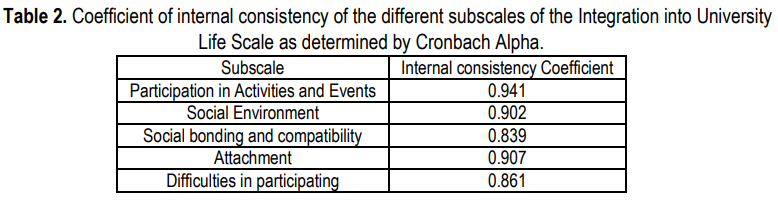
The reliability of the scale was determined by ten judges from among the faculty of education, psychology, social work and sociology. The judges recommended a number of modifications on how some of the items were phrased, which were carried out. The reliability of the scale was determined through the use of the Cronbach Alpha on a primary sample of 60 students (see table 2 below). Accordingly, the scale was found to show acceptable levels of reliability and validity for the purposes of this study.
Data collection
The questionnaire was distributed among students living in University dorms during the second semester of the academic year 2017/2018 by two research assistants especially recruited for this purpose. This lasted for two months. Potential participants were encouraged to express their views freely as their opinions matter to all decision makers. They were also informed that they did not need to write their names on the questionnaires, and that any information they provided would be confidential and used only for research purposes.
Research design and statistical analysis
This is a descriptive study that investigated a number of independent and dependent variables. Independent variables:
- Type of college of study, which was divided into three types; humanities,
- Year of study, which was divided into six years.
Dependent variables:
These included all five dimensions measured by the scale. In order to answer the research questions, we calculated averages, standard deviations, percentages and rank. In addition, we conducted T-Tests for two independent samples and One-Way ANOVA between performance averages on all four dimensions measured by the scale in relation to the type of college, GPA and year of study variables.
RESULTS
First research question
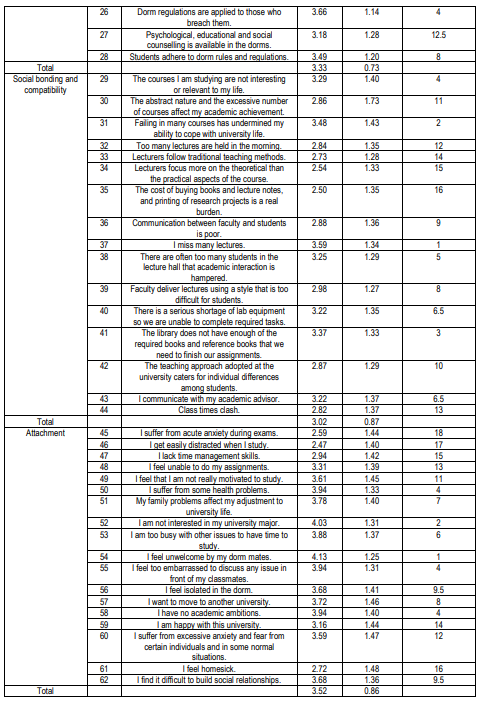
In order to answer the first research question, the average scores, standard deviation and rank of participant performance on each of all the items included in the scale were calculated (see table 3).
Table 3 shows responses to questions related to the first sub-dimension that assesses students’ participation in events and activities. Response averages ranged from 2.79 to 3.04 with an overall average of2.65. Responses to all items were below 3.0 except for item 1 that assesses student participation in cultural and entertainment activities that include poetry recitals, Global Day, UAE National Day celebrations, plays,music concerts, exhibitions and festivals. However, student responses to other items on this subscale show that they have difficulties participating in these events. This is also apparent from the low overall average score for this sub-dimension (2.79). This can be attributed to a number of factors such as the fact that students do not have enough time to participate in these events and activities, that they lack the motivation to take part, that these activities are not effectively promoted, that the activities are not announced well in advance or that these events do not meet students’ needs and expectations.
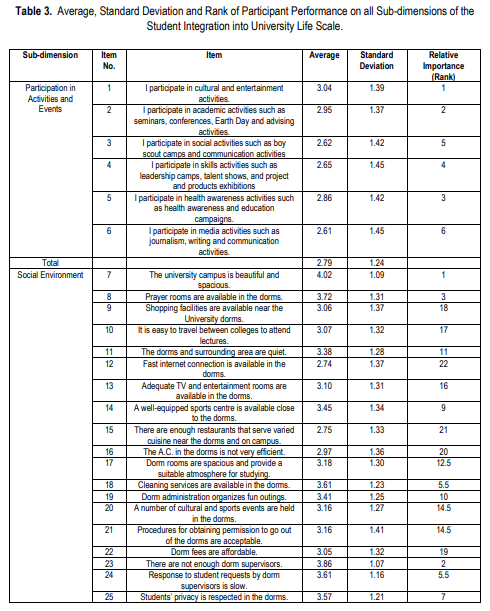
The average responses to items on the social environment sub-dimension ranged from 2.74 to 4.02 with an overall average of 3.28. Reviewing student responses to the different items on the subscale show that there are problems in three areas. First, students perceived that the internet connection available was not fast enough (average score is 2.74). This may be the case because of the large number of users and the limited capacity of the network. Second, students did not seem satisfied with number and variety of restaurants on campus (average score is 2.75). This is an expected comment as there is only one restaurant in the dorms, a fact that can be attributed to the limited number of clients a restaurant may receive in the dorms and that many students use venues located off campus. The third problem that was highlighted by the students was the poor quality of air conditioning in the dorms (average score is 2.97). This problem may be caused by lack of proper maintenance of the air conditioning system by the contracted company, which results in regular breakdown.
In contrast, the following three areas received the highest ratings on this subscale by the students: the beauty and spaciousness of the campus (average=4.02), the availability of an adequate number of dorm supervisors (average=3.86), and the availability of prayer rooms in the dorms (average=3.72).
The average overall score is 3.33. This indicates the general satisfaction of the students with this part of their university experience. However, this should not be taken to mean that other areas of the social environment of the University and dorms do not need to be improved.
Average scores on the third sub-dimension that measures students’ perceptions of the social bonding and social compatibility in the dorms ranged from 2.50 to 3.59 with an overall average score of 2.93. Five of the areas included in this dimension require special attention. Foremost is related to tuition fees and the cost of purchasing books and notebooks, and of printing student projects (average=2.50). A possible cause for this issue is a lack of competition as there is only one book supplier at the University. Next, students expressed their concern that lecturers seem to focus more on the theoretical rather than the practical aspects of the course (average=2.54). This can be explained by the fact that, in some colleges, there are still a number of faculty who devote more space to the theoretical compared to the more practical and applied components of their courses. Therefore, there seems to be a need to hold training sessions and workshops, especially by the University’s Centre for Continuing Education and Professional Development, and the Institute of Leadership in Higher Education. Related to this point is item 33 (lecturers follow traditional teaching methods) which received an average score of 2.73. The fourth area of concern was the time clashes between lectures, and student activities and events (average=2.84). This issue may exist in some colleges where study plans are not always strictly adhered to and where there is poor coordination among the colleges about the compulsory and elective courses they offer. An effective solution is to form a special committee that designs studyschedules across the University. and whose members include faculty from all current colleges. In addition, communication between faculty and students was highlighted as poor by the respondents (average=2.88). This can be attributed to the fact that some faculty do not keep to their scheduled office hours when they should meet their students and discuss their concerns.
In contrast, several areas were revealed to pose no particular problems to the students. For example, students did not seem to miss many lectures as assessed by item 37 (average=3.59). It was also found that students did not face any problems with failing courses – item 31 (average=3.48). The average score of item 41 (the library does not have enough of the required books and reference books that we need to finish our assignments) was 3.37 indicating that students did not face any problems in this area. The University library is rich with paper and virtual resources, all readily available to all students.
Overall, students found this aspect of their university experience fairly satisfactory (overall average score=3.02). This means that measures should be taken to improve on the areas that students were most concerned with and consequently enhance their academic performance and adaptation to university life.
Average scores on the fourth sub-dimension ranged between 2.59 and 4.13 with an overall average score of 3.68. Analysis of the responses to the items of this subscale reveals that students experience difficulties with three particular areas. The first was related to being easily distracted during studies (item 47) which received an average score of 2.74. Similarly, item 61 (I feel homesick) received a low average score of 2.72. This is to be expected of dorm students who live far away from family and friends. It is, therefore, recommended that there should be weekly activities that would help these students overcome their feelings of homesickness and promote their sense of attachment to the University. This should not be viewed as the sole responsibility of the Deanship for Student Affairs as colleges also need to play a role. The third area that raised concern was students’ lack of time management skills (item 47) which received an average score of2.94. This is a strong indication that students need a number of workshops on study skills and time management.
On the other hand, students seemed very content with a number of areas. Items assessing these received an average score higher than 3.0 each. The point that students showed most satisfaction with was being made to feel welcome by their dorm mates (item 54) which received an average score of 4.13. This was followed by item 52 which assesses their interest in the major they are studying which received an average score of 4.03. Students disagreed with the statement ‘I feel embarrassed to discuss any issue in front of my classmates’ as this item (no. 55) received an average score of 3.94. Item 58 received the same average score of 3.94. All of this shows that students have a strong sense of attachment to the University, which is apparent from the overall average score of this subscale which reached 3.52. However, many areas in this sub-dimension still need attention taking into consideration the great vision of the University of Sharjah to become a highly respected institute of higher education, not only locally but internationally.
Before proceeding to analyse the results of the fourth subscale, it is important to mention that responses to items on this subscale were weighted differently. Accordingly, the response ‘completely agree’ received a score of 5, while ‘completely disagree’ received a score of 1.
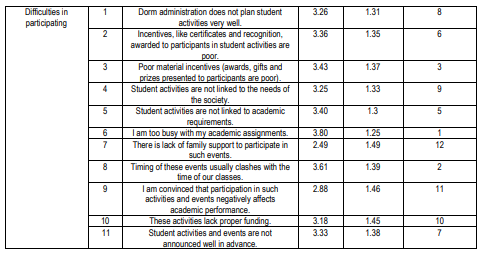
36% of the respondents confirmed that they met certain difficulties with participating in student activities. Although this might not be a significant part of the student population, this issue needs to be addressed by all academic and support staff at the University. Data collected through this questionnaire shows that there were four main reasons for this perception by the students. Being busy with assignments and course work (item 6) was quoted as the main reason (average=3.86). This was followed by time clashes between student activities and lectures (item 8) which received an average score of 3.61. The third reason cited by the students was the lack of substantial material incentives to participate in these events (item 3) which was closely followed by item 12 (procedures to participate in these activities are far too complicated and our teachers show little understanding when we miss classes because we are involved in an activity or event).
Meanwhile, a number of items scored an average lower than 3.0; for example, item 7 which relates tofamily encouragement to participate in student activities and events (average=2.49). This is understandableas these students are independent individuals especially while living in the dorms. In addition, students did not seem to agree that participation in these events would negatively affect their academic performance (item 9) which explains the relatively low average score this item received (average=2.88).
Second research question
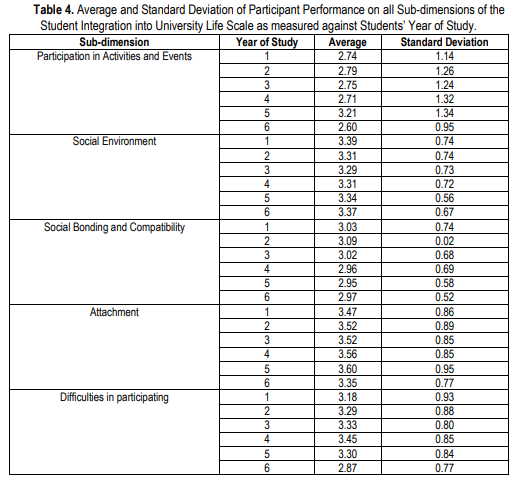
In order to answer the second research question, which addresses the issue of whether the degree of dorm students’ integration into university life varied according to their year of study, the average scores and standard deviation of participant performance on each of all the items included in the scale were calculated (see table 4).
This data reveals differences in student responses that can be attributed to their year of study. Therefore, a One-way ANOVA test was conducted to determine whether these differences are of statistical significance (see table 5 below).
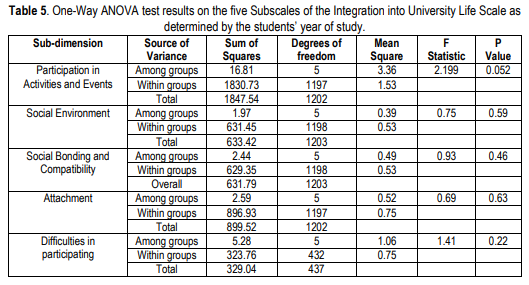
Statistical analyses using One-ANOVA reveals that there are no statistically significant differences (α=0.05) on the five sub-scales related to integration into university life that can be attributed to students’ year of study. The F-value of each of these subscales is linked with a probability of a higher level than (α=0.05). The F-values of the five sub-dimensions - participation in activities and events, social environment, social bonding and compatibility, attachment and difficulties in participating - were 2.199, 0.75, 0.93, 0.69 and 1.41 respectively.
Third research question
In order to answer the third research question, which addresses whether a student’s performance on each of the dimensions included in the Integration into University Scale varies according to which college he/she attends, average scores and standard deviations were calculated as shown in table 6.
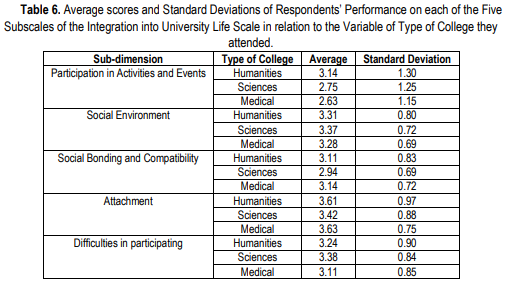
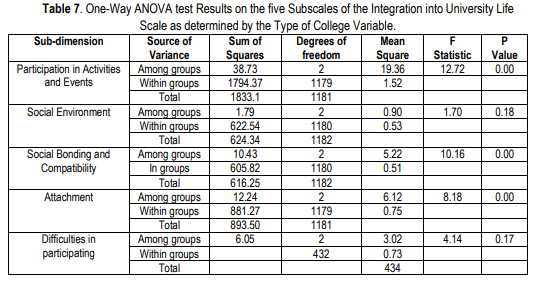
It can be observed that there are differences in the average scores between the five sub-scales related to the type of college the respondents attended. For that reason, a One-way ANOVA test was conducted to determine whether these differences are of statistical significance (see table 7).
DISCUSSION
The one-way ANOVA test reveals that there are no statistically significant differences in student responses to items included in the social environment subscale as determined by the type of college variable, where F-value was 1.70 with degrees of freedom of 2 and 11.80. These are not statistically significant values at the level (α=0.05). As for the other four sub-scales, the f-value was 12.72, 10.16, 8.18 and 4.14 for participation in activities and events, social bonding and compatibility, attachment, and difficulties in participating, respectively. These values are statistically significant at the level (α=0.05).
To determine the sources of the variances among these subscales, the Scheffe method was applied. Variance analysis revealed that there were differences in the subscale related to participation in events and activities that can be attributed to the type of college the respondents attended in favour of colleges of humanities. This might be an expected outcome as students of the sciences and medical fields are required to do more assignments and course work.
CONCLUSION
The Scheffe test results also indicated that there were statistically significant differences between responses of students of different college types in relation to social bonding and compatibility in favour of students of the humanities. This could be explained by the fact that these students may be less burdened by course work and financial demands. However, the test showed statistically significant differences in favour of medical students compared to students of the sciences.
There were also differences between students’ responses to items on the attachment subscale in favour of students of the humanities. This could be attributed to the difficulty and quantity of the course work required of these students who feel that they have no time to form and invest in social relations. The test also showed that there were differences between students of the other two types of colleges in favour of medical students.
As these students are deemed to be academically outstanding and have independently chosen their majors, it can be assumed that they find it less difficult in this area of their university lives compared to students of the sciences.
Statistically significant differences were also highlighted by the results of the Scheffe test in relation to students’ difficulties in participating in activities and events only between students of the sciences and of medical studies in favour of students of the sciences. This might be because the Medical Campus is somewhat far and separate from the other colleges.
The study explored some of the social aspects of the life of dorm students at the University of Sharjah.Social workers in dorms can assist students to build skills for equal and respectfulrelationships and peaceful conflict resolution between at all levels; whether in school or universities (Al Gharaibeh: 2016) This is a significant part of their university experience and may have a serious effect on their academic performance and progress. Therefore, we make the following recommendations:
-
Developing new students’ emotional intelligence.
-
Helping dorm students acquire skills that would enable them to cope with pressure, live in social harmony and efficiently integrate into university life.
-
Conducting advising programmes and activities, both at the beginning and during the academic year,to introduce new students to university life and raise their awareness of the potential psychological, academic and social problems they may face and how to best deal with them.
-
Utmost care should be taken to ensure the full integration of students, of all study years, into university life. Integration has a significant positive effect on students’ academic achievement and on their efficacy in their future careers.
-
The preparation of future university candidates to be better able to cope with the various aspects of university life.
-
Establish stronger communication platforms with students’ families as this has a strong impact onImportar listathese students’ integration into university and their psychological equilibrium.
BIODATA
A.F El-Mneizel: Abdalla Falah El-Mneizel is a Professor in Education, Education Department, university of Sharjah and Director of Research Institute of Humanities and Social Sciences, University of Sharjah, his research is focused on Educational Research and Applied statistics, intelligence, measurement and test development, learning and motivation.
F.A Gharaibeh: Fakir Al Gharaibeh is a Professor of Social Work and Social Policy at the University of Sharjah in the United Arab Emirates. His research is focused on social innovation, divorce, refugees, child abuse, criminal justice, Arab youth, and war and children. Al Gharaibeh is a consultant in family polices with many agencies; he has published many articles both in Jordan and internationally. He received his PhD in Social Work and Social Policy from the Dept. of Social Work and Social Policy and the Centre for Human Rights Education, Curtin University of Technology -Australia.
BIBLIOGRAPHY
AL GHARAIBEH, F & GIBSON, L (2019). “Care and rehabilitation services to child victims of abuse in the United Arab Emirates: Examples of innovation”, Children and Youth Services Review, 101, pp.87-98.
AL GHARAIBEH, F (2010). “Exploring the Link between Volunteering and Social Work in the Arab society: Jordan as a Case Study”, Social Development Issues, USA, 32(2), pp.1-14.
AL GHARAIBEH, F (2015). “The Effects of Divorce on Children: Mothers’ Perspectives in UAE”, Journal Of Divorce & Remarriage 56, pp.347-368.
AL GHARAIBEH, F (2016). “Debating the role of custom, religion and law in ‘honour’ crimes: implications for social work, Ethics and Social Welfare”, Journal Ethics and Social Welfare, 10(2), pp.1-23.
AL GHARAIBEH, F (2017). “Understanding the needs and rights of Arab Muslim youth: The case of Jordan”, International Social Work, 1, pp.1-20.
ALATOOM, A.A, ALJARAH, Y.O & ZHAIB, A.Z (2001). “The Efvoulnteeringfect of the Physical and Material Conditions of Student Dorms on their Academic Achievement: A Study of Students of King Saud University.” Journal of Educational Sciences and Islamic Studies, KSA, 2(13), pp.1-9.
ALJAMO'EY, M (2013). Adaptation to University Life. Unpublished MA Thesis. Algeria.
ALKHALAF, O.B (2007). Levels of Social and Emotional Integration among Addicts and Non-addicts in Riyadh. Unpublished MA Thesis. Naif University for Security Sciences.
ALKHARASHI, W.B (2004). The Role of Student Activities in Developing Social Responisibility. Riyadh: Saudi Arabia, King Saud University Publication.
ALLPORT, G.W (1954). The Nature of Prejudice. Reading, Massachusetts: USA, Addison-Wesley Publication
ALMABROOK, H.M (2016). “Dorm students' strategies to managing the stresses of university life.” journal of sciences and Humanities, 17, pp.1-19.
ALMUTAIRI, S (2005). Mental Health: Its Concepts and Disturbances. Kuwait, Alfalah Publishers.
ALQADI, A.M (2012). “Emotional Intelligence and Integration into University Life among Students of the Faculty of Education”, Taaz University. Arab Journal for Nurturing Distinction, 1, pp.26-80.
ALQADOMI, A & SALAMA, K (2011). “Student Integration into University Life among B.A. Students in the Palestinian Academy for Security Sciences, Jericho.” Journal of the Faculty of Education, 73, pp.263-307.
ALSHAMANI, S (2014). “The Role of University in Developing Students' Personalities.” Taibah University for Educational Sciences, 2(9), pp.247-264.
BENNETT, M.J (1986). “A developmental approach to training for intercultural sensitivity.” International Journal of Intercultural Relations, 10, pp.179–186.
CHIKNAVEROVA, K., GAZIZOVA, A., & MINGAZOVA, N. (2019). “Selection of Foreign Language Teaching Content in Russian Master of Laws (LLM) Graduate Programs” Research in Applied Linguistics, 10, pp. 10- 30.
ETCUBAN, J.O, CAMPANILLA, B.S & HORTEZA, A.D (2019). “The Use of Mathcad in the Achievement of Education Students in Teaching College Algebra in a University.” International Electronic Journal of Mathematics Education, 14(2), pp.341-351
GEORGE, K.D (1994). Students Learning outside the Classroom: Transcending Artificial Boundaries. Washington D.C.: USA, George Washington University Publication.
GUZMÁN, S, FÓSTER, P.F, RAMÍREZ-CORREA, P, GRANDÓN, E.E & ALFARO-PEREZ, J (2018).“Information Systems and their Effect on Organizational Performance: An Inquiry into Job Satisfaction and Commitment in Higher Education Institutions.” Journal of Information Systems Engineering and Management, 3(4), pp.1-6.
HEIBA, M. (2017). “Causal Relationships between Personal and Demographic Variables and Integration- Based Confrontation and First Year Students' Adaptation to University Life.” Journal of Psychological Counselling, 49, pp.1-7.
JACOBS, G. M. (2013). And, out of Class too: The Who, What, When, Where, Why and How of Students Learning together outside of Class. Singapore: James Cook University Publication.
MOSHOLDER, R, BRYAN, W & CHRIS, G (2011). “Encouraging Post-Secondary Native American Student Persistance.” Online Submission Journal, 1, pp.1-39.
QAMAR, E.T (2008). “Extracurricular Activities as means of Countering Student Disciplinary Problems (6 ed.).” Alexandria: Egypt, Modern University Publishers.
ROGERS, C.R (2001). “International Encyclopedia of the Social & Behavioral Science (1902–87), Pages 13385-13390.
SHAHBAKHSH, M, ELHAMIAN, N, SHAHRAKI POUR, H (2019). “Empowerment Relationship in Intra Organization Entrepreneurship.” Dutch Journal of Finance and Management, 3(1), pp.1-7.
SHAIKH B.T & DESCHAMPS J.P (2006). “Life in a university residence: Issues, concerns and responses.” Educ Health Journal (Abingdon). 19(1), pp.43-51.
SHAULES, J (2007). Deep Culture. The Hidden Challenges of Global Living. Clevedon, UK: Multilingual Matters.
SPENCER-OATEY, H, DAUBER, D & WILLIAMS, S (2014). Promoting Integration on Campus: Principles, Practice and Issues for Further Exploration, Warwick: England, University of Warwick Publication.
SPENCER-OATEY, H, DAUBER, D, JING, J, LIFEI, W. (2016). “Chinese students’ social integration into the university community: hearing the students’ voices.” Higher Education Journal, 74(5), pp.739-756.
TINTO, V (1987). Leaving College: Rethinking the Causes and Cures of Student Attrition. Chicago: University of Chicago Press.
WICHMANN, S (2020). “How to distinguish languages and dialects”, Computational Linguistics, 45(4), pp. 823-831.