Artículos
Effect of brand trust and commitment of a mobile wallet in Indonesia
Efecto de la confianza y compromiso de marca de una billetera móvil en Indonesia
 H.D Putra halim@polbeng.ac.id
A. Kusumawati andriani_kusuma@ub.ac.id
E.S. Astuti endangsitiastuti@gmail.com
Y. Abdillah Yusriabdillah@ub.ac.id
H.D Putra halim@polbeng.ac.id
A. Kusumawati andriani_kusuma@ub.ac.id
E.S. Astuti endangsitiastuti@gmail.com
Y. Abdillah Yusriabdillah@ub.ac.id
Effect of brand trust and commitment of a mobile wallet in Indonesia
Utopía y Praxis Latinoamericana, vol. 25, no. Esp.2, pp. 397-405, 2020
Universidad del Zulia

This work is licensed under Creative Commons Attribution-NonCommercial-ShareAlike 3.0 International.
Received: 10 March 2020
Accepted: 25 April 2020
Abstract: The objective of this document is to analyze a trust brand model within the use of mobile wallets in Indonesia in 2020. 460 people were surveyed using the machine's formula. The result of this search shows that; Brand confidence has a positive effect on brand engagement, with a significant path coefficient of 0.338, with P values of 0.002 <a significance level of 0.05. The study finding gives a new marketing idea, in understanding the reasons for the importance of the brand trust factor among the use of mobile wallet in Indonesia.
Keywords: Brand commitment, brand trust, marketing, mobile wallets..
Resumen: El objetivo de este documento es analizar un modelo de marca de confianza dentro del uso de billeteras móviles en Indonesia en 2020. 460 personas fueron encuestadas utilizando la fórmula de la máquina. El resultado de esta búsqueda muestra que; la confianza de la marca tiene un efecto positivo en el compromiso de la marca, con un coeficiente significativo de trayectoria de 0.338, con valores P de 0.002 <un nivel de significancia de 0.05. El hallazgo del estudio da una nueva idea de marketing, en la comprensión y razones de la importancia del factor confianza de la marca entre el uso de la billetera móvil en Indonesia
Palabras clave: Billeteras móviles, compromiso de marca, confianza de marca, marketing..
INTRODUCTION
Every company wants to create a long-term relationship with customers even though it is not easy because it must involve emotions or feelings such as love for the brand (brand love) and brand trust. The attitude of customers is driven by their assessment of the product Brdasrkan love of the brand for a product or service based on brand experience. Following the Theory of reasoned Action (Fournier: 1998, pp. 343-373) the individual's judgment and attitude will have an impact on behavior. According to Schmitt, (Ahmad & Ahmad: 2018, Pp44-49; Schmitt: 1999, pp. 417-419) behavior is a person's response or reaction to a stimulus (stimulation from outside), because the behavior occurs through a process of stimulus to the individual and then the individual responds. Customers respond to their attitudes by behaving, both short-term behavior in the form of purchases or long-term behavior. Nowadays mobile wallet is increasing in Indonesia.
The mobile wallet supports GNNT in Indonesia towards Industry 4.0 in technology. A mobile wallet is a technology product that provides many conveniences for customers in transactions and other forms of financial services. The development of mobile wallet in Indonesia began in 2007, t cash mobile wallet was introduced as the first e-money in Indonesia developed by Indonesian telecommunications companies, continued in 2008 with Dompetku products, in 2012 in the form of Xl Cash and mid-2012 with Cimb mobile account, in 2013 the existence of BBM money was continued by Mandiri Ecash, in 2014 with Uangku products and 2015 with Sakuku, continued in 2016 with the advent of Gopay and in 2017 a product called OVO.
The urgency of this research is as follows: Determine the main influence of brand experience influenced by brand trust and brand love, on existing mobile swallows products in Indonesia. This research will use an online survey with 420 respondents with machine formula because the number of respondents of mobile wallet users in Indonesia is unknown. The principal reason for this paper is to recommend a conceptual version that illustrates brand experience on the relationship between brand trust and brand love.
METHODS
The location of this research is all regions in Indonesia because the spread of the use of mobile wallet transactions has spread throughout Indonesia. This research was conducted by an online survey with consideration to reach all respondents in Indonesia without borders (borderless) (Aishah & Shaari: 2017a). El Naggar and Bendary (El Naggar & Bendary: 2017, pp. 16-25) state that online surveys are a tool to reach respondents borderless and also create comfort, convenience and security of respondent data. The unit of analysis in this study is the individual. This research is a sample research. The population used in this study is all mobile users in Indonesia. The characteristics of the study population are:
- 1. Respondents are Indonesian citizens who have used Mobile as a transaction tool. This is following previous research on brand experience by Huang Chin (Huang Chin: 2017, pp. 915-934) which states that to examine brand experience must look for respondents who have used the product.
- 2. Gender of the respondents in this study were men and women aged between 18 and 30 years because they tended to emphasize diversity, experience, lifestyle and brand values than at other ages (Khan & Fatma: 2017, pp. 439-452) and ages between 18- 30 years has long been the target of companies that want to grow, by maintaining company and customer relationships that involve emotions or feelings towards the brand (Aishah & Shaari: 2017b).
The population of this study is not known with certainty, sampling frames cannot be arranged at the proposal stage. The difficulty in compiling the sampling frame causes this study to not be able to use random sampling techniques. The sampling technique that can be used is a non-random sampling technique. The sample size in this study is based. The sample size in this study was determined using the formula of Machinand Campbell (1989). The use of this formula is because the study population is unknown. The formula for calculating the number of samples is as follows:
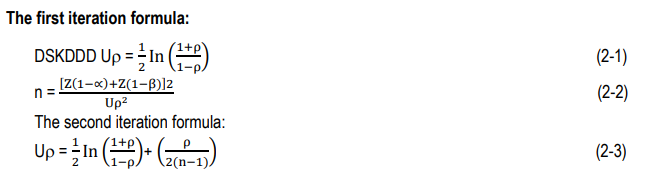
Information:
Up = standardized normal random variable corresponding to the particular value of the correlation coefficient P
Z1-α = Constants obtained from normal distribution tables with a predetermined α
Z1-β = Constants obtained from normal distribution tables with β that have been determined
P = estimated price correlation coefficient
Based on the consideration that the lowest p-value is estimated to be p = 30, then α = 0,0005 (Z1-α = 3.9205) in two-way measurements and β = 0.0025 (Z1-β = 2.8070). Based on this formula, the sample taken was 420 respondents. The calculation can be seen below:
Up = 1/2 In ((1 + 0.3) / (1-0.3)) = 0.30951960
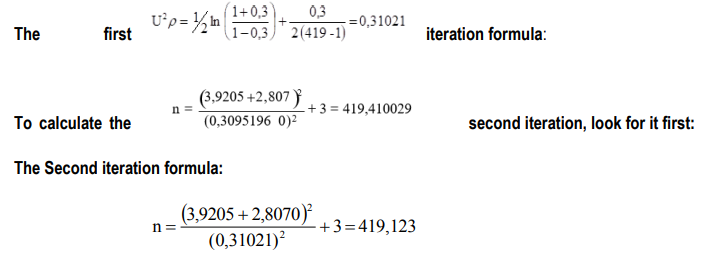
Based on the calculation of the Machin formula above, it shows that the result of the first iteration is 419.4 and the result of the second iteration is 419.1. In this study, the biggest iteration is 419.4 rounded up. So the sample of this study is 420 but this research collects 460. The sampling technique used in this study was purposive sampling, which is the method of determining samples based on certain criteria. The intended sample is following the requirements or as a source of data needed in research. Sample requirements or criteria are referring to the target population or target.
The sampling technique is done online with the stages of online sampling are as follows: 1. Entering into social media that is often used by Indonesian people such as YouTube, Facebook, WhatsApp, Instagram, LINE and Twitter, 2. Entering regional or provincial communities in social media such as buying and selling East Java, Central Java, etc. 3. Provide online questionnaire links to all of this social media4. Respondents' data collected online; over-lap data of respondents can be overcome by looking back at the identity of existing respondents. This research is survey research so the data used are primary. Primary data is the main data that can be directly explored by research respondents who analyzed in this study. Primary data in this study were obtained from respondents, namely consumers who are Mobile swallow users in Indonesia. This analysisis used to test the research hypothesis from the sample data obtained. In this research, the data analysis method used is structural equation modeling-partial least squares (SEM-PLS) using WarpPLS software.
Advertising information was used in different ways, taking into account the source capabilities of each element. Some of them were grouped (the number and nature of announcements by industry, individual producers during the entire study period). The analysis of others required the involvement of other additional sources (the correlation of the data of advertising with the real level of the socio-economic and cultural development of the region, specific information about entrepreneurs, goods and services, methods of doing business). Others were specified. The lack of concrete data for some issue was compensated by the use of extrapolation techniques in the work (for example, the correlation of the local situation with the state of affairs in capitals and other regions of Russia), logical interpolation (insertion of the logically missing link in the chain of reasoning) and intuitive conclusion.
RESULTS
This paper show that brand trust has a positive effect on Brand Commitment, with a path coefficient of0.338 and significant, with a P-Values of 0.002
DISCUSSION
The profile of the respondents is presented in table 1. Table 1 shows that the majority of the respondents are male (51.4%) state in Jakarta (19%) aged between 26–35 years (40.2%) student (37%), Income 1-2, 9 Million IDR (35%), how long have link Aja more than 3 years (26.1%), Number of transactions in 1 month 1 time (32.6%), Place often uses, commerce (10.9%) What is interesting is the use of Link Aja Product Discounts (32.6%). Most of the respondents are from Jakarta.
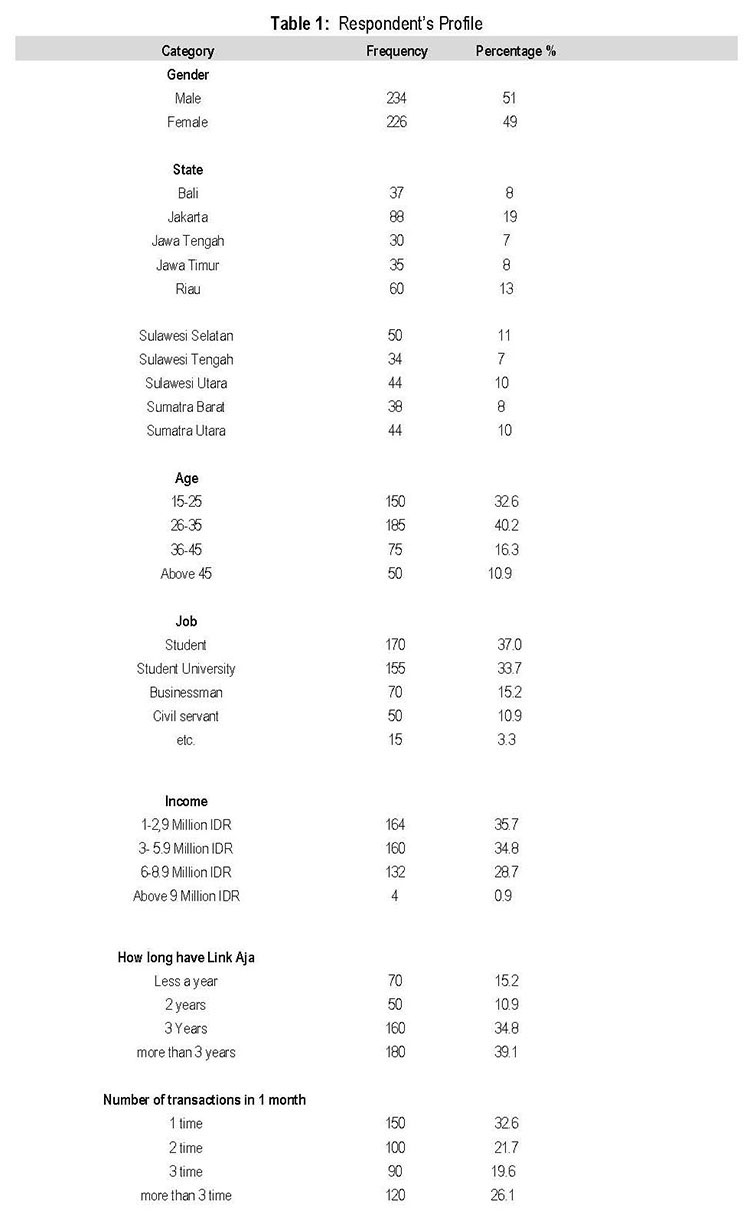
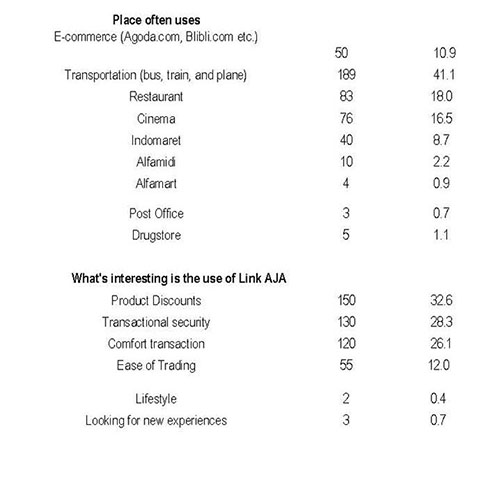
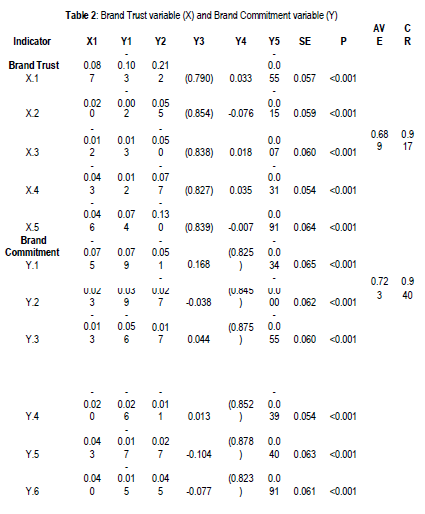
From table .1 show For the Brand Trust variable (X), the number of indicators is 5 indicators. It is known that all indicators on variable X> 0.7, which means the indicators on variable X are valid in terms of reflecting variable X.
For the Brand Commitment variable (Y), the number of indicators is 6 indicators. It is known that all indicators on the Y variable> 0.7, which means the indicators on the Y variable are valid in terms of reflecting the Y variable. Variable X1, there are 5 indicators. It is known that all indicators on variable X1> 0.7, which means the indicators on variable X1 are valid in terms of reflecting variable X1, variable Y1, the number of indicators is 6 indicators. It is known that all indicators on the variable. Y> 0.7, which means the indicators on variable Y are valid in terms of reflecting variable Y.

Brand Trust to Brand commitment
Brand Trust has a positive effect on Brand Commitment, with a path coefficient of 0.338 and significant, with a P-Values of 0.002
CONCLUSION
The objective of this study is to examine the main influence of brand trust influenced by a brand commitment to existing mobile swallow products in Indonesia. This research uses an online survey with 460 respondents with machine formula because the number of respondents of mobile wallet users in Indonesia is unknown. The findings indicate that Brand Trust has a positive effect on Brand Commitment, with a path coefficient of 0.338 and significant, with a P-Values of 0.002
ACKNOWLEDGEMENT
The work is a part lookup dissertation of the writer's dissertation for doctoral research at Brawijaya University. Last and foremost a thank you to LPDP as a funder/sponsor of this research
BIODATA
H.D PUTRA: Putra is a Student of the Administrative Sciences Doctoral Program in Universitas Brawijaya / BUDI-DN LPDP, Indonesia. From 2010 to present have Lecturers in Polytechnic Nigeria Bengalis (main employee). The research area is Administrative Sciences, Political Science, and Public Administration, and has academic studies in these areas.
E.S ASTUTI: Astuti is a Lecturer of the Faculty of Administrative Sciences Brawijaya University, Indonesia. From 1979 to present is a professor of Administrative Sciences at Brawijaya University, Indonesia (main employee). The research area is Administrative Sciences, Political Science, and Public Administration, and has many articles in these areas.
A KUSUMAWATI: Kusumawati is a Lecturer of the Faculty of Administrative Sciences Brawijaya University, Indonesia. From 2002 to present is an Associate Professor in the Business Administration Department at the University of Wollongong. 2009-03-01 to 2013-12-17 received a Doctoral degree in Business Administration at Sydney Business School.
Y ABDILLAH: Abdillah is a Lecturer of the Faculty of Administrative Sciences Brawijaya University, Indonesia. From 2003-12-08 to present is a Lecturer in Business Administration (main employment) at Ritsumeikan Asia Taiheiyo Daigaku. From 2008-09-01 to 2012-09-15 received a Ph.D. degree at Asia Pacific Studies Institute. The research area is Administrative Sciences, Political Science, and Public Administration.
BIBLIOGRAPHY
AHMAD, I., & AHMAD, S. (2018). “Multiple Skills and Medium Enterprises’ Performance in Punjab Pakistan: A Pilot Study”. Journal of Social Sciences Research, 7(2010), Pp. 44-49.
AISHAH, SN & SHAARI, H (2017a). “Antecedents of customer citizenship behavior among automobile online brand community in Malaysia”. Journal of Technology Management and Business, 4(1).
AISHAH, SN & SHAARI, H (2017b). “Customer Citizenship Behavior (CCB): the role of brand experience and brand community commitment among automobile online brand community in Malaysia”. Journal of Technology Management and Business, 4(2).
ARO, K, SUOMI, K & SARANIEMI, S (2018). “Antecedents and consequences of destination brand love—A case study from Finnish Lapland”. Tourism Management, 67, pp. 71-81.
EL NAGGAR, RAA & BENDARY, N (2017). “The Impact of Experience and Brand trust on Brand loyalty, while considering the mediating effect of brand Equity dimensions, an empirical study on mobile operator subscribers in Egypt”. The Business & Management Review, 9(2), pp. 16-25.
ERKMEN, E & HANCER, M (2015). “Linking brand commitment and brand citizenship behaviors of airline employees: “The role of trust”. Journal of Air Transport Management, 42, pp. 47-54.
FOURNIER, S (1998). “Consumers and their brands: Developing relationship theory in consumer research”. Journal of consumer research, 24(4), pp. 343-373.
HUANG CHIN, C (2017). "The impacts of brand experiences on brand loyalty: mediators of brand love and trust". Management Decision, 55(5), pp. 915-934.
KHAN, I & FATMA, M (2017). “Antecedents and outcomes of brand experience: an empirical study”. Journal of Brand Management, 24(5), pp. 439-452.
KIM, SY & YI, Y (2018). “Inter-customer helping behaviors: a virtuous cycle or unwanted intrusion?”. The Service Industries Journal, pp. 1-15.
MOORMAN, C, DESHPANDE, R & ZALTMAN, G (1993). “Factors affecting trust in market research relationships”. Journal of Marketing, 57(1), pp. 81-101.
SCHMITT, B (1999). “The concept of brand experience”. Journal of brand management, 16(7), pp. 417-419.
SETYAWAN, AA & KUSSUDIYARSANA, I (2015). “Brand trust and brand loyalty, an empirical study inIndonesia consumers”. British Journal of Marketing Studies, 4(3), 37-47.