INTRODUCTION
The relevance of the research topic is determined by abundant international contacts in the field of scientific and educational exchange. Educational contacts between countries are developing intensively and the number of students wishing to study in another country is constantly growing (Dudin et al.: 2019a; 2019b). Pre-graduate students present a special category of students since, unlike regular applicants, they already have their own scientific experience, a formed idea of the host country, and certain intercultural communication skills. Depending on the success of the cultural adaptation process, pre-graduate students subsequently make an important decision of either entering a graduate school or leaving for home. The issue of cultural adaptation of this category of students in Russian universities is, therefore, particularly relevant (Nabivacheva: 2006; Vadutova et al.: 2010).
The historiography of the issue is quite extensive. Russian scientists mainly covered the problem of foreign student adaptation from a didactic point of view. We should especially note works by A.E. Askarova, R.A. Khozhamkul, and G.M. Kurmanova (2017), O.A. Beregova, S.S. Lopatina, and N.V. Oturgasheva (2019), and L.A. Apanasyuk (2017) devoted to the general problems of student adaptation to the learning conditions in foreign universities. An article by O.A. Vakhrameeva (2016) presents the assessment and prognosis of foreign student adaptation to the learning conditions in Russian universities.
The problem of cultural adaptation is also studied at the international level. Theoretically significant studies in this area of knowledge include works by Ming Li (2011), R. Alba and V. Nee (1997), and W. Chen (2010). These articles examine both the general theory of cultural adaptation (Alba, Nee: 1997) and the effect of cultural shock, examined, in particular, by J. Bennet (1997). The significance of the study of issues related to cultural adaptation is supported by a variety of works devoted to social and cultural adaptation in a multicultural environment (Lee: 2018). In the context of the latest foreign historiography, it is necessary to highlight works by E.S. Beech (2018) where cultural adaptation of foreign students is examined in the context of the general transformation of national higher education systems under the influence of globalization processes. In the research by American practicing teachers, especially in studies by S. Rahming (2019) and Zh. Luo (2019), special attention is paid to social support and the stressful cultural experience of foreign students in American universities. Despite the vast historiography and international significance of the issue, no empirical work has yet been carried out to identify the relationship between the difficulties in perceiving cultural information and the cultural adaptation of foreign students.
The scientific novelty of the study is determined by the fact that no empirical work has been conducted with pre-graduate students in Russian or foreign practice in order to identify the difficulties in perceiving cultural information when learning a foreign language, which directly impacts the potential for developing intercultural communicative competence.
The purpose of the study is affected by the relevance of its problem and is to identify the main problems of cultural adaptation of foreign pre-graduate students in Russian universities.
METHODOLOGY
In accordance with the main objective of the research, its task was to conduct an empirical study in two groups of foreign pre-graduate students of the People’s Friendship University of Russia (RUDN University).
The research methodology included general scientific methods (analysis, synthesis, deduction, induction) and special scientific methods of interdisciplinary nature: sociological survey, statistical data analysis, and content analysis of research literature on the topic of the study.
The main research method was complex and based on intercultural adaptation theory by Y.S. Kim and constructivist approach to the analysis of empirically obtained data.
Kim’s theory (2001, 2012) is based on an open systems perspective and examines cross-cultural adaptation not as a special analytical unit (or variable) but as the whole integrity of the evolutionary process that an individual experiences in relation to a new and unfamiliar environment. Understanding adaptation as the intersection of an individual and the environment, Kim defines cross-cultural adaptation as “the entirety of the phenomenon of individuals who, on relocating to an unfamiliar sociocultural environment, strive to establish and maintain a relatively stable, reciprocal, and functional relationship with the environment” (Kim: 2012, p. 33).
Based on the systemic conception of intercultural adaptation, the study addresses two main issues:
What is the fundamental nature of the adaptation process that individual settlers undergo over time?
- 1.
Why are some pre-graduates more successful than others in achieving a certain level of adaptation to the host environment?
The first question is examined in the form of a process model presenting a three-way psychological dynamic that Kim calls the dynamic of the “stress-adaptation-growth” triad, an “upward movement” increasing the chances of successfully satisfying one’s needs in a new cultural environment. The “stress-adaptation- growth” triad dynamic is viewed not as a smooth linear progression but in the form of a dialectic, cyclic, and continuous pattern (Kim: 2001). According to Kim’s theory, the dynamic stress-adaptational disequilibrium is followed by the stage of increased growth of the process of adaptation.
The second question “Why do some pre-graduates adapt more successfully than others?” is examined via a structural model. The structure is based on the dimension of personal communication or competence in communicating with representatives of another sociocultural environment, which is defined as cognitive, affective, and operational ability to communicate in accordance with the symbols and value systems of the new culture (Croucher: 2011).
From the point of studying cultural adaptation of foreign pre-graduate students further development of the process of adaptation is affected by the individual’s predisposition consisting of readiness for a new environment, proximity (or remoteness) of the individual’s ethnicity to their ethnic origin, and adaptive personal attributes of openness, strength, and positivity (Kryukova et al.: 2019; Otpenov et al.: 2019). All the aforementioned factors directly or indirectly contribute to the explanation and prediction of differences in the level of intercultural adaptation in foreign pre-graduates.
According to Kim’s theory, three key aspects of intercultural transformation can be identified in sociocultural adaptation research: increased functional fitness, psychological health, and the emergence of a new identity orientation that transcends one single culture. The level of intercultural transformation, in turn, helps to explain and predict the levels of other dimensions. Six dimensions compose an interactive functional model, in which all relationships indicate mutual incentives (rather than unidirectional causes) (Croucher: 2011, p. 33).
Based on Kim’s theory, in the present research, foreign pre-graduate students’ adaptation to the sociocultural environment of Russian universities is viewed as the recognition of cultural differences and the decrease in the psychological barrier between the student’s culture and the culture of the host country.
The second methodologically significant conception of intercultural adaptation is theory of acculturation and cultural shock. The scientific interest in acculturation can be traced to the 1930s. Acculturation covers phenomena that arise when groups of people of different cultures come in direct contact with subsequent changes in the original culture models of one or both groups (Kim: 2012, p. 101).
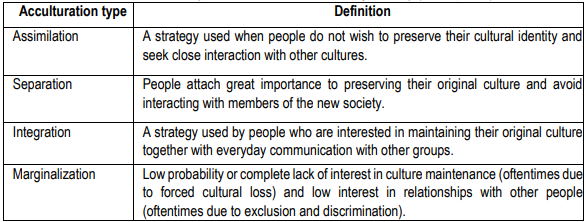
Due to the simplified approach and greater relevance to the research topic, our study implements the conception of acculturation proposed by J. Berry (1992; Sam, Berry: 2010). The author distinguishes four types of acculturation: integration, assimilation, separation, and marginalization. Each of these terms is defined in table 1. Berry also highlights the need to account for two major acculturation problems in empirical studies: maintaining cultural identity and building relationships with representatives of other cultures.
Table 1. Four types of acculturation according to Berry (1992, p. 476)
A range of factors is associated with the relationship between acculturation and stress:
-
the nature of society as a whole;
-
type of the group in question;
-
modes of acculturation;
-
demographic and social characteristics of the individual;
-
psychological characteristics of the individual (Rahming: 2019, p. 24).
For example, an individual’s cultural stress can be reduced by the following: a multicultural hosting society, higher perceived status of the individual (for example, on ethnic or professional grounds), open-mindedness, and self-confidence (Bystray et al.: 2019).
The research hypothesis is based on the following assumptions:
- 1.
Foreign pre-graduate students have innate self-organization and the ability to adapt to environmental changes.
- 2.
Adaptation of the pre-graduate student’s personality to a certain cultural environment occurs in the process of communication.
- 3.
Adaptation of the pre-graduate student’s personality is implemented in a qualitative transformation of the personality.
Kim’s conception has been tested in numerous foreign empirical studies. In particular, in the study conducted in 2010, W. Chen (2010) examined the relationship between intercultural communication competence and the international adaptation of students. The study involved conducting interviews with 101 foreign students with questions aimed at measuring affective and behavioral (or operational, as defined by Kim) aspects of intercultural communicative competence and its effect on intercultural adaptation (Kim: 2001, p.34).
The present research used semi-structured interviews combined with the critical incident technique (CIT) for studying the way foreign pre-graduate students go through the process of sociocultural adaptation. This section describes all aspects of research design, including the method, the CIT, and data analysis and interpretation.
The CIT includes five major stages:
- 1.
Definition of the general goals of the studied activity;
- 2.
Compilation of a plan and specification;
- 3.
Data collection;
- 4.
Data analysis;
- 5.
Interpretation of the data and the formulation of the results of the experiment.
The sample of the experiment included 24 foreign pre-graduate students preparing to receive their master’s degree at the RUDN University.
The study used a target sample common for high-quality research – a sample of 50 pre-graduates.
All participants met the following criteria. They were foreign students who:
1) enrolled in a full-time magister degree program, 2) were not native Russian language speakers, and 3) studied in Russia for the first time.
Current data shows that the five leading countries of origin for the international students studying at the RUDN University are China, United Arab Emirates, Afghanistan, Saudi Arabia, and Germany. Although it was expected that students from these countries would be widely represented in the sample, participants from any other country could be included in the study if they met the established criteria for the experiment. The study relevance principle includes the types of critical incidents and the nature of critical behavior that are relevant to the study and, therefore, deserve to be recorded.
The participants were recruited on a voluntary basis from April 1 to April 30, 2019, according to the international lists of pre-graduate students of the international faculty of the RUDN University.
The main research method was interview. An interview protocol was developed using the CIT and wasthus organized around a participant describing a specific incident. A critical incident, however, was not the main goal of data collection but a tool that helped to understand the participants’ views on the sociocultural environment of the university, which was new for them.
Data analysis using the CIT included the identification and classification of critical incidents and the identification of critical behavior associated with them. The analysis was mostly conducted using coding. Interviews were recorded on audio and transcribed and transcriptions were then encoded. To encode the collected data in the study, Atlas.ti software package for qualitative analysis (data management and analysis) was used to encode the data collected in the study. The first cycle of analysis included attribute coding and structural coding. Attribute coding was used to record important information on the data and demographic characteristics of participants for future management and use. The goal of this initial step was to organize and manage the data. Structural coding allowed identifying large segments of texts in their relation to a wide thematic context, the codes of which correspond to the research questions in the interview.
In the present study, interview questions corresponded largely to the research questions and structural codes were easy to apply to the participants’ answers.
The final codebook was divided into four main code categories related to the four thematic blocks ofinterview questions:
- 1.
Intercultural adaptation theory (for example, stress, adaptation, and growth);
- 2.
Cultural problems (for example, language-related problems and living in Russia);
- 3.
Academic work (for example, studying something new, research issues);
- 4.
Academic honesty (for example, plagiarism, academic honesty rules).
RESULTS
Most research participants had been in Russia for less than 18 months. One of the first interview questions concerned the reason respondents decided to study in Russia. 45% of the students responded that they came to Russia to get a master's degree because of the high quality of affordable education. The RUDN University was described by 57% of pre-graduates as “higher school”, “first-class”, “prestigious”, and having a “high reputation”. The international faculty was rated the best for clearer reasons, usually for specific programs, by 97% of the respondents. At the same time, 100% of the participants recognized that the quality of education in their countries did not meet their expectations. Out of 24 respondents, 87% expressed a desire to stay forpostgraduate programs at the RUDN University. The people with whom the participants began to interact at the university during their stay in Russia were praised by 25% of the students. The student environment was rated by 99% of the respondents as tolerant of their national culture. The respondents also appreciated the teaching staff, describing it as “very friendly and accessible for academic communication”. Learning new subjects and personal development, as well as the accompanying sense of accomplishment, were reported as the best part of their experience at the RUDN University by 20% of the research participants. The complete range of results is shown in fig. 1.
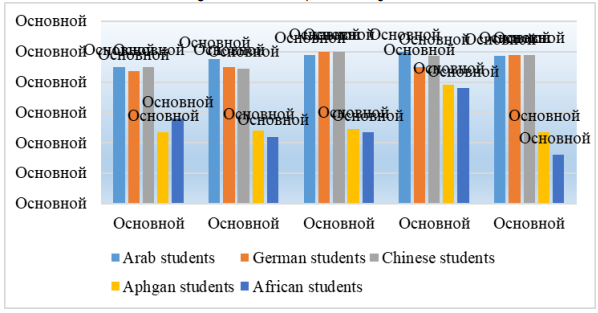 Figure 1. The CIT respondent ratings
Criteria:
- 1.
Assessment of cultural climate at the RUDN University;
- 2.
Assessment of student tolerance at the RUDN University;
- 3.
Assessment of the quality of communication with the teaching staff;
- 4.
Assessment of the satisfaction with the quality of education at the RUDN University;
- 5.
Assessment of the overall cultural climate in Russia.
DISCUSSION
The obtained data provide evidence of the following tendencies in the group of the respondents. The assessment of the general cultural climate in Russia and the tolerance of the RUDN University students was the lowest among the pre-graduates from Africa and Afghanistan, which is explained by the stress and pressure of the host culture. Europeans and representatives of the Arab Emirates did not experience such difficulties or did so to a much lesser extent. It is difficult to verify the ratings of pre-graduate students from China due to the pressure of their own culture and its concepts of politeness and ethics in relation to the host society. Possibly, the Chinese students provided high ratings not only on the basis of their objective experience but also partially because of their cultural norms of behavior based on respect for the entire world around them. This fact requires a more detailed study among the Chinese pre-graduates of the RUDN University.
Three problems were identified by the respondents as stress factors: 1. Language barrier; 2. Difficultiesin understanding the rules of foreign cultural etiquette; 3. Need for greater psychological support in the new socio-cultural environment.
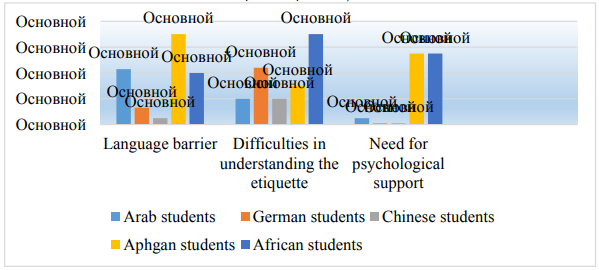 Figure 2. Factors of stress in studying at the RUDN University based on the analysis of THE CIT data (% of the sample of respondents)
The greatest level of stress was experienced by pre-graduate students from Afganistan and Africa. Most respondents from this category needed additional psychological support in the process of cultural adaptation. However, in general, we can conclude that the process of cultural adaptation in the university environment of RUDN University in the examined group of 24 respondents proceeded adequately. Nevertheless, it should be mentioned that respondent ratings of criteria were also related to their native culture, ideas about ethics, everyday culture, and strategies of interpersonal communication accepted in the native cultural environment.
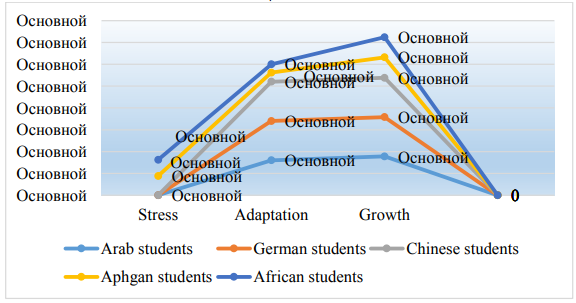 Figure 3. Summarized assessment of the “stress-adaptation-growth” dynamic based on the interview of 24 respondents
The data presented on the summary graph allow us to conclude that the students from Afghanistan experienced the highest level of stress in the new cultural environment. The African students experienced stress to a lesser extent while the pre-graduates from Germany, the UAE, and China showed almost no stress. Such data distribution can only be interpreted when considering the cultural characteristics of each respondent category. The greatest pressure of the host culture was experienced by the group of Afghan students, whosefactors require a separate study. The same respondent groups showed the lowest levels of adaptation and growth. The greatest adaptability and positive growth dynamic in new socio-cultural conditions were demonstrated by the respondents from the UAE, Germany, and China.
Mesures of additional psychological support for the group of the respondents demonstrating low levels of adaptation can be proposed as a recommendation.
CONCLUSIONS
The present qualitative research is devoted to the study of how foreign students of the RUDN University master’s program overcome the difficulties of sociocultural adaptation. The results were analyzed and interpreted through the prism of intercultural adaptation theory by Kim, particularly through the “stress- adaptation-growth” dynamics. The research used the CIT and semi-structured interviews to study the cultural adaptation processes in foreign pre-graduates studying at the RUDN University.
It is unlikely that the number of foreign pre-graduates studying at the RUDN University will begin to declinein the near future. The study allows us to provide better support for foreign pre-graduate students on the basis of identified assessments and indicators of adaptation not only in a single group but within the university as a whole. The internationalization of higher education continues and the importance of intercultural competence is growing for students, teachers, and staff alike. The more effective cultural adaptation support foreign pre- graduate students receive at the Russian universities, the better they will be able to adapt and successfully interact with teachers, peers, and colleagues.
BIODATA
Natalia NOVOSELOVA: Senior teacher of the Russian language department of the People’s Friendship University of Russia. Participates in international, university and national conferences. Scientific interests: International Relations, Arts and Humanities.
Veronika BONDAREVA: Senior teacher of the Russian language department of the People’s Friendship University of Russia. Phonetics, methods of teaching Russian as a foreign language. Scientific interests: International Relations, Arts and Humanities.
Anna SEMANINA: Department of Russian Language of People’s Friendship University of Russia. Scientific interests: history of art, preschool education.
Alexander CHISTYAKOV: Candidate of Philology of the People´s Friendship University of Russia. Scientific interests: International Relations, Arts and Humanities.
Alexandra ZETKINA: Peoples Friendship University of Russia. Scientific interests: history of art, preschool education.
 Natalia NOVOSELOVA nv.novoselova@bk.ru
