Artículos
Sustainability Risk Mitigation in Food Industry under Public-Private Partnership
Mitigación del riesgo de sostenibilidad en la industria alimentaria en asociación público-privada
 Igor Leonidovich VOROTNIKOV vorotnikov.i.l@mail.ru
Konstantin Pavlovich KOLOTYRIN kpk75@mail.ru
Alexander Valeryevich ROMANOV alexander.romanov1984@yandex.ru
Alexander Vyacheslavovich NAYANOV nayanovav@yandex.ru
Magomet Shaikhovich GUTUEV gutuev05@mail.ru
Igor Leonidovich VOROTNIKOV vorotnikov.i.l@mail.ru
Konstantin Pavlovich KOLOTYRIN kpk75@mail.ru
Alexander Valeryevich ROMANOV alexander.romanov1984@yandex.ru
Alexander Vyacheslavovich NAYANOV nayanovav@yandex.ru
Magomet Shaikhovich GUTUEV gutuev05@mail.ru
Sustainability Risk Mitigation in Food Industry under Public-Private Partnership
Utopía y Praxis Latinoamericana, vol. 25, no. Esp.5, pp. 328-337, 2020
Universidad del Zulia
Received: 28 September 2019
Accepted: 25 October 2019
Abstract: This paper addresses the aspects of facilitating sustainable development in the food and processing industry of the agroindustrial complex based on risk mitigation using project implementation under the terms of public-private partnership. Risk mitigation in the food and processing industry of the agroindustrial complex might be based on public-private partnership as a method enabling efficient operation in this direction based on risk redistribution between the actors depending on the optimum potential in managing such risks. Public-private partnership may be developed via a variety of instruments such as concessions, delegated management.
Keywords: Risks, concession, delegation, safety..
Resumen: Este documento aborda los aspectos de facilitar el desarrollo sostenible en la industria alimentaria y de procesamiento del complejo agroindustrial basado en la mitigación de riesgos utilizando la implementación del proyecto bajo los términos de la asociación público-privada. La mitigación de riesgos en la industria alimentaria y de procesamiento del complejo agroindustrial podría basarse en una asociación público- privada como un método que permita una operación eficiente en esta dirección basada en la redistribución del riesgo entre los actores dependiendo del potencial óptimo en la gestión de dichos riesgos. La asociación público-privada puede desarrollarse a través de una variedad de instrumentos tales como concesiones y gestión delegada.
Palabras clave: Riesgos, concesión, delegación, seguridad..
INTRODUCTION
Agriculture is a destroyer of the environment as much as other sectors, such as industry, transport, etc.
The adverse environmental footprint is caused by the processing industries of the agroindustrial complex and results particularly in water, land and air pollution (Lazareva, Kostryakova: 2017; Myers: 2017).
Development of the processing industry, its transition to a new innovation-driven paradigm and constant production capacity buildup necessitates the introduction of tools to reduce risks.
The Declaration adopted in 1992 at the UN Conference on Environment and Development states that the right to development must be fulfilled to equitably meet developmental and environmental needs of present and future generations through bringing down the environmental footprint (Lazareva, Kostryakova: 2017).
One of the 17 sustainable development goals refers to responsible consumption and production (Pimentel et al.: 2004). In particular, this principle concerns responsible production, because much of what is produced frequently ends up at landfills given the insufficient recycling levels.
Many problems in the food and processing industry of the agroindustrial complex are associated with facility upgrades, which results in high energy expenditure. This cuts down the processing degrees of commodities, slows down the transition to the resource-efficient production paradigm in the food and processing industry, increases the environmental footprint and complicates entry to foreign markets.
Sustainability trends in the food and processing industry have a long way to go in terms of energy costs. Specifically, unit costs in the output of the food and processing industry come in at 3.1% at least. Meanwhile, the same figure is 1.7% in developed economies, 2.5% in developing emerging economies and 1.9% in the BRICS (Ivanov: 2015).
The economic sustainability profile of the agroindustrial food and processing industry is outlined below(Table 1) (Test Firm: n.d.).
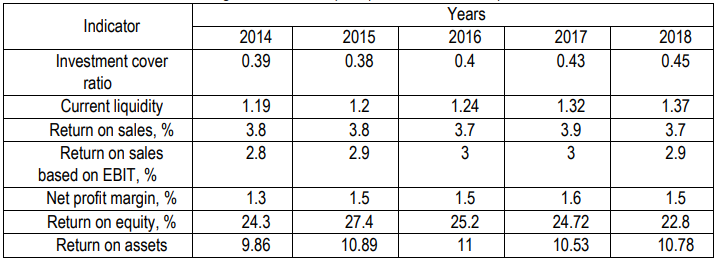
Adherence to sustainability principles in the food and processing industry of the agroindustrial complex would require the adoption of new technological solutions, including bio- and nanotechnologies, which would help to boost considerably the output of new generation of products with set quality characteristics (Tilman et al.: 2002).
Other conditions for maintaining the principles of sustainable development of the food and processing industry of the agroindustrial complex are concerned with increasing the degree of processing, which would eventually raise product yields per unit of input commodities.
METHODOLOGY
Considering the modern development strategies of the food and processing industry of the agroindustrial complex, there are two potential directions for the sector taking into account the concept of sustainable development:
- the transition of the food and processing industry to the resource-efficient paradigm, including theadoption of zero-waste technologies and bringing down emission levels;
- using nano- and biotechnologies across the stages of technological cycles of processing of different types of resources;
- maximum degrees of processing of agricultural products based on innovation technologies.
Major environmental problems in the processing industry of the agroindustrial complex relate to waste polluting land resources and causing disruption to the sanitary and epidemiological situation. At least 40 million tons of by-products and waste is generated annually by processing enterprises of the agroindustrial complex. According to a study, at least 93% of the total amount of secondary resources, or 32 million tons, could be recycled. Subsequently, efficient recycling would help to produce more than 130 products in various industries and sectors.
In most cases, the food and processing industry provide recyclable resources to be used by both the forage industry and animal breeding. At least 70% of the total amount of the secondary resources is used for animal feeding, about 20% flows to recycling and 7% is not used at all and is usually buried at landfills.
The biggest suppliers of hazardous waste are meat-processing enterprises.
If contaminated wastewaters flow into open water reservoirs, it impacts the oxygen regimen, which considerably reduces the fish stock. In most cases, such contamination is associated with sugar, meat and starch industries. The biggest components of contamination are nitrates, fats, sulphates, chlorides, etc. This state of things is due to the lack of modern cleaning equipment and the problems of technological compliance (Kamilov et al.: 2017).
Problems resulting from poor technical capabilities of many agricultural processing enterprises and poor infrastructure for storage and transportation of materials creates obstacles for complex processing, which leads to losses of resources, impairs product safety and quality and increases the adverse environmental footprint (Potravnyi et al.: 2017).
Figure 1 outlines the conceptual scheme for arranging the transition of the food and processing industry of the agroindustrial complex.
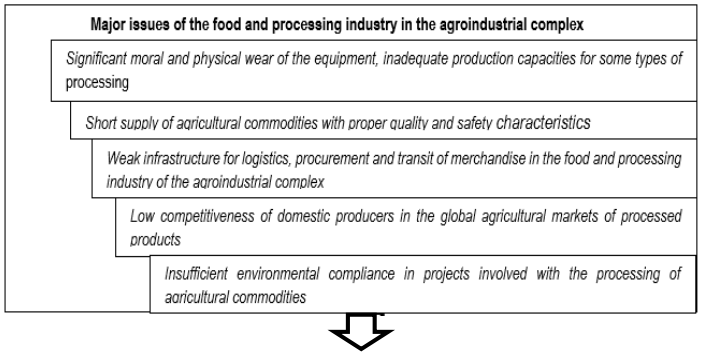
Figure 1. Conceptual scheme of food and processing industry development accommodating sustainability requirements
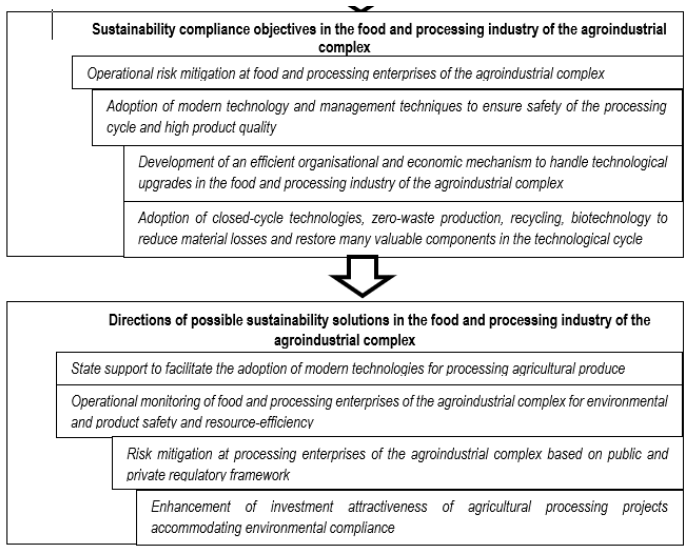
Addressing the above issues in the transition to sustainability in the food and processing industry of the agroindustrial complex involves determining the qualitative characteristics of potential risks to ensure mitigate and efficiently manage them (Melnik et al.: 2007; Vorotnikov et al.: 2014).
Figure 2 shows the potential operational risks of the food and processing industry of the agroindustrial complex.
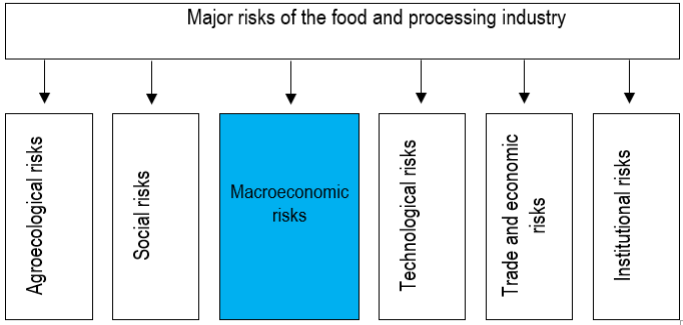
Figure 2. Major types of risks in the food and processing industry
The food and processing industries are specifically influenced by agroecological risks. This type of risks primarily reflects the poor quality of commodity supplies acquired by enterprises due to unfavourable natural and climate conditions and all kinds of emergencies in agriculture (Nemenushchaya et al.: 2019)]. This group of risks includes risks of diseases and epidemics in agriculture. Adverse effects caused by this type of risks include lower production volumes leading eventually to food deficits in the internal market, declines in exports and consequently higher imports of food (Savon et al.: 2019; Gasho, Stepanova: 2017).
Macroeconomic risks make an equally important group affecting on a major scale the food and processing industry. This type of risks is associated with the growth rates of the national economy, economic stability, personal incomes, customs regulations, etc.
Macroeconomic risks are also associated with the liberalisation of external economic activities, protectionist measures and state support of agriculture.
Trade and economic risks arise in connection with the liberalisation of external economic ties and intensifying protectionist policies in foreign countries, including state support of agriculture, customs tariff controls, etc.
Trade risks are also connected with imports from foreign countries. E. g., global food prices show a steady trend to the upside, which would eventually lead to higher costs of imports per unit and rising prices of imports in the national food markets.
Currency risks are also relevant for the food and processing industry, as they result in lower investment and subsequently slower rates of equipment upgrades.
Another important risk for food and processing enterprises is the social risk associated with growing food prices, declining purchasing power and social divergence.
In this case, risk mitigation measures may involve various forms of support for processing enterprises to ensure stable production and optimisation of merchandise flows, which would bring down the costs of production processes and improve product competitiveness.
One of the most immediate risks for processing enterprises of the agroindustrial complex is the technological risk arising from the need to deploy modern equipment and upgrade existing facilities to accommodate innovative processing techniques for agricultural products (Golovina, Parakhina: 2013). A particular concern comes with the need to acquire foreign equipment, which is not always economically efficient given the currency fluctuations and the prospect of sanctions (Melnik et al.: 2007).
To ease this type of risk for the food and processing industry of the agroindustrial complex, high-tech equipment should be produced locally. This would certainly require funding for R&D in innovation-related and energy efficiency directions in the agroindustrial complex (Vorotnikov et al.: 2017).
Food and processing enterprises of the agroindustrial complex face institutional risks, which may be a result of inadequate statutory support in their operation and insufficient harmonisation of applicable laws with the rest of the regulatory framework.
Another significant risk of the food and processing industry of the agroindustrial complex is the shortage of skilled workforce and particularly experts in high, bio- and nanotechnologies.
Environmental risks also pose a serious threat as they considerably impact the producers' public credentials and create additional costs in the form of various fines and fees.
RESULTS
Adopting the instruments of public-private partnership as part of the risk management system at the food and processing enterprises of the agroindustrial complex would help to mitigate risk effects and improve efficiencies in the transition to the energy-efficient paradigm.
By various accounts, the mechanisms of public-private partnership provide, for now, an inflow of more than 80 billion dollars across the range of industries, including the food and processing industry.
As can be seen from the practice of developed countries, the use of public-private partnership to implement projects significantly improves their efficiencies compared to exclusively public or private projects.
In particular, according to European researchers, project costs under public-private partnership are approximately three times lower compared to projects with 100% of public ownership.
The main objective behind the adoption of public-private partnership in the food and processing industry of the agroindustrial complex relates not only to risk mitigation, but to facilitating dynamic industry development as well. It is worth noting that the instruments of public-private partnership would help to improve efficiencies of budget spending, facilitate the transition to the resource- and energy-efficient paradigm and improve the quality and quantity of public services supported by investment attracted from the private sector.
- optimisation of risk distribution between public and private actors depending on the optimum potential in managing such risks at the lowest possible costs for the food and processing enterprises and public structures;
- transparency providing for access to information for all project participants, which would eventually improve information efficiency in monitoring the activities of enterprises processing agricultural products, as well as providing for public access to information resources;
competition, i. e. project selection in the food and processing industry guided by cost minimisation acrossproduction stages and enhancing the quality of the project;
- innovation enabling the best technologically advanced approaches to processing agricultural products, including maximum waste treatment and enhancement of the processing degree of agricultural commodities;
- risk mitigation via distribution between public and private partners, which eventually helps to attract more investors to implement high-tech projects in the food and processing industry of the agroindustrial complex;
- ensuring financial responsibilities of the parties in terms of the performance of both public and private obligations to provide funding within the set period.
Efficient operation of public-private partnership to mitigate sustainability risks of the food and processingindustry would be varied in forms depending on the type of problems and underlying risks (Table 2).
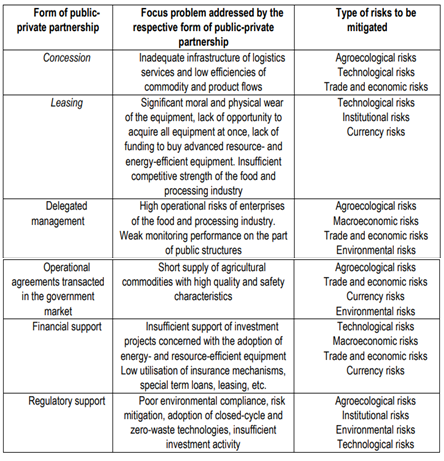
Adopting the above forms of public-private partnership listed in the table to mitigate sustainability risks in the food and processing industry would create meaningful motivations for industry transition to the resource- efficient paradigm. E. g., using concessions would serve to optimise the use of land and infrastructure under respective agreements. In particular, product storage locations and transportation would be brought within a single logistics system operated by a private company following a public transfer under a concession agreement. This would result in lower costs of various technological operations and lower losses upon product deliveries to end-users.
Another form of public-private partnership based on leasing with the use of state support instruments would enable equipment upgrades on a major scale to accommodate the requirements of resource- and energy-efficiency. State support measures may include equipment leasing, grant support, stimuli for enterprises employing the most advanced available processing technologies for agricultural products.
Delegated management in the projects of public-private partnership in the food and processing industry of the agroindustrial complex would improve efficiencies in performance control. E. g., a relevant aspect for such enterprises is monitoring for waste generation and opportunities for recycling. Enterprises' environmental performance should also be subject to monitoring as environmental fees increase each year and incompliance with environmental laws results in major fines and, consequently, increasing costs and deteriorating environmental credentials, which affects product competitiveness. Therefore, delegating operational monitoring functions aimed at food and processing enterprises from the state to the private sector would help to improve the efficiencies of control as producers are motivated to bring down costs.
Signing agreements providing for the opportunity of access for processing enterprises of the agroindustrial complex to modern technological and information platforms would help to improve product quality through improved quality and safety characteristics of input commodities. State participation in this case would relate to the development and advance of technology platforms to accommodate current requirements.
Financial support as a form of public-private partnership may involve projects or programmes on special terms. E. g., state participation in the insurance of energy-efficient projects in the food and processing industry of the agroindustrial complex may involve compensations of insurance premiums, financial guarantees to the investors, lending at zero interest rates for innovation and energy-efficient projects.
Regulatory support as one of the forms of public-private partnership consists in the development of legalacts and bylaws by public bodies. This particularly includes the development of regulatory documents governing stimulation measures to promote the use of resource-efficient technologies, as well as implementation of similar programmes at the state level, introduction of licencing requirements, etc.
It is worth noting that the use of the above forms of public-private partnership to mitigate sustainability risks in the food and processing industry provides the following advantages:
- high level of mobility in structuring projects around the resource-efficient paradigm under public-private partnership;
- possibility of accelerated adjustment of organisational, economic and technological chains to high levels of risks and uncertainties;
- taking advantage of mass-scale expertise in the implementation of projects and programmes of public- private partnership.
CONCLUSION
Based on the above, the achievement of sustainability objectives of the food and processing industry should necessarily take into account the risks involved. One of the efficient instruments for risk mitigation is public-private partnership serving to redistribute the risks between the public and private sectors depending on the best potential in managing such risks. The use of public-private partnership would consolidate the potential of transition in the food and processing industry to the resource-efficient paradigm and zero-waste technologies.
BIODATA
Igor Leonidovich VOROTNIKOV: Doctor of Economics, Professor of the Department of Project Management and Foreign Economic Activity in the Agro-Industrial Complex, Saratov State Vavilov Agrarian University, Saratov, Russia. Scientific interests are related to resource conservation in the agricultural sector, public administration in the agricultural sector, improving the economic efficiency of agriculture, and import substitution in the agricultural sector.
Konstantin Pavlovich KOLOTYRIN: Doctor of Economics, Professor of the Department of Project Management and Foreign Economic Activity in the Agro-Industrial Complex, Saratov State Vavilov Agrarian University, Saratov, Russia. Member of the Russian Society of Environmental Economics (RSEE). The main research areas are related to investment activities, project management, environmental economics, insurance.
Alexander Valeryevich ROMANOV: PhD in Economics, Researcher, Saratov State Vavilov Agrarian University, Saratov, Russia. Scientific interests: agricultural processing, food and processing industry development.
Alexander Vyacheslavovich NAYANOV: PhD in Economics, Associate Professor of the Department of Project Management and Foreign Economic Activity in the Agro-Industrial Complex, Saratov State Vavilov Agrarian University, Saratov, Russia. Scientific interests: agricultural economics, agricultural production efficiency, state support, labor remuneration, labor rationing, digital economy.
Magomet Shaikhovich GUTUEV:Doctor of Technical Sciences, Professor of Dagestan State University of National Economy, Makhachkala, Russia. Scientific interests are related to improving the economic efficiency of agricultural machinery, the development of a technical service system in the agricultural sector.
BIBLIOGRAPHY
GASHO, E.G., STEPANOVA, E. (2017). “Obshchie prioritety mezhotraslevogo "gorizontalnogo" spravochnika po nailuchshim dostupnym tekhnologiyam povysheniya energoeffektivnosti v Rossiiskoi ekonomike [General priorities of a cross-industry "horizontal" reference book of the most best available energy-efficient technologies in the Russian economy]”, in: Nailuchshie dostupnye tekhnologii. Primenenie v razlichnykh otraslyakh promyshlennosti [The best available technologies. Applications by industries]. Collection of papers6. Moscow: Pero publishers, pp. 70-86.
GOLOVINA, T.A., PARAKHINA, L.V. (2013). Ekonomika i upravlenie resursosberegayushchei deyatelnostyu na predpriyatiyakh pishchevoi promyshlennosti [Economics and management of energy-efficient operations in the food industry]. Ekonomika predpriyatiya [Enterprise economics], 2, 311-320.
IVANOV, V.A. (2015). Analiz energozatrat v razlichnykh otraslyakh promyshlennosti [Analysis of energy costs in different industries]. Naukovedenie, 7(1), 1-13. DOI: 10.15862/144TVN115
KAMILOV, M.K., KAMILOVA, P.D., KAMILOVA, Z.M. (2017). Ekologicheskie problemy v selskom khozyaistve kak sledstvie intensifikatsii razvitiya agropromyshlennogo kompleksa Rossii [Environmental problems in agriculture as a result of intensification of development of the agroindustrial complex]. Regionalnye problemy preobrazovaniya ekonomiki [Regional problems of economic transformation], 1, 11-20.
LAZAREVA, L.P., KOSTRYAKOVA, O.N. (2017). Problems of Waste Management at Poultry Plants and Ways to Address Them. Pollution in the Food System. IOP Conf. Series: Materials Science and Engineering, 262, 1-6. DOI: 10.1088/1757-899X/262/1/012184
MELNIK, L.G., HENS, L., AKIMOVA, T.A. (2007). Sotsialno-ekonomicheskii potentsial ustoichivogo razvitiya [Social and Economic Potential of Sustainable Development]. Sumy: Universitetskaya Kniga publishing house, 1120 p.
MYERS, M.L. (2017). Livestock production: its scale and potential impact on human health. Available: http:/base.safework.ru/iloenc?doc&nd= 857200507&nh=0&ssect=0 (accessed: 18.12.2018).
NEMENUSHCHAYA, L, KONOVALENKO, L, SHCHEGOLIKHINA, T. (2019). Production and use of basictechnological facilities for BAT in the food and processing industries of agribusiness. IOP Conf. Series: Earth and Environmental Science, 403, 012104. DOI:10.1088/1755-1315/403/1/012104
PIMENTEL, D., BERGER, B., FILIBERTO, D., NEWTON, M., WOLFE, B., KARABINAKIS, E., CLARK, S.,POON, E., ABBETT, E., NANDAGOPAl, S. (2004). Water resources: agricultural and environmental issues. BioScience, 54(10), 909–918. DOI: 10.1641/0006-3568 (2004) 054 [0909:WRAAEI] 2.0. CO;2
POTRAVNYI, I.M., KOLOTYRIN, K.P., GENGUT, I.B. (2017). Primenenie ekologicheskogo strakhovaniya pri upravlenii proektami po likvidatsii nakoplennogo ekologicheskogo ushcherba [Use of environmental insurance in project management as a remedy to cumulative environmental damage]. Ekonomicheskaya nauka sovremennoi Rossii [Economic science of modern Russia], 2(77), 78-89.
SAVON, D.IU., KOLOTYRIN, K.P., ROMANOV, A.V. (2019). Povyshenie ekologicheskoi effektivnosti pererabatyvayushchei promyshlennosti apk na osnove ekonomicheskikh instrumentov [Enhancing environmental performance efficiency in processing industry of agroindustrial complex with economic instruments]. Ekonomika v promyshlennosti [Industrial economics], 12(3), 305-315.
Test Firm. (n.d.). Proizvodstvo pishchevykh produktov: finansovye pokazateli [Food production: financial indicators]. Available: https://www.testfirm.ru/otrasli/10/
TILMAN, D., CASSMAN, K.G., MATSON, P.A. (2002). Rosamond Naylor Stephen Polasky. Agricultural sustainability and intensive production practices. Nature, 418, 671–677.
VOROTNIKOV, I.L., KOLOTYRIN, K.P., VLASOVA, O.V. (2014). The system of the biological waste management improvement on the basis of state-private partnership and ecological insurance mechanisms. Economic Annals, XXI(9-10), 53-57.
VOROTNIKOV, I.L., KOLOTYRIN, K.P., VLASOVA, O.V., PETROV, K.A. (2017). Optimization of agriculturalproducts storage and marketing on the basis of logistics. Espacios, 38(49), 24.
products storage and marketing on the basis of logistics. Espacios, 38(49), 24.