Artículos
Strategic Sense-Making and Value Creation in SMES
Creación de sentido estratégico y de valor en PyMEs
 SONIA SARRAMI Sonia.sarrami@gmail.com
ASADULLAH KORDNAEIJ naeij@modares.ac.ir
MORTEZA SOLTANI mortezasoltanee@ut.ac.ir
HAMID REZA YAZDANI hryazdani@ut.ac.ir
BAHMAN HAJIPOUR b-hajipour@sbu.ac.ir
SONIA SARRAMI Sonia.sarrami@gmail.com
ASADULLAH KORDNAEIJ naeij@modares.ac.ir
MORTEZA SOLTANI mortezasoltanee@ut.ac.ir
HAMID REZA YAZDANI hryazdani@ut.ac.ir
BAHMAN HAJIPOUR b-hajipour@sbu.ac.ir
Strategic Sense-Making and Value Creation in SMES
Utopía y Praxis Latinoamericana, vol. 25, no. Esp.6, pp. 477-490, 2020
Universidad del Zulia
Received: 12 July 2020
Accepted: 08 August 2020
Abstract: The present study aims to investigate the strategic sense-making effect as a sustainable advantage for improving value creation in SMEs. This research is descriptive and uses the survey method. To collect the data, it was used field and data documentation. For data analysis, the Pearson torque correlation coefficient statistical tests and multivariate linear regression analysis were used simultaneously, and the secondary structural equation model was also used. The research findings indicate that there is a positive and significant relationship between the ability of strategic meaning and value creation of SMEs.
Keywords: Sense-making, SMEs, strategic sense- making, value creation..
Resumen: El presente artículo tiene como objetivo estudiar el efecto de sentido estratégico como una ventaja sostenible para mejorar la creación de valor en las PyMEs. Esta investigación es descriptiva y utiliza el método de la encuesta. Para la recolección de datos se utilizaron datos documentales y de campo. Para el análisis de datos, se usaron simultáneamente pruebas estadísticas de coeficiente de correlación de torque de Pearson y análisis de regresión lineal multivariante y también se usó el modelo de ecuación estructural secundaria. Los resultados de la investigación indican que existe una relación positiva y significativa entre la capacidad de significado estratégico y la creación de valor de las PyMEs.
Palabras clave: Adaptación cultural, estudiantes, teoría de adaptación intercultural, comunicación intercultural..
INTRODUCTION
One of the main goals of countries is to achieve sustainable economic growth and development. Growth Due to globalization and economic activity in a competitive environment and the growing growth of companies and firms in the field of business and their close competition for survival and having a greater share of the market has created a complex and difficult environment for managers (Hamidizadeh et al., 2010). Success in any organization depends on the proper allocation of tools, equipment, money, raw materials and human resources of the organization, and this will be possible if the organizations improve relations with suppliers and thus achieve many opportunities and meet the needs of customers and buyers better and more appropriately than their competitors (Pulles et al. 2014). They were taking into account the fact that small and medium industrial production units (SMEs) in most countries have a key role in providing employment, expanding the appropriate infrastructure for innovation, entrepreneurship and creativity, as well as developing exports and presence in global markets. However, until a few decades ago, the creation and operation of large industries was a sign of a more dynamic and powerful economy, and based on this thinking, giant corporations emerged. Recent developments, such as demographic pressures, moment-to-moment innovations, and the complexity of management and decision-making processes, the need for immediate and necessary decisions, and the experience of small and medium-sized enterprises have highlighted the importance of these firms. Therefore, the development of competition between small and medium enterprises for greater participation in the country's economy requires optimal organization and excelling the technical strength to compete to the desired level of development (Bafandeh Zende et al. 2010).
Therefore, considering the purpose of the profitability of companies and increasing competition in the fieldof trade, the study of various aspects of creating a competitive advantage for companies is discussed more than before. Management and related processes play a crucial role in sustaining companies' performance and survival in a competitive and accelerated business environment. Due to the changing paradigms governing the economic environment, traditional management approaches do not meet the new requirements, and even approaches such as strategic management are adapting to this new paradigm. Hence, the use of new management models and approaches to meet these challenges and adapt to the value creation paradigm is an undeniable necessity (Rahnemaye rodposhti et al. 2010). Michael Porter sees strategy as being different. In the long run, only successful companies will be able to create a sustainable competitive advantage (Porter, 1996). Therefore, it is necessary for the process of value creation of a company to be different from its competitors. The value creation of companies and the factors affecting it are important and important issues that have been considered by analysts and capital market activists in financial literature today. It seems that the ability to manage and its indicators are the most important factors determining the value creation of companies. One of the ways of economic development of societies is to increase productivity in economic and productive institutions, which improves the living standards of a nation.
Value is the birth and creation of wealth, and it introduces the idea of continuous and continuous wealth creation, which is a component of the short-term cloud and finds operational meaning in the value chain (Rahnemaye rodposhti et al. 2010). In general, value is the specific semantic load that a person attributes to certain actions, states, and phenomena, and is one of the variables that has a wide semantic load. The breadth of the semantic burden of value is related to the breadth of disciplines and specialties such as social value, financial value, economic value, and so on (Rahnemaye rodposhti et al. 2011). The centrality of "the concept of value and value creation" helps economic enterprises to adopt appropriate strategies for competition and survival in the new competitive environment. Value in the process of acceptance, survival, and institutionalization requires value creation. The interaction of value and value creation brings synergy that will affect all value processes and, most importantly, the thinking of value-based management. Value creation means the creation of value, the result of human actions and the management that creates wealth (Rahnemaye rodposhti et al. 2007). All of the efforts made in the strategic management process (formulating,implementing, and evaluating strategies) are the way companies go for value creation (Collis & Montgomerg, 1998).
Over the years, researchers have evaluated the various dimensions of value creation in companies in different ways and identified the factors that affect it. However, it seems that the environmental dynamics factor and environmental factors in this regard have either been eliminated or less addressed, due to the fact that it is invisible and difficult to measure (Matemilola et al. 2013). Environmental dynamics include the perceived change in the industry, the unpredictable behaviour of customers and competitors, and the change in the technical conditions of the industry, the change in technology, customer preferences and competitive actions. Dynamic environments are a rich source of ideas for emerging new opportunities (Schilke, 2013). According to Drucker, changes in the social, political, technical and economic environment create new opportunities (Jansen et al., 2009). But what happens in the environment and what is the environment like? In fact, it is about giving meaning to the clues related to the environment and shaping it to create meaning and explain what is happening (Maitlis & Sonenshein, 2010). In another study, Maitlis and Christianson (2014) consider sense-making as a process that involves the attention and categorization of information and clues in the environment, and by creating meaning in different mentalities through the cycle of interpretation and more regular environmental action; from which, further information can be obtained, leading to. Therefore, organizational sense-making is a multidimensional process based on the interaction of meaning and practice for new and ambiguous issues and events, and sometimes contradicts expectations (Maitlis and Christianson, 2014). Organizations that enhance their sense-making can better communicate (through the exchange of strategic information), interpret (simulate the various dimensions of the complex environment), and analyze (through a variety of perspectives) different information and responses and make changes better to the environment (Neill et al., 2007). Therefore, sense-making is the process by which an organization obtains information about its environment, interprets it, and acts on it (Weick, 1995). Thus, semantics is a multidimensional action based on the interaction of meaning and action (Weick et al., 2005). Sense-making does not occur alone and apart from the environment, but technology, cognitive frameworks, and governance policies will influence the stages of the semantic process (Sandberg & Tsoukas, 2014).
The sense-making theory is one of the most cited theories used in the field of information and communication. A partial meaning in the literal sense refers to the meaning or non-significance of something, a process, to a phenomenon. Dervin (1999) considers sense-making to be the most appropriate strategy to describe the situation and identify the information gap. He sees the information process as sense-making strategies that help the user better understand and make sense of the world around them. Sense-making, in general, requires people to understand how to extract and thank information from the message (Fisher et al. 2008). In general, the dominant approach to this theory is a cognitive approach that focuses more on the individual abilities of individuals than on the characteristics of a particular group. At the same time, it can be used to examine intergroup and organizational interactions. People will better understand the world around them with the knowledge they gain from the phenomena and the interpretation they provide (Dervin, 2007). According to Teece (2010), the three sense-making meta-capabilities (meaning the ability to identify external opportunities), the acquisition of new opportunities (meaning the ability to understand and transform new opportunities), and the ability to reshape resources (physical and human assets) are capabilities are essential for setting up and innovating a business model. These meta-capabilities lead to a continuous range of products and processes or structures of the organization that are presented as a response to the specific needs of the market. Therefore, the new organizational order is done through sense-making about structures and strategies, which is a logical response to environmental changes and is done by sense-making decision- makers who inform others about new changes and how to implement those (Mills, 2003).
One of the main goals of countries is to achieve sustainable economic growth and development. Globalization, economic activity in a competitive environment, the growing growth of companies and enterprises in the field of business, their close competition for survival and having more market share havecreated a complex and difficult environment for managers. On the other hand, in the internal dimension of the organization, success depends on the efficiency and effectiveness of the allocation and use of tools, equipment, money, raw materials and human resources of the organization, which can be achieved through good relations with suppliers. The right use of these opportunities leads to a better and more appropriate response to customer demands than competitors (Hamidizadeh et al., 2010; Pulles et al. 2014). Considering that small and medium industrial production units (SMEs) in most countries play a key role in providing employment, expanding the infrastructure suitable for innovation, entrepreneurship and creativity, as well as developing exports and presence in global markets. However, until a few decades ago, the creation and operation of large industries was a sign of a more dynamic and powerful economy, and based on this thinking, giant corporations emerged. But recent developments, including demographic pressures, moment-to-moment innovations, the complexity of management and decision-making processes, the need for immediate and necessary decisions, and the experiences of small and medium-sized enterprises, have highlighted the importance of these firms. This makes it even more necessary to better organize and strengthen the technological base of these companies in order to be able to compete with large companies (Bafandeh Zende et al., 2010).
Therefore, considering the purpose of the profitability of companies and increasing competition in the fieldof trade, the study of various aspects of creating a competitive advantage for companies is discussed more than before. Michael Porter believes that in the long run, only successful companies will be able to create a competitive advantage. Management and related processes play a crucial role in sustaining companies' performance and survival in a competitive and accelerated business environment. Due to the changing paradigms governing the economic environment, traditional management approaches do not meet the new requirements, and even approaches such as strategic management are adapting to this new paradigm. Therefore, the use of new management models and approaches to meet these challenges and adapt to the value creation paradigm and differentiate in the process of creating distinct value from competitors is an undeniable necessity (Porter, 1996; Rahnemaye rodposhti et al. 2010). The value creation of companies and the factors affecting it are important and important issues that have been considered by analysts and capital market activists in financial literature today. It seems that the ability to manage and its indicators are the most important factors determining the value creation of companies. One of the ways of economic development of societies is to increase productivity in economic and productive institutions, which improves the living standards of a nation.
Value is the birth and creation of wealth, and it introduces the idea of continuous and continuous wealthcreation, which is a short-term component and finds an operational meaning in the value chain. Generally, value is the specific semantic load that a person attributes to certain actions, states, and phenomena, and is one of the variables that has a wide semantic load. The breadth of the semantic burden of value is related to the breadth of disciplines and specialties such as social value, financial value, economic value, and so on. Value in the process of acceptance, survival, and institutionalization requires value creation. The interaction of value and value creation brings synergy that will affect all value processes and, most importantly, the thinking of value-based management. Value creation means the creation of value, the result of human actions and the management that creates wealth (Rahnemaye rodposhti et al. 2007; 2010; 2011). "The concept of value and value creation" helps economic enterprises to be able to adopt appropriate strategies in the new competitive environment through strategic management process (formulation, implementation and evaluation of strategies) for competition and survival, and ultimately value creation (Collis & Montgomerg, 1998).
Over the years, researchers have evaluated the various dimensions of value creation in companies in different ways and identified the factors that affect it. However, it seems that the environmental dynamics factor and environmental factors in this regard have either been eliminated or less attention has been paid to it, which is due to the fact that it is intangible and difficult to measure (Matemilola et al. 2013). Environmental dynamics include the perceived change in the industry, the unpredictable behaviour of customers and competitors, and the change in the technical conditions of the industry, the change in technology, customerpreferences and competitive actions. Dynamic environments and changes in the social, political, technical and economic environment are rich sources of ideas for the emergence of new opportunities (Jansen et al., 2009; Schilke, 2013). But what happens in the environment and what the environment looks like can be perceived through sense-making in the organization. Sense-making does not occur alone and apart from the environment, but technology, cognitive frameworks, and governance policies, other environmental-related clues, and explanations of what happens will affect the stages of the sense-making process (Maitlis & Sonenshein, 2010; Sandberg & Tsoukas, 2014). In another study, Maitlis and Christianson (2014) consider sense-making as a process that involves the attention and categorization of information and clues in the environment, and by creating meaning in different mentalities through the cycle of interpretation and more regular environmental action; from which, further information can be obtained, leading to. Therefore, organizational sense-making is a multidimensional process based on the interaction of meaning and practice for new and ambiguous issues and events, and sometimes contradicts expectations (Maitlis and Christianson, 2014). Organizations that enhance their sense-making can better communicate (through the exchange of strategic information), interpret (simulate the various dimensions of the complex environment), and analyze (through a variety of perspectives) different information and responses and make changes better to the environment (Neill et al., 2007). Therefore, sense-making is the process by which an organization obtains information about its environment, interprets it, and acts on it. Thus, semantics is a multidimensional action based on the interaction of meaning and action (Weick, 1995; Weick et al., 2005).
With the establishment of any organization, a business model is used, both codified and mentally, to design the structure of its interactions. If we consider the business model as a strategic choice of the organization to create and share value, within a value network, not recognizing the appropriate business model will cause the organization to fail to achieve its goals. The performance of companies in turbulent and changing business environments depends heavily on redesigning and creating a new and consistent business model (Teece, 2010; Lambert & Davidson, 2012; Ricciardi et al. 2016; Ríos et al.: 2019; Ramírez et al.2020; Sukier et al.2020). Rapid changes in environmental and internal conditions, on the one hand, make it difficult for individuals and teams to understand correctly, and on the other hand, force them to take action with incomplete information (Maitlis and Christianson, 2014). Therefore, it is necessary to search and interpret information in the form of sense-making processes. An effective strategic plan needs to develop an understanding of the forces that shape the situation by engaging in collective effort and the ability to interpret events. Organizations are seen as meaningful units within which managers and employees interpret events and programs, and their mental models and past experiences on how to interpret and understand the program (sense-making) and it is effective in conveying their understanding to others (meaningfulness). On the other hand, the creation of company value is the process of using internal and external resources to increase the value of the company and the wealth of investors. The value of companies is influenced by their size, which means that larger companies have more market value due to having more capital and resources (Rahmani et al. 2012). Therefore, it is much more difficult to create value in small and medium-sized businesses (SMEs), and the need for sense-making as a strategic capability to improve the competitive advantage of these companies seems essential. Thus, the present study aims to understand the relationship between strategic sense-making capabilities and value creation in SMEs.
METHODS
This research was conducted with the aim of investigating the relationship between strategic sense- making and value creation in SMEs. Therefore, the present study is a descriptive survey study of the purpose of the applied type. The data collection method was performed in both the library and field forms. The statistical population of the study was the managers of all production units of Tehran Industrial town, 140 units were identified, and 103 companies were selected as the sample by the Georgian-Morgan sample size, which wasfinally retrieved from 97 questionnaires. Part of the required data was collected as a library of companies' archival information, and part was collected from managers through a questionnaire.
The strategic sense-making measurement tool of Neil, McKee and Rose Questionnaire (2007) which includes five components of internal communication, external communication, information collection, information classification and common mental model with 25 items. The validity of this questionnaire has been assessed by Neil et al. (2007) and has also been reviewed and validated by Maitlis and Christianson (2014). In a study, the questionnaire was evaluated by the Wareth et al. (2018) using factor validation analysis. According to Fornell and Larcker (1981), values above 0.7 indicate acceptable reliability, which was 0.905 for the significance of this number, and therefore the reliability of the research instrument was confirmed.
Company classification information was also used to measure the company's value creation. Value creation of the company is the process of using internal and external resources in order to increase the value of the company and the wealth of investors. The value of companies is influenced by their size, which means that larger companies have more market value by having more capital and resources. Therefore, in order to measure the value creation of companies (which have different market values than each other), a factor (method) must be used that does not affect the size of the company. In this study, efficiency is used to measure the value creation of companies. In terms of how to calculate returns, in practice, a comparison is made, and the returns of two companies that have very different market values can be compared with each other and their performance and value creation for their participants. Therefore, in this study, efficiency was used to measure value creation. Return refers to the set of benefits that are given to a share during the year and are calculated relative to the price at the beginning of the year. The return on investment in ordinary shares in this research and in a certain period has been calculated according to the first and last prices of the period and the benefits resulting from the ownership and increase of the company's capital and from the following equation(1)

Where, Pit is the stock price of i in the period t, Rit indicates stock returns of i in the period t, M is cashcapital of shareholders, Dit is Share dividends of i in the period of t, and αit is the ratio of the increase in the company's capital in the period of t.
Central indicators were used to analyze the data -which have been collected in order to describe and introduce the structure, components and status of the sample population (as a representative of the target community) - from the statistics of one-dimensional and two-dimensional frequency distribution tables. In the inferential section, first, to determine the normality of the data, the skewness and elongation test was used. The data of the research were recognized as normal. Then, to explain the research hypotheses of statistical tests, Pearson torque correlation coefficient and multivariate linear regression analysis were performed simultaneously and the model of second-order structural equations in SPSS-24 and LISREL software.
RESULTS
Findings describing demographic variables showed that 93 percent of community leaders are male, and the rest are female. More than 87 percent are married, and about 12 percent are single. Sixty percent of people are between 26 and 35 years old, and 30 percent are between 36 and 50 years old. Forty-two percent of people had a bachelor's degree, and about 30 percent had a master's degree or higher. More than 50 percent of the research community has less than ten years of experience, and about 43 percent have more than ten years of work experience. Also, the strain-strain test to investigate the distribution status of the research data showed that our test statistic is between (-2 and 2). Therefore, data distribution is normal and parametric tests can be used to explain research hypotheses.
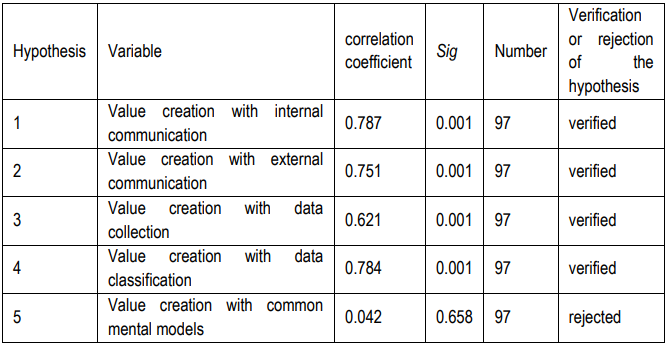
According to the results of the correlation coefficient, there is a significant relationship between value creation and all components of strategic sense-making, except a common mental model. Therefore, in order to investigate the effect of strategic sense-making on the value creation of the company, it is possible to use a multivariate linear regression analysis test.

The Durbin-Watson test was used to correlate residual self-correlation with the aim of whether or not residuals remained independent. If the Durbin-Watson test statistic is between 1.5 and 2.5, the null hypothesis (error independence) is accepted, otherwise, the null hypothesis is confirmed. According to table 2, the value of the Durbin-Watson statistic (1.575) is stated to be between 1.5 and 2.5, so the assumption of error independence is accepted. The histogram also confirms the regression test.
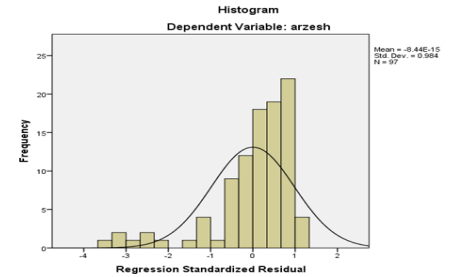
Figure 1. Linear regression histogram
To test the present hypothesis, a multivariate linear regression method was used. The variables of strategic semantic segmentation (internal communication, external communication, data collection, data classification) that had a significant relationship with value creation were used in this test. The result of this test is reported in Table 3.

As can be seen in Table 3, the correlation coefficient of the strategic sense-making variable increase of the company's value creation is 0.787, and the coefficient of determination, i.e. a percentage of the variance of the independent variable explained by the dependent variable is 0.769. Thus, the strategic semantic variability (the four components of internal communication, external communication, data gathering, data categorization) predicts 76.9% of the SME value creation variable. As can be seen from the P-Value (Sig) of each variable, the four subscales are the component of internal communication, external communication, data gathering, and data categorization, which significantly predict value creation. In interpreting these findings, it is suggested that by increasing a standard deviation in the internal communication score, the value creation score of 0.248 will increase from the standard deviation. By increasing a standard deviation in the external communication score, the value creation score (0.189) of the standard deviation will increase. Also, by increasing a standard deviation in the data gathering score, the value creation score of 0.305 will be higher than the standard deviation. Finally, by increasing a standard deviation in the data categorization score, the value of value creation 0.0544 will be higher than the standard deviation.
The structural equation model is a comprehensive statistical approach for testing hypotheses about therelationships between observed variables and latent variables. In this way, it is possible to solve conceptual models that are multivariate subjects and cannot be solved by a two-variable method (each time an independent variable is considered with a dependent variable). Factor analysis is the second level or factor analysis is the higher level of developed factor analysis. This method is based on hierarchical models, which are often followed more seriously in the humanities and natural sciences. In a factor analysis of the second- order, it is assumed that the hidden variables themselves share in the common variance resulting from one or higher factor factors. In other words, the factors of the second order are actually the agents of the factors. In this study, in order to test the research model in order to create a decent and acceptable model and determine the internal relationships of variables, confirmatory factor analysis (second degree) was performed using structural equation modelling technique using LISREL software package.
A) Model in standard estimation model: Model in standard estimation mode The relationship between operating loads of each of the dimensions of strategic sense-making (four dimensions related to value creation, internal communication, external communication, data gathering, data categorization) with SMEvalue creation and shows the relevant items. As shown in the figure, the operating load of all dimensions and statements is greater than 0.5 and is acceptable.
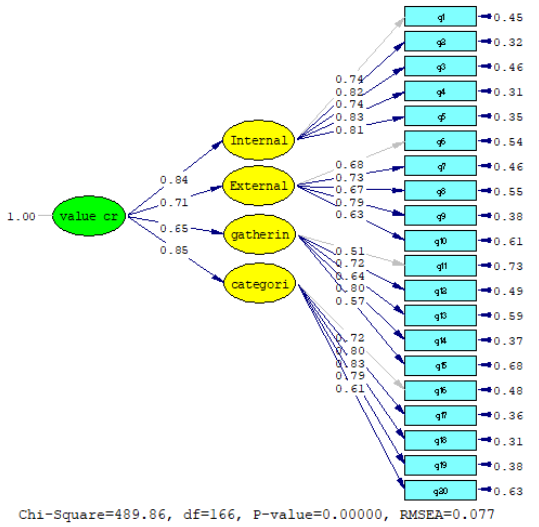
Figure 2. Second-order factor analysis model in standard estimation mode
B) The model in the case of significance: The following figure shows the model of factor analysis of the second order in the case of significant coefficients. The numbers on the routes indicate the value of the t- statistic. Given that all t-statistical values of the paths are greater than 1.96, there is, therefore, a significant relationship between each of the dimensions of strategic sense-making and SME value creation, as well as between each item and its related dimension. It should be noted that the deleted paths of the model are significantly related to the parameters that have been established in the estimation of the model. In the diagram, the path is shown in standard coefficients in grey. Therefore, the value of t is not calculated for them. For this reason, the path in the semantic state has been removed from the diagram.
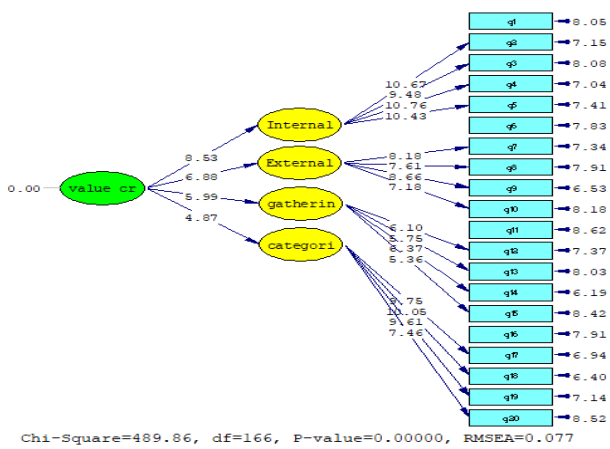
Figure 3. Model of factor analysis of the second order in the case of significance
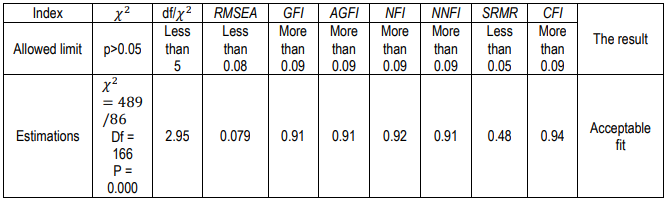
According to the findings of Table 4, the laser output in relation to the fitness indicators of the second- order factor analysis collectively indicates the acceptable fit of the model.
DISCUSSION
With the establishment of any organization, a business model is used, both codified and mentally, to design the structure of its interactions (Teece, 2010). If we consider the business model as a strategic choice of the organization to create and share value, within a value network (Lambert & Davidson, 2012), not recognizing the appropriate business model will cause the organization to fail to achieve its goals. The performance of companies in turbulent and changing business environments depends heavily on redesigning and creating a new and adaptable business model (Ricciardi et al. 2016). Rapid changes in environmental and internal conditions, on the one hand, make it difficult for individuals and teams to understand correctly,and on the other hand, force them to take action with incomplete information (Maitlis & Christianson, 2014). Therefore, it is necessary to search and interpret information in the form of sense-making processes. An effective strategic plan needs to develop an understanding of the forces that shape the situation by engaging in collective effort and the ability to interpret events. Organizations are seen as meaningful units within which managers and employees interpret events and programs, and their mental models and past experiences on how to interpret and understand the program (sense-making) and it is effective in conveying their understanding to others (meaningfulness). On the other hand, the creation of company value is the process of using internal and external resources to increase the value of the company and the wealth of investors. The value of companies is influenced by their size, which means that larger companies have more market value due to having more capital and resources (Rahmani et al. 2012). Therefore, it is much more difficult to create value in small and medium-sized businesses (SMEs), and the need for sense-making as a strategic capability to improve the competitive advantage of these companies seems essential. Thus, the present study aims to understand the relationship between strategic sense-making capabilities and value creation in SMEs.
The research findings indicate that there is a positive and significant relationship between the ability of strategic sense-making and value creation of SMEs. It predicts four components of strategic sense-making, including internal communications, external communications, data gathering, data categorization, and 76.9% of the SME value creation variable. On the other hand, the results of structural equations show that the information classification (operating load of 0.85), internal communication (0.84), external communication (0.71) and data collection (0.65) have the most powerful prediction effect in SMEs, respectively. These results are consistent with the findings of Hosseini et al. (2014), Wareth et al. (2018), Ricciardi et al. (2016), Martins et al. (2015) and Sandberg and Tsoukas (2014). Hosseini et al. (2014) concluded that successful implementation of the strategy is a function of the appropriate context for implementation, action management, intra-organizational factors, relative stability and organizational support. Creating a platform is a key condition for creating action management, and action management, along with internal organizational factors and the relative stability of the environment, leads to organizational support. Therefore, when there is a difference between the organization's understandings of the existing reality, sense-making is more important in the context of environmental change.
That SME, which is aware of its environment and the proper transfer of information and communication within the organization, makes the decision to improve the value of the company and adapt to the conditions better and more appropriate (Martins et al. 2015). When there is a difference between the understanding of SMEs and the existing reality, sense-making becomes more important in the context of environmental change. In such a situation, it seems necessary to make changes in the way of functioning and business model as a method of adapting to new conditions and taking advantage of opportunities and protecting them from threats. The importance of this issue is further demonstrated when SMEs are more dependent on environmental change; in other words, the more open organizations are, the more vulnerable they are to the environment. The smallest changes in today's turbulent, competitive, and complex environment can cause mutations or their destruction. Constructive awareness and interaction with the environment as a competitive advantage plays a vital role in value creation. To stabilize the competitive advantage, creating a unique combination of resources and capabilities, to rely on intangible resources and environmental awareness plays a decisive role because a sustainable competitive advantage requires causal ambiguity and managerial and social complexities. This makes it difficult for competitors to mimic the competitive advantage of SMEs. As a result, the advantage of the organization remains stable and long-lasting and is protected from the competitive position of the organization.
SMEs are among the factors influencing the growth and development of economic and social systems of countries (Kővári & Pruyt, 2013). These firms are the driving force behind the economy and are a way to solve the problem of unemployment in all countries of the world. Small and medium-sized enterprises can also be used as a tool to attract stray currencies, preventing the increase in the amount of liquidity in the communityby consolidating scattered capital that is not as large as that used in large projects. In other words, small and medium-sized enterprises are transitional strategies for developing and even developed countries. Therefore, in recent years, the importance and role of small and medium industries in industrialized and developing countries have been increasing (Yeh-Yun & Zhang, 2005). Given the role and importance of these firms, solving financial and non-financial problems of SMEs should be on the agenda of countries. Studies show that the inability to compete with larger companies is at the forefront of SME problems due to a lack of value and a lack of strong communication with the environment (Mosleh & Khalifeh, 2017).
CONCLUSIONS
In turbulent and highly uncertain environmental conditions, SMEs should examine themselves through environmental monitoring and strategic orientation conditions and, if necessary, change or modify their business model. The conducted study sheds light on the fact that SMEs that do not have organized meaningfulness pay less attention to their environment, and this means less attention to the threats and opportunities ahead. Therefore, by holding inter-unit meetings, continuous monitoring of customer satisfaction, creating a codified mechanism for information exchange, reviewing the competitive advantage, focusing on the customer, etc., we should strive to develop significant capabilities in SMEs. SMEs can create fundamentally similar economic values through their value chain configuration, similar to their competitors and customer needs (by recognizing the environment with a sense-making strategy), and within the same value chain, activities must be far more efficient than competitors. To this end, SMEs must have the resources and capabilities that their competitors lack. The specific assets of SMEs are resources such as proprietary assets, royalties and trademarks, reputation, trademark names, established roots, organizational culture, and workers with that firm's specialization or technical knowledge. By strengthening these assets, the value of SMEs is strengthened. The strengthening of these assets depends on the knowledge of the environment, the customer and competitors using strategic sense-making.
BIODATA
KH. F ALHUMAID: Khadija Farhan Alhumaid studied Ph.D. in Curriculum and Instructions at University of Kansas (2008-2013). Her positions are assistance professor at Zayed University, Abu Dhabi-UAE, Head of Arabic Department with experience in teaching and curriculum development, a Chair of Recruitment Committee in the Arabic Department at Zayed University. Her research interests include teaching strategies, curriculum design, and integrating technology to learning process. She is also an arbitrator for surveys.
BIBLIOGRAPHY
AKGÜN, AE, KESKIN, H, BYRNE, JC & LYNN, GS (2014). “Antecedents and consequences of organizations technology sensemaking capability”. Technological Forecasting and Social Change, 88, 216-231.
BAFANDEH ZENDE, A, NOROUZI, D & AALI, S (2010). “A Study of the Problems of Small and Medium Industry Managers (SMEs) in East Azerbaijan Province”. Quarterly Journal of Industrial Management, Faculty of Humanities, Islamic Azad University, Sanandaj Branch, 13. 54-41.
COLLIS, DJ & MONTGOMERY, CA (1998). “Creating corporate advantage”. 71-83. Harvard Business School. DERVIN, B (1999). “On studying information seeking methodologically: The implications of connecting
metatheory to method”. Information Processing and Management, 35, 727-750.
DERVIN, B (2007) “Focus Groups for Participatory Research: Design using Systematic Dialogic Principles Drawn from Sense-Making Methodology, in Participatory Communication Research Section”. International Association for Media and Communication Research .IAMCR, Paris, France.
FISHER, ERDELEZ & MCKECHNI (2008). “Theories of information behavior”. Medham, NJ: Information Today.
FORNELL, C & LARCKER, DF (1981). “Evaluating structural equation models with unobservable variables and measurement error”. Journal of marketing research, 18 (1), 39-50.
HAMIDIZADEH, MR, HABIBI, M & HASSANBIGHI, E (2010). “RELATIONAL SOURCES OF VALUE CREATION IN DIVERSIFICATION IMPLEMENTING THROUGH INTERNAL DEVELOPMENT”.
HOSSEINI, SF, KHODADAD HOSSEINI, SH, KORDANAYIJ, A, AHMADI, P (2014). “Presenting a successful
strategy implementation model in Iranian car companies”. Iranian Journal of Management Sciences, 9 (36), 1-24.
JANSEN, JJ, VERA, D & CROSSAN, M (2009). “Strategic leadership for exploration and exploitation: The moderating role of environmental dynamism”. The Leadership Quarterly, 20(1), 5-18.
KŐVÁRI, A & PRUYT, E (2013). “Lending to small and medium enterprises: a novel approach to credit portfolio management”. Proceedings of the International Conference of the System Dynamics Society.
LAMBERT, SC & DAVIDSON, RA (2012). “Applications of the business model in studies of enterprise success, innovation and classification: An analysis of empirical research from 1996 to 2010”. European Management Journal, 31(6), 668-681.
MAITLIS, S & CHRISTIANSON, M (2014). “Sensemaking in Organizations: Taking Stock and Moving Forward”. The Academy of Management Annals, 8(1), 57-125.
MAITLIS, S & SONENSHEIN, S (2010). “Sensemaking in crisis and change: Inspiration and insights from weick”. Journal of Management Studies, 47(3).
MARTINS, LL, RINDOVA, VP & GREENBAUM, BE (2015). “Unlocking the Hidden Value of Concepts: A Cognitive Approach to Business Model Innovation”. Strategic Entrepreneurship Journal, 9(1), 99-117.
MATEMILOLA, BT, A BANY-ARIFFIN, WNW AZMAN-SAINI (2013). “Impact of leverage and managerial skills on shareholders’ return”, Journal of Procedia Economics and Finance (Elsevier Publisher). 7: 103-115.
MILLS, JH (2003). “Making sense of organizational change”. London: Routledge.
MOSLEH, SA & KHALIFEH, M (2017). “SIMULATING AND POLICY MAKING OF INTERNAL AND EXTERNAL SMES'FINANCING PROBLEMS VIA SYSTEM DYNAMICS APPROACH”.
NEILL, S, MCKEE, D & ROSE, GM (2007). “Developing the organization's sensemaking capability: Precursor to an adaptive strategic marketing response”. Industrial Marketing Management, 36(6), 731-744.
PORTER, ME (1996). “What is Strategy?” Harvard Business Review, 76(6), 77-90.
PULLES, NJ, VELDMAN, J & SCHIELE, H (2014). “Identifying innovative suppliers in business networks: An empirical study”. Industrial Marketing Management, 43(3), 409–418.
RAHMANI, A, GHOLAMI GAKIEH, F, PAKIZEH, K. (2012). “The effect of financial flexibility on investment and value creation”. Accounting Advances, 4 (2), 53-76.
RAHNEMAYE RODPOSHTI, F (2007). “Activity-Based Management: A Value-Creating Approach in Dynamic Economic Business”, Termeh Publications, Tehran.
RAHNEMAYE RODPOSHTI, F (2010), "Financial Mathematics and Investment", 1, Tehran, Termeh. RAHNEMAYE RODPOSHTI, F & EFTEKHARI ALIABADI, A (2010). “Develop a strategy with a value creation
approach in financial institutions”. Financial Engineering and Securities Management, 1 (4), 129-148.
RAMÍREZ MOLINA, R., LAY, N & SUKIER, H (2020). “Gerencia Estratégica para la Gestión de Personas del sector minero de Venezuela, Colombia y Chile”. Información Tecnológica, 31(1), pp. 133-140.
RÍOS PÉREZ, J., RAMÍREZ MOLINA, R., VILLALOBOS ANTÚNEZ, J., RUIZ GÓMEZ, G & RAMOS
MARTÍNEZ, Y (2019). “Elements, resources and capacities of agricultural production units: from a thoughtful analytical approach”. Utopía y Praxis Latinoamericana. Revista Internacional de Filosofía Iberoamericana y Teoría Social, 24(6), pp. 407-419.
RICCIARDI, F, ZARDINI, A & ROSSIGNOLI, C (2016). “Organizational dynamism and adaptive business model innovation: The triple paradox configuration”. Journal of Business Research, 69(11), 5487-5493.
SANDBERG, J & TSOUKAS, H (2014). “Making sense of the sensemaking perspective: Its constituents, limitations, and opportunities for further development”. Journal of Organizational Behavior, 36(S1), 6-32.
SCHILKE, O (2013). “On the contingent value of dynamic capabilities for competitive advantage: The nonlinear moderating effect of environmental dynamism”. Strategic Management Journal, 35(2), 179-203.
SUKIER, H; RAMÍREZ MOLINA, R; Parra, M; MARTÍNEZ, K; FERNÁNDEZ, G & LAY, N (2020). “Strategic
Management of Human Talent from a Sustainable Approach”. Opción. Revista de Ciencias Humanas y Sociales, 36(91), pp. 929-953.
TEECE, DJ (2010). “Business models, business strategy and innovation”. Long Range Planning, 43(2–3), 172-194.
WARETH, H, HEIDARI, A, AKBARI, M (2018). “Investigating the Relationship between Strategic Meaningfulness and Business Model Innovation”. Business Management, 10 (2), 487-507.
WEICK, KE (1995). “Sensemaking in organizations”. Thousand Oaks, CA: Sage.
WEICK, KE, SUTCLIFFE, KM & OBSTFELD, D (2005). “Organizing and the process of sensemaking”. Organization Science, 16(4), 409-421.
YEH-YUN, L & ZHANG, J (2005). “Changing structures of SME networks: lessons from the publishing industry in Taiwan”. Long Range Planning, 38, 145-162.