Artículos

This work is licensed under Creative Commons Attribution-NonCommercial-ShareAlike 4.0 International.
Received: 03 August 2020
Accepted: 15 September 2020
DOI: https://doi.org/10.5281/zenodo.4009620
Abstract: This article studies the methods of dramatic performance aimed at the development of the learning and creative capacities of students in the process of learning the german language. The dramatic performance is based on the personality-oriented methods of the formation of communicative competence. The particular importance is given to the problem of psychological difficulties faced by students when learning the german language. The method of dramatic performance is proposed as an effective technique and tool for removing psychological barriers when learning the german language.
Keywords: Drama, personality-oriented approach, psychological barrier, theatre..
Resumen: Este artículo estudia los métodos de actuación dramática destinados al desarrollo del aprendizaje y las capacidades creativas de los estudiantes en el proceso de aprendizaje del idioma alemán. La actuación dramática se basa en los métodos orientados a la personalidad de la formación de la competencia comunicativa. Se le da especial importancia al problema de las dificultades psicológicas que enfrentan los estudiantes al aprender el idioma alemán. El método de actuación dramática se propone como una técnica y herramienta efectiva para eliminar las barreras psicológicas al aprender el idioma alemán.
Palabras clave: Barrera psicológica, drama, enfoque orientado a la personalidad, teatro..
INTRODUCTION
In the Russian methodology of teaching foreign languages, the terms “role-playing game”, “a dramatization of the game”, and “theatrical activity” are used as an equivalent of the term “dramatic performance”.Thus, Elena Plakhova in her research presents a model of play-based techniques as a method ofintensifying the educational process in teaching a foreign language. In her opinion, the use of educational plays gives a chance to creatively apply language material, turn foreign language classes into a process of communication, discussion, and research (Plakhova et al.: 2019, pp. 38-44). Julia Kapralova and colleagues present the possibility of organizing a Russian language lesson as a foreign language in the form of a quest. The author draws attention to the effectiveness of using games in the learning process (Kapralova et al.: 2019, pp. 50-55).
For the first time in the Kazakh methodology of teaching foreign languages, the use of the method ofdramatic performance in the second foreign language classes is considered by L. E. Dalbergenova in the textbook for 3-year and 4-year students of language specialties. The textbook presents methods of stage interpretation of literary texts that effectively develop the skills of monologic, dialogic, and written speech, as well as oral discursive skills (Dalbergenova: 2017).
In contrast to the works of Scheller and Dalbergenova (Scheller: 2004; Dalbergenova: 2017), this study seeks to consider dramatic performance as a tool to overcome psychological barriers in students learning the German language. The novelty of the research consists in using the method of dramatic performance in the communicative-pragmatic and personality-oriented aspects in foreign language classes, which focuses on the personality of the student. Dramatic performance acts as a method of developing creative activity, the cognitive activity of students, as well as an effective means to overcome psychological barriers.
RESULTS
The problem of psychological barriers in students learning a foreign language
The effectiveness of the process of mastering a foreign language is associated with the psychological readiness of a student to learn and apply a foreign language in practice, overcoming language barriers, and difficulties. The hindrances that reduce the effectiveness of education in higher educational institutions are psychological barriers when learning a foreign language, i.e. such psychological states that inhibit thought processes and do not allow students to fully reveal their abilities, implement the acquired knowledge, and skills. The reasons for this state in students may be psychological individual characteristics that affect the process of learning a foreign language, as well as shortcomings in teaching methods that create certain barriers. Psychological characteristics of students are associated with their characteristics, such as self- dissatisfaction, worries, internal anxiety, low self-esteem (Ipatova: 2019, pp.331-333).
One of the most common types of psychological barriers is the “speaking barrier”, which is presented as the inability to express thoughts, own point of view (Breus & Stoyka: 2014, pp. 44-46). The reason for the “speaking barrier” is psychological uncertainty, fear of making a mistake. Students are afraid of speaking a foreign language because they are afraid of speaking incorrectly, being misunderstood, and needing time to recall the necessary foreign words or grammatical rules. As a result, such students face psychological difficulties and language barriers that make it difficult for them to achieve success in learning a foreign language.
Social and psychological barriers, according to Zimnyaya, Myasishchev, Parygin, and Shakurov, affect the acquisition of a foreign language (Zimnyaya: 2004; Parygin: 1999; Shakurov: 2001, pp. 3-18). According to the above authors, psychological barriers in learning a foreign language are represented by negative emotions, which prevents the student’s self-realization, reduces the quality of training. Zimnyaya (Zimnyaya:2004) writes that the barrier is “subjective formation, the subject’s experience of a certain complexity, unfamiliarity, a non-standard, contradictory situation”. Parygin (Parygin: 1999) defines a psychological barrier as a state or property of an individual that hinders the realization of spiritual and mental potential in the process of his/her life. Shakurov (Shakurov: 2001, pp. 3-18) gives the following definition: “The psychological barrier is external and internal obstacles that resist the manifestations of the subject’s life activity, functioning”.
Barriers that occur in the educational process, as well as in the process of teaching foreign languages, can be grouped according to the origin of its occurrence into psychophysiological, informational, evaluative, intracultural, and semantic. Psychophysiological barrier occurs due to the lack of contact between the teacher and the student, difference in their temperaments. Informational barriers are characterized by the wrong choice of training programs, mismatch in the level of educational materials. Evaluative barriers are caused by biased, in the opinion of students, assessment of his/her work, the negative attitude of the teacher that influences the assessment outcome. Semantic and intercultural barriers are associated with the inability to communicate using a foreign language, the unwillingness of the student to take into account cultural traditions, to study the language features of other peoples (Shepelenko: 2017, pp.117-125).
The problem of psychological barriers as a significant obstacle in learning a foreign language, as well as possible ways to overcome them, is examined in the works of Russian researchers, such as Chaplina (Chaplina: 2006), Barvenko (Barvenko: 2004), Verbitskaya (Verbitskaya: 2003), Redkina and Abdalina (Redkina & Abdalina: 2010, pp. 192-194), etc. The research works of Chaplina (Chaplina: 2006) and Verbitskaya (Verbitskaya: 2003) is of particular interest to this study. The strategy of overcoming psychological barriers in students when learning a foreign language, developed by Chaplina, is based on the use of developing technologies. These technologies help to relieve psycho-emotional stress, reduce self-doubt and tension when speaking to the audience, increase self-esteem and performance of students in the process of mastering a foreign language (Chaplina: 2006). As a means to overcome psychological barriers, Verbitskaya (Verbitskaya: 2003) underlines the emotional factor, considering that its presence increases performance, reduces anxiety, and increases the effectiveness of the educational process. Following Chaplina (Chaplina: 2006), the authors of this study examine the problem of psychological difficulties encountered by students in the process of learning a foreign language. To overcome the described difficulties, the authors offer methods of creative development of the individual, in a particularly dramatic performance. This study draws upon the works mentioned above since the techniques they develop for teaching a foreign language to have a communicative nature and are focused on real communication not only through language but also through emotions.
Dramatic performance as a method of overcoming psychological barriers in students learning the german language
In this study, dramatic performance that involves students in the process of learning contributes to the development of their communication skills, is considered one of the techniques to overcome psychological barriers when learning german. Dramatic performance is aimed at implementing a personality-oriented approach, which in terms of teaching focuses on self-development and self-realization of the individual, the development of student’s cognitive interest. The personality-oriented approach helps to implement in the educational process the active and interactive forms of teaching that facilitate active learning and cognitive activity of students, unleashing the students’ potential, creativity, thinking, individualization of the educational process. These techniques are based on the principle of communication orientation, which implies the active participation of all students in educational activities. The creative activity of an individual and independent search for information arouses interest in the german language.
The concept of “dramatic performance” is related to practical teaching the german language based on experience, the concept of the scene (Scheller: 1998). According to Scheller, life takes place in countless scenes. People think and feel according to the scenario. Scheller defines the scene as “a social situationlimited in time and space, in which people with certain intentions and expectations, ideas and feelings interact with each other” (Scheller: 1998).
It is well-known that in teaching a foreign language, it is important to study the literature of the language being studied and to contribute to the improvement of communication skills in a foreign language. Thus, the study of literary material plays a key role in the development of communicative foreign language competence. In the dramatic performance, the emphasis shifts to the literary text that creates the experience. The performance serves here as a central stage involved in the process of understanding the text and is used for this process. Literary texts contain linguistic tools for describing space, objects, people, situations, relationships, and images. To understand these tools, they must be cognitively implemented in specific scenes. The dramatic performance presents and explains these cognitive ideas. The text serves as a play material for theatrical performances.
The dramatic performance here means not a theatrical production in the form of a traditional performance, but an improvisation of the actions and relationships of the characters of the studied literary text in the studied foreign language.
In the opinion of Scheller, dramatic performance is the actions in imaginary situations, close to reality, and is used as a form of training (Scheller: 2004).
To understand what is happening in the literary work from the perspective of the characters involved, it is important to step into their role, that is, to imagine the life situation, thoughts, feelings, and behavior of this character. Getting into the role of characters, in their realities, is the main element in working with dramatic performance in the interpretation of literary texts, since actions in roles and situations set by the text imply sensitivity, the ability to penetrate the role.
The participation of the teacher in working with students, who acts as a director when playing a dramatic performance, deserves special notice. The teacher-director is the central figure who organizes thought activity and acts as an intermediary in the communication process. The moderator’s questions help students step into the role, focusing their attention on various life situations, and help them understand the characters, their images, thoughts, and actions.
Students choose and enter into the role of characters, explain and defend their opinion in a certain situation, expressing their perceptions of space, time, smells, and surrounding objects in the studied language. In their roles, participants present life stories, life situations, the external and internal world of the characters, the behavior of a person in various situations, while the person experiences forgot feelings and situations that have hidden into the subconscious. In this way, the students express their background knowledge of a given situation, their thoughts, feelings, and fantasies.
DISCUSSION
The effectiveness of the method of dramatic performance is proved by the results of an experiment that was conducted with students of specialty “Foreign language: two foreign languages”, level A1, A2 at the Sh. Ualikhanov Kokshetau State University, the total number of students – 8 people. This method was applied in the German classes for one semester, twice a week.
The first stage of the experiment was conducted to observe the manifestation of a psychological barrier in students’ educational activities (Fig. 1). The classes included special tasks and exercises for the development of monologic speech, which present a description of elementary images, reproductive exercises (retelling), situational exercises (educational and speech situations). In the course of the experiment, the authors distinguished one student who is a communication situation experienced worries and tension in front of the teacher and other students, which were manifested as a fear of speaking a foreign language, fear of performing in front of an audience. As a foreword to his monologue, he used such unnecessary remarks as “Thank you, now I’m going to talk”, “Don’t look at me”, “Don’t confuse me”. When speaking German, the student experienced constant stress: his speech was accompanied by excessive manipulations with objects, intense hand gestures, speech became confused and inconsistent, with the accelerated pace of speech, in some points he made mistakes, trying to find the right words.
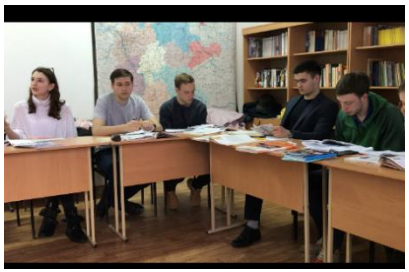
Fig. 1. Observation of the manifestation of the psychological barrier during learning activities
Further work with the students implied creating a favorable psychological climate and the removal ofpotential difficulties in learning the German language. This was facilitated by the method of dramatic performance, “Role-playing conversations between subjects”, which involves continuous interaction between students and teachers, establishing a creative environment, and practice-oriented communication.
In the second stage, the method of dramatic performance, “Role-playing conversations between subjects”, was used as a form of training (Fig. 2). The method “Entering into the role of characters” is the preliminary stage of using role-playing conversations (Dalbergenova: 2017). The literary text “Mutter bekommt kein Geld” by Wilhelm Raabe was presented as a play material for the performance.
Mutter bekommt kein Geld Wilhelm Raabe
(1831-1910)
Auf der Straße begegnete mir frühmorgens oft ein munterer, fröhlicher Junge. Er trug für einen Bäcker die Brötchen aus. Eines Tages ließ ich mich in ein Gespräch mit ihm ein. „Mit dem Austragen“, sagte der Knabe mit leuchtenden Augen, „verdiene ich schon ein gutes Stück Geld. Mein Vater, der in einer großen Tischlerei arbeitet, verdient freilich viel mehr.“
“Und was tut denn deine Mutter den ganzen Tag?“ fragte ich. „Mutter“, sagte er, „die steht morgens als erste von uns auf und weckt mich, damit ich pünktlich wegkomme. Dann weckt sie meine Geschwister, die zur Schule müssen, und gibt ihnen ihr Frühstück. Sind sie fort, so wird Vaters Tasche zurechtgemacht und sein Frühstück hineingepackt. Inzwischen ist die kleine Luise aufgewacht, die erst zwei Jahre alt ist. Mutter muss sie waschen und anziehen. Dann macht Mutter die Betten, räumt auf und kocht Mittagessen. Und so geht es den ganzen Tag weiter.“
“Wieviel verdienst du denn?“ fragte ich weiter. “Na – so ungefähr zehn Mark.“
“Und der Vater, wieviel bekommt der?“ “Hundert Mark und noch mehr.“
“Und was bekommt die Mutter für ihre Arbeit?“ fragte ich zuletzt
Da sah mich der Junge groß an und fing an zu lachen. „Die Mutter“, sagte er, „die arbeitet doch nicht für Geld. Die arbeitet doch nur für uns den ganzen Tag!“
Text is read by the participants of the performance, after which the director of the play asks five questions (5-W-Fragen) according to the plot:
Was ist die Idee der Geschichte?
Was ist das für eine Situation? Was geschieht es?
Wer ist daran beteiligt?
Wonach und warum fragt der Autor den Jungen?
After reading the text, students found information about their characters, chose a certain role, and played the character. Questions for a better understanding of roles we're asked to draw attention to the central areas of life and typical images that are fundamental for understanding the characters, their thoughts, and actions. Participants were divided into two groups:
Gr.1: der Junge - participants no. 1, no. 2, no. 3, no. 4;
Gr.2: der Autor – participants no. 5, no. 6, no. 7, no. 8.
After the performance, participants chose a certain role, the director invited them to the center of the audience and asked questions to understand a role in a specific situation.
Participants no. 1-4, which played the role of der Junge, were asked the following questions:
Wer bist du?
Wie alt bist du?
Was bist du von Beruf?
Was tust du in deiner Freizeit?
Was ist deine Lieblingsbeschäftigung?
Wie ist deine Beziehung zu den Eltern, deinen Geschwistern?
Was bedeuten sie dir?
Other participants had to answer the questions in the same order. The following participants no. 5-8 took part in the questioning in the role of the author, asking the questions below:
Wie heißt du? Wie alt bist du? Wo arbeitest du?
Was bedeutet dir die Arbeit?
Kennst du diesen Jungen?
Was hältst du von ihm? usw.
Stepping into the role of characters, with their realities, in their performance students developed more precise inner ideas about a certain situation, expressed their thoughts and feelings in a free and impromptu manner, and acted relying on their perspective.
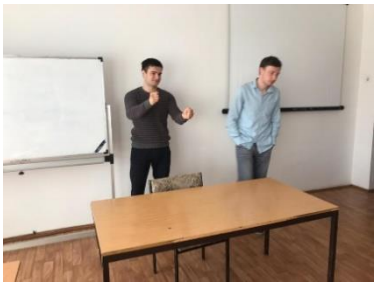
Fig. 2. Method of dramatic performance “Role-playing conversations between subjects”
Role-playing conversations between subjects, spontaneously improvised by participants playing the role and within the proposed open-text dialogue, proved as the most effective. Students independently and impromptu presented a scene of dialogue development based on life experience, presented different situations played at different times, in different places.
It should be noted that during the experiment, students had a creative disclosure of their communicative language potential. Playing the characters, they acted so convincingly that they freely expressed their thoughts and feelings, spoke spontaneously, were not afraid to make grammatical mistakes, and used the German language as a means of communication. Students expressed themselves not only through verbal but also through non-verbal communication: facial expressions, gestures, acting from their perspective.
For example, the above-mentioned student, who experienced worries before the performance and fear of speaking German, being in the image of the performed character during the performance, had a creative mood, was calm, spoke spontaneously and freely. During the experiment, no manipulations with objects were observed, he did fewer gestures, did not show worries, spoke correctly stylistically, forgetting about mistakes, without thinking about inner experiences.
After the experiment, a questionnaire was conducted to determine the effectiveness of using the method of dramatic performance to overcome psychological barriers in learning German. The analysis of the conducted research showed that the use of the above method contributed to the development of empathy, sensory perception in students, as well as relieving tension in communication. The student who has experienced a fear of speaking the German language believes that being protected in the role of a character helps him forget about inner experiences and not think about mistakes.
CONCLUSION
Thus, from the above, it is possible to conclude that dramatic performance contributes to the successful acquisition of a foreign language by students. Dramatic performance is a personality-oriented method characterized by anthropocentricity, humanistic and psychotherapeutic orientation, and aims at the versatile, free, and creative development of the student. Fundamental in the practical acquisition of a foreign language is “entering into the role”, which helps to overcome psychological difficulties, develop abilities and skills.
The advantage of using dramatic performance in working with students is the positive effect it has on thedevelopment of psychological characteristics of students: psychological discomfort, tension, and stress are reduced. Dramatic performance helps students to get rid of complexes, develop the strength of feelings.
As a result of the observation stage of the experiment, it is necessary to highlight the development of the emotional potential, the creation of a relaxed climate for practicing the language, students’ free creative disclosure of the communicative language potential, which is an important point for this research. During the performance, students felt comfortable, expressed their thoughts freely, and spoke German impromptu. Immersion and experiencing the realities of characters allowed to awaken the feelings, impressions, helped students to feel the situation themselves, giving it a personal character, which helped to overcome the inactivity of students.
Methods of dramatic performance, which use a broader range of resources than the traditional system of teaching the German language to students, contribute to the development of communicative and creative activity and focus on the involvement of each student in the active cognitive process.
BIODATA
A.ZH. AKHMETOVA: Akhmetova is a student of Pedagogical Sciences at Sh. Ualikhanov Kokshetau State University, Kazakhstan. Masters Degree in Philology obtained in 2010. Research areas are Pedagogical Sciences, Philology. Psychology, learning, and creative capacities of students in the process of learning of language.
L.E. DALBERGENOVA: Dalbergenova is Associate Professor at Sh. Ualikhanov Kokshetau State University, Kazakhstan. Research areas are Pedagogical Sciences, Philology. Psychology, learning, and creative capacities of students in the process of learning of language, a psychological barrier, and the teaching of language.
G.ZH. MENLIBEKOVA: Menlibekova is Doctor of Pedagogical Sciences, L. N. Gumilyov Eurasian National University, Kazakhstan. Research areas are Pedagogical Sciences, Philology. Psychology, learning, and creative capacities of students in the process of learning of language, and psychological barrier.
A.T. DUJSENBINA: Dujsenbina is Candidate of Philology, Sh. Ualikhanov Kokshetau State University, Kazakhstan. Research areas are Pedagogical Sciences, Philology. Psychology, learning, and creative capacities of students in the process of learning of language, a psychological barrier, and the teaching of language.
G.T. TLEUBERDINA: Tleuberdina is Candidate of Philology, Sh. Ualikhanov Kokshetau State University, Kazakhstan. Research areas are Pedagogical Sciences, Philology. Psychology, learning, and creative capacities of students in the process of learning of language, and psychological barrier.
BIBLIOGRAPHY
BARVENKO, OG (2004). “Psychological barriers when teaching a foreign language to adults [Doctoral dissertation]”. Stavropol.
BREUS, EI, & STOYKA, GL (2014). “Psychological barriers when learning a foreign language in non-linguistic higher educational institutions”. In B. M. Khrustalev (ed.) Relevant question of teaching foreign languages in non-linguistic higher educational institutions (pp. 44-46). Minsk: BNTU.
CHAPLINA, EI (2006). “Strategies of overcoming psychological barriers in students learning a foreign language [Doctoral dissertation]”. Kursk.
DALBERGENOVA, LE (2017). “Speaking and writing at the classes of the second foreign language (B1, B2): Methods of stage interpretation of literary texts”. Kokshetau.
IPATOVA, VP (2019). “Removing the psychological tension when teaching speaking at the group classes of the English language”. Nova Um.RU, 17, pp. 331-333.
KAPRALOVA, JV, MOSKALEVA LA, & BYIYK IA (2019). ”Learning the Russian language in the game: traditional and new approaches”. International Journal of Higher Education, 8(7), pp. 50-55.
PARYGIN, BD (1999). “Social psychology”. Problems of methodology, history, and theory. St. Petersburg: IGUP.
PLAKHOVA, EA, KHARAPUDKO, EN, & NURMIEVA, RR (2019). “Game techniques as a method of the educational process intensification in teaching a foreign language”. Humanities & Social Sciences Reviews, 7(6), pp. 38-44.
REDKINA, LV & ABDALINA, LV (2010). “General characteristics of psychological barriers in learning a foreign language and student’s health”. Sotsialno-Ekonomicheskie Yavleniya I Protsesy, 5(021), pp. 192-194.
SCHELLER, I (1998). “Szenisches Spiel: Handbuch für pädagogische Praxis“. Berlin: Cornelsen Scriptor.
SCHELLER, I (2004). “Szenische Interpretation: Theorie und Praxis eines handlungs-underfahrungsbezogenen Literaturunterrichts in Sekundarstufe I und II“. Seelze-Velber: KallmeyerscheVerlagsbuchhandlung.
SHAKUROV, RKH (2001). “Barrier as a category and its role inactivity”. Voprosy Psikhologii, 1, pp. 3-18.
SHEPELENKO, TM (2017). “Psychological aspects of learning foreign languages”. Vestnik PNIPU, ProblemyYazykoznaniya i Pedagogiki, 1, pp. 117-125.
VERBITSKAYA, TI (2003). “Pedagogical conditions for overcoming psychological barriers in students in the process of teaching a foreign language [Doctoral dissertation]”. Kaliningrad.
ZIMNYAYA, IA (2004). ”Pedagogical psychology (2nd Ed.)”. Moscow: Logos.
