Artículos

This work is licensed under Creative Commons Attribution-NonCommercial-ShareAlike 4.0 International.
Received: 03 August 2020
Accepted: 10 September 2020
DOI: https://doi.org/10.5281/zenodo.4009650
Abstract: This study explains the condition of women street vending as a business that is capable of enhancing and strengthening the economic status of women in a family, but on the other hand, as a way that promotes prostitution. The approach used in this study is the ethnographic approach that seeks to understand the emic and the ethics of the research subjects. Finally, it can be understood that the prostitutes do not have the "Siri" (shame) values in their life, which is an institutionalized culture in society of Buginese and Makassarese.
Keywords: Business administration, prostitution, street vending, warung remang, women as business-people..
Resumen: Este estudio explica la condición de la venta ambulante de mujeres como un negocio que es capaz de mejorar y fortalecer el estatus económico de las mujeres en una familia, pero por otro lado, como una forma de promover la prostitución. El enfoque utilizado en este estudio es el enfoque etnográfico que busca comprender la ética de los sujetos de investigación. Finalmente, se puede entender que las prostitutas no tienen los valores de "siri" (vergüenza) en su vida. Que es una cultura institucionalizada en la sociedad de Buginese y Makassarese.
Palabras clave: Administración de empresas, mujeres como empresarios, prostitución, venta ambulante, warung remang..
INTRODUCTION
The research on gender and women has been covered in social studies for decades such as Sajogyo, Oey, Cander, Annamarawati, and all other researchers; the scholars substantially concluded the urgency of the role of women and the danger of violence in the lives of domestic life and women in public (Ismail: 2008). As well as in studies of culture - about the local culture that avoids violence against women, which has been carried by Idris and Ismail (2006), Ismail (2007) and Ismail (2009), is a study that shows how the local community with a pattern of behaviour, rewards " place "for women. The statement of those cases justifies the urgency of the woman's position in society. It is also showing that a woman is a “Producer” not merely a “consumer” of the development, and it is understandable by the "developers ’community (Benoit et al.: 2019; Sarker et al.: 2019).
For confirmation, the ideology of women's secondary work, which justifies that the participation of women in the workforce, to fulfil only secondary needs, is an unacceptable thesis. Suratiyah (2003) in some of her writings, it has provided a "firm understanding" that the participation of women in the workforce is a "demand/work calls," not an ideology. The indications of those cases are also proclaimed in several research conducted by Ismail (2000), Ismail (2001), and Idris and Ismail (2006), which shows that women are helpless creatures, their participation in the workforce is not just secondary living needs, but it is the primary living needs. Even some of the family's economic mobility is determined by the participation of women in the workforce (Abiodun et al.: 2017; Coy et al.: 2019; Foley: 2019).
Besides the urgency of women's involvement in a variety of development activities, some of the woman roles outside the domestic area (public), brings social problems. One of them is the women's role as a street vendor in warung remang (‘dimly lit shack shops’) in Barru, South Sulawesi. Based on the observation, it is indicated that several women in warung remang are engaged in the prostitution business (Ahmad & Ahmad, 2018; Rugoho: 2019). The activity of women in warung remang is a phenomenon that contains two urgent problems, which led to anomie - a social imbalance. On the one hand, it has become the general ideology that the involvement of women in public-is part of self-empowerment, out of the economic problems, and is the cause, that "marginalized" women are capable of overcoming their problem (Ahmad & Ahmad, 2019; Ismail: 2008). But at the same time, the public role of women in warung remang, which is doing the prostitution business, becomes anomie. It constructs a disorganization-social imbalance of values and norms in Bugis Makassar society. This social disorganization needs an urgent constructive solution, which "does not break the role of women as street vendors and support the women empowerment (Armstrong: 2016; Mitchell et al.: 2017; Swedberg: 2018).
The study on women street vendors and prostitutes in warung remang is a study that has an urgency in understanding the invention of the symptoms of the escalation of prostitution, through warung remang in Barru. This study also provides "an overview and explanation of" how "anomie" of women in doing trading business. But at the same time, it leads the disorganization by covered prostitution. In this case, this research's urgency is also expected to reveal the significance of economic and prostitution. As cited by La Pona (1998), Kinsley states that the factors causing the rise of prostitution are economics. In Jones, it is called by factors of supply and demand. Offer is associated with poverty among women and society. In addition, the market is related to the ability of men to buy sexual services. It shows that prostitution is regarded as a rational response to the modification of poverty among people or as a survival strategy. It could be the reason for the women street vendors along the way in Barru. It shows the urgency of research will explore the economic aspects, and deeply explore the eclectic --- their "moral culture," which is not created in a community setting (Ellison and Weitzer: 2017; Shaver: 2019). In another case, the urgency of this research is also searching, causes, and reasons for the widespread of prostitution through the warung remang. Based on the observation in kompas.com, shows that along the way in the District of Mallusetasi, Balusu, and Tanete Riaja, noted the number of shop and cafes that indicated the prostitution practice (Dewey et al.: 2016). Only with a service fee around Rp. 70,000-Rp 100,000, the widespread of prostitution, poses a rhetorical question, how far moralculture can be a protective shield to avoid disorganization (anomie) women do street vendor? It is essential to understand again a view of Meada, which states the need to study the social action, using the technique of introspection, to know the background of social activities from the view of actors, including prostitution in warung remang (Ahmad & Sahar. 2019; Coşkun: 2018).
Based on the explanation above, the research questions on this study focused on a subject profile (background, education, and adaptability) and trade pattern of women street vendors/warung remang, prostitution as a trading business and instrument/justification of illegal prostitution, and internalization/perception of women street vendors in warung remang about the values of Bugis Makassar “Siri” (ashamed) culture. This research question separates the explanation of women street vendors’ role in increasing the empowerment of the family economy. Still, at the same time, the deconstruction of anomie prostitution in warung remang can be prevented, which finally makes the real women street vendors, which can be empowered economically, fulfil their living needs in the middle of tight economic competition. How does the "significance" of this research, it needs close examination.
METHODS
Street vending and prostitution
Dimly lit store-street vending
Based on the morphology of the two words, warung (Shop) and remang, warung is like a store that sells groceries, remang (dimly lit), not dark, and with no light or between light and darkness. In this research, warung remang is a place of transaction which is not well lighted and not dark. The definition raises the question of why the trade is held in a state that is not bright. Such treatment is undoubtedly contrary to the "economic law" and has the connotation that there is a deviation from sociology's behaviour in social interaction. In such a case, the condition of the dimly lit store (warung remang) is contrary to society's standard practice (Ekpootu: 2017; Benoit et al.: 2019). "Warung remang in Barru, tend to be inconsistent with the custom or character of the Barru people, the problem is Barru is very well known as a religious district."
Warung remang in Barru can be seen along the way of Trans- Barru. The centres of warung remang (dimly lit shops can be observed in Butung, Cempa, Kupa, and Peak. The warung remang sells a variety of things like drinking water, coca-cola, sprite, pastries, and assorted other things. Goods sold in the number of warung remang are relatively similar. "If we go on warung remang it seems they sell a variety of drinks, such as cola, sprite, pastries, mineral water. They sell at an affordable price.”
Warung remang open at around 10:00 am, although some female / other warung remang are still sleeping in the morning. At around noon, they began to prepare her dress to serve guests. The service to the guests is until 04.00 am, then automatically the break time only at around 04:00 to 10:00 am. This activity pattern is conducted almost every day, and each warung remang has the same design of activity. In Barru Regency, the existence of warung remang is understood in almost every village. The place characterized by houses that looked rundown/neglected, located in the corners or along the roads or under the stage house. In Barru, warung remang can be found in the area Butung, Cempa, Peak, and the Kupa, a location/area that seems strategic to the local shop owners as a strategy to establish a warung remang. Of course, the primary motivation for the benefit of warung remang is so promising: "Rent a house-shop occupied by the seller of warung remang is around Rp 500,000 (five hundred thousand rupiahs) / month." "Since childhood, my parents have done a similar business; sometimes, the truck drivers knock on the door at midnight and ask for a drink."
If we observe along the road of Barru in the evening, it shows how busy of warung remang is. Sparkling and flashing lights decorate along the way. Although the warung remang is an individual business, it seems the characteristics and motives are like each other. They all the same sell coffee, and most of them deviate from being covered prostitute service. Warung remang is identical as a covered prostitute. They seem to sell a variety of beverages, including coffee but have a female dim. In Barru, there are several points of warungremang, namely Warung Remang Butung, Sentra Warung Cempa, Sentra Warung Remang Puncak dan Warung Kupa.
Centers of dimly lit shops
Butung area is a part of Lasipae village. Butung is a unique name. Butung is close to Mandalle. Butung is known as the boundary of Barru Regency and Pangkep Regency. The citizen is quite crowded at about 821 numbers of people. They earn money as a sailor (as seafront) and as street vendors. No one knows for sure why the area is called Butung. Butung definition in Buginese relates to a kind of food made from banana called Pallu butung. The information is taken from the interview by the author about why the area is called Butung. Speaking of the name of this village, the urgent problem raised in this area is widespread in warung remang. Warung remang in Butung - tend to be a semi-permanent building but looks chaotic. It seems that a person builds the warung remang with a low economic level. The existence of warung remang in Butung is not too distinct because it mostly includes the communities, although the operation and prostitution activity has similarities with other warung remang (Radacic: 2017; Gerassi et al.: 2019).
The image of covered prostitution dismisses the existence of Butung as a boundary area filled with the values and standards of an excellent economy. It makes the local government concerned with the condition in Butung through the following statement: "It was such a long time ago, Butung area known to have been prostitution with warung remang in this area," and in Butung area, Police Station are alert within 24 hours. They still observe the community activities around Butung.
The existence of a police station in Butung, from the researcher's view did not reduce prostitution. Based on the information, it is often doing raiding warung remang, but after the raid, the practice is still going on. Regarding this, prostitution in Butung seems impossible with a security or force-based approach, but it requires such a wise strategy to overcome them.
Cempa is the name of the area precisely after Barru's location. The condition of this area is slightly hilly;it seems a bit poor like a barren area. Cempa is a Buginese word that means "tamarind." It is a kind of fruit used as a food seasoning that tastes sour. Based on the observation, most of the citizens earn money as a farmer and for the immigrant as a trader. The economic conditions seem to reach pre-middle financial.
"I have been selling here for years. It is my parent’s home. I have income around Rp. 20,000 - Rp 30,000/ day. "
Based on the informant, Cempa is known as a shop-house. The warung remang seems very chaotic. The activity of warung remang takes place from afternoon until morning. The fame of this area is spoken about as follows: "Cempa is famous because of warung remang owned by Dg. Rowa who has a lot of girls. It was for a long time Cempa known by as warung remang. Even at one time, a man died over the abdomen of women (Mp, 35).
Not all Warung remang in Cempa stores "girl." Some show an attitude of "denied" if it relates that Cempa is the prostitution area. When the author visited the village officials, they clearly stated that the city of Cempa is now free from prostitution. Similarly, with the Chief of Cempa –he denied admitting the warung remang in Cempa and has naughty women. He said, Cempa is no longer as it was, he insisted that the officer's alertness made no more prostitution. But from the observation, what he says is not valid. The research showed that Cempa still cannot be separated from the practice of prostitution. Observing on the existence of prostitution in Cempa can be seen from the following transcript of an interview with one of the pimp:
Researcher: There is no karaoke bar here (Cempa), isn’t it? Pimps: There is no karaoke here, only girls; Researcher; Well ma'am, how much is the service? Pimps: one hundred thousand rupiah; Researcher: (pretend to bargain) How about forty thousand rupiah? Pimp: Where do you think you can find girls for forty thousand rupiah? (Observations).
Puncak area is one of the centers of warung remang in rural regions of Mallawa, Mallusetasi District. Quite different from other warung remang, Puncak is isolated from the communities crowded. Based on theinformation, warung remang is located in the Peak and was built by the owner of the land of the local people. However, in the subsequent development, the shop seems owned by the manager of the shop.
"Stalls are located in the Peak built by landowners, and among the stalls were built existing belonging to the manager of the stalls."
The location of warung remang in Puncak called Puncak (Peak) is the area close to the top of the mountains. The situation tends to be ignored. Puncak is just below the foot of the hill in front of the sea of Makassar. Observations showed: "Shop is located at the summit is only about 18 shops; the inhabitants were women. Some of them have small children. "(Observations)
It has become a common understanding; warung remang in Puncak is the location of the prostitutes wholive there for decades. This location is challenging to touch and ignored by security officers. Information obtained that although prostitution is anomie in communities around the Puncak or Mallusetasi in general, at least in recent years, people around are beautiful with the condition. This is because: (1) the public was not bothered and instead benefited because without their homes or rented by the managers of warung remang; The procurer is people around the Puncak, so they feel protected. It is as stated: "The tendency communities around Puncak tend to be silent (they seem to feel not by the practice of prostitution)". "The thing that makes Puncak never been raid because the pimp is a man around Puncak ".
Warung remang in the northern end of the District Mallusetasi is called the Kupa. The Kupa is one of thewarung remang widespread. People who lived in this area work as merchants and as fishermen. The Geographical conditions of the area, which is in the seafront, make the people choose to be marine workers (fishermen). Although the citizen lives in harmony and respects all the values of Buginese, it is all been swept by the existence of warung remang. Warung remang is a part of the community dynamics.
Warung remang in the Kupa has become a routine activity over the years and has become a tradition. In the dynamics of society, warung remang in the Kupa is inevitable. It has been understood that the existence of prostitution is not the problem by the people around, they seem to anomie the prostitution practice by warung remang as if he did not need to bring the issues as a problem of society. This is due to several factors, whose case similar in Puncak: (1) houses for rent by managers of warung remang; (2) the pimp/pimp/companion is a local citizen; (3) administration officers have cooperation with the manager of the warung remang.
Managers and women of dim shops
Talking about warung remang in Barru, there are two significant subjects to be distinguished, the owners and the women of warung remang. Warung remang owners are people who create, administer, or manage the warung remang and also the security of warung remang. Women of warung remang are women who tend to be a waiter or participate as a manager for the sustainability of warung remang. The relationship between the manager and the women of warung remang seems rather challenging to be separated in a street vendors’ business. They get to benefit from each other. "Between the owners of warung remang with women (prostitutes) of warung remang are different, the owner who owned the warung remang by renting the place, whereas women of warung remang are female prostitutes, both have mutual benefit". "The benefit gained by the warung remang owner is usually given to them. If there is Rp 100,000 income, then warung remang owner usually gets Rp 25,000 and it usually called room accommodation fee."
In the relation between the owner or manager of warung remang with the prostitutes of warung remang, the pimp has responsibilities: 1) rent or make warung remang; 2) the safety of the women of warung remang;3) afford the needs of the women of warung remang; 4) finding the business related to women's warung remang. In other respects, the warung remang in demand to 1) serve guests well; 2) maintain or beautify themselves to attract guests or customers; 3) keep the service of warung remang by being polite and obedient to the guests.
Usually, the ones that afford the needs of the prostitutes are business owners. The rice and fish dependents.
One of the tasks of prostitutes is they must serve the guests with the best attitude. They should not be naughty (for instance the guest should open the shirt, should not be kicked and others while playing with the guests).
Those are the business contracts that become the obligation between the manager and the women of warung remang. It formed into an agreement that they both need to follow to win the hearts of the guests or customers. On occasion, it has become a tradition, and it was understood between women of warung remang by the tenant (pimp) of warung remang. Their agreement corridors are not harming each other. Although business contacts are not written, it has become a habit of the women of warung remang and the pimps to agree and understand each other to ensure a mutually beneficial relationship. In this case, it is as follows; "Between the manager/owner of the warung remang and the women of warung remang have a mutual benefit, but the women should be maintained because they can go away and compare the service between another manager of warung remang."
Life of Women at Dim Store
Referring to the amount of information from several informants, the life background of women in warung remang has not kind of variety. Some women of warung remang backgrounds show similarities in a life filled with life's problems both in family life and community life. It seems real; the women of warung remang are experiencing life problems both from the family and from the wider community. In the family, they usually ignored their family and relatives. In social life, they are marked as undignified women. An understanding of such a case, the personal profile of women in warung remang, as part of the unit of analysis in this study is needed to explore the background of life, education, economic level, and adaptation life. Family and society problem made the women isolated, for example: Women in warung remang Puncak who have children (the former wife of Ac is a woman who has been detention; I was an old woman and always work as prostitutes of the Makassarese who had not been accepted by their families.
Dum women in the Kupa, is a woman who was ignored by her family.
Information from informants has indicated that a few women of warung remang backgrounds family filled with psychological and social problems. Mental problem is the ignorance of the family, and the analysis (exclusion) form the society. In social issues such as; public acceptance or marking as the indignity, women is a kind of status as a problem maker in the community. Those are the similarity of the profile of the women of warung remang. In the sociological side can cause the anomie in the constellation of social life or family harmony.
"Women of warung remang are almost had problems with his family, somehow it had ever brought by the truck and then stayed in Puncak."
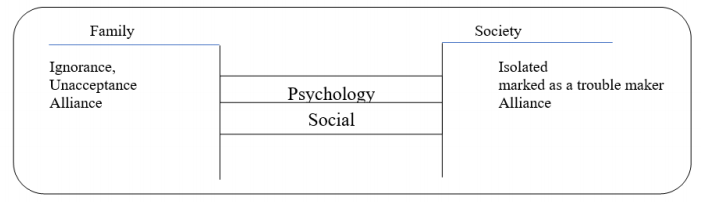
Figure 1. Similarity Profile of Background Life of Women of warung remang
The scheme above shows that the families of the women in warung remang tend to ignore them. The family had less attention, even non-existent. Their presence in the family is not expected. In this case, the alliance understood as a form of punishment against her. As a prostitute, their actions had been considered as a disgrace and broke the family's dignity. In society, the women of warung remang have excluded from people. They are not expected to hang out and mingle with them. It is a kind of fear that their behaviour can affect other community members. In this case, the isolation from the community as a form of social sanction, which makes them increasingly punished, and they are getting along to the world of prostitution.
Besides, the women of warung remang have similar backgrounds in education degrees. They are not able to read and write. They only have an average education level until primary school (elementary school). It gives them an effect and makes the problem such as they have less skill, lack understanding of religious values, and less appreciation of the values in society, which makes them deviate. "The women of warung remang are not educated; they did not finish school, and do not have the skills, even more just regular reading and writing.”
A profile with such low levels of education tends to make them believe that they only have a job as a prostitute in warung remang. They seem phatic in the life of society. Inferiority and submission are the impacts of their low level of education. In this case, low education levels characterize the women of warung remang as a justification for the effects of the low level of education in society. The low level of knowledge of the women in warung remang becomes such a significant reason why the women choose to be a part of the prostitution world. The institutional factors can construct women of warung remang mindset understood to be human that have less dignity.
"The low level of education of the women in warung remang allows them to have a role in the world of prostitution, they do not have the skills, and it causes problems in society."

Figure 2. Impact low level of education woman of Warung Remang
Based on the scheme above, it is understood that access to a lack of education correlates to disharmony in the social impact. In this regard, what is happening to the women of warung remang in Barru, with low values of society, can affect the lack of soft skills (dignity, integrity, and self-worth), the lack of religious values (appreciation and experience of religious values), fewer skills (no preparation to enter the work field) and the construction of values in society. Those things construct women to engage in prostitution.
RESULTS
Discussion on business and prostitution
Women who engage in warung remang trading activities choose to be a prostitute is Buginese- Makassarese woman, which psychologically and sociologically has problematic. Psychologically, the woman is not accepted by their families and communities, and sociologically the women are less prepared to engage in the city, because of the low level of knowledge, do not have the skill, weak economy, and have less power. The conditions of warung remang make the women enable them to find solutions in having the existence bothsocially and economically. The reality in the social means as a human being can live together with other societies, and financially the warung remang can make the women fulfil their need. However, they are ignored by their family. Based on the author's research, several factors driving women to participate in warung remang and prostitution are economic reasons, expelled by their husband, sex, and the need for public acceptance.
There are many reasons why the women of warung remang engage in the world of prostitution; they are; economic reasons, expelled by their husband, sex, and the need for public acceptance, among others.
Economic reasons fulfilments
The economic needs of women of warung remang as people, in general, are something quite urgent. Women of warung remang understand that only by working at warung remang they can afford their needs. The critical without skills and education make them fall as women in warung remang. In such a case, the need for food as a primary need and other secondary needs (entertainment, jewellery) are needs that are inevitable for women in warung remang. The necessity of rice and side dishes is needs, which may not be assured, warung remang for women to fulfil all of them, and other needs.
Information obtained that a woman in warung remang in fulfils their everyday needs could Rp. 70.000, - / day, then to achieve their primary needs in a month he must prepare ± Rp. 2.000.000 -. The fulfilment of this requirement does not include other needs such as clothing, jewellery and cosmetics. For women in warung remang, the dress, jewellery, and cosmetic tools are secondary needs. But those needs categorized as a matter of urgency daily needs. These needs cannot be delayed until the next day. From the description is quite understandable that the economic factor is a fundamental factor of principles that makes women into prostitution "business" in warung remang. The urgency of their financial needs without being supported by adequate skills and education leaves them with no choice but to immerse themselves in a warung remang business.
The main reason women have practice in prostitution is the necessities of life - which is economically driven. There is no longer questioned why she did prostitution; it was because of money and money that inspired them. What could they eat if they do not have money; they are selling it. In this case, the unfulfilled economic makes women do a variety of ways to afford their needs without any consideration of moral damages or the impact of anomie in society. Thus, identifying characteristics of women in warung remang that economically are financially weak. It quite understood positively that the correlation of why they choose to be women in warung remang.

Figure 3. Profile Degrees of Low Economy
Based on the scheme, it shows the degree of economy of women in warung remang is very low and financially weak. It encourages them to do the business in warung remang. The degree of the small economy may cause by the family background. With such an urgent need, further, it makes their financial condition is getting worse. It can be understood that those conditions may lead to anomie in society, which is have animbalance in the social system. It is genuinely can lead the women of warung remang to go further to this business because of the economic and social reasons.
Trauma from loss of a spouse
One of the factors which made the women involved in warung remang business is getting stressed because left behind by their husbands. If they are left because of death husband, there is no problem for them. But when they are gone because of their husband's affair, it makes them very painful. They feel hurt when the one they loved is left with another woman. Many of the women in warung remang stated that they are engaging with the business because of their disappointment of their husbands.
The women in warung remang united as widows; she wants to be a woman in warung remang because of disappointment over her husband's treatment. I am a widow. I have a son and live alone. Another case is many of the women who joined in warung remang business because their boyfriend betrayed, left, or marry another girl. This disappointed feeling makes them traumatized and think they are useless women. It makes them choose to join in warung remang business. They believe it can cure their hurt, although, on the other side, they realized that giving service to many men is not merely cure them. Besides widows, many women of warung remang are girls who abandoned by her boyfriend. Hurt feelings make them join into the world of prostitution, although they realized that serving the men will not heal the hurt.
Sexuality is a natural and basic instinct. The sexual need for women in warung remang is also another need as human beings. Adequately understood through the study, although sex is a necessity, it is not a significant justification why the women involved in the warung remang business. For the community of warung remang, sex is part of life is undoubtedly to be something that they cannot miss along with the services in warung remang. Sex is money, and money comes from sex, so ex-companion in warung remang defines the sex industry. This statement was also confirmed:
Main (sex) has become a business that can make money for the women of warung remang. They enjoy sex, even if money is more important than that. “Sometimes, women of warung remang doing a sex scene with their customers without paying if they like them. In this case, they are willing even to conceive”.
In the view of the women in warung remang, sexual needs are a part that cannot be separated from warung remang business. Serving the man is a part of warung remang business, but on the other side, they enjoy the sexual activity as "sexual pleasure." In this case, it is undeniable that sexual needs are a factor for women in warung remang in doing this business. Sex for women in warung remang is something that can be understood as economic needs, but it is perceived as pleasure into something that cannot be separated from life. This proclamation can be analyzed as in the following passage: "In doing sex, no customers complained because the women did not want to take her clothes off, or they kick in doing sex scenes, this means that women do not always do sex for money, they also enjoy it."

Figure 4. The Factors of warung remang business
Based on the descriptions, it understands that women in warung remang business doing prostitution because of three fundamental factors, they are: (1) factors of economic necessity as a significant factor, due to the financial needs; (2) The stress factor for abandoned by the chaperones / their husbands; (3) The need for sex, pleasure of sex. The three factors become the justification of their reason for doing prostitution. Economic needs become the main driver, but the stress factor and the need for sex is a factor that cannot be removed with the socio, economic, psychological of the women of warung remang business. These factors cannot be understood in part but must be understood as a whole thing.
Patterns in warung remand and prostitution practice
The trade patterns in warung remang in Barru is related to selling tips made by the women vendors in finding customers, tips in visitors serving, and saving money and income. The tips in trading similar to the strategic operation that shows their business do not cause anomie, then for tips in saving money and income related to how their money can be saved and able to use for tomorrow. Those things are understood as trade patterns, which is different from the principle of other trading businesses; this is shown in figure 5.

Figure 5. Patterns in Warung Remand and Prostitution Practice
The women of warung remang in doing the trading business are selling a variety of beverages. In terms, warung remang is a "coffee shop." This term cannot be connoted that warung remang only sells the coffee because warung remang also selling the other beverages (sprite, Coca-Cola, mineral water) or certain foods such as noodles, pastries, and more. The connotations of “coffee shops” tends to have negative connotations and different with another coffee shop, or it can be said that the implication is "symbol" that the warung remang who is also selling coffee is different to real "coffee shops," which warung remang have the girl to serve the visitors by their agreement. In this case, it is accessible to the visitors to differentiate between "real" shops and warung remang. "The nicknames warung remang is given to the shop in the streets, saving a girl, warung remang is a coffee shop. But the coffee shop does not mean selling only coffee, but also a variety of other drinks. It is the nickname that distinguishes the other coffee shop ".
DISCUSSION
The difference between a coffee shop and other Shops can be understood from the characteristics in both shops. Warung remang is characterized by selling drinks other than coffee, such as sprites, snacks, cakes, noodles, have a girl waitress, the service time is more than 20 hours and does not open in the morning. The shop looks chaotic, and the makeup of the waitresses is striking. Moreover for the “real” coffee shop is characterized by the nickname that is sometimes known as the rice shop, selling rice, coffee and other beverages, the waitress is women and men, and the time service only until 01.00 am and early in the morning, and also the shop is clean. Observing that explanation, it can be understood as follows in table 1:
Table 1. The difference between a coffee shop and other Shops

The income from each warung remang in the day and night is between Rp. 200,000 - Rp. 300.000, - This income does not include extra services given by the women in warung remang for visitors. The income as described above around Rp. 6,000,000 - Rp. 9,000,000/ month. Although this is not the overall income, it is quite large. Related to the income of the women of warung remang this was stated: "The income of warung remang each day is between Rp. 200,000 - Rp. 300,000 (income is certainly a decent income), although it is not net income." "The income in each warung remang is approximate Rp. 200,000 a day and night. "
From the information obtained, the income only counted from the coffee and other beverages selling, (not including extra services-prostitutes), which is once service is Rp. 70.000 - Rp. 100,000 when women in warung remang can serve 3-5 people truck driver, then a woman in warung remang could earn between Rp. 2,100,000- Rp. 3,500,000/night. So, if women can serve 2-3 visitors, they can earn Rp. 500,000 - Rp. 800.0000 / night.
It means that in one month, one person in warung remang could earn around Rp. 15,000,000/month. It was a promising income when compared to other jobs in Barru. Therefore, the people in Barru are understood that the widespread of warung remang is possible because the prospect of profits gained is quite a lot compared to other businesses.
CONCLUSION
The center of warung remang in Barru, which is doing prostitution can be encountered in several centers, namely, Butung, Cempa, Puncak, and the Kupa. The center of warung remang are centers that can be observed in the Trans-Sulawesi main road. It is found that the warung remang in Barru operates ± 20 hours per day. Warung remang centers, commonly known as the coffee shop. Warung remang are characterized by chaotic conditions and managed by women vendors. In this case, the centre of warung remang may cause problems, the anomie which there is prostitution business done by women in warung remang.
The background can see the profile of women prostitutes in warung remang of life, education level, economic level, and adaptation pattern—the origin of women in warung remang mostly full of life’s problems in their family and society. The factors leading the women doing the business in warung remang and choose to join in the world of prostitution are economic reasons/needs, the stress in psychology because of having trauma by their left husband, and sexual needs. Economic reasons are the ideas that become the main reason the women doing the business because they have a low economy. Another reason women enter the world of warung remang is the stress of having trauma by their left husbands/spouses. Women in warung remang feel disappointed and looking for a place that expresses their anxiety. Then, another reason for choosing the world of prostitution is sexual needs. Women in warung remang think that “sex” is a part of their life need.
Trade patterns made by in warung remang which are covered by selling coffee. The trend that is showing is that they are not only selling drinks and rice. But behind those patterns, they perform the prostitution. In this case, the woman of warung remang in doing their trading business operates from 17.00 pm until 04.00 in the morning. Therefore, it can be understood that the women in warung remang, which doing prostitution does not have the values in their life. Siri is no longer as a pattern of life, although it still entirely known that "siri" (shame) institutionalized culture in society of Buginese and Makassarese
ACKNOWLEDGMENT
We acknowledge the support offered by colleagues at the University, encouraging us to publish. They have been instrumental in reminding us. We are grateful!
A SOLONG: Aras Solong was born on 14th August 1962 at Maros in South Sulawesi in Indonesia. He completed his first degree in 1986 at Universitas Veteran Republik Indonesia (UVRI) with a Bachelor’s Degree in Public Administration. He later attained his Master’s Degree in 2000, specializing in Development Studies from UNHAS. His Doctoral Degree is in administration from UNHAS. He is a Senior Lecturer of Universitas Islam Makassar in the Department of Public Administration in the Faculty of Social Studies and Politics.
D MAGGASINGANG: Djainuddin Maggasingang was born on 31st December 1955 at Majene in South Sulawesi in Indonesia. He is specialized in Public Administration. He obtained his first degree in 1982 from IKIP Ujung Pandang plus a Masters from UNHAS. He has a Doctor's degree in Public Administration from Universitas Brawijaya in Malang.
M RAHMAN: Mariati Rahman is a specialist in Public Administration and an Associate Professor of Universitas Islam Makassar. She is among the few female Lecturers at the Department of Public Administration in the Faculty of Social Studies and Politics at Universitas Islam Makassar.
A R BEBASA: Abd. Rahman Bebasa was born in South Sulawesi in the 1960s. He graduated with a Bachelor’s Degree in Political Governance in 1984 from UNHAS. In 1997, he graduated with a Masters’ Degree in Development Administration from UNHAS. He completed his Doctor Degree in Public Administration from Universitas Negeri Makassar in 2016. He is a Senior Lecturer in the Department of Publication Administration, Faculty of Social Studies, and Politics at Universitas Islam Makassar.
BIBLIOGRAPHY
ABIODUN, A. K, GEORGE, A, CHUKWUMA, A. C, GBENGA, O, ILUNO, L. U (2017). “Human Trafficking: AGlobal Challenge Reflection on the Challenges in Nigeria.” JL Pol'y & Globalization, 61, pp.192-198.
AHMAD, I., & AHMAD, S. (2018). “Multiple Skills and Medium Enterprises’ Performance in Punjab Pakistan: A Pilot Study”. Journal of Social Sciences Research, 7(4), 44-49.
AHMAD, I., & AHMAD, S. (2019). “The Mediation Effect of Strategic Planning on The Relationship Between Business Skills and Firm’s Performance: Evidence from Medium Enterprises in Punjab, Pakistan”. Opcion, 35(24), 746-778.
AHMAD, I., SAHAR. (2019). “Waste Management Analysis From Economic Environment Sustainability Perspective”. International Journal Of Scientific & Technology Research 8(12), 1540-1543.
ARMSTRONG, L (2016). “Out of the shadows (and into a bit of light): Decriminalization, human rights and street-based sex work in New Zealand. In New sociologies of sex work (pp. 51-68).” Abingdon, UK: Routledge Publication.
BENOIT, C, SMITH, M, JANSSON, M, HEALEY, P, MAGNUSON, D (2019). “The prostitution problem: Claims, evidence, and policy outcomes.” Archives of Sexual Behavior, 48(7), pp.1905-1923.
BENOIT, C, SMITH, M, JANSSON, M, HEALEY, P, MAGNUSON, D (2019). “Unlinking prostitution and sex trafficking: response to commentaries.” Archives of sexual behavior, 48(7), pp.1973-1980.
COŞKUN, E (2018). “Criminalisation and prostitution of migrant women in Turkey: A case study of Ugandan women.” Women's studies international forum, 68, pp. 85-93.
COY, M, SMILEY, C, TYLER, M (2019). “Challenging the “Prostitution Problem”: Dissenting Voices, Sex Buyers, and the Myth of Neutrality in Prostitution Research.” Archives of sexual behavior, 48(7), pp.1931- 1935.
DEWEY, S, GERMAIN, T. S, GERMAIN, T. P. S (2016). “Women of the street: How the criminal justice-social services alliance fails women in prostitution.” New York City, New York: New York University Press.
EKPOOTU, M. U (2017). “Sexualizing the City: Female Prostitution in Nigeria’s Urban Centres in a Historical Perspective. In Selling Sex in the City: A Global History of Prostitution, 1600s-2000s (pp. 306-328).” Leiden, Netherlands: Brill Publication.
ELLISON, G, WEITZER, R (2017). “The dynamics of male and female street prostitution in Manchester, England.” Men and Masculinities, 20(2), pp.181-203.
FOLEY, E. E (2019). “The Prostitution Problem”: Insights from Senegal.” Archives of sexual behavior, 48(7), pp.1937-1940.
GERASSI, L, FABBRE, V, HOWARD, A, EDMOND, T. E, NICHOLS, A (2019). “How sex trading identitiesshape experiences of service provision: insights from adult women with lived experiences and service providers.” Journal of human trafficking, 5(1), pp.74-87.
IDRIS, D, ISMAIL, A (2006). “Widow and Anadaara Toa Women: Study of Economic Tactics, and Mobility of One Widow and Anadaaratoa Woman in Palanro Market Marketers and Mangkoso.” Makassar, Indonesia: FIS UNM Publication.
ISMAIL, A (2000). “Diversification of work and mobility of one woman in the la bokke community.” Makassar, Indonesia: UNM Research Center Publication.
ISMAIL, A (2001). “Patterns of women's participation in the development of transmigrant communities: a case in the baras sembilan transmigrant community, Mamuju, South Sulawesi.” Makassar, Indonesia: UNM Research Center Publication.
ISMAIL, A (2007). “Women in patuntung religion: Study of pasanga's teachings to prevent violence against women.” Surabaya, Indonesia: Airlangga University Surabaya Press.
ISMAIL, A (2008). “Women Street Traders: Self-Profile, Trade Strategy and Mobility One.” Makassar, Indonesia: FIS UNM Publication.
ISMAIL, A (2009). “Prevention of violence against women models. Makassar, Indonesia: UNM Research Institute Publication.
LA PONA, D (1998). “Street sex workers potential for sexual disease transmission.” Yogyakarta, Indonesia: Ford Foundation and PKK UGM Publication.
MITCHELL, K, MOYNIHAN, M, PITCHER, C, FRANCIS, A, ENGLISH, A, SAEWYC, E (2017). “Rethinkingresearch on sexual exploitation of boys: Methodological challenges and recommendations to optimize future knowledge generation.” Child abuse & neglect, 66, pp.142-151.
RADACIC, I (2017). “Doing feminist, human rights-based, socio-legal research on prostitution: challenges and potential.” Feminists at law, 6(2), pp.1-14.
RUGOHO, T (2019). “Experiences of Disabled Commercial Sex Workers in Zimbabwe. In Diverse Voices of Disabled Sexualities in the Global South (pp. 151-165).” Cham: Palgrave Macmillan Publishing.
SARKER, M. N. I, RAHMAN, M. Z, CAO, Q, XU, Z (2019). “Impact of small entrepreneurship on poverty alleviation and sustainable livelihood of street vendors.” International Journal of Innovation and Applied Studies, 25(4), pp.1241-1254.
SHAVER, F. M (2019). ““The Prostitution Problem: Why Isn’t Evidence Used to Inform Policy Initiatives?.” Archives of sexual behavior, 48(7), pp.1955-1959.
SURATIYAH, K (2003). “Sacrifice of Women in Industrial Workers, in Sangkan Paran Gender.” Yogyakarta, Indonesia: Educational Research Center of Gadjah Mada University Press.
SWEDBERG, G (2018). “Moralizing public space: prostitution, disease, and social disorder in Orizaba, Mexico, 1910–1945.” Journal of Social History, 52(1), pp.54-73.
