Artículos
Effect of Sports Lottery Consumers on Sports Attitude and Behavior
Efecto de los consumidores de la lotería deportiva sobre la actitud y el comportamiento deportivo
 CHIN-CHENG YANG yccheng@cyut.edu.tw
JEN-JEN YANG jjyang@cyut.edu.tw
CHING-TE , LIN CTLin@cyut.edu.tw
PEI-HAN WU han0933693062@gmail.com
CHIN-CHENG YANG yccheng@cyut.edu.tw
JEN-JEN YANG jjyang@cyut.edu.tw
CHING-TE , LIN CTLin@cyut.edu.tw
PEI-HAN WU han0933693062@gmail.com
Effect of Sports Lottery Consumers on Sports Attitude and Behavior
Utopía y Praxis Latinoamericana, vol. 25, no. Esp.10, pp. 297-304, 2020
Universidad del Zulia

This work is licensed under Creative Commons Attribution-NonCommercial-ShareAlike 4.0 International.
Received: 30 August 2020
Accepted: 25 October 2020
Abstract: The purpose of this study is to explore the effect of sports lottery consumer’s sports watching behaviors on attitudes and behaviors on this field. Using the self- edited sports watching behavior scale, sports attitude scale and sports behavior scale as research tools. While enhancing sports attitudes, they will also increase their participation behaviors. Sports lottery tickets can increase government taxes and promote sports development; they also can promote the sport lottery consumers to improve their own sports attitudes and their sports behavior after watching sports games, and then achieve the popularization of whole people that pratice sports.
Keywords: Confirmatory factor analysis, partial least squares, PLS, structural equation models..
Resumen: El propósito de este estudio es explorar el efecto de los comportamientos de observación de deportes de los consumidores de loterías deportivas sobre las actitudes y los comportamientos en ese campo. Utilizando la escala de comportamiento de observación de deportes autoeditada, además de la escala de actitud deportiva y la escala de comportamiento deportivo como herramientas de investigación. Mientras mejoran las actitudes deportivas, también aumentarán sus comportamientos de participación. Los boletos de lotería deportiva pueden aumentar los impuestos del gobierno y promover el desarrollo en esa área; también pueden promover a los consumidores de lotería deportiva para mejorar sus propias actitudes y comportamientos deportivos después de ver juegos deportivos, y luego lograr la popularización de personas enteras que practican deportes.
Palabras clave: Análisis factorial confirmatorio, Mínimos cuadrados parciales, Modelos de ecuaciones estructurales, PLS..
INTRODUCTION
The gains from sports lotteries have great effects on the country in absorbing social hot money, increasing government taxation, supplementing sports funding, and developing public construction (Deng & Chen: 2006, pp.116-122). Most people's motivation for buying lottery tickets is that they are interesting, they have gambling or good luck, high jackpot bonuses, and the distribution of lottery coupons for the purpose of promoting public welfare and sports development is the biggest driving force (Liu et al.: 2002, pp.217-230; Liu & Hsieh: 2007, pp.105-121; Yang et al.: 2015, pp.373-385).
Consumers purchase sports lottery tickets based on observing the sports competition process to analyze and collect relevant event statistics and make decisions about consumer behaviour. If consumers are not familiar with this campaign, the possibility of betting on winning will be reduced, and the relative consumption motivation will also be reduced. Therefore, sports watching may become the focus of sports lottery ticket consumers' high demand and attention and become more involved (Ramírez et al.: 2019; Ramírez et al.: 2020; Chang et al.: 2010).
The more people buy sports lottery tickets, for sports lottery companies, it can increase turnover and increase treasury tax; for the sports broadcasting industry, it may increase the ratings of sports broadcasting. According to the research by Yang et al. (2020), watching movies made by sports celebrities can positively affect the sports attitude and behaviour of viewers. Yang et al. (2013) research on sports viewing experience and sports attitude also found that there is a positive relationship between sports viewing experience and sports attitude. Attitude is a psychological factor of behaviour, which is a stable value for something, which affects individual behaviour and activities (Ahmad & Ahmad: 2019, pp. 746-778; Chen & Chung: 2009, pp.81- 90). Therefore, the degree of involvement in sports watching may affect the purchase intention of lottery tickets, but also affect the individual's sports attitude, and having a good sports attitude will also affect the individual's sports behaviour (Yang et al.: 2018, pp.187-190; Ahmad & Ahmad: 2018, pp. 44-49). The generation of good sports behaviour requires a positive attitude to maintain personal thoughts and behaviours about sports (Yang et al.: 2013, pp.111-134).
Based on the above discussion, people will buy sports coupons for various reasons, and they are more likely to watch the event while buying. Many scholars also discuss the relationship between sports watching and sports attitude and sports behaviour. Therefore, if sports watching can effectively affect the sports attitude and sports behaviour of sports lottery ticket consumers, then sports lottery tickets are more necessary to promote. This study intends to take sports lottery ticket consumers as the research object to understand whether the sports lottery ticket consumers' watching behaviour will affect their sports attitude and sports behaviour.
Research purpose
Based on the above background and motivation, this research is to understand the impact of sports lottery consumers' sports watching behaviour on sports attitude and sports behaviour. Use the structural equation model (SEM) causal path analysis to clarify the relationship between each other. The research results can be provided to the government and relevant units as a reference for policy modification and sports promotion (Yulanda & Sepdanius: 2019, pp.40-49; Ahmad & Sahar: 2019, pp. 1540-1543)
METHODS
Research object
This research object of this study is the purchasers of sports lottery tickets. The sampling method was used to conduct sample testing. A total of 400 questionnaires were issued. After excluding 23 invalid questionnaires, 377 valid questionnaires were obtained, and the questionnaire recovery rate was 94.25%.
Research tool
Sports watching behaviour scale
This scale uses the questions of the watching sports and purchasing sports lottery consumption behaviour scale proposed by Gau (2009), which includes three items: Browsing the Internet, watching from TV, reading newspapers and magazines. And use a single question ruler to score, from "none", "1 minute-1 hour", "1-2 hours", "2-3 hours", "3-4 hours", "more than 4 hours" Scores of 1, 2, 3, 4, 5, 6 points. The higher the score of the subject, the longer the time spent watching sports, and the shorter it is (Martinez: 2017).
Sports attitude scale
This scale is revised with reference to the sports attitude scale questions proposed by Yang et al. (2018) and Lin et al. (2019) and includes three facets: cognition, affection, and behaviour. The scale uses a Likert five-point scale. Scores of 1, 2, 3, 4 and 5 are given from "Strongly Disagree", "Disagree", "Normal", "Agree" and "Strongly Agree". The higher the score of the subject, the higher the feeling of sports attitude, and the lower it is. After formal analysis, exploratory factor analysis and reliability analysis, the three facet factors were obtained, a total of 10 questions, Cronbach's α value was .898, and the cumulative explanatory variance was 78.052%, indicating that the scale has Accepted reliability and validity.
Sports behaviour scale
This scale adopts the sports behaviour scale question proposed by Yang et al. (2019) and includes three aspects: exercise frequency, exercise duration, and exercise intensity.
It is described as follows:
- 1. Exercise frequency: the number of participation in sports every week, scored in five points, from "1 time per week", "2 to 3 times per week", "4 to 5 times per week", "6 to 7 per week "7 times" and "more than seven times a week" are given 1, 2, 3, 4, and 5 points respectively. The higher the score, the higher the degree of regular exercise.
- 2. Exercise duration: Each time you participate in the exercise, it is scored in five points, from "1~15 minutes", "16~30 minutes", "31~45 minutes", "46~60 minutes" and " "61 minutes or more", given 1, 2, 3, 4, and 5 points respectively, the higher the score, the longer the time for each exercise (Alcazar et al.: 2018, pp.914–924).
- 3. Exercise intensity: Each time you participate in the exercise, you will get a five-point scoring method. From "easy", "relaxed", "okay", "a little tired", "very tired", give 1, respectively 2, 3, 4, 5 points, the score is higher, the higher the degree of physical feeling (Cholewa et al.:2019, pp.136–146).
Data analysis
In this study, the PLS2.0 statistical software package was used to analyze the results of the formal questionnaire, including confirmatory factor analysis and structural equation model.
RESULTS
Confirmatory factor analysis
Before conducting model path analysis, test the reliability and effectiveness of various aspects through confirmatory factor analysis. Measurement methods include evaluating the measurement model and verifying the effectiveness of the differences.
1. Reliability
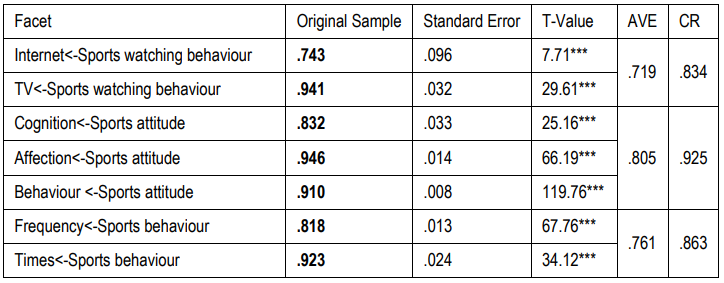
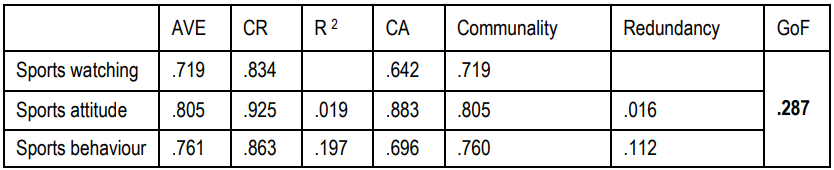
In terms of nominal project reliability, this study uses the composition reliability (CR) and Colognebach's α (CA) coefficient to detect the internal consistency index. It was found table 1 that the CR value of this studyranged from .834 to .925; Cronbach's α value ranged from .642 to .883, indicating that the measurement indicators of this study have good internal consistency.

Convergent validity
This study examines the aggregation validity of potential variables by measuring the factor loading of the variables to their convergent validity. According to the research recommendations of Hair, Black, Babin and Anderson (2010), the factor load must be greater than .5. From Table 2, the factor load of a potential variable can be obtained, except for newspapers and magazines and strength facets that have not reached the test the standard is deleted, and the remaining facets are in compliance with the standard, with good convergent validity.
Discriminant validity
Chin's research suggested that the square root of the average variances extracted (AVE) of individual latent variables should be greater than the correlation coefficient between this latent variable and other latent variables in the model. According to the research recommendations of Venkatesh, Thong and Xu (2012), the detection standard of the square root of AVE should be at least greater than .5. From Table 3, the square root of the potential variable of this study is between .847~.897, and the AVE of each potential variable is greater than all correlation coefficient values in the same column and row. Therefore, the measurement model in this study has good discriminant validity.

Linear structure model analysis
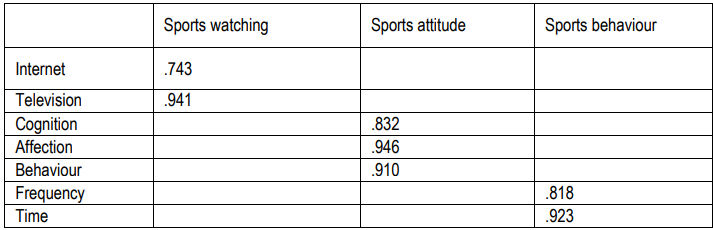
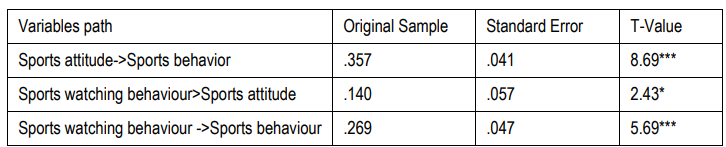
According to Table 4, in terms of measurement mode, sports watching behaviour can be reflected in theinternet and TV in the use of media and the average weekly viewing and viewing time, and the estimated load of the factor depends on The order is .743, .941; sports attitude variable can be reflected in the three aspects of cognition, affection, and behaviour, and the estimated value of the factor load is .832, .946, .910 in order; sports behaviour variable can be reflected in the two facets of frequency and time, the estimated values of factor load are .818 and .923 in order. In terms of structural models, this study uses the significance test of the causality value between potential variables to determine whether the causality between the potential variables is established. The estimated value of the causal relationship between potential variables is shown in Table 5. Sports watching behaviour will significantly affect sports attitude and sports behaviour. The estimated values are .140, .269 in order; sports attitude will significantly positively affect sports behaviour, with an estimated value of .357. Based on the above statistical results, this study can learn the relationship between the potential variables by using the overall model path diagram in Figure 1.
*p<.05;**p<.01;***p<.001
*p<.05;**p<.01;***p<.001
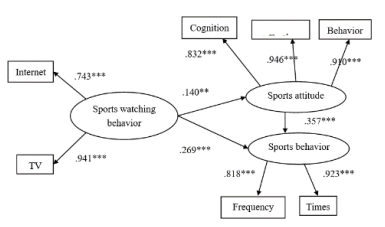
Figure 1. Model coefficient path diagram
Model fit
PLS-SEM uses the GoF value as a measure of the overall model fit. According to Wetzels, Odekerken- Schroder, and van Oppen (2009), when the Gof value is above .1, the degree of adaptation is weak, the adaptation degree above .25 is medium, if the Gof value is above .36, and it indicates that the overall model is well adapted. According to the results of Table 6, the GoF value of this study model is .287, indicating that the degree of adaptation of this study model is moderate.
DISCUSSION
After analyzing the linear structure model of this study, we found that sports lottery consumers' sports watching behaviours will positively affect sports attitudes and behaviours, sports attitude will positively affect sports behaviour, sports watching behaviour can also indirectly affect sports behaviour through sports attitude.
Sports lottery consumers will continue to watch sports-related events after purchasing lottery tickets. While continuing to watch sports events, it will also enhance its own sports attitudes and behaviours, and at the same time enhance its sports attitudes, it will also increase its sports participation behaviours.
Therefore, sports lottery tickets can not only increase government taxation and promote sports development but also promote consumers to influence their own attitudes and actual sports behaviours after watching sports events, so as to achieve the vision of universal sports popularization.
CONCLUSION
Lottery ticket issuing units can add relevant sports rules and sports operation billboards on the spot. In this way, lottery ticket consumers can also have a better understanding of sports-related knowledge while experiencing the fun of watching sports events, thereby enhancing their sports participation behaviour.
The sports broadcasting unit adds a short analysis of the program before the competition for various events, so that the betting public can understand the game situation more, which will not only increase the broadcast ratings but also increase the public's awareness of sports and affect the sports lottery consumers Sports behaviour.
The sports lottery issuing unit can also cooperate with the sports teams to launch the purchase of sports lottery to get discounts on the purchase of sports games tickets, so as to promote the sports-watching behaviour of sports lottery consumers.
Sports lottery issuing units or sports game organizers can also cooperate with sports centres to launch sports coupons and sports event ticket stubs. Sports centre tickets can be discounted or experienced free sports centre courses, so that sports lottery consumers can promote sports watching behaviour, then further improve their own sports attitude and behaviour. So that sports lottery consumers are more willing to do sports, identify with sports-related industries, and also make sports-related industry links stronger.
BIODATA
C.H YANG: Chin-Cheng, Yang was born in 1975. He graduates from University of the Incarnate Word. His qualification is sports physiology, sports management. His position is Professor at department of Leisure Service Management, Chaoyang University of Technology, Taiwan. He also is dean of student affairs.
J.J YANG: Jen-Jen, Yang is graduate from Asia University for business administration. His research religion is sport management, sport marketing. His work at department of business administration, Chaoyang University of Technology, Taiwan. He also is director of physical education.
C.T LIN: Ching-Te, Lin is a lecturer at General Education Center, Chaoyang University of Technology, Taiwan. He also is a Doctoral student for department of business administration at National Yunlin University of Science and Technology, Taiwan. His research religion is sport management, Sports psychology, fitness. He also is director at Office of International and Cross-Strait Cooperation, Chaoyang University of Technology, Taiwan.
P.H WU: Pei-Han, Wu is a master, graduate from department of Leisure Service Management, Chaoyang University of Technology, Taiwan.
BIBLIOGRAPHY
AHMAD, I., & AHMAD, S. (2018). “Multiple Skills and Medium Enterprises’ Performance in Punjab Pakistan: A Pilot Study”. Journal of Social Sciences Research, 7(4), 44-49.
AHMAD, I., & AHMAD, S. (2019). “The Mediation Effect of Strategic Planning on The Relationship Between Business Skills and Firm’s Performance: Evidence from Medium Enterprises in Punjab, Pakistan”. Opcion, 35(24), 746-778.
AHMAD, I., SAHAR. (2019). “Waste Management Analysis From Economic Environment Sustainability Perspective”. International Journal Of Scientific & Technology Research 8(12), 1540-1543.
ALCAZAR, J, GUADALUPE-GRAU, A, GARCÍA-GARCÍA, FJ & ALEGRE, LM (2018). “Skeletal Muscle PowerMeasurement in Older People: A Systematic Review of Testing Protocols and Adverse Events”. The Journals of Gerontology: Series A, 73 (7), pp.914–924, https://doi.org/10.1093/gerona/glx216.
CHANG, CM, CHIU, ST, CHEN, WS (2010). “The Effect of the Sport Spectator Involvements on Motivation of Purchasing Sport Lotteries for College Students”. Tamsui Oxford Journal of Sports Knowledge, 7(5), pp.1-13.
CHEN, JC & CHUNG, CC (2009). “Research on the Relationship between Leisure Sports Attitude and Leisure Sports Participation Behavior”. Yun Ke Da Ti Yu, 11(4), pp.81-90.
CHIN (1998). “The partial least squares approach to structural equation modeling”. Modern methods for business research, 295(2), pp.295-336.
CHOLEWA, JM, NEWMIRE, DE & ZANCHI, NE (2019). “Carbohydrate restriction: Friend or foe of resistance- based exercise performance?” Nutrition, 60(12), pp.136–146.
DENG, CY & CHEN, QW (2006). “On the Issuance of Sports Lottery Tickets”. Sports Research Review, 82(10), pp.116-122.
GAU, LS (2009). “Sports Lottery Consumption and Sports Spectatorship”. Leisure & Exercise, 8(5), pp.29-36.
HAIR, JF, BLACK, WC, BABIN, JB, ANDERSON, RE (2010). Multivariate Data Analysis (Global edition).Englewood Cliffs, NJ: Prentice Hall.
LIN, CT, SHEN, CC, MAO, TS & YANG, CC (2019). “Empirical Investigation of Sports Management, Behavior Growth and Usage of Sports APP: New Learning Perspective”. Polish Journal of Management Studies, 19(1), pp.225-234.
LIU, DY & HSIEH, TL (2007). “Research on the Key Influencing Factors of People's Purchase of Public Welfare Lottery”. Public Finance Review, 39(3), pp.105-121.
LIU, DY, LIN, HM & LAN, JJ (2002). “A study on the consumer behavior of the demand for lottery”. Chia-Nan Annual Bulletin, 28(12), pp.217-230.
MARTINEZ, DB (2017). “Consideration for Power and Capacity in Volleyball Vertical Jump Performance”. Strength and Conditioning Journal.
RAMÍREZ MOLINA, R., ESPINDOLA, C., RUÍZ, G & HUGUETH, A (2019). “Gestión del Talento Humano:Análisis desde el Enfoque Estratégico”. Información Tecnológica, 30(6), pp. 167-176.
RAMÍREZ MOLINA, R., LAY, N & SUKIER, H (2020). “Gerencia Estratégica para la Gestión de Personas del sector minero de Venezuela, Colombia y Chile”. Información Tecnológica, 31(1), pp. 133-140.
VENKATESH, JY, THONG, L & XIN XU (2012). “MIS Quarterly”, 36(1), pp.157-178.
WETZELS, M, ODEKERKEN-SCHRÖDER, G & VAN OPPEN, C (2009). Using PLS path modeling forassessing hierarchical construct models: guidelines and empirical illustration.
YANG, CC, LEE, BZ & YANG, ST (2015). “A Research of Sports Lottery Purchasing Motivation, Sport Spectate and Sports Participant Behavior”. 3rd ICHLST Proceedings of the International Conference on Hospitality, Leisure, Sports, and Tourism, pp.373-385.
YANG, CC, LIU, LW, LIN, YS, LIN, CT & CHANG, YN (2020). “The Impact on Sports Internet Celebrity’s Video Watching Behavior to Sports Attitudes and Sports Behaviors”. Talent Development & Excellence, 12(3s), pp.1731-1741.
YANG, CC, TANG, KY, SIA, WY & CHANG, JH (2019). “Exploring the Relationship of Sports APPs User’s Motivation, Goal Orientation and Exercise Involvement among College Students in Taiwan”. 3rd International Conference on Education and Multimedia Technology, pp.150-155.
YANG, CC, TSENG, YC, LIN, CT & CHANG, YN (2018). “The Research on the Influence of Sports Internet Celebrity’s On-line videos and Articles For Youths Sports Attitude and Sports Behavior”. 2nd International Conference on Education and E-Learning, pp.187-190.
YANG, HC, NI, YL & SHIH, CP (2013). “The Effect of Sports Movies on Audience Experience and Exercise Attitude-A Case Study of University Students in the Taipei Area”. Journal of Taiwan Society for Sport Management, 13(2), pp.111-134.
YULANDA, N & SEPDANIUS, E (2019). “Contribution of Explosive Power of Arm Muscles And Flexibility to Smash Ability of PB”. Semen Padang Athletes. Jurnal Stamina, 2(2), pp.40-49. https://doi.org/10.24036/jst.v2i2.173.