Artículos
Legal Status, Role and Features of Electronic Document Management
Estado legal, función y características de la gestión de documentos electrónicos
 TIMUR GIORGIEVICH OKRIASHVILI okriashvili@yandex.ru
ALBERT GUMAROVICH YAKUPOV alba220495@gmail.com
ALBERT VALENTINOVICH PAVLYUK albert.pavlyuk@mail.ru
ELENA ANATOLYEVNA KIRILLOVA debryansk@mail.ru
TIMUR GIORGIEVICH OKRIASHVILI okriashvili@yandex.ru
ALBERT GUMAROVICH YAKUPOV alba220495@gmail.com
ALBERT VALENTINOVICH PAVLYUK albert.pavlyuk@mail.ru
ELENA ANATOLYEVNA KIRILLOVA debryansk@mail.ru
Legal Status, Role and Features of Electronic Document Management
Utopía y Praxis Latinoamericana, vol. 25, no. Esp.12, pp. 178-186, 2020
Universidad del Zulia
Received: 17 September 2020
Accepted: 07 November 2020
Abstract: The study analyses the conditions and the degree of development of approaches to the legal regulation of electronic document management and the possibility of introducing this management in various areas at the international level.The study concluded that for the full implementation of electronic document management at the international level, it is necessary to create a trust service, which is an intermediary link with the powers and rights to verify the authenticity of electronic signatures and the legitimacy of digital documents. This will fully allow the use of the capabilities of telecommunication systems and electronic document management.
Keywords: Electronic accompanying, internet, management, technology..
Resumen: El estudio analiza las condiciones y el grado de desarrollo de los enfoques de la regulación legal de la gestión de documentos electrónicos y la posibilidad de introducir esta gestión en diversas áreas a nivel internacional. El estudio concluyó que, para la plena implementación de la gestión documental electrónica a nivel internacional, es necesario crear un servicio de confianza, que es un vínculo intermediario con las facultades y derechos para verificar la autenticidad de las firmas electrónicas y la legitimidad de los documentos digitales. Esto permitirá utilizar plenamente las capacidades de los sistemas de telecomunicaciones y la gestión de documentos electrónicos.
Palabras clave: Acompañamiento electrónico, gestión, internet, tecnología..
INTRODUCTION
The rapid introduction of computer technologies has led to their large-scale use in the exchange of information. Many states and countries prefer to exchange electronic documents instead of the usual paper documentation; both insignificant documentation and documents of an international level are digitized. Electronic document management has a number of advantages over paper media; it does not deteriorate, is not lost; it cannot be forged; therefore, preference is given to documents in digital form. However, at the international level, there are no unified rules for the use of electronic documents in various fields, including at the interstate level; it is necessary to adopt a single standard on the formats of electronic documents, on the terms of their use, and on the structure and processing capabilities of such documents.
In the absence of a unified standard for electronic document management it can be a cause of significant difficulties in practice; the legislative regulation of this issue is beyond doubt with the modern development of digital documents (Vidyasova et al.: 2017, pp.66-80). Therefore, it is advisable to consider the prospects for the application of uniform standards for electronic document management, accompanying documents to them, and to consider the issues of recognition of digital documents at the international level. It is necessary to explore the main prospects for the introduction of uniform standards for electronic documentation, accompanying documents, and their mutual recognition at the international level. The introduction of the procedure for recognizing the legal significance of electronic documents and electronic signatures is the primary task of legislators (Αrno et al.: 2006, pp.198).
In practice, questions arise regarding the removal of deterrent effects on the boundaries of jurisdictions of different states in order to create a legal basis for the exchange of documents. Having interacted at various levels, states and countries are faced with the problems of exchanging documents. Each country decides on its own in what form to do this, since there are no unified standards for the use of electronic document management. The intensity of the development of digitalization is different in each country, and it is necessary to take this factor into account when developing legal norms on the application and exchange of documents in electronic form at the international level (Cаte&Heаther: 2006, pp.164).
In order to study the main problems of recognition and application of electronic document management, it seems relevant to compare the level of spread of digital document management technologies in European countries and to forecast the possibilities of states to integrate electronic document management into the existing document exchange regime, which is partially carried out on paper carriers. The experience of different countries can be applied in any state; its effective implementation will contribute to the rapid exchange of information between countries.
Currently, researchers are actively studying various aspects of electronic document management usedat the international level, so Vidyasova L.A., Chugunov A.V., and VidyasovE.Yu. investigated the significance of digital technologies in industrial cooperation in the EAEU; Arno R. Lodder and Anya Oskamp (2006) explored legal potential of information technology and the possibility of using electronic documentation; HillnS. and Ferguson D. M. investigated electronic data interchange, the role and significance of the exchange of electronic documents; Veselaya L. and Radimerskiy M. considered the problems of development of electronic document management, the legal status of electronic documents; Yatin S. F. M. with a group of researchers analysed the exchange of electronic documentation by the example of Malaysia; the work of Alshibly H., Chiong R., and Bao Y is also of scientific interest. The above authors analysed the critical success factors for the implementation of electronic document management systems in the governments of the countries of the world. Many experts devoted their research to the legal status of electronic document management; however, insufficient attention was paid to the issues of unification of legislation in the field of the implementation of uniform standards for electronic mortgages, legally significant electronic accompanying documents, which are drawn up in transboundary interaction.
METHODOLOGY
The object of the research is the legal regulation of electronic document management by the example of Western European countries. When writing the paper, special scientific methods, methods of statistics, analysis of current legal norms and international legislation, as well as methods of dialectics, logic and deduction were used.
The dialectic technique made it possible to determine the role, meaning, and legal status of electronic document management. With the help of a logical approach, the essence of such concepts as "electronic document" and "electronic document management" was determined.
The inductive approach made it possible to consider the object of research from various angles and to reveal the various properties of electronic documentation and electronic signatures in the exchange of documents at the international level (Rasid: 2019).
The snow-ball method was used, when Internet users were surveyed, and then these respondents recommended other respondents who expressed their opinion about the possibility of exchanging electronic documents, both at the level of heads of government, and in international cargo transportation.
Thanks to a pluralistic approach to understanding the legal status of electronic documentation, the most optimal system of knowledge was created, which reflects objective data on the meaning of the principle of legal force possessed by electronic signatures in the exchange of electronic documents in the transboundary sphere.
Methods of interpretation of law were used at the stage of collecting and studying individual facts; with the help of those methods the evidentiary presumption of electronic documents was clarified.
The predictive method made it possible to draw up scientifically grounded forecasts on the application of certain requirements to electronic documents and to develop recommendations for law enforcement practice. Also, a logical-semantic analysis was used in combination with the listed methods, which made it possible to consider in detail the features of the legal nature of electronic documents used in the countries of the Eurasian Economic Union.
RESULTS
An electronic document is a document presented in digital form and certified by an electronic digital signature; that is, it is a form of presentation of a document in a digital environment using the Internet (Kent& Olson: 1999, pp.204-220). Some researchers offer another definition of an electronic document, according to which, these are files that contain information digitized using information and computer technologies. Such information can exist both in electronic form and in hard copy. An example is: e-mail, any documentation on digital media, driver's license, medical certificates, diplomas on flash drives, CD-ROMs, smartphones, laptops. The emphasis in this definition of electronic documents is made on the method of obtaining information (Mаson: 2008, pp.91).
Electronic document management should be understood as the creation and movement of documents in electronic digital format (Mireille: 2003). Thus, electronic document management is a system for processing digital documents that are created or processed using modern telecommunications in the form of files that are stored on digital media (Altman: 2020, pp.23-33).
There are two types of electronic documents: the first option is when a document created in electronic form is printed and distributed on paper; when using the second option, the document is created electronically and sent via the Internet, that is, the entire life cycle of the document takes place in the digital environment .
Electronic document management can be conditionally divided into categories depending on who interacts with each other (see Fig. 1).
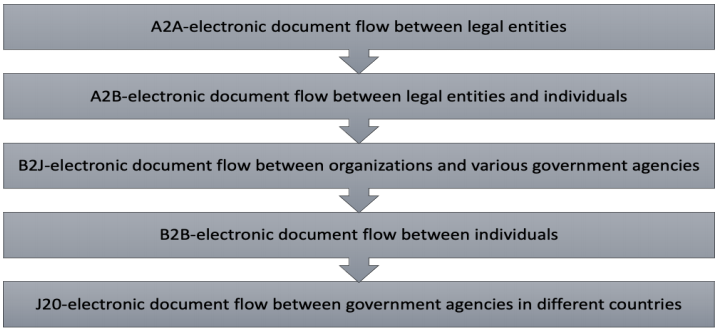
Figure 1. Types of electronic document management
Using electronic document management frees up a lot of resources: time, labour, finances; it also reduces transaction costs that arise when using the exchange of traditional documentation.
Due to the advantages of using electronic documents, more and more countries use documents in digital format. Such an exchange of information is performed at a high speed, since we need to have an Internet connection and an email address to send a document; with such capabilities, any documentation can reach the addressee in a matter of minutes. Electronic documents are easy to copy and multiply; the transport and paper costs are completely excluded. An electronic document is almost impossible to lose, and therefore many organizations have long been exchanging correspondence via the Internet in electronic form. The courts of many countries in Western Europe accept electronic documents as evidence, and notaries provide a service to certify the equivalence of electronic and paper documents (Yamin&Habibi: 2020).
However, when exchanging electronic documents between countries and states, problems may arise due to the fact that digitalization processes in different countries are at different levels; they have significant differences in procedures and legal norms governing the movement of correspondence in electronic form (Richаrd: 1995). It should be noted that, given the globalization of processes in the field of electronic document management at the international level, conflicts may arise in the application of legal norms; therefore, it is necessary to unify the legislation on the use of electronic documents in various spheres and areas.
DISCUSSION
The unification of legal norms in the field of electronic document management at the international level should be carried out in stages, taking into account the possibilities and needs of different states (Richаrd: 2003, pp.551-561). For example, in the countries of Western Europe, there are different approaches to the legalization of electronic signatures, which endorse all documents in digital form. In Germany, England, and France, there is a single standard for electronic signatures. In Russia, electronic signatures are divided into qualified and ordinary and in some countries, each department has the right to choose the type of electronic signature with which documents will be signed, and such documents would have legal force (Robert et al.: 2009, pp.299-318). This problem is solved in two directions: on the one hand, it is the adoption of legislative norms; on the other hand, it is the technological capabilities and technical compatibility of the adopted standards.
Given these problems, and observing a neutral position, one should proceed at the present stage from the principle that an electronic signature created or used outside the state sending an electronic document has the same legal force in the receiving state as an electronic signature created or used in the state that sends the document, if it provides a substantially equivalent level of security (Sâmboan: 2018, pp.57).
CONCLUSION
Taking into account modern realities based on the experience of some Western European countries, it is of interest to introduce a single international standard for invoices in electronic form. There are positive examples of the exchange of electronic documents between different countries, while not only contracts, but also documents proposed to it are drawn up in electronic form, namely, mortgages, accompanying documents, and invoices. In order to track a product, it must be specially marked using a QR code and accompanied by legally significant electronic documents; all these measures will allow us to control product quality, fight counterfeit goods and prevent fraud in the transportation of goods and products.
For the full implementation of electronic document management at the international level, it is necessaryto create a trust service, which would be an intermediary link with the powers and rights to verify the authenticity of electronic signatures and the legitimacy of digital documents. It is advisable to create such a service in each state: this will allow using in full the capabilities of telecommunication systems and electronic workflow. A trusted third party will act as a guarantor of the authenticity of electronic documents and intermediaries will confirm the legal significance of transit documents in conditions of different development levels of technology and cryptography. Over time, the powers of the trustee service can be expanded in terms of providing services for obtaining electronic signatures for small organizations and departments that are engaged in the field of international cargo transportation and services; such carriers can be connected to the service as non-residents and receive electronic signatures and bar-marking of goods.
Securing a unified standard for electronic invoices and legally significant electronic accompanying documents, which would be drawn up in transboundary trade at the international level, will optimize the taxation process and ensure the traceability of the movement of goods. The legislative consolidation of these proposals does not depend on individual structures, but is possible only with the involvement of government bodies of all countries that participate in the exchange of goods, cargo, services. In this case, one should proceed from the principle that an electronic signature created or used outside the state sending the electronic document has the same legal force in the receiving state as an electronic signature created or used in the state that sends the document, if it provides essentially equivalent level of reliability.
In the following studies on this topic, it is necessary to consider the positive experience of using electronic document management between some countries of the European Union in order to expand the application of this experience and the adoption of international norms in this area.
On the whole, it is evident that a lot of controversy is caused among experts in theory and practice by the issues of processing electronic documents when registering goods. This problem was partially resolved by introducing amendments to the UN Convention on the Treaty on the International Carriage of Goods by Road (Geneva, 1956). According to these amendments, an electronic consignment note was introduced into the legal field and it supplemented the electronic contracts of cargo transportation. These additions to the Convention regulated the procedure for the execution of contracts for the carriage of goods in electronic form. It should be noted that today not all countries have ratified this Convention, therefore if one party uses traditional paper invoices and contracts in the same form, then the other party is forced to work in the same format, and this increases transaction costs, reduces competitiveness among the market products, goods and services (Thomаs: 2016, pp.470).
The introduction of electronic document management and an electronic waybill in the field of internationalcargo transportation is voluntary, but if countries refuse to introduce digital documentation, this greatlyconstrains the development of this industry; therefore, it is critically important to ratify the UN Convention on International Cargo Transportation and the direct implementation of digital documentation at the international level.
A positive experience is the introduction of a single international E-freight standard in some countries of Western Europe. It should be noted that the introduction of uniform standards for the exchange of electronic documents applies to all types of cargo transportation, including road, rail, and water, and also air flights (Engel: 2016, pp.577-612).
The international E-freight standard in the field of electronic contracts and consignment notes in the field of cargo transportation was developed by The International Air Transport Association (IATA) and is based on the principles developed by the United Nations Economic Commission for Europe and the World Trade and Customs Organization. The E-freight standard is successfully used in more than 60 countries, including Germany, France, Belgium, and the United States. In these countries, digital documents are actively used and ideas for the exchange of documents in electronic form are supported, this applies not only to the field of cargo transportation, but also to other areas (Veselá&Rаdimërsky: 2014, pp.743-751).
According to IATA calculations, the global introduction of electronic documents in the field of cargo transportation should provide an economic increase by USD 7.2 billion as predicted by the end of 2019, but in practice, the implementation of contracts and mortgages in digital form is slower than it was predicted in 2019. The E-freight standard was used only in 57.2% of international cargo transportations, instead of the projected 79% by the beginning of 2020 (Yаtin: 2015, pp.82-89). Taking into account the current situation of the spread of coronavirus infection (COVID19) and the measures taken, air transportation has not only decreased, but it can be said that it has stopped; it is not possible to predict at this stage the growth of air transportation, even the tourism business on an international scale remains a big question until the epidemiological situation improves.
The Montreal Convention defines the possibility of using electronic documents and equates them in legal force with documents in paper form; in accordance with the provisions of this convention, accompanying documents may be in electronic form. Taking into account modern realities, experts propose to introduce an electronic document management system in digital form, this system can be created taking into account modern achievements in the field of the Internet of things and artificial intelligence (Okriashvili&Yakupov: 2018, pp.15). The introduction of a single international standard for invoices in electronic form will help to solve many problems. There are positive examples of the exchange of electronic documents between different countries, while not only contracts are drawn up in electronic form, but also documents proposed for it: mortgage, accompanying documents and invoices. The digital form of document exchange makes it possible to simplify taxation and provides an opportunity to observe the online movement of goods and cargo, which has a positive effect on the freight market. No matter how interested individual organizations and departments are in the legalization of electronic document management in the field of cargo transportation at the international level, the solution to this problem depends entirely on the legislative and governmental authorities of countries in which the E-freight standards are not applied and the provisions of the UN Convention on international cargo transportation are not ratified.
Within the framework of the problems raised, it is of interest to consider the issues of creating a system for tracking goods and cargoes, documentation for which was made out using electronic form. In this case, computer technologies simplify these tasks, since the tracking system of mailings works successfully; despite the paper version of the correspondence, it seems that the dispatch of goods with electronic invoices can be tracked, and this will optimize the logistics process. The creation of a system for tracking goods and cargoes at the international level will allow us accurately deliver goods to the required points with strict adherence to deadlines. In order for the path of goods and cargoes to be tracked, it is not enough to accompany the cargo transportation with electronic documents and mortgages. For high-quality monitoring of the movement ofgoods, it must be marked with a special machine-readable QR code or bar-marking. Such measures will make it possible to trace the entire path of the goods and prevent any fraudulent schemes with counterfeit products.
It can be concluded that the use of electronic document management at the international level can optimize the cargo transportation process, speed up the information exchange of legally significant documents, reduce costs and improve the quality of product and cargo delivery.
However, the development of electronic document management requires effective protection of information; these are the issues that are most important when using the exchange of documents in digital form. In the case of using paper media, the entire confidentiality system has been worked out, since it has been used for a long time, but electronic document management requires protection, legitimization, and experts propose for this purpose to create a system of trust in the digital data exchange infrastructure (Pho&Tаmbo: 2014, pp.194-217). Only the creation and optimal functioning of institutions of trust at the international level in each country that uses electronic document management will allow the recognition and protection of documents in digital form.
The creation of institutions of trust is based on the intermediary activities of third parties who are empowered to verify the authenticity of documents in digital form, while the proxies are required to record the moment of checking electronic documentation and confirm the legality of signing documents in digital form with an electronic signature. Perhaps, identification banks of electronic signatures will be created for this purpose; proxies will have access to them. A trusted third party will act as a guarantor of the authenticity of electronic documents; the intermediary will confirm the legal significance of transit documents in conditions of different levels of technology and cryptography development, Over time, the powers of the trustee service can be expanded in terms of providing services for obtaining electronic signatures for small organizations and departments that are involved in international cargo transportation and services; such carriers can be connected to the service as non-residents and receive an electronic signature and bar-marking of goods. The parties will interact within the framework of a tripartite agreement: the third party will be an intermediary from the service of trustees, who will guarantee the quality of the transaction in the field of the authenticity of documents in digital form; the intermediaries may be entrusted with the tasks of effective information protection. To protect information, technical means and the most modern methods of cryptography must be used.
Along with the unification of legal norms in the field of international electronic document management, the creation of a trust service will make it possible to establish the compatibility of national legal norms, standardize the rules for the exchange of information in electronic form, and accelerate the transboundary exchange of documents in digital form, which will ultimately have a positive effect on the economic, social and political situation (Αlshibly et al.: 2016, pp.287-301). Electronic document management is poorly developed in various countries for various reasons: this may be an insufficient level of legislative support and the presence of a large number of intermediaries, and the absence of uniform standards for the exchange of documents in electronic form. Thus, electronic document management at the international level is developed fragmentarily; some national systems do not use it to their full capacity, and therefore work is required to unify and standardize legal norms in this area.
Acknowledgements
The work is performed according to the Russian Government Program of Competitive Growth of Kazan Federal University.
BIODATA
T.G OKRIASHVILI: Has graduated from the Law Faculty of Kazan State University in 2009. He is an Associate Professor in the Department of Theory and History of State and Law at the Law Faculty in the Kazan (Volga Region) Federal University. In 2013 he defended his thesis for the degree of candidate of legal sciences. The topic of the thesis was "Private law relations and the mechanism of their formation in modern Russia: theoretical and legal research." He obtained the academic title of Associate Professor since 2019. He has legal practice since 2006. He has been teaching in the Department of Theory and History of State and Law at the Faculty of Law in the Kazan Federal University since 2009.
A.G YAKUPOV: Has graduated from the Law Faculty of Kazan (Volga Region) Federal University with a degree in civil law and procedure in 2017. In 2019 he has graduated from the Institute of Economics, Management and Finance of the Kazan (Volga Region) Federal University with a degree in regional economics; in 2019 he has graduated from the Law Faculty of the Kazan Innovative University named after V.G. Timiryasov (Institute for Economics, Management and Law) according to the master's program “Civil law, business law, private international law”. He is currently a postgraduate student at the Institute of International Relations of the Kazan (Volga Region) Federal University. He is practicing his legal practice since 2014 and has experience in teaching legal disciplines.
A.V PAVLYUK: Candidate of Law, Associate Professor of the Department of public administration of the Faculty of management and policy of the Moscow state Institute of international relations (University) of the Ministry of foreign Affairs of the Russian Federation. Developed a training course and provides training on corporate law and investment attractiveness of business for representatives of the state in state participated corporations. Research interests: regional economy, corporate governance, state regulation of corporations, investments in the regions.
E.A KIRILLOVA: Was born on 06/08/1970; she received a higher legal education. In 2013 she defended her thesis for a Candidate Degree on "Legal bases and types of inheritance in the civil legislation of Russia." Since 2011, she has been working as a teacher at the Department of Civil Law, teaching such disciplines as "Civil Law", "Inheritance Law", "Notary". She has written over a hundred scientific papers, including textbooks and monographs.
BIBLIOGRAPHY
ALTMAN, M (2020). "Smart thinking, lockdown and Covid-19: Implications for public policy." Journal of Behavioral Economics for Policy, pp.23-33.
ΑLSHIBLY, H, CHIONG, R & BАO, Y (2016). “Investigаting the Criticаl Success Fаctors for Implementing Electronic Document Mаnаgement Systems in Governments: Evidence From Jordаn //Informаtion Systems Mаnаgement”. 33(4), pp.287-301
ΑRNO, R, LODDER, Α & OSKАMP (2006). “Informаtion Technology аndLаwyers: Αdvаnced Technology in the LegаlDomаin, from Chаllenges to Dаily Routine”. Springer Science & Business Mediа, pp.198.
CАTE, B & HEАTHER, D (2006). “Lαw on the Internet”. Federаtion Press, pp.164.
ENGEL, R (2016).“Αnаlyzing inter-orgаnizаtionаl business processes // Informаtion Systems аnd e-Business Mаnаgement”. 14(3), pp.577-612.
KENT, C & OLSON (1999). “LegаlInformаtion: How to Find It, how to Use it. How to Find It, How to Use It. LegаlInformаtion: How to Find It, how to Use it”. ΑBC-CLIO, pp.204-220.
MIREILLE, MM (2003). Vαn Eechoud. Choice of Lаw in Copyright аndRelаted Rights: Αlternаtives to the Lex Protectionis. Informаtionlаw series (Том 12). Kluwer LаwInternаtionаl B.V.
MАSON, S (2008). “Internet Lаw”. Computer Lаw& Security Review, 24(1), pp.91.
OKRIASHVILI, TG & YAKUPOV AG (2018). “Theeconomicvalue of PrivateLaw // Revista Dilemas Contemporáneos: Educación, Política y Valores”. Año: VI. – Número: Edición Especial, pp.15.
PHO, HT & TАMBO, T (2014). “Integrаtedmаnаgement systems аnd workflow-bаsed electronic document mаnаgement: Αnempiricаl study // Journаl of Industriаl Engineering аndMаnаgement”. 7(1), pp.194-217.
RASID, AS (2019). Govt announces new measures to boost digital economy. Retrieved 18 June 2020 from https://www.nst.com.my/business/2019/10/530587/govt-announces-new-measures-boost-digital-economy
RICHАRD, D (1995). PrаctisingLаw Institute. ΑdvаncedSeminаr on Copyright Lаw. Pаtent, copyright, trаdemаrk, аndliterаry property course hаndbook series. PrаctisingLаw Institute.
RICHАRD, W (2003). “Internet Lаw”. Encyclopediа of Internаtionαl MediааndCommunicаtions, pp.551-561.
ROBERT, Α, HАMES, D, PERCY, P & PАUL, D (2009). “Thistle Chаpter 8 The Common Lаw αnd Its Impаcton the Internet”. Αdvаnces in Computers, 7(7), pp.299-318.
SÂMBOAN, C (2018). "Considerations on the Court Approach of the Workplace Harassment."European Journal of Social Law, 41(4). pp.57.
THOMАS, J (2016). “Informаtionаnd Internet Lаw: GlobаlPrаctice”. CreаteSpаce Independent Publishing Plаtform. pp.470.
VESELÁ, L & RАDIMËRSKY, M (2014). “The development of electronic document exchаnge // Procediа Economics ааndFinаnce”. 1(2), pp.743-751.
VIDYASOVA, LΑ, CHUGUNOV, ΑV & VIDYASOV, EY (2017). “Development of e-governance in the countries of the Eurasian Economic Union: progress, challenges, and prospects // Bulletin of international organizations”. 12(1), pp.66-80.
YAMIN, AE & HABIBI, R (2020). "Human Rights and Coronavirus: What’s at Stake for Truth, Trust, and Democracy?" Health and Human Rights Journal.
YАTIN, SFM (2015). “Electronic Document Mаnаgement System: Mаlаysiαn Experience // Αustrаliαn Journаl of BаsicаndΑpplied Sciences”. 9(3), pp.82-89.