Artículos
Estimation Cost of a Small Satellite Group: Methodological Approaches and Factors
Estimación del costo de un pequeño grupo de satélites: enfoques y factores metodológicos
 JULIA. V. RAZUMOVA Yuliya.Razumova@vvsu.r
STANISLAV. O KARPENKO karpenko.so@dvfu.ru
JULIA. V. RAZUMOVA Yuliya.Razumova@vvsu.r
STANISLAV. O KARPENKO karpenko.so@dvfu.ru
Estimation Cost of a Small Satellite Group: Methodological Approaches and Factors
Utopía y Praxis Latinoamericana, vol. 25, no. Esp.12, pp. 274-286, 2020
Universidad del Zulia
Received: 15 September 2020
Accepted: 05 November 2020
Abstract: The definition of small satellite constellations is formed in the article with a modular approach to their launch, based on the content analysis of definitions and specific features of satellite constellations. The scientific framework for this formulation was the definitions of twenty-six domestic and foreign authors. The advantages of operating small satellite constellations in a near-earth orbit are highlighted. A review of nine existing models for estimating the value of satellite constellations was carried out as the part of the search for a methodology. They determined the reasons for their cost estimation complexity with a modular approach.
Keywords: Constellations of satellites, cost factors, cost of small satellite constellations, elements of cost estimation..
Resumen: La definición de constelaciones de pequeños satélites se forma en el artículo con un enfoque modular para su lanzamiento, basado en el análisis de contenido de las definiciones y características específicas de las constelaciones de satélites. El marco científico de esta formulación fueron las definiciones de veintiséis autores nacionales y extranjeros. Se destacan las ventajas de operar constelaciones de pequeños satélites en una órbita cercana a la Tierra. Se llevó a cabo una revisión de nueve modelos existentes para estimar el valor de las constelaciones de satélites como parte de la búsqueda de una metodología. Se determinaron las razones para la complejidad de su estimación de costos con un enfoque modular.
Palabras clave: Constelaciones de satélites, costo de constelaciones de pequeños satélites, elementos de estimación de costos, factores de costo..
INTRODUCTION
The positive dynamics of demand for services provided by satellite systems for various purposes is determined by the informatization of economic relations. At the same time, the competitiveness of firms providing these services is determined by ensuring a constant increase in service quality, namely, the clarity of satellite communication lines, television, the accuracy of object positioning, high resolution of images of the Earth remote sensing, the efficiency of services, the duration of repeater satellite presence, phones, and frequency of data change in the satellite reception area. All this leads to the need to develop new technological and design solutions, to search for new methods and approaches to the design, construction, development, operation and disposal of satellites (Iraci&Gnam: 2018).
One of the tendencies that makes it possible to reduce the cost of satellites, while maintaining their high efficiency, is the abandonment of expensive medium and heavy satellites in favor of small and ultra-small spacecraft. This will make it possible to replace high-orbit vehicles with low-orbit small satellite constellations. The expected reduction in the size of satellites and the organization of serial production provides production cost decrease due to the production of large batches and launching into orbit cost decrease due to the launch cost reduction, the possibility of using cluster launches, the increase of service provision efficiency and coverage of a large area.
The originality of the research results presented in this article is represented by the generalization and systematization of approaches to the definition of satellite constellations, a review of special-purpose economic models for estimating the cost of satellite constellations, identifying the factors affecting the cost of satellite constellations and the barriers in cost estimation. The high interest of potential investors, users, researchers and practitioners in economic organization changes and in implementation of satellite communications suggests that the research results can be applied in the development and assessment of small satellite constellation effectiveness of the functioning.
The purpose of the article is to summarize the accumulated knowledge in terms of theoretical foundations, methodological approaches to assess the effectiveness and the factors affecting the cost of small satellite constellations.
The study of the essence of satellite constellations was carried out on the basis of research by the following scientists: K. McInnes(McInnes: 1995, pp.1215-1217), S. Mayus, H. Lyuh, M. Puruker(Maus et al.: 2006, pp.397-407), S.M. Batheny, D. Entehabi., Castelli F. (Bateni et al.: 2013, pp.950-968), Specht S., Mania M., Skora M., Specht M. (Spechtet al.: 2015, pp.9-14), Vatalaro F., Corazza J.E., Kaini K. (Vatalaroet al.: 1995, pp.291-300), IlyinS.S., Lukin V.V., and ShumilovYu.Yu. (Ilyinet al.: 2018, pp.199-223). It is noted that in the field of satellite constellations of artificial earth satellites, carrying out single and multiple coverage of the earth surface, one can note the works devoted to the systems Navstar, and Iridium (Richards: 1980, pp.2- 6;Lawton:1987, pp.32-36; Furniss: 1991).
To calculate and analyze the cost of satellite constellation manufacturing and putting them into low-earth orbit, we used the data on the cost of payload launching into orbit. It should be noted here that the computational methods that make it possible to calculate effectively the cost of satellite constellations are underdeveloped according to A.A. Afonin (Babishin: 2010). As a rule, scientific research deals with the technical parameters of efficiency and usefulness. In this issue, the authors appealed to the works by Babishin V.D., Koshel A.V., Richards, and G. Navstar (Nanoset al.: 2003, pp.1706-1715; Koshel': 2006, pp.69-73; Babishin: 2010), which take into account the total criterion of the generalized cost with the cost of developing, manufacturing and operating the system for a certain time.
To identify the factors affecting the cost of satellite constellations, in addition to scientific sources, we studied and analyzed publicly available data posted on the following official websites: O2Consulting, Gunter's Space Page, The Aerospace Corporation, Arianespace SA, European Space Agency, Glavkosmos JSC, State Corporation "Roscosmos", and the Space Organization.
METHODOLOGY
The following methods were used in the course of the study. To process bibliographic sources in the field of satellite constellation determination they used content analysis, systematization, grouping in chronological, logical, thematic sequence. At this stage, the articles in scientific periodicals and journals were selected that were placed in international databases using the keywords indicated in the article during 1995 - 2017.
To estimate the cost of a satellite constellation, they analyzed publicly available economic models for special purposes, such as: USCM8, NICM (NASA Instrument Cost Model), Quick Cost, Software Cost Estimating Model (COCOMO 81), NAFCOM (NASA Air Force Cost Model), атакже Exploration Architectures Operations Model (ExAOCM), TRANS-COST, A-PICOMO and SSCM (Small Spacecraft Cost Model), their characteristics are provided. During the study of a series of mathematical calculations that link the cost of a spacecraft with physical, technical and operational parameters, the methods of cost calculation, cost analysis, factor analysis were taken into account, the elements of which are involved in the construction of mathematical models.
RESULTS
Essence and specificity of small satellite constellations
At the dawn of the space age, all spacecraft were unique and were assembled from unique elements. With the development of the rocket and space industry, the increase of satellite constellations in low-earth orbit and the commercialization of the industry, more and more attention has been paid to the development of both unified instruments of assembly units and systems, and entire platforms equipped with a full range of service systems. Researchers note the Molniya satellites (Russian communication satellites) as the earliest satellite constellations, which have been active since 1965, and Sozvezdie - since 1968. Among foreign works in the field of satellite constellations of artificial Earth satellites, performing single and multiple coverage of the earth surface, one can note the works devoted to the systems Navstar, and Iridium (Richards: 1980, pp.2-6; Lawton:1987, pp.32-36; Furniss: 1991).
The first major work in this direction appeared in the works by G.V. Mozhaev(Mozhaev: 1972, pp.833- 840). Following these works, the works by Sh.I.Galiev and V.I. Zabotin appeared, which studied satellite constellations located in equally high circular orbits (Galiev&Zabotin: 1990, pp.102-108; Galiev&Zabotin: 1992, pp.117-120; Galiev&Zabotin: 1993, pp.66-74; Zabotin:1994, pp.70-77; Dulliev&Zabotin: 2003, pp.616- 621).
At the same time, there are many options both in domestic and foreign literature to define the concept of "satellite constellations". Table 1 shows the author's definitions of the satellite constellation. When comparing the definitions of "satellite constellation" by domestic and foreign authors, the features of satellite constellations are highlighted. It should be noted here that some authors consider satellite constellations as a certain group of artificial Earth satellites in a certain orbit, while other authors clarify that a satellite constellation is created to solve a specific mission, however, few of them highlight the features of technical solutions, the presence of functions and coverage area.
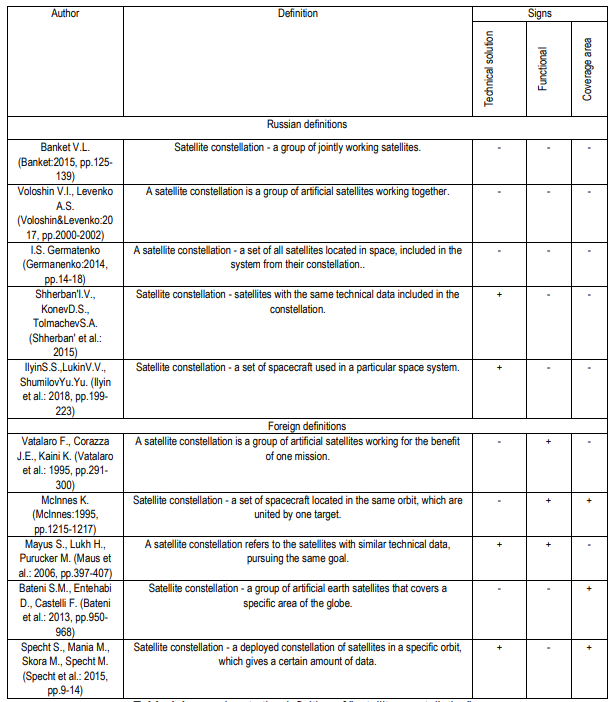
The above stated definitions allow us to conclude that they do not take into account the features of modular satellite constellations, namely, the fact that modular-type satellite constellations can perform different functions, depending on the formulation of tasks. They may have similar technical solutions and differ in the coverage areas of the Earth. This conclusion made it possible to formulate the author's elements of a modular- type satellite constellation definition (small space platforms): a) it is a set of artificial earth satellites; b) with the same and similar engineering (technical) solution; c) with different functional purpose of modules withinone grouping; d) located in a certain orbit; e) covering a given area of the globe. In other words, these are microsatellite constellations with modular assembly. Each module in the complete set can have an independent functionality.
A satellite constellation is a commercially viable solution, unlike single satellites. Reliability is also noted: when several satellites are operating at once within the framework of a coordinated program, the possible loss of one device does not lead to the disruption of the entire mission. A wide range of both highly specialized and universal satellite platforms has already been developed. These platforms have different characteristics: Spacebus 4000, Eurostar 3000, Alphabus, Boeing 601, Boeing 702, SSL 1300, A2100AX, KAUR-4, DFH-4, DS-2000, Myriade, STAR bus, A2 100A, LUXOR (SmallGEO), Cubesat, Express 1000, Express 2000/4000, Navigator, Yacht, Universal space platform, and Carat. At the same time, the market for microsatellite platforms, i.e. the devices weighing up to 100 kg are almost not mastered yet.
The growing demand for small spacecraft makes it necessary to develop the corresponding infrastructure, also in terms of launches.
The mass of the spacecraft largely determines the possibilities of production localization at one enterprise or, conversely, the breadth of cooperation on a project; the size of the project development team; the size of the required assembly rooms and test benches, the cost of transportation, and most importantly, the cost of launching such an apparatus into space. Only light vehicles can be launched as a passing payload. For small satellites, if we talk about their accompanying launches into low earth orbits, this factor is no longer as decisive as in the case of targeted launches. Most of the cost of a small satellite constellation launching is the cost of adapting the device to the launch vehicle, which is determined by the labor intensity and the volume of tests. The absence of the need to minimize the mass of a small satellite makes it possible to increase the safety factors and use standardized solutions, although not optimal in terms of mass. This makes it possible to reduce a project cost.
Methodological approaches to evaluate the cost of small satellite constellations
To analyze the cost of satellite constellation manufacturing and their launching into a near-earth orbit, it is necessary to take into account the data on the cost of launching payloads into this orbit. Low-earth orbit has advantages from an economic point of view. It was also noted that it is much easier to solve the problems of ensuring the restoration of the satellite constellation in case of its violation. The situation is more complicated in geostationary orbit. Based on the general analysis of publications in the field of spacecraft cost evaluation, it became clear that computational methods that make it possible to calculate their cost effectively are not sufficiently developed (Babishin: 2010). It should be noted that often when they create complex technical systems, the formulation of optimization problems and their solution by various methods is quite widespread when they select the generalized cost as the "total" criterion, which includes the following: the cost of development, manufacture and the system operation for a certain time (Nanoset al.: 2003, pp.1706-1715; Koshel': 2006, pp.69-73; Babishin: 2010).
In this study, to assess the cost of a satellite constellation, they analyzed the following publicly available economic models for special purposes: USCM8, NICM (NASA Instrument Cost Model), Quick Cost, Software Cost Estimating Model (COCOMO 81), NAFCOM (NASA Air Force Cost Model), атакже Exploration Architectures Operations Model (ExAOCM), TRANS-COST, A-PICOMO и SSCM (Small Spacecraft Cost Model) (Figure 1).
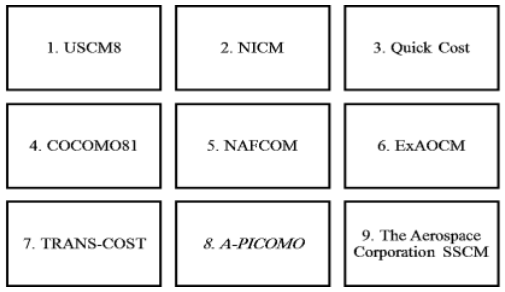
Figure 1. Economic models for satellite constellation cost evaluation
- 1. USCM8 is a parametric estimation tool based on previously collected statistics of actual spacecraft development costs (Hu et al.: 2004).
- 2. NICM is a MS Excel-based tool that uses VBA macros to estimate the cost of NASA instruments, wherethe following variables are taken into account: mass; power; data transmission speed; duration of existence in space; frequency in fractions; variable indicating belonging to the orbit; year of launch; team experience; the complexity of the apparatus in percent.
- 3. The Quick Cost model is the regression model where the project price acts as the dependent variable, and the following factors are considered: the total development cost and one unit of the flight cost in dollars (2010) (Nagowah et al.: 2015).
- 4. The COCOMO81 model is an algorithmic model for estimating the cost of software development (Boehm: 1981).
- 5. NAFCOM – a parametric evaluation program for space equipment. It is used for a wide range: launch vehicles, spacecraft with and without crew, and engines.
- 6. ExAOCM - a NASA model to meet the need for sound systematic estimates of operating costs for the development of exploration systems.
- 7. TRANS-COST - the model for assessing the cost of a launch vehicle development, manufacture and operation (Koelle: 1984, pp.803-817).
- 8. A-PICOMO - the model for assessing the cost of the spacecraft "Kubsatov" development and manufacture (Anderson et al.: 2014, pp.1-16; Kaslow&Madni: 2018, pp.381-393; Zaidi et al.: 2019, pp.242- 268; Gregory et al.: 2020, pp.1-11).
- 9. The Aerospace Corporation SSCM (Small Satellite Cost Model) cost model - the parametric cost model for the development and manufacture of spacecraft weighing less than 1000 kg. A series of mathematical calculations that relate the cost of a spacecraft to the physical, technical and operational parameters that affect the cost of a small spacecraft. The aerospace corporation methodology is based on 8 steps: defining the purpose of the model building; the analysis of existing literature; behavioral analysis; the review of existing ratings, expert assessments by the Delphi method; collection of quantitative data; the Bayesian model APosteriori is defined; the model is refined, quantitative data are obtained. However, its application requires specialized software, namely the Freja program.
Special attention should be paid to the methodology for the spacecraft calculation with a modular approach proposed by John Enright, Cyrus Gill and David Miller (Enright et al.: 1998, pp.133-158).
In their paper, they noted that many industries have achieved significant cost savings through the use of modular engineering approaches. They discussed the issues related to the extension of modular design to the space industry. Their cost model is designed to address some of the conflicting advantages and disadvantages between modular and custom designs in a traditional manufacturing approach. However, this technique was not considered within the example of communication satellites.
The analysis of the models allows us to conclude that they should be based on the statistics of similar projects that have already been implemented or are being prepared for implementation abroad and in the Russian Federation. At the same time, since such projects can use foreign technologies and components, thecost model should take into account the level of prices abroad, that is, be global, but taking into account the Russian conditions for such project conduct. The main limitation in calculation the cost of a spacecraft is the unavailability of software for a wide range of researchers.
A number of authors and space analytical agencies note that the cost estimation error should be no more than 20% and it should be decreased with the accumulation of statistics specifically for domestic projects (Spechtet al.: 2015, pp.9-14).
With all the variety of cost estimation models, none of them estimate the cost of small constellations of satellites with their launch into low-earth orbit via a modular approach. This is a difficult task for the following reasons (Figure 2).
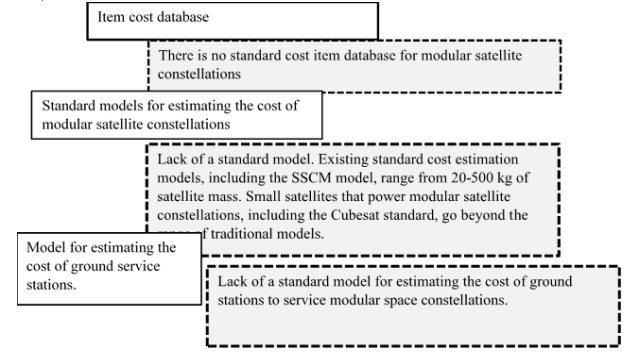
Figure 2. Reasons for the complexity of small satellite constellation cost evaluation with a modular approach Thus, there is a need to formulate a methodology for assessing the cost of microsatellite constellations with a modular approach and to develop reliable components of the cost model. These data are relevant for a serial approach to the production of small satellite constellations, which will significantly reduce the cost of a constellation unit production.
DISCUSSION
Factors and elements of the methodology for calculating the cost of small satellite constellations
As was noted earlier, after conducting a general analysis of publications in the field of assessing the cost of spacecraft, it became clear that the computational methods that make it possible to calculate their cost effectively are insufficiently developed and it becomes necessary to develop an algorithm for assessing the cost of a small spacecraft during serial production. For this, the factors affecting the cost of the satellite constellation are identified and considered (Figure 3).

Figure 3. The factors affecting the cost of a small satellite constellation
Depending on the type of satellite, engineering solutions for completing each unit in the grouping, the specified functionality, the indicators for calculating the cost may vary. The metrics presented in Figure 3 can be found in publicly available sources, as well as the data provided by engineers. The bandwidth is set independently, depending on the requirements of consumers to manufacturers, or depending on the trends in the modern spacecraft market to calculate the approximate cost of a satellite.
In the case of communication satellites, it is important to take into account the second level factors - the satellite capacity levels (Figure 4).
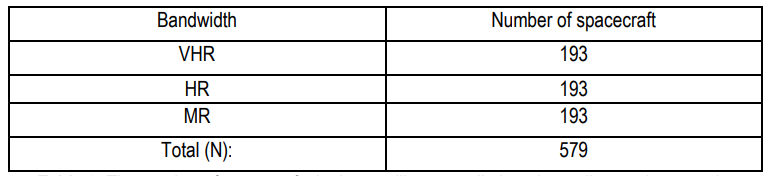
Currently, the population of the Earth receives much less bandwidth than they need for satellite services. There is a need for quick download and playback of online multimedia content. Enterprise customers need access to central servers and network applications on their networks with remote access without delay. Currently, communication satellites with low bandwidth are not of interest, therefore, it was decided not to consider them in detail. The number of modules is set depending on the requirements for the satellite, taking into account the need for a satellite de-orbiting system. The number of spacecrafts in a satellite constellation is set depending on the declared functional requirements.
Calculations also require the data on the number of small spacecrafts in the satellite constellation, depending on the capacity. This data is provided by engineers. In the present study, the authors have the data shown in Table 2.
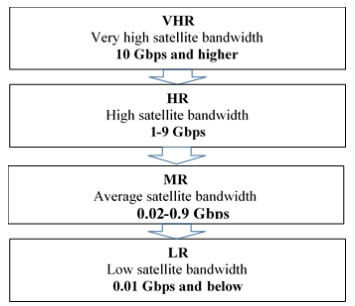
Figure 4. Bandwidth levels of communication satellites
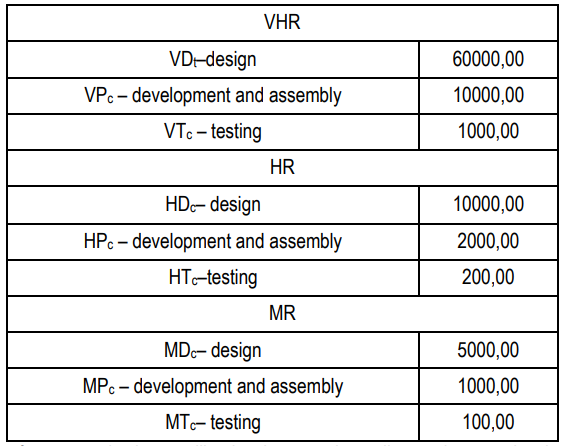
There are several stages involved in obtaining a finished satellite with a launch into a near-earth orbit: design, development and assembly, testing and launch costs. Thus, the following data are required for each satellite with a certain capacity (Table 3). The cost of development stages depends on the specific calculation period.
Also, to calculate the cost of a microsatellite constellation in a modular way, it is necessary to take into account some of the coefficients presented in Table 4.
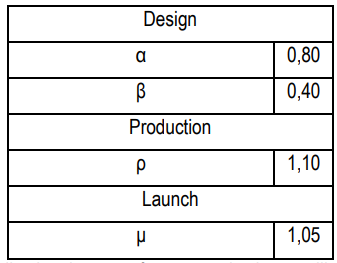
Where α - the increase of one module development cost in comparison with the traditional development of a spacecraft;
β - The coefficient showing the decrease of each subsequent mission cost, collected using a modular approach;
ρ - The coefficient showing the difference between production costs for modular and traditional
approaches;
μ - The coefficient reflecting the mass increase of a modular spacecraft in comparison with a similar one, designed as a unique product using the traditional approach.
It should be noted that the coefficients are adjusted as the work progresses. Therefore, α andβ should be chosen so that α + β> 1. For example, if α = 0.8 and β = 0.4, then the first mission (declared functionality) will cost 20.00% more than with the traditional approach, but each subsequent mission will cost only 40.00% of the due cost. The model also assumes the following: if the launch costs are constant (that is, we can assumethat $/kg), the ratio for the traditional and modular approaches of launch costs is equal to the ratio of the spacecraft mass and is equal to μ. Thus, the variable μ is the ratio between testing costs. It is expected thatµ> 1. The value of µ = 1.05 (i.e. 5.00% increase in mass) was assumed for this work. A more detailed cost analysis can be performed using real weights. This, however, would require considering the various types of launch restrictions and statistics.
Micro-satellite constellation research is becoming more popular because of its inherent cost advantages associated with reliability. This is demonstrated in many mission classes (function sets). A full calculation according to the model will determine the corresponding costs for the production of small space constellations of a modular type.
CONCLUSION
Thus, the conducted content analysis of the existing concepts of "satellite constellation" made it possible to identify the missing features for a complete definition of a small satellite constellation. The article offers the author's definition, which takes into account technical solutions, the functionality of the satellite constellation modules and the coverage area. The review of methods for estimating the cost of space constellations made it possible to conclude that the methodology for calculating the cost of small space constellations with a modular approach should be based on the statistics of similar projects that have already been implemented or are being prepared for implementation abroad and in the Russian Federation. At that, since such projects can use foreign technologies and components, the cost model should take into account the level of prices abroad, that is, be global, but taking into account the Russian conditions for conducting such projects. The main limitation in calculating the cost of a spacecraft is the unavailability of software for a wide range of researchers. As the reasons for the complexity of small satellite constellation cost estimation with the modular approach, three blocks have been identified: the absence of a standard database by cost items, the absence of a standard economic model for estimating the cost of modular satellite constellations, and the absence of a standard model for estimating the cost of ground stations to service modular space constellations.
The following factors have been identified as the factors affecting the calculation of small satellite constellation cost: bandwidth in Gbit/s, the number of modules on a universal platform in pieces, the number of spacecraft in the satellite constellation in pieces, and the number of functions in units. Depending on the capacity of the communication satellites, the possible number of satellites in a modular platform is presented. According to the recommendations of engineers, the coefficients of a communication satellite cost are presented depending on the quality characteristics of small satellites in the module. These coefficients are one of the elements of the methodology for calculating the cost of a small satellite constellation.
The above research materials confirm the relevance of work in the field of studying the principles, methods and technologies for developing a universal microsatellite platform to work as the part of satellite constellations for various purposes. The main tendency to reduce the cost of satellites, while maintaining their high efficiency, is the rejection of expensive medium and heavy satellites in favor of small and ultra-small spacecraft. It was also found that a satellite constellation is a commercially viable solution, in contrast to single satellites: in terms of development, assembly and launch into orbit. At the moment, there is a tendency to create spacecraft of an open modular structure (LEGO-principle), which will allow, from an economic point of view, to reduce costs for companies at all stages of this product manufacture and sale.
BIODATA
JULIA. V. RAZUMOVA Is a researcher in National Research University Higher School of Economics, HSE, Department of General Management. Her research interests includes strategic management, marketing management, entrepreneurship, business, innovation, strategic analysis. She has done some researches in The influence of IT and innovations on tourism.
STANISLAV. O. KARPENKO: Is a professor in Far Eastern Federal University, head of department KarpenkoStanislavOlegovich, he is research interests, territory development management based on earth remote sensing technologies and data.
BIBLIOGRAPHY
ANDERSON, L, COLE, B, YNTEMA, R, BAJAJ, M, SPANGELO, S, KASLOW, D& ASUNDI, S (2014)."Enterprise modeling for CubeSats",IEEE AerospaceConference, pp.1-16
BABISHIN, VD (2002). Metodologicheskieosnovysintezatehnologij avtomatizirovannogo upravlenija kosmicheskimiapparatami v uslovijahogranichennyhresursov,M.: MGUL.
BANKET, VL (2015). "Programma sozdanija sistemy sputnikovoj svjazi",Jekonomika i svjaz', pp.125-139.
BATENI, SM, ENTEKHABI, D & CASTELLI, F (2013). "Mapping evaporation and estimation of surface controlof evaporation using remotely sensed land surface temperature from a constellation of satellites",WaterResources Research, 49(2), pp.950-968.
BOEHM, BW (1981). Software EngineeringEconomics, Prentice Hall.
DULLIEV, AM & ZABOTIN, VI (2003). "Analiz ballisticheskih struktur sputnikovyh sistem mnogokanal'noj svjazi",Kosmicheskie issledovanija, 41(6), pp.616-621.
ENRIGHT J, JILLA C& MILLER, D (1998). "Modularity and spacecraft cost",Journal of Reducing Space Mission Cost, 1(2), pp.133-158.
FURNISS, T (1991). "Iridiumcomsat causes headache for insurers",FlightInt, 140(4228).
GALIEV, SHI & ZABOTIN, VI (1990). "Sistemy iz minimal'nogo chisla sputnikov dlja mnogokratnogo obzora Zemli",Issled. Zemli iz kosmosa, pp.102-108.
GALIEV, SHI & ZABOTIN, VI (1992). "O nepreryvnom obzore poverhnosti Zemli",Issledovanie Zemli iz kosmosa, pp.117-120.
GALIEV, SHI & ZABOTIN, VI (1993). "Modeli sputnikovyh sistem global'noj svjazi i metody analiza i sinteza ih struktur",Issledovanija Zemli iz kosmosa, pp.66-74.
GERMANENKO, IS (2014). "Model' ocenki vlijanija korreljacionnoj zavisimosti pogreshnostej koordinat na tochnost' opredelenija otnositel'noj pozicii pri sovmestnom manevrirovanii korablej",Izvestija JuFU. Tehnicheskie nauki, 11(160), pp.14-18.
GREGORY, JM, KANG, JS, BRUNINGA, R, SEGA, RM, BORKY, JM, KASLOW, D & DOWNEY, GH (2020)."Applying a Model-Based Approach to Develop a Standardized Template for CubeSat-class Satellites." In 2020 IEEE Aerospace Conference,IEEE, pp.1-11.
HU, SP, FONG, F & ENSER, B (2004). CostImprovement Curve Analysis of the USCM8 Database UsingQuantity As anIndependentVariable (QAIV),Space 2004 Conferenceand Exhibit.
ILYIN, SS, LUKIN, VV & SHUMILOV, JJ (2018). "Metodika chislennoj optimizacii raspolozhenija sputnikov svjazi na orbitah",Preprinty Instituta prikladnoj matematiki im. MV Keldysha RAN, pp.199-223.
IRACI, G & GNAM, C (2018). An Open Source Radio for Low Cost Small Satellite Ranging.
KASLOW, D & MADNI, AM (2018). "Validation and verification of MBSE-compliant CubeSat reference model." In Disciplinary Convergence in Systems Engineering Research,Springer, Cham, pp.381-393.
KOELLE, DE (1984). "The transcost-model for launch vehicle cost estimation and its application to future systems analysis", Acta Astronautica, 11(12), pp.803-817.
KOSHEL', AV (2006). "Metodika rascheta stoimosti sputnikov-retransljatorov", Sistemy obrabotki informacii,pp.69-73.
LAWTON, JA (1987). "Numerical method for rapidly determining satellite – satellite and satellite – groundstation in viewperiods",J. Guidance, Control and Dynamics, 10(1), pp.32-36.
MAUS, S, LÜHR, H & PURUCKER, M (2006). "Simulation of the high-degree lithospheric fieldrecovery for theSwarmconstellationofsatellites",Earth, planetsandspace, 58(4), pp.397-407.
MCINNES, CR (1995). "Autonomous ring formation for a planar constellationofsatellites",JournalofGuidance, Control, and Dynamics, 18(5), pp.1215-1217.
MOZHAEV, GV (1972). "Zadachi o nepreryvnom obzoreZemli ikinematicheskipravil'nyesputnikovyesistemy",Kosmicheskieisledovanija, 10(6), pp.833-840.
NAGOWAH, L, BIBI, H & BACHUN, B. (2015). A QuickEstimation Approach to Software CostEstimation.
NANOS, AA, SAMARAS, T, VAFIADIS, EE & SAHALOS, JN (2003). "On the Safety Evaluation ofthe spacein the vicinity of anaperture antenna",IEEE Transactions onantennas andpropagation, 51(8), pp.1706-1715.
RICHARDS, G (1980). "Navstar – a complete global navigation system",Space flight. A publication of the Btitish Interplanetary Society, 22(1), pp.2-6.
SHHERBAN', IV, KONEV, DS & TOLMACHEV, SA (2015). Kompleksirovaniegrubyhinercial'nyhdatchikov i mobil'nogo GPS navigatoratransportnogosredstva,IzvestijaJuFU. Tehnicheskie nauki.
SPECHT, S, MANIA, M, SKORA, M & SPECHT, M (2015). "Accuracy of the GPS Positioning System in the Context of Increasing theNumberofSatellites in theConstellation",PolishMaritimeResearch, 22(2), pp.9-14.
VATALARO, F, CORAZZA, JE & KAINI, K (1995). "Analysis of LEO, MEO, and GEO global mobile satellite systems in the presence of interference and fading",IEEE Journal on selected areas in communications, 13(2), pp.291-300.
VOLOSHIN, VI & LEVENKO, AS (2017)."AnaliztendencijrazvitijarynkadistancionnogozondirovanijaZemli",Vremja,pp.2000-2002.
ZABOTIN, VI (1994). "Modeli sputnikovyh sistem global'noj svjazi na jellipticheskih orbitah",Issledovanija Zemli iz kosmosa, pp.70-77.
ZAIDI, Y, FITZ-COY, NG & ZYL, RV (2019). "Rapid, automated, test, verification and validation for the CubeSats." International Journal of Space Science and Engineering, 5(3), pp.242-268.