Artículos
Usage of Digital Educational Sources in Arabic Teaching
Uso de fuentes educativas digitales en la enseñanza del Árabe
 NAILYA GABDELKHAMITOVNA MINGAZOVA nailyahamat@mail.ru
VITALY GLEBOVICH SUBICH s_vitaly1@mail.ru
ALFIA ILDUSOVNA GAZIZOVA alfgazva@mail.ru
NAILYA GABDELKHAMITOVNA MINGAZOVA nailyahamat@mail.ru
VITALY GLEBOVICH SUBICH s_vitaly1@mail.ru
ALFIA ILDUSOVNA GAZIZOVA alfgazva@mail.ru
Usage of Digital Educational Sources in Arabic Teaching
Utopía y Praxis Latinoamericana, vol. 25, no. Esp.12, pp. 346-355, 2020
Universidad del Zulia
Received: 10 September 2020
Accepted: 05 November 2020
Abstract: This research provides the educational evaluation and estimation of digital educational sources in teaching the Arabic language in the tertiary system through the remote regime. Integration into global learning environment, development of new information and communication technologies, along with challenges for modern society (contagious diseases as COVID- 19, etc.) urge to implement new methods in teaching foreign languages in compliance with the tendency of distant education and remote learning. Our research proposal offers the best practice in remote teaching the Arabic language based on evaluating and estimating the above-mentioned sources and embodied in the official curriculum of Kazan Federal University.
Keywords: Arabic, digital educational sources, electronic and interactive textbooks, remote learning, teaching foreign languages.
Resumen: Esta investigación proporciona la evaluación educativa y la estimación de fuentes educativas digitales en la enseñanza de la lengua árabe en el sistema terciario a través del régimen remoto. La integración en el entorno de aprendizaje global, el desarrollo de nuevas tecnologías de la información y la comunicación, junto con los desafíos para la sociedad moderna (enfermedades contagiosas como COVID-19, etc.) instan a implementar nuevos métodos en la enseñanza de idiomas extranjeros en consonancia con la tendencia de la educación a distancia y aprendizaje por tele-educación. Nuestra propuesta de investigación ofrece las mejores prácticas en la enseñanza remota de la lengua árabe basada en la evaluación y estimación de las fuentes mencionadas anteriormente y plasmada en el plan de estudios oficial de la Universidad Federal de Kazán.
Palabras clave: Aprendizaje a distancia, Árabe, enseñanza de idiomas extranjeros, fuentes educativas digitales, libros de texto electrónicos e interactivos.
INTRODUCTION
The integration of national tertiary systems into global learning environment raises the issues of qualitative transformations of the directions, approaches and conditions in teaching foreign language at all levels of high school. Contemporary language policy characterized by trends of universalization of the language education standards, variety of language teaching methods, and implementation of innovative technologies in language instruction logically requires strategies based on the principals of distant education (Azer et al.: 2016, pp.183- 189).
The interest to the digital educational sources in the world academic sphere is caused by the growing concern for physical health as well imperiled by the contagious COVID-19. The demand for the distant cooperation between a teacher and students, and remote learning technologies obviously leads to a plethora of questions concerning the best possible strategy of teaching foreign languages in terms of using digital educational sources (Ridzwan: 2017, pp.80-84).
The issue of distant or remote learning has been actively explored since 2007 (Trajanovic et al.: 2007, pp.441-452); special attention was paid to the problems of blended learning (Hubachkova et al.: 2011, pp.281- 285), innovations in education (Graham: 2019, p.164), distance learning in English (Zenina&Kameneva: 2013, pp.76-79). There are significant contributions in favour of teaching and mastering English and other Europeanlanguages. At the same time there is a growing tendency to learn oriental languages that requires an active support of the academic community, including the practice in remote teaching the Arabic language. The attempts to implementing open-access resources for teaching Arabic as a foreign language are discussed in some researches (Shamsutdinova: 2018, pp.79-87).
The real need in introducing significant changes to the language educational policy in Russia and theapproaches applied to oriental (Arabic) language teaching, especially in Republic of Tatarstan, is based on close economic and political relationship, intercultural communication, reflecting the growing interest in the Arabic studies: Arabic culture, customs, traditions, literature and the Arabic language (Gazizova et al.: 2018, p.1001). As is known, the first sources for the Arabic studies were the Arabic-language works on geography, history, Islamic law, the ethnography of the Arabs, etc. The Arabic studies were closely connected with theology: the Arabic language was studied for the interpretation of the Holy Quran. All this served its formation as a complex of humanities, studying the history, economy, language and culture of the Arab people (Rehman et al.: 2019, pp.1-23).
The demand for the Arabic language learning in the Russian school reveals the necessity of improving its teaching methods and priority-setting that defines the developing digital courses in accordance with the modern methodology, corresponding to the practice of language studies (Subich et al.: 2017, pp.23-27). Digital Learning Environment is becoming increasingly important at the present stage of multilingual personality formation.
Our research is aimed at establishing digital educational basis for mastering students’ foreign language communicative competence while teaching Arabic at Bachelor's level of Institute of International relations, Kazan Federal University (Russia). The tasks to create more effective educational models, deepen teaching in language studies (on the example of Arabic), promote new ideas and distribute course materials in this field are embodied in an official curriculum of Institute of International relations.
The study addresses the urgent needs of local students primarily and adult instructors as well to expand their knowledge on language studies: cross-cultural communication, specific traditions of different ethnic groups and to create their own personified model of tolerant communication, successful coexistence and wellbeing. According to our assessment, there is also a need to expand the scope of academic cooperation, the creation of international consortia between Russia (Tatarstan Republic) and the Arab world. The proposal fosters the development of existing and new teaching and debating activities (including new methodologies, tools and technologies) (Zakirov&Mingazova: 2015, pp.194).
METHODOLOGY
The study determined the level of students’ foreign language communicative competence according to Common European Framework of Reference for Languages (CEFR). Its peculiarities, describing the requirements to the levels of learners’ language skills to be obtained, identified the setting of teaching methodology structure and the principles of educational process organization. Accordingly, three-component syllabus was devised for listening, reading and speaking skills development through digital educational sources on the Microsoft Teams’s educational platform, which provides a wide range of applications for different target groups and emphasizes the development of their digital skills. Among the key digital educational sources are “Leksikologiyaarabskogoyazika” (the Lexicology of Arabic) (2019) by Mingazova and Zakirov (2019) and “Modern Intercultural Interaction” (2019) by Mingazova and Subich (2019); the electronic and interactive textbook is “Al-kitaab fi Taa’lumial’arabiya” (The book of learning Arabic) (2007) by K. Brustad, M. Al-Batal and A. Al-Tonsi (2007); as the Internet source the news portal of the international satellite channel “RT” in Arabic used in a fragmentary way. But, as practice has shown, only the complex usage of these means and the intensive, successful training is expected to master students’ communicative competence and contribute to improving their motivation as a whole. So, the relationship between the competences developed and the digital learning strategies applied systematically is an issue of paramount importance in teaching second foreign language through the remote regime that is to be analyzed and specified in this study (Setiowati et al.: 2015, pp.47-57).
The experimental research was designed in light of setting key stages (ascertaining, formative and final);determining study groups; choosing data collection tools; administering the educational process on using digital patterns. The analysis of changes in the level of language skills while teaching Arabic has been conducted in 2 groups of the third year students, randomly designated as control (10 students) and experimental (12 students) groups. Equality in terms of features like academic success and attitude was not considered.
Regarding the ascertaining research stage, the testing of graduates’ knowledge and skills was carried out in order to examine the initial level of communicative skills in accordance with CEFR. As for CEFR requirements, the general listening, speaking and reading skills that B1 Threshold or intermediate level learners should acquire are as follows:
- 1.
Understanding: listening
- Can understand the main points of clear standard speech on familiar matters regularly encountered in work, school, leisure, etc;
- Can understand the main point of many radio or TV programmes on current affairs or topics of personal or professional interest when the delivery is relatively slow and clear.
- 2.
Understanding: reading
- Can understand texts that consist mainly of high frequency everyday or job related language;
- Can understand the description of events, feelings and wishes in personal letters.
- 3.
Speaking: spoken interaction
- Can deal with most situations likely to arise whilst travelling in an area where the language is spoken;
- Can enter unprepared into conversation on topics that are familiar, of personal interest or pertinent to everyday life (e.g. family, hobbies, work, travel and current events).
- 4.
Speaking: spoken production
- Can connect phrases in a simple way in order to describe experiences and events, dreams, hopes and ambitions;
- Can briefly give reasons and explanations for opinions and plans;
- Can narrate a story or relate the plot of a book or film and describe reactions.
In general, the indicators in both groups did not differ significantly and reflected the average level of communicative competence. The average level of the control group was slightly more than 20 per cent which means that they gave more than 20% of right answers to the test questions. The same indicator of the experimental group was almost 30 per cent. See Figure 1:
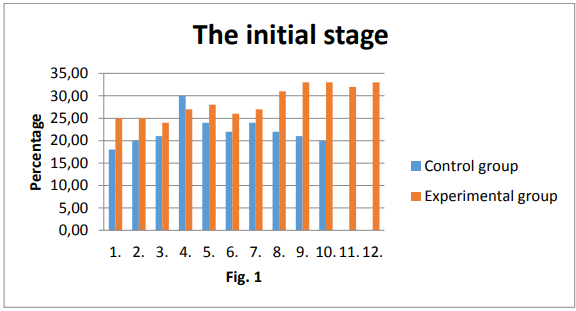
Figure 1. Average level of communicative competence (ascertaining stage, initial testing)
The second stage was aimed at improving graduates’ language proficiency in light of introducing the complex of digital educational sources and implementing remote Microsoft Teams’s class teachingpredominantly, focused on the main problems of modern Arabic society, such as: “The youth’s problems”, “Foreigners and immigration”, “Free time and hobbies of the Arabs”, “Problems of the metropolis”, etc. As the final control tasks, students were instructed to organize a round table, a press conference or to interview (Stephen: 2014).
While exercising digital educational means, we followed the main principles of teaching a foreign language, stimulating the cognitive activity of students:
-
Positive transfer of knowledge and skills from the native language … and interference prevention;
-
Activation of learners’ linguistic experience, acquired as a result of native … language learning;
-
Learners’ socio-cultural experience;
-
Motivation to learning, contrasting new languages and cultures;
-
Bipolar and tripolar comparison of languages and cultures;
-
The reflection of integration processes currently occurring in the international community in the teaching content;
-
Systematic and consistent cross-discipline ties formation (Gazizova et al.: 2018, p.1001).
The analysis of the second formative stage (intermediate testing) results demonstrated a level increase in the students’ communicative competence development in the experimental group compared with the control one. The level of students’ cultural experiencehas positively changed; they showed a keen interest in educational discussions, not experiencing difficulties with the choice of appropriate words and expressions. This resulted in an approximate 15% rise in the amount of correct answers compared to the initial performance (Figure 2) (Ismail: 2017, p.129).
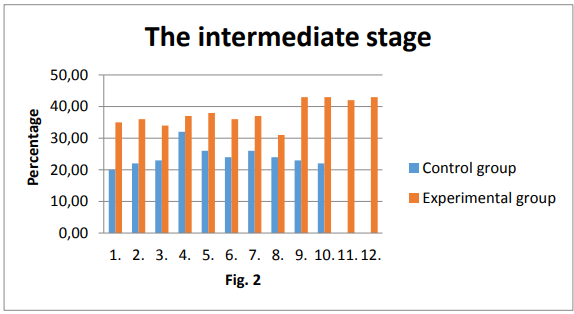
Figure 2. Average level of communicative competence (formative stage, intermediate testing)
The results obtained at the final experiment stage displays that the students of the experimental group increased their level of language competence, representing fluency practice in communication and viewpoint expression. Its average indicator was registered at more than 75% of the correct answers compared to almost 35% of the answers given by the control group (Figure 3). The practice of developing the students’ listening, reading and speaking skills determined by the integrated usage of digital educational sources has led to a certain extent to the development of the communicative competence of language personality (Ahmad: 2018, p.751).
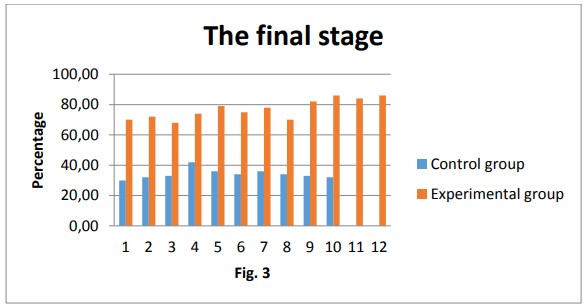
Figure 3. Average level of communicative competence (final stage) The details of the methodology exercised are given below.
Listening/ speaking skills
The attention is paid to developing listening skills that is achieved by the usage of the electronic and interactive textbook “Al-kitaab fi Taa’lumial’arabiya” (The book of learning Arabic) (2007) by K. Brustad, M. Al- Batal and A. Al-Tonsi (2007). This book includes lexical, grammatical, audio-visual, linguistic and cultural studies materials; has three parts of seven lessons, each including six hyperlinks: new vocabulary (al- mufradaat), video-material (al-qissa), grammar (al-qauaa’d), audio-material (al-istimaa’), the Egyptian dialect (ai-‘ammiia), cultural studies (aththaqaafa). New vocabulary is presented in writing and audio form separately and in a sentence; furthermore the students listen to its functioning in the video. The grammatical aspects of the sentence-structure of the video- and audio-materials of the lesson are explained in the grammar hyperlink. The audio-material hyperlink is aimed at revising the new words and expressions of the lesson. The dialect material shows contrast between the literary and dialectal vocabulary. The section ends with the cultural studies information. Speaking skills are formed through retelling the material of the lesson, answering the questions and discussing the cultural information. The introduction of each unit contains activation of the studied vocabulary with the aim to immerse the student into the language atmosphere in a real or imaginary situation, and the exercises for students’ communication skills developing in dialogues (Martin van bruinessen: 2012).
Reading skills
To expand the vocabulary and to deepen understanding of the grammatical system of the Arabic language the digital educational course “Leksikologiyaarabskogoyazika” (the Lexicology of Arabic) (2019) by MingazovaandZakirov is used. It aims at highlighting the lexical level of the literary Arabic language and its linguistic processes covering 20 hours of students’ independent work. The main modules of the course are as follows: the Arabic lexicology basics, the Arabic vocabulary, borrowings/ loanwords in Arabic, Arabic terminology, word formation in Arabic, synonymy/antonymy, polysemy/ homonymy, phraseology, paremiology, lexicography. Video-, lecture-, test materials are presented. The course helps develop reading skills (Ridlwannasir: 1995).
The linguistic and cultural aspects in learning a language is an integral part while forming listening, speaking and reading skills. The digital educational course “Modern Intercultural interaction” (2019) by Mingazova, andSubich et al. represents ethnocultural component as the main criterion in the considerations of occidental and oriental language outlooks. Its module “Tatarstan and the Arab world” reveals the historic data on the interest of the Tatarstan community in the Arabic studies, the formation and development of Arabic studies in Tatarstan, the information about the Arabic world in general, the achievements and perspectives of Kazan Federal University in the development of the Arabic studies in Tatarstan republic.
Reading/ listening skills
Reading and listening skills are developed by applying to the Internet source the news portal of the international satellite channel “RT” in Arabic. The advantage of the source is in being created and supported by the Russian Federation; the Arabs and the Russian arabists work there. It was created taking into account the mentality peculiarities of our people and expresses the official position of our government, which excludes the presence of fundamentalist, extremist and xenophobic nature materials. Many RT materials are devoted to the relations of the Russian Federation with the Arab countries in politics, economy, culture, etc. The materials of the source should be used starting with the third year of education, when students have formed elementary skills of Arabic literary language at the phonetic, lexical and grammatical levels (Supriadi& Muhammad roypurwanto: 2019, p.352).
There are two ways of working with site materials (audio-visual and text-based) aimed at improving listening, reading and speaking skills of students and their knowledge of the Arabic literary language. As for the content-elements of materials, they are divided into the following sections: news, finance and business,sports, culture and art, science and technology, video reports, channel programs, documentaries, photo tours, forums. Definitely, a wide range of topics allows students to study the various aspects of the Arabic literary language in the most comprehensive way. Great importance is attached to the range of words: it must be motivated and meet all the standards of the Arabic literary language, recorded in dictionaries, reference books and textbooks. So, the news portal offers students the opportunity of self-realization, the ability to adapt to rapidly changing conditions and requirements, and acquire new knowledge.
The authors’ methodology in teaching foreign languages through a remote mode is based on the international requirements of the language competences and the usage of various digital educational sources for the formation of students’ foreign language (Arabic) communicative competence according to the current learning environment. While developing students’ linguistic skills, we improve the teaching process in accordance with the Common European Framework of Reference for Languages (CEFR).
RESULTS
For achieving the courses’ objectives, a four-step methodological structure is recommended for the high- quality, effective and transparent implementation:
Step 1. Since successful courses require careful planning and continual revision of courses goals, effective way to formulate goals is to determine what students should be learning in terms of content, cognitive development, and personal development. Courses’ content was determined; major topics were arranged in a logical order. Multidisciplinary synergies and openness to civil society were characteristic of the courses used.
Step 2. Teaching methods and tools were developed in accordance with the size, language diversity, and diverse range of learning preferences of the class or students group and consistent with the course goals. Teaching with lectures and teaching with discussions were used as teaching methods. Information and communication technology was integrated with more traditional teaching tools. Evaluation must go hand-in- hand with course goals. The test consists of specific academic situations that students should solve by demonstrating their subject knowledge, thinking skills, language skills and creativity; homework and class activities include some questions that require problem-solving skills.
Step 3. Text(s) and other materials are selected (published texts and teaching materials compiled frompublished in journals and internet resources, and unpublished material, if applicable).
Step 4. Course policies on academic integrity, course schedule is defined and syllabus is written. The syllabus structure contains: course title, time, and location; prerequisites; required texts and other materials; course topics; major assignments and exams; course policies on grading, academic integrity, attendance, and late work; and contact information for instructor.
Control procedures should be conducted in the following way:
- 1. Preliminary test of language concepts and stereotypes are associated with different cultures. Ultimate test of associations are obtained in language studies.
- 2. Experiment of influence. Data are obtained through studying the influence of different concepts in non- native languages (Arabic) on different concepts of native languages.
- 3. The academic manager of the project is regularly monitored the quality of the implementation.
- 4. The effectiveness of the educational courses is measured by the students’ testing.
- 5. Actual acquisition of the relevant information is checked at the roundtable debate.
DISCUSSION
As a result, worked out syllabus, using proposed digital educational sources, can fully provide the educational process of foreign (Arabic) language teaching, and show the effectiveness of their complex usage as a basis in foreign language teaching the main purpose of which is to develop the communicative competence of language personality. The usage of the resources was determined by the aims of the course,i.e. listening and speaking skills were considered predominantly important, with reading/listening and reading skills taking the other part of the class time. So the usage of the digital resources in our work may be summarized as follows:
electronic textbook was estimated at 50% of the course time; The International “RT” channel – 30%;
The digital educational course “Lexicology of Arabic” – 10%;
The digital educational course “Modern Ethnocultural Interaction” – 10%.
CONCLUSION
During the sixth semester, using the suggested courses, the group was informed of the basics of Arabic. Relevant materials were transmitted and reported. Development of the offered courses was carried out in accordance with the proposed methodology, corresponding to the practice of Arabic Studies. Course evaluation was conducted through testing target groups of trained bachelors. The impact and outcome of the project are characterized with high added value due to personalized models of tolerant communication, successful coexistence, wellbeing and surviving in migration activity conditions and under social tension developed as a result of the project could be useful for Arabic studies and population behavior under possible future disasters.
Acknowledments
The work is performed according to the Russian Government Program of Competitive Growth of Kazan Federal University.
BIODATA
M.NGABDELKHAMITOVNA: Current positions: Head of the Department (since 2015), Associate Professor of English and Arabic (2005), Founder, Executive Editor of the “Eurasian Arabic studies” journal (since 2018). Fields of Interests: Contrastive Linguistics (Indo-European, Semitic, Bantu), Teaching Arabic to Non-native speakers. Author and co-author of 110 scientific publications and 1 monograph, 25 textbooks and volumes, published in Russian and English. Teaching courses: Ethnocultural competence in teaching languages, Language and Cross-cultural communication, Contrastive Typology, General English, General Arabic. Grants and awards: Tatarstan Republic grant “Innovations in Education” (2012, 2017)
S.VGLEBOVICH: Current positions: Associate Professor (since 2016), Scientific Editor of the “Eurasian Arabic studies” journal (since 2018). Fields of Interests: Contrastive Linguistics (Germanic, Altaic); Psycholinguistics. Teaching courses: General English, Business English, ESP, History of English, English as a Second Foreign Language, Translation Practice.
G.AILDUSOVNA: Current positions: Professor (since 2010), Associate Professor of Foreign Languages (2005). Fields of Interests: Theory and Methodology of Professional Education, Foreign Language Teaching Methodology, Comparative Pedagogy. Author and co-author of 170 scientific publications and 7 monographs, 15 textbooks and volumes, published in Russian and English. Teaching courses: Foreign Language, Business Foreign Language, Modern Translation Computer Technologies of Scientific and Technical Literature, Foreign Language in Professional activity.
BIBLIOGRAPHY
AHMAD, F (2018).“Transkulturasi Social Capital PesantrenSebagaiParadigmaPendidikan Islam Moderat”, Proceedings, Surabaya: UIN SunanAmpel,p.751.
AZER, I, HAMZAH, HC, MOHAMAD, SA & ABDULLAH, H (2016). “Contribution of Economic Sectors to Malaysian GDP”. Regional Conference on Science, Technology and Social Sciences, pp.183-189.
GAZIZOVA, A, MINGAZOVA, N & SUBICH, V (2018). “Teaching a Second Foreign Language in the Russian School”. In SHS Web of Conferences, 4(8), p.1001.
GRAHAM, S (2019). “Innovations in Education. Remote teaching”. ISBN: 978-9974-8700-0-0. British Council, p.164.
HUBACHKOVA, S, SEMRADOVA, I & KLIMOVA, B (2011). “Blended Learning in a Foreign Language Teaching”. Procedia – Social and Behavioral Sciences, 2(8),pp.281-285.
ISMAIL, S(2017). “Pesantren, Madrasah, Sekolah, Dan PantiAsuhan: PotretLembagaPendidikan Islam minoritas Muslim”, At-Tajdid: JurnalIlmuTarbiyah, 6(1),p.129.
MARTIN VAN BRUINESSEN (2012).“KitabKuning, PesantrendanTarekat”, (Yogyakarta: Gading Publishing).
MINGAZOVA, N & SUBICH, V (2019). Modern Intercultural interaction.https://do.kpfu.ru/course/view.php?id=4355
MINGAZOVA, N & ZAKIROV, R (2019). “Leksikologiyaarabskogoyazika” (The Lexicology of Arabic) https://do.kpfu.ru/course/view.php?id=4549
REHMAN, S, MOHAMED, R & AYOUP, H (2019). “The mediating role of organizational capabilities between organizational performance and its determinants”. Journal of Global Entrepreneurship Research,pp.1-23.
RIDLWAN NASIR (1995).“DinamikaSistemPendidikan: Studi di Pondok- pondokPesantrenKabupatenJombang, JawaTimur”,(Yogyakarta: Disertasi, IAIN SunanKalijagatidakditerbitkan).
RIDZWAN, R, MUHAMMAD, NMN & RAHMAN, AAA (2017). “Issues and Challenges among Young Entrepreneurs in Malaysia”. Journal of Business and Management (IOSR-JBM), 19(3), pp.80-84.
SETIOWATI, R, HARTOYO, H, DARYANTO, HK & ARIFIN, B (2015). “Understanding ICT AdoptionDeterminants among Indonesian SMEs in Fashion Subsector”. International Research Journal of Business Studies, 8(1), pp.47-57.
SHAMSUTDINOVA, EK (2018).“Primenenieresursovotkrytogodostupapriprepodavaniiarabskogokaktret’egoinostrannogoyazyka [Implementing open-access resources for teaching Arabic as a third foreign language]”.Eurasian Arabic Studies, 4, pp.79-87.
STEPHEN, JF (2014). “Selected Writings of James Fitzjames Stephen: A General View of the Criminal Law”. Selected Writings of James Fit.
SUBICH, VG, MINGAZOVA, NG, ZAKIROV, RR & AL-FOADI, RA (2017). “Improvement strategies of teaching the Arabic language in the Tatarstan schools”. Modern Journal of Language Teaching Methods (MJLTM), 7(2), pp.23-27.
SUPRIADI & MUHAMMAD ROY PURWANTO (2019).“Religious Learning with Social Media and Its Implication for Understanding Religion”, International Journal of Engineering and Advanced Tecnology (IJEAT),8(6), p.352.
TRAJANOVIC, M, DOMAZET, D & MISIC-ILIC, B (2007). “Distance learning and foreign language teaching”.Knowledge-based, cognitive and learning systems. BCI, Sofia, Bulgaria,pp.441-452.
ZAKIROV, R & MINGAZOVA, N (2015). “Interaktivnyemetodyobucheniyaarabskomuyaziku (The interactive methods of teaching Arabic)”.Kazan: RII, pp.194.
ZENINA, LV& KAMENEVA, NA (2013). “Teaching business correspondence in English to students through distance learning system”. Open Education, 6(101), pp.76-79. https://doi.org/10.21686/1818-4243-2013- 6(101-76-79