Artículos

This work is licensed under Creative Commons Attribution-NonCommercial-ShareAlike 4.0 International.
Received: 12 December 2020
Accepted: 15 February 2021
DOI: https://doi.org/10.5281/zenodo.4556283
Abstract: Due to the ease of access and technological progression, social networking sites have deeply rooted in our lives. This study scientifically scrutinized gender discrepancies concerning social media usage and its influences on academic performance. Results revealed explicit differences between social media usage among teenage boys and girls. Boys mainly use social media for communication and interaction, while girls use social networking sites for educational purposes. Moreover, results also affirmed a strong positive correlation between social media usage and students’ academic performance. Therefore, the researchers recommended further evaluation of other facets of social media to analyze their usage and its impacts on students’ educational performance.
Keywords: Academic performance, educational guidance, social media, social networking sites.
Resumen: Debido a la facilidad de acceso y la progresión tecnológica, los sitios de redes sociales están profundamente arraigados en nuestras vidas. Este estudio examinó científicamente las discrepancias de género con respecto al uso de las redes sociales y sus influencias en el rendimiento académico. Los resultados revelaron diferencias explícitas entre el uso de las redes sociales entre niños y niñas adolescentes. Los niños usan principalmente las redes sociales para comunicarse e interactuar, mientras que las niñas usan los sitios de redes sociales con fines educativos. Además, los resultados también afirmaron una fuerte correlación positiva entre el uso de las redes sociales y el rendimiento académico de los estudiantes. Por lo tanto, los investigadores recomendaron una evaluación adicional de otras facetas de las redes sociales para analizar su uso y su impacto en el desempeño educativo de los estudiantes.
Palabras clave: Desempeño academic, orientación educativa, redes sociales, sitios de redes sociales.
INTRODUCTION
Social networking has become a broadly practiced phenomenon and captivates millions of people. As the use of social media makes communication mobile and efficient, the growth of new media established a new world of refined communication. It is also observed that the number of youngsters using social media is briskly expanding. Besides checking emails and reading newspapers, people daily visit their social networking profiles (Mazman & Usluel: 2011, pp. 133-139; Habes et al.: 2018, pp. 71-82); people use social media to participate in different online activities or to check what their online profile has and what other people share. Social media technology has opened new dimensions to interact, collaborate, and get educated. Blogs, chat rooms, and company-sponsored platforms are always present to expedite the users. During the past few years’ social media usage has considerably changed. From communication to education, social networking sites serve as a significant medium. Social media promote communication, information, education, entertainment, and business. It helps to interact with people all over the world. According to Guedes et al. (Guedes et al.: 2016, p. 43), Social media serve prompt communication by monitoring and accessing others with just one click. They also facilitate virtual meetings and contacts with other people. The birth of the digital age makes it convenient for people to reach various types of information and get connected. Further internet technology has the potential to advance the existing teaching methods, which will eventually lead towards a better quality of education. Social media also possess greater usability and propriety among the young generation. It is highly preferred in educational arenas both by students and the instructors to improve the learning process. In this regard, social media users are briskly increasing in number Boahene et al. (Boahene et al.: 2019, pp. 1-17). Today, the world population is 7.593 billion, out of which 4.021 billion people are internet users. 3.196 million people are active users of social media. 6.135 million people are mobile users, and 2.958 are active mobile social media users. In Pakistan, there are 44.6 million internet users, out of which 35.0 are active social media users. Facebook is the most popular social networking site (92.06% users), 4.68% of people use YouTube, 1.58% of people prefer Twitter, 1.7% people use Pinterest and, 0.18% of people use Instagram. As the usage of social media is increasing, it is getting rapidly embraced by people of almost every age and gender. Social media usage is important in our lives today. Especially the young generation is comparatively more reliant on social networking sites for education. Moreover, communication and entertainment are the most overlooked purposes of using social media (Habes et al.: 2019, pp. 382-392). Also, different patterns of usage attributed to both gender identities as men and women use social media for distant purposes. The difference between male and female communication is also visible in their patterns of social media usage (Veltri & Atanasova: 2017, pp. 721- 737).
Social Media Usage and Gender
Krasnova et al. (Krasnova et al.: 2017, pp. 261-284) Examined gender variations in social media usage. Results showed that gender difference exists in social media usage among young students. However, men use it mostly for entertainment, while women use social media for communication and information purposes. There is a clear difference between both genders about their social media usage. Making new contacts is purely attributed to men and using it for academic and informational aspirations found in women (Mazman & Usluel: 2011, pp. 133-139). Likewise, addressing the impacts of social media on academic performance stated that with the advancement in technology, the use of social media has become rampant. Moreover, the time spent on social networking sites has risen by 62.5 percent since 2012 and continues to grow. During the last year, the average time teenagers spent on social media was estimated at 2.6 hours per day.
Use of Social media and academic performance
Youngsters spend their time on social media, which affects their education (Deka: 2015, pp. 90-94). Analyzed the impacts of social media usage on students’ academic grades. Findings unveiled that studentsconsidered social media had both positive and negative effects. However, impacts depend mainly upon their mode of usage. (Badri et al.: 2017, pp. 1433-1444) Argued that social media usage deeply affects the academic performance of students, if used appropriately, it can bring certain positive impacts on students’ academic performance. Studies affirmed both the positive and negative impacts of social media usage Concerning students, their opinions, and findings. Both positive and negative impacts are high in detail. However, the constructive use of social media for better academic grades is inevitable. Studies conducted in China and Iraq showed that social media is highly used as a positive approach in the learning process. Students use social networking platforms for assignment discussions, getting updates on class schedules, and addressing concerns related to their coursework (Boateng & Amankwaa: 2016, pp. 1-8).
Previous research studies widely reported gender differences in social media usage and its impacts on students’ academic performance, but their findings have mixed directions. (Sponcil & Gitimu: 2013, pp. 37- 49: Moreno et al.: 2015, pp. 242-253: Habes et al.: 2018, pp. 12-18; Alghizzawi et al.: 2019, pp. 438-448; Habes et al.: 2019, pp. 382-392). Some assume that both male and female teenagers use social media for communication and education. Some assume that females use social media only for information aspirations. Also, gender discrepancies about social media usage are not a widely investigated phenomenon in Pakistan. Similarly, concerning the effects of social media usage, there are certain findings. Some validated positive, and others dug out negative outcomes of social media usage. Relying mainly on the gathered data, the researchers preferred to conclude the study by analyzing the responses directly from the subjected participants. It is because the researchers asserted that users could make valid responses about their social media usage and its impacts on their educational performance (Maria, 2020; Mehboob & Othman, 2020). This study mainly examined (a) the gender differences in social media usage, (ii) for what reasons individuals mainly use social networking sites? (iii) Most preferred social networking site (iv) Correlation between social media usage and academic performance and (v) direction of impacts. Therefore, in the light of reported evidence from prior research, the following hypothesis about analyzing the gender differences in social media usage and impacts on student’s academic performance is proposed:
H1: Teenage boys and girls use social media for different purposes
H2: Social media usage positively affects students’ academic performance
Significance of the Study
This study aimed to find the factors authenticating gender discrepancies regarding social media usage. Evaluating the impacts was another major concern. This study comes up with the answer that both boys and girls use social media for distant purposes. Results also unveiled the positive impacts of social media on academic performance. This analysis is highly significant for students, parents, and teachers to determine the different facets of social media usage in Pakistan that are still under investigation.
METHODOLOGY
The quantitative research design is used in this study as quantitative data are more efficient (Alghizzawi et al.: 2018, pp. 59-70). The researcher used a quantitative approach for this exploratory research design with a well-constructed and self-developed survey questionnaire. Apart from demographical data, questionnaires consisted of questions that extorted data from the respondents with response options: Strongly Agree, Agree, Disagree, Strongly Disagree, and I do not know. The researcher used 152 structured and self-administered questionnaires to obtain data from respondents. Every questionnaire comprised 19 questions in which respondents were asked to pick suitable responses. Data gathering is done from September 2018 to November 2018. Since a newly devised survey tool was used, internal reliability of the apparatus that used rating scales (1= strongly agree to 5= I don’t know). Cronbach Alpha Vale of .982 affirmed that our research tool is highly reliable.
Participants and Sampling
Participants of this investigation were recruited from four leading private sector institutions (schools and colleges) in Rawalpindi and Islamabad. Of the n=152 respondents, n=76 or 50.0% of participants were males (M= 16.4, SD= 1.606) and other n=76 or 50.0% of (M= 16.86, SD= 2.140) respondents were females between the ages of 13 to 19 years. Likewise, n = 62 or 40.7% of respondents were ranging from 13 to 15 years and n= 90 or 59.2% of students were above 15 years of age (M= 16.50, SD =1.919). The sample of the study is collected according to the systematic sampling technique. The first population was apportioned into two categories (private and public) and selected the private sector institutions. Later, the researcher divided institutions into three groups (schools, colleges, universities) and chose teenage students from schools and colleges as mostly students ranging from 13 to 19 years are easily available in the selected category of institutions. Before distributing questionnaires, the researcher asked for permission from the institutions. Further, the researcher also informed the participants that their identities would be kept confidential.
RESULTS
One-way ANOVA (Analysis of Variance) to scrutinize the effect of demographical factors on dependent variables showed that:
-
Demographical factors have significant effects on gender discrepancies variable, F (18, 133) = 99.442, p ≤ .001***
-
Demographical factors also have strong significant effects on academic performance, F (10, 141)
Two independent samples T-test, examined the difference between our stated variables. The findings revealed a significant gender difference concerning social media habits among teenage boys and girls, t (93.900) = -15.063, p ˂ .001, 95% C.I is -5.1867 – 1.39366. The teenage boys are using social media differently (M=1.6474, SD = .31304) than teenage girls (M=3.2526, SD = .87475).
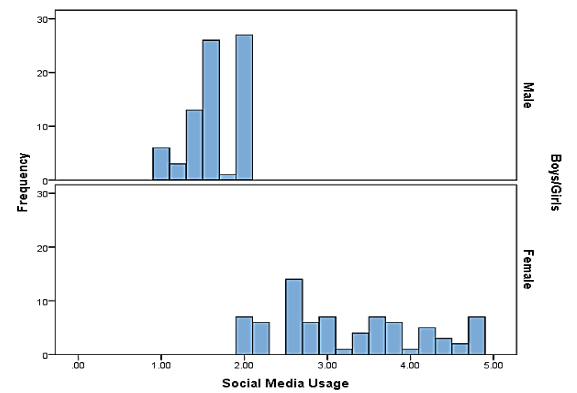
Figure 1. Two Independent Samples T-test for gender discrepancies in social media usage
Also, the researcher proposed a positive correlation between social media usage and educational performance. Linear regression analysis assessed the second hypothesis. The results of regression analysis suggested that social media usage explained .68% of the variance R² = .65, F (1,150) = 286.404, p < .000. Social media usage significantly predicted impacts on students’ academic performance, B= 1.57, t = 18.166, p < .001. As this study is a subjective analysis based on participants’ personal opinions, we found significant outcomes. Results unveiled three important aspects that may include:
- 1. Facebook is the most frequently used social networking site.
- 2. Patterns of social media usage differ among teenage girls and boys.
- 3. Social media usage has positive impacts on students’ academic performance.
The Most Frequently Used Social Networking Site
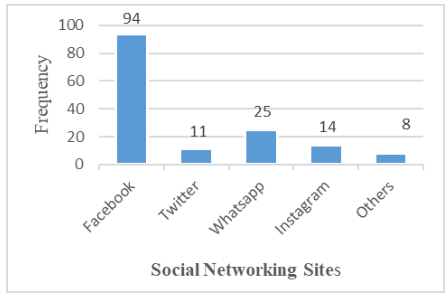
Figure 2 The most frequently used social networking site
With many other distinct features, Facebook served as a complete source of interest and preferred mostly by teenagers. People use Facebook to communicate with others, and it helps them to build their professional profile; it is an RSS reader for news and an educational platform for all. Many reasons made Facebook the most preferred social networking. From the beginning, Facebook management keeps on bringing significant improvements. These modifications attract their users, and thus people mostly prefer Facebook. Figure 2 contains descriptive statistics for the most frequently use social networking sites. Results revealed that n=94 or 61.8% of respondents considered Facebook as the most preferred SNS. Facebook is mostly preferred for different purposes. Due to available social networking sites on mobile phones, they mainly access their social media accounts by using mobile technology. Teenagers have greater existence online more than they ever have in earlier times. Seven out of ten teens mainly use Facebook. It is because of the bulk of information, education, and communication availability and usefulness (Boyd: 2008).
Patterns of social media usage among teenage girls and boys
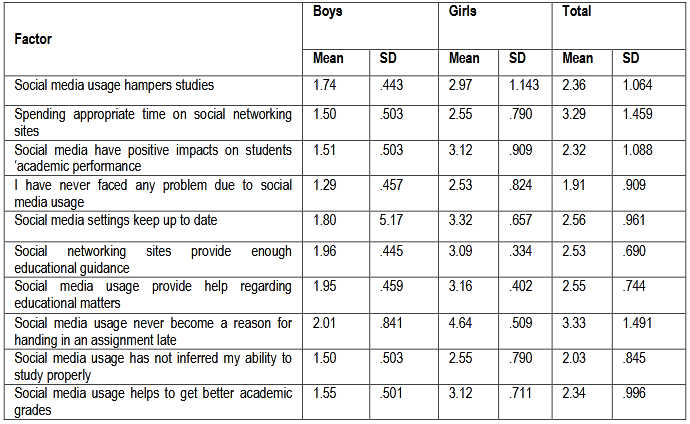
There were statistically significant results, as displayed in Table 1. Of particular note and in support of H1, male participants responded that they use social media for entertainment and communication as compared to girls. Gender is one of the most conspicuous demographic variables and, discrepancies based on gender are also prevalent in social media usage. Similarly, boys and girls have distant patterns of social media usage. Even if they use the same social networking site, their selected content differs from each other.
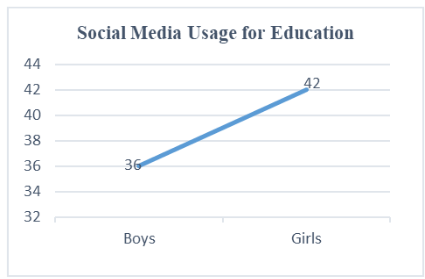
Figure 3. Social Media for Educational Purposes
Figures 3 and 4 show an explicit gender difference concerning social media usage. N=36 or 23.6% of boys and n=42 or 27.6% of girls revealed their social media usage for educational purposes. Another study also investigated social media usage and found that teenage girls mainly prefer social media for educational purposes. This is because of increased learning opportunities causing improved academic performance.

Table 1. Descriptive statistics for social media usage among teenage boys and girls
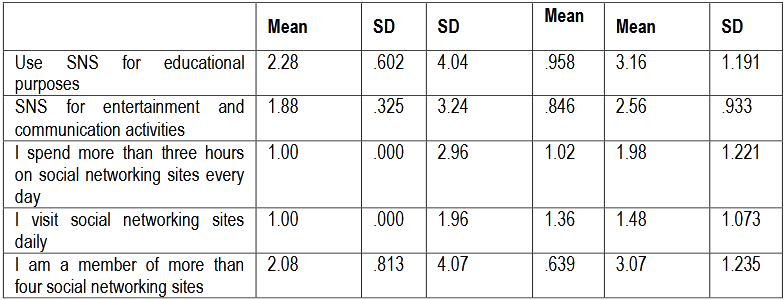
Likewise, estimating the activities of boys and girls regarding social media usage, it was unveiled that n= 67 or 88.1% of boys tend to use social media for entertainment and communication. In contrast, only n= 48 or 36.8% of girls use social media for entertainment, communication, and time-killing purposes. Gender differences are explicitly visible in patterns of social media usage among teenagers.
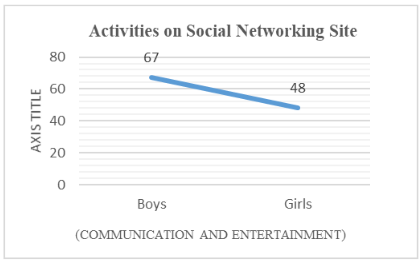
Figure 4 Activities on Social Networking Sites
A study analyzed why men and women use social networking sites? Researchers found that there is a gender difference regarding social networking usage as men and women use social networking sites for different aspirations (Krasnova et al.: 2017, pp. 261-284; (Abubakar and Obansa, 2020; Alam and Shakir, 2019; Bhatti and Akram, 2020; Uwajumogu et al., 2019). One more analysis also witnessed a correlation between gender and social media usage. According to the researchers, boys mainly prefer social networking sites for communication while girls prefer to use them for other different reasons (Mazman & Usluel: 2011, pp. 133-139). Therefore, the first research hypothesis, “Teenage boys and girls use social media for different purposes,” is authenticated by obtained results. (Sponcil & Gitimu: 2013, pp. 37-49) Women, ascompared to men, use social media mostly for information purposes. As compared to girls, teenage boys are more likely to use social media for communication purposes (35% vs. 28%). The extensive evaluation proved gender discrepancies in social media usage. 84% of boys use social networking sites for gaming and entertainment, and girls use social media for other reasons. Social media usage preferences differ among both boys and girls. Social media usage is a gendered arena. Both men and women prefer different social media platforms for different reasons.
DISCUSSION
Impacts of social media usage on students’ academic performance
In support of H2, Table 2 validates the assumptions declaring a positive correlation between students’ academic performance and social media usage. Researchers found that n= 57 or 37.5% of teenagers use social media for both educational and informational reasons. Fig 4 displays certain aspects of social media usage and students’ academic grades.
Table 2. Descriptive statistics for social media usage and impacts on students’ academic performance
According to Habes (Habes: 2019, pp. 32-39), Kasahara et al. (Kasahara et al.: 2019, p. 32) young generation uses social media for different reasons that help them to gain better academic grades and self- confidence. One more study authenticated the use of social media for education aspirations. Findings of her study unveiled that most students use social networking sites to attain supplementary material for their curriculum (Tartari: 2015, pp. 393-393). Sharing knowledge and gaining information is useful for them. Therefore, to further improve academic performance, social media should be used by instructors and institutions as well.
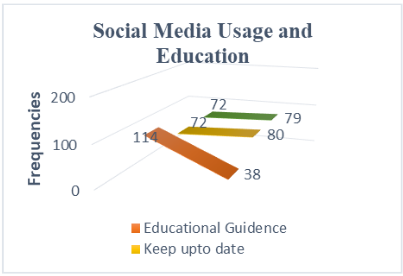
Figure 4. Social Media Usage and Positive Impacts on Academic Performance
Today it is easy to rectify the impacts of social media usage on students’ academic performance. Technology is expanding and, teenagers are the ones who are rapidly adopting this change. As stated in the second research hypothesis, “Social media usage positively affects students’ academic performance, for n= 70 or 46.0% of participants, social media not only provide the educational support also help them acquire career guidance. Besides communication, information, and education, social media provides you with career guidance as well. Certain discussion forums, class blogs, and ease of access support students to choose the career of their interest. Therefore, results unveiled a strong positive correlation (p ˂ .001) between students’ academic performance and social media usage (Nández & Borrego: 2013, pp. 781-791). Since social media are providing sufficient information and education, students use blogs, articles, journals, newspapers to increase their knowledge.
Table 3. Correlation between the use of social media and academic performance of teenagers of Pakistan
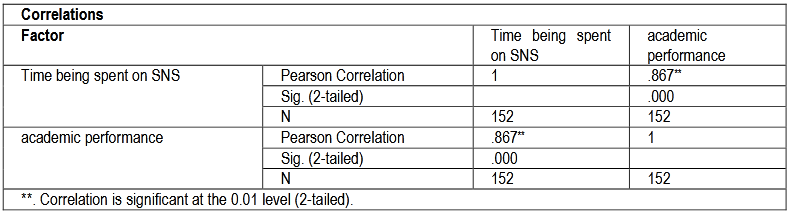
Table 3 shows a strong correlation between the time being spent on social networking sites and academic performance. Therefore, the significance level is 0.01, and the Pearson correlation is .867, which shows a strongly significant relationship between the stated variables. Results of an investigation showed that social media is positively associated with students’ academic performance. They tend to receive information and supplementary material from social networking sites. For this reason, social media usage does not affect students’ academic performance. In this context, n= 122 or 88.2% of participants responded that despite using social media, they are studying properly, and their academic grades do not get influenced. The Internet is an important platform for sharing and learning, conducting an assessment, motivating teamwork, and brainstorm about new ideas as students are well aware of their social media usage. They spend appropriate time on social networking sites, which do not affect their academic performance. It is also suggested that the nature of usage and time management are two factors that determine the positive and negative impacts of social media usage. Additionally, learners use social networking sites for gathering information. Technology can reinforce learning if used appropriately. The negative and positive aspects of social media are purely based on its usage. If used properly, it can bring certain positive outcomes (Aillerie & Mcnicol: 2016, pp. 89- 100).
CONCLUSION
Students today are familiar with the consequences of their social media usage. Although their usage differs but they are well capable of getting an advantage from it. This study analyzed the gender discrepancies concerning social media usage and their impacts on students’ academic achievements. We have observed how gender differences are prevalent in social media usage. Also, we found positive impacts of using social media for academic aspirations. Web-based communication, learning, education, and entertainment have a greater importance today. The young generation is growing up in an environment where social media is working as the main mediator of their experiences and opportunities. Blogs and other websites can help them to improve their academic grades. Results of self-administered questionnaires revealed that boys tend to use social networking for entertainment, and girls use it for information and education. Furthermore, according to the respondents, social media usage does not have any detrimental impacts on their academic performance. For most of social media help them to improve their understandings, get educational help and provide them guidance concerning their academic matters. Social media help students’ concerning their educational matters. Social media strategies help students’ confronting uncertainties about education. Social networking websites provide a platform for the young generation to increase their knowledge and understanding (DeAndrea et al.: 2012, pp. 15-23; Alghizzawi et al.: 2019, pp. 13-26). Students also agreed their good academic performance is directly correlated with their social media usage for educational reasons. This papercaptured the perceptions of teenagers. Common perceptions about this usage are associated with gathering information and getting additional material for educational help. Although both boys and girls differed in their usage still, this usage is considerate and for purposeful reasons. In this context, it is important to keep evaluating social media preferences and their impacts. Especially, the young generation has distant social media habits that need to be analyzed. Being an important medium, social media analysis can bring different pre-eminent outcomes that can guide students regarding their social media usage. Social media provides easy, flexible, and effective learning opportunities to students. Therefore, the study will help to determine the gender differences and positive impacts of social media usage on students’ academic performance. This study has several contributions to the practical field. First, this study is contributing to reveal the gender discrepancies concerning social media usage in youngsters of twin cities. This usage is generally regarded for communication and entertainment. In Pakistan, there is little research addressing the correlation between gendered social media preference. Also, the positive usage is a key finding which will support the student to use it more for productive uses. Thinking here is, youth are sophisticated enough to evaluate their social media usage, and thus it has positive impacts on their education. It helps them to magnify their knowledge and briskly access supportive study material.
Gender and use of social media and teenage academic performance are analyzed in this article. Theanalysis is conducted with a limited sample size of teenagers. However, future research will take a larger sample size. Moreover, the gathered responses are manipulated, measured, and displayed comprehensively. Both hypothetical postulations addressed our research queries and confirmed the relationship between stated variables. Deduced responses are manipulated, measured, and displayed appropriately also, and research questions are fully addressed by the respondents in the light of stated hypotheses. Both hypothetical postulations discussed the research queries and authentically affirmed the relationship between stated variables. Therefore, we recommend more research as gender discrepancies on the circumstantial purposes that may ascertain the particular reasons behind social media usage among boys and girls, especially in Pakistan. As Pakistan is under a technological transitioning process, social media usage is briskly growing, which needs to be scrutinized. Although findings validated the gender differences regarding social media usage do exist, but the preferred activities on different social networking sites in the region are yet to be further explored. Parents, teachers, media professionals, and all the concerned bodies should monitor social media usage so that all the people may get benefitted from technological progressions.
BIODATA
SANA ALI: She has skills in Quantitative and Qualitative Research. Her areas of research include social media, e-learning, children's human rights, and feminist media perspective. Sometimes she switches to other more areas, but it is purely for information gathering purposes.
AYESHA QAMAR: She is Assistant Professor of Fatima Jinnah Women University, Rawalpindi. She Worked as Internee Graphic Designer & Web Developer (08 July 2007 to 31 Aug2007) in NESCOM (HRD) Islamabad.
MOHAMMED HABES: Dr. Mohammed Habes obtained his BSc and MSc in Mass Communication (radio and television) from Yarmouk University. He also obtained his Ph.D. in Television& Digital Media at the Faculty of applied social sciences from Universiti Sultan Zainal Abidin | UniSZA, Kuala Terengganu, Malaysia. Habes does research in Digital Media, social media marketing, media studies, social TV , Television Studies, Academic Development. His research interest is also with Quantitative Research Methods, Partial Least Squares-Structural Equation Modeling (PLS-SEM).
BIBLIOGRAPHY
ABUBAKAR, I., & OBANSA, S. (2020). An Estimate of Average Cost of Hypertension and its catastrophic effect on the people living with hypertension: Patients’ perception from two Hospitals in Abuja, Nigeria. International Journal of Social Sciences and Economic Review, 2(2), 10-19.
AILLERIE, K, & MCNICOL, S (2016). "Information literacy and social networking sites: challenges and stakes regarding teenagers’ uses". ESSACHESS–Journal for Communication Studies, 9(2 (18)), pp. 89-100.
ALAM, H. R., & SHAKIR, M. (2019). Causes of the Passive Attitude in Children at Early Grade Level. International Journal of Social Sciences and Economic Review, 1(1), 16-21. doi:https://doi.org/10.36923/ijsser.v1i1.25
ALGHIZZAWI, M, HABES, M, & SALLOUM, SA (2019). "The relationship between digital media and marketing medical tourism destinations in Jordan: Facebook Perspective". In International Conference on Advanced Intelligent Systems and Informatics. Springer, Cham. pp. 438-448.
ALGHIZZAWI, M, HABES, M, SALLOUM, SA, GHANI, MA, MHAMDI, C, & SHAALAN, K (2019). "The effectof social media usage on students’e-learning acceptance in higher education: A case study from the United Arab Emirates". Int. J. Inf. Technol. Lang. Stud, 3(3), pp. 13-26.
ALGHIZZAWI, M, SALLOUM, SA, & HABES, M (2018). "The role of social media in tourism marketing in Jordan". International Journal of Information Technology and Language Studies, 2(3), pp. 59-70.
BADRI, M, AL NUAIMI, A, GUANG, Y, & AL RASHEDI, A (2017). "School performance, social networking effects, and learning of school children: Evidence of reciprocal relationships in Abu Dhabi". Telematics and Informatics, 34(8), pp. 1433-1444.
BHATTI, A., & AKRAM, H. (2020). The Moderating Role Of Subjective Norms Between Online Shopping Behaviour And Its Determinants. International Journal of Social Sciences and Economic Review, 2(2), 1-09. doi:https://doi.org/10.36923/ijsser.v2i2.52
BOAHENE, KO, FANG, J, & SAMPONG, F (2019). "Social media usage and tertiary students’ academic performance: Examining the influences of academic self-efficacy and innovation characteristics". Sustainability, 11(8), pp. 1-17.
BOATENG, R, & AMANKWAA, A (2016). "The impact of social media on student academic life in higher education". Global Journal of Human-Social Science, 16(4), pp. 1-8.
BOYD, D (2008). "Why youth (heart) social network sites: The role of networked publics in teenage social life". YOUTH, IDENTITY, AND DIGITAL MEDIA, David Buckingham, ed., The John D. and Catherine T. MacArthur Foundation Series on Digital Media and Learning, The MIT Press, Cambridge, MA, 2007-16.
DEANDREA, DC, ELLISON, NB, LAROSE, R, STEINFIELD, C, & FIORE, A (2012). "Serious social media:On the use of social media for improving students' adjustment to college". The Internet and higher education, 15(1), pp. 15-23.
DEKA, PP (2015). "A study on impact of social media on educational efforts in Guwahati City, Assam". International Journal of Advanced Research in Education Technology, 2(3), pp. 90-94.
GUEDES, E, SANCASSIANI, F, CARTA, MG, CAMPOS, C, MACHADO, S, KING, ALS, & NARDI, AE (2016)."Internet addiction and excessive social networks use: what about Facebook?" Clinical practice and epidemiology in mental health: CP & EMH, 12, p. 43.
HABES, M (2019). "The influence of personal motivation on using social TV: A Uses and Gratifications Approach". International Journal of Information Technology and Language Studies, 3(1), pp. 32-39.
HABES, M, ALGHIZZAWI, M, KHALAF, R, SALLOUM, SA, & GHANI, MA (2018). "The relationship betweensocial media and academic performance: Facebook perspective". Int. J. Inf. Technol. Lang. Stud, 2(1), pp. 12- 18.
HABES, M, SALLOUM, SA, ALGHIZZAWI, M, & ALSHIBLY, MS (2018). "The role of modern mediatechnology in improving collaborative learning of students in Jordanian universities". Int. J. Inf. Technol. Lang. Stud, 2(3), pp. 71-82.
HABES, M, SALLOUM, SA, ALGHIZZAWI, M, & MHAMDI, C (2019). "The relation between social media and students’ academic performance in Jordan: YouTube perspective". In International Conference on Advanced Intelligent Systems and Informatics. Springer, Cham. pp. 382-392.
KASAHARA, GM, HOULIHAN, D, & ESTRADA, C (2019). "Gender differences in social media use and cyberbullying in Belize: A Preliminary report". International Journal of Psychological Studies, 11(2), 32.
KRASNOVA, H, VELTRI, NF, ELING, N, & BUXMANN, P (2017). "Why men and women continue to use social networking sites: The role of gender differences". The Journal of Strategic Information Systems, 26(4), pp. 261-284.
MARIA, A. (2020). Construction of an Industry Cycle Indicator for Profitability Prediction Analysis of Aggregate Firms in Bangladesh. International Journal of Social Sciences and Economic Review, 2(4), 9-18. doi:doi.org/10.36923/ijsser.v2i4.76
MAZMAN, SG, & USLUEL, YK (2011). "Gender differences in using social networks". Turkish Online Journal of Educational Technology-TOJET, 10(2), pp. 133-139.
MEHBOOB, F., & OTHMAN, N. (2020). Examining the Links Leading to Behavioral Support for Change: An Expectancy Theory Perspective. International Journal of Social Sciences and Economic Review, 2(4), 1-8. doi:10.36923/ijsser.v2i4.78
MORENO, Á, NAVARRO, C, TENCH, R, & ZERFASS, A (2015). "Does social media usage matter? An analysis of online practices and digital media perceptions of communication practitioners in Europe". Public relations review, 41(2), pp. 242-253.
NÁNDEZ, G, & BORREGO, Á (2013). "Use of social networks for academic purposes: a case study". The Electronic Library, 31(6), pp. 781-791.
SPONCIL, M, & GITIMU, P (2013). "Use of social media by college students: Relationship to communication and self-concept". Journal of Technology Research, 4(1), pp. 37-49.
TARTARI, E (2015). "The use of social media for academic purposes in student’learning process". Academic Journal of Interdisciplinary Studies, 4(2), pp. 393-393.
UWAJUMOGU, N., NWOKOYE, E., OGBONNA, I., & OKORO, M. (2019). Response of EconomicDiversification To Gender Inequality: Evidence From Nigeria. International Journal of Social Sciences and Economic Review, 1(2), 61-72. doi:https://doi.org/10.36923/ijsser.v1i2.32
VELTRI, GA, & ATANASOVA, D (2017). “Climate change on Twitter: Content, media ecology and information sharing behaviour”. Public Understanding of Science, 26(6), pp. 721-737.
