Artículos
Management of sea waste in mangrove area Muara Angke North Jakarta
Manejo de desechos marinos en el área de manglares Muara Angke North Yakarta
 C. WIBISONO chablullahwibisono@gmail.com
A.F. ASSA adrie.assa@ukrida.ac.id
G.P ADIRINEKSO gidion.adirinekso@ukrida.ac.id
C. WIBISONO chablullahwibisono@gmail.com
A.F. ASSA adrie.assa@ukrida.ac.id
G.P ADIRINEKSO gidion.adirinekso@ukrida.ac.id
Management of sea waste in mangrove area Muara Angke North Jakarta
Utopía y Praxis Latinoamericana, vol. 26, núm. Esp.3, pp. 117-128, 2021
Universidad del Zulia
Recepción: 26 Abril 2021
Aprobación: 30 Mayo 2021
Abstract: This study aims to discover how the management of marine waste in the Mangrove Area of Muara Angke North Jakarta and the role of each stakeholder in overcoming the problem of marine waste in the Mangrove Muara Angke Jakarta. The method used in this research is a qualitative method with a case study approach. The study was conducted on the mangrove coast of Muara Angke, North Jakarta. The research schedule starts in September 2018 until April 2019. The data management process starts from January to April 2019.
Keywords: Waste Management, Mangrove Area, Muara Angke, North Jakarta.
Resumen: Este estudio tiene como objetivo descubrir cómo es la gestión de los desechos marinos en el área de manglares de Muara Angke North Yakarta y el papel de cada actor en la superación del problema de los desechos marinos en el manglar Muara Angke Jakarta. El método utilizado en esta investigación es un método cualitativo con enfoque de estudio de caso. El estudio se realizó en la costa de manglares de Muara Angke, en el norte de Yakarta. El cronograma de investigación comienza en septiembre de 2018 hasta abril de 2019. El proceso de gestión de datos comienza de enero a abril de 2019.
Palabras clave: Gestión de residuos, área de manglares, Muara Angke, norte de Yakarta.
INTRODUCTION
The problem of marine trash is often an issue that cannot be overcome by various countries in the world, including Indonesia. Based on research conducted in 2015, Indonesia ranked seventh, defeating Paris, Seoul, Cairo, and Moscow as the world's largest waste producer. Research conducted in 192 countries also showed that Indonesia contributed 3.22 million metric tons of plastic waste. Furthermore, Lamb's research entitled "Plastic Waste Associated with Disease on Coral Reefs" found that the most widely found plastic waste in Indonesia is 25.6 parts per 100 m2 on coral reefs found in the ocean. This shows Indonesia's high urgency to conduct surveillance and management of marine waste because of the variety of impacts caused by the presence of marine waste for the environment, from the pollution of the marine ecosystem to damage to biodiversity and marine resources (Sugandhy & Hakim: 2007, pp. 230-251).
Instead of decreasing, in the last year, Indonesia has increased its rank as a contributor to plastic waste, which pollutes the second largest ocean after China. Meanwhile, as a megapolitan, Jakarta has been named the city with the most significant contributor to waste in Indonesia, with North Jakarta as its most significant contributor. In March 2018, the Seribu Islands and Muara Angke Infrastructure and Public Facilities Officers (PPSU), assisted by the TNI, had cleaned up trash in the Muara Angke Mangrove Forest tourist area, North Jakarta. This cleansing succeeded in transporting 133 tons of waste in the Mangrove area. However, based on preliminary research conducted by researchers at the end of July, the Mangrove area is again covered by mountains of garbage. This fact then becomes the basis for selecting research objects regarding marine waste problems in the Muara Angke Mangrove Area of North Jakarta. Therefore, it can be assumed that transportation alone is not enough to solve marine trash in the region. There needs to be a continuous, ongoing, and comprehensive effort from all parties involved. Map of the Muara Angke mangrove conservation area in North Jakarta can be seen in figure 1 (Zaluchu: 2020, pp. 28-38).
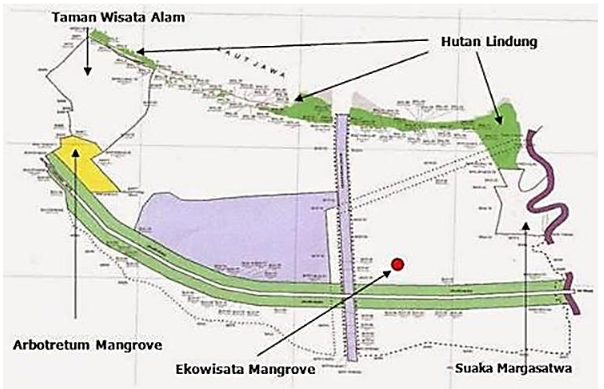
Figure 1. Map of Muara Angke Mangrove Conservation Area in North Jakarta
Muara Angke mangrove conservation area has an area of 327.70 ha by the Decree of the Minister of Forestry Number 667 / kpts-II / 1995, divided into five zones, namely the natural tourism park zone, protected forest zone, mangrove arboretum zone, mangrove eco-tourism zone, and asylum zone wildlife. Arboretum mangrove is a mangrove pilot forest that is useful as a place of education and introduction of mangrove species to the community. The Angke River crosses the mangrove conservation area in Muara Angke. The problem of rubbish in the Muara Angke Mangrove area has an impact on decreasing the beauty of tourism and impacting the disruption of human health to the destruction of marine resources in the region. Toxic waste comes from factory waste, agriculture, municipal waste, construction, laboratories, and others. Toxins in the trash can harm living things when interacting through groundwater infiltration. Toxins such as mercury can be accumulated and eaten by humans and animals when eating contaminated fish or seafood (Zakiyah: 2020, pp. 86-91).
When viewed in terms of causes and impacts, the factors that influence it are so diverse. This can be used as a basis for consideration in making policies for the management of marine waste. The abundance of marine waste is none other than industrial waste, ship painting, reclamation, shipping and port activities, offshore oil and gas mining business, and household waste. The involvement of several policymakers as the cause of the rise of marine waste in Indonesia needs to be assessed. It can then be synergized with policies that have been made (Garnesia: 2018, pp. 16-31).
Marine waste has an impact on the disruption of marine life and fish mortality, causing a decrease infishermen's income, reduced functioning of coastal ecosystems, and the disruption of health. Preliminary research also shows that large-scale cleaning is not the best solution for seeing the re-mounting piles of garbage in the area (Sahil et al.: 2016, pp. 20-37)
Seeing the magnitude of the impact caused by the rise of marine waste and the existence of unsustainable management, an analysis of marine waste management in the Muara Angke Mangrove area of North Jakarta is needed. Therefore, this research entitled "Marine Waste Management in the Muara Angke Mangrove Area in North Jakarta" can generate policy recommendations and synergies between stakeholders involved in managing marine waste in the Muara Angke Mangrove Area in North Jakarta (Nugraha et al.: 2018, pp. 7-14).
In this study, there were three previous studies taken from relevant journals to be used as a reference and enrich the theories used in studying the research conducted, namely research from Yuliadi on "Optimizing Coastal Waste Management to Support Environmental Cleanliness in Efforts to Reduce Plastic Waste and Coastal Rescue Pangandaran, "a personal study entitled" The Level of Community Understanding of Marine Debris Around the Pangandaran Pananjung Area (Yuliadi: 2017, pp. 14-18). " Third, research from Sahil with the title "Management System and Efforts to Overcome Trash in Kelurahan Dufa- Dufa, Ternate City." As well as research from Rob William et al. with the title "Marine Mammals and Debris in Coastal Waters of British, Columbia, Canada." (Williams et al.: 2011, pp. 1303-1316; Kastaman et al.: 2007, pp. 39-56).
In addition to the novelty of the research object, the renewal of this study also exists in taking a different perspective from some of the previous studies above. Previous research was used as a reference focused onmanaging marine waste into economically valuable items and community knowledge about marine waste. Atthe same time, this research emphasizes marine waste management in mangrove conservation areas and coordination among stakeholders to overcome the problem of marine waste. There is also a renewal of the theories and methods used in this study compared to previous research (Sulistiono: 2019, pp. 57-67; Hocking et al.: 2006, pp. 26-41).
LITERATURE REVIEW
1) Waste Management
Waste management is regulated in Regional Regulation No. 3 of 2013 states that supervise the implementation of waste management through monitoring, control, evaluation, and reporting. The so-called supervision is technical supervision and individual supervision.
The supervision, which is followed by efforts to prevent water pollution, must be focused on the source of pollution, namely the primary pollutant (point source), which is the source of pollution that causes high levels of pollution (factory waste and other reservoirs) and other sources of pollutants ( non-point source). To control the primary source, it is by storing first and then carrying out a gradual treatment, namely by being deposited, disinfected, and then discarded. Meanwhile, other sources of pollutants can come from their sources, which are addressed directly to their sources of pollution, namely farmers and ranchers (Shofi: 2017, pp. 84-89; Kusumaningrum: 2017, pp. 188-190).
2) Management
Management is a process or framework, which involves guidance or direction for a group of people towards organizational goals or tangible goals. This includes knowing what to do, determining how to do it, understanding how they should do it, and measuring the effectiveness of the efforts that have been made. Management is defined as a process because all managers, regardless of their specific skills or skills, must carry out certain activities that are interrelated to achieve the goals they want. The process consists of management activities, namely planning (organizing), organizing (organizing), actuating (directing), and controlling (controlling). Planning means that managers think about their activities before they are carried out. These activities are usually based on various methods, plans, or logic, not just guesswork or hunches. Organizing means that managers coordinate the human and material resources of the organization. The strength of an organization lies in its ability to arrange its various resources in achieving a goal: the more coordinated and integrated the organization's work, the more effective the achievement of organizational goals. Coordination is a vital part of a manager's job (Laudon & Laudon: 2021, pp. 120-138).
Furthermore, direction means that managers direct, lead, and influence subordinates. Managers do not do all the activities themselves but complete essential tasks through other people. They also do not just give orders but also create a climate that can help subordinates do the job best. Supervision means that managers strive to ensure that the organization moves toward its goals. When some parts of the organization are on the wrong track, managers must correct them (Fadhli: 2017, pp. 215-240).
3) Concept of Multi-stakeholder Coordination
The main objective of implementing multi-stakeholder coordination is to promote a better decision-making process. Meanwhile, the essence of this approach is to ensure that dialogue and consensus build the views of those who have influence or are influenced by specific policies, projects, or decision-making agreed by the parties involved (Assanvo, 2014). Decision-making will be based on the considerations of relevant parties who have a comprehensive view, relevant resources, expertise, and knowledge. This is related to the increasingly complex negotiation activities, so it is necessary to have the views of experts in consideration of decision making. The purpose of research using stakeholder coordination as an analysis tool is to examine the implementation of coordination among stakeholders in the policy formulation process. Therefore, several things need to be considered in implementing a collaboration related to stakeholders' involvement, including (Raubenheimer & Mcilgorm: 2018, pp. 285-290);
-
Identifying domestic stakeholders (parliaments, academics, business institutions, the media, the public) who are the leading players in policy formulation
-
Identify relevant actors who are key actors in negotiating with domestic stakeholders and their functions and responsibilities in this collaboration
-
Mapping the forms of interaction between ministries related to domestic stakeholders
-
Examine how the pattern of interaction between ministries is related to domestic stakeholders. (Assanvo, 2014)
The principles of multi-stakeholder diplomacy are careful considerations in the use of diplomacy to achieve national interests, including:
-
Principles of collaboration; multi-stakeholder diplomacy practices are carried out in collaboration with ministries related to domestic stakeholders (parliaments, academics, business institution, media,community)
-
Principles of consultation; conduct periodic consultations between stakeholders
-
The principle of dialogue; related ministries hold dialogues with domestic stakeholders both formally and informally
-
The principle of inclusion, government involvement, academics, and business institutions in the official delegation of the meeting
-
The principle of multidimensional support; there is financial, material, and institutional support to various stakeholders in their involvement in the activities carried out (Assanvo, 2013).
The use of the principles of multi-stakeholder coordination can build transparency because of the involvement of various kinds of actors involved. The input generated in the form of consensus can provide another perspective on the implementation of the achievement of objectives to achieve a comprehensive and profitable policy formulation.
4) Concept 3 R (Reduce, Reuse, and Recycle)
Principle 3R Reduce, Reuse, and Recycle basic principles for waste management and minimize the use of waste by the community. The reduction is waste reduction; reuse is the reuse of goods that can still be used to save energy and resources; recycling is waste recycling; recycling can also return waste to the factory as raw material to make the same product.
The waste in the mangrove forest would hurt the growth of mangrove plants. This research was conducted at two mangrove forest research sites with the same type of mangrove and ecosystem in Panama, namely Juan Diaz and Punta Chame. Juan Diaz is a mangrove forest that is directly affected by garbage such as plastic and styrofoam, which is located near an industrial area. At the same time, Punta Chame is an area that is clean from rubbish (Bulow & Ferdinand: 2013, pp. 36-52).
Indicators used to look at the health of mangrove forests in both study sites are the number of mangrove crab nests and mangrove forests' salinity. In their research, Bulow and Ferdinand (2013) found that the Juan Diaz mangrove forest had fewer mangrove crab nests and had higher soil salinity. The "burrowing" activity ofmangrove crabs produces nest holes in the soil, which are useful for soil decomposition, thus helping mangroves obtain nutrients. Soil salinity shows how much salt content in the soil planted with mangrove plants. If the soil's salinity is high, then the health of the mangrove plant is terrible because it can have an impact on the dryness of stems, twigs, and leaves. Trash covering the Juan Diaz mangrove forest floor is an obstacle for two indicators of mangrove forest health, as explained (Salim: 2010, pp. 15-31).
Research by Marzia Sesini (2011) explains about garbage patch or the concentration of marine trash on the ocean floor and possible solutions that can be taken to tackle marine trash. This study states that there are four main categories of marine waste sources originating from the mainland, namely: domestic and industrial waterways, tourism, fishing, and garbage from ships. The four dimensions of the problem of plastic waste are; plastic is easy to float and migrate to the ocean, the accumulation of the amount of waste because plastic does not decompose naturally, plastic waste is a global issue rather than a national issue, it is difficultto prove the causal relationship between the amount of plastic in the sea and ecosystems in the sea (Sesini: 2011, pp. 41-56).
This research argues that the role of government is needed in waste management at sea, namely byrequiring industry players to provide information on how to reduce the environmental impact on their products through a labeling system. The government can also provide facilities for industry players to invest in industrial activities that have a good impact on the environment, one of which is by providing facilities to carry out a Take-back program, namely a program of returning responsibility for reducing the amount of waste produced by-product packets to producers so that it can be recycled repeated many times and reduce the use of disposables (Darza: 2020, pp. 1831-1852).
Some of the strategic solutions written in this study include beach cleaning, socialization of economic impacts caused by marine waste, best practices collaboration between private/non-profit institutions, technology research and development, and promotion and supervision. Promotion and supervision can be achieved by making regulations prohibiting garbage disposal at sea, as well as conducting surveillance involving state supervisory instruments (for example, Water Police).
Some solutions that can be run by the government are centered on the Take-back program by producers as well as reducing the amount of plastic used in product packaging. The take-back program is carried out bycharging producers with efforts to reduce waste generated from product packaging by looking at overall production costs and product prices. Manufacturers can do this by making changes to the production process to reduce waste, reduce the number of toxic components in production, increase components that can be recycled, and increase the possibility of product recycling. This program has been implemented in 33 countries, including Germany, which has succeeded in reducing the use of plastic waste by 1 million tons in the seven-year program from 1991 to 1998.
In addition to the take-back program, the government can also reduce marine waste by issuing a ban on the use of single-use products, especially for waste that contributes to the most significant sea waste and has alternatives that can replace it. Some of them are polystyrene, styrofoam, and plastic bags. The government can also impose more costs on goods with high levels of waste (such as cigarettes) so that consumer awareness of the economic impact of waste products that they buy increases.
METHODOLOGY
The research to be carried out will use a qualitative case study research design. Some definitions of qualitative research have been put forward by experts, such as Bogdan and Taylor (1975: 5) in (Meleong, 2012) defining qualitative research methods as research procedures that produce descriptive data in the form of written or spoken words from people and behavior which can be observed.
Another definition related to qualitative research is research that intends to understand phenomena about what is experienced by research subjects such as behavior, perception, motivation, actions, etc. holistically and using descriptions in the form of words and language, in a particular context which is natural and by utilizing various scientific methods (Meleong, 2012).
The approach used in this research is to take advantage of case studies; the case study approach is deemed suitable because this research wants to look deeper by using questions about "how and why." Moreover, when researchers only have a small opportunity to manage the events that are the focus of their research, and the focus of their research lies in real life with contemporary phenomena (Robert, 2012).
The main research questions are formulated to study and answer the formulation of the problem under study. The case study was chosen because the research focus is limited by the space and time in which the research will discuss how to manage marine waste in the Muara Angke mangrove area.
RESULTS
1) Waste Management in Mangrove Area around Muara Angke
Based on the observation conducted on the environment around the mangrove plantation at Muara Angke Jakarta, it is found that the plantation's water body is covered by trash. The majority of the trash is domestic and plastic waste, which comes from the houses surrounding the mangrove plantation. Besides plastic trash, there are also visible shipwrecks abandoned close to the mangrove plantation. Residences that live around the plantation independently collect their trash at the back of their houses nearby the water body without any proper trash management and without garbage collector personnel to take them away.
Marine debris, in the area of Muara Angke, based on the data from Suku Dinas Lingkungan Hidup (Living Environment Division) of DKI Jakarta, comes from 80 percent of activities conducted on land and 20 percent from the activities on sea such as shipping, transportation, and fishing. Sixty-three percent of the total marine debris is plastic waste. The waste problem in Muara Angke cannot be detached from the waste problem of DKI Jakarta and the satellite cities as a whole because the majority of trash mounted at Muara Angke comes from the land and brought by water bodies from DKI Jakarta and the cities surrounding it. KOMA (Komunitas Mangrove/Mangrove Community) is an independent community consisted of indigenous residences around the mangrove plantation.
The community is established based on the people's concern about their livingenvironment. Based on the result of the interview with KOMA, It is found that the relevant authorities often neglected and do not conduct trash collection regularly around the area; they will only conduct the trash collection if there is a report from residences. The absence of regular trash collection thus resulted in the mounds of trash covering the area. Two residences of the area who become our sources stated that the trash collection has stopped since 2018 until the time this research is conducted (January 2019).
Massive mounds of trash on Muara Angke were once drawing the attention of mass media, which made Muara Angke well known for its sea waste. With the help of mass media coverage, the government was alarmed and took actual action to clean Muara Angke and the surrounding area, involving various parties. However, this one big event will not be useful since the production of waste will never stop. Regular trash collection, proper waste management by the residences, and tight supervision from the government are required to solve this issue. To apply Regional Regulation No. 3 of 2013 on the supervision of the implementation of waste management, the regional government needs to conduct the following:
-
Monitoring
The regional government is required to establish a clear area of tasks, which area should be under whose responsibilities. Based on our interview with SDLH of DKI Jakarta, there is still confusion about which government bodies are responsible for supervising the mangrove area, which resulted in the overlapping job desk. It is also found that the data of waste volume in Muara Angke has not been adequately collected by the relevant authorities. A clear map of the waste volume of the whole DKI Jakarta and the satellite cities is crucial to understand the issue and be a consideration for further decision-making.
-
Control
The regional government is required to take control of waste production. It does mean that the precise regulation and law enforcement to control waste production are the essential elements. During the interview with SDLH DKI Jakarta, there is a plan to reduce the waste volume to 20 percent in DKI Jakarta. The strategies consist of: the improvement of people's contribution, the establishment of LPS (waste management organization), the establishment of the waste bank, and minimizing plastic waste production. These four strategies will have a great result if only it is executed wholeheartedly, not only by the government but also with citizens' participation. Education and socialization of reducing, reuse, and recycling principles are also essential to become a priority program for the regional government to address the root of the problem effectively.
-
Evaluation
All the Monitoring and Control results should be evaluated regularly by the regional government. This step is essential to find out which strategy is useful and which one is not. One strategy will work in area A and will not work in area B, so many factors can affect the result: demography, resources, infrastructures, etc. For example, there is a draft of Peraturan Gubernur (Governor's Decree) that will regulate plastic tax to reduce single-use plastic. The tax may be working for the retails but may not be very useful to traditional markets.
-
Reporting
The regional government is required to provide a clear reporting line for the citizens. Therefore, the monitoring function will fall to the government's responsibility and the citizens'. By involving the people, not only the government will have less load of monitoring work. It can start to focus on the regulating function, but it can also increase the process's efficacy.
The waste problem on the mangrove plantation will not only affect mangrove plants themselves. Mangrove plantation is an ecosystem, which is consisted of more than one living organism. Therefore, what happened on the mangrove plantation will affect the organisms and the environment as a whole ecosystem.
It is required to be noted that the mangrove plantation provides habitat for various animals. Based on our observation, various birds and monkeys can be seen living on the mangrove plantation. As explained earlier, the mangrove area around Muara Angke is also a living place for humans. If the trash problem is not addressed and solved, it will directly affect mangrove plants and animals, and humans. Seeing that the adverse effects of waste issues in Muara Angke are huge, all stakeholders need to work hand in hand to address the problem.
2) Multi-stakeholder Coordination in Overcoming the Problems
The problem of marine waste is a phenomenon that has not been appropriately handled in Indonesia, especially in the mangrove area of Muara Angke, North Jakarta. Based on observations and in-depth interviews conducted by researchers, marine waste transport is not enough to solve the problem of marine waste in the area. The efforts need to be continuous, sustainable, and comprehensive from all stakeholders involved. For this reason, this study analyzed the coordination between relevant stakeholders to overcome marine waste in the mangrove area of Muara Angke, North Jakarta, using the theory of multi-stakeholder coordination. In implementing coordination with multi-stakeholders, it is essential to identify the relevant actors who are key actors in coordinating the problem (Assanvo, 2014). In this case study, the actors involved and playing an essential role in solving this marine waste problem are the following three components;
-
Government: Kelurahan Pluit, North Jakarta, Head of Environmental Implementing Unit of Kecamatan Penjaringan, Suku Dinas Lingkungan Hidup Pesisir dan Kepulauan Seribu DKI Jakarta
-
Community: Mangrove Community (KOMMA) and local community
-
Private sector: PT. PJB
The three components above have their respective roles in solving the marine waste problem in the mangrove area, Muara Angke. The government, in this case, the Kelurahan Pluit, has the authority to manage and transport waste on land, while the authority to transport and manage marine waste is in Badan Air Kepulauan Seribu. Meanwhile, Mangrove Community (KOMMA) and the local community have a role in making waste collection sites on the shoreline so that transportation carried out by related agencies can be collected at specific points. Also, KOMMA stated that marine waste is transported when there is a notification from the community, so it needs good cooperation between the community and related agencies in terms of transportation of this marine waste so that there is no longer a high buildup of marine waste in this area. The management of the Mangrove area is a self-subsistent from the community and collaborates with various stakeholders, one of which is CSR (Company Social Responsibility) from PJB (Java-Bali Power Plant). In this case, PT. PJB also has the responsibility to maximize its role in the CSR program that it carries in addressing marine waste problems in mangrove areas. These include socialization related to waste management and the provision of public facilities to collect this waste.
The problem in the management of marine waste in the mangrove area is that the government and related stakeholders have not been severe in handling this complicated issue. There are no promotive preventive efforts in handling this problem. Stakeholders involved tend to work together to overcome it when a buildup problem has occurred and has become viral. However, the efforts to prevent and post cases have not been taken seriously, so marine waste tends to recur and does not find the proper solution.
In producing input and suggestions on this issue, the principles of multi-stakeholder coordination are a careful consideration in conducting coordination among related stakeholders regarding the alleviation of this marine waste problem;
-
Principles of collaboration; this principle has not been thoroughly carried out in handling waste problems in the Mangrove area, Muara Angke. The problem is that there are two different authorities between the Kelurahan Pluit and Badan Air Kepulauan Seribu in handling land and marine waste that have not been able to collaborate well enough. Collaboration between the local community and the government is also not going well. Waste transportation is only provided when there is a report from residents, while this report is also not commonly responded to by relevant stakeholders. The private sector also does not have a significant rolein this problem. This is due to the lack of collaboration between the three stakeholders, which resulted in the deadlock of this problem. The collaboration that was carried out when the news of the piles of waste in the mangrove became viral needs to be encouraged. All components of the community descended directly to solve the problem jointly. This gives the impression that stakeholders intervene when the news has gone viral. The problem has occurred, and there is no collaborative effort in preventing this buildup of marine waste.
-
Principles of consultation; this principle has not been carried out by relevant stakeholders with residents or with the private sector. Consultation between residents and marine waste transporters is often ignored, and as a result, this problem will become an unsolved issue every year.
-
Prinsip dialogue; sama halnya dengan prinsip consultation, prinsip ini juga belum dapatdilaksanakan secara rutin oleh stakeholder terkait. Bahkan masih terkesan ada egosektoral yang terjadi anatara kewenangan yang dimiliki oleh kelurahan pluit dan pihak Badan Air Kepulauan Seribu. Kealpaan prinsip ini yang menajdi permasalahan utama tidak terselesaikannya permasalahan ini. Padahal jika pihak terkait secara rutin melakukan dialog, masalah ini tidak membutuhkan waktu lama untuk diselesaikan
-
The principle of dialogue, as with the principle of consultation, this principle cannot be carried out periodically by relevant stakeholders. There seems to be an egosectoral, occurring between the authority possessed by the Kelurahan Pluit dan Badan Air Kepulauan Seribu. The omission of this principle became the main problem of marine waste management. However, if related stakeholders periodically carry out dialogue, this problem does not take long to resolve.
-
Prinsip inclusion; prinsip ini juga belum dapat dijalankan mengingat fungsi dialog saja tidak berjalan dengan baik. Sebenarnya pihak terkait hanya perlu duduk bersama dan mencari solusi bersama atas permasalahan ini sehingga tidak akan terjadi lagi permasalahan sampah laut ini setiap tahunnya. Keseriusan dari pemerintah dangat dibutuhkan dalam hal ini akrena pihaknya dapat membuat regulasi yang kemudian memaksa pihak terkait dapat menjalankan fungsinya dalam penyelesaian masalah ini.
-
The principle of inclusion; this principle also cannot be implemented, considering the dialog function above does not work well. The related parties suggested sitting together and look for joint solutions to this problem so that this marine waste problem will not be an annual problem. The seriousness of the government is needed due to its power to create regulations, which forces the related stakeholders to carry out their functions to solve this problem.
-
The principle of multidimensional support is related to financial, material, and institutional support for related stakeholders in their involvement in the activities. This principle has been carried out by multi- stakeholders involved, for example, Kelurahan Pluit, which has human resources and equipment for the management and transportation of rubbish on land, while Badan Air Kepulauan Seribu has the same support in the marine waste. Also, the private sector of PT. PJB and the local community have also provided multidimensional support in managing this waste. However, unfortunately, the support provided by each stakeholder is carried out individually without any good collaboration, so that the implementation is not well- targeted and not too helpful in solving this problem.
DISCUSSION
In short, of the five principles of multi-stakeholder coordination, the principles of consultation, dialogue, and inclusion have not been carried out by stakeholders involved in handling this problem. Therefore, the handling of marine waste tends to be poorly coordinated and cannot produce joint solutions to solve this problem. However, the principle of collaboration and multidimensional support has been done by noting that it is only done in part, not as a whole. Collaboration between stakeholders is not conducted periodically; collaboration is only conducted in a precarious situation. Likewise, multidimensional support, which was partially done, was not that helpful in solving marine waste in the Mangrove area, Muara Angke.
CONCLUSION
Waste management in the Muara Angke Mangrove area is not yet a significant concern of the local government. Waste transportation is not done routinely, so that garbage accumulates in several locations in the Mangrove area. Lack of public awareness to dispose of waste in its place to maintain cleanliness in the neighborhood. Collaboration between stakeholders is not conducted periodically; collaboration is only conducted in a precarious situation.
BIODATA
C. WIBISONO: NIDK / Rank Lecture : 8862690019 / Professor of Sharia Economics; Place / Date of Birth: Kendal / November 10, 1953; Gender : Male; Marital Status: Married, four (4) Children; Wife Name: Hj. Ani Yuana; Address: Jl. Kartini V No. 50 Sei Harapan, Sekupang, Batam City, Indonesia; Mobile phone:+62811700503; Email: chablullahwibisono@gmail.com; Current Job: Rector of Batam University, Lecturer S1, S2 and S3 in Batam University. Expert DPRD Riau Islands Province, DPS SRB States Madani; Office address: Rectorate, University of Batam, Batam, Indonesia.
A.F. ASSA: Lecturer in Management Study Program, Krida Wacana Christian University, Faculty of Economics and Business, Office of the Faculty of Economics & Business, Lobby Building E, 1st floor, Jl. Tanjung Duren Raya No. 4, West Jakarta 11470, Indonesia. Mobile phone: + 62813-1620-0777, Email: adrie.assa@ukrida.ac.id.
G.P. ADIRINEKSO: Joint with the Department of Management Faculty of Economics and Business Krida Wacana Christian University in Jakarta. Dr. Adirinekso graduated with his master's and a doctoral degree from the Departement of Economics Faculty of Economics and Business Universitas Indonesia Jakarta after completing his bachelor's degree from the Departement of Economics, Satya Wacana Christian University. His interests in research on economics behavior, urban dan regional economics, also urban community development and economic development.
BIBLIOGRAPHY
BULOW, E, S, & FERDINAND, T, J (2013). “The effect of consumptive waste on mangrove functionality: A comparative analysis”. Centro de Incidencia Ambiental, 33, pp. 36-52.
DARZA, S, E (2020). “Dampak pencemaran bahan kimia dari perusahaan kapal indonesia terhadap ekosistemlaut”. Jurnal Ilmiah MEA (Manajemen, Ekonomi, & Akuntansi), 4(3), pp. 1831-1852.
FADHLI, M (2017). “Manajemen peningkatan mutu pendidikan”. Jurnal Studi Manajemen Pendidikan, 1(2), pp. 215-240.
GARNESIA, I (2018). “Mengintip kota-kota gudang sampah di indonesia”. Jurnal Green Growth dan Manajemen Lingkungan, 34, pp. 16-31.
HOCKING, B, KURBALIJA, J, & KATRANDJIEV, V (2006). “Multistakeholder Diplomacy: Challenges and Opportunities”. Jurnal Green Growth dan Manajemen Lingkungan, 1, pp. 26-41.
KASTAMAN, R, KRAMADIBRATA, A, M, & MELAWATI, M (2007). “Sistem pengelolaan reaktor sampah terpadu Silarsatu”. Humaniora, 11(1), pp. 39-56.
KUSUMANINGRUM, T, D (2017). “Tingkat pemahaman masyarakat tentang sampah laut (marine debris) di sekitarkawasan pananjung pangandaran”. Jurnal Pengabdian Kepada Masyarakat, 1(3). pp. 188-190.
LAUDON, J, P, & LAUDON, K, C (2021). “Sistem informasi manajemen”. Jurnal Pengabdian Kepada Masyarakat, 12, pp. 120-138.
NUGRAHA, A, SUTJAHJO, S, H, & AMIN, A, A (2018). “Analisis persepsi dan partisipasi masyarakat terhadap pengelolaan sampah rumah tangga di jakarta selatan”. Journal of Natural Resources and Environmental Management, 8(1), pp. 7-14.
RAUBENHEIMER, K, & MCILGORM, A (2018). “Can the basel and stockholm conventions provide a globalframework to reduce the impact of marine plastic litter?”. Marine Policy, 96, pp. 285-290.
SAHIL, J, AL MUHDAR, M, H, I, ROHMAN, F, & SYAMSURI, I (2016). “Sistem pengelolaan dan upayapenanggulangan sampah di kelurahan dufa-dufa kota ternate”. BIOeduKASI, 4(2), pp. 20-37.
SALIM, E (2010). “Ratusan bangsa merusak satu bumi”. Penerbit Buku Kompas, 1(2), pp. 15-31.
SESINI, M (2011). “The garbage patch in the oceans: the problem and possible solutions”. Earth Institute ColumbiaUniversity, 20(2), pp. 41-56.
SHOFI, M (2017). “Pengaruh logam berat merkuri clorida (HgCl2) terdadap perkecambahan biji kacang hijau(Vigna radiata L.)”. Jurnal Wiyata: Penelitian Sains dan Kesehatan, 4(1), pp. 84-89.
SUGANDHY, A, & HAKIM, R (2007). “Prinsip dasar kebijakan pembangunan berkelanjutan berwawasan lingkungan”. Bumi Aksara, 8(1), pp. 230-251.
SULISTIONO, M (2019). “Implementasi hybrid learning menggunakan aplikasi edmodo pada matakuliah metodepenelitian kualitatif”. Jurnal Ilmiah Pendidikan Dasar Islam, 1(1), pp. 57-67.
WILLIAMS, R, ASHE, E, & O’HARA, P, D (2011). “Marine mammals and debris in coastal waters of british columbia, canada”. Marine pollution bulletin, 62(6), pp. 1303-1316.
YULIADI, L, P, S (2017). “Optimalisasi pengelolaan sampah pesisir untuk mendukung kebersihan lingkungan dalam upaya mengurangi sampah plastik dan penyelamatan pantai pangandaran”. Jurnal Pengabdian Kepada Masyarakat, 1(1), pp. 14-18.
ZAKIYAH, L, F (2020). “Produksi bersih pada home industri dalam rangka pengendalian pelestarian lingkungan”.Jurnal Green Growth dan Manajemen Lingkungan, 9(2), pp. 86-91.
ZALUCHU, S, E (2020). “Strategi penelitian kualitatif dan kuantitatif di dalam penelitian agama”. Evangelikal: Jurnal Teologi Injili dan Pembinaan Warga Jemaat, 4(1), pp. 28-38.