Artículos
Socioeconomic determinants of broadband non-adoption among consumer households in South Carolina, USA
Determinantes socioeconómicos de la no adopción de banda ancha entre los hogares consumidores en Carolina del Sur (Estados Unidos)
Socioeconomic determinants of broadband non-adoption among consumer households in South Carolina, USA
Ager. Revista de Estudios sobre Despoblación y Desarrollo Rural, no. 26, pp. 103-127, 2019
Centro de Estudios sobre la Despoblación y Desarrollo de Áreas Rurales

This work is licensed under Creative Commons Attribution-NonCommercial-NoDerivs 4.0 International.
Received: 27 October 2017
Accepted: 04 July 2018
Abstract: The policy environment around broadband technology in the United States is shifting again and there are concerns about the impact these proposed changes will have on the future of rural bro- adband deployment and access. Similar to the Obama administration’s discussion of net neutrality, reclas- sifying high-speed internet is again receiving growing media and policy attention at the federal and state level in the United States. Globally, it is argued that affordable high-speed internet access is imperative to rural and regional economic development success. The global digital divide and challenges of non-adoption impact both developing and developed nations. While many studies have focused on the availability and broad categories of adoption of high-speed internet, few have clarified non-adoption characteristics within states. In a largely rural state such as South Carolina, the issues of access and usage are increasingly relevant as broadband has the potential to improve the access and quality of a range of public and private services, as well as overall state and regional economic well-being. This study focuses on the characteristics of non- adoption of high speed internet in South Carolina, with a particular focus on rural households in the state. Through the use of a statewide survey of 1,200 South Carolina households, we determined which variables were significant for the non-adoption of broadband technology. Confirming international and national level research, the elderly, low income, and rural households across all demographics have lower broadband adoption. These results reveal opportunities to explore policy options that improve technology access across a range of low adoption and use groups in rural communities across the world.
Keywords: Telecommunications, broadband adoption, digital divide, rural economic development.
Resumen: El ambiente político en torno a la tecnología de banda ancha está volviendo a cambiar en Estados Unidos, y hay preocupación sobre el impacto que los cambios propuestos tendrán en el futuro del despliegue de y el acceso a la banda ancha. Al igual que ocurrió con la discusión de la administración Obama sobre neutralidad en la red, la reclasificación del internet de alta velocidad está recibiendo de nuevo una atención creciente en círculos mediáticos y políticos estadounidenses, tanto a nivel federal como estatal. A escala global se argumenta que un acceso a buen precio al internet de alta velocidad es imperativo para el éxito en el desarrollo económico rural y regional. La brecha digital global y los desafíos del impacto de la no adopción se presentan tanto en los países desarrollados como en aquellos en vías de desarrollo. Aunque muchos estudios se han centrado en la disponibilidad y las grandes categorías de adopción del internet de alta velocidad, pocos han clarificado las características de los no adoptantes dentro de estados concretos. En un estado ampliamente rural como Carolina del Sur, las cuestiones de acceso y uso son cada vez más relevantes, dado que la banda ancha tiene el potencial de mejorar el acceso y la calidad de diversos servicios públicos y privados, así como el bienestar económico estatal y regional. Este estudio se centra en las carac- terísticas de la no adopción de internet de alta velocidad en Carolina del Sur, con un énfasis especial en los hogares rurales del estado. A través del uso de una encuesta a nivel estatal de 1.200 hogares de Carolina del Sur, determinamos cuáles son las variables significativas en la no adopción de la tecnología de banda ancha. Confirmando investigación internacional y nacional, los hogares de personas mayores, bajos ingresos y emplazamiento rural tienen una menor tasa de adopción de la banda ancha. Estos resultados revelan opor- tunidades para explorar posibles políticas que mejoren el acceso a la tecnología por parte de una variedad de grupos de baja adopción y bajo uso en comunidades rurales de todo el mundo.
Palabras clave: Telecomunicaciones, adopción de la banda ancha, brecha digital, desarrollo económico rural.
How to cite this paper: Dickes, L., Crouch, E. & Walker, T. (2019). Socioeconomic determinants of broadband non-adoption among consumer households in South Carolina, USA. AGER: Revista de Estudios sobre Despoblación y Desarrollo Rural (Journal of Depopulation and Rural Studies), 26, 103-127. DOI: 10.4422/ager.2018.17
Lori Dickes. ORCID: 0000-0002-3722-3596Elizabeth Crouch. ORCID: 0000-0002-5380-8391 Tom Walker. ORCID: 0000-0003-2733-6949
Introduction
As community, regional, and state economic development professionals recog- nize the importance of advanced ICT infrastructure for their long-term economic suc- cess, there remain ongoing concerns of a national, regional, and local digital divide. The digital divide is the “gap between individuals, households, businesses and geo- graphic areas at different socio-economic levels with regard both to their opportuni- ties to access information and communication technologies (ICTs) and to their use of the Internet for a wide variety of activities” (OECD 2001: 4). The digital divide exists within and across regions, among income groups, across educational attainment, and across race and ethnic groups (Prieger and Hu 2008; Zhang and Wolff 2004). The dig- ital divide challenge remains a worldwide challenge in rural populations with numer- ous deployment solutions needed to connect the final few (Phillip et al. 2017).
Part of the reason for this digital divide is that incumbent providers of these services often find it difficult or impossible to provide adequate and affordable serv- ice, or service at all, to areas that may not meet their estimated revenue requirements. Philip et al. (2017) foresee persistence and perhaps exacerbation of the digital divide in the future due to providers focus on profitable markets and public policy’s inability to encourage deployment to rural, less-profitable, markets.
One of the recent trends for non-adopters of home broadband is the use of smartphone technology as a substitute. Even with rapidly increasing smartphone105usage in developing economies, there remains a 33 per cent gap in internet use between developed and developing nations (Poushter 2016). The United States has also experienced significant smartphone growth the increase in smartphone adoption is especially significant across rural and African American populations (Horrigan and Duggan 2015), in parallel to an ongoing digital divide across geographies and other minority groups. Additionally, as an illustration, approximately one-third of U.S. non- adopters say it is the monthly cost that is the primary reason they choose not to adopt broadband (Horrigan and Duggan 2015). Global issues of access and adoption remain critical for community and economic development, issues of equality, effective gov- ernance and many others. This is especially true for rural and disadvantaged commu- nities as they continue to seek opportunities to enhance competitiveness and access to employment and services for their residents and businesses.
The primary research objective for this paper is to understand characteristics of non-adoption of high speed internet in South Carolina, with a particular focus on rural households in the state. There is a broad literature on many aspects of broadband technology; its uses, strengths and weaknesses, capabilities and the potential inequities that exist with an ever present global digital divide. This paper does not suppose to review all of this literature but to highlight several important themes around this topic; the strategic value of broadband, the digital divide globally and nationally, adoption and socio-economic characteristics of areas with low penetration and adoption, and broadband penetration, The literature review also discusses key market conditions impacting both the supply and demand of broadband. The litera- ture review is followed by a review of the survey methodology and model results. A logit model is used to examine the factors that predict the non-adoption of broad- band by residential households in South Carolina, a Southern state in the United States, and a detailed description of what impacts rural adoption specifically in South Carolina. Finally, implications and areas of future research are explored. Each area of this research contributes to the case that broadband non-adoption remains a chal- lenge that both scholars and policymakers must remain focused on to maximize the potential benefits of broadband technology.
Broadband literature review
Strategic value of broadband
Broadband technology has the potential to improve the access and quality of education and health services, government communication, jobs, and overall eco- nomic well-being (Firth and Mellor 2005). Broadband connectivity is argued to be essential for the growth of rural creative economies and to minimize the impact of remoteness (Townsend et al. 2016). In addition to economic development and access to services, it could be argued that the internet, and in turn, broadband, can reinforce rural community bonds (Kilpeläinen and Seppänen 2014). For consumers, broadband enhances educational opportunities, access to peers and networks, access to enter- tainment options, and generally improves consumer information and networking choices, as well as increasing consumer welfare and surplus (Wales et al. 2003). In developing a case for community resilience frameworks within the context of rural digital policy, Roberts et al. (2016) identify: “quality of life, social inclusion, participa- tion, cohesion, diversity, social capital, capacity, and resource-building” as being at stake for communities (Roberts et al. 2016: 5). According to the United States Federal Communications Commission (FCC) (2015), broadband internet access is now neces- sary for not only day to day communication, but increasingly necessary for connect- ing to government, health, education, a broad range economic opportunities and basic participation in society.
It can be argued that broadband internet access is an equity issue in that the digital divide creates two groups, the digital haves and the have-nots. This access gap can negatively impact individual earnings potential and overall economic growth across socioeconomic strata, further perpetuating cycles of poverty (Hong 2015). It has been argued that without the strategic advantage that broadband access brings to densely populated urban and sub-urban populations, rural and underserved areas will continue to languish in an inescapable technological black hole (Kang 2016).
Digital divide
There is evidence of both an international and national digital divide (Roberts et al. 2016). Broadband technology contributes to economic growth and development, as well as improving social and political equality and access, yet, there continue to be persistent gaps in both the adoption and use of Broadband across and within nations (Breene 2016). The World Economic Forum and INSEAD’s Global Information Technology Report reveals ongoing and persistent digital divides across the globe, with the Middle East, North Africa and Pakistani regions being the largest. However, many Asia nations also continue to lag behind, especially Mongolia, Sri Lanka and Thailand (World Economic Forum and INSEAD 2015).
There is also a substantial divide in Europe, with structural elements in rural Spain for example, resulting in poor access for rural residents (Morales 2016). Factors beyond structural elements include household income, the cost of access, and skills of the potential Internet user (Demoussis et al. 2006). For many Europeans, age is the pri- mary factor driving the digital divide as many older Europeans may not have past experience working with computers in the workplace and may feel uncomfortable with their level of internet literacy (Konig 2018). Suggested policy changes include digital skillset lessons that may be needed to reduce the digital divide in Europe (Perez-Escoda 2016).
Europe is not alone in the digital divide, as a recent Politico report (2018) graphically illustrates a substantial digital divide across the United States, with approximately one-third of rural Americans lacking access to the FCC definition of adequate broadband, compared to 2.1 percent in urban areas of the United States (Hendel and Doherty 2018). Moreover, there are ongoing concerns around underre- porting of this rural digital divide given the FCC’s reporting standards. Almost 40% of rural U.S. communities lack access to high speed broadband, defined as connections with 25 megabits per second (Mbps) download and 4 Mbps upload speeds (West and Karsten 2016). Along with this, there is anecdotal evidence that widespread, lower- cost bandwidth is available in wealthier urban and suburban areas but spotty, costly availability remains in rural and poorer urban markets. In 2009, Pew reported a U. S. rural-urban gap of 21 per cent, a 31 per cent gap from the lowest educational attain- ment to the highest, a 19 per cent gap between black Americans and White Americans, and a gap ranging from 6-53 per cent among different income groups (Horrigan 2009).
The Southern United States has a long history of being “behind” other parts of the United States across a range of social and economic measures. For example, a 1967 report by the President’s National Advisory Commission on Rural Poverty highlights the ongoing social and economic inequities across the Rural South, with a particular focus on Southern “Black Belt” states. This report came approximately 30 years after New Deal era programs like the 1935 Rural Electrification Act and the 1944 Rural Electrification Bill. By the 1930’s, only approximately 10% of the U.S. rural population and those living on farms had access to electricity (The Roosevelt Institute 201 ). With substantial federal resources invested in the creation of local Rural Electric cooperatives, by 1945, 90 per cent of U.S. farms had electricity and hundreds of Rural Cooperatives were created across the United States (The Roosevelt Institute 201 ). Today scholars and policy makers are having similar conversations around Broadband and advanced communications technologies. Private providers, in many cases, do not have the same incentives to provide equal access to this key service with the result that some communities are left behind. South Carolina is one example of a largely rural Southern State that highlights an example of an ongoing U.S. digital divide and challenging policy issues around broadband access.
Characteristics of adoption
Key socioeconomic and demographic variables that may describe broadband adoption are age, gender, race, education, and income (Anderson et al. 2000; Anderson et al. 2002, 2008). Age is often a significant characteristic when determin- ing broadband adoption. Younger broadband users have led the increase in broadband adoption in other countries, such as South Korea (Lee and Choudrie 2002). Age is also a barrier for older adults, who may have not had prior exposure to internet use in the workplace (Morales 2016). The most economically active group (25-54) comprises the largest majority of broadband adopters and users (Choudrie and Dwivedi 2004; Bouras 2009). Gender is also important, with men more likely than women to adopt broadband (Choudrie and Dwivedi 2004).
Income and education are also important determinants. Anderson et al. (2002) found that individuals with higher education levels were more likely to have Internet access. A longitudinal study of computer ownership found a rather large gap between lower and higher income groups for computer ownership (Anderson 2002). Given the importance of income, the pricing of broadband is also important. Higher socio-eco- nomic classes, those with more education and income, are more likely to adopt broad-109band than those with less education and income (Choudrie and Dwivedi 2004). A later study by Choudrie and Dwivedi (2006) found that the demographic characteristics of income and education level were equally as important as age, gender, and social class. They found that the majority of broadband adopters had a college degree or higher. Additionally, as income rises, so does broadband adoption (Choudrie and Dwivedi 2006, Dwivedi and Lal 2007).
The geographic component of broadband adoption has been well-studied. As previously indicated, there is widespread availability of broadband in large urban mar- kets due to supply conditions, population density, and demand conditions, like higher income and education.
Broadband penetration
Policy changes have the potential to impact broadband penetration, which is an important consideration for understanding adoption and usage in rural and under- served areas. While this research is concerned with issues of adoption, it would be remiss not to briefly underscore the factors impacting penetration as well. In the American Recovery and Reinvestment Act of 2009, Congress approved $7.2 billion in funding for unserved and underserved regions of the nation (Holt and Jamison 2009). Adopting policies for development and deployment of broadband can directly impact broadband penetration and rural populations; the USDA’s Broadband Program is aimed specifically at improving broadband penetration to eligible rural areas (Bouras et al. 2009).
Bouckaert et al. (2010), in their study on broadband penetration, demonstrated that higher income per capita, high PC-penetration, and population density were key factors in broadband penetration and that regional differences were determined by demographic factors such as demand and investment costs. Geographic terrain, income, and population density are also significant in determining broadband pene- tration (Flamm 2005). Regions with low population density have less broadband pen- etration when compared to urban and sub-urban populations and areas with low internet use also generally lack broadband penetration growth (Bouras et al. 2009). In addition to broadband penetration, population density is a notable variable which can dictate broadband speeds and prices (Russo et al. 2014). Policy objectives aimed at connecting rural areas prone to unfavorable demographic factors is a necessity in the110years to come as broadband penetration and, in turn, broadband adoption and use remain ongoing concerns.
Another consideration, together with broadband penetration, is the tipping point or critical mass necessary to affect employment growth. The Crandall study (2007) determined that a 1 per cent increase in broadband penetration in a state would increase employment by 0.2-0.3 per cent per year. The literature has also sug- gested that not only is increasing broadband penetration important to economic growth but there must be a critical mass or tipping point to realize its full potential (Czernich et al. 2009). Czernich et al. (2009) pointed out that a positive effect on eco- nomic growth due to broadband penetration is realized only after 10 per cent pene- tration. A critical mass of broadband penetration is needed to increase the size of the network and optimize the results for network members. Further, it is through an increase in adoption and use that increases in aggregate economic output are achieved (Koutroumpis 2009). Policymakers, economic development practitioners and community leaders would benefit from understanding that not only is broadband penetration critical, but necessary to achieving a threshold of broadband access and use required for generating strong economic outcomes.
Many researchers have hypothesized the potential net private and social benefits to be gained from an increase in Broadband availability and deployment. However, only one study has attempted to estimate the national consumer and producer surplus gen- erated by Broadband access over narrowband access (dial-up). Greenstein and McDevitt (2009) estimate a $7.5 billion consumer surplus from Broadband availability in the US in 2006. Crandall et al. (2003) estimate a $300 billion annual increase in US consumers’ surplus generated from new services that Broadband deployment enables. While this research stream continues to evolve, estimating consumer surplus in complex and imperfectly competitive markets, such as telecommunications markets, remains difficult. The complexity and rapidly changing technology environment may contribute to the arguably, contentious United States broadband policy environment. The final section of the literature review provides an overview of U.S. Broadband policy, highlighting some of the policy barriers in bridging the digital divide for United States communities.
United States broadband policy
The issue of public investment in broadband infrastructure is politicized at both the federal and state level, as policymakers debate the potential use and value111of public funds for these types of investments. The Obama administration’s FCC pol- icy approach encouraged many analysts who supported the idea that the broadband technology environment was weakly competitive and necessitated a range of alter- native policy measures aimed at facilitating and supporting greater broadband deployment, access and adoption across communities (Levin 2017). It was in part because of this belief that the FCC moved in 2015 to reclassify the internet as a telecommunications service under Title II of the Communications Act. This gave the FCC broader regulatory authority over internet service providers (ISPs), giving this policy shift broad support from a wide range of consumer (demands-side) groups (Levin 2017).
Further, the Obama administration, as a part of the 2009 American Recovery and Reinvestment Act created the Broadband Technology Opportunities Program (BTOP). BTOP provided over $4 billion to the National Technology and Information Administration to expand broadband access and adoption among underrepresented populations (Prieger 2015). These funds were to be distributed across 4 categories, Sustainable adoption, deployment expanding public computer centers and maintain- ing a nationwide public map of broadband service availability and capacity. The majority of funds and projects, approximately $3.5 billion and 123 grants went to deployment of infrastructure (NTIA 2014). One of the key requirements for BTOP funds was to spur demand for broadband service and provide broader access to said service in underserved areas (Prieger 2015). Research and reports on BTOP and specific BTOP programs are mixed, with many highlighting poor results. Some authors have reported that funds were allocated inefficiently and a mismatch of funds with needs (Gimpel et al. 2013; Rosston and Wallsten 2013). Jackson and Gordon (2011) confirm chal- lenges but also highlight program success in a review of 27 BTOP projects. To date, whether BTOP is perceived as successful remains highly politicized and research does not confirm whether the overall benefits exceeded the costs of this effort.
The FCC voted in December of 2017 to roll back net neutrality amidst a signif- icant outcry of public support for the value of net neutrality. Net neutrality is argued to be of critical importance to ensuring a level and non-discriminatory playing field for users and different content and applications (Gilroy 2011). The U.S. Congress is now involved and will force a Congressional vote on maintaining net neutrality by June 11, 2018 (Reardon 2018). There are reasons to be concerned about the impact on rural broadband deployment from reclassifying the FCC’s Title II rule on net neutrality or the open internet (Williams 2017; thinkprogress.org).
South Carolina is an interesting case study for the potential impacts of state policy restrictions on local and regional technology investments. South Carolina has112many of the characteristics (rural, poor, high percentage of minorities, elderly) that make the digital divide a very real issue. Dickes (2011) argues that the slower pace of ICT infrastructure investment and deployment in South Carolina originates from a 1990s South Carolina Supreme Court case effectively restricting public investments in future ICT infrastructure. Anecdotal reports from officials across the state seem to be in agreement that this case and additional legislation that followed in the 2001-2002 and 2011-2012 legislative sessions, were defining moments for municipalities in determining the types of services that cities could deliver (Dickes and Lamie 2007) and have instilled a sort of “chilling effect” on the willingness of municipalities to engage in projects that are not explicitly defined as within their legal purview. As such, even in cities and counties with the existing infrastructure to offer an alternative to exist- ing providers no such option is legally allowed in the state. It is with this policy back- ground in mind, that researchers evaluated a South Carolina statewide survey on consumer access, adoption and use of broadband technology.
Methods
South Carolina was chosen to survey as it as heavily rural state with ongoing questions around broadband access, competition, and adoption remain relevant and important for understanding the broadband environment across rural landscapes. South Carolina differs demographically from previous studies on broadband, as well as national means. South Carolina has a larger proportion of African-American residents (27.9 versus 12.6 per cent, p<0.01) and rural residents (33.7 versus 19.3 per cent, p<0.01). Furthermore, South Carolina also has fewer residents with a bachelor’s degree or higher (25.8 versus 29.8 per cent, p<0.01) than national averages (U.S. Census Bureau 2015). This demography is common among Southern states, making South Carolina an excellent case study for generalizability among a broad cross sec- tion of U.S. states.
This survey used was conducted by Connect South Carolina, a non-profit sub- sidiary of Connected Nation, as a part of Connect South Carolina’s overall mission. This research was designed to measure technology adoption and awareness of avail- able broadband service. It was also used to determine factors that contribute to indi- viduals choosing whether or not to subscribe to broadband service. Between September 29 and November 1, 2012, Connect South Carolina conducted a random113digit dial telephone survey of 1,200 adult heads of households across the state. Phone numbers were chosen randomly, with area codes and telephone prefixes determined by geography per the North America Numbering Plan (NANP), with the last four digits of the telephone numbers randomly selected. Of the 1,200 respondents randomly con- tacted statewide, 200 were called on their cellular phones, and 1,000 were contacted via landline telephone. Once the respondent agreed to participate, these surveys took approximately ten minutes to complete.
Up to four attempts were made to reach an adult at each working telephone number on different days of the week and at different times of the day to increase the likelihood of contacting a potential respondent. To ensure that the sample was representative of the state’s adult population, quotas were set by age, gender, and county of residence (rural or non-rural), based on 2010 United States Census popu- lation figures. Using these estimates for South, rim weighting was applied to ensure a more rigorous sample of variable estimates for the states. Random sampling, with the inclusion of quotas to reduce bias, were chosen as the most efficient and cost effective method of identifying respondents. The response rate for the residential survey in the state was 7.5 per cent, while the incidence rate was 58.40 per cent. The weighting process is important as this can significantly decrease error. This is espe- cially important with lower than average response rates and concerns over coverage error.
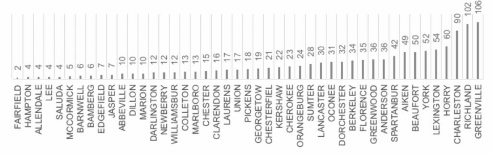
The weighting efficiency, based on age, gender, and county of residence was76.75 per cent, and based on the effective sample size of 921, the effective post- weighting margin of error was +3.23 per cent, at a 95 per cent level of confidence for the statewide sample. Rim weighting was applied to correct for minor variations and ensure that the sample matches the most recent U.S. Census estimates of the state’s population by age, gender, and urban/rural classification of the respondent’s county of residence. Table 1 illustrates the number of survey respondents by county in the state. Forty-five of 46 counties in the state had at least one survey respon- dent. The four largest counties by population in the state also had the most survey respondents, while 2 of the five smallest counties had the fewest survey responses. This residential survey was conducted as part of the State Broadband Initiative (SBI) grant program, funded by the National Telecommunications and Information Administration (NTIA).
When classifying urban, suburban, and rural counties, we follow the Census Bureau definition whereby counties are categorized as “urban” if they contain the core city of a Metropolitan Statistical Area (MSA). “Suburban” counties are MSA counties that do not contain a core city, and “rural” counties include all remaining counties that are not part of an MSA. To illustrate the degree of rurality in the state Figure one illustrates the percent change in population for all South Carolina counties from 2000 to 2010. Thirty of South Carolina’s forty six counties saw declining or weak population growth over the period. Further, many of these counties have additional characteris- tics of struggling communities, with high unemployment and low average education levels. As it relates to broadband adoption, a number of these communities also have a high percentage of African Americans. For example, seven of the counties with low or declining population growth, above state average unemployment, and lower aver- age educational attainment have an African American population of over fifty-five percent of the County total. With this combination of characteristics, South Carolina is a state primed to have potential digital divide challenges.
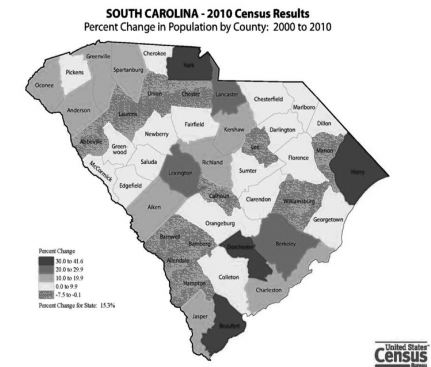
Figure 1.
South Carolina 2010 Population Census
Source: U.S. Census Bureau, Census 2000 and 2010 Census Redistricting Data Summary File. For more information visit www.census.gov
This survey instrument had several questions that could have been used as a dependent variable for the question of broadband access and adoption. Question 4, which asked, “To the best of your knowledge, is broadband or high speed Internet serv- ice available in the area where you live?” had 885/1200 survey responses missing to this question, thus we could not examine the question of broadband availability. The question with the best response rate was “Which of the following describe the type of Internet service you have at home?”. Seventy households responded dial up service through telephone line, 668 responded broadband or high speed internet service, and 37 respondents either didn’t know or refused to answer. For our research (and by def- initions of broadband speeds), Dial-up service is defined as not having broadband serv- ice. Thus, 738/1200 survey respondents answered this question.
One of the strengths of the survey methodology is that questions are worded carefully with consideration for the research questions behind them. Careful question construction improves overall survey reliability. Generally, as topics are perceived as more difficult, survey respondents may be less inclined to respond or complete a survey. Overall, this survey instrument is a valid and reliable instrument. The next section of this research presents an analysis of the survey results with the overall objective of further understanding the likelihood of broadband adoption or non-adoption in South Carolina.
Results
All analyses were conducted using SAS (version 9.3; SAS Institute Inc.). A gen- eralized linear model with a binomial distribution and logit link was used to predict the likelihood of non-adoption of broadband in South Carolina, with particular atten- tion to rural South Carolina. In the total sample of 1,200 respondents, 33.2 per cent (n=398) respondents resided in a rural area. Most of the beneficiaries were male (56.1 per cent), 18 to 55 years of age (71.3 per cent), and White (67.8 per cent) (table 2). Nearly half (44.9 per cent) of our sample made less than $50,000 a year. The majority of the sample had some type of internet access (53.7 per cent).
Rural respondents differed from their urban counterparts in numerous ways. Rural respondents reported lower socioeconomic status than urban respondents, as reported by income. Table two provides detailed sample characteristics of rural, urban and all survey respondents in the state. Rural respondents reported lower incomes than urban respondents, with 62.4 per cent of rural respondents reporting an annual income of less than $75K compared to 56.6 per cent of urban respondents (p<0.05). Rural respondents were older; 44.9 per cent of rural respondents were 55 or older, compared to 43.4 per cent of urban respondents (p<0.05). More males lived in rural areas than urban areas (54.8 versus 52.4 per cent, p<0.05). Representative of the demography of the South, this sample from South Carolina had more rural African- Americans than urban African-Americans (25.6 versus 21.7 per cent, p<0.05). A some- what surprising characteristic of this sample is that rural respondents were more likely than urban respondents to report some type of internet service (58.6 versus 51.2 per cent) and more likely to report a form of broadband (12.6 versus 7.5 per cent, p<0.05). These results should be treated with caution as many of the rural respondents indi-117cated satellite broadband as their provider, which depending upon speed and reliabil- ity, may not be a comparable service to other forms of broadband.
| Demographic Characteristics Rural(N=398) Urban (N= 802) AllN=1200 | |||
| Sex† | |||
| Female | 45.2 | 47.6 | 46.8 |
| Male | 54.8 | 52.4 | 53.2 |
| Age† | |||
| 18 to 34 | 16.1 | 15.2 | 15.5 |
| 35 to 44 | 14.3 | 17.5 | 16.4 |
| 45 to 54 | 24.6 | 23.9 | 24.2 |
| 55 to 64 | 28.1 | 24.7 | 25.8 |
| 65 and older | 16.8 | 18.7 | 18.1 |
| Race† | |||
| White | 66.8 | 68.2 | 67.8 |
| Black or African-American | 25.6 | 21.7 | 23.0 |
| Other (Asian/Pacific Islander/AmericanIndian/Eskimo/Alaskan Native/Other) | 7.5 | 10.1 | 9.3 |
| Income† | |||
| Less than $15,000 | 17.1 | 12.6 | 14.1 |
| $15,000 to less than $25,000 | 1 .6 | 8.2 | 9.3 |
| $25,000 to less than $35,000 | 10.3 | 10.7 | 10.6 |
| $35,000 to less than $50,000 | 12.1 | 10.3 | 10.9 |
| $50,000 to less than $75,000 | 1 .3 | 14.8 | 13.7 |
| $75,000 or more | 20.1 | 22.7 | 21.8 |
| No answer/refused | 17.6 | 20.6 | 19.6 |
| Type of Internet† | |||
| Fixed wireless broadband, connectingto internet through an outdoor antenna | 1.5 | 1.9 | 1.8 |
| Satellite Broadband | 5.0 | 0.5 | 2.0 |
| Fiber to the home | 5.3 | 3.9 | 4.3 |
| Broadband over power lines throughyour electric company, also known as BPL | 0.8 | 1.2 | 1.1 |
| Wireless Card or Wifi | 1.8 | 0.6 | 1 |
| None/Don’t know | 41.5 | 48.9 | 46.4 |
Multivariable analysis adjusting for gender, age, race, and income, residence is associated with non-adoption of broadband in South Carolina (table 3). As expected, living in a rural setting decreased the likelihood of broadband adoption with a point estimate of -0.39 [95% (-0.78, -0.005)]. This study found that individuals 70 years and older in South Carolina were less likely to use broadband, with a point estimate of -1.54 [95% (-2.27, -0.84)]. Race was also an important determinant in the non-adop- tion of broadband by South Carolina residential households. African-Americans were less likely to adopt broadband, when compared to Caucasians with a point estimate of -0.71 [95% (-1.07, -0.36)]. Our overall model fit was adequate as determined by the whole model test and the goodness of fit statistic.
| Characteristic | Non-Adoption Estimate | Lower CL | Upper CL | P value |
| Rural | -0.39 | -0.78 | -0.005 | 0.02 |
| Female | -0.01 | -0.30 | 0.28 | 0.9337 |
| Age Categories | ||||
| 18 to 24 | 1 [Reference] | |||
| 25 to 34 | 0.22 | -0.43 | 0.87 | 0.511 |
| 35 to 44 | -0.05 | -0.58 | 0.48 | 0.8543 |
| 45 to 54 | -0.31 | -0.76 | 0.13 | 0.1762 |
| 55 to 64 | -0.07 | -0.51 | 0.37 | 0.7510 |
| 65 to 69 | -0.11 | -0.79 | 0.57 | 0.7457 |
| 70 or older | -1.55 | -2.27 | -0.84 | 0.001 |
| Income | ||||
| Less than $15k | 1 [Reference] | |||
| $15k to less than $25k | -0.79 | -1.08 | 0.45 | 0.0005 |
| Income $25k to less than $35k | 0.28 | -0.29 | 0.86 | 0.34 |
| Income $35k to less than $50k | 0.42 | -0.13 | 0.86 | 0.1341 |
| Income $50k to less than $75k | 0.13 | -0.41 | 0.68 | 0.6317 |
| Income $75k or more | 0.50 | -0.02 | 1.01 | 0.0596 |
| Race | ||||
| White | 1 [Reference] | |||
| African-American | -0.71 | -1.07 | -0.36 | 0.0001 |
| Other | -0.23 | -2.11 | 1.85 | 0.8059 |
Discussion
Our model results demonstrate the socioeconomic characteristics of residential consumers that do not subscribe to broadband in South Carolina. The low number of non-broadband users (dial-up service users) may have led to a lower overall model fit but remains a significant model overall. The following consumer characteristics were significant: county classification, age category, education, income, and race. Confirming the literature, we know that older individuals are less likely to use broad- band. Social class, as defined by the combination of education and income, has pre- viously been found to be an important predictor of broadband adoption (Choudrie and Dwivedi 2004). This held true for the South Carolina survey respondents. Those respondents whose incomes were in the range of 15,000-25,000, were less likely to adopt broadband. Our race findings also confirm the previous broadband literature.
Survey results demonstrate that there continues to be evidence of a digital divide across geographies, ethnicity, income, and age in South Carolina. Middle and higher income suburban and urban markets are more competitively served by existing telecommunications providers than rural and low-income markets, where there is evi- dence of both under-served and un-served communities. These results underscore the persistence of a digital divide for rural communities.
If states hope to remain viable and competitive in the twenty-first century, understanding the pre-requisite infrastructure necessary for this is critical. The days are likely over when water, sewer, power, and access to a railroad are the primary infrastructure pre-requisites for economic development. Households and firms increasingly need access to robust, high speed internet to fully leverage this tool for a broad range of economic, social, and community needs. To do this for rural commu- nities across the United States requires acknowledging these barriers and developing policies and partnerships that support the goal of high speed broadband for all of our communities.
Conclusions
This research underscores the persistence of the ongoing digital divide in rural communities across the developed world. This is important for nations to understand if they are to leverage the potential value of this technology for all citizens. Ultimately, the gaps in telecommunications service, access, and in part adoption, are market failure questions. This is true in both the developed world and developing world. Communities remain un-served or underserved by adequate broadband because these investments do not meet the profit and revenue expectations of private sector providers. Broadband infrastructure requires substantive fixed-costs invest- ments, which makes private sector provision unlikely in regions and communities where the return on investment is long term and/or low. Even with the dramatic global increase in smart phone coverage and use, there remain persistent digital divides both within and across nations (Poushter 2016). In economic environments with these characteristics, underserved and un-served communities are likely to remain so without additional policy intervention and possibly subsidization.
This research confirms previous international and US research on characteris- tics of broadband adoption. We confirm that broadband adoption can be character- ized by age, gender, race, education, and income (Anderson et al. 2000, 2002, 2008; Bouras 2009; Choudrie and Dwivedi 2004; Lee and Choudrie 2002; Morales 2016). The relationship of income to broadband adoption further underscores the importance of price and relative quality/price considerations, which our research confirms (Choudrie and Dwivedi 2004; Choudrie and Dwivedi 2006; Dwivedi and Lal 2007). Additionally, the geographic divide of broadband adoption and use continues and is confirmed in this research (between rural and urban communities continues (Kang 2016; Morales 2016). Equally as important, this research underscores the importance of regionalism and local conditions in solving this challenge. In our model, race and county classifi- cation were also important predictors of broadband non-adoption, confirming the unique considerations that local and regional communities must take into account to reduce the digital divide for their own communities. What we also know is that cus- tomers in the United States are generally paying more for broadband speeds when compared against other industrialized nations, so understanding what facilitates competition and makes prices and speeds more affordable is of the utmost impor- tance in closing the rural broadband penetration and adoption gap (Russo et al. 2014).
One idea that has been proposed, and in some communities supported, is the idea of municipal broadband networks. Russo et al. (2014) argues that these types of net- works can create considerable value and improve broadband speeds for consumers and businesses. Additionally, in several states rural electric cooperatives have begun offering broadband and other advanced telecommunication services to fill the gap for rural communities (CoBank 2017). In rural areas where broadband penetration has not been fully realized or there is little-to-no competition, municipal broadband provision, or perhaps other locally owned options, could be successful in providing cost-effec- tive and quality broadband options.
Today, there are numerous examples of small and medium scale public invest- ments in Broadband infrastructure. State policymakers could benefit from larger scale studies documenting the nature of these investments and their outcomes to date. Public investments leveraged by local utilities, electric cooperatives and other public entities may provide models for rural and underserved regions on the United States. Communities where these public investments have been made may provide a type of “incubator” environment for understanding the uptake and use patterns of businesses and consumers. As well, if national and state policymakers see the potential of this technology, these communities may also be important “testing” grounds for business and consumer education programs that facilitate enhanced uptake and use of advanced technology services. While there have been considerable public monies invested in Broadband projects, before Broadband becomes the electricity or interstate of this century policymakers will likely need more substantive evidence of the network and spillover benefits to the larger community and region. Research, like this study, highlighting the ongoing geographic and socio-economic divide points to the need for ongoing research and creative policy ideas around this important topic.
Further research might use the Pew Surveys on Internet and Broadband Adoption as a comparison for how South Carolina and other states are performing against certain national and international metrics. Connected Nation’s survey research in South Carolina and other states has important policy dimensions and comparing this to work done at a national level can provide insight into the unique problems and successes that each state may face. As research has indicated, geogra- phy is a critical factor in broadband penetration and use so understanding these pat- terns on a regional scale is important for reducing the digital divide. One size policy may not fit all and this may be an opportunity for regional and local innovation and policy solutions.
In conclusion, these results reveal important information about where South Carolina residents stand with residential broadband adoption and use. The digital divide is real in South Carolina and other states with similar rural characteristics. These results also underscore the importance of research related to the persistent of the global digital divide across all geographies and the need for innovative solutions and policymaker commitment to close the digital gap. The United States has experi- ence with these types of efforts (rural electrification, interstate highways etc.) and history has shown that accomplishing these types of goals require a federal and state policy commitment, access to resources to implement policy models and exploring alternative business models like rural cooperatives and public-private partnerships. As the FCC policy rules remain in transition under the Trump administration, it is an opportune time for states to consider policy innovation at the state or regional level to more effectively leverage this technology for the benefit of all our communities.
Acknowledgements
The authors would like to thank Connected Nation and Connect South Carolina for access to the survey, data set and survey methodology. The comments by three anonymous reviewers are gratefully acknowledged as well.
References
Anderson, B. 2008. “The social impact of broadband household internet access”. Information, Community & Society 11 (1): 5-24.
Anderson, B., Gale, C., Jones, M.L.R., McWilliam, A. 2002. “Domesticating broadband: What con- sumers really do with flat-rate, always-on and fast internet access”. BT Technology Journal 20 (1): 103-114.
Anderson, T. 2000. “Regulation Part 2: Digital transactions area a cause for concern”, www.netimperative.com/2000/05/04/Regulation_Part_2.
Bouckaert, J., van Dijk, T., Verboven, F. 2010. “Access regulation, competition, and broadband penetration: An international study”. Telecommunications Policy 34 (11): 661-671.
Bouras, C., Giannaka, E., Tsiatsos, T. 2009. “Identifying best practices for supporting broadband growth: Methodology and analysis”. Journal of Network and Computer Applications 32 (4): 795-807.
Breathitt, E. T., 1967. The people left behind: a report by the President’s National Advisory Commission on rural poverty. Washington: U.S. Government Printing.
Breene, K. 2016. “This is the extent of the demographic digital divide”, https://www.weforum.org/ agenda/2016/03/this-is-the-extent-of-the-demographic-digital-divide/
Choudrie, J. and Dwivedi, Y. 2004. “Investigating the socio-economic characteristics of residen- tial consumers of broadband in the UK.” In the Proceedings of the 10th Americas Conference on Information Systems, AMCIS, New York, NY, USA, August 6-8, 2004
Choudrie, J., Dwivedi, Y. K. 2006. “Examining the socio-economic determinants of broadband adopters and non-adopters in the United Kingdom”. Proceedings of the 39th Hawaii International Conference on System Sciences (HICSS), Kauia, Hawaii, USA, IEEE.
CoBank. 2017. “Making the Move to Broadband, Rural Electric Co-ops Detail their Experiences”, https://www.cobank.com/~/media/Files/Searchable%20PDF%20Files/Knowledge%20Exch ange/2017/Making%20the%20Move%20into%20Broadband%20%20Sep%202017.pdf
Crandall, R., Jackson, C. and Singer, H. 2003. “The effect of ubiquitous broadband adoption on investment, jobs, and the US economy”, http://newmillenniumresearch. org/archive/bbstudyreport_091703.pdf
Crandall, R. W., Lehr, W. and Litan, R. E. 2007. “The effects of broadband deployment on output and employment: A cross-sectional analysis of US data”, https://www.brookings.edu/ research/the-effects-of-broadband-deployment-on-output-and-employment-a-cross- sectional-analysis-of-u-s-data/
Czernich, N., Falck, O., Kretschmer, T. and Woessmann, L. 2009. “Broadband infrastructure and economic growth”, CESifo working paper No. 2861.
Demoussis, M. and Giannakopoulos, N. 2006. “Facets of the digital divide in Europe: Determination and extent of Internet use”. Economics of Innovation and New Technology 15 (3): 235-246.
Dickes, L. A. 2011. “The Theory and Practice of Third Wave Regional Development Strategies”, Ph.D. dissertation, Clemson University, Clemson, South Carolina.
Dickes, L. A., Lamie, R. D. and Whitacre, B. E. 2010. “The struggle for broadband in rural America”.Choices 25 (4); http://www.choicesmagazine.org/magazine/article.php?article=156.
Dwivedi, Y. K. and Lal, B. 2007. “Socio-economic determinants of broadband adoption”.Industrial Management & Data Systems 107 (5): 654-671.
Firth, L. and Mellor, D. 2005. “Broadband: benefits and problems”. Telecommunications Policy29(2): 223-236.
Flamm, K. 2005. “The role of economics, demographics, and state policy in broadband availabil- ity.” Paper presented at the PURC/London Business School Conference on “The Future of Broadband: Wired and Wireless, 2005” (Gainesville).
Gilroy, A. A. 2018. The net neutrality debate: Access to broadband networks (report).Washington D.C., USA: Congressional Research Service, https://fas.org/sgp/crs/misc/R40616.pdf.
Gimpel, J. G., Lee, F. E. and Thorper, R. U. 2013. “Geographic distribution of the Federal stimulus of 2009”. Political Science Quarterly 127 (4): 567-595.
Greenstein, S. and McDevitt, R. C. 2009. “The broadband bonus: Accounting for broadband Internet’s impact on US GDP”, NBER working paper no. 14758.
Grubesic, T. H. 2006. “A spatial taxonomy of broadband regions in the United States”.Information Economics and Policy 18(4): 423-448.
Hendel, J. and Doherty, T. 2018. “Who gets broadband in America, and how fast is it? Even the FCC doesn’t always know, but here’s a snapshot”, https://www.politico.com/ agenda/story/2018/02/07/digital-divide-in-america-graphic-000639
Holt, L. and Jamison, M. 2009. “Broadband and contributions to economic growth: Lessons from the US experience”. Telecommunications Policy 33 (10-11): 575-581.
Hong, E. 2015. “Bridging the digital divide: A critical moment to modernize the lifeline pro- gram”, https://www.newamerica.org/oti/bridging-the-digital-divide-a-critical-moment- to-modernize-the-lifeline-program/
Horringan, J. B. 2009. “Home broadband 2009”, http://www.pewinternet.org/2009/06/ 17/home-broadband-adoption-2009/
Horrigan, J. B. and Duggan, M. 2015. “Home broadband 2015”, http://www.pewinternet.org/ 2015/12/21/home-broadband-2015/
Jackson, S. J. and Gordon, A. 2011. “Building community broadband: Barriers and opportunities for community-based organizations in the federal BTOP and BIP broadband development programs”. Proceedings of the American Society for Information Science and Technology 48 (1): 1–11.
Kang, C. 2016. “Net neutrality again puts FCC general counsel at center stage”. The New York Times, February 7, 2016.
Kilpeläinen, A. and Seppänen, M. 2014. “Information technology and everyday life in ageing rural villages”. Journal of Rural Studies 33: 1-8.
König, R., Seifert, A. and Doh, M. 2018. “Internet use among older Europeans: an analysis based on SHARE data”. Universal Access in the Information Society 17:621–633.
Koutroumpis, P. 2009. “The economic impact of broadband on growth: A simultaneous approach”. Telecommunications Policy 33 (9): 471-485.
Layton, R. 2014. “The European Union’s broadband challenge”, http://www.aei.org/article/eco- nomics/innovation/internet/the-european-unions-broadband-challenge/
Lee, H. and Choudrie, J. 2002. Investigating broadband technology deployment in South Korea.London: Brunel University.
Levin, B. 2017. “Implications of a Trump White House for broadband policy”, https://www.brookings.edu/blog/the-avenue/2017/02/08/implications-of-a-trump- white-house-for-broadband-policy/
Morales, N. 2016. “The challenge of the digital divide and elderly in Spanish rural areas. The case of Castilla y León”. Fonseca: Journal of Communication 13: 165-185.
National Telecommunications and Information Administration, U.S. Department of Commerce. 2014. “Twentieth Quarterly Status Report to Congress Regarding BTOP”, http://www.ntia_ btop_20th_quarterly_report
OCDE 2011. “Understanding the Digital Divide”, http://www.oecd.org/dataoecd/38/57/ 188451.pdf
Pérez-Escoda, A. 2016. “Digital skills in the Z generation: key questions for a curricular intro- duction in primary school”. Comunicar (English Edition) 24 (49): 71-79.
Philip, L., Cottrill, C., Farrington, J., Williams, F. and Ashmore, F. 2017. “The digital divide: pat- terns, policy and scenarios for connecting the ‘final few’ in rural communities across Great Britain”. Journal of Rural Studies 54: 386-398.
Poushter, J. 2016. “Smartphone ownership and internet usage continues to climb in emerging economies. But advanced economies still have higher rates of use”, http://www.pew- global.org/2016/02/22/smartphone-ownership-and-internet-usage-continues-to-climb- in-emerging-economies/
Prieger, J. E. and Hu, W. M. 2008. “The broadband digital divide and the nexus of race, compe- tition, and quality”. Information Economics and Policy 20 (2): 150-167.
Prieger, J. and Hauge, J. A. 2015. “Evaluating the impact of the American Recovery and Reinvestment Act’s BTOP program on broadband adoption”, Pepperdine University, School of Public Policy Working Papers, 55.
Reardon, M. 2018. “Senate votes to save net neutrality: Here’s what you need to know. Maneuvering on Capitol Hill. Protests on the web. This thing isn’t over just yet”, https://www.cnet.com/news/senate-votes-on-net-net-neutralitys-fate-heres-what-you- need -to know.
Roberts, E., Anderson, B. A., Skerratt, S. and Farrington, J. 2016. “A review of the rural-digital policy agenda from a community resilience perspective”. Journal of Rural Studies 54: 372-385.
Roosevelt Institute. 2011. “Rural Electrification Administration”, http://rooseveltinstitute.org/ rural-electrification-administration/
Rosston, G. and Wallsten, S. 2013. “The broadband stimulus: a rural boondoggle and missed opportunity”, http://www.techpolicyinstitute.org/
Russo, N., Morgus, R., Morris, S. and Kehl, D. 2014. “The cost of connectivity 2014”, https://www.newamerica.org/downloads/OTI_The_Cost_of_Connectivity_2014.pdf
Salant, P. and Stauber, K. 2002. “A policy opportunity: Getting in touch with rural America”.Choices 17 (4), http://www.choicesmagazine.org/2002-4/2002-4-11.pdf.
The World Economic Forum and INSEAD. 2015. The global information technology report 2015 ICTS for inclusive growth. Geneva: World Economic Forum.
Townsend, L., Wallace, C., Fairhurst, G. and Anderson, A. 2016. “Broadband and the creative industries in rural Scotland”. Journal of Rural Studies 54: 451-458.
Wales, C., Sacks, G. and Firth, L. 2003. “Killer applications versus killer attributes in broadband demand”. In Proceedings of the PTC Conference, Hawaii, January, 2003, Honolulu, Hawaii, USA, Pacifica Telecommunications Council.
West, D.M. and Karsten, J. 2016. “Rural and urban America divided by broadband access”, https://www.brookings.edu/blog/techtank/2016/07/18/rural-and-urban-america-divided- by-broadband-access/
Williams, L. C. 2017. “The future of net neutrality under Trump: What to expect under a Republican led FCC”, https://thinkprogress.org/net-neutrality-under-trump- 9c993e8e5027
Zhang, M. and Wolff, R.S. 2004. “Crossing the digital divide: Cost-effective broadband wireless access for rural and remote areas”. Communications Magazine, IEEE 42 (2): 99-105.