
Esta obra está bajo una Licencia Creative Commons Atribución-NoComercial-SinDerivar 4.0 Internacional.
Recepción: 23 Abril 2019
Aprobación: 15 Diciembre 2019
Abstract: Resilience thinking has emerged as an important tool to understand and analyse social ecological systems, however there are still few analyses of the economic dimension of resilience of small-scale peasant production. To enhance the understating of resilience of these systems, social and agronomic factors such as ecosystem services, production intensification, economic feasibility or the role of institutions should be added. The aim of this research was to perform a complete analysis of the economy of peasant farms as part of resilience, comparing ecological and conventional farms. A mix method approach was employed, including twenty semi-structured interviews and four questionnaires to assess the economic composition and viability of the farms as well as contextual factors. The ecological (agroforestry-based) farms showed lower economic performance than conventional farms. However, biodiversity and diversity of income-generation strategies favour flexibility and self-consumption in the ecological farms. We identified three strategies that could boost resilience at farm level: substitution of external inputs, particularly animal feed; water management; and collective actions. In contrast, factors like land size, capital scarcity and fluctuations of the coffee market limit resilience.
Keywords: Resilience, Peasants, Ecological agriculture, Economic viability, Social-ecological systems, Colombia.
Resumen: La resiliencia ha emergido como una herramienta importante para analizar los sistemas socio-ecológicos, sin embargo, los estudios sobre la resiliencia de la producción campesina que incorporan la dimensión económica son muy escasos. Para mejorar el entendimiento de este tipo de sistemas es necesario incorporar aspectos sociales y agropecuarios como los servicios ecosistémicos, la intensificación de la producción, la viabilidad económica y el rol de las instituciones. El objetivo de esta investigación fue desarrollar un análisis de la viabilidad económica de fincas campesinas como parte de la resiliencia, comparando fincas convencionales y agroecológicas. Se empleó una metodología mixta que incluyó veinte entrevistas semiestructuradas y cuatro cuestionarios para analizar la composición y viabilidad económica de las fincas. Las fincas agroecológicas mostraron un menor desempeño económico que las fincas convencionales. Sin embargo, la diversidad de fuentes de ingresos y la biodiversidad favorecieron la flexibilidad y el autoconsumo en estas fincas. Tres estrategias para incrementar la resiliencia a nivel de finca fueron identificadas: la sustitución de insumos externos, en particular el concentrado para los animales; la gestión del agua; y la acción colectiva. En contraste, el tamaño de la tierra, la escasez de capital y las fluctuaciones del precio del café limitan la resiliencia.
Palabras clave: Resiliencia, Campesinado, Agroecología, Viabilidad económica, Sistemas socioecológicos, Colombia.
1. Introduction
Most of the common approaches to agriculture and natural resource management fail to acknowledge how the world actually works. They overlook key disturbances and seek to optimize some components of a system in isolation of the others. By focusing almost exclusively on efficiency, they fail to acknowledge secondary feedbacks and effects that generate changes in the bigger system (Cumming, 2011; Folke et al., 2010). On the contrary, resilience thinking has emerged as a tool to understand and analyse socio-ecological systems, to engage with a changing world. By understanding how and why the system as a whole is changing, we are better placed to build a capacity to work with change, as opposed to being a victim of it (Folke et al., 2010; Walker & Salt, 2006).
The application of resilience principles and concepts to farming and agroecosystems presents challenges and promising insights. A farm can be understood as an agro-eco-system; a learning system in permanent co-evolution where the human and the ecological subsystems interact, transform, and react to each other. In this sense, resilience thinking can help us understanding the dynamics, feedbacks, and relations between farmers and the ecosystems in which they live (Bené et al., 2012).
The study or application of resilience to farming is particularly interesting in the case of family farming or peasantry. Not only they produce most of the world s food, but they have proven to be resilient (many handed down from one generation to the other) and play an essential role in local communities, rural economies and cultural landscapes (Darnhofer, 2010). In Colombia, additionally, the development of the peasantry is a necessary condition for sustainable rural development and peacebuilding.
Resilience is determined by several elements interacting through complex mechanisms and thus, they cannot be considered separately (Quaranta & Salvia, 2014). One of these composing elements is the economic, which has not been deeply analysed in small-scale coffee production under different production techniques (Jemal, Callo- Concha, & van Noordwijk, 2018). In light of this, the aim of the research was to analyse farm resilience through the study of the economy of peasant farms in relation to main management practices, contextual characteristics and policies influencing them; comparing the case of ecological and conventional farms1. We use a mix method approach that included semi-structured interviews and questionnaires. Based on the analysis, actions and practices to enhance resilience were identified and discussed.
1.1. Resilience Thinking
During the last decades, the use of resilience in the study of socio-ecological systems has received great attention (Folke, 2006; Walker et al., 2004; Walker & Salt, 2006). Socio-Ecological Systems (SES) can be understood as social systems that are inseparably linked to and embedded in ecological systems; complex adaptive systems that do not change in a predictable and linear manner and have the potential to exist in more than one stable state in which their function, structure and feedbacks are different (Folke, 2006; Walker & Salt, 2006). In this sense, the resilience of a SES can be interpreted as “the capacity of a system to absorb disturbance and/or reorganize while undergoing change so as to still retain essentially the same function, structure, identity, and feedbacks” (Walker et al., 2004, p.2). However, the human dimension of a SES, expressed in the values and interests of the different social groups that are part of it, prevents an unambiguous identification of the structure, function or identity of the system (Davies et al., 2015; Kelly & Kelly, 2017). Resilience analysis of SES requires an examination of the availability of resources and political and economic power by each of the social groups involved in the system (Bené et al., 2012), thus raising the question of resilience for whom and for what (Friend & Moench, 2013).
1.2. Managing for Resilience: Adaptability and Transformability
The variables and determining factors of socioecological resilience need to be analysed and managed to shape the system s dynamics and change (Folke, 2006). Understanding the different components, the internal connections of the system, and the phase in which this is transiting is crucial in managing for resilience as different policies and management interventions are needed at different phases (Walker & Salt, 2006).
Most studies of resilience, however, focus on the capacity of the actors of a system to recover from shocks and disturbances in order to maintain the same functions and structure; this is the adaptability of the system (Martin-Breen & Anderies, 2011). Adaptability implies incremental changes without questioning the goals, values and structures that were governing the system before the shock or event (Hahn & Nykvist, 2017), and in fact it can lead to a reinforcement of structures or regimes that on the first place generated the disturbance (Martin-Breen & Anderies, 2011). We can see adaptability as ‘shallow’ resilience.
In contrast, transformability refers to the capacity of the actors of the system to create a fundamentally new system when the conditions (ecological, cultural and socioeconomic) make the current one unfeasible (Walker et al., 2004). It implies changing the components and the way of living of the system itself, leading to a change in the values and paradigms that rule the system (Friend & Moench, 2013). In this sense, transformability is related to the capacity of self-organization and learning of the system, thus requiring analysis of adaptive governance in order to understand the social dimension that enables the transformation of SES (Folke, 2006). These transformations can be gradual, with a series of incremental transformative changes, or abrupt and surprising (Darnhofer, 2014). We can interpret transformability as ‘deep’ resilience (Sinclair et al., 2017).
The relative importance of these ‘resilient-abilities’ depends on the structure, dynamics, and goal of the SES itself and on whether the system is close to a threshold. It also depends on the type of change the system is undergoing -the phase within the adaptive cycle; and on the influence of the dynamics and states of subsystems at other scales (the panarchy) (Walker et al., 2004).
1.3. Resilience in Agroecosystems
Several authors have pointed out that agroforestry systems offer a variety of beneficial ecosystem services (Nesper et al., 2017; Rahn et al., 2018). This type of system promotes species diversification, favours the biophysical soil characteristics, enhances nutrient cycling and helps microclimate regulation (Lin, 2010) without harming productivity (Partelli et al., 2014). In consequence, ecological systems, such as agroforestry, would be more resilient to disturbances as they are better prepared for adaptations.
Despite the increasing attention on resilience of SES, most studies continue having an ecological and farming systems emphasis. Resilience thinking has not effectively transcended the disciplinary boundary to incorporate the meaning of resilience of a community or a society (Adger, 2000; Davidson, 2010b), neither has it been systematically applied to the range of terrestrial, freshwater, and marine ecosystems used for the production of food and fibre (Berkes & Ross, 2013; Davidson, 2010a). In this sense, it is important to add theoretical layers from the social sciences (Berkes & Ross, 2013), including issues related with power and justice (Sinclair et al., 2017) or social capital and institutions (Adger, 2000). These approaches will contribute to a more interdisciplinary analysis of resilience in SES and to identify the factors and process that increase peasants resilience.
The resilience of agroecosystems relies on the ecological and biophysical aspects related to farming; as well as on the cultural subsystem; understanding culture as a social, economic, political, technological and symbolic complex (León, 2014). In the case of family farms and peasants, their management decisions are influenced by a set of personal characteristics and relations, social norms, and belief structures (Darnhofer, 2010; Forero, 2013), as well as decisions at other levels (e.g. public policies or market pressures) (Díaz y Córdoba-Vargas, 2019).
1.4. The Peasant Economy
Peasant activities are shaped by a mutualistic relationship between a domestic non-monetary dimension (family labour, ecosystem resources, and production of food for self-consumption2) and a monetary dimension (agricultural inputs, tools, and machinery acquired in the market). In addition, peasant agriculture has an individual dimension, where decisions are made according to available resources and customs of the family group; and a collective dimension, where decision are made according to community social structures and community relationship with ‘outside actors’ (Forero, 2013).
Instead, the concept of the peasantry or the peasant economy must be considered from a particular historical moment, location and socio-political and cultural setting (Llambí, 1990). Furthermore, when working with peasantry as a category it is important to avoid any attempt of homogenization of this group.
In Colombia, the study of the peasantry after the 1980s has focused largely on how they have been affected by the internal armed conflict, paying less attention to its economic role. However, some scholars have persistently produced research on this matter, arguing that the peasantry has been a dynamic, flexible and modernizing group that has contributed extensively to the country’s development (Forero, 2002; Machado et al., 1993; Valderrama & Mondragón, 1998). In general, these scholars argue against the claim that the peasant economy is unproductive and traditional, and not connected with the market. In contrast, they understand peasants as a multiactive subject capable of negotiating with equally diverse actors; enabling them (in several cases) to preserve their territory and maintain some control over the productive activities, their integration into the market, and the participation in the political, social and cultural spheres (PNUD, 2011).
This body of literature has been recently benefited by a growing interest in rural development and peasant studies, due, in part, to the importance of agrarian issues in the Peace Accord between the Government of Colombia and the guerrilla of FARC-EP.
Additionally, it is important to mention that nearly 560.000 peasant families do most of the coffee production in Colombia and almost 80 % of the production is exported to international markets (Bermudez, 2016; FNC, 2018). In Colombia, there is a diversity of coffee production systems, ranging from ecological farms with agroforestry arrangements and high biodiversity, to conventional farms with full sun exposure and extensive use of chemical inputs. However, in Cundinamarca region there is a decreasing tendency of shade-grown coffee (Ocampo & Álvarez, 2017) and no incentives or extension services for ecological production of coffee (Córdoba-Vargas et al., 2019).
2. Materials and methods
The study was developed in the municipality of Anolaima (71 kilometres west from Bogotá), in the department of Cundinamarca, Colombia. The area has an altitude between 1.200 and 2.800 MASL, mild climate between 18°C and 22°C, and its economy is based on agriculture.
The research was conducted in two ecological farms -EF and two conventional farms -CF located in the same rural district (vereda) at an average altitude of 1.500 MASL. The farms agroecosystems are characterized by the cultivation of shade-grown coffee, as the main crop, and the presence of fruit trees such as banana, plantain (Musa paradisiaca) and guava (Psidium guajava). Similarly, all the farms have local-breed chickens for egg production, while some of them have fish production, small-scale pig farming, or poultry (different types of Meleagris gallopavo). Farm sizes vary between 4,5 and 7 hectares, and in general, the farmers own them. Due to the size of the sample, the results cannot be generalized. However, the analysis around resilience can be transferred to similar cases (Jimenez & Comet, 2016; Villarreal & Landeta, 2010).
Three methods were employed in the research process. First, in order to get a rich background and understanding of the living and farming conditions of the area, a review of literature was done, including previous collaborative and multidisciplinary research between farmers and the National University of Colombia during the last six years.
Second, four Semi-Structured Interviews (SSI) were conducted3 (one with each of the farmers), seeking for a qualitative description about their farming activities, management practices and economic dynamics; along with transect walks.
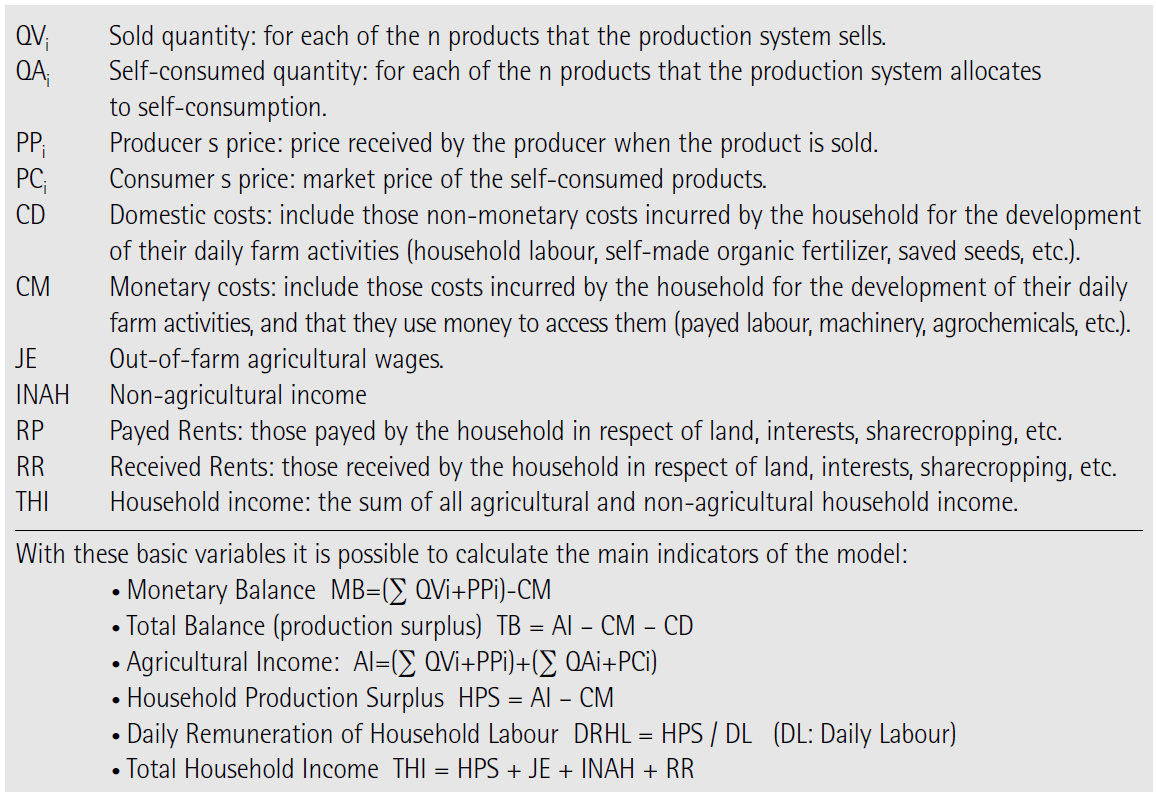
The third method employed was a questionnaire to identify and understand the economic structure of each of the farms, and to analyse aspects of their viability and resilience. When studying the economy of peasant agriculture in Colombia, Forero (2010) and Forero et al. (2015) suggest that the economic viability of peasant farms can be analysed through the complete set of the household’s costs and incomes, including both ‘domestic income’ -e.g. self-consumption; and ‘monetary income’ -e.g. from the sale of products. This approach is similar to the one used by Eyzaguirre (2005) and Jacobi et al. (2015) in Bolivia. In particular, Forero (2010) and Forero et al. (2015) consider that the best way to analyse the economic viability of the peasant farm is to compare: (i) the relation between the family surplus and the daily wages invested by the family; with (ii) the current remuneration (wage) in the labour market. If the remuneration of the family labour is higher than its opportunity cost (of being employed on daily wage) the system can be considered viable. Similarly, the Household Production Surplus is the remuneration from the agricultural activities after covering the monetary costs, it represents the capacity of the agricultural production system to generate an income to the peasant family (ibid).
The specific variables and indicators that were used to analyse the economy of the peasant farms are presented in Table 1 and are based on Forero (2010).
3. Results and discussoin
3.1. Economic Structure and Viability4
Despite the similarities in the agroecosystem composition of the four farms, the coffee is by far the most important product in the conventional farms. As presented in Table 2, coffee represents more than 70 % of the agricultural monetary income and around 80 % of the monetary costs in the conventional farms -CF. On the other hand, the ecological farms- EF present a more diverse structure of the agricultural income and costs, with coffee, livestock (chickens or pork) and banana (in the case of Santa Lucía) as the most important products. This diversification of agricultural products in the EF has the potential of increasing the resilience to both ecological events (pests or climatic disturbances) and economic shocks (Altieri et al., 2015; Darnhofer, 2014).
Relative product importance in monetary income and monetary costs

own elaboration. It is not possible to make the % discrimination for the domestic costs because some farmers do not have a detail of how much they spend in each activity and some of them also work off farm.
Sales’ level and agricultural income in the EF are similar between them but approximately 30 % lower than the one of the CF (Table 3). It is important to notice that in order to keep productivity high, conventional farmers employ a combination of chemical fertilizers and high planting densities, which contrast with low plant density under agroforestry systems and a resulting lower production given similar land sizes.
Cost and Balance Indicators

own elaboration.* Except for El Gilgal, the values for self-consumption were taken from Pirachicán (2015).
All farms present a positive monetary balance, indicating a seeming economic viability. However, when we incorporate the domestic costs of coffee production into the analysis –mainly the opportunity cost of non-remunerated family labour, we have a different outlook. The total balance decreases for all farms, exposing the importance of family labour, which represents 30 % in La Cajita, around 65 % in El Gilgal and El Turista and 84 % in Santa Lucía (Table 4). In the latter, the total balance is negative, indicating that if family labour were paid at market prices, farming would not have economic profitability.
Wages’ Composition and Monetization Indicators

own elaboration.
Another important element identified in the analysis is self-consumption. In three farms (except El Turista), its annual value is higher than a monthly minimum wage (€ 201,29), representing between 4,7 % and 5,9 % of the annual agricultural income. Furthermore, from a previous study, Pirachicán (2015) found that Santa Lucía, El Turista, and La Cajita obtain from their farms 21,5 %, 7,12 % and 26,8 %, of the daily amount of calories required, respectively. In this sense, home gardens for own consumption contribute to resilience not only to the monetary aspect -freeing money, but also through the improvement of food security and the increase of natural capital (Van der Stege et al., 2012).
The degree of market integration, or monetization of the agricultural activity serves as an indicator of the vulnerability of the system. A highly monetize system can be affected rapidly by economic crisis, but a completely non-monetize system may lose some financial possibilities for managing disturbances. However, keeping a low level of monetization seems to be favourable for resilience if it is accompanied by closed cycling of resources, as it is the case for nutrients cycling in agroecosystem. In Colombia, Forero (2013, p.31) found that in the case of family farms, “hired family labour accounts for 17 % to 53 % of the total work force while monetary costs account for up to 71 % of total costs”. In our case, monetary costs fluctuate between 42 % and 65 % of the total costs, and family labour between 29,9 % and 84,4 % (Table 4). However, the latter value (corresponding to Santa Lucía) is explained by the fact that the farmer and his wife do not work outside the farm and employed all his time working their land reaching a point of overexploitation of family labour, which explains the negative value in the total balance (Table 3). This overexploitation, common in peasant farms, is a consequence of an absence of financial capital together with land scarcity, as evidenced by the fact that all farms have a size smaller than the correspondent Agricultural Family Unit -UAF5.
One important indicator for analysing the economic viability of the farm is the Household Production Surplus (HPS), which reflects the capacity of the agricultural production system to generate income. The EF have a monthly HPS lower than the legal minimum wage in the country (€ 201,29), while La Cajita has a monthly HPS 51 % higher than the minimum wage, and El Turista more than twice (Table 5). Additionally, it is important to keep in mind that even though organic production could be sold at higher prices in specific markets (Schnabel et al., 2018), there is no such market in the area, neither a differential price nor differential policies to promote organic production. The National Coffee Federation buys most of the production, through its cooperatives, and exports it. Additionally, given that coffee is an international commodity, peasants have no influence on coffee prices, which are set by international actors and markets.
Main Economic Viability Indicators

own elaboration.
Other indicator that provides important information about the economic viability of the system is the Daily Remuneration of Household Labour (DRHL)6. As the data shows (Table 5), family labour in Santa Lucía is theoretically remunerated below the labour market, El Gilgal’s DRHL is almost at market level, and the two CF have a DRHL above it. This is explained, partially, by the higher labour required by ecological production systems. In any case, ‘self-exploitation’ of family labour is a common characteristic of small-scale family-run farms.
However, this analysis does not consider income sources different than agriculture. From the four farms, only El Turista gets the income exclusively from agriculture7, while the rest have diverse income sources. El Gilgal gets 55 % of its income from handicrafts, construction, and tourism; Santa Lucía gets 36 % from family remittances; and the woman in La Cajita receives a pension and works in the municipality some days a week, generating 51 % of the total household income (Table 4). Together with the agrobiodiversity mentioned above, this livelihood diversification contributes significantly to resilience; providing ‘seeds’ for new opportunities and options for coping with shocks and stresses (Berkes, 2007), and ensuring connection to a variety of social networks (Darnhofer, 2010). Similar results were reported by Kock et al. (2015), who found livelihood diversification as a common strategy employed by small farmers to cope with economic crises. However, livelihood diversification could also be a result of agricultural precarisation, where farmers are pushed to find other income alternatives due to adverse conditions and lack of policies that support agrarian development.
Hence, taking into consideration all the income sources of the system –i.e. the Total Household Income (THI), we get a different interpretation of the economic situation. All farms present a monthly income (THI) higher than the minimum wage, ranging from 823.717 in the case of Santa Lucía to 1.893.693 in the case of La Cajita.
Some interesting aspects come out when we analyse the HPS per hectare -as a proxy of the income (Table 6) as the distance between the HPS of the CF and the HPS of the EF diminish. The results suggest that the EF make a relatively more productive use of the hectares they owned. This can indicate the presence of micro scale economies, as suggested by Forero (2013), which are derived from the farmers’ particular “way of managing resources and farming and livestock processes, thus, reducing costs and, occasionally, increasing productivity of the factors, mainly the land”. The results shown are in line with Córdoba-Vargas (2016) who reported higher plant productivity in ecological systems as compared with conventional production, where the higher total productivity of the latter was explained by farm size and higher planting density.
Per hectare indicators

own elaboration.
3.2. Ecosystem Services
After studying three of the farms analysed here, Mesa-Gutierrez (2012) found that EF have higher richness and biodiversity indexes of trees, shrubs, herbaceous plants and weeds, when compared to CF. Similarly, Salcedo (2014) studied the avifauna in the coffee subsystem and found that due to the richer diversity of the agroforestry system, the EF presented a higher diversity and abundance of avifauna.
As a result of this greater biodiversity, farmers from El Gilgal and Santa Lucía do not use any type of fertilizer for the coffee, relying completely on the supportive ecosystem services provided by the agroforestry system. Similarly, in both EF, cows and calves are grazing freely and their feeding is complemented with plantain, bananas and other fruits or leaves available on-site.
Under this system, ecosystems services represent a monetary saving for the farmer, and it is possible to calculate it using a direct market price-based approach8. Table 7 and Table 8 show the effects of these savings on the main balances and economic indicators. If the farmers had to buy the fertilizer and the feed, their economic situation would deteriorate; monetary costs would increase 18,9 % in El Gilgal and 34,8 % in Santa Lucía, and monetary balance would decrease in both cases. Similarly, HPS would decrease 26 % in El Gilgal and 59 % in Santa Lucía, and DRHL would decrease in both cases. Another effect that is not captured by valuation of the services is that under a scenario where the farmers need to buy fertilizer, they will have to increase the labour in the farms in order apply it. Both the monetary and the labour effect of agroforestry fertilization have been identified and documented in the other cases, like maize cultivation under an ecological agroforestry system in Malawi (Curtis, 2015). However, it is important to mention that the use of chemical fertilizer could have a positive impact in yield per tree, and thus the expenses in fertilizer could be compensated by an increase in sales.
Costs and balance comparison with and without ecosystems service

own elaboration.
Economic indicators with and without ecosystem service

own elaboration.
In sum, the ecosystem service (fertilization) provided by the trees is fundamental for the economy of the two EF, and without it their economic activity will not be feasible, or it will need major changes. Ecosystem services enhances resilience in these farms, as it frees resources (money and time) that can be invested in other aspects of the agroecosystem; increases farmers’ flexibility; and sustains redundancy and nurtures ecological memory for reorganization (Berkes et al., 2002).
Besides the economic savings provided by higher agrobiodiversity in the EF, there are a series of intangible benefits expressed by peasants that should be included in order to get a more complete comparison of resilience in different production systems. Among them, air quality, peacefulness, tradition, way of life; natural heritage (Pirachicán, 2015) and water preservation; and cultural aspects like peasant traditions.
3.3. Actions to Enhanced Resilience
Both ecological and conventional farmers identified two elements to improve resilience at the farm level. On one hand, during the study time Colombia was experiencing a severe dry season due to a combination of a strong El Niño phenomena and climate change (Montealegre-Bocanegra, 2014), and farmers in Anolaima depend on rainwater and very small streams that are drying out. Building private reservoirs seems to solve the problem but it raises large economic challenges. Harvesting water using current farm buildings may help at a small scale -e.g. for the home garden- but appear to have a limited scope for the plantain or coffee production. On the other hand, they expressed the challenges and problems in doing collective or associative enterprises, but they are all aware of the potential benefits of working as a group. The two elements identified by the farmers are essential to enhance resilience in both the farms and the community. Better water management practices such as water harvesting and moisture retention increase the resilience of agroecosystems to climate change (Altieri et al., 2015), and building networks and social capital contribute to agency and self-organization, increasing community resilience (Berkes & Ross, 2013; Kim et al., 2018).
There was a third element identified only by the ecological farmers; increase biodiversity to reduce dependence on external inputs. Animal feed represents a high cost, especially in the EF where the livestock activities are an important part of the livelihoods: representing 51 % of the total monetary costs in El Gilgal, and 55 % in Santa Lucía. If the farms could (partially) produce this feed through the cultivation of legumes, corn, or Colocasia esculenta -known locally as bore and used by some farmers; they would decrease their monetary costs and their vulnerability to shocks on feed price.
Table 9 shows some indicators if the farms reduced by half the purchase of animal feed. This action would increase monetary balance in 40 % and 54 %, and Household Production Surplus in 35 % and 47 %, for El Gilgal and Santa Lucía, respectively. Moreover, the daily remuneration (DHRL) will move from 8,6 to 11 euros in El Gilgal -reaching a level above the daily payment in the labour market; and from 3,9 to 5,8 euros in Santa Lucía. Nevertheless, these calculations do not include the inputs and labour that farmers would have to use if they had to produce the feed, raising important challenges if changes of this nature were to be implemented, as the farmers manifested, they neither have free time nor resources to hire more labour.
Economic indicators with a 50 % reduction in purchased feed

own elaboration.
Additional to these elements, peasants where emphatic pointing out aspects beyond the farm level that should be addressed by the Government (Cretney, 2014; Friend & Moench, 2013) including tackling unequal land distribution, stabilizing coffee prices and enlarging peasants’ participation in public decision-making processes (Díaz y Córdoba-Vargas, 2019).
4. Conclusions and next steps
Production of food for own consumption had positive effects on economic resilience. In three farms the annual value represented by self-consumption is higher than a monthly minimum wage (€ 201,29), and it represents between 4,7 % and 5,9 % of the annual agricultural income. Moreover, all the farmers get some of their food from the trees and crops from their farms, favouring food security and natural capital.
The study of the peasant economy opened the possibility to identify several practices that are promoting socio-ecological resilience. One of these elements is nurturing diversity in its various forms. Particularly important in the EF, there is diversified agroecosystems with a lead coffee crop, some fruits and livestock production. EF present higher richness and biodiversity indexes of plants and avifauna, when compared to CF. This biodiversity generates important enhancers for resilience, like ecosystem services, that were not measured or monetized but are relevant for a full analysis.
Similarly, three of the farms have a livelihood diversification where off-farm activities and remittances play an important role of their economy, representing between one third and half of the household income. Furthermore, the farmers also diversify the types of knowledge they consider for farm management. Evidence of this is the six-years cooperation that they have with a team from the National University.
The solely economic study of the agricultural activities (excluding the off-farm income sources) showed, for the EF, that farming was not economically feasible. However, in order to give a more holistic analysis it is necessary to incorporate a series of non-monetary factors that influence on-farm resilience: ecosystem services, preservation of peasant traditions, food security and sovereignty and quality of life among others. Likewise, it is important to incorporate factors at different scales. For instance, how the specific composition of the family affects labour allocation; how local or national agricultural policies open or close opportunities to small farmers; if and how peasants can increase their land size; or if and how farmers adapt to international variations in the price of coffee. The inclusion of such factors will enable to analyse trade-offs between resilience scales. In particular, at a lower scale, resilience could be increasing due to farming practices that improve biodiversity or soil fertility, but at larger scales resilience can be decreasing because of weak policies that promote ecological production, lack of capital or small land-size.
Substitution of external inputs, such as animal feed, was identified as an important improvement that farms could do towards resilience. Even though the positive and direct monetary effects of this substitution were quantified (50 % reduction in purchased feed can increase monetary balance between 40 % and 54 %), a more complete analysis including labour and land trade-offs is needed in order to get a more accurate effect and a possible operative plan for the substitution. Finally, farmers have identified and have started actions directed towards better water management and collective actions. However, the social-ecological effects of these initiatives could be limited by the lack of support at other scales (e.g. public policies in funding and training). These aspects, that could potentially improve resilience, need further attention in future researches.
Further studies of the resilience of peasant economies should include economic analysis as part of complex interactions with social, cultural, and ecological factors at different scales. Similarly, a larger number of farms and places is desirable to get a better understanding of the relationship between peasant economy and resilience.
References
Adger, W. N. (2000). Social and ecological resilience: are they related? Progress in Human Geography, 24(3), 347-364. https://doi.org/10.1191/030913200701540465
Altieri, M., Nicholls, C., Henao, A., & Lana, M. (2015). Agroecology and the design of climate change-resilient farming systems. Agronomy for Sustainable Development, 35(3), 869- 890. https://doi.org/https://doi.org/10.1007/s13593-015-0285-2
Bené, C., Godfrey, R., Newsham, A., & Davies, M. (2012). Resilience: New Utopia or New Tyranny? Reflection about the Potentials and Limits of the Concept of Resilience in Relation to Vulnerability Reduction Programmes. (No. IDS working paper 405). Retrieved from: https://onlinelibrary.wiley.com/doi/epdf/10.1111/j.2040-0209.2012.00405.x
Bermúdez, L. N. (2016). Evaluación del crecimiento y producción en diferentes condiciones de siembra en café. Tesis de maestría en Ciencias Agrarias. Departamentos de Ciencias Agronómicas. Universidad Nacional de Colombia. Sede Medellín. Retrieved from: http://bdigital.unal.edu.co/57589/1/1040032250.2017.pdf
Berkes, F. (2007). Understanding uncertainty and reducing vulnerability: lessons from resilience thinking. Natural Hazards, 41(2), 283-295. https://doi.org/10.1007/s11069-006-9036-7
Berkes, F., & Ross, H. (2013). Community Resilience: Toward an Integrated Approach. Society and Natural Resources, 26(1), 5-20. https://doi.org/10.1080/08941920.2012.736605
Berkes, F., Colding, J., & Folke, C. (Eds.). (2002). Navigating Social-Ecological Systems: Building Resilience for Complexity and Change. Cambridge: Cambridge University Press. doi:10.1017/CBO9780511541957
Córdoba-Vargas, C. A., Hortúa Romero, S., & León-Sicard, T. (2019). Resilience to climate variability: the role of perceptions and traditional knowledge in the Colombian Andes. Agroecology and Sustainable Food Systems, 1-27.
Córdoba-Vargas, C. A. (2016). Resiliencia y Variabilidad Climática en Agroecosistemas Cafeteros en Anolaima (Cundinamarca-Colombia). Tesis presentada como requisito parcial para optar al título de: Doctora en Agroecología. Facultad de Agronomía. Universidad Nacional de Colombia. Sede Bogotá.
Cretney, R. (2014). Resilience for whom? Emerging critical geographies of socio-ecological resilience. Geography Compass, (8/9), 627-640. https://doi.org/10.1111/gec3.12154
Cumming, G. S. (2011). Spatial resilience in social-ecological systems. Cape Town: Springer.
Curtis, M. (2015). Fostering Economic Resilience. The Financial Benefits of Ecological Farming in Kenya and Malawi. Retrieved from: http://www.greenpeace.org/africa/Global/africa/graphics/FoodForLife/Fostering EconomicResilience.pdf
Darnhofer, I. (2014). Resilience and why it matters for farm management. European Review of Agricultural Economics, 41(3), 461-484. https://doi.org/10.1093/erae/jbu012
Darnhofer, I. (2010). Strategies of family farms to strengthen their resilience. Environmental Policy and Governance, (20), 212-222. https://doi.org/10.1002/eet.547
Davidson, D. J. (2010a). The applicability of the concept of resilience to social systems: Some sources of optimism and nagging doubts. Society and Natural Resources, 23(12), 1135- 1149. https://doi.org/10.1080/08941921003652940
Davidson, D. J. (2010b). The Applicability of the Concept of Resilience to Social Systems: Some Sources of Optimism and Nagging Doubts. Society & Natural Resources, 23(12), 1135– 1149. https://doi.org/10.1080/08941921003652940
Davies, J., Robinson, L. W., & Ericksen, P. J. (2015). Development Process Resilience and Sustainable Development: Insights from the Drylands of Eastern Africa. Society & Natural Resources, 28(3), 328-343. https://doi.org/10.1080/08941920.2014.970734
Díaz, M. A., y Córdoba-Vargas, C. A. (2019). Estudio de la estructura del agroecosistema cafetero mediante el diagrama de ciclos causales. AGER: Revista de Estudios sobre Despoblación y Desarrollo Rural (Journal of Depopulation and Rural Development Studies), (28), 135- 160. https://doi.org/ 10.4422/ager.2019.08
Eyzaguirre, J. (2005). Composición de los ingresos familiares de campesinos indígenas. Cuadernos de Investigación, Centro de Investigación y Promoción Del Campesinado, (63).
Federación Nacional de Cafeteros -FNC de Colombia (2018). Más agronomía, mas productividad. Informe Gerencial de la Federación Nacional de Cafeteros de Colombia.
Folke, C. (2006). Resilience: The emergence of a perspective for social-ecological systems analyses. Global Environmental Change, 16(3), 253-267. Retrieved from: https://doi.org/10.1016/ j.gloenvcha.2006.04.002
Folke, C., Carpenter, S. R., Walker, B., Scheffer, M., Chapin, T., Rockstrom, J., … Rockstrom, J. (2010). Resilience thinking: integrating resilience, adaptability and transformability. Ecology and Society, 15(4).
Forero, J. (2002). La economía campesina colombiana 1990-2001 (No. 2). Bogotá D.C.
Forero, J. (Ed.). (2010). El campesino colombiano: entre el protagonismo económico y el desconocimiento de la sociedad. Bogotá: Pontificia Universidad Javeriana.
Forero, J. (2013). The Economy of Family Farming Production. Cuadernos de Desarrollo Rural, 10(70), 27-45.
Forero, J., Romero, C., De Vargas, M., Rodríguez, C., & León, A. (2015). La viabilidad de la agricultura familiar en la altillanura colombiana: Análisis de su eficiencia económica - productiva y su dinámica ecosistémica en comunidades de Puerto López. Bogotá: Torre Gráfica Limitada.
Friend, R., & Moench, M. (2013). What is the purpose of urban climate resilience? Implications for addressing poverty and vulnerability. Urban Climate, (6), 98-113. https://doi.org/ 10.1016/j.uclim.2013.09.002
Hahn, T., & Nykvist, B. (2017). Are adaptations self-organized, autonomous, and harmonious? Assessing the social–ecological resilience literature. Ecology and Society, 22(1), 12. https://doi.org/10.5751/ES-09026-220112
Jacobi, J., Schneider, M., Pillco Mariscal, M., Huber, S., Weidmann, S., Bottazzi, P., & Rist, S. (2015). Farm Resilience in Organic and Nonorganic Cocoa Farming Systems in Alto Beni, Bolivia. Agroecology and Sustainable Food Systems, 39(7), 798-823. https://doi.org/10.1080/ 21683565.2015.1039158
Jemal, O., Callo-Concha, D., & van Noordwijk, M. (2018). Local agroforestry practices for food and nutrition security of smallholder farm households in southwestern Ethiopia. Sustainability, 10(8), 2722. https://doi.org/10.3390/su10082722
Jimenez, V. E., & Comet, C. (2016). Los estudios de casos como enfoque metodológico. ACADEMO Revista de Investigación En Ciencias Sociales y Humanidades, 3(2).
Kelly, U., & Kelly, R. (2017). Resilience, solidarity, agency – grounded reflections on challenges and synergies. Resilience, 5(1), 10-28. https://doi.org/10.1080/21693293.2016.1228156
Kim, H., Marcouiller, D. W., & Woosnam, K. M. (2018). Rescaling social dynamics in climate change: The implications of cumulative exposure, climate justice, and community resilience. Geoforum, (96), 129-140. https://doi.org/10.1016/j.geoforum.2018.08.006
Kock, R., Azevedo, C., y Tulla, A. F. (2015). Family farmers as agents of resilience in the western region of Santa Catarina (Brazil). AGER: Revista de Estudios sobre Despoblación y Desarrollo Rural (Journal of Depopulation and Rural Development Studies), (18), 115- 138. https://doi.org/10.4422/ager.2015.04
León, T. E. (2014). Pespectiva Ambiental de la Agroecología. La Ciencia de los Agroecosistemas. Bogotá: Universidad Nacional de Colombia.
Lin, B. (2010). The role of agroforestry in reducing water loss through soil evaporation and crop transpiration in coffee agroecosystems. Agricultural and Forest Meteorology, 150(4), 510- 518. https://doi.org/https://doi.org/10.1016/j.agrformet.2009.11.010
Llambí, L. (1990). Procesos de transformación del campesinado latinoamericano. In F. Bernal (Ed.), El Campesino contemporáneo : cambios recientes en los países andinos (pp. 583). Bogotá: CEREC, Tercer Mundo Editores, Fundación Friedrich Ebert de Colombia, Estudios Rurales Latinoamericanos.
Machado, A., Castillo, L. C., & Suárez, I. (1993). Democracia con campesinos, o campesinos sin democracia. Bogotá: Fondo DRI, IICA, Universidad del Valle.
Martin-Breen, P., & Anderies, J. M. (2011). Resilience: A Literature Review. IDS.
Mesa-Gutierrez, S. C. (2012). Comparación de la diversidad y usos de especies en agroecosistemas convencionales y ecológicos en los municipios de Guasca y Anolaima en Cundinamarca. Universidad Nacional de Colombia.
Montealegre-Bocanegra, J. (2014). Actualización del componente Meteorológico del modelo institucional del IDEAM sobre el efecto climático de los fenómenos El Niño y La Niña en Colombia Informe Final.
Nesper, M., Kueffer, C., Krishnan, S., Kushalappa, C. G., & Ghazoul, J. (2017). Shade tree diversity enhances coffee production and quality in agroforestry systems in the Western Ghats. Agriculture, Ecosystems and Environment, (247), 172-181. https://doi.org/10.1016/ j.agee.2017.06.024
Ocampo-López, O. L., & Alvarez-Herrera, L. M. (2017). Tendencia de la producción y el consumo del café en Colombia. Apuntes del CENES, 36(64), 139-165.
Partelli, F. L., Araújo, A. V., Vieira, H. D., Dias, J. R. M., de Menezes, L. F. T., & Ramalho, J. C. (2014). Microclimate and development of “Conilon” coffee intercropped with rubber trees. Pesquisa Agropecuaria Brasileira, 49(11): 872-881. https://doi.org/10.1590/S0100- 204X2014001100006
Pirachicán, E. (2015). Autonomía Alimentaria en Sistemas Agrícolas Ecológicos y Convencionales en Anolaima Cundinamarca. Universidad Nacional de Colombia, Bogotá.
PNUD -Programa de las Naciones Unidas para el Desarrollo (2011). Colombia rural Razones para la esperanza Razones para la esperanza: Informe Nacional de Desarrollo Humano. Retrieved from http://www.pnud.org.co
Quaranta, G., & Salvia, R. (2014). An index to measure rural diversity in the light of rural resilience and rural development debate. European Countryside, 6(2), 1-18. https://doi.org/ 10.2478/euco-2014-0009
Rahn, E., Vaast, P., Läderach, P., van Asten, P., Jassogne, L., & Ghazoul, J. (2018). Exploring adaptation strategies of coffee production to climate change using a process-based model. Ecological Modelling. https://doi.org/10.1016/j.ecolmodel.2018.01.009
Salcedo, J. (2014). Usos de la avifauna sobre cafetales con manejo agroecológico y convencional y su relación con el paisaje, Anolaima-Cundinamarca. Retrieved from: http://asociacioncolombianadeornitologia.org/
Schnabel, F., de Melo Virginio Filho, E., Xu, S., Fisk, I., Roupsard, O., & Haggar, J. (2018). Shade trees: a determinant to the relative success of organic versus conventional coffee production. Agroforestry Systems, 92(6), 1535-1549. https://doi.org/10.1007/s10457-017-0100-y
Sinclair, K., Rawluk, A., Kumar, S., Curtis, A., Sinclair, K., Rawluk, A., … Curtis, A. (2017). Ways forward for resilience thinking: lessons from the field for those exploring socialecological systems in agriculture and natural resource management. Ecology and Society, 22(4). https://doi.org/10.5751/
Valderrama, M., & Mondragón, H. (1998). Desarrollo y Equidad con Campesinos. Bogotá: IICA & TM Editores.
Van der Stege, C., Vogl-Lukasser, B., & Vogl, C. R. (2012). The role of homegardens in strengthening social–ecological resilience: case studies from Cuba and Austria. In T. Plieninger & C. Bieling (Eds.), Resilience and the Cultural Landscape. Understanding and Managing Change in Human-Shaped Environments. https://doi.org/10.1017/CBO9781139107778.019
Villarreal, O., & Landeta, J. (2010). El Estudio de casos como metodología de Investigación científica en dirección y economía de la empresa. Una aplicación a la internacionalización. Investigaciones Europeas de Dirección y Economía de La Empresa, 16(3), 31-52. https://doi.org/10.1016/S1135-2523(12)60033-1
Walker, B., Holling, C., Carpenter, S., & Kizing, A. (2004). Resilience, adaptability and transformability in social-ecological systems. Ecology and Society, 9(2). https://doi.org/ 10.5751/ES-00650-090205
Walker, B., & Salt, D. (2006). Resilience thinking (Island Pre). Retrieved from: https://faculty. washington.edu/stevehar/Resilience thinking.pdf
Notes
Notas de autor
