Engenharia Agrícola
Dynamic test for determining the elastic modulus of coffee fruit-stem-branch system
Ensaio dinâmico para determinação do módulo de elasticidade do sistema fruto-pedúnculo-ramo
Dynamic test for determining the elastic modulus of coffee fruit-stem-branch system
Acta Scientiarum. Technology, vol. 39, 05, pp. 579-586, 2017
Universidade Estadual de Maringá

This work is licensed under Creative Commons Attribution 4.0 International.
Received: 12 December 2015
Accepted: 29 July 2016
Abstract: The finite element method, which has been used to determine natural frequencies and mode shapes, is used to generate and solve differential equations that describe the investigated physical phenomenon. However, this method requires the use of geometric and mechanical properties as input parameters, which may be difficult to obtain experimentally. The objective of this study was to develop a method for determining the elastic moduli of coffee stems and branches by comparing the experimentally obtained natural frequency with the frequency obtained using the finite element method. The natural frequency was experimentally obtained using a dynamic sweep test of frequencies, in which the fruit-stem-branch system was excited over a range from 10 to 30 Hz. The natural frequency of the fruit-stem system was higher at the green stage than at the cherry stage, and the elastic modulus of the stem at the cherry stage was higher than for the green stage. The mean elastic modulus values were 15.74, 23.90 and 4645.90 MPa for the stem at the green and cherry stages and for the branch, respectively.
Keywords: algorithm, finite element method, natural frequency.
Resumo: Entre as ferramentas para determinação das frequências naturais e modos de vibração tem-se a modelagem pelo método dos elementos finitos, que consiste na geração e solução de equações diferenciais que descrevem o fenômeno físico em estudo. No entanto, essa ferramenta exige como parâmetros de entrada as propriedades geométricas e mecânicas do sistema, difíceis de serem obtidas experimentalmente. Assim, objetivou-se desenvolver uma metodologia para a determinação do módulo de elasticidade do pedúnculo e do ramo do cafeeiro por meio da comparação da frequência natural experimental com a frequência obtida pelo método de elementos finitos. A frequência natural experimental foi obtida a partir de um ensaio de varredura de frequências, em que o sistema fruto-pedúnculo e o ramo foram excitados em uma faixa de 10 a 30 Hz. A partir dos resultados, verificou-se que a frequência natural do sistema fruto-pedúnculo no estádio de maturação verde foi superior ao cereja e que o módulo de elasticidade do pedúnculo no estádio de cereja foi superior ao valor para verde. Os valores médios para os módulos de elasticidade foram de 15,74; 23,90 e 4645,90 MPa para o pedúnculo nos estágios de maturação verde, cereja e para o ramo, respectivamente.
Palavras-chave: algoritmo, método de elementos finitos, frequência natural.
Introduction
Increased food and coffee production are necessary due to worldwide population growth and the corresponding increase in purchasing power. However, given the insufficient agricultural manpower, the efficiency in food production should be increased. The mechanization of agricultural processes is important for achieving this goal.
Currently, the machines used to harvest coffee, apricot, orange, pistachio, olive and grape crops primarily use mechanical vibrations (Erdogan, Guner, Dursun, & Gezer, 2003, Sanders, 2005, Sessiz & Ozcan, 2006, Souza, Queiroz, & Rafull, 2006, Polat et al., 2007, Pezzi & Caprara 2009, Santos, Queiroz, Pinto, & Santos, 2010). Kinetic energy is transmitted to the plant (or part of the plant) using electric, pneumatic, hydraulic or mechanical power sources to detach the fruits from the plants.
The use of mechanical vibrations in mechanical harvesting requires an appropriate combination of frequency, amplitude and timing to promote fruit detachment. Appropriate values for these parameters can be determined by studying the dynamic behaviors of the crops to be harvested (Ciro, 2001, Santos et al., 2010). The dynamic behavior of coffee plants has been investigated using controlled laboratory experiments, field experiments and mathematical simulation tools (Ciro, 2001, Aristizábal, Oliveros, & Alvares, 2003, Souza et al., 2006, Santos et al., 2010, Santos, Queiroz, Pinto, & Resende, 2010). Among these tools, the mathematical simulations are the least expensive and can obtain results more quickly. One of the most frequently used mathematical simulation methods is the finite element method, which generates and solves a system of differential equations that simulate the physical behavior under investigation (Taplak & Parlak, 2012). However, to perform computer simulations for testing different mechanical harvesting scenarios, input parameters related to the geometrical, physical and mechanical properties of the systems are required.
Aristizábal et al. (2003) determined the elastic moduli of coffee branches using bending tests, in which a branch was fixed at one end and subjected to different loads at the other end. The deflection was measured using a displacement transducer, and the elastic modulus was determined by considering the coffee branch as a cantilever beam with a circular cross section. The elastic moduli of branches from the Caturra Red, Red Colombian and Yellow Colombian coffee varieties at different positions ranged between 2.26 and 8.43 GPa.
Rodríguez, Queiroz, Espinosa, and Zandonadi (2006) determined the elastic moduli of coffee stems by considering the stems as cantilever beams with a concentrated mass at the free end. The system was subjected to several loads, and the displacements were determined using image processing techniques. The average elastic moduli were 15.88 and 4.73 MPa for the stems at the ripe and green ripening stages, respectively.
However, the mechanical properties, particularly the elastic modulus of the coffee stem, can be influenced by several factors, such as plant age, species, weather conditions and crop management techniques (Aristizábal et al., 2003, Rodríguez et al., 2006). Dynamic tests have been used to determine the mechanical properties of wood and composite materials. In these tests, the elastic modulus is determined from the resonant frequency of the system using a vibration test (Targa, Ballarin, & Biaggioni, 2005, Segundinho, Cossolino, Pereira, & Junior, 2012). This type of test has increased in importance, mainly for materials that do not have a well-defined elastic behavior. Consequently, the elastic modulus determined using Hooke's law is inaccurate. In addition, the dynamic tests can be considered more reliable because they do not contain errors related to the deformation of the testing machine or the influence of the testing speed on the linear relationship between the strain and stress.
Because of heterogeneous composition and irregular geometry, determining the mechanical properties of the fruit-stem-branch systems of coffee plants using conventional static laboratory methods is difficult. Therefore, this study was designed to develop a method for determining the elastic moduli of coffee stems and branches using dynamic mechanical vibration tests and finite element analysis.
Material and methods
The samples used in this experiment were collected from Red Catuai Arabica coffee plants between May and July 2013. First, the natural frequencies of 16 fruit-stem samples and 8 branch samples that were collected at ripe and green stages were experimentally determined using controlled sweep frequency tests. Subsequently, the elastic moduli of the stems and branches were determined by comparing the natural frequencies with the frequencies obtained from an algorithm that was developed for the finite element method.
Experimental determination of natural frequencies
Resonance frequencies were experimentally determined by exciting coffee fruit-stem and branch samples using a device produced by Ling Dynamic Systems (LDS Inc., Yalesville, Connecticut, USA). This device consisted of a Cometusb signal generator that was manufactured by Dactron, a PA100E amplifier and an electromagnetic shaker (model V – 406).
The signal generator, which was controlled by a specific computer program supplied by LDS, produced impulse, random and sinusoidal vibration signals. The generated vibration signals were transmitted to the amplifier to amplify the signals tenfold. The amplified signals were converted into movable base displacements using an electromagnetic shaker (Table 1).

The system was controlled using a piezoelectric accelerometer (manufactured by PCB) with a dynamic range of 10-4000 Hz. The piezoelectric transducer signal was connected to the signal generator and used to control the frequency and amplitude applied to the movable base of the shaker during the vibration tests.
The samples of the fruit-stem systems and the branches were attached to the fixing system, which was coupled to the movable base of the shaker (Figure 1). In addition, the fixing system was used to couple the piezoelectric transducer.
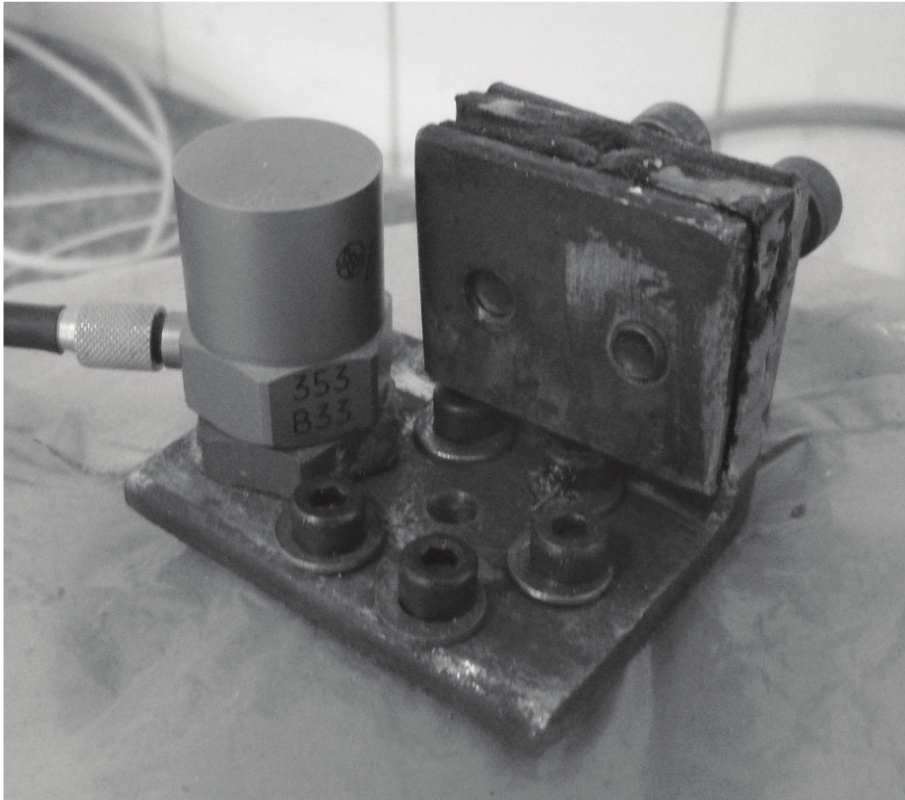
Figure 1.
The sample fixing system and the coupling of the piezoelectric transducer.
The vibration tests performed on the fruit-stem systems used longitudinal vibrations and a sinusoidal function. The vibration tests were conducted by continually and progressively increasing the frequency range from 10 to 30 Hz using a constant peak-to-peak displacement of 7.21 mm. For the branches, the vibration tests were performed in the transverse direction under a sinusoidal function using a progressive and continuous frequency increase from 10 to 30 Hz with a constant peak-to-peak displacement of 1.75 mm.
The displacements of the fruit-stem and branch systems were recorded using a high-speed camera (model X3, manufactured by Speed Mega HHC) capable of recording 1,000 frames per second. Next, the images were processed using the Scilab software (version 5.4; Scilab Enterprises, 2012) to obtain the sample displacements as a function of time. The fruit-stem system was monitored using the fruit as the central point while monitoring the free end of the branch.
Displacement data were expressed as a function of time, and the fast Fourier transform algorithm was used to determine the frequency spectrum. The transmissibilities of the stem and branch were determined using the displacement amplitude data of the monitored points and the vibration amplitude imposed on the samples during the tests, according to Equation 1:
 (1)
(1)where:
T = transmissibility, mm mm-1;
Ym = output displacement amplitude of the monitored point, mm; and
Ye = input vibration amplitude imposed on the samples during the tests, mm.
Transmissibility curves were obtained for the fruit-stem and branch samples. The resonant frequency was determined by considering the vibrational frequency associated with the highest transmissibility of the system. The natural frequencies of the fruit-stem system were subjected to analysis of variance at a significance level of 5% to test the effects of the ripening stage on the natural frequencies. The effects of the ripening stage on the mean frequencies were determined using Tukey’s test at a significance level of 5%.
Determining the elastic moduli of the coffee stem and branch
The elastic moduli were determined using an algorithm (Figure 2) that compared the experimentally determined natural frequencies with those using the finite element method (FEM). The natural frequencies of the systems were calculated using the finite element method and the Ansys Mechanical APDL software (version 14.5). In addition, the proposed algorithm was implemented using this platform.
The deviation between the natural frequencies obtained using FEM (simulated) and the experimental method was determined using Equation 2:
 (2)
(2)Where:
F = deviation between the simulated and experimental natural frequencies, Hz;
Fe = natural frequency determined experimentally, Hz; and
Fs = natural frequency obtained using FEM, Hz.
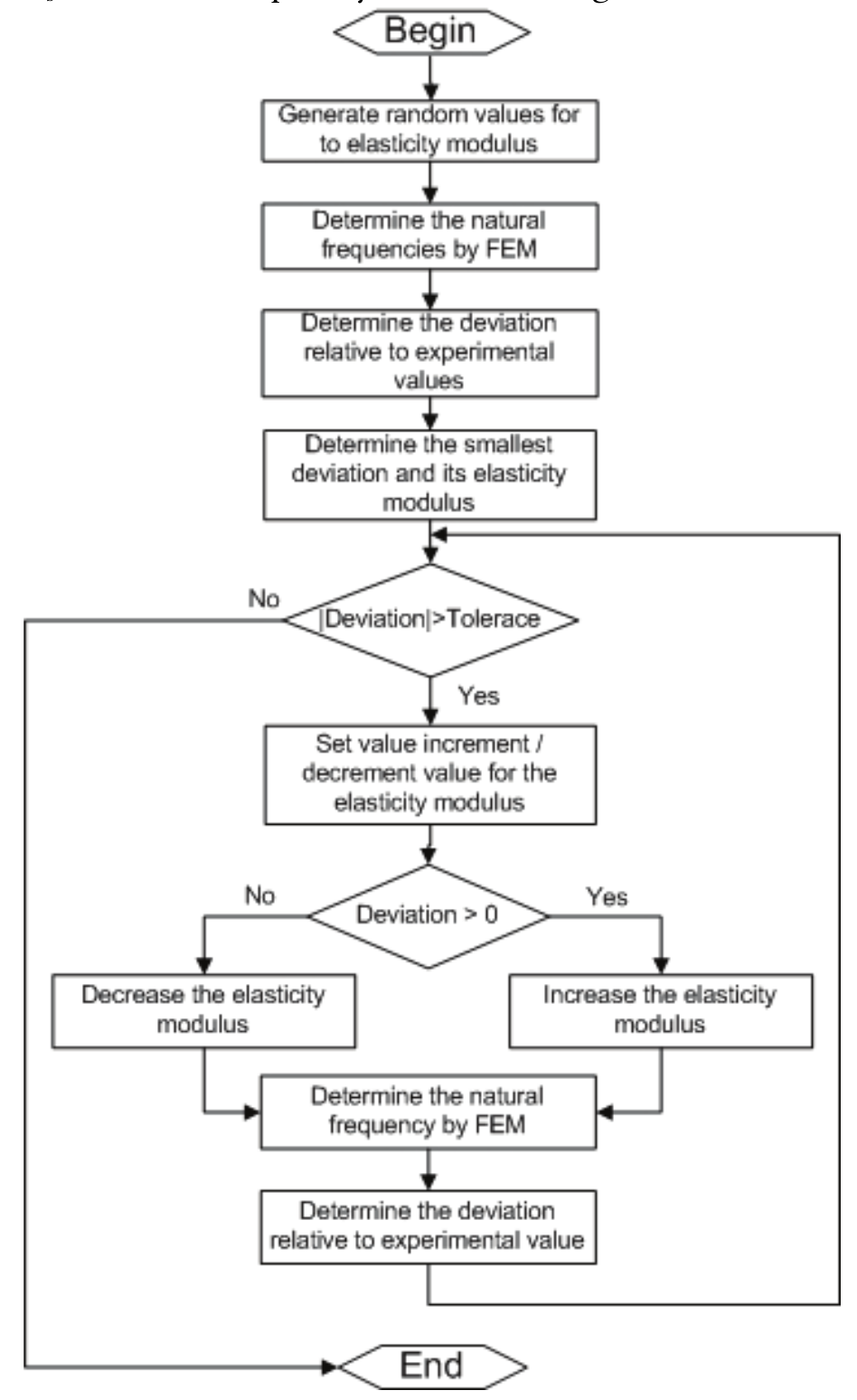
Figure 2.
Diagram of the proposed algorithm for determining the elasticity modulus from dynamic vibration tests and the finite element method.
When executing the algorithm, the increase or decrease in the elastic modulus value (Table 2) was considered according to the percent deviation between the experimental frequencies and the frequencies obtained from FEM (Equation 3). The increase and decrease in elastic modulus were used when the experimental frequency was higher or lower than the simulated frequency, respectively, to minimize the error (Figure 3).
 (3)
(3)where:
D = percent (%) deviation between the simulated and experimental natural frequencies.
Models of the fruit-stem and branch geometries (Figure 3) were generated using the Solid Works 2011 CAD software and were based on dimensions determined experimentally by Coelho, Santos, Pinto, and Queiroz (2015) (Table 3, 4 and 5).
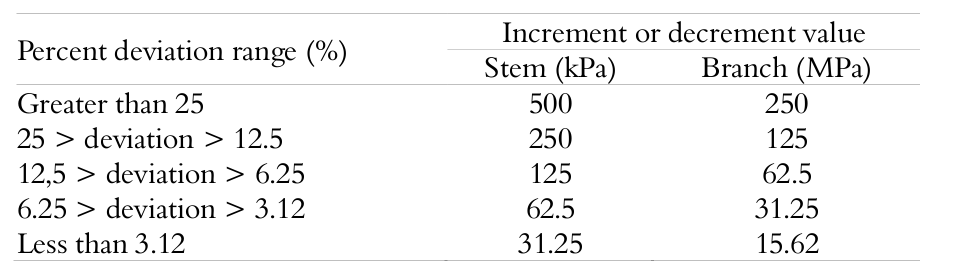
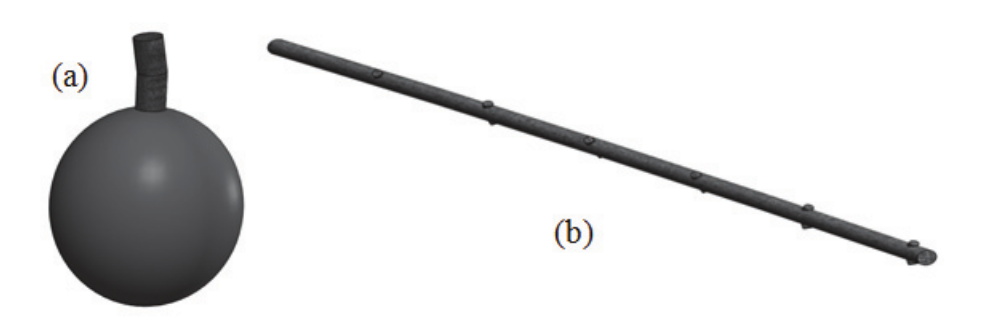
Figure 3.
Geometry of (a) the fruit-stem system and (b) the branch.



The system volume meshing, definitions of the physical and mechanical properties and boundary conditions, solution, and visualization of the results were performed using the Ansys Mechanical APDL software (version 14.5). In this system, volume meshing with tetrahedral elements and ten nodes was used. The dimensions of the elements were selected based on mesh refinement tests, in which the results were evaluated according to their convergence and the processing time. Refinement tests were carried out for the fruit-stem-branch system with three fruits grouped on the stem at the green ripening stage (Figure 4). The model was simulated by considering three refinement levels and was evaluated for the 1st, 3rd and 5th natural frequencies (Figure 5).
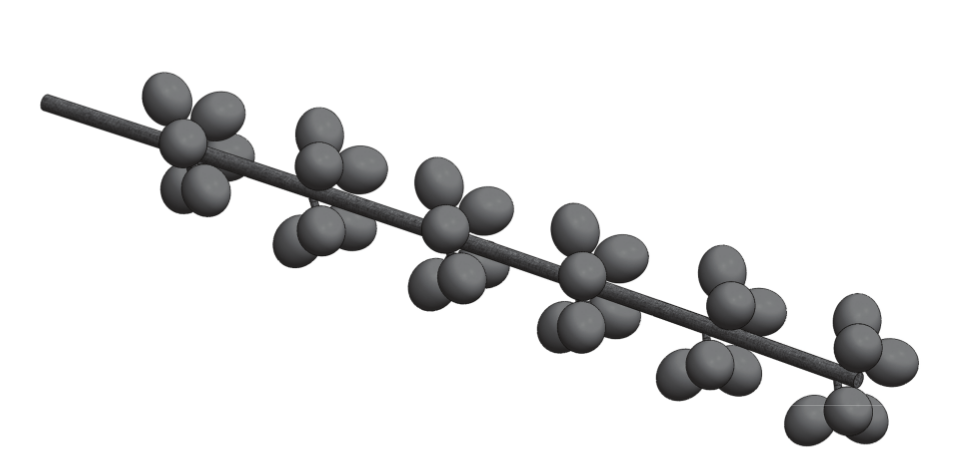
Figure 4.
Geometry of the fruit-stem-branch system with three fruits grouped on a stem that was used for the refinement test.
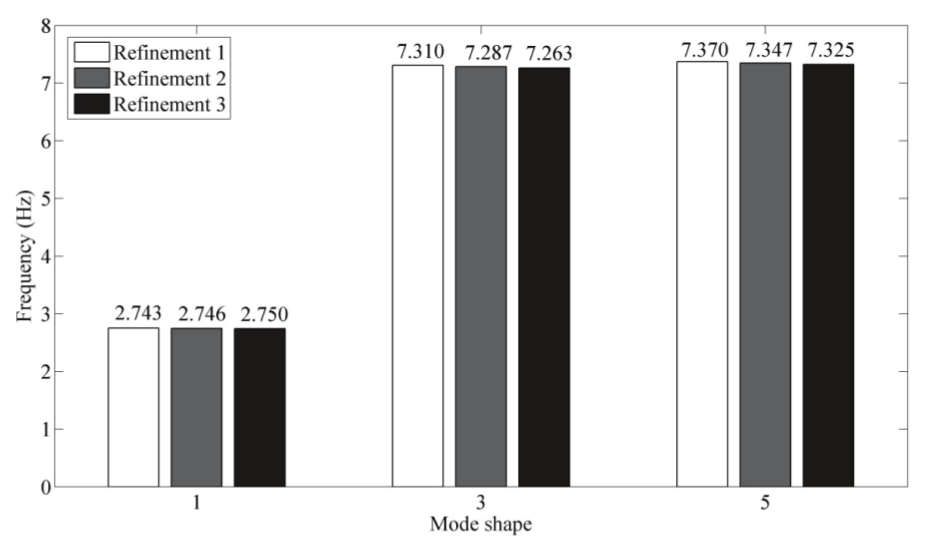
Figure 5.
Natural frequencies of the fruit-stem-branch system with three fruits grouped on a stem and simulated using three meshing refinements.
The refinement numbers of 1, 2 and 3 (Figure 5) resulted in a geometry mesh composed of 34143, 57232 and 110409 tetrahedral elements with total processing times of 122, 271 and 2987 s, respectively. The differences between the 1st, 3rd and 5th natural frequencies that employed a refinement number of 2 relative to a refinement number of 1 were 0.15, 0.32 and 0.31%, respectively, with a 112% increase in processing time. However, the differences between the refinement numbers of 3 and 2 were 0.11, 0.32 and 0.30% for the 1st, 3rd and 5th natural frequencies, respectively, with a 1002% increase in processing time.
The dimensions of the elements that were associated with the refinement number of 1 were adopted. Mesh refinement resulted in a significant increase in processing time without significant changes in results of natural frequency.
The systems were modeled using multiple degrees of freedom and subjected to undamped free vibrations, and the differential equation is given by Equation 4 in matrix form (Rao, 1995). For simplification, the materials that composed the fruits, stems and branches were homogeneous and isotropic.
 (4)
(4)where:
[M ]= mass matrix, kg;
 = acceleration vector, m s-2;
[K ]= stiffness matrix, N m-1; and
{}= displacement vector, m.
Equation 6 was obtained by substituting the solution of Equation 5, which represented the system displacement in time, into Equation 4.
 (5)
(5)where:
{}= eigenvector associated with the i-th natural frequency of the system;
i = i-th natural frequency, rad s-1; and
= time, s.
 (6)
(6)The block Lanczos algorithm was used to solve the eigenvectors and eigenvalues (Equation 6) and provided the natural frequencies and mode shapes for the systems.
The developed algorithm (Figure 2) was implemented and applied to the 16 green and ripe fruit-stem samples and the 8 branch samples. Using this algorithm, the elastic modulus with the lowest deviation between the experimental and simulated natural frequencies was determined for each sample. The elastic modulus values of the fruit-stem system were subjected to analysis of variance at a significance level of 5%. The effects of the ripening stage on the average natural frequencies of the system were evaluated using Tukey’s test at a 5% significance level.
Results and discussion
Experimental determination of natural frequencies
The experimental resonance frequencies (i.e., the natural frequencies) were obtained by analyzing the transmissibility curves (Figure 6) and considering the frequencies that resulted in greater transmissibility. The natural frequencies for the ripe and green ripening stages were statistically similar, according to Tukey’s test at a 5% significance level (Table 6).
Using an analytical method, Ciro (2001) determined that the natural frequencies of the fruit-stem system at the green and ripe stages for the first mode shape were 26.97 and 25.10 Hz, respectively. Santos, Queiroz, Valente, and Coelho (2015) determined the natural frequencies for the fruit-stem system using the finite element method and reported values of 23.2 and 19.9 Hz for the green and ripe stages, respectively. The differences between the results obtained by Santos et al. (2015) and Ciro (2001) can be explained by the variations in the geometric, physical, and mechanical properties of the system and the methods applied.
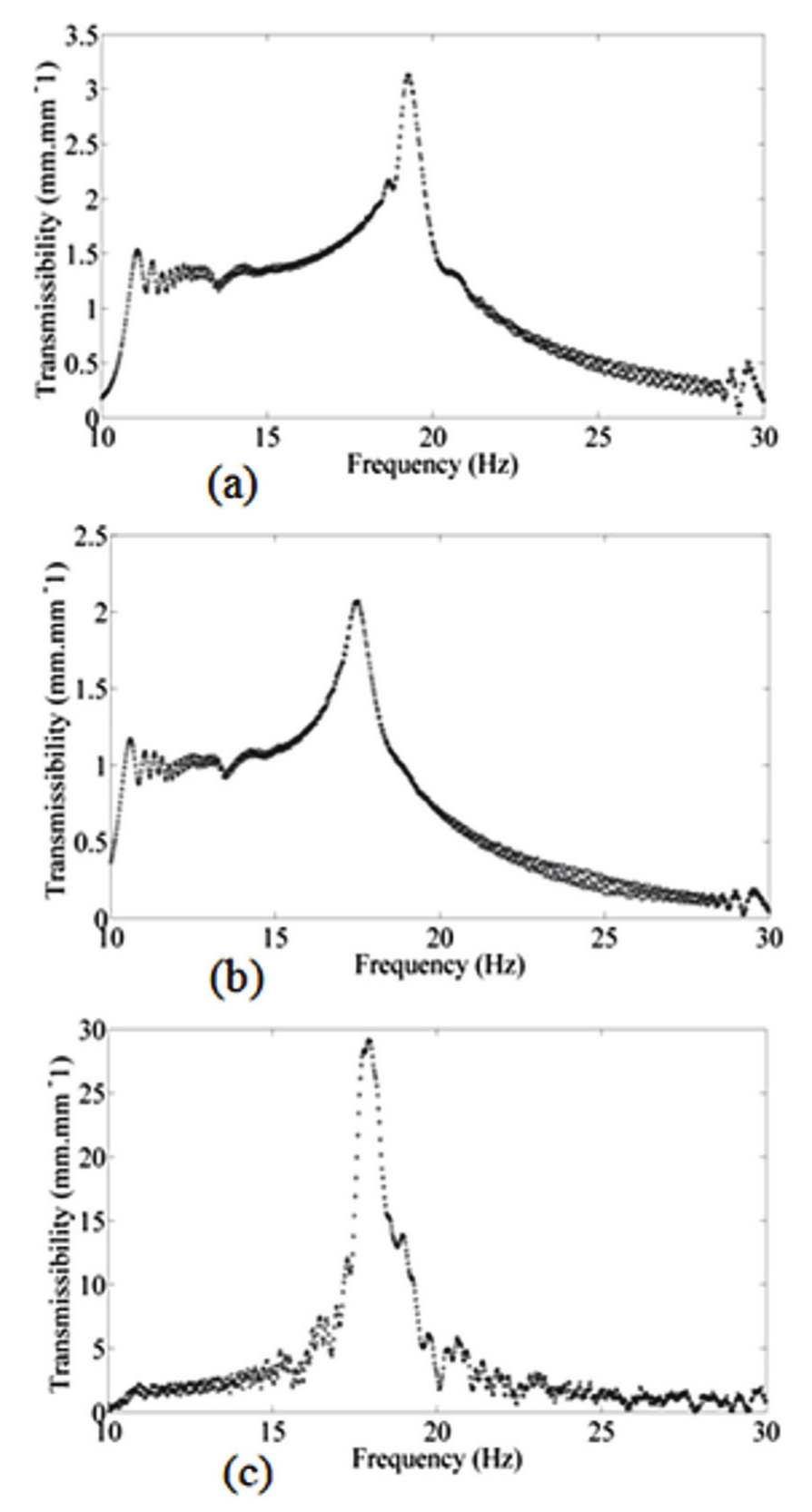
Figure 6.
Transmissibility curves of the fruit-stem system for the green (a) and ripe (b) stages and for the branches (c).
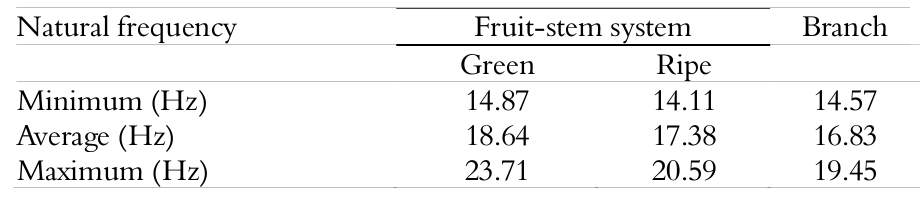
In this study, no significant differences were detected, but higher natural frequencies were found in the green fruit-stem system relative to the ripe system. This finding was also verified by Ciro (2001) and Santos et al. (2015), and can be explained by the higher elastic modulus of the system at the green stage (Castro & Marraccini, 2006).
Determination of the stem and branch elastic moduli
The elastic moduli of the stem and branch were determined using a method proposed on the basis of the association between the dynamic vibration tests and the finite element method (Figure 2). For each sample, the elastic modulus was determined by considering the deviation established between the experimental and simulated frequencies (Figure 7). The mean elastic modulus of the stem at the ripe stage was greater than that at the green stage, according to Tukey’s test at a 5% significance level (Table 7).
Ciro (2001) determined the elastic moduli for Colombian coffee stems and obtained values of 23.14 and 22.61 MPa for the green and ripe stages, respectively. Furthermore, Yung and Fridley (1974) obtained elastic modulus values of 31.03 and 26.06 MPa for the stem at the green and ripe stages, respectively. Tobón, Meija, Tascón, and Restrepo (1999) reported elastic moduli of 9.53 and 13.04 MPa for Colombian coffee stems at the green and ripe stages, respectively. Rodríguez et al. (2006) obtained elastic modulus values of 4.73 and 15.88 MPa for the Catuai coffee variety at the green and ripe stages, respectively. The results of the present study are consistent with those of Tobón et al. (1999) and Rodríguez et al. (2006), in which the elastic modulus of unripe fruit systems was lower than that for ripe fruit systems. The differences between the results obtained in different studies may be related to the methods used for determining the elastic modulus. Considering that a dynamic test was used herein, it is expected that the obtained results are more reliable. A large variation was registered between the elastic moduli found in this study and the values reported in the literature. This variation can be attributed to the types of tests that were used. Ciro (2001) and Rodríguez et al. (2006) determined the elastic modulus using static bending tests that considered the fruit-stem system as a cantilevered beam. In addition, the variations in elastic moduli potentially resulted from differences in the studied species and varieties, weather conditions, plant age and crop management strategies (Aristizábal et al., 2003, Rodríguez et al., 2006).
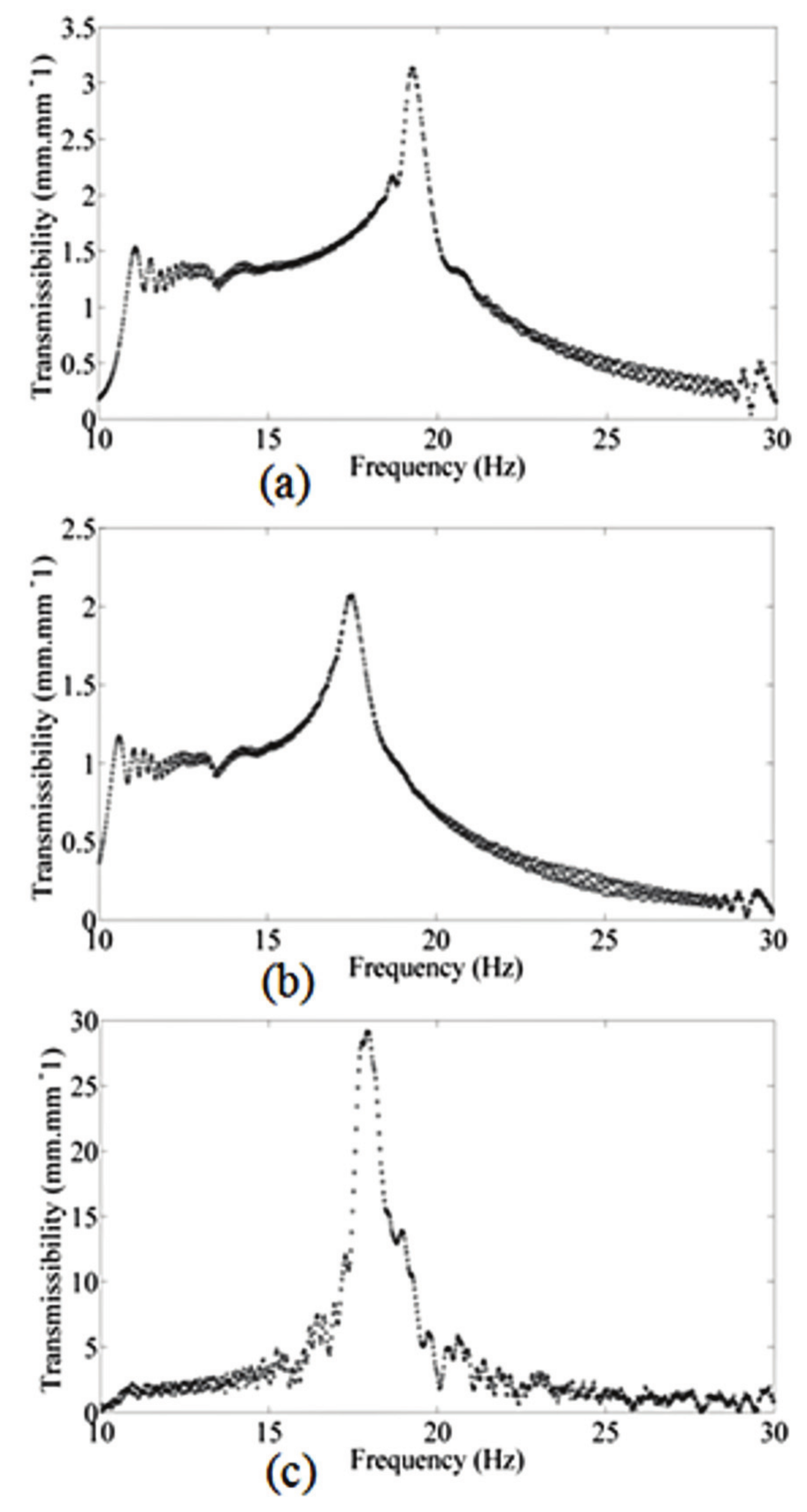
Figure 7.
Deviation between the experimental and simulated natural frequencies for several elastic modulus values of the fruit-stem system at the (a) green and (b) ripe stages and of the (c) branch.
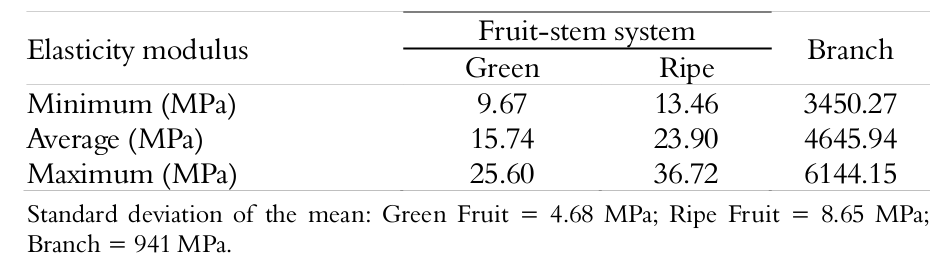
Aristizábal et al. (2003) demonstrated that the elastic moduli of Caturra Red and Red and Yellow Colombian coffee branches varied from 2.26 to 8.43 GPa. The average elastic modulus for the branch determined in this study was 4.64 GPa, which is consistent with that reported by aforementioned authors.
The proposed methodology was feasible for determining the elastic modulus. Moreover, the proposed methodology represents an improvement in this mechanical property can be determined directly from the dynamic phenomenon under investigation.
Conclusion
Based on the conditions under which this study was conducted, the following conclusions were drawn.
1. The experimental natural frequencies for the fruit-stem system were higher at the green stage than at the ripe stage.
2. The average values of the elastic modulus were 15.74, 23.90 and 4645.90 MPa for the stems at the green and ripe stages and for the branch, respectively.
3. The elastic modulus of the stem was higher at the ripe stage than at the green stage.
4. This method was effective for determining the elastic moduli of coffee stems and branches.
Acknowledgements
The National Council for Scientific and Technological Development (CNPq) and the Foundation for Research Support of the State of Minas Gerais (Fapemig) are acknowledged for financial support for project development.
References
Aristizábal, I. D., Oliveros, T. C. E., & Alvares, M. F. (2003). Mechanical harvest of coffee applying circular and multidirectional vibrations. Transactions of the ASAE, 46(2), 205-209.
Castro, R. D., & Marraccini, P. (2006). Citology, biochemistry and molecular changes during coffee fruit development. Brazilian Journal of Plant Physiology, 18(1), 175-199.
Ciro, H. J. (2001). Coffee harvesting I: Determination of the natural frequencies of the fruit stem system in coffee tress. Applied Engineering in Agriculture, 17(4), 475-479.
Coelho, A. L. F., Santos, F. L., Pinto, F. A. C., & Queiroz, D. M. (2015). Determinação das propriedades geométricas, físicas e mecânicas do sistema fruto-pedúnculo-ramo do cafeeiro. Revista Brasileira de Engenharia Agrícola e Ambiental, 19(3), 286-292.
Erdogan, D., Guner, M., Dursun, E., & Gezer, I. (2003). Mechanical harvesting of apricots. Biosystems Engineering, 85(1), 19-28.
Pezzi, F., & Caprara, C. (2009). Mechanical grape harvesting: investigation of the transmission of vibrations. Biosystems Engineering, 103(3), 281-286.
Polat, R., Gezer, I., Guner, M., Dursun, E., Erdogan, D., & Bilim, H. C. (2007). Mechanical harvesting of pistachio nuts. Journal of Food Engineering, 79(4), 1131-1135.
Rao, S. S. (1995). Mechanical vibrations (3rd ed.). New York City, NY: Addison-Wesley Publishing Company.
Rodríguez, A. M., Queiroz, D. M., Espinosa, B. G., & Zandonadi, R. (2006). Determinácion de propriedades físico-mecánicas de los frutos de café (Coffea arábica variedade Catuai) relacionadas con la cosecha mecanizada. Revista Ciências Técnicas Agropecuárias, 15(3), 22-27.
Sanders, K. F. (2005). Orange harvesting systems review. Biosystems Engineering, 90(2), 115-125.
Santos, F. L., Queiroz, D. M., Pinto, F. A. C., & Resende, R. C. (2010). Efeito da frequência e amplitude de vibração sobre a derriça de frutos de café. Revista Brasileira de Engenharia Agrícola e Ambiental, 14(4), 425-431.
Santos, F. L., Queiroz, D. M., Pinto, F. A. C., & Santos, N. T. (2010). Analysis of the coffee harvesting process using an electromagnetic shaker. Acta Scientiarum. Agronomy, 32(3), 373-378.
Santos, F. L., Queiroz, D. M., Valente, D. S. M., & Coelho, A. L. F. (2015). Simulation of the dynamic behavior of the coffee fruit-stem system using finite element method. Acta Scientiarum. Technology, 37(1), 11-17.
Scilab Enterprises. (2012). Scilab: free and open source software for numerical computation (Version 5.4). Retrieved from http://www.scilab.org
Segundinho, P. G. A., Cossolino, L. C., Pereira, A. H. A., & Junior, C. C. (2012). Aplicação do método de ensaio das frequências naturais de vibração para obtenção do módulo de elasticidade de peças estruturais de madeira. Revista Árvore, 36(6), 1155-1162.
Sessiz, A., & Ozcan, M. T. (2006). Olive removal with pneumatic branch shaker and abscission chemical. Journal of Food Engineering, 76(2), 148-153.
Souza, C. M. A., Queiroz, D. M., & Rafull, L. Z. D. (2006). Derriçadora portátil na colheita total e seletiva de frutos do cafeeiro. Pesquisa Agropecuária Brasileira, 41(11), 1637-1642.
Taplak, H., & Parlak, M. (2012). Evaluation of gas turbine rotor dynamic analysis using the finite element method. Measurement, 45(5), 1089-1097.
Targa, L. A., Ballarin, A. W., & Biaggioni, M. A. M. (2005). Avaliação do módulo de elasticidade da madeira com uso de método não-destrutivo de vibração transversal. Revista Engenharia Agrícola, 25(2), 291-299.
Tobón, E. A., Meija, F. A., Tascón, C. O., & Restrepo, E. C. M. (1999). Propriedades físico-mecánicas del fruto y del sistema fruto-pedúnculo del café variedad colombia. Revista Faculdade Nacional Agrícola Medellin, 52(2), 701-720.
Yung, C., & Fridley, R. B. (1974). Computer analysis of fruit detachment during tree shaking. Saint Joseph, MO: ASAE.
Notes