Medicina
Retrospective study of polytrauma patients’s medical records that presented abdominal trauma, comperad to abdominal trauma and extra-abdominal injuries
Retrospective study of polytrauma patients’s medical records that presented abdominal trauma, comperad to abdominal trauma and extra-abdominal injuries
Acta Scientiarum. Health Sciences, vol. 43, v, 2021
Universidade Estadual de Maringá
Recepción: 03 Diciembre 2020
Aprobación: 23 Abril 2021
Abstract: This study sought to retrospectively assess the relationship between intra and extra-abdominal injuries in polytrauma patients undergoing laparotomy at the Regional University Hospital of Maringá between 2017 and 2018.This study was based on 111 electronic medical records from the Brazilian public health system “SUS”, admitted to the hospital due to trauma and undergoing laparotomy, comparing two groups: abdominal injury without extra-abdominal injury (WoEI) and abdominal injury with extra-abdominal injury (WiEI).A total of 111 medical records were analyzed, 57 from 2017 and 54 from 2018. Of these 111records, 43 (39%) were trauma victims with only abdominal injuries and 68 (61%) trauma victims with abdominal and extra-abdominalinjuries. Most patients were male (85%), with an average age of 33 years, ranging from 14 to 87 years. In statistical analysis, according to the T-test, there was significance (p > 0.05) between the WoEI and WiEI groups for data collected regarding death rates and hospitalization days. As for the morbidity rate and difference between genders (male and female), there was no statistical significance (p < 0.05). Polytrauma patients are exposed to greater kinetic energy, with more severe conditions and therefore required more in-hospital care.
Keywords: wounds and injuries, laparotomy, abdominal trauma.
Introduction
Traumatic injury currently is one of the main causes of morbidity and mortality worldwide. It is a major public health problem, with high costs due to the loss of human life (American College of Surgeon, 2018). Considering the long-term medical care of these patients and the productivity loss, given the demographic profile of the patients, trauma is one of the main causes of life years lost and years lived with disability (Parra-Romero et al., 2019).
Polytrauma is defined as an injury involving two or more body parts, with the condition that at least one of these injuries endangers life. Severe trauma requires intensive care and operative procedures with frequency. The most common cause is traffic accidents, followed by falling from a height, as well as other mechanisms. Most of them are composed of bone fractures, skull fractures, brain trauma, thoracic trauma and abdominal trauma. Surgical intervention is required in the majority of cases and the death rate in polytrauma patients is approximately 20% (Dziubiński et al., 2019).
A significant number of preventable deaths occur due to trauma. The intraperitoneal cavity, the thoracic cavity, the retroperitoneal space and long bone fractures are situations in which the organism keeps bleeding capable of leading to death from hemorrhagic shock. Abdomen is one of the anatomical regions most affected by traumatic injuries in polytrauma patients, therefore, the identification of intra-abdominal injuries is essential to reduce the morbidity and mortality of these patients (Parra-Romero et al., 2019).
Abdominal trauma is classified in two main types - penetrating and blunt. In penetrating trauma, there is a skin continuity solution and they are usually caused by firearms or by melee weapons. In blunt trauma, or abdominal contuse on, the skin is intact, and the effects of the offending agent are transmitted to the viscera through the abdominal wall, or occur by counter-slamming or deceleration. The most frequent causes of blunt injury are car accidents, blows and accidental falls (Ribas-Filho et al., 2002).
The injury mechanism should be considered in the decision whether to advance or delay the surgical procedure, since high kinetic energy trauma can cause fatal injuries that are not evident in the first assessment. Several clinical features indicate the presence of abdominal trauma, although complementary tests should always be used to confirm the diagnosis, such as FAST ultrasound or computerized tomography. Exploratory laparotomy seeks to find suspicious lesions not confirmed by imaging studies, however it is indicated only for some specific cases (Júnior, Lovato, Carvalho, & Horta, 2007).
The incidence of abdominal trauma has been progressively increasing and its severity is determined by the damage of vital organs or structures of the abdomen and by the association with other injuries. When abdominal trauma is not isolated, with injuries in other regions, a series of priorities and principles should be followedm involving therapy and a multidisciplinary team (Ribas-Filho et al., 2002). The systematization guarantees prompt diagnosis and treatment with a fundamental time gain. The injury mechanism, injury forces, injury location, and the patient hemodynamic status determine the priority and the best evaluation method (Espírito Santo, 2018). Thus, all injuries present will be assessed and emergency care will be done more efficiently, focusing on injuries that can mean harm to the patient life.
In this context, as abdominal trauma is a major cause of morbidity and mortality and, due to its various possible origin mechanisms, it is often associated with extra-abdominal injuries that can compromise the patient condition, this study sought to retrospectively assess the correlation between intra and extra-abdominal injuries and its mechanisms and variables - such as causes, organs and body regions involved, morbidity and mortality - in polytrauma patients undergoing laparotomy at the Regional University Hospital of Maringá between 2017 and 2018.
Material and methods
This study was carried out at the Regional University Hospital of Maringá (HUM). It was developed from 111 medical records from the Brazilian public health system “SUS”, between January 1st, 2017 and December 31st, 2018, approved by COPEP/UEM CAAE 46193814.0.0000.0104 opinion 1.194.650.
Data were collected from the electronic records of the HUM of victims admitted to the hospital due to trauma and undergoing laparotomy. Records of patients undergoing operative procedures within the study period were requested and made available by the HUM Surgical Center. Of these, it was selected those undergoing laparotomy, obtaining a list with patients of the desired sample and their respective medical record numbers. These were used for research at GSUS (SUS Health Assistance System), where the analyzed data were obtained.
Data were treated using Microsoft Excel for Windows 2013 containing the variables: gender, age at the surgical procedure date, presence of abdominal injury and affected viscera, presence of extra-abdominal injury and impaired organs, cause of trauma, length of hospital stay, presence of sequels and if the victim died.
In order to facilitate the statistical analysis, these parameters were separated into five groups: morbidity rate, mortality rate, length of hospital stay, and differences between gender and age. Student’s t-test was applied to check for statistical significance between the data, comparing the two groups: abdominal injury without extra-abdominal injury (WoEI) and abdominal injury with extra-abdominal injury (WiEI).
Results
A total of 111 medical records were analyzed, 57 from 2017 and 54 from 2018. Of these 111, 43 (39%) were trauma victims with only abdominal injuries and 68 (61%) trauma victims with abdominal and extra-abdominal injuries (Figure 2). Most patients were male (85%), with an average age of 33 years ranging from 14 to 87 years.
Analyzing the type of abdominal trauma, out of the 111 patients, 41 (37%) suffered blunt trauma and 68 (61%), penetrating trauma. Of these, 28 cases (41%) were gunshot wounds, 35 (51%) stab wounds - 2 cases of attempted self-extermination - and 5 cases (7%) were due to other causes. Two records did not contain the type of abdominal trauma that the patients in question had suffered.
Referring to abdominal injuries, the most injured organs were intestines (20%), liver and bile ducts (17%) and spleen (14%). Of the extra-abdominal injuries, the most common was the association with chest trauma (42%), followed by extremity injury (33-17% upper limbs and 16% lower limbs) and head trauma (15%) (Figure 1).
Referring to the patients with abdominal trauma and without extra-abdominal injuries, which totaled 43 victims in the studied period, the mortality rate was zero. The morbidity rate - events that affect life quality temporarily or definitely, was 28% (12 people) and the average length of hospitalization was 5 days. As for gender, there were 5 female and 38 male patients.
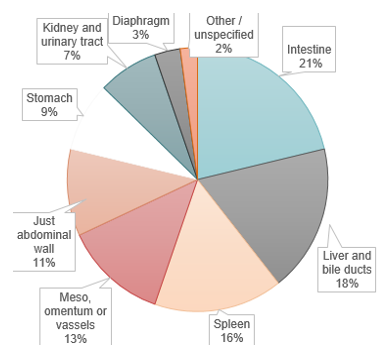
Figure 1. Distribution of the most frequently injured organs in cases of abdominal trauma in the studied polytrauma patients.
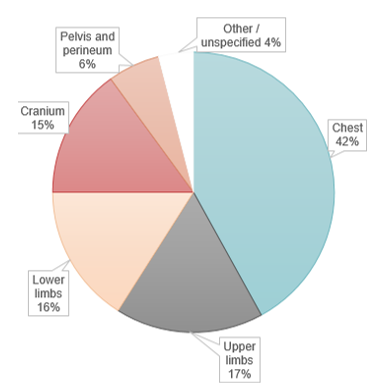
Figure 2. Distribution of the most frequently injured body regions in cases of extra-abdominal trauma associated with abdominal trauma in the studied polytrauma patients.
In polytrauma victims, with abdominal trauma and associated extra-abdominal injuries, which totaled 68 patients in the analyzed period, the mortality rate was 18% (12 people). The morbidity rate was 54% (37 people) and the average length of hospitalization was 9 days. As for gender, there were 12 female and 56 male (Table 1)
In the analysis of statistical significance according to the t-test, there is significance (p > 0.05) between the WoEI and WiEI groups in the data collected in relation to hospitalization days (Figure 3) and death rate (Figure 4). As for the morbidity rate and difference between genders (male and female) (Figure 4), there is no statistical significance (p < 0.05).

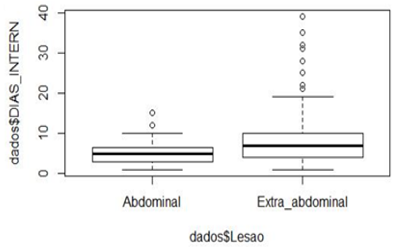
Figure 3. Statistical analysis graph of the variable hospitalization days, comparing the WoEI and WiEI groups, showing their significance (p > 0.05).
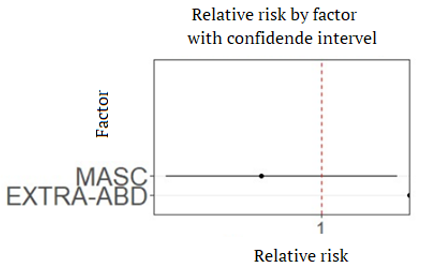
Figure 4. Statistical analysis graph of the variables deaths and gender, comparing the WoEI and WiEI groups, showing their significance and non-significance, respectively (p < 0.05).
Discussion
The number of trauma patients has increased in recent years, which is mainly related to the increase in violence and kinetic energy involved in trauma. Although there has been a significant reduction in accident mortality rates in the major Brazilian cities, this remains an important cause of morbidity and mortality. This causes an increase in the complexity of the injuries found in the victims and, consequently, in a new challenge for surgeons (Ribas-Filho et al., 2008).
From the results obtained here, there was a predominance of males (85%), according to other studies found in the literature (Prado Filho et al., 2008) and similar to the report of the The Journal of Trauma and Acute Care Surgery (Hurtuk et al., 2006), with 64.6% male patient victims of trauma.
The most affected age group was the third decade of life, which is similar to other studies (Guizzo et al., 2020). Sánchez Portela (2007) mentions that this trend is due to some factors such as belonging to the most productive age group, playing sports more frequently, being linked to occupational risk activities and greater consumption of alcoholic beverages. There are some authors who point to the fourth decade as the most frequent8.
As in Stalhschmidt, Formighieri and Lubachevski (2006) and Prado Filho et al. (2008), in this research, most traumas were penetrating, in contrast to the predominance of bruises reported in Ribas Filho et al. (2002) and Sánchez Portela (2007). Bladed weapons were the most used instruments to cause open wounds, which are corroborated by other authors (Prado Filho et al., 2006). However, such data disagree with others that mention firearms as the most used instrument (Townsend & Sabiston, 2005). This may have been due to the greater presence of weapons in the civilian environment in some countries.
Associated injuries in other regions were found in 61% patients. The high number of associated injuries is an important challenge for the treatment of patients, as their presence makes it difficult to decide on the conduct of these victims (Kemmeter, Hoedema, Foote, & Scholten, 2001). In the sample used, the most affected region was the chest, corroborating Ribas Filho et al. (2008).
In the statistical analysis by T-test, there was a significant difference between the WoEI and WiEI groups in the data collected for the mortality rate and length of hospital stay. This shows that in cases where there are associated abdominal and extra-abdominal traumas, the lesions are more severe, attesting to a greater kinetic energy involved in the injury mechanism. The combination of abdominal and extra-abdominal injuries increases the severity of the trauma, making it necessary to have a longer hospital stay, exposing more the victim to complications, such as secondary infections.
Regarding the morbidity rate and difference between genders (male and female), there was no statistical significance. However, they still represent relevant data for implementing improvements in care, forecasting diagnosis, and applying treatments seeking damage containment for patients in the most affected groups.
Trauma is often considered the neglected disease of modern society because it is more lethal and incapacitating than wars and, nonetheless, does not raise awareness and mobilize societyand governments (Leite, Taveira-Gomes, & Sousa, 2013). Social damage brought by trauma is immeasurable. There is no way to quantitatively assess the social impact that deaths or sequel from trauma causes in the population. Every political, preventive, therapeutic and conscientious action focused on the human person is a hope to mitigate this scourge (Hurtuk, Reed, Esposito, Davis, & Luchette, 2006).
Conclusion
Therefore, this study indicated that the presence of extra-abdominal injuries, together with injury to abdominal viscera, in trauma victims, led to an increase in the mortality rate and length of hospital stayin patients compared with victim patients of only abdominal trauma, showing that polytrauma patients are exposed to greater kinetic energy, with more severe conditions and therefore require more in-hospital care.
References
American College of Surgeon. (2018). Advanced trauma life support.: student course manual (10th ed.). Chicago, IL: American College of Surgeon.
Dziubiński, D., Abramczyk, U., Ciechanowicz, D., Kozłowski, J., Pakulski, C., & Zyluk, A. (2019). An analysis of causes of trauma, spectrum of injuries and treatment outcomes of patients treated in 2015 year in Multitrauma Centre of the University Teaching Hospital No 1 in Szczecin. Comparison of results form years 2015 and 2007. Polish Journal of Surgery, 91(4), 1-5.
Espírito Santo. Secretaria de Estado da Saúde. (2018). Atendimento de urgência ao paciente vítima de trauma - diretrizes clínicas. Vitória, ES: Secretaria de Estado da Saúde do Espírito Santo.
Guizzo, W. A., Souza, B. S., Weihermann, V., Silva, A. B., Jabur, G. R., Menini-Stahlschmidt, C. M., & Von-Bahten, L. C. (2020). Trauma em Curitiba: avaliação multifatorial de vítimas admitidas em um hospital universitário. Revista do Colégio Brasileiro de Cirurgiões, 47(1), e20202408. DOI: https://doi.org/10.1590/0100-6991e-20202408
Hurtuk, M., Reed, R. L., Esposito, T. J., Davis, K. A., & Luchette, F. A. (2006). Trauma surgeons practice what they preach: the ntdb story on solid organ injury management. The Journal of Trauma and Acute Care Surgery, 61(2), 243-255. DOI: https://doi.org/10.1097/01.ta.0000231353.06095.8d
Júnior, G. A. P., Lovato, W. J., Carvalho, J. B., & Horta, M. F. V. (2007). Abordagem geral trauma abdominal. Medicina (Ribeirao Preto. Online), 40(4), 518-530. DOI: https://doi.org/10.11606/issn.2176-7262.v40i4p518-530
Kemmeter, P. R., Hoedema, R. E., Foote, J. A., & Scholten, D. J. (2001). Concomitant blunt enteric injuries with injuries of the liver and spleen: a dilemma for trauma surgeons. The American Surgeon, 67(3), 221-226.
Leite, S., Taveira-Gomes, A., & Sousa, H. (2013). Lesão visceral em trauma abdominal: um estudo retrospetivo. Acta Medica Portuguesa, 26(6), 725-730.
Parra-Romero, G., Contreras-Cantero, G., Orozco-Guibaldo, D., Domínguez-Estrada, A., Mercado-Martín del Campo, J. J., & Bravo-Cuéllar, L. (2019). Trauma abdominal: experiencia de 4961 casos en el occidente de México. Cirugía y Cirujanos, 87(2), 183-189.
Prado Filho, O. R., Pazello, D. R., Colferal, D. R., Daniel, J. M., & Vasconcelos, V. V. F. (2008). Caracterização dos traumas abdominais em pacientes atendidos no Hospital Universitário Regional de Maringá, 2006. Acta Scientiarum. Health Science, 30(2), 129-137. DOI: https://doi.org/10.4025/actascihealthsci.v30i2.1998
Ribas-Filho, J. M., Malafaia O., Campos, A. C. L., Grauman, R. Q., Gomes, S. E-K., & Marochi, V. L. (2002). Prevalência das estruturas atingidas no trauma abdominal. Revista Médica do Paraná, 60(1), 25-29.
Ribas-Filho, J. M., Malafaia, O., Fouani, M. M., Justen, M. D. S., Pedri, L. E., Silva, L. M. A. D., & Mendes, J. F. (2008). Trauma abdominal: estudo das lesões mais frequentes do sistema digestório e suas causas. ABCD. Arquivos Brasileiros de Cirurgia Digestiva, 21(4), 170-174. DOI: https://doi.org/10.1590/s0102-67202008000400004
Sánchez Portela, C. A., Delgado Fernández, J. C., Robaina Arias, L. E., Rodríguez, L. S., & Díaz Arteaga, Y. (2007). Morbilidad y mortalidad por traumatismo abdominal (2002 a 2004). Revista Cubana de Cirugía, 46(3), 1-11.
Stalhschmidt, C. M. M., Formighieri, B., & Lubachevski, F. L. (2006). Controle de danos no trauma abdominal e lesões associadas: experiência de cinco anos em um serviço de emergência. Revista do Colégio Brasileiro de Cirurgiões, 33(4), 215-219. DOI: https://doi.org/10.1590/s0100-69912006000400004
Townsend, C. M., & Sabiston, D. C. (2005). Sabiston textbook of surgery (17th ed). Philadelphia, PA: Saunders.
Notas de autor
cerfontes@uem.br