Artículos originales
Discounting and Executive functions as indicators of methamphetamine use in adolescents and adults
Descuento y Funciones ejecutivas como indicadores del uso de metanfetamina en adolescente y adultos.
Discounting and Executive functions as indicators of methamphetamine use in adolescents and adults
Revista Argentina de Ciencias del Comportamiento, vol. 14, núm. 3, pp. 139-147, 2022
Universidad Nacional de Córdoba
Recepción: 10 Marzo 2021
Aprobación: 18 Agosto 2021
Abstract: Meth-users have shown low performance in some executive functions tasks. This low performance can entail problems of control behavior, and increased impulsivity such as preference the small reward over the large delayed one. The current study was aimed to evaluate the performance in three executive tasks (shifting, updating and inhibition), and four discounting tasks (delay and probability) of gains and losses by meth-users and non-users. We worked with 40 male adults (20 meth-users and 20 non-users), and 32 male adolescents (20 meth-users and 12 non-users). We found with CART algorithm that inhibition, updating and probability discounting tasks were the good predictors to identify non-users and meth-users. Our general conclusion is the executive functions: Inhibition and Updating are elated with cognitive issues due to drug use in a developing brain, and the discounting tasks do not reflect a general impulsivity trait.
Keywords: executive functions, discounting tasks, methamphetamine, adolescents, adults.
Resumen: Los usuarios de metanfetamina han mostrado bajo rendimiento en funciones ejecutivas. Este bajo rendimiento genera problemas de control de conducta y aumento de impulsividad, como preferir una recompensa pequeña inmediata versus una grande demorada. El presente estudio tuvo como objetivo evaluar desempeño en tres tareas ejecutivas (Flexibilidad, actualización e inhibición) y cuatro tareas de descuento (demora y probabilidad) de ganancias y pérdidas en usuarios de metanfetamina y controles. Trabajamos con 40 varones adultos (20 usuarios de metanfetamina y 20 no usuarios) y 32 varones adolescentes (20 usuarios y 12 no usuarios). Con el algoritmo CART, encontramos que las tareas de inhibición, actualización y descuento de probabilidad eran buenos predictores para identificar consumidores. Nuestra conclusión general es que la inhibición y actualización están relacionadas con problemas cognitivos por consumo en un cerebro en desarrollo, y las tareas de descuento no reflejan un rasgo general de impulsividad.
Palabras clave: funciones ejecutivas, tareas de descuento, metanfetamina, adolescentes, adultos.
Introduction
According to the Diagnostic and Statistical Manual of Mental Disorders (DSM-5), the substance use disorders are a cluster of cognitive, behavioral, and physiological symptoms indicating that the individual continues using the substance despite significant substance-related problems (American Psychiatric Association, 2013). The severity of physical and mental health complications depends on the kind of drug and the brain development state, especially the drug use during the adolescence (Giedd, 2015; Peeters et al., 2015). In the adolescence important cognitive functions mature such as executive functions (working memory, updating, attention, shifting, and response inhibition), and this development continues to mature until the late adolescence (Casey, Getz, & Galvan, 2008; Peeters et al., 2015).
The exposure to drug usage during adolescence may impair different features of executive functions (Kluwe-Schiavon, Wendt Viola, Sanvicente-Vieira, Pezzi, & Grassi-Oliveira, 2016; Pope, Boomhower, Hutsell, Teixeira, & Newland, 2016). It has been shown that substance users and abusers demonstrate extreme valuation of the small immediate rewards over the large later reward (Bickel, Jarmolowicz, Mueller, & Gatchalian, 2011). This tendency for the immediate reward has been found in adolescents-abusers of cigarettes, alcohol, and marijuana (Imhoff, Harris, Weiser, & Reynolds, 2014; Kim-Spoon, McCullough, Bickel, Farley, & Longo, 2015; Reynolds & Fields, 2012; Stanger et al., 2012). In order to understand this chosen tendency, some studies have argued the competing neural systems hypothesis, where one system, labeled “impulsive” competes with the system labeled “reflective or executive” (Bickel et al., 2007; Droutman et al., 2019). The elevated impulsive system activation associated implies disruption in the balance between these competing decision systems, resulting in steep discounting of delayed rewards (Bickel et al., 2011; Hester, Lubman, & Yücel, 2009). Several studies have indicated that adults with substance use disorders discount delay rewards steeper than individuals without use disorder (Gowin, Sloan, Ramchandani, Paulus, & Lane, 2018; MacKillop, Amulung, Few, Ray, Sweet, & Munafó, 2011). In order to confirm the competing neural systems hypothesis in several mental disorders, current literature has shown that low performance in executive tasks is correlated with steep discounting rates (Aranovich, McClure, Fryer, & Mathalon, 2016; Malesza & Ostaszewski, 2016), and some studies did not find any correlation between them (Olson, Hooper, Collins, & Luciana, 2007; Sheffer et al., 2012).
Few studies have considered to use gains, losses and probability discounting procedures to provide more relevant information to understand decision-making processes in clinical and community samples. For example, it has been found that opioid dependent participants have shown a steeper probability discounting of gains and losses in contrast with the control group, indicating that patients make riskier decisions to avoid a loss compared to controls (Garami & Moustafa, 2019).
In addition, it has been found that the acute effects of the methamphetamine improve cognitive performance (attention, and Inhibition), however, some meta-analysis have shown that long-term effects have been observed on a minority of cognitive measures (visuospatial perception, attention, inhibition, working memory, and long-term memory; Hart, Marvin, Silver, & Smith, 2012).
In order to contribute to clarify the effects of methamphetamine use (meth-use) and development on executive and making decisions tasks, the current study was aimed to evaluate the performance in three executive tasks (shifting, updating and inhibition), and four discounting tasks (delay and probability) of gains and losses manipulating delays, and probabilities by meth-users and non-users. The current work contrasted the performance among adolescents and adults (meth-users and non-users). It was hypothesized that meth-users had lower score or low performance than non-users in all the executive tasks, and the contrast between adolescents and adults, adolescents could tend to have lower score in general, due the developmental process.
Method
Participants
We worked with 72 men, inner the sample 40 adults (age: M = 26.90, SD = 8.60): 20 Non-users and 20 Meth-users; 32 adolescents (age: M = 13.75, SD = 2.94); 20 Non-users and 12 Meth-users. The meth-users participants were recruited from a residential addiction treatment center in a city in the south of Sonora. Controls were students at the community college, elementary school or friends and relatives of psychology students. Students enrolled in a psychology course received extra credit for their participation. All participants were currently living in the greater metropolitan area of the city. The protocol was approved by the Institutional Review Board of the Sonora Institute of Technology (ID 37). Additionally, all participants provided written informed consent in accordance with the Declaration of Helsinki, and they were not compensated with money for their participation. The informed consent provided assessments blinded to the study hypotheses and groupings. Recent drug usage in all of the samples was confirmed using urinalysis.
Measures
Inclusion criteria assessment.
Montreal Cognitive Assessment Test (MoCA). We used the MoCA to detect mild cognitive impairment (MCI) and dementia. The cutoff point for discriminating between normality and MCI in the group in general was ≤ 20/21 and between MCI and dementia ≤ 17/18, according to the Spanish- speaking in Mexican population with varied levels of education (Zhou et al., 2015). All the participants in this study had a score ≥ 18 points. We used this test to detect cognitive impairments that can affect the executive and discounting tasks.
Drug Abuse Screening Test (DAST-20). Participants from the treatment centers were contacted during their second week in the residential program. During the psychological session, we determined initial eligibility. We screened them for drug dependence using the Spanish version of the DAST-20 (Villalobos-Gallegos, Pérez-López, Mendoza-Hassey, Graue-Moreno, & Marín-Navarrete, 2015). The DAST-20 questionnaire measures the severity of the drug usage with a score of 11 or greater indicating substantial and severe dependence, and this score is analog to moderate and severe dependence according to DSM-5. We consider control group with zero score in this test.
Mini International Neuropsychiatric Interview (MINI PLUS). The MINI PLUS was used to evaluate gambling, schizophrenia or other psychotic disorders or bipolar disorder as defined according to the DSM-5, a score higher than 3 is related to have the disorder (Sheehan, Lecrubier, & Sheehan, 1998). All the participants in the study had a score lower than 3 points in each disorder.
Withdrawal symptoms assessment.
The symptom checklist (SCL 90). The symptom checklist evaluates somatization, depression, anxiety, psychosis, and global severity. We chose these subscales were according to the DSM-5 (APA, 2013) related with symptomatology derived from intoxication and withdrawal syndrome due to the Methamphetamines use (Cruz Fuentes, López Bello, Blas García, González Macías, & Chávez Balderas, 2005). We used this test to control the effect of withdrawal on cognitive tasks.
Discounting Tasks.
All of the delay and probability discounting tasks used an adjusting-amount procedure that converges on the amount of an immediate, certain outcome that is equal in subjective value to a delayed or probabilistic outcome (for a detailed description, see Du, Green, & Myerson, 2002). For the discounting tasks involving monetary outcomes, participants made five choices at each delay or probability. For the delay discounting tasks, there were five delays: one week, one month, six months, one year, and three years. For the probability discounting tasks, there were five probabilities, expressed as the percent chance: 90%, 75%, 50%, 25%, and 10%. Participants were individually tested on computerized delay and probability discounting tasks with twelve types of hypothetical delayed and probabilistic outcomes: a $3000 gain (in pesos; approximately 20 Mexican pesos per U.S. dollar at the time of the study), and the same amount in losses condition.
Executive functions tasks.
Updating. We used the subscale similarities of WAIS IV for adults and WISC IV for adolescents (Verdejo-García & Bechara, 2010). This task asks the participants to describe how two concepts are similar. The semantic and abstract information increase with the trials. The performance is measured by correct response for each similarities stimulus.
Inhibition. The 5-digit test is a conflict-based task, composed of 4 subtests. In the four cases, performance is measured in terms of the time required to complete each task (for a detailed description, see Sedó, 2005).
Shifting. The test Cognitive Flexibility Changes is a graphic type test that consists of 27 items that contain geometric figures. The performance is measured by correct responses to identify the changes in the figures (Seisdedos Cubero, 1994).
Procedure
Once we got the authorization in the institutions (school, college and rehab drug center), the participants were referred to the researchers, and we work with each participant in the assigned psychology office by the college and rehab drug centers. When we determined that the participants met the inclusion criteria (MoCA, DAST-20, MINI PLUS), then we explained the informed consent, we assigned a folio, and we applied the SCL-90. In order to control carry-over effects, half of the participants in each group completed the discounting tasks first, and the other half completed the Executive tasks first. The all-time spent during the evaluation was 90 minutes by participant.
Statistical analysis
This study used a cross-sectional design. Following data screening, frequencies, means, and standard deviations were calculated for all sample characteristics and questionnaire scores. Fisher’s exact test was used to assess group differences in age, and chi-squared tests were used to assess group differences in education and income. For each participant, the Area under the Discounting Curve (AuC) was used for each type of delayed and probabilistic outcome (for a detailed description, see Myerson, Green, & Warusawitharana, 2001).
We calculated individual (meths and no-meths groups) the average scores in the global severity index of SCL 90. In the shifting task, it was calculated the numbers of hits by each participant. The updating, it was calculated the numbers of hits. The inhibition test, we have the reaction time in the four subtests of the task. We carried out a normality analysis (Kolmogorov-Smirnov test and Shapiro-Wilk test) and homogeneity of variances (Levene test) for each variable to determinate whether to use the parametric or nonparametric test of correlation and intergroup comparison. Due to the normality results, we decided to use a nonparametric test. The nonparametric version of the one-way ANOVA (Kruskal-Wallis test) was performed for independent samples to contrast meths groups and control groups in each dependent measure (AuC, Shifting, Updating and Inhibition).
Finally, the dependent measures were correlated among them. According to that correlation, we decided to build a decision tree model using the Classification and Regression Trees CART algorithm to predict the belonging of the groups. In each node, it is described decision rules, the number of cases, the probability of the cases and the Gini index. Lower Gini indexes suggest higher information gain or uncertainty reduction. The predicted group is found in the leaves of each last node.
The statistical analyses were performed using JASP and MATLAB.
Results
In the Group characteristics variables, the adolescent groups: meth-users and non-users differed with respect to age (p < .001) as it is expected. All participants had at least completed junior high school (eighth grade), and the meth-user adults differed from the non-user adults in the income (p = .001; see Table 1).
In the MoCA test, all participants showed a score higher than 19. Non-user adults showed the highest median scores (Mdn = 26) in contrast with the other groups: meth-user adolescents (Mdn = 24.5), meth-user adults (Mdn = 23.5), and non-user adolescents (Mdn = 22). It was found significant differences among the four groups (X2= 13.3, df = 3, p = .004). Planned comparisons revealed that non-user adolescents had a lower score than non-user adults (z = 77.5, p = .001). In the DAST test, Meth-users (Adolescents Mdn = 13; Adults Mdn = 16.5) scored higher than non-users (Adolescents, Mdn = 0; Adults, Mdn = 0), this difference was significant (X2 = 60.5, df = 3, p < .001). Finally, the median of SCL-90 score was lower for non-user adolescents (Mdn = 23.5) than the meth-user groups (adults Mdn = 43.5, and adolescents Mdn = 49.5) and non-user adults (Mdn = 55.5). However, these differences were not significant among the groups (X2= 5.3, df = 3, p= .14).
In the delay gain task, it was found significant differences among the groups (X2 = 8.7, df = 3, p = .033). Planned comparisons showed differences between the non-user adults and meth-user adolescents (z = -3.24, p = .010), others planned comparisons had ps > 0.28.
Regarding the delay losses task, it was observed variability in the AuC, and no significant differences were observed among the groups (X2= .074, df = 3, p = .99).
| Non-user Adolescents | Meth-user Adolescents | Non-user Adults | Meth-user Adults | |
| N | 20 | 12 | 20 | 20 |
| Age M(SD) | 13(0.97)b | 16(1.2)b | 25.2(7.2) | 28.6(9.6) |
| Education | Junior high school | Junior high school | Some HS | Some HS |
| Monthly income Mdn | $0 | $0 | $4.0–$6.0Kb | $2.5K–$4.0Kb |
| DAST-20aM(SD) | 0(0) | 12.7(3.0) | 0.8(1.1) | 16.3(5.1) |
| MoCA test M(SD) | 22.4(2.0)b | 24.5(2.4) | 26.0(3.4) | 23.9(2.8) |
In probabilistic gain task, the median of the meth-user groups was lower than the non-user groups. Even so, there were no significant differences among the groups (X. = 2.55, df = 3, p = .46). In the probabilistic losses task, again the median of the meth-user groups was lower than the non-user groups. However, there were no significant differences among the groups (X. = 2.97, df = 3, p = .39; see Figure 1).
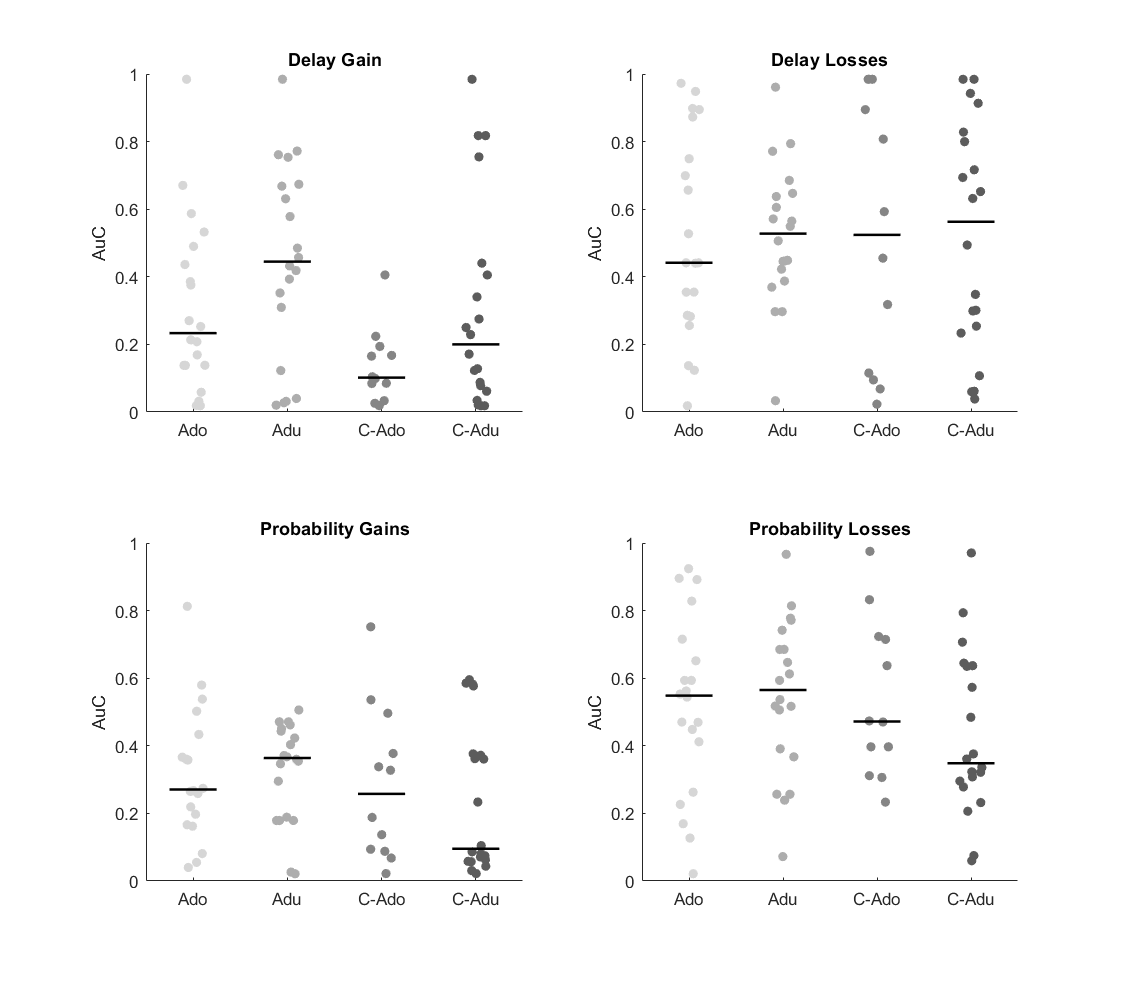
Figure 1
Distribution and the median of the normalized AuC in the different discounting tasks for each group. Each point represents a participant, while the lines represent the median of the scores for each group.
In the inhibition test, it was observed significant differences among the four groups (X2 = 19.11, df = 3,p < .001). Planned comparisons revealed that non-user adolescents had a higher score than meth-user adults (z = 2.93, p = 023), others planned comparisons had ps > .10. Regarding the shifting test, non-user adults (Mdn = 19), and meth-user adults (Mdn = 19.5) tended to score higher than non-users (Mdn = 11), and meth-users adolescents (Mdn = 14.5). Nevertheless, no significant differences were found among the groups (X2= 7.2, df = 3, p = .066). Finally updating, non-users (Mdn = 11), and meth-user adults (Mdn = 9) tended to score higher than non-users (Mdn = 8), and meth-users adolescents (Mdn = 6.5). It was found significant differences among the groups (X2= 7.8, df = 3, p = .050). Planned comparisons showed differences between meth-users adults and meth-users adolescents (z = -3.05, p = .017), others planned comparisons had ps > .20 (See Figure 2).
The decisions tree showed that the factors that best classify the participants was inhibition, updating and probability gain task (See Figure 3).
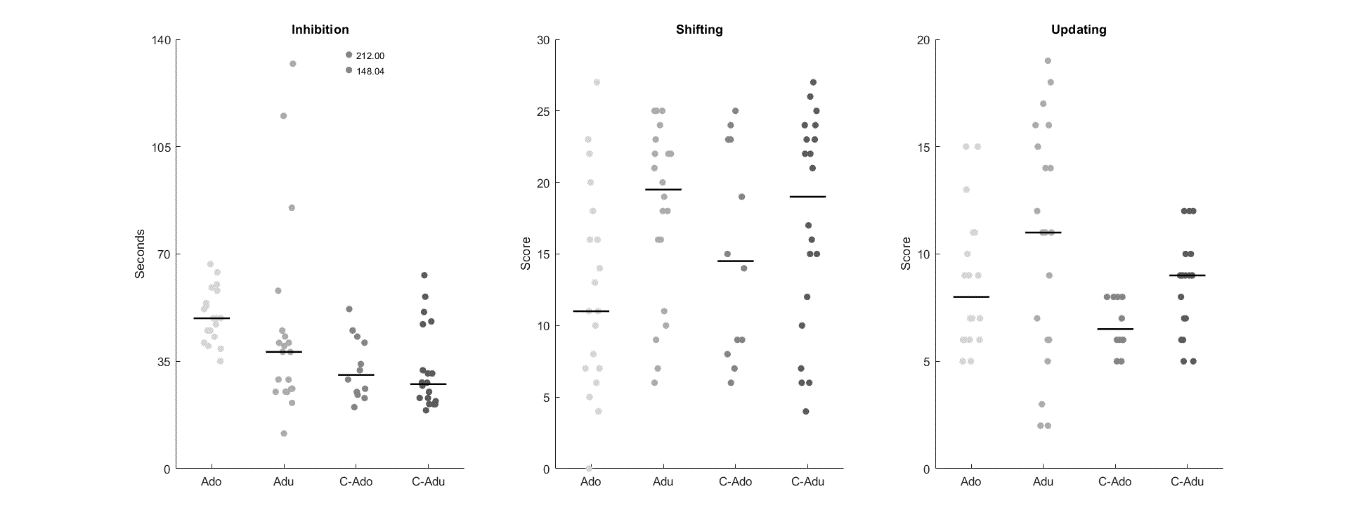
Figure 2
Distribution of the sample in the variables Inhibition, Shifting, Updating. Each point represents a participant, while the lines represent the median of the scores for each group.
The results showed that scores ≥ 34.6 in inhibition and AuC ≥ .08 suggested that the participants belonged to non-user adolescents (IG = .36, IG = .26). The scores < 34.6 in inhibition and updating ≥ 13 suggested that the participants belonged to the non-user adults (IG = 0). Finally, scores < 34 in inhibition and updating < 13 suggested that the participants belonged to the meth-user adults (IG = .23). Given the number of splits, the decision tree was not able to predict the meth-user adolescents. A more complex model could predict meth-user adolescents, but it would be less intelligible.
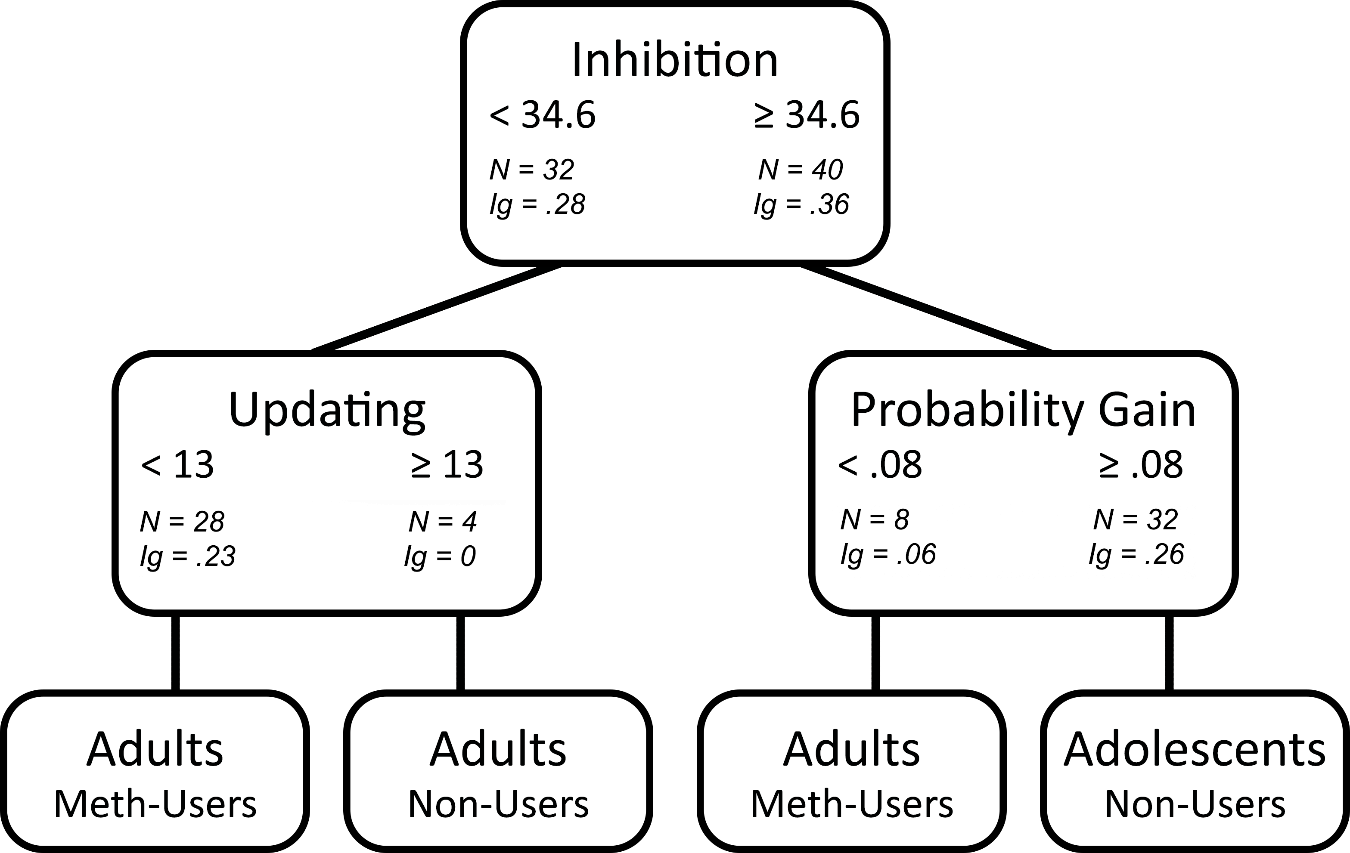
Figure 3
Decision tree using executive functions and AuC in delay discounting tasks.
In order to evaluate the factors that predict better the adolescent groups, a decision tree showed that scores ≥ 34.5 in inhibition predict non-user adolescents (IG = .20) and scores < 34.5 in inhibition predicted meth-users adolescent (IG = 0; See Figure 4).
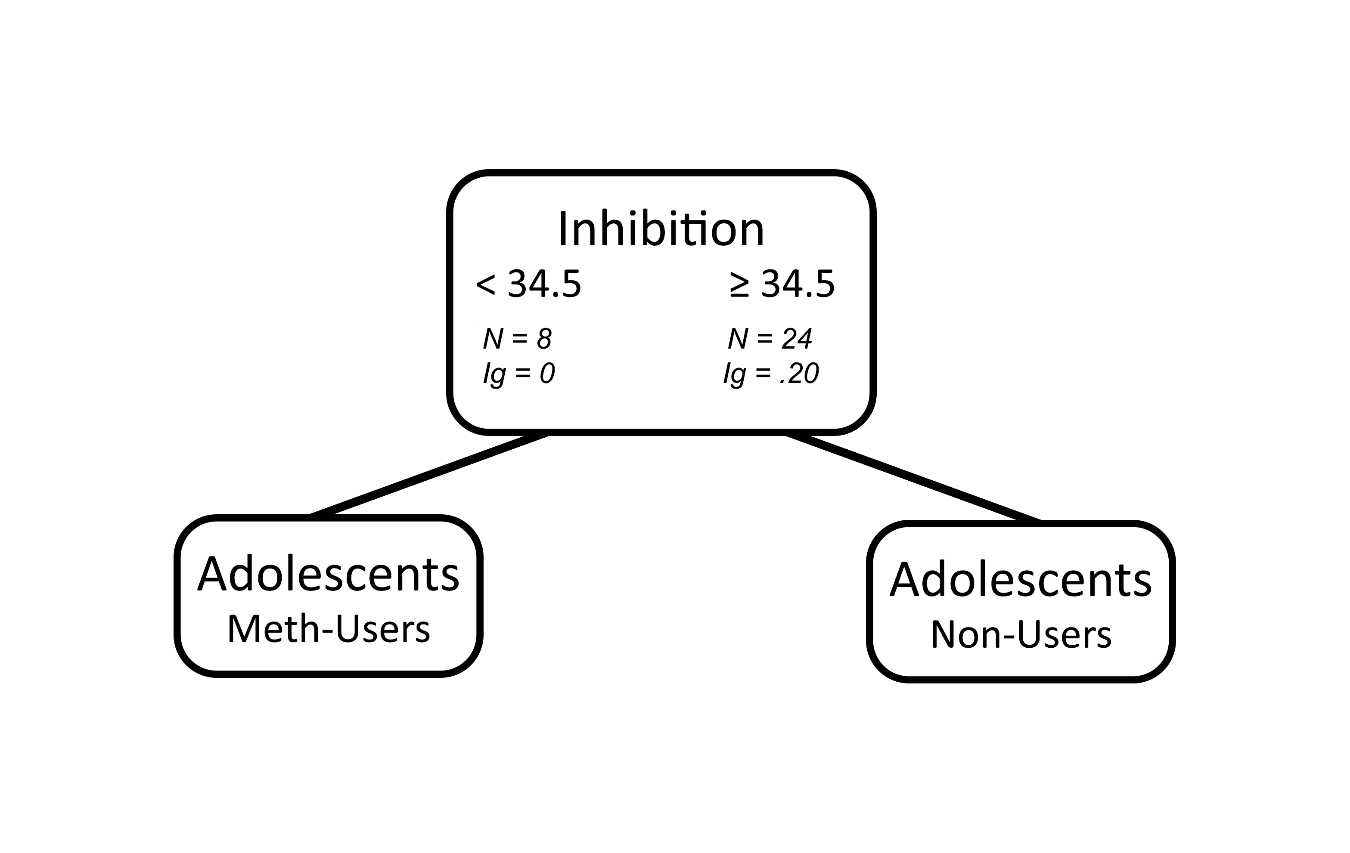
Figure 4.
Decision tree using the scores in executive functions and AuC in delay discounting tasks of adolescents.
Regarding the factors that predicted non-users and meth-user adults, the results showed that scores < 13 in updating and AuC < .14 suggested that the participants belonged to the meth-user adults (IG = .04), while scores ≥ 13 in updating and AuC ≥ .14 suggested that the participants belonged to the non-user adults (IG = .24) (See Figure 5).
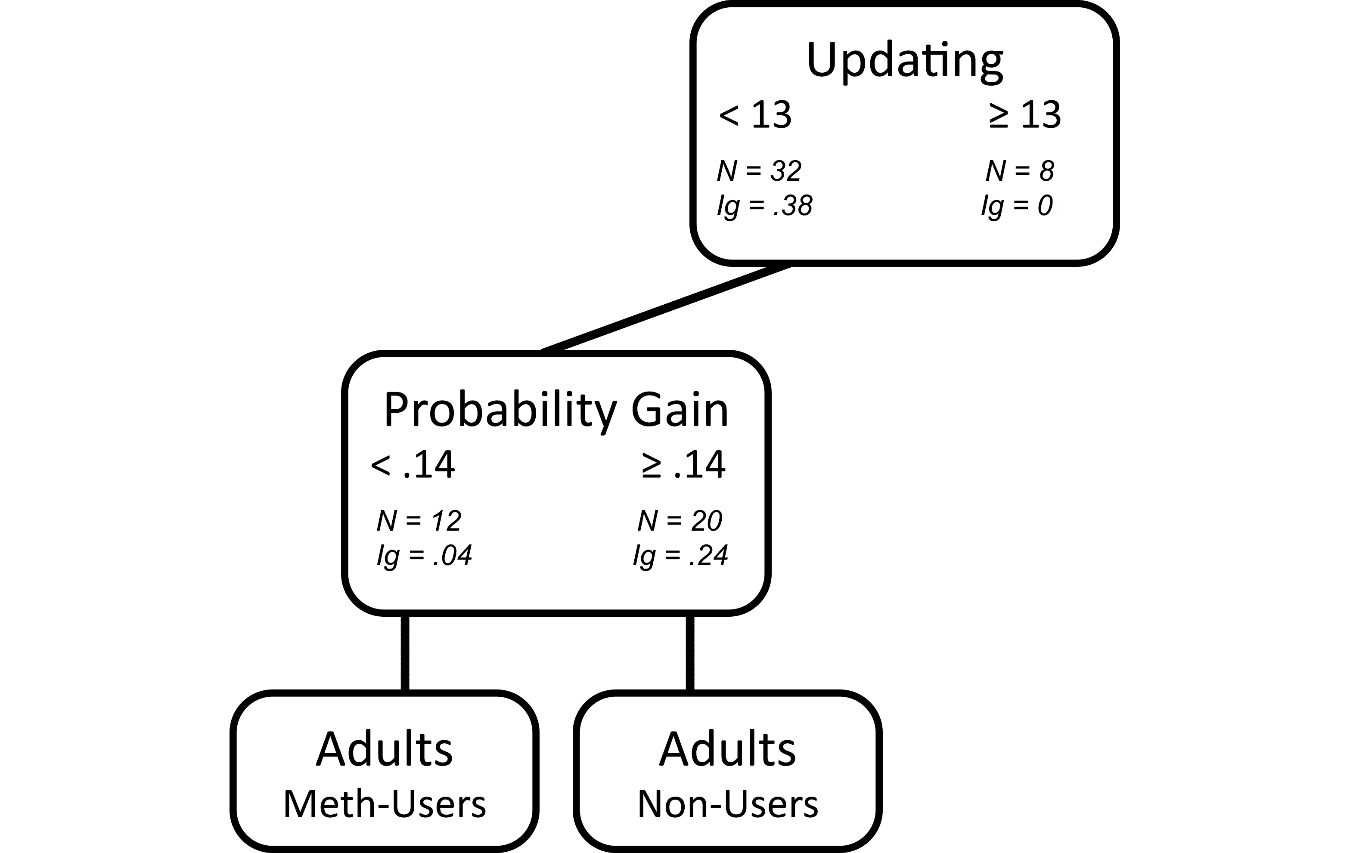
Figure 5
Decision tree using the scores in executive functions and AuC in delay discounting tasks of adults.
Discussion
The current work compared meth-users and non-users (adolescents and adults) with several behavioral tasks. It was hypothesized that meth-users had lower score than non-users in all the behavioral tasks. In addition, it was suggested that the adolescents tended to have lower score in general, due the developmental process.
In the discounting paradigm, it was used four types of hypothetical delayed and probabilistic outcomes (gains and losses). In regards to delayed gain outcome, the meth-user adolescents discounted steeper than the non-user adults. We did not expect few differences among the groups, considering the well-established evidence where drug users had steeper delay discounting of gains (Bickel et al., 2011; Gowin et al., 2018; MacKillop et al., 2011). No group differences were observed in regards to the delay discounting of losses. In this point we expected to find some pattern in the groups to understand decision making process of losses. The delay discounting of losses has been identified as a different process in contrast with delayed gains and probabilistic gains, and no difference between drug users and controls (Myerson, Green, van den Berk-Clark, & Grucza, 2015) such as the current study. We confirmed the importance to make a qualitative analysis such as previous studies (Myerson, Baumann, & Green, 2017).
In the probability discounting of gains and losses, this finding correlates with previous studies, where probability discounting seems not to be related with substance users and abusers (Johnson, M., Johnson, Hermann, & Sweeney, 2015). Nevertheless, probabilistic gain task was a good predictor to identify meth-user adults, which could imply the assumption of the complexity of a probabilistic task where some basic process such as executive tasks, need to be functioning to escalate a more complex task (Stuss & Levine, 2002). With the probabilistic gain task, it is possible to reduce the incertitude to identify non-users adolescents in the first decision tree with all the sample. In the decision tree only with adolescent groups, the inhibition task provides more information while in the decision tree with adult groups probability of gains reduce the incertitude to identify non-users. This analysis could imply that the skills to interact in complex task are the most affected with meth-use.
Several manipulations in the discounting tasks give evidence of the complexity of the decision-making process. The delay discounting of gains could contribute to understand one part of the process. Nevertheless, in future research, we consider important to evaluate the quantity of alcohol and tobacco use in the non-use groups. Several studies have shown the effect of legal drugs on discounting rates (Gowin et al., 2018; MacKillop et al., 2011). In this point, we suggest to evaluate comorbidity disorders with substance use disorders, some studies have revealed that the comorbidity in substance use disorders raises the discounting rates (Moody, Franck, & Bickel,2016; Olson et al., 2007; Tian et al., 2018).
We were interested in understand the effects of meth-use and development on executive and making decisions tasks. In the current study the inhibition task showed differences in the performance of non-users adolescents and meth-users adults. The decision trees confirmed that the inhibition process is the key to identify and reduce incertitude in non-users adolescents. The updating task was another important predictor in the decision tree to identify non-users adults. In contrast, the shifting tasks seems not to predict and be affected by meth-use.
We measured the meth-use with the DAST test, we recommend in future studies to increase the sample to contrast DAST score on cognitive tasks, due the fact that mild, moderate and severe dependence could affect the cognitive performance.
Considering in our interest to work with meth-user adolescents, we expected significant differences in the demographic variables such as age, education, and income. Nevertheless, we recommend in future studies increase the sample size, evaluate female population, and use Propensity Score Matching to match more appropriately the meth-use and non-use groups.
Finally, our general conclusion is the executive functions Inhibition and Updating could help understand cognitive issues due to drug usage in a developing brain. Taken together, and the discounting tasks are complex cognitive tasks. We conclude that the current study gives evidence of the complexity of the decision-making process. Nevertheless, we need further systematic research in community and clinical populations with high levels of comorbidity to develop new theories about patterns of adaptive and non-adaptive behavior such as meth-use.
References
American Psychiatric Association (2013). Diagnostic and statistical manual of mental disorders (DSM-5). Washington: American Psychiatric Association.
Aranovich, G. J., McClure, S. M., Fryer, S., & Mathalon, D. H. (2016). The effect of cognitive challenge on delay discounting. Neuroimagen, 124(Part A), 733-739. doi: 10.1016/j.neuroimage.2015.09.027
Bickel, W. K., Jarmolowicz, D. P., Mueller, E. T., & Gatchalian, K., M. (2011). The behavioral economics and neuroeconomics of reinforce pathologies: Implications for etiology and treatment of addiction. Current Psychiatric Reports, 13(5), 406-415. doi: 10.1007/s11920-011-0215-1
Bickel, W. K., Miller, M. L., Richard, Y., Kowal, B. P., Lindquist, D. M., & Pitcock, J. A. (2007). Behavioral and Neuroeconomics of Drug Addiction: Competing Neural Systems and Temporal Discounting Processes. Drug Alcohol Dependence, 90(1), s85-s91. doi: 10.1016/j.drugalcdep.2006.09.016
Casey, B. J., Getz, S., & Galvan, A. (2008). The adolescent brain. Developmental Review, 28(1), 62-77. doi: 10.1016/j.dr.2007.08.003
Cruz Fuentes, C. S., López Bello, L., Blas García, C., González Macías, L., & Chávez Balderas, R. A. (2005). Datos sobre la validez y confiabilidad de la Symptom Check List 90 (SCL 90) en una muestra de sujetos mexicanos. Salud Mental, 28(1), 72-81.
Droutman, V., Xue, F., Barkley, E., Yeung, H., Bechara, Smith, B., …Read, S. (2019). Neurocognitive decision-making processes of casual methamphetamine users. NeuroImagie: Clinical, 21, 101643. doi: 10.1016/j.nicl.2018.101643
Du, W., Green, L., & Myerson, J. (2002). Cross-cultural comparisons of discounting delayed and probabilistic rewards. Psychological Record, 52(4), 479-492. doi: 10.1007/BF03395199
Garami, J., & Moustafa, A. A. (2019). Probability discounting of monetary gains and losses in opioid-dependent. Brain Research Bulletin, 364, 334-339. doi: 10.1016/j.bbr.2019.02.017
Giedd, J. N. (2015). Adolescent neuroscience of addiction: A new era. Developmental Cognitive Neuroscience, 16, 192-193. doi: 10.1016/j.dcn.2015.11.002
Gowin, J. L, Sloan, M. E., Ramchandani, V. A., Paulus, M. P., & Lane, S. D. (2018). Differences in decision – making as a function of drug of choice. Pharmacology, Biochemistry and Behavior, 164, 118–124. doi: 10.1016/j.pbb.2017.09.007
Hart, C. L., Marvin, C. B., Silver, R., & Smith, E. E. (2012). Is cognitive functioning impaired in methamphetamine users? A critical review. Neuropsychopharmacology, 37(3), 586-608. doi: 10.1038/npp.2011.276
Hester, R., Lubman, D. I., & Yücel, M. (2009). The Role of Executive Control in Human Drug Addiction. En Self, D., & Staley Gottschalk, J. (Eds.), Behavioral Neuroscience of Drug Addiction (pp. 301-318). Springer, Berlin, Heidelberg. doi: 10.1007/7854_2009_28
Imhoff, S., Harris, M., Weiser, J., & Reynolds, B. (2014). Delay discounting by depressed and non-depressed adolescent smokers and non-smokers. Drug and Alcohol Dependence, 135, 152-155. doi: 10.1016/j.drugalcdep.2013.11.014
Johnson, M. W., Johnson, P. S., Hermann, E. S., & Sweeney, M. M. (2015). Delay and probability discounting of sexual and monetary outcomes in individuals with cocaine use disorders and matched controls. PLoS ONE, 10(5), e0128641. doi: 10.1371/journal.pone.0128641
Kim-Spoon, J., McCullough, M. E., Bickel, W. K., Farley, J. P., & Longo, G. S. (2015). Longitudinal associations among religiousness, delay discounting, and substance use initiation in early adolescence. Journal of Research on Adolescence, 25(1), 36-43. doi: 10.1111/jora.12104
Kluwe-Schiavon, B., Wendt Viola, T. W., Sanvicente-Vieira, B., Pezzi, J. C., & Grassi-Oliveira, R. (2016). Similarities between adult female crack cocaine users and adolescents in risky decision-making scenarios. Journal of Clinical and Experimental Neuropsychology, 38(7), 795-810. doi: 10.1080/13803395.2016.1167171
Mackillop, J., Amlung, M. T., Few, L. R., Ray, L. A., Sweet, L. H., & Munafó, M. R. (2011). Delay reward discounting and addictive behavior: a meta-analysis. Psychopharmacology, 216(3), 305-321. doi: 10.1007/s00213-011-2229-0
Malesza, D., & Ostaszewski, P. (2016). Dark side of impulsivity – Associations between the dark triad, self-report and behavioral measures of impulsivity. Personality and Individual Differences, 88, 197-201. doi: 10.1016/j.paid.2015.09.016
Moody, L., Franck, C., & Bickel, W. K. (2016). Comorbid depression, antisocial personality, and substance dependence: Relationship with delay discounting. Drug and Alcohol Dependence, 160, 190-196. doi: 10.1016/j.drugalcdep.2016.01.009
Myerson, J., Baumann, A. A., & Green, L. (2017). Individual Differences in Delay Discounting: Differences are Quantitative with Gains, but Qualitative with Losses. Journal of Behavioral Decision Making, 30(2), 359-372. doi: 10.1002/bdm.1947
Myerson, J., Green, L., van den Berk-Clark, C., & Grucza, R. (2015). Male, But Not Female, Alcohol-Dependent African Americans Discount Delayed Gains More Steeply than Propensity Score Matched Controls. Psychopharmacology, 232(24), 4493-4503. doi: 10.1007/s00213-015-4076-x
Myerson, J., Green, L., & Warusawitharana, M. (2001). Area under the curve as a measure of discounting. Journal of the Experimental Analysis of Behavior, 76(2), 235-243. doi: 10.1901/jeab.2001.76-235
Olson, E. A., Hooper, C. J., Collins, P., & Luciana, M. L. (2007). Adolescent´s performance on delay and probability discounting tasks: Contributions of age, intelligence, executive functioning, and self-reported externalizing behavior. Personality and Individual Differences, 43(7), 1886-1897. doi: 10.1016/j.paid.2007.06.016
Peeters, M., Janssen, T., Monshouwer, K., Boendermaker, W., Pronk, T., Wiers, R., & Vollebergh, W. (2015). Weaknesses in executive functioning predict the initiating of adolescent´s alcohol use. Developmental Cognitive Neuroscience, 16, 139-146. doi: 10.1016/j.dcn.2015.04.003
Pope, D. A., Boomhower, S. R., Hutsell, B. A., Teixeira, K. M., & Newland, M. C. (2016). Chronic cocaine exposure in adolescence: Effects on spatial discrimination reversal, delay discounting, and performance on fixed-ratio schedules in mice. Neurobiology of Learning and Memory, 130, 93-104. doi: 10.1016/j.nlm.2016.01.017
Reynolds, B., & Fields, S. (2012). Delay discounting by adolescents experimenting with cigarette smoking. Addiction, 107(2), 417-424. doi: 10.1111/j.1360-0443.2011.03644.x
Sheffer, C., Mackillop, J., McGeary, J., Landes, R., Carter, L., Yi, R., Jones, B., ...Bickel, W. (2012). Delay discounting, locus of control and cognitive impulsiveness independently predict tobacco dependence treatment outcomes in a highly dependent, lower socioeconomic group of smokers. The American Journal on Addictions, 21(3), 221-232. doi: 10.1111/j.1521-0391.2012.00224.x
Sedó, M. (2005). Test de los cinco dígitos: Five digit test. Madrid: TEA Ediciones.
Seisdedos Cubero, N. (1994). Test de Flexibilidad Cognitiva (Cambios). Madrid: TEA Ediciones.
Sheehan, D., Lecrubier, Y., & Sheehan, K. (1998). The Mini-International Neuropsychiatric Interview (MINI): The development and validation of a structured diagnostic psychiatric interview for DSM-IV and ICD-10. The Journal of Clinical Psychiatry, 59(Supplement 20), 22-33.
Stanger, C., Ryan, S. R., Fu, H., Landes, R. D., Jones, B. A., Bickel, W. K., & Budney, A. J. (2012). Delay discounting predicts adolescent substance abuse treatment outcome. Experimental and Clinical psychopharmacology, 20(3), 205-212. doi: 10.1037/a0026543
Stuss, D. T., & Levine, B. (2002). Adult Clinical Neuropsychology: Lessons from studies of the frontal lobes. Annual Review of Psychology, 53(1), 401-433. doi: 10.1146/annurev.psych.53.100901.135220
Tian, M., Tao, R., Zheng, Y., Zhang, H., Yang, G., Li, Q., & Liu, X. (2018). Internet gaming disorder in adolescents is linked to delay discounting but not probability discounting. Computers in Human Behavior, 80, 59-66. doi: 10.1016/j.chb.2017.10.018
Verdejo-García, A., & Bechara, A. (2010). Neuropsicología de las funciones ejecutivas. Psicothema, 22(2), 227-235.
Villalobos-Gallegos, L., Pérez-López, A., Mendoza-Hassey, R., Graue-Moreno, J., & Marín-Navarrete, R. (2015). Psychometric and diagnostic properties of the Drug Abuse Screening Test (DAST): Comparing the DAST-20 vs. the DAST-10. Salud Mental, 38(2), 89–94. doi: 10.17711/SM.0185-3325.2015.012
Zhou, Y., Ortiz, F., Nuñez, C., Elashoff, D., Woo, E., Apostolova, L., ...Ringman, J. M. (2015). Use of the MoCA in Detecting Early Alzheimer’s Disease in a Spanish Speaking Population with Varied Levels of Education. Dement Geriatric Cognitive Disorders Extra, 5(1), 85-95. doi: 10.1159/000365506
Notas de autor
Enviar correspondencia a: Mejía-Cruz D. E-mail: diana.mejia@itson.edu.mx
Información adicional
Citar este artículo como: Mejía-Cruz, D., Hernández, L., & Ávila-Chauvet, L. (2022). Discounting and Executive functions as indicators of methamphetamine use in adolescents and adults. Revista Argentina de Ciencias del Comportamiento, 14(3), 139-147.
Enlace alternativo
https://revistas.unc.edu.ar/index.php/racc/article/view/32190/40205 (pdf)