Comunicaciones
Recepción: 06 Junio 2018
Corregido: 13 Marzo 2020
Aprobación: 16 Marzo 2020
Abstract: Business Cooperation Networks (BCNs) can be alternatives when it comes to the elimination of unused medication. Considering this and the fact that drugstores are required to treat and dispose of their waste in specific ways, what would be the influence of the BCNs on the sustainable forms of discarding unused medication? The aim of this work is to identify whether drugstores organized in BCNs are influenced by the network to adopt sustainability practices. The study used descriptive field research of a quantitative nature, applying simple descriptive statistics and the Spearman rank correlation coefficient. Results showed that the BCN has a significant influence on its members. Aspects that are important for the network, such as the dissemination of sustainability practices among the network members, sustainability rules, network management, network services, trust in network management, and satisfaction with participating in the network, correlate with the implementation of sustainability practices by members of the network. A significant influence of the BCN on the members is corroborated, proving that the practices and beliefs of a BCN can change the direction of members’ practices, without the need of printed rules on the subject. In addition, the results of this study highlight that the business members of the network are not actively engaged.
Keywords: Business Cooperation Networks, Environmental Sustainability, Medication Disposal, Micro, Small and Medium Enterprises.
Resumo: Redes de Cooperação Empresarial (RCEs) podem ser alternativas na eliminação dos medicamentos não utilizados. Nas farmácias, os resíduos são submetidos a tratamento e disposição final específica. Qual seria a influência destas redes na ação sustentável de descarte dos medicamentos não utilizados? O objetivo deste trabalho é identificar se as RCEs de farmácias influenciam seus associados à prática de ações sustentáveis. O método adotado foi uma pesquisa de campo descritiva de caráter quantitativo. Foi aplicada estatística descritiva simples e o coeficiente de correlação de postos de Spearman para o alcance dos resultados. Os resultados demonstraram que a RCE tem significativa influência perante o associado. Os aspectos relacionados pela rede como, a propagação de práticas sustentáveis pela rede, regras sustentáveis da rede, gestão da rede, serviços da rede, confiança na gestão da rede e a satisfação em participar da rede, correlacionam com a realização de práticas sustentáveis dos associados. Corrobora-se uma influência significativa da RCE perante o associado, certificando que as práticas e crenças de uma RCE, podem mudar a direção de práticas do seu associado, sem a necessidade de imprimir regras sobre o assunto. Além disso, os resultados deste estudo destacam que as empresas associadas não estão ativamente empenhadas.
Resumen: Las redes de cooperación empresarial (RCE) pueden ser alternativas en la eliminación de los medicamentos no utilizados. En las farmacias, los residuos son sometidos a tratamiento y disposición final específica. ¿Cuál sería la influencia de estas redes en la acción sostenible de descarte de los medicamentos no utilizados? El objetivo de este trabajo es identificar si las RCE de farmacias influyen en sus asociados a la práctica de acciones sostenibles. El método adoptado fue una investigación de campo descriptiva de carácter cuantitativo. Se aplicó una estadística descriptiva simple y el coeficiente de correlación de Spearman. Los resultados mostraron que la RCE tiene una influencia significativa en los miembros de la red. Los aspectos relacionados con ésta, tales como la propagación de prácticas sostenibles a través de ella, las normas sostenibles de la red, la gestión de la red, los servicios de red, la confianza en la gestión de la red y la satisfacción de participar en ella, se correlacionan con la realización de prácticas sostenibles de los asociados. Se corrobora una influencia significativa de la RCE ante el miembro, certificando que las prácticas y creencias de una RCE pueden cambiar la dirección de prácticas de su asociado, sin la necesidad de imprimir reglas al respecto. Además, los resultados del estudio destacan que las empresas asociadas no están activamente comprometidas.
Introduction
The implementation of proactive strategies for sustainability, ideally, has the potential to reduce environmental and liability costs and, at the same time, to increase product efficiency and marketing. Micro, small and medium enterprises (MSME) are skeptical about the possibility of evaluating their environmental sustainability, since they cannot distinguish the benefits out of it (Cowan et al., 2010). In the European Union (EU) MSMEs are responsible for up to 2/3 of the jobs in the private sector, which shows their importance in work towards sustainability (Angelakoglou and Gaidajis, 2015). One way to improve access to processes towards sustainability practices in MSMEs is to count on the support of Business Cooperation Networks (BCNs).
BCNs are groups where members work together taking advantage of each other’s resources and favor one another, without the need to formally or informally establish financial ties. In these relationships, mutual support will affect the production, distribution, marketing, research and development of the businesses (Souza et al., 2015).
BCN proposes to its MSMEs members the adoption of sustainability practices, the benefits of which they could not access if pursuing alone. The network demands members’ management, as well as governance in order to lead and care for BCN’s shared beliefs and values (Jacometti et al., 2014). The governance leadership is crucial to build trust in cooperation (Jiang et al., 2008;Alves et al., 2013;Casanueva et al., 2013;Giglio and Gamba, 2015).
This article analyzes the influence of BCNs on the sustainability practices of discarding unused or expired medication. The study addressed the BCNs role in advising members on the medication lifecycle and the importance of appropriate disposal.
Given the importance of the topic, this article focus on BCNs as an alternative to manage the disposal of waste in specific businesses, and seeks to answer the following research question: what is the influence of these BCNs in the sustainability practice of discarding unused medication?
A theoretical review was carried out to guide the choice of the topics to be evaluated, to understand the practices of the BCNs regarding waste management, the adequate disposal of unused and expired medication, and the impact of this practice on the environment. In this perspective, the objective is to establish the basic information about how BCNs can influence their members to carry out sustainability practices regarding the correct disposal of medication, raising awareness among their consumers, considering the need for adequate storage and discarding practices.
Disposal of medication
“Medication is a pharmaceutical product for prophylactic, curative, palliative or diagnostic purposes, and is made available to consumers in drugstores” (Medeiros et al., 2014). Inappropriate disposal of unused or expired medication may harm the environment and public health.
The Brazilian Standard NBR 10.004 (ABNT, 2004) classifies waste from unused or expired medication in Class I - hazardous, with potential risks to the environment and public health. The Resolution from the National Sanitary Surveillance Agency (ANVISA RDC) n° X and the Resolution from the National Environmental Council (CONAMA) n° 358, consider unused and expired medication as waste of the health services (Aurélio et al., 2015).
In Brazil, different from other countries, there is a lack of information and population’s awareness regarding the correct way to discard medication (Oliveira, 2015; Queiroz, 2014). The success of programs to collect unused and expired medication was observed when there was participation both of industry and the state (Queiroz, 2014). Inadequate disposal may lead to future contamination of receiving water bodies and to improper use by collectors, who are incautiously exposed (Oliveira, 2015).
Incineration is the safe and environmentally correct method to discard waste of this nature, adopting sophisticated and safe systems with frequent monitoring and analysis of gaseous and liquid effluents of the process. It is important to observe that the Brazilian National Solid Waste Policy states that the manufacturers are responsible for the post-consumption environmental impact of their products, and so the reverse flow of materials needs to be included in the logistic planning: storage, collection, transportation, final destination, and the waste then goes back to the manufacturer completing the logistic cycle (Medeiros et al., 2014;Queiroz, 2014).
Queiroz (2014) includes a list of medications whose waste can be managed by drugstores: waste containing heavy metals, expired and/or unused medication, waste that can cause cancer or other diseases, vaccines, needles, syringes, broken glass and blades.
The standardization, inspection, training of personnel and the structure for the training on how to handle this type of waste are obstacles found to perform this managerial task in Brazil. In addition, there are the obstacles of the high cost of waste treatment processes and the lack of coordination and structure of different regulatory agencies (Aurélio et al., 2015). Authors such as Medeiros et al. (2014), Aurélio et al. (2015) and Aurélio and Henkes (2015) include the following guidelines for waste management programs related to medication: community raising awareness campaigns, inter-sectorial initiatives involving different levels of government, research on and classification of the waste generated, implementation of pilot programs, strategies to minimize waste production, and attributing co-responsibility in the medication production and distribution.
Environmental Sustainability in MSMEs
Sustainability can be defined as meeting the direct needs of a company and indirect interested parties, without compromising its ability to meet the future needs of stakeholders. Business sustainability is seen as a market opportunity that provides a viable path for businesses in order to differentiate their offerings and achieve a competitive advantage while adapting their practices to societal norms. Sustainability opens the door to new markets and brings in customers. Experts argue that conscious and ecologically friendly strategies contribute for businesses to achieve superior financial performance (Tang et al., 2016).
For Repar et al. (2016), environmental sustainability can be defined as a condition of equilibrium, resilience and interconnection, which allows human society to satisfy its needs (being them inferior to the capacity of the ecosystems) with the ultimate goal of permanent maintenance of life support systems.
MSMEs represent 98% of formal enterprises in Brazil, with 67% of the job positions, 28% of gross revenue in the formal sector and 20% of the Gross Domestic Product (GDP). They operate in commerce (56%), services (30%) and industry (14%). The classification as MSMEs refers to organizations with up to 49 workers in commerce and services, and up to 99 workers in industry (SEBRAE, 2012).
Studies have identified three main barriers for the adoption of environmental practices by MSMEs. The first is their own perception as businesses that have little individual impact on the environment. The second barrier is the lack of knowledge and understanding of strategies to address environmental issues. Finally, cost is taken into account as a major barrier to more proactive environmental behavior, with managers perceiving little financial benefit. This suggests that MSMEs may need a different approach to encourage the adoption of sustainability practices (Collins et al., 2007).
This study suggests a different approach, including the MSMEs in a horizontal network of companies, which, in turn, can promote strategic thinking about the issue of sustainability.
Attributes of Business Cooperation Networks
BCNs are seen as an alternative organizational mechanism for markets and businesses (Jacometti et al., 2014). They are characterized by their relational qualities, such as the reciprocal exchange of information, replacing the more conventional governance mechanisms of prices and routines/policies (Zancan et al., 2013). An important consideration of networks is the reduction of transaction costs due to reputational effects that tend to reduce opportunistic behavior through mutual knowledge and fairness norms (Alves et al., 2013; Xavier Filho et al., 2013). The network structure coordinates the information exchange among members, reduces the need for formal controls, and builds trust for innovative collaboration (Zancan et al., 2013;Rodrigues, 2014).
Thus, a network has the ability to coordinate activities among members, increasing their educational and informative agility, at the same time reducing individual transaction costs (Rodrigues, 2014). Networks and alliances influence the application of environmental legislation and sustainability practices by MSMEs around the world.
Networks with the role of supporting their members can be defined as a group of organizations or individuals that are able to offer assistance, advice or other forms of support for a specific problem or issue (Silva and Neves, 2013). Some researchers suggest that networks, including trade associations, environmental agencies, local governments and workers’ organizations, may be able to help overcome the specific barriers faced by the MSMEs, providing opportunities for the adoption of sustainability practices (Collins et al., 2007).
The present study builds on the analysis by Carvalho et al. (2018) and contributes to clarifying the concept of environmental complexity among network partners. This complexity lies in how organizations deal with conflicting demands regarding the variety of goals and interests in the business context, which may take them to follow different paths to address environmental issues. This scenario portrays the challenge of creating and maintaining interorganizational relationships in the face of internal and external conflicting and competing demands.
According to Pereira et al. (2018), cooperation between companies or independent entrepreneurs in the same industry expands their business since they gain strength and share solutions. This study contributes to understanding the possibility of partners of the ‘Rede 2000’ network to share solutions for their environmental issues. Cooperation contributes to the emergence and change of new businesses through partnerships formed to collectively achieve a common goal (Donato et al., 2015). For Cruz (2017), research on business and organizations is significantly interested in the study of business histories and biographies of entrepreneurs. However, few studies focus on the management and organization of such businesses, expanding the theoretical framework. This study is one of them, offering a theoretical contribution by adopting a view of the phenomenon from beginning to end.
Methodology
Data were collected first with the administration of the network and then with randomly selected network members, over one month, using qualitative and quantitative descriptive field research. The descriptive research seeks to simply quantify the answers in one or more variables, representing a descriptive and comparative study that correlates the research results (Onwuegbuzie and Leech, 2006). The qualitative part of the study is obtained through a semi-structured questionnaire.
The descriptive research focuses on collecting information about the conditions or situations for the purpose of description and interpretation. This type of research method includes analysis, interpretation, comparison, identification of trends and relationships. It provides useful information to address local issues (problems). The research can be qualitative or quantitative in the verbal or mathematical form of expression. The research uses applications of the scientific method, analyzing and examining the answers, through critical analysis and interpretation of data (Salaria, 2012).
Considering this, the study analyzes the BCN as a driver for the adoption of sustainability practices among its members, and the descriptive research was chosen as the most appropriate method to carry out this analysis.
Field observation and questionnaire application
The study was carried out through a partnership with the drugstore chain ‘Rede 2000’, established in 1996, whose administration is located in Goiânia (GO), Brazil. The network had 136 members in the past and nowadays counts 59. The decrease in the number of members, according to the network’s manager, is part of the strategy. Members are located mostly in Goiânia, the capital of the state of Goiás, and in neighboring cities, with few members in other municipalities of the state. Thus, it is characterized as a regional network, in which all its associates are located in the same state.
The ‘Rede 2000’ was chosen for this study because it is already object of research in other works carried out by the researchers, where it was observed the concern of this network regarding environmental sustainability when it comes to discarding medication. The network has a program called ‘Descarte Legal’ (legal disposal), which provides technical support and conditions for adequate final destination of unused and expired medication in households, adopting educational policy of conscious waste disposal. The aim is to collect these products in the 59 members around the state and promote the reverse logistics of the drugstore chain.
Members receive the unused medication and send them, duly registered for incineration, to the Associação das Drogarias e Farmácias do Estado de Goiás (ADFGO; Association of Drugstores and Pharmacies of the State of Goiás).
A total of 42 questionnaires were applied to the members, taking an average of 10min for each member. The application of the questionnaires and the data treatment were carried out in a fortnight. The research focused on the drugstores in Goiânia and neighbor cities.
The questionnaire was reviewed and widely disseminated to academics, government and business representatives prior to completion. It followed the observations and questions based on the instrument applied by Wegner et al. (2016) in their research, where they observed, in a set of BCNs, aspects such as governance, management, information exchange, processes and services of the network for its members. In addition, non-parametric statistical techniques were used to obtain the results.
The research instrument was sent to the BCN’s manager. All members fit the criteria of SEBRAE (2012) to be classified as small and medium enterprises.
The questionnaire was kept in a format that was short (one page double-sided) and easy to complete (mostly using check boxes). Questions and language were kept deliberately simple, with no definitions provided. The use of jargon was minimized.
Two limitations stand out and are worth mentioning: first, the research was an instrument of self-evaluation, that is, the respondent was responding based on their perceptions, without external oversight. Second, to keep the questionnaire simple, definitions were not provided, which could lead to different interpretations of concepts.
Type of network
Based on Wasserman and Faust (1994), Rede 2000 shows the type of cooperation characteristic of a star network, where one member occupies a position of advantage in comparison to the others. In this network type, the central member has more possibilities to obtain information or resources than other actors in less central positions. Therefore, the greater the actor’s degree of centrality, the higher their capacity to gather information and the greater the power within the network.
The study of cohesion is among the various measures to soften the centrality of the network. Cohesion is based on the weighting of the internal distances of the network, based on the effective number of links necessary for two actors (network nodes) to connect. When there are long distances in a network, cohesion is weak, and most actors are isolated (Wasserman and Faust, 1994). Cohesion allows observing the intensity of relationships (Rowley et al., 2000). Other important measures are:
a) Density: is the quotient of existing relationships and the total probable relationships among actors (Borgatti et al., 2005). It is a potential index of communication between the actors of the network (Gnyawali and Madhavan, 2001).
b) Centrality: is the number of actors who are directly linked to an individual actor. The centrality shows the importance of the nodes in the network, i.e., important actors are more central to the network (Wasserman and Fast, 1994). A central position guarantees a greater possibility of intermediating communications, satisfying interests, and taking advantage of the network’s resources (Marteleto and Silva, 2005).
c) Centralization: is a condition in which an actor performs a central function, as they are connected to all nodes, and all actors need to pass through the central node in order to connect with each other. This index verifies the degree of centralization of an actor (Borgatti et al., 2005).
d) Intermediation: is an actor’s possibility to mediate communications between pairs of actors, and the importance of the actor is related to its level of intermediation (Cross et al., 2002), because it expresses control of communication between the actors (Borgatti et al., 2005).
e) Geodesic distance: demonstrates how an actor’s intermediation is obtained. It indicates the times that an actor appears on the path of others. It is the shortest path that an actor must follow to connect with other actors, linking all pairs of actors in the network, called bridge-actors (Borgatti et al., 2005).
f) Proximity: represents the actor’s ability to connect to all other actors in a network, calculated by counting all the geodesic distances of one actor to connect with all the others (Borgatti et al., 2005).
Network analysis has received significant attention from scholars in the field of organizations. In this approach, the social environment can be expressed as structures or regular relationships among units (Wasserman and Faust, 1994;Scott, 2000;Mizruch, 2006; Kilduff and Tsai, 2007).
The network researched, Rede 2000, is considered a star network, and presents a moderated centrality and density. The analysis requires observing these two types of measures:
Centrality measures. Actors with more connections are more central to the network. Some of the questions regarding these measures are:
-- Does the greater degree of centrality of the actor in the network reflect the acquisition of resources and privileged information?
-- Can the intermediation of an organization in the network represent an advantage over other actors?
-- How can an organization’s greater degree of proximity to the network as a whole become a relational resource?
Density measures. Networks with more links among actors are denser. Some of the questions related to this characteristic are:
-- Do dense networks influence the distribution of resources among organizations?
-- Do diffuse networks help organizations acquire non-redundant information from other organizations? How does this information affect the innovation of participating organizations?
-- Do dense networks promote frequent and intense communication channels?
-- Does network density affect the set of rules for actors?
The analysis carried out in the next section will clarify and answer the questions raised above. The analysis will be better understood after framing the structure and relationships of Rede 2000.
Results Analysis
The results sought to provide statistically significant data to verify whether the network is a driver for the adoption of sustainability practices of its members.
Comparison between knowledge and actual practice of disposal process
The questionnaire allowed to get an idea of the practices concerning sustainability in the businesses. It was expected a large number of environmentally sensitive members, given the widespread discourse on the environment in the scientific and business literature, as well as in the media in general. However, as expressed in Figure 1, it was surprising to observe the difference in results between active participation in the Descarte Legal program (very low) and knowledge about the program, the legal disposal process, and about the damages caused by incorrect disposal (very high).
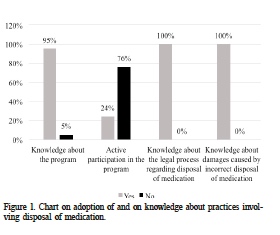
Figure 1
Chart on adoption of and on knowledge about practices involving disposal of medication.
Figure 1 shows that 95% of the members know about the Descarte Legal program developed by the Rede 2000, but even though the vast majority know about the program, they do not actively participate in it. More intriguing yet is that 100% of the interviewees know the process of disposal and the damages caused by incorrect disposal of medication, but they do not participate in the program that aims to raise consumer awareness about returning the unused and expired medication to the drugstore.
According to Medeiros et al. (2014), although the most common method of disposal is through household waste, sink or toilet, the most informed individuals on the issue of disposal of medication are less likely to use such means. This shows that increasing application of efforts to raise awareness tend to increase the practice of discarding this kind of waste in a more environmentally beneficial way.
The Spearman rank correlation coefficient technique was used to create Table I, in order to verify if there is a correlation between knowledge of the program, active participation in the program, knowledge of the legal process of disposal of medication and knowledge of the damages caused by incorrect disposal.
SPEARMAN CORRELATION FOR COMPARISON
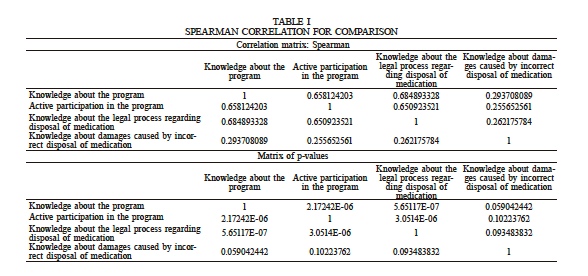
The questionnaire had questions where members had to respond with one of the five alternatives: 1- Strongly disagree, 2- Partially disagree, 3- Do not agree or disagree, 4- Partially agree, and 5- Totally agree. The answers served as a subsidy for the application of Spearman’s rank correlation coefficient.
As seen in Table I, there is a positive correlation that is partially high between the variables ‘knowledge about the program’ and ‘active participation in the program’, demonstrated by the correlation value, which is equal to 0.6581 and closer to 1, and by the p-value in this comparison, which is lower than 0.05. It is verified that a greater knowledge of the program, translates into more active participation in it.
The Spearman technique, according to Xu et al. (2012), is a non-parametric technique and, therefore, it is suitable for data that is not normally distributed. It is the description of the relationship between two variables, without making assumptions about the frequency distribution of the variables. The Spearman correlation coefficient is defined in the same way as the Pearson correlation coefficient between the ranks or classified variables. Spearman does not require the assumption that the relationship between the variables is linear, nor that the variables are measured in the class interval, and can be used for the variables measured at the ordinal level. The ‘n’ gross scores Xi, Yi are converted into rows, xi, yi, and ρs is calculated from the equation
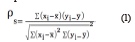
(1)
ρs
In applications where connections are known to be absent, a simpler procedure can be used to calculate ρs. Differences Di= xi - yi between the rows of each observation where two variables are calculated, and ρs is given by
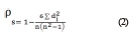
(2)
ρs
The statistical classification is just the ordinal number of a value in a list. The Spearman correlation coefficient can be calculated even when the real values of the variables are unknown.
However, despite being calculated by the same expression as Pearson’s, it does not use the observed values of the X and Y variables, but rather the rank at which the observations appear in the sample. By using the classification of observations, it ends up correcting any distortions due to the large amount of extreme values (Perez and Famá, 2015).
Using the same previous analysis, it is possible to show that a greater knowledge of the legal process regarding disposal of medication is related to the knowledge of the program. Also, greater knowledge of the legal process may influence a more active participation in the program.
The variable ‘knowledge about damages caused by incorrect disposal of medication’ has a very low correlation with the other variables.
Members’ perceptions about the network, involving sustainability and their participation in sustainability practices
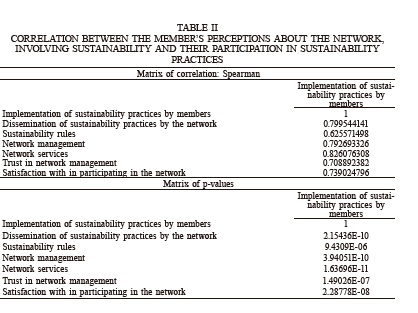
In order to carry out this comparison, the member was asked about sustainability practices they had carried out, correlating the responses with the perceptions about the network, considering the dissemination of sustainability practices among the network members, sustainability rules, network management, network services, trust in network management, and satisfaction with participating in the network. Table II shows the statistical results of the correlation between the mentioned variables.
CORRELATION BETWEEN THE MEMBER’S PERCEPTIONS ABOUT THE NETWORK, INVOLVING SUSTAINABILITY AND THEIR PARTICIPATION IN SUSTAINABILITY PRACTICES
According to Giglio and Gamba (2015) and Jiang et al. (2008), governance is about explicit and implicit rules to promote the development of the BCN and to restrict opportunistic actions. For Silva and Neves (2013), network governance is complex due to the difficulties to reach a balance between cooperation and competition, and there is no generic application for BCNs.
Governance has the role of sharing the beliefs and values of the BCN (Jacometti et al., 2014). It also has the role of building trust in cooperation (Jiang et al., 2008; Alves et al., 2013; Casanueva et al., 2013; Giglio and Gamba, 2015) and when trust is low, governance needs to be based on contracts (Zancan et al., 2013).
The management of the BCN is the essential link that aims to promote integration between the structure and strategy of the members, thus achieving the expected results of the cooperation (Antunes et al., 2010).
Trust results in less conflict and greater satisfaction, reduces the need for formal contracts, monitoring and other alternative control mechanisms, facilitates effective cooperative relationships, and enhances the benefits of such relationships (Jiang et al., 2008).
Table II shows the correlations between the members’ perceptions about the network, involving sustainability and their participation in sustainability practices.
The results in Table II are in agreement with the main objective of the study, in which the expectation is to identify if the BCN influence their members to engage in sustainability practices.
Using the same analysis as in the results shown in Table I, it is verified in Table II that the implementation of sustainability practices by the associate has a high degree of correlation with the following variables: dissemination of sustainability practices by the network; sustainability rules; network management; network services; trust in network management; satisfaction with participating in the network. It is shown that all cited variables influence the implementation of sustainability practices by the member.
The Spearman correlation result is close to 1 and the p-values are all very low, thus demonstrating a high degree of correlation. For example, the variable ‘network services’ has the most correlation with the implementation of sustainability practices by the member, so when there is a network service related to sustainability, this influences members to engage in sustainability practices, in the case of this study, the program to raise awareness of customers regarding the correct disposal of medication.
The ‘trust in network management’ has a good degree of correlation with the implementation of sustainability practices by the member, proving that the network management itself is influential regardless of whether the member has great trust in the management.
The variable ‘sustainability rules’ has less correlation with the others, but there is still a good degree of correlation. This shows that the dissemination of sustainability practices by the network is more influential for the members than the establishment of rules.
Conclusion
The objective of this study was to establish the basic information about how BCNs can influence their members to carry out sustainability practices regarding the correct disposal of medication, raising awareness about the issue among their consumers. In other words, to verify whether a BCN works as a drive to motivate its members (classified as MSMEs) to adopt sustainability practices.
The study showed that aspects related to the network such as the dissemination of sustainability practices among the network members, sustainable rules, network management, network services, trust in network management, and satisfaction in participating in the network, correlate with the implementation of sustainability practices by members of the network.
A significant influence of the BCN on the members is corroborated, showing that the practices and beliefs of a BCN, can change the direction of practices adopted by members, without the need for formal rules on a specific issue.
Environmental practices were evaluated, helping to fill the knowledge gap of the member MSMEs. While sustainability to date has focused on practical business issues, the results of this study highlight that the member businesses are not actively engaged. Some authors, such as Waage et al. (2005) argue that there is substantial literature on the social aspects of sustainability, but little work has been done to measure practice.
Motivations were built based on the BCN’s efforts to adopt sustainability practices. The program ‘Descarte Legal’, having its objective focused on environmental sustainability, serves as a parameter to measure the interest of members in the environmental protection.
The study provides a general idea of the acceptance of ‘sustainability’ regarding disposal of medication by members of the BCN. However, there are many additional questions, intended to lay the way for further qualitative studies. Further research is needed to compare the perceptions of managing such practices, with external perceptions and perceptions of employees.
Possibly, companies that are already involved in sustainability practices are more likely to adhere to programs focused on environmental sustainability managed by a BCN.
In research on business and organizations, there is abundant literature addressing business histories and biographies of entrepreneurs. However, few studies focus on the management and organization of such businesses, which contributes to expanding the theoretical framework.
This study helps clarify the concept of environmental complexity among network partners, since it is proven that more knowledge about network processes can improve adherence among less central and less dense members. Likewise, it contributes to the understanding of the network partners’ possibility of sharing solutions regarding environmental issues. Network partners need knowledge to properly adhere to the processes that lead to shared solutions.
For future studies the use of focus groups and interviews with other samples, in different regions is suggested. This can provide a better idea of how the BCN influences its members’ activities. It will allow for a more complex analysis of the role of networks, rather than just a comparison of member’s activities. In addition, the group follow-up interviews will provide more in depth data than the structured questionnaire used in this research.
Acknowledgments
This study was based on presentations conducted at the sessions entitled AD&GP–PO in the Administration and Production Management, AG&MA–PO in Agriculture and Environment and EST–Statistics, of the XLIX Brazilian Symposium on Operational Research, held in Blumenau (SC), Brazil, 27-30/08/2017. The authors are grateful to the Instituto Federal do Espírito Santo (IFES) for the financial support for translation of this article and to the drugstore chain ‘Rede 2000’ for providing the conditions to carry out the research.
THE INFLUENCE OF BUSINESS COOPERATION NETWORKS ON ENVIRONMENTAL SUSTAINABILITY
Almeida GGF, Silveira RLL (2015) Redes de Cooperação e Território: o caso da Associação Rede Casanova. Desenvolv. Questão 13(29): 158-190.
Alves JN, Pereira BAD, Klein LL (2013) Avanços e tendências nos relacionamentos interorganizacionais: um paralelo entre estudos brasileiros e internacionais. REGE 20: 3-20.
Angelakoglou K, Gaidajis G (2015) A review of methods contributing to the assessment of the environmental sustainability of industrial systems. J. Cleaner Prod. 108: 725-747.
Antunes J, Balestrin A, Verschoore J (2010) Práticas de Gestão de Redes de Cooperação. Unisinos. São Leopoldo, Brazil. 126 pp.
ABNT (2004) NBR 10004: Classificação de Resíduos Sólidos. Associação Brasileiras de Normas Técnicas. Rio de Janeiro, Brazil.
Aurélio CJ, Pimenta RF, Ueno HM (2015) Logística Reversa de medicamentos: estrutura no varejo farmacêutico. Gepros 10(3): 1.
Balestrin A, Verschoore J (2008) Redes de Cooperação Empresarial: Estratégias de Gestão Na Nova Economia. Bookman. Porto Alegre, Brasil. 212 pp.
Borgatti SP, Everett MG, Freeman LC (2005) Ucinet for Windows: Software for Social Network Analysis. Analitic Tecnologies. Harvard, MA, USA.
Carvalho JF, Wegner D, Begnis HSM, Júnior JAVA (2018) A cooperação entre redes de pequenas empresas: antecedentes, etapas e resultados da estratégia de intercooperação. REGEPE 7: 35-70.
Casanueva C, Castro I, Galán JL (2013) Informational networks and innovation in mature industrial clusters. J. Bus. Res. 66: 603-613.
Collins E, Lawrence S, Pavlovich K, Ryan C (2007) Business networks and the uptake of sustainability practices: the case of New Zealand. J. Cleaner Prod. 15: 729-740.
Cowan DM, Dopart P, Ferracini T, Sahmel J, Merryman K, Gaffney S, Paustenbach DJ (2010) A cross-sectional analysis of reported corporate environmental sustainability practices. Regul. Toxicol. Pharmacol. 58: 524-538.
Cross R, Borgatti SP, Parker A (2002) Making invisible work visible: using social network analysis to support strategic collaboration. Calif. Manag. Rev. 44(2): 25-46.
Cruz ÉMK (2017) Redes Interorganizacionais de Cooperação: Influência da Relação entre Configuração de Rede e de Práticas de Governança sobre a Coevolução das Firmas e da Rede. Tese. Fundação Getúlio Vargas. São Paulo, Brazil. 279 pp.
Donato HC, Pinheiro LRD, Rodrigues N, Santos IC (2015) Festival do Chocolate da Estância Turística de Ribeirão Pires: um estudo da cooperação entre microempresas por meio da análise de Rede Sociais. Rev. Micro Peq Empr. 9: 76-89.
Giglio EM, Gamba JR (2015) Análise de cooperativas habitacionais a partir dos fatores estruturantes da sociedade em rede. REGE 22: 3-19.
Gnyawali D, Madhavan R (2001) Cooperative networks and competitive dynamics: a structural embeddedness perspective. Acad. Manag. Rev. 26: 431- 445.
Henkes JÁ, Aurélio CJ (2015) Gestão de resíduos através da logística reversa de medicamentos. Gest. Sustent. Amb. 4: 487-518.
Jacometti M, Gonçalves AS, Castro M (2014) Institutional work e conhecimento em Redes interorganizacionais: uma proposta para investigar apls. Rev. Admin. Mackenzie 15(6): 17.
Jiang X, Li Y, Gao S (2008) The stability of strategic alliances: Characteristics, factors and stages. J. Int. Manag. 14: 173-189.
Kilduff M, Tsai W (2007) Social Networks and Organizations. Sage. London, RU. 172 pp.
Mahadik KR (2016) Pharmaceutical waste management & disposal practice. Int. J. Sci. Res. 5(6).
Marteleto R, Silva AB (2005) O. Redes e capital social: o enfoque da informação para o desenvolvimento local. Ciênc. Inf. 33(3).
Medeiros MSG, Moreira LMF, Lopes CCGO (2014) Descarte de medicamentos: programas de recolhimento e novos desafios. Rev. Ciênc. Farmac. Bás. Aplic. 35(4).
Mizruchi MS (2006) Análise de redes sociais: avanços recentes e controvérsias atuais. Rev. Admin. Empr. 46(3): 10-15.
Oliveira NR (2015) A Relevância da Prescrição e do Uso Racional de Medicamentos para Mitigar Potenciais Riscos à Saúde e ao Meio Ambiente. Tese. Fiocruz. Rio de Janeiro, Brazil. 110 pp.
Onwuegbuzie AJ, Leech NL (2006) Linking research questions to mixed methods data analysis procedures 1. The Qualit. Rep. 11: 474-498.
Pankajkumar PD, Chacko S, Prakashkumar BS (2016) Storage and disposal of medicines in home among students. J. Pharm. Res. 10: 343-350.
Pereira CG, Silva RR da, Lavoie JR, Porto GS (2018). Technological cooperation network in biotechnology analysis of patents with Brazil as the priority country. Innov. Manag. Rev. 15: 416-434.
Perez MM, Famá R (2015) Características estratégicas dos ativos intangíveis e o desempenho econômico da empresa. Unisanta Law Soc. Sci. 4: 107-123.
Queiroz CA (2014) Análise Normativa sobre Descarte de Medicamentos no Brasil e a Comparação com a Lei 5092/13 do Distrito Federal. Tese. Universidade de Brasília. Brazil.
Repar N, Jan P, Nemecek T, Dux D, Alig Ceesay M, Doluschitz R (2016) Local versus global environmental performance of dairying and their link to economic performance: A case study of Swiss mountain farms. Sustainability 8: 1294.
Rodrigues ERQ (2014) Rede de Empresas. Série Empreendi-mentos Coletivos. Serviço Brasileiro de Apoio às Micro e Pequenas Empresas. Brasília, Brazil. 38 pp.
Rowley T, Behrens D, Krackhardt D (2000) Redundant governance structures: an analysis of structural and relational embeddedness in the steel and semiconductor industries. Strat. Manag. J. 21: 369-386.
Salaria N (2012) Meaning of the term descriptive survey research method. Int. J. Transform. Bus. Manag. 1(6): 161-175.
Scott J (2000) Social Network Analysis: A Handbook. 2nd ed. Sage. London, RU. 224 pp.
SEBRAE (2012) Coleção Estudos e Pesquisas. Taxa de Sobrevivência das Empresas no Brasil. Serviço Brasileiro de Apoio a Micro e Pequenas Empresas. Brasília, Brasil. http://www.sebrae.com.br/Sebrae/Portal%20Sebrae/Estudos%20e%20Pesquisas/Participacao%20das%20micro%20e%20pequenas%20empresas.pdf (Cons. 08/20//2016).
Silva GM, Neves JAB (2013) Divisão do trabalho social e arranjos produtivos locais: reflexos econômicos de efeitos morais de redes interorganizacionais. Rev. Admin. Mackenzie 14: 202.
Souza GHS, Lima NC, Coelho JAPM, Oliveira SVWB, Milito CM (2015) A influência das redes de cooperação no desenvolvimento de micro e pequenas empresas [MPES]. Desenvolv. Questão 13(31): 259-294.
Tang AKY, Lai KH, Cheng TCE (2016) A multi-research-method approach to studying environmental sustainability in retail operations. Int. J. Prod. Econ. 171: 394-404.
Toigo T, Alba GR (2010) Programa Redes de Cooperação do Estado do Rio Grande do Sul: Perfil das Redes de Empresas Acompanhadas pela Universidade de Caxias do Sul. XIII Semead – Seminários em Administração. Anais. Edusp. São Paulo, Brazil.
Waage SA, Geiser k, Irwin F, Weissman A, Bertoloucci M, Fisk P (2005) Fitting together the building blocks for sustainability: a revised model for integrating ecological, social, and financial factors into business decision-making. J. Cleaner Prod. 13: 1145-1163.
Wasserman S, Faust K (1994) Social Network Analysis: Methods and Applications. Cambridge University Press. Cambridge, RU. 857 pp.
Wegner D, Begnis HSM, Alievi RM, Maehler AE (2016) The dynamics of cooperation: proposal of a life cycle model of small-firm networks. Gest. Regional. 32(94).
Xavier Filho LJJ, Júnior FGP, Xavier ML (2013) Desistência da cooperação em redes interorganizacionais horizontais: Reflexões a partir da tipologia da ação social weberiana. XVI SEMEAD Seminários em Administração. 24-25/10/2013. São Paulo, Brazil. 15 pp.
Xu Q, Majlingova A, Zachar M, Jin C, Jiang Y (2012) Correlation analysis of cone calorimetry test data assessment of the procedure with tests of different polymers. J. Therm. Anal. Calorim. 110: 65-70.
Zancan C, Santos PDCF, Costa ACS, Cruz NJT (2013) Condicionantes de consolidação de redes de cooperação interorganizacional: um estudo de caso sobre o Rio Grande do Sul. Rev. Admin. Públ. 47: 647-669.
Notas de autor
paulo.santos@ifes.edu.br
