OUTCOMES EVALUATION OF ORTHOS: AN INTENSIVE RESIDENTIAL PROGRAM FOR GAMBLING ADDICTION TREATMENT
OUTCOMES EVALUATION OF ORTHOS: AN INTENSIVE RESIDENTIAL PROGRAM FOR GAMBLING ADDICTION TREATMENT
International Journal of Developmental and Educational Psychology, vol. 1, no. 1, pp. 269-276, 2019
Asociación Nacional de Psicología Evolutiva y Educativa de la Infancia, Adolescencia y Mayores

This work is licensed under Creative Commons Attribution-NonCommercial-NoDerivs 4.0 International.
Received: 04 March 2019
Accepted: 30 July 2019
Abstract: According to the DSM-V, gambling can be defined as a “persistent and recurrent problematic gambling behavior leading to clinically significant impairment or distress”, not better defined by a manic episode. ORTHOS is a threeweek intensive residential intervention program with three follow-up meetings during the year following intensive residential interventions. ORTHOS’ philosophy envisages a non-moralistic and prejudicial approach to gambling (Zerbetto, 2002). The findings of the present study confirm the efficacy of ORTHOS treatment compared to the reduction of gamblingsymptoms, with over 85% of the sample in which the symptoms manifested no longer clinical rele- vance (scores below 5 in SOGS).
Keywords: gamblig addiction, orthos intensive program, SOGS, global assessment of functioning.
INTRODUCTION
Behavioral or “sine substantia” addictions represent an emerging field. Gambling disorder was first introduced in the Diagnostic and Statistical Manual of mental disorders 3rd version (DSM III) by the American Psychiatric Association (APA) in 1980 and has since assumed the dignity of a psychiatric disease. It has been since 2000, following the clinical findings by Giovannoni of the so-called “Hedonistic Homeostatic Dysregulation” (a complex psychiatric syndrome that includes, among the symptoms, gambling disorder), which has increased the interest of researchers and clinicians.
According to the DSM-V, gambling can be defined as a “persistent and recurrent problematic gambling behavior leading to clinically significant impairment or distress”, not better defined by a manic episode.
Classical options for the treatment of compulsive gamblers in professional care programs include counseling and cognitive-behavioral treatment (stimulation control techniques, live exposure, cognitive restructuring, problem solving, reinforcement, self-strengthening, self-education, and prevention of relapses) (González Ibáñez et al., 1990, 1995 and 2001; McCormick and Ramirez, 1988). However, about a third of subjects dropped out during the follow-up phase that lasted one year and about half of the remaining ones remained in abstinence. Of these, in a follow-up of 2 to 9 years, McConaghy, Blaszczynski and Frankova (1991) reported that 45% of patients continued to play but in a controlled manner. González Ibáñez et al. (2001) noted that in a sample of 60 patients, 56% abandoned therapy during treatment. 80% of those who participated in follow-up meetings of 1, 3.6 and 12 months remained in abstinence. At 4 years of age, 33% remained in abstinence, 20% returned to uncontrolled gambling, and 47% played in a controlled manner with modalities other than problematic starting gambling. This is to indicate that, in addition to the definitive abstinence, the reduction of the game play and the development of greater self-control can represent an important therapeutic goal. This result becomes more realistic if it is accompanied by a significant change in lifestyle, greater awareness of risk situations, and restructuring of the family, employment and social situation (Zerbetto, 2011).
The current article reports the 10-year experience of Orthos, an intensive residential humanisticexistential approach bridging public and private services and the territory, in the Tuscany Region, Italy.
MATERIAL AND METHODS
Nature of the intervention
ORTHOS is a three-week intensive residential intervention program with three follow-up meetings during the year following intensive residential interventions. ORTHOS’ philosophy envisages a non-moralistic and prejudicial approach to gambling (Zerbetto, 2002). The task of a therapeutic program is therefore to intervene in the use of dysfunctional and self-destructive forms associated with gambling and not the use of the same if within socially compatible modes. Also, in the outcome evaluations, the following outcomes are considered as an effective result of a gambling disorder treatment:
the achievement of a total abstinence;
the achievement of a controlled, non compulsive game;
the prevention of sudden fallouts;
the prevention of a return to an uncontrolled game play.
Monitoring of the outcomes
The consistency of change processes is closely monitored during the post-residential period through:
the accompaniment phase and the recalls that will cover, on a regular basis, the first year after the departure from the community (with the experience we are collecting, however, this period tends to extend even beyond the expected year of accompaniment: the fragility of some personality traits requires, indeed, much longer time for monitoring the outcomes);periodic meetings with families;
meeting opportunities with the dual purpose of socializing and of self-help according to a calendar and modalities established by the territorial group itself with the support of the referent operator in the territory;
the establishment of a network of mutual solidarity to be activated in difficult situations through the involvement of companions of course, similar to what is happening in algological experiences.
Questionnaires administered
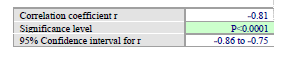
Participants in the ORTHOS program were interviewed during treatment access (T0) for the evaluation of their overall DSM mental function according to the Global Assessment of Functioning (APA, 2000 ). In this context, data on sociodemographic variables, past clinical history were also collected for the evaluation of gambling symptoms pathology. The subjects were then contacted for an interview, by telephone or vis-à-vis, for approximately two hours, at least one year after the end of treatment (3.4±2.6 years, median 2 years), in which the evaluation of overall functioning and actual gambling symptoms (T1) was again performed. GAF evaluations were performed in double blind by two experienced clinicians and supervised by the Research Manager (RZ). GAF score varies in the range from 0 to 100 and has been coded according to MGAF-R criteria (Hall, 2000), which assesses the overall functioning of the individual in relation to psychological, social and work areas. GAF is considered in literature as one of the most effective synthesis tools for planning treatment and measuring its impact, predicting the outcome of psychotherapies, and following the clinical progress of individuals in global terms using a single measure.
Further, the SOGS self-report questionnaire (South Oaks Gambling Screen: Lesieur and Blume, 1987; Guerreschi and Gander, Italian), which is a 20-item questionnaire for screening the presence and severity of gambling disorder, was administered. SOGS considers multiple aspects: the type of game play, the frequency of gambling activities, the difficulty of playing in a controlled manner, the means used to get the money to play, lies about gambling, to play more than the initially scheduled sums, and so on.
All subjects provided informed consent for anonymous data processing for research purposes.
Statistical analysis
Figures with p-values <0.05 were considered statistically significant. Statistical analyses were carried out with SPSS for Windows (version 23.0.0, Chicago, IL, USA) and MedCalc Statistical Software v16.4.3 (MedCalc Software bvba, Ostend, Belgium).
RESULTS
The study involved 165 subjects who had participated in the ORTHOS treatment program and had completed it for at least a year. Subjects with a mean age at the time of T0 (beginning of treat-ment) of 45.9 years (DS=11.8; range: 23-75) were predominantly men (90.2%). The subjects were mainly married (48.2%), with prevalent middle school education (42.7%) or higher average (48.8%). Most of them came from the Tuscany Region (54.3%), but almost all Italian regions were present in the distribution. They showed a clinical co-morbidity in 34.1% of cases, mainly depression (69.6%). The subjects had an average debt of 42,166.13±182,379.73.
DISCUSSION
The first year since the beginning and implementation of the experimental phase of the Orthos program was concluded with March 2008, and was, thereafter, evaluated by a regional commission consisting of four experienced operators on the gambling disorder. The document produced by the Commission, following the evaluation of the first 4 modules, summarizes some of the most significant data: namely, 51.5% of users were from Tuscany Region, while 48.5% from other parts of Italy. 63.3% of users were sent by the SerT, while other users learned about the program’s existence from the Internet or from print organs. 97% completed the residential program demonstrating a good retention rate and good compliance with the program. Of these last users, at an estimate conducted at the end of 2007, 59% retained a total abstention from the game, while 34% a partial abstinence, with 6% of them having one or more episodes of fallback. Such estimates, with the passing of months, have had a modest worsening percentage. It is true that some of the users who had gone to relapse have subsequently taken up and demonstrate a satisfactory “hold” of the relapse.
The current evaluation is the most comprehensive carried out so far and takes into account a wider span of follow-up time (up to 10 years).
54.5% of users who completed the program were sent to the SerT to be supported in the maintenance program. In Siena, Milan and Rome, regular support meetings are held for users who have completed the program. In some cases, anonymous or Auto-Mutual-Assistant Players has been started or confirmed.
The findings of the present study confirm the efficacy of ORTHOS treatment compared to the reduction of gambling symptoms, with over 85% of the sample in which the symptoms manifested no longer clinical relevance (scores below 5 in SOGS).
CONCLUSION
ORTHOS is a program targeted for “problematic” gamblers, not suffering from serious psychiatric disorders, due to the limited duration of intensive intervention and non-medicalised features of the intervention itself. It has been proven as an effective program . Further researches in the field are needed.
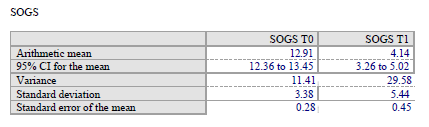
Tabla 1
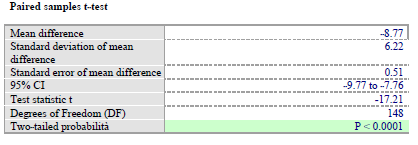
Tabla 2
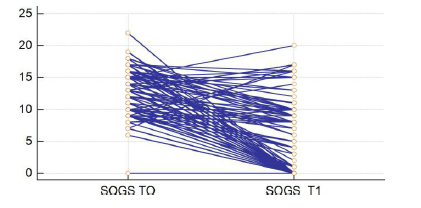
Gráfico 1
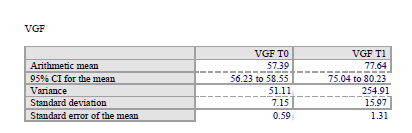
Tabla 3
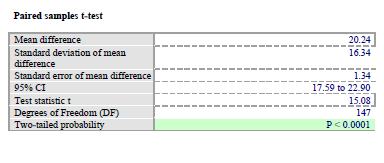
Tabla 4
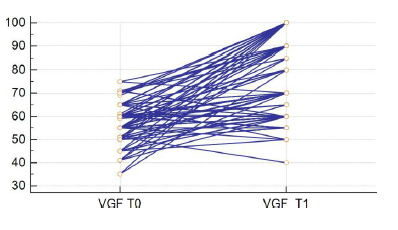
Gráfico 2
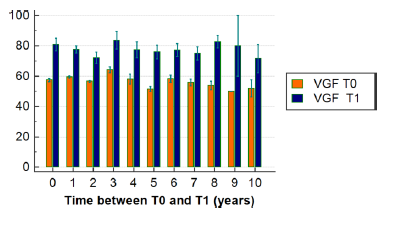
Gráfico 3
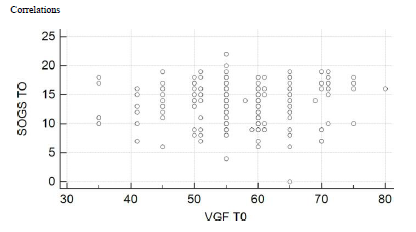
Gráfico 4
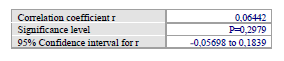
Tabla 5
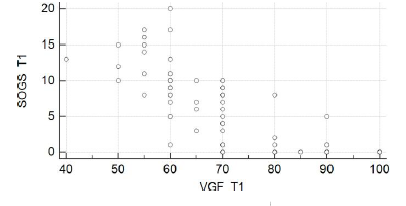
Gráfico 5
Referencias
American Psychiatric Association (1994): “Diagnostic and Statistical Manual of Mental Disorder.Fourth Edition, Text Revision”. Washington, DC.
Saunders JB. Substance use and addictive disorders in DSM-5 and ICD 10 and the draft ICD 11. Curr Opin Psychiatry. 2017 Jul;30(4):227-237.
Lesieur HR, Blume SB. The South Oaks Gambling Screen (SOGS): a new instrument for the identification of pathological gamblers. Am J Psychiatry. 1987 Sep;144(9):1184-8.
Zerbetto R, “Il gioco nel mito e il mito del gioco”, in Croce M. e Zerbetto R., a cura di (2002), Il gioco& l’azzardo, FrancoAngeli, Milano.
Zerbetto R. (2002) “L’uomo e le droghe: un passato da conoscere per un futuro da anticipare” , Lettura magistrale al I Convegno Nazionale di ERIT- Italia, su Dipendenze. Nuovi scenari e sfide al cambiamento, edito a cura del Servizio Sanitario Regionale Emilia Romagna, Azienda USL diRavenna, Argomenti, Vol. 1, 13 – 2004
Zerbetto, R. (2004) “Sul dio epidemico ed il suo ritorno”, relazione presentata al Convegno su Il contagio e i suoi simboli promosso dalla Associazione Simbolo, conoscenza e società a Siena nell’ottobre 2000, Edizioni ETS
Blaszczynski, A., McConaghy N., Frankova A. (1991): “A comparison of relapsed and non-relapsed abstinent pathological gamblers following behavioural treatment”. British Journal of Addictions, 86, 11, 1485-9.
Crusco M, Massoni F, Luzi E, Ricci P, Pelosi M, Corbosiero P, Rapp-Ricciardi M, Ricci S. Gambling and the need for new responses in Public Health with an addiction “sine substantia”. Clin Ter. 2016 Nov-Dec;167(6):e162- e166.
Opportunities to Improve Diagnosis and Treatment Especially in Substance Use and Homeless Populations. Gambling Disorder in the DSM-5: Rash CJ, Petry NM. Curr Addict Rep. 2016 Sep;3(3):249-253.