Artigos
Barriers of Accessibility for People with Disabilities in Higher Education
Barreiras de Acessibilidade para Pessoas com Deficiência no Ensino Superior
Barreras de Accessibilidad para Personas com Discapacidad em la Educación Superior
Barriers of Accessibility for People with Disabilities in Higher Education
Administração Pública e Gestão Social, vol. 14, núm. 4, 2022
Universidade Federal de Viçosa

Esta obra está bajo una Licencia Creative Commons Atribución-NoComercial-SinDerivar 4.0 Internacional.
Recepción: 31 Octubre 2021
Aprobación: 13 Mayo 2022
Publicación: 17 Noviembre 2022
Abstract:
Research objective: The study aimed to conduct a literature review on the accessibility barriers suffered by People with Disabilities (PwD) in higher education.
Theoretical framework: The articles were analyzed in the light of the Brazilian Inclusion Law No. 13,146/2015 to categorize their accessibility barriers (Urbanistic; Architectural; in Transport; in Communications and Information; Attitudinal; and Technological).
Methodology: The methodology used was the lexical analysis applied to the Descending Hierarchical Classification, associated with Similitude Analysis and Word Cloud of the publications of the SciELO Citation Index, SciELO Brazil collection, indexed in the Web of Science database from 2002 to 2019, being analyzed 45 scientific studies.
Results: The results demonstrate the existence of two classes as a trend for publications in the area, the first being directed to higher education in general and the other to Federal Institutes and Universities. Also, there is a direction for conducting studies for visual and auditory PwD, and the main limitation evidenced in the literature is the Communication and Information Barrier.
Originality:The present study is original for not having been found any other scientific work that carried out a Systematic Meta-Review of Literature of publications in Brazilian periodicals using class analysis performed by a qualitative analysis system for the present theme.
Theoretical and Practical Contributions: It is noteworthy that normally the studies that use the Barriers in Communications and Information as one of the variables in their studies also have as indicators of Technological Barriers. The main public policy evidenced for higher education in the country is the Federal Government's Include Program.
Keywords: Special Education, Inclusion, Admission and Permanence, Systematic Meta-Review of Literature, Public Policies, Special Education, Inclusion, Admission and Permanence, Systematic Meta-Review of Literature, Public Policies.
Resumo:
Objetivo da pesquisa: O objetivo do estudo foi realizar uma revisão de literatura sobre as barreiras de acessibilidade sofridas pelas Pessoas com Deficiência (PcD) no ensino superior.
Enquadramento teórico: Os artigos foram analisados à luz da Lei Brasileira de Inclusão n. 13.146/2015 para categorizar as suas barreiras de acessibilidade (Urbanísticas; Arquitetônicas; nos Transportes; nas Comunicações e na Informação; Atitudinais; e Tecnológicas).
Metodologia: Para a metodologia, utilizou-se a análise léxica aplicada à Classificação Hierárquica Descendente, associada a Análise de Similitude e Nuvem de Palavras das publicações da SciELO Citation Index, coleção SciELO Brasil, indexadas na base de dados da Web of Science de 2002 a 2019, sendo analisados 45 estudos científicos.
Resultados: Os resultados demonstram a existência de duas classes como tendência para as publicações na área, sendo a primeira voltada para o ensino superior público e privado; e a outra, para Institutos e Universidades Federais. Além disso, há um direcionamento para realização de estudos para PcD visual e auditiva, e a principal limitação evidenciada na literatura é a Barreira nas Comunicações e na Informação.
Originalidade: O presente estudo se torna original por não ter sido encontrado nenhum outro trabalho científico que realizasse uma Meta-Revisão Sistemática de Literatura das publicações em periódicos no Brasil, com o uso de análise de classes realizadas por um sistema de análise qualitativa para o presente tema.
Contribuições teóricas e práticas: Ressalta-se que, normalmente, os trabalhos que utilizam as Barreiras nas Comunicações e na Informação como uma das variáveis em seus estudos, possuem também como variável indicadores de Barreiras Tecnológicas. A principal política pública evidenciada para o ensino superior no país é o Programa Incluir, do Governo Federal.
Palavras-chave: Educação Especial, Inclusão, Ingresso e Permanência, Meta-Revisão Sistemática de Literatura, Políticas Públicas, Educação Especial, Inclusão, Ingresso e Permanência, Meta-Revisão Sistemática de Literatura, Políticas Públicas.
Resumen:
Objetivo de la investigación: El objetivo del estudio fue realizar una revisión de la literatura sobre las barreras de accesibilidad que sufren las Personas con Discapacidad (PwD) en la educación superior.
Marco teórico: Los artículos fueron analizados a la luz de la Ley de Inclusión brasileña N° 13.146/2015 para categorizar sus barreras de accesibilidad (Urbanística; Arquitectónica; en Transporte; en Comunicaciones e Información; Actitudinal; y Tecnológica).
Metodología: Para la metodología se utilizó el análisis léxico aplicado a Clasificación Jerárquica Descendente, asociado a las publicaciones Similitude Analysis y Word Cloud de SciELO Citation Index, colección SciELO Brasil, indexadas en la base de datos Web of Science de 2002 a 2019, siendo analizados 45 estudios científicos.
Resultados:Los resultados demuestran la existencia de dos clases como tendencia para las publicaciones en el área, la primera dirigida a la educación superior en general; y la otra, a Institutos y Universidades Federales. Además, existe una dirección para realizar estudios para PwD visual y auditiva, y la principal limitación evidenciada en la literatura es la Barrera de Comunicación e Información.
Originalidad:El presente estudio es original por no haberse encontrado ningún otro trabajo científico que realizó una Meta-Revisión Sistemática de la Literatura de publicaciones en revistas brasileñas utilizando análisis de clase realizado por un sistema de análisis cualitativo para el presente tema.
Contribuciones teóricas y prácticas: Es de destacar que habitualmente los estudios que utilizan Barreras de Comunicación e Información como una de las variables en sus estudios también tienen indicadores de Barreras Tecnológicas como variable. La principal política pública que se evidencia para la educación superior en el país es el Programa Incluir del Gobierno Federal.
Palabras clave: Educación Especial, Inclusión, Admisión y Permanencia, Meta-Revisión Sistemática de la Literatura, Políticas Públicas, Educación Especial, Inclusión, Admisión y Permanencia, Meta-Revisión Sistemática de la Literatura, Políticas Públicas.
INTRODUCTION
According to literature, both the education sector and “many other professional areas have carried out studies and improved their technical actions to stay abreast” of issues pertaining to People with Disabilities (PwD) (Nogueira & Oliver, 2018, p. 859). According to Vianna and Pinto (2017, p. 127), “relevant literature on 'accessibility' is, in general, generic and broad, given its various dimensions”.
Debates on accessibility at Higher Education Institutions (HEIs) have taken shape over the years, and regulations and laws have been created to help People with Disabilities (PwDs). Over time, these laws and regulations have helped include and keep PwDs enrolled at HEIs. Evidence for this can be found in increased PwD enrollment numbers at the undergraduate level, precisely due to expanded public policies aimed at PwD inclusion at HEIs (Ciantelli & Leite, 2016; Martins and Napolitano, 2017). The number of PwDs enrolled in undergraduate courses in Brazil is low, and only about 0.56% were studying at HEIs in 2019 (Anisio Teixeira National Educational Studies and Research Institute [INEP], 2020).
Literature on accessibility at HEIs can be found by consulting specific studies on disability type, e.g., visual (Fialho & Silva, 2012), auditory (Pivetta et al., 2014), physical (Gesser & Nuernberg, 2017), and mental health (Olivati & Leite, 2019) disabilities. Literature also addresses this issue by analyzing variables related to PwD Accessibility Barriers (ABs). According to Brazilian Inclusion Law No. 13,146/2015, these ABs are classified as either Urban (Lamônica et al., 2008); Architectural (Diniz et al., 2019), Transportation (Silva & Ferreira, 2017), Communication and Information (Nascimento & Bocchiglieri, 2019), Attitude (Ciantelli et al., 2017), or Technological (Anache & Cavalcante, 2018) barriers.
According to Garcia et al. (2018, p. 34), “guaranteeing accessibility at HEIs is a very recent topic”. Thus, society, and especially universities, need to rethink ways of aiding PwDs at HEIs, in light of literature on AB types.
The research methodology used in this study is presented in the methodological section. This is followed by data analysis, presented along with the thematic scope regarding the two aforementioned classes that became evident during the content analysis. The content analysis was carried out using the Iramuteq software program. After the data analysis, we presented the study results, followed by our final considerations.
This study was inspired by the experience of one of the authors who worked with two undergraduate students with visual impairments without having received training to aid with working with these students. For this reason, the author undertook a research initiative via a post-doctoral study in the area of Education at UFT., as a member of the Study and Research Group on Educational Curricula for Northern Amazonian Social Minorities (Gepce/Minorities), from the National Council for Scientific and Technological Development (CNPq), to better understand the ABs that PwDs face at HEIs. The following section presents the methodological procedures used in this study.
METHODOLOGICAL PROCEDURES
We analyzed 45 publications indexed in the Web of Science database that focused on PwD accessibility at HEIs. A study by Porte et al. (2018), served as a foundation for building the methodological processes to analyze the objectives of the sampled studies
Database and Inclusion and Exclusion Criteria
We consulted publications from the SciELO Citation Index (SciELO Brazilian Collection) to start the Literature Review on ABs that students with disabilities face at HEIs. These publications were indexed in the 2002 Web of Science database, and were analyzed from the date of index to 2019.
'Accessibility' was inserted into the 'topic' field in the Web of Science, and we applied the SciELO Brazilian Collection filter up to 2019. The initial return resulted in 446 indexed documents.
Subsequently, all documents were transferred into the EndNote software program to exclude studies not associated to the accessibility theme, and to eliminate duplicates. This excluded 342 documents, resulting in a sample of 154 articles on accessibility.
Then, only studies addressing accessibility at HEIs were selected. This resulted in a final sample of 45 articles, that were then transferred to the Iramuteq software program. Then the articles were read in full considering Brazilian Inclusion Law No. 13.146/2015, to categorize ABs in terms of Urban, Architectural, Transportation, Communication and Information, Attitude, and technological barriers.
Preparing the Text Corpusand Applying the Analyses
We created an 'Accessibility at Higher Education Institutions' corpus from the 45 articles to carry out Lexical andkeyword analysis, as per Marchand and Ratinaud (2012). The 45 studies on accessibility, resulted in a text corpus with 1,027 words, of which 431 were distinct words, 245 words appeared only once (hapax), and 363 words were lemmatized. Furthermore, the textual corpus comprised 45 text segments (study objectives), from which we obtained 320 active word forms and 41 supplementary forms.
The Descending Hierarchical Classification (CHD), performed using the Reinert method, showed a retention rate at 82.22% of the total initial text corpus, which is appropriate for making judgments on the data (Reinert, 1990).
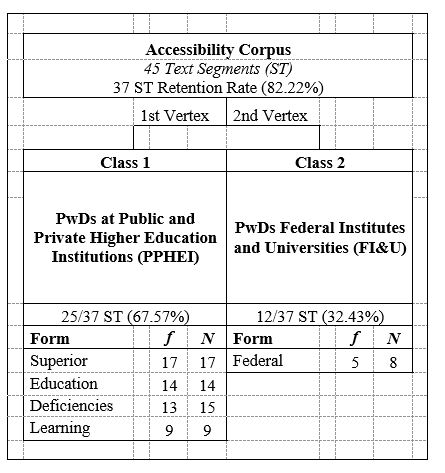
The CHD procedure as a function of the Reinert method allowed us to construct a dendrogram of the classes (Figure 1). 37 data segments contained in the CHD were selected. Class 1 comprised 35 text segments (67.57% of the total class), and Class 2 comprised 12 text segments (32.43% of the total class).
Source: Research Data.
(f) was used to represent the individual frequency of each term in the classes, and (.) was used to represent the global frequency of each term within the corpus. This allowed us to reduce 17.78% of the least important terms to build the Literature Review on ABs for PwDs at HEIs.
Figure 1 shows the data in descending order according to the frequency of active forms in the two classes. Only active forms were used in this analysis, because the reliability is greater for building the theme as proposed here.
Following literature on ABs for PwDs at HEIs, we conducted Similarity Analysis using Word Clouds for the classes to better understand evidence from literature on the topic, considering Brazilian Inclusion Law nº 13.146/2015, in line with class generation procedures as per Machado, Chaise and Elliot (2016), and Pereira, Oliveira, and Reis (2020).
The next section presents our results on the thematic classes, resulting from the content analysis using the Iramuteq software program.
RESULTS
This section gives the analysis results for the two classes developed during the content analysis. The results are presented in descending order, as shown in Figure 1. The Text Statistics and Similarity Analysis results with Word Clouds are also shown.
PwDs at Public and Private Higher Education Institutions (PPHEI) (CLASS 1)
PwDs at Public and Private Higher Education Institutions (PPHEI) (CLASS 1) was the most representative class (67.57%), and contained the following most expressive terms from among the 25 Text Segments (ST): 'superior', 'education', 'disability', and 'teaching' (Figure 1). Similarity Analysis (SA) on Class 1 is shown in Figure 2 using a Word Cloud. The characteristic terms for the class showed a minimum frequency of three instances according to the objectives of the articles.
The text corpus associated with Class 1 (Figure 2) is based on graph theory, since this united the main word occurrences and their connections. We verified that the SA results shown in Figure 2 highlighted 16 words, four of which were present in the class dendrograms (Figure 1) with other terms like 'accessibility', 'institution', 'university', 'student', 'permanence', 'program', 'condition', 'action', 'public', 'student', 'inclusion' and 'access'.
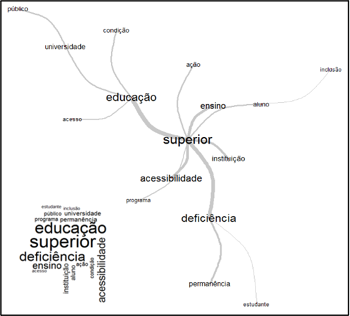
Figure 2: Similarity Analysis for Class 1
Source: Research Data.
'superior', 'education', 'disability', 'teaching’ ‘accessibility', 'institution', 'university', 'student', 'permanence', 'program', 'condition', 'action', 'public', 'student', 'inclusion' and 'access'
Source: Research Data.
The data showed three groups per surveyed disability type. The first contained 17 studies (Almeida & Ferreira, 2018; Anache & Cavalcante, 2018; Branco & Almeida, 2019; Brunhara et al., 2019; Cabral & Melo, 2017; Castro & Almeida, 2014; Ciantelli & Leite, 2016; Garcia et al., 2018; Gesser & Nuernberg, 2017; Junqueira et al., 2017; Maciel & Anache, 2017; Nogueira & Oliver, 2018; Oliveira & Resende, 2017; Oliveira & Silva, 2017; Oliveira, 2013; Silva & González-Gil, 2017; Siqueira & Santana, 2010), who addressed more than one type of disability as variables in their results and/or studies, that were different from People with Auditory or Visual Disabilities. The second group contained 5 studies (Camargo & Nardi, 2008; Carvalho et al., 2018; Nascimento & Bocchiglieri, 2019; Ortega et al., 2013; Silva & Ferreira, 2017), on visual impairments. The last group contained 3 studies (Lacerda & Gurgel, 2011; Martins & Napolitano, 2017; Pivetta et al., 2014), that addressed hearing impairments, as shown in Table 1.
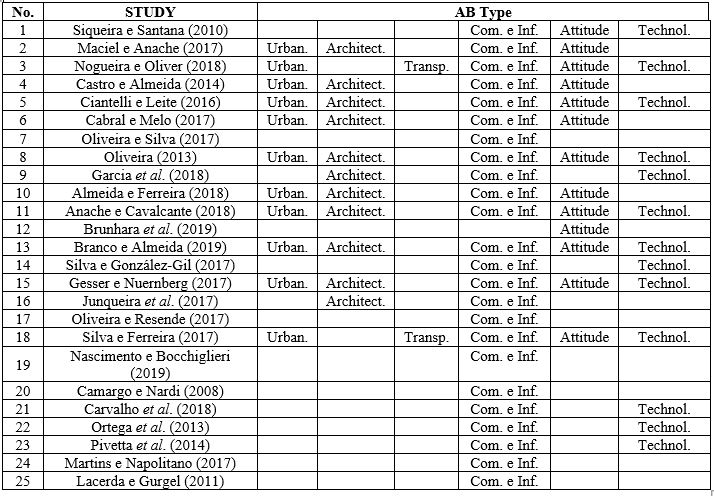
Regarding the AB types found in Class 1, the Literature Review showed seven barriers, i.e., Urban, Architectural, Transportation, Communication and Information, Attitude, and Technological barriers, as per Brazilian Inclusion Law nº 13.146/2015 (Table 1).
The Inclusion Program was addressed in studies by Siqueira and Santana (2010), Maciel and Anache (2017), Nogueira and Oliver (2018), Castro and Almeida (2014), Ciantelli and Leite (2016), and Cabral and Melo (2017), as affirmative actions to include PwDs at HEIs. According to Siqueira and Santana (2010), PwDs should not be included by isolated actions, and actions should comprise product and technology acquisitions that actually include these students within university environments. Furthermore, Maciel and Anache (2017), emphasized that Inclusion Programs did not consider PwD specificities, and universities did not receive adequate training for creating accessibility centers. According to Nogueira and Oliver (2018), financial problems related to maintaining programs limited student enrollment at PPHEIs. The authors emphasized that Programs were restricted to PPHEI, and therefore, other institutions had to decide on creating their own programs. Lima et al. (2015), stated that, although HEIs are developing improvement programs for including PwDs in university environments, the data show that actions are insufficient. This is corroborated by Ciantelli and Leite (2016), who state that university centers should invest more in accessibility to decrease PwD ABs. Similarly, Cabral and Melo (2017), state that, even though there are legal norms that are directed toward including PwD at HEIs, “there is still a gap between legal structures and real conditions for full PwD participation in academic and social situations within public university settings” (Cabral & Melo, 2017, p. 67).
Continuing with social inclusion policies at HEIs, Oliveira and Silva (2017), analyzed the socioeconomic profiles of minority group students at HEIs after inclusivity actions had been implemented there. It is worth mentioning that students are attending private institutions more, and private institutions have more affirmative action policies than public institutions.
Continuing with affirmative actions at HEIs, Oliveira (2013), evaluated accessibility for students with disabilities, and their enrollment numbers within university environments. In short, “given the limited cultural participation of PwDs, who are not included in sociability networks, PwDs do not see themselves as being a part of collective groups, and face problems related to academic performance” (Oliveira, 2013, p. 1064).
Continuing with research on student university performance, Garcia et al. (2018), highlighted important flaws in student enrollments, especially related to architectural barriers and teacher trainings for working with PwDs in the classroom. Almeida and Ferreira (2018), corroborate these findings, and stated that universities are unprepared in terms of accessibility for reducing architectural barriers, thereby hindering student enrollment at universities.
Anache and Cavalcante (2018), highlight normative barriers that weigh curricula down and limit changes, making is harder to build accessible curricula that include active methodologies for PwDs.
Brunhara et al. (2019), conducted a study evaluating student and teacher attitudes who had contact with PwDs in classrooms. The results show that, although students and professors are in favor of including PwDs in higher education, they “do not necessarily guarantee positive interpersonal relationships for each disabled student during their academic experience” (Brunhara et al., 2019) (p. 9).
In line with analyzing attitude barriers for PwD accessibility, Branco and Almeida (2019), emphasized that deaf students do not like being called hearing impaired, but rather proudly choose to be called deaf, because, as such, they identify as being part of the deaf community, and feeling included because they all use Brazilian Sign Language (LIBRAS) to communicate.
Focusing on gender, Silva and González-Gil (2017), conducted a Literature Review on accessibility at HEIs. Their data showed a significant predominance of studies in this area related to women. In the feminist vein, Gesser and Nuernberg (2017), conducted theoretical research debating aspects of student attitude barriers with respect to physical and visual impairments at HEIs, in the light of feminist theory.
Brazilian National High School Exam (ENEM) accessibility was analyzed by Junqueira et al. (2017), to understand how different elements and stages were implemented for PwDs. They concluded that “the ENEM accessibility policy cannot be restricted to merely some aspects of special services, but must include entire processes” (Junqueira et al., 2017, p. 453).
Oliveira and Resende (2017), reported on the experiences of 638 students enrolled in undergraduate courses, who participated in Psychology of Education Workshops. The data show that ways of thinking of PwDs were reformulated after engaging in workshop activities, especially with respect to physical and attitude barriers. Research participants were emphatic when stating “that both university and society, in general, are not prepared to meet the needs of people with disabilities” (Oliveira & Resende, 2017, p. 300).
A study by Silva and Ferreira (2017), applied the shading technique. They conducted a survey on a blind student who was taking physical education classes. The results showed lacks in accessibility for public transportation from home to the university, there was no traction flooring leading from the stop to the classroom building on campus, the rhythmic gymnastics teacher taught movements using a presentation in datashow, without describing the movements to the visually impaired student, the blind student did not receive any special help from the university cafeteria on the campus, nor did the student receive help in choosing food or adding it to the plate, there were no accessibility features for the visually impaired student on computers in the university library, and the only location with specialized computers was in the Special Education Center (NEDESP).
Nascimento and Bocchiglieri (2019), studied pedagogical accessibility techniques for teaching biology, specifically on vertebrates, to visually impaired students. The research showed a need for using specialized customized materials related to biology. The authors reported on the importance of adapting three-dimensional didactic models to better include the visually impaired in vertebrate lessons.
Camargo and Nardi (2008), addressed physics classes and the inclusion of visually impaired students in optics classes. The authors stated that teaching and learning processes needed to better explain three-dimensional geometric behaviors for electric and magnetic fields that are not directly visible, to better include the blind.
Carvalho et al. (2018), addressed creating digital educational material, and researched a course for the blind on preventing arterial hypertension. The authors highlighted the difficulty of finding blind people who were willing to participate in the study. In their considerations, the authors cited the need for using assistive technology to promote knowledge in the health area.
Ortega et al. (2013), researched approaches to evolutionary processes for European university websites after the Bologna case. According to the study, public universities have disadvantages compared to private universities for most indicators surveyed.
Pivetta et al. (2014), analyzed the virtual teaching and learning Moodle environment. The authors evaluated accessibility tools for the deaf, according to the guidelines recommended by Web Content Accessibility Guidelines (WCAG), version 2.0. The data showed that automatic validation accessibility features were efficient for coding elements, while human evaluations showed better results for activities related to more subjective aspects. The authors concluded that automatic and human evaluations need to be combined to better measure the accessibility of the virtual system.
Martins and Napolitano (2017), addressed achievements and progress over time for the hearing impaired who use LIBRAS. They cite the following recent achievements, the Include Program Decree No. 3,298/1999, Ordinance No. 3,284/2003, Circular No. 277/1996, Decree No. 5,626/2005, Law No. 12,319/2010, Differentiated Services for the ENEM (INEP, 2012), and Law No. 13,146/2015 – The Brazilian Inclusion Law (BRASIL, 2015) (Martins & Napolitano, 2017, p. 122). In their considerations, they emphasized that, despite increases in affirmative actions for the hearing-impaired in Brazil, deaf university students still faced many obstacles before being able to graduate.
Lacerda and Gurgel (2011), conducted a profile survey of 37 LIBRAS translators and interpreters who worked at HEIs. The data show that most translators had LIBRAS training, however less than half had taken a specific course to act as a LIBRAS translator or interpreter. Furthermore, they verified that a third of the group had not been engaging in continuous education, and had obtained their certifications over a decade prior to the survey.
PwDs at Federal Institutes and Universities (FI&U)(CLASS 2)
PwDs at Federal Institutes and Universities (CLASS 2) represented 32.43% of the classes, and only 'federal' was cited as being the most significant word in 12 Text Segments (TS) within the class (Figure 1).
Similarity Analysis (SA) for Class 2 is shown in Figure 3 via a Word Cloud. Its class-characteristic terms had a minimum frequency of three occurrences in the objectives of the articles.
Figure 3: Similarity Analysis (SA) for Class 2
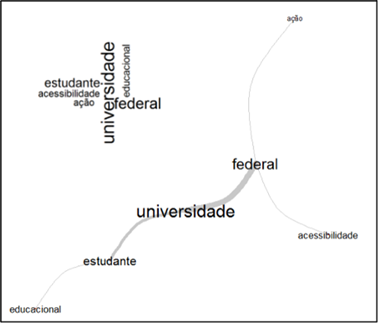
Figure 3: Similarity Analysis (SA) for Class 2
Source: Research Data.
'university ', 'student', 'action', 'accessibility' and 'educational'.
The text corpus for this Class (Figure 3) was also based on graph theory, and emphasized six words, one of which was identified in the class dendrogram (Figure 1), with the following added terms 'university ', 'student', 'action', 'accessibility' and 'educational'.
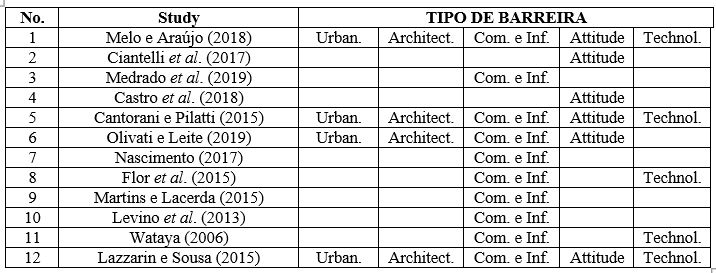
The data had the same groups as Class 1 relative to the type of disability studied. The first group in this class also comprised studies with more than one type of disability in the variables of the results and/or studies that diverge from studies on the Hearing or Visually impaired, with six studies for this group (Cantorani & Pilatti, 2015; Castro et al., 2018; Ciantelli et al., 2017; Medrado et al., 2019; Melo & Araújo, 2018; Olivati & Leite, 2019).
The main difference was the order of the other groups. The second group had more studies focusing on hearing impairments, i.e., four studies (Flor et al., 2015; Levino et al., 2013; Martins & Lacerda, 2015; Nascimento, 2017), and the third group focused on visual impairments with two studies (Lazzarin & Sousa, 2015; Wataya, 2006), as per Table 2.
Regarding the types of ABs in Class 2, literature showed the same barriers as Class 1, with only one exception, i.e., the Transportation barrier (Table 2), which was not a variable for any of the studies in this class.
Source: Research Data.
PwD process inclusion was a central theme in studies by Ciantelli et al. (2017), Medrado et al. (2019), and Melo and Araújo (2018). Melo and Araújo (2018), discussed the actions employed by the Federal University of Rio Grande do Norte (UFRN), mainly the activities carried out by its Accessibility Center. The data showed that students “have been seeking to secure their rights, and have been expanding their political participation, adding educational inclusion to the UFRN student movement agenda” (Melo & Araújo, 2018, p. 63).
Also focusing on Federal University Accessibility Centers, Ciantelli et al. (2017), studied actions undertaken by psychology professionals who worked at these centers. According to their results on Attitude barriers, the centers tended to carry engage in awareness programs, and hold lectures and campaigns to reflect on the physical differences between PwDs, prejudice, and ways of overcoming these issues.
Medrado et al. (2019), also studied inclusion, focusing on existing inclusion processes in pedagogical projects for courses at three Federal Universities. The authors stated that universities have invested in expanding debates on the matter, so the university can become more aware of the problems students with disabilities face, corroborating findings from Ciantelli et al. (2017). It is worth noting that the authors were adamant in stating that there is an urgent need for increasing the number of actions to overcome Attitude barriers.
Castro et al. (2018), focused on developing educational intervention competencies in a group of health students to improve knowledge on PwDs. According to their analyses, physical accessibility is an important factor that directly affects the quality of health services offered to PwDs. The data showed that students who received instructions on how to deal with PwDs felt more confident when offering more qualified services to them.
Cantorani and Pilatti (2015), studied accessibility at the Federal Technological University of Paraná (UTFPR), by looking at management reports from the Anisio Teixeira National Educational Studies and Research Institute (INEP). The data were controversial, because, according to the managers “it is not always possible to grant full accessibility, mainly due to budgetary issues, not saying that it does not exist” (Cantorani & Pilatti, 2015, p. 181). However, this manager also stated that INEP evaluators end up going easy in their evaluations, stating that the institution does all it can. The authors conclude that UTFPR does not meet normative and legal requirements, as per the Ministry of Education (MEC), in offering user accessibility.
Olivati and Leite (2019), addressed Autism Spectrum Disorders (ASD), describing the experiences of six university students. The authors stated that the university gave little support to students with difficult special educational needs, and did little to encourage enrollment strategies at the university. The study concluded that “it is still challenging to ensure that students with ASD have equal access to academic experiences like any other student would, because students are often blamed for their conditions (negatively)” (Olivati & Leite, 2019, p. 742).
Nascimento (2017), studied the hearing impaired, and the importance of applying an audiovisual production window using LIBRAS for linguistic accessibility. The author stated that a LIBRAS audiovisual production window needed to be added as a necessary resource for completely developing dialog and dialectic relationships with information presented in videos.
Flor et al. (2015), analyzed PwD auditory accessibility with the Moodle system at the Santa Catarina Federal Institute. The results showed a need for inserting material into videos using a LIBRAS window, and doing away with chats as a means of communication between tutors and teachers, since PwDs with hearing disabilities choose video conferencing for maintaining communication. Furthermore, the hearing impaired rejected using automated translators more.
Martins and Lacerda (2015), studied the ENEM, and conducted a survey to evaluate using the grades of the hearing impaired in enrollment application processes to HEIs. The results showed that in 2011, hearing impaired students obtained 360.82 points on average. According to the authors, this is a critical result, and may indicate the poor quality of basic education offered to these individuals.
Levino et al. (2013), reported on the experiences of medical students in a LIBRAS mini-course. The data showed that participants in the mini-course expanded their knowledge on the hearing impaired, and improved their communication skills. Additionally, the study affirmed that health professionals needed to learn LIBRAS to better serve their deaf patients.
Wataya (2006), focused on information technology contributions in educational training for the blind. Tests performed with DOSVOZ and JAWS to aid in reading TelEduc screens provided for better user accessibility. However, “the quality of each depends on the user handling and decoding what is read aloud to them on the screens, with the aid of screen readers” (Wataya, 2006, p. 240).
Lazzarin and Sousa (2015), also studied blind users, and evaluated the accessibility of the Online Public Access Catalog (OPAC) at the universities. The results were not satisfactory, since the OPAC could not fully meet the WCAG 2.0 proposals. The authors stated that accessibility, be it digital or physical, requires willing people providing equal rights for everyone, even within the university.
The next section offers a discussion of the results by linking all the barriers found in the sampled studies.
DISCUSSION
Analyzing the scientific articles on PwD accessibility at HEIs (n=45 articles) from the SciELO Brazilian Collection, which were indexed in the Web of Science, allowed us to observe that literature tends to address disabilities generically, i.e., without classifying disabilities as being either auditory, visual, or physical, etc.
The data on accessibility studies show that visual disabilities were the most common specific disabilities addressed in literature at ≅ 24% (n=11 articles) studies, followed by research on hearing disabilities at ≅ 16% (n=7 articles). Additionally, the last three years of the sample (2017 to 2019) stood out for having the most publications. 2017 specifically had the most publications.
We selected 37 studies, forming two classes, by separating the themes into classes, one for higher education in general, and the other specifically for Federal Institutes and Universities.
It is worth noting that the methodological procedure we used was valid. Of the studies not comprising the classes in Figure 1, four addressed accessibility for the visually impaired (Camargo, 2010; Camargo et al., 2008; Fialho & Silva, 2012; Novelli et al., 2014), while the other four studies addressed PwDs using non-specific variables (Diniz et al., 2019; Lamônica et al., 2008; Souza et al., 2019; Vianna & Pinto, 2017). Furthermore, the eight aforementioned articles had the same ABs comprising the other 37 articles in the study, as shown in Tables 1 and 2. Therefore, the standards proposed in accessibility research are maintained, not hindering Literature Reviews in this area.
Literature showed a clear leap forward in legal terms for PwD accessibility at HEIs over the years. The data are in line with findings from Oliveira et al. (2016), who highlighted the Ministry of Education's Inclusion Program as being one of the main public policies addressed in investigations on this topic.
Regarding the types of ABs found in the sample, considering Brazilian Inclusion Law No. 13,146/2015 (see Figure 4), Communication and Information barriers were most pronounced in literature, and were used as indicators in 39 of the 45 sample studies. This was followed by Technological barriers (n=23), Attitude barriers (n=19), Architectural barriers, and Urban barriers (both with n=17). Finally, Transportation barriers were least pronounced in literature with only 3 studies.
We should also highlight AB variable associations found in literature. According to Figure 4, one can see that studies researching Communication and Information barriers indicators tended to coincide with Technological barriers, and vice versa. Furthermore, research on Communication and Information barriers was mainly related to Attitude, Architectural, and Urban barriers.
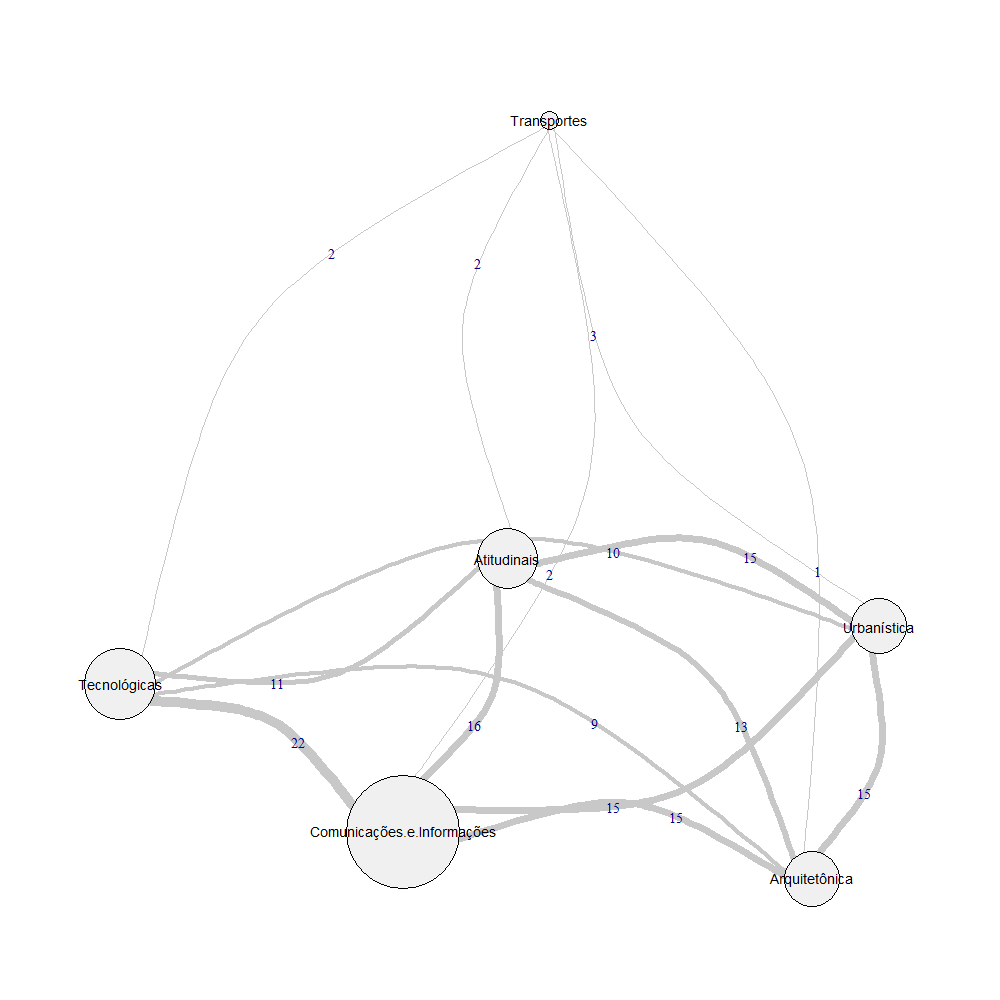
Figure 4: Associations between ABs
Source: The authors of this study.
‘Transportation’, ‘Technological’, ‘Attitude’, ‘Urban’, ‘Communication and Information’, and ‘Architectural’.
Studies addressing Architectural barriers were both associated with Communication and Information barriers and Urban barriers, which in turn deal with Attitude barriers, and vice versa, in addition to Communication and Information barriers, and architectural barriers. The next section provides the final considerations of this study.
FINAL CONSIDERATIONS
The objective of this study was to reflect on the difficulties that People with Disabilities (PwD) face in their daily lives, especially in achieving their Higher Education goals. This was done by analyzing publications on Accessibility Barriers (ABs) for PwD at Higher Education Institutions (HEIs).
We can conclude that literature on ABs for PwD at HEIs mostly investigates students at public HEIs, thereby not fully elucidating the real situation of students at private HEIs, nor the lives of other professionals linked to HEIs. There is, therefore, a research gap related to studies dealing with technicians, teachers, and outsourced workers at HEIs.
Accessibility research for PwDs seems to be moving toward researching Communication and Information barrier variables, despite the fact that Technological, Attitude, Architectural, and Urban barriers have also been mapped. It is clear that the lack of studies on Transportation barriers as a variable constitutes an opportunity for future research.
Studies addressing a specific disability or specific AB for HEIs mostly emphasize visual or hearing impairments, disregarding other disabilities. Therefore, researchers should also address other types of disabilities in society, and this is a further research opportunity.
This study has made no text classification distinction between deaf people and hearing-impaired people. However, literature shows an increasingly consolidated trend towards separating these two groups, given the linguistic and cultural differences between them.
We hope that our results can aid the Center for Inclusion and Accessibility of the Disabled (NIADI) at the Federal University of Tocantins (UFT), to assist them in managing existing institutional barriers (Architectural, Communication and Information, and Attitude barriers), in addition to showing that there are other important barriers that should receive attention, e.g., Urban Planning, Transportation, and especially Technological barriers.
The study was not an exhaustive examination of ABs for PwD at HEIs, since other studies have addressed this theme. However, they did not use the term 'accessibility' in their titles, abstracts, or keywords. This is one limitation of this study, which could be solved by using the word 'accessibility' as a methodological parameter for the Systematic Review of Literature, and 'by including ‘special education’, 'inclusive education', 'inclusion', and 'people with disabilities' as search criteria in future studies.
REFERENCES
Almeida, J. G. A. Ferreira, E. L. (2018), “Sentidos da inclusão de alunos com deficiência na educação superior: olhares a partir da Universidade Federal de Juiz de Fora”, Psicologia Escolar e Educacional, 22 (n. especial) 67-75.
Anache, A. A., Cavalcante, L. D. (2018), “Análise das condições de permanência do estudante com deficiência na Educação Superior”, Psicologia Escolar e Educacional, 22(n. especial), 115-125.
Branco, A. P. S. C., Almeida, M. A. (2019), “Avaliação da satisfação de estudantes público-alvo da educação inclusiva em cursos de pós-graduação de universidades públicas”, Avaliação: Revista da Avaliação da Educação Superior (Campinas), 24(1), 45-67.
Brunhara, J. A., Berberian, A. P., Guarinello, A. C., Biscouto, A. R., Krüger, S., Silva, D. V., Ferla, J. B. S. (2019), “Accessibility of people with disabilities to higher education: social attitudes of students and professors of a higher education institution”, Revista CEFAC, 21(3), 1-11.
Cabral, L. S. A., Melo, F. R. L. V. (2017), “Entre a normatização e a legitimação do acesso, participação e formação do público-alvo da educação especial em instituições de ensino superior brasileiras”, Educar em Revista, (especial 3) 55-70.
Camargo, E. P. (2010), “A comunicação como barreira à inclusão de alunos com deficiência visual em aulas de mecânica”, Ciência & Educação (Bauru), 16(1), 258-275.
Camargo, E. P., Nardi, R. (2008), “O emprego de linguagens acessíveis para alunos com deficiência visual em aulas de óptica”, Revista Brasileira de Educação Especial, 14(3), 405-426.
Camargo, E. P., Nardi, R., Veraszto, E. V. (2008), “A comunicação como barreira à inclusão de alunos com deficiência visual em aulas de óptica”, Revista Brasileira de Ensino de Física, 30(3), 3401-3413.
Cantorani, J. R. H., Pilatti, L. A. (2015), “Acessibilidade na Universidade Tecnológica Federal do Paraná: análise a partir de relatórios do Inep e do olhar do gestor”, Educar em Revista, (57), 171-189.
Carvalho, L. V., Carvalho, A. T., Áfio, A. C. E., Silva, A. S. R., Silva, M. G., Pagliuca, L. M. F. (2018), “Construction of assistive technology as online course for the blind about hypertension”, Revista Brasileira de Enfermagem, 71(4), 1970-1976.
Castro, S. F., Almeida, M. A. (2014), “Ingresso e permanência de alunos com deficiência em universidades públicas brasileiras”, Revista Brasileira de Educação Especial, 20(2), 179-194.
Castro, S. S., Rowe, M., Andrade, L. F., Cyrino, E. G. (2018), “Developing competencies among health professions students related to the care of people with disabilities: a pilot study”. Interface - Comunicação, Saúde, Educação, 22(65), 551-563.
Ciantelli, A. P. C., Leite, L. P. (2016), “Ações Exercidas pelos Núcleos de Acessibilidade nas Universidades Federais Brasileiras”, Revista Brasileira de Educação Especial, 22(3), 413-428.
Ciantelli, A. P. C., Leite, L. P., Nuernberg, A. H. (2017), “Atuação do psicólogo nos ‘núcleos de acessibilidade’ das universidades federais brasileiras”, Psicologia Escolar e Educacional, 21(2), 303-311.
Diniz, I. C. S., Almeida, A. M., Furtado, C. C. (2019), “University libraries: The role of an accessible campus on the inclusion of users with special needs”, Transinformação, 31, 1-12.
Fialho, J., Silva, D. O. (2012), “Informação e conhecimento acessíveis aos deficientes visuais nas bibliotecas universitárias”, Perspectivas em Ciência da Informação, 17(1), 153-168.
Flor, C. S., Saito, D. S., Pivetta, E. M., Ulbricht, V. R., Vanzin, T. (2015), “Acessibilidade do Moodle para surdos: abordagem dos discursos de surdos e ouvintes”, Transinformação, 27(2), 157-163.
Garcia, R. A. B., Bacarin, A. P. S., Leonardo, N. S. T. (2018), “Acessibilidade e permanência na educação superior: percepção de estudantes com deficiência”, Psicologia Escolar e Educacional, 22(n. especial), 33-40.
Gesser, M., Nuernberg, A. H. (2017), “A participação dos estudantes com deficiência física e visual no ensino superior: apontamentos e contribuições das teorias feministas da deficiência”, Educar em Revista, (n. especial 3), 151-166.
Instituto Nacional de Estudos e Pesquisas Educacionais Anísio Teixeira (2020), “Relatório técnico do censo da educação superior 2019. Brasília: MEC”. https://download.inep.gov.br/educacao_superior/censo_superior/documentos/2020/Apresentacao_Censo_da_Educacao_Superior_2019.pdf [Consulta: março de 2021].
Junqueira, R. D., Martins, D. A., Lacerda, C. B. F. (2017), “Política de acessibilidade e Exame Nacional do Ensino Médio (ENEM)”, Educação & Sociedade, 38(139), 453-471.
Lacerda, C. B. F., Gurgel, T. M. A. (2011), “Perfil de tradutores-intérpretes de Libras (TILS) que atuam no ensino superior no Brasil”, Revista Brasileira de Educação Especial, 17(3), 481-496.
Lamônica, D. A. C., Araújo-Filho, P., Simomelli, S. B. J., Caetano, V. L. S. B., Regina, M. R. R., Regiani, D. M. (2008), “Acessibilidade em ambiente universitário: identificação de barreiras arquitetônicas no campus da USP de Bauru”, Revista Brasileira de Educação Especial, 14(2), 177-188.
Lazzarin, F. A., Sousa, M. R. F. (2015), “Aspectos que interferem no acesso à informação e interação dos usuários cegos com o OPAC em bibliotecas universitárias”, Perspectivas em Ciência da Informação, 20(1), 75-91.
Lei nº 13.146, de 6 de julho de 2015. Institui a Lei Brasileira de Inclusão da Pessoa com Deficiência (Estatuto da Pessoa com Deficiência). Brasília, 2015. http://www.planalto.gov.br/ccivil_03/_ato2015-2018/2015/lei/l13146.htm [Consulta: março de 2021].
Levino, D. A., Souza, E. B., Cardoso, P. C., Silva, A. C., Carvalho, A. E. T. M. (2013), “Libras na graduação médica: o despertar para uma nova língua”, Revista Brasileira de Educação Médica, 37(2), 291-297.
Lima, A. S., Feliciano, K. V. O., Kovacs, M. H. (2015), “Acessibilidade à atenção fonoaudiológica em serviço de média complexidade”, Revista CEFAC, 17(2), 461-474.
Machado, T. R., Chaise, R. M., Elliot, L. G. (2016), “A meta-avaliação como instrumento de qualidade nas políticas públicas: o Programa Segundo Tempo”, Meta: Avaliação, 8(1)-20.
Maciel, C. E., Anache, A. A. (2017), “A permanência de estudantes com deficiência nas universidades brasileiras”, Educar em Revista, (n. especial 3), 71-86.
Marchand, P., Ratinaud, P. (2012), “L’analyse de similitude appliquée aux corpus textuels: les primaires socialistes pour l’élection présidentielle française (septembre-octobre 2011)”, Actes des 11eme Journées Internationales d’Analyse Statistique des Données Textuelles, JADT, 687–699.
Martins, D. A., Lacerda, C. B. F. (2015), “Exame Nacional do Ensino Médio e acesso de estudantes surdos ao Ensino Superior Brasileiro”, Pro-Posições, 26(3), 83-101.
Martins, S. E. S. O., Napolitano, C. J. (2017), “Inclusão, acessibilidade e permanência: direitos de estudantes surdos à educação superior”, Educar em Revista, (n. especial 3), 107-126.
Medrado, B. P., Mello, D., Tonelli, J. R. A. (2019), “Inclusive practices and policies in language teacher education courses”, DELTA: Documentação de Estudos em Lingüística Teórica e Aplicada, 35(3), 1-23.
Melo, F. R. L. V., Araújo, E. R. (2018), “Núcleos de Acessibilidade nas Universidades: reflexões a partir de uma experiência institucional”, Psicologia Escolar e Educacional, 22(n. espcial), 57-66.
Nascimento, L. M. M., Bocchiglieri, A. (2019), “Modelos didáticos no ensino de Vertebrados para estudantes com deficiência visual”, Ciência & Educação (Bauru), 25(2), 317-332.
Nascimento, V. (2017), “Janelas de libras e gêneros do discurso: apontamentos para a formação e atuação de tradutores de língua de sinais”, Trabalhos em Linguística Aplicada, 56(2), 461-492.
Nogueira, L. F. Z., Oliver, F. C. (2018), “Accessibility centers in brazilian federal institutions and contributions of occupational therapists for the inclusion of persons with disabilities in higher education”, Cadernos Brasileiros de Terapia Ocupacional, 26(4), 859-882.
Novelli, V. A. M., Hoffmann, W. A. M., Gracioso, L. S. (2014), “Ferramentas para mediação de fontes de informação: avaliação sobre seus usos em bibliotecas universitárias nacionais e internacionais”, Perspectivas em Ciência da Informação, 19(3), 30-51.
Olivati, A. G., Leite, L. P. (2019), “Experiências Acadêmicas de Estudantes Universitários com Transtornos do Espectro Autista: uma Análise Interpretativa dos Relatos”, Revista Brasileira de Educação Especial, 25(4), 729-746.
Oliveira, A. L. M., Resende, M. C. d. (2017), “Oficinas vivenciais: reflexões sobre direitos humanos de pessoas com deficiências”, Psicologia Escolar e Educacional, 21(2), 295-301.
Oliveira, A. S. R., Silva, I. R. (2017), “Políticas de inclusão social no ensino superior brasileiro: um estudo sobre o perfil socioeconômico de estudantes nos anos 2010 a 2012”, Educação em Revista, 33, 1-28.
Oliveira, C. B. (2013), “Jovens deficientes na universidade: experiências de acessibilidade?”, Revista Brasileira de Educação, 18(55), 961-984.
Oliveira, R. Q., Oliveira, S. M. B., Oliveira, N. A., Trezza, M. C. S. F., Ramos, I. B., Freitas, D. A. (2016), “A Inclusão de Pessoas com Necessidades Especiais no Ensino Superior”, Revista Brasileira de Educação Especial, 22(2), 299-314.
Ortega, S., Sergio, M., Yusef, H. (2013), “Análisis y evaluación de sitios web universitarios españoles a partir del proceso de Bolonia”, Perspectivas em Ciência da Informação, 18(4), 70-92.
Pereira, C. A., Oliveira, P. M., Reis, M. J. C. S. (2020), “Processos e metodologias não-tradicionais no Ensino Superior de Engenharia Elétrica: a percepção de coordenadores de curso em dois países lusófonos”, Meta: Avaliação, 12(34), 211-246.
Pivetta, E. M., Saito, D. S., Ulbricht, V. R. (2014), “Surdos e acessibilidade: análise de um ambiente virtual de ensino e aprendizagem”, Revista Brasileira de Educação Especial, 20(1), 147-162.
Porte, M., Saur-amaral, I., Pinho, C. (2018), “Pesquisa em auditoria: principais temas”, Revista Contabilidade & Finanças - USP, 29(76), 41-59.
Reinert, M. (1990), “Alceste une méthodologie d’analyse des données textuelles et une application: Aurelia De Gerard De Nerval”, Bulletin of Sociological Methodology/Bulletin de Méthodologie Sociologique, 26(1), 24–54.
Silva, J. S. S., Ferreira, W. B. (2017), “Sombreando a Pessoa com Deficiência: Aplicabilidade da Técnica de Sombreamento na Coleta de Dados em Pesquisa Qualitativa”, Revista Brasileira de Educação Especial, 23(2), 185-200.
Silva, J. S. S., González-Gil, F. (2017), “Acessibilidade, Gênero e Educação Superior: Indicativos Procedentes das Investigações Científicas”, Revista Brasileira de Educação Especial, 23(4), 607-622.
Siqueira, I. M., Santana, C. S. (2010), “Propostas de acessibilidade para a inclusão de pessoas com deficiências no ensino superior”, Revista Brasileira de Educação Especial, 16(1), 127-136.
Souza, N., Cardoso, E., Perry, G. T. (2019), “Limitações da Avaliação Automatizada de Acessibilidade em uma Plataforma de MOOCS: Estudo de Caso de uma Plataforma Brasileira”, Revista Brasileira de Educação Especial, 25(4), 603-616.
Vianna, W. B., Pinto, A. L. (2017), “Deficiência, acessibilidade e tecnologia assistiva em bibliotecas: aspectos bibliométricos relevantes”, Perspectivas em Ciência da Informação, 22(2), 125-151.
Wataya, R. S. (2006), “O uso de leitores de tela no TelEduc”, Interface - Comunicação, Saúde, Educação, 10(19), 227-242.