2018
151
 LUCIANA BONGIOVANNI MARTINS SCHENK
Universidade de São Paulo, Brazil
LEANDRO RODOLFO SCHENK
Universidade de Araraquara, Brasil
VISUAL ESSAY
THE DRAWING AND THE LOOK: TO LEANDRO
LUCIANA BONGIOVANNI MARTINS SCHENK
LEANDRO RODOLFO SCHENK
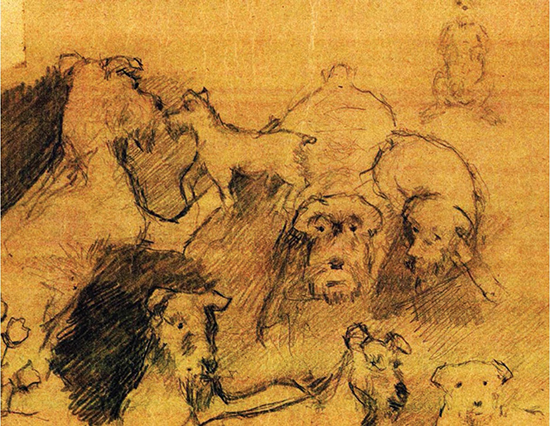
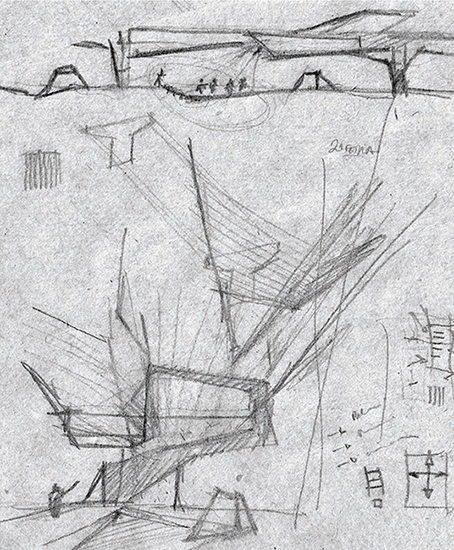
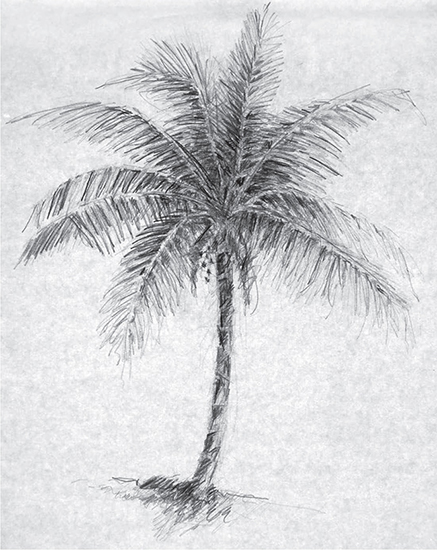
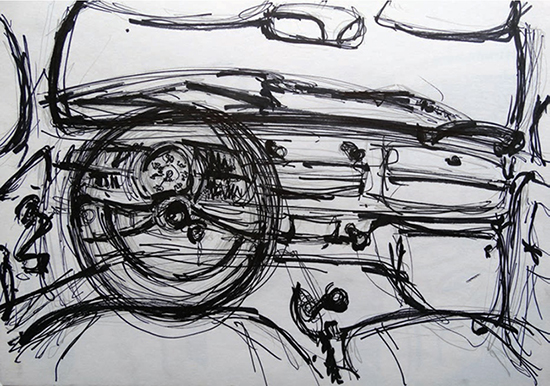
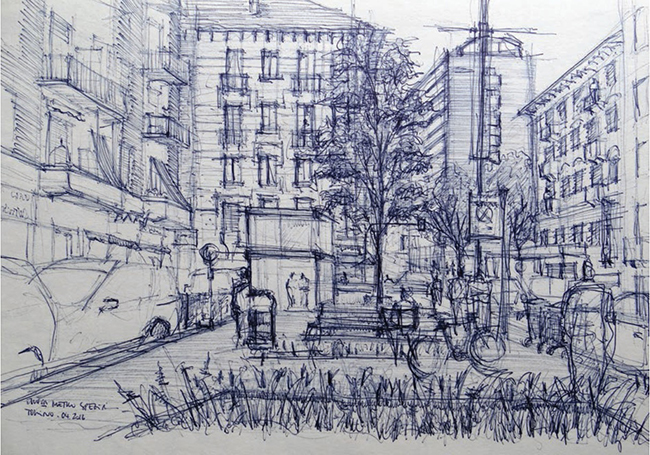
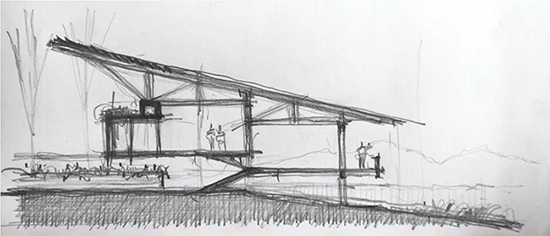
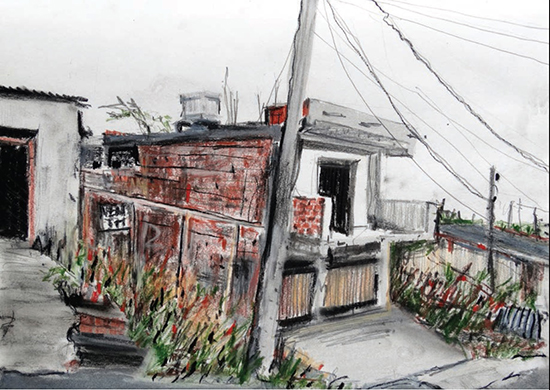
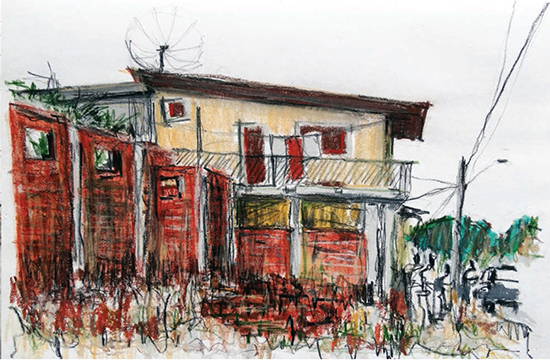
Drafting, foreshortening, croquis. A special pencil bought in a trip and carefully kept, or a ballpoint pen at hand at the precise moment. The paper too could be that one kept besides the special pen in the office’s most coveted drawer, where the preciousness of drawing and painting collected throughout the years is stored. Or it could be the most ordinary one of them, a calendar page, a napkin, a sheet of printing paper grabbed out of the copy-maker.
The reason, of our interest, is not exactly exterior, as one would firstly think of. The moment could be that meeting or planned event when the drawer’s objects travel along with their owner - short and long trips, all equally wanted for what moves these traces on paper, or seems to move this drawer is something that needs to be reported.
A story he tells about how he discovered the drawing’s potential testifies his perspective, shared with other authors, that everyone draws, anyone can draw. When he was a little boy, he watched an apartment neighbor drawing and was dazzled with that prodigy. At that time, he thought it was a gift, as we commonly do. But the little boy, that time in which we have wings, also imagined if he could draw like that.
For one of those chances that occur in life, he had at home a course from Instituto Universal Brasileiro, that claimed to teach drawing step-by-step. It was a time when curiosity and contacts were fed by printed letters and images: almanacs, encyclopedias, correspondence courses, and handwritten letters. The boy surrenders to drawing and discovers, following the fascicles, his own path.
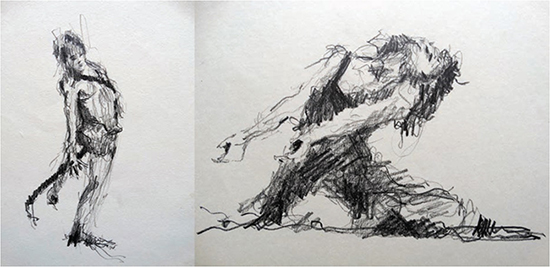
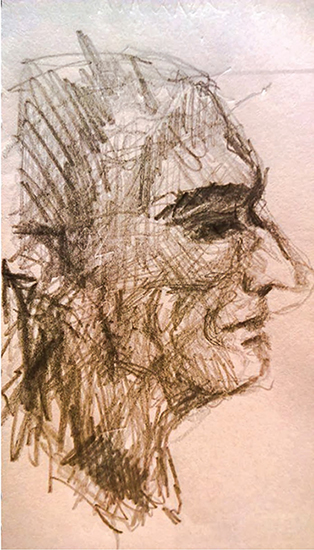
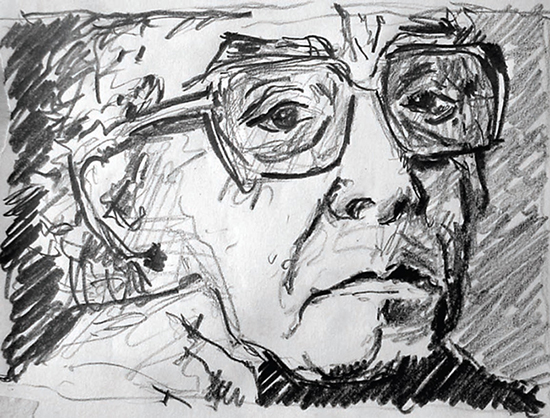
Drawing is not an end, but a means, path, movement. What is fundamentally developed is a look. It is not only about trained ability being developed, but of a daily coexistence with intuition.
There is no distance between the drawer and his drawing. When observed, his look captures memorable moments and banalities, places and absences. Drawing translates a paradox, its appearance is static, pencil on paper, ballpoint on napkin, but its genesis is a movement that goes from the world to the drawer, and comes back. What one sees is always creation, invention.
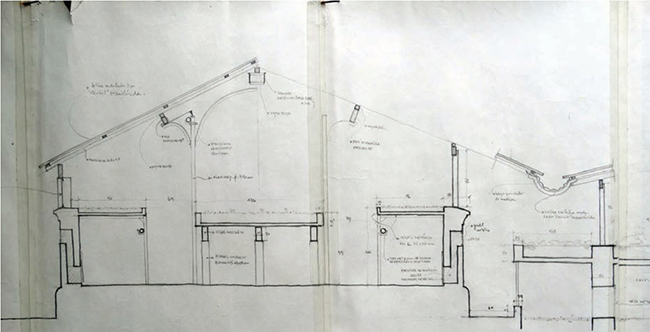
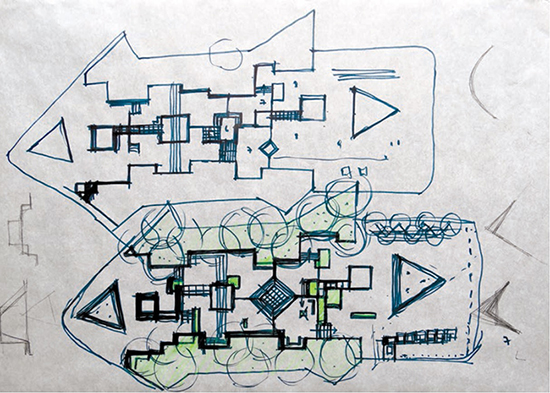
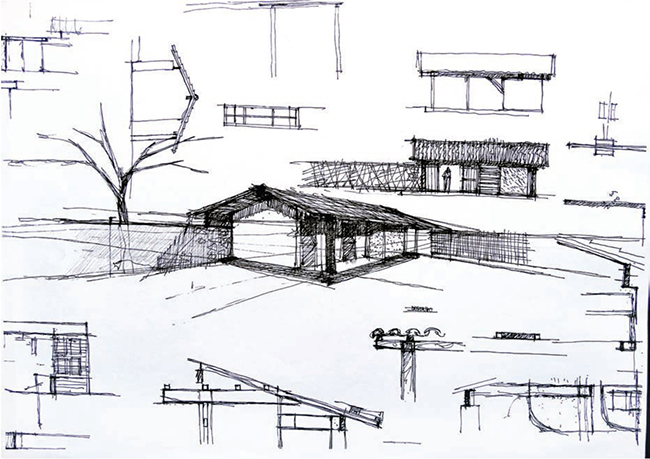
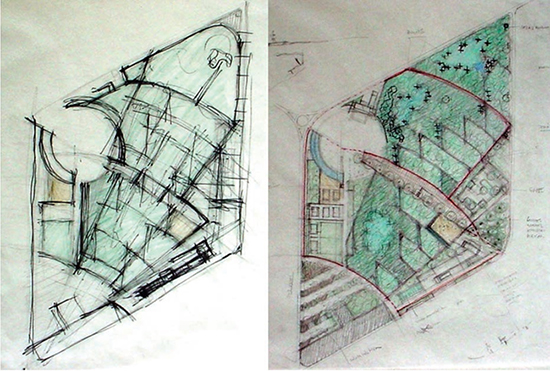
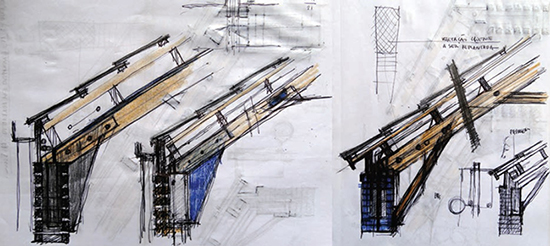
Such coexistence with intuition feeds into the architect, his hand prolonging his reflections and giving things shape. The reason for drawing, that we are interested in reporting, is inside the drawer, in the relation between perception and desire, one that moves intuition and reflection in the same line of thought, feeling, in design, solutions, and that enchains them: a sequence of drawings that makes this movement that concretizes its supposed solution visible.
Visiting his drawings is discrediting that the croquis will be overcome by virtual media, not because it is not able to amaze us - it certainly is, in many cases -, but specially because the process of generating these representations, calculated, mediated, breaks with the perspective of living with intuition that is vital to creation.
For that architect and urbanist, drawing is a vital need, a manifestation of the world coming into his eyes and going off his hands in an ever-present movement.
Correspondência para/Correspondence to: L.B.M. SCHENK | E-mail: <lucianas@sc.usp.br>.
