2019
263
28112017
28052018
 Georg Fischer fischer@cas.au.dk
Aarhus University. Aarhus, Denmark
Abstract: This article proposes an entangled perspective on nineteenth-century anthropological exhibitions. Whereas the existing scholarship mostly focuses on the receiving end of such displays or the agency of indigenous performers, this article argues for more stopovers and contextualization to grasp both the ambiguous position of non-metropolitan exhibitors like Brazil and the semantic transformations of traveling exhibits. In 1882, a group of Botocudo Amerindians was first taken to Rio de Janeiro and later put on display in Britain. Their presence in Rio sparked great interest, with lasting effects on the popular entertainment scene. Yet staring at them became a contested issue once they were taken to Europe, since Brazilians were concerned about becoming an object of Europe’s exoticizing voyeurism.
Keywords: anthropological displaysanthropological displays,popular culturepopular culture,sciencescience,national identitynational identity,indigenous peopleindigenous people.
Resumo: O artigo propõe uma perspectiva complexa sobre as exposições antropológicas do século XIX. Enquanto o foco acadêmico tem se concentrado na recepção dessas exposições ou na ação de performers indígenas, este artigo problematiza outros aspectos e contextos para compreender tanto a posição ambígua de expositores não metropolitanos, como o Brasil, quanto as transformações semânticas nas viagens dos indivíduos expostos. Em 1882, um grupo de ameríndios botocudos foi levado ao Rio de Janeiro e posteriormente exibido no Reino Unido. A presença deles no Rio de Janeiro atraiu muita atenção, deixando efeitos duradouros na cena do entretenimento popular. Quando foram levados para a Europa, contudo, os brasileiros contestaram a ação de observar os botocudos, preocupados em se tornar objeto de voyerismo exótico.
Palavras chave: exposições antropológicas, cultura popular, identidade nacional, povos indígenas.
ANALYSIS
“Where are the Botocudos?” Anthropological displays and the entanglements of staring, 1882-1883
“Onde estão os botocudos?” Exposições antropológicas e olhares entrelaçados, 1882-1883
Georg Fischer fischer@cas.au.dk
Received: 28 November 2017
Accepted: 28 May 2018
In early November 1882, Scottish railway engineer David Angus met a group of Botocudo Amerindians on his way to the hinterland of Vitória in the Brazilian province of Espírito Santo. In a letter to Mary, his fiancée in Edinburgh, he gave an overtly racist description of them, but also demonstrated awarenesss of the context of the encounter: “[W]e saw five of them here lately, who have been kidnapped and taken to Europe since for exhibition, so you may see them, we gave them some tobacco, ... the papers here are making a great roar about the kidnapping” (Angus, 10 Nov. 1882). This was the only time Angus came into contact with the Botocudos, although in his letters he constantly referred to the threat they posed to his mission of planning a railway line through the Doce River Valley, which at that time was densely forested and sparsely settled (Espindola, 2005; Bieber, 2017a). The Botocudos accompanied him in his imagination and reminded him of other “savages” he had seen at exhibitions in Britain.
Angus’s comment on the indignation of the local press calls for scrutiny. What was so scandalous about the Botocudos’ journey to Europe that even a foreigner without any knowledge of Portuguese would take note of the controversy surrounding their “kidnapping?”1 After all, ethnological exhibitions and displays of “savages” took place on a daily basis across the metropoles of the North Atlantic (Qureshi, 2011). To assemble its own representation at international exhibitions, the Brazilian Empire had mobilized scores of anthropologists and romantic artists, who used indigeneity as a marker of Brazil’s antiquity and difference (Schuster, 1 Sept. 2015). With varying success, the Brazilian Empire actively used the platform provided by the international exhibitionary complex that developed in the nineteenth century to promote itself as a modern nation and as a favorable destination for European emigrants (Schuster, 2015; Schwarcz, 2004, p.283-294; Sanjad, 2017).
This article examines human exhibits as a story of the politics of looking at others. To do so, I examine the public display of Botocudo Amerindians, first in Rio de Janeiro and then in different cities in England during 1882 and 1883. My assumption is that staring at “savages” was a gesture of power, and a tool to popularize a notion of supremacy based on an essentialist distinction between peoples within and without history. Yet how did this gesture play out when performers traveled, in an uncontrolled way, from the margins to the center of a “world as exhibition” (Mitchell, 1989)?
Three different themes dominate the historiography of human showcases: the organizational aspects and representational logics of display, their reception, and the agency of performers (Corbey, 1995; Bancel et al., 2002). Although historical research allocates different weight to each of these dimensions, most studies contain elements of all three. Existing scholarship centers on cultures of exhibiting humans in particular colonial empires, countries or cities – usually in Europe, North America or white settler colonies (Qureshi, 2011; Dreesbach, 2005; Andreassen, 2015; Schwarz, 2001; Staehelin, 1993; Eissenberger, 1996; Bruckner, 2003). These lines of inquiry have resulted in rich analyses of the practices and networks that contributed to the staging of people, as well as of European and North American modes of looking at and interacting with “exotic” people. Furthermore, they have taken up the challenge of reconstructing individual trajectories of performers and assessing possible spaces of agency. Yet the focus on metropolitan settings and audiences as well as individual routes neglects a significant portion of the history of the exhibitionary complex, namely non-metropolitan sites like Brazil and the semantic transformations the displays were subjected to as they traveled through different social contexts.
I argue that in order to capture the dynamics and geopolitics of representation, we have to follow its “objects” across different social contexts and national sites of contestation. This angle adds a new layer of complexity to the literature on ethnic displays, since it acknowledges that the world was not strictly divided into exhibiting and exhibited cultures. The case of human showcases from Brazil enhances our understanding of representation and power because it is rife with ambiguity. At one level, the strategy of “Othering” was widely applied internally as “orientalism in one country” (Weinstein, 2015, p.9-11; Said, 1987), which functioned not merely along racial and cultural divides, but also to mark the abyss between coast and hinterland, cities and sertões (Lima, 1998). Brazil’s elites adopted and co-developed Eurocentric regimes of ordering the world through visual and performative representation. Yet, within the “concert of nations,” Brazil had to struggle to become an exhibitor and not an exhibit or, to use Timothy Mitchell’s term (1989, p.219), to avoid “objectness.” These findings underscore Latin America’s in-betweenness in an era of globalization marked by colonialism, and resonate with the ongoing conversation on the region’s position in Global History narratives. The relative neglect of Latin America in this rapidly evolving field can been explained precisely with the region’s undecided status between the “West” and the “rest,” the metropoles and the colonies (Brown, 2015).
Methodologically, I adopt an entangled perspective that compares different phenomena and their contexts while registering their connectedness (Kocka, 2003): I compare the staging and the reception of the displays, while maintaining a focus on the Brazilian domestic context to understand how the displays abroad were contested at home. The approach ultimately leads us to the question of whether this contestation influenced the display’s framing in England. My narrative starts with the recruitment of a group of Botocudos on the upper Doce River in early 1882. Then I reconstruct how this group was displayed at the Anthropological Exhibition in Rio de Janeiro and how this display was received by different audiences. I next assess some reverberations of the Botocudos’ presence in Rio’s popular entertainment scene. In the section “Where are the Botocudos?,” I follow a group of Botocudos on an overseas journey that started a few weeks after the Rio exhibition. I admit that it is not entirely clear whether the members of this group were those same individuals in the first group, and there are some indications that they were not, which I discuss below.2 However, the sources present clear evidence that both parties were perceived as being the same, and the two cases were generally discussed in conjunction. I first examine the anxieties of the Brazilian public regarding the Botocudos’ trip to London by looking at criticism voiced in newspaper columns and (a rather unlikely arena) carnival parades. Finally, I consider the logics of display which actually determined the shows in London and other British cities.
On January 17, 1882, the provincial president of Espírito Santo, Herculano Inglez de Souza, received notice from the Imperial Ministry of Agriculture that he was to send a group of Botocudo Amerindians to the Anthropological Exhibition which was slated to open in Rio de Janeiro’s Museu Nacional in late July (Espírito Santo, 1882a, p.38). Souza sent state engineer João Cassiano Menezes, who was experienced in dealing with the Botocudos since he had worked in the demarcation of aldeias, state-sponsored indigenous settlements (Studart, 1910-1915, p.430-432). He was assisted by photographer Joaquim Ayres, who spent a month on the upper Doce collecting artifacts and skeletons, and producing an album containing 36 photographs of Botocudos (Lopes, 2002, p.42-45). Menezes returned in the company of three male and three female adult Botocudos, as well as an eight-year-old child whom he had “recruited” in Mutum, which with 140 inhabitants was the most populous aldeia on the upper Doce River near the border between Espírito Santo and Minas Gerais. One author cites a report by Menezes to maintain that the group resisted this displacement, but was lured back into the canoe with maize rations (Ataíde, 1935, p.16-19). Along with them traveled Tertuliano Rodrigues do Carmo, the interpreter at Mutum, and four boxes containing bows and arrows.
Although many naturalists and anthropologists construed them as a “dying race,” the Botocudos of the late nineteenth century were survivors. To be sure, the use of the term “Botocudo” is not meant to convey any ethnographic accuracy: since the second half of the eighteenth century, “Botocudo” denoted the semi-nomadic, non-submissive Amerindian groups belonging to the Macro-Jê linguistic family who lived between the Salitre and the Doce Rivers (Paraíso, 1992, p.413; Espindola, 2005; Duarte, 1998). The opening of the “forbidden lands” between the gold mining region in Minas and the coast of Espírito Santo following the arrival of the Portuguese court in Brazil resulted in genocidal “just wars” against them (Paraíso, 1992; Marcato, 1979; Bieber, 2014). From the beginning, the name of the group (which refers to the characteristic wooden plugs or botoques they wore in their lower lip and earlobes) bore negative connotations. Since the eighteenth century, “in practice … [t]he generic term Botocudo, in other words, was synonymous with enemy” (Langfur, 2002, p.224-225). After Independence, the Botocudos, or tapuias, figured in the emerging national culture inspired by indianism as the negative side of the tupi/tapuia binary, and generally came to represent everything that was supposedly degenerate about Brazil’s Amerindians.3
The Anthropological Exhibition took place as the Museu Nacional adopted more scientific curatorial practices in line with international standards. Founded in 1808 as one of João VI’s first measures to imbue the city of Rio de Janeiro with an air of metropolitan culture, for quite some time its exhibition halls featured more or less random curiosities, devoid of any systematic order. From the mid-1870s, its director Ladislau de Souza Mello Netto and João Baptista de Lacerda introduced innovations such as a scientific journal, which connected the institution with the international research landscape. From this time the museum followed the major trends in Darwinian natural history and physical anthropology, and its researchers applied conventional methods such as craniometry and bone measurements to position different peoples in the hierarchy of human evolution (Schwarcz, 1999; Santos, 2010). While European museums became staffed as well as stuffed with people and objects from overseas colonies, Brazilian anthropologists could acquire “specimens” a mere 500km north of the capital.
On June 30, the Botocudos and their interpreter arrived at the museum and moved into a hut in Campo de Santana Park (Indios…, 2 July 1882). Ladislau Netto could not hide his disappointment, since he had originally asked for 20 Botocudos. Nevertheless, recognizing the difficulties “to remit these savages to him, mistrustful and yearning for their forests,” and that it had been necessary to “deceive” them to accompany Menezes, he pledged to “compensate them with presents and to bring them into contact with the artifacts of their brothers” (Exposição…, 2 July 1882).
The Botocudos soon adopted a daily routine. Every day at noon, they walked over to the museum premises and returned at four in the afternoon (Exposição…, 7 July 1882). On the one hand, these human exhibits were supposed to literally inhabit the display in what Andermann (2007, p.81) calls the “classic horror movie plot of the museum exhibit coming back to life.” Like the representatives of other indigenous peoples on display in the museum, they were supposed to act “normally,” and on the first day they started playing the flute and shooting arrows (Exposição…, 2 July 1882). They performed dances in front of visitors, who they treated with marked indifference according to the newspaper reports (Os botocudos, 20 Aug. 1882). The organizers hoped that the Botocudos’ use of instruments, tools, and weapons would create an authentic experience for the visitors and alleviate the group’s homesickness. On the other hand, the exhibition also contained the objectified dead; we have no record on whether the group also interacted with the 13 skulls, five skeletons, and two pelvises of Botocudos which were on exhibit in the museum’s Lund Hall (Guia…, 1882, p.39-43).4
The Botocudos were put to different uses by different people. Anthropologists measured them and speculated about their origin and racial kinship (Morais Filho, 1882),5 and Emperor Pedro II inspected them while they were “lending themselves to the work which addresses their physical characteristics” (Museu…, 4 Aug. 1882). They were expected to assist in the development of a Botocudo vocabulary (Os botocudos, 20 Aug. 1882), and artists painted them. Anchieta Hall featured older depictions of Botocudos that were part of the legacy of European travelers, more recent paintings from photographs, and portraits produced in situ by Décio Villares and Aurélio de Figueiredo. Villares painted “the boy Thomé” and 16-year-old Nazareno, while Figueiredo portrayed 60-year-old Thomaré (Andermann, 2007, p.64-65). The portraits, which according to Andermann (2007, p.82-83) failed to reconcile positivist realism and indianism’s eroticizing aesthetic, added another mode of objectification to the display.
The inhabitants of Rio de Janeiro avidly stared at the Botocudos. From the time the group arrived at the museum, they were besieged by a curious crowd. This became a serious problem for the organizers, since preparations were disturbed by a “wave of folk waiting for the poor savages to welcome them with some proof of equivocal admiration” (Exposição…, 9 July 1882). The Gazeta tried to alleviate the situation by suggesting that “to see them at will,” people should gather at the gates whenever they walked over to or returned from the museum. Ladislau Netto ultimately decided to resettle the Botocudos outside of town “until they could be seen by the people in a convenient way” (Exposição…, 7 July 1882).
Yet there was a consensus that people were entitled to see the Botocudos, and new means were required to render this possible. The Gazeta claimed that Netto had an obligation to the non-scientific audience to share his curiosities, reconciling the “demands of the public” with his scientific interests. Visual access to the Botocudos was certainly not limited to the upper echelons of society; before the official inauguration of the exhibition, Netto arranged a public display at a fire station. He initially intended to collect an entrance fee, which was to be divided equally between the Botocudo perfomers and their interpreter Tertulanio (Exposição…, 9 July 1882). Later it was decided that visitors should pay an amount they deemed adequate (Exposição…, 5 Aug. 1882). Entrance to the official exhibition was free and permitted to anyone “decently dressed” (Exposição…, 29 July 1882). However, the public’s curiosity was beyond all expectations, and for the sake of public safety Netto decided to exhibit the Botocudos on a regular basis for three hours in the museum park (Exposição…, 6 Aug. 1882).
Some commentators voiced concerns over the way Rio treated the Botocudos, but their criticism can be read as an elitist broadside against the popular classes entering a museum. In allusion to the natives’ alleged anthropophagic habits, the Revista Ilustrada described the relationship between showcases and audience as one of reversed roles, as the Botocudos “feared to be devoured by public curiosity” (Schwarcz, 1999, p.83; Monteiro, 2001, p.170). The Jornal do Commercio denounced the “persecution” of the group by their “uncomfortable admirers” and the ridiculing of the botoque by some of the group members (Microcosmo…, 16 July 1882). The popular cultural appropriation of the Botocudos by the residents of Rio did not stop after they left the capital.
In late August, the Botocudos traveled home. The scientists could no longer ignore the melancholic mood and weakening health of some of their “guests.” Ladislau Netto accepted that he had to refrain from some scientific work he had planned. At the pier before embarking for Vitória, the group received their last presents from the museum director (Partida…, 31 Aug. 1882).
The absence of the Botocudos coincided with the appearance of savage performances in Rio’s popular spaces of culture and entertainment. In September and October 1882, the Companhia Dramatica performed the comedy Os botocudos, written by Francisco Moreira Sampaio and with musical accompaniment directed by the renowned composer Carlos Cavalier Darbilly. The first act was set at the Anthropological Exhibition, depicting comendador Pancrácio and his wife Amélia, who are among the crowd looking at the Botocudos. These visitors are already in awe as they stare at the ferocious Indians; they are suddenly startled even more by pickpockets, and mayhem ensues. Amélia faints and happens to fall into the arms of her secret lover, an engineer, who takes her home to care for her. The following day, Pancrácio (portrayed by the popular actor Xisto Bahia) returns to the museum, concerned with his wife’s disappearence. As he searches the empty halls he finds a shinbone, which convinces him that the Botocudos took advantage of the previous day’s confusion: “Those devilish caboclos ate my wife!” (Teatros, 1882). The other two acts are humoresque variations of themes like love, death, and magical reappearance (Teatro…, 2 Oct. 1882; Teatros, 1882). The display within the play offered a sequel to the delightful shudder many must have felt during their visit to the museum, and contributed to what one critic called the “splendid success” of Os botocudos (Teatros e…, 25 Oct. 1882). Other critics were less convinced by the play’s storyline and the acting (Salões..., 10 Oct. 1882). A more nuanced view was expressed by a critic who thought the play, although it contained “fairly interesting scenes,” failed to impress the audience because its script was too far from reality (Os Botocudos, 10 Oct. 1882).
Os botocudos provides evidence of the effects that this display had beyond the immediate exhibition site. It demonstrates how ethnic stereotypes acquired the status of conventional wisdom through repetition, as Rio’s residents continued to stare at the Botocudos and (one step beyond) observed themselves staring at the Botocudos. While the reception of the Botocudos in Rio did not differ substantially from the ways similar showcases were appropriated by popular audiences in Europe or North America, things became more complicated once the exhibits started moving, as I shall show in the next section.
In late October 1882, Crimilde Barata Ribeiro applied to the police in Vitória to have passports issued for himself, his wife, and five Botocudo “servants” (criados) – possibly four former members of the group on display in Rio and an interpreter.6 Crimilde registered a trip to Europe on behalf of the Empresa Industrial do Rio Doce and signed the necessary paperwork, including a liability statement. He bought clothes and dressed the Amerindians. On November 3, 1882, the steamer Ville de Bahia made an irregular call at the port of Vitória. In a canoe, Crimilde, his wife, and his brother Atanagildo (a navy officer and engineer) transported the five Botocudos over to the vessel. The couple and the natives entered the ship and departed for Le Havre. Atanagildo and the pilot, whom the Barata Ribeiro brothers had employed to navigate the vessel into the bay, rowed back to the shore. An angry crowd reportedly awaited them on the beach, furious over the Botocudos’ kidnapping; the people had noticed the event because a sick indigenous woman who was unable to travel had been left behind in the sand. The two fled and boarded a train back to Rio.
This episode raised suspicions, and the matter was hotly debated during that year’s Christmas season. Why would a couple need five servants on a trip to Europe? Why would they choose servants who, with the exception of the interpreter, did not speak Portuguese? Why had the police chief not consulted the Orphans’ Court, which was responsible for the economic activities of Amerindians (Botocudos, 9 Dec. 1882)? Newspapers started speculating about the real purpose of the trip. The Corsario warned that the Botocudos would be exhibited “like wax figures” in Paris and that the European winter would mean their certain death (Baratas…, 16 Dec. 1882). The Gazeta called for public intervention, given that the Botocudos were legally underage and had to be protected from “being exploited as rare objects” (Publicamos..., 25 Nov. 1882).
Clearly, arguments highlighting the personal rights of the Botocudos veiled other anxieties that had more to do with Brazil’s image abroad. A series of caricatures published in the Revista Ilustrada in late 1882 shows that the critics of the journey of the Botocudos were less concerned with the well-being of the performers than with the reputation of the Brazilian Empire. What was at stake was not only the way the Botocudos would be exhibited: people were much more concerned about how Europeans would view them, not as some aspect of Brazil’s antiquity, but as representatives of contemporary Brazil. According to this perspective, while the gazes directed at the Botocudos in the Rio exhibition ascribed them the status of scientific curiosities or objects of popular entertainment and were thus largely unproblematic, the imagined European stare would interpret them as a materialization of Brazil’s savagery and unsuitability for civilization. The caricature of Emperor Pedro II as a Botocudo cacique expressed this idea while simultaneously adding a dimension of mockery.
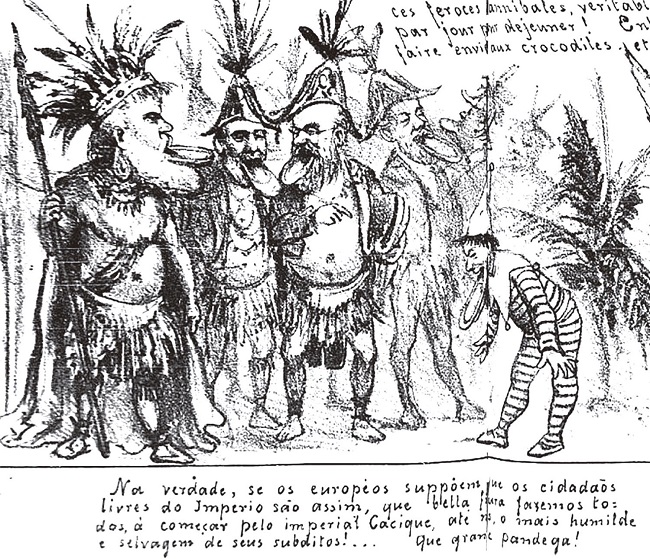
The social and economic transformations prefigured by the gradual demise of slavery formed a backdrop for the ensuing debate. In particular, the Revista Ilustrada pointed to the potentially negative impact of such savage displays on Brazil’s attempts to attract European immigrants. Policies to boost immigration not only responded to the economic needs of planters, but also reflected a widespread belief that only Europeans could uplift Brazilian society and remove the negative stigma slavery had produced around manual labor. At the same time, the ideal of “whitening” Brazilian society gained followers among the governing elites (Skidmore, 1974, p.24). For large parts of the governing elite, Europe was the natural point of cultural reference, and its demographic surplus was expected to aid Brazil in its internal civilizing mission. But a paradox persisted up until the abolition of slavery: while Brazilian politicians saw immigration as a solution to the stigmatization of work, the continuing presence of slavery was a major impediment, since immigrants would compete with captives and not encounter internal markets to sell their agricultural products (Costa, 1966, p.70). The caricature in the Revista Ilustrada implied that this situation would become even more complicated once Europeans realized that “savages” ranked higher in the social hierarchy than African-descended slaves.
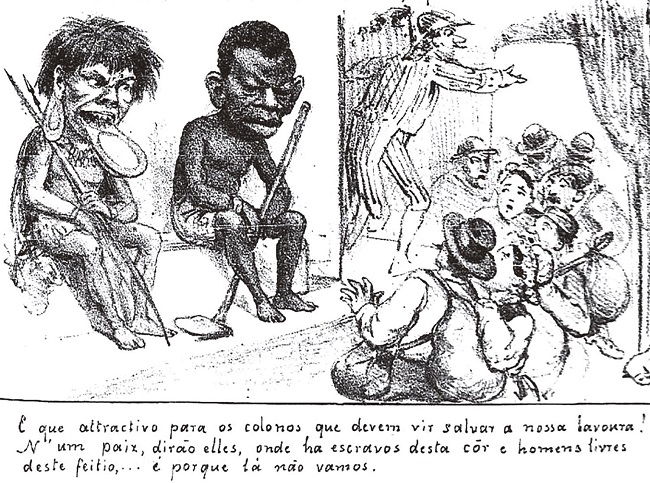
However, this general context was enmeshed with the particular history of inland Espírito Santo. This became clear on December 24, when Atanagildo Barata Ribeiro finally publicized the motives behind his brother’s voyage after lengthy discussions of the Botocudos’ abduction, defending the Amerindians’ right to conduct their own businesses (Ribeiro, 24 Dec. 1882). Using Crimilde’s long-standing business contacts in Britain, the idea was to find a colonization company and attract immigrant settlers to the Doce River Valley. To convince his partners and the public at large that this valley was suitable for European colonists, the Baratas sought to re-brand what was widely perceived as the most prominent obstacle to the development of Brazil’s Eastern sertão: its indigenous population.
The settlement of inland Espírito Santo led to stories of violent clashes between colonizers and Botocudos that reverberated internationally. One incident with lasting repercussions was the tragic end of the Francilvânia colony in 1860; this settlement had been established in 1856 by Nicolao França Leite, and involved an alleged case of cannibalism (Fischer, 2008, p.63-64). Whether these reports are true or not, it is significant that the incident was still remembered throughout the region decades later, as can be seen in Angus’s letters and the travel account of William Steains, a British railway engineer who traversed the region in 1885-1886 (Angus, 10 Aug. 1883; Steains, 1888, p.66). Less violent but still marked by cultural estrangement were the encounters between the Botocudos and American southerners from Alabama, who established a settlement on the Doce River between 1866 and 1869 (Keyes, 1966, p.170). The late 1870s and early 1880s saw a number of attacks on settlements near the border between Minas and Espírito Santo. Groups of Botocudos raided Mutum, stealing foodstuffs and tools. Provincial president Marcellino Tostes responded by demanding increased efforts to bring immigrants to the Doce (Espírito Santo, 1882b, p.42).
In an attempt to portray the kidnapping of the Botocudos as legitimate, Atanagildo conjured up the negative image of the frontier in Espírito Santo and argued that the British public needed a counter-narrative. Crimilde planned to exhibit his collection of Botocudo artifacts alongside the people who produced them, “as a living demonstration that the natives are not resistant to civilization, but to the contrary aspire to know what is beyond the seas, adapt to our customs, learn our language, and only flee when facing destruction from the iron and fire with which the whites have tried to proselytize them.” The Botocudos would be presented as “pioneers” who would assist the Europeans in acquiring the space necessary to accommodate “the rising wave of proletarians which threatens to destroy the bases of their own society.” Even if the Amerindians did not prove to be well-suited for regular agricultural labor, the “docile tribes” could act as the guardians of white settlers and protect them from the “ferocious tribes.” In this sense, Atanagildo insisted that the exhibition of the Botocudos had an “industrial purpose” (Ribeiro, 24 Dec. 1882b).
The explanation that displaying the Botocudos would mitigate concerns among potential European emigrants and capitalists failed to convince the critics. To maintain public interest, the Gazeta repeatedly printed short reminders and poems: “Tell me, oh dear Barata, / Where are the Botocudos?” (Motte…, 27 Dec. 1882). An article that claimed to be a translation of an article in the London Times described how the Botocudos visited the British House of Commons, interrupted a speech by the opposition leader Churchill, and later gave an interview to the British press (Os botocudos em Londres…, 13 Jan. 1883; Lopes, 2002, p.46). Although their reputed motive was to study British institutions in order “to introduce them to their native forests,” they were radically critical of British mores, clothes, the language, climate, and lack of body adornments. They admitted the superiority of British weaponry, and planned to take some of it back home to Espírito Santo. This article ran in newspapers in Espírito Santo and Minas Gerais and was seemingly taken for an authentic English publication, although it was most likely a satirical piece by a Gazeta writer. As was later the case with similar pieces in English newspapers, this text articulated its criticism by ridiculing the idea of symmetrical encounters between European civilization and the Amerindian Other.
For over six months there was no news about the group in Rio de Janeiro. Yet this did not mean that the controversy was forgotten; on the contrary, after the stage success of Os botocudos another popular cultural reference reveals the remarkable extent of public awareness about Botocudo affairs. In February 1883 several carnival societies made the journey of the Botocudos to Europe the target of their satire and mockery. In a pufe (the main musical theme of the parade) entitled “The botocudos in Paris,” one of Rio’s leading carnival groups, the Club dos Fenianos, imagined the Amerindians meeting the people of Paris. It described the Botocudos as “Coming from the great jungle / Where the snake’s hiss sighs,” as the antithesis of urban modernity. Yet the joyful performance and exotic appearance of the indigenous travelers in the song broke down cultural and racial barriers: “As we stretch our long lip, / The cocottes will cheer in delight. / They even might – life is blissful – / Give us gentle fillips.” Clearly, since the exhibition’s opening, Rio residents had invented “their” Botocudos: exotic and uncivilized, but also funny, irreverent, and notably Brazilian: “Exhibiting such a new offspring, / Our fatherland, Brazil, will rejoice” (Clube…, 6 Feb. 1883).
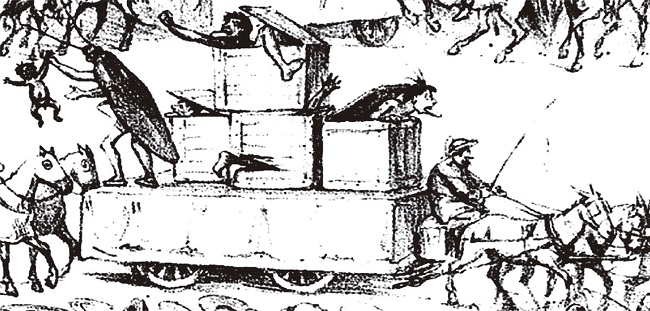
The displays went beyond exoticizing or ridiculing depictions of “savages,” and several carnival associations playfully picked up the controversy surrounding the kidnapping of the Botocudos. Next to displays discussing urban problems like transportation, gas supply, and smallpox, the Club dos Progressistas da Cidade Nova featured a float with four Botocudos in boxes. They were exhibited by the “famous Barata” (cockroach), an allusion to the Barata brothers involved in the abduction in Espírito Santo three months earlier (Club…, 4 Feb. 1883).
This was not the only reference to the kidnapping. Os Democraticos had a cockroach conducting a Botocudo orchestra (O carnaval, 4 Feb. 1883). The above-mentioned pufe presented by the Fenianos also described the Botocudos as “protected by the big cockroach.” Accordingly, one of their floats featured a group of Botocudos wearing European upper-class couture without trousers, accompanied by a giant cockroach crammed into a hole on the top of a globe, symbolizing their journey around the world (O carnaval, 7 Feb. 1883; Revista Ilustrada, 1883).
The 1883 carnival shows the Botocudos’ continuing presence in the popular culture of Rio. Moreover, the mock savage performances and their allusion to the controversial journey of these natives document the mediatization of carnival, since they hint at a vivid dialog between newspapers and foliões.7 To be sure, carnival societies were largely a middle-to-upper-class affair.8 Most members of Os Fenianos were intellectuals, students and journalists. Members of Os Democraticos had to pay a fee high enough to keep to the working classes out. These associations were social venues where people met to read and discuss the newspapers or to attend lectures. In contrast, the Progressistas da Cidade Nova attracted middle- and working-class people from peripheral neighborhoods (Cunha, 2001, p.107-119). Hence, the carnival performances did not merely reflect a lettered middle-to-upper-class worldview and humor. The journey of the Botocudos resonated with a broader audience, since it spoke to people’s memories of the previous year’s savage spectacles.
The question of where the Botocudos were going shows that those who intervened in public debates were aware that the international exhibitionary complex offered a variety of modes of display, all of which implied different frames of seeing. World fairs allowed for comprehensive assemblages and panoptic vistas meant to permit comparison of “specimens,” whether these were technical devices, pieces of art, agricultural produce or humans (Benedict, 1991; Qureshi, 2011; Geppert, 2002). Displays of groups or individuals organized by impresarios like the Baratas were set in different contexts (for instance zoos, native villages, or freak shows), all of which contained different claims to authenticity and appealed to different specters of the public (Bruckner, 2003).
Members of European learned societies had remarkable prior knowledge of the Botocudos. This knowledge came from three main sources: first, the Doce River Valley was a popular destination among savant travelers, given its proximity to Rio de Janeiro and the anthropological curiosities it harbored. Descriptions of the Botocudos were certainly a selling point for accounts published by such characters as Spix and Martius, Eschwege, Wied-Neuwied, Saint-Hilaire, Hartt, and Biard. Second, skulls and bones conveyed craniometrical data which was used to situate the Botocudos among the history of mankind (Riedl, 1996). The first expert on Botocudo craniometry was Göttingen-based anatomist J.F. Blumenbach (1820, p.170-172). Skulls were circulated by tomb raiders, including some of the travelers mentioned above, but were also given as presents by Brazilian state officials: in 1875 Emperor Pedro II, a science enthusiast, donated four Botocudo skulls to the Völkerkundemuseum in Berlin, which were then studied by Rudolf Virchow (Rey, 1880, p.15-16; Ehrenreich, 1887). Third, before 1883 at least seven Botocudo groups or individuals had crossed the Atlantic to be exhibited in various circumstances. In 1821, a Botocudo couple presented to Austrian traveler J.E. Pohl by a Portuguese army officer was displayed in the Vienna Volksgarten (Riedl, 1996, p.121-122; Goldmann, 1985, p.254-255; Schmutzer, Feest, 2014). In 1822, a Botocudo couple was shown in London together with a Puri boy, in an exhibit which, according to King (1987, p.247), “crudely emphasized sex, savagery, exotism, and the blessings of Christianity.” Between 1822 and 1825, the impresario Carl Ingermann displayed a Botocudo in Leipzig and Göttingen who had allegedly survived a shipwreck off Heligoland. This performer purportedly learned some German and became friends with Blumenbach (Der junge…, 23 Apr. 1825). Another Botocudo showcase took place in Basel, Switzerland, in 1837 (Staehelin, 1993, p.24-25; Dreesbach, 2005, p.28). “Joachim Quäck,” Wied-Neuwied’s travel guide, spent 17 years at Neuwied Castle and became a curiosity among the prince’s friends and visitors before his early death in 1834 (Riedl, 1996, p.120-121). After 1844, daguerrotypes of two Botocudos who were brought to Paris by a Marcus Porte formed part of the collection of the Musée de l’Homme (Morel, 2001).
These different sources of knowledge compounded images that were widely popularized and constructed the Botocudo as the antonym of European civilization. As early as 1834 the German Damen Conversations Lexikon (Damen..., 1834, p.148-149) explained that the “Botokuden” were “a savage Brazilian people, some individuals of which have been brought to us by travelers and put on display. They lack almost any culture, piercing their lips and ears with big wooden plugs, which is why they bear the name Botocudos, they have no permanent residence, are very tough, lead incessant wars, and eat their enemies.” Works like Alfred Brehm’s Tierleben (Animal life, published from 1863), which drew heavily on Wied-Neuwied’s descriptions, and Darwin’s The descent of man (1871) helped to further popularize the Botocudos in Europe. There were national differences though: while Botokuden was a standard entry in German lexica, no such entry appeared in the Encyclopaedia Britannica before its eleventh edition, published in 1911. In German parlance, Botokude was a word commonly used to express primitivity, disorderliness or ugliness.9
When the London display opened in June 1883, it revealed the tensions between popularized notions of savagery, commercially exploitable exoticism, scientific curiosity, and the pioneer trope. First, newspaper ads invited the public to see “the most peculiar and savage tribe in the world” (Classified…, 26 May 1883). Shortly after, newspapers published announcements in Portuguese which simply announced “a family of the Botocudo tribe” (Notice..., 30 May 1883). Did the Brazilian impresarios try to control the meaning of the exhibit? Indeed, in an announcement in the Times, Crimilde played on the same “industrial” themes Atanagildo had emphasized. His intent as a “commercial colonizer” was to resignify the Botocudos, transforming them from “dangerous savages” into people who could “be easily induced to work, and with kind treatment and proper direction might be made instrumental in the development of the natural wealth of their land.” Scientists were addressed by introducing the group as “an interesting glimpse of survival of the stone age” (Brazilian…, 18 June 1883). Crimilde reinforced the “industrial” framing of the display in a paper delivered on June 21 (Barbarians…, 21 June 1883). The exhibition included skulls (12 of Botocudo origin), crafts, and weapons, as well as other native Brazilian artifacts. However, the announcement mentioned none of the otherwise salient features of the Botocudos as imagined by the European public, namely the botoques and cannibalism.
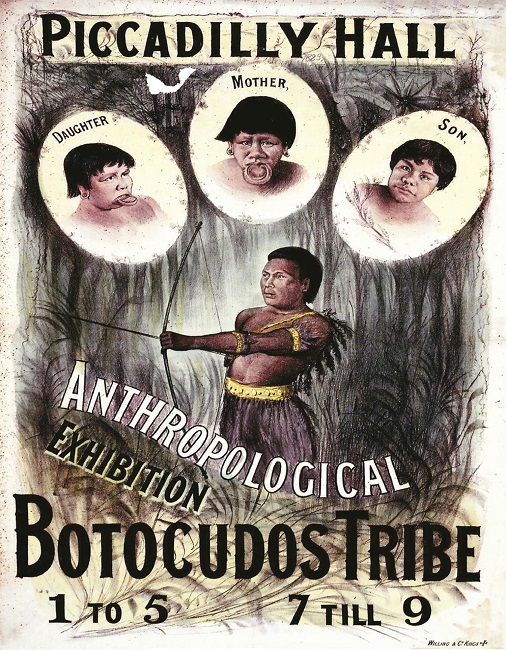
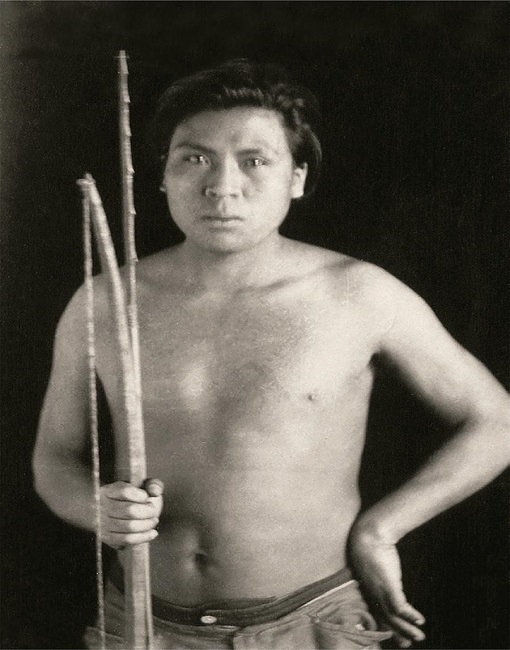
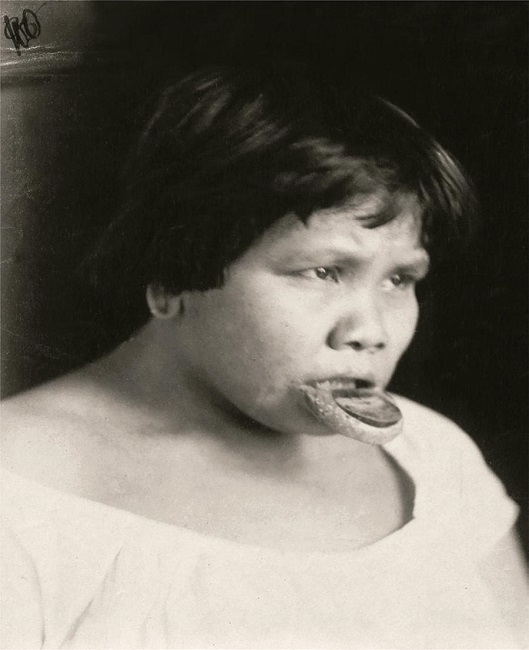
The exhibition poster sent equally ambiguous messages. It emphasized the scientific character of the display, foregoing aesthetic references to savagery. Yet at the same time it invoked a romantic visual repertoire, depicting the head of the family in an upright posture surrounded by virgin forest, wearing golden craftwork and feathers. The degree of fantasy invested in the poster by the graphic designers (Willing and Co.) becomes even clearer when compared with the template photographs made during a previous shooting. One shows the Botocudo performer Francisco with a bow, arrow, and bare torso, but without any of the markers of romantic indianism. The women are dressed in the photographs but their torsos are bare in the poster. Still, the drawings on the poster did attempt to capture their facial expressions in a very realistic fashion.
It appears that the show did not fail to attract popular interest. In a piece highlighting both the Botocudos’ “cannibalism” and Barata Ribeiro’s “strong wish to see the natural riches of the country thrown open to Europe,” one newspaper called it “one of the best [shows] in London,” (The large class..., 23 June 1883). It was particularly well-received among the anthropological community, and members of the Anthropological Institute accepted Barata Ribeiro’s invitation to inspect his party and his collection (Weekly…, 1883, p.807). The paper held on site by the Irish ethnologist and racial theorist A.H. Keane is an instructive source for understanding how scientific knowledge production occurs in socio-spatial settings and concrete encounters. Keane reviewed the scholarship on physical features, cultural practices, and the language of the Botocudos. This “view from nowhere” (Shapin, 1998) is constantly interrupted by references to the scientists’ interactions with Crimilde’s party: how they discussed the group’s skin complexion in relation with existing scholarship (the scientists eventually agreed on “light yellowish brown”), how the mother’s body permitted general observations about Botocudo gender relations and how these findings related to Ernst Haeckel’s model of human evolution, how the anatomist and specialist in “anthropometamorphosis” W.H. Flower measured the mother’s botoque and how these measurements compared with similar adornments used by peoples elsewhere in the world (Keane, 1884, p.200-206).10 Keane does not mention any verbal communication with the group, but cites Crimilde as the key informant regarding the authenticity of certain findings. For instance, he had to “authenticate” one of the group members, namely the female interpreter: “One of the women, in fact, was so animated, and of such a light complexion, that I felt strongly inclined to regard her as a half-caste until assured by Mr. Ribeiro that she was really a full-blood native, though brought up in a missionary’s home, which may partly account for her ‘brio’ and lively temperament” (Keane, 1884, p.203). This cultural in-betweenness may explain the absence of this young woman from the exoticizing exhibition poster, while she mysteriously appears in a drawing published in an illustrated tabloid, described as “the youngest daughter (civilised),” which depicts the Botocudos as carefully dressed and without any resemblance to the romantic aesthetic aimed at the popular audience.
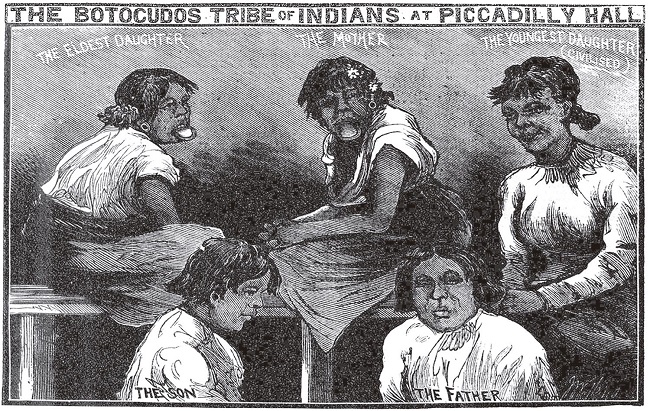
In another British source, we find a perspective on the Botocudo performances which up to this point was absent from the literature on ethnic displays, but may require more attention: an imperial gaze which (at least satirically) imagines its own objectness. One author at The Globe imagined the Botocudos as a delegation of the “Anthropological Institute of Botocudoland” carrying out research on “the manners and customs of the white men,” including the exotic implements they wore on their noses, their strange handshakes, and the “fondness for palavers” which was particularly developed among “anthropologists” (Savage…, 1883). Just like the Brazilian piece on the Botocudos in Westminster, this text represents a form of cultural defamiliarization and self-reflection.
The journey of the Botocudos continued to Manchester, via Sheffield. After the display’s success in London, the impresarios now broke free of some of the rhetorical constraints. The Anthropological Exhibition now became a “Museum of South American Curiosities” (or “Wonders”). The Sheffield show was advertised as having the patronage of Emperor Pedro II and “endorsed by the Anthropological Society and the London Press as being one of the Most Marvellous and Interesting Exhibitions in the World.” Crimilde became a “celebrated Brazilian Explorer,” and visitors were promised a trip back in time “to the most remote and primitive savage life with all its surroundings” (The Royal Exhibition, 3 Aug. 1883). Visitors would witness Indian songs, dances, and music at the two daily receptions, during which the Botocudos “good humouredly submit to a close inspection by the audience” (The Botocudos…, 25 Aug. 1883; Cutler’s Hall, 4 Aug. 1883). We finally lose track of the party after they performed in Manchester in early September 1883.
The journey of the Botocudos allows for deeper introspection about the logics of display than a mere focus on the receiving end of the exhibitionary complex. In examining the display in Rio, we find the same ambivalence between science and spectacle that characterized ethnic showcases everywhere. Before, during, and after the exhibition, local residents imagined the Botocudos as the nation’s internal Other. But as the Botocudos embarked upon their journey, the strategy of Othering became enmeshed with the contradictions inherent to Brazil’s ambiguous position in the geopolitics of staring. Critics in Brazil expected the Botocudos to be inserted into the logics of the international exhibitionary complex. However, although ethnic displays had become a genre with its own international grammar, issues that referred specifically to the social and economic context of pre-abolition Brazil were indeed used to frame the performances in England. The ways different audiences stared at the Botocudos consequently became part of a complex history of entanglements. This perspective not only decenters the European and North American gaze, but also adds new players to the history of colonial modes of representation and perception in a globalizing world. The historiography of ethnic displays should make more stopovers in order to become more sensitive to semantic shifts between different historical contexts.
This entangled perspective on ethnic displays shows that “Botocudo” was one of many signifiers that reassured urban Brazilians and white Europeans of their place in the world and the legitimacy of their respective civilizing missions. Much of this term’s meaning had been stabilized through previous circulations of knowledge. Thus, the journey of the Botocudos was a moment of renegotiation and reinforcement of established tropes, as it allowed for the imagining of new stories or new variations of old stories. On the one hand, it was widely held for quite some time in Europe that the Botocudos were curious remnants of the Stone Age which would disappear with the advance of civilization (Steains, 1888, p.83). Yet some voices defended the ability of the Botocudos to be “perfected,” arguing for their integration into capitalist society. In Brazil, missionaries, administrators and provincial presidents emphasized the Botocudos’ human condition and potential contributions to the economic development of the Doce River Valley.11 The undertaking by Barata Ribeiros, regardless of its ulterior motives, represented this “humane” approach.
Examination of the journey made by the Botocudos in 1882/1883 and the various reactions shows that we cannot fully understand the framing and the reception of this display if we limit our focus to the metropolitan crowd’s “lust of looking” (Bruckner, 2003). In complex ways, people in Brazil mixed their own experience as onlookers with what they knew about the imperial gaze from the center. It is nevertheless difficult to assess whether the outcry over the exhibition in Europe was an expression of underlying social or cultural transformation. There has not been a systematic investigation into whether earlier or later anthropological displays provoked comparable reactions. Did Brazilians talk about Quäck’s life in the Rhine Valley? Did anybody notice the exhibitions of other Brazilian Amerindians? We cannot discard the possibility that the attention aroused by the 1882/1883 displays was an exception; several factors may have boosted the magnitude of this incident. The newspapers played an important role, with the Republican, abolitionist Gazeta de Notícias scandalizing the “kidnapping,” while the conservative, monarchist Jornal do Commercio was more apologetic about the enterprise. The spirit of a new generation of scientists introducing curatorial innovations to Brazilian anthropology was another factor. Carnival was gradually becoming a politicized event attended by all social classes. Ultimately, the heightened sensibility toward looming social and economic change as abolitionism and Republicanism gained force should not be underestimated. Cross-regional comparison could further explore these factors.
David Angus, the young Scotsman who saw the Botocudos in Vitória, later imagined his own gaze upon them. After his companion Hamilton asked if he had visited the Crystal Palace to see the ethnic displays, David wrote to Mary that “we might … romance about [the Botocudos] to our friends when we got back, but [Hamilton] drew attention also to the fact that they are shown there with spears and not bows and arrows, we have seen none of them yet and I don’t know whether they wear spears or bows and arrows, but he said we could tell them they wore bows and arrows, and poisoned arrows too” (Angus, 24 Oct. 1882). David, who certainly knew the rules of the imperial gaze, had been to the frontier in Espírito Santo, and his friends would probably believe him.
I wish to thank Clarissa Neher, Derek Pardue, William Clarence-Smith, and the three anonymous reviewers at HCSM for their valuable comments.