Research Article
Assessment and prioritisation of innovation project driven by enterprise strategy using a Fuzzy-QFD approach
 Matheus Henrique Kupka
Eduardo de Freitas Rocha Loures
Matheus Henrique Kupka
Eduardo de Freitas Rocha Loures
Assessment and prioritisation of innovation project driven by enterprise strategy using a Fuzzy-QFD approach
Production, vol. 34, e20240083, 2024
Associação Brasileira de Engenharia de Produção
Received: 01 August 2024
Accepted: 08 November 2024
Funding
Funding source: Conselho Nacional de Desenvolvimento Científico e Tecnológico
Contract number: 306710/2020-0
Funding
Funding source: Pontifícia Universidade Católica do Paraná
Contract number: 001/2020
Funding
Funding source: Robert Bosch CtP
Contract number: TA10/2020
Funding statement: The authors would like to thank the Pontifical Catholic University of Paraná (PUCPR), Robert Bosch CtP, and the National Council for Scientific and Technological Development for the financial support of this research (Conselho Nacional de Desenvolvimento Científico e Tecnológico (CNPq) – Grant: 306710/2020-0. Pontifícia Universidade Católica do Paraná (PUCPR) – Grant: 001/2020. Robert Bosch CtP – Grant: TA10/2020).
Abstract
Paper aims: This paper aims to develop and validate a Maturity Analysis and Prioritization framework for Innovation Projects (MAPIP) using a Fuzzy-QFD approach to enhance decision-making and alignment with organizational strategies in the metal-mechanical industry.
Originality: The study introduces a novel application of the Fuzzy-QFD model, integrating 40 criteria across desirability, feasibility, viability, and maturity stages to create a tool for prioritizing innovation projects.
Research method: The MAPIP Fuzzy-QFD approach was applied to two innovation projects within a metal-mechanical company, each differing in novelty and complexity. The methodology involves assessing projects based on maturity stages while evaluating strategic alignment through fuzzy logic to handle qualitative and uncertain data.
Main findings: Results indicate that Project 01 achieved a higher maturity level than Project 02, suggesting that the model effectively identifies projects with higher strategic potential and readiness for market entry. This confirms the model’s robustness in evaluating and prioritizing projects with multiple characteristics.
Implications for theory and practice: This research expands the applicability of Fuzzy-QFD in innovation management, demonstrating its utility in project prioritization. Additionally, the MAPIP Fuzzy-QFD approach provides organizations with a tool for optimizing resource allocation and strategic alignment in project selection, supporting competitive advantage in complex industrial sectors.
Keywords: Innovation+ Fuzzy-QFD+ Maturity assessment+ Metal-mechanical industry.
1. Introduction
Manufacturing industries continually face challenges in creating new technological solutions for products, services, and production processes to remain competitive and meet customers’ needs. However, high product quality or effectiveness in their production process is not enough to overcome the imposed challenges of the global market. In this context, innovation projects (IPs) emerge as essential mechanisms for introducing new ideas, solutions, and production techniques that not only address existing issues but also minimize uncertainty and control costs (Zheng et al., 2023).
Innovation can generally be divided into two models: closed and open. Closed innovation involves an internalized approach where all activities are conducted within a company, providing the advantage of strict confidentiality and competitive edge maintenance (Şener & Hobikoğlu, 2013). However, such projects often incur higher costs and pose difficulties in testing, limiting scalability (Ruffatto et al., 2015). Alternatively, open innovation fosters external partnerships and a collaborative research and development (R&D) environment, optimizing resources and fostering creativity (Wu et al., 2022).
Developing new products or service involves subjectivity and uncertainty, requiring maturity assessment methods that facilitate an analytical approach to evaluate the project and confirm its adherence to the company's strategic plan (Mottin De Andrade et al., 2023). Existing research has explored different enterprise maturity assessments, such as Saihi et al. (2023), Rigoni et al. (2017), Claire et al. (2014) and Guédria et al. (2011) or project maturity assessment (Khani et al., 2023; Catto & Maccari, 2021; Johansson et al., 2020); however, no holistic approach currently combines both maturity and prioritization in alignment with enterprise strategies.
Multi-criteria decision-making (MCDM) methods may support workers in decision-making, especially when dealing with critical process. MCDM methods offer a structured approach for evaluating projects based on diverse, often competing, quantitative and qualitative criteria, enabling decision-makers to balance factors such as strategic fit, technical feasibility, and market desirability. In the context of innovation, where subjective evaluations and uncertainty are prevalent, MCDM methods, particularly those incorporating fuzzy logic as Fuzzy-QFD, allow for nuanced handling of imprecise data (Reda & Dvivedi, 2022; Mello, 2020). By employing MCDM in innovation project selection, organizations gain a more systematic, objective, and flexible framework for decision-making, making it easier to focus resources on projects most aligned with strategic goals, ultimately enhancing the potential for innovation success and sustainable growth (Gruenhagen et al., 2021; Makate et al., 2019; Liu, 2011). Based on this context, the main research question of the paper is: How can the Fuzzy-QFD model be applied to assess and prioritize innovation projects to align with an enterprise's strategic goals effectively?
This research introduces a maturity analysis and prioritization of innovation projects (MAPIP) using a Fuzzy-QFD approach. This solution provides a structured maturity assessment framework to prioritize innovation projects in alignment with the company’s business strategy. Additionally, it contributes to the scientific community by offering:
-
This study presents a approach for evaluating project maturity, designed to support companies in developing innovative products and enhancing their product development processes.
-
The approach offers a comprehensive, customer-focused perspective on product development, grounded in strategically aligned evaluation criteria.
The remainder of the paper is structured as follows: Section 2 discusses the foundations of innovation projects in the Metal-Mechanical sector to support the problem definition. Section 3 explores the material and methods to help the purpose of the MAPIP Fuzzy-QFD method. Section 4 dedicates itself to conceptualizing the MAIP Fuzzy-QFD Concept. Section 5 presents the MAPIP Fuzzy-QFD Validation in two projects, and finally, Section 6 discusses the results, prominent advantages, and limitations of the research.
2. Foundations of innovation projects in the metal-mechanical industry
Innovation serves as a critical driver of growth, competitiveness, and adaptability in the rapidly evolving industrial setting. It involves the process of transforming new ideas, products, or processes into tangible improvements or commercial success (Chibás et al., 2013). Especially in industries experiencing rapid technological shifts or intense global competition, such as the metal-mechanical industry, innovation becomes a key differentiator (Strašek et al., 2020). The metal-mechanical sector is characterized by a need for durable, high-performance products, stringent quality standards, and cost-efficient production methods (Carrillo et al., 2024).
Innovation in this field can take various forms, including product, process, service, and business model innovation (OECD & Eurostat, 2018). Product innovation may involve the development of new materials or technologies that enhance strength, durability, or environmental performance. Process innovation often focuses on optimizing manufacturing processes, such as through automation or digitalization, to increase efficiency and reduce costs. Service innovation in the metal-mechanical industry might include offering advanced maintenance or predictive analytics services that add value to the product lifecycle, while business model innovation could involve adopting more flexible manufacturing setups or exploring new market segments (Snihur & Wiklund, 2019).
For innovation projects in the metal-mechanical industry to be successful, they must align with the overarching goals and strategies of the organization. Strategic alignment ensures that resources are allocated effectively and that projects contribute to the company’s long-term vision of growth, efficiency, and compliance with industry regulations (Ghonim et al., 2022). Portfolio management is a useful tool in this context, allowing organizations to balance project risks and returns, selecting projects that best support the company’s mission (Martinsuo, 2013). Innovation projects in this sector can serve as a powerful competitive advantage by allowing companies to launch disruptive products, reduce production costs, improve product quality, or capture new markets (Hadjinicolaou et al., 2021). Organizations that consistently leverage innovation often find themselves at the front of their industries, able to meet standards and respond to changing market demands.
To manage the complexity of innovation projects in the metal-mechanical industry, several frameworks provide structured approaches, each catering to different project needs. One widely used framework is the stage-gate process, which divides a project into sequential stages separated by decision points or “gates” (Cooper, 2014). This process ensures systematic evaluation at each step, allowing for careful planning and risk assessment before advancing. Agile methodologies are also common in innovation projects, especially those requiring rapid iteration and user feedback (Ciric et al., 2018; Claire et al., 2014). Another valuable tool is the Fuzzy-QFD (Quality Function Deployment) model, which is particularly useful in managing projects with complex, qualitative goals (Reda & Dvivedi, 2022). This model integrates fuzzy logic, allowing it to handle subjective judgments and data uncertainties that are typical in innovation projects within the metal-mechanical field.
Additionally, evaluation and prioritization are essential for innovation projects in the metal-mechanical industry to ensure that resources are directed toward initiatives with the highest strategic and operational value. Key evaluation criteria include feasibility, desirability, and viability, each providing a unique perspective on a project’s potential (Hunsaker & Thomas, 2017). Feasibility assesses technical capabilities, particularly critical in a field where precision and durability are essentiall (Saimoto et al., 2018). Desirability focuses on user and market alignment, ensuring that projects meet the demands of a highly competitive market (Legenvre & Gualandris, 2018). Viability examines the economic potential of the project, an important factor given the substantial capital investments common in the metal-mechanical industry (Kankaanhuhta et al., 2021; Bahrami et al., 2019; Dennehy et al., 2019). Multi-Criteria Decision-Making (MCDM) methods like Analytic Hierarchy Process – AHP (Saaty, 2005), PROMETHEE (Singh et al., 2021), and Fuzzy-QFD help (Juan et al., 2009) organizations prioritize projects by weighing these criteria (Mottin De Andrade et al., 2023). Each method has its strengths; for example, AHP is ideal for hierarchical decision-making, PROMETHEE excels in ranking preferences, and Fuzzy-QFD addresses qualitative judgments through fuzzy logic. Additionally, maturity models, such as Technology Readiness Levels (TRL) and Manufacturing Readiness Levels (MRL), provide structured ways to assess project readiness for market entry. Therefore, the maturity analysis and prioritization of innovation projects (MAPIP) approach combines fuzzy logic with QFD to offer a comprehensive approach to assessing maturity and strategic alignment.
3. Maturity analysis and project prioritisation in innovation projects
Maturity analysis models are tools used to evaluate the degree of progress of an organisation in different issues and to establish action plans to advance in achieving set objectives, helping objectify the shreds of evidence of the implementation of the processes (Rigoni et al., 2017). Maturity analysis relies on the proposed Technology Readiness Level (TRL), Manufacturing Readiness Level (MRL), or Incremental Improvements Level (IIL) (Glogovac et al., 2022; Arruda & Silva, 2021; Sjödin et al., 2018). The assessment numerically quantifies the maturity of an Enterprise Process or Manufacturing Process, making it feasible to design processes using best practices for constantly developing activities, together with a maturity assessment model that identifies how project training should evolve (Suliman & Rankin, 2021).
In (Casakin & Wodehouse, 2021), the authors carried out a systematic literature review to study the existing maturity levels in the literature and evaluate the creative design process in developing innovative product projects. Additionally, the authors explored the maturity levels in more details in the research of (Wodehouse & Casakin, 2022). Based on the context, it was possible to classify innovation process into four stages:
1. Ideation: Focuses on generating diverse ideas to address identified problems without considering technical feasibility or economic viability.
2. Preparation: Evaluates product attractiveness, technical feasibility, and strategic fit, while initiating requirements and risk management and developing preliminary product models.
3. Validation: Tests and refines concepts, developing a proof of concept or prototype to validate the business model.
4. Incubation: Involves initial product sales to verify business scalability, establishing production, marketing, and logistics processes to confirm profitability.
Project maturity analysis provides a measure of an organization’s ability to effectively and efficiently manage various project models to achieve its objectives (Kwak & Park, 2021; Min et al., 2011; Pereira et al., 2021; Visscher et al., 2021). While a standalone maturity assessment yields valuable insights, it often lacks a prioritization component essential for aligning projects with strategic goals. Thus, there is a need for methodologies that not only assess maturity levels but also evaluate the entire innovation project portfolio. Such methodologies enable the establishment of a robust ranking system based on multiple criteria to classify projects by priority (Samanlioglu & Ayağ, 2020). This comprehensive approach facilitates the strategic allocation of resources to projects with the greatest potential to achieve organizational success and fulfill long-term objectives (Michnik, 2018).
3.1. Fuzzy-QFD model
The QFD model is a concept map used for inter-functional planning and communication. Generally, you can categorize a QFD system into four interconnected phases: product planning, part of implementation phases, process planning, and production planning (Liu & Wang, 2010; Ozgormus et al., 2019). Customers or product developers evaluate most input data in QFD. Using linguistic terms instead of numbers to describe individuals' perceptions allows for a more straightforward expression of the assessed values in linguistic terms. (Wang et al., 2020; Afsharkazemi et al., 2012). For example, in QFD, customers can evaluate the importance of evaluation criteria in various terms, such as “extremely important”, “strongly important”, and “very important”. However, these linguistic terms are often inaccurate or vague. Therefore, they are treated as indistinct rather than more appropriate (Maputi & Arora, 2020). The fuzzy set theory deals with subjective, unclear, or inaccurate information. Consequently, fuzzy sets can accurately quantify these imprecise or incomplete linguistic terms. The logic of fuzzy sets, also known as fuzzy logic, aims to deal with the imprecision and uncertainty present in some data, modelling approximates rather than distinct modes of reasoning (Lee & Park, 2021; Lima-Junior & Carpinetti, 2016).
The fuzzy-QFD model combines fuzzy algebraic operations with the prioritisation and relationship matrices (what and how matrix, respectively) from the QFD technique. In this work, a simplified approach from the one developed by (Juan et al., 2009) combines fuzzy triangular numbers and algebraic operations to calculate the element weights of the what and how matrices. We chose this approach because of its versatility, unambiguity, and practical implementation (Dursun & Arslan, 2018; Guédria et al., 2015; Lima-Junior & Carpinetti, 2016).
The fuzzy-QFD model comprises four main components, as illustrated in Figure 1. The identification of evaluation criteria (Detail 1 and 2 of Figure 1) is derived from the definitions proposed by (Hunsaker & Thomas, 2017) and (Keeney, 1992) that they must be essential, controllable, complete, measurable, operational, isolatable, non-redundant, clear, understandable. The requirements are weighted using the linguistic judgment of the criteria presented by experts (Detail 3). Evaluators conduct the maturity assessment within the innovation projects (Detail 4) using their proposed linguistic decision. Finally, tasks are allocated within the maturity levels (Detail 5) offered by the assessment framework (Juan et al., 2009; Vimal et al., 2019).
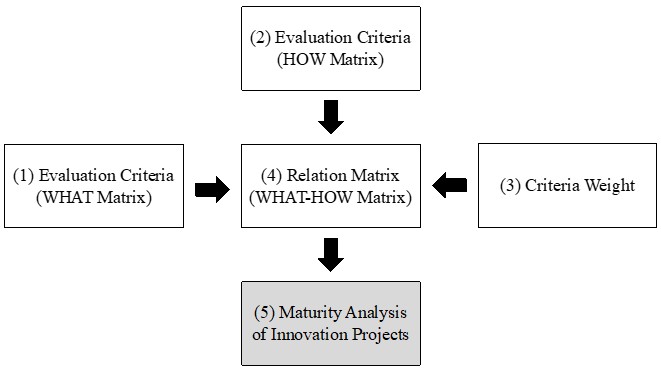
Figure 1
The simplified approach was proposed by (Juan et al., 2009).
4. Maturity analysis and prioritisation of innovation projects through Fuzzy-QFD concept
For this research, we adapted a simplified approach of the fuzzy-QFD model presented in Figure 1 to create the maturity assessment and prioritization of innovation projects considering the enterprise strategy. The maturity analysis and prioritisation of innovation projects (MAPIP) through fuzzy-QFD comprises three main steps, as shown in Figure 2.
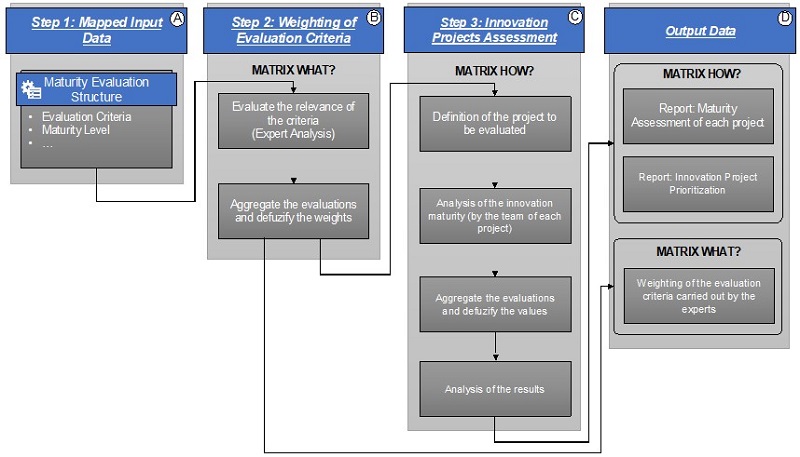
Figure 2
The architecture of the MAPIP Fuzzy-QFD approach.
-
Step 1: Input Data – It extracts information about the innovation projects and evaluation criteria.
-
Step 2: Fuzzy-QFD What Matrix – It deals with the definition of weights for each of the forty criteria proposed. Four innovation project management experts validated these weights by filling out a form since the fuzzy approach is appropriate for consensus view aggregation under uncertainty (Guédria et al., 2011).
-
Step 3: Fuzzy-QFD How Matrix – It is focused on the maturity assessment of the projects. The teams working on each project complete this task by filling out a form containing the same forty criteria. These two data collections in the form of answers composed of linguistic variables are transformed into normalised and defuzzified fuzzy numerical variables, generating real numbers that serve as parameters for the maturity assessment of each project.
The output data suggests two reports: (i) a Maturity Assessment of each project and (ii) Innovation Project Prioritization. The expert also reports the weighting of the evaluation criteria for use in the projects' evaluation. Therefore, MAPIP Fuzzy QFD fills the gap with other approaches that limit themselves to assessing the level of maturity without prioritising projects or focusing on prioritising projects without a prior assessment in the light of organisational strategy.
4.1. Maturity evaluation structure
As a starting point for the approach, two main inputs from the literature review were established for Step 1 - Mapped Input Data (Detail “A” of Figure 2): (a) the evaluation criteria and (b) maturity assessment levels.
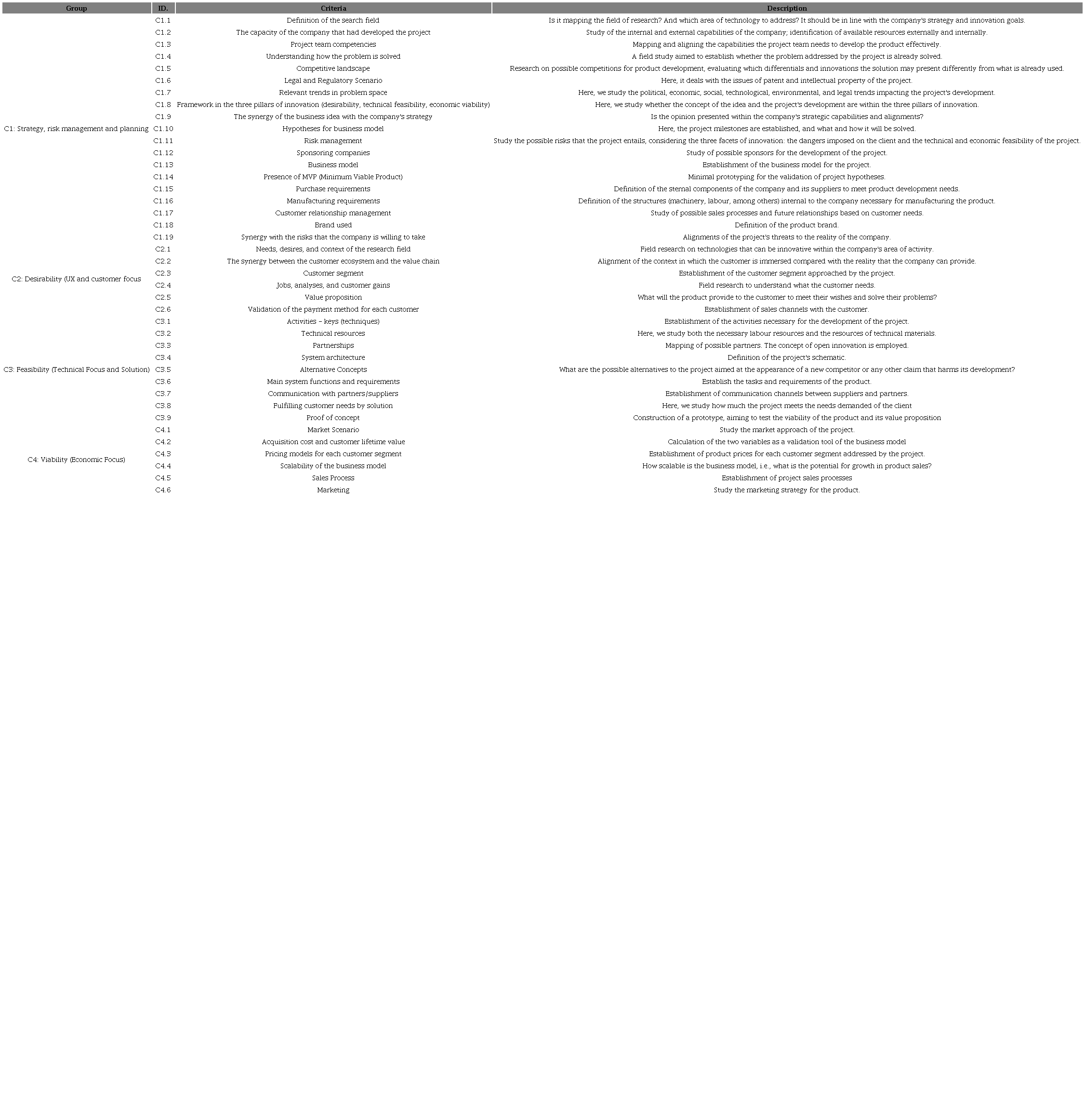
For the evaluation criteria, we established 40 evaluation criteria, dividing them into four groups according to (Lu et al., 2019): (i) strategy, risk management, and planning, (ii) desirability, (iii) feasibility, and (iv) viability. Table 1 presents the 40 evaluation criteria in detail.
The maturity level is the second point of Mapped Input Data (Detail “A” of Figure 2). It is composed of four levels for the evaluation of innovation projects: (i) Ideation, (ii) Preparation, (iii) Validation, and (iv) Incubation. Next, it is presented in Table 2 details each level and the focus of the activities developed based on the elements presented in Section 3.

4.2. WHAT Matrix - Weighting of Evaluation Criteria
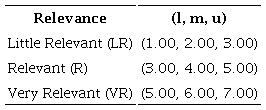
Once we defined the input data, we used the WHAT Matrix of the approach. In the WHAT Matrix step, the user assigns weights to each evaluation criterion. For this, the research authors used online Forms as a data extraction instrument by innovation and project management experts. These experts attributed weight to each criterion following the linguistic terms from the fuzzy-QFD model, as shown in Table 3.
After that, the data are compiled into a spreadsheet for data manipulation to establish actual values that allow an analysis of the projects. The Equations 1, 2 and 3 are WHAT Matrix equations for MAIP fuzzy QFD approach. Equation 1 aggregates the opinion of experts about the weight of each requirement. Equation 2 is a defuzzification of aggregate values. Finally, Equation 3 is a normalisation of values resulting in weights for each criterion.
With these calculations, it is possible to establish the values referring to the relevance weight of each evaluation criterion. When this step is completed, the actual assessment of the innovation projects starts.
4.3 HOW Matrix – Innovation Project Maturity Assessment
Online forms tools can collect data from the project leaders chosen for the research study. Such leaders evaluate their projects based on the evaluation criteria already presented above. Each criterion appears as a question representing the activity developers must undertake for the criterion. For example, the criterion 22 customer segment, allocated in the Desirability cluster, was presented to the project leader with the following question: “Are the customer segments well-validated and defined?”. This approach allows removing the fuzzy values of the status of each criterion using the linguistic scale represented in Table 4. The fuzzy numbers presented in the second column respect the approach of (Juan et al., 2009), using fuzzy triangular numbers.
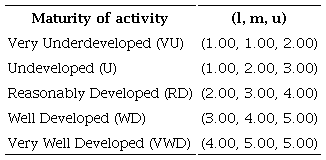
After that, the user compiled the data into a spreadsheet. For data manipulation, in the same way as in the previous step aiming to establish actual maturity values for each evaluation criterion. The equations (4), (5) and (6) are How Matrix equations for MAIP fuzzy QFD approach. Equation (4) aggregates the weights assigned to each criterion to the maturity value established for them. Equation (5) is a defuzzification of aggregate values. Finally, Equation (6) is a normalisation of values resulting in weights for each criterion.
With this, it is possible to establish actual values representing each evaluation criteria's maturity. In addition, by adding the importance of the requirements belonging to the same cluster, it is possible to analyse the maturity of the four established groups, thus obtaining an assessment at the macro and micro levels.
5. Experimentation of MAPIP Fuzzy-QFD in a metal-mechanical industry case
5.1. Metal-mechanical industry case description
To experiment with this approach in actual cases, we established two main premises concerning the evaluators and the projects evaluated. First, four research, development, and innovation specialists weighed the evaluation criteria. Among them, one is an employee of the same company, allowing an internal point of view of the company for those who work directly in developing and managing innovation projects. The external experts bring a new point of view to those with experience in this area but with different ideological backgrounds.
As shown in Table 5, we prioritized professionals with experience in innovation based on the enterprise strategy, ensuring they have sufficient knowledge of the evaluation space. In addition, one of the experts is a professional who works at the same company where the case studies addressed in this work are under development.

Regarding the objectives of evaluation of this research, two projects in research and development were chosen, with a focus on new businesses of a multinational company in the mechanical metal sector, headquartered in Curitiba/Brazil.
-
Project 01 – Intelligent Start-Stop System. This project is dedicated to developing a start-stop system for use in buses and urban cargo vehicles in the retrofit system with an expired warranty (as illustrated in Figure 3). The company considered this project a new business for proposing a new approach to reduce diesel consumption and emission of polluting gases.

Figure 3
The first experimental case is a bus with a start-stop system.
-
Project 02 - Intelligent Spray Valve System. This project deals with applying a PWM (Pulse Width Modulation) valve to automate a process used in agribusiness. This project uses a controller developed inside the company and a valve designed to optimise the precision of the agribusiness process. This combination of components makes the project grow into a new business for the company. Figure 4 illustrates the experimental case.
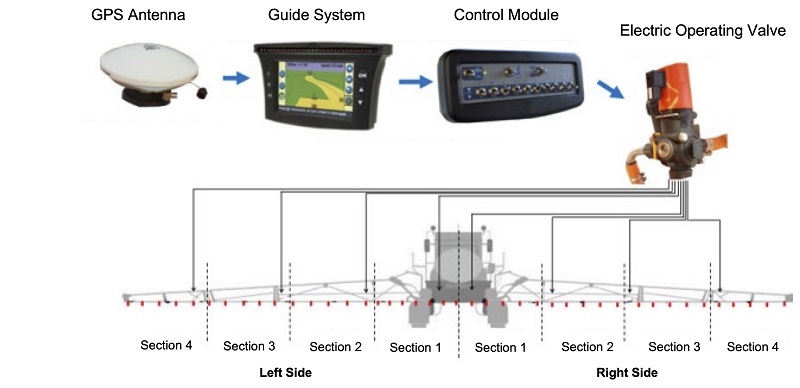
Figure 4
Example of an intelligent spraying system.
The results of this work are divided into three stages: (i) an analysis of the weights assigned by the experts; (ii) the maturity assessment of each case detailing a spectrum of the four groups of criteria assessed; and (iii) ending the third stage presents the comparison of the results of the two cases, defining the prioritisation between the projects.
5.2. WHAT Matrix – Evaluation criteria ponderation
In this stage, the selected experts answered a form to attribute relevance to the evaluation criteria. The 40 questions are related to one of the evaluation criteria presented in Table 1. Each expert appears under the identification shown in Table 5, and each criterion follows the description in Table 1.
Each response elicited a triangular fuzzy number. For instance, when expert E01 responded “Very Relevant” to the question about criterion C1.1, the fuzzy number assigned to criterion C1.1 ranged from (5.00, 6.00, 7.00). Table 6 details the linguistic scale values assigned to each criterion. In the table, each fuzzy number is accompanied by columns denoting its components corresponding to the vertex “l,” “m,” and “u” of the fuzzy triangle. Additionally, alongside each expert's assigned value, the linguistic variable selected in the response and its corresponding fuzzy values are provided on the right side.
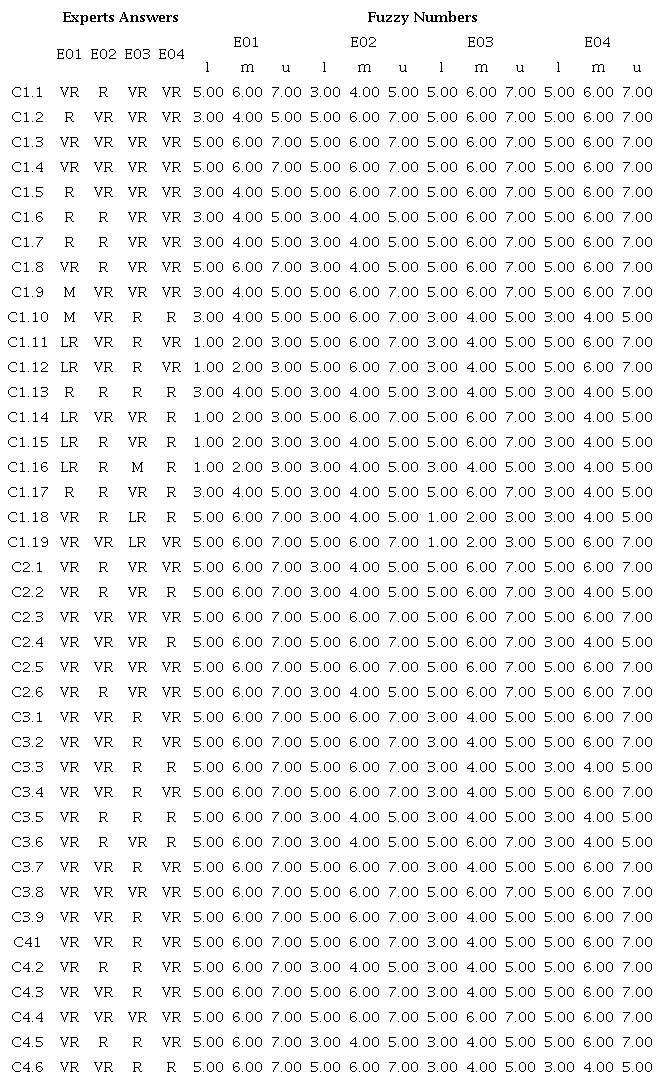
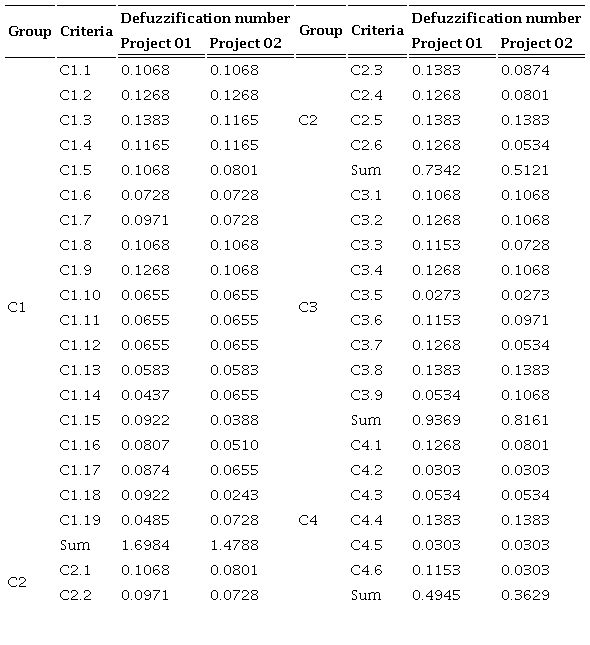
A defuzzification process was applied in the results of Table 6, respecting the steps of aggregation presented in Equations 1, 2 and 3. Table 7 shows the values of each stage for the respective criterion. Each weight is used in the maturity assessment of projects, representing the relevance of the criterion within the assessment method.
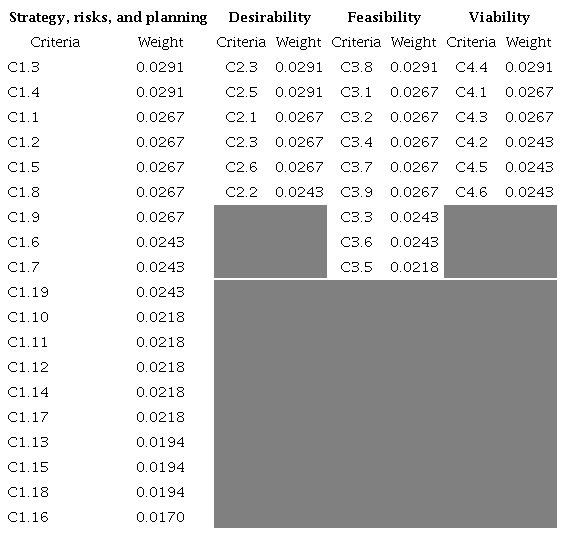
It is possible to notice in the group of criteria related to strategy, risk management, and planning that the criteria considered most relevant are those corresponding to the competence of the project team and the understanding of how the problem field is solved, with a value of 0.0291. In the desirability group, the most relevant criteria address the customer segment and the project's value proposition, with values of 0.0291. The criterion considered most appropriate for the feasibility cluster is the customer's needs for the solution, with a value of 0.0291. Finally, the viability cluster was treated with greater relevance in criterion 38, which deals with the scalability of the business model with a weight of 0.0291.
5.3. HOW Matrix – Maturity Evaluation
After pondering the evaluation criteria, it is possible to assess the maturity of the projects. Therefore, the HOW Matrix of the two cases was established based on the data obtained through the forms filled in by the managers of the two innovation projects, as shown in Table 8. For macro-level analysis, the authors added all criteria values belonging to the same groups to obtain an evaluation for each group. In addition, the values obtained for each group were added, resulting in majority quantities for comparing the maturity of the two projects considering all groups (the three pillars of innovation together with the strategy cluster). The evaluation follows the linguistic scale of Table 4.
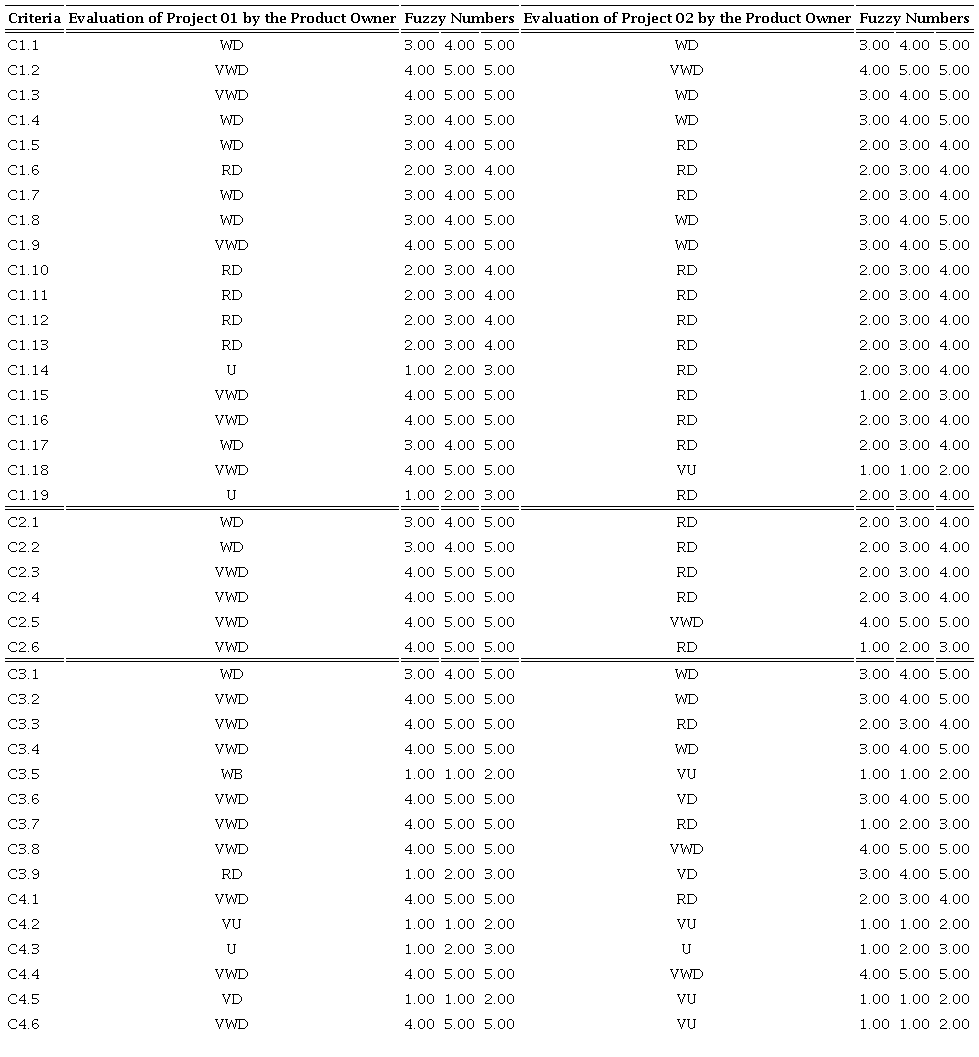
We obtained the HOW Matrix for the two cases from the forms completed by the leaders of the projects used as case studies in this work. Table 9 shows the results. Consequently, results were obtained from disaggregated values for each criterion evaluated. Each criterion's description was used to analyse each project's maturity spectrum, justifying the maturity level in which each case was located. For analysis at the macro level, all criteria values belonging to the same groups were added, obtaining an evaluation for each group. In addition, the values obtained for each group were added, resulting in majority magnitudes when comparing the maturity of the two projects considering all groups (the three pillars of innovation together with the strategy cluster).
The authors defined intervals to allocate projects at these levels to establish a relationship between the values obtained for each criterion and the maturity levels. We demonstrated such breaks by simulating cases where all answers consisted of the same linguistic variables. For example, an experimental case was simulated in the HOW matrix, and all responses were with the linguistic variable “Very low”. In this way, the sums of the criteria values for each group were obtained, as shown in the column “Very Low” of Table 10. The same procedure was performed for the other linguistic variables, as shown in the columns “Low”, “Medium”, “High”, and “Very High” in the same table, respectively.
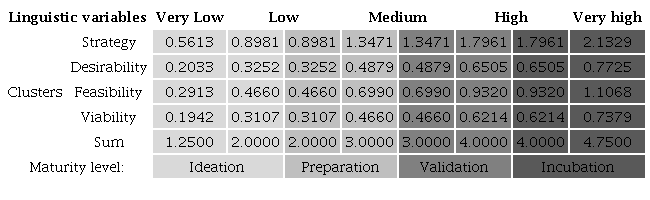
The five simulated linguistic variables generated four intervals between the values. These intervals correspond to the four maturity levels: ideation, preparation, validation, and incubation. The line “maturity levels” and the colour of each column present in Table 10, the extent to which the colour becomes darker, represents that the maturity level is increasing. In the following two sections, we present the spectra of the two projects used as cases in this work and allocate the projects in the maturity levels based on the intervals produced.
5.4. Maturity Spectrum of innovation projects
The sum of all values obtained from the defuzzification of fuzzy numbers was considered. Defuzzification of fuzzy numbers is multiplying the weights of each criterion assigned by experts based on the importance given by project leaders, as shown on Table 11. Therefore, the sum yielded to Project 01 is 3.8641, and it is possible to classify at the validation level considering the ranges for the proposed maturity levels. A project is at the validation level when the hypotheses for the three sides of innovation (desirability, technical feasibility, and economic feasibility) are tested and refined to generate evidence proving the business model's validation. In addition, possible alternatives, threats, and opportunities must be analysed. Furthermore, the main activity at this level is elaborating on a proof of concept, which can be a Minimal Viable Product (MVP) or a prototype.
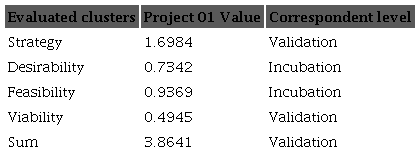
Considering the values calculated, it was possible to analyse which project is close to reaching the incubation level since the minimum value to enter this level is 4.000. At this point, it is relevant to carry out a more detailed analysis of the importance of each group to justify the project allocation at the validation level. On the other hand, the groups corresponding to strategy and economic feasibility reduce the total sum so that the project remains at the validation level.
For Project 02, the analysis was performed similarly to that of Project 01. The sum of all clusters yielded case 02, a value of 3.1699, as show in Table 12. Considering the ranges for allocations of the proposed maturity levels, it is possible to allocate this project at the validation level.
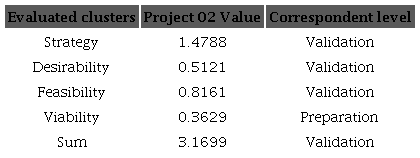
Considering the sum value obtained, it was possible to analyse which project has a low maturity level within the validation process since the minimum value to enter this level is 3.000 (see Table 10). The project has a value that is still close to this input value. At this point, it is relevant to carry out a more detailed analysis of the importance of each group to justify the project allocation at the validation level. For example, it is possible to notice in Table12 that the groups that represent the strategy, desirability, and technical feasibility have intermediate values within the validation level, which underlies the fact that the project is allocated within this class, as 75% of its groups are included in this context. However, the group representing economic feasibility has values that qualify the project for a level of preparation.
5.5. Projects prioritisation
This topic compares the two cases to establish a ranking between them. The authors carried out this comparison in two stages: (i) comparing the overall sum of the maturity numbers of each project and (ii) the group-to-group comparison.
Table 13 presents a comparison of the maturity values between the two projects. It is possible to note that, despite the two projects being in the validation process, Project 01 has greater maturity than Project 02. This scenario is justified because Project 01 already has values in two of the four groups that fall under the incubation level. This classification means that this project is in the process of exiting validation and entering the incubation phase.

On the other hand, Project 2 still has a group with values from the preparation process, a stage before the validation process, which means that this project is in transition from the preparation stage to the validation stage. Therefore, although graphically (Figure 5), it is possible to notice the difference of 0.6942 between the two projects, this number can be considered negligible since the two projects are in the same process (validation).
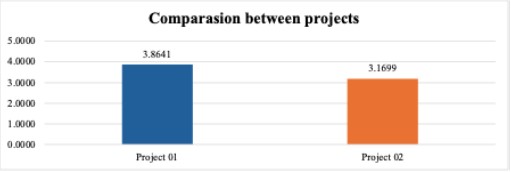
Figure 5
Comparison between the maturity of projects.
A comparison was also made between the two projects considering the four groups of criteria that cover the three faces of innovation (desirability, technical feasibility, and economic feasibility) plus the group that addresses the development strategy. Figure 6 presents a radar chart that makes it easier to visualize the difference between the two projects in these four segments.
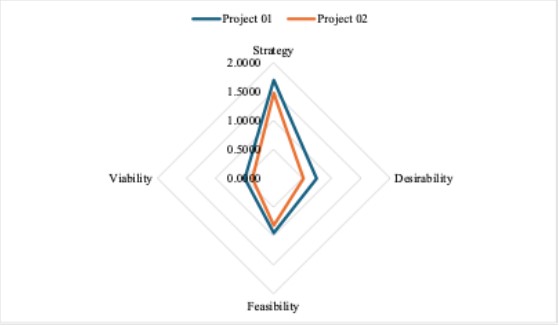
Figure 6
Comparison between projects in the four evaluation segments.
It is possible to notice in the graph that the difference is more evident in the economic feasibility and desirability segments. Additionally, the most significant discrepancy is in desirability. Regarding the values, obtaining higher values for the strategy and desirability segment is justified by the number of criteria evaluated in these two segments, which are higher concerning the others.
Using all the information, we can develop a decision-making strategy based on project prioritization. This strategy may involve either accelerating Project 01 into the incubation process or advancing Project 02 directly into the validation phase.
6. Discussion
Prior training was carried out with the experts and engineers responsible for the projects who answered the proposed questionnaires to apply the methodology within the company to apply the methodology within the company. In this way, everyone involved in the research could contribute their experiences and information about the respective projects. With this training, there was a negligible impact on the company's organisational culture, so simple training was enough to train those involved. Despite being a multinational company with a high maturity in developing products and technologies, the low impact on the company's culture reflects the flexibility of the methodology. It can also be applied to small companies as a gateway tool. For the development of innovative products.
As impacts of the application within the target company, there was an improvement in assertiveness in decision-making about the advancement of maturity of the evaluated innovation projects so that it was possible to establish the maturity of each project, which made it easier for the company to decide on the prioritisation of advancement in product development. Furthermore, applying the approach reduced the number of alignment and decision-making meetings for company management by 50% since information about project maturity was summarised when using the approach.
Another feedback obtained within the company was the easy scalability of the methodology, so two projects from different areas were used, one for a product for the diesel sector and the other for the agribusiness sector. This suggests that the methodology can be applied in different areas since the evaluation criteria encompass a project, taking into account the aspects of an innovative product, not limiting it to specific areas of development.
7. Conclusions
This work aimed to answer how the fuzzy-QFD model can be approached to evaluate innovation projects using real cases immersed within the metalworking industry. An approach called MAPIP fuzzy QFD (Maturity Analysis and Prioritisation of Innovation Projects) was introduced, containing a what matrix for weighting the assessment criteria and a HOW matrix for assessing maturity. The application of the Fuzzy-QFD technique in this research highlights its effectiveness in prioritizing innovation projects based on a structured maturity assessment. The approach not only aids in identifying the most strategically aligned projects but also helps in assessing project readiness, supporting resource allocation, and mitigating risks through a systematic evaluation of various criteria.
Two innovation projects under development were evaluated based on the responses collected from the project leaders in each case. In addition, four experts in the field of innovation were heard, one of whom works in the same company as the projects evaluated, to obtain a weight for the relevance of each criterion evaluated, being used in the maturity assessment. As a result, a ranking of the two projects was obtained, placing Project 01 in the first position, followed by Project 02. In addition, it was possible to allocate the two projects within the proposed maturity levels, where both were classified at the level of validation. However, Project 01 was considered in the transition period from the validation to the incubation level. Project 02 was allocated in the transition between preparation and validation. With the results obtained, they advance understanding by validating the practical applicability of the Fuzzy-QFD approach in real-world settings. The analysis demonstrates how subjective assessments can be quantified, providing insights into how maturity models can be adapted to evaluate and prioritize innovation projects strategically, especially in complex industries like metal-mechanical.
The selected cases represent different types of innovation projects with varying degrees of complexity and novelty within the metal-mechanical industry. This diversity makes them appropriate for evaluating the research question, as they test the Fuzzy-QFD model across different project characteristics, helping to verify the model's versatility and robustness in handling varied innovation scenarios. By applying the model to these contrasting cases, the study showcases its relevance for a broader range of projects, supporting its utility in strategic project prioritization.
As limitations of the research, it is possible to point out the following issues. Firstly, as a new methodology, the application and validation of the proposed method in this study were restricted to the metal-mechanic industry. Despite this limitation, the technique shows potential applicability to other sectors, which could be explored in future studies. Secondly, this study focused primarily on quantitative aspects in evaluating results, given that the Fuzzy-QFD methodology inherently addresses subjective assessments within its criteria evaluation process. Additionally, the research only examined the internal environment of the company used as a case study, without considering external factors. Lastly, the effectiveness of the methodology relied heavily on the availability of specialists to provide input, which directly impacted the outcomes.
As a continuation of the proposed approach, it is recommended the following steps:
-
To carry out the study with more cases to analyse the model's behavior with projects at different maturity levels.
-
To carry out the approach in another industry segment to establish its validation in other branches of industry or even technology.
-
To develop a software to automate the method to speed up its application and validation of results. By specifying the assessment requirements and providing questionnaire responses as input, it is possible to implement software capable of performing fuzzy mathematical modelling and producing results more dynamically.
-
To evaluate quantitative aspects with the fuzzy QFD methodology and within the evaluation criteria.
Acknowledgements
The authors would like to thank the Pontifical Catholic University of Paraná (PUCPR), Robert Bosch CtP, and the National Council for Scientific and Technological Development for the financial support of this research (Conselho Nacional de Desenvolvimento Científico e Tecnológico (CNPq) – Grant: 306710/2020-0. Pontifícia Universidade Católica do Paraná (PUCPR) – Grant: 001/2020. Robert Bosch CtP – Grant: TA10/2020).
References
Afsharkazemi, M., Khodabakhsh, M., & Motadel, M. (2012). Applying fuzzy analytic network process in quality function deployment model. Management Science Letters, 2(4), 1325-1340. http://doi.org/10.5267/j.msl.2012.02.006.
Arruda, H., & Silva, É. R. (2021). Assessment and evaluation in active learning implementations: introducing the engineering education active learning maturity model. Education Sciences, 11(11), 690. http://doi.org/10.3390/educsci11110690.
Bahrami, S., Atkin, B., & Landin, A. (2019). Innovation diffusion through standardization: A study of building ventilation products. Journal of Engineering and Technology Management, 54, 56-66. http://doi.org/10.1016/j.jengtecman.2019.11.001.
Carrillo, M. M., Maldonado, B., Ramos, V., Castillo, M. M., & Cedeño, L. (2024). Measurement of innovation capacity in small and medium manufacturing companies. In G. F. Olmedo Cifuentes, D. G. Arcos Avilés, & H. V. Lara Padilla (Eds.), Emerging research in intelligent systems (p. 85-99). Cham: Springer.. http://doi.org/10.1007/978-3-031-52258-1_7.
Casakin, H., & Wodehouse, A. (2021). A systematic review of design creativity in the architectural design studio. Buildings, 11(1), 31. http://doi.org/10.3390/buildings11010031.
Catto, S. L., & Maccari, E. A. (2021). Innovation projects management: a systematic literature review. Revista de Administração Da UFSM, 14(4), 848-863. http://doi.org/10.5902/1983465962712.
Chibás, F. O., Pantaleón, E. M., & Rocha, T. A. (2013). Gestão da inovação e da criatividade na atualidade. Holos, 3, 15-26. http://doi.org/10.15628/holos.2013.1082.
Ciric, D., Lalic, B., Gracanin, D., Palcic, I., & Zivlak, N. (2018). Agile project management in new product development and innovation processes: challenges and benefits beyond software domain. In 2018 IEEE International Symposium on Innovation and Entrepreneurship (TEMS-ISIE) (pp. 1-9). New York: IEEE. http://doi.org/10.1109/TEMS-ISIE.2018.8478461.
Claire, J., Galvez, D., Boly, V., Camargo, M., & Moselle, J. C. (2014). A new innovation project maturity assessment methodology based on innovation degree. In 2014 International Conference on Engineering, Technology and Innovation (ICE) (pp. 1-8). New York: IEEE. http://doi.org/10.1109/ICE.2014.6871614.
Cooper, R. G. (2014). What’s next?: After stage-gate. Research Technology Management, 57(1), 20-31. http://doi.org/10.5437/08956308X5606963.
Dennehy, D., Kasraian, L., O’Raghallaigh, P., Conboy, K., Sammon, D., & Lynch, P. (2019). A Lean Start-up approach for developing minimum viable products in an established company. Journal of Decision Systems, 28(3), 224-232. http://doi.org/10.1080/12460125.2019.1642081.
Dursun, M., & Arslan, Ö. (2018). An integrated decision framework for material selection procedure: a case study in a detergent manufacturer. Symmetry, 10(11), 657. http://doi.org/10.3390/sym10110657.
Ghonim, M. A., Khashaba, N. M., Al-Najaar, H. M., & Khashan, M. A. (2022). Strategic alignment and its impact on decision effectiveness: A comprehensive model. International Journal of Emerging Markets, 17(1), 198-218. http://doi.org/10.1108/IJOEM-04-2020-0364.
Glogovac, M., Ruso, J., & Maricic, M. (2022). ISO 9004 maturity model for quality in industry 4.0. Total Quality Management & Business Excellence, 33(5–6), 529-547. http://doi.org/10.1080/14783363.2020.1865793.
Gruenhagen, J. H., Parker, R., & Cox, S. (2021). Technology diffusion and firm agency from a technological innovation systems perspective: a case study of fatigue monitoring in the mining industry. Journal of Engineering and Technology Management, 62, 101655. http://doi.org/10.1016/j.jengtecman.2021.101655.
Guédria, W., Naudet, Y., & Chen, D. (2011). Enterprise interoperability maturity: a model using fuzzy metrics. In E. Bayro-Corrochano & E. Hancock (Eds.), Progress in pattern recognition, image analysis, computer vision, and applications (vol. 8827, p. 69-80). Cham: Springer. http://doi.org/10.1007/978-3-642-22056-2_8.
Guédria, W., Naudet, Y., & Chen, D. (2015). Maturity model for enterprise interoperability. Enterprise Information Systems, 9(1), 1-28. http://doi.org/10.1080/17517575.2013.805246.
Hadjinicolaou, N., Kader, M., & Abdallah, I. (2021). Strategic innovation, foresight and the deployment of project portfolio management under mid-range planning conditions in medium-sized firms. Sustainability (Basel), 14(1), 80. http://doi.org/10.3390/su14010080.
Hunsaker, B. T., & Thomas, D. E. (2017). The viability triad: Desirability, feasibility, and sustainability as the new strategic decision imperative. J. Manag. Policies Pract, 5, 1-4.
Johansson, S., Kullström, M., Björk, J., Karlsson, A., & Nilsson, S. (2020). Digital production innovation projects – The applicability of managerial controls under high levels of complexity and uncertainty. Journal of Manufacturing Technology Management, 32(3), 772-794. http://doi.org/10.1108/JMTM-04-2019-0145.
Juan, Y.-K., Perng, Y.-H., Castro-Lacouture, D., & Lu, K.-S. (2009). Housing refurbishment contractors selection based on a hybrid fuzzy-QFD approach. Automation in Construction, 18(2), 139-144. http://doi.org/10.1016/j.autcon.2008.06.001.
Kankaanhuhta, V., Packalen, T., & Väätäinen, K. (2021). Digital transformation of forest services in finland: a case study for improving business processes. Forests, 12(6), 781. http://doi.org/10.3390/f12060781.
Keeney, R. L. (1992). Value-focused thinking: a path to creative decisionmaking. Cambridge: Harvard University Press.
Khani, S. A. A. A., Kheybari, S., Latifi, M.-A., Salimi, N., & Labib, A. (2023). Innovation and survival of traditional industries: measuring barriers using the best–worst method. International Journal of Information Technology & Decision Making, 1-29. http://doi.org/10.1142/S0219622023500153.
Kwak, K.-J., & Park, J.-M. (2021). A study on semantic-based autonomous computing technology for highly reliable smart factory in Industry 4.0. Applied Sciences (Basel, Switzerland), 11(21), 10121. http://doi.org/10.3390/app112110121.
Lee, G. H., & Park, S. H. (2021). Fuzzy QFD-based prioritization of work activities of constructin for safety. ICIC Express Letters. Part B, Applications, 12(1), 1-8. http://doi.org/10.24507/icicelb.12.01.1.
Legenvre, H., & Gualandris, J. (2018). Innovation sourcing excellence: three purchasing capabilities for success. Business Horizons, 61(1), 95-106. http://doi.org/10.1016/j.bushor.2017.09.009.
Lima-Junior, F. R., & Carpinetti, L. C. R. (2016). A multicriteria approach based on fuzzy QFD for choosing criteria for supplier selection. Computers & Industrial Engineering, 101, 269-285. http://doi.org/10.1016/j.cie.2016.09.014.
Liu, H.-T. (2011). Product design and selection using fuzzy QFD and fuzzy MCDM approaches. Applied Mathematical Modelling, 35(1), 482-496. http://doi.org/10.1016/j.apm.2010.07.014.
Liu, H.-T., & Wang, C.-H. (2010). An advanced quality function deployment model using fuzzy analytic network process. Applied Mathematical Modelling, 34(11), 3333-3351. http://doi.org/10.1016/j.apm.2010.02.024.
Lu, C.-F., Lin, L.-Z., & Yeh, H.-R. (2019). A multi-phased FQFD for the design of brand revitalisation. Total Quality Management & Business Excellence, 30(7–8), 848-871. http://doi.org/10.1080/14783363.2017.1343139.
Makate, C., Makate, M., Siziba, S., & Sadomba, Z. (2019). The impact of innovation on the performance of small-to-medium informal metal-trade enterprises in Zimbabwe. Cogent Business & Management, 6(1), 1625095. http://doi.org/10.1080/23311975.2019.1625095.
Maputi, E. S., & Arora, R. (2020). Gear concept selection procedure using fuzzy QFD, AHP and tacit knowledge. Cogent Engineering, 7(1), 1802816. http://doi.org/10.1080/23311916.2020.1802816.
Martinsuo, M. (2013). Project portfolio management in practice and in context. International Journal of Project Management, 31(6), 794-803. http://doi.org/10.1016/j.ijproman.2012.10.013.
Mello, V. G. (2020). Proposal of a Fuzzy-QFD model for selection of startups aiming at technology transfer and participation in acceleration programs (Master’s thesis). Universidade Tecnológica Federal do Paraná, Ponta Grossa.
Michnik, J. (2018). The WINGS method with multiple networks and its application to innovation projects selection. International Journal of Applied Management Science, 10(2), 105. http://doi.org/10.1504/IJAMS.2018.092077.
Min, C. S., Ahmad, R., Kamaruddin, S., & Azid, I. A. (2011). Development of autonomous maintenance implementation framework for semiconductor industries. International Journal of Industrial and Systems Engineering, 9(3), 268. http://doi.org/10.1504/IJISE.2011.043139.
Mottin De Andrade, J. M., De Freitas Rocha Loures, E., Szejka, A. L., Canciglieri, O., Klein, V., Francesconi, T., & Thonke, I. (2023). Multicriteria decision making approach for selection and prioritization of projects into the digital transformation journey. In C. M. Hussain & D. Rossit (Eds.), Designing smart manufacturing systems (p. 235-259). London: Elsevier.. http://doi.org/10.1016/B978-0-32-399208-4.00018-0.
OECD & Eurostat (2018). Oslo Manual 2018: Guidelines for Collecting, Reporting and Using Data on Innovation (4th ed.). Paris: OECD.
Ozgormus, E., Guner Goren, H., & Senocak, A. (2019). An integrated fuzzy QFD-MCDM framework for personnel selection problem. Scientia Iranica, 28(5), 2972-2986. http://doi.org/10.24200/sci.2019.52320.2657.
Pereira, L., Fernandes, A., Sempiterno, M., Dias, Á., Lopes da Costa, R., & António, N. (2021). Knowledge management maturity contributes to project-based companies in an open innovation era. Journal of Open Innovation, 7(2), 126. http://doi.org/10.3390/joitmc7020126.
Reda, H., & Dvivedi, A. (2022). Decision-making on the selection of lean tools using fuzzy QFD and FMEA approach in the manufacturing industry. Expert Systems with Applications, 192, 116416. http://doi.org/10.1016/j.eswa.2021.116416.
Rigoni, L. F. S., Cestari, J. M. A., & Rocha Loures, E. (2017). Interoperability assessment as indicator of innovation management effectiveness. International Journal of Engineering Research & Technology (Ahmedabad), 6(5), 171-176. http://doi.org/10.17577/IJERTV6IS050126.
Ruffatto, J., Severo, E. A., & Decesaro, L. (2015). O jeito é inovar: um estudo de caso em uma indústria metalmecânica sobre a contribuição da geraçao y no processo inovativo. Revista Gestão Inovação e Tecnologias, 5(4), 2540-2553. http://doi.org/10.7198/S2237-0722201500040005.
Saaty, T. L. (2005). Theory and applications of the analytic network process: decision making with benefits, opportunities, costs, and risks (3rd ed). Pittsburgh: RWS Publications.
Saihi, A., Madani, B., & Ndiaye, M. (2023). An innovation maturity assessment framework for universities with an integrated ANP approach. International Journal of Innovation Science, 16(6), 1028-1051. http://doi.org/10.1108/IJIS-03-2022-0040.
Saimoto, S., Singh, M. A., Langille, M. R., Levesque, J., Inal, K., Niewczas, M., & Woll, A. R. (2018). Method to decode stress-strain diagrams to identify the structure-strength relationships in aged aluminum alloys. Materials Science and Engineering A, 709, 9-16. http://doi.org/10.1016/j.msea.2017.10.004.
Samanlioglu, F., & Ayağ, Z. (2020). An intelligent approach for the evaluation of innovation projects. Journal of Intelligent & Fuzzy Systems, 38(1), 905-915. http://doi.org/10.3233/JIFS-179458.
Şener, S., & Hobikoğlu, E. H. (2013). Structural effect of enterprises open-closed innovation models tendencies in product output process: a study on the enterprises located in the IMES Industrial Estate – Turkey Example. Procedia: Social and Behavioral Sciences, 99, 986-996. http://doi.org/10.1016/j.sbspro.2013.10.572.
Singh, A., Gupta, A., & Mehra, A. (2021). Best criteria selection based PROMETHEE II method. OPSEARCH, 58(1), 160-180. http://doi.org/10.1007/s12597-020-00464-7.
Sjödin, D. R., Parida, V., Leksell, M., & Petrovic, A. (2018). Smart factory implementation and process innovation: a preliminary maturity model for leveraging digitalization in manufacturing. Research Technology Management, 61(5), 22-31. http://doi.org/10.1080/08956308.2018.1471277.
Snihur, Y., & Wiklund, J. (2019). Searching for innovation: product, process, and business model innovations and search behavior in established firms. Long Range Planning, 52(3), 305-325. http://doi.org/10.1016/j.lrp.2018.05.003.
Strašek, A., Pušavec, F., & Likar, B. (2020). Open innovation and business performance improvement in strategic business alliances. Management, 25(1), 133-144. http://doi.org/10.30924/mjcmi.25.1.8.
Suliman, A., & Rankin, J. (2021). Maturity-based mapping of technology and method innovation in off-site construction: Conceptual frameworks. Journal of Information Technology in Construction, 26, 381-408. http://doi.org/10.36680/j.itcon.2021.021.
Vimal, K. E. K., Vinodh, S., & Jayakrishna, K. (2019). Application of fuzzy QFD for improving the process sustainability characteristics: a case study. International Journal of Services and Operations Management, 32(2), 173-201. http://doi.org/10.1504/IJSOM.2019.097528.
Visscher, K., Hahn, K., & Konrad, K. (2021). Innovation ecosystem strategies of industrial firms: A multilayered approach to alignment and strategic positioning. Creativity and Innovation Management, 30(3), 619-631. http://doi.org/10.1111/caim.12429.
Wang, H., Fang, Z., Wang, D., & Liu, S. (2020). An integrated fuzzy QFD and grey decision-making approach for supply chain collaborative quality design of large complex products. Computers & Industrial Engineering, 140, 106212. http://doi.org/10.1016/j.cie.2019.106212.
Wodehouse, A., & Casakin, H. (2022). Design creativity in architecture and engineering. Building (London), 10(10), 1552. http://doi.org/10.3390/buildings12101552.
Wu, L., Sun, L., Chang, Q., Zhang, D., & Qi, P. (2022). How do digitalization capabilities enable open innovation in manufacturing enterprises? A multiple case study based on resource integration perspective. Technological Forecasting and Social Change, 184, 122019. http://doi.org/10.1016/j.techfore.2022.122019.
Zheng, J., Gu, Y., Xie, H., & Wu, G. (2023). Linking innovation, empowerment to facilitate project performance: A mediated moderation model. Journal of Engineering and Technology Management, 68, 101750. http://doi.org/10.1016/j.jengtecman.2023.101750.
Notes
Author notes
*anderson.szejka@pucpr.br