Thematic Section - Industry 5.0: Human-centric production management (Social systems for future manufacturing)
The human resources and knowledge management integrated role in Industry 4.0/5.0: a Human-Centric Operations Management framework
 Davi Nakano
Jorge Muniz
Davi Nakano
Jorge Muniz
The human resources and knowledge management integrated role in Industry 4.0/5.0: a Human-Centric Operations Management framework
Production, vol. 34, e20240014, 2024
Associação Brasileira de Engenharia de Produção
Received: 28 February 2024
Accepted: 04 April 2024
Funding
Funding source: CAPES
Contract number: 001
Funding
Funding source: CAPES-PRINT
Contract number: 88887.310463/2018-00
Funding
Funding source: FAPESP
Contract number: 2021/10944-2
Abstract
Paper aims: This paper aims to identify aspects of Human Resources (HR) and Knowledge Management (KM) in the context of Industry 4.0 (I4.0), to propose a research agenda to support a knowledge-based production management, effective knowledge retention and sharing, and support I4.0 adoption.
Originality: Mainly focusing on I4.0 technology issues, the related literature does not explore the impacts on people. This paper discusses how people, organization and society are affected and proposes a research agenda to study HR and KM within I4.0.
Research method: A Systematic Literature Review was conducted in 80 papers relating HR and KM and I4.0 implementation, focusing on the human role and required competencies for I4.0.
Main findings: The research agenda is organized in a framework including Society (Context and Sustainability), People (Workers and Managers), Organizations (Production and Service), Management Practices (HRM and Lean Process), and KM & Learning.
Implications for theory and practice: The better understanding of workers´ roles, KM and HR practices in the I4.0 contributes to the theoretical debate about promoting knowledge creation and sharing, new HR policies and decision-making. The findings provide theoretical contributions for human adaptation to I4.0, and practical contributions for managers dealing with I4.0.
Keywords: Industry 5.0+ Knowledge management+ People+ Society+ Organization.
1. Introduction
I4.0 implies a manufacturing system that enables digital machines to perform productive routines (Manesh et al., 2021), using several technologies, including artificial intelligence (Chehbi-Gamoura et al., 2020; Malik et al., 2021), IoT (Manavalan & Jayakrishna, 2019), additive manufacturing (Pagliosa et al., 2019). It can deliver higher quality and customized products/services. It affects the technologies, and also production routines, planning and decision-making, and demands new workers' qualifications (Kolyasnikov & Kelchevskaya, 2020; Ribeiro et al., 2022). Thus I4.0 should not only be considered as a technological issue to increase productivity, as it impacts work organization and its implementation demands man-machine integration, which requires a human-centric perspective since its project phase (Kaasinen et al., 2020).
I4.0 has implications for the labour market, since the adoption of new technologies impacts skills and competences demand for both workers and managers (Ribeiro et al., 2022; Silva et al., 2022; Muniz Junior et al., 2024b). In fact, research related to HR and I4.0 have focused on the role of human capital in the new technological context (Song et al., 2021), new competencies and skills for I4.0 and the requirements for workers adaptation (Sartori et al., 2021), as well as the new roles of people involved in the HRM (Vrchota et al., 2020).
How I4.0 alters the worker's role in production systems constitutes an important research area, particularly on issues regarding workers as users of new technologies (Lee & Lim, 2021), including concerns related to: required qualifications, new tasks and work routines (Ribeiro et al., 2022), autonomy for decision-making (Kipper et al., 2020), career sustainability (Sony & Naik 2020), individual behaviour (Pham et al., 2020) and expectations (Kaasinen et al., 2020).
KM is pointed as a facilitator for I4.0 implementation, as it enables knowledge creation, retention and sharing and worker´s competency and skill development (Abubakar et al., 2019). Research on KM and I4.0 have explored issues related to learning and worker´s engagement (Ribeiro et al., 2022), and how new technologies such as big data (Chehbi-Gamoura et al., 2020), Cyber-Physical Production Systems (Pinzone et al., 2020), and Internet of Things (Manavalan & Jayakrishna, 2019) can contribute to KM practices. The impact of I4.0 technologies on new learning processes are also analysed, including frameworks for Information Technology (IT) and Knowledge Sharing (KS), and organizational learning capabilities (Tortorella et al., 2020; Ngereja & Hussein, 2021). How KM practices can promote workers' engagement in the I4.0 context have been discussed, as well as how technological resources such as digital social media and knowledge processes integration can promote motivation, engagement and empowerment among employees (Kaasinen et al., 2020).
However, despite the importance of the workers' perspective for I4.0 implementation, previous literature reviews have mainly explored either technological aspects or managerial practices (Kamble et al., 2020; Acciarini et al., 2021). There are only a few reviews that depart from those themes, focusing on issues such as sustainability or worker’s role (Mark et al., 2021), HRM (Silva et al., 2022), and KM (Ribeiro et al., 2022). As there is already a sizable body of research on HR, KM and I4.0, this paper conducts a systematic literature review that focuses on the human role and required competencies for I4.0, focusing on the following research question: What are the current approaches relating HR and KM in the context of I4.0 implementation and the related research opportunities? The presented research question guides the main purposes of our work, to identify the approaches relating HR and KM in the context of I4.0 implementation and the related research agenda to support production management. Results are organized along five main axes: Society (encompass the dimensions of Context and Sustainability), People (Workers and Managers), Organizations (Production and Service), Management Practices (HRM and Lean Process), and KM & Learning.
This paper is structured in five sections. Section 2 presents a brief theoretical background on the themes HR and KM in the context of I4.0 implementation. Section 3 details the method approach adopted for the literature review and content analysis. Section 4 describes the results and discussion, proposes a framework for research opportunities, and Section 5 offers the conclusions and practical implications.
2. Theoretical background
2.1. Industry 4.0 and human-centric perspective
Industrial contexts are sociotechnical systems that entail ongoing interactions between society, people and technology, and affect virtually all areas of human life and work. I4.0 has been pushed both by public policies around the globe and by multinational corporations (Muniz Junior et al., 2022a). It has individual level and firm level impact, on workers, teams and work systems and on management practices, as well as national level impact, on systems of innovation and production. In order to account for those different levels, a Human-Centric Operations Management based on Social Systems for Future Manufacturing (SSFM) framework has been proposed, which bridges the current isolated debates at people, organisation and society perspectives of analysis (Muniz Junior et al., 2022b, 2024b).
The human-centered perspective can be important for leadership, HR and change management (Ribeiro et al., 2022). Workers in the I4.0 context have to autonomously manage new tasks and routines, find solutions and solve problems in a collaborative way with technological resources, which demands engagement for self-learning and self-development (Malik et al., 2021).
Individual aspects (e.g., learning capabilities, motivations, social and cultural background) can influence the understanding, use of I4.0, and affect the knowledge creation for operational and strategic applications (Kolyasnikov & Kelchevskaya, 2020). Sociocultural issues can also influence the way workers interact with I4.0 technologies and impact the organizational objectives (Tortorella et al., 2020). For instance, the organizational culture can influence the way that workers socialize, communicate and trust others, impacting on a favourable context for KS (Sartori et al., 2021). Organizational culture can also influence the decision-making during I4.0 implementation (Abubakar et al., 2019).
From an organizational perspective, workers are important actors in the socio-technical systems, since their engagement can lead to a deeper initiative to manage complexity (Sartori et al., 2021). An early worker's engagement in I4.0 implementation is required to achieve best results, for instance on workspace design and technology integration (Malik et al., 2021). A gap between current workers' technical competences and the required ones can constitute an initial barrier, which can be minimized by parallel training and proper infrastructure implementation (Manesh et al., 2021).
The workers' engagement in learning has been analysed, as it influences continuous training practices, and adaptive learning solutions development (Zangiacomi et al., 2020). Engagement affects the integration of workers and technologies, and it is an enabler to facilitate knowledge creation and sharing, increasing knowledge usage in new routines, which increases competitiveness, and product and process innovation (Ribeiro et al., 2022).
Workers' participation in I4.0 implementation requires training, learning capabilities (Tortorella et al., 2020), performance metrics development, access to related technologies and safety-related resources and procedures (Núñez-Merino et al., 2020). The transformation of data into organizational knowledge demands a favourable context for KS, integration and coordination, which impacts HRM (Kolyasnikov & Kelchevskaya, 2020).
2.2. Industry 4.0 and knowledge management
Knowledge has long been considered as an important asset to increase the organization's competitive advantage and to contribute with operational improvement and innovation performance (Nonaka, 1994). KM aims to capture, preserve, share and reuse both tacit and explicit knowledge that are created and used by workers during routine tasks to improve production processes, generating measurable results for the organization and people (Muniz Junior et al., 2009).
As the challenges of digital transformation imply workers to develop new competencies and knowledge, KM is pointed as a way to assist formal and on the job training, as well as continuous qualification. The KM and I4.0 implementation are analysed by Kolyasnikov & Kelchevskaya (2020), and Sartori et al. (2021). In addition, Manesh et al. (2021) highlight a related negative impact of knowledge loss.
The identification of relevant knowledge for each productive process is considered a critical demand for the I4.0 technologies implementation, and KM can support the use of IT, and improve the development of new worker’s competences and engagement during new product and process development (Cassia et al., 2020; Garrido et al., 2024; Muniz Junior et al., 2024b). Thus, KM can be incorporated in HRM to support effective knowledge retention and sharing, assist processes of problem solving, continuous improvement, and decision-making and facilitate the I4.0 implementation (Núñez-Merino et al., 2020).
KM practices support workers’ cognitive activities and can facilitate the required worker engagement and competencies/knowledge development (Muniz Junior et al., 2021b). It can stimulate synergy between work team members to achieve production objectives and establish knowledge connections for I4.0 technologies implementation (Muniz Junior et al., 2021a). Knowledge creation and its combination with existing one, as well as its to all actors of the production system is important during operation changes and new concepts implementation (Ribeiro et al., 2022). KS is also important during transition periods (Cassia et al., 2020).
3. Methodology
3.1. Papers selection
A two-step process was adopted to assemble the paper set. First, a preliminary, exploratory search was conducted to identify the best strings for the literature search. In this first step, a literature search was conducted in the Scopus database, a well-known multidisciplinary database that features relevant journals related to manufacturing technologies and management. The search was limited to that 5-year period (2019 to 2023), and using I4.0 synonymous terms 26,630 papers were identified and analysed using VOSviewer software (Van Eck & Waltman, 2017), to identify the human-centric terms used by them. That analysis indicated the following terms: “human*”, “competenc*”, “skill*”, “social*”, “qualific*”, “job*”, “employ*”, “work*”, as illustrated in Figure 1.
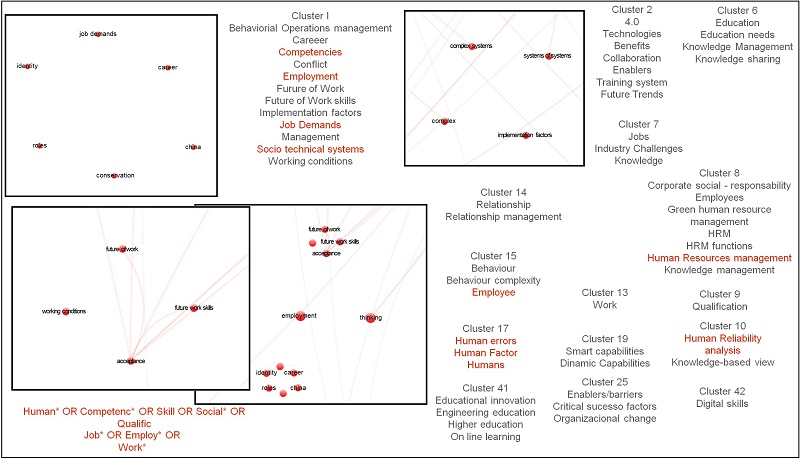
Figure 1
Human-centric terms identification. Data extracted from VOSviewer software (Van Eck & Waltman, 2017).
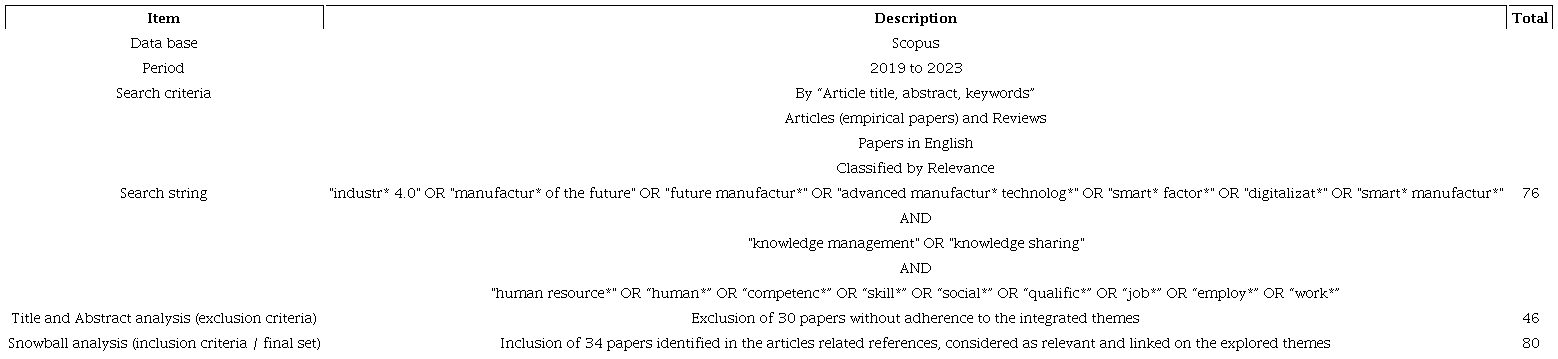
Using the I4.0 search strings, the human-centric strings defined in the first step, and “KM” and “KS”, a search in the WoS database was conducted, following the PRISMA protocol (Moher et al., 2009), limited to empirical papers and reviews in English, which yielded 76 papers. All titles and abstracts were read, and only papers discussing I4.0, KM and human-centric issues in an integrated perspective were selected, which resulted in a set of 46 papers. Based on the snowball method (Rea & Parker, 2005), 34 papers referenced in that set of articles were also included, resulting in a final set of 80 papers. Table 1 summarizes the search criteria and results based on Moher et al. (2009).
3.2. Papers analysis
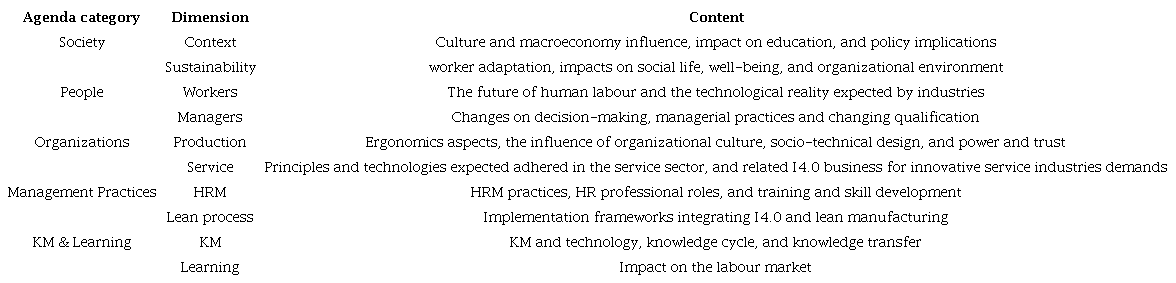
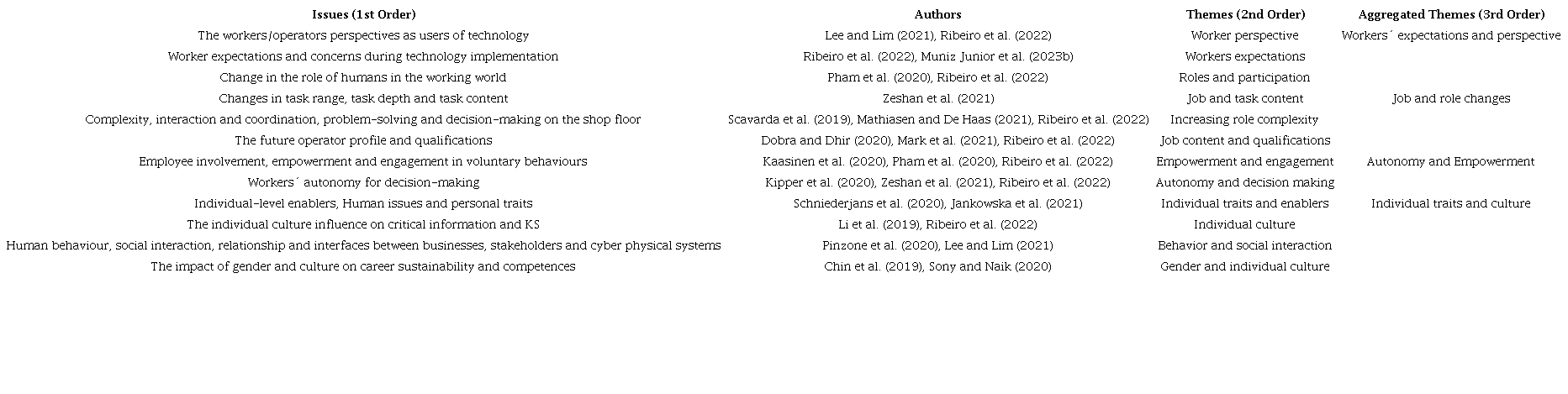
Gioia et al. (2012) method was adapted and applied to classify future research opportunities and trends. Its original application was for interview content analysis, but here it was applied to paper content analysis. First order issues are sentences extracted from the texts (from the content analysis) following the research question and purpose orientation. Those first order issues were grouped by similarity, and then summarised and coded into more abstract phrases, the second order themes (see the codification example in Muniz Junior et al., 2024a). Finally, second order themes were further grouped and aggregated into more abstract ideas, the third order themes, which represent emergent aspects identified as research opportunities and trends on the studied topic. Thus first-order issues are directly connected to texts and second and third order themes are increasingly aggregated, abstract and stylized ideas. Table 2 illustrates the interpretation process that led to a research agenda and trends related to I4.0 and KM in a human-centric perspective.

4. Findings
4.1. Content and agenda
The research opportunities were grouped in five agendas: ‘Society’, ‘People’, ‘Organizations’, ‘Management Practices’, and ‘KM & Learning’, encompassing 10 dimensions (Table 3).
4.1.1. Society related agenda (What)
The Society related agenda is identified and can be classified in two main dimensions, ‘Context’ and ‘Sustainability’.
The ‘Context’ dimension (Table 4) encompasses ‘Culture and Macroeconomy Influence’, ‘Policy Implications’, and ‘Jobs and Labour Market’. ‘Culture and Macroeconomy Factors’ indicates opportunities on cultural and economic themes related to I4.0 implementation, including individual and organizational culture as an influential element for creating knowledge for the adoption and adaptation to new processes and technologies (Sartori et al., 2021). Cultural aspects can also impact the development of new competences and KS (Li et al., 2019). Economic aspects reflect regional or national situations, public policies and markets, impacting on human and organizational development (Szász et al., 2021). ‘Policy Implications’ considers the development of policy guidelines for I4.0 implementation and technology adoption impacts. It includes actions related to the triple helix: university, industry and government (Mariani & Borghi, 2019). It also considers ethical, social, and environmental aspects, related to the interaction between workers and technology, and employability (Dhanpat et al., 2020), and includes the preparation of the youth for new jobs, including the adaptation of educational programs and practices (Scavarda et al., 2019).

The ‘Sustainability’ dimension (Table 5) includes impacts on workers´ social life, well-being, and corporate responsibility and environmental impact. Technology is expected to affect social life and well-being (Ribeiro et al., 2022; Muniz Junior et al., 2023a; Garrido et al., 2024). Technology is also expected to affect the work practices and an adequate organizational environment that allows integration between workers and technologies is also a concern (Castro et al., 2021).

4.1.2. People related agenda (Who)
The people related agenda is classified in ‘Workers’ and ‘Managers’ dimensions. The first dimension (Table 6) expresses the concern about the future of human labour, including the aggregated themes of ‘Workers´ expectations and perspective’, ‘Job and role changes’, ‘Autonomy and Empowerment’, and ‘Individual traits and culture’. How I4.0 alters the role of humans in the working world constitutes an important research topic, which have to consider the impact on workers as users of new technologies, including concerns related to: required qualifications (Dobra & Dhir, 2020), new tasks and work routines (Ribeiro et al., 2022), career sustainability (Sony & Naik, 2020), worker behaviour (Pham et al., 2020), autonomy for decision-making (Kipper et al., 2020), and expectations (Kaasinen et al., 2020). Technological interfaces and the related work environment should be analysed from the workers´ perspective (Lee & Lim, 2021). Workers´ tasks are expected to change in range, depth and content (Ribeiro et al., 2022), which will impact on the required qualifications of workers and have to be explored in future research initiatives (Mark et al., 2021). Competences on the shop floor will include not only technical knowledge and skills, but also worker´s involvement, empowerment and engagement, which can impact on how workers will manage the related context complexity (Scavarda et al., 2019). Workers will need to be more engage in problem-solving (Li et al., 2019) and decision-making (Kipper et al., 2020). Also, the influence of culture and gender during I4.0 implementation needs cross-cultural comparative analysis (Sony & Naik, 2020).
The ‘Managers’ dimension (Table 7) includes the themes: ‘Changes on Decision-making’, ‘Managerial Practices’, and ‘Changing Qualifications’. ‘Changes on Decision-making’ indicates opportunities in the decision-making process, such as cognition, KM, and technology. Acciarini et al. (2021) indicate that new leaders will be required to have specific cognitive capabilities to monitor trends and deal with high information volume provided by processes and technologies and are concerned about sustainability issues. How KM practices and technological resources will interact and support managers on decision making also constitutes a theme to be explored, as it is pointed as an enabler to deal with the complexity, dynamism, and uncertainty for decision-making process in I4.0 context (Abubakar et al., 2019; Wang et al., 2021).

‘Managerial Practices’ considers the HRM, technology resources and sustainability. ‘Changing Qualifications’ indicates that managers´ qualifications and training opportunities are shifting in the I4.0 context.
4.1.3. Organizations related agenda (Where)
‘Organizations’ related agenda includes the dimensions of ‘Process’ and ‘Service organisations’. ‘Process’ dimension (Table 8) includes themes: ‘Ergonomics’, ‘Organizational Culture’, ‘Socio-technical Design’, and ‘Power and Trust’.

Safety in the I4.0 context is considered a critical issue, and ‘Ergonomics’ indicates opportunities to explore physical and cognitive ergonomics in human-technology collaborative systems (Kerin & Pham, 2020). ‘Organizational Culture’ considers knowledge creation and sharing processes. Creating an organizational culture is a manager's responsibility (Hong & Muniz Junior, 2022) and it is strongly related to communication practices, an important factor in knowledge creation and sharing process (Drašković et al., 2020).
‘Socio-technical Design’ considers the applicability of existing socio-technical design principles in I4.0 in different industries, both in process design and later evolution (Sony & Naik, 2020).
‘Power and Trust’ considers the balance of power between organizational actors, which can influence knowledge creation and the decision-making process (Knudsen, 2020), requiring initiatives related to adequate environment, team cohesion and trust issues (Jankowska et al., 2021).
‘Service’ dimension (Table 9) considers how I4.0 principles and technologies are expected to deeply impact service operations, and their business models (Crupi et al., 2020; Jankowska et al., 2021). Technology implementation practices that consider sustainability is also an issue to be analysed (Arifiani et al., 2019).

4.1.4. Management Practices related agenda (How)
‘Management Practices’ agenda includes the dimensions of ‘HRM’ and ‘Lean process’. The ‘HRM’ dimension (Table 10) includes ‘HRM Practices’, ‘HR Professional Roles’, and ‘Training and Skill Development’. ‘HRM Practices’ that indicate opportunities on the strategies to develop the required worker skills aligned to technology related demands, culture, processes, goals and infrastructure (Liboni et al., 2019). ‘HR Professional Roles’ highlights the role of HR professionals on the development and management of qualified workers for the I4.0 context (Szász et al., 2021). HR professionals are expected to be experts on required skills for I4.0 and will in addition occupy positions of leadership (Dhanpat et al., 2020).
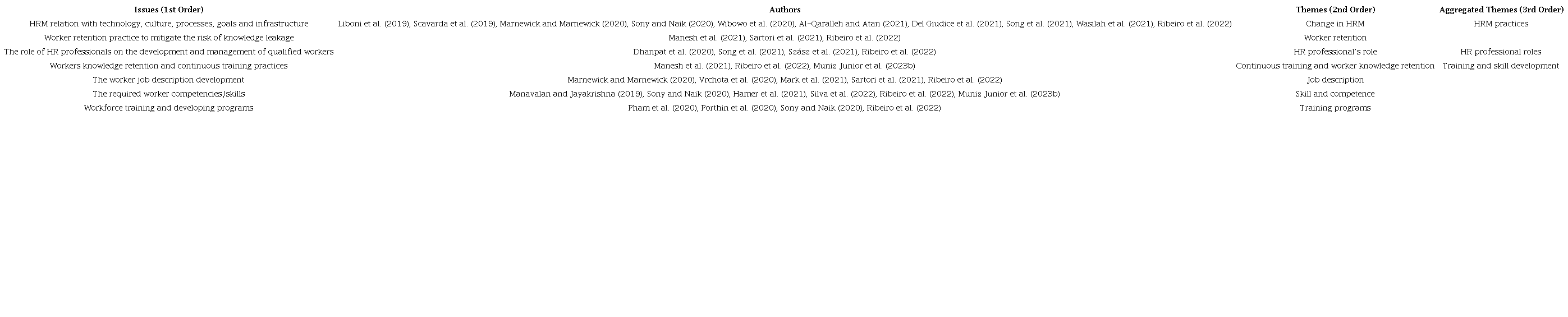
‘Training and Skill Development’ reflects the opportunities to retain relevant knowledge during I4.0 implementation. Worker´s importance also needs to be explored in continuous training practices, new job description, and the required competencies and skills (Hamer et al., 2021). Such issues are expected to influence training programs (Porthin et al., 2020).
‘Lean Process’ dimension (Table 11) indicates that future research has to explore the development and application of frameworks integrating I4.0 and lean manufacturing at different lean manufacturing maturity levels (Kamble et al., 2020; Núñez-Merino et al., 2020). The facilitating effects of lean manufacturing on I4.0 implementations, as well impacts on performance (Pagliosa et al., 2019) are also research opportunities.

4.1.5. KM and Learning related agenda (How and Why)
‘KM and Learning’ (Table 12) includes ‘KM and Technology’, ‘Creation, reuse and sharing’, and ‘Knowledge transfer and performance’. ‘KM and Technology’ indicates opportunities on the relation between KM and I4.0 technologies (Jermsittiparsert & Boonratanakittiphumi, 2019), including the management of large data volumes for decision making, innovation and manufacturing management (Wang & Wan, 2021). Workers retention practices have to mitigate the risk of knowledge leakage and loss due to workers relocation (Manesh et al., 2021). Technology can impact KS and flow, which influence the organizational innovative capability and its competitive strategies (Cassia et al., 2020). The conversion of big data into useful knowledge is also pointed out as a research opportunity as it can affect management, productivity, workers, and customer relationship (Chehbi-Gamoura et al., 2020).
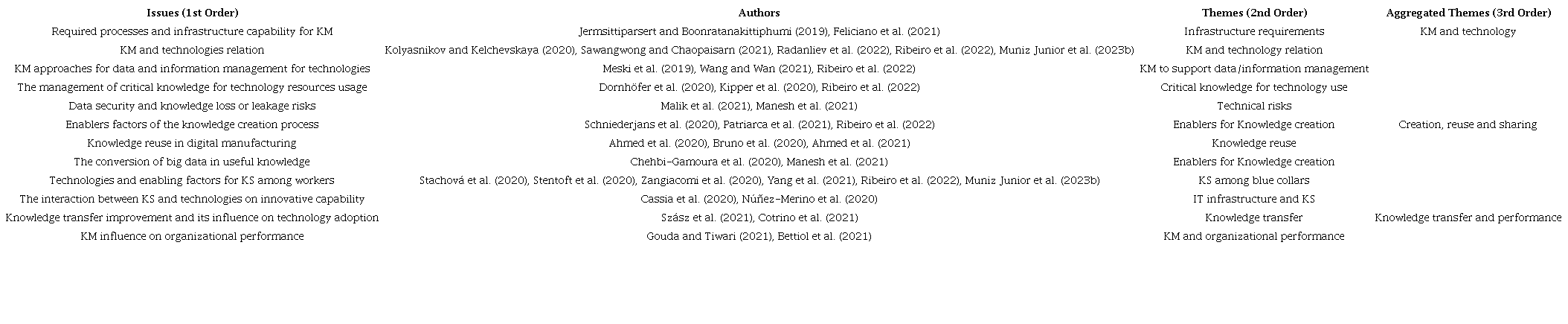
‘Creation, reuse and sharing’ indicates opportunities related to identification, retention, and management of critical knowledge, to manage technological resources, to engage in technology-based collaborative environments, which can impact productivity (Dornhöfer et al., 2020). Enablers of knowledge creation process and its relation to the interaction between workers and technology are an opportunity (Patriarca et al., 2021). Also, enablers of KS (Stentoft et al., 2020) considering technology that facilitates information flow between workers (Stachová et al., 2020).
‘Knowledge transfer and performance’ considers KS and how knowledge is transferred between technology artefacts and between organizations, and its influence on technology adoption. How KM influences organizational performance also constitutes an opportunity for future research, as well as workers' behaviour and how KS can generate better performance (Cotrino et al., 2021; Sartori et al., 2021).
‘Learning’ (Table 13) has an integrated perspective with KM and organizational aspects. The effect of I4.0 implementation in the learning process has to be analysed on different levels, including individual, group, and institutional (Manesh et al., 2021; Sartori et al., 2021). It also can be explored on how learning can influence sustainable careers (Ngereja & Hussein, 2021).

4.2. Human-Centric Operations Management implementation
Organizations are the foundation of I4.0 and digital transformation, which requires reviewing their structures and processes to support different work requirements and aspects of training and skills; and industrial policies will either enhance or hinder the organization performance in an industrial setting that is fundamentally different from the existing ones.
The review also indicated opportunities about implementation practices. They include the following themes (Table 14): ‘Implementation planning’, ‘Policies and frameworks’, and ‘Assessment’. It highlights concerns such as a possible replacement of workers by technology, technology adaptation, and the impact on current industrial processes. Implementation has to consider I4.0 maturity models, and capabilities, knowledge infrastructure and implementation barriers (Hsieh et al., 2020). Research on frameworks for I4.0 implementation are required to provide robust models integrating management, infrastructure, technology, process, and human qualification (Kipper et al., 2020). I4.0 implementation also requires policies, considering organizational and social views (Muniz Junior et al., 2023a). The replacement of workers by technological devices reflects the concern about job loss, which requires studies on requalification and relocation, and collaborative environments to integrate both workers and technologies. Implementation demands existing technology conversion and adaptation (Krzywdzinski, 2020; Barbosa et al., 2020), including impact on current industrial processes (Meski et al., 2019). It should also risks related to lack of knowledge, technological and managerial capability, human adaptation issues (Manavalan & Jayakrishna, 2019), data security, knowledge loss or leakage (Sartori et al., 2021), occupational hazards, organizational and human performance (Brocal et al., 2019).

4.3. A framework for Industry 5.0 Human-Centric Operations Management
The I4.0-Human-KM relation indicates topics to be explored by further research. In the broader context, it should focus on aspects such as including culture and macroeconomy influence, education and policy implications, sustainability, and concerns of worker adaptation, impacts on social life, well-being, and organizational environment.
The people category reinforces the importance of workers, indicating research opportunities focused on the future of human labour and technology both for workers and managers, which have to be explored considering possible changes on decision-making, managerial practices and qualification. Organizational research opportunities include concerns related to ergonomics, culture, socio-technical design, and power and trust, and how technology can be applied in services.
There are opportunities to investigate traditional management theories and technology adoption, considering HRM practices, HR professional roles, training and skill development; KM and technology, knowledge cycle and knowledge transfer; implementation frameworks integrating I4.0 and lean manufacturing; and aspects and factors to turn the I4.0 implementation or operation unfeasible, including, knowledge insufficiency, management capability, human adaptation capability, technology capability, data security, knowledge loss or leakage, occupational factors, organizational and human performance.
Finally, Figure 2 depicts the overarching view of interactions among the three dimensions of SSFM framework as well as indicating the underlying logic: Society, Organization and People. Three sets of processes around learning, innovation and value creation will facilitate the digital transformation of work, firm and policy for future manufacturing.
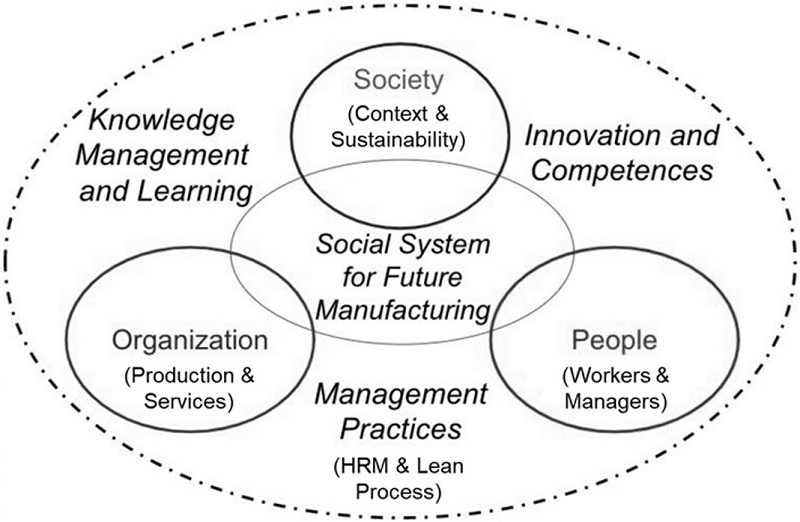
Figure 2
Industry 5.0 Human-Centric Operations Management based on Social Systems for Future Manufacturing Framework (adapted from: Muniz Junior et al., 2022b, 2024b).
5. Conclusion
This paper reviewed relevant literature relating HR and KM and I4.0 implementation. The literature analysis reveals that individual aspects (e.g., learning capabilities, motivations, social and cultural background) influence the use of I4.0 technologies and affect the knowledge creation process at the operational and strategic levels, and sociocultural issues influence how workers interact with technologies and impact the organizational objectives. Therefore, KM should be incorporated in HRM to support effective knowledge retention and sharing, and assist problem solving, continuous improvement, and decision-making, facilitating the technology adoption, workers interaction and the I4.0 implementation.
Research opportunities were grouped in five agendas, including Society (Context and Sustainability), People (Workers and Managers), Organizations (Production and Service), Management Practices (HRM and Lean Process), and KM & Learning:
-
For Society, cultural and economic aspects related to I4.0 implementation can be explored in future research, considering the individual and organizational culture as elements to create knowledge for the adoption and adaptation to new processes and technologies;
-
In the People agenda, technological impact on workers, required (re)qualification, tasks, career sustainability and behaviour, autonomy and expectations constitute important research topics, as well as the interaction of KM practices and technological resources to support managers´ decision making;
-
For the Organization agenda, individual and group culture, power and trust, and socio-technical design in industrial and service environments could be more explored;
-
In Management practices, future research should explore strategies to develop worker skills for technology demands, infrastructure, cultural aspects, new productive processes, lean process and organizational goals;
-
KM and Learning research should focus on knowledge retention to mitigate knowledge loss and leakage risks due to workers relocation. The impact of technology on KS, and how to convert big data into useful knowledge, and its influence on innovative capability, competitive strategies and performance. The effect of I4.0 on learning should be analysed at the individual, group, and organizational levels, and its influence on sustainable careers, analysed. Our review also indicated opportunities about implementation practices, considering the planning, policies, frameworks and assessment.
The Human-Centric Operations Management framework (Figure 2) shows the interaction among dimensions of Society, Organization and People, considering three sets of processes around learning, innovation and value creation that are expected to facilitate the digital transformation of work, firm and policy for future manufacturing.
5.1. Practical and theoretical implications
The I4.0 and its implications on human roles needs further understanding for the managers and policymakers. Workers participation in the implementation of I4.0 contributes to the promotion of a favourable context for knowledge creation and sharing, continuous improvement, and to broaden the vision of practitioners about decision-making. HRM and competitiveness. Also, findings contribute to practitioners´ and academic knowledge on the impact of I4.0 on work, production practices, and knowledge creation and sharing, and stimulate reflection about the importance of these issues, which can support HR policies.
5.2. Further research
Research opportunities are presented along section 4.1 (Content and Agenda) consider the topics of ‘Society’, ‘People’, ‘Organizations’, ‘Management Practices’, and ‘KM & Learning’, which can guide further empirical studies exploring a human-centric approach on the I4.0/5.0 implementation. The ‘Society’ perspective indicates demand for studies discussing context, the technological transformation relationship with culture, education and policy, and sustainability, worker's adaptation, social life and well-being. The triple helix interaction: university, industry and government can also be considered. The ‘People’ perspective demands studies about the impact on workers and managers, their expectations and perspectives, and the related changes in labour, qualification, managerial practices and decision-making. The ‘Organizations’ perspective indicates the need to better understand the technological transformation impact on the organizational culture, social-technical design, ergonomics, innovation processes, production and service principles. ‘Management practices’ demands studies on HRM practices, professional roles, training and skill development, lean process and I4.0 integration. The ‘KM & Learning’ perspective indicates opportunities about the relation between human knowledge and new technologies, KM and KS practices, and learning. Specifically, additional research related to competence development of managers, workers and undergraduate students who are expected to deal with new technologies is indicated (Muniz Junior et al., 2024b; Ribeiro et al., 2022; Silva et al., 2022).
Acknowledgements
The authors gratefully acknowledge the financial support of the Coordination for the Improvement of Higher Education Personnel - Brazil (CAPES) under the Finance Code 001, and Grant CAPES-PRINT 88887.310463/2018-00; and São Paulo Research Foundation (FAPESP) under Grant Number 2021/10944-2.
References
Abubakar, A. M., Elrehail, H., Alatailat, M. A., & Elçi, A. (2019). Knowledge management, decision-making style and organizational performance. Journal of Innovation & Knowledge, 4(2), 104-114. http://doi.org/10.1016/j.jik.2017.07.003.
Acciarini, C., Brunetta, F., & Boccardelli, P. (2021). Cognitive biases and decision-making strategies in times of change: a systematic literature review. Management Decision, 59(3), 638-652. http://doi.org/10.1108/MD-07-2019-1006.
Ahmed, M. B., Majeed, F., Sanin, C., & Szczerbicki, E. (2020). Enhancing product manufacturing through Smart Virtual Product Development (SVPD) for Industry 4.0. Cybernetics and Systems, 51(2), 246-257. http://doi.org/10.1080/01969722.2019.1705544.
Ahmed, M. B., Majeed, F., Sanin, C., & Szczerbicki, E. (2021). Experience-based product inspection planning for Industry 4.0. Cybernetics and Systems, 52(5), 296-312. http://doi.org/10.1080/01969722.2020.1871222.
Al-Qaralleh, R. E., & Atan, T. (2021). Impact of knowledge-based HRM, business analytics and agility on innovative performance: linear and FsQCA findings from the Hotel Industry. Kybernetes, 51(1), 423-441. http://doi.org/10.1108/K-10-2020-0684.
Arias-Pérez, J., & Vélez-Jaramillo, J. (2022). Ignoring the three-way interaction of digital orientation, not-invented-here syndrome and Employee’s Artificial Intelligence Awareness in digital innovation performance: a recipe for failure. Technological Forecasting and Social Change, 174, 121305. http://doi.org/10.1016/j.techfore.2021.121305.
Arifiani, L., Budiastuti, I. D., & Erika, W. K. (2019). The effect of disruption technology, and the future knowledge management toward service innovation for telecommunication Industry 4.0 in Indonesia. International Journal of Engineering and Advanced Technology, 8(6S3), 247-257. http://doi.org/10.35940/ijeat.F1040.0986S319.
Barbosa, G. F., Shiki, S. B., & Da Silva, I. B. (2020). R&D roadmap for process robotization driven to the digital transformation of the Industry 4.0. Concurrent Engineering, Research and Applications, 28(4), 290-304. http://doi.org/10.1177/1063293X20958927.
Bettiol, M., Capestro, M., Di Maria, E., & Micelli, S. (2021). Disentangling the link between ICT and Industry 4.0: Impacts on Knowledge-Related Performance. International Journal of Productivity and Performance Management, 71(4), 1076-1098. http://doi.org/10.1108/IJPPM-10-2020-0573.
Brahma, M., Tripathi, S. S., & Sahay, A. (2021). Developing curriculum for Industry 4.0: Digital Workplaces. Higher Education, Skills and Work-Based Learning, 11(1), 144-163. http://doi.org/10.1108/HESWBL-08-2019-0103.
Brocal, F., González, C., Komljenovic, D., Katina, P. F., & Sebastián, M. A. (2019). Emerging Risk Management in Industry 4.0: An Approach to Improve Organizational and Human Performance in the Complex Systems. Complexity, 2019, 1-13. http://doi.org/10.1155/2019/2089763.
Bruno, G., Faveto, A., & Traini, E. (2020). An open source framework for the storage and reuse of industrial knowledge through the integration of PLM and MES. Management and Production Engineering Review, 11(2), 62-73. http://doi.org/10.24425/mper.2020.133729.
Cassia, A. R., Costa, I., Da Silva, V. H. C., & Neto, G. C. O. (2020). Systematic literature review for the development of a conceptual model on the relationship between knowledge sharing, information technology infrastructure and innovative capability. Technology Analysis and Strategic Management, 32(7), 801-821. http://doi.org/10.1080/09537325.2020.1714026.
Castro, G. D. R., Fernández, M. C. G., & Colsa, Á. U. (2021). Unleashing the convergence amid digitalization and sustainability towards pursuing the Sustainable Development Goals (Sdgs): a holistic review. Journal of Cleaner Production, 280, 122204. http://doi.org/10.1016/j.jclepro.2020.122204.
Chehbi-Gamoura, S., Derrouiche, R., Damand, D., & Barth, M. (2020). Insights from Big data analytics in supply chain management: an all-inclusive literature review using the SCOR Model. Production Planning and Control, 31(5), 355-382. http://doi.org/10.1080/09537287.2019.1639839.
Chin, T., Li, G., Jiao, H., Addo, F., & Jawahar, I. M. (2019). Career sustainability during manufacturing innovation: a review, a conceptual framework and future research agenda. Career Development International, 24(6), 509-528. http://doi.org/10.1108/CDI-02-2019-0034.
Cotrino, A., Sebastián, M. A., & González-Gaya, C. (2021). Industry 4.0 HUB: a collaborative knowledge transfer platform for small and medium-sized enterprises. Applied Sciences (Basel, Switzerland), 11(12), 5548. http://doi.org/10.3390/app11125548.
Crupi, A., Del Sarto, N., Di Minin, A., Gregori, G. L., Lepore, D., Marinelli, L., & Spigarelli, F. (2020). The digital transformation of smes - a new knowledge broker called the digital innovation hub. Journal of Knowledge Management, 24(6), 1263-1288. http://doi.org/10.1108/JKM-11-2019-0623.
Del Giudice, M., Scuotto, V., Papa, A., Tarba, S. Y., Bresciani, S., & Warkentin, M. (2021). A self‐tuning model for smart manufacturing SMEs: Effects on Digital Innovation. Journal of Product Innovation Management, 38(1), 68-89. http://doi.org/10.1111/jpim.12560.
Dhanpat, N., Buthelezi, Z. P., Joe, M. R., Maphela, T. V., & Shongwe, N. (2020). Industry 4.0: The Role of Human Resource Professionals. SA Journal of Human Resource Management, 18(1), 1-11. http://doi.org/10.4102/sajhrm.v18i0.1302.
Dobra, Z., & Dhir, K. S. (2020). Technology jump in the Industry: human–robot cooperation in production. The Industrial Robot, 47(5), 757-775. http://doi.org/10.1108/IR-02-2020-0039.
Dornhöfer, M., Sack, S., Zenkert, J., & Fathi, M. (2020). Simulation of smart factory processes applying multi-agent-systems - a knowledge management perspective. Journal of Manufacturing and Materials Processing, 4(3), 89. http://doi.org/10.3390/jmmp4030089.
Drašković, Z., Ćelić, Đ., Petrov, V., & Uzelac, Z. (2020). Comparison of organizational cultures from a transitional economy and a knowledge economy: empirical study from Serbia and Southern California. Strategic Management, 25(4), 017-023. http://doi.org/10.5937/StraMan2004017D.
Dumitrache, I., Caramihai, S. I., Popescu, D. C., Moisescu, M. A., & Sacala, I. S. (2021). Neuro-Inspired Framework for Cognitive Manufacturing Control. International Journal of Computers, Communications & Control, 16(6), 4519. http://doi.org/10.15837/ijccc.2021.6.4519.
Feliciano, J. F., Arsénio, A. M., Cassidy, J., Santos, A. R., & Ganhão, A. (2021). Knowledge Management and Operational Capacity in Water Utilities, a Balance between Human Resources and Digital Maturity—The Case of AGS. Water (Basel), 13(22), 3159. http://doi.org/10.3390/w13223159.
Fok-Yew, O. O. N., & Hamid, N. A. A. (2021). The Influence of Lean Practices and Leadership on Business Excellence: Malaysian E&E Manufacturing Companies. Estudios de Economía Aplicada, 39(4), 1-26. http://doi.org/10.25115/eea.v39i4.4562.
Garrido, S., Muniz Junior, J., & Ribeiro, V. B. (2024). Operations management, sustainability & industry 5.0: A critical analysis and future agenda. Cleaner Logistics and Supply Chain, 10, 100141. http://doi.org/10.1016/j.clscn.2024.100141.
Gioia, D. A., Corley, K. G., & Hamilton, A. L. (2012). Seeking qualitative rigor in inductive research: notes on the Gioia methodology. Organizational Research Methods, 16(1), 15-31. http://doi.org/10.1177/1094428112452151.
Gouda, G. K., & Tiwari, B. (2021). Talent agility, innovation adoption and sustainable business performance: empirical evidences from Indian Automobile Industry. International Journal of Productivity and Performance Management, 71(6), 2582-2604. http://doi.org/10.1108/IJPPM-02-2021-0071.
Hamer, R., Waterson, P., & Jun, G. T. (2021). Human Factors and Nuclear Safety Since 1970 – A Critical Review of the Past, Present and Future. Safety Science, 133, 105021. http://doi.org/10.1016/j.ssci.2020.105021.
Hong, J., & Muniz Junior, J. (2022). Cross-cultural Knowledge Management: Cultural Influences in China and Brazil. Abingdon: Routledge. http://doi.org/10.4324/9781003112136.
Hsieh, P. J., Lin, C., & Chang, S. (2020). The evolution of knowledge navigator model: the construction and application of KNM 2.0. Expert Systems with Applications, 148, 113209. http://doi.org/10.1016/j.eswa.2020.113209.
Jankowska, B., Di Maria, E., & Cygler, J. (2021). Do clusters matter for foreign subsidiaries in the Era of Industry 4.0? The case of the aviation valley in Poland. European Research on Management and Business Economics, 27(2), 100150. http://doi.org/10.1016/j.iedeen.2021.100150.
Jermsittiparsert, K., & Boonratanakittiphumi, C. (2019). The mediating role of knowledge management and the moderating role of additive manufacturing (Industry 4.0) in the relationship between knowledge management capability and firm performance: a case of KPMG Thailand. International Journal of Innovation, Creativity and Change, 8(8), 430-449.
Kaasinen, E., Schmalfuß, F., Özturk, C., Aromaa, S., Boubekeur, M., Heilala, J., Heikkilä, P., Kuula, T., Liinasuo, M., Mach, S., Mehta, R., Petäjä, E., & Walter, T. (2020). Empowering and engaging industrial workers with Operator 4.0 Solutions. Computers & Industrial Engineering, 139, 105678. http://doi.org/10.1016/j.cie.2019.01.052.
Kamble, S. S., Gunasekaran, A., Ghadge, A., & Raut, R. (2020). A performance measurement system for Industry 4.0 enabled smart manufacturing system in smmes-a review and empirical investigation. International Journal of Production Economics, 229, 107853. http://doi.org/10.1016/j.ijpe.2020.107853.
Kerin, M., & Pham, D. T. (2020). Smart remanufacturing: a review and research framework. Journal of Manufacturing Technology Management, 31(6), 1205-1235. http://doi.org/10.1108/JMTM-06-2019-0205.
Kipper, L. M., Furstenau, L. B., Hoppe, D., Frozza, R., & Iepsen, S. (2020). Scopus scientific mapping production in Industry 4.0 (2011-2018): a bibliometric analysis. International Journal of Production Research, 58(6), 1605-1627. http://doi.org/10.1080/00207543.2019.1671625.
Knudsen, D. R. (2020). Elusive boundaries, power relations, and knowledge production: a systematic review of the literature on digitalization in accounting. International Journal of Accounting Information Systems, 36, 100441. http://doi.org/10.1016/j.accinf.2019.100441.
Kolyasnikov, M. S., & Kelchevskaya, N. R. (2020). Knowledge management strategies in companies: trends and the impact of Industry 4.0. Upravlenec, 11(4), 82-96. http://doi.org/10.29141/2218-5003-2020-11-4-7.
Krzywdzinski, M. (2020). Automation, digitalization, and changes in occupational structures in the automobile Industry in Germany, the United States, and Japan: A Brief History from the Early 1990s until 2018. Social Science Open Access Repository, 10, 1-68. http://doi.org/10.34669/wi.ws/10.
Lee, C., & Lim, C. (2021). From technological development to social advance: a review of industry 4.0 through machine learning. Technological Forecasting and Social Change, 167, 120653. http://doi.org/10.1016/j.techfore.2021.120653.
Li, D., Fast-Berglund, Å., & Paulin, D. (2019). Current and future Industry 4.0 capabilities for information and knowledge sharing. International Journal of Advanced Manufacturing Technology, 105(9), 3951-3963. http://doi.org/10.1007/s00170-019-03942-5.
Liboni, L. B., Cezarino, L. O., Jabbour, C. J. C., Oliveira, B. G., & Stefanelli, N. O. (2019). Smart Industry and the Pathways to HRM 4.0: Implications for SCM. Supply Chain Management, 24(1), 124-146. http://doi.org/10.1108/SCM-03-2018-0150.
Malik, N., Tripathi, S. N., Kar, A. K., & Gupta, S. (2021). Impact of artificial intelligence on employees working in Industry 4.0 Led Organizations.International Journal of Manpower, 43(2), 334-354. http://doi.org/10.1108/IJM-03-2021-0173.
Manavalan, E., & Jayakrishna, K. (2019). A Review of Internet of Things (IoT) Embedded Sustainable Supply Chain for Industry 4.0 Requirements. Computers & Industrial Engineering, 127, 925-953. http://doi.org/10.1016/j.cie.2018.11.030.
Manesh, M. F., Pellegrini, M. M., Marzi, G., & Dabic, M. (2021). Knowledge management in the fourth industrial revolution: mapping the literature and scoping future avenues. IEEE Transactions on Engineering Management, 68(1), 289-300. http://doi.org/10.1109/TEM.2019.2963489.
Mariani, M., & Borghi, M. (2019). Industry 4.0: a bibliometric review of its managerial intellectual structure and potential evolution in the service industries. Technological Forecasting and Social Change, 149, 119752. http://doi.org/10.1016/j.techfore.2019.119752.
Mark, B. G., Rauch, E., & Matt, D. T. (2021). Worker assistance systems in manufacturing: a review of the state of the art and future directions. Journal of Manufacturing Systems, 59, 228-250. http://doi.org/10.1016/j.jmsy.2021.02.017.
Marnewick, C., & Marnewick, A. L. (2020). The demands of Industry 4.0 on project teams. IEEE Transactions on Engineering Management, 67(3), 941-949. http://doi.org/10.1109/TEM.2019.2899350.
Mathiasen, J. B., & De Haas, H. (2021). Digitalization of shop floor management: in blissful ignorance of superfluous work. Journal of Industrial Integration and Management, 6(3), 333-352. http://doi.org/10.1142/S2424862221400029.
Meski, O., Belkadi, F., Laroche, F., Ladj, A., & Furet, B. (2019). Integrated data and knowledge management as key factor for Industry 4.0. IEEE Engineering Management Review, 47(4), 94-100. http://doi.org/10.1109/EMR.2019.2948589.
Moher, D., Liberati, A., Tetzlaff, J., Altman, D. G., Altman, D., The PRISMA Group. (2009). Preferred reporting items for systematic reviews and meta-analyses: the PRISMA Statement (Chinese Edition). Journal of Chinese Integrative Medicine, 7(9), 889-896. http://doi.org/10.3736/jcim20090918.
Muniz Junior, J. Trzesniak, P., & Batista Junior, E. D. (2009). A definitive concept to knowledge management: need for science evolution and effectiveness application. In V. F. Oliveira, V. Cavenagui & F. S. Másculo (Eds.), Emerging topics and methodologies challenges in production engineering: cases, experiences and propositions (pp. 137-145). Rio de Janeiro: Associação Nacional de Engenharia de Produção.
Muniz Junior, J. Ribeiro, V. B., & Pradhan, N. (2021a). Knowledge-Based Assessment Applied to Lean Brazilian Toyota Plants: Employees’ Perceptions. International Journal of Knowledge Management, 17(2), 1-22. http://doi.org/10.4018/IJKM.2021040101.
Muniz Junior, J. Wintersberger, D., & Hong, J. F. L. (2021b). Worker and manager judgments about factors that facilitate knowledge-sharing: insights from a Brazilian automotive assembly line. Knowledge and Process Management, 29(2), 132-146. http://doi.org/10.1002/kpm.1693.
Muniz Junior, J., Eriksson, K. M., Valemtim, M. L. P., Ramasamy, S., Shotaro, Y., Marins, F. A., Voorwald, H. J. C., Ericson, M., & Zhang, Y. (2022a, December 7-9). Challenges of Engineering Education 5.0 based on I4. 0 Policies in Brazil, India, Japan, and Sweden. In International Conference on Work Integrated Learning (WIL Conference) (pp. 95-96). Trollhättan: University West.
Muniz Junior, J., Martins, F. R., Wintersberger, D., Santos, J. P. O., Zhang, Y., & Ramirez, P. (2022b, May 3-5). Industry 4.0 Challenges: University and Union agenda [Poster presentation]. In Forum for Global Challenges 2022. Birmingham: University of Birmingham.
Muniz Junior, J. Martins, F. R., Wintersberger, D., & Santos, J. P. O. (2023a). Trade union and Industry 4.0 implementation: two polar cases in Brazilian trucks manufacturing. Journal of Workplace Learning, 35(8), 670-692. http://doi.org/10.1108/JWL-10-2022-0137.
Muniz Junior, J., Moschetto, G. P., & Wintersberger, D. (2023b). Industry 4.0 at Brazilian Modular Consortium: work, process and knowledge in engine supply chain. Production, 33, e20220074. http://doi.org/10.1590/0103-6513.20220074.
Muniz Junior, J., Ribeiro, V. B., Wintersberger, D., & Carvalho, C. P. (2024a). Worker knowledge sharing in the Brazilian glass sector. Knowledge Management Research and Practice, 1-15. http://doi.org/10.1080/14778238.2024.2326550.
Muniz Junior, J., Zhang, Y., Winersberger, D., & Ramirez, P. (2024b). Social systems for future manufacturing: an overarching view of people, organization and society. Proceedings of the Institution of Mechanical Engineers. Part B, Journal of Engineering Manufacture, 09544054241248865. http://doi.org/10.1177/09544054241248865.
Nedelko, Z. (2021). What drives the usage of management tools supporting Industry 4.0 in organizations? Sensors (Basel), 21(10), 3512. http://doi.org/10.3390/s21103512. PMid:34070117.
Ngereja, B. J., & Hussein, B. (2021). An examination of the preconditions of learning to facilitate innovation in digitalization projects: a Project Team Members’ Perspective. International Journal of Information Systems and Project Management, 9(2), 23-41. http://doi.org/10.12821/ijispm090202.
Nonaka, I. (1994). A dynamic theory of organizational knowledge creation. Organization Science, 5(1), 14-37. http://doi.org/10.1287/orsc.5.1.14.
Núñez-Merino, M., Maqueira-Marín, J. M., Moyano-Fuentes, J., & Martínez-Jurado, P. J. (2020). Information and digital technologies of Industry 4.0 and lean supply chain management: a systematic literature review. International Journal of Production Research, 58(16), 5034-5061. http://doi.org/10.1080/00207543.2020.1743896.
Pagliosa, M., Tortorella, G., & Ferreira, J. C. E. (2019). Industry 4.0 and lean manufacturing: a systematic literature review and future research directions. Journal of Manufacturing Technology Management, 32(3), 543-569. http://doi.org/10.1108/JMTM-12-2018-0446.
Patriarca, R., Falegnami, A., Costantino, F., Di Gravio, G., De Nicola, A., & Villani, M. L. (2021). WAx: an Integrated conceptual framework for the analysis of cyber-socio-technical systems. Safety Science, 136, 105142. http://doi.org/10.1016/j.ssci.2020.105142.
Pham, N. T., Hoang, H. T., & Phan, Q. P. T. (2020). Green human resource management: a comprehensive review and future research agenda. International Journal of Manpower, 41(7), 845-878. http://doi.org/10.1108/IJM-07-2019-0350.
Pinzone, M., Albè, F., Orlandelli, D., Barletta, I., Berlin, C., Johansson, B., & Taisch, M. (2020). A Framework for operative and social sustainability functionalities in human-centric cyber-physical production systems. Computers & Industrial Engineering, 139, 105132. http://doi.org/10.1016/j.cie.2018.03.028.
Porthin, M., Liinasuo, M., & Kling, T. (2020). Effects of digitalization of nuclear power plant control rooms on human reliability analysis – a review. Reliability Engineering & System Safety, 194, 106415. http://doi.org/10.1016/j.ress.2019.03.022.
Radanliev, P., De Roure, D., Nicolescu, R., Huth, M., & Santos, O. (2022). Digital twins: artificial intelligence and the iot cyber-physical systems in Industry 4.0. International Journal of Intelligent Robotics and Applications, 6(1), 171-185. http://doi.org/10.1007/s41315-021-00180-5.
Rea, L. M., & Parker, R. A. (2005), Selecting a representative sample. Designing and conducting survey research: a comprehensive guide. San Francisco, CA: John Wiley & Sons.
Ribeiro, V. B., Nakano, D., Muniz Junior, J., & Oliveira, R. B. (2022). Knowledge management and Industry 4.0: a critical analysis and future agenda. Gestão & Produção, 29, e5222. http://doi.org/10.1590/1806-9649-2022v29e5222.
Ruel, H., Rowlands, H., & Njoku, E. (2021). Digital business strategizing: the role of leadership and organizational learning. Competitiveness Review, 31(1), 145-161. http://doi.org/10.1108/CR-11-2019-0109.
Sartori, J. T. D., Frederico, G. F., & Silva, H. F. N. (2021). Organizational knowledge management in the context of Supply Chain 4.0: a systematic literature review and conceptual model proposal. Knowledge and Process Management, 29(2), 147-161. http://doi.org/10.1002/kpm.1682.
Sawangwong, A., & Chaopaisarn, P. (2021). The impact of applying knowledge in the technological pillars of Industry 4.0 on supply chain performance. Kybernetes, 52(3), 1094-1126. http://doi.org/10.1108/K-07-2021-0555.
Scavarda, A., Daú, G., Scavarda, L. F., & Caiado, R. G. G. (2019). An analysis of the corporate social responsibility and the Industry 4.0 with focus on the youth generation: a sustainable human resource management framework. Sustainability (Basel), 11(18), 5130. http://doi.org/10.3390/su11185130.
Schniederjans, D. G., Curado, C., & Khalajhedayati, M. (2020). Supply chain digitisation trends: an integration of knowledge management. International Journal of Production Economics, 220, 107439. http://doi.org/10.1016/j.ijpe.2019.07.012.
Silva, L. B. P., Soltovski, R., Pontes, J., Treinta, F. T., Leitão, P., Mosconi, E., De Resende, L. M. M., & Yoshino, R. T. (2022). Human resources management 4.0: literature review and trends. Computers & Industrial Engineering, 168, 108111. http://doi.org/10.1016/j.cie.2022.108111.
Song, S., Shi, X., Song, G., & Huq, F. A. (2021). Linking Digitalization and human capital to shape supply chain integration in omni-channel retailing. Industrial Management & Data Systems, 121(11), 2298-2317. http://doi.org/10.1108/IMDS-09-2020-0526.
Sony, M., & Naik, S. (2020). Industry 4.0 Integration with socio-technical systems theory: a systematic review and proposed theoretical model. Technology in Society, 61, 101248. http://doi.org/10.1016/j.techsoc.2020.101248.
Stachová, K., Stacho, Z., Cagáňová, D., & Stareček, A. (2020). Use of digital technologies for intensifying knowledge Sharing. Applied Sciences (Basel, Switzerland), 10(12), 4281. http://doi.org/10.3390/app10124281.
Stentoft, J., Philipsen, K., Haug, A., & Wickstrøm, K. A. (2020). Motivations and challenges with the diffusion of additive manufacturing through a non-profit association. Journal of Manufacturing Technology Management, 32(4), 841-861. http://doi.org/10.1108/JMTM-04-2020-0125.
Szász, L., Demeter, K., Rácz, B. G., & Losonci, D. (2021). Industry 4.0: a review and analysis of contingency and performance effects. Journal of Manufacturing Technology Management, 32(3), 667-694. http://doi.org/10.1108/JMTM-10-2019-0371.
Tortorella, G. L., Vergara, A. M. C., Garza-Reyes, J. A., & Sawhney, R. (2020). Organizational learning paths based upon Industry 4.0 adoption: an empirical study with Brazilian Manufacturers. International Journal of Production Economics, 219, 284-294. http://doi.org/10.1016/j.ijpe.2019.06.023.
Van Eck, N. J., & Waltman, L. (2017). Citation-based clustering of publications using CitNetExplorer and VOSviewer. Scientometrics, 111(2), 1053-1070. http://doi.org/10.1007/s11192-017-2300-7. PMid:28490825.
Vrchota, J., Mařiková, M., Řehoř, P., Rolínek, L., & Toušek, R. (2020). Human resources readiness for Industry 4.0. Journal of Open Innovation, 6(1), 3. http://doi.org/10.3390/joitmc6010003.
Wang, R., Milisavljevic-Syed, J., Guo, L., Huang, Y., & Wang, G. (2021). Knowledge-based design guidance system for cloud-based decision support in the design of complex engineered systems. Journal of Mechanical Design, 143(7), 072001. http://doi.org/10.1115/1.4050247.
Wang, X., & Wan, J. (2021). Cloud-edge collaboration-based knowledge sharing mechanism for manufacturing resources. Applied Sciences (Basel, Switzerland), 11(7), 3188. http://doi.org/10.3390/app11073188.
Wasilah, L. E., Nugroho, L. E., Santosa, P. I., & Sorour, S. E. (2021). Study on the influencing factors of the flexibility of University IT Management in Education 4.0. International Journal of Innovation and Learning, 30(2), 132-153. http://doi.org/10.1504/IJIL.2021.117219.
Wibowo, E. B., Legionosuko, T., Mahroza, J., & Chandra Jaya, Y. (2020). Industry 4.0: challenges and opportunities in competency development for Defense Apparatus’ Human Resources. International Journal of Advanced Science and Technology, 29(7), 45-60.
Yang, J., Ma, X., Crespo, R. G., & Martínez, O. S. (2021). Blockchain for supply chain performance and logistics management. Applied Stochastic Models in Business and Industry, 37(3), 429-441. http://doi.org/10.1002/asmb.2577.
Zangiacomi, A., Pessot, E., Fornasiero, R., Bertetti, M., & Sacco, M. (2020). Moving towards digitalization: a multiple case study in manufacturing. Production Planning and Control, 31(2-3), 143-157. http://doi.org/10.1080/09537287.2019.1631468.
Zeshan, M., Qureshi, T. M., & Saleem, I. (2021). Impact of digitalization on Employee's Autonomy: evidence from French firms. VINE Journal of Information and Knowledge Management Systems, 53(6), 1287-1306. http://doi.org/10.1108/VJIKMS-06-2021-0090.
Notes
Author notes
*vagner.ribeiro@unesp.br