Systematic Review
Occupational risks of work in the agricultural sector: a systematic literature review
 Camila Matos
Gustavo de Souza Matias
Fernando Henrique Lermen
Riccardo Patriarca
Hugo Valadares Siqueira
Giane Gonçalves Lenzi
Camila Matos
Gustavo de Souza Matias
Fernando Henrique Lermen
Riccardo Patriarca
Hugo Valadares Siqueira
Giane Gonçalves Lenzi
Occupational risks of work in the agricultural sector: a systematic literature review
Production, vol. 34, e20230042, 2024
Associação Brasileira de Engenharia de Produção
Received: 22 June 2023
Accepted: 05 September 2024
Abstract
Paper aims: This study aims to identify the occupational risks to which workers in the agricultural sector are exposed during the development of their activities on rural properties.
Originality: This study’s originality lies in filling a gap in identifying the main risks to which workers in the agricultural sector are exposed. The study identifies which risks they are exposed to in the literature.
Research method: A systematic review of the literature over the last five years (2017-2021) revealed 56 articles that identified at least one occupational risk to workers in the agricultural sector.
Main findings: The bibliometric analysis indicated that the studies are divided into agricultural (33.9%) and animal (66.1%) production. Thus, the content analysis indicated that the most frequent agricultural production risk is the chemical risk due to the high use of pesticides and in animal production is the biological risk due to workers' contact with animals. It should be noted that the leading cause identified in these studies is the lack of personal safety equipment and training.
Implications for theory and practice: The implications include advancing theoretical and practical knowledge concern decision-making regarding new work safety practices for professionals involved in the agricultural sector.
Keywords: Agricultural production+ Animal production+ Risk analysis.
1. Introduction
Despite being one of the essential sectors globally regarding food supply, employment, and income generation, even with significant progress in agricultural technology, work in the agricultural sector is associated with a series of occupational risks (Omolayo et al., 2021; Lermen et al., 2022; Sharma et al., 2023). This sector is considered the most dangerous to work in terms of the high prevalence of work-related illnesses, as well as severe accident and mortality rates (Nguyen et al., 2018; Takala et al., 2024; Matos et al., 2024).
The activities carried out on rural properties expose workers to various health risks. These risks involve excessive physical and mental exhaustion to perform the work, such as exposure to imminent dangers. Agricultural labor is physically demanding, exposing workers to severe injuries in their work, such as cuts to limbs, scraping and blistering of the skin, amounts in the veins, fingers, or toes, permanent loss of any part of the body, and different musculoskeletal disorders for repetitive work (Rose & Allen-Spies, 2023; Schettino et al., 2021; National Safety Council, 2015).
In the agricultural sector, we can find agricultural production and animal production. Agricultural production is one of the most dangerous industries in many countries, according to the International Labour Office (2015). In addition, rural workers are exposed daily to intense sunlight, chemical and biological hazards and perform various repetitive tasks at work (Liu et al., 2023; Stupina et al., 2021). In the same way, animal production is also one of the activities that involve the most significant occupational risks to the health of the worker: risks that expose the worker daily to physical and mental exhaustion, exposure to physical threats, biological and chemical hazards, which can negatively affect worker health (Freidl et al., 2017).
The agricultural sector is one of the most dangerous businesses in the world (Lermen et al., 2023b), along with construction and mining. It can be estimated that more than 1.3 billion agricultural workers die every year worldwide, and a significant number of them are seriously injured or contract an occupational disease. Exposure to pesticides and other chemicals and agricultural machinery accidents are the two leading causes of death, injury, and illness in the industry (Gizlenci & Aybek, 2021).
The International Labor Office estimates that more than 1.3 billion agricultural workers worldwide, 60% in developing countries, and at least 170,000 agricultural workers are killed each year (International Labour Office, 2015)—a fatality rate estimated global rate of 13.07 per 100,000 equivalent full-time workers. According to the ILO, the yearly mortality rate of two million can be attributed to human activity and is therefore preventable, rendering these fatalities both avoidable and potentially eliminable. In addition, international estimates indicate that rural workers are twice as likely to die on the job than workers in other work sectors (International Labour Office, 2019).
Walker et al. (2024) reports that agriculture is a dangerous sector, with evidence indicating a disproportionate burden among workers. This study identified 3,745 agriculture-related injuries and illnesses treated in Illinois hospitals between 2018 and 2021. Patients sustained injuries through different mechanisms, particularly involving animals and sharp instruments. Despite its economic advantage, the agricultural industry is harmful to the neurological health of its employees.
Continuous exposure to noisy machinery (tractors, harvesters, and irrigation equipment) and heat stress increases workers' susceptibility to progressive hearing loss. Due to a lack of labor and personal protective equipment, many workers are exposed to low-frequency sounds for long periods, resulting in tinnitus, headaches, and, eventually, hearing loss (Tharwani et al., 2024). McNamara et al. (2024) state in their study that agricultural production, focusing on dairy farms, has high workplace occupational injury.
Tharwani et al. (2024) state that in Pakistan, the agricultural industry is most associated with neurological disorders due to exposure to harmful substances in pesticides and other heavy metals. This happens because most rural residents are farmers, and a large part of the country's GDP is generated by agriculture. Therefore, this is a common occupation, putting the population at greater risk. Furthermore, considering the toxicity of lead in the water supply, it is undoubtedly a significant contributor to the development of neurological deficits among workers.
When addressing safety in the context of agriculture, there are review studies that focus on identifying disorders that affect workers in tropical countries (Rainbird & O’Neill, 1995), in human-robot interactions (Benos et al., 2021), use of PPE in risk prevention (Garrigou et al., 2020); biological and chemical risks of urban agriculture (Buscaroli et al., 2021) and safety in industry 4.0 (Aiello et al., 2022). On the other hand, studies were carried out on animals aimed at Canadian cattle feed factories (Rhouma et al., 2021) and the risks of animal production intensification (Gilbert et al., 2021). Therefore, the importance of a broad review study that evaluates mechanical, chemical, biological, and ergonomic risks for agriculture and animal production are highlighted. Given this context, this study aims to identify the occupational risks to which workers in the agricultural sector are exposed when developing their activities on rural properties.
2. Materials and methods
Systematic Literature Review (SLR) was used to manage the diversity of available knowledge and allow researchers to assess cutting-edge knowledge and specify research questions. SLR enhances the legitimacy of the results, generating a comprehensive evidence base. Assessments are generally conducted using an iterative cycle of defined keywords, searching the literature, and analyzing (Rousseau et al., 2008; Kuakoski et al., 2024; Ramos Cordeiro et al., 2024). To carry out the study, the method was structured in three stages suggested by Denyer & Tranfield (2009): (i) data collection, (ii) bibliometric analysis, and (iii) content analysis.
2.1. Data collection
In step (i), the following, in the Web of Science and Scopus databases, a string was used to search information related to the agricultural sector (agriculture and animal activities) and safety risks: ((Labor* OR employee* OR ergonomic* OR “occupational health” OR “workplace safet*” OR health* OR risk*) AND (animal OR livestock OR fishing OR farm OR agriculture*)). Using a five-year temporal sample (2017-2021), the search was performed in the Web of Science and Scopus databases based on the PRISMA method proposed by Moher et al. (2009). In the Web of Science database, searches were performed by title, and in the Scopus database, searches were performed by article title, abstract, and keywords. The string resulted in 1,236 documents identified in the Web of Science database and 385 articles identified in Scopus. These databases cover many journals from different areas with relevant impacts. The 1621 articles identified were entered into the Mendeley© reference management software for analysis. Figure 1 presents the PRISMA methodology for selecting the sample of analyzed articles.
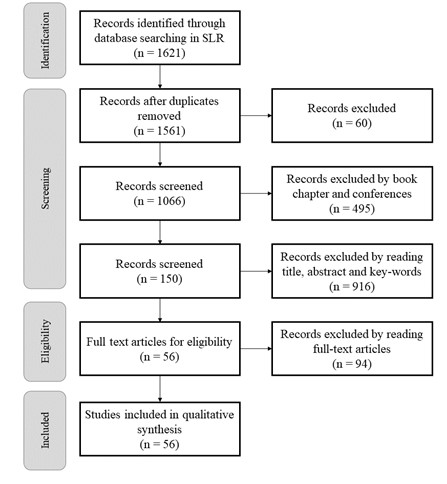
Figure 1
PRISMA method for sample selection. Source: Moher et al. (2009).
Four reductions were carried out in the document sample to select the articles. The first reduction excluded 60 articles due to duplication. In the second, 495 papers from books and conferences were excluded. The third reduction was performed by reading titles, abstracts, and keywords, excluding 916 articles for being out of scope. The fourth and final reduction dealt with reading full manuscripts, with 94 articles excluded because they were out of scope or were literature reviews. A sample of 56 documents was carried out, being evaluated regarding the occupational risks addressed, types of injuries, causes of injuries, solutions applied, and future studies.
2.2. Bibliometric analysis
The R bibliometrix package (K-Synth Srl, 2024) is an algorithm written in the R language that provides tools for quantitative research in bibliometrics. The R Language is an open-source environment and ecosystem. The bibliometrix package can collect data from the main scientific databases, namely Scopus and the Web of Science. Interested readers can find a tutorial available at the Software website (K-Synth Srl, 2024). To process bibliometric data through the bibliometrix package, it is necessary to download the database in the Bibtex format.
Various functions can be used in the descriptive analysis of the datasets. The biblioAnalysis function calculates the main bibliometric measures. After creating an object using the biblioAnalysis function [results <- biblioAnalysis (M, sep = “;”)], it is possible to portray the results using the plot function and highlight aspects such as annual production, average citation per year, main authors, and most productive countries. Furthermore, the biblioNetwork function generates graphs of the co-citation networks, cooperation between authors and keywords, to visualize information retrieved from the database. The bibliometrix package also allows the study of conceptual structure through multiple correspondence analysis (MCA) to identify work that expresses concepts. This analysis is performed through the conceptual structure-function, which produces clusters that can be interpreted in terms of the proximity of the term.
A number of the bibliometrix packages of the R software were used in several study areas (Aria & Cuccurullo, 2017; Rodríguez-Soler et al., 2020). During the bibliometric analysis, information was collected regarding the year of publication, country of the sample authors, country cooperation, researchers' cooperation, topics, materials studied, and their relationship with the areas in the agricultural sector.
Correspondence Analysis aims to represent the conceptual structure of a framework using word co-occurrence. The words can be replaced by authors’ keywords, keywords plus, and terms extracted from titles or abstracts, as presented in this paper (Javid et al., 2019).
This section created clusters based on the dendrogram to elucidate academics’ and practitioners’ understanding of this research. This methodology is usually used for grouping keywords and similar studies (Aria & Cuccurullo, 2017; Rodríguez-Soler et al., 2020), and it uses a graphic representation to help divide information from related areas.
2.3. Content analysis
Content analysis (iii) followed the steps proposed by Elo & Kyngäs (2008) and employed by other authors (Graciano et al., 2022, 2023; Lermen et al., 2023a): open coding, categorization, and abstraction. Through these steps, we sought to identify relevant information through a deductive process during coding in the communities studied. This information was analyzed in two ways: bibliometric analysis and content analysis of empirical studies for each community. Finally, the abstraction step supported the discussions between the authors of the sample for each community.
The results section arranged studies related to animal and agriculture production. Then, the analysis focused on studies investigating the occupational risks to which these workers are exposed daily in farm activities. Research trends and gaps in studies were also identified and analyzed, which are presented as opportunities for future studies.
3. Results and discussion
This section presents the bibliometric analysis and, later, the content analysis of the 56 selected articles based on the results.
3.1. Bibliometric analysis
Figure 2 presents the studies' annual production related to the content of this review, as well as the journal, country, and authors with the highest number of publications. It is noted that the production of studies related to occupational risks has increased from 2017 to 2020, as shown in Figure 2a. Most studies originate in the United States, followed by France and the Netherlands (Figure 2c). The number of publications is not concentrated in a large amount in just one journal; however, among those with the highest frequency of publications in the area in which this study is concentrated are Environmental Research (impact 8.3) and Occupational and Environmental Medicine (impact 4.9), as shown in Figure 2b.
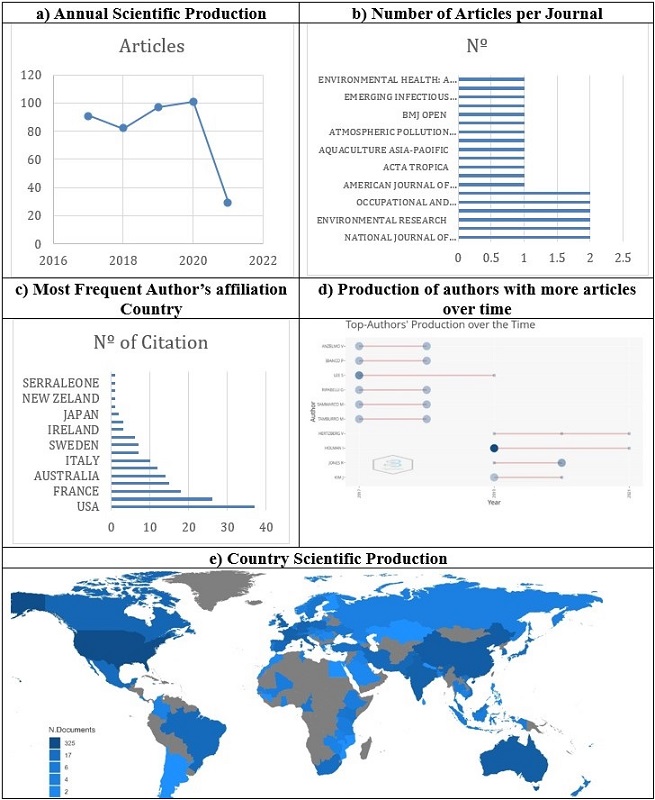
Figure 2
Annual production, journals, authors, and countries with the most publications.
Figure 1d shows that many authors started publishing in 2017, with two authors with a significant production volume and citation, namely Smit Lam and Heederik D (two articles). Figure 2e presents the number of publications by countries represented in the sample, with the USA leading with 325 articles, China with 81, and Australia with 78. France, India, the UK, and Italy each appear with over 17 articles in the sample. Figure 3 shows the dendrogram groups of the citations, revealing two main clusters.
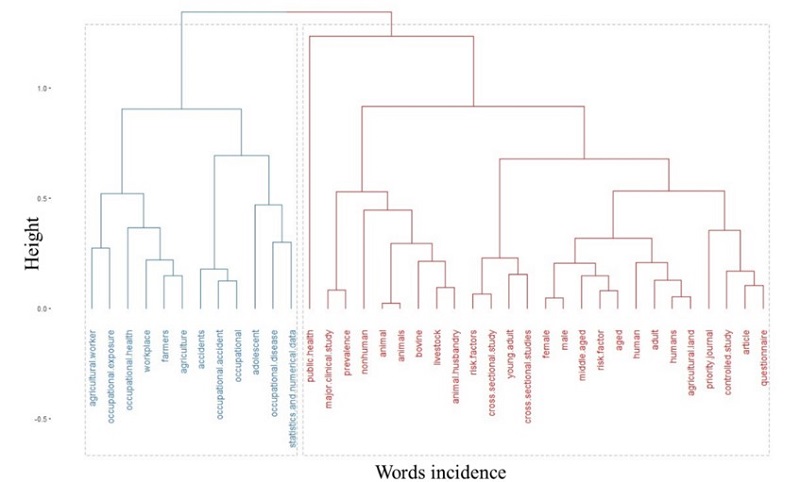
Figure 3
Dendrogram.
In general, these two clusters characterize the two application activities. The blue color represents the citations predominantly associated with agricultural activities, and the red color represents the citations with animal production. Figure 4 distinguishes the most frequent words for each of these two clusters.
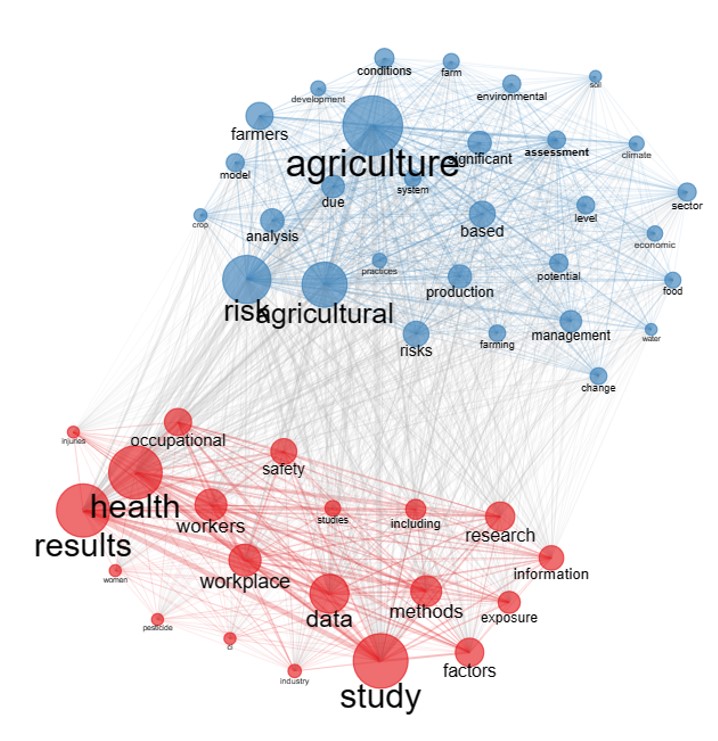
Figure 4
Most founded words for each cluster (blue: agricultural production, red: animal production).
Note that in the agriculture cluster, represented by the blue color, the words most frequently are agricultural worker, adult, occupation exposure, and risk factor. In the animal cluster, characterized by red, the terms most frequently are animals, major clinical study, middle-aged, female, male, and controlled study. Two distinct clusters have emerged from the data analysis in the bibliometric study focusing on occupational risks in agricultural and livestock safety. The agriculture-related cluster prominently features terms such as “agriculture,” “farmers,” and “risks,” indicative of a concentrated effort toward identifying and evaluating hazards faced by agricultural laborers.
Additionally, terms like “water” and “food” suggest exploring risks associated with water usage and food production within the agricultural context. Conversely, the animal production cluster highlights terms such as “health,” “occupational,” and “exposure,” signalling a specific interest in worker health and exposure to occupation-related hazards within the livestock industry. Furthermore, including “workers” and “studies” underscores a concern for the workforce in this sector and previous research contributions on the subject matter. These findings delineate distinct research emphases and implications for future investigations into occupational safety within agricultural and livestock domains.
Subsequently, Correspondence Analysis map analysis was applied as a method to identify joint keywords in response to unnoticed (hidden) keywords, according to the conceptual structure map in Figure 5. The parameters applied in the Correspondence Analysis (Figure 5) included multi-match analysis, with the analysis field being the keywords of the records, with automatic grouping. Figure 4 demonstrates the variability between the correlated keywords, seeking to find the latent factors that create similarity in the data records. This statistical method can identify the smallest number of underlying variables out of many observed variables. Correspondence Analysis derives two keyword rankings.
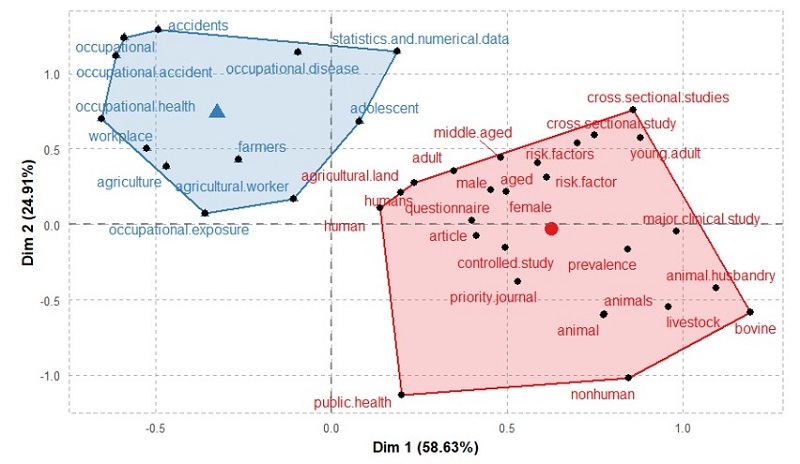
Figure 5
Conceptual structure map.
The blue classification represents the keywords of studies that present agricultural activities, such as agricultural workers, occupational health, occupational accidents, and workplaces. The variety in red designates more specific keywords of studies with animal production, such as animal production, bovine, animals, controlled studies, middle-aged, and major clinical studies, among others.
Upon examination of Figure 5, it becomes apparent that distinct clusters have emerged, each representing a unique thematic focus within the realm of occupational risks in agricultural and livestock settings. Hypothesizing the formation of these clusters necessitates a nuanced understanding of the interplay between key terms. For instance, within the agricultural domain, terms such as “accidents,” “occupational health,” “occupational exposure,” and “farmers” suggest a direct association with the labor-intensive activities inherent to farming, potentially indicative of a predominantly family-based employment structure characterized by familial ties to the land and the inherent risks involved. Including “adolescents” underscores the potential vulnerability of younger workers in agricultural settings, further highlighting the familial nature of employment in this sector.
Conversely, the animal production cluster presents a different thematic orientation. Terms such as “livestock,” “animals,” and “bovine” suggest a focus on animal husbandry and management practices. The presence of descriptors such as “female,” “aged,” and “adult” may point towards a more systematic approach to livestock management, potentially indicative of a salaried employment framework with specialized roles and responsibilities. Additionally, “clinical study” and “public health” suggest a heightened emphasis on health and safety protocols within the livestock industry, further supporting a formalized employment structure.
3.2. Occupational risks, type of exposure, and problems cited by activity
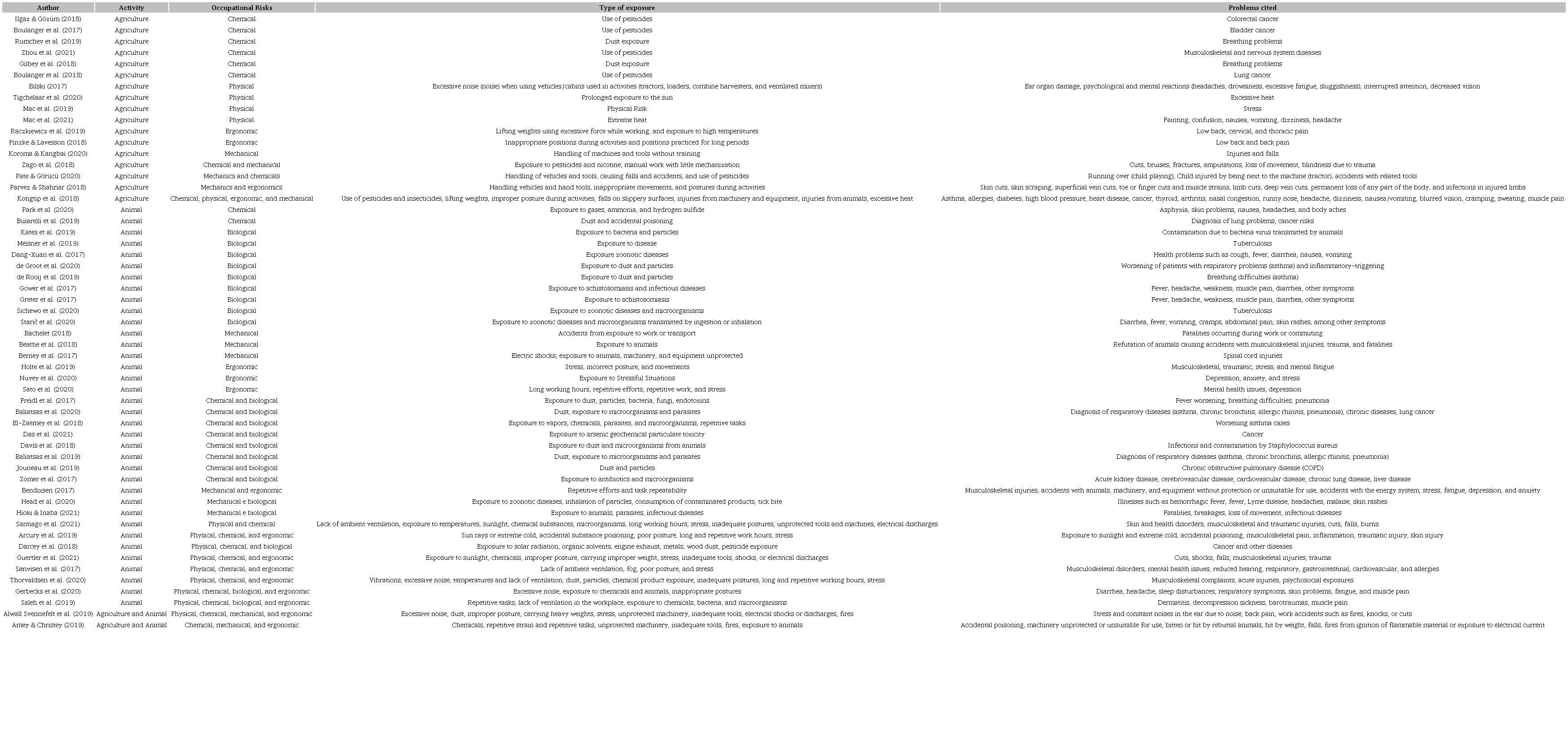
Initially, the content analysis sought to identify the occupational hazards to which agricultural workers are exposed during farm activities and how these themes are presented in the literature. Table 1 shows information related to these occupational risks of farm activities, namely: the occupational risks that the activity presents, the type of exposure workers experience during these activities, the problems or damage caused to workers due to these risks, and the kind of activity in which the study was carried out.
3.3. Occupational risks of work in agricultural activities
Among the occupational risks found, 50% of the studies reported chemical hazards, 33.33% mechanical or accident risks, 27.77% ergonomic risks, 22.22% physical risks, and no biological risk was mentioned. Only 22.22% of the studies combined more than two risks.
Among the chemical hazards found, the vast majority were due to the use of pesticides (Boulanger et al., 2017, 2018; Tigchelaar et al., 2020; Gilbey et al., 2018; Ilgaz & Gözüm, 2018; Kongtip et al., 2018; Pate & Görücü, 2020; Zhou et al., 2021) followed by exposure to dust (Gilbey et al., 2018; Rumchev et al., 2019). The same study also identified the combination of the two causes (Gilbey et al., 2018). The problems resulting from these exposures are dizziness, nausea, vomiting, blurred vision, cramps, sweating, colorectal, bladder, and lung cancer. Agricultural work directly exposes workers to pesticides and dust, as with sowing activities, chemical spraying, maintaining outside the tractor, and working in greenhouses.
According to Table 1, it is possible to notice that 33.9% of the analyzed works occurred in agriculture activities and 66.1% in animal production. The discussion is divided accordingly.
Concerning the studies that mentioned mechanical or accident risks, the following were cited: falls, bruises, and fractures (Tigchelaar et al., 2020; Kongtip et al., 2018; Koroma & Kangbai, 2020), injuries and children being run over (Bilski, 2017), amputations (fingers) (Thorvaldsen et al., 2020), chest injuries, spine, face and neck (Amey & Christey, 2019; Berney et al., 2017), cuts to the skin, fingers, and veins (Parvez & Shahriar, 2018) and wounds from venomous animals (Tigchelaar et al., 2020). These accidents were caused by misusing vehicles and machines, mainly in handling tools. It is also found in the spillage of chemicals on the body, slippery surfaces, and the presence of snakes and insects. Another essential point reported is the worker's carelessness, where obstacles, trips, and falls of vehicles happen, all due to the lack of training in the use of equipment and machines.
Concerning ergonomic risks, the following are cited: lumbar and back pain (Pinzke & Lavesson, 2018; Raczkiewicz et al., 2019), injuries, and infections in limbs (Parvez & Shahriar, 2018), which can even lead to the permanent loss of any of these limbs (Parvez & Shahriar, 2018). Agricultural work, is a large extent, uses repetitive movements, such as handling a tool for hours, lifting weights, excessive force, and movements that must be performed with an adequate posture. Among the consequences of these risks are extreme fatigue, sluggishness, deceleration of reaction time, decreased psychomotor efficiency, irritation, and even depression.
Agricultural work is exposed to the sun and all the noise existing in the place, these being the main physical risks identified in the studies, that is, the temperature (Tigchelaar et al., 2020; Mac et al., 2019, 2021) and the noise (Bilski, 2017; Kongtip et al., 2018). The excessive heat reported is caused by global warming and mainly by prolonged exposure to the sun, causing workers: stress, fainting, confusion, nausea or vomiting, fatigue, dizziness, and headaches. Noise is caused by noisy machines and vehicles, causing workers: headaches, decreased psychomotor efficiency, irritation, hearing loss, increased psychological tension, and even vibrations of internal organs. In addition, operators and drivers may experience interrupted attention and decreased sharpness and field of vision.
From the studies isolated in this research, it is possible to reaffirm that the agricultural workforce is physically demanding. The workers involved are exposed to various occupational hazards, which contributes to the increase in injuries in agriculture. For this reason, it is necessary to seek to reduce these risks, suggesting: the use of PPE and training as prevention for all the mentioned risks, especially contact with pesticides; safety doors on vehicles, and keeping children away from agricultural work, for the risk of accidents; use more breathable clothes and rest in the air conditioning, to reduce exposure to heat; combine work rhythm in search of lowering ergonomic risk, in addition to maintaining proper movements and postures when lifting and lowering during activities. Regarding the areas of activity of the studies found, it is noted that they are varied, having farms with different types of cultures; growing fruit and vegetables; pea and potato production; grains; tobacco farming, and greenhouse work.
3.4. Occupational risks of work in animal production
As for the main results listed in the studies, 82% do not point to occupational risks as a direct consequence of poor working conditions, with more than two or even three risks co-occurring. Among the physical risks listed, 19.51% of the studies mentioned one or more risks, including vibrations (Thorvaldsen et al., 2020), excessive noise (Alwall Svennefelt et al., 2019; Gerbecks et al., 2020; Thorvaldsen et al., 2020), inadequate temperature (Arcury et al., 2019; Thorvaldsen et al., 2020), lack of quality air on-site (Saleh et al., 2019; Santiago et al., 2021; Sønvisen et al., 2017; Thorvaldsen et al., 2020). It is worth highlighting that the animal production has high exposure to sunlight, as is the case of workers who remain outdoors for fishing (Arcury et al., 2019; Darcey et al., 2018; Guertler et al., 2021; Santiago et al., 2021). Among the main solutions present in the literature, the use of ear protectors, ventilation and heating systems, adequate diving suits, and sun protection against radiation have been suggested.
Of the studies, 41.46% mentioned chemical risks generated by handling a wide variety of chemical substances that appear as particulates or aerosols. Among them the main ones are: dust (Bachelet, 2018; Baliatsas et al., 2019; Buiarelli et al., 2019; Darcey et al., 2018; Davis et al., 2018; Gerbecks et al., 2020; Jouneau et al., 2019; Thorvaldsen et al., 2020), fog (Sønvisen et al., 2017), gases (Park et al., 2020; Santiago et al., 2021), vapors (El-Zaemey et al., 2018) and accidental poisoning with chemicals and derivatives (Amey & Christey, 2019; Arcury et al., 2019; Buiarelli et al., 2019; Darcey et al., 2018; El-Zaemey et al., 2018; Gerbecks et al., 2020; Guertler et al., 2021; Saleh et al., 2019; Santiago et al., 2021; Thorvaldsen et al., 2020). In this sense, it was noticed that most of the workers, due to exposure to chemical risk, potentiated breathing difficulties, skin lesions, accidental poisoning, pneumonia, asthma, and gastrointestinal symptoms. It is also noteworthy that farms with large numbers of animals are twice as likely to have respiratory diseases and may be associated as a risk factor for symptomatic effects with a diagnosis of asthma, heart disease, and pneumonia (Baliatsas et al., 2019; Freidl et al., 2017; Gerbecks et al., 2020). Using PPE was listed as solutions, such as a protective mask, respiratory mask, protective clothing, gloves, and shoes, and providing basic sanitation and training.
On the other hand, biological risks to which animal production workers are exposed appear in 53.65% of the 41 evaluated studies; generally, they are bacteria, parasites, fungi, viruses, and other microorganisms related to animals and transmitted by direct or indirect contact (Bachelet, 2018; Baliatsas et al., 2019; Darcey et al., 2018; Davis et al., 2018; El-Zaemey et al., 2018; Freidl et al., 2017; Saleh et al., 2019; Santiago et al., 2021; Starič et al., 2020; Weichelt et al., 2019). It is important to emphasize the relationship between vaccination of animals, as is the case with brucellosis or aphthosis vaccines; when vaccination does not occur, it can transmit to the entire herd, workers, and societies exposed to animals, in addition to cases in which endotoxins are released from the cattle, fish, goats, swine, and exposure to ticks harming human health (Dang-Xuan et al., 2017; de Groot et al., 2020; de Rooij et al., 2019; Gerbecks et al., 2020; Gower et al., 2017; Greter et al., 2017; Head et al., 2020; Kates et al., 2019; Meisner et al., 2019; Sichewo et al., 2020).
As for the ergonomic risks, they are noted to interfere with the worker’s physical and psychological capacity, as observed in 34.15% of the studies. These risks arise from inadequate posture (Alwall Svennefelt et al., 2019; Arcury et al., 2019; Gerbecks et al., 2020; Guertler et al., 2021; Holte et al., 2019; Santiago et al., 2021; Sønvisen et al., 2017; Thorvaldsen et al., 2020), long working hours (Arcury et al., 2019; Santiago et al., 2021; Sato et al., 2020; Thorvaldsen et al., 2020), repetitive or repetitive tasks (Amey & Christey, 2019; Arcury et al., 2019; Bendixsen, 2017; El-Zaemey et al., 2018; Saleh et al., 2019; Sato et al., 2020; Thorvaldsen et al., 2020), carrying heavy weights (Alwall Svennefelt et al., 2019; Gilbey et al., 2018), and stress due to work-related factors (Alwall Svennefelt et al., 2019; Arcury et al., 2019; Bendixsen, 2017; Guertler et al., 2021; Ilgaz & Gözüm, 2018; Jouneau et al., 2019; Nuvey et al., 2020; Santiago et al., 2021; Sato et al., 2020; Thorvaldsen et al., 2020).
According to the integrative reading, it was noted that ergonomic risks often occur during the workday in animal production, without them realizing that they are putting their health at risk, as the worker performs his activities standing for most of the time, carrying out manual transport of loads to provide food for the animals, in addition to achieving most of the work incorrectly such as squats and lifting (Arcury et al., 2019; Holte et al., 2019; Santiago et al., 2021; Thorvaldsen et al., 2020), consequently resulting in problems for the workers' health, compromising their productivity and safety, generating: Repetitive strain injury, work-related musculoskeletal disorders, muscle pain, inflammation in the musculoskeletal system (tendinitis, bursitis) physical fatigue, nervous diseases, diseases of the digestive system (ulcers, gastritis) among other problems caused by ergonomic hazards (Baliatsas et al., 2019; Holte et al., 2019; Sønvisen et al., 2017).
Accident risks are all factors that jeopardize worker safety and occur due to the physical and technological conditions of the environment. Situations of machines that do not have protection are considered as possible risks of accidents (Alwall Svennefelt et al., 2019; Amey & Christey, 2019; Arcury et al., 2019; Bendixsen, 2017; Berney et al., 2017; Holte et al., 2019; Santiago et al., 2021), inadequate tools (Alwall Svennefelt et al., 2019; Amey & Christey, 2019; Guertler et al., 2021; Santiago et al., 2021), poor lighting (Thorvaldsen et al., 2020), electric shocks or discharges (Alwall Svennefelt et al., 2019; Amey & Christey, 2019; Berney et al., 2017; Guertler et al., 2021; Santiago et al., 2021), fires (Alwall Svennefelt et al., 2019; Amey & Christey, 2019), venomous animals and accidents resulting from the animal’s refutation (cattle, horse, swine) (Amey & Christey, 2019; Beattie et al., 2018; Bendixsen, 2017; Berney et al., 2017; El-Zaemey et al., 2018; Hioki & Inaba, 2021; Holte et al., 2019). As observed, 31.7% of the studies presented one or more risks of accidents, among them injuries such as cuts, fractures, trauma, burns, limb amputations, and deaths.
Finally, to minimize occupational risks in the work environment of animal production, it is suggested the use of personal protective equipment (gloves, mask, goggles, boots), ergonomic seats, ventilation, and heating systems, equipment with closed cabins, reduced working hours, breaks for rest, quality food and sleep, equipment operation training, layout adaptation and development of organizational culture in compliance with safety standards. Regarding the areas of activity of the researched studies, it was noticed that a large part was developed in beef and dairy cattle, raising horses, goats, pigs, fish, and crustaceans.
3.5. Suggestions for future studies
The search for productivity and profits often directly affects issues such as work safety, and agricultural work is a primordial and necessary factor that exposes the worker to various occupational hazards; that is, a large part of the activities depends on the human factor that is directly influenced by the guarantee of health and safety. In this context, occupational risks are present in most farm activities, regardless of the sector in which it is inserted, and demonstrate that the results directly impact the daily lives of workers.
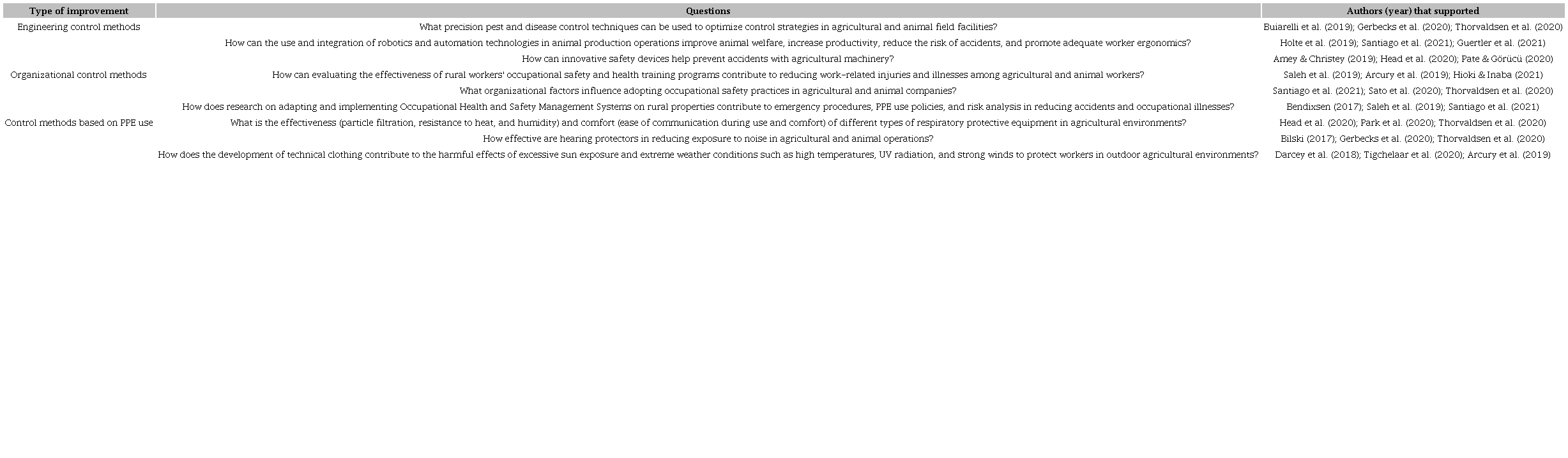
Therefore, studies focusing on implementing management systems for continuous improvements in the quality of work environments are suggested, such as implementing ventilation or heating systems at temperatures not consistent with the recommended temperatures. Also, an evaluation of the animal production sector is presented, which indicates the processes of working with animals, the instructions of correct forms, and adequate places of approach, contact, and immobilization of the animals to minimize accidents and occupational risks—at work, considering the importance of preserving workers' health. It is also worth mentioning the need for studies that evaluate training in health and safety at work, through partnerships between public agencies and rural workers, seeking management models and public policies to protect the worker's right to safety, seeking to guide the preservation of workers' health and creating safe and healthy environments, requiring a primary focus on employee education. Finally, further studies are needed to investigate and develop new techniques for reducing work-related risks in the agricultural sector. Considering the abovementioned, Table 2 presents research questions explored in future studies.
Agriculture and animal production are vital sectors of the global economy, but they are also among the most dangerous regarding occupational health and safety. Workers in these industries face a range of risks, including exposure to chemical agents, injuries from machinery, extreme weather conditions, and ergonomic hazards. Faced with these challenges, few studies refer to methods and techniques that contribute to reducing risks to workers' health.
Thus, Table 2 highlighted suggestions for future studies that address engineering, organizational, and control methods based on using PPE in the agriculture and animal sectors. Therefore, this gap constitutes an opportunity for future studies, which can contribute to improving working conditions in the agricultural sector to build safer and more sustainable communities.
4. Conclusions
The health problems of agricultural workers are superimposed on various risks in the work environment, being subject to exposure to physical, chemical, biological, ergonomic, and accident risks. This study aimed to identify what these risks are and the significant injuries to which workers in the agricultural sector are exposed during the workday in the farms. In addition to identifying good occupational safety and health practices that can be adopted (International Labour Office, 2024).
The studies selected for the research were divided into two clusters, namely: agriculture activities and animal production. It was evident, in agricultural activities, that among the studies surveyed, the most frequent risk is the chemical risk, due to the high use of pesticides in the agricultural work; followed by mechanical risk or accidents, which occur due to lack of training and PPE's; ergonomic risk due to repetitive movements and excessive force that the work requires and physical risk, in terms of noise and high temperature. On the other hand, no studies were identified that presented the biological risk.
In animal production, it is shown that workers are exposed to more than one occupational risk simultaneously, which can generate musculoskeletal injuries, traumatic injuries, psychological stress, anxiety, depression, breathing difficulties, and gastrointestinal problems, among others that can cause irreversible damage to worker's health. It was also evidenced through the studies that the most frequent risk is the biological risks, due to the worker's exposure to the animals, having direct or indirect contact; it can also be said that a large part occurs due to the lack of personal safety equipment and training.
Given this magnitude of injuries resulting from occupational risks in the rural environment, future studies are suggested that seek management models and public policies to protect the worker's right to safety, in addition to studies that seek effective ways to minimize the risks to workers in the farm, ensuring your health and safety.
References
Aiello, G., Catania, P., Vallone, M., & Venticinque, M. (2022). Worker safety in agriculture 4.0: a new approach for mapping operator’s vibration risk through Machine Learning activity recognition. Computers and Electronics in Agriculture, 193, 106637. http://doi.org/10.1016/j.compag.2021.106637.
Alwall Svennefelt, C. E., Hunter, E., & Palsdottir, A. M. (2019). Work safety interventions and threat complexity: a formative investigation into why farmers do not act safely. Annals of Agricultural and Environmental Medicine, 26(2), 280-289. http://doi.org/10.26444/aaem/105798. PMid:31232060.
Amey, J., & Christey, G. (2019). Farm injury resulting in hospital admission: a review of farm work and non-farm work-related injury. Journal of Primary Health Care, 11(4), 342-350. http://doi.org/10.1071/HC19049.
Arcury, T. A., Arnold, T. J., Quandt, S. A., Chen, H., Kearney, G. D., Sandberg, J. C., Talton, J. W., Wiggins, M. F., & Daniel, S. S. (2019). Health and occupational injury experienced by latinx child farmworkers in North Carolina, USA. International Journal of Environmental Research and Public Health, 17(1), 248. http://doi.org/10.3390/ijerph17010248. PMid:31905836.
Aria, M., & Cuccurullo, C. (2017). Bibliometrix: AN R-tool for comprehensive science mapping analysis. Journal of Informetrics, 11(4), 959-975. http://doi.org/10.1016/j.joi.2017.08.007.
Bachelet, V. C. (2018). Work-related injuries resulting in death in Chile: a cross-sectional study on 2014 and 2015 registries. BMJ Open, 8(6), e020393. http://doi.org/10.1136/bmjopen-2017-020393. PMid:29886445.
Baliatsas, C., Dückers, M., Smit, L., Heederik, D., & Yzermans, J. (2020). Morbidity rates in an area with high livestock density: a registry-based study including different groups of patients with respiratory health problems. International Journal of Environmental Research and Public Health, 17(5), 1591. http://doi.org/10.3390/ijerph17051591. PMid:32121551.
Baliatsas, C., Smit, L. A. M., Dückers, M. L. A., Van Dijk, C. E., Heederik, D., & Yzermans, C. J. (2019). Patients with overlapping diagnoses of asthma and COPD: is livestock exposure a risk factor for comorbidity and coexisting symptoms and infections? BMC Pulmonary Medicine, 19(1), 105. http://doi.org/10.1186/s12890-019-0865-z. PMid:31182085.
Beattie, J., McLeod, C., Murray, M., Pedler, D., Brumby, S., & Gabbe, B. (2018). What happens to the farm? Australian farmers’ experiences after a serious farm injury. Journal of Agromedicine, 23(2), 134-143. http://doi.org/10.1080/1059924X.2017.1422836. PMid:29648954.
Bendixsen, C. G. (2017). The entanglements of agrarian ethics with agrarian risks and leveraging them in agricultural health safety. Journal of Agromedicine, 22(1), 17-25. http://doi.org/10.1080/1059924X.2016.1248308. PMid:27749196.
Benos, L., Tagarakis, A. C., Dolias, G., Berruto, R., Kateris, D., & Bochtis, D. (2021). Machine learning in agriculture: a comprehensive updated. Sensors (Basel), 21(11), 3758. http://doi.org/10.3390/s21113758. PMid:34071553.
Berney, M. J., Horstmann, E., & Cassidy, N. (2017). Traumatic spinal injuries on farms: Patients treated in the national spinal unit of Ireland 2005-2015. Journal of Orthopaedics, 14(1), 211-215. http://doi.org/10.1016/j.jor.2016.12.013. PMid:28115799.
Bilski, B. (2017). Exposure to infrasonic noise in agriculture. Annals of Agricultural and Environmental Medicine, 24(1), 86-89. http://doi.org/10.5604/12321966.1233897. PMid:28378979.
Boulanger, M., Tual, S., Lemarchand, C., Guizard, A. V., Delafosse, P., Marcotullio, E., Pons, R., Piel, C., Pouchieu, C., Baldi, I., Clin, B., & Lebailly, P. (2018). Lung cancer risk and occupational exposures in crop farming: results from the AGRIculture and CANcer (AGRICAN) cohort. Occupational and Environmental Medicine, 75(11), 776-785. http://doi.org/10.1136/oemed-2017-104976. PMid:30185443.
Boulanger, M., Tual, S., Lemarchand, C., Guizard, A. V., Velten, M., Marcotullio, E., Baldi, I., Clin, B., & Lebailly, P. (2017). Agricultural exposure and risk of bladder cancer in the AGRIculture and CANcer cohort. International Archives of Occupational and Environmental Health, 90(2), 169-178. http://doi.org/10.1007/s00420-016-1182-y. PMid:27815726.
Buiarelli, F., Di Filippo, P., Massimi, L., Pomata, D., Riccardi, C., Simonetti, G., & Sonego, E. (2019). Ultrafine, fine and coarse airborne particle mass concentration in workplaces. Atmospheric Pollution Research, 10(5), 1685-1690. http://doi.org/10.1016/j.apr.2019.06.009.
Buscaroli, E., Braschi, I., Cirillo, C., Fargue-Lelièvre, A., Modarelli, G. C., Pennisi, G., Righini, I., Specht, K., & Orsini, F. (2021). Reviewing chemical and biological risks in urban agriculture: a comprehensive framework for a food safety assessment of city region food systems. Food Control, 126, 108085. http://doi.org/10.1016/j.foodcont.2021.108085. PMid:34345121.
Dang-Xuan, S., Macdonald, L. E., Schurer, J. M., Nguyen-Viet, H., & Pham-Duc, P. (2017). Household exposure to livestock and health in the CHILILAB HDSS Cohort, Vietnam. Asia-Pacific Journal of Public Health, 29(5, Suppl), 72S-83S. http://doi.org/10.1177/1010539517712758. PMid:28719770.
Darcey, E., Carey, R. N., Reid, A., Driscoll, T., Glass, D. C., Benke, G. P., Peters, S., & Fritschi, L. (2018). Prevalence of exposure to occupational carcinogens among farmers. Rural and Remote Health, 18(3), 4348. http://doi.org/10.22605/RRH4348. PMid:30145908.
Das, A., Joardar, M., Chowdhury, N. R., De, A., Mridha, D., & Roychowdhury, T. (2021). Arsenic toxicity in livestock growing in arsenic endemic and control sites of West Bengal: risk for human and environment. Environmental Geochemistry and Health, 43(8), 3005-3025. http://doi.org/10.1007/s10653-021-00808-2. PMid:33492570.
Davis, M. F., Pisanic, N., Rhodes, S. M., Brown, A., Keller, H., Nadimpalli, M., Christ, A., Ludwig, S., Ordak, C., Spicer, K., Love, D. C., Larsen, J., Wright, A., Blacklin, S., Flowers, B., Stewart, J., Sexton, K. G., Rule, A. M., & Heaney, C. D. (2018). Occurrence of Staphylococcus aureus in swine and swine workplace environments on industrial and antibiotic-free hog operations in North Carolina, USA: a One Health pilot study. Environmental Research, 163, 88-96. http://doi.org/10.1016/j.envres.2017.12.010. PMid:29428885.
de Groot, L. E. S., Liu, D., Dierdorp, B. S., Fens, N., van de Pol, M. A., Sterk, P. J., Kulik, W., Gerlofs-Nijland, M. E., Cassee, F. R., Pinelli, E., & Lutter, R. (2020). Ex vivo innate responses to particulate matter from livestock farms in asthma patients and healthy individuals. Environmental Health, 19(1), 78. http://doi.org/10.1186/s12940-020-00632-8.
de Rooij, M. M. T., Smit, L. A. M., Erbrink, H. J., Hagenaars, T. J., Hoek, G., Ogink, N. W. M., Winkel, A., Heederik, D. J. J., & Wouters, I. M. (2019). Endotoxin and particulate matter emitted by livestock farms and respiratory health effects in neighboring residents. Environment International, 132, 105009. http://doi.org/10.1016/j.envint.2019.105009. PMid:31387023.
Denyer, D., & Tranfield, D. (2009). Producing a systematic review. In L. Putmam & D. N. Mumby (Eds.), The Sage handbook of organizational research methods. Los Angeles: SAGE.
Elo, S., & Kyngäs, H. (2008). The qualitative content analysis process. Journal of Advanced Nursing, 62(1), 107-115. http://doi.org/10.1111/j.1365-2648.2007.04569.x. PMid:18352969.
El-Zaemey, S., Carey, R. N., Darcey, E., Reid, A., Glass, D. C., Benke, G. P., Driscoll, T. R., Peters, S., Si, S., Abramson, M. J., & Fritschi, L. (2018). Prevalence of occupational exposure to asthmagens derived from animals, fish and/or shellfish among Australian workers. Occupational and Environmental Medicine, 75(4), 310-316. http://doi.org/10.1136/oemed-2017-104459. PMid:29175990.
Freidl, G. S., Spruijt, I. T., Borlée, F., Smit, L. A. M., Van Gageldonk-Lafeber, A. B., Heederik, D. J. J., Yzermans, J., Van Dijk, C. E., Maassen, C. B. M., & Van Der Hoek, W. (2017). Livestock-associated risk factors for pneumonia in an area of intensive animal farming in the Netherlands. PLoS One, 12(3), e0174796. http://doi.org/10.1371/journal.pone.0174796. PMid:28362816.
Garrigou, A., Laurent, C., Berthet, A., Colosio, C., Jas, N., Daubas-Letourneux, V., Jackson Filho, J. M., Jouzel, J. N., Samuel, O., Baldi, I., Lebailly, P., Galey, L., Goutille, F., & Judon, N. (2020). Critical review of the role of PPE in the prevention of risks related to agricultural pesticide use. Safety Science, 123, 104527. http://doi.org/10.1016/j.ssci.2019.104527.
Gerbecks, J., Baliatsas, C., Yzermans, C. J., Smit, L. A. M., Huss, A., Heederik, D. J. J., & Dückers, M. L. A. (2020). Prevalence of non-specific health symptoms in livestock dense areas: looking beyond respiratory conditions. International Journal of Hygiene and Environmental Health, 230, 113603. http://doi.org/10.1016/j.ijheh.2020.113603. PMid:32882646.
Gilbert, W., Thomas, L. F., Coyne, L., & Rushton, J. (2021). Review: Mitigating the risks posed by intensification in livestock production: the examples of antimicrobial resistance and zoonoses. Animal, 15(2), 100123. http://doi.org/10.1016/j.animal.2020.100123. PMid:33573940.
Gilbey, S. E., Selvey, L. A., Mead-Hunter, R., Mullins, B., Netto, K., Zhao, Y., & Rumchev, K. B. (2018). Occupational exposures to agricultural dust by Western Australian wheat-belt farmers during seeding operations. Journal of Occupational and Environmental Hygiene, 15(12), 824-832. http://doi.org/10.1080/15459624.2018.1521973. PMid:30204581.
Gizlenci, İ., & Aybek, A. (2021). Doğu Akdeniz Bölgesi Tarım İşletmelerinde Oluşan İş Kazaları ve Etkili Faktörler. Kahramanmaraş Sütçü İmam Üniversitesi Tarım Ve Doğa Dergisi, 24(5), 1068-1083. http://doi.org/10.18016/ksutarimdoga.vi.801602.
Gower, C. M., Vince, L., & Webster, J. P. (2017). Should we be treating animal schistosomiasis in Africa? The need for a One Health economic evaluation of schistosomiasis control in people and their livestock. Transactions of the Royal Society of Tropical Medicine and Hygiene, 111(6), 244-247. http://doi.org/10.1093/trstmh/trx047. PMid:29044372.
Graciano, P., Gularte, A. C., Lermen, F. H., & de Barcellos, M. D. (2022). Consumer values in the Brazilian market for ethical cosmetics. International Journal of Retail & Distribution Management, 50(4), 458-478. http://doi.org/10.1108/IJRDM-01-2021-0040.
Graciano, P., Lermen, F. H., Reichert, F. M., & Padula, A. D. (2023). The impact of risk-taking and creativity stimuli in education towards innovation: a systematic review and research agenda. Thinking Skills and Creativity, 47, 101220. http://doi.org/10.1016/j.tsc.2022.101220.
Greter, H., Cowan, N., Ngandolo, B. N., Kessely, H., Alfaroukh, I. O., Utzinger, J., Keiser, J., & Zinsstag, J. (2017). Treatment of human and livestock helminth infections in a mobile pastoralist setting at Lake Chad: Attitudes to health and analysis of active pharmaceutical ingredients of locally available anthelminthic drugs. Acta Tropica, 175, 91-99. http://doi.org/10.1016/j.actatropica.2016.05.012. PMid:27235793.
Guertler, C., Speck, G. M., Rezende, P. C., Vergara, L. G. L., & Seiffert, W. Q. (2021). Occupational risk perception in mollusk farm workers. Safety Science, 135, 105102. http://doi.org/10.1016/j.ssci.2020.105102.
Head, J. R., Bumburidi, Y., Mirzabekova, G., Rakhimov, K., Dzhumankulov, M., Salyer, S. J., Knust, B., Berezovskiy, D., Kulatayeva, M., Zhetibaev, S., Shoemaker, T., Nicholson, W. L., & Moffett, D. (2020). Risk factors for and seroprevalence of tickborne zoonotic diseases among livestock owners, Kazakhstan. Emerging Infectious Diseases, 26(1), 70-80. http://doi.org/10.3201/eid2601.190220. PMid:31855140.
Hioki, A., & Inaba, R. (2021). Occupational fatalities due to mammal-related accidents in Japan, 2000-2019. Wilderness & Environmental Medicine, 32(1), 19-26. http://doi.org/10.1016/j.wem.2020.09.010. PMid:33431302.
Holte, K. A., Follo, G., Kjestveit, K., & Stræte, E. P. (2019). Agriculture into the future: new technology, new organisation and new occupational health and safety risks? Advances in Intelligent Systems and Computing, 825, 404-413. http://doi.org/10.1007/978-3-319-96068-5_45.
Ilgaz, A., & Gözüm, S. (2018). Determination of colorectal cancer risk levels, colorectal cancer screening rates, and factors affecting screening participation of individuals working in agriculture in Turkey. Cancer Nursing, 41(4), E46-E54. http://doi.org/10.1097/NCC.0000000000000531. PMid:28731884.
International Labour Office – ILO. (2015). Safety and health in agriculture. Geneva: ILO.
International Labour Office – ILO. (2019). Agriculture: a hazardous work. Geneva: ILO.
International Labour Office – ILO. (2024). Occupational safety and health: WHO/ILO: almost 2 million people die from work‐related causes each year. Geneva: ILO. Retrieved in 2024, May 3, from https://www.ilo.org/global/about-the-ilo/newsroom/news/WCMS_819705/lang--en/index.htm
Javid, E. T., Nazari, M., & Ghaeli, M. R. (2019). Social media and e-commerce: a scientometrics analysis. International Journal of Data and Network Science, 3(3), 269-290. http://doi.org/10.5267/j.ijdns.2019.2.001.
Jouneau, S., Marette, S., Robert, A. M., Gouyet, T., Guillot, S., Chapron, A., Mailloux, C., Desrues, B., & Viel, J. F. (2019). Prevalence and risk factors of chronic obstructive pulmonary disease in dairy farmers: AIRBAg study. Environmental Research, 169, 1-6. http://doi.org/10.1016/j.envres.2018.10.026. PMid:30399467.
Kates, A. E., Dalman, M., Torner, J. C., & Smith, T. C. (2019). The nasal and oropharyngeal microbiomes of healthy livestock workers. PLoS One, 14(3), e0212949. http://doi.org/10.1371/journal.pone.0212949. PMid:30861031.
Kongtip, P., Nankongnab, N., Mahaboonpeeti, R., Bootsikeaw, S., Batsungnoen, K., Hanchenlaksh, C., Tipayamongkholgul, M., & Woskie, S. (2018). Differences among Thai agricultural workers’ health, working conditions, and pesticide use by farm type. Annals of Work Exposures and Health, 62(2), 167-181. http://doi.org/10.1093/annweh/wxx099. PMid:29390118.
Koroma, E. T., & Kangbai, J. B. (2020). Agro-industrial accidents linked to length of service, operation site and confidence in employer adherence to safety rules. BMC Public Health, 20(1), 591. http://doi.org/10.1186/s12889-020-08733-2. PMid:32354327.
K-Synth Srl. (2024). Bibliometrix. Retrieved in 2023, June 22, from http://www.bibliometrix.org/index.html#header3-16
Kuakoski, H. S., Lermen, F. H., Graciano, P., Lam, J. S. L., & Mazzuchetti, R. N. (2024). Marketing, entrepreneurship, and innovation in port management: trends, barriers, and research agenda. Maritime Policy & Management, 51(7), 1517-1534. http://doi.org/10.1080/03088839.2023.2180548.
Lermen, F. H., Martins, V. L. M., Echeveste, M. E., Ribeiro, F., Luz Peralta, C. B., & Ribeiro, J. L. D. (2023b). Reinforcement Learning system to capture value from Brazilian post-harvest offers. Information Processing in Agriculture. In press. http://doi.org/10.1016/j.inpa.2023.08.006.
Lermen, F. H., Moura, P. K., Bertoni, V. B., Graciano, P., & Tortorella, G. L. (2023a). Does maturity level influence the use of Agile UX methods by digital startups? Evaluating design thinking, lean startup, and lean user experience. Information and Software Technology, 154, 107107. http://doi.org/10.1016/j.infsof.2022.107107.
Lermen, F. H., Souza Matias, G., Bissaro, C. A., Ribeiro, J. L. D., Gonçalves, K. Y., Matos, C., Assad Filho, N., Matos Jorge, L. M., & Coelho, T. M. (2022). The characteristics and industrial applications of natural and hydrophobic modified starch. Stärke, 74(11-12), 2200022. http://doi.org/10.1002/star.202200022.
Liu, J., Chriki, S., Kombolo, M., Santinello, M., Pflanzer, S. B., Hocquette, É., Ellies-Oury, M. P., & Hocquette, J. F. (2023). Consumer perception of the challenges facing livestock production and meat consumption. Meat Science, 200, 109144. http://doi.org/10.1016/j.meatsci.2023.109144. PMid:36863253.
Mac, V. V. T., Hertzberg, V., & Mccauley, L. A. (2019). Examining agricultural workplace micro and macroclimate data using decision tree analysis to determine heat illness risk. Journal of Occupational and Environmental Medicine, 61(2), 107-114. http://doi.org/10.1097/JOM.0000000000001484. PMid:30335678.
Mac, V. V., Elon, L., Smith, D. J., Tovar-Aguilar, A., Economos, E., Flocks, J., Hertzberg, V., & McCauley, L. (2021). A modified physiological strain index for workplace-based assessment of heat strain experienced by agricultural workers. American Journal of Industrial Medicine, 64(4), 258-265. http://doi.org/10.1002/ajim.23230. PMid:33543496.
Matos, C., Junkes, V. H., Lermen, F. H., Magalhães, R. F. D., Matias, G. D. S., Ribeiro, J. L. D., Lenzi, G. G., & Siqueira, H. V. (2024). Life cycle sustainability assessment of the agri-food chain: empirical review and bibliometrics. Production, 34, e20230043. http://doi.org/10.1590/0103-6513.20230043.
McNamara, J., Mohammadrezaei, M., Moran, B., & Dillon, E. (2024). Data driven identification of injury risk factors during expansion on Irish dairy farms. Journal of Agromedicine, 29(2), 265-276. http://doi.org/10.1080/1059924X.2023.2293840. PMid:38193460.
Meisner, J., Curtis, K., Graham, T. W., Apamaku, M. B., Manhart, L. E., & Rabinowitz, P. M. (2019). Cattle-associated risk factors for human tuberculosis in rural livestock-keeping communities, Uganda. Zoonoses and Public Health, 66(1), 73-82. http://doi.org/10.1111/zph.12530. PMid:30474360.
Moher, D., Liberati, A., Tetzlaff, J., & Altman, D. G. (2009). PRISMA 2009 flow diagram: the PRISMA statement. PLoS Medicine. 6(7), e1000097.
National Safety Council – NSC. (2015). Injury facts. Illinois: NSC.
Nguyen, T. H. Y., Bertin, M., Bodin, J., Fouquet, N., Bonvallot, N., & Roquelaure, Y. (2018). Multiple exposures and coexposures to occupational hazards among agricultural workers: a systematic review of observational studies. Safety and Health at Work, 9(3), 239-248. http://doi.org/10.1016/j.shaw.2018.04.002. PMid:30370155.
Nuvey, F. S., Kreppel, K., Nortey, P. A., Addo-Lartey, A., Sarfo, B., Fokou, G., Ameme, D. K., Kenu, E., Sackey, S., Addo, K. K., Afari, E., Chibanda, D., & Bonfoh, B. (2020). Poor mental health of livestock farmers in Africa: A mixed methods case study from Ghana. BMC Public Health, 20(1), 825. http://doi.org/10.1186/s12889-020-08949-2. PMid:32487132.
Omolayo, Y., Feingold, B. J., Neff, R. A., & Romeiko, X. X. (2021). Life cycle assessment of food loss and waste in the food supply chain. Resources, Conservation and Recycling, 164, 105119. http://doi.org/10.1016/j.resconrec.2020.105119.
Park, J., Kang, T., Heo, Y., Lee, K., Kim, K., Lee, K., & Yoon, C. (2020). Evaluation of short-term exposure levels on ammonia and hydrogen sulfide during manure-handling processes at livestock farms. Safety and Health at Work, 11(1), 109-117. http://doi.org/10.1016/j.shaw.2019.12.007. PMid:32206381.
Parvez, M. S., & Shahriar, M. M. (2018). Agricultural farm-related injuries in bangladesh and convenient design of working hand tools. Journal of Healthcare Engineering, 2018, 4273616. http://doi.org/10.1155/2018/4273616. PMid:29682269.
Pate, M. L., & Görücü, S. (2020). Agricultural work-related fatalities to non-working youth: implications for intervention development. Journal of Agricultural Safety and Health, 26(1), 31-43. http://doi.org/10.13031/jash.13691. PMid:32429618.
Pinzke, S., & Lavesson, L. (2018). Ergonomic conditions in manual harvesting in Swedish outdoor cultivation. Annals of Agricultural and Environmental Medicine, 25(3), 481-487. http://doi.org/10.26444/aaem/93334. PMid:30260186.
Raczkiewicz, D., Saran, T., Sarecka-Hujar, B., & Bojar, I. (2019). Work conditions in agriculture as risk factors of spinal pain in postmenopausal women. International Journal of Occupational Safety and Ergonomics, 25(2), 250-256. http://doi.org/10.1080/10803548.2017.1364903. PMid:28786763.
Rainbird, G., & O’Neill, D. (1995). Occupational disorders affecting agricultural workers in tropical developing countries: results of a literature review. Applied Ergonomics, 26(3), 187-193. http://doi.org/10.1016/0003-6870(95)00016-6. PMid:15677017.
Ramos Cordeiro, E., Lermen, F. H., Mello, C. M., Ferraris, A., & Valaskova, K. (2024). Knowledge management in small and medium enterprises: a systematic literature review, bibliometric analysis, and research agenda. Journal of Knowledge Management, 28(2), 590-612. http://doi.org/10.1108/JKM-10-2022-0800.
Rhouma, M., Lachapelle, V., Comeau, G., Quessy, S., Zanabria, R., Provost, F., Italiano, C., Holley, R., Smillie, J., Brockhoff, E., Bosch, M. L., Collins, S., Dumas, A., Chorfi, Y., Costa, M., Gaucher, M., & Racicot, M. (2021). Identification and selection of animal health and food safety-related risk factors to be included in the Canadian Food Inspection Agency’s risk assessment model for livestock feed mills. Food Control, 121, 107642. http://doi.org/10.1016/j.foodcont.2020.107642.
Rodríguez-Soler, R., Uribe-Toril, J., De Pablo Valenciano, J. (2020). Worldwide trends in the scientific production on rural depopulation, a bibliometric analysis using bibliometrix R-tool. Land Use Policy, 97, 104787. http://doi.org/10.1016/j.landusepol.2020.104787.
Rose, A., & Allen-Spies, J. (2023). Occupational health and safety challenges among artisanal and small-scale diamond miners in Kimberley, South Africa. Occupational Health Southern Africa, 29(1), 13-20.
Rousseau, D. M., Manning, J., & Denyer, D. (2008). 11 Evidence in management and organizational science: assembling the field’s full weight of scientific knowledge through syntheses. The Academy of Management Annals, 2(1), 475-515. http://doi.org/10.5465/19416520802211651.
Rumchev, K., Gilbey, S., Mead-Hunter, R., Selvey, L., Netto, K., & Mullins, B. (2019). Agricultural dust exposures and health and safety practices among Western Australian wheatbelt farmers during harvest. International Journal of Environmental Research and Public Health, 16(24), 5009. http://doi.org/10.3390/ijerph16245009. PMid:31835414.
Saleh, L. M., Russeng, S. S., Wahyuni, A., Rahim, M. R., & Hardiyanti, I. (2019). Identification of hazard and risk occupational health in Lumu-Lumu Island fisheries. Indian Journal of Public Health Research & Development, 10(1), 1193-1198. http://doi.org/10.5958/0976-5506.2019.00217.1.
Santiago, K. M., Louzado-Feliciano, P., Baum, J., Bakali, U., & Caban-Martinez, A. J. (2021). Self-reported and objectively measured occupational exposures, health, and safety concerns among fishermen: a cross-sectional Fishing Industry Safety and Health (FISH) pilot study. American Journal of Industrial Medicine, 64(1), 58-69. http://doi.org/10.1002/ajim.23198. PMid:33155709.
Sato, M., Kato, H., Noguchi, M., Ono, H., & Kobayashi, K. (2020). Gender differences in depressive symptoms and work environment factors among dairy farmers in Japan. International Journal of Environmental Research and Public Health, 17(7), 2569. http://doi.org/10.3390/ijerph17072569. PMid:32283628.
Schettino, S., Minette, L. J., Lima, R. C. A., Nascimento, G. S. P., Caçador, S. S., & Vieira, M. P. L. (2021). Forest harvesting in rural properties: Risks and worsening to the worker’s health under the ergonomics approach. International Journal of Industrial Ergonomics, 82, 103087. http://doi.org/10.1016/j.ergon.2021.103087.
Sharma, K., Kumar, R., Kumar, A., Balabantaray, S., & Arora, M. (2023). A digital ecosystem for sustainable fruit supply chain in Uttarakhand: a comprehensive review. Environment, Development and Sustainability, 26(5), 13217-13252. http://doi.org/10.1007/s10668-023-04142-8.
Sichewo, P. R., Vander Kelen, C., Thys, S., & Michel, A. L. (2020). Risk practices for bovine tuberculosis transmission to cattle and livestock farming communities living at wildlife-livestock-human interface in northern KwaZulu Natal, South Africa. PLoS Neglected Tropical Diseases, 14(3), e0007618. http://doi.org/10.1371/journal.pntd.0007618. PMid:32226029.
Sønvisen, S. A., Thorvaldsen, T., Holmen, I. M., & Øren, A. (2017). Work environment and health in the fishing fleet: results from a survey amongst Norwegian fishers. International Maritime Health, 68(4), 203-210. http://doi.org/10.5603/IMH.2017.0038. PMid:29297571.
Starič, J., Rautiainen, R., Leppälä, J., Janev Holcer, N., Ježek, J., Drusany Starič, K., & Hodnik, J. J. (2020). Safety culture regarding zoonoses on domestic ruminant farms. Veterinarska Stanica, 51(2), 199-206. http://doi.org/10.46419/vs.51.2.10.
Stupina, A. A., Rozhkova, A. V., Olentsova, J. A., & Rozhkov, S. E. (2021). Digital technologies as a tool for improving the efficiency of the agricultural sector. IOP Conference Series. Earth and Environmental Science, 839(2), 022092. http://doi.org/10.1088/1755-1315/839/2/022092.
Takala, J., Hämäläinen, P., Sauni, R., Nygård, C. H., Gagliardi, D., & Neupane, S. (2024). Global-, regional-and country-level estimates of the work-related burden of diseases and accidents in 2019. Scandinavian Journal of Work, Environment & Health, 50(2), 73-82. http://doi.org/10.5271/sjweh.4132. PMid:37952241.
Tharwani, Z. H., Salman, Y., Irshad, M., Rizvi, M. A., Hasanain, M., & Malikzai, A. (2024). Impact of occupational hazards on neurological health status in Pakistan: challenges and recommendations. Immunity, Inflammation and Disease, 12(2), e1180. http://doi.org/10.1002/iid3.1180.
Thorvaldsen, T., Kongsvik, T., Holmen, I. M., Størkersen, K., Salomonsen, C., Sandsund, M., & Bjelland, H. V. (2020). Occupational health, safety and work environments in Norwegian fish farming: employee perspective. Aquaculture, 524, 735238. http://doi.org/10.1016/j.aquaculture.2020.735238.
Tigchelaar, M., Battisti, D. S., & Spector, J. T. (2020). Work adaptations insufficient to address growing heat risk for U.S. agricultural workers. Environmental Research Letters, 15(9), 094035. http://doi.org/10.1088/1748-9326/ab86f4. PMid:33133229.
Walker, J., Madigan, D., Friedman, L. S., & Forst, L. (2024). Injuries among Hispanic/Latinx agricultural workers seen in Illinois hospitals. Journal of Agromedicine, 29(2), 246-256. http://doi.org/10.1080/1059924X.2023.2293826. PMid:38108302.
Weichelt, B., Bendixsen, C., & Keifer, M. (2019). Farm owners and workers as key informants in user-centered occupational health prototype development: a stakeholder-engaged project. Journal of Medical Internet Research, 21(1), e9711. http://doi.org/10.2196/jmir.9711. PMid:30694202.
Zago, A. M., Meucci, R. D., Fiori, N., Carret, M. L. V., Faria, N. M. X., & Fassa, A. G. (2018). Workplace accident prevalence and associated factors among tobacco farm in São Lourenço do Sul-RS, Brazil. Ciencia & Saude Coletiva, 23(5), 1353-1362. http://doi.org/10.1590/1413-81232018235.13172016. PMid:29768592.
Zhou, X. F., Li, G. Y., Wang, Y. Q., Guo, L., Wang, D. X., Yu, M., Dong, H. H., Rong, L., & Tang, S. C. (2021). Analysis of the self-conscious health status and influencing factors of greenhouse agricultural workers in Beijing suburb. Zhonghua Lao Dong Wei Sheng Zhi Ye Bing Za Zhi, 39(1), 25-29. http://doi.org/10.3760/CMA.J.CN121094-20191129-00547. PMid:33535335.
Zomer, T. P., Van Duijkeren, E., Wielders, C. C. H., Veenman, C., Hengeveld, P., Van Der Hoek, W., De Greeff, S. C., Smit, L. A. M., Heederik, D. J., Yzermans, C. J., Kuijper, E. J., & Maassen, C. B. M. (2017). Prevalence and risk factors for colonization of Clostridium difficile among adults living near livestock farms in the Netherlands. Epidemiology and Infection, 145(13), 2745-2749. http://doi.org/10.1017/S0950268817001753. PMid:28805171.
Notes
Author notes
*valdericeh@hotmail.com