Research Article
Received: 30 September 2024
Accepted: 14 April 2025
DOI: https://doi.org/10.1590/0103-6513.20240099
Abstract
Paper aims: This paper presents a novel computational tool for managing risks related to human fatigue, applied at the First Integrated Center for Air Defense and Air Traffic Control (CINDACTA I). Distinct from existing systems, the proposed tool integrates a data‐oriented approach with a rigorous implementation of the Fatigue Risk Management System (FRMS) methodology, explicitly addressing the transition from acute to chronic fatigue.
Originality: The Fatigue Risk Management System (FRMS) tool was developed using an innovative approach that differentiates it from previous solutions. In contrast to validated international tools, our system emphasizes real-time data monitoring and adaptive risk mitigation strategies based on operational and scientific evidence (Gander et al., 2017; Maslach & Jackson, 1981).
Research method: we carried out exploratory, descriptive, and applied research with a qualitative approach.
Main findings: (i) The tool comprehensively covers all essential stages of the fatigue risk management process for Air Traffic Controllers (ATCOs); (ii) It provides actionable guidelines for reducing fatigue risks among ATCOs through an easily replicable computational prototype.
Implications for theory and practice: The tool contributes both to the theoretical understanding of human fatigue progression and to practical improvements in operational safety by prioritizing human resource management.
Keywords: Air Traffic Control, Human Fatigue, Fatigue Risk Management, Computational Tool, FRMS.
1. Introduction
The first registration of the air traffic service took place in the United States in 1936 and in 1939, in Brazil, as a result of the sharp development of aviation in the country. The responsibility for managing the national aeronautical policy, both civil and military, was assigned to the Air Force Command (Pasquali & Abreu do Lago, 1990).
Currently, the Airspace Control Department (DECEA) is responsible for Brazilian civil and military aviation, through the country’s military (Mendes & Santos, 2013). It is worth noting that civil air navigation has been granted to the state-owned company NAV Brazil, created by Law 13,903, of November 19, 2019. The company incorporated all assets and liabilities related to air navigation, previously concentrated in the Brazilian Infrastructure Company Airport (Fonseca, 2020).
Air traffic control activities are performed by the Air Traffic Control Officer (ATCO) and have an essential role in aviation, providing the maintenance of safe, orderly, and fast air traffic flow (Ned, 2016). Unlike previous approaches that primarily focused on workload limits, our proposed system emphasizes a continuous, data-driven risk management process to tackle human fatigue. The ATCOs have complex and exhausting tasks, working non-stop during the day in shifts, with a workday of 8 hours a day and 156 hours a month. When there is an incidence of accidents or aeronautical incidents, the first behaviors evaluated are those of the traffic controllers, aiming to verify systemic failures to prevent future occurrences from happening. Several human factors may be associated with these professionals, including human fatigue (Pereira, 2020).
According to the Brazilian Air Force, currently, 4,500 flight controllers work throughout Brazil, spread across all regions of the country. Of this total, 77.7% are military, and the rest are civilians. For the performance of their activities, air traffic controllers (ATCOs) need to maintain emotional balance and focused attention in their decision-making process. They must also possess excellent communication skills, quick-thinking ability, spatial awareness, and vision, as well as a willingness to constantly read and update themselves on current norms and specific procedures, which are frequently changing (Pessoa et al., 2020). Emerging evidence suggests that fatigue not only diminishes performance but may also progress from an acute state to chronic fatigue, thereby increasing safety risks (Novak et al., 2020).
As previously mentioned, stressors during duty shifts, such as traffic conflicts between aircraft, psychological pressure from the volume of traffic, and fatigue, are intrinsic factors at work, which could cause physical and mental overload to ATCOs (Guimarães, 2016).
Fatigue is a potential risk factor for human failure. According to surveys conducted by the US government through the National Transportation Safety Board (NTSB), 20% of air incidents and accidents are the result of human fatigue as a contributing factor (Fielding et al., 2010). For Santos (2014), 27% of operational errors committed by ATCOs occur due to some type of forgetfulness. It is reported as failures related to the human factor, errors made in the collation of messages, lacking necessary corrections so that air conflicts can be avoided. Within this context, one of the biggest aeronautical disasters ever recorded occurred in 1977, in Tenerife, in the Canary Islands (Spain).
The investigation pointed out that, after the collision of two Boeing 747 aircraft, the death of 583 people was due to human factors such as fatigue and stress of ATCOs (Santos, 2014).
Based on this evidence, the International Civil Aviation Organization (ICAO) defines two types of approaches for managing fatigue risk: Prescriptive and FRMS (Fatigue Risk Management System), defined in 2016 (International Civil Aviation Organization, 2016).
-
Prescriptive Approach: The Air Traffic Service Provider must comply with established maximum and minimum prescriptive working and non-working time limits. In addition, it is necessary to manage fatigue risks through the structure of the SMS (Safety Management System), already used by the Operational Bodies to manage other types of hazards; and
-
FRMS approach: Air Traffic Service Provider (ATS) must develop and implement a Fatigue Risk Management System (FRMS), which must be approved by the Department of Airspace Control.
The Fatigue Risk Management System concept, following the FRMS approach, provides guidelines for reducing aircraft crew fatigue.
Pursuant to this legislation, the Civil Air Navigation Services Organization (CANSO) with the International Federation of Air Traffic Controller’s Associations (IFATCA), proposed a Management Guide of fatigue for Air Traffic Service Providers, contemplating recommendations for Air Traffic Controllers (Chang et al., 2019).
It should be noted that while the prescriptive approach is mandatory, the second is optional for the Air Navigation Service Provider. The definition of prescriptive limits and fatigue management, either through SMS or FRMS, should be based on scientific principles, experience, and operational knowledge, in line with the recommendations of International Civil Aviation Organization (ICAO) (Brasil, 2020a).
For this reason, the objective of this research is to propose a computational tool for Risk Management related to Human Fatigue, based on the FRMS approach, applied to CINDACTA I, to minimize the risks related to fatigue.
Based on this information, we sought to understand the context related to the process of managing human fatigue in ATC Organs, especially in CINDACTA I. To ensure clarity, the following research question was reformulated:
-
How can a data-driven FRMS-based computational tool effectively manage and mitigate the progression of human fatigue in air traffic control environments?
The answer to this question seeks to help the air sector authorities in the adoption of countermeasures aimed at the implementation of a fatigue-related risk management system (FRMS) in the Brazilian air traffic control bodies under the responsibility of the Brazilian Air Force.
The article is structured in five sections including the Introduction: Section 2 contemplates the literature review on the subject in question, in Section 3, the methodology adopted, in Section 4 the main results of the study, and the conclusion in Section 5.
2. Literature review
2.1. Human fatigue
According to the Civil Aviation Safety Authority (2018), human fatigue in air activity consists of a physiological state of marked decrease in alertness and the ability to perform physical activities, which may impair the ability of the pilot, crew, or controller. Flight from operating safely, being caused by one or more of the following factors: lack of quality sleep; prolonged wakefulness; dysregulated circadian phase; or high mental workload, or physical activities in the period in question (Pinheiro & Rodrigues, 2021). Recent studies have highlighted that fatigue is not a binary condition but evolves in phases—from acute tiredness to chronic fatigue—necessitating nuanced management strategies (Novak et al., 2020; Maslach & Jackson, 1981).
Among the numerous concepts of fatigue applied in different contexts, such as psychology, nursing, physical education, oncology and others, fatigue is considered a risk factor for flight performance and safety in commercial and military aviation (Sahinkaya & Oktal, 2021) and for this reason, it is necessary to understand how it is triggered and how it is managed.
Therefore, the management of human fatigue should be investigated, as scientists believe that human sleep, the work environment, and circadian rhythms are essential factors for the occurrence of fatigue and, therefore, measures are needed for team managers to keep them at adequate levels and to avoid human fatigue as much as possible. Therefore, processes aimed at managing the risk of fatigue and the likelihood that it may negatively affect operational safety must provide effective tools to assess the risk presented and program countermeasures to eliminate or mitigate the risks associated with them (Drogoul & Cabon, 2021).
According to International Civil Aviation Organization (ICAO), fatigue consists of a physiological state in which mental or physical performance is reduced, resulting from loss of sleep, a long waking period, the circadian cycle, or the intense workload, which can negatively impact a person’s alertness.
2.2. Human fatigue risk management in ATC organizations
From 1984 to 2017, the management of human fatigue was based on limiting the total number of hours worked, and on protection tools such as the night reducer, which reduced the physiological impacts caused by work shifts on a twenty-eighth scale basis to four hours (Aguiar, 2021).
Historically, fatigue management relied on limiting work hours. However, the new regulatory frameworks (Melo, 2021) have led to the development of systems that integrate both prescriptive limits and risk management approaches. Our tool distinguishes itself by merging real-time monitoring with a systematic risk assessment process that adapts to the dynamic nature of fatigue, aligning with both ICAO recommendations and international best practices (Gander et al., 2017). To comply with this law, Brazilian Special Civil Aviation Regulation No. 117 was created, entitled Requirements for Risk Management of Human Fatigue, as a complement to the law, which enabled operators, innovative, to develop new proposals based on performance.
Human fatigue risk management can be carried out using two approaches: the first is prescriptive and the second is FRMS – (Fatigue Risk Management System), which consists of the Fatigue Risk Management System. In the prescriptive approach, the Air Traffic Service Provider must comply with the prescriptive maximum and minimum limits of established working and non-working hours and manage fatigue risks through the framework of the Safety Management System (SMS) already used to manage other types of hazards. As established by ICAO, in the second approach, a FRMS should be developed and implemented.
Currently, as previously mentioned, this system has not yet been implemented in Brazil and, as soon as it is necessary to implement it in an Operating Body or company in the airline sector, it must be submitted for approval by Airspace Control Department. While the first approach is mandatory, the other is optional (Francisco, 2021). It is noteworthy that both approaches were defined by ICAO, whose principles and techniques of international air navigation apply to the 191 member countries, including Brazil.
For an effective fatigue risk management process, Air Navigation Service Providers (PSNA) are responsible for developing and maintaining documented hazard identification, assessment, and mitigation processes (Francisco, 2021), as shown in Figure 1.
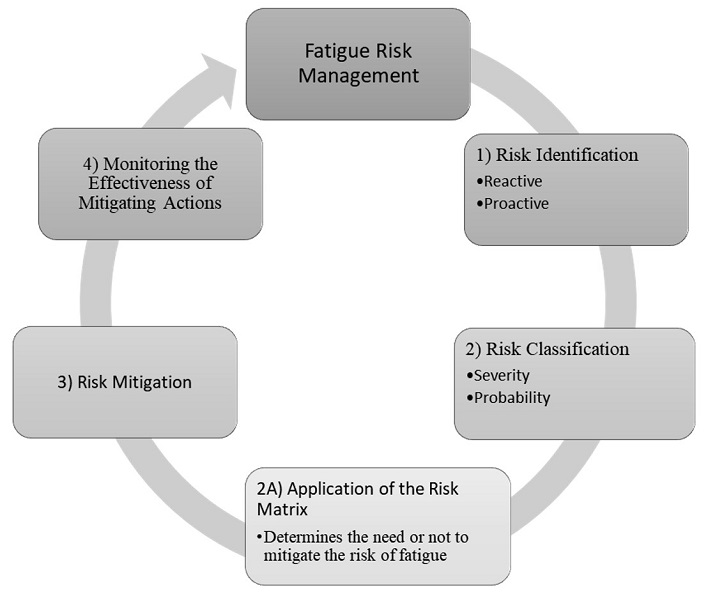
As in every risk management process, the beginning is through the identification of hazards, as shown in Figure 1. Since fatigue is an identified hazard, it must be analyzed to be properly managed. Once the hazards have been identified through a reactive or proactive process, it is necessary to find out what factors influence fatigue. It should be noted that those responsible for identifying the hazard, classifying the risks and other steps shown in Figure 1 are the analysts of the Human Factors Section and psychologists. In addition, the Airspace Control Accident/Incident Investigation and Prevention Section (SIPACEA) is responsible for initiating investigations related to Fatigue, as will be shown in Subsection 2.3.
2.3. Factors that influence human fatigue
The combined interaction of circadian rhythms, alertness, drowsiness, and sleep effects contribute to the state of fatigue, according to studies carried out by Novak et al. (2020).
The state of alert may vary according to the time of day, due to the influences suffered by the circadian mechanism, as exemplified in Figure 2.
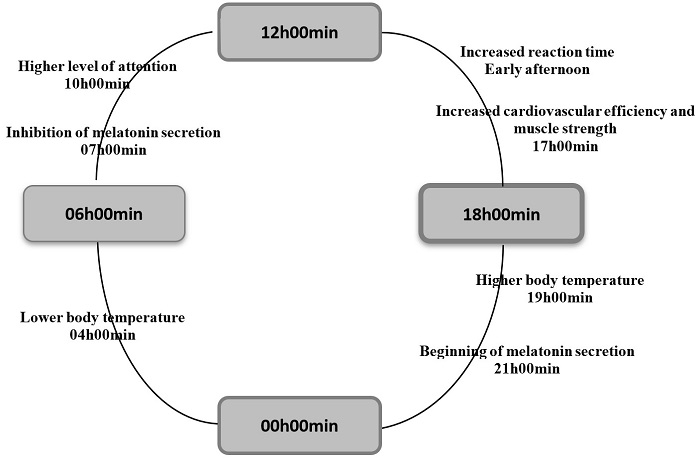
Figure 2 demonstrates how the biological clock reproduces the effects of drowsiness according to specific times of the day, regardless of the tasks being performed. In certain periods of the day, the state of alert may suffer effects. This state can be influenced by other factors, as shown in Figure 3.
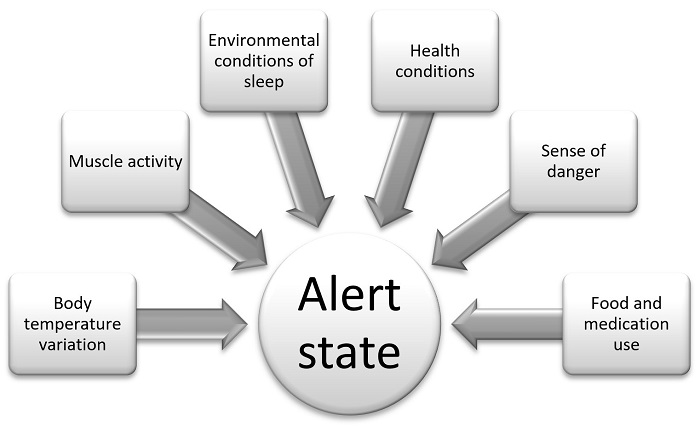
Figure 3 shows the different ways in which the promotion of alertness occurs: muscle activities can be represented by walking or running, stretching, or even jaw activity when something is chewed in the mouth. Controlled naps are considered a strategy to control this alert state. The effect of light can reduce drowsiness, just as cold, dry air can increase alertness. On the other hand, heat can induce drowsiness. Scents, for example, mint, can trigger a state of alertness. In addition, therefore, the condition of fatigue can interfere with operational performance and increase the probability of risk of occurrences, due to the lack of accumulated sleep, long waking hours, and high workload (Pinheiro, 2020). Fatigue has an evolutionary process composed of three phases:
-
Tiredness: characterized by mild or moderate performance weakness, accumulated that can be measured in the period of one day of activity (day or night), being possible its total recovery during the subsequent period of sleep;
-
Accumulated fatigue: consists of accumulated fatigue, due to consecutive days of work, without the body being able to recover due to lack of sleep; and
-
Chronic fatigue: in this phase, the cumulative debt of sleep intensifies, weakness in performance and sleepiness progressively increase and the individual tends to become less confident in assessing their level of weakness.
In addition, symptoms of stress and burnout syndrome, also known as Burnout syndrome, which is related to chronic fatigue and affects health and safety professionals and the air traffic controller, who make up the risk group due to the complexity of the nature of the activities they perform (Maslach & Jackson, 1981).
There are other sleep disorders, such as sleep apnea, insomnia, bruxism, rest- less legs’ syndrome, among others, which aggravate the phases of fatigue and require specific treatments for recovery (Novak et al., 2020).
Bearing in mind the aforementioned factors, aligned with the general objective of this work, it is intended to raise the main existing systems and tools, with the purpose of providing the management of risks related to fatigue. Subsection 2.4 will point out the details found.
2.4. Theoretical Integration
The literature shows that effective fatigue management requires an understanding of the physiological and psychological processes underlying fatigue (Drogoul & Cabon, 2021). Our computational tool incorporates these theoretical frameworks by integrating modules that track and analyze indicators of fatigue progression—from the early signs of tiredness to chronic conditions—thereby linking theory with practical risk mitigation.
2.5. Existing systems and tools
The main computational systems and tools found in the literature are used to measure fatigue in individuals submitted to work in shifts with alternate schedules. Such systems can be subjective (based on history or individual perceptions) or objective (oriented from performance tests and physiological monitoring) (Brasil, 2020a). Generally, they are divided into two phases: the first containing the total sample of operators and the second, with a partial sampling.
The methods and tools shown can be used as a basis for implementing risk management in the FRMS approach. Although it is a much more complex process than the prescriptive method, it is necessary to understand the processes involved in this category of approach. According to Gander et al. (2017), the core of a FRMS should be understood as a closed-loop process, consisting of:
-
Continuous monitoring of fatigue levels;
-
Identification of situations where fatigue can be dangerous;
-
Risk assessment; and
-
Introduction of mitigations and strategies for monitoring the effectiveness of mitigation actions, when necessary.
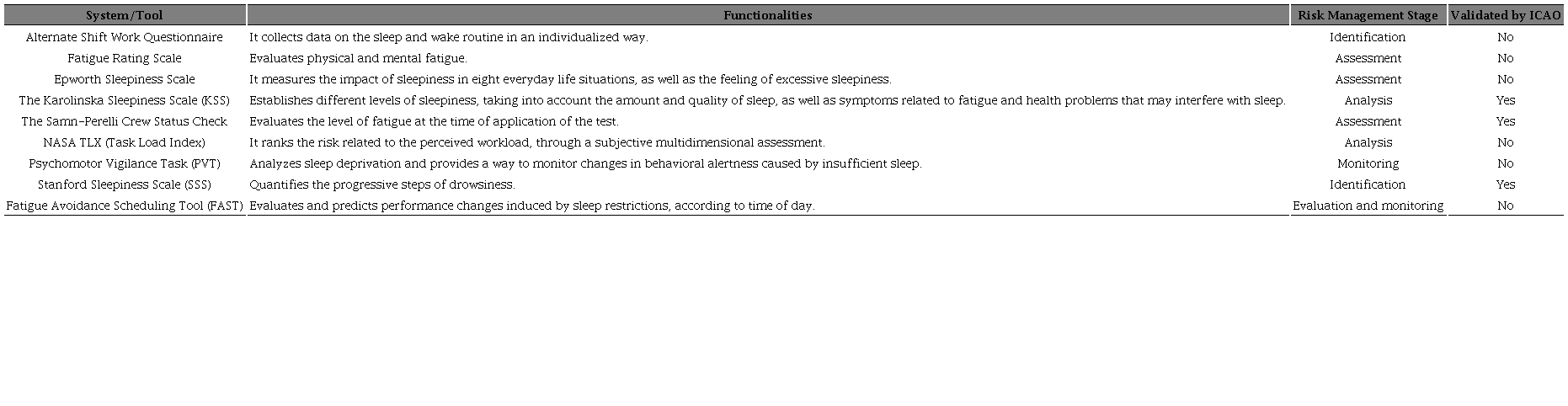
From this information, it is possible to compare the tools and systems found in the literature, shown in this Subsection. The objective is, therefore, to base and justify the functionalities required for the implementation of a FRMS. The table represented by Table 1 presents a summary of the main systems and tools found in the literature.
Comparison between Fatigue Risk Management Systems/Tools and their Functionalities.
Source: Prepared by the authors (2024).
In contrast, the proposed system not only collects data but also applies a closed-loop process for continuous evaluation and mitigation, as recommended by Gander et al. (2017).
Of the tools presented in Table 1, those validated and suggested by ICAO to assess the subjective state of alertness and sleepiness are: The Karolinska Sleepiness Scale (KSS), Samn-Perelli Scale, and Stanford Sleepiness Scale (SSS) (Brasil, 2020a)
Based on the consolidation of the collected information, Section 3 presents the adopted research methodology.
3. Methodology
3.1. Research method
This research is characterized as exploratory because it provides greater proximity to the subject studied. According to Severino & Santos (2014), this type of research aims to know the variable to be studied in its literality, in the same way as it appears, plus its meaning and the context in which it is inserted. According to Gil (2002), these surveys are composed of a bibliographical survey, interviews with people who have experienced the theme, and finally, an analysis of examples that stimulate the reader’s understanding.
-
Regarding nature: applied.
This type of research aims to add new knowledge and practical processes to seek an immediate solution to specific problems (Moresi, 2003). For this study, the proposal is to develop an action plan to propose improvements in the management process of fatigue-related risks in air traffic control at CINDACTA I.
-
Regarding the problem approach: qualitative.
Qualitative research relates to the real objective world and the subjectivity of social relations that cannot be quantified. It focuses on the inductive interpretation of phenomena without researcher manipulation (Da Silva & Menezes, 2005). In this study, qualitative approach was adopted to collect more information that will allow for a statistical analysis of the factors that most influence human fatigue.
-
Regarding general objectives: exploratory.
The main objective of exploratory research is to provide more information about the subject under investigation, allowing for its definition and delineation. It involves a survey of the state of the art, literature review, interviews, and analysis of examples that may stimulate understanding of the topic (Gil, 2002). In this research, an exploratory approach is applied to assess the perception of ATCOs regarding human fatigue within the scope of the Brazilian Air Force.
-
Regarding the strategy: pilot case study.
A case study involves a thorough and exhaustive evaluation of one or several objects to allow for a broad and detailed understanding. The central point of this type of research is to elucidate a decision or set of decisions, their causes, implementation, and consequences. In this study, a pilot case study procedure was employed to gain a more accurate understanding of the identified issues, isolating the variables of the study site and specific subject to obtain an explanatory context that provides practical and applicable results (Yin, 2015).
-
Study location: The proposal of this research is based on studying human fatigue in Air Traffic Controllers (ATCOs) associated with CINDACTA I, located in Brasília, Federal District.
-
Study object: The object of study is the perception of air traffic controllers regarding human fatigue, in accordance with the guidelines of ICAO and the Brazilian Air Force.
Other relevant aspects were considered for the characterization of this study:
In methodological development, the choice of techniques and the prediction of triangulation are essential for the most comprehensive research possible. Researchers need to be familiar with different research techniques and authors, including in this research: interviews (Boni & Jurema, 2005) and questionnaire application (Vieira, 2009).
Two semi-structured interviews were conducted with experts from CENIPA and CINDACTA I to gather data and, simultaneously, validate the information. Data were also collected through a questionnaire, as proposed by Vieira (2009), to gather information about the sleep habits of an operator who undergoes 24-hour operational shift services in alternating shifts in ATC or ATS Organizations, as well as investigate possible causes of sleep deprivation that may lead to Human Fatigue.
At the end of this stage, the results will aid in understanding the sleep patterns of an individual working in an Operational Organization, as well as the factors influencing their habits and implications of certain activities that may lead to intense fatigue or stress.
In addition to a literature review and interviews, a systematic software development process was adopted. Specifically, the development process was divided into the following steps:
- 1. Requirements Elicitation: Conducted through interviews with stakeholders (Boni & Jurema, 2005; Vieira, 2009) and consultations with experts from CINDACTA I’s Operational Informatics Section.
- 2. Design and Prototyping: Utilized a hybrid of Waterfall and Agile methodologies (Sommerville, 2011) to iteratively design and refine the user interface and backend functionalities.
- 3. Implementation: The system was developed using HTML5, Bootstrap, AJAX, and WordPress (Elementor plugin), ensuring dynamic data visualization and ease of maintenance.
- 4. Validation: A Site Acceptance Test (SAT) procedure was conducted with eight experts (operational informatics specialists, systems analysts, psychologists, and ATCOs) to ensure that the tool met the predefined functional and non-functional requirements.
The enhanced methodological description ensures replicability and transparency, addressing previous concerns regarding insufficient methodological details.
Furthermore, the proposed research method, for conducting a literature review, was considered according to the proposal by Kitchenham & Charters (2007) and the applied structure by Kitchenham et al. (2009) as shown in Subsection 3.2.
3.2. Research structure
The study was structured in methodological procedures through steps based on the current standards of the Brazilian Air Force and ICAO, applied to the risk management techniques included in the ABNT ISO 31000 standards (Associação Brasileira de Normas Técnicas, 2009).
Firstly, a computational interface was proposed, based on the concepts of Software Engineering, covering the risk management process, through the Fatigue Risk Management (FRMS) approach, identifying the main risks related to Brazilian regular aviation and the operational procedures used with a view to prevention.
The implementation of this stage took place in four phases, integrating internal and external agents. Finally, the tool developed was validated by eight experts from different areas.
After consolidating the research method, Section 4 presents the results and discussions obtained in stage 4 of the study, which consists of proposing the computational tool, the focus of this study.
4. Results and discussions
4.1. Development of the computational tool
The present stage of the study details the computational prototype development process, from the requirements survey, tools used, and interface development. In this way, the objective is that the explicit details are possible to be reproduced and continued. In software engineering, requirements gathering is one of the initial stages of soft- ware development. The main functions and functionalities of the computational tool are defined and will serve as the basis for the next step: prototyping, implementation, and testing. The requirements can be defined as functional and non-functional (Maxim & Kessentini, 2016).
According to Sommerville (2011), functional requirements explicitly describe the functionalities and services of the system. In addition, they have the function of documenting how the system should react to specific inputs, how it should behave in certain situations, and what the system should not do. Non-functional requirements, on the other hand, define system properties and restrictions, such as security, performance, and disk space, for example. It can be of the whole system or part of it, and, normally, they are more critical than the functional requirements because if they are not appropriate, the system loses its applicability.
For the survey of requirements, we sought to explore the best ways of elicitation based on requirements engineering, in addition to providing the analysis and specification of requirements for an information system, considering the needs and points of view of stakeholders, which are considered determinant actors for the productivity and quality of a system (Eckhardt et al., 2016).
It should be noted that, to survey the requirements and technical aspects, professionals from the Operational Informatics Section of CINDACTA I, called TIOP, in Brasília, who work directly in the development of information systems were inter- viewed. These professionals have training in software architecture, systems analysis, project management, requirements, and usability engineering, totaling 7 people. The criterion used to select participants was convenience sampling (Höst et al., 2000).
Based on the raised requirements, Subsection 4.2 shows in detail the development of the computational tool, named Fatigue Risk Management System (SGRF).
4.2. Elaboration of a computational tool, contemplating the risk management process
For the development of a Fatigue Risk Management System (SGRF) through the Fatigue Risk Management System (FRMS) approach, it was necessary to design a data-oriented system, aiming to monitor and manage, continuously assess operational safety risks concerning fatigue, based on scientific principles and knowledge. Operational experience was also considered, to ensure that the operators involved in the process work with adequate alert levels.
The implementation of a FRMS must be done in four phases, and each of these phases must be reviewed and approved by the Department of Airspace Control, before starting the implementation of the next phase. Are they:
-
Preparation
-
Test
-
Launch
-
Maintenance and improvement
A key innovative feature of our system is the integration of modules that specifically monitor the progression from acute to chronic fatigue, providing early alerts and adaptive countermeasures.
Considering the criteria for implementation, as well as the requirements raised, the Context Diagram is presented in Figure 4, which consists of a tool for modeling the scope graphic, and, in addition, illustrates the relationship of the SGRF System with its external entities (Project Management Institute, 2013).
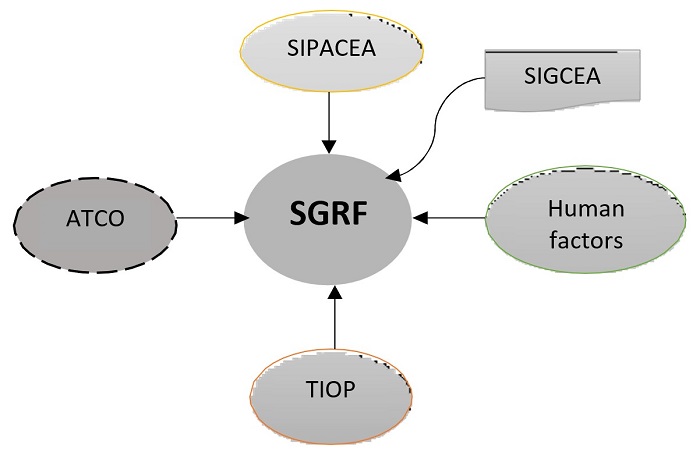
Figure 4
Context Diagram. Source: Prepared by the authors (2024).
Figure 4 relates, externally, to the following entities:
-
ATCO: ATCO accesses the system through user registration and fills in appropriate forms, which will feed the SGRF database;
-
SIPACEA: The Airspace Control Accident/Incident Investigation and Prevention Section (SIPACEA) is responsible for advising the Commander on matters related to the operational safety of airspace control, as well as issuing fatigue reports generated in the SGRF;
-
Human Factors Section: It is the sector responsible for the control and execution of activities related to human factors, as well as providing the psychological analysis of ATCOs through the fatigue reporting forms filled out in the SGRF;
-
TIOP: The Operational Informatics Section (TIOP) is responsible for controlling and coordinating maintenance activities and supervision of contracted IT support services for the equipment, systems, and operating subsystems under its responsibility. In addition, TIOP is responsible for providing the storage of data records processed in accordance with the rules in force, as well as controlling the maintenance of backup copies of the SGRF and its respective database; and
-
SIGCEA: It corresponds to the Information and Management System of the Operational Safety Subsystem in Airspace Control, which aims to speed up the processing of Operational Safety information in Airspace Control.
Based on this information, the system was developed through its backend, that is, it works in most cases by making the bridge between the data that comes from the browser and directs it to the fatigue database and vice versa, in the language of programming in HTML 5.0 (HyperText Markup Language), including bootstrap and AJAX components to implement dynamic graphics in SGRF.
In this way, the computational prototype was developed with Elementor Word- Press, which consists of a plugin for creating websites. This tool was chosen because it has a simplified operation and is ready to serve any project, whose proposal is to make it accessible to any WordPress user who wants to develop a new project on the web, even if they have no experience with development and programming (Chaves et al., 2022). The developed prototype can be accessed through the electronic address in Brasil (2024). A hostinger server was chosen, with a dedicated IP to guarantee the availability of 99.995%, with a guarantee of 24/7/365 support, that is, uninterrupted.
This server has PHP technology (Hypertext Preprocessor 7.4, responsible for generating dynamic content on the World Wide Web.
It is worth mentioning that the domain (.online) was chosen, due to the need to distinguish it from the systems allocated on the internal network (Intranet) of CINDACTA I. Based on the general understanding of the system, prototypes of the developed screens will be presented, associated with their functionalities. The first screen, illustrated in Figure 5, represents the environment in which the user will access the SGRF, through previously registered e-mail and password.
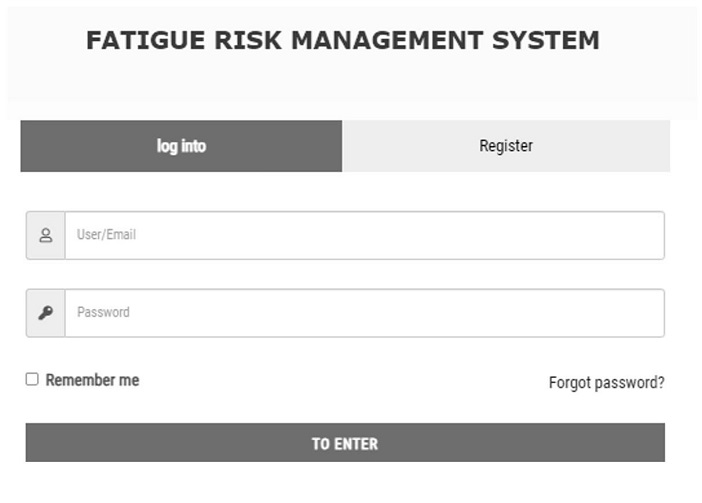
Figure 5
Login screen. Source: Prepared by the authors (2024).
If the user does not have a registration, he will be redirected to the page represented by Figure 6.
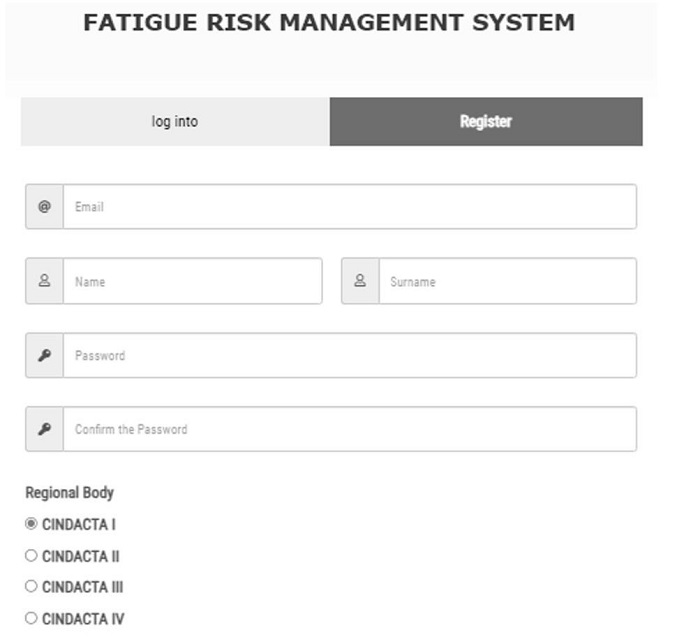
Figure 6
Registration screen. Source: Prepared by the authors (2024).
We configure, from the registration screen, that the user is automatically redirected to the main page of the SGRF, called “Control Panel”, as shown in Figure 7.
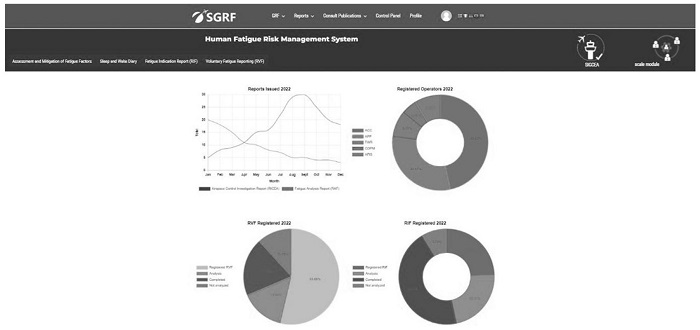
Figure 7
System main screen – Control Panel. Source: Prepared by the authors (2024).
The Dashboard or Control Panel, represented by Figure 7, presents the overview of the SGRF, containing in the main menu:
1. GRF: functionality that includes an introduction on how the Human Fatigue Risk Management (GRF) process occurs, detailed in Figure 1, the forms for identifying and assessing risks (RIF and RVF, the Sleep and Wake Diary), and the table for the Assessment and Mitigation of Fatigue Factors;
2. Reports: according to each analysis carried out by experts and analysts of the Airspace Control Accident/Incident Investigation and Prevention Section (SIPACEA) of CINDACTA I, two different types of reports will be generated: Airspace Control Investigation Report (RICEA) or Fatigue Analysis Report (RAF);
3. Consultation Publications: Consists of the official source of information to reference all official conventional and non-conventional publications in force, approved by the Airspace Control Department. In the SGRF, a direct link is available to download the main publications concerning human fatigue, in force in the Air Force Command;
4. Control Panel: consists of the initial presentation screen of the SGRF, with the main accompanying graphs: reports issued, registered operators, separated by Operational Body, Report of Indication of Fatigue Post-Occurrence of Air Traffic (RIF) and Voluntary Report of Fatigue (RVF) registered; The secondary menu of the “Control Panel” page contains the following forms used to identify and assess risks of human fatigue:
5. Fatigue Indication Report (RIF): must be completed whenever there is an Air Traffic Occurrence. The ATCO must answer the first 5 (five) questions of the RIF, which concern the Fatigue screening. If at least one of the answers is “Yes”, the rest of the RIF must be completed completely; if all the answers are “No”, the filling of the form ends;
It should be noted that the “Operational Indicative” field includes not only the RIF, but other operational forms, such as the RVF and the Sleep and Wake Diary. This indicator is granted to each professional with the respective ATCO License, upon completion of the Air Traffic Controller Registration Form, signed by the Head of the Regional Body to which the Operator is subordinate. Then, this form is sent to the Airspace Control Department Operations Subdepartment, which will reserve the referred call sign containing the combination of 4 capital letters, in accordance with the Instructions in force at the Air Force Command (Brasil, 2020b).
It is also verified whether the occurrence of air traffic was caused by one of the 3 reasons:
-
Proximity between Aircraft (AIRPROX): situation in which the distance between aircraft, their relative positions and speeds contributed to the compromise of safety;
-
Procedures: a situation in which there are operational difficulties due to faulty procedures, or non-compliance with applicable operational procedures; and
-
Facilities: situation in which the failure of any component of the air navigation infrastructure has caused operational difficulties.
Being one of the three aforementioned reasons, it is characterized as an Air Traffic Incident. In this case, the RIF is analyzed, and the investigation begins through the RICEA (Airspace Control Investigation Report). If it does not fall under any of the three reasons, it is not necessary to initiate an investigation process.
6. Voluntary Fatigue Reporting (RVF): represents a tool to encourage the team’s continuous compliance with voluntarily reporting fatigue risks. From it, the Fatigue Analysis Report (RAF) is generated;
7. Sleep and Wake Diary: aims to mitigate fatigue at the individual level. When there is a need for guidance to an ATCO, the Human Factors sector of SIPACEA, in groups or individually, can guide them to carry out the activity of registering in the Sleep and Wake Diary, aiming to collect information about their actual routines of working hours work and sleep/wake. The result of this record will serve as a subsidy to adjust the schedules, if necessary, or apply other interventions;
Assessment and Mitigation of Fatigue Factors:
8. Voluntary Fatigue Reporting (RVF): method used to assess fatigue risks related to the work shift, or specific operation, with the purpose of determining appropriate mitigation strategies;
9. Schedule Module: this functionality redirects the user to another system developed by Airspace Control Department, the Operational Personnel Management System, which provides, among other functions, the monitoring of planned and fulfilled operational scales. This tool is of paramount importance, as it aims to verify compliance with the maximum and minimum prescriptive limits of working hours for each operator; and
10. SIGCEA: as illustrated in the Context Diagram in Figure 4, the user can be redirected to the SIGCEA, Information and Management System of the Operational Safety Subsystem in Airspace Control, which aims to speed up the processing of Operational Safety information in Airspace control, being, therefore, one more aid tool in the analysis of the ATCO fatigue investigation processes.
The screens presented were developed aiming at the continuity and improvement of the Fatigue Risk Management System (SGRF), based on an environment favorable to good innovation practices. In this way, the prototyping of the screens of the proposed computational prototype, based on the survey of needs and basic requirements, was finalized.
We sought to implement the functionalities necessary for the implementation of a Human Fatigue Risk Management System, in the Fatigue Risk Management System approach – Fatigue Risk Management System (FRMS), contemplating the risk management process, detailed in Figure 1.
In the next stage of the study, the expert’s perception was collected to validate the proposed tool, as shown in Subsection 4.3.
4.3. System validation
The validation process demonstrated that the tool effectively collects, processes, and displays data related to fatigue risks. This stage of the study includes the Site Acceptance Test Procedures (SAT – Site Acceptance Test) of the System (SGRF), which consists of a series of tests ranging from verifying that all control equipment arrived in proper operating conditions as per specified in the requirements survey, until the validation of the correct functionality of the developed system (Park et al., 2019).
One of the objectives of the SAT is to verify the details of the product, comparing it with what was designed and prototyped. The test cases were executed and validated through meetings with eight experts from the following areas:
-
02 specialists in operational informatics;
-
02 systems analysts;
-
02 psychologists, human factors analysts; and
-
02 air traffic controllers.
For each functionality, test cases were executed, that is, the real simulation of each system function, based on the Functional Requirements (RF) and the Primary Functionality (FP) of the SGRF. For this, a manual of 09 (nine) test cases for validation was elaborated. After carrying out all the test cases by the eight specialists, it was possible to run the simulation of each functionality of the SGRF. During approximately 1 hour and 30 minutes, prototypes of the System screens were presented, showing all the functionalities developed. At the end of each screen presented, the eight participants could validate or request adjustments. No participant indicated adjustments to be made. Thus, the result of the study was considered validated, with a view to providing the risk management of human fatigue for Air Traffic Controllers, through a computational tool.
The discussion also emphasizes limitations:
-
Implementation Constraints: Technical challenges related to server performance and integration with existing systems (SIGCEA, TIOP).
-
User Adoption: Potential resistance due to changes in operational routines.
-
Data Bias: Risks associated with self-reported fatigue levels.
These limitations will be addressed in future research, including the development of Safety Performance Indicators (SPI) for continuous improvement.
5. Conclusion
The objective of this article was achieved, since it was proposed to develop a computational prototype of Risk Management related to Human Fatigue, based on the FRMS approach, applied to CINDACTA I so that the risks related to fatigue can be minimized. The revised system not only integrates existing risk management practices but also innovates by addressing the continuum of fatigue states. By discussing the proposition of this computational tool, it was possible to respond to the question of the research, on how to manage the risks related to human fatigue in the FRMS approach, to minimize them.
The concept of the Fatigue Risk Management System proposed in this work, according to the FRMS approach, provided guidelines for the reduction of fatigue in ATCOs. In accordance with current legislation, the Civil Air Navigation Service’s Organization (CANSO) with the International Federation of Air Traffic Controller’s Associations (IFATCA), proposed a Management Guide of fatigue for Air Traffic Service Providers, contemplating recommendations for Air Traffic Controllers (Chang et al., 2019).
The Fatigue Risk Management System (SGRF) was developed through the approach, Fatigue Risk Management System – Fatigue Risk Management System (FRMS), and for that, it was necessary to design a data-oriented system, aiming to monitor and continuously manage operational safety risks related to fatigue, based on scientific principles and knowledge.
Each functionality was developed with the aim of feeding the fatigue database, covering, mainly, the entire fatigue risk management process: hazard identification, risk classification, through the application of the risk matrix, mitigation, and monitoring of mitigating actions.
The Brazilian Air Force, has been improving over the years, searching for more robust systems, more training for its professionals and effective tools aimed at the safety of air operations. In fact, there are already systems that identify operational safety hazards, such as the Management Information System of the Operational Safety Subsystem in Airspace Control, which analyzes not only human fatigue but also other risks to aviation, such as laser beams, balloon risk, and fauna risk. Just as there is also the Operational Personnel Management System, which controls the License, Technical Qualification, the validity of the ATCOs health inspection, and the prescriptive limits of hours worked, through the Scala Module.
When developing this computational prototype, the great gain for CINDACTA I was realized, by proposing a unique System that aims to analyze in detail the human fatigue of ATCOs, through the Fatigue Risk Management System approach (FRMS), integrating with the other mentioned systems. In this way, it is intended that, with the implementation of the SGRF, Operational Safety will be improved, and human resources will be prioritized.
Future research will focus on evaluating the system’s effectiveness over time and refining its features based on user feedback. For this, it is suggested the definition and adoption of Safety Performance Indicators (SPI), for application in the human fatigue risk management process. With this, it will be possible to have more tangible knowledge of the real and current situation so that, later, they are implemented and applied again, and thus used as a parameter of comparison, between the previous and the current scenario, which will help in the investigation of the existence of improvement continuation of the process. It is also suggested the improvement of the tool now developed by the team of the Operational Informatics Section of CINDACTA I, and by the developers of the Airspace Control Department so that Brazil has an Improved Fatigue Risk Management System, based on the Fatigue Risk Management System (FRMS) approach, as advocated by the International Civil Aviation Organization (ICAO).
Acknowledgements
The author would like to express their gratitude to the University of Brasília for supporting this research and to the professors involved, whose guidance and insights were fundamental to the development of this study.
References
Aguiar, B. S. (2021). Fatores de risco para estresse e fadiga em aeronautas: uma revisão de literatura. Revista Conexão SIPAER, 11(2), 2-12.
Associação Brasileira de Normas Técnicas – ABNT. (2009). ABNT NBR ISO: ISO 31000: gestão de riscos. Rio de Janeiro: ABNT.
Boni, V., & Jurema, S. (2005). Quaresma: aprendendo a entrevistar: como fazer entrevistas em ciências sociais. Em Tese, 2(1), 68-80.
Brasil. (2020a). ICA 100-18: habilitação técnica para controlador de tráfego aéreo (Vol. 1). Rio de Janeiro: DECEA - Comando da Aeronáutica.
Brasil. (2020b). MCA 81-1: manual do gerenciamento do risco à fadiga no ATC (Vol. 1). Rio de Janeiro: DECEA - Comando da Aeronáutica.
Brasil, Ministério da Defesa, Força Aérea Brasileira. (2024). Sistema de Gerenciamento de Risco da Fadiga (SGRF). Retrieved in 2022, March 14, from https://sigcea.decea.mil.br
Chang, Y. H., Yang, H. H., & Hsu, W. J. (2019). Effects of work shifts on fatigue levels of air traffic controllers. Journal of Air Transport Management, 76, 1-9. http://doi.org/10.1016/j.jairtraman.2019.01.013.
Chaves, M., Alegari, G., Ludwig, R. (2022). Projeto de desenvolvimento de site e-commerce para empresa de calçados lebru. Florianópolis: UNISUL.
Civil Aviation Safety Authority, Australian Government. (2018). Review of aviation safety regulation of remotely piloted aircraft systems. Australia: Civil Aviation Safety Authority.
Comissão Nacional da Fadiga Humana. (2017). Guia de investigação da fadiga humana em ocorrências aeronáuticas. Retrieved in 2022, March 14, from https://www.icao.int/SAM/Documents/.
Drogoul, F., & Cabon, P. (2021). Post covid-19 fatigue management for atcos. In Proceedings of the International Conference on Applied Human Factors and Ergonomics (pp. 319-323). New York: Springer.
Eckhardt, J., Vogelsang, A., & Méndez Fernández, D. (2016). Are “nonfunctional” requirements really non-functional? an investigation of non-functional requirements in practice. In Proceedings of the 38th International Conference on Software Engineering (pp. 832-842). New York: Association for Computing Machinery.
Fielding, E., Lo, A. W., & Yang, J. H. (2010). The national transportation safety board: a model for systemic risk management. SSRN, 1695781. http://doi.org/10.2139/ssrn.1695781.
Fonseca, L. H. F. (2020). Nav Brasil: uma nova estrutura para o SISCEAB. Rio de Janeiro: Escola Superior de Guerra.
Francisco, R. W. (2021). Cansaço x fadiga na aviação. Palhoça: UNISUL.
Gander, P. H., Wu, L. J., van den Berg, M., Lamp, A., Hoeg, L., & Belenky, G. (2017). Fatigue risk management systems. In M. Kryger (Ed.), Principles and practice of sleep medicine (pp. 697-707). Washington: Elsevier.
Gil, A. C. (2002). Como elaborar projetos de pesquisa (Vol. 4). São Paulo: Atlas.
Guimarães, S. C. L. (2016). Estresse em controladores de tráfego aéreo: uma revisão sistemática. São Paulo: UNG.
Höst, M., Regnell, B., & Wohlin, C. (2000). Using students as subjects: a comparative study of students and professionals in lead-time impact assessment. Empirical Software Engineering, 5(3), 201-214. http://doi.org/10.1023/A:1026586415054.
International Civil Aviation Organization. (2016). Manual for the oversight of fatigue management approaches. Retrieved in 2022, January 18, from https://www.icao.int/safety
Kitchenham, B., & Charters, S. (2007). Guidelines for performing systematic literature reviews in software engineering. Keele: EBSE.
Kitchenham, B., Pearl Brereton, O., Budgen, D., Turner, M., Bailey, J., & Linkman, S. (2009). Systematic literature reviews in software engineering: a systematic literature review. Information and Software Technology, 51(1), 7-15. http://doi.org/10.1016/j.infsof.2008.09.009.
Maslach, C., & Jackson, S. E. (1981). The measurement of experienced burnout. Journal of Organizational Behavior, 2(2), 99-113. http://doi.org/10.1002/job.4030020205.
Maxim, B. R., & Kessentini, M. (2016). An introduction to modern software quality assurance. In I. Mistrik, R. Soley, N. Ali, & J. Grundy (Eds.), Software quality assurance (pp. 19-46). New York: Elsevier. http://doi.org/10.1016/B978-0-12-802301-3.00002-8.
Melo, H. S. (2021). Análise da carga de trabalho dos pilotos de aeronaves de asas rotativas do CBMDF e sua influência na segurança operacional. Brasília: Corpo de Bombeiros Militar do Distrito Federal.
Mendes, L., & Santos, F. S. (2013). Os sentidos e significados no trabalho de controlador de tráfego aéreo. Psicologia e Sociedade, 25(3), 706-717. http://doi.org/10.1590/S0102-71822013000300024.
Moresi, E. (2003). Metodologia da pesquisa. Brasília: Universidade Católica de Brasília.
Ned, G. C. (2016). Fadiga nos controladores de tráfego aéreo: uma realidade. Revista Conexão Sipaer, 7(1), 35-43.
Novak, A., Badanik, B., Brezonakova, A., & Lusiak, T. (2020). Implications of crew rostering on airline operations. Transportation Research Procedia, 44, 2-7. http://doi.org/10.1016/j.trpro.2020.02.001.
Park, J. B., Kim, B. K., Kim, M. S., & Rho, D. S. (2019). A study on the site acceptance test (sat) evaluation algorithm of energy storage system using li-ion battery. Journal of the Korea Academia-Industrial Cooperation. Society, 20(6), 26-37.
Pasquali, L., & Abreu do Lago, L. J. (1990). O controlador de tráfego aéreo no brasil: profissiografia do cargo. Psicologia: Teoria e Pesquisa, 6(1), 55-74.
Pereira, D. B. (2020). Os riscos da fadiga à segurança de voo. Tubarão: Ciências Aeronáuticas, UniSul.
Pessoa, Y. S. R. Q., Piorski, J. S., Oliveira, N. E. D. A., Almeida, B. S., Dias, R. B. A., Pessoa, C. E. Q., & Alchieri, J. C. (2020). Cargas de trabalho na saúde do controlador de tráfego aéreo. Revista Psicologia, 20(1), 899-905. http://doi.org/10.17652/rpot/2020.1.16742.
Pinheiro, P. S. T. (2020). O risco da fadiga humana na aviação civil: um estudo dos impactos na aviação comercial brasileira. Tubarão: Ciências Aeronáuticas, UniSul.
Pinheiro, L. R. F., & Rodrigues, M. S. (2021). Análise bibliométrica sobre fadiga humana na atividade aérea. Latin American Journal of Business Management, 12(1), 59-73.
Project Management Institute – PMI. (2013). PMBOK: um guia do conhecimento em gerenciamento de projetos. Pennsylvania: Project Management Institute.
Sahinkaya, B., & Oktal, H. (2021). Modeling of aircrew rostering problem with fatigue risk management approach. The International Journal of Aerospace Psychology, 31(3), 1-14.
Santos, P. R. (2014). Segurança da aviação: livro didático. Palhoça: UniSul.
Severino, A. J., & Santos, S. E. (2014). Ensinar e aprender com pesquisa no ensino médio. São Paulo: Cortez Editora.
Silva, E. L., & Menezes, E. M. (2005). Metodologia da pesquisa e elaboração de dissertação (4. ed.). Florianópolis: UFSC.
Sommerville, I. (2011). Engenharia de software (9. ed.). São Paulo: Pearson Prentice Hall.
Vieira, S. (2009). Como elaborar questionários. São Paulo: Atlas.
Yin, R. K. (2015). Estudo de caso: planejamento e métodos. Porto Alegre: Bookman Editora.
Notes
Author notes
*rodrpg23@yahoo.com.br
Conflict of interest declaration
