ARTICLE
Parental involvement in Higher Education: trend or post-pandemic syndrome?
Envolvimento dos pais no Ensino Superior: tendência ou síndrome pós-pandemia?
Participación de los padres en la Educación Superior: ¿tendencia o síndrome pospandémico?
 Anna P. Bagirova a.p.bagirova@urfu.ru
Daniil G. Sandler d.g.sandler@urfu.ru
Alexey K. Klyuev a.k.kluev@urfu.ru
Anna P. Bagirova a.p.bagirova@urfu.ru
Daniil G. Sandler d.g.sandler@urfu.ru
Alexey K. Klyuev a.k.kluev@urfu.ru
Parental involvement in Higher Education: trend or post-pandemic syndrome?
Ensaio: Avaliação e Políticas Públicas em Educação, vol. 33, núm. 127, e0255058, 2025
Fundação CESGRANRIO
Recepción: 29 Agosto 2024
Aprobación: 10 Abril 2025
Abstract: The pandemic and the resulting transformation of the educational process at universities have affected the involvement of students’ parents in Higher Education. This paper focuses on the policies governing the interaction between universities and the parent community, as well as their impact. We used data from Russian sociological surveys of parents of full-time Higher Education students and identified the importance of the role of parents in achieving quality educational outcomes and forms of possible interaction between universities and parents. It provides the basis for the revision of university policies and the creation of new practices for involving the parent community in the development of higher education.
Keywords: Parents of Students, Involvement, Higher Education, Educational Process, Parental Involvement, Russia.
Resumo: A pandemia e a consequente transformação do processo educativo nas universidades afetaram o envolvimento dos pais dos estudantes no Ensino Superior. O documento centra-se nas políticas que regem a interação entre as universidades e a comunidade de pais, bem como o seu impacto. Utilizou-se dados de inquéritos sociológicos russos feitos a pais de estudantes a tempo inteiro e identificou-se a importância do papel dos pais na obtenção de resultados educativos de qualidade e formas de possível interação entre as universidades e os pais. A pesquisa fornece base para a revisão das políticas universitárias e a criação de novas práticas para envolver a comunidade parental no desenvolvimento do Ensino Superior.
Palavras chave: Pais de Estudantes, Envolvimento, Ensino Superior, Processo Educativo, Formas de Envolvimento Parental.
Resumen: La pandemia y la consiguiente transformación del proceso educativo en las universidades han afectado la participación de los padres de los estudiantes en la educación superior. El artículo se centra en las políticas que rigen la interacción entre las universidades y la comunidad parental, así como en su impacto. Utilizamos datos de encuestas sociológicas rusas de padres de estudiantes de tiempo completo e identificamos la importancia del papel de los padres en el logro de resultados educativos de calidad y formas de posible interacción entre universidades y padres. El artículo proporciona la base para la revisión de las políticas universitarias y la creación de nuevas prácticas para involucrar a la comunidad de padres en el desarrollo de la educación superior.
Palabras clave: padres de alumnos, involucramiento, educación superior, proceso educativo, formas de involucramiento parental.
1 Introduction
The coronavirus pandemic caused a significant transformation of traditional university practices in interaction with parents. Transfer of the educational process into the family space, involvement of parents in arranging the learning infrastructure, often their physical “presence” during the classes - all of this created a request for the study of the parental involvement in the educational process of Higher Education.
The coronavirus pandemic caused the following global shifts in the Education system:
First, education reform became a top policy priority during the global pandemic. Education has a strong impact on individual well-being and socio-economic growth; therefore, macro-level measures were taken to offset the negative effects of the pandemic on learning processes. At the same time, the pandemic created new opportunities for the development of Education by intensifying the introduction of information technologies and the generation of digital educational content. Therefore, large-scale reforms covered both the sphere of educational policy and the actual processes and technologies of Education. The transformation of pre-existing Education policy and digital literacy should occur through “strengthening partnerships among Education stakeholders and making efficient use of resources” (Shehaj, 2022, p. 312). Studies of parental attitudes to new educational technologies and parental involvement in the formation of a digital learning environment become extremely relevant in this situation.
Second, universities suffered serious reputational damage during the pandemic due to their unpreparedness for remote forms of work. Researchers note that the pandemic hit the social assessment of universities, and now they require broad social support, including the support of parents as stakeholders (Sandler, Bagirova, Klyuev, 2021). Universities faced significant systemic challenges spanning all four dimensions of Education – access, learning, teaching, and assessment. The crisis of trust that emerged because of the pandemic requires the study of factors that can recreate trusting relationships between universities and their stakeholders.
Third, the pandemic generated a demand for new models of university management. In the current environment, it is difficult to form relevant mechanisms of interaction between universities and stakeholders due to the following: blurred boundaries of power of the parties involved, uncertainty of the “game rules”, exclusion of certain important stakeholders from the decision-making process, lack of experience and expertise in new decision-making situations, and ambiguity of several popular organizational procedures. It is noted that stakeholders operate in various fields of activity, at the macro-, meso- and micro-levels of the university Education system. A key aspect of management in the Higher Education system is the recognition and identification of stakeholders, their needs and capabilities, interweaving of their interests, and their complex intra-institutional and extra-institutional relations (Valdés-Montecinos, Ganga-Contreras, 2021). One of the requests for the modernization of the university management system is prompted by the redefinition of the role of faculty in connection with the strengthening of their position in the administration of the online learning process. Students interact with the faculty as co-producers of the academic environment and see them as partners in this process. However, in these social interactions with communities, faculty may represent an individual position that is not consistent with the implemented educational policy (Lovell, Dolamore, Collins, 2022).
The pandemic changed the established balance of interests of Higher Education stakeholders, and the prompt actions of the authorities and the Education system led to the fact that stakeholders no longer communicated and did not understand the essence of the new transformations. Thus, there was a request for conceptualizing a modern management model of the interaction between universities and stakeholders, a model that includes an understanding of the new roles of the interaction actors.
Fourth, there has been a growing need to reconsider the established practices of evaluating university Education, which primarily focus on students and instructors while excluding broader stakeholder groups (Okai-Ugbaje, Ardzejewska, Imran, 2020). The radical transformation of pedagogical tools in universities, as noted by Sánchez Díaz, Sánchez García, Palomino Alvarado and Verges (2021), necessitates a shift in approaches to stakeholder involvement in assessing educational outcomes. Critiquing established assessment practices and procedures, researchers noted that by focusing largely on the technical aspects of the quantification of learning, universities “overlooked fundamental questions about the aims and values of Higher Education”. Moreover, “this search for a measure of learning gain represents the attempt to use quantification to legitimize the authority to define quality and appropriate outcomes in Higher Education” (Howson, Buckley, 2020). Thus, the debureaucratization of Education and the restoration of value-based approaches to educational assessment are impossible without the involvement of key stakeholders, including parents.
2 Parents and the Education system: theoretical approaches to the study of interaction
The transformation of parental involvement in Higher Education necessitates new conceptual approaches to its theoretical understanding. Higher Education researchers have traditionally viewed parents as one of the stakeholder groups, often merging parents and students into a single stakeholder category. This methodological approach is rooted in Edward Freeman’s stakeholder theory (Freeman, 1984). In a later work, Freeman and his co-authors expanded the theory’s application to nonprofit and educational organizations (Freeman et al., 2010). Positioning parents as key stakeholders whose expectations shape institutional policies at universities has spurred research on their roles as financial contributors and investors (Hemsley-Brown, Oplatka, 2015). More recent approaches apply stakeholder theory to Education, recognizing parents as influential actors in quality assurance and governance (Beerkens, Udam, 2017) and emphasizing the importance of universities developing “flexible quality assurance practices capable of balancing institutional academic goals and the needs of external stakeholders” (Luitinen, Kohtamäki, Kivistö, Pekkola & Hölttä, 2017).
In contemporary contexts, parents are transitioning from passive payers to strategic stakeholders, creating new models of engagement with Higher Education institutions. This shift calls for a reevaluation of traditional approaches to studying parental involvement in universities.
Parental engagement in their children’s Education has traditionally been examined at the K-12 level. The role of parents in school Education has been widely debated since the 1960s, with numerous studies documenting the positive impact of family involvement on educational outcomes. Research by Henderson and Berla (1984) demonstrates that families make a fundamental contribution to children’s educational outcomes from early childhood through adolescence. Scholars have extensively studied both external and internal factors influencing the extent of parental participation in Education. According to Hornby (2011), these include factors related to parental and family characteristics, child-specific factors, parent-teacher relationship dynamics, and broader societal influences. Parents may face various barriers to engagement, such as time and resource constraints, cultural differences, and unfamiliarity with the school system (Hornby, Blackwell, 2018).
Some scholars have assessed the effectiveness of parental involvement in shaping educational outcomes through family practices – distinguishing, for instance, between parents who primarily engage with their children on academic matters and those who actively participate in school life while reinforcing communal values and expectations (McNeal Jr., 2014). Parental engagement in Education enhances relationships with educators and yields benefits for parents themselves, including increased self-confidence, greater satisfaction with social and familial relationships, and motivation for self-improvement (Hornby, Lafaele, 2011).
Several attempts have been made to categorize and systematize the forms of parental involvement. The most widely recognized framework is J.L. Epstein’s model, which identifies distinct types of parental participation in children’s Education (Epstein, 1986; 2011). Similarly, Hamlin and Flessa’s analysis of Ontario’s Parents Reaching Out grant program contributed to the typologization of parental engagement initiatives (Hamlin, Flessa, 2018).
Russian studies on parental involvement in Education reveal cross-cultural consistency in findings (Antipkina, 2017). Research highlights intensified parent-child interactions across all domains, a reduction in gender asymmetry (marked by increased paternal involvement and decreased maternal dominance), and evolving dynamics in familial roles (Dorofeeva, Kozyreva, 2023). Further, typologies of parental engagement strategies have been developed based on participation in children’s academic processes and school life (Goshin, Mertsalova, 2018).
Our study adopts Epstein’s (2010) approach to studying the involvement of university students’ parents in Education. According to Epstein’s model, there are six types of activities that parents can undertake when interacting with educational institutions. We argue that this framework offers several advantages:
-
It helps to meet the emerging demand for a holistic institutional approach to the analysis of university interactions with communities - an approach that considers the sensitivity of modern universities to a variety of institutional, sector, and societal changes that may affect working practices, resource management, and capacity (Lister, Pearson, Coughlan, Tessarolo, 2022). This approach moves the parent community from the periphery to the spotlight.
-
The pandemic has highlighted the growing importance of parent–university collaboration. Research suggests that parents are becoming increasingly involved in Higher Education, interacting with institutions on issues ranging from campus infrastructure to academic quality. While the extent of their involvement varies across educational levels, they are increasingly acting as stakeholders, advocating for improvements in both practical conditions (e.g., facilities) and educational content (e.g., curriculum relevance).
-
It is impossible to meet the demand of universities and society to involve parents in the Higher Education system without the existence of appropriate state administrative procedures. Interactions between parents and Higher Education institutions are regulated in Russia by the Education law. Although the law considers parents as direct participants in educational relations, their role is defined only as the legal representatives of minors1. In addition, the law does not detail the forms of participation of parents in the educational process, it is very generalized, and it does not provide answers to practical questions of interaction between the Education system and parent communities.
In summary, the pandemic created a fundamentally new context for parental involvement in the educational process at universities because parents were significantly involved in student learning during the lockdown period (Sandler, Bagirova, Klyuev, 2021):
-
parents helped students overcome the technical challenges of digital learning;
-
students consulted with their parents on academic assignments more frequently;
-
parents had the opportunity to observe lectures and practical classes conducted online.
These experiences may have shaped new parental assessments of the quality of university Education, including opinions about problematic areas, opportunities for improvement, as well as degrees and forms of involvement in student learning. Thus, in this article, we try to find an answer to the following research question: how did the pandemic and the resulting transformations of the educational process at universities affect the involvement of students’ parents in the educational process at universities and how does this affect the policy of interaction between universities and the parent community?
3 Data and Methods
In 2021 and 2022, two large-scale sociological surveys of parents of full-time university students were conducted in Russia:
- 1. June 1-August 6, 2021: 1,513 people from all Russian regions were interviewed. The study tried to identify the key roles of parents as university stakeholders and the content of these roles, including new and significantly modernized ones.
- 2. October 14–20, 2022: 1,000 parents of full-time students from all Russian regions were interviewed. The study assessed the parents’ need for changing the forms of interaction with universities, assessed the potential resources of the parent community for resource exchange with universities, characterized popular forms of interaction with universities among parents, and assessed the potential effects of the interaction of universities with the parent community.
Both surveys interviewed parents of students who studied in Russian universities in various fields, courses, and at various levels of Education (bachelor’s, specialist’s, master’s). For the survey, we used online dashboards with a range of procedures to improve the reliability of the collected data (checking the completed questionnaires for the time spent on the survey, excluding contradictory answers in logically related questions, analyzing answers for trap questions, assessing the linearity of filling tabular questions, etc.).
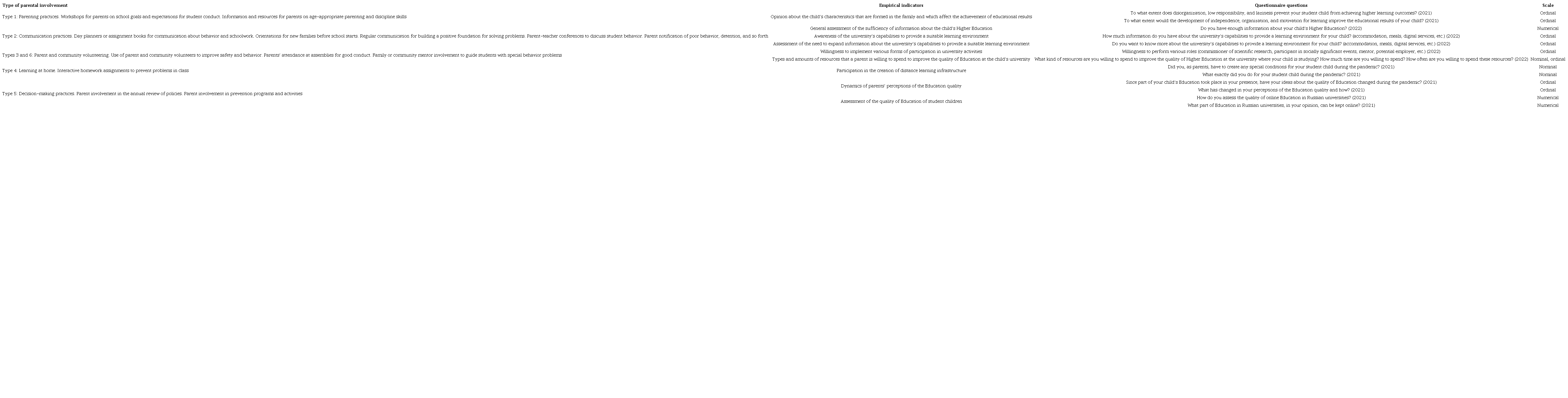
To identify the types of parental involvement, we used the following empirical indicators and their corresponding questions from the 2021 and 2022 questionnaires (Table 1).
4 Results
1. We assessed the first type of parental involvement (Parenting practices) through the involvement of parents in increasing the motivation for learning among their children.
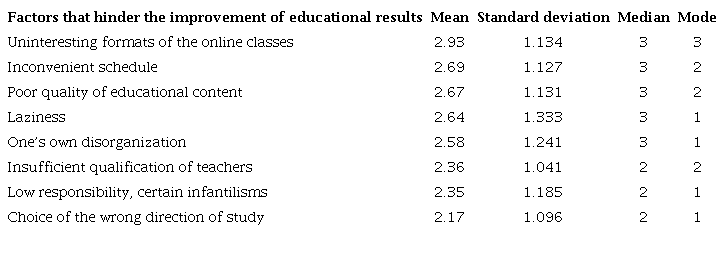
Observing the remote learning process, parents came to a clear realization that their children lacked motivation for learning, had weak skills of independent work and low responsibility. Table 2 provides descriptive statistics on key positions that parents believe can improve the educational outcomes of their student children. For parents, motivation for learning, independence, and organization are key factors influencing the educational results of their children. Parents believe that the influence of these factors is stronger than the impact of external factors related to the optimization of the educational process. Parents understand that the character traits formed by the family directly determine the educational results of their children.

Descriptive statistics on the “barriers” that prevent children from achieving “higher than current” learning outcomes are presented in Table 3. The relatively high positions of the child’s qualities formed in the family are also noticeable here.
2. We assessed the second type of parental involvement (Communication practices) through assessments of awareness and communication practices between the universities and parents.
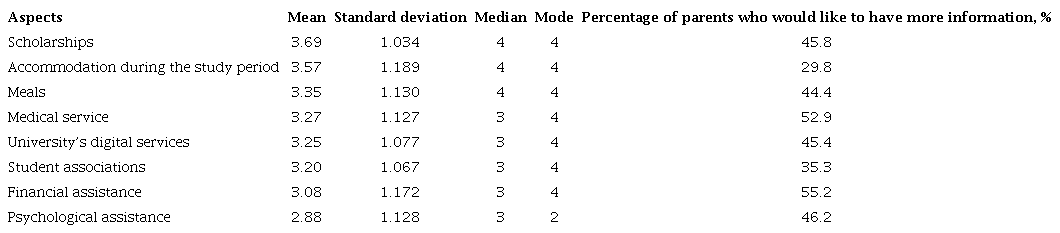
The general self-assessment of parental awareness of their children’s Education is quite high: a significant part of the parent community (28.1%) says that they have full information, and another 46.9% have “almost full” knowledge. At the same time, parents demonstrated low awareness of the university’s capabilities (Table 4). Parents have the greatest need for information about financial and psychological assistance and medical care. While the parental awareness of the university’s digital services is low, parents show a lot of interest in this issue. There is a group of university capabilities that parents have a lot of information about; however, parents also express the need to expand their knowledge about these issues (obtaining scholarships, meals in student cafes and canteens).
3. We assessed the third and sixth types of involvement (Parent and community volunteering) through the willingness of parents to participate in the university activities, the potential forms of this participation, and the amount of resources that parents are willing to spend.
Our study shows that a significant part of students’ parents is ready to volunteer in interaction with universities (Figure 1). Every sixth or seventh parent is ready to organize a job practice or a university-paid internship at their own place of work in the next year, to become a mentor for the professional development of students or an expert/consultant on student projects, and to join the examination committees. Moreover, every fourth parent is ready to participate in socially significant events at universities and organize field trips to their place of work in the next year.
Figure 1
Parents’ choice of possible forms of interaction with universities
Source: Result of data analysis (2024)
Most often, parents agree to use intangible intellectual and psychological resources when interacting with universities. However, they agree to use more tangible kinds of resources often enough. About half of the parents are ready to spend time resources, and almost half of them are ready to spend 1.0–1.5 working days per month. More than a third of parents are ready to spend financial resources to improve the quality of Higher Education. Only 7.6% of the parents said they were not willing to spend any resources.
4. We assessed the fourth type of parental involvement (Learning at home) through the involvement of students’ families in creating conditions for the educational process.
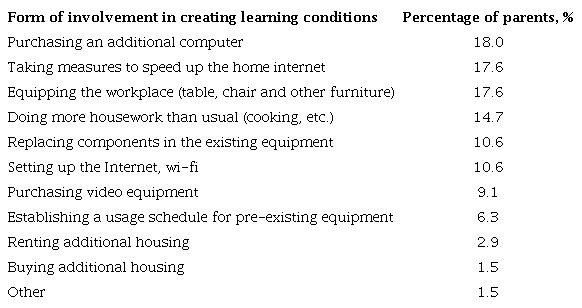
41.8% of parents answered positively to the question of whether they had to create “some special conditions” for their student child. This percentage turned out to be quite stable in different groups of parents – it is not connected with the level (bachelor’s, specialist’s, master’s) or with the course of study of their children. Distance learning required an improvement in the learning process and led to the family’s increased spending on computers, workplace equipment for classes, and more reliable home Internet (Table 5). It should also be noted that 14.7% of the parents had a significant increase in household workload.
5. We assessed the fifth type of parental involvement (Decision-making practices) through the involvement of students’ parents in the assessment of the university’s educational process.
During the pandemic, more than half of the parents (52.8%) changed their assessments of the quality of Russian Higher Education. The opinion of most of them (41.2%) worsened, and only 11.6% of respondents improved their opinion. Figure 2 shows the opinions of both groups of parents regarding specific parameters of Higher Education. The entire parent community considers the following as the leading parameters of the Education quality: qualification of teachers, interesting content of disciplines, and modern teaching methods. The group of relative outsiders included parameters such as optimal course load, balance of theory and practice, and content of self-study. Let us note that the variability of parents’ opinions on the leading parameters is lower than on the outsider parameters. This indicates the relative stability of the assessments of the leading group of parameters and the relative uncertainty of opinions on the parameters that received lower assessments.
Figure 2
Parameters of Russian Higher Education in the assessments of students’ parents*
Source: Result of data analysis (2024)* In this figure, 100% represents the total number within each of the two parental groups: 1) those evaluating changes as improvements and 2) those evaluating changes as deteriorations.
The data of sociological surveys of parents in 2021 and 2022 show that parental attitudes toward online learning in Higher Education stabilized over the two years. Indicators demonstrating an almost complete lack of dynamics in these parameters in 2022 compared to 2021 are shown in Table 6. Both in 2021 and 2022, students’ parents believed that the part of learning that can be kept online without losing the quality of Education was quite large: modal answer - half of the learning process (it was chosen by 21.4% of respondents), median answer – almost a third.
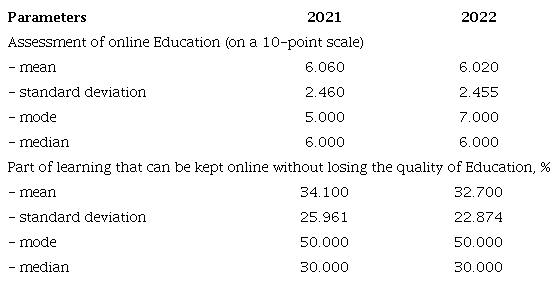
Judging by the stability of online Education assessments, we can assume that the parent community sees the potential for the use and development of this format of Education.
5 Discussion
The data we obtained in the course of this research allowed us to draw several theoretical and practical conclusions that are relevant for the educational policy of involving students’ parents in the educational process.
Without disputing the prevailing opinion of researchers on decreasing parental involvement in the Education of children as they grow older, we note that this process is not linear.
The transition of students to Higher Education and the associated changes in the forms of educational relations cause a “surge” of parental involvement in the learning process in the first years at the university. The same “surge” of involvement was caused by the coronavirus pandemic, which radically transformed the educational process. Parental involvement in the educational process at universities cannot be considered outside the analysis of the formation of student agency as one of the main goals of university Education.
However, the study of student agency, especially in the first years at the university, must be considered as a more complex phenomenon, which is described in the literature as a conjoint agency (Markus, Kitayama, 2003). In this model of agency, the relationship of individual subjects – members of the student’s family in our case – comes to the fore. In Russia, paternalistic social relations and traditions of intergenerational relations, which halt the formation of independence among young people, are essential socio-cultural factors of this model. Conjoint agency is associated with the involvement of parents in setting life goals, forming educational strategies for students, and choosing professional preferences and ways to apply them.
In practical terms, this sets the task for the universities to involve parents in designing the students’ future without violating ethical and legal norms and without halting the process of socialization of student youth. The importance of this task is evidenced by the following results of our study:
- 1. Parents do not idealize their children. Parents objectively assess the personal characteristics of their children that hinder the achievement of high educational results: laziness, disorganization, low responsibility, and infantilism. Thus, the assumption that parental indulgence toward their children is also reproduced at the stage of the children’s studentship is not confirmed. This means that the parent community will favorably perceive the decisions of universities to develop students’ self-organization, planning and time management skills, as well as personification of responsibility. However, this approach requires a significant transformation of the educational process to form “soft skills”. Our research shows that the educational process in Russian universities is not particularly focused on the formation of these skills (Yashin, Klyuev, Bagirova, 2018).
- 2. Insufficient parental awareness of the resource capabilities of universities, as well as its infrastructure and digital environment, limits the parents’ influence on the process of adaptation of students and the effective use of all types of social and cultural opportunities available at universities. Traditionally, Russian universities have developed as socially oriented organizations providing a wide range of services for students: affordable housing, inexpensive meals, medical care, socio-cultural activities, etc. At the same time, the resource capabilities of families in terms of the infrastructure quality often outperform university services. This is probably the reason for the low interest of the parents. However, the quality of the social environment in Russian universities is changing. It is becoming a significant factor in the competitiveness of universities in the educational markets. Many Russian universities are transforming their internal environment by focusing on ESG principles. In this regard, the development of communication between universities and the parent community on issues of environmental friendliness, internal environment safety, and student involvement in the decision-making system for campus management can increase the level of parental trust in universities.
- 3. The role of parents as volunteers who provide assistance in organizing and conducting the educational process at universities is significantly changing. Researchers of parental involvement in school Education described volunteering as an auxiliary role of supporting the activities of a teacher without recognizing the competence of parents (Antipkina, 2017). Parental volunteering at universities can become a source of new competencies and expertise in solving educational problems. In Russian universities, interest in the resourcefulness of parents is associated with the development of project-based learning and the individualization of students’ educational trajectories. This is because these innovations in the educational process significantly expand the demand for a variety of professional experience and competencies that are difficult to provide only by the members of the faculty. The research results show that universities can seek resource support not only from employers but also from parent communities in the near future. This, in turn, will encourage the transition from models of avoiding interactions with parents as potentially corrupt and minimizing interactions as resource-intensive to a model of partnership with parent communities aimed at addressing the issues of Education quality improvement and professional development of students.
- 4. Parental involvement in creating modern learning conditions is associated primarily with the development of home digital infrastructure.
One of the major challenges for Russian universities today is the need to integrate the digital infrastructures of universities and households to ensure the quality of distance learning. Before and during the pandemic, there was a demand in universities to modernize IT services and infrastructure to facilitate remote work and distance learning:
-
to improve VPN remote access services, which allow teachers, employees, and students to access the corporate network from home in compliance with security requirements;
-
to provide the opportunity to install unified modern software products on home computers – such as MathWorks, Corel, Kompass, MathCad, Autodesk, etc. It allows families to avoid additional costs for the purchase and installation of the software required for distance learning. It also simplifies access to the educational resources of the university;
-
to expand the technical support (ServiceDesk) for users to solve problems with home devices. During the pandemic, promising areas for the development of household services were also identified:
-
developing remote payment services for students’ parents, as well as remote services for obtaining necessary certificates and documents;
-
further improving the remote access to the digital resources of the university;
-
developing technical support for the integration of the digital infrastructures of universities and households;
-
developing services for the maintenance and rental of computer equipment for households.
Ultimately, the process of “merging” the digital infrastructures of students’ families and universities should lead to the formation of a new digital ecosystem of universities with students and their parents acting as “shareholders”.
5. Parents are not satisfied with the quality of university Education and claim expertise and assessment of the educational process.
Currently, universities prefer to focus on employers rather than parents in assessing the quality of Education. At the same time, the deteriorating assessment of the Higher Education quality by a significant part of the parent community (41.2%) is a very serious problem for universities, because parents are one of the key stakeholders of Higher Education. It is highly likely that the social tensions created by the pandemic, as well as the declining family incomes and additional spending, contributed to this deterioration. The reputational damage of Higher Education is very significant in the eyes of parents, so it is necessary to conduct an in-depth analysis of the causes and long-term consequences of this phenomenon. Universities must change their approaches to assessing the quality of Education. The following can be used to involve parents in assessing the quality of Education:
-
digital platforms for Higher Education institutions that create assessment services;
-
regular monitoring of parents’ opinions on the Education quality in order to make managerial decisions and improve the university’s policy in the field of quality management.
6 Conclusion
The findings of this study highlight the multifaceted nature of parental involvement in Higher Education, particularly in the context of the transformations brought about by the COVID-19 pandemic. By applying J.L. Epstein’s model of parental involvement, the research provides empirical evidence that parents continue to play a significant role in their children’s university Education, albeit in ways that differ from their involvement during earlier educational stages. The results suggest that parental engagement is not merely a residual effect of the pandemic but may represent an emerging trend with long-term implications for Higher Education policies and practices.
The study identified several key dimensions of parental involvement in Russian universities, including parenting practices, communication, volunteering, learning-at-home support, and participation in decision-making processes. Notably, parents demonstrated a critical awareness of their children’s educational challenges, such as motivation and self-organization, and expressed a willingness to contribute both tangible and intangible resources to support the Educational process. However, the research also reveals gaps in parental awareness of university resources and infrastructure, indicating the need for improved communication channels between institutions and families.
The concept of conjoint agency emerges as a pivotal framework for understanding the dynamic interplay between students and their parents in Higher Education. This model underscores the socio-cultural context in Russia, where familial ties and paternalistic traditions continue to influence educational trajectories. While universities aim to foster student independence, the findings suggest that parental involvement can function as a complementary force, particularly in areas such as career guidance and the co-creation of learning environments.
The study’s limitations, including its focus on the Russian context and the specific timeframe of the pandemic, point to several avenues for further research. Comparative cross-national studies could determine whether the observed patterns of parental involvement are culturally specific or indicative of a broader global shift in Higher Education. In addition, longitudinal research would help assess whether the surge in parental engagement is a transient phenomenon or a sustained trend.
In light of these findings, universities may consider adopting more inclusive policies that recognize parents as legitimate stakeholders while balancing ethical and pedagogical considerations. Potential strategies include enhancing digital communication platforms, integrating parental feedback into quality assurance mechanisms, and exploring collaborative models that leverage parental expertise without undermining student autonomy. Such measures could strengthen the tripartite relationship among students, parents, and institutions, thereby contributing to more resilient and adaptive Higher Education systems.
In summary, this study underscores the evolving role of parents in Higher Education and calls for a nuanced approach to policy and practice—one that acknowledges the complexities of parental involvement while aligning with the broader goals of student development and institutional excellence. Future research should continue to explore these dynamics in order to inform evidence-based strategies for fostering productive university-parent partnerships.
Acknowledgement:
The authors acknowledge funding from the Ural Federal University project (Ministry of Science and Higher Education) within the Priority-2030 program.
References
ANTIPKINA, I. V. Studies of "parental involvement" in Russia and abroad. Russian and International Pedagogy, Moscow, v. 1, n. 4 (41), p. 102-114, 2017.
BEERKENS, M.; UDAM, M. Stakeholders in higher education quality assurance: richness in diversity? Higher Education Policy, S. l., v. 30, n. 3, p. 341-359, 2017. https://doi.org/10.1057/s41307-016-0032-6
DOROFEEVA, Z. Y.; KOZYREVA, P. M. Transformation of parental involvement in the children`s lives. Sociological Research, Moscow, n. 8, p. 86-100, 2023. https://doi.org/10.31857/S013216250027370-0
EPSTEIN, J. L. School/family/community partnerships: caring for the children we share. Phi Delta Kappan, Arlington, v. 92, n. 3, p. 81-96, 2010. https://doi.org/10.1177/003172171009200326
EPSTEIN, J.L. School, family, and community partnerships: preparing educators and improving schools. 2. ed. New York: Routledge, 2011. https://doi.org/10.4324/9780429494673
EPSTEIN, J. L. Parents' reactions to teacher practices of parent involvement. The Elementary School Journal, Chicago, v. 86, n. 3, p. 277-294, 1986. https://doi.org/10.1086/461449
FREEMAN, R. E. et al. Stakeholder theory: the state of the art. Cambridge: Cambridge University; 2010.
FREEMAN, R.E. Strategic management: a stakeholder approach. Boston: Pitman, 1984.
GOSHIN, M. E.; MERTSALOVA, T. A. Types of parental involvement in education, family socioeconomic status and learning outcomes. Educational Studies, Moscow, n. 3, p. 68-86, 2018. https://doi.org/10.17323/1814-9545-2018-3-68-90
HAMLIN, D.; FLESSA, J. Parental involvement initiatives: an analysis. Educational Policy, Eastleigh, v. 32, n. 5, p. 697-727, 2016. https://doi.org/10.1177/0895904816673739
HEMSLEY-BROWN, J.; OPLATKA, I. University choice: what do we know, what don't we know and what do we still need to find out? International Journal of Educational Management, Leeds, v. 29, n. 3. p. 254-274, 2015. https://doi.org/10.1108/IJEM-10-2013-0150
HENDERSON, A.; BERLA, N. (Eds.). New generation of evidence: the family is critical to student achievement. Washington: National Committee for Citizens in Education, 1994.
HORNBY, G.; BLACKWELL, I. Barriers to parental involvement in education: an update. Educational Review, Washington, v. 70, n. 1, p. 109-119, 2018. https://doi.org/10.1080/00131911.2018.1388612
HORNBY, G.; LAFAELE, R. Barriers to parental involvement in education: an explanatory model. Educational Review, Washington, v. 63, n. 1, p. 37-52, 2011. https://doi.org/10.1080/00131911.2010.488049
HORNBY, G. Parental involvement in childhood education: building effective school-family partnerships. London: Springer Science & Business Media, 2011.
HOWSON, C. K.; BUCKLEY, A. Quantifying learning: measuring student outcomes in higher education in England. Politics and Governance, Lisboa, v. 8, n. 2, p. 6-14, 2020. https://doi.org/10.17645/pag.v8i2.2564
LISTER, K.; PEARSON, V. K.; COUGHLAN, T.; TESSAROLO, F. Inclusion in uncertain times: changes in practices, perceptions, and attitudes around accessibility and inclusive practice in higher education. Educational Review, Washington, v. 12, n. 8, p. 1-15, 2022. https://doi.org/10.3390/educsci12080571
LOVELL, D.; DOLAMORE, S.; COLLINS, H. Examining public organization communication misalignments during Covid-19 through the lens of higher education. Administration & Society, S. l., v. 54, n. 2, p. 212-247, 2022. https://doi.org/10.1177/00953997211026949
MARKUS, H. R.; KITAYAMA, S. Models of agency: sociocultural diversity in the construction of action. In: MURPHY-BERMAN, V.; BERMAN, J. J. (Eds.). Cross-cultural differences in perspectives on the self. Lincoln: University of Nebraska, 2003. p. 18-74.
MCNEAL JR., R. B. Parent involvement, academic achievement and the role of student attitudes and behaviors as mediators. Universal Journal of Educational Research, vol. 2, no. 8, p. 564-576, 2014. https://doi.org/10.13189/ujer.2014.020805
OKAI-UGBAJE, S.; ARDZEJEWSKA, K.; IMRAN, A. Readiness, roles, and responsibilities of stakeholders for sustainable mobile learning adoption in higher education. Education Sciences, Vienna, n. 10, p. 49, 2020. https://doi.org/10.3390/educsci10030049
SÁNCHEZ DÍAZ, L. C.; SÁNCHEZ GARCÍA, J. E.; PALOMINO ALVARADO, G.; VERGES, I. Y. Desafíos de la educación universitaria ante la virtualidad en tiempos de la pandemia. Revista de Ciencias Sociales, Maracaibo, v. 26, n. spe. 4, p. 32-48, 2021.
SANDLER, D.; BAGIROVA, A.; KLYUEV, A. Parents of Russian university students on the quality of higher education: assessments, expectations and decisions. Higher Education in Russia and Beyond, Moscow, n. 4(29), p. 20-21, 2021.
SHEHAJ, A. Revolutionized learning: education policy and digital reform in the eurozone. European Policy Analysis, Washington, n. 8, n. 3, p. 312-326, jun./set. 2022. https://doi.org/10.1002/epa2.1158
VALDÉS-MONTECINOS, M.; GANGA-CONTRERAS, F. Gobernanza universitaria: Aproximaciones teóricas de los grupos de interés en Instituciones de Educación Superior. Revista de Ciencias Sociales, Maracaibo, v. 27, n. 3, p. 441-459, 2021.
YASHIN, A.; KLYUEV, A.; BAGIROVA, A. Designing entrepreneurial education in Russia: hard and soft skills. Economic Bulletin, Osijek, v. 31, n. 2, p. 261-274, 2018.
Notas
Notas de autor
Declaración de intereses