Articles
Nuclear Energy: A Keystone in Colombia's Sustainable Energy Transition
Energía nuclear: piedra angular de la transición energética sostenible de Colombia
Energia nuclear: pedra angular da transição energética sustentável da Colômbia
 David-Andrés Galeano dagalean@unal.edu.co
Jhon-Alexander Muñoz jhmunozc@unal.edu.co
David-Andrés Galeano dagalean@unal.edu.co
Jhon-Alexander Muñoz jhmunozc@unal.edu.co
Nuclear Energy: A Keystone in Colombia's Sustainable Energy Transition
Revista Facultad de Ingeniería, vol. 33, núm. 68, e17066, 2024
Universidad Pedagógica y Tecnológica de Colombia
Recepção: 17 Março 2023
Aprovação: 27 Março 2024
Publicado: 02 Junho 2024
Abstract: This article presents a comprehensive analysis of the potential integration and implications of Small Modular Reactors (SMRs) into Colombia's energy matrix, set against the backdrop of the global energy transition and the urgent need to address climate change. Focusing on the technical and technological aspects of nuclear energy, particularly SMRs, the study explores the advantages of nuclear power in terms of constant generation capacity and minimal carbon emissions, while also addressing public perception challenges and radioactive waste management. It delves into Colombia's current energy landscape, dominated by hydroelectric and thermal power, and highlights the need for diversification and resilience in the face of climatic and geopolitical challenges. The potential of SMRs in Colombia is scrutinized, considering their operational costs, environmental impact, and role in non-interconnected zones. Additionally, the article examines Colombia's historical and future trajectory in nuclear energy, emphasizing the importance of a robust regulatory framework, sustainable mining practices, public education, and awareness. The study concludes with strategic recommendations for Colombia, advocating for continuous training, international cooperation, exploration of economic opportunities, and investment in renewable energies alongside nuclear power to ensure a sustainable and diversified energy future.
Keywords: Energy transition, environmental impact of nuclear power, levelized cost of energy, nuclear energy, radioactive waste management, small modular reactors, sustainability.
Resumen: Este artículo presenta un análisis integral de la posible integración y las implicaciones de los Pequeños Reactores Modulares (SMR por sus siglas en inglés) en la matriz energética de Colombia, en el contexto de la transición energética global y la urgente necesidad de abordar el cambio climático. Centrándose en los aspectos técnicos y tecnológicos de la energía nuclear, en particular los SMR, este estudio explora las ventajas de la energía nuclear en términos de capacidad de generación constante y emisiones mínimas de carbono, al tiempo que aborda los desafíos de la percepción pública y la gestión de desechos radiactivos; Además, profundiza en el panorama energético actual de Colombia, dominado por la energía hidroeléctrica y térmica, destacando la necesidad de diversificación y resiliencia frente a los desafíos climáticos y geopolíticos. Se analiza el potencial de las SMR en Colombia, considerando sus costos operativos, impacto ambiental y papel en zonas no interconectadas. Además, el artículo examina la trayectoria histórica y futura de Colombia en energía nuclear, enfatizando la importancia de un marco regulatorio sólido, prácticas mineras sustentables y educación y concientización públicas. El estudio concluye con recomendaciones estratégicas para Colombia, abogando por la capacitación continua, la cooperación internacional, la exploración de oportunidades económicas y la inversión en energías renovables junto con la energía nuclear para asegurar un futuro energético sostenible y diversificado.
Palabras clave: Costo nivelado de energía, energía nuclear, gestión de residuos radiactivos, impacto ambiental de la energía nuclear, pequeños reactores modulares, sostenibilidad, transición energética.
Resumo: Este artigo apresenta uma análise abrangente da possível integração e implicações dos pequenos reatores modulares (SMR) na matriz energética da Colômbia, no contexto da transição energética global e da necessidade urgente de enfrentar as mudanças climáticas. Centrando-se nos aspectos técnicos e tecnológicos da energia nuclear, particularmente nos SMR, este estudo explora as vantagens da energia nuclear em termos de capacidade de geração constante e emissões mínimas de carbono, ao mesmo tempo que aborda os desafios da percepção pública e da gestão de resíduos radioactivos; Além disso, investiga o atual cenário energético da Colômbia, dominado pela energia hidroelétrica e térmica, destacando a necessidade de diversificação e resiliência face aos desafios climáticos e geopolíticos. O potencial das SMRs na Colômbia é analisado, considerando seus custos operacionais, impacto ambiental e papel em áreas não interconectadas. Além disso, o artigo examina a trajetória histórica e futura da Colômbia na energia nuclear, enfatizando a importância de um quadro regulatório sólido, práticas de mineração sustentáveis e educação e conscientização pública. O estudo conclui com recomendações estratégicas para a Colômbia, defendendo a formação contínua, a cooperação internacional, a exploração de oportunidades económicas e o investimento em energias renováveis juntamente com a energia nuclear para garantir um futuro energético sustentável e diversificado.
Palavras-chave: Custo nivelado de energia, energia nuclear, gestão de resíduos radioativos, impacto ambiental da energia nuclear, pequenos reatores modulares, sustentabilidade, transição energética.
I. INTRODUCTION
The global energy transition is at a critical stage, driven by the pressing need to fight greenhouse gas effects while simultaneously ensuring the security and diversity of energy supply. Throughout history, humanity has largely depended on fossil fuels based on oil, coal, and natural gas. These sources, even though they have been the global energy mainstay, are the primary contributors to greenhouse gas emissions. In Colombia, thermal power plants represent approximately 30% of the installed capacity and are a significant contributor to climate change, as shown in Figure 1.
![Net Effective Capacity in Colombia 2023. Adapted by [1].](../2357-5328-rfing-33-68-e17066-gf1.png)
Fig. 1
Net Effective Capacity in Colombia 2023. Adapted by [1].
As global energy demand continues to rise, environmental sustainability becomes a priority that cannot be overlooked. While it is true that fossil fuels face increasing challenges in terms of extraction costs and viability, the urgency to diversify Colombia's energy basket becomes even more pronounced. This is not just a matter of ensuring supply security but also of adopting cleaner, more efficient, and sustainable alternatives over time. Climate change, environmental degradation, and public concern over energy security, along with the economic vulnerability of relying on imported energy sources, highlight the need to rethink conventional energy sources.
In this context of climate urgency and energy challenges, nuclear energy emerges as a robust option. With decades of development, research, and accumulated experience, nuclear energy not only offers a constant generation capacity but also has a notably low carbon footprint. Specifically, Small Modular Reactors (SMRs) are an innovative solution in the nuclear sector; they offer clear advantages in terms of size, flexibility, cost, and, above all, safety.
This paper addresses the opportunities and challenges posed by the adoption of nuclear energy, particularly through SMRs, in Colombia. We will analyze the context of the Colombian energy and electricity market, the technical characteristics of SMRs, their benefits, and potential implementation barriers. The goal is to offer an informed and well-founded perspective on how SMRs could be integrated into the Colombian energy landscape, diversifying and strengthening its energy matrix towards a more sustainable and resilient future.
II. TECHNICAL AND TECHNOLOGICAL CONTEXT OF NUCLEAR ENERGY
In a world where energy demand is constantly growing and the adverse effects of climate change demand swift and sustainable solutions, it is imperative to understand and explore all available energy sources. Nuclear energy, often mired in debates and controversies, stands out for its ability to generate electricity efficiently and with low carbon emissions. Although not without challenges, nuclear technology has evolved significantly since its inception, with modern designs prioritizing safety and efficiency [2]. This section will delve into the fundamentals of nuclear energy by explaining how fission works in a nuclear reactor. Special emphasis will be placed on Small Modular Reactor (SMR) technology and how it can change the current paradigm of nuclear energy. The multiple benefits of nuclear energy will also be presented, from its role in mitigating climate change to its potential to improve quality of life in various regions. However, it is essential to recognize and address the limitations and challenges associated with this energy source, from safety issues to the management of radioactive waste.
A. Nuclear Fission: The Foundation of Nuclear Energy
The subatomic process of nuclear fission is the primary mechanism that powers energy production in a nuclear reactor. It is described as the splitting of a heavy atomic nucleus into two or more lighter daughter nuclei, accompanied by the release of a significant amount of energy. Considering the fission of specific isotopes, such as U-235 or Pu-239, upon capturing a thermal neutron, the resulting nucleus is in an excited state and can undergo fission. This fission, in turn, produces more neutrons that can induce fission in other nuclei, thereby establishing an autonomous chain reaction, schematically illustrated in Figure 2. The energy released during the fission process can be quantified by considering the initial total mass of the reactants and the final total mass of the products. This mass difference, Am, is converted into energy, E, according to the relativistic relation proposed by Einstein E = Amc2, where c is the speed of light in a vacuum.
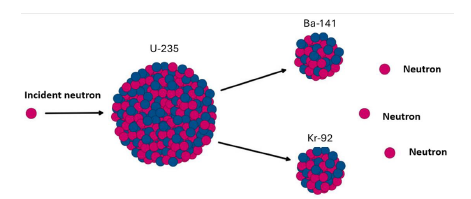
Fig. 1
Induced Fission of U-235. An incident neutron catalyzes the fission of Uranium-235, generating fission products such as Ba-141 and Kr-92, among others, along with the emission of multiple neutrons.
More specifically, each fission event of U-235 releases approximately 200 MeV (Mega Electron Volts) of energy [3]. This energy is distributed among the fission products and the released neutrons, which, when absorbed and moderated, generate heat. This heat is subsequently used to heat a working fluid (commonly water) to produce steam, which powers electricity-generating turbines.
The nuclear fuel assembly used in typical reactors consists of a uranium matrix, which is predominantly composed of non-fissionable U-238 and a smaller proportion of fissionable U-235. Efficient fission of U-235 requires the moderation of the emitted neutrons so that they can induce more fissions, for which substances like light water or graphite are used. It is essential to highlight that nuclear fission entails the generation of various fission products, many of which are radioactive and have long half-lives. The safe management and containment of these radioactive byproducts are imperative to ensure secure and sustainable nuclear operation.
The designs of nuclear reactors have continually evolved to improve efficiency, safety, and sustainability. This evolution can be categorized into generations, from Generation I that includes the initial prototypes, to the most advanced Generation IV that incorporates advancements in sustainability, safety, and thermal efficiency.
One critical aspect of the newer Generation III and IV reactors is the implementation of passive safety systems. Passive safety refers to design features that inherently provide protection without requiring active controls or human intervention. These systems rely on natural physical principles, such as gravity, natural circulation, and material properties, to maintain reactor stability and safety in the event of an operational anomaly or accident. For instance, Generation III reactors, like the AP1000, leverage passive cooling systems that use natural convection to circulate coolant and remove heat from the reactor core without the need for powered pumps. Generation IV reactors, such as the Sodium-cooled Fast Reactor (SFR), include passive shutdown capabilities that automatically activate in the event of overheating, using the expansion of materials to shut down the reaction. By integrating passive safety measures, these advanced reactors significantly enhance safety and reliability, thus mitigating the risks associated with potential failures and ensuring the protection of both the environment and human health.
B. SMR Technology
In the realm of nuclear energy generation, the technology of Small Modular Reactors (SMRs) has emerged as a revolutionary innovation, attracting significant interest among experts and industry stakeholders. The central proposition of SMRs lies in their ability to transform and modernize the traditional nuclear landscape. These reactors, unlike their larger counterparts, benefit from an innovative design that fosters modular construction and operation. This characteristic not only promises to accelerate construction processes but also introduces economies of scale that could lead to notable reductions in construction times and costs [4].
A distinctive element that differentiates SMRs from other nuclear designs is their strict commitment to safety. The advanced passive safety features incorporated in these reactors aim to anticipate and neutralize potential threats, thereby ensuring safer operations and minimizing associated risks. Such a level of protection translates into increased confidence from stakeholders and the public, emphasizing the safety viability of this technology [5]. The inherently flexible and modular design of SMRs makes them particularly suitable solutions for regions that, for various reasons, do not have a widely developed electrical infrastructure. This includes remote areas where traditional energy connectivity poses a challenge. However, the versatility of SMRs goes beyond mere electrical generation: their advanced design and adaptability make them ideal candidates for integration with other energy systems. For instance, complementary applications in fields such as hydrogen production and desalination, thus opening the door to more holistic and sustainable energy solutions in the long term [6].
With the ongoing advancement of the nuclear industry and the steady growth of global energy demand, the integration and adoption of more efficient and sustainable technologies has become imperative. In this context, Small Modular Reactors (SMRs) emerge not only as a response to current challenges but also as a progressive vision for nuclear generation. It is evident that they represent significant potential to redefine and enrich the nuclear energy generation paradigm of the 21st century.
C. Benefits and Limitations of Nuclear Energy
Since its inception, nuclear energy has been at the epicenter of technological innovation, offering promises of a more sustainable and efficient energy future. However, like any constantly evolving technology, it presents a set of advantages and challenges that must be meticulously evaluated for its proper implementation and management. As humanity seeks robust and resilient solutions in the face of growing energy demand and environmental imperatives, it is crucial to weigh both the merits and constraints of nuclear energy. While it's true that high-profile nuclear incidents have left an indelible mark on public perception, it is essential to approach the issue from a holistic perspective, considering both the risks and the multiple benefits that nuclear energy brings to society. This section aims to provide a balanced and objective view of nuclear energy, unraveling its undeniable benefits, ranging from carbon emission reduction to consistent energy generation, and shedding light on the inherent limitations, such as waste management challenges and safety concerns. In doing so, it seeks to offer a deeper and more nuanced understanding of this energy resource and facilitate an informed debate on its role in the future energy landscape.
1) Benefits. Nuclear energy, since its introduction in the mid-20th century, has been the subject of intense debate and scrutiny. However, regardless of the varied opinions, it is undeniable that it offers a set of distinctive advantages that position it as a relevant and often indispensable energy source globally. This section aims to shed light on the numerous benefits associated with nuclear power generation, addressing its efficiency, climate change mitigation capacity, potential to drive economic development, and its contribution to the diversification of the energy matrix. In the current context of demographic growth, accelerated urbanization, and increasing energy demands, it is imperative to recognize and understand these benefits to make informed decisions about the future energy direction of our society.
-
Environmental Aspects: The current climate crisis, exacerbated by greenhouse gas emissions, has catalyzed a global shift in energy strategy for numerous countries. In this evolving scenario, nuclear energy emerges as a fundamental pillar in the transition towards a cleaner and more sustainable energy system, capable of meeting energy demands without compromising environmental health. An objective examination of Figure 3, which presents the CO2 emissions per kWh from various technologies, based on the 2022 report of the Intergovernmental Panel on Climate Change (IPCC), highlights a fundamental advantage of nuclear energy: its ability to generate electricity continuously with virtually zero direct CO2 emissions [7]. This feature significantly distinguishes it from fossil fuel-based technologies, which are major emitters of CO2 and other atmospheric pollutants. Unlike some renewable sources, nuclear energy is not subject to climatic variability, consolidating it as a reliable and constant energy source.
The energy density of nuclear fuel also deserves special attention. A relatively small volume of this fuel can release a significant amount of energy [8], resulting in less resource extraction and, proportionally, less waste compared to alternative energy technologies. Although the management of nuclear waste remains a critical aspect, technological advances and innovations in management protocols are leading to safer and more sustainable solutions in this area.
-
Energy Security: Energy security has become an essential strategic challenge in the contemporary geopolitical and economic landscape. In this context, nuclear energy emerges as a prominent solution to ensure a continuous and reliable electricity supply. Various reports indicate that a nuclear plant can operate consistently at around 90% of the annual hours, translating to approximately 7,884 hours of continuous operation per year [9]. This capacity significantly surpasses that of other energy sources, especially intermittent renewables like solar and wind.
This high operability rate not only translates into constant energy availability but also into greater independence from fluctuations in the global energy supply, market volatilities, and geopolitical challenges. Indeed, by reducing dependence on energy imports, nuclear energy can strengthen national autonomy and contribute to stabilizing the economy and ensuring resilience in adverse situations, such as ENSO, with characteristic droughts in the country's reservoirs [10].
-
Public Health: This is one of the major concerns in the planning and management of the energy matrix. Transitioning to nuclear energy, by significantly reducing dependence on fossil fuels, entails considerable benefits for air quality and, consequently, for health. According to the World Health Organization, air pollution is responsible for about 7 million premature deaths globally each year [11].
![gCO2/kWh emissions by energy source [7].](../2357-5328-rfing-33-68-e17066-gf3.png)
Fig. 2
gCO2/kWh emissions by energy source [7].
Additionally, by generating less waste and emissions than fossil fuel-based sources, nuclear energy contributes to the preservation of ecosystems, which indirectly benefits public health by maintaining a cleaner and more sustainable environment. Figure 4 shows the geographic distribution of thermal plants in Colombia and part of Venezuela. It is evident that they are widely distributed in the National Interconnected System, thus implying a dispersion of emissions that could affect populated areas.
![Distribution of thermoelectric plants in Colombia and their respective primary fuel [12].](../2357-5328-rfing-33-68-e17066-gf4.png)
Fig. 3
Distribution of thermoelectric plants in Colombia and their respective primary fuel [12].
-
Economic Aspects: Energy is a major catalyst in the economic growth of a country, and it has been widely demonstrated that countries that increase their energy capacity experience economic strengthening [9]. As a developing country, Colombia can exploit the potential of this technology to generate large amounts of energy and propel its path towards sustainable economic growth.
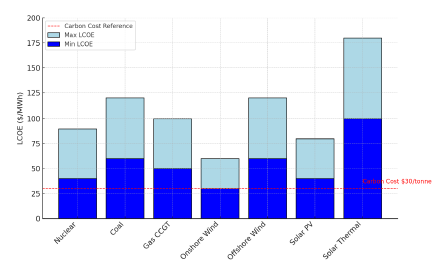
Another important factor is the costs of nuclear energy. Although its construction requires substantial initial capital, the maintenance and operation of nuclear power plants are low compared to other generation sources, which makes them economically viable in the long term. The levelized cost of electricity (LCOE) is a crucial metric to compare the economics of different energy generation technologies. It represents the total cost to build and operate a power plant over its lifetime, divided by the total electricity output dispatched from the plant over that period, typically expressed as cost per megawatt-hour (MWh).
According to the International Energy Agency (IEA) [14] and the Nuclear Energy Agency (NEA) [15], the LCOE for nuclear power plants can be competitive with other energy sources; it ranges from $40 to $90 per MWh, depending on the country and specific project circumstances, at a 7% discount rate. In comparison, the LCOE for coal and gas-fired power plants ranges from $60 to $120 per MWh and $50 to $100 per MWh, respectively, under similar conditions. Renewable energy sources such as wind and solar also have varying LCOEs, with onshore wind ranging from $30 to $60 per MWh and solar PV from $40 to $80 per MWh. However, these figures for renewable sources often exclude additional system integration costs due to their intermittent nature.
The high initial capital costs of nuclear power, typically accounting for 60% of the LCOE, are offset by low and stable operating costs. For example, nuclear fuel costs are relatively low and less volatile compared to fossil fuels. Moreover, nuclear plants have long operational lifespans, often exceeding 60 years, which contributes to their economic attractiveness. Additionally, the environmental and social costs of fossil fuels, when fully accounted for, further improve the competitiveness of nuclear power.
To illustrate these comparisons, Figure 5 presents the LCOE for various power generation technologies.
2) Limitations. Nuclear energy, while offering notable advantages in terms of low carbon emissions and consistent generation capacity, faces significant challenges that need to be addressed with meticulousness and transparency.
-
Public Acceptance and Risk Perception: The history of nuclear energy is marked by catastrophic events such as the Chernobyl and Fukushima accidents. These incidents have greatly shaped public perception of nuclear safety, leading many communities and stakeholders to be skeptical about the expansion of this technology [16,17]. It is essential for nuclear institutions and governments to conduct effective education and awareness campaigns that highlight advancements in design, safety protocols, and stringent regulations that minimize the risks associated with nuclear generation.
-
Operational Safety: Beyond perception, the actual safety of nuclear operations is paramount. While contemporary nuclear technology has evolved significantly, reducing vulnerabilities and failure points, it is imperative to maintain a constant focus on personnel training, operation protocols, and emergency response systems [5]. Continuous regulations and inspections are key to ensuring that nuclear plants operate within optimal safety margins.
-
Radioactive Waste Management: Handling nuclear waste represents one of the most significant challenges for the industry. Although the amount of waste generated is low compared to other industrial wastes, its longevity, and radioactivity demand robust and long-term solutions [8]. Deep geological repositories emerge as a promising option, but their implementation requires exhaustive research, planning, and social and political consensus.
Thus, the integration of nuclear energy into the global energy mix requires a deep and balanced evaluation. While the advantages are undeniable, the limitations and challenges inherent to nuclear technology must be addressed with diligence, transparency, and a commitment to safety and public welfare.
III. ELECTRICAL GENERATION SECTOR IN COLOMBIA
The Colombian energy landscape has traditionally been dominated by hydroelectric generation: approximately 66.8% of the total energy generated is derived from this source. In contrast, around 30.5% of energy production comes from thermal power plants, while a small remaining fraction is attributed to alternative renewable sources [1]. These proportions illustrate the preeminence and dependence of the Colombian energy sector on water resources. Figures 6 and 7 detail the energy contributions segmented by source.. This predominance of hydroelectric power, though essential for the country's energy matrix, carries certain risks. Extreme climatic events, particularly ENSO, have the potential to negatively impact the availability of water resources, thus putting the country's energy security at risk [10].
![History of hydraulic vs fossil energy in Colombia in the last 10 years from 2013-09-24 to 2023-09-20 [1].](../2357-5328-rfing-33-68-e17066-gf6.png)
Fig. 5
History of hydraulic vs fossil energy in Colombia in the last 10 years from 2013-09-24 to 2023-09-20 [1].
![History of Wind vs Solar vs Biomass energy in Colombia in the last 10 years from 2013-09-24 to 2023-09-20 [1].](../2357-5328-rfing-33-68-e17066-gf7.png)
Fig. 6
History of Wind vs Solar vs Biomass energy in Colombia in the last 10 years from 2013-09-24 to 2023-09-20 [1].
A. Energy Diversification
Despite being abundant in water resources, Colombia is moving towards a broader diversification of its energy matrix. Within this transition, renewable energy sources such as solar and wind are gaining importance [17]. Particularly, La Guajira region has emerged as a strategic enclave for harnessing these energies given its optimal climatic conditions. Moreover, there is a growing interest in energy storage systems. Large-scale batteries are presented as viable solutions to mitigate the intermittency inherent in renewable sources, thereby ensuring a constant and reliable electricity supply.
![Final energy consumption - Update (PJ-year). This graph was extracted from PEN 2022-2052 [18].](../2357-5328-rfing-33-68-e17066-gf8.png)
Fig. 7
Final energy consumption - Update (PJ-year). This graph was extracted from PEN 2022-2052 [18].
Nuclear energy is being considered as a potential energy source in Colombia, as reflected in the National Energy Plan (PEN) 2022-2052 [18]. Although not yet implemented in the country, its advantages over fossil fuels and other energy sources are evident, particularly in terms of stability and low carbon emissions. However, it is essential to incorporate it with deep deliberation that adequately addresses the technical, economic, environmental, and safety issues inherent in this energy source.
Historically, numerous studies have posited that environmental degradation is attributable to the predominant use of non-renewable energies to foster economic growth [19]. In view of this, recent research has delved into the impact of fossil fuels and the potential of renewable energies, and into the prospective integration of nuclear energy as a sustainable alternative.
B. Electric Energy Market in Colombia
The Colombian electricity sector, within the context of a world moving towards sustainability and energy diversification, stands out as a notable example in Latin America. Its regulatory framework, grounded in Laws 142 and 143 of 1994, not only establishes the foundations to provide utilities linked to electric power but also outlines the responsibilities and organizational structure of the most influential governmental entities in the sector. Entities such as Minenergía (Ministry of Mines and Energy), UPME (Mining and Energy Planning Unit), CREG (Commission for Energy and Gas Regulation), IPSE (Institute for Planning and Promotion of Energy Solutions for Non-Interconnected Zones) and the Superintendence of Residential Public Services play crucial roles in policy formulation, planning, regulation, and supervision of the Colombian electricity sector.
1) Supply and Demand of Electrical Energy. In terms of consumption, the demand for electric energy in Colombia has shown an upward trend, driven by industrial and urban growth. It is estimated that by 2035, this demand will reach approximately 111,003 GWh-year in the Medium-term Scenario of UPME projections [20], underscoring the urgent need to diversify and strengthen the country's energy supply.
The Colombian electricity market is divided into two main spheres: the spot market and the contract market. The former, commonly known as the 'Energy Exchange', operates on the logic of supply and demand and prices fluctuate based on these variables. Here, generators propose daily amounts of energy and XM, as the operating entity, organizes and allocates these energy offers based on prices. Likewise, the contract market provides a structure that facilitates long-term agreements between generators and marketers, offering a layer of stability and predictability in an environment that is, by nature, volatile.
2) Potential of Small Modular Reactors (SMR) in the Colombian Energy Context. The National Interconnected System (SIN by its Spanish acronym) plays a pivotal role in Colombia's energy infrastructure, ensuring the distribution and supply of energy throughout the country. Facing projected growth in energy demand, finding cost-effective and efficient solutions to meet the country's future needs becomes a priority.
In this context, Small Modular Reactor (SMR) Nuclear Plants emerge as a promising technological alternative. According to current data, the operational costs of SMRs range between 60-90 USD per MWh [21], influenced by factors such as the employed technology, geographic location, and project scalability. When comparing these costs with historical rates of the Energy Exchange in Colombia and long-term contracts, the competitive potential of SMRs is evident, along with the benefit of continuous energy generation and lower environmental impact.
A critical factor to consider is energy diversification. By integrating SMRs into the energy matrix, Colombia could strengthen its resilience against fluctuations in fossil fuel prices and climate challenges that threaten hydroelectric production. Despite the considerable initial investment demanded by SMRs compared to other technologies, the projection of long-term operational costs and their consistency in energy generation present strong arguments for them to be considered.
The potential of Micro Modular Reactors (MMRs) in Non-Interconnected Zones (ZNI by its Spanish acronym), regions not directly connected to the SIN, is also important. In these areas, MMRs are emerging as a innovative solution capable of providing constant, high-capacity energy. Their compact size and enhanced safety features make them particularly suitable for isolated regions with limited infrastructure, reducing the reliance on fossil fuels commonly used in these areas. MMRs offer numerous advantages, including rapid deployment, scalability, and lower upfront capital costs compared to traditional large reactors. Additionally, their inherent safety features, such as passive cooling systems and robust containment structures, address concerns about physical security and operational risks. However, it is crucial to conduct detailed research to assess their technical, economic, and environmental viability in such contexts. This includes evaluating site-specific factors, regulatory frameworks, and potential impacts on local communities and ecosystems to ensure that the deployment of MMRs in ZNIs is both practical and sustainable. Thus, as Colombia finds itself at a crossroads in its transition towards energy security and sustainability, SMRs arise as an option that, while promising, requires meticulous analysis to ensure informed and beneficial decisions for the country's energy future.
IV. NUCLEAR ENERGY IN COLOMBIA: RETROSPECTIVE, CHALLENGES, AND FUTURE PROSPECTS
In the global energy scenario, nuclear power has proven to be a generation source with significant benefits in terms of constant capacity and reduction of greenhouse gas emissions [22]. In Colombia, while the nuclear trajectory began decades ago, its development has been timid, especially when compared to other countries in the South American region. Since 1965, the IAN-R1 reactor, under the administration of the National Geological Service, has been operational. Although it was not designed for electricity generation, the country has gained experience in the nuclear domain; while valuable, it has not been sufficient to propel Colombia towards expansive nuclear development.
Several challenges have stood in the way of Colombian nuclear progress; for instance, political disinterest and limitations within the current regulatory framework have hindered the expansion of this technology across the national territory. Although the Office of Nuclear Affairs at the Ministry of Mines and Energy has been effectively carrying out its regulatory responsibilities, there is still a need to enhance and consolidate the regulatory environment to support broader nuclear development. However, the situation is poised for change. With the upcoming presentation of the Nuclear Security Law in Congress and a growing openness to new energy sources, Colombia is at a strategic momentum to reconsider and potentially strengthen its commitment to nuclear energy.
In the face of this opportunity, it is essential to make informed decisions that take advantage of the accumulated experience and consider past challenges. Only in this way will nuclear development be ensured to benefit the country, not only in energy terms but also in terms of sustainability and environmental responsibility.
A. Geopolitical and Regulatory Context
Colombia's firm commitment to the Nuclear Non-Proliferation Treaty reiterates its intentions to use nuclear energy for peaceful purposes [23]. The consolidation of a solid regulatory framework aligned with international standards are essential to ensure safety and confidence in the country's nuclear development.
The National Energy Plan, supported by various policies and regulations, guides Colombia towards a diversified and resilient energy matrix. Nuclear energy is destined to play a strategic role in the nation's sustainability and development.
The National Government, through Decree No. 0381 of 2012 [24], delegates the responsibility to adopt the national policy on nuclear energy and radioactive materials to the Ministry of Mines and Energy. Additionally, the Ministry must establish norms and regulations for the safe management of these materials in Colombian territory, fulfilling international commitments in terms of safeguards, and keeping the national system of accounting and control of nuclear materials updated. It is also essential to promote compliance with international norms and agreements related to the peaceful use of nuclear energy.
In response to the duty to protect the health of citizens and the environment and following commitments with the International Atomic Energy Agency (IAEA), Resolution 181434 was issued on December 5, 2002 [25]. It adopts the Regulation for Radiological Protection and Safety, forming the essential regulatory framework for the safe use of radioactive and nuclear materials. The standard also establishes the minimum requirements that those interested in employing materials that cause exposure to ionizing radiation must meet and details safety measures for radiation sources.
Below, we present some of the current nuclear regulations in the country:
-
Categorization System and Authorizations: Resolution 180052 of January 21, 2008 [26] establishes the categorization system for radioactive sources, based on the potential harm radiation can cause to human health. Additionally, any entity, whether public or private, wishing to use radioactive materials in Colombia, must obtain authorization from the Ministry of Mines and Energy or its delegated entity.
-
Import License and Waste Management: Resolution 181419 of 2004 [27] details the process to obtain a license to import radioactive materials. Regarding the management of radioactive waste, the Ministry of Mines and Energy, in line with national policy, has established specific guidelines and regulations to ensure the proper management of these wastes.
-
Additional Regulations: There are additional regulations for specific aspects such as personal dosimetry, operation of nuclear facilities, and safe transport of radioactive materials, ensuring that all activities related to nuclear energy and radiations are carried out under strict safety standards.
B. Nuclear Resources and Mining
The vast uranium reserves in regions such as Cundinamarca, Guajira, and Caquetá [28] represent a great opportunity for Colombia not only in terms of energy production but also as a potential global exporter. Endowed with these resources, Colombia has the potential to play a significant role in the global nuclear fuel supply chain.
Moreover, thorium, found in the Andean region, is not only abundant but also offers advantages over uranium in several aspects. Thorium reactor technologies are considered safer because they significantly reduce the risk of core meltdown and nuclear proliferation. In addition, it has a higher energy conversion efficiency and a shorter radioactive waste lifespan, facilitating waste management and storage.
However, the exploitation of these minerals must be carried out with a sustainable approach. It is crucial to implement mining practices that minimize environmental impact and align with international regulations. It is also fundamental to consider and respect the rights of local and indigenous communities, ensuring they are involved in the decision-making process and benefit equitably from any mining development.
The development of appropriate infrastructure and regulatory framework, along with training and education in the field of nuclear energy, are essential to ensure that Colombia can effectively and safely exploit these resources. With proper management and a strategic vision, Colombia has the potential to position itself not only as a leader in nuclear energy in Latin America but also as a relevant player globally in the sustainable nuclear energy sector.
V. CONCLUSIONS
In the critical process of global energy transition and facing the challenges of climate change and energy security, nuclear energy, particularly through Small Modular Reactors (SMRs), stands out as a promising path for Colombia.
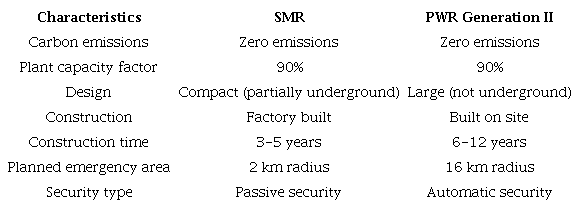
From a technical and technological perspective, SMRs are disruptive in nuclear energy generation. Their modular design, advanced safety, and versatility profile them as ideal alternatives to diversify the Colombian energy matrix. Compared to generation II reactors, they have clear advantages in costs, construction times, safety, and waste management. The dividends of nuclear energy are evident: it provides continuous electricity with minimal carbon emissions, fights climate change, strengthens energy security, and has economic and environmental potential. However, it also presents challenges, especially in public perception and the management of radioactive waste. Operational safety and adequate communication are, therefore, essential.
Therefore, while nuclear energy, with an emphasis on SMRs, represents a valuable opportunity for Colombia, its implementation demands a rigorous approach to safety, public acceptance, and waste management. Its role could be decisive in Colombia's energy future, provided these challenges are addressed appropriately.
This study presents a comprehensive analysis of nuclear energy in Colombia, from its history to its prospects. The key conclusions are:
-
Nuclear Potential: Colombia, with a notable trajectory in nuclear energy, still faces political and regulatory challenges, but is at a decisive point to reevaluate its role in this field.
-
Regulatory Framework: It is imperative to consolidate a robust regulatory framework aligned with international norms to ensure the safety and reliability of nuclear development.
-
Uranium and Thorium Reserves: The uranium and thorium reserves in Colombia represent an opportunity for energy generation and for its integration into the global nuclear fuel supply chain.
-
Sustainability: Any exploitation of nuclear resources must focus on sustainability, reducing environmental impacts, and respecting the rights of affected communities.
Based on the previous conclusions and analysis, the following strategic recommendations are proposed for Colombia:
-
Promotion of Education and Public Awareness: It is crucial to conduct educational campaigns about nuclear energy, highlighting its advancements in safety and technology, to foster informed debate and improve public perception.
-
Continuous Training and Qualification: There should be an emphasis on the continuous training of personnel operating and maintaining nuclear plants. Operational safety must not be compromised under any circumstances.
-
Comprehensive Development of Waste Management Strategies: It is imperative for Colombia to establish a long-term approach to the management of radioactive waste, including the research of solutions such as deep geological repositories.
-
Promotion of International Collaboration: Cooperation with international entities can provide access to experience, resources, and best practices in the nuclear field.
-
Exploration of Economic Opportunities: The potential of SMRs and other advancements in nuclear technology should be considered not only as an energy resource but also as an economic opportunity, including the potential export of technology and knowledge.
-
Active Promotion of Renewable Energies and Energy Diversification: While considering nuclear energy, it is essential for Colombia to continue investing in renewable energies to reduce dependence on water resources and diversify its energy matrix.
-
Ongoing Research in Sustainability: Priority should be given to research on the environmental impact of energy sources and exploring how nuclear energy can coexist sustainably with other sources.
-
Strengthening of the Regulatory Framework and Infrastructure: Colombia's energy infrastructure must be robust, and the regulatory framework must be solid to ensure the safety, reliability, and sustainability of the nuclear sector.
-
Transparency and Citizen Participation: Decision-making in the nuclear field should be transparent and allow active participation of society to ensure public trust and support.
REFERENCES
XM-Sinergox, CEN por tipo fuente natural y despacho, 2024. https://sinergox.xm.com.co/oferta/Paginas/Informes/CapacidadEfectiva.aspx
P. Mohanakrishnan, O. P. Singh, K. Umasankari, "Physics of Nuclear Reactors," Academic Press, 2021.
J. Yu, Nuclear physics. Fundamental Principles of Nuclear Engineering, Springer Nature Singapore, 2022.
I. Pioro, Handbook of generation IV nuclear reactors: A guidebook, Woodhead Publishing, 2022. https://doi.org/10.1115/1.4035327
S. Adumene, R. Islam, M. T. Amin, S. Nitonye, M. Yadzi, K. T. Johnson, "Advances in nuclear power system design and fault-based condition monitoring towards safety of nuclear-powered ships," Ocean Engineering, vol. 251, e111156, 2022. https://doi.org/10.1016/j.oceaneng.2022.111156
B. Almomani, A. Alkhalidi, A. G. Olabi, H. Jouhara, "Expert opinions on strengths, weaknesses, opportunities, and threats of utilizing nuclear reactor waste heat for water desalination," Desalination, vol. 564, e116777, Oct. 2023. https://doi.org/10.1016/j.desal.2023.116777
Intergovernmental Panel on Climate Change, Climate Change 2022-Impacts, Adaptation and Vulnerability, Cambridge University Press, Jun. 2023. https://doi.org/10.1017/9781009325844
S. M. De Vicente G., N. A. Smith, L. El-Guebaly, S. Ciattaglia, L. D. Pace, M. Gilbert, R. Mandoki, S. Rosanvallon, Y. Someya, K. Tobita, "Overview on the management of radioactive waste from fusion facilities: ITER, demonstration machines and power plants," Nuclear Fusion, vol. 62, no. 8, e085001, May. 2022. https://doi.org/10.1088/1741-4326/ac62f7
Q. Wang, J. Guo, R. Li, X. T. Yang, "Exploring the role of nuclear energy in the energy transition: A comparative perspective of the effects of coal, oil, natural gas, renewable energy, and nuclear power on economic growth and carbon emissions," Environmental Research, vol. 221, e115290, Mar. 2023. https://doi.org/10.1016/j.envres.2023.115290
A. Trespalacios, L. M. Cortés, J. Perote, "The impact of the El Niño phenomenon on electricity prices in hydrologic-based production systems: A switching regime semi-nonparametric approach," Energy Science and Engineering, vol. 11, no. 5, pp. 1564-1578, Feb. 2023. https://doi.org/10.1002/ese3.1414
M. Roser, "Data review: how many people die from air pollution?," Our World in Data, 2021. https://ourworldindata.org/data-review-air-pollution-deaths#article-citation
A. Bermúdez, "¿Energía varada? Mapeando las termoeléctricas de América Latina," Dialogue Earth, 2020. https://dialogue.earth/es/energia/38222/
A. G. Andal, S. PraveenKumar, E. G. Andal, M. A. Qasim, V. I. Velkin, "Perspectives on the Barriers to Nuclear Power Generation in the Philippines: Prospects for Directions in Energy Research in the Global South," Inventions, vol. 7, no. 3, e53, Jun. 2022. https://doi.org/10.3390/inventions7030053
International Energy Agency, Levelised Cost of Electricity Calculator, 2020. https://www.iea.org/data-and-statistics/data-tools/levelised-cost-of-electricity-calculator
Nuclear Energy Agency, Levelised Cost of Electricity Calculator, 2020. https://www.oecd-nea.org/lcoe/
A. R. Keeley, K. Komatsubara, S. Managi, "The value of invisibility: factors affecting social acceptance of renewable energy," Energy Sources Part B: Economics Planning and Policy, vol. 17, no. 1, e1983891, Sep. 2021. https://doi.org/10.1080/15567249.2021.1983891
Departamento Nacional de Planeación, El Plan Nacional de Desarrollo marca la ruta de la transición energética del país, 2023. https://www.dnp.gov.co/Prensa /Noticias/Paginas/el-plan-nacional-de-desarrollo-marca-la-ruta-de-la-transicion-energetica-del-pais.aspx
Unidad de Planeación Minero-Energética, Actualización Plan Energético Nacional (PEN) 2022-2052, 2022. https://www1.upme.gov.co/DemandayEficiencia/Documents/PE_2020_2050/Actualizacion_PEN_20222052_VF.pdf
Z. Wang, Y. Chandavuth, B. Zhang, Z. Ahmed, M. Ahmad, "Environmental degradation, renewable energy, and economic growth nexus: Assessing the role of financial and political risks?," Journal of Environmental Management, vol. 325, e116678, Jan 2023. https://doi.org/10.1016/j.jenvman.2022.116678
Unidad de Planeación Minero-Energética, Proyección de la demanda de energía eléctrica y potencia máxima 2023-2037, 2023. https://www1.upme.gov.co/DemandayEficiencia/Documents/UPME_Proyeccion_demanda_20232037_VF2.pdf
R. Walton, $60/MWh for advanced nuclear electricity is achievable, says GE Hitachi executive, Aug. 2022. https://www.utilitydive.com/news/advanced-nuclear-ge-hitachi-mwh-nuscale-smr-small-modular-reactor/630154/
International Atomic Energy Agency, Nuclear Power and the Clean Energy Transition, 2020. https://www.iaea.org/bulletin/61-3
United Nations, Treaty on the Non-Proliferation of Nuclear Weapons (NPT), 2024. https://disarmament.unoda.org/wmd/nuclear/npt/text/
Presidencia de la República de Colombia, Decreto 0381 de 2012, 2012. https://www.funcionpublica.gov.co/eva/gestornormativo/norma.php?i=66321
Ministerio de Minas y Energía, Resolución 181434 de 2002, 2002. https://www.suin-juriscol.gov.co/viewDocument.asp?id=4032693
Ministerio de Minas y Energía, Resolución 180052 de 2008, 2008. https://normas.cra.gov.co/gestor/docs/resolucion_minminas180052 2008.htm
Ministerio de Minas y Energía, Resolución 181419 de 2004, 2004. https://www.mincit.gov.co/getattachment/a710f770-79bd-4d6f-947f-44cc87de8b9c/Resolucion-181419-del-4-de-noviembre-de-2004-Por-l.aspx
C. R. Callejas, F. A. Rodriguez, M. A. Ortega, J. E. Ballesteros, C- J- Tovar, H. J. Sierra, J. F. García, H. F. Barbosa, G F De La Ossa, Lineamientos para el establecimiento de Minerales Estratégicos en Colombia, 2023. https://acmineria.com.co/sitio/wp-content/uploads/2023/05/27-03-2023 Documento Lineamientos minerales.pdf
Notas