Artículos
PROSPECTIVE GAS RESOURCES WITH EMPHASIS ON WET GAS IN ONSHORE COLOMBIAN BASINS
Recursos prospectivos de gas, con énfasis en gas húmedo, en cuencas colombianas terrestres
 Claudia-Rosa Posada-Saldarriaga
César-Augusto Mora-Hernández
Mauricio-Alberto Bermúdez-Cella mauricio.bermudez@uptc.edu.co
Claudia-Rosa Posada-Saldarriaga
César-Augusto Mora-Hernández
Mauricio-Alberto Bermúdez-Cella mauricio.bermudez@uptc.edu.co
PROSPECTIVE GAS RESOURCES WITH EMPHASIS ON WET GAS IN ONSHORE COLOMBIAN BASINS
Revista Facultad de Ingeniería, vol. 33, no. 69, e17626, 2024
Universidad Pedagógica y Tecnológica de Colombia
Received: 15 May 2024
Accepted: 03 August 2024
ABSTRACT: Colombia is a gas producing country, which has allowed it to maintain a high level of self-sufficiency for the past 40 years, including Natural Gas (NG) and liquefied petroleum gas (LPG) in activities primarily related to residential consumption, industry, and transportation. According to official data from the National Hydrocarbons Agency (ANH by its Spanish acronym), the total gas discovered in Colombia reaches 27 Tcf (Original gas in place - OGIP). The estimation of gas prospective resources in the Colombian onshore basins with commercial hydrocarbon production, where the presence of discovered gas has been concentrated, contributes to guiding exploration and production activities. The selected method to estimate the gas resources was proposed by Zetaware, a leading company in petroleum system modeling, and is called SREPC (Source Rock Expulsion Potential Calculator). In this study, it is used for the first time in Colombia to discriminate prospective resource of oil and total gas. The statistical analysis of the gas composition samples representative of the evaluated basins was used to estimate the amount of wet gas (probable source of LPG) with the parameter C3+ greater than 5%. The gas prospective resource estimation shows an important potential related with the current hydrocarbon production areas; total gas (including dry and wet gas) is close to 39.6 Tcf (Trillion cubic feet) while wet gas is about 21.1 Tcf (approximately 60% of the total resources to be discovered). The largest gas resources are in the Middle Magdalena basin with 10.39 Tcf, the Cordillera basin with 7.54 Tcf, and the Llanos Basin-Foothills Domain with 6.15 Tcf. In terms of prospective wet gas resources, the most promising basins are Middle Magdalena (5.9 Tcf) and Llanos-Foothills Domain (5.9 Tcf).
Keywords: Gas, hydrocarbons, liquefied petroleum gas, onshore basins, prospectivity, prospective resources, yet-to-find gas, wet gas.
RESUMEN: Colombia es un país productor de gas, lo que le ha permitido mantener un alto nivel de autoabastecimiento durante los últimos 40 años, incluyendo gas natural (GN) y gas licuado de petróleo (GLP) en actividades relacionadas principalmente con el consumo residencial, la industria y el transporte. Según datos oficiales de la Agencia Nacional de Hidrocarburos (ANH), el total de gas descubierto en Colombia alcanza las 27 Tcf (Gas Original en El Sitio - GOES). La estimación de los recursos prospectivos de gas en las cuencas terrestres colombianas con producción comercial de hidrocarburos, donde se ha concentrado la presencia de gas descubierto, contribuye a orientar las actividades de exploración y producción. El método seleccionado para estimar los recursos de gas fue propuesto por Zetaware, empresa líder en modelación de sistemas petroleros, y se denomina SREPC (Source Rock Expulsion Potential Calculator). En este estudio, se utiliza por primera vez en Colombia para discriminar recurso prospectivo de petróleo y gas total. El análisis estadístico de las muestras de composición del gas representativas de las cuencas evaluadas se utilizó para estimar la cantidad de gas húmedo (fuente probable de GLP), con un parámetro C3+ superior al 5%. La estimación de los recursos prospectivos de gas muestra un importante potencial relacionado con las actuales zonas de producción de hidrocarburos; el gas total (gas seco y húmedo) se aproxima a 39,6 Tcf, mientras que el gas húmedo es de aproximadamente 21,1 Tcf (60% de los recursos totales por descubrir). Los mayores recursos de gas se encuentran en la cuenca del Magdalena Medio con 10,39 Tcf, la cuenca de la Cordillera con 7,54 Tcf y la cuenca de los Llanos Orientales-Dominio Piedemonte con 6,15 Tcf. En términos de recursos prospectivos de gas húmedo, las cuencas más prometedoras son la del Magdalena Medio (5,9 Tcf/ 5923 Gpc) y la de Llanos Orientales-Dominio Piedemonte (5,9 Tcf/ 5904 Gpc).
Palabras clave: Cuencas onshore, gas, gas húmedo, gas licuado del petróleo, gas Yet-to-Find, hidrocarburos, prospectividad, recursos prospectivos.
1. INTRODUCTION
From a geochemical perspective, wet gas or associated petroleum gas consists of a type of natural gas with a methane percentage typically lower than 95% and accompanied by heavier gases such as ethane, propane, and butane [1]. These hydrocarbons are transformed and separated into natural gas (NG/Methane) and liquefied petroleum gas (LPG/Propane-Butane) through relatively simple in-situ processing plants or refineries.
Colombia is a gas producer, a fact that has enabled it to sustain a high degree of self-reliance for the past four decades. This ensures the use of both Natural Gas (NG) and Liquefied Petroleum Gas (LPG) primarily in residential consumption, industrial activities, and transportation. According to the Colombian National Hydrocarbons Agency (ANH by its Spanish acronym), the total amount of gas discovered in Colombia amounts to 27 Tcf (Original Gas in Place - OGIP). Although most of the gas production and consumption in Colombia is associated with NG (Methane), LPG (Butane and Pentane) has gained significant importance because it can contribute to socio-environmental sustainability as a transitional energy fuel. Currently, it is part of Colombia's energy mix and represents 2% of the total energy used in the country [2].
The primary use of LPG in Colombia is residential supply. More than three million households - around six million Colombians- use it as the main cooking fuel [3]. The estimation of gas resources in the Colombian onshore basins with commercial hydrocarbon production, where the presence of discovered gas has been concentrated, contributes to guiding exploration and production activities. In this research, we estimated the gas resources along 7 basins, namely: Lower Magdalena Basin (LMB), Middle Magdalena Basin (MMB), Upper Magdalena Basin (UMB), Catatumbo Basin (CAT), Cordillera Basin without Foothills Domain (CORD), Llanos Basin plus Foothills Domain (LLAO- FD), and Caguán-Putumayo Basin (PUT), see Figure 1.
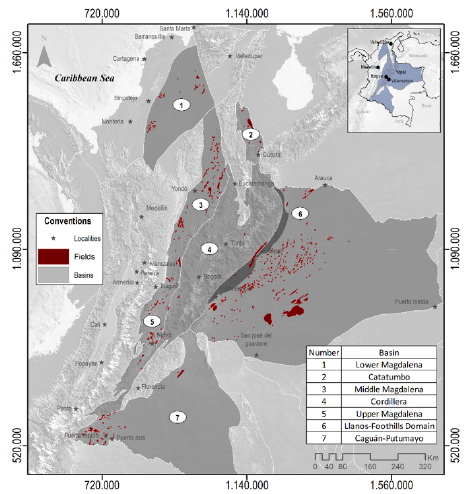
Fig 1
Map location of the evaluated basins.
As part of the estimation of prospective gas resources, we present an analysis of the certified gas production information in Colombia for 2021. The data were published by the National Hydrocarbons Agency (ANH) [4]. In 2021, 279 fields had certified gas production in the country with a total of 667.7 Tcf. A total of 250 fields produced gas associated with crude oil production, accounting for 89% of the total gas production; 215 out of these fields produce wet gas (77%), with less than 95% methane in their composition and more than 5% in the sum of Ethane (C2), Propane (C3), and Butane (C4) [5]. Figure 2 shows the locations of the wet gas producing fields within the assessed basins. In 2021, the main ones were the Foothill Domain, which contributes 71% of the gas production, the Pauto Sur field stands out, followed by the Lower Magdalena Basin (15% of gas production) and the Middle Magdalena Basin, with 4% of the country's total gas.
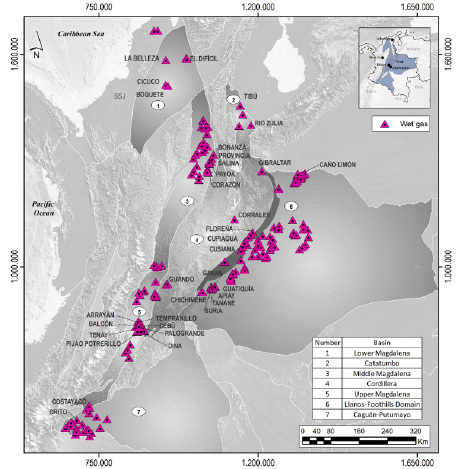
Fig 2
Locations of wet gas producing fields in the evaluated basins.
2. METHODOLOGY
Prospective resources are estimated quantities of petroleum potentially recoverable from undiscovered accumulations in future development projects, and are associated with both geological risk and potential for development [6]. The most employed method to estimate prospective hydrocarbon resources is mass balance [7], which involves the geostatistical variation of all variables defining hydrocarbon generation-expulsion; however, the results are presented in million barrels of oil equivalent (MMBOE) without discrimination between crude oil and gas resources. Consequently, it became essential to seek an alternative approach that could differentiate the volumes of crude oil and gas produced from a specific source rock. The method employed is called Source Rock Expulsion Potential Calculator (SREPC) developed by Zetaware [8]; in this research, we used it for the first time in Colombia to discriminate prospective oil and total gas resources. The SREPC is showed in Figure 3.
![Zetaware's SREPC calculator with input and output data to calculate oil and gas resources separately. Modified from [8].](../2357-5328-rfing-33-69-e17626-gf3.png)
Fig 3
Zetaware's SREPC calculator with input and output data to calculate oil and gas resources separately. Modified from [8].
To apply the SREPC calculator, it is necessary to estimate the quantity of hydrocarbons and the expelled composition from the source rock (gas/oil ratio-GOR). The quantity of crude oil and gas and the GOR of petroleum ultimately expelled from a source rock can be determined from original hydrocarbon potential parameters obtained from Rock-Eval pyrolysis data interpretation. This method enables calculating the hydrocarbon expulsion potential (oil, gas, and total hydrocarbons) from a source rock using basic parameters of geochemical evaluation: original hydrogen index-HI (mg/gTOC), effective thickness (in meters), and total organic carbon in percentage (% TOC).
The results correspond to the volume of hydrocarbons expelled from the source rock per square kilometer (oil, gas, and total hydrocarbons). The quantity of gas versus oil expelled is based on published data [9]. Similar to the mass balance methodology, the SREPC calculator considers variability in GOR, API gravity of oil, and density of the source rock, and all volumes are in surface conditions (MMbbls= million barrels, and Tcf= Tera cubic feet). The volumes of oil and gas expelled and estimated by this method are multiplied by the area of the pod of active source rock (oil and gas windows).
Once the values of the expelled hydrocarbon volumes are obtained, it is necessary to obtain the hydrocarbons available for trapping. Hydrocarbon trapping is a highly inefficient process, with two factors responsible for most losses: (1) retention of oil in source rocks; (2) dispersion during migration [10,11]. Globally, it is typically observed that only 2% of the total volume of the generated liquid hydrocarbons remains in traps on average, and 98% is lost in processes such as retention in source rocks (45%), dispersion during migration (13%), and escape to the surface (40%) [12]. However, each basin or pod of active source rocks has its own indicators and in prolific basins like the Maracaibo Basin in Venezuela it could be up to 12% [13, 14]. According to this model, the volume of expelled hydrocarbons is multiplied by a factor known as Migration Losses (%) [11] to obtain the total gas and oil available for trapping. In this process, hydrocarbon molecules experience losses when they are unable to ascend due to their dissolution in the rock's water content or their attachment to the rock's granular structure. This phenomenon tends to affect gas more significantly than oil. Such losses can be considerable, especially over extended migration paths, which can make certain source rock hydrocarbons impractical for extraction [11]. The migration loss is a parameter difficult to calculate and is the one with the highest degree of uncertainty to the final calculation. Based on regional basin modeling, this parameter was proposed for each evaluated basin. Equation 1 [7] is used to calculate the Available Resources (AR):

To calculate total prospective resources, it is necessary to apply a factor called Probability of Discovery or probability of success (PoS) [15] to the value of resources available for trapping. In hydrocarbon exploration production processes, four necessary aspects to calculate the probability of success (PoS) are considered: Source Rock, Reservoir Rock, Trap, and Migration-Timing. All these are elements and processes of the petroleum system [16]. The discovery of hydrocarbons in a specific area is determined by the assessment, knowledge, and available data to mature prospect options regarding the described elements and processes. Each basin or region has a historical average of success probability or failure in hydrocarbon exploration. In this evaluation, an average percentage of the probability of discovery for each basin was taken from an assessment developed by the National Hydrocarbons Agency [14].
In the next step, to determine prospective resources to be discovered (Yet-to-Find), it is necessary to subtract the amount of gas already discovered (OGIP) from the available resources. The discovered gas data were taken from the gas prospectivity study conducted by the National Hydrocarbons Agency [17].
Once the prospective gas resources were calculated, the statistical analysis of the composition (C1 to C5) of 193 gas samples representative of all the evaluated basins was used to estimate wet gas (probable source of LPG) with the parameter C3+ greater than 5%. Figure 4 shows the results of the percentage used to determine the amount of wet gas by basin [5].
![Parameter C3+ greater than 5%. Percentage used to determine the amount of wet gas by basin. Modified from [5].](../2357-5328-rfing-33-69-e17626-gf4.jpg)
Fig 4
Parameter C3+ greater than 5%. Percentage used to determine the amount of wet gas by basin. Modified from [5].
3. RESULTS
The estimation of prospective resources includes reviewing the gas production data of 2021 published by the ANH for each evaluated basin as follows:
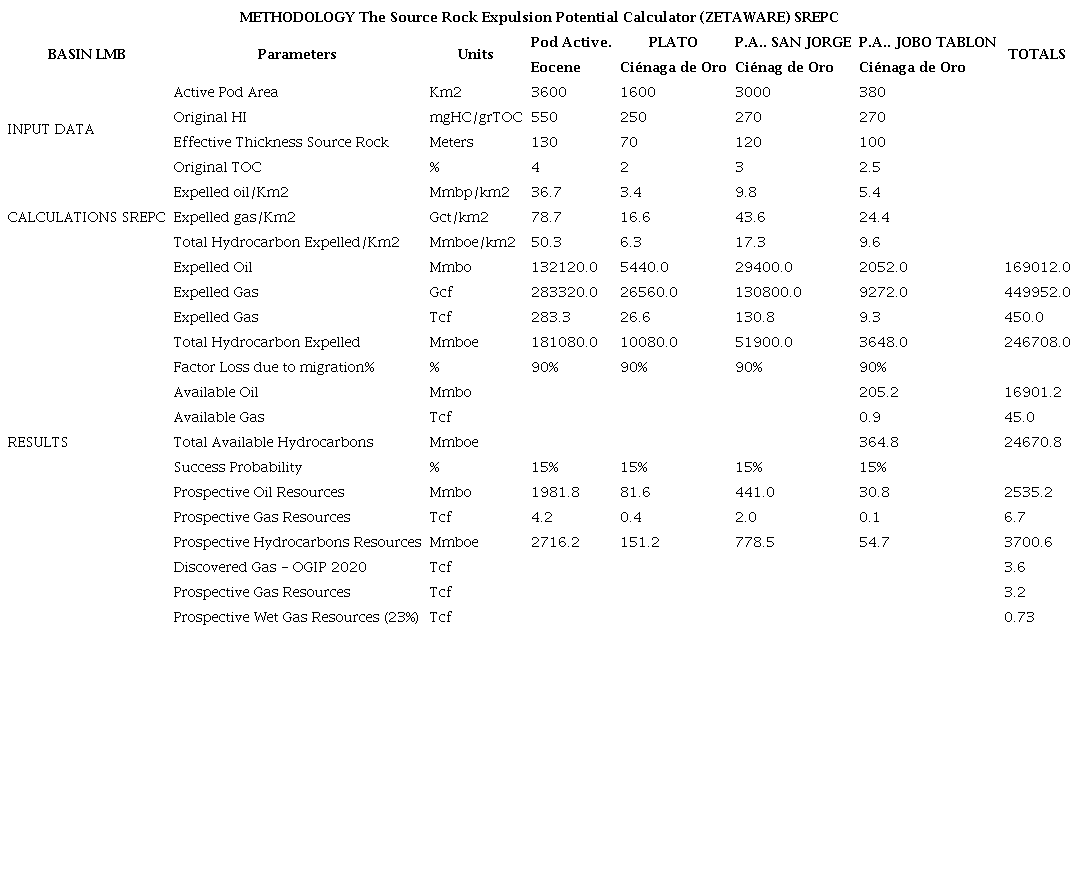
Lower Magdalena Basin (LMB): In this basin, production was certified in 30 fields with a total of 98.2 Tcf (15% of the total produced in the country), making it the third most important gas producing basin after Foothills Domain and La Guajira Offshore (not included in this analysis). The main producing fields were Clarinete, Nelson, and Mamey. The Clarinete field is exclusively a dry gas producer, while in the other fields gas production is associated with liquid hydrocarbon production. The estimate of prospective resources (YTF) was based on two source rock intervals (San Jacinto Formation and Ciénaga de Oro Formation) and three pods of active source rocks (Plato, San Jorge, and Jobo-Tablón), see Table 1. The results indicate prospective gas resources of 3.18 Tcf for this basin, out of which 23% (731 Tcf) corresponds to possible wet gas, source for LPG.
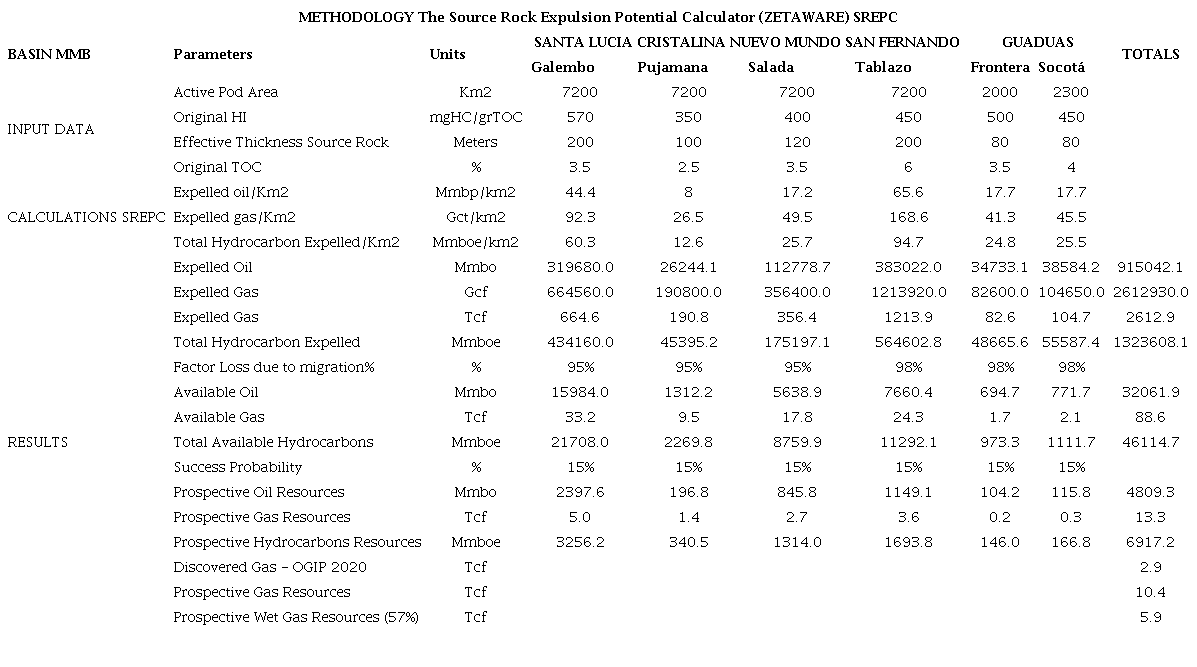
Middle Magdalena Basin (MMB): In this basin, gas production from 54 fields was certified with a total of 24 Tcf (4% of the total produced in the country). The main producing fields were Suerte, Santos, Provincia, Payoa, La Cira, and Yariguí-Cantagallo. Gas produced there corresponds mostly to gas associated with crude oil production. The estimate of prospective resources (YTF) was based on two Cretaceous source rock intervals (La Luna/Frontera and Tablazo/Socotá Formations) and four pods of active source rocks (Santa Lucía, Cristalina-Nuevo Mundo, San Fernando, and Guaduas), see Table 2. For this basin, results suggest prospective gas resources of 10.39 Tcf, of which 57% (5.9 Tcf) corresponds to possible wet gas source for LPG. This basin has the highest prospective resources for total gas and also for potential prospective resources for wet gas.
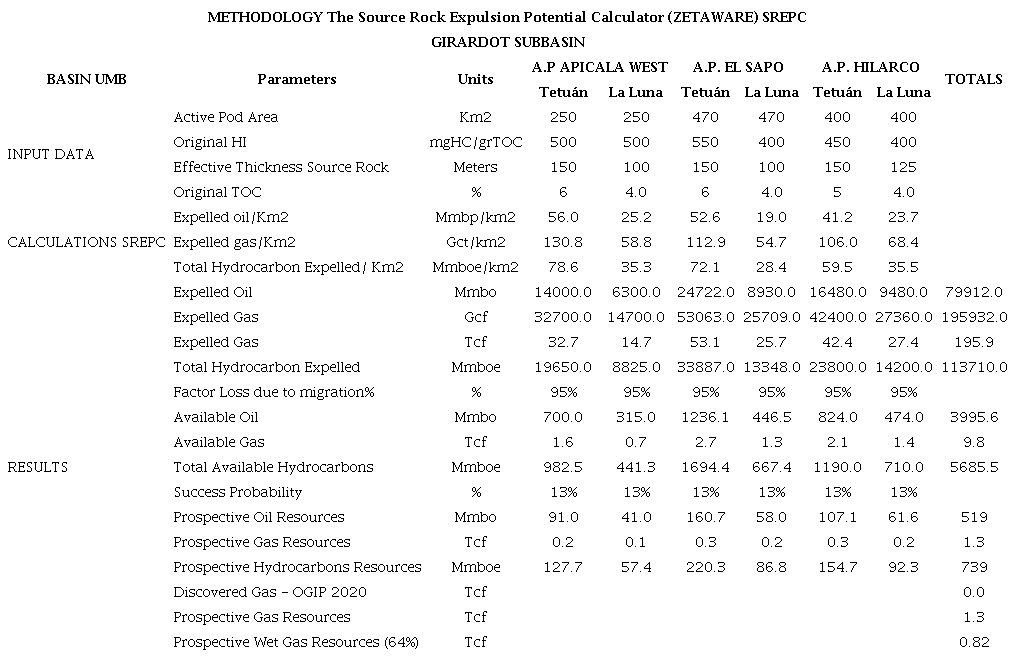
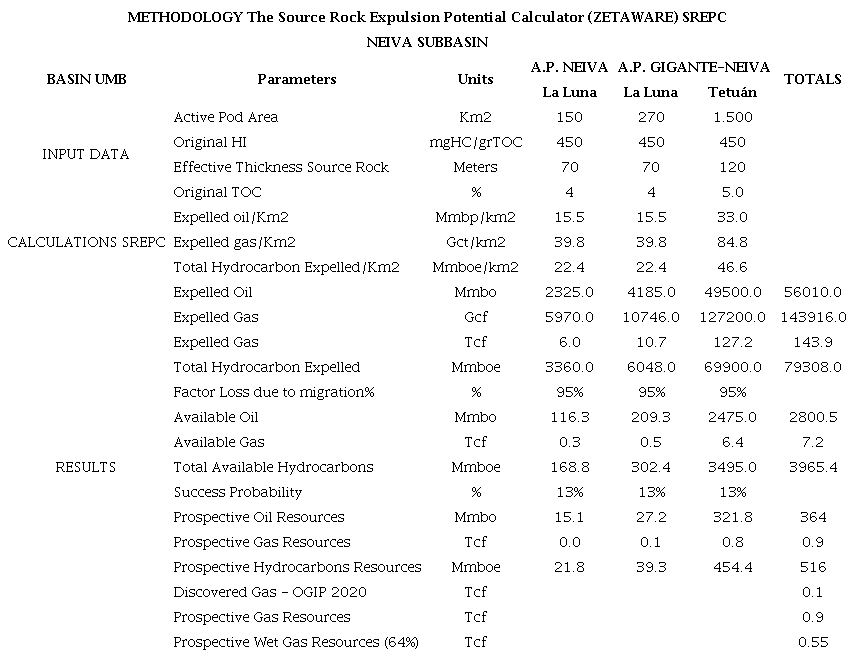
Upper Magdalena Basin (UMB): In this basin, the production of 35 fields was certified with a total of 5.74 Tcf (less than 1% of the total gas production certified in the country). The main gas producing fields were La Cañada Norte, San Francisco, and Matachín Norte. All fields with certified gas production in 2021 are associated with crude oil production and correspond to wet gases. The prospective resource calculation (YTF) was based on two Cretaceous source rock intervals (La Luna-Lomagorda and Tetuan formations) and five pod of active source rocks (Apicalá West, El Sapo, Hilarco, Neiva, and Gigante; see Tables 3 and 4). The results indicate that there are prospective gas resources of 2.14 Tcf, of which 1.4 Tcf (67%) correspond to wet gas, a potential source of LPG.
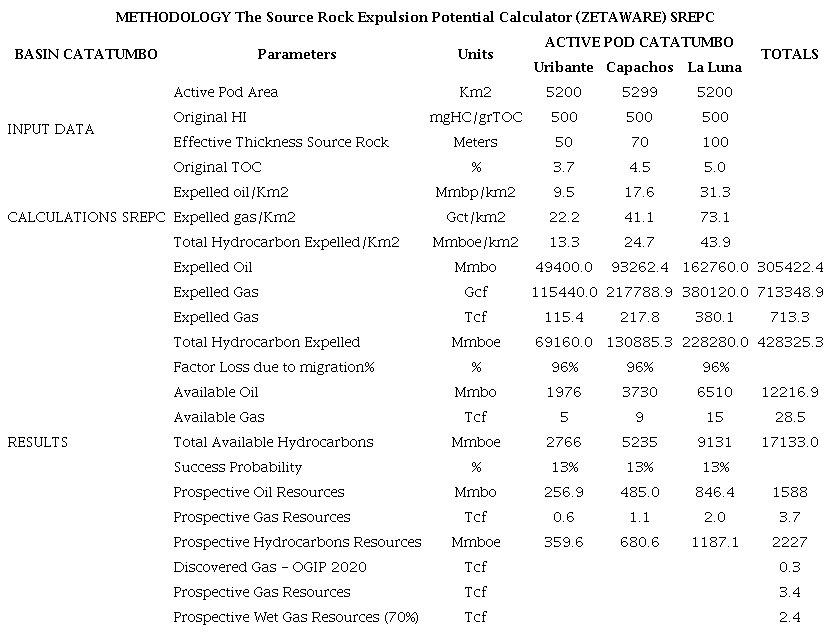
Catatumbo Basin (CAT): In the Catatumbo Basin, the production of 7 fields was certified with a total of 5.74 Tcf (less than 1% of the total produced in the country). The production of the Oripaya and Tibú fields stands out. Gas is associated with crude oil production in the Tibú, Sardinata, and Rio Zulia fields; while the Cerro Gordo, Oripaya, Cerrito, and T-Burns fields are reported as gas-only producing fields. The gases from the Tibú, Río Zulia, and Sardinata fields are wet. The prospective resource calculation (YTF) was based on three Cretaceous source rock intervals (Uribante, Capachos and La Luna formations) and one pod of active source rocks (see Table 5). The results indicate that there are prospective gas resources of 3.4 Tcf, of which 70% (2.4 Tcf) corresponds to wet gas, a potential source of LPG.
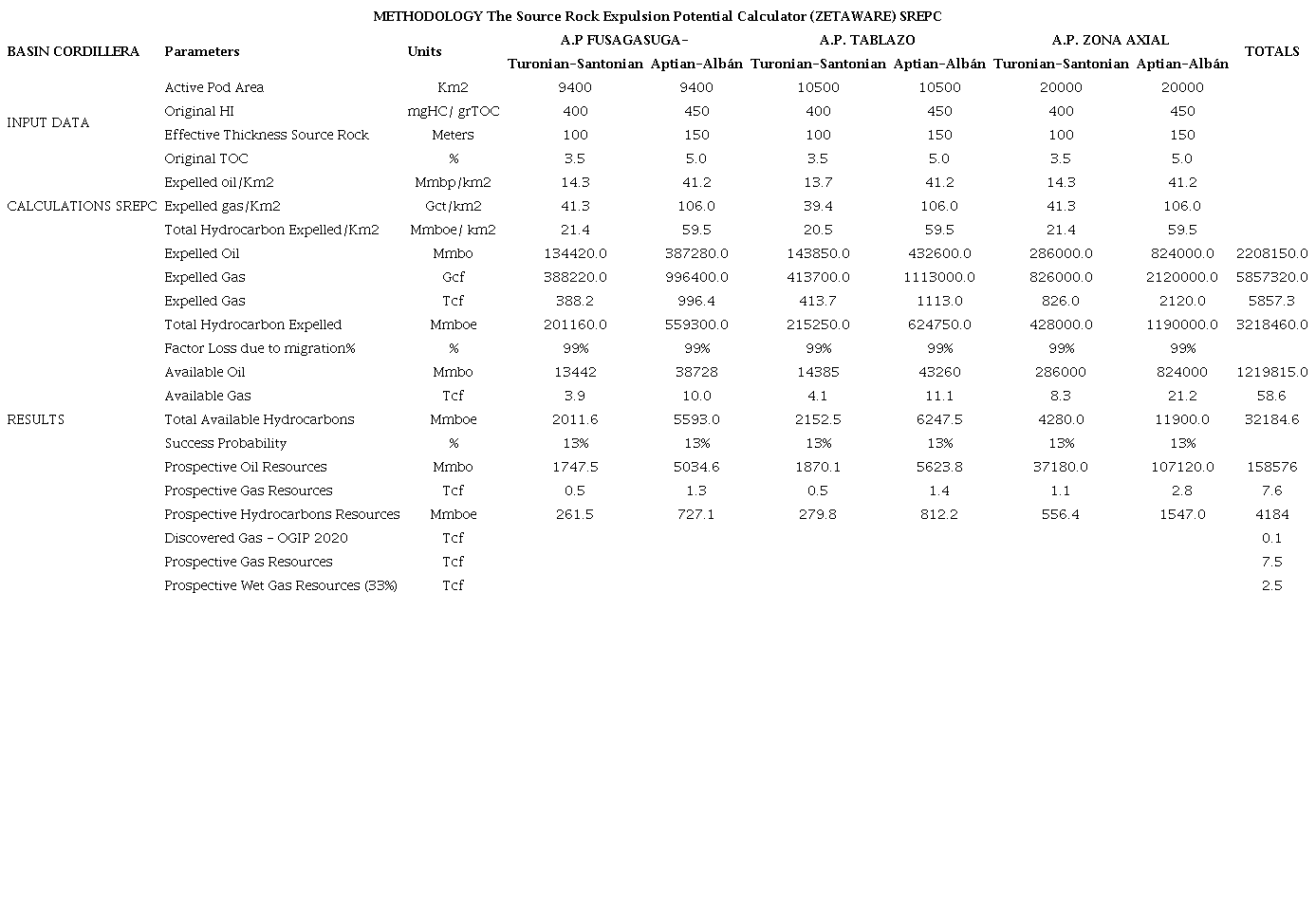
Cordillera Basin (CORD): In this basin, the production of 5 fields was certified with a total of 2.07 Tcf (less than 1% of the total produced in the country). Production comes from the Corrales and Bolívar fields in the northern sector of the basin; and Guando, Guando SW, and El Niño in the southern zone of the basin. In the Eastern Cordillera Basin, the gases are wet and associated with oil production. The prospective resource calculation (YTF) was based on two Cretaceous source rock intervals (Aptian-Albian and Turonian-Santonian) and three pods of active source rocks (Fusagasugá, Tablazo, and Zona Axial), see Table 6. A fourth pod of active source rocks located in this basin is the Foothills, which is located to the east in the transition zone between the Cordillera and the Llanos basins and is responsible for the hydrocarbon charge in the Foothills Domain and Llanos Basin. Therefore, the description and results of the YTF calculation are presented along with the Llanos Basin. The results for the Cordillera Basin indicate that there are prospective gas resources of 7.5 Tcf, of which 35% (2.5 Tcf) corresponds to wet gas, a potential source of LPG. This is the second most prospective basin for total gas after MMB.
Llanos Basin - Foothills Domain (LLAO-FD): There are 13 gas producing fields in the Foothills sector, of these, Pauto Sur, Cupiagua, Cupiagua Sur, Cusiana, Floreña, Liria, Cusiana Norte, and Floreña Mirador fields have the highest cumulative gas production with 468.74 Tcf (70% of the total produced in the country), and most of them correspond to associated wet gas. The main gas producing field (2021) was the Pauto Sur field with 138.04 Tcf (21%). The gas processing plants at Cusiana since December 2011 and Cupiagua since October 2019 have supplied nearly 60% of the LPG consumption in Colombia.
At the Llanos Basin, the production of 106 fields was certified with a total production of 15.99 Tcf (2% of the total produced in the country). All fields produce gas associated with crude oil production. The main gas producing fields were Carmentea and Kananaskis, Chichimene, Suria, and Andina. The gas from the Andina field is wet and is dried in a plant, producing LPG-gasoline, while the production gas from the Chichimene field is being flared. There is no pod of active source rocks in the Llanos Basin, and the accumulated hydrocarbons are related to the Foothills Domain. The prospective resource calculation (YTF) was based on four source rock intervals (Paleocene, Gachetá, Chipaque, and Fómeque formations) and a pod of active source rocks called Foreland-Cordillera, see Table 7. Results indicate that there are prospective gas resources of 6.2 Tcf, of which 5.9 Tcf (96%) correspond to wet gas sources of LPG. This is the third most prospective basin in terms of total gas and the second one in terms of wet gas.
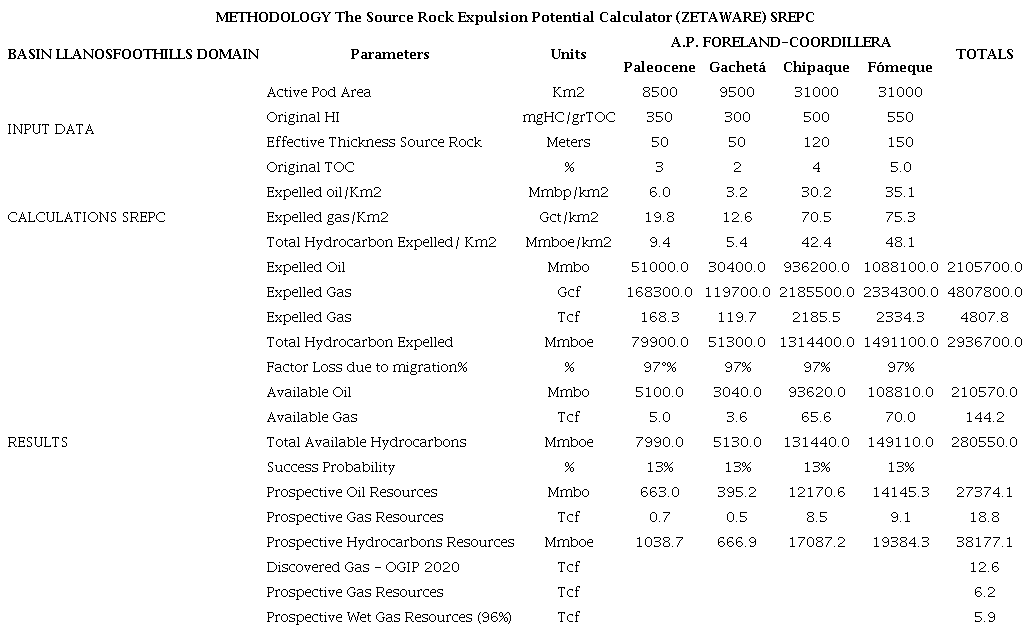
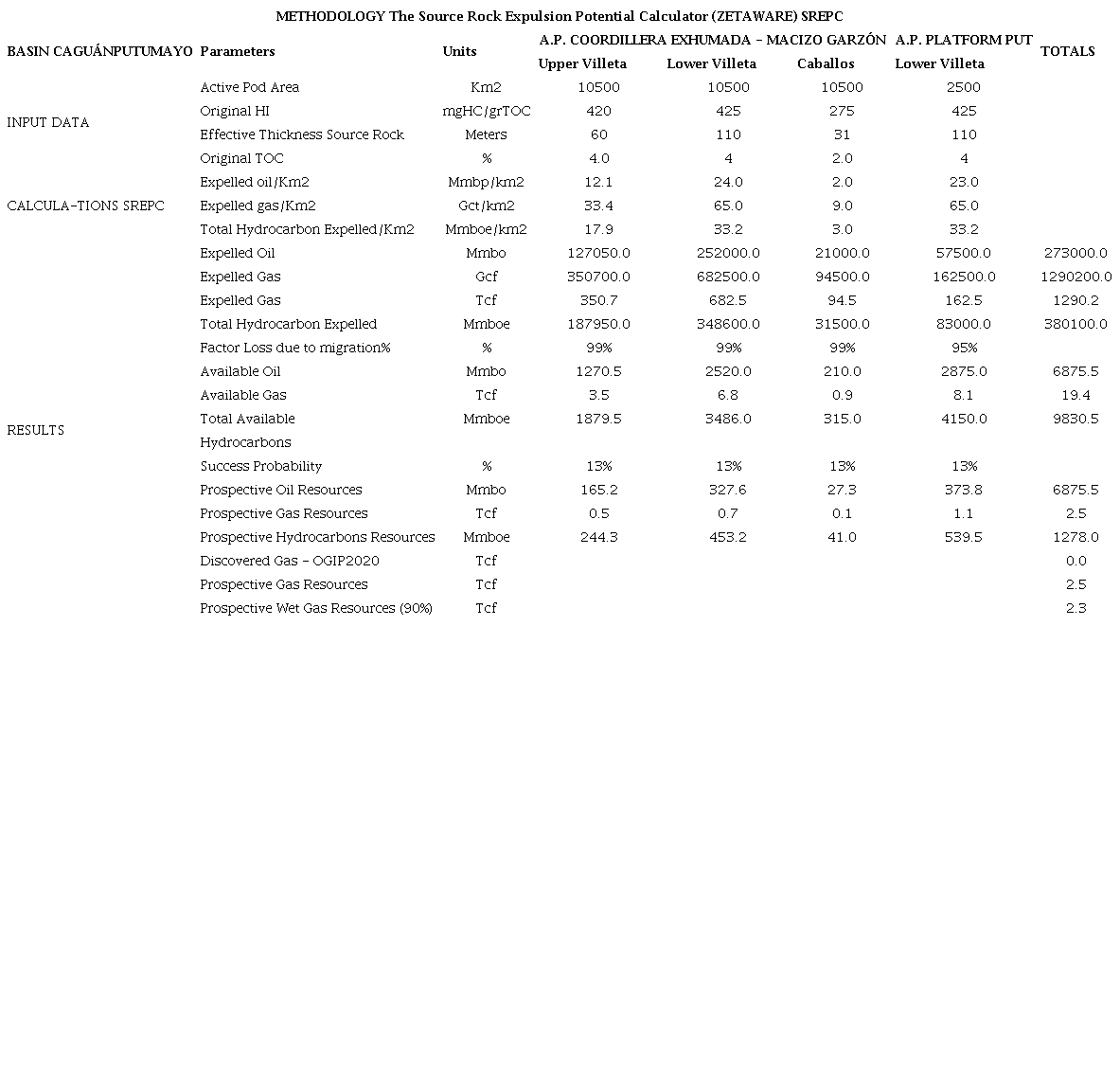
Caguán-Putumayo Basin (PUT): In the Caguán-Putumayo Basin, the production of 25 fields was certified with a total of 2.74 Tcf (less than 1% of the total produced in the country). Main gas producing fields are Orito, Costayaco, and Sucumbíos. All fields producing gas in this basin are associated with crude oil production (wet gas). In the Caguán-Putumayo Basin, the calculation was based on three Cretaceous source rock intervals (Caballos, Lower Villeta, and Upper Villeta) and two hydrocarbon generating foci: Exhumed Cordillera and Platform, see Table 8. The results indicate that there are prospective gas resources of 2.5 Tcf, of which 2.3 Tcf (90%) correspond to possible wet gas, sources of LPG.
4. DISCUSSION AND CONCLUSIONS
Gas is a fossil fuel of vital importance in the Colombia energy transition. Over the last 20 years, the country has achieved a high level of self-sufficiency in gas production and consumption. Based on forecasts from the Mining and Energy Planning Unit (UPME by its Spanish acronym) [18], the current level of self-sufficiency could be greatly reduced within a timeframe of under three years, if no new reserves are discovered, the country will be forced to import increasing quantities of gas at high prices, which will increase the domestic price of natural gas (NG) and liquefied gas (LPG). Currently, 80% of the gas produced in Colombia is associated with the production of oil, which indicates that the prospectivity of gas in most cases is linked to the prospectivity of liquid hydrocarbons.
The calculation of prospective hydrocarbon resources and their associated uncertainties has been a subject of global interest [19,20,21]. In Colombia, for over a decade, the ANH studies related to the estimation of prospective hydrocarbons resources [22,23,24,25] have not differentiated how much of the gas to be discovered could be wet (potential source of LPG). This research represents the first effort to estimate the wet gas potential in the onshore basins with commercial production in Colombia.
The results of this research indicate that there is a potential of 39.6 Tcf, of which approximately 60% (21.1 Tcf / 2107Gcf) corresponds to wet gas as a possible source of LPG. Considering that approximately 27 Tcf (OGIP) have been discovered in the country, these prospective resources indicate that, with an increase in oil and gas exploration activity, it is possible to maintain the levels of gas self-sufficiency. According to the distribution of these prospective resources, the potential of these basins varies considerably from one to another, see Figure 5.
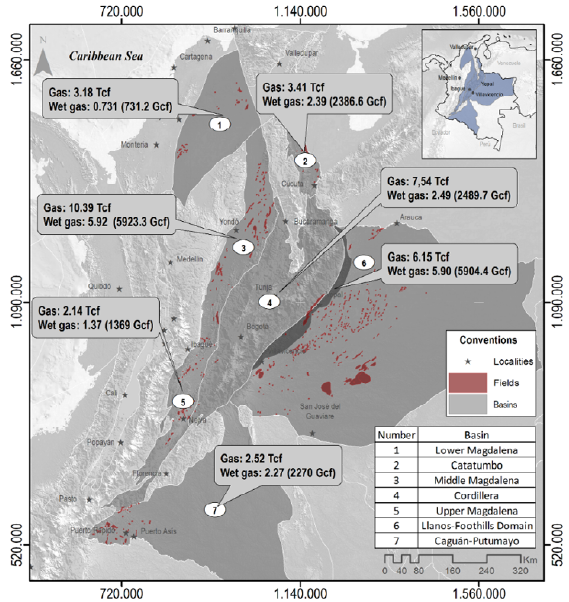
Fig 5
Map distribution of total and wet gas prospective resources in the evaluated basins.
In the Lower Magdalena basin (LMB), prospective gas resources are 3.18 Tcf, of which 0.7 Tcf (23%) correspond to wet gas. The main potential at this basin is dry gas. In the Middle Magdalena basin (MMB), prospective gas resources were estimated at 10.39 Tcf, of which 5.9 Tcf (57%) correspond to wet gas. This basin holds the highest expectations for the discovery and production of both dry and wet gas. In the Upper Magdalena Basin (UMB), there are prospective gas resources of 2.14 Tcf, of which 1.4 Tcf (63%) correspond to wet gas. Although gas resources are not very high, it is important to highlight that the gas from this basin could supply natural gas to intermediate cities such as Neiva and Ibague, and LPG to the rural areas of Huila, Tolima, and Cundinamarca departments. The Catatumbo Basin (CAT) presents prospective gas resources of 3.4 Tcf, of which 2.4 Tcf (70%) correspond to wet gas. This basin, located nearer to the Norte de Santander department, is the source of all the gas produced in the fields that currently serves the region. Its potential would enable improving the supply of dry and wet gas for the economic development of this region of Colombia, which is not connected by pipeline to the main gas supply sources. In the Llanos Basin-Foothills Domain (LLAO-FD), prospective gas resources were estimated at 6.2 Tcf, of which 5.9 Tcf (96%) correspond to wet gas. The Foothills Domain, within this region, has been the primary supplier of the central Andean region, including Bogotá. It is home to facilities that produce the majority of LPG, catering to the nation's demand.
The calculated prospective resources of dry and wet gas have the potential to continue being the most important sector for gas production in Colombia. Unfortunately, the current active fields are in a mature state and in decline, so it would be essential to make exploratory efforts to define new exploration concepts to get these resources. The results in the Cordillera Basin (CORD) indicate that prospective gas resources reach 7.5 Tcf, of which 2.5 Tcf (33%) correspond to wet gas as a source of LPG. This basin and Middle Magdalena Basin (MMB) hold the highest expectations of prospective gas resources (dry and wet). In the Caguán-Putumayo Basin (PUT), prospective gas resources amount to 2.5 Tcf, of which 2.3 Tcf (90%) correspond to wet gas. Although the prospective resources of this basin are limited, it is possible that the Putumayo department benefits from natural gas and LPG sources for self-sufficiency.
Table 9 and Figure 6 show that the basins with the highest prospectivity for total gas are Middle Magdalena Basin (MMB) with 10.4 Tcf, followed by the Cordillera Basin (COR) with 7.54 Tcf, and the Llanos Basin-Foothills Domain (LLAO-FD) with 6.15 Tcf. Regarding the prospectivity of wet gas, the ranking in order of importance shows the Llanos Basin-Foothills Domain (LLAO-FD) and Middle Magdalena Basin (MMB), both with 5.9 Tcf of prospective wet gas resources. The Cordillera, Catatumbo, and Putumayo basins appear next, each with just over 2 Tcf.
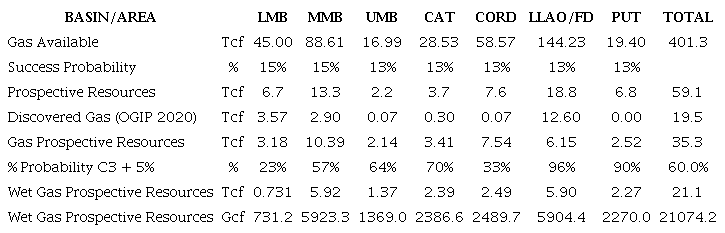
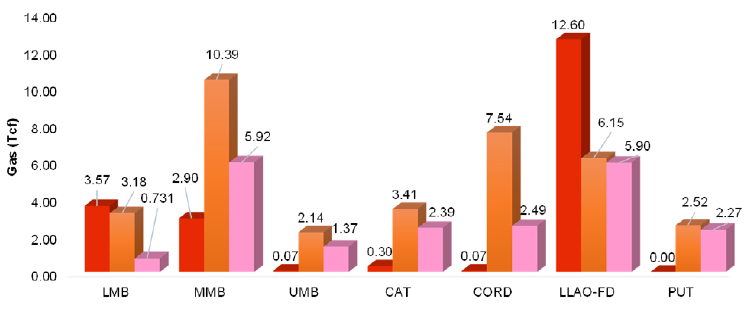
Fig 6
Prospective Resources in the evaluated basins (Total Gas and Wet Gas).
The main current producer of LPG in Colombia is the Foothills Domain, with fields such as Pauto, Cusiana, Cupiagua, Volcanera, Floreña, and Liria. The exploratory maturity in this sector is high; to find more liquid and gaseous hydrocarbons, a significant technological and scientific effort will be required to access these prospective resources. In basins such as Catatumbo, Upper Magdalena Basin, and Putumayo, there is little gas potential, but it can positively impact the development of these regions.
ACKNOWLEDGMENTS
We express our gratitude to Minciencias and the National Hydrocarbons Agency (ANH) for their support through the funding provided through the project titled "Geological habitat, prospectivity, socio-environmental, and economic sustainability of wet gas (LPG) in Colombia as a transitional energy fuel" (CT 80740-233-2021, code: 110987780498) at the Universidad Pedagógica y Tecnológica de Colombia (UPTC).
REFERENCES
A. L. García, E. E. Galvan, F. Samaniego "Comportamiento termodinâmico de los yacimientos de gas seco, gas húmedo y gas y condensado". Ingenieria Petrolera, vol.59, no. 1,2019.
Gasnova, Informe Anual del GLP, 2021, pp. 1-62. https://www.gasnova.co/informe-anual-del-glp-2021
Departamento Administrativo Nacional de Estadística (DANE), Encuesta Nacional Calidad de Vida (ECV), 2019. https://www.dane.gov.co/index.php/estadisticas-por-tema/salud/calidad-de-vida-ecv/ encuesta-nacional-de-calidad-de-vida-ecv-2018
Agencia Nacional de Hidrocarburos (ANH), Estadísticas de Producción. Producción Fiscalizada Gas y Crudo 2021,2022https://www.anh.gov.co/es/operaciones-y-regal%C3%ADas/sistemas-integrados-operaciones/estad%C3%ADsticas-de-producci%C3%B3n/
UPTC, MINCIENCIAS, ANH, Hábitat Geológico, Prospectividad, Sostenibilidad Socioambiental y Económica del Gas Húmedo (Glp) En Colombia como Combustible de Transición Energética, En Revisión, 2023.
SPE, Sistema de Gerencia de los Recursos de Petróleo. Society of Petroleum Engineers, 2018.
J. W. Schmoker, "Volumetric Calculation of Hydrocarbons Generated. The petroleum system-from source to trap," AAPG Memoir, vol. 60, pp. 323-326, 1994.
H. Zhiyong, Manual Support Zetaware Inc, 2020. https://www.zetaware.com/
A. S. Pepper, P. J. Corvi, "Simple Kinetic Models of Petroleum Formation-Part I, Oil and Gas Generation from Kerogen," Marine and Petroleum Geology, vol. 12, pp. 291-319, 1995. https://doi.org/10.1016/0264-8172(95)98381E
D. Guan, X. Xu, Z. Li, L. Zheng, C. Tan, Y. Yao, "Hydrocarbon Generation in and Expulsion from Pore Space Limited Source Rocks," in Theory and Practice of Hydrocarbon Generation within Space-Limited Source Rocks, Singapore, 2017, pp. 69-131.
X. Luo, L. Zhang, Y. Lei, W. Yang, "Progresses and Problems in the Study of Hydrocarbon Migration Dynamics," in Dynamics of Hydrocarbon Migration, Singapore, 2023, pp. 1-62.
J. M. Hunt, Petroleum Geochemistry and Geology, New York, Freeman, 2006.
G. Damaison, B. J. Huizinga, "Genetic Classification of Petroleum Systems Using Three Factors. The Petroleum System-From Source to Trap," AAPG Memoir, vol. 60, pp. 73-102, 1994.
C. Mora, J. F. Osorno, N. Lizarazo, H. Buitrago, Evaluación de los recursos de hidrocarburos remanentes en Colombia (Yet to Find), 2019.
A. V. Milkov, "Risk tables for less biased and more consistent estimation of probability of geological success (PoS) for segments with conventional oil and gas prospective resources," Earth-Science Reviews, vol. 150, pp. 453-476, 2015. https://doi.org/10.1016/j.earscirev.2015.08.006
L. B. Maggon, W. Dow, "The Petroleum System. The Petroleum System-From Source to Trap," AAPG Memoir, vol. 60, pp. 3-24, 1994.
ANH, UPTC, Evaluación de la prospectividad del gas en Colombia en las cuencas onshore con producción comercial, Reporte interno a la ANH, 2021.
UPME, Plan Indicativo de Abastecimiento de Gas Licuado del Petróleo (GLP), 2019. https://www1.upme.gov.co/Hidrocarburos/publicaciones/Plan_GLP.pdf
T. S. Ahlbrandt, "Future Petroleum Energy Resources of the World," International Geology Review, vol. 44, no. 12, pp. 1092-1104, 2002. https://doi.org/10.2747/0020-6814.44.12.1092
C. E. McGlade, "A review of the uncertainties in estimates of global oil resources," Energy, vol. 47, no. 1, pp. 262-270, 2012. https://doi.org/10.1016/j.energy.2012.07.048
J. Laherrère, C. H. Hall, R. Bentley, "How much oil remains for the world to produce? Comparing assessment methods, and separating fact from fiction," Current Research in Environmental Sustainability, vol. 4, e100174, 2022. https://doi.org/10.1016/j.crsust.2022.100174
C. A. Vargas-Jiménez, "Nuevos aportes a la estimación del potencial de hidrocarburos en Colombia," Revista de la Academia Colombiana de Ciencias Exactas, Físicas y Naturales, vol.33, no.126, pp.17-29, 2009.
C. A. Vargas, "Evaluating total Yet-to-Find hydrocarbon volume in Colombia," Earth Science Research Journal, vol. 16, pp. 1-246, 2012.
S. Leyva, B. Herrera, A. Cadena, "Actualización de escenarios de oferta y demanda de hidrocarburos en Colombia," Revista de Ingeniería, vol. 1, no. 40, pp. 69-80, 2014. https://doi.org/10.16924/revinge.40.10
L. A. Gutiérrez-Torres, L. D. Molina-Gomez, H. M. Ribón-Barrios, A. Bejarano, T. M. JuliaoLemus, "Methodology to define hydrocarbon potential in a shale reservoir based on geochemical data and well logs," CT&F-Ciencia, Tecnología y Futuro, vol. 9, no. 1, pp. 5-14, 2019. https://doi.org/10.29047/01225383.147
Notes
Author notes